

Light Bullets in the .223 Remington
Mike Revisits Modern Varmint Rifles.
feature By: Mike Venturino | October, 25

Conundrum. I like that word. Since learning what it means, I’m going to use it a lot. My desk dictionary says it’s “anything that’s a puzzle.” And in my .223 Remington shooting experiences in the last year, there have been several conundrums.
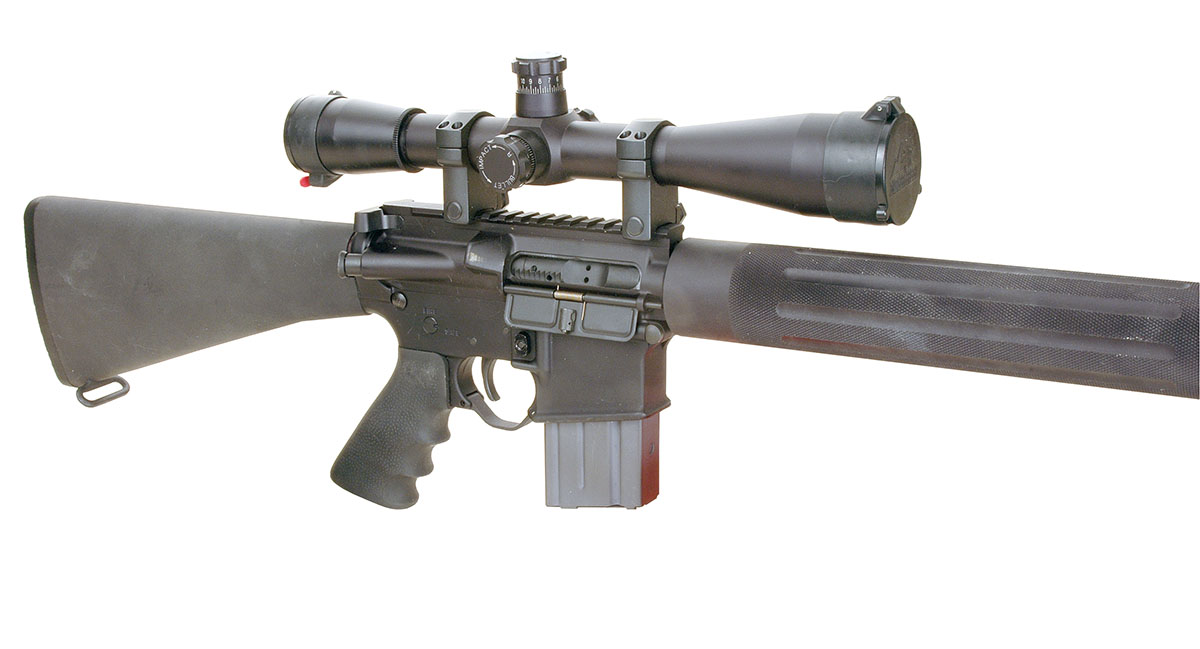
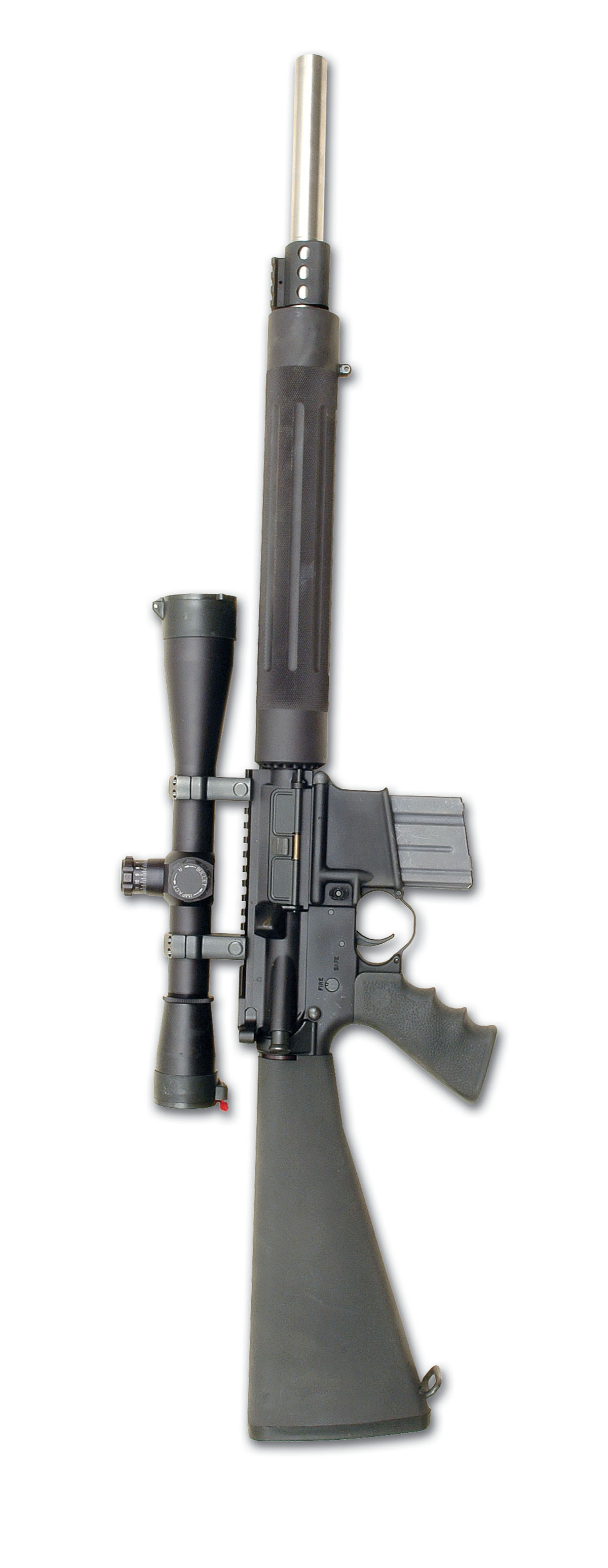
AR-15, it comes with a rail atop the receiver that can be fitted with Weaver-type scope mounts. The A4 Var-mint can be had with barrels 16, 18, 20 and 24 inches long with rifles weighing from 7.9 to 9.7 pounds at each end of that spectrum. These barrels taper from 1.05 inches under the aluminum tube handguard to .920 inch ahead of the gas block. They are stainless steel, air gauged and made by Wilson, all with one-in-8-inch twist rates, except that an option can be a one-in-12-inch twist in the 24-inch barrel only. The trigger is a standard military two-stage type, but when the actual pull begins, this one released at 3 pounds.
The A4 Varmint sent to me by Rock River came with a 20-inch barrel, atop which was soon mounted a Leu-pold 10x scope. The catalog states that Rock River guarantees accuracy of .75 minute of angle at 100 yards. My thought was, An autoloading .223 outshooting most bolt-action .223s? We’ll see about that. The facts turned out to be that this A4 Varmint often will group under .75 inch for five shots at 100 yards. See what I mean about conundrums?
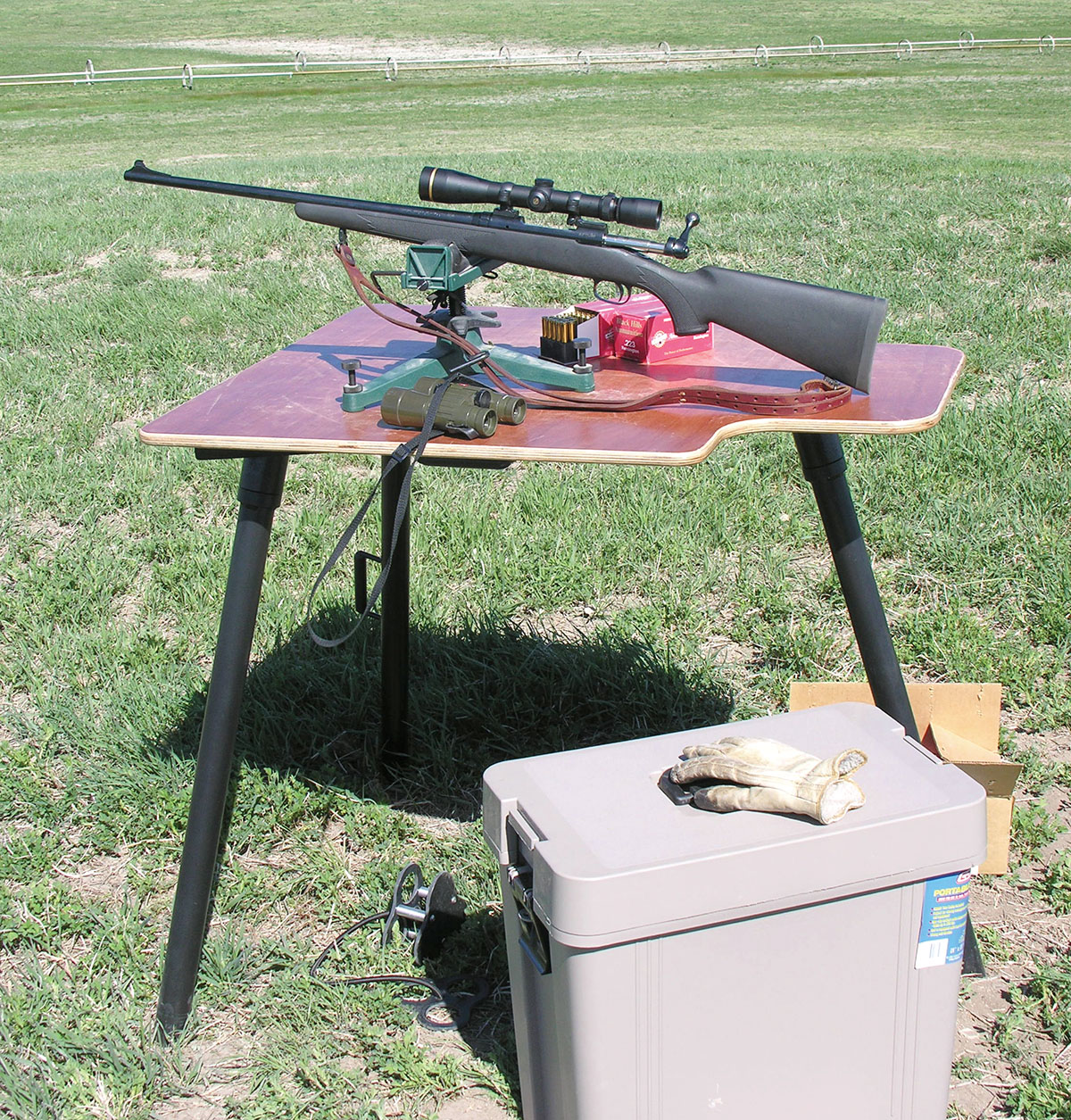
The pertinent details of the Savage Model 11F are that it has a 22-inch barrel and is mounted with a Leupold 4.5-14x scope, which was used at 10x. Its fine Accu-Trigger came from the factory set to a 21⁄2-pound pull, so I’ve never messed with it. Whereas the Rock River A4 Varmint has a 10-round detachable magazine and will accept more capacious ones, the Savage’s magazine capacity is four rounds.
To begin, a search of my bullet and powder shed turned up eight .22-caliber bullets weighing between 40 and 50 grains and six propellants I thought suitable for use in both rifles. As it turned out, not all the powders or bullets were suitable.
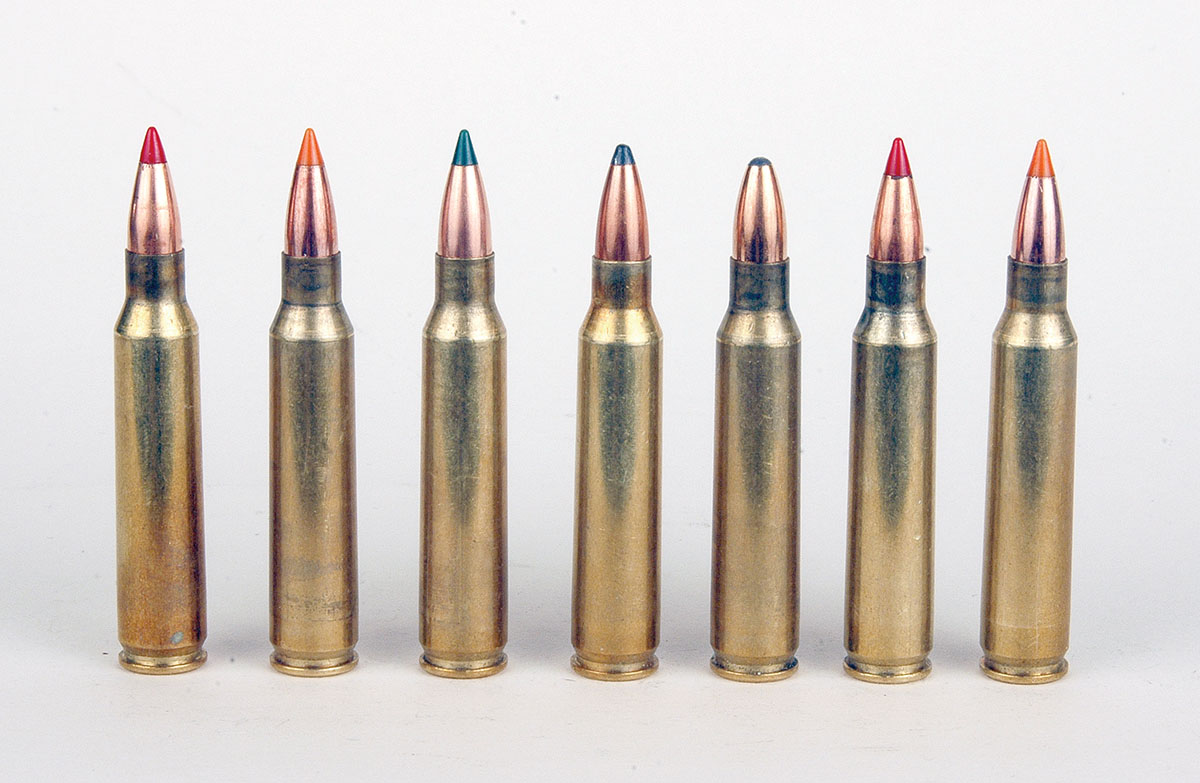
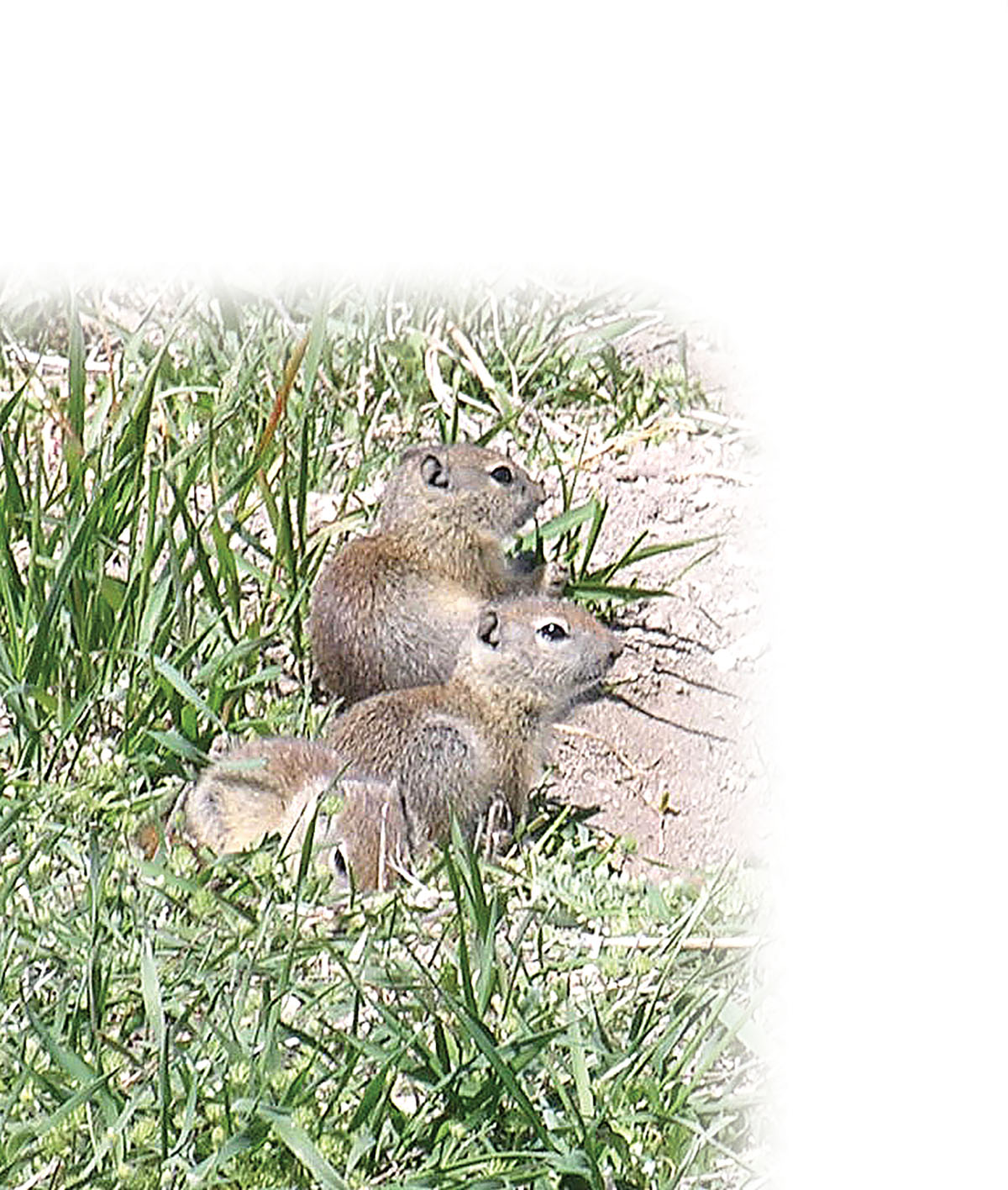
Back toward the end of my first era of varmint shooting, I had come to favor 45-grain bullets for loading the .222 Remington and .222 Remington Magnum. Therefore the shed contained Speer and Sierra versions in that weight. Another varmint bullet remembered fondly from the old days was the 50-grain Sierra Blitz. Those Blitz bullets were just like dynamite on our Montana “gophers,” even when fired at the moderate velocities of .222s. Then there were five of the relatively new type of .22 varmint bullets having those pretty little synthetic tips: red for Hornady, green for Sierra and orange for Nosler. Each brand was included in 40-grain weight, but only Hornady and Nosler with 50-grain designs.
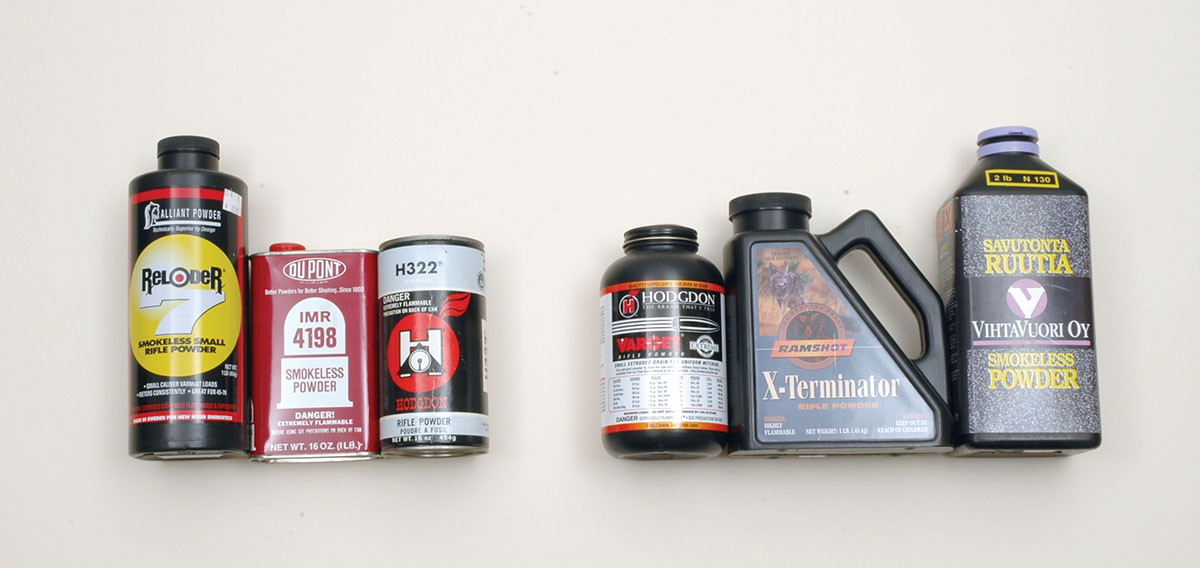
Back in the late 1970s and early 1980s, the three powders used most in my .22 centerfire reloading were IMR-4198, Reloder 7 and H-322. Naturally there were cans of those on hand. The flip side was that in my shed were three other suitable propellants that previously I had never fired a grain of in any .22 centerfire. Those were Western Powders’ X-Terminator, Vihtavuori’s N130 and Hodgdon’s Varget. With the six powders the gamut was covered in burning rates for the .223 Remington from fairly fast to fairly slow for the case size.
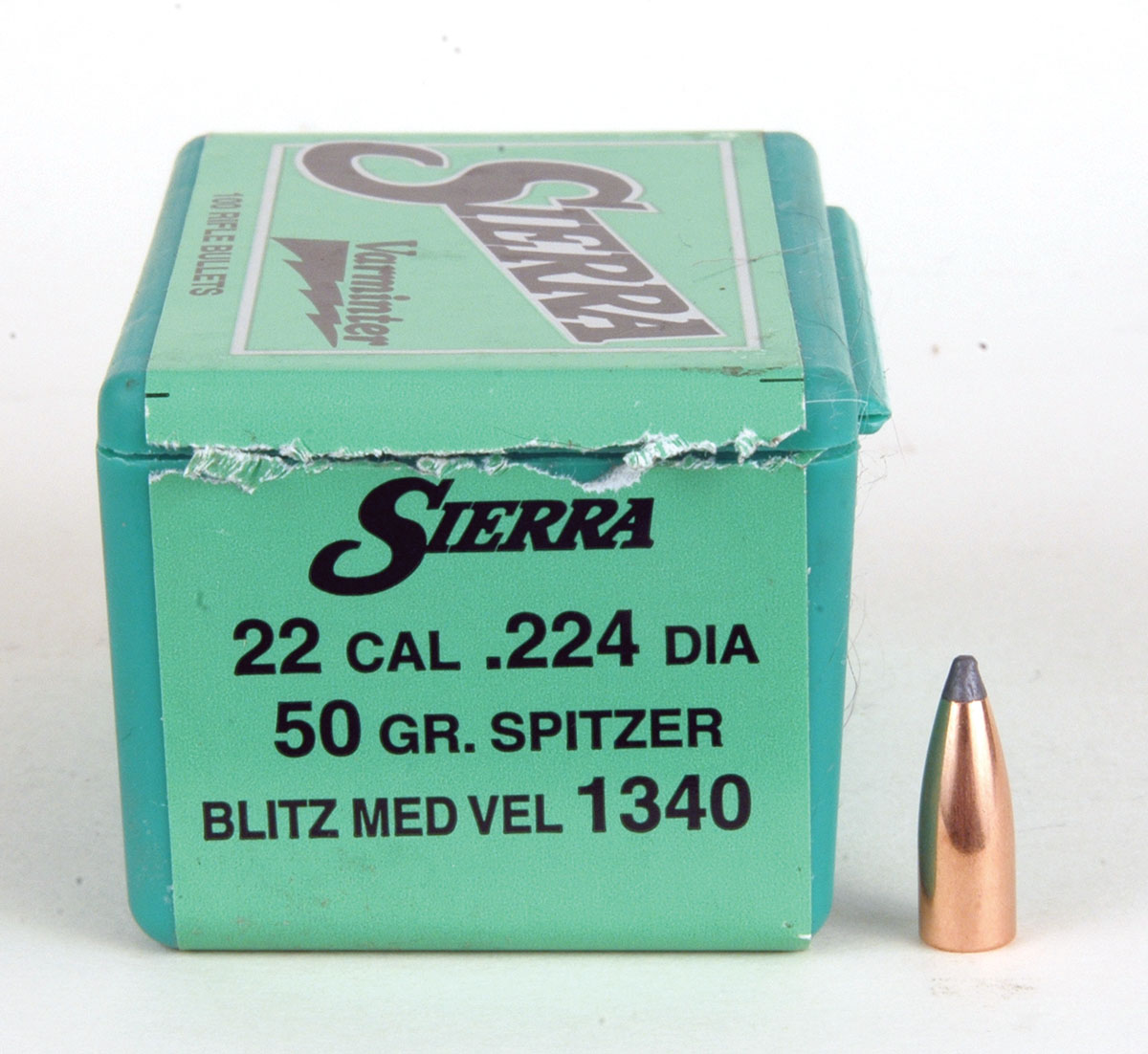
But the 50-grain Sierra Blitz bullets were going as slow as 3,075 fps and 3,069 fps from the AR4 and Model 11F, respectively. So when confronted with a puzzle, I did what any good gun writer should do in that situation. I contacted someone who would know what was going on. That someone was Carroll Pilant of Sierra Bullets, and he set me straight in short order. I was judging things from my 30-year past experiences in which .22 centerfires had one-in-12- and one-in-14-inch rifling twists. Sierra Blitz bullets work just fine in them, but the tight one-in-8- and one-in-9-inch twists of these new rifles are just too fast for the thin-jacketed Blitz bullets. That’s why Sierra developed the Blitz-King bullets, which happened to be the 40-grainers I was using with fine results. They have stouter jackets.
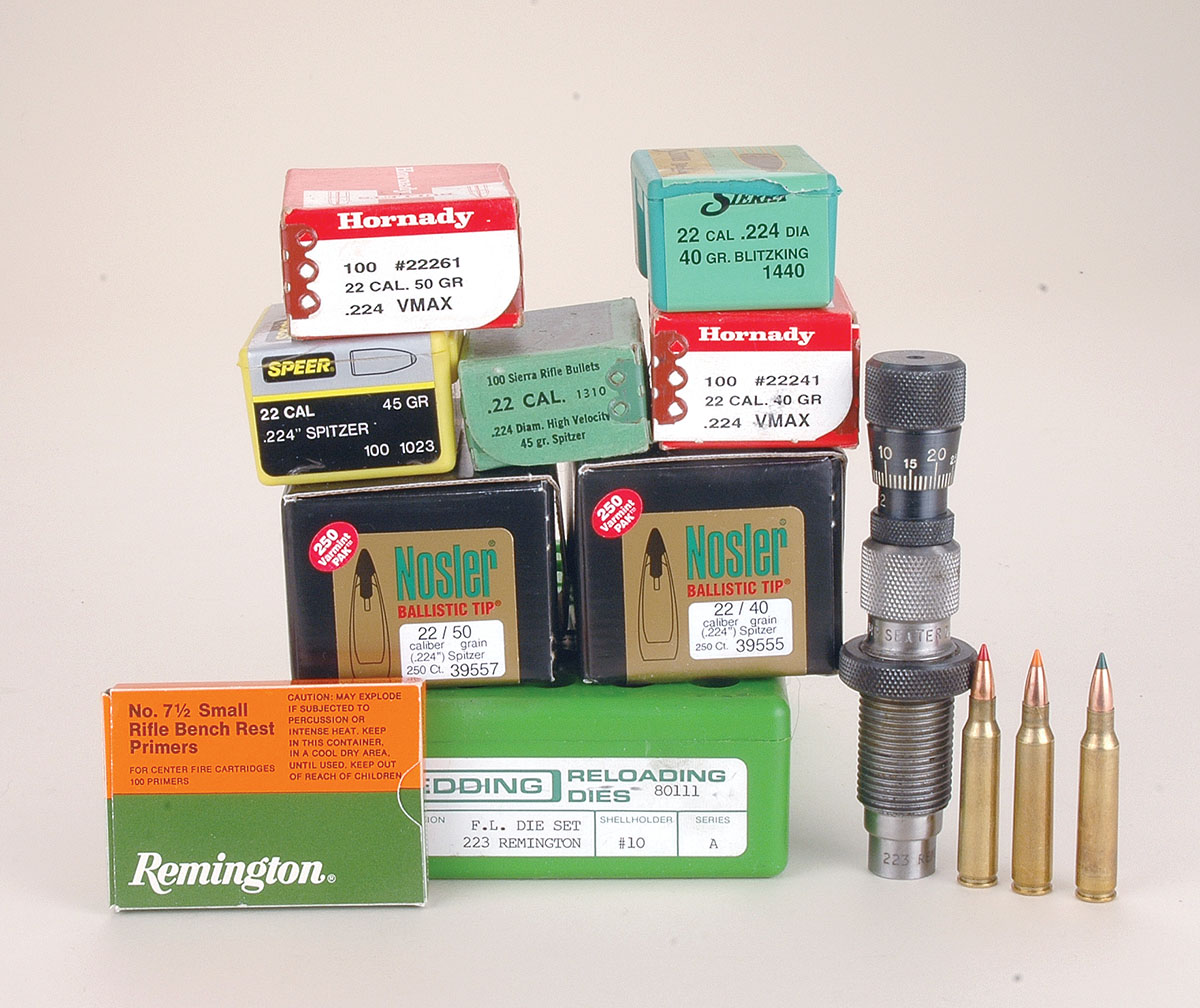
Before getting into the results and averages and some more conundrums, I should give some other details about the handloads. All loads were put into once-fired .223 Remington cases that started out as Black Hills Ammunition factory loads. The headstamp reads BHA, but I don’t know who actually made the brass, since Black Hills Ammunition doesn’t manufacture cartridge cases. As for primers, I found a carton of Remington No. 71⁄2 Benchrest Small Rifle types stored in the closet.
Then everything was assembled with Redding dies using one of its Competition grade seating dies. The plastic-tipped bullets of 40 and 50 grains were seated to a maximum overall loaded cartridge length of 2.25 inches, which is what the Sierra manual lists for maximum length for use in AR-type rifles, and standard bolt actions too. That meant the 45-grain bullets resulted in slightly shorter overall lengths of 2.22 inches for the Sierra and 2.17 inches for the Speer.
Also it should be mentioned that when firing the groups, all seven bullets with a single propellant were fired at one time. That allowed rifle cleaning after 35 rounds were fired. At each range session, a couple of fouling shots were put downrange from each rifle before the group shooting resumed.
As this project proceeded, there arose another conundrum. (See, I told you I was going to use that word a lot.) Although the A4’s barrel was 2 inches shorter than the Savage’s, in every instance, velocities with it were higher. Sometimes the difference was of no consequence, such as the 3,075 fps and 3,069 fps mentioned before. At other times it was significant. For instance, with 23.5 grains of Reloder 7 under the 40-grain Nosler, the A4 gave 3,526 fps and the Model 11F only 3,337 fps. That’s nearly 200 fps difference, and remember these loads were fired on the same day. Conundrum! The Rock River catalog states that the barrels on some rifles are cut with a “.223 Wylde Chamber” in contrast to a 5.56 NATO chamber on its standard rifles. Since the standard rifles are rated at one MOA accuracy and the Wylde chambered barrels at .75 MOA, that indicates the latter are “tighter.” Perhaps that accounts for the difference.
The A4 liked all the other five bullets fairly equally: averaging from .84 inch with the 50-grain Nosler to .94 inch with the Hornady V-MAX. The Savage was more finicky and averaged less than one inch for six groups only with the 50-grain Nosler. It is probably no conundrum that the 45-grain bullets didn’t compare with the more modern “plastic” nosed designs from these tight-twist rifles. That synthetic nose actually allows a 40-grain bullet to be longer than a 45-grain lead tipped bullet. An example: The Sierra 45-grain spitzer is .617 inch in length compared to .676 inch for its 40-grain BlitzKing.
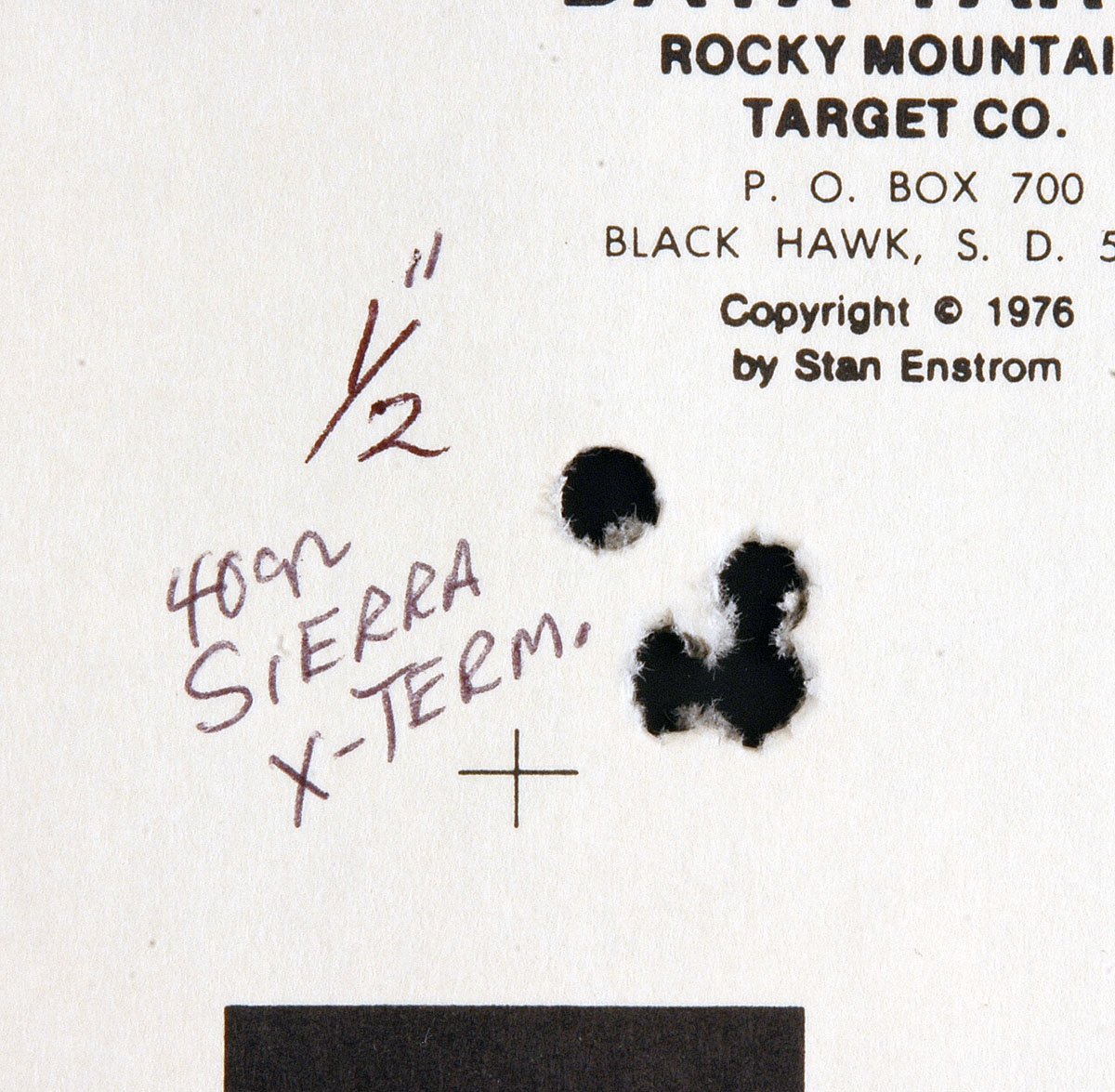
50-grain bullets functioned the A4’s action. With IMR-4198 it was a single-shot rifle. That said, the groups it delivered were just fine with a seven group average of 1.02 inches. While on this subject, it is worthy of mentioning that the A4 functioned flawlessly with all other propellants. There was nary a stoppage of any sort.
Varget powder could perhaps be considered “too slow” for light bullet loads in the .223 Remington. For instance, with the 40-grain bullets, velocities didn’t even reach 3,200 fps, whereas other powders had them going past 3,500 fps. Those speeds were from the A4. As said, the Savage was often over 100 fps slower. Still Varget turned in some very tight groups here and there. Also the charge of 26.5 grains of Varget pretty much filled the cases and was slightly compressed with all bullet weights. It might be an option, however, for those reloaders not stuck on high velocity and wishing to load large quantities of .223s on progressive type presses. By my experience in this project, you can’t get enough Varget in a .223 case with 40- to 50-grain bullets to cause dangerous pressures. That said, however, you are on your own.
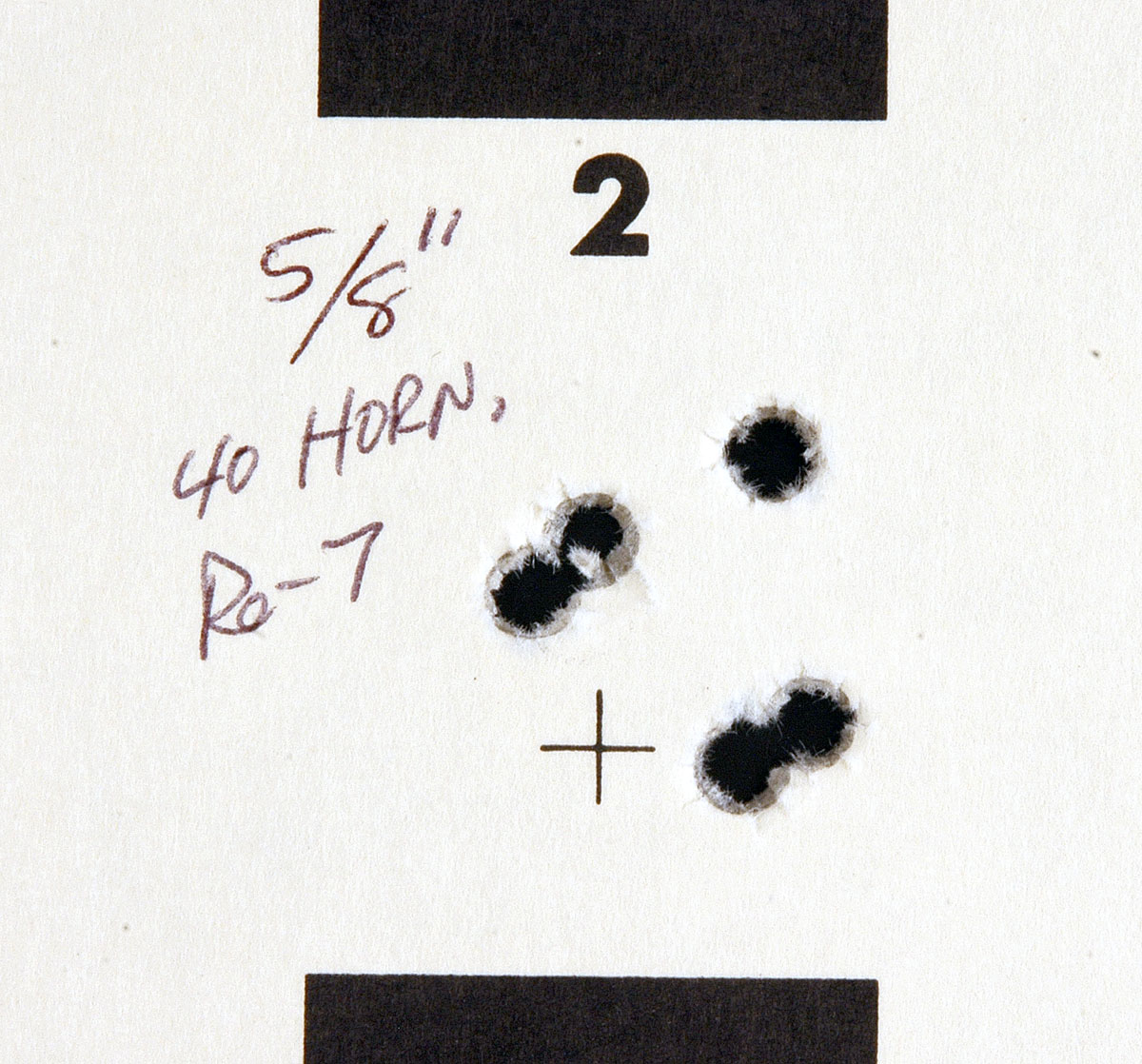
When this project was finished, the total average for 42 groups fired from the Rock River A4 was exactly 1.00 inch, and for the Savage Model 11F it was 1.28 inches. However, those averages include the disappointing results achieved with the 45-grain bullets. Take those 12 groups out of each rifle’s totals (30 groups now averaged), and the averages come down to .90 inch for the A4 and 1.12 inches for the Savage.
In the process of firing these hundreds of rounds through both rifles, I’ve come to accept some new things in my varmint rifle thinking. First off, those new bullets with the pretty plastic noses are great. They were tremendously destructive on small varmints on my varmint hunting trip to Oregon, and now from this paper target shooting, it is obvious they shine in the accuracy department too.
Also gained from this project is some deep respect for the ac-curacy potential of a modern- day autoloading rifle. Twenty-five years back when I gave up varmint shooting, I honestly never thought they could be viable long-range varminters. They are, although I still don’t like the way they spread my empty brass hither and yon. The first time in Oregon there were often opportunities for quick repeat shots, since the ground squirrels often clustered together. Upon my return with the Rock River A4 Varmint rifle, I’ll find out if indeed a fast second shot is an asset.
.jpg)
.jpg)