20 Tactical
Handloads for a Wildly Popular WIldcat
feature By: R.H. VanDenburg, Jr. | April, 14
It’s difficult to imagine a small capacity rifle case that hasn’t been necked up or down to .20 caliber. Of the lot, I have to admit having developed a particular fondness for one of them: the 20 Tactical.
The 20 Tactical was developed in 1998 by Todd Kindler, proprietor of The Woodchuck Den, Inc., a retail/mail-order establishment specializing in products for the small bores. It is the 223 Remington case necked down to .20 caliber with the neck lengthened slightly, the shoulder set back and sharpened to 30 degrees and the body slightly blown out. It seems to be the most logical of the .20s and is capable of astonishing ballistics. As with the 223 Remington, maximum case length remains 1.760 inches and the “trim-to” length is 1.750 inches. Unlike the 223 cartridge with published load data frequently approaching 55,000 psi in maximum average pressure and the 204 Ruger at 59,000 psi, the 20 Tactical is often shown with pressures up to 63,000 psi.
The beauties of the 20s, their fans will tell you, are numerous. Very light recoil in most cases allows the shooter to see the target being hit (or missed). Since all these cartridges are built around a love of varmint hunting, this is an important consideration. Low noise derived from relatively small powder charges in small capacity cases coupled with long barrels plays well in settled areas and among farmers who would prefer to keep things down to a roar. All this adds up to economy as light bullets cost less than heavy ones, and small charges stretch powder budgets satisfyingly.
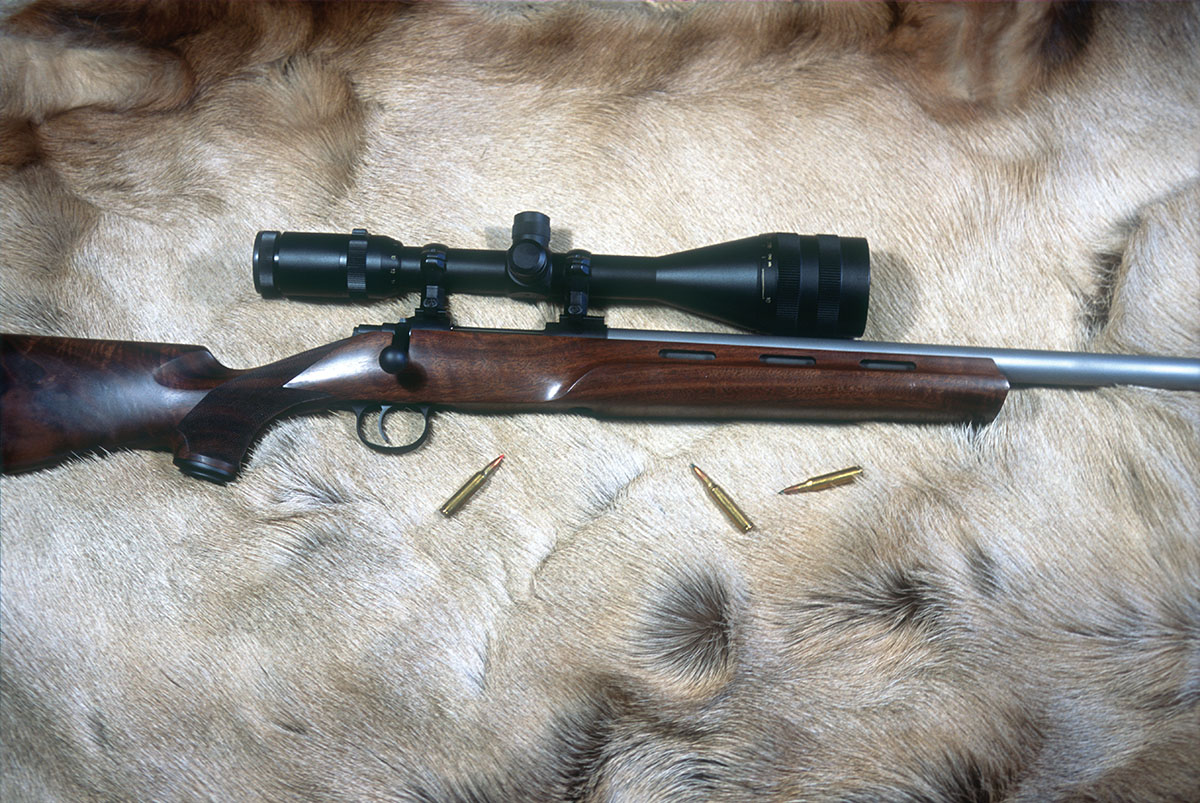
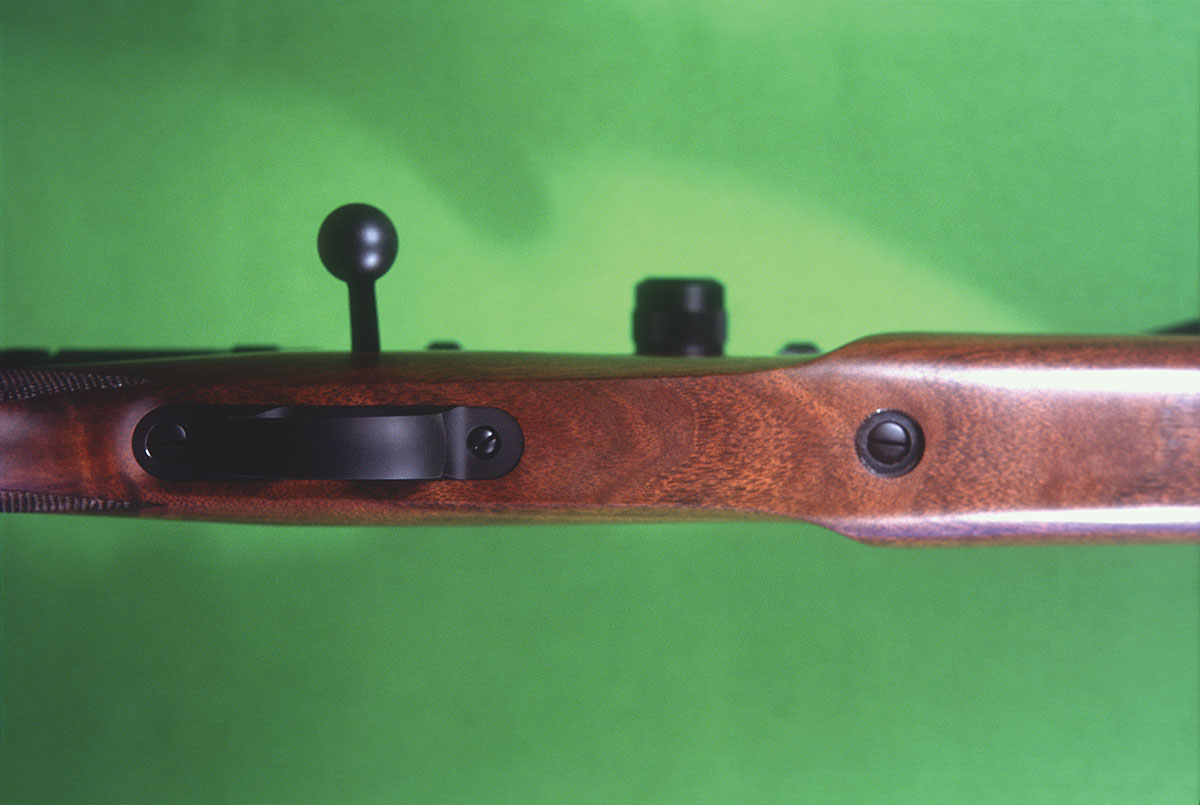
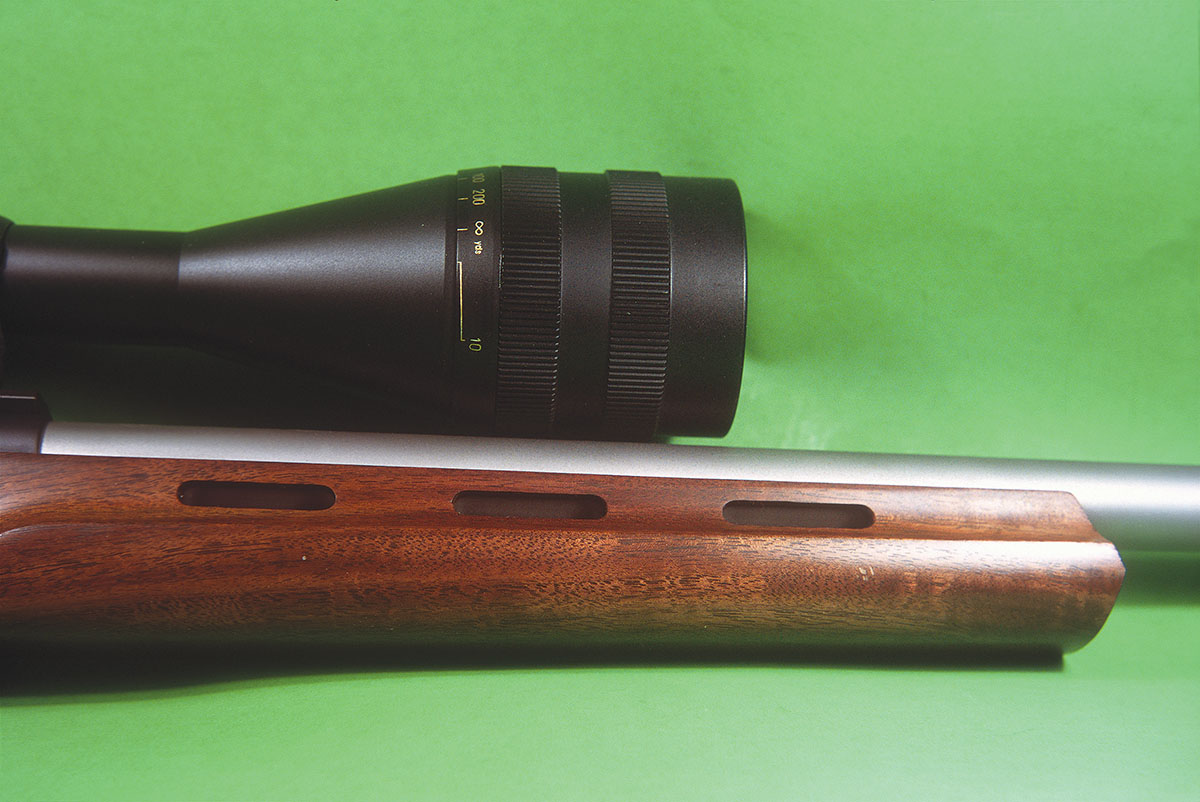
To narrow focus to reloading the 20 Tactical cartridge, let’s begin with the rifle. The one used here is a Cooper Firearms Model 21, a single-shot bolt action. The action is blued; the barrel is stainless steel, in a matte finish, 26 inches long with a one-in-12-inch twist. The bolt has three locking lugs, a Sako-style extractor and a plunger-style ejector. The bolt face completely encloses the head of the cartridge. A raceway cut in the bolt body captures the bolt release on the left side of the receiver and serves to prevent binding. The rifle is very well made, and the stock is the most beautiful I’ve ever seen on a factory rifle. Cooper is well along on this small-caliber journey and chambers its rifles for many of the .17- and .20-caliber cartridges.
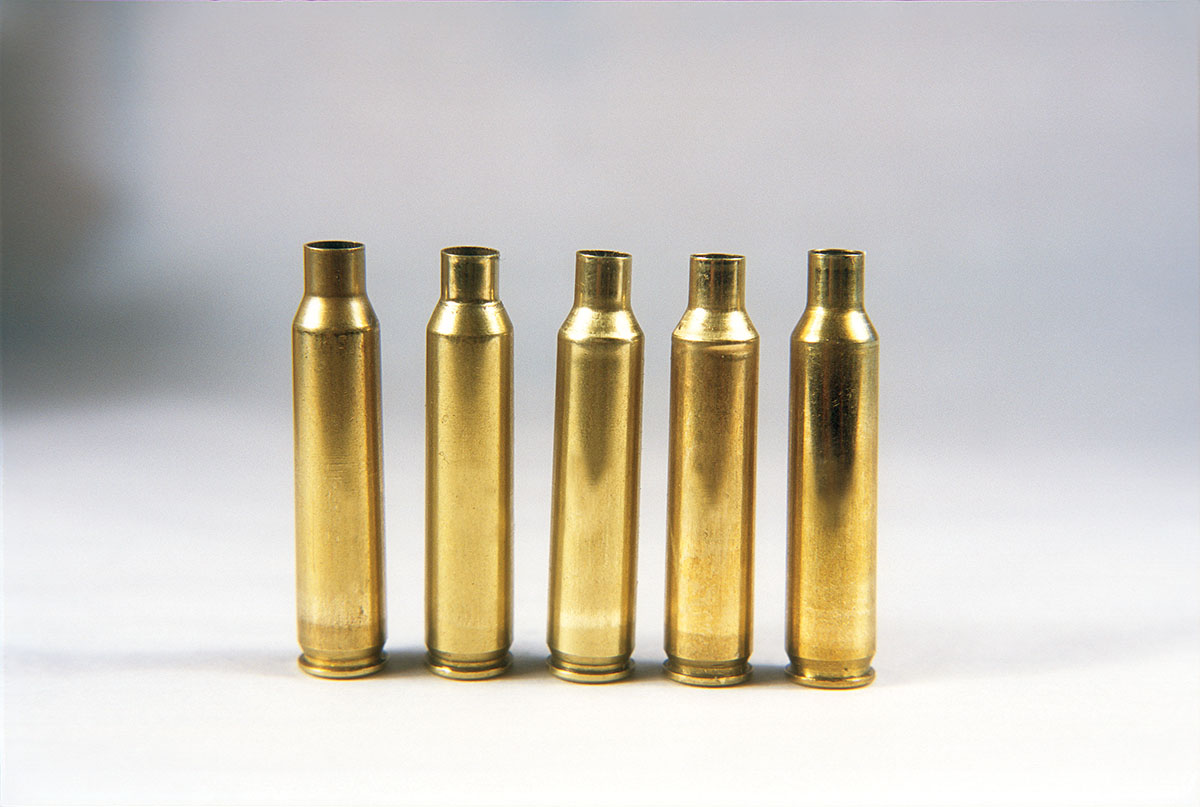
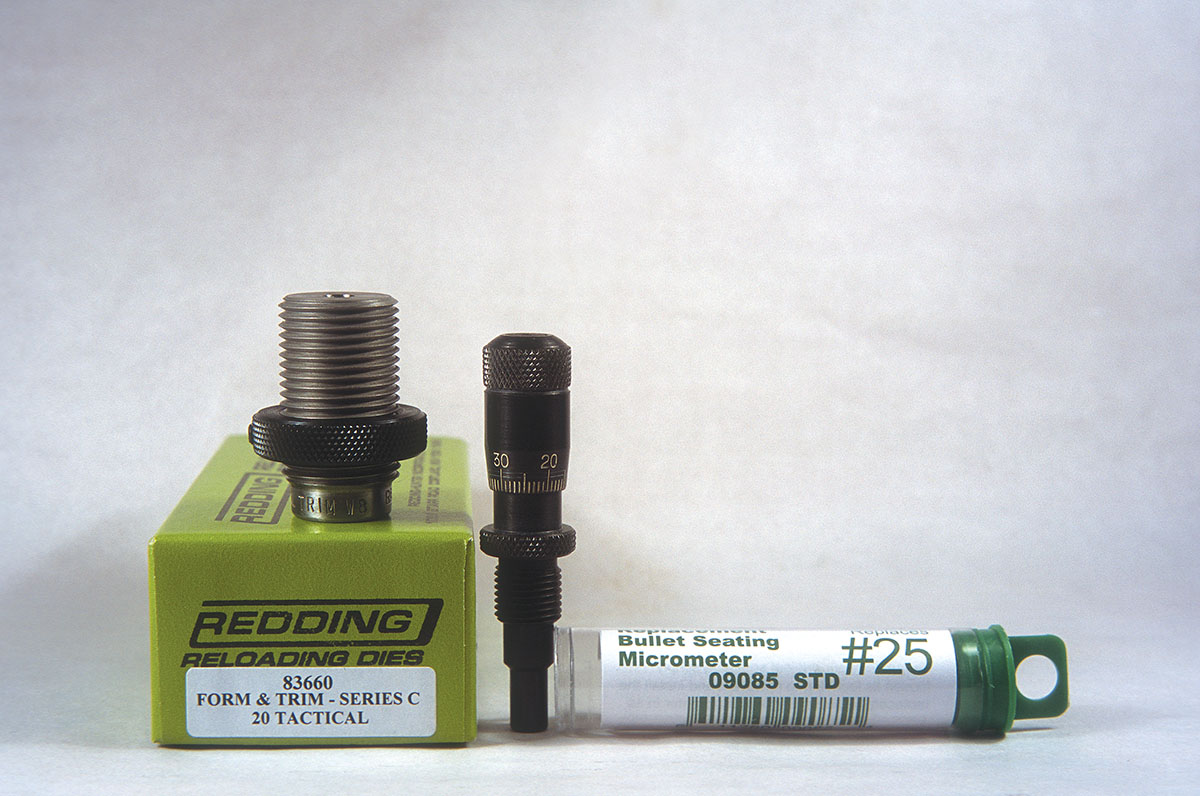
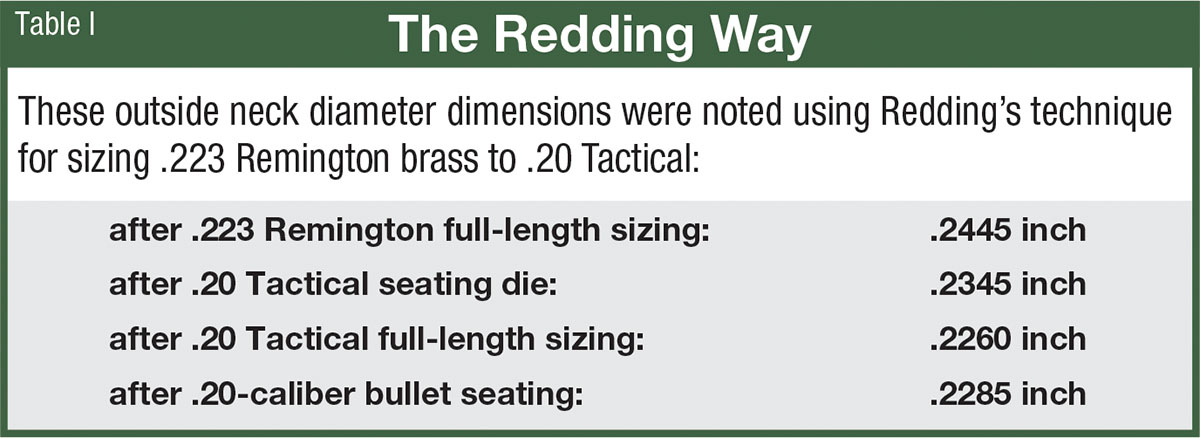
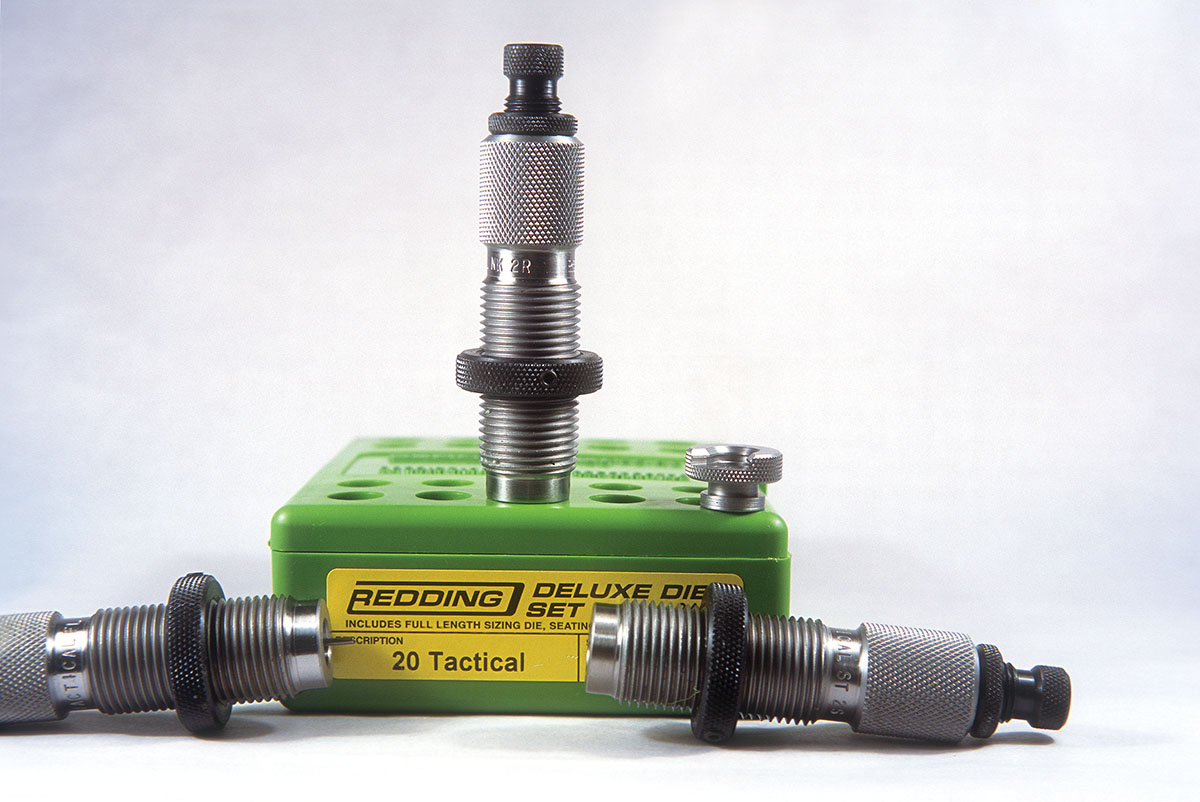
I needed reloading dies and turned to Robin Sharpless of Redding Reloading to discuss the project. Redding had 20 Tactical dies in stock along with a form-and-trim die for making cases from 223 Remington brass. Robin sent the form-and-trim die along as well but said I probably wouldn’t need it. Redding had developed, he said, a technique for forming 20 Tactical from 223 Remington brass without it. First the cases are sized in a full-length 223 die, then run, slightly lubricated, into the 20 Tactical seating die. This reduces the neck diameter slightly. Finally, the case is run into the full-length 20 Tactical sizing die that sets the shoulder back and makes the cases ready for fireforming. No trimming is necessary if the cases were the proper length before starting. Nor is there a need for neck turning. (The dimensions through transition are listed in Table I.)
Actually I tried several techniques: simply running sized 223 Remington cases into the 20 Tactical sizing die; first using the form-and-trim die then the 20 Tactical sizing die; and what Sharpless called “the Redding way,” using the 20 Tactical bullet seating die as an intermediate step between the 223 Remington sizer and the 20 Tactical sizer. I came to much prefer the latter as the first was somewhat unsatisfactory and the second left an unsightly “wrinkle” behind the shoulder. This comes out in fireforming, but it didn’t happen when using the 20 Tactical seating die approach.
Ultimately, the cases need to be fireformed. Since the necks have been sized and the shoulders already re-formed, all that is necessary is to expand the cases to fit the chamber. In such instances a full-charge bulleted load is the approach to follow – no fast pistol powder or Cream of Wheat filler or pointing the muzzle to the sky. It should be noted, though, since a case that has not been fireformed has slightly less internal capacity than one that has, a maximum powder charge may send pressures overboard in an un-fireformed case. Cutting the maximum charge by a grain may prove to be prudent. In one experiment, I began with a starting load and didn’t get a fully fireformed case until the powder charge reached a grain short of maximum. In another, beginning with the maximum charge produced excessively high pressures leaving deep extractor marks on the case heads. Be forewarned.
When it came to bullets, quite a number were found, from a Hornady 24-grain lead-free NTX to a 55-grain Berger. I’ve been assured that my one-in-12-inch barrel twist will stabilize all bullet weights up through 45 grains. For heavier ones, a one-in-9-inch twist is recommended, especially at longer ranges. For its 55-grain BT, Berger recommends a one-in-8-inch or faster twist.
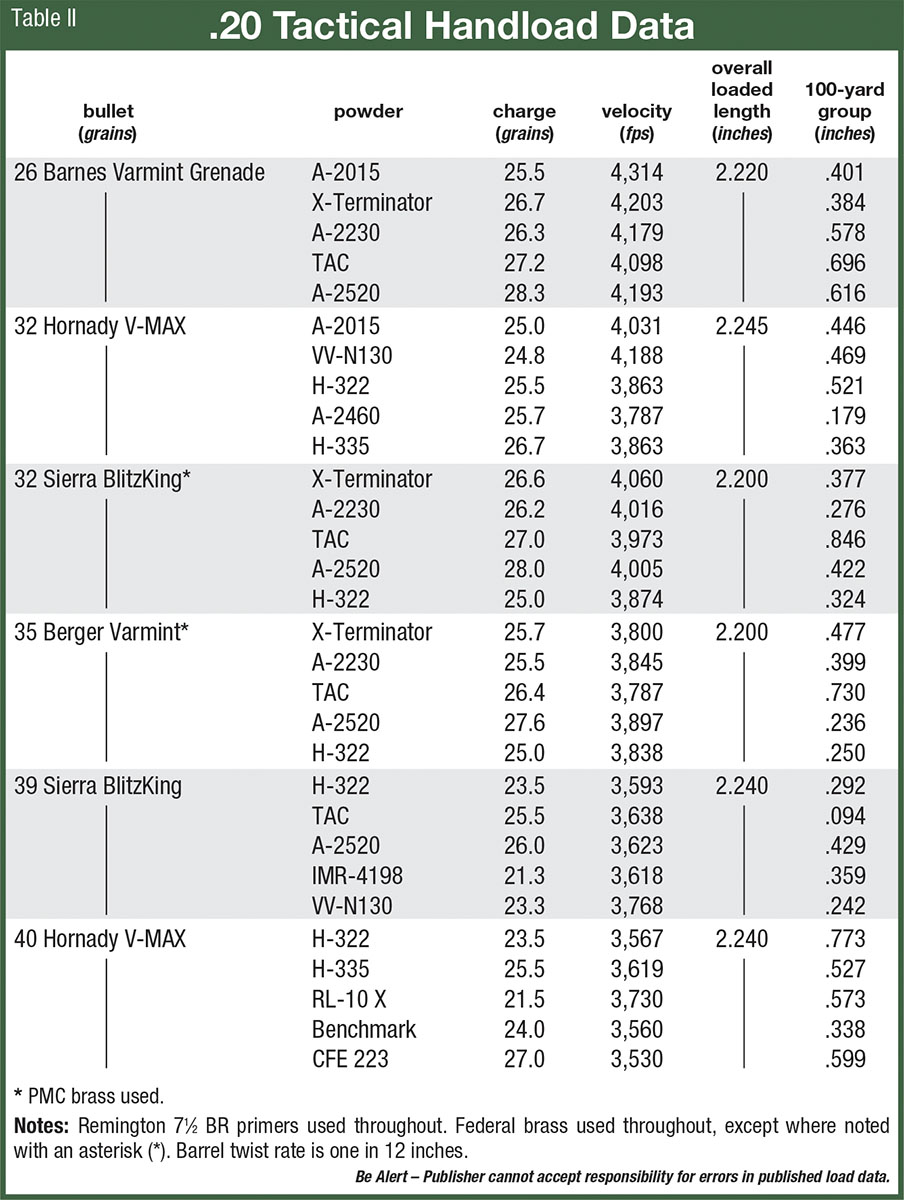
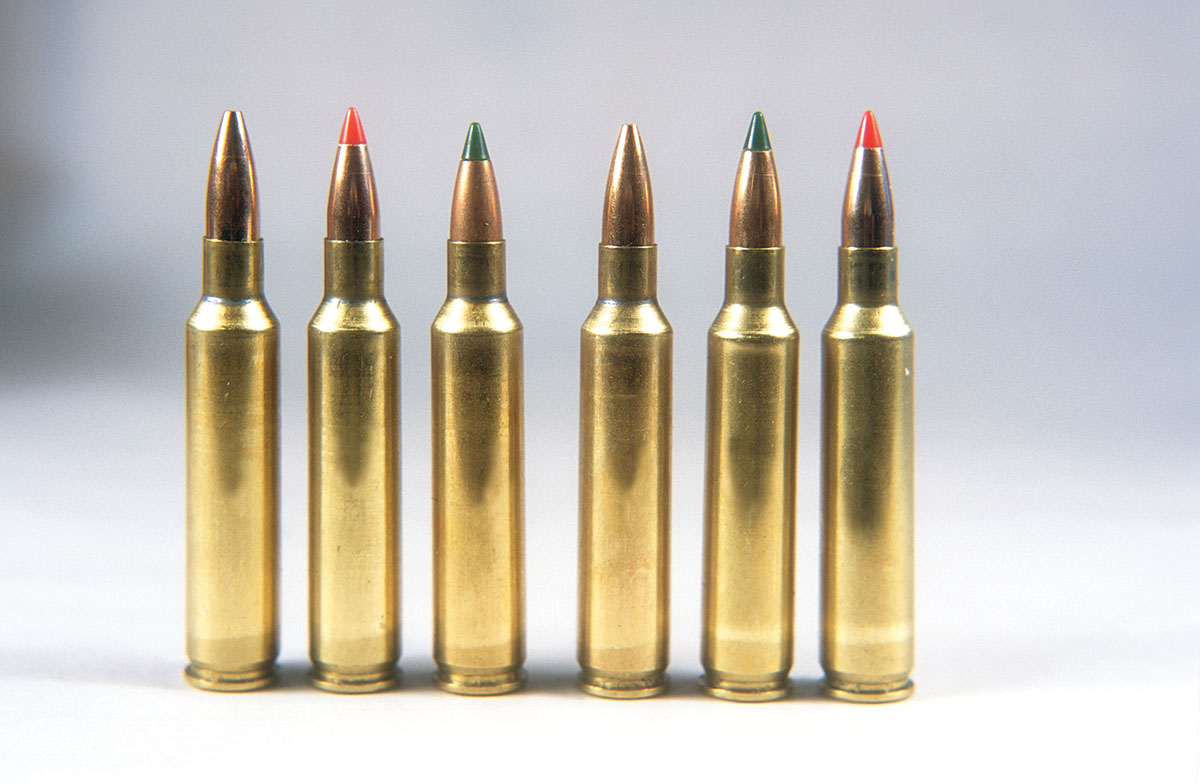
For the tests, in purchasing whatever could be found in stores and requesting samples of those I couldn’t from manufacturers, I ended up with the Barnes 26-grain HP Varmint Grenade, Hornady 32-grain V-MAX, Sierra 32-grain BlitzKing, a Berger 35-grain Varmint, a Sierra 39-grain BlitzKing and Hornady’s 40-grain V-MAX. Sufficient for my needs.
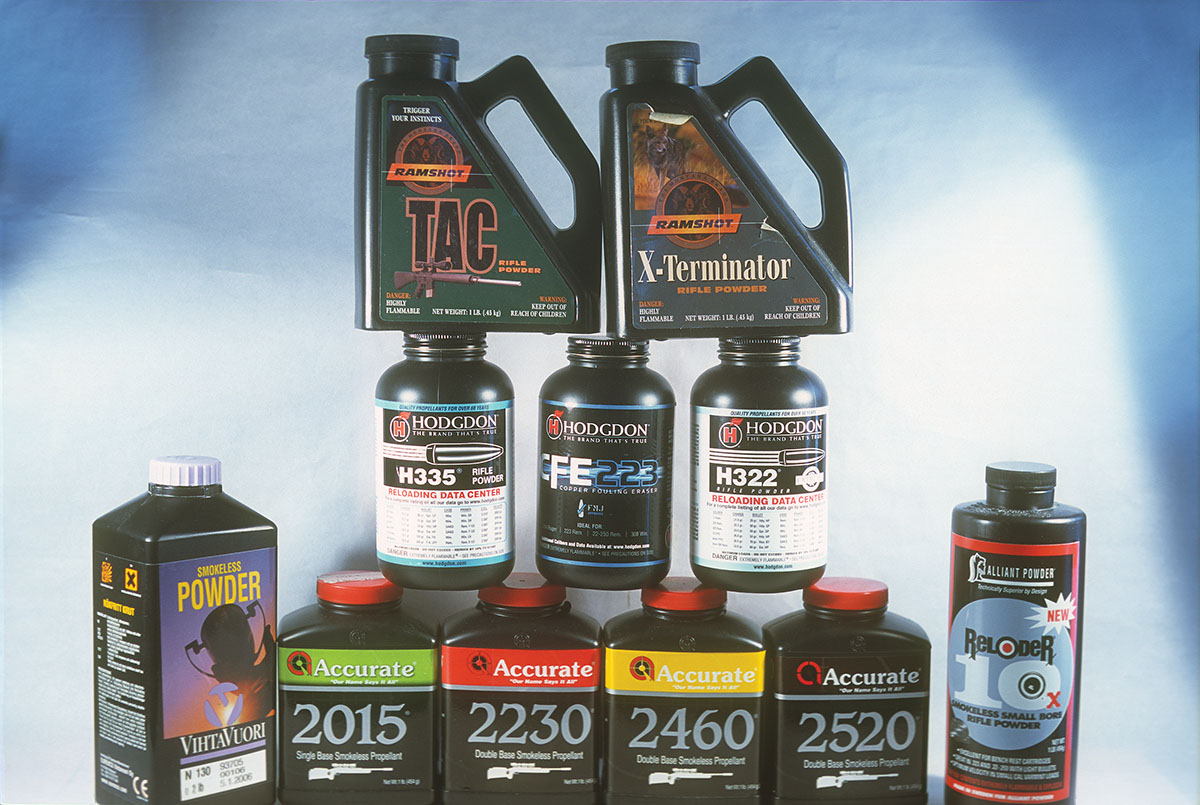
When it came to powders, a baker’s dozen that had been given some play in published data was selected. After much loading and shooting, I must agree with those who say that all the powders tested performed well. At the same time, it appears some rise above the norm. Among single-base, extruded powders, Hodgdon H-322 and Vihtavuori N130 produced the best results for me, with IMR-4198 and Accurate 2015 not far behind. Among ball, or spherical, powders, I’d have to give the nod to Accurate 2230 and 2520 with Ramshot X-Terminator and Hodgdon H-335 trailing, but not by much. Ramshot TAC, for which I had great expectations, didn’t hold up as well in extended testing but did produce the smallest group, with the Sierra 39-grain BlitzKings – and the largest, which may have been a case of shooter error. Perhaps it is at its best with the heavier bullets. Reduced to two powders, I’d go with H-322 and VV-N130.
The project has been great fun, and I’ve never shot as many three-shot groups with all bullets making a single hole as was experienced with the 20 Tactical. Most of the credit must go to the fine Cooper rifle and good bullets, but the cartridge design is certainly entitled to its share.