6mm-204 RR
An Efficient Wildcat Suitable for Varmints or Deer
feature By: Brian Pearce | April, 14
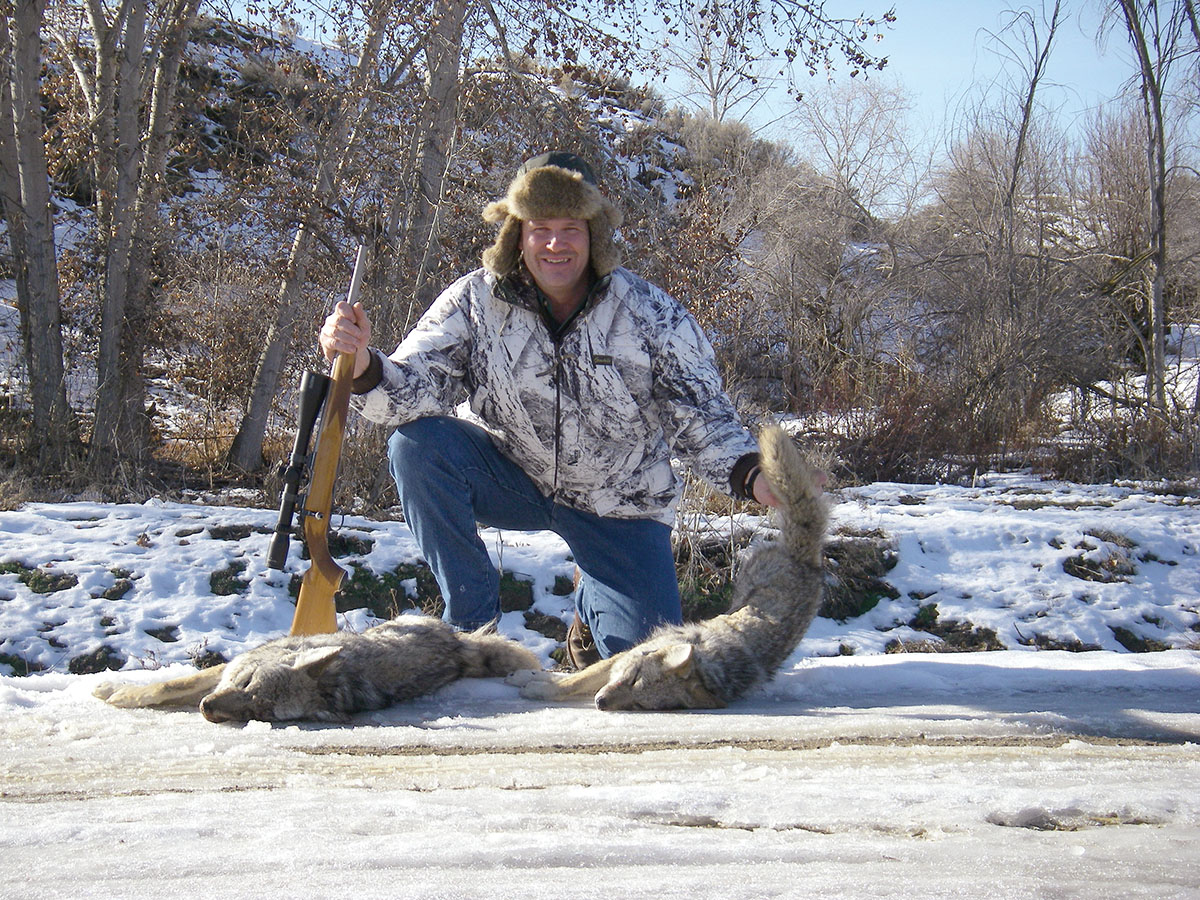
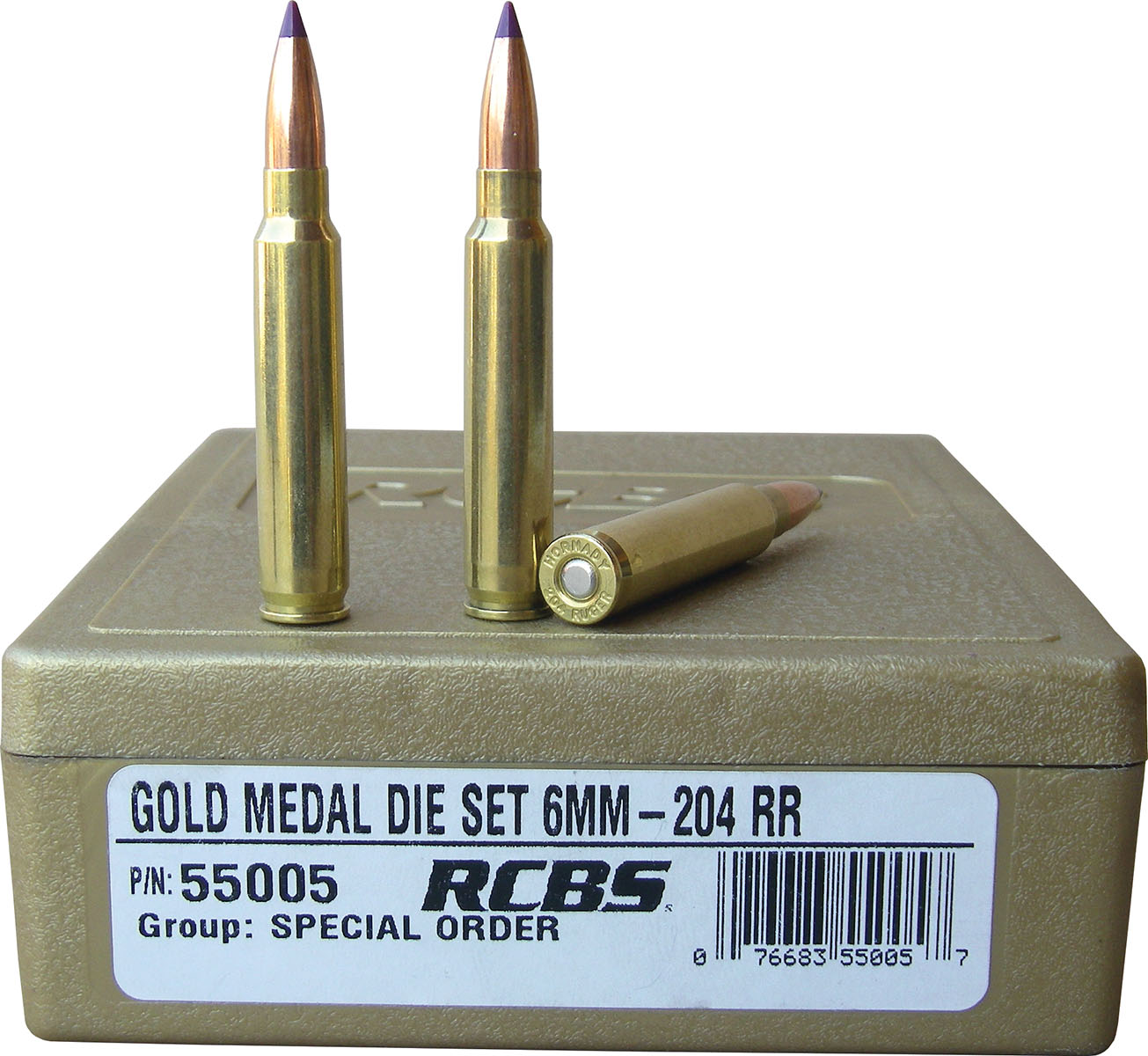
The golden era for wildcatting was probably during the two or three decades following World War II. Although there were many cartridges developed prior to the war that ultimately influenced manufacturers, the postwar economy was growing – with cases, powder and primers becoming available again and a variety of surplus rifle actions with which to build custom guns. Because there were many voids between commercial cartridge offerings, wildcatting became so popular that in 1956 Speer published its Reloading Manual for Wildcat Cartridges, which is considered a classic today.
As the field of commercially available cartridges grew and became more and more crowded, wildcatting began to decline. The “gains” associated with a given wildcat became so minimal over similar commercial cartridges that it was hard to justify the effort. Within the past couple of decades, however, many new commercial cartridges have appeared (most based on revamped older designs) that have given hand-loaders readily available cases, resulting in fresh ideas for wildcats. Advancements in hunting bullet designs have also influenced new cartridge developments.
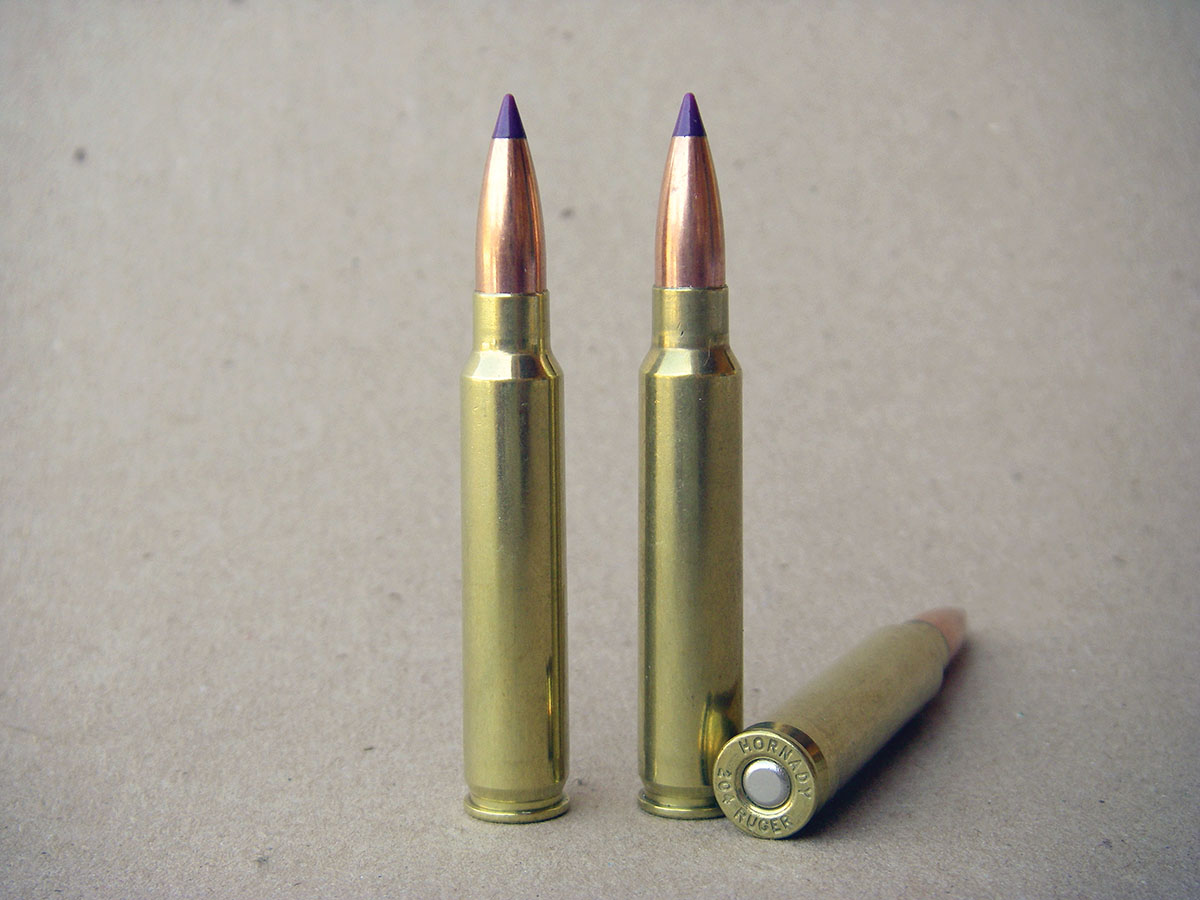
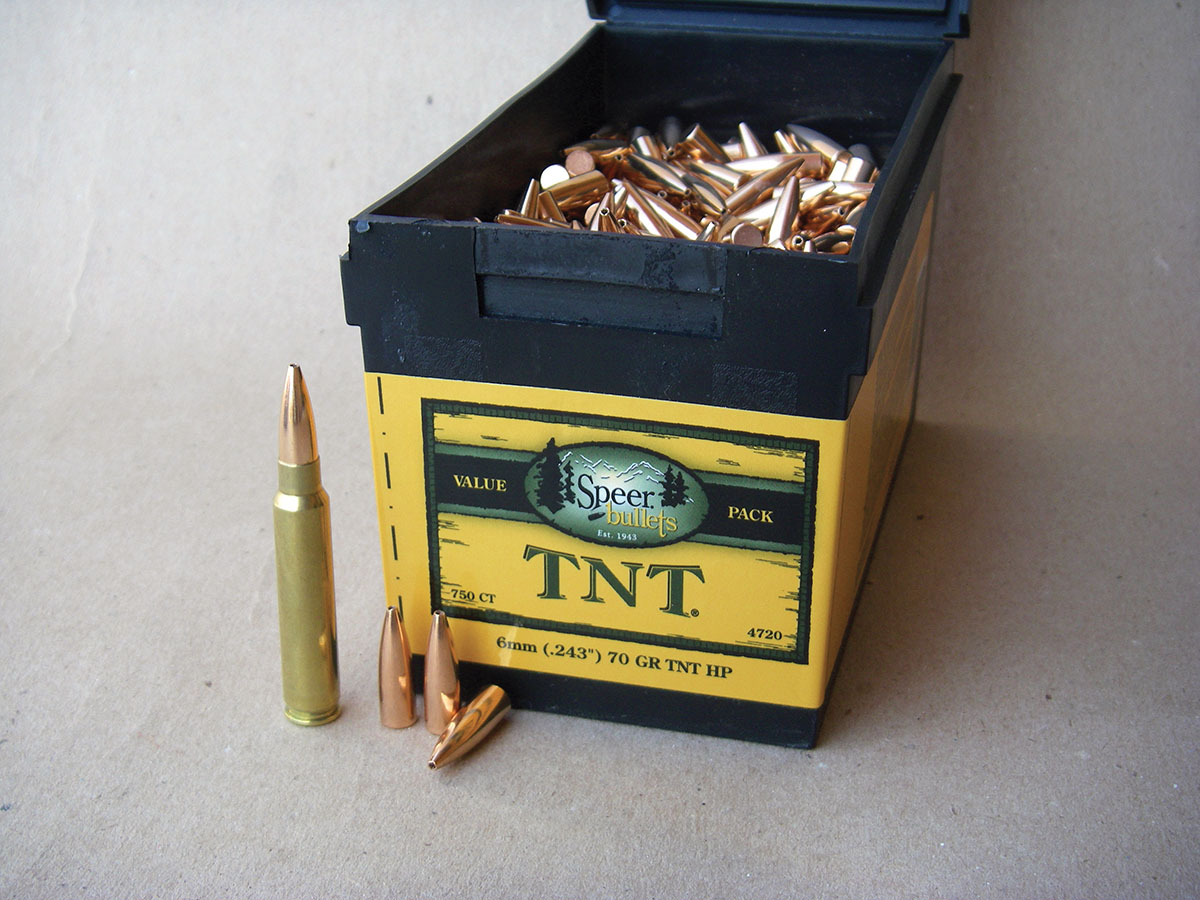
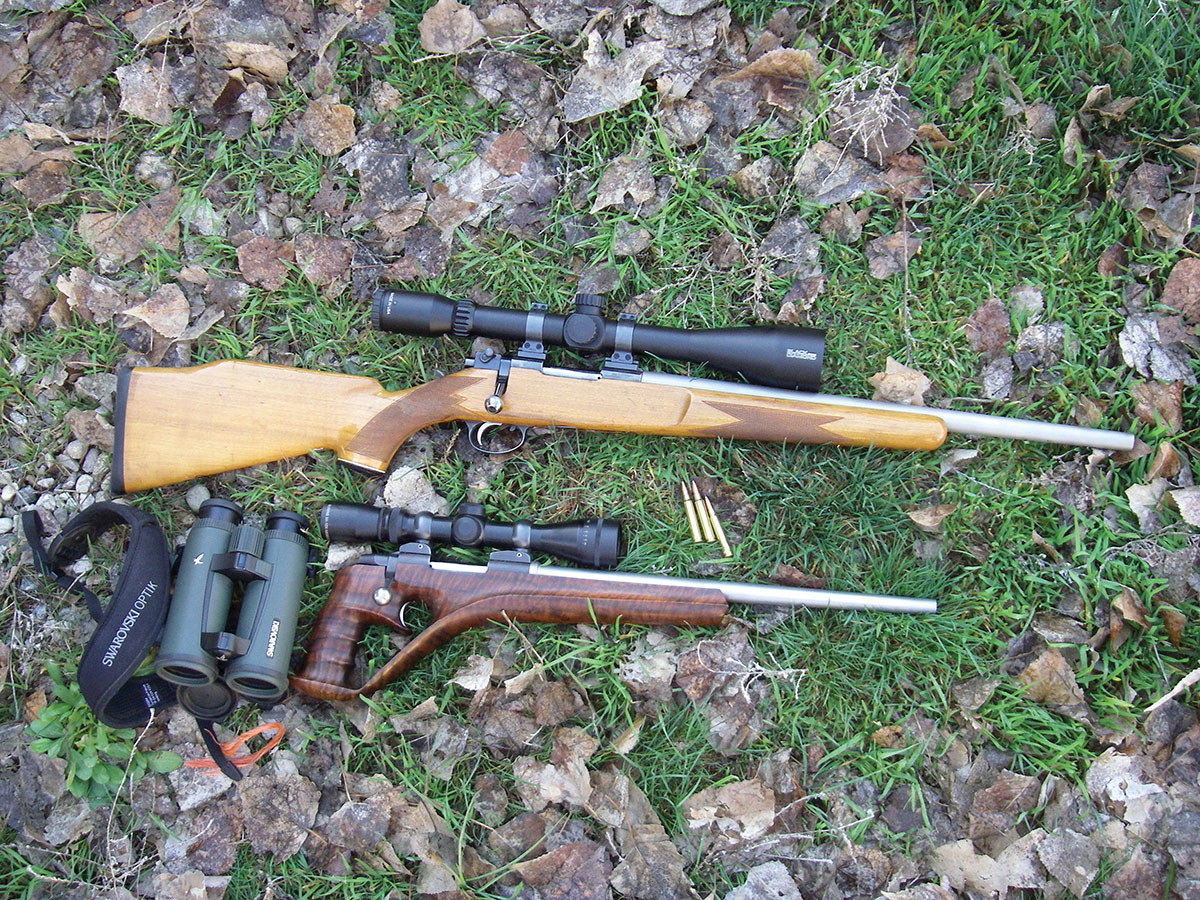
The first time I heard of this cartridge was in 2010, while shooting ground squirrels with Rod Herrett (Herrett’s Stocks, PO Box 741, Twin Falls ID 83303) in southern Idaho and rockchucks in northern Nevada. We were using a variety of rifles chambered for popular centerfire and rimfire cartridges and several iron-sighted sixguns. Rod soon handed me a scope-sighted, custom, bolt-action pistol based on the Sako L-461 action with a 15-inch barrel in 204 Ruger. The highly figured walnut stock was hand-built by Rod and showed incredible attention to detail with artful curves and twists that were pleasing to the eye.
With the aid of sandbag rests across the hood of the pickup, I was soon hitting the small squirrels reliably at 400 yards. Rod said the pistol would shoot into a ragged hole at 100 yards, which I didn’t doubt, but the barrel would soon be changed out to a 6mm wildcat dreamed up by Reiber. Both Reiber and Herrett are dedicated rockchuck handgun hunters. They like the 204 Ruger on ground squirrels, but from the 15-inch barrels, velocities were reduced, and there just wasn’t enough bullet weight or energy to give the desired “lift and divide” effect on rockchucks. The new cartridge was intended to take advantage of the many new 6mm varmint bullets.
By the fall of 2011, Reiber had built the first single-shot pistol. The heavier bullets transferred notably greater energy and offered quick kills. Soon thereafter Herrett converted the previously mentioned pistol and a Sako rifle (L-469 action) with an 18½-inch Bullberry Barrel Works barrel.
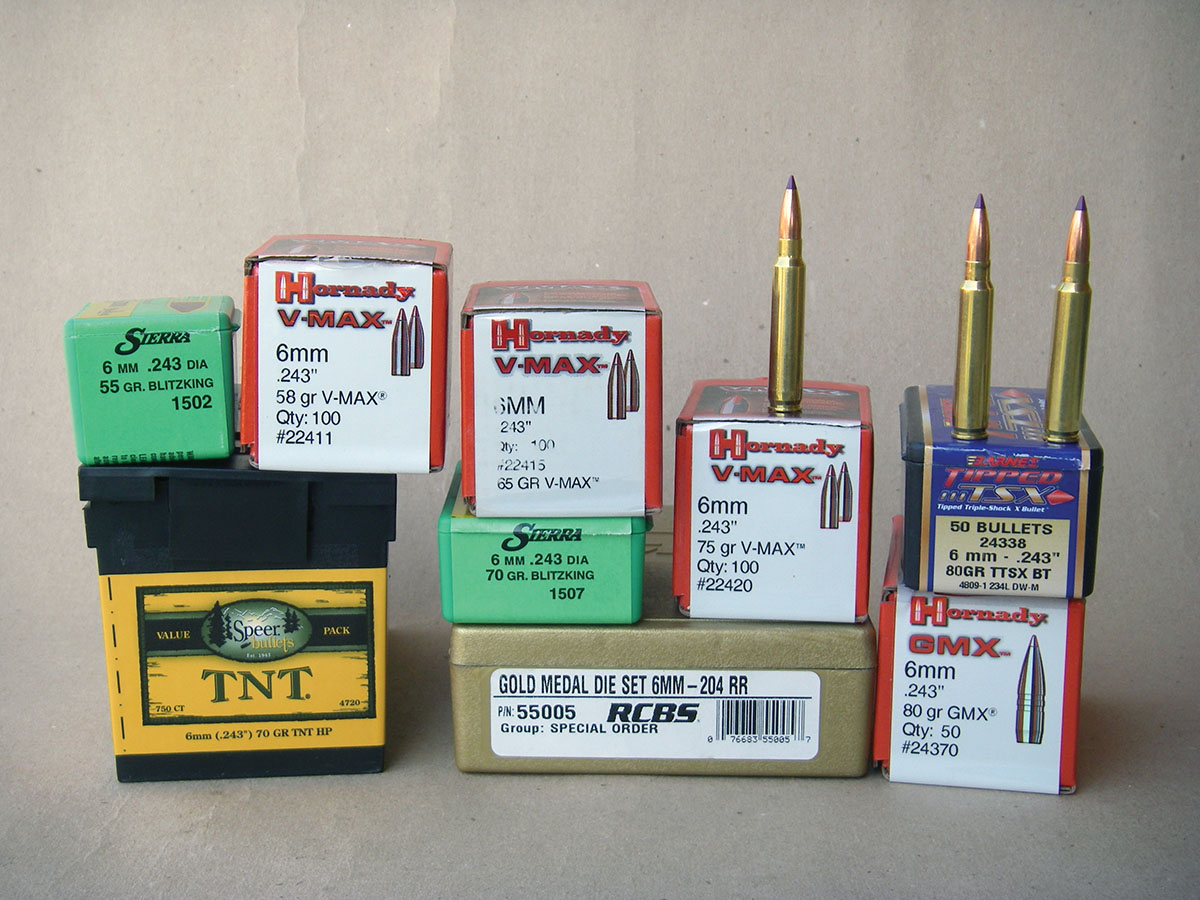
Moving up in bullet weight, the Hornady 80-grain GMX and Barnes 80-grain Tipped Triple-Shock X-Bullet are outstanding deer bullets. In observing their effectiveness in the field, measuring penetration and recovering bullets, my impression
is that they are more effective on big game than any conventional 6mm 100-grain cup-and-core bullets, which have been killing deer since the 1950s in the 243 Winchester with factory loads advertised at 2,960 fps but from most 22-inch barrels actually clock around 2,800 to 2,850 fps. Regardless, 80-grain premium bullets can reach 3,000 fps from the 6mm-204 RR and have already proven themselves on deer.
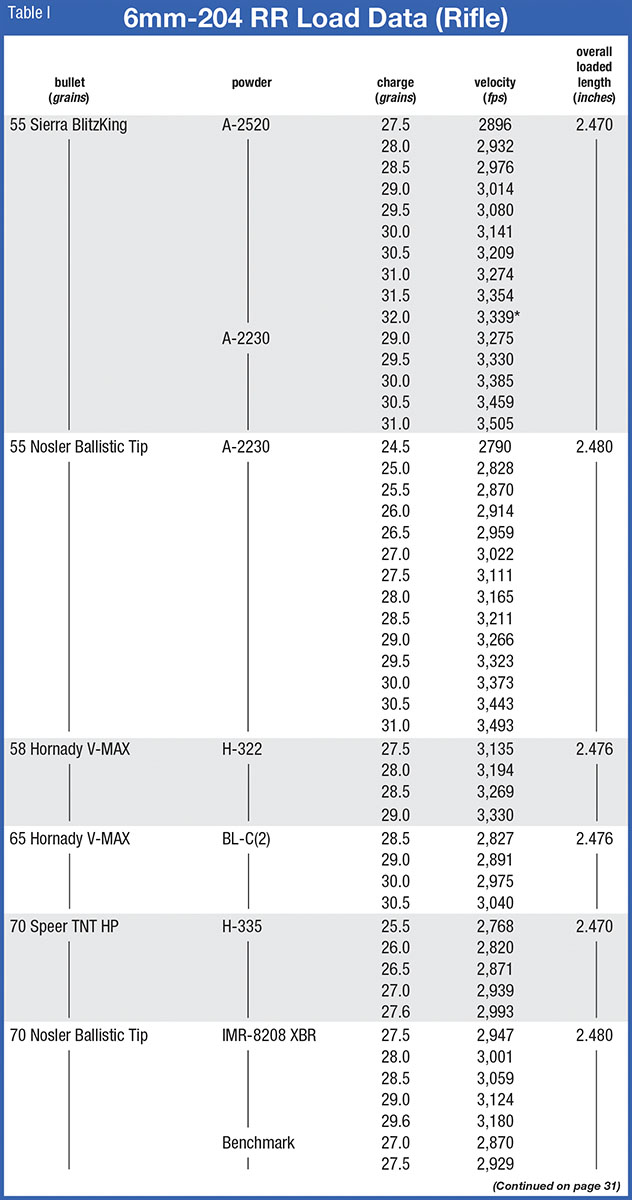
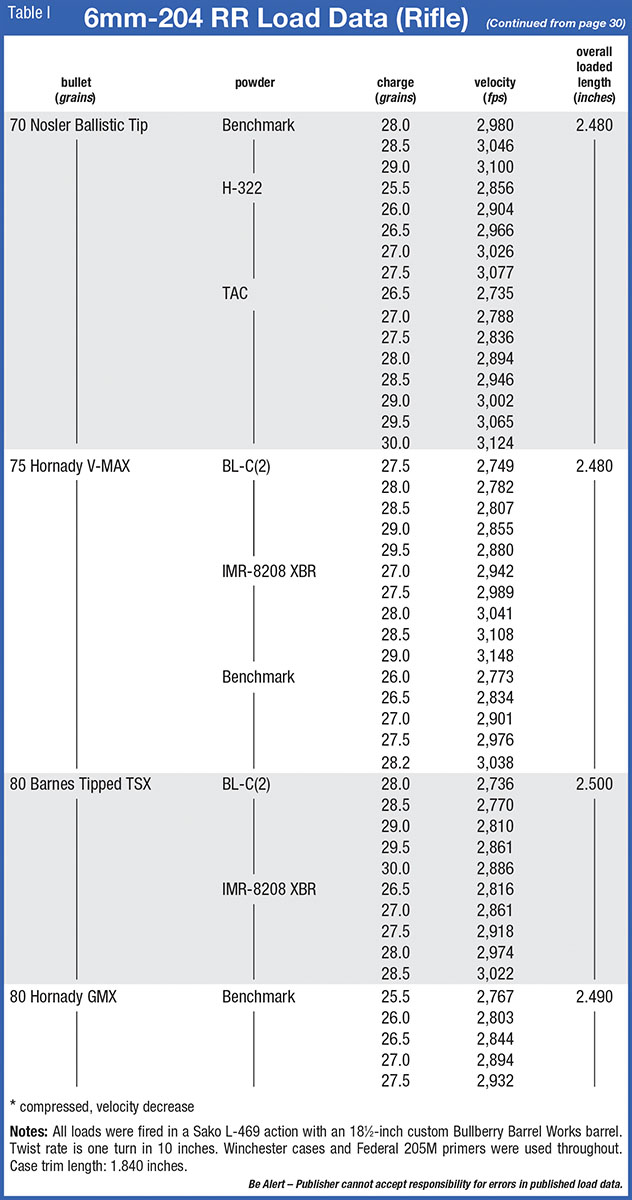
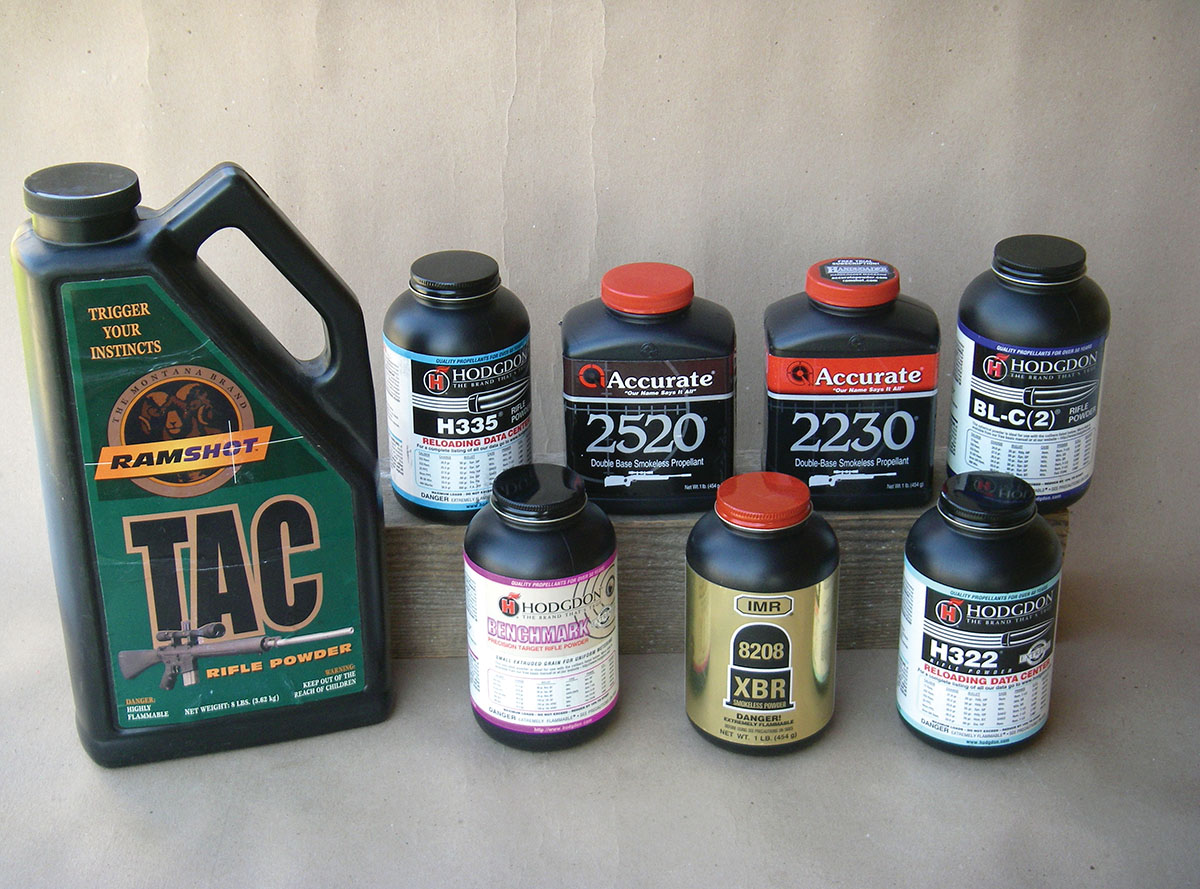
The 6mm-204 RR only requires around 65 percent as much powder as the 243 Winchester with a comparatively low muzzle report, substantially longer barrel life and low extreme spreads. It thrives on the same powders as does the 223 Remington. Excellent results were obtained with Accurate 2230, Hodgdon H-322, BL-C(2), H-335, Benchmark, IMR-8208 XBR, Ramshot TAC and probably others.
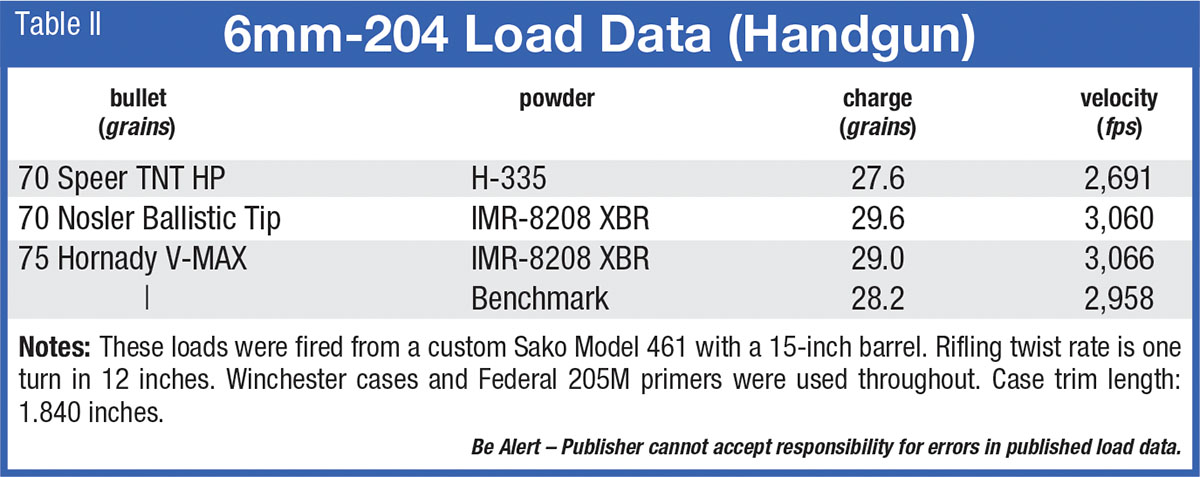
Rod Herrett’s Sako-based custom rifle and handgun were used to develop loads here. The handgun features a one-in-12-inch barrel twist, while the rifle has a 10-inch twist, which seems to be the best choice for 55- through 80-grain bullets. The rifle barrel diameter measures .650 at the muzzle, which is more of a “walking varminter” weight and is free-floated, while the tapered pistol barrel measures .600 inch at the muzzle.
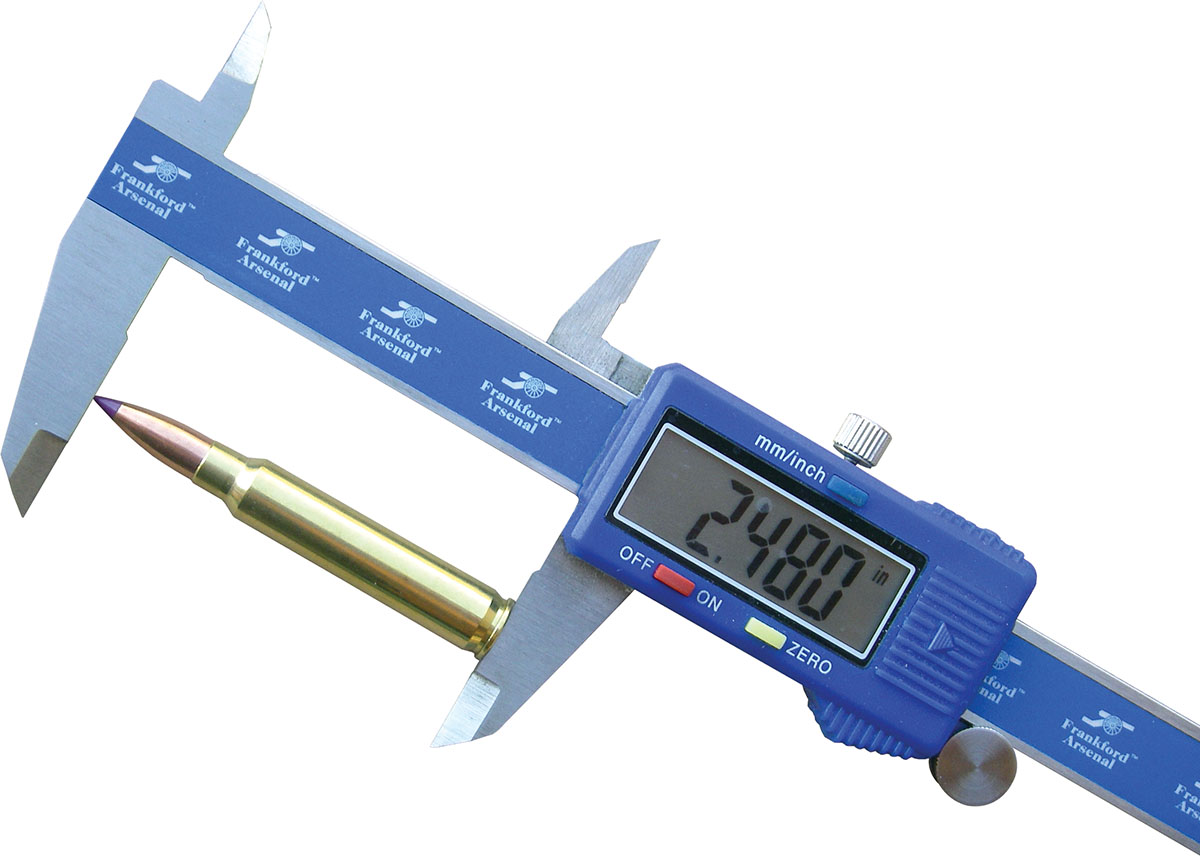
Due to the 6mm-204 RR overall cartridge length, which was held to between 2.470 and 2.500 inches with all bullets in the accompanying data, both guns were necessarily single shots. For example, the Sako L-469 action originally housed the 222 Remington Magnum cartridge, which has a maximum overall cartridge length of 2.280 inches. Cartridges measuring around 2.5 inches are too long to fit into the magazine and must be chambered in single-shot mode.
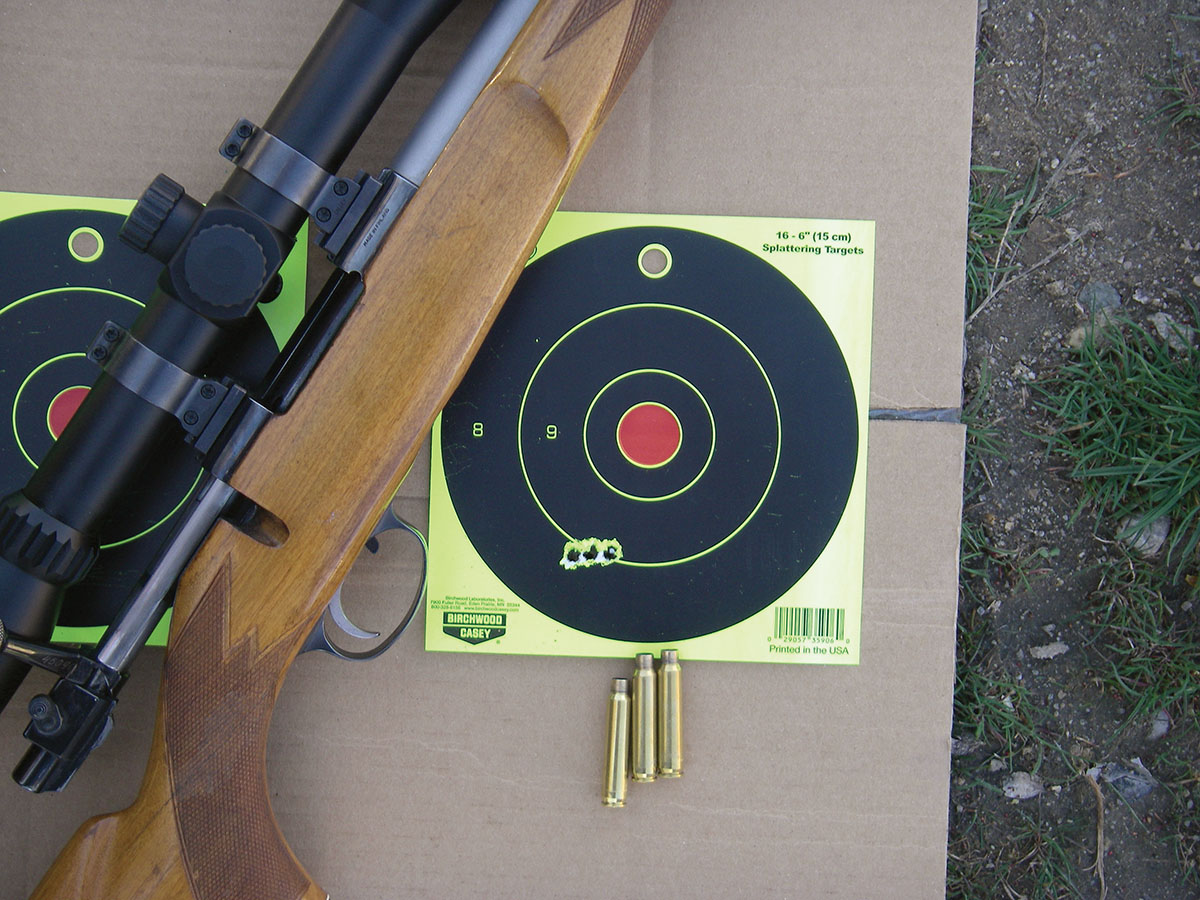
In developing the accompanying load data, the rifle was the primary focus, although a few loads were cross-referenced in the pistol to determine velocities and accuracy potential. One of the first impressions was the low muzzle report.
Although three different primers were tried with good results, Federal’s Gold Medal 205M primers produced notably outstanding results and is the only one listed herein. It should also be noted that 204 Ruger case water capacities varied among manufacturers, as well as case mouth wall thickness. This rifle was tightly chambered, especially in the neck, and it was a concern that some cases would not properly release the bullet when fired, which would probably jump pressures. As a result, cases from Winchester and Hornady were used to develop data. (Rod Herrett also mentioned that he had a batch of Winchester cases that featured a thicker neck and would need to be turned before they could be used.)
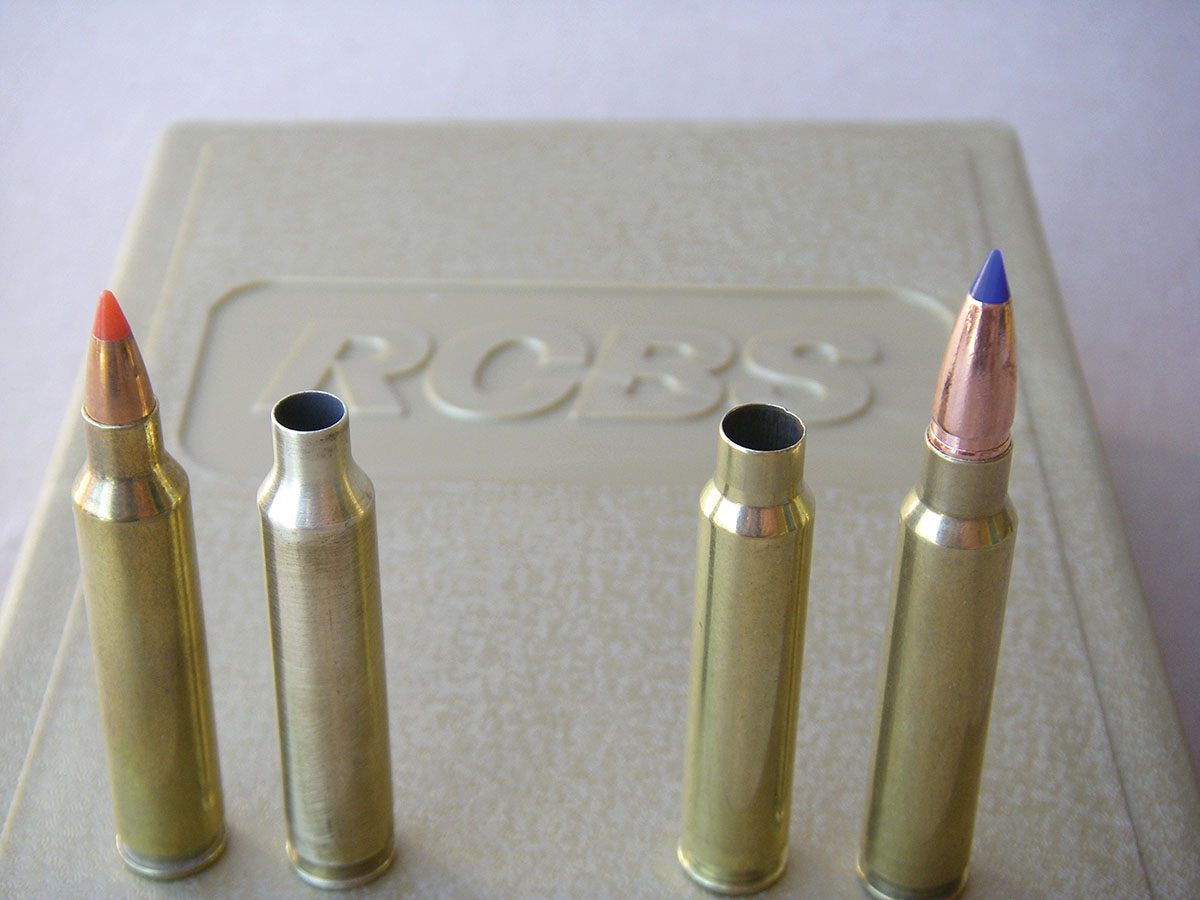
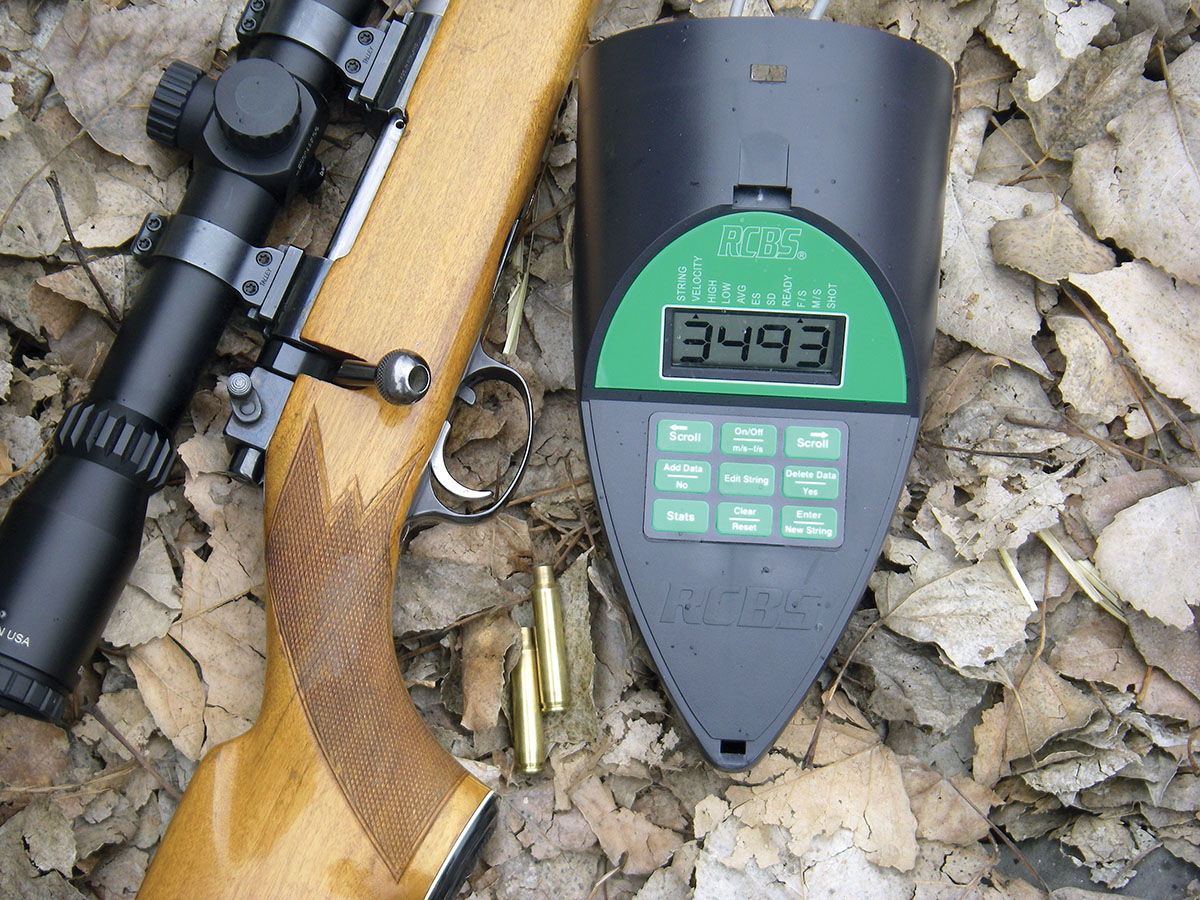
Two notable loads are the Sierra 55-grain BlitzKing and Nosler 55-grain Ballistic Tip ahead of 31.0 grains of Accurate 2230 powder for around 3,500 fps, which were accurate. This performance is not far behind the 22-250 Remington with the same bullet weight but with less powder, a notably shorter barrel and reduced muzzle blast. The Nos-ler 70-grain Ballistic Tip reached almost 3,200 fps when loaded with 29.6 grains of IMR-8208 XBR, which is the load preferred by both Herrett and Reiber for general varmint and rockchuck shooting. On a calm day, this load will stay within 3/8 inch at 100 yards. The Barnes 80-grain Tipped TSX clocked 3,022 fps when pushed with 28.5 grains of IMR-8208 XBR for deer.
Thirty years ago the 6mm-204 RR would perhaps have been known as the 6mm-222 Remington Magnum and would have been rather boring loaded with conventional cup-and-core 80- and 100-grain bullets of the day. With today’s new powders and bullet designs, it is proving spectacular on varmints and is suitable for deer. Furthermore, brass is readily available and requires very little work to prepare and form cases. There is a wide variety of 6mm bullets for any practical application.