204 Ruger
A Great Varmint Cartridge
feature By: Jeremiah Polacek | April, 24
When it comes to varmint hunting, the 22-caliber options get a lot of attention and rightfully so. They carry more weight to target, generally buck the wind better and are economical to shoot from 223 Remington to 22-250. However, the smaller calibers, such as 17 and 20 still have a lot of merit when it comes to varmint hunting. They are economical and while they may not have as much weight as their 22-caliber cousins they make up for that weight with speed.
When I was a boy, one of my favorite rifles was a beautiful Kimber 84M chambered in 204 Ruger. It was my Dad’s rifle and he was generous and kind enough to allow me to use it when it was just sitting in the safe alongside a 22-250 Remington, that I also used regularly. When going out on horseback or walking the property or national forest behind our house, there was quite a rivalry between these two rifles and picking one to take into the field. It seemed that I rotated between them quite often as they both had merits and are great cartridges. Many fond memories were made with both rifles.
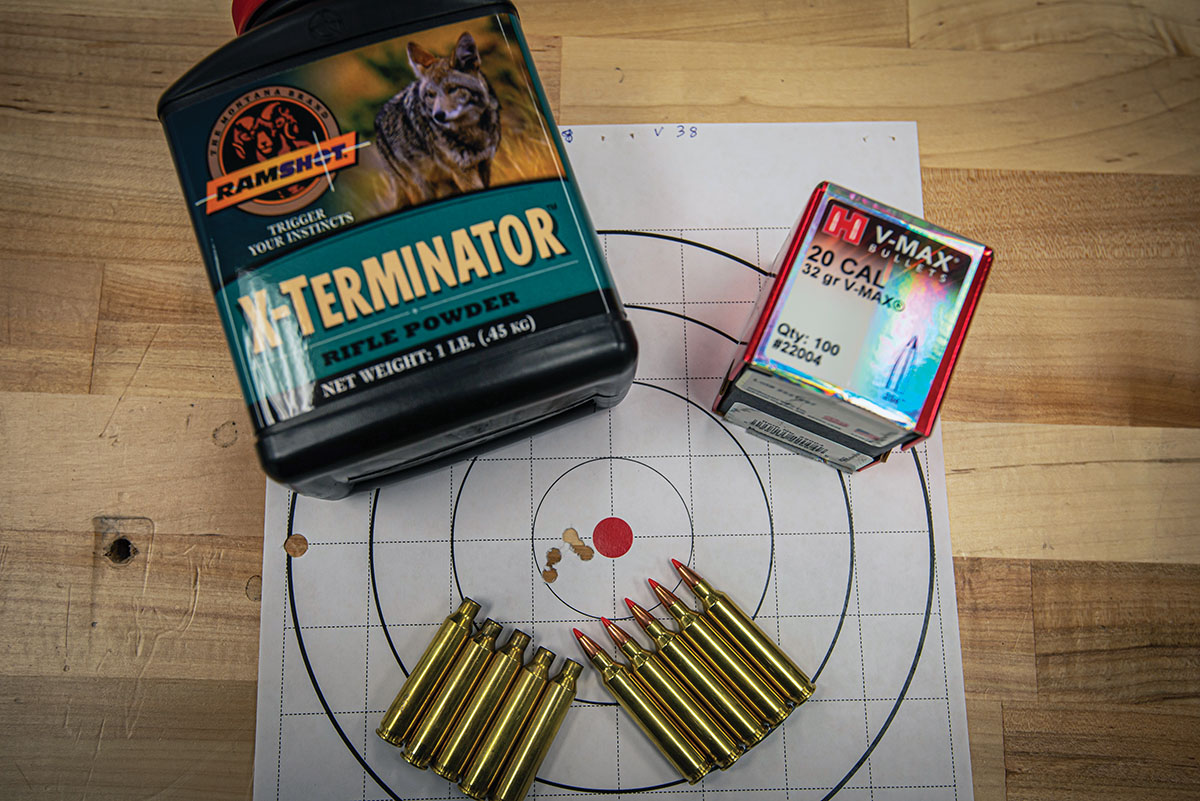
However, if there was a chance of running into a fox or bobcat with a valuable pelt, the 204 Ruger was an easy pick. Compared to the 22-250 Remington, the 204 Ruger was worlds apart in terms of pelt damage. In comparison, both seemed to put down coyotes and smaller animals with about the same amount of effectiveness with a well-placed shot. In those days, bobcat pelts were worth quite a bit of money, and there was still some value in fox and coyote fur. Plus, having a coyote pelt or better yet, a fox or bobcat pelt to show to your friends was a big deal back then.
More recently, I decided to take Dad’s old Kimber out and work-up some loads for an upcoming varmint and prairie dog hunt I had scheduled in the fall of 2023 at the SPUR Ranch in Encampment, Wyoming. This rifle had quite a few rounds through it at this point in time, and I wanted to retest some loads and try out some newer powders and different bullets.
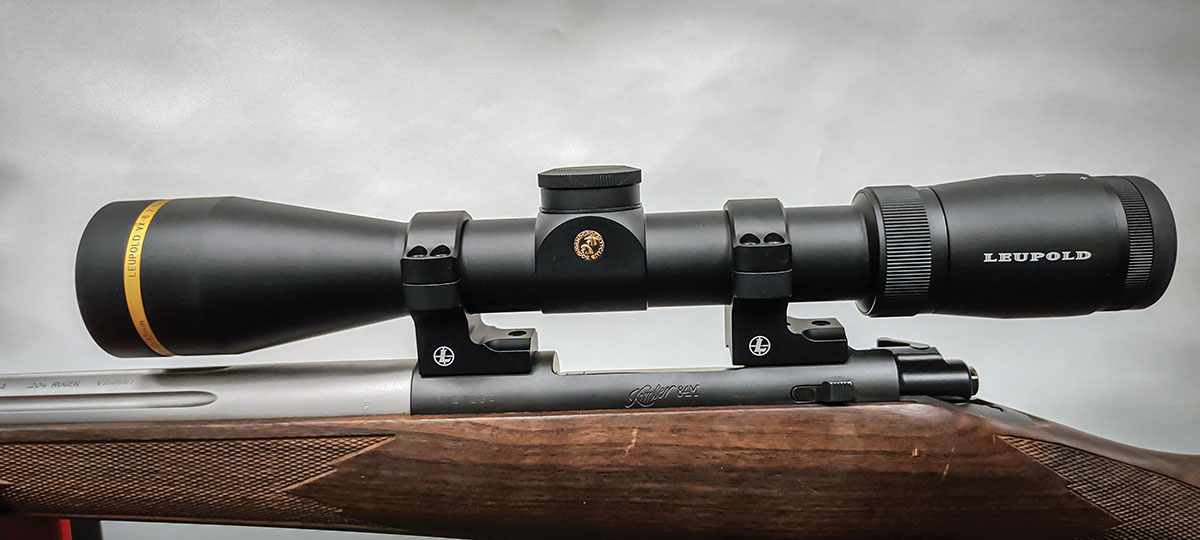
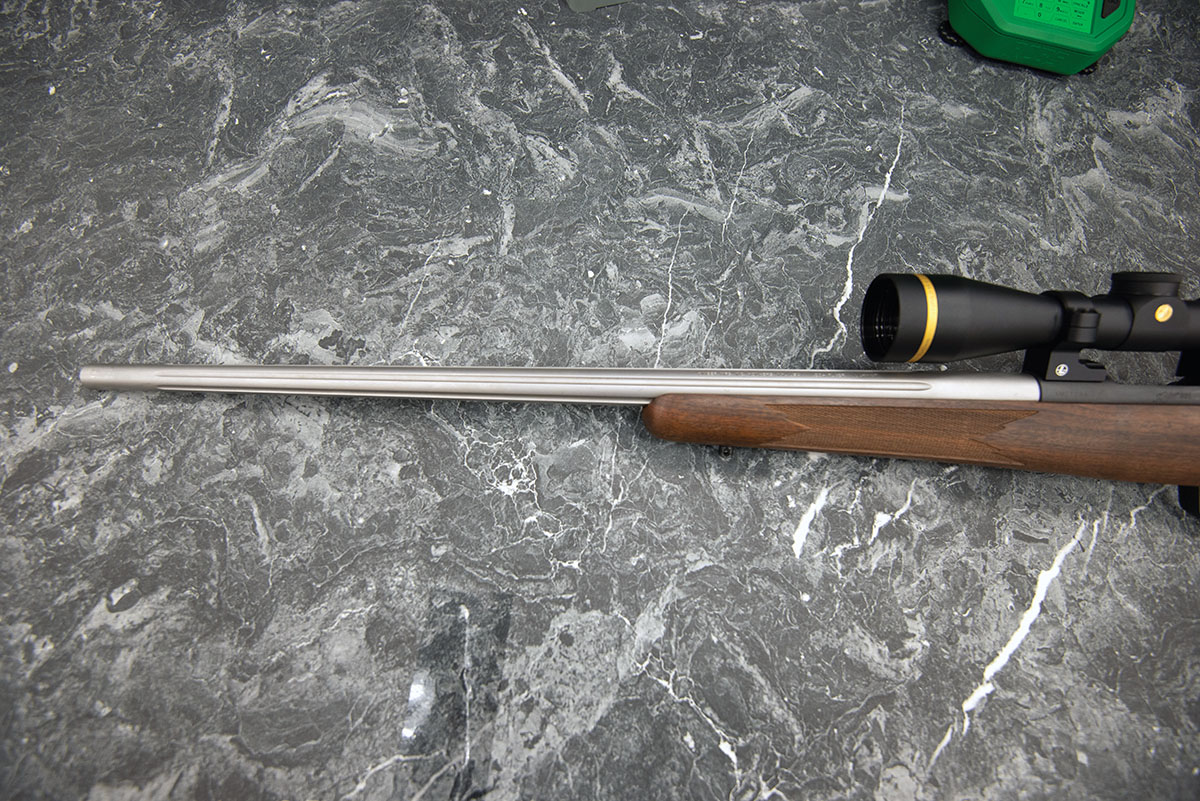
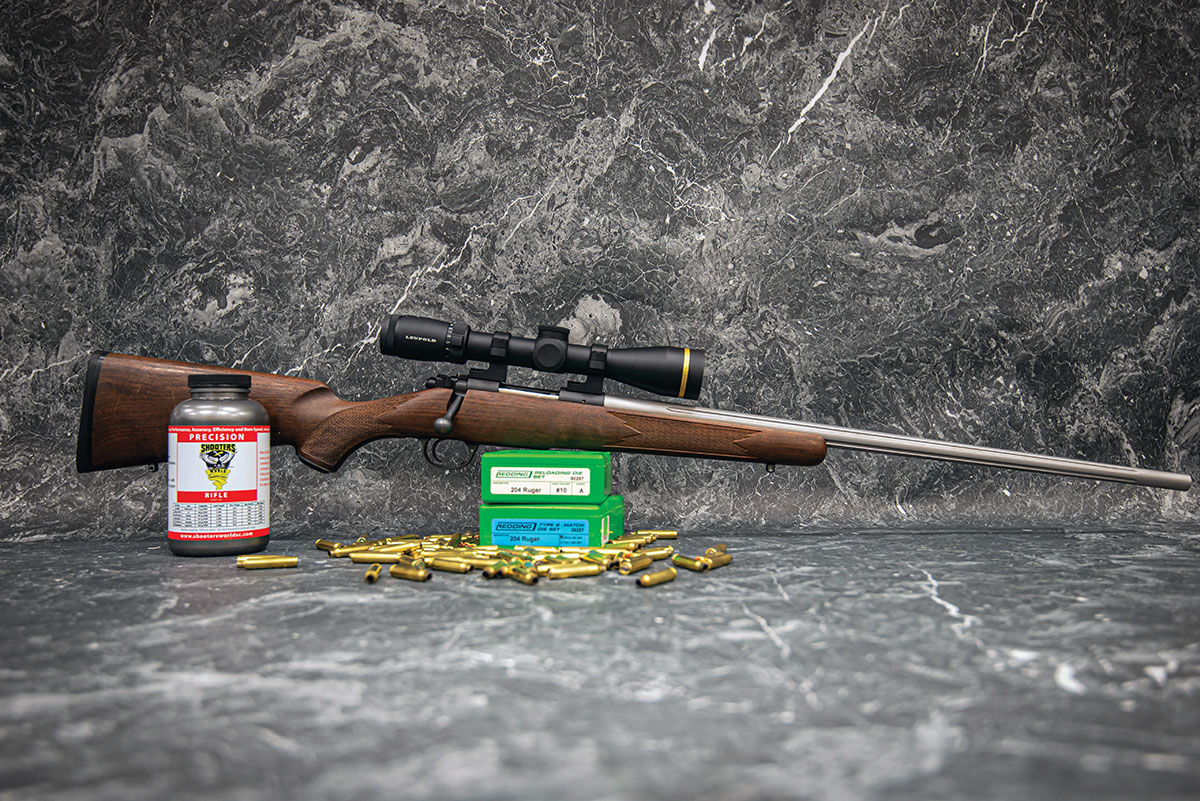
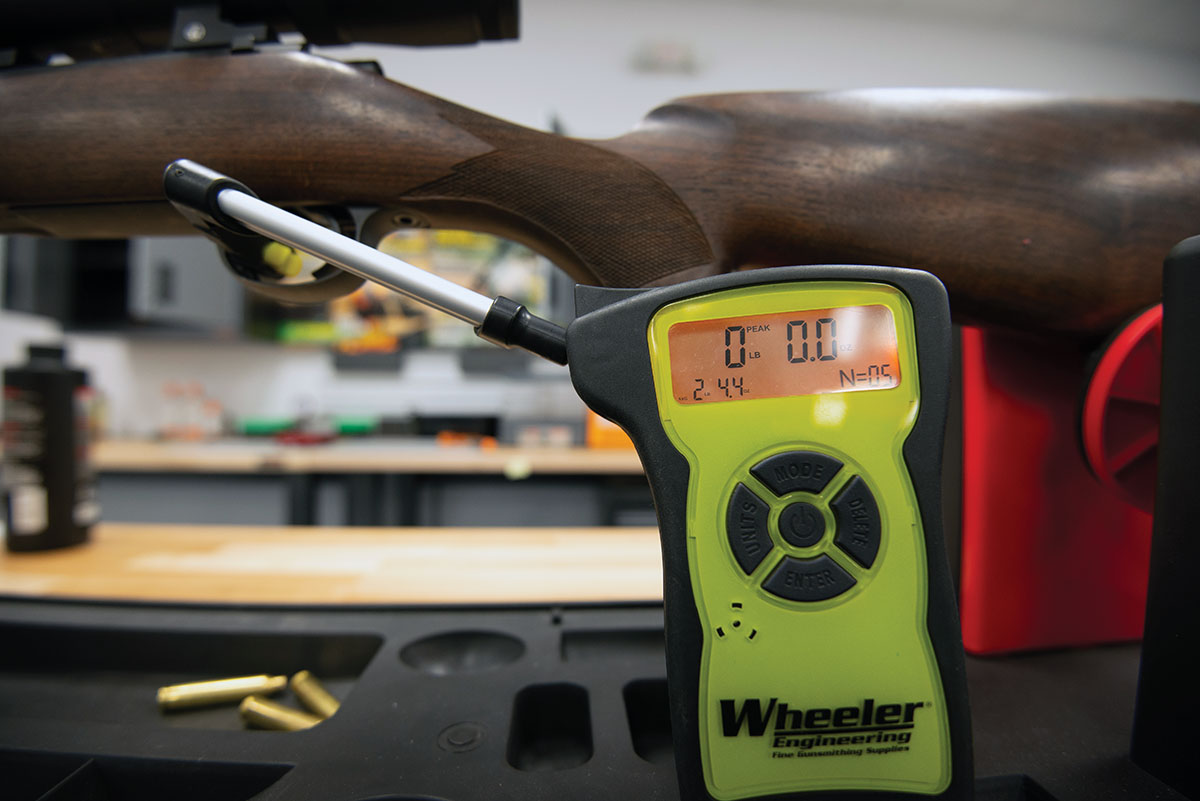
The rifle is a Kimber Model 84M Varmint; it weighs 9 pounds, 1 ounce, with a Leupold VX-6 2-12x 42mm scope held in place by Leupold Backcountry one-piece rings and bases. It features a grade A walnut stock with a hand-rubbed oil finish, fine checking and a steel grip cap. It is pillar-bedded from the factory with a fluted satin-finished 24-inch barrel with a twist rate of 1:12. The action is controlled-round feed, which makes it a favorite of mine on horseback; no matter how canted the rifle was, it would feed reliably. It has a fixed ejector; as such the bolt should be worked with some vigor to ensure reliability when ejecting cases. The trigger breaks like a glass rod at 2 pounds, 4 ounces. The rifle has a three-position wing-style safety and a hinged floorplate for unloading the magazine. Overall, this rifle is very nice and while the wood has some scratches and darkened some with age, it is still as beautiful to look at as it is to shoot.
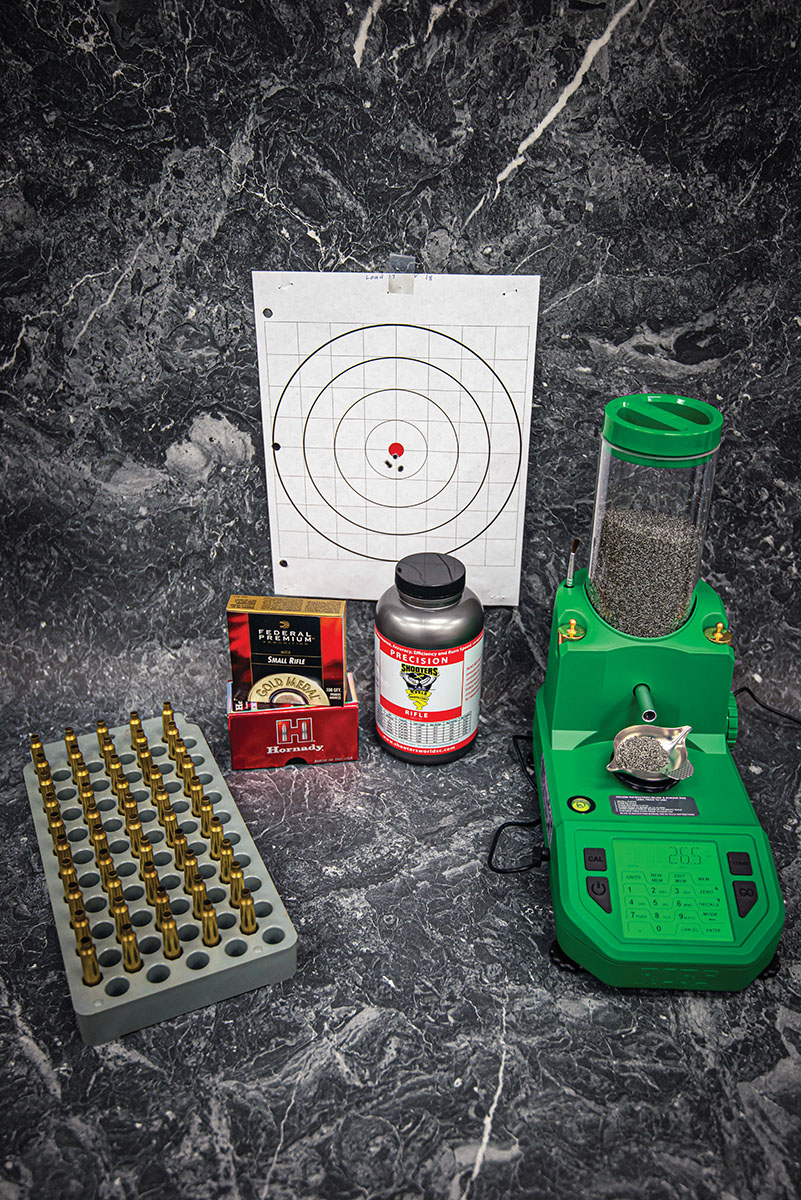
I started by selecting components, since I had a good stockpile of Nosler cases they were used for this test. Using my trusty Rock Chucker IV press and a Redding Full-Length sizing die, cases were lubed with Hornady Unique Case Lube and sized to iron out any dings or dents. A chamfer and deburr was then applied using an RCBS Brass Boss and primer pockets were uniformed on the same case prep center. A Frankford Aresenal Handprimer was used to seat primers; it offers good feel and provides some adjustment to ensure primers are uniformly seated. To weigh and dispense powder, an RCBS Matchmaster was used and all charges were within .04 grains from one another. I have noticed that minor differences in
charge weight can drastically affect velocity when working with smaller cases, such as the 204 Ruger. This level of accuracy may have been overkill but it was a variable I wanted to eliminate to the best of my ability. Finally, bullets were seated using an RCBS Competition Seating Die, which has a sliding sleeve to aid in seating bullets concentrically. If a crimp is being applied, cases should be trimmed to uniform length and applied as a separate step if looking to maximize accuracy. I chose not to apply a crimp for this test and relied solely on neck tension to prevent bullet setback. Which, generally speaking, is not an issue with controlled-round feed rifles or the light recoil of the 204 Ruger.
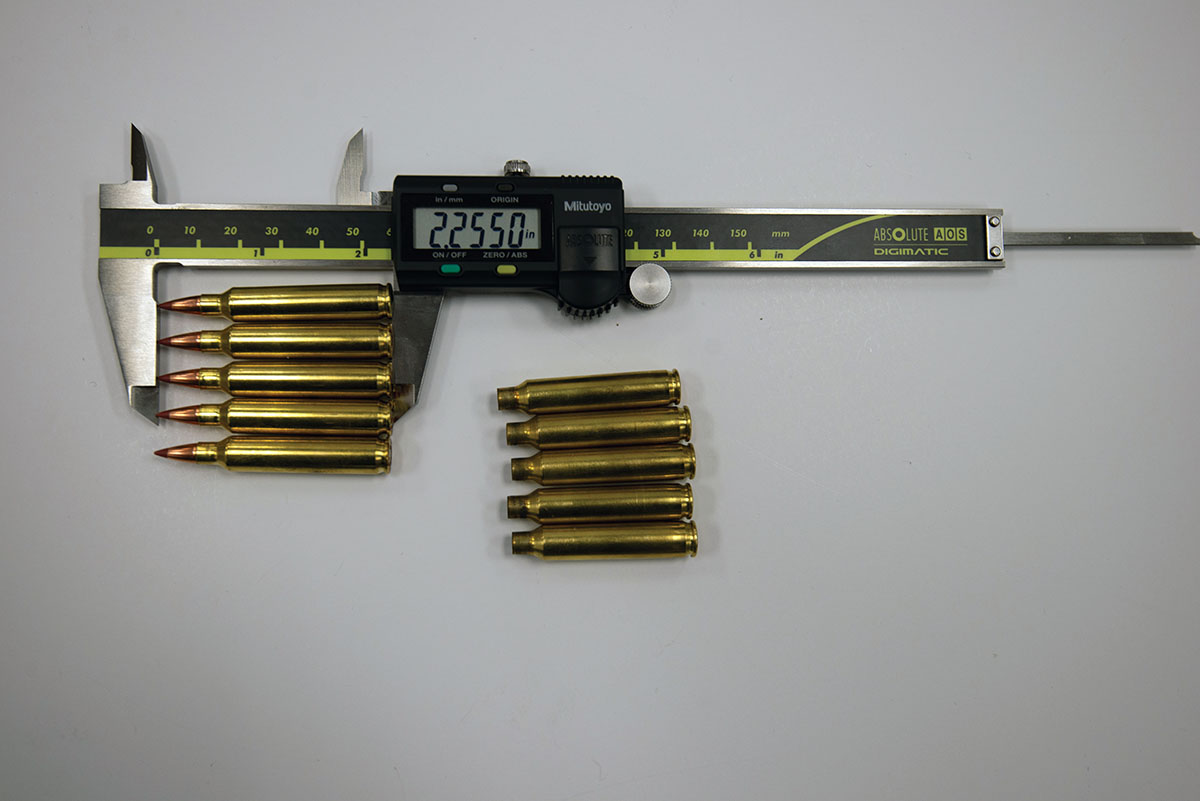
Once all the ammunition was loaded, it was time to test and see how well my previously worked-up loads were shooting and how well my new loads would perform. Much time was spent shooting from a solid benchrest position over a chronograph and great care was taken to weed out the best loads for varmint hunting purposes.
My previous go-to load for this rifle was using RAMSHOT TAC powder and either a Hornady 24-grain NTX or Barnes 26-grain Varmint Grenade, both of which have explosive results on coyote-sized critters and smaller. The rifle still grouped well, but the extreme spreads were slightly higher than I would have liked. All the more reason to confirm and test your loads occasionally to ensure they are performing to your standards.
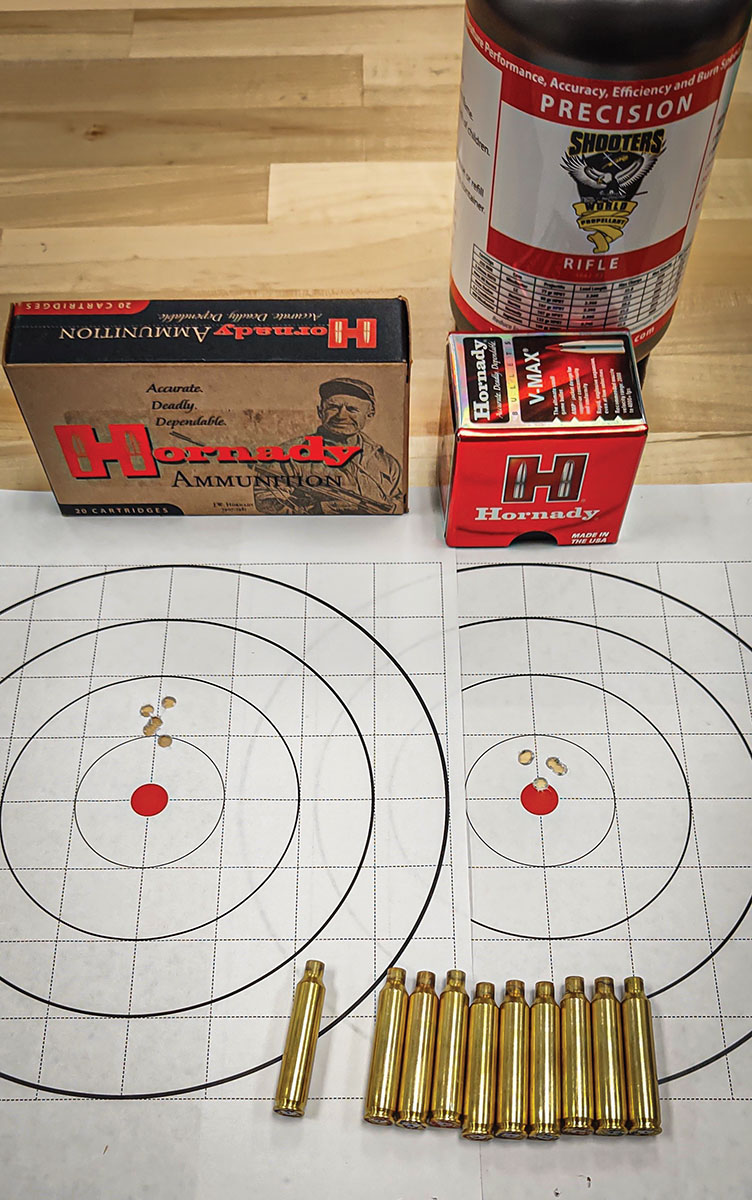
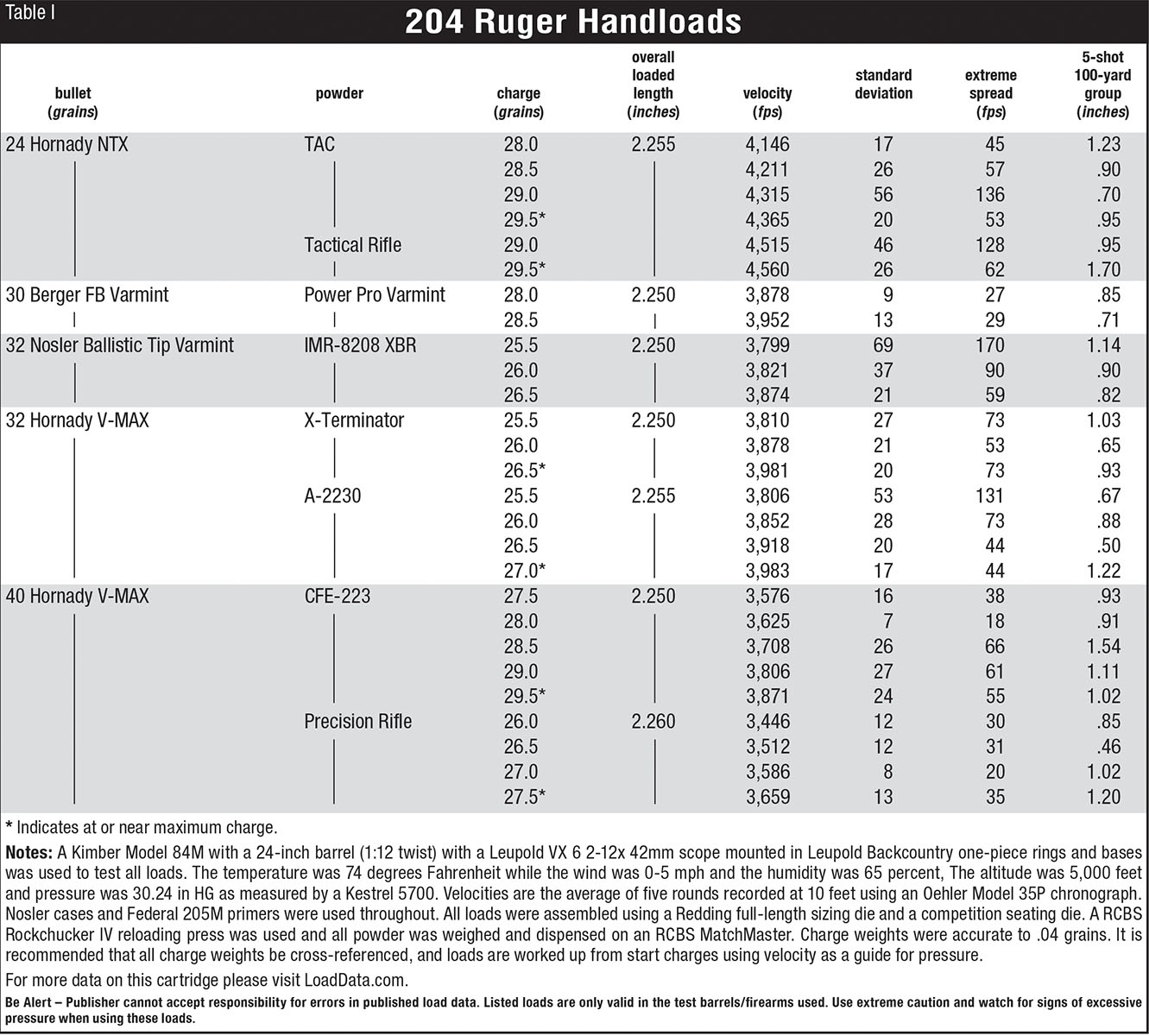
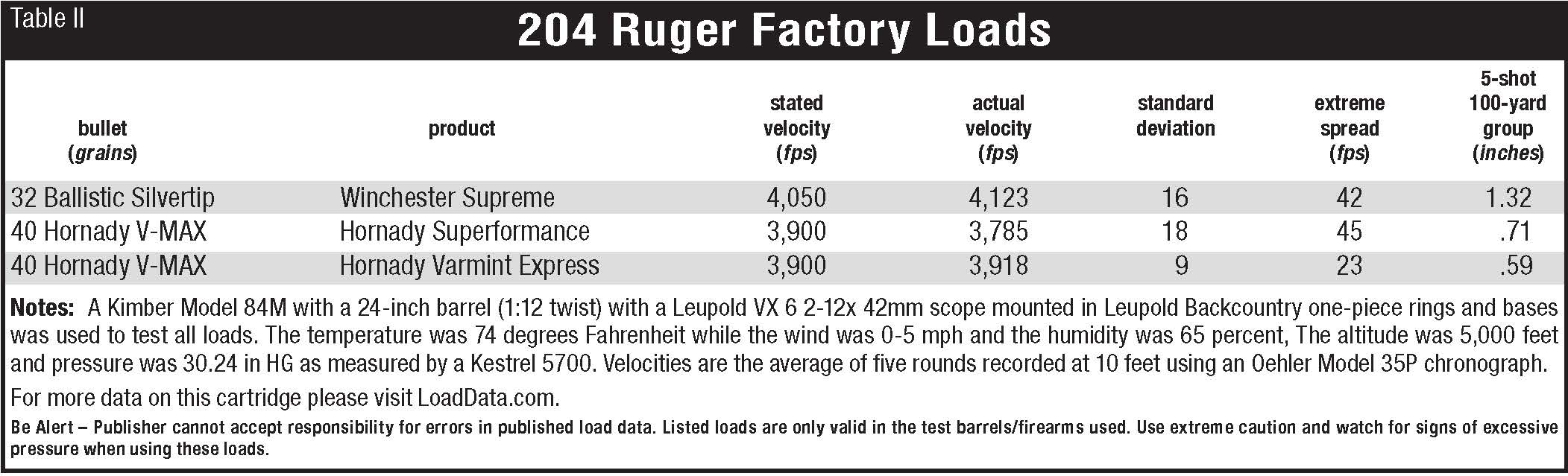
All of the loads in the included table performed decent, but there certainly were a few outliers in terms of performance. With this being an older rifle and not wanting to stress the barrel with high-velocity loads, I settled on a heavier bullet, the Hornady 40-grain V-MAX. Using Shooters World Precision Rifle Powder, the rifle assembled a .46-inch group with this bullet at 3,512 feet per second (fps). I was more than happy with that and settled on that load to take to the SPUR Ranch to hunt entrenched alfalfa-eating vermin. In addition to this load, I also decided to take some Hornady Varmint Express ammunition in 204 Ruger. In testing, they printed within 1 inch of each other vertically, and windage-wise, there was no discernable difference. It is always nice to have the option to buy ammunition that would work in a pinch without having to mess with the zero of a rifle.
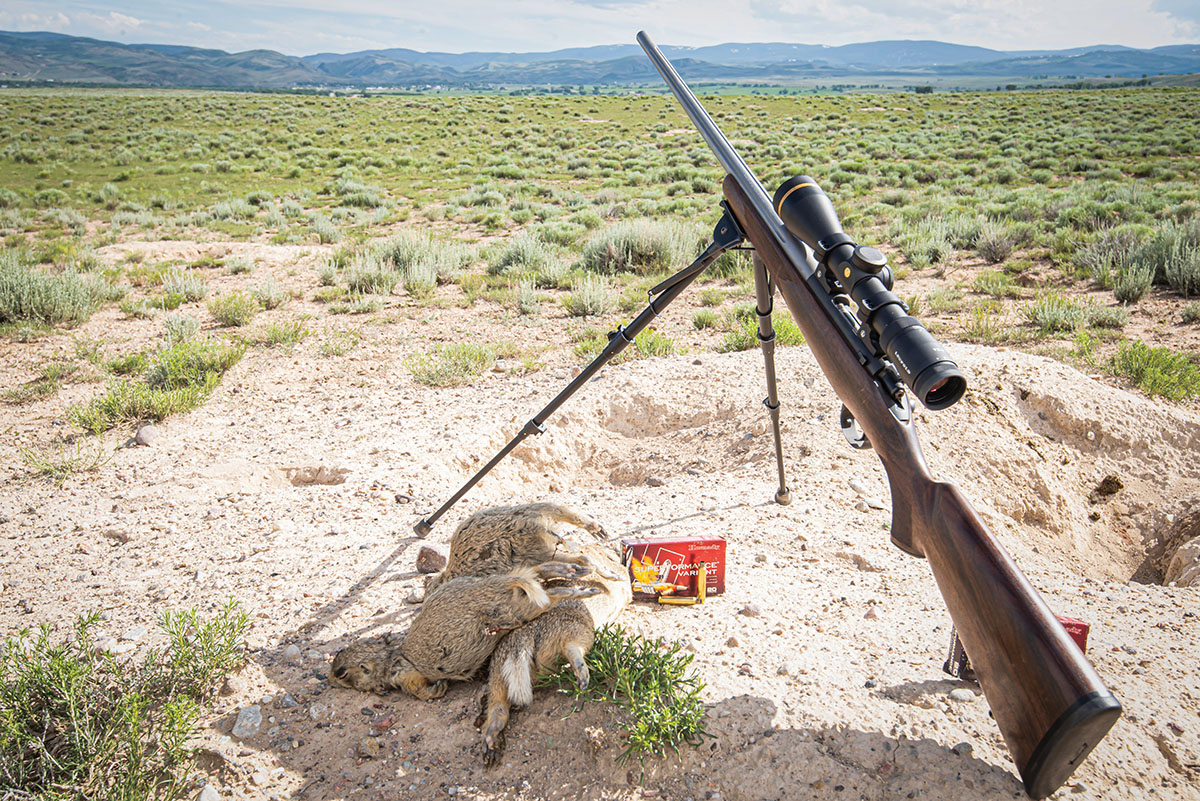
Months of anticipation followed as I handloaded as much ammunition as time would allow. Finally, the day came to pack the truck and spend a week at the SPUR Ranch. All the time spent at the bench working up and testing good loads would equal accuracy in the field where it really mattered. For the better part of a week, this rifle was picking off varmints from 75-500 yards by either my hand or my wife’s. Many more great memories were made with this rifle and it gave me an appreciation for the small but mighty 204 Ruger. Its velocity provided exceptionally good terminal performance and effect on target.
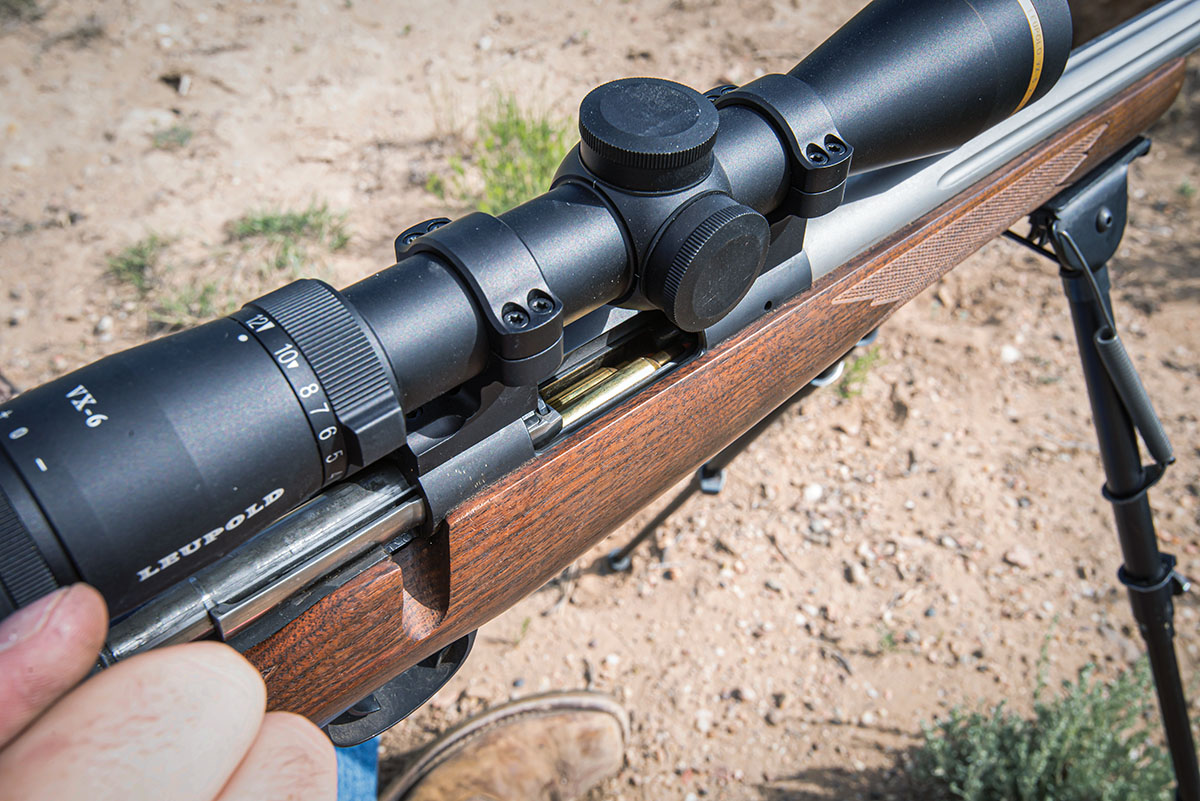
While sitting on an overpopulated dog town one afternoon, more than 200 rounds of 204 Ruger ammunition was expended on targets from 100-375 yards. At these distances, it almost seemed as if we couldn’t miss, even with the 12-power optic. The clarity of the glass and low recoil allowed me to self-spot my hits and misses. If it was a miss, making a follow-up shot to correct the previous error was easy. It also allowed me to observe the bullet’s effects on the target. By the end of that day, it was plain to see that the bullets were rapidly expanding and had good effect on the target. It made for quick, clean, ethical kills for the rodents in the cattle crippling holes.
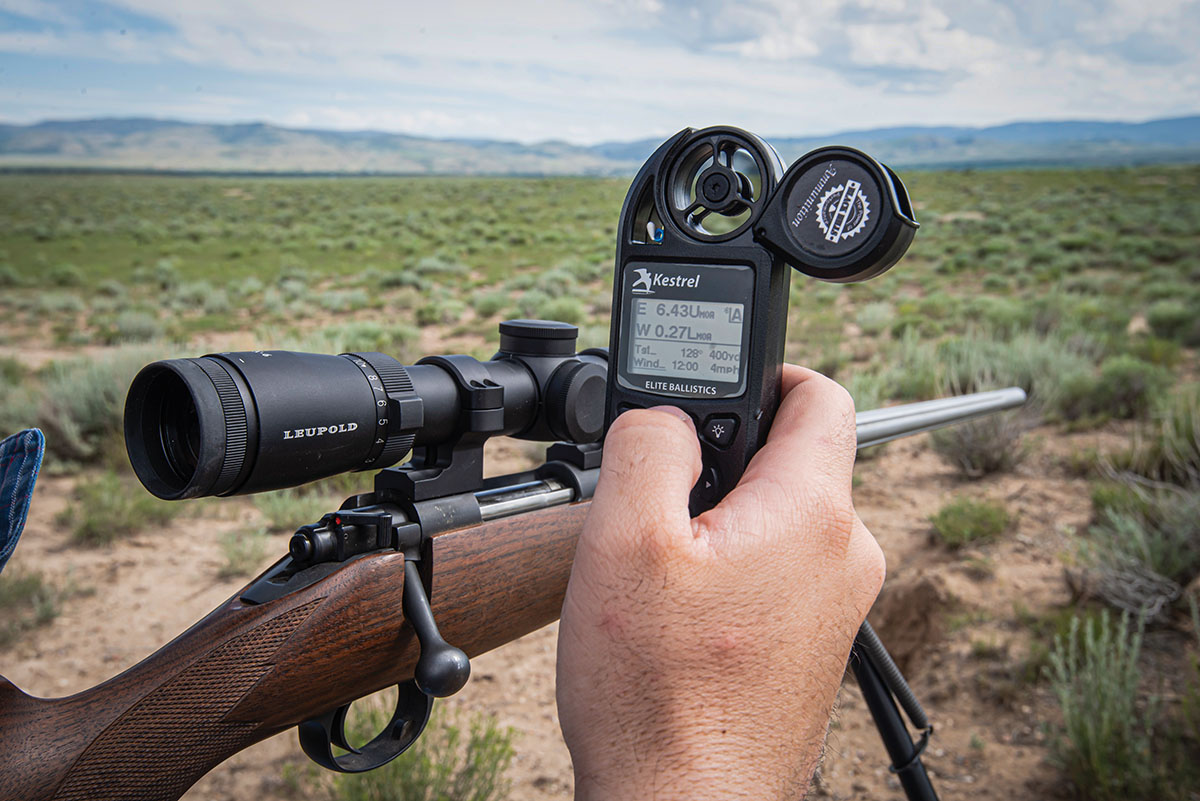
The 204 Ruger is very flat shooting and capable of making accurate shots to 500 yards and even beyond if the wind isn’t too choppy. Despite this, having a good rangefinder and knowing the ballistics of the load is very helpful. While in the field, I wore a Badlands Bino Harness, which always had my Swarovski 10x42 EL binoculars. It also included a Sig Kilo 2200 BDX Rangefinder and a Kestrel 5700, which was especially handy when the wind picked up. The ballistic coefficient (BC) of .20-caliber bullets compared to .22-caliber bullets is lower; therefore, the wind has more effect on the smaller projectiles. Using the Kestrel 5700 to solve for wind and bullet drop significantly increased the hit-to-miss ratio, especially at extended ranges.
Oftentimes, we would park the truck and shoot off bipods and tripods near the truck, once a dog town dried up, we would then walk to the next one. Having my gear on me and a small backpack full of ammunition made these short walks enjoyable and fruitful, cleaning up stragglers from nearby dog towns and getting better angles on further targets. While the country is mostly flat prairie dogs are short and sometimes getting a different angle aids in getting more shot opportunities.
While in the field, the rifle performed very well, always feeding and ejecting the hundreds of rounds it fired while on that hunt. It was more than accurate enough to connect with prairie dogs out to 500 yards. The only true limiting factor was the optic, which had a max magnification of 12x and a fixed parallax at 150 yards. This wasn’t a huge deal but it was something to keep in mind when taking long shots at small targets. Hindsight being 20/20, I should have mounted a different optic for this trip. Prior to this, the rifle mainly served as a saddle gun or on stands, calling coyotes, where the optic performed very well on larger and generally closer targets. Despite this, I was still pleased with the rifle and the optic. The loads and factory ammunition paired well with the rifle. In addition to this, I had a rifle with a load that would be ideal for calling coyotes in my home state of Arizona.
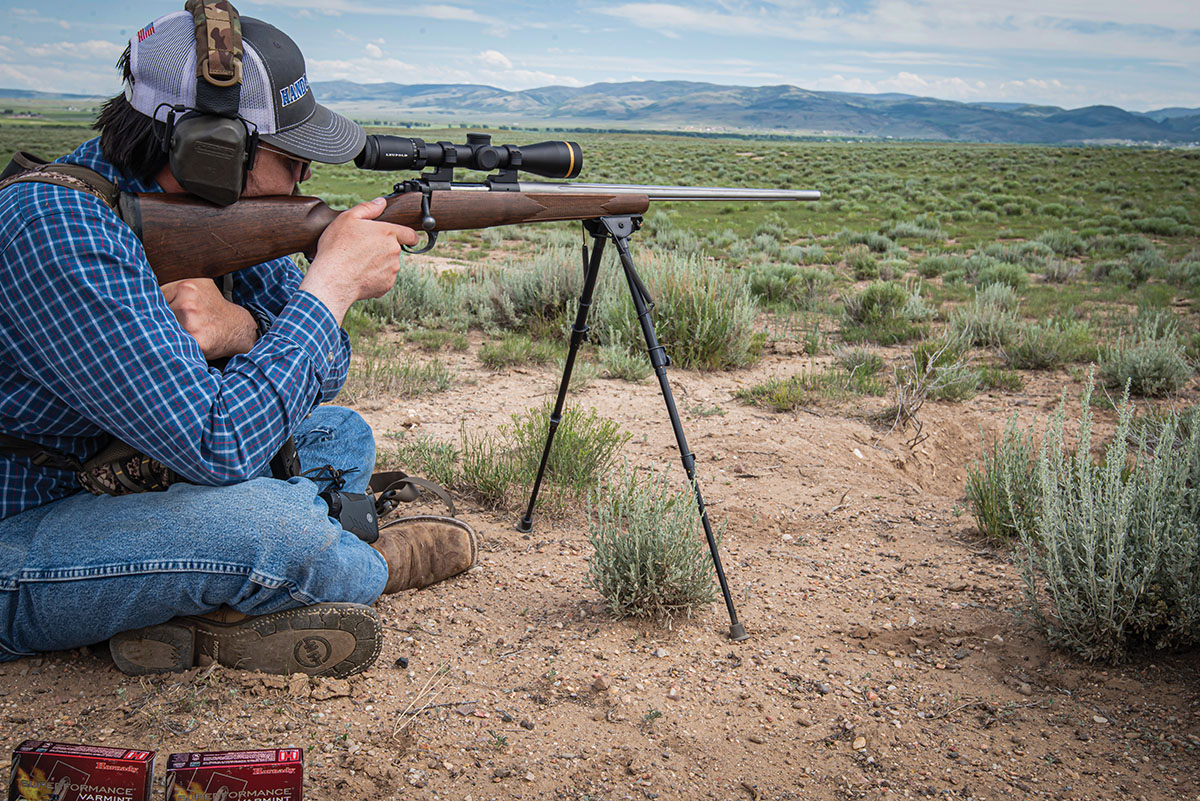
Since the trip to the SPUR Ranch, this rifle has been used on numerous varmint hunts in Arizona and has served very well. The load containing Shooters World Precision Rifle Powder and the Hornady 40-grain V-MAX bullet works wonders on coyotes inside of 300-400 yards. In addition, I have noticed that with this new load operating at a lower velocity, it is much easier on coyote pelts. While the Barnes 26-grain Varmint Grenade has always worked well, this particular load seems just a little more gentle if that can be said about a varmint bullet.
Overall, the 204 Ruger will always be a great cartridge for the dedicated varmint hunter. It is good for those who want explosive results on prairie dogs or those who are looking to put down coyotes quickly while saving the pelt. The low recoil of the 204 Ruger also makes it a great rifle and cartridge combination to introduce kids and new shooters to the wonderful world of Varmint Rifles and Cartridges.
If you would like to watch the accompanying video to this article, check out the video titled “204 Ruger in a Kimber 84M Varmint” on our YouTube channel Handloader TV.