The 22 Hornet Rises Again
In a Ruger Super Redhawk
feature By: Stan Trzoniec | April, 24
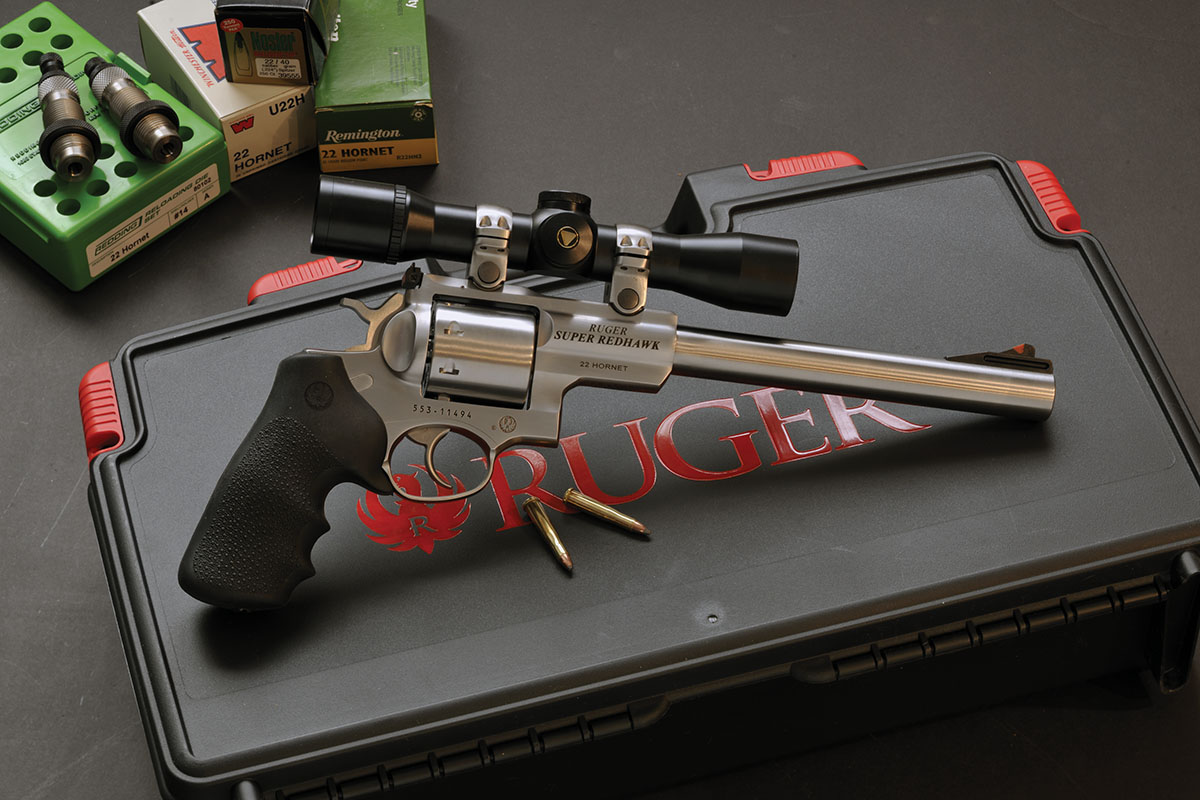
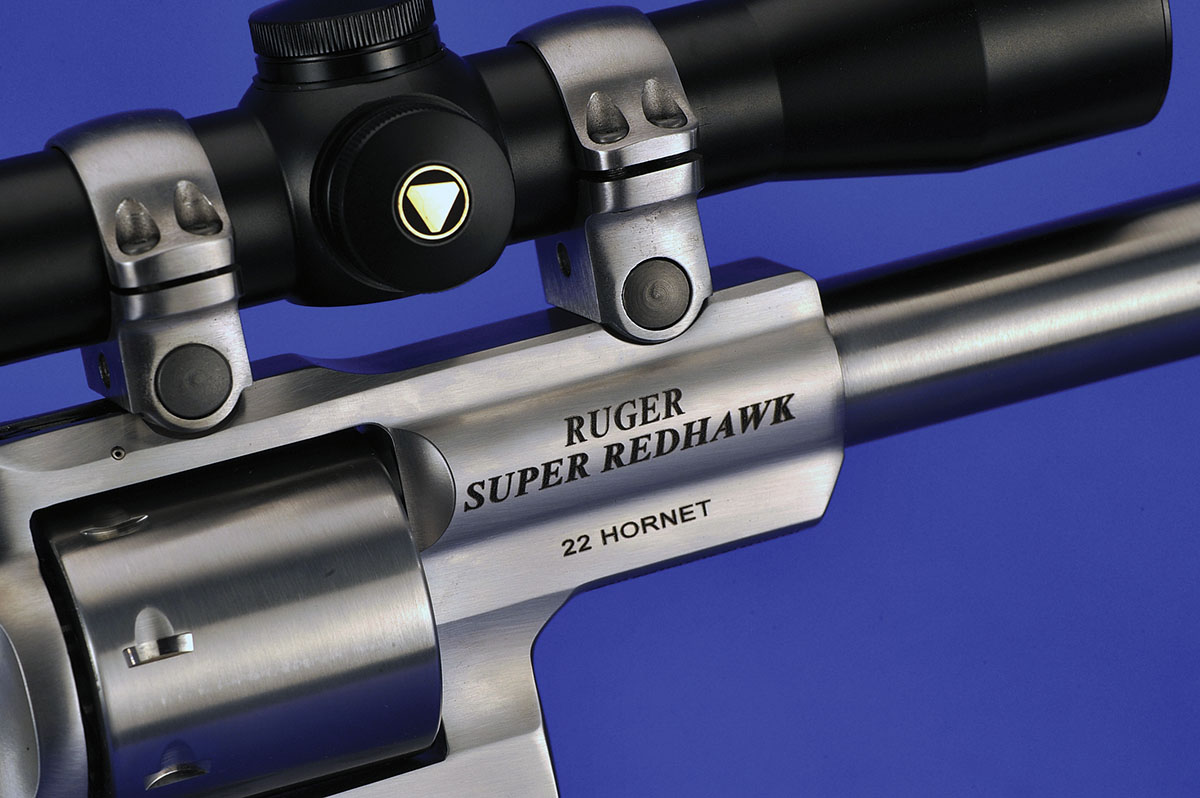
With only a few years to go before hitting its 100th birthday, the 22 Hornet has the power to make the grade with small-game hunters everywhere. Plus, with the introduction of the beefy Ruger Super Redhawk chambered for the 22 Hornet, the beat goes on! A direct descendent of the Redhawk, the gun was built to comfortably shoot some of the most powerful cartridges man can come up with. To this end, the gun was offered in the 10mm, 44 Magnum, 454 Casull and the 480 Ruger in a variety of models and barrel lengths.
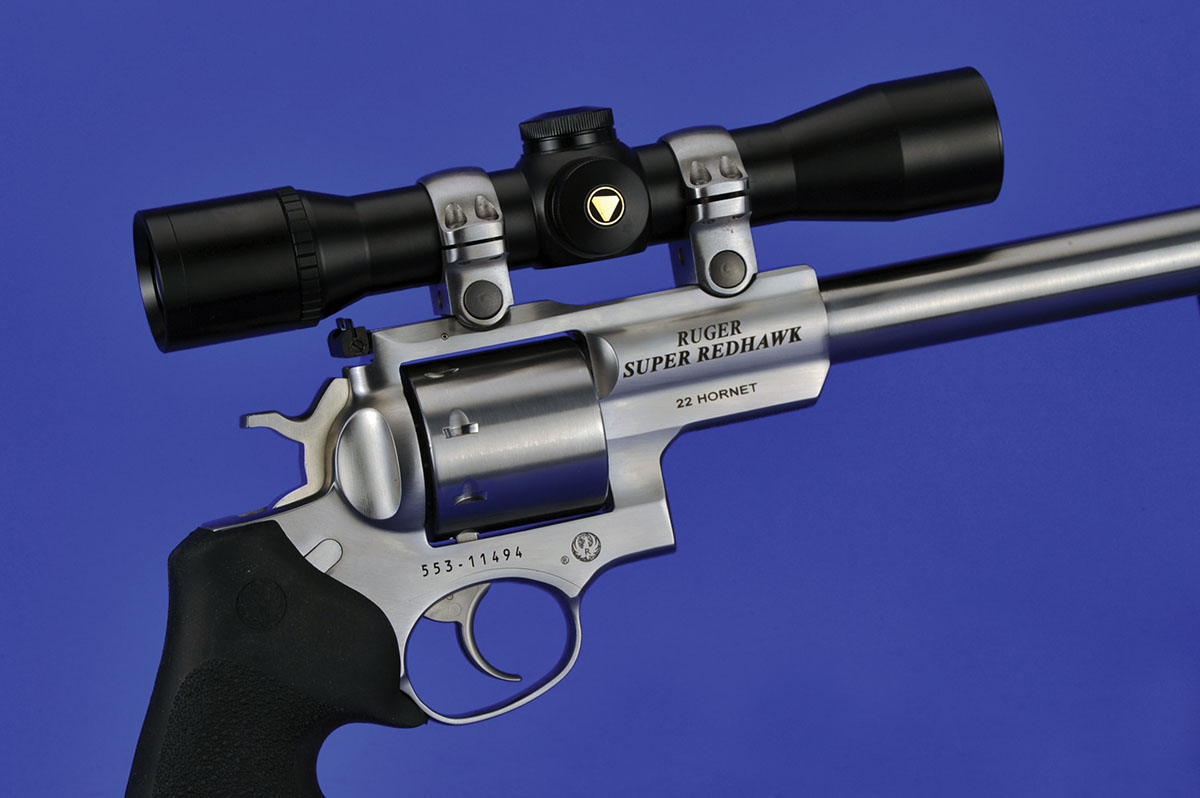
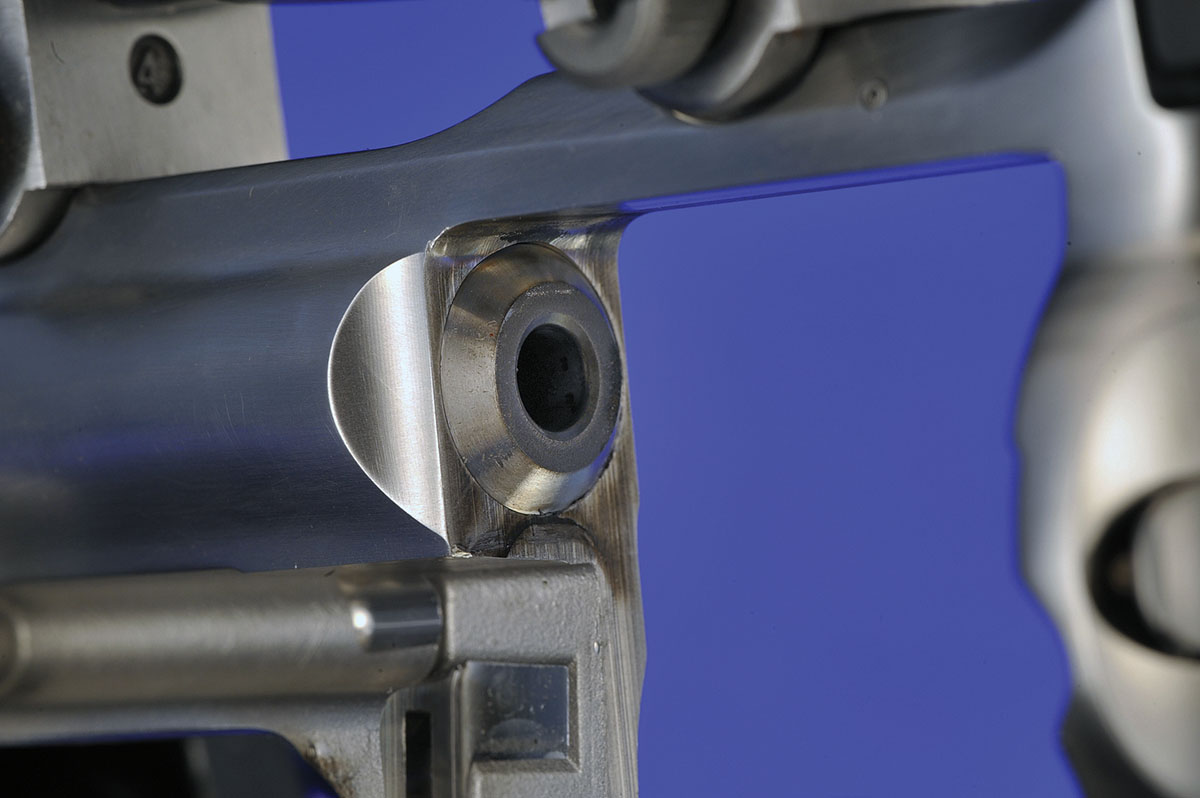
However, this gun chambered for the 22 Hornet is in a completely different league. While keeping the same traits that made it famous when it was introduced in 1986 as a well-made hunting handgun, this Hornet version adds almost a pound (13 ounces) to the specifications. Added to the design of having a larger frame complete with scope mounts, in short, this is a heavy gun. Lifting it shows a preference for the weight to be from the cylinder forward owing to the fact less metal is being machined out of the cylinder for the flutes and smaller diameter charge holes for the Hornet. On this gun, originally designed for heavy calibers, the frame has been extended forward with extra metal cast into the barrel mounting areas, top strap and sidewalls at the barrel juncture.
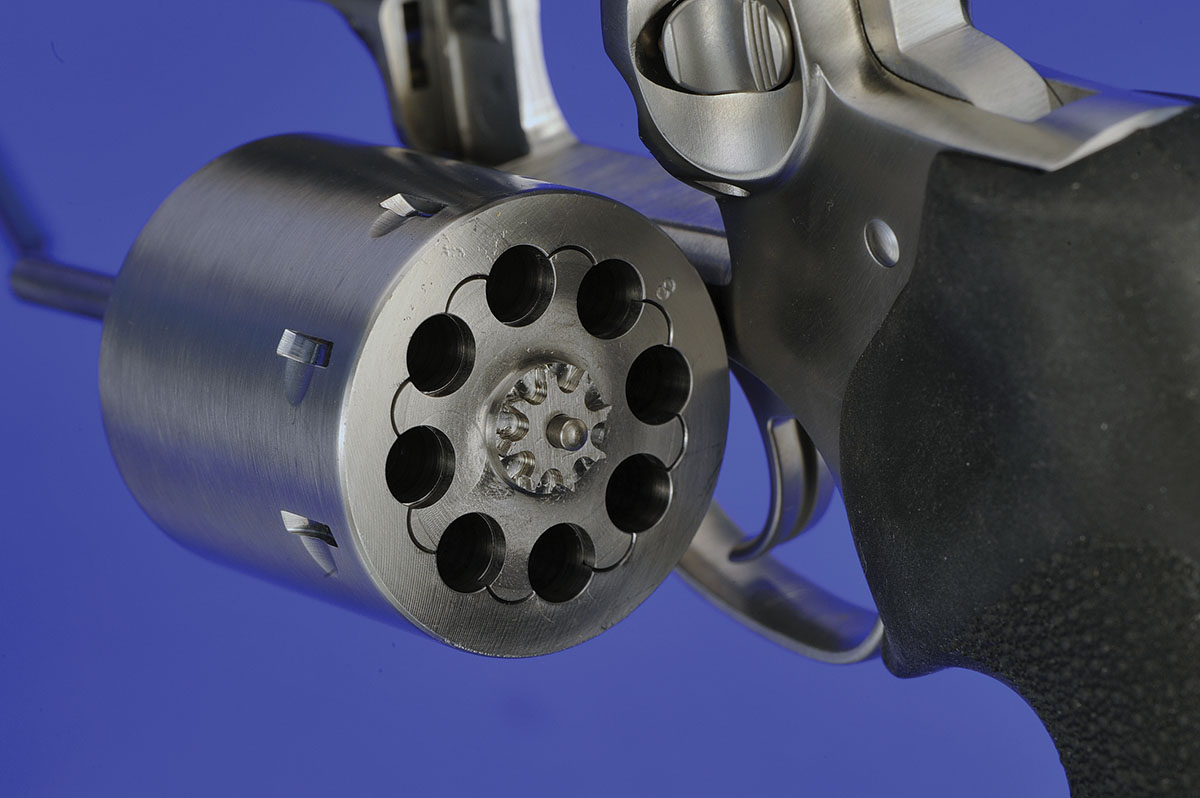
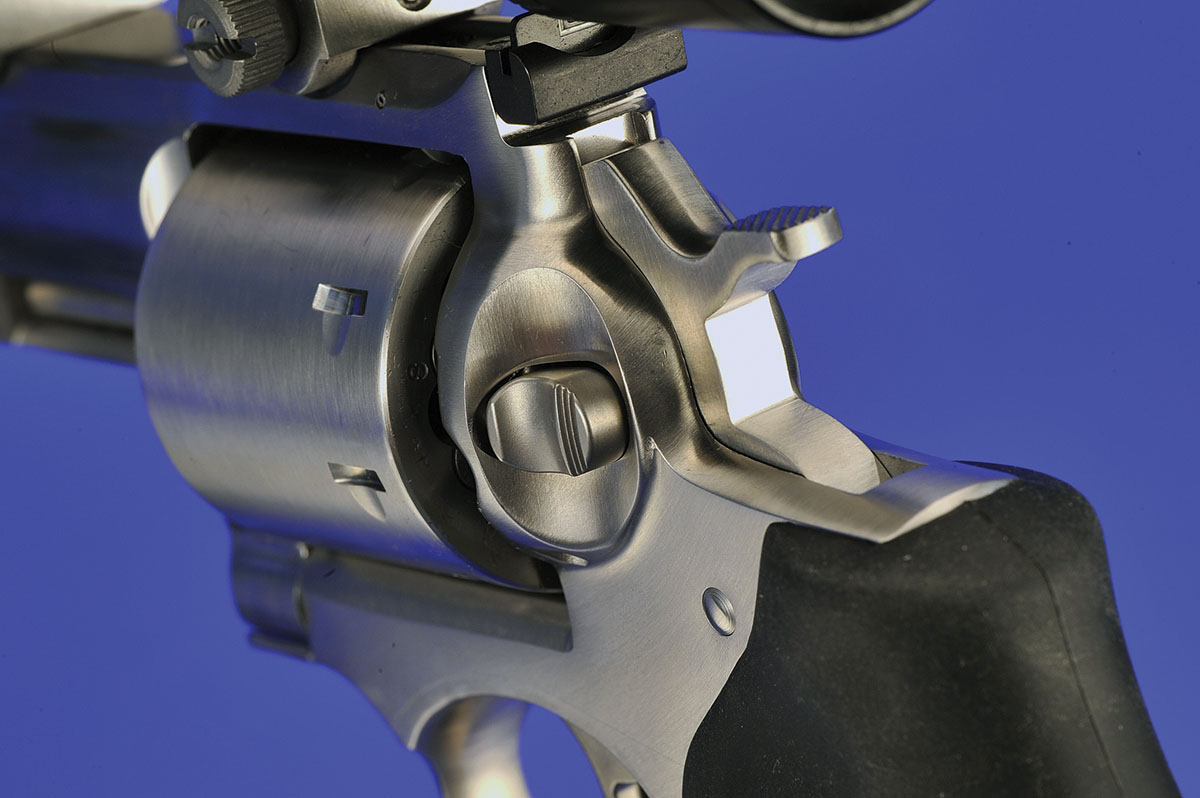
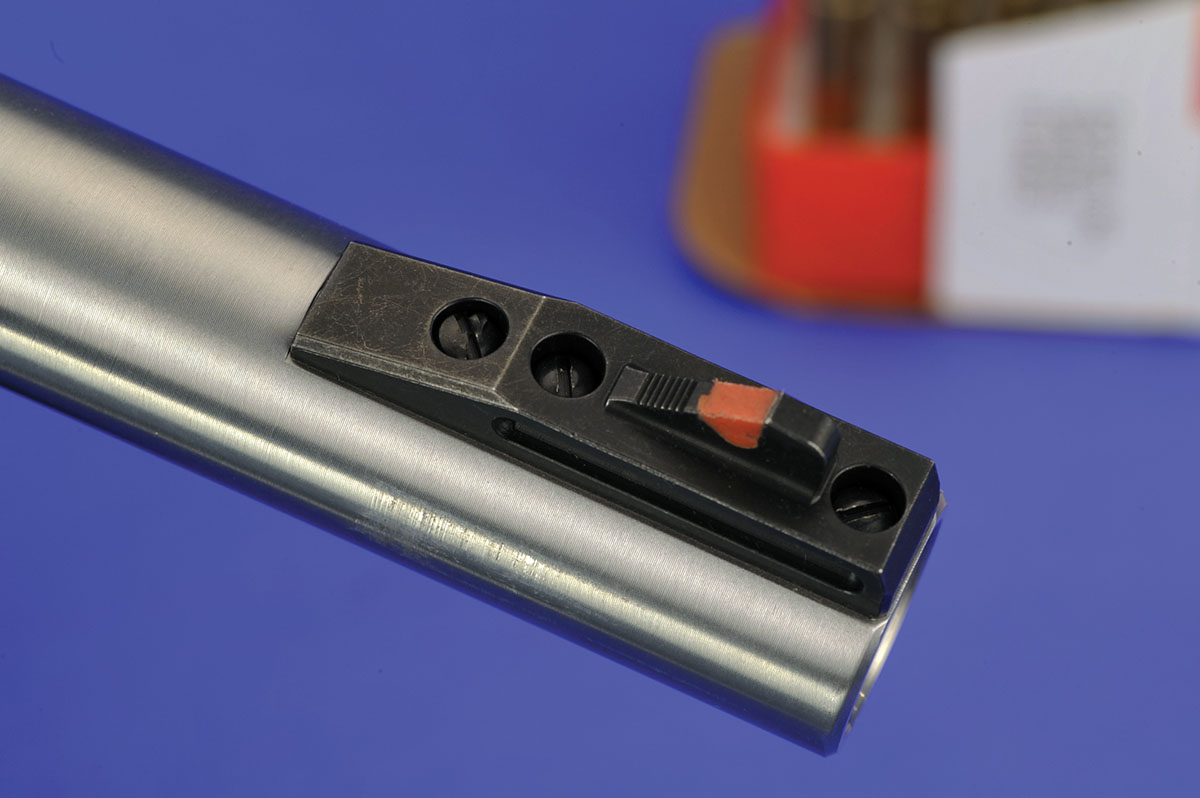
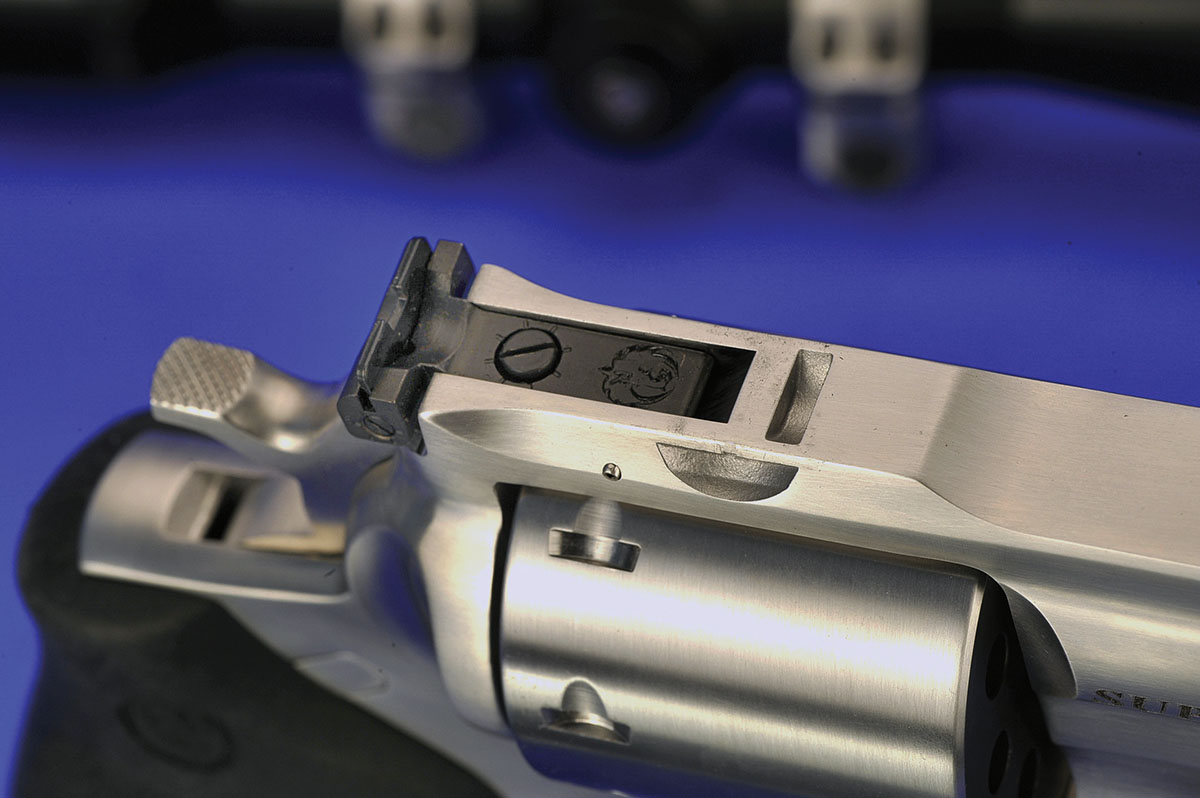
The rear sight has been milled into the top strap and contains a white outline and is adjustable. Knowing the use of this gun, this larger version of the Redhawk series has a patented integral mounting system machined into the solid frame. Included with the gun is a pair of Ruger rings that a Bausch & Lomb four-power handgun scope was mounted for testing. Serious varmint hunters will undoubtedly mount a scope of higher magnification for their hunting duties.
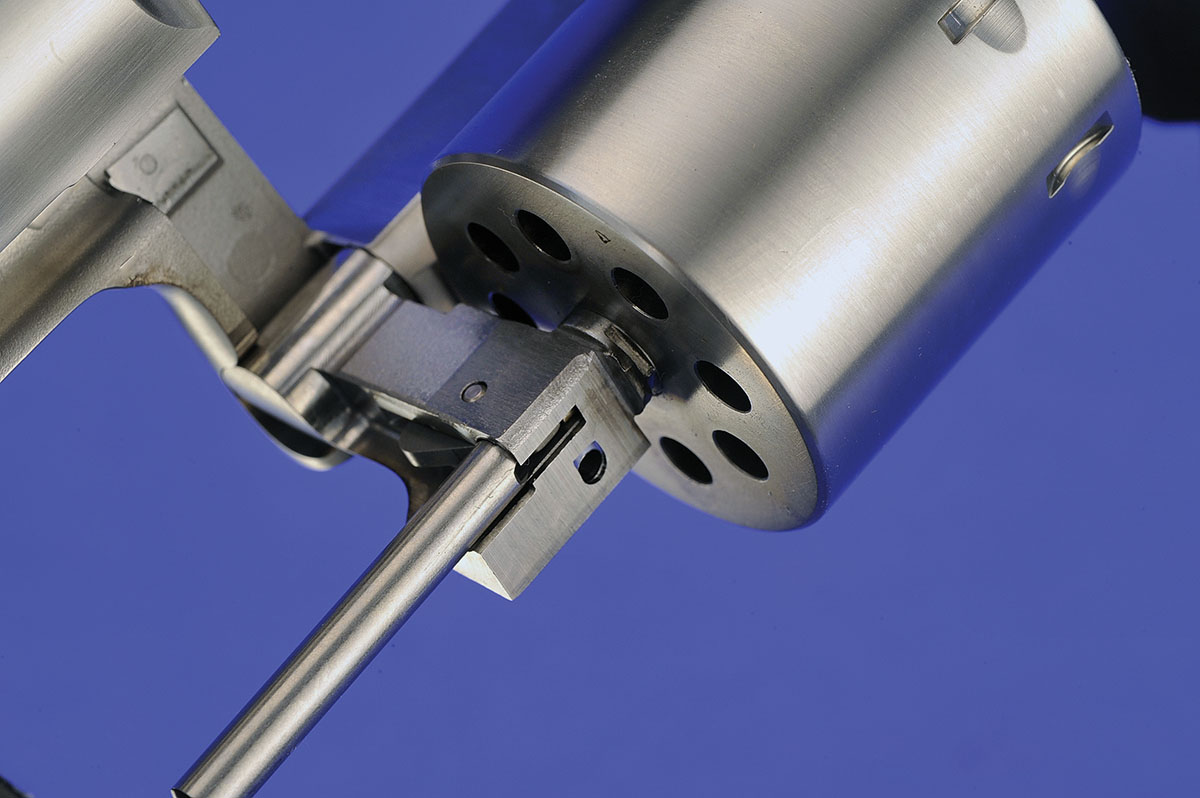
The trigger pull registered for 4¾ pounds single action; and considering the mass of everything in the gun, the double action was 14 pounds, made easier with a smooth face on the trigger itself. Trigger action showed a bit of some creep but overall, it was more than acceptable on a gun of this type. When designing the gun, it’s apparent the lowering of the hammer spur was paramount to allow some room for the eyepiece of the scope and to make cocking this heavy gun easy. The cylinder is opened from a cylinder latch on the left side of the recoil shield with one deft push inward and smooth in rotation.
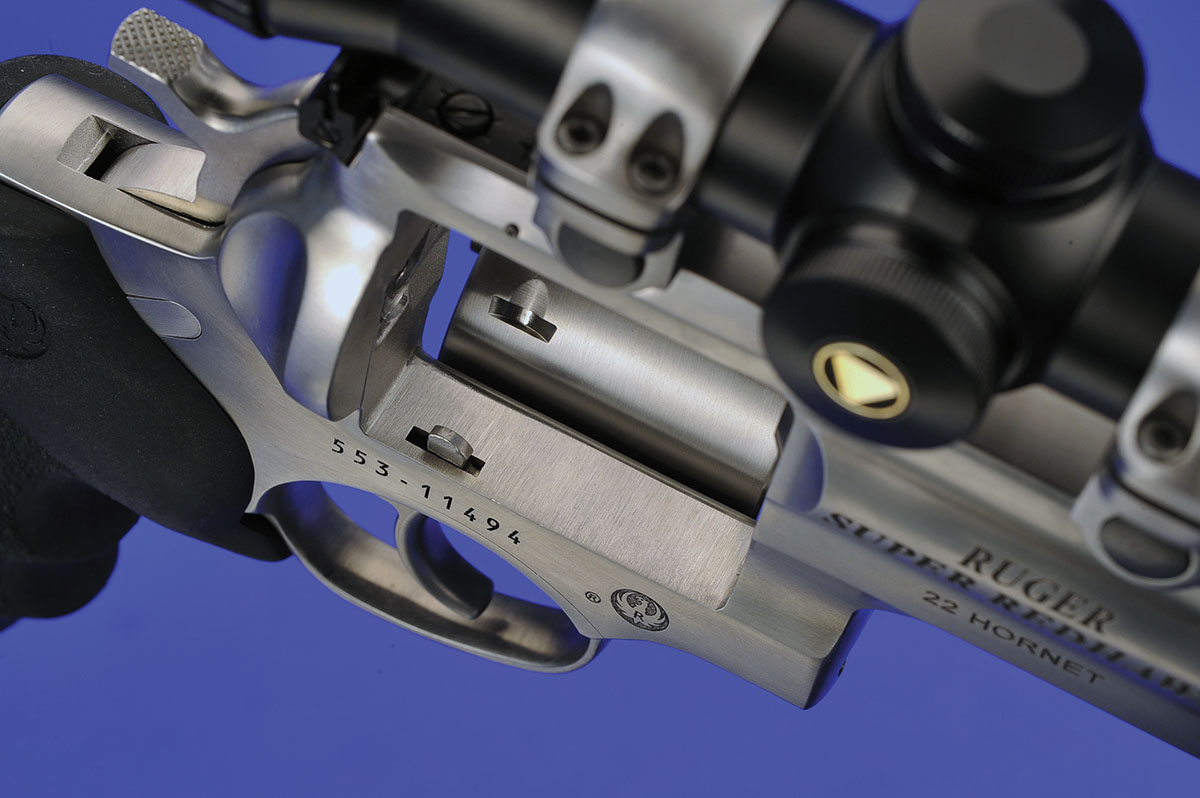
Finally, a Hogue Tamer Monogrip has been installed over the peg-styled grip frame, allowing the use of aftermarket grips if desired. Since we are talking here of a gun chambered for the 22 Hornet, a nice touch would have been to equip the gun with grips similar to those used years back with the fancy Goncalo Alves wood insert. The current list price is $1,499.
On to the Hornet. Everything has its moment of glory and for the Hornet; it has the honor of being the first successful centerfire cartridge to hit the commercial market. With beginnings based on the black powder 22 WCF, the cartridge came to be based on detailed experiments at the Springfield Armory in the 1920s. While men like Whelen and Wotkyns were working on the project to develop an accurate small game and target cartridge, Winchester picked it up as a wildcat in 1930, but never produced a rifle until 1933 with its Model 54; a year after Savage had a rifle available and four years later when Winchester chambered it in its Model 70.
Whether shooting the Hornet in a rifle or a handgun, this cartridge is still a great partner in the field. Over the years, I’ve shot the Hornet in both without reservations and found it very much to my liking in a rifle. It is not only accurate, but with a useable capacity of around 12.2 grains of water, for any hunter on a budget, this relates to almost 750 handloads using 9.5 grains of Alliant 2400 per pound, or at today’s prices of powder, approximately six cents per round.
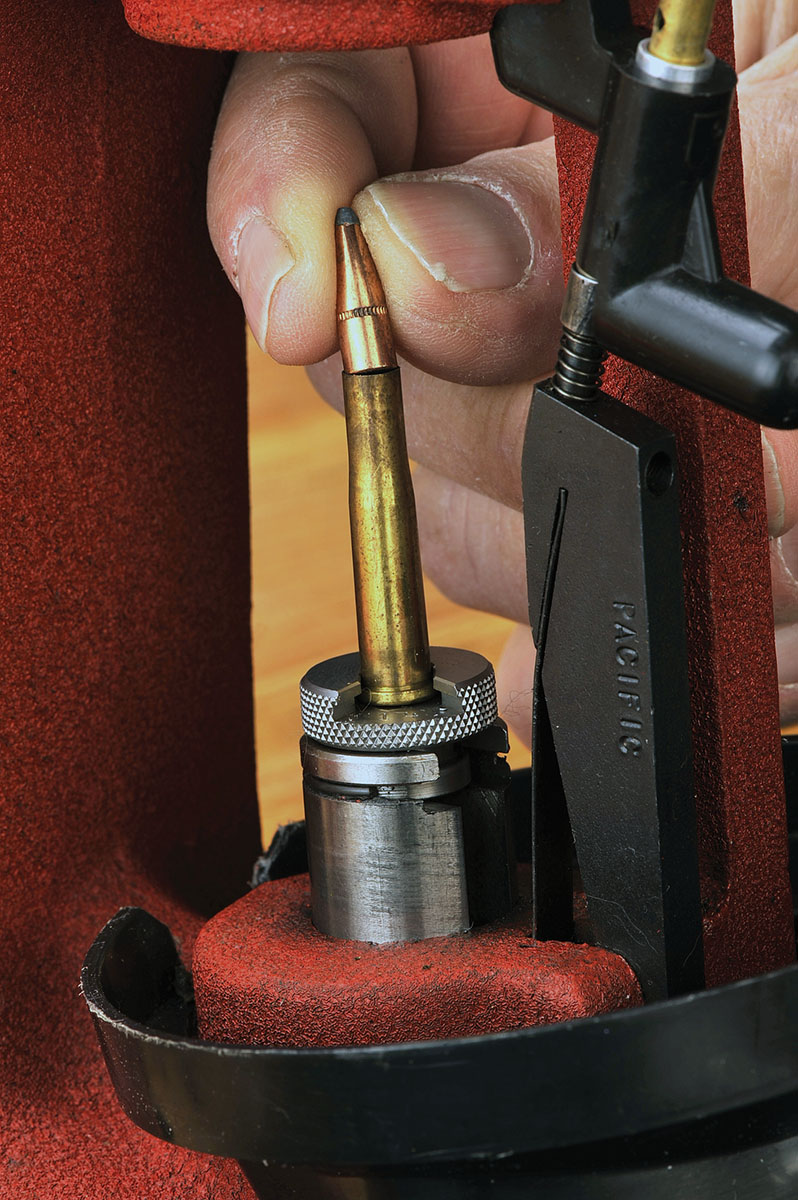
Writing this article in the beginning of 2024, I found that 22 Hornet brass is wanting at most places – with most companies like Remington, Hornady and Winchester still listing it, but including no back orders, which seems to be the norm these days no matter the component. However, at recent gun shows, there was brass selling for list price; others I found once-fired going for as little as twenty cents per round.
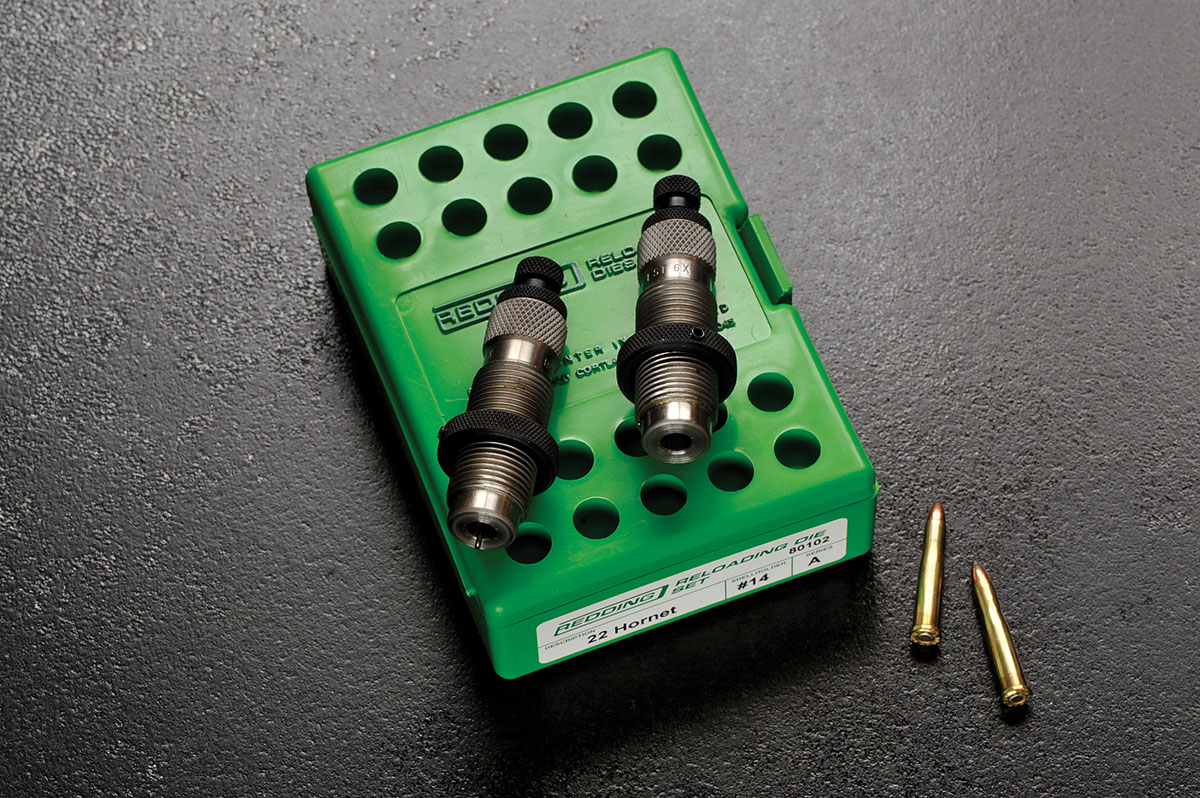
Small rifle primers seem to be available without too much effort, and trying both regular and benchrest over time, I found little difference with a small case like the Hornet, but then again, trying never hurt anyone! Dies from Redding, Hornady, Lyman or RCBS are in good supply online or at your favorite gun store and I’d purchase a neck sizer only or back off the full-length die a bit on once-fired cases for the best in accuracy.
Twenty-two caliber bullets are no problem as everyone stocks them. While the Hornet can use weights from 30 to 35 grains, switching to projectiles in bullet weights of 40, 45 and 50 grains did this handgun justice. No matter the varmint caliber, I have found that bullets in the slightly heavier range did much better on paper, much better in the field for me, especially when it comes to chuck hunting in the late summer when these marmots have put on a few pounds at longer ranges.
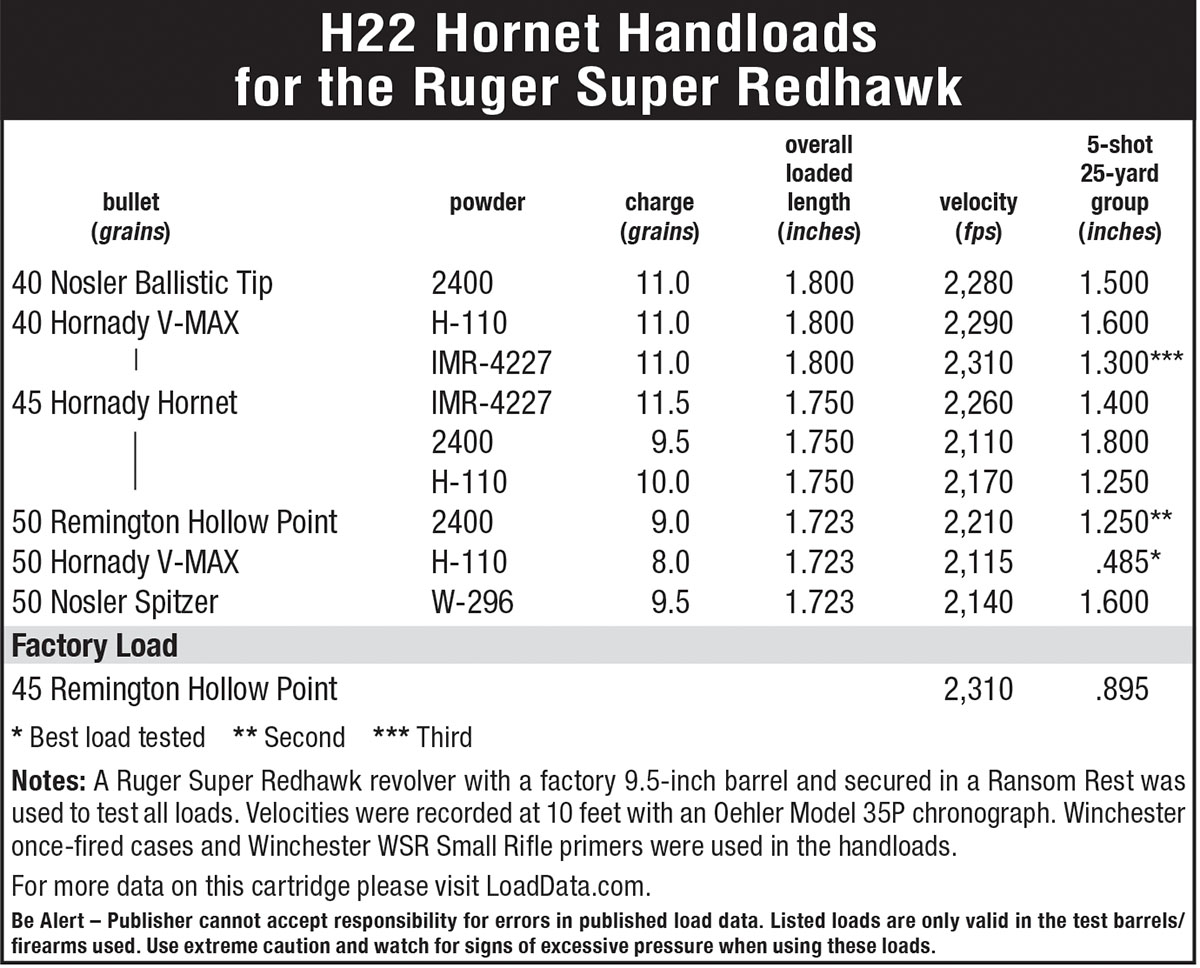
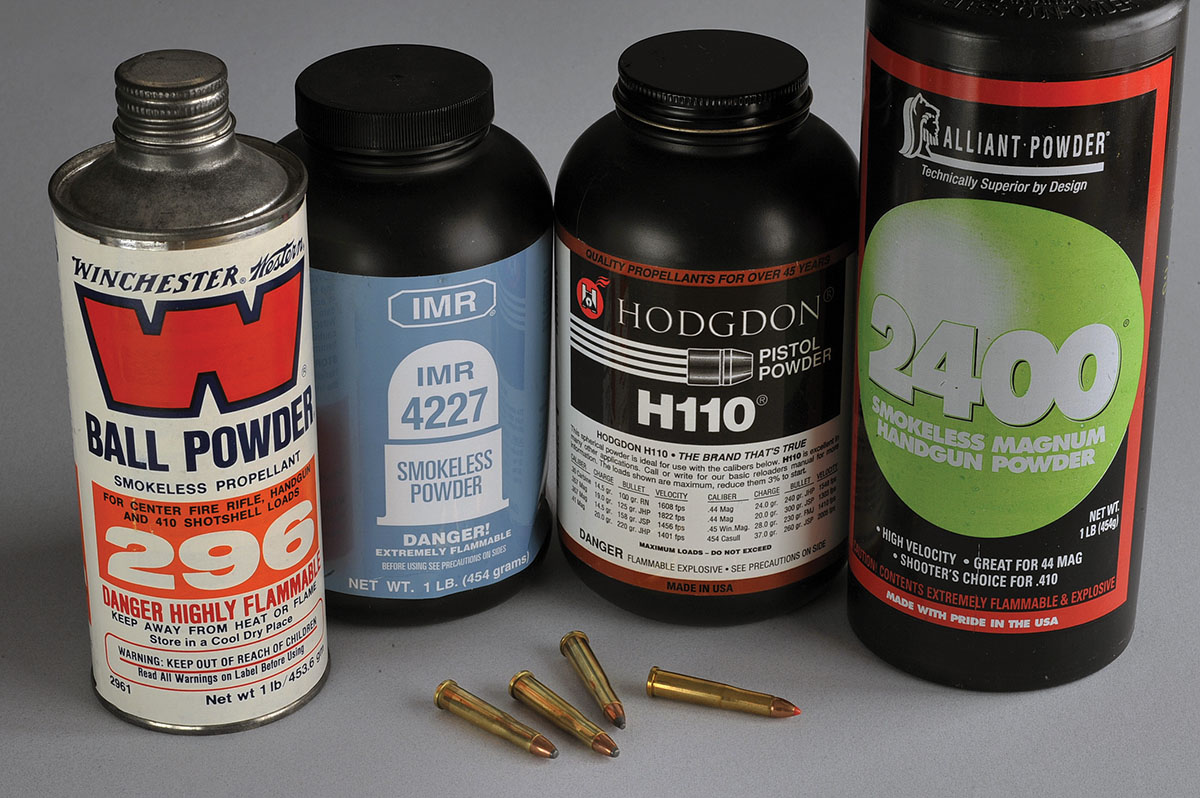
That said, for my use, I picked samples from Hornady, Nosler and Remington and when it came to powders, faster propellants are the key to the best of everything in a small case like the Hornet. Alliant 2400, introduced in 1932, is an excellent choice… after all, it was first when the Hornet was born. Following that, I used H-110, W-296 and IMR-4227. In these times, there are others that will fit the bill in the Hornet, but if these four will do the job, I’m all for it. Since the powder capacity of the Hornet is small, finding the right powder with the best burn rate brings the Hornet up to its full potential. An interesting thing to note as an experiment is how three powders used with the 40-grain bullet with the same 11-grain charge came up with different velocities. Additionally, with the same Hornady 45-grain Hornet, different powders and group sizes were the result.
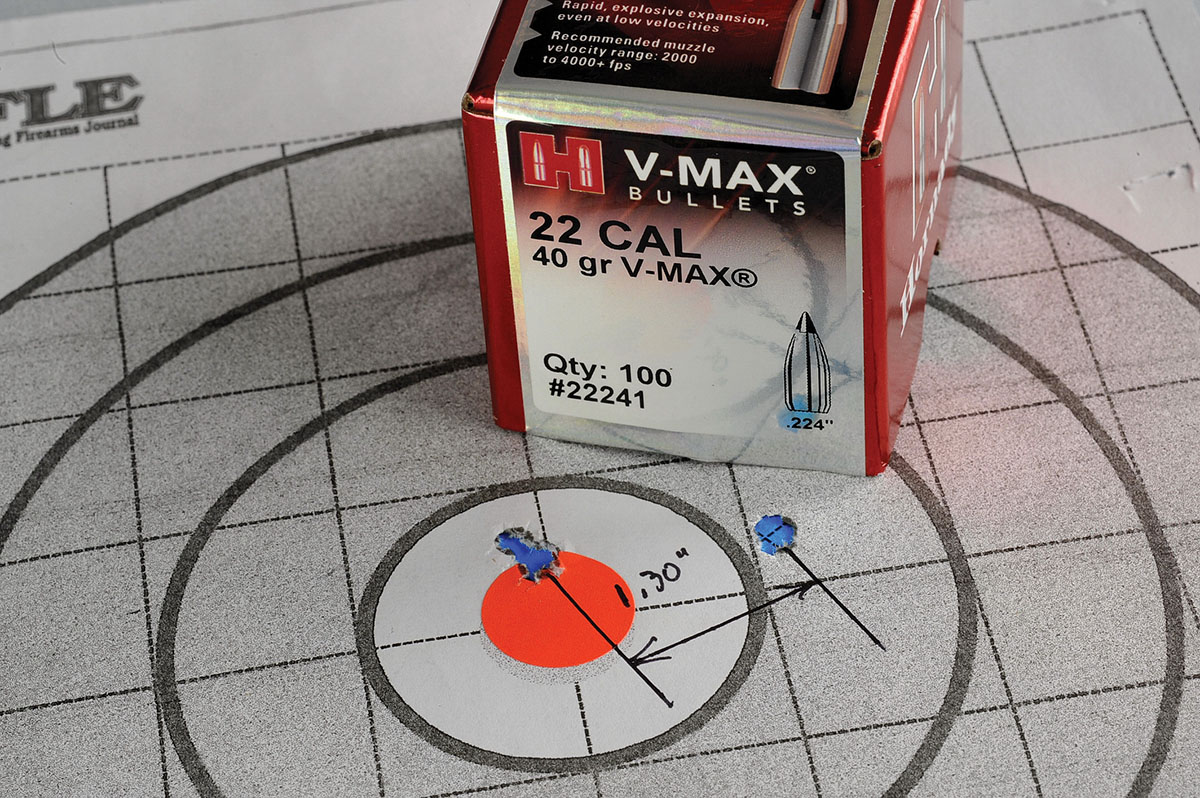
In the end, the Hornet always showed its spirit, with good accuracy, which is why it is still around regardless of how many new or “improved” varmint cartridges come around. Set up in the Ransom Rest, the popular Hornady 50-grain V-MAX hit the 25-yard target with a stunning – best of the day – group of .485 inch for five shots. The payload was 8 grains of H-110 over Winchester WSR primers with an overall length of 1.723 inches for 2,110 fps and with the proper rest, would make a great 100-yard loading.
In second place, Remington’s 50-grain hollowpoint dropped to 1.25 inches with 9 grains of trusted Alliant 2400 powder for a velocity of 2,210 fps, again with an overall length of 1.723 inches. Third for the morning was Hornady’s 40-grain V-MAX, hitting 1.30 inches with 11 grains of IMR-4227 at 2,310 fps loaded to an overall length of 1.810 inches. While handloading always brings out the best in any cartridge, factory ammunition from various manufacturers is still out there for those with limited time on their hands. On my shelf, I picked Remington’s 45-grain hollowpoint, which did not disappoint. With a velocity out of the shorter pistol barrel of 2,310 fps, the best group came in at .895 inch. As noted on many of the targets, it seems I was plagued by an occasional flyer not uncommon with a revolver. If you drop the flyer on the Remington load, you wind up with a four-shot group of .610 inch, on the 40-grain third place entry, it came to a very tight .250 inch, so the potential is there.
Over my long varmint hunting career, I’ve always turned to a rifle, as to me, it is much easier to carry, find a rest for and shoot all day. While the Ruger Super Redhawk, like the Thompson/Center Encore, are premium handguns for field duty, it is muzzle heavy and for carry, it would need one large, heavy-duty holster. I am not selling this gun short; it is my personal preference to cull the varmint population with a long gun. Since all of the previous handguns now are discontinued, Ruger has the field to itself with this 22 Hornet variation.
Be that as it may, considering the moderate, somewhat nosier report on one side, the economy of loading and the accuracy of the Hornet on the other side and for those who know, or care to know, the limitations of shooting a shorter barreled handgun at longer distances, this might be your varmint weapon of choice.
In the end, you still have to hand it to Ruger for jumping in with a gun like this. Bravo!