

A Wolf for Varmints
Performance First, Beauty Last
feature By: Art Merrill | April, 24
I showed my wife the rifle as it lay in the box. “What do you think, honey?” I asked.
“Oh!” she answered, reaching out to stroke the stock. “It’s beautiful!”
Okay, I guess I’m wrong. Let’s try that again:
Modern, rakish lines lend Benelli’s Lupo rifle the appearance that it’s perpetually moving at 95 mph just sitting there, like a Maserati MC20 Cielo. Space-age polymer cut pounds off the rifle’s sleek physique and permitted Italian artisans to shape it to aesthetic, angular dimensions never before conceived in rifledom. What varmint would mind getting shot with such a Michelangelo as Benelli’s Lupo?
Two personal axioms of mine that friends and gun shop customers hear repeatedly are, 1. “A rifle has to shoot first - looks are secondary,” and 2. “Guns don’t have to be ugly.” Beauty is, of course, in the eye of the beholder, and regardless of subjective opinion of what constitutes beauty, it’s what’s in the heart that really matters. Sometimes, a close examination of ugly reveals hidden beauty in the heart. So it is with Benelli’s Lupo, and the rifle got better looking as I evaluated it.
First and foremost, the Lupo (Italian for “wolf”) boasts a sub-MOA guarantee, which we’ll check at the range later to see if it meets the expectations of Axiom No. 1 above. Secondly, Axiom No. 2 aside, Lupo’s major practical, if not aesthetic appeal is that many features of the stock can be owner-customized with the included factory optional parts to make the stock more ergonomic to the individual shooter. We tend to shoot better when we fit the rifle to ourselves rather than try to contort ourselves around our rifle.
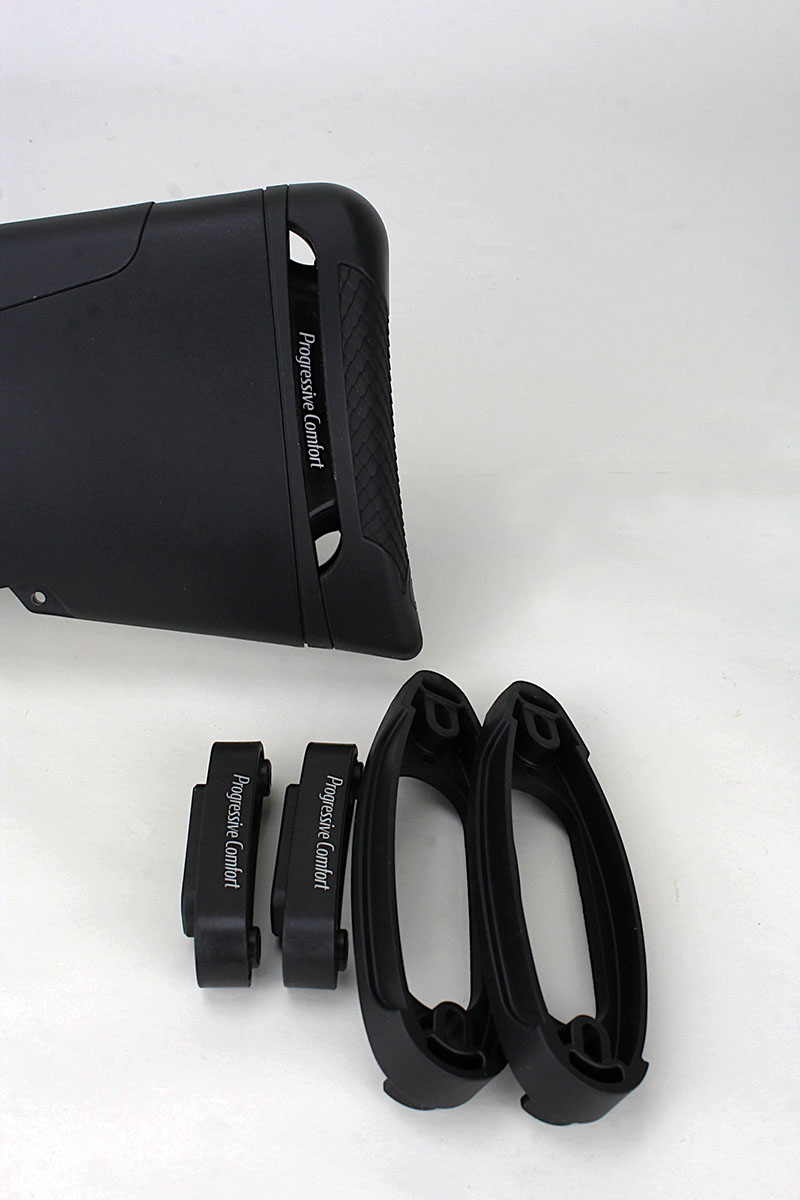
Benelli’s most unusual customizable innovation is the inclusion of shims to change the stock’s drop and cast. Serious shotgunners are more persnickety about cast and drop than are riflemen. In both hunting and competition, “snap shots” are the norm with a shotgun, when it must be mounted quickly and must track a rapidly moving target. To do this most effectively, the shotgun must fit the shooter so that when it comes to the shoulder the eye and bead sight are immediately in perfect alignment. There’s more to it, of course, but the point here is that, for this reason, shotguns are often custom-built to the individual well-heeled shooter in both drop and cast, and tailoring a shotgun to fit the shooter can reach the cost of a new Giorgio Armani suit.
“Drop” refers to the vertical distance from the line of sight over the barrel (or from the bore) to the top of the heel or comb. “Cast” is offsetting the buttstock left or right from the bore axis. For a right-handed shooter, “cast-off” moves the butt to the right, and “cast-on” moves it to the left. Changing these two dimensions more precisely fit a shotgun to the individual’s anatomy and technique for fast, accurate shooting. Benelli is a well-respected maker of shotguns, so it is not surprising the company would bring that aspect of fine shotguning to its first rifle.
Also taken from its shotguns, Benelli mounted its “Progressive Comfort System” recoil reducer under the Lupo’s rubber buttpad. The comb is a comfortable soft rubber insert that properly slopes downward at the front so that the comb, in effect, drops away from the cheek under recoil to prevent loosening teeth. The comb insert, according to the owner’s manual, is another custom feature that can be owner-replaced, but no optional comb came with this rifle.
While Lupo’s modularity and recoil reduction are clever enhancements to its synthetic stock, the sculpting of the forearm, which I had thought so ugly, became a thing of form-follows-function beauty upon handling. Slightly rounded on the bottom, concave on the sides, flaring at the top and narrowing toward the front, the forearm sits so comfortably in the support hand that it deserves recognition here. Unlike other rifle forearms, the Lupo provides channels for the thumb and for the fingertips, into which they fall naturally. Subjectively, that small detail feels like it helps shoulder the rifle quickly into place, and that it adds some small, additional control for offhand shots.
Provision for sling swivel attachments is molded into the stock at the forearm tip and four inches up from the buttpad. Removing a rubber protector under the forearm permits the installation of a sling swivel stud to mount a bipod.
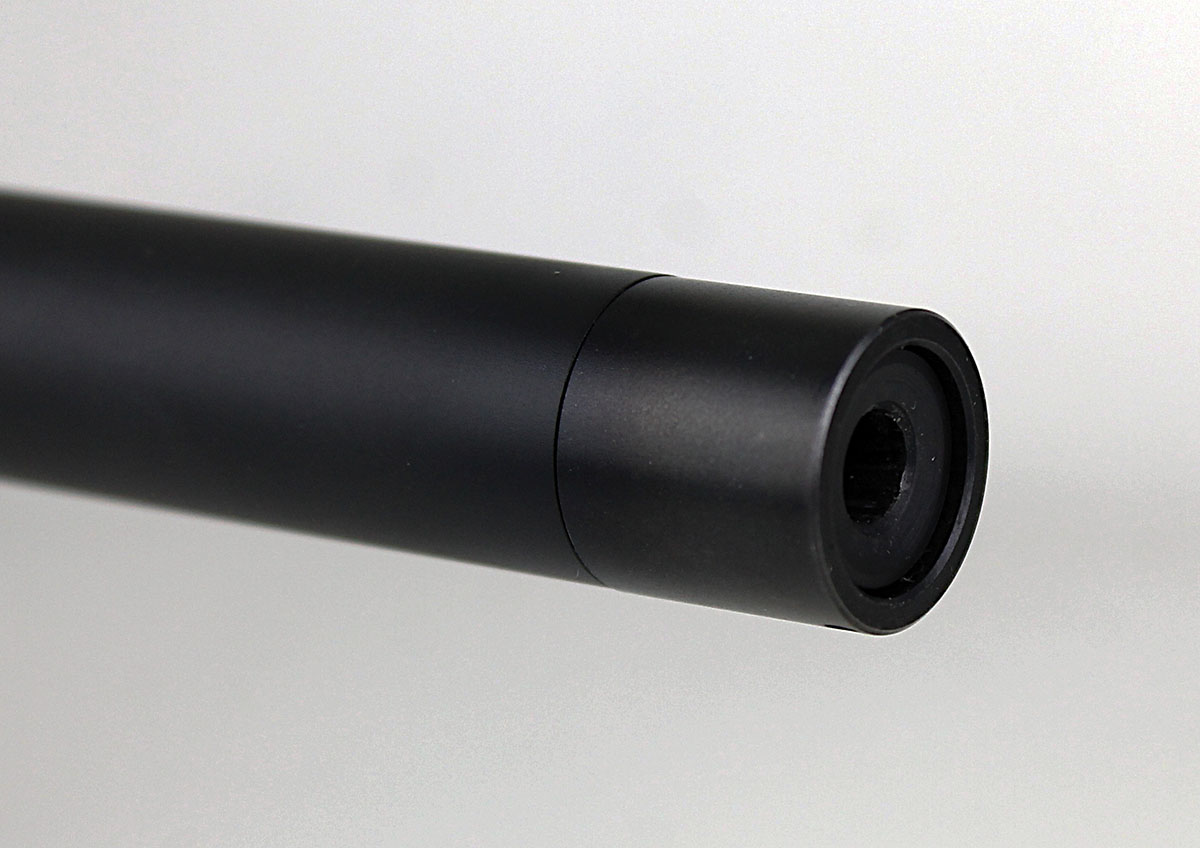
The barrel and receiver wear a matte black finish. A thread protector at the muzzle protrudes slightly ahead of the muzzle to create, in effect, a recessed crown. Removal permits installing a 5⁄8 x 24 threaded brake or suppressor. The cryo-treated barrel free-floats to mate with the receiver via a hardened steel barrel extension that is in turn, bedded to a metal block in the stock. The barrel extension is cut with a slot that engages a short, transverse steel bar on the block, pretty much an old-school recoil lug in reverse. This latter feature likely accounts for much of the Lupo’s sub-MOA guarantee. An “accuracy certificate” card accompanying the new rifle informs that this rifle cozied three shots into .85 MOA at 100 yards with Hornady 103-grain 6mm Creedmoor ELD-X Precision Hunter ammunition before leaving the factory.
Neither literature, website nor owner’s manual lists the twist rate in this, Benelli’s 6mm Creedmoor offering, but the tight-patch-on-a-cleaning-rod method came up with 1:8. The slim barrel stretches 22 inches.
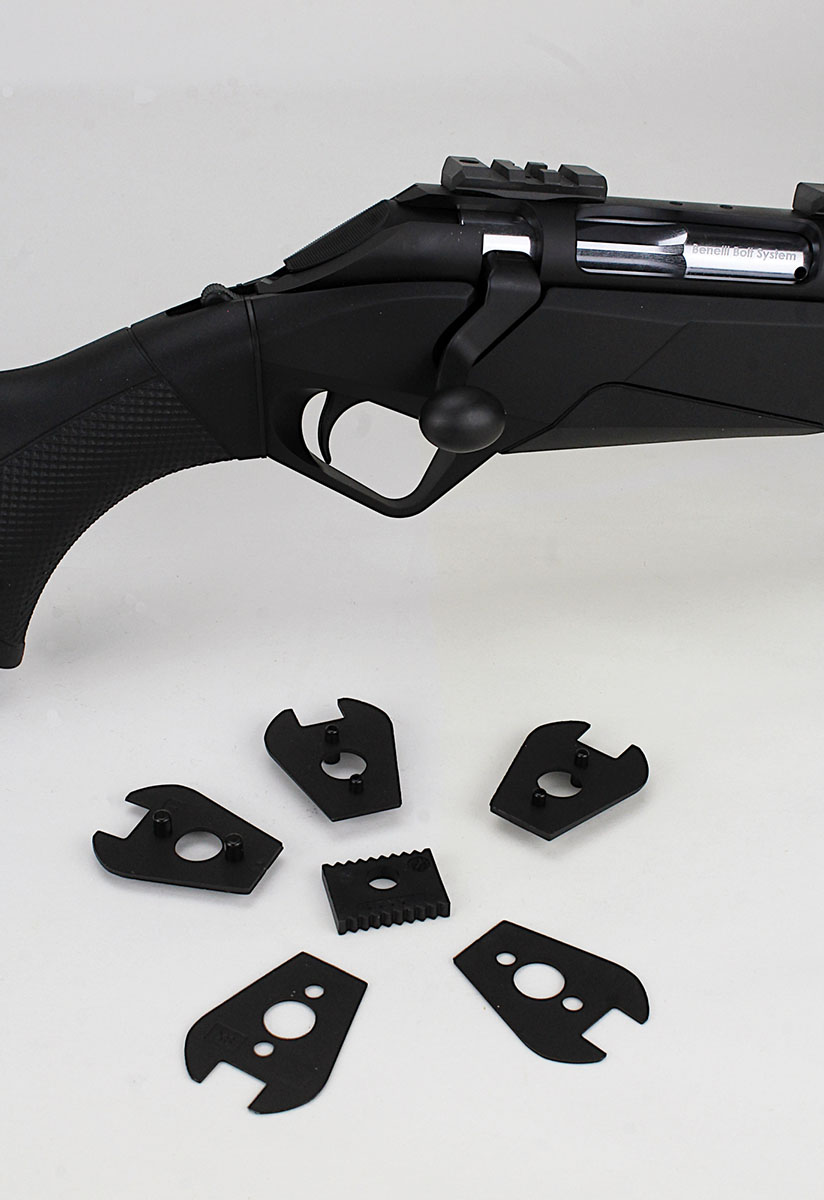
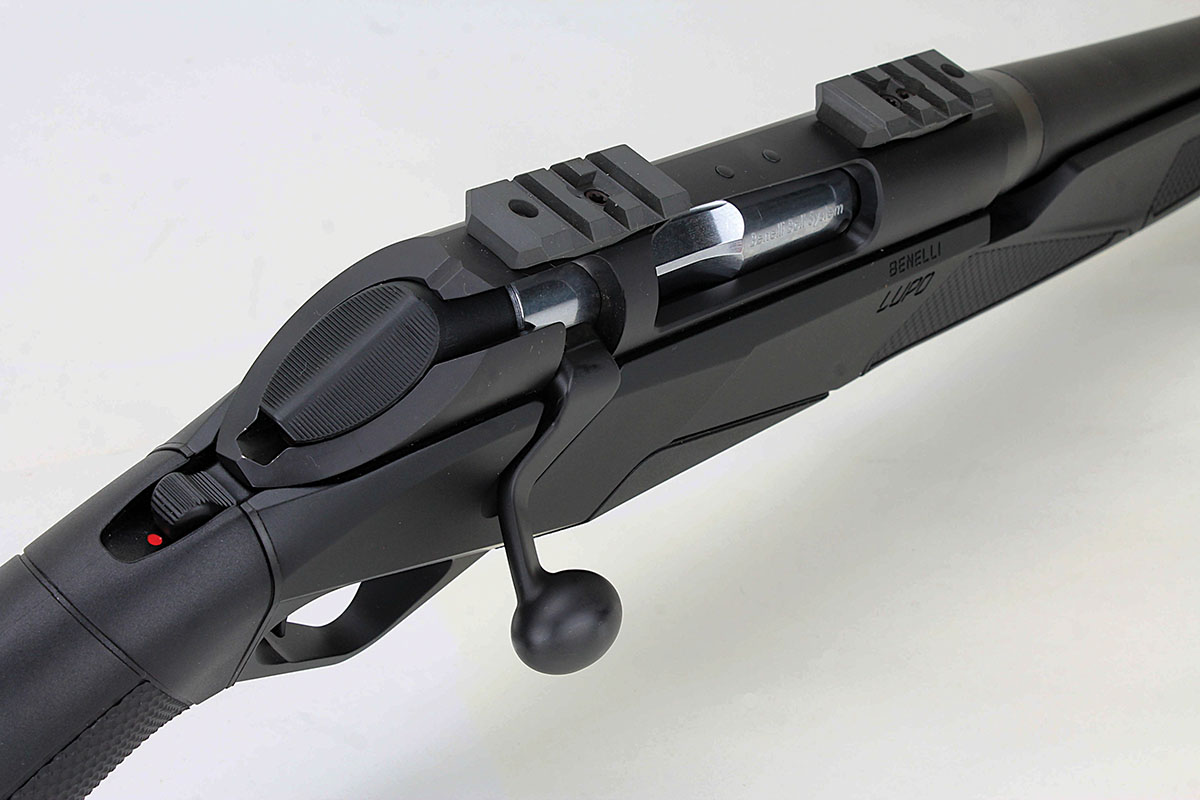
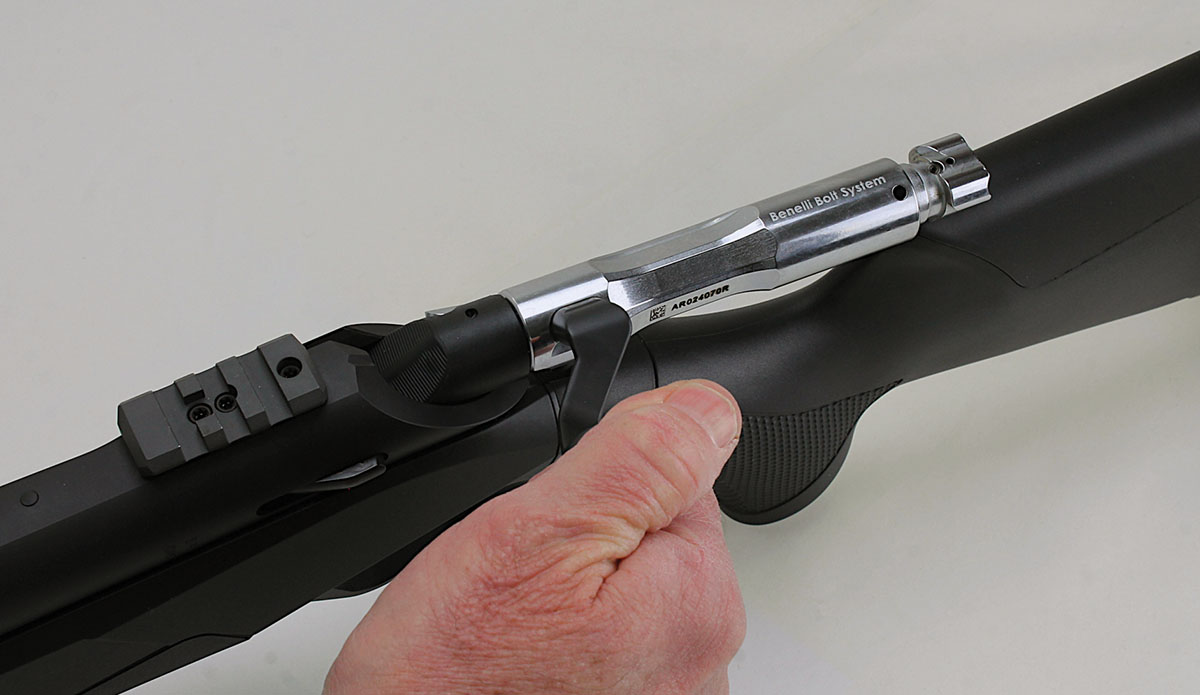
In the event of a case rupture or pierced primer, a hole on the left side of the receiver aligns with a hole in the locked lug to vent gasses from the firing pin channel; a second hole in the bolt body vents to the right, through the ejection port. Almost flat, angled forward and serrated, the bolt cap on the back of the bolt is a natural resting place for the shooting hand thumb, for the rifleman who shoots with the thumb resting along the stock rather than wrapped around the pistol grip. The tang safety is mounted immediately below the bolt cap; the safety blocks trigger movement and the bolt can be withdrawn with the safety engaged.
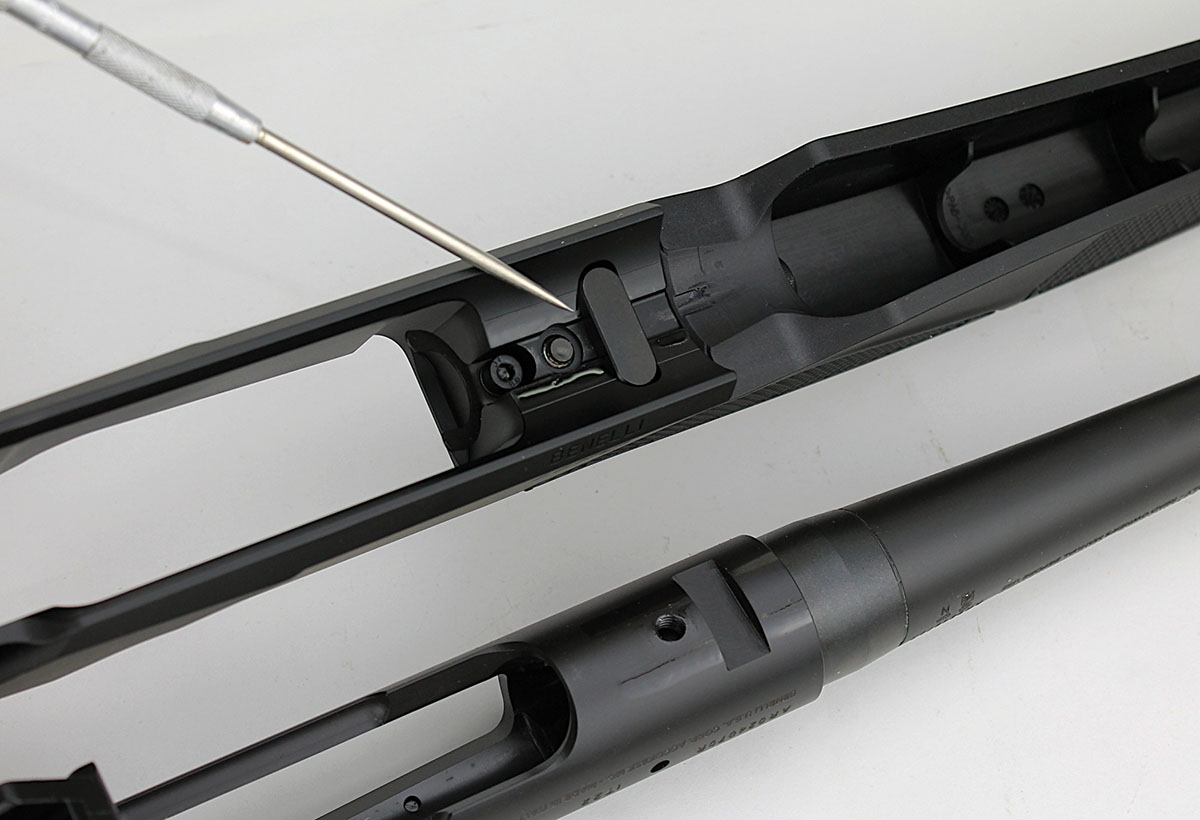
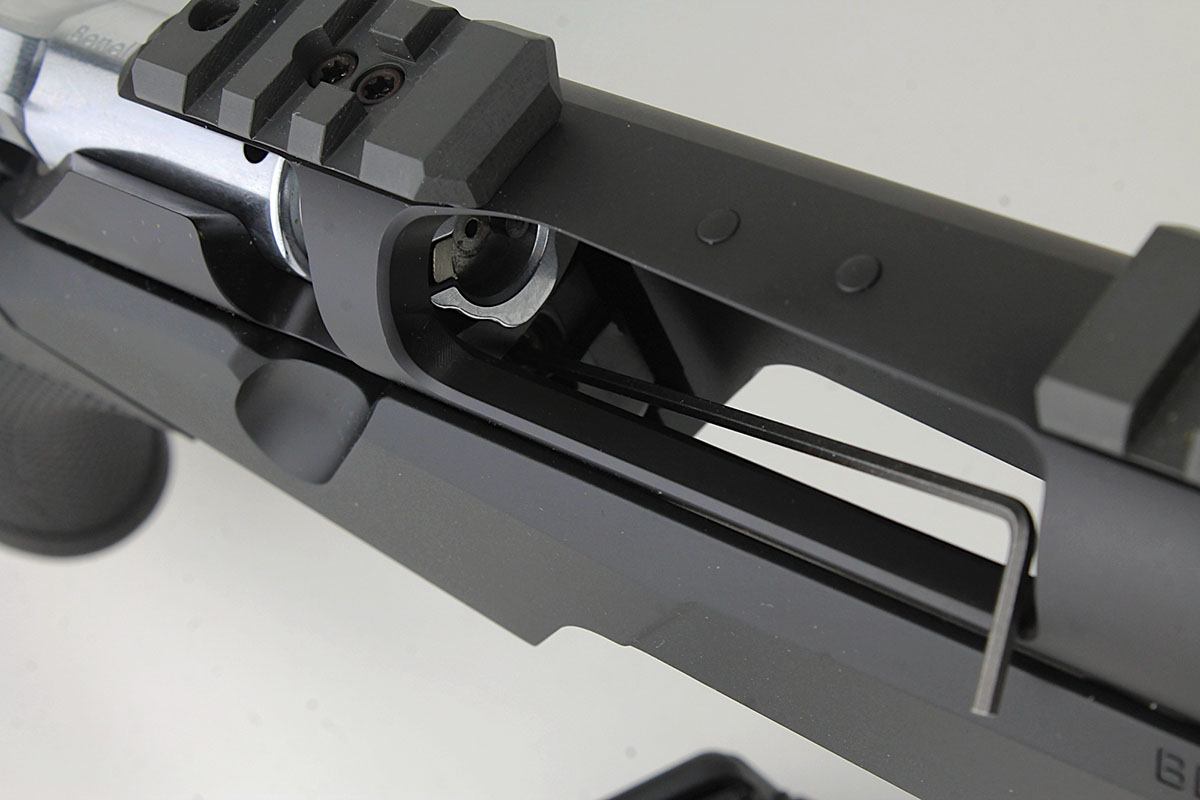
The factory adjustable trigger pull is set at 2 pounds. Trigger pull adjustment screw access is through the ejection port after removing the magazine. Turn the screw clockwise to increase trigger pull, counterclockwise to lessen it. A bit disconcerting, the adjustment screw doesn’t appear to have any stops; instead, the screw keeps turning loosely when adjusted to its apparent limits. Turning it in as far as I dared rendered a 4¾-pound pull; backing it out ‘til it felt like it was going to fall out dropped pull to 1½ pounds. Giving it a few more turns inward to feel some resistance kept it at 1½ pounds, apparently its lightest setting. The trigger breaks cleanly with no take-up or overtravel.
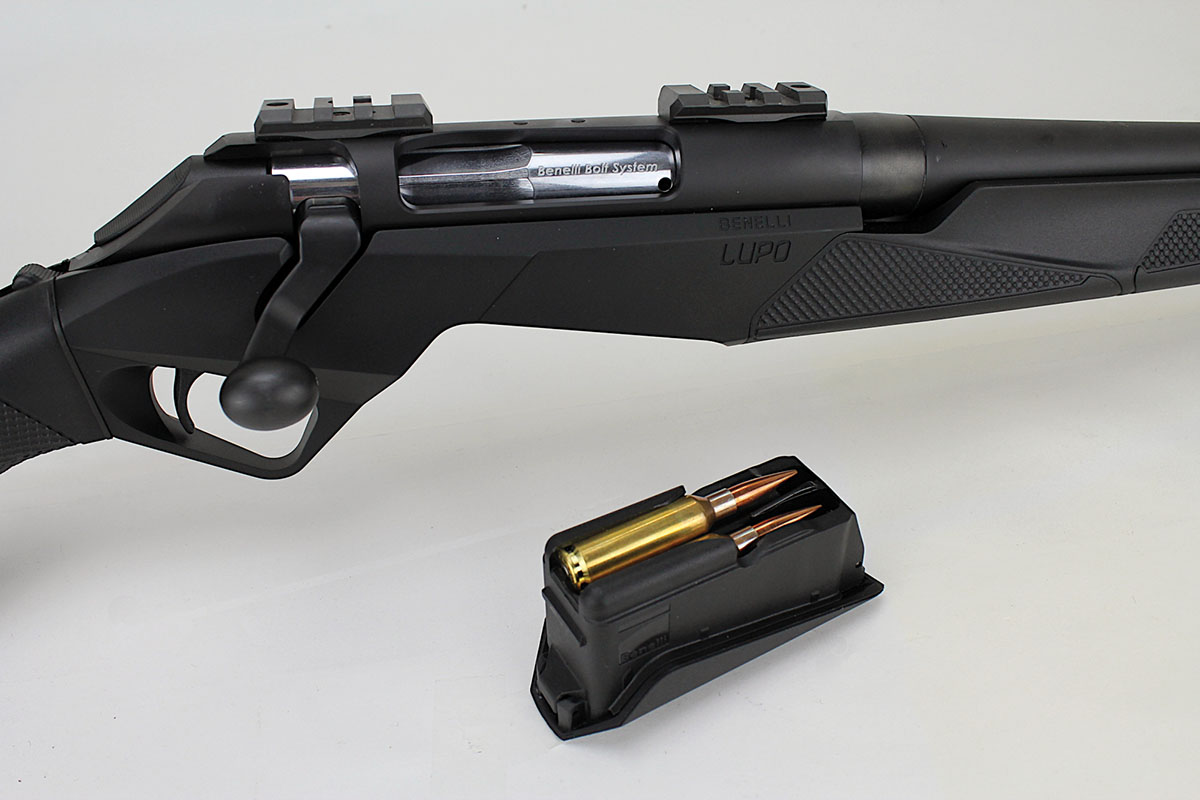
Lupo’s polymer magazine is fairly beefy, and its double-stack configuration provides room for five 6mm Creedmoor cartridges while fitting flush with the stock. The design also permits easy unloading of the magazine. It does not rattle after clicking into place.
The Lupo came to me with separate short Picatinny mounts for scope mounting. Unlike many other bolt guns, they appear to be identical and interchangeable, and the receiver top is flat and appears to be level. That uncomplicated system gets an appreciative thumbs-up from a guy who mounts dozens of rifle scopes each year.
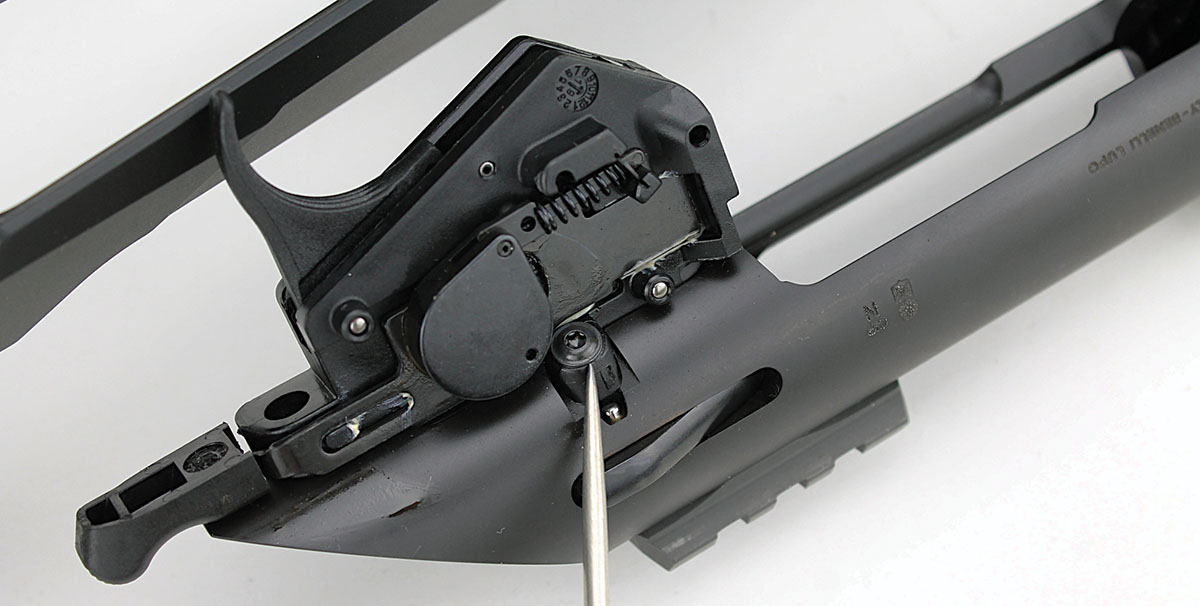
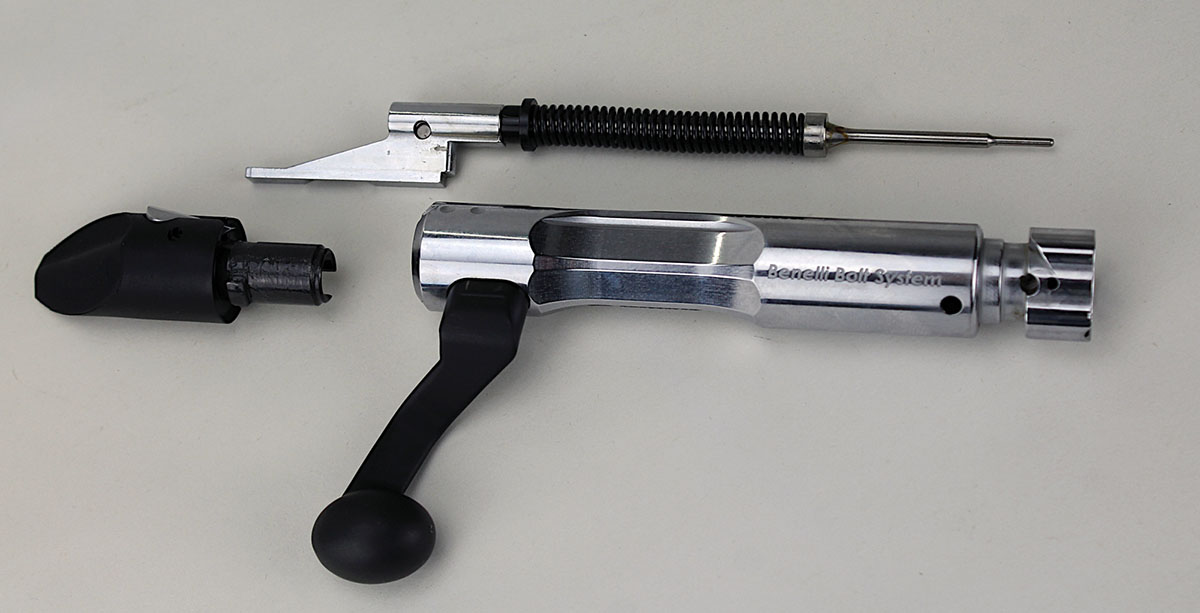
Disassembly of the bolt is accomplished without tools, leaving the firing pin spring mostly compressed. Reassembly is apparently supposed to be toolless as well, but I found the firing pin spring so strong that it required the aid of a benchtop and a bit of body weight, or clamping in a padded vise, in order to compress the spring the last few microns so that the bolt cap could be twisted back into place. The instructions point out that, if one turns the bolt cap the wrong way, the bolt may be partially inserted into the receiver backwards to hold the bolt cap and then the bolt handle lifted to make it all right. I used this procedure once to see whether the bolt can be reassembled thusly in the field. It worked, but note that the bolt cap construction is some kind of plastic/polymer and could be marred by the steel receiver when using this technique.
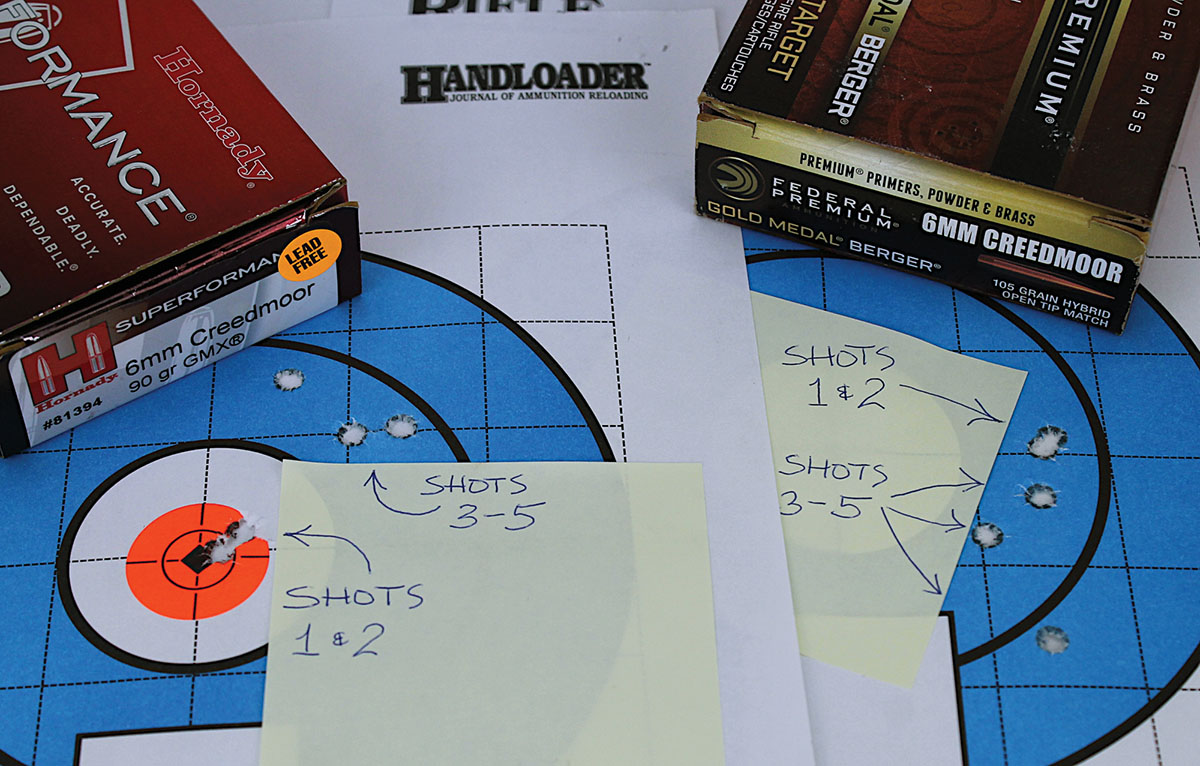
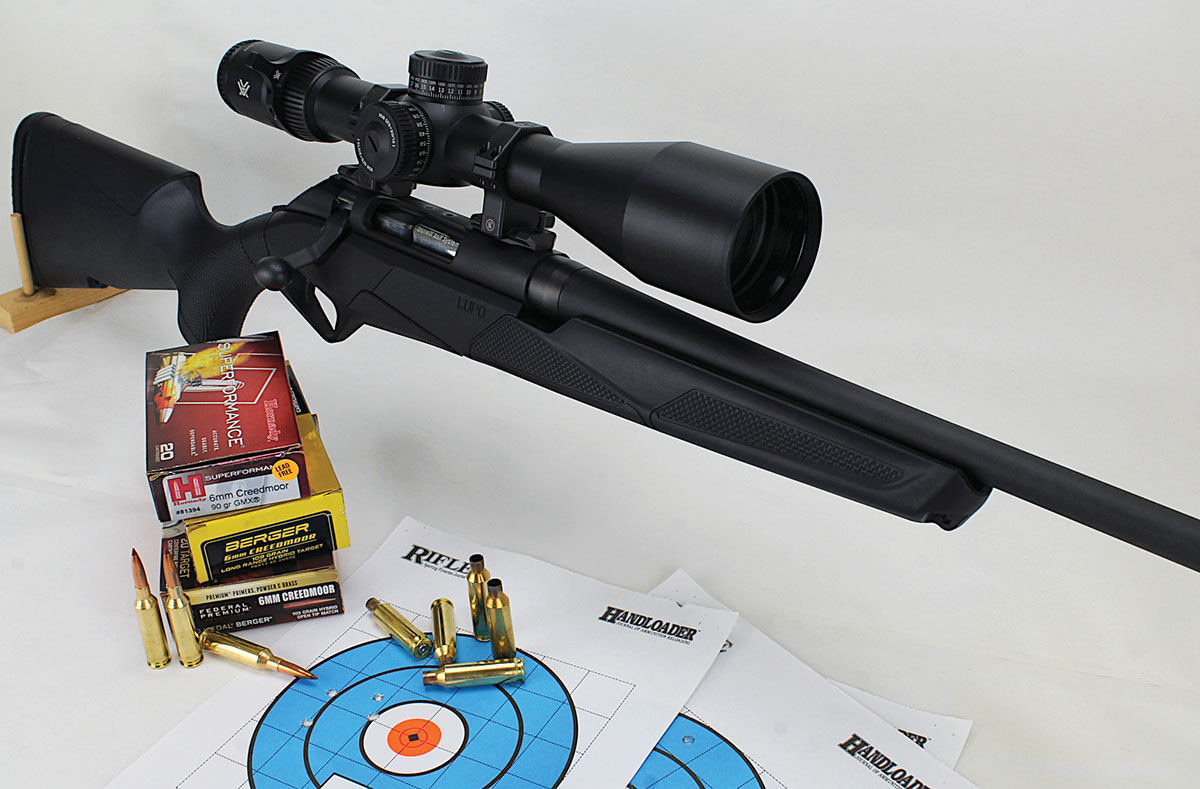
For this evaluation – and because I thought I might try the Lupo in the field on its cousin coyotes before editorial deadline - I mounted a Vortex Venom 5-25x 56mm riflescope. Factory 6mm Creedmoor ammunition included Berger 109-grain Hybrid Target, Federal Premium Gold Medal topped with Berger’s 105-grain Hybrid Open Tip Match bullet and Hornady 90-grain GMX, the latter a lead-free hunting bullet.
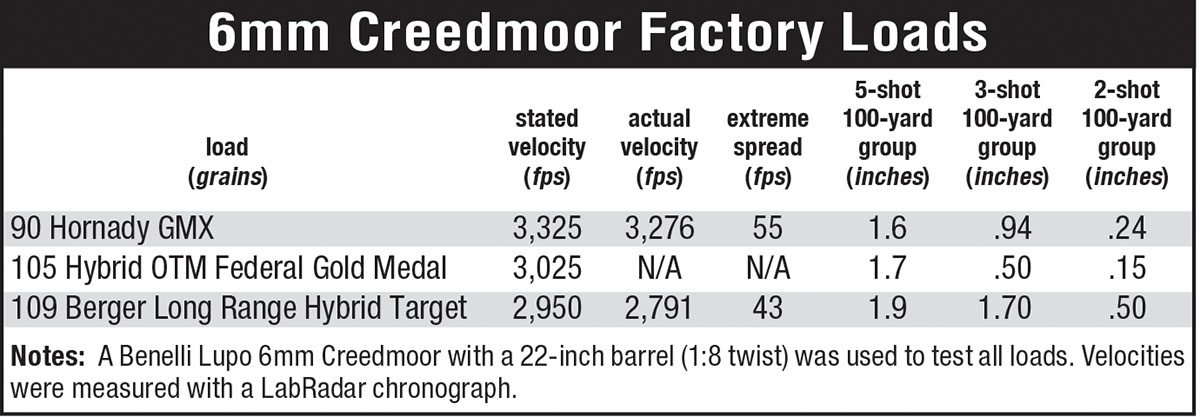
The Lupo’s bolt is slick and easy to manipulate. Like an excellent match rifle, the bolt handle’s geometry is such that one can flip the bolt open and back in one quick motion with the index finger, and then chamber the next cartridge with a push of the thumb. Despite the extensive use of synthetics and a slim barrel, the Lupo weighs 7 pounds and a couple ounces without a scope. Firing premium ammunition from a heavy rest on a concrete bench during a windless day, everything favored the rifle to repeat that factory grouping. From the accompanying table, you can see the effects of heating on that slim barrel. While the first two shots were frequently touching, not allowing the barrel to cool during five-shot strings opened groups beyond the factory boast with the ammunition used here. I thought the methodology fair, given that some facets of varminting feature rapid follow-on shots. The Lupo and ammunition still demonstrated outstanding precision for hunting, which entails one or two shots at most game and varmints.
With a manufacturer’s suggested retail price of $1,600, Benelli’s very first rifle incorporates clever features from shotgunners and forward-thinking rifle designers. While it may or may not pass Axiom No. 2 for the individual shooter, it makes the cut for the all-important Axiom No. 1. That svelte barrel isn’t conducive to strings from the prairie dog bench, but as a longer-range predator varminter that can also double for medium-size game with the appropriate ammunition, the Lupo in 6mm Creedmoor makes the grade.
Once you can get past the looks.