

21 Years of the 17 HMR
One of the West's Favorite Calibers
feature By: Gary Lewis | October, 23
Know Your Limitations
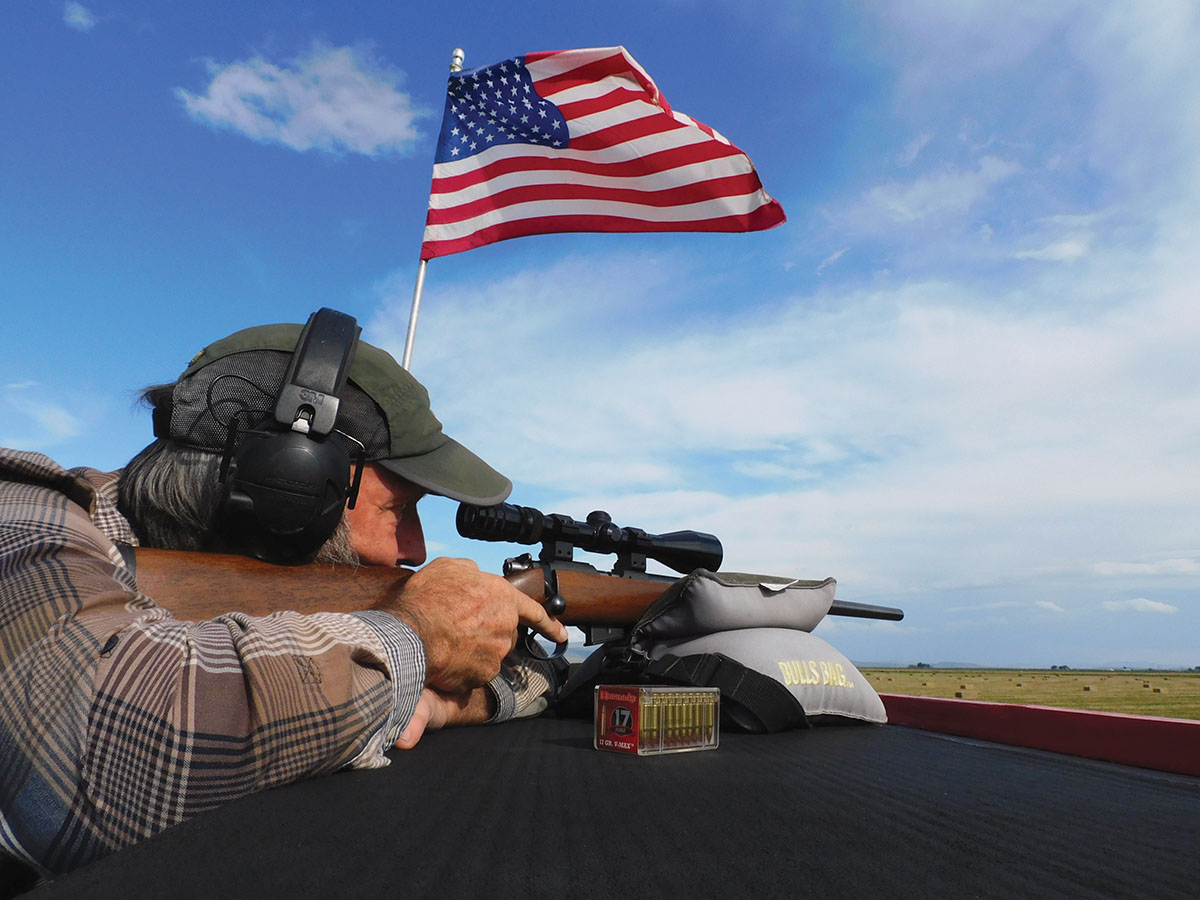
Wind is the biggest enemy of accuracy for the 17 HMR. A strong gust is going to blow a bullet off course past 100 yards. But that is part of the fun of shooting varmints anyway. There are times when shooting over a field of alfalfa when a 40-grain 22 LR or a 22 WMR is going to deliver more consistent first-round hits. But when the wind settles back to 6 mph or less, watch out sage rats.
One day out in the Badlands, I shot a coyote that came in to the FoxPro at the 13-minute mark. It came in at a dead run like it had heard the call over in the next county and couldn’t be late for dinner. I had positioned the call so the coyote had to make a hard right turn to get to it and when it spotted the decoy it was broadside. The dog jumped over the decoy and snapped at it and was still airborne with the little whippy fuzztail decoy in its mouth when I shot it in the lungs with the 17 HMR.
It would have been an interesting experiment on how far a lung-shot coyote would go, except my friend, Lee Van Tassell, shot it a half-second later with his 22-250 and that was curtains for that coyote.
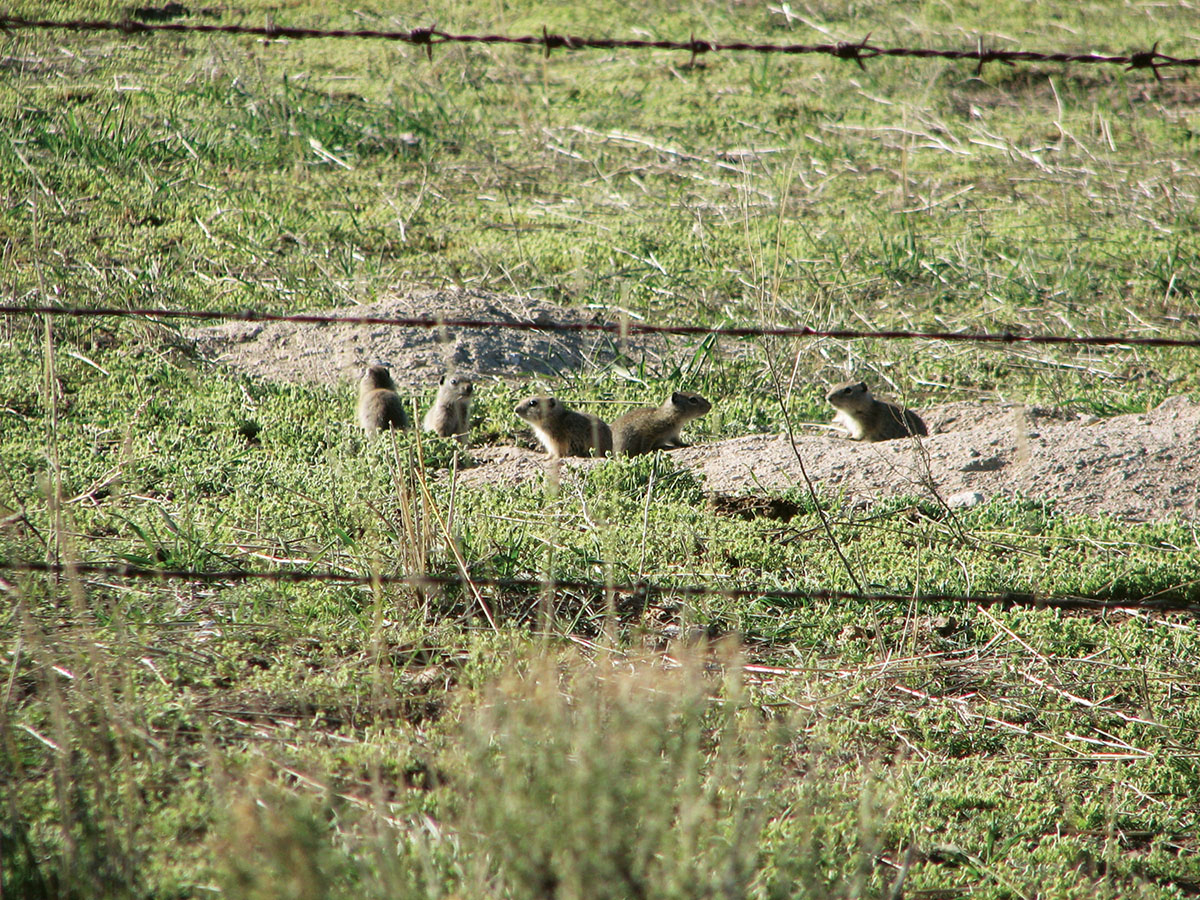
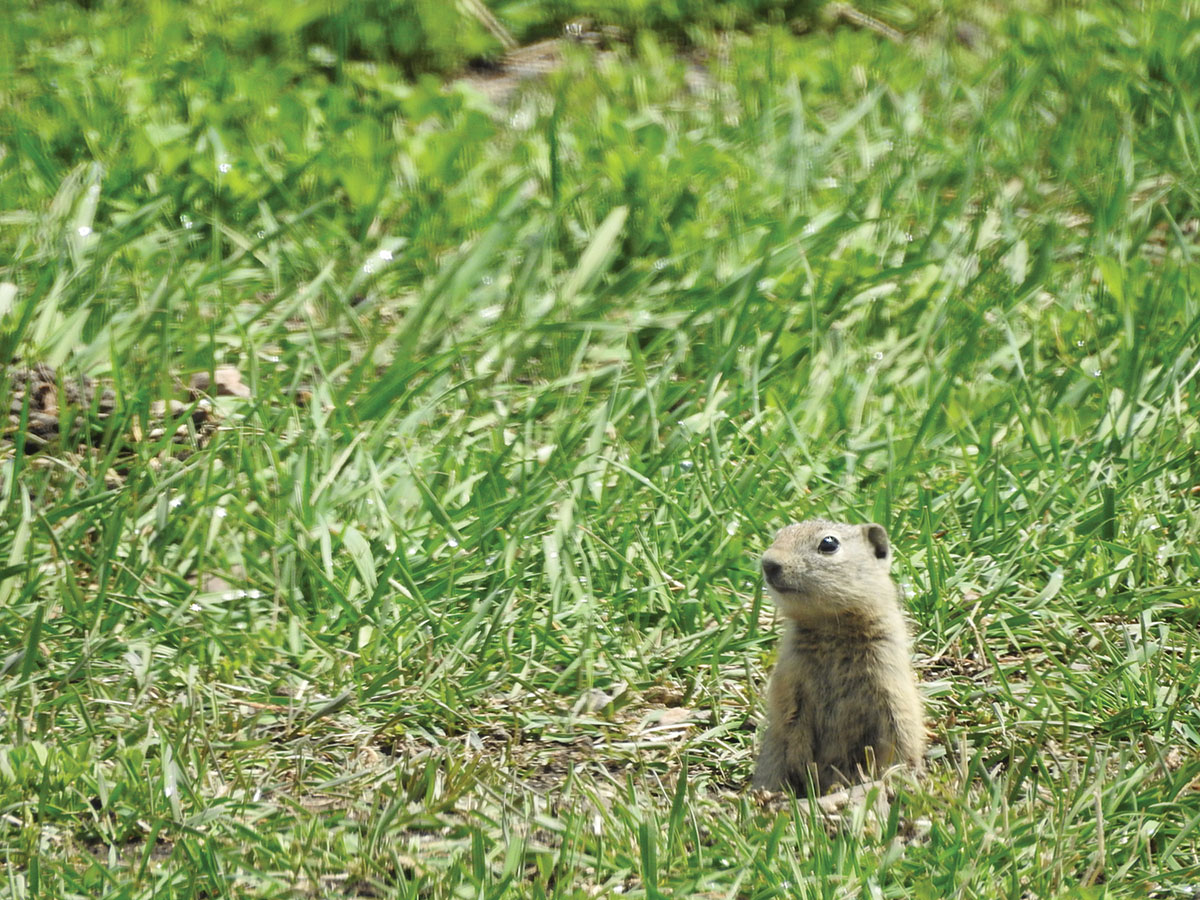
If a hunter likes to eat rabbits, the 17 HMR is not the best choice either. It destroys too much meat. Choose a 22 Long Rifle or a 22 Winchester Magnum Rimfire when shooting for the table. I’ve never shot a badger with a 17 HMR, but I have shot one with a 204 Ruger and that was almost not enough gun either. No, we love the 17 HMR out West because it does one thing and it does it exceedingly well. It is dynamite for digger squirrels.
In the Rifle Rack
One of the first guns chambered for the 17 HMR was the Ruger Model 96/17, a lever-action rifle based on the Ruger 10/22 design with an 18-inch barrel. I never shot one, but the people that I talked to that owned them tended to keep them. Ruger took the 96/17 out of the catalog, but recently there was one on Gun Broker in new/unfired condition and the asking price was $1,500.
If I was in the market for a couple of new 17 HMRs and who knows, maybe I am, I would strongly consider a lever action (can’t have enough leverguns) and either a semiauto or a straight-pull bolt like the Anschutz. I have tried several semiautos and the Alexander Arms is far and away my favorite in that category.
2.5 Million Rounds!
My friend, Justin Aamodt, who makes his home outside the bustling burg of Burns, Oregon, still owns the first 17 HMR he ever laid his eyes on. “It was a Savage with a sporter barrel and a plastic stock but it out-shot every 22 Magnum or 22 Long Rifle I’d ever seen.”
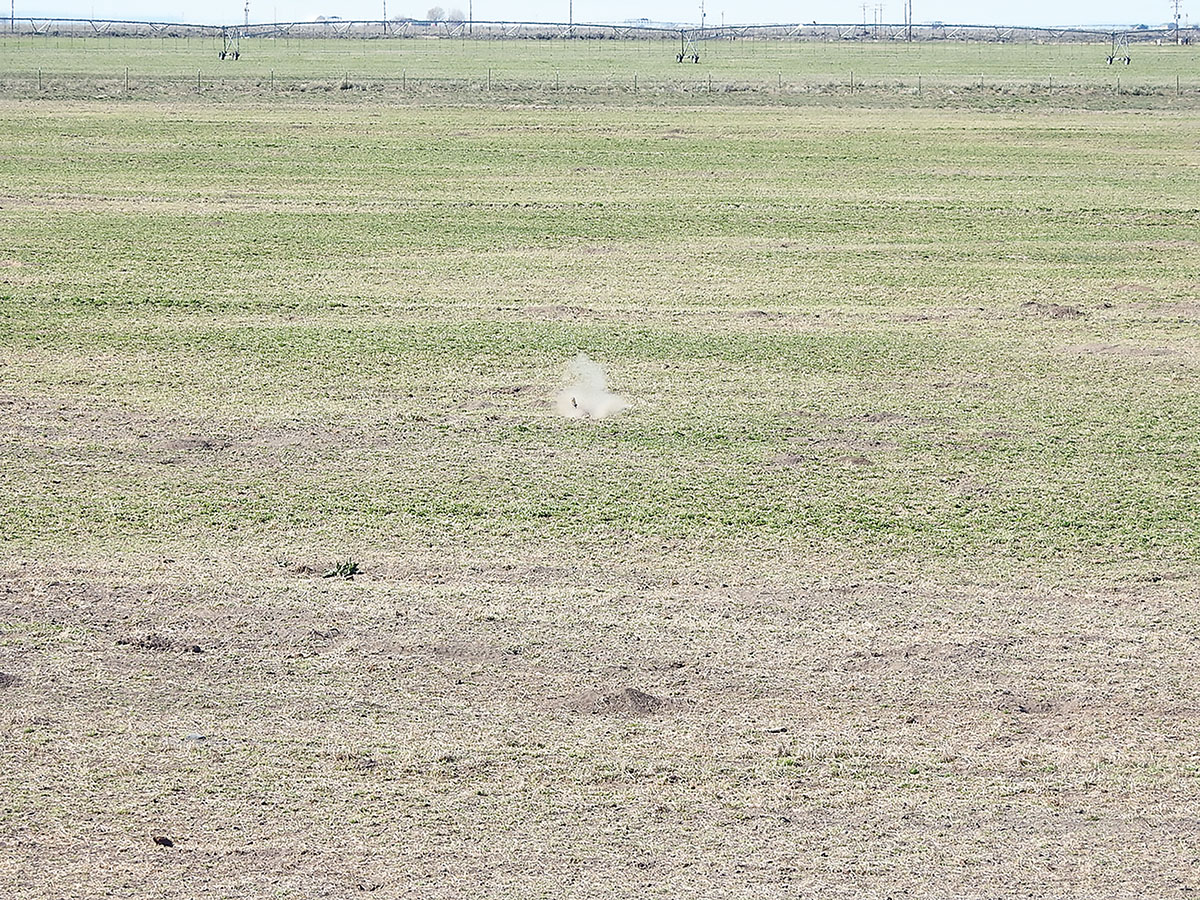
The rifle spoke to him about his mission in life. That was 21 years ago. Justin and his wife, Nikki, started their business that same year, calling it Predator Paradise and Diamond A Guides. It is their life’s work to take shooters to the fields where they can do the most good for the farmers that need to protect their orchard grass and alfalfa from the hungry sage rat.
Everyone he met that first year, Aamodt had to tell them about his new 17 HMR – he helped sell a lot of Marlins and Savages. Since that time, Aamodt calculated he has heard 500 rounds of 17 HMR cracked-off per shooter, per day, with an average of four at a time for an average of 60 days per year in 21 years – that’s approximately 2.52 million rounds of the 17 HMR going “BANG” in his hearing. “One day, I loaded 4,700 rounds of 17 HMR all by myself and we shot every bullet on the trailer that day.”
Barrels can be finicky. “The Savage rifles, we clean them every 100 rounds with a snake and we can do that 10 or 15 times before we do a deep cleaning. And I only clean the direction that the bullet travels from the chamber to the muzzle.” The Anschutz 1727 is Aamodt’s favorite action. “I got to see the first three that were ever brought to the United States.”
Aamodt took Jochen Anschutz and friend, Jerry Russell, to a freshly rototilled field that was loaded with sage rats. He loaded steadily through the morning while Anschutz and Russell stayed behind their guns, making hit after hit. Midway through the morning, Jochen Anschutz started banging his fist on the counter saying, “Das ist ver gut! Das ist ver gut!”
Aamodt’s favorite load right now is the Hornady 15.5 which is a non-lead option. “They seem to be as accurate as the 17-grainers with less drift. This is kind of strange, but they certainly don’t have more drift. Maybe it’s that it’s almost 2 grains lighter and it’s faster and if it hits a blade of grass, it comes apart. Very safe. Very accurate.”
Ammunition Offerings
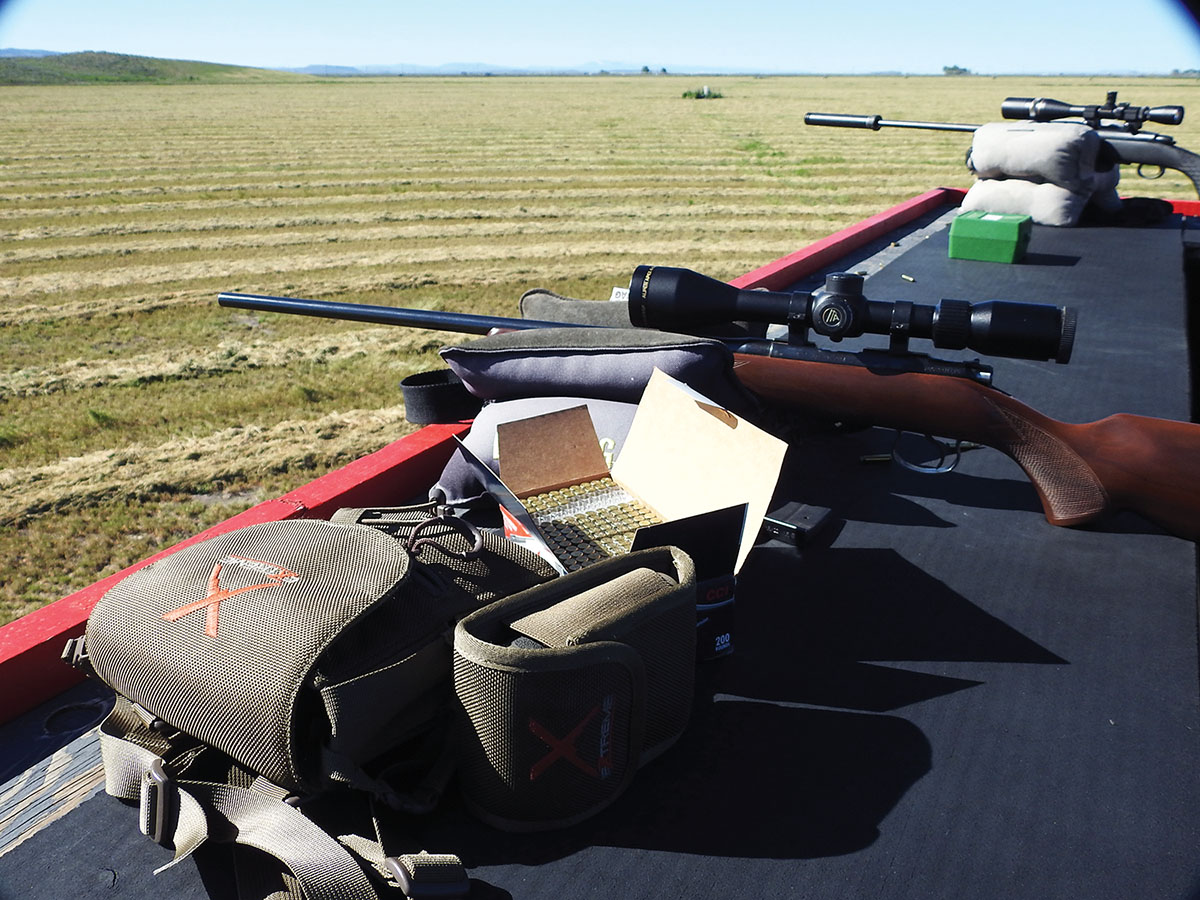
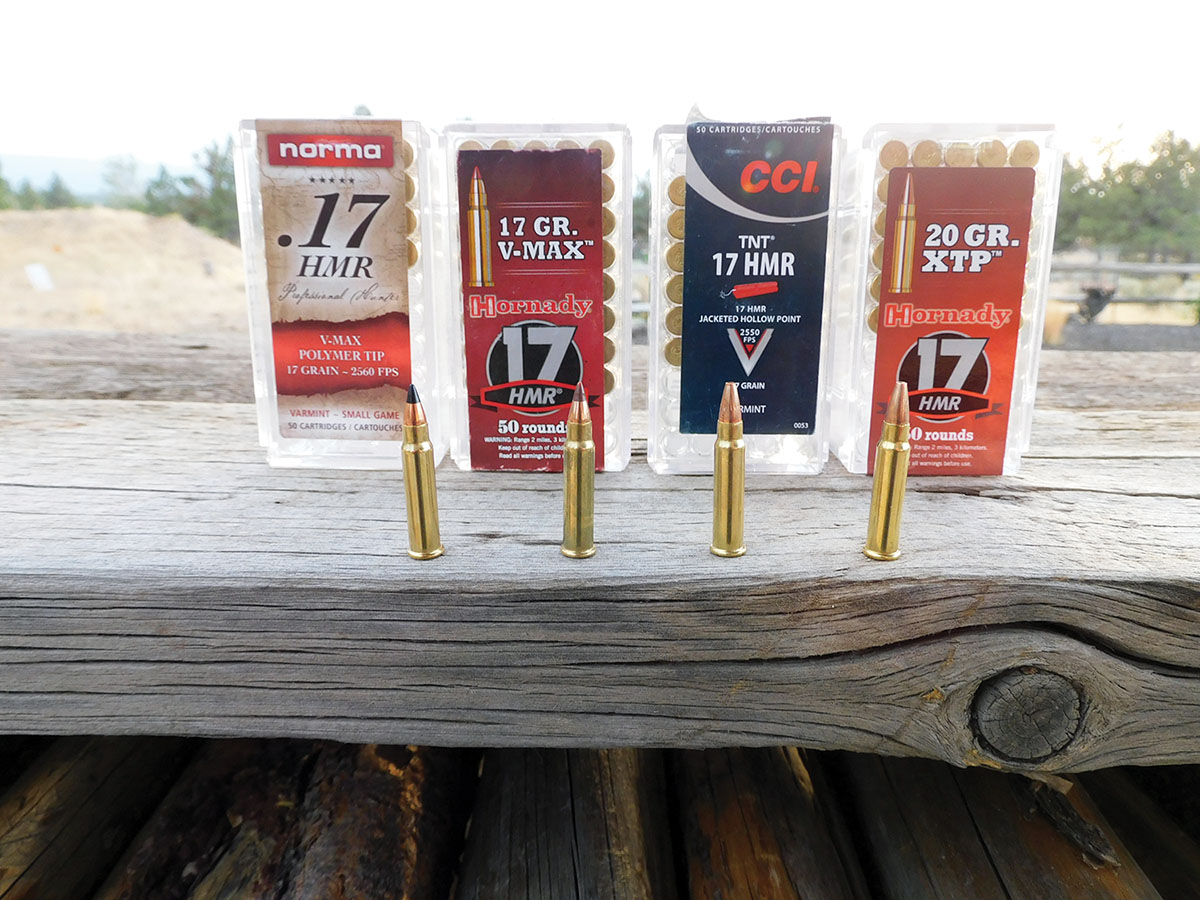
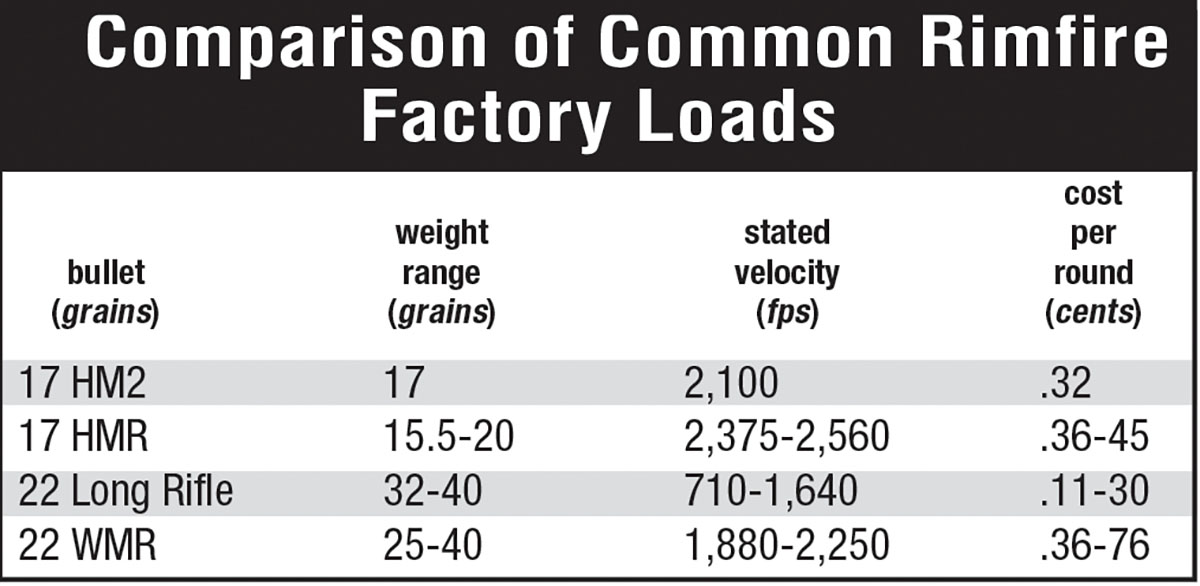
Today, ammunition is produced by Hornady, CCI, Federal, Norma, Remington and Winchester. Most of the 17 offerings I was able to find in a recent search are manufactured and labeled in one plant in Lewiston, Idaho, while I believe Winchester makes its own. Still, there are a lot of options including 15.5-grain lead-free, 16-grain TNT Green, 17 grain and 20 grain. Here in Bend, Oregon, I can’t seem to get my hands on the lead-free, but it is available from online retailers like Midway USA. A box of 15.5-grain Hornady NTX goes for upwards of $20 to $23 (.40-46 cents per round) while the CCI 17-grain Speer TNT goes for $16.99 (.34 cents per round).
I stopped in at the local major sporting goods retail store and found zero boxes of 17 HMR on the shelf. When I went to a discount store downtown, they had ample supply, all in 20-grain offerings. I paid $12.99 (sale price) for a box of 50 Hornady XTP to take to the range.
At the Gravel Pit
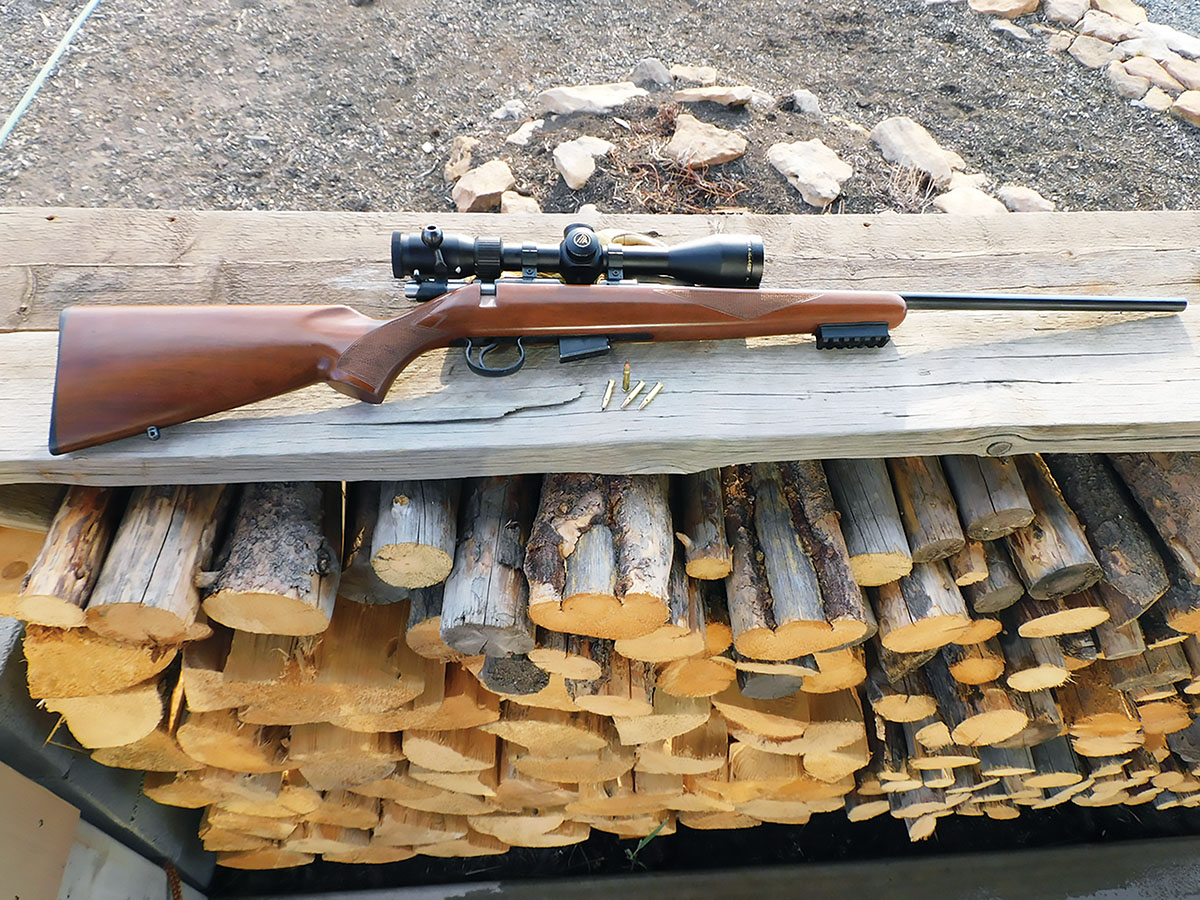
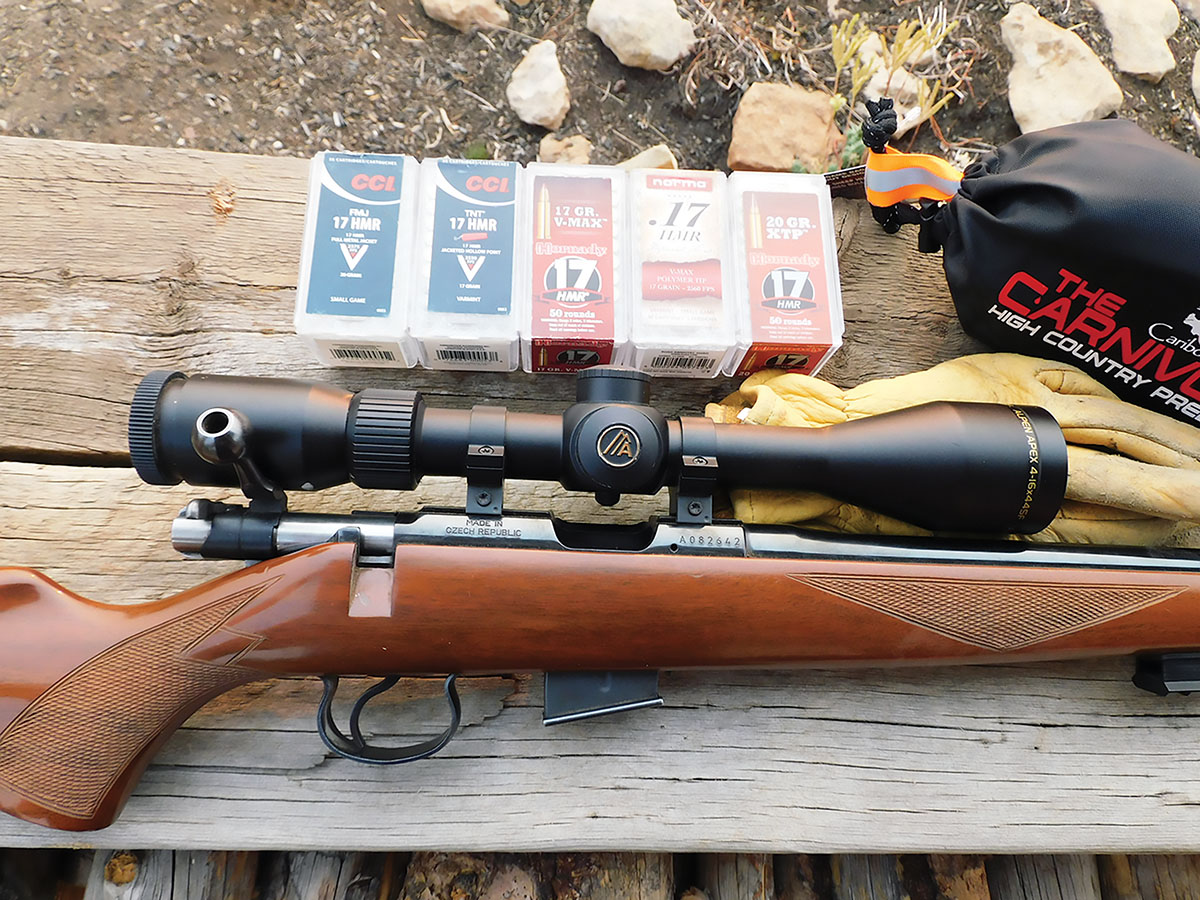
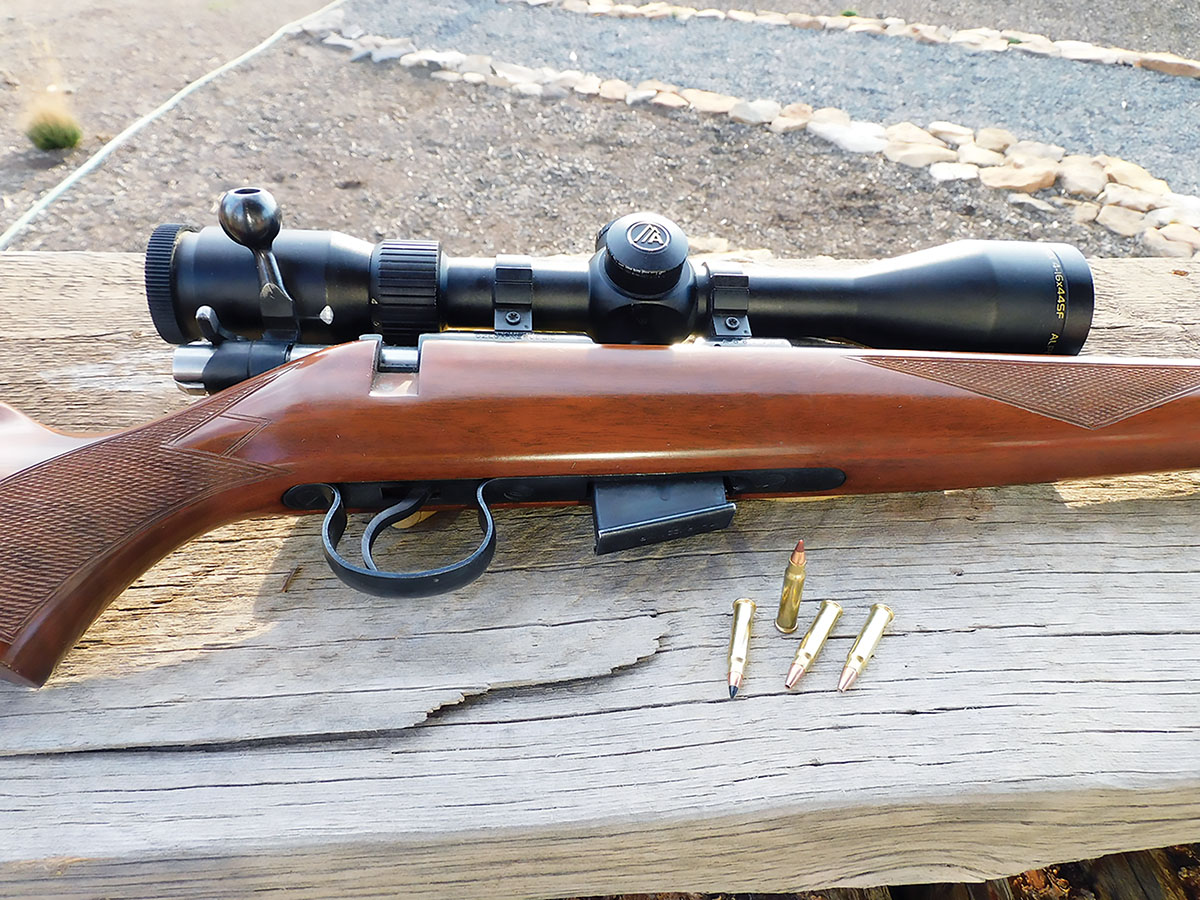
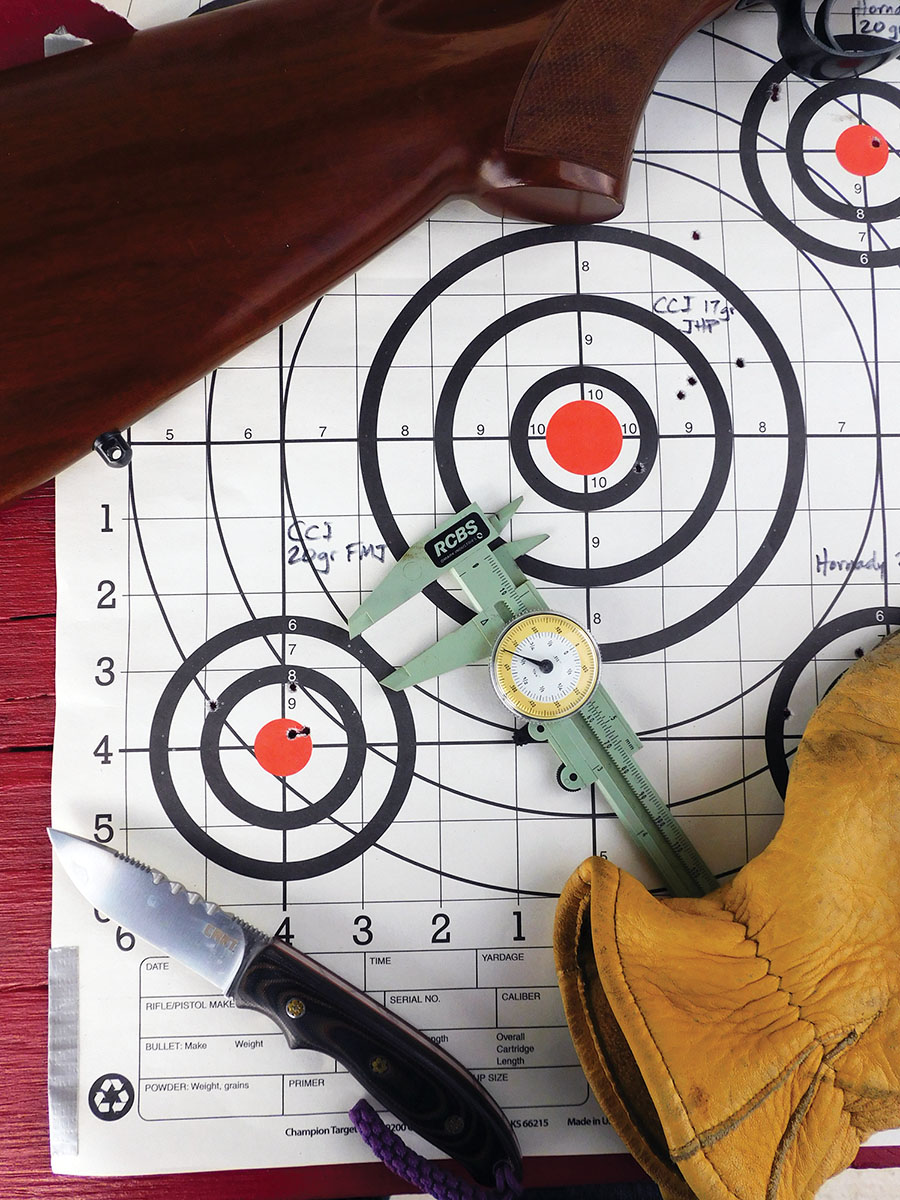
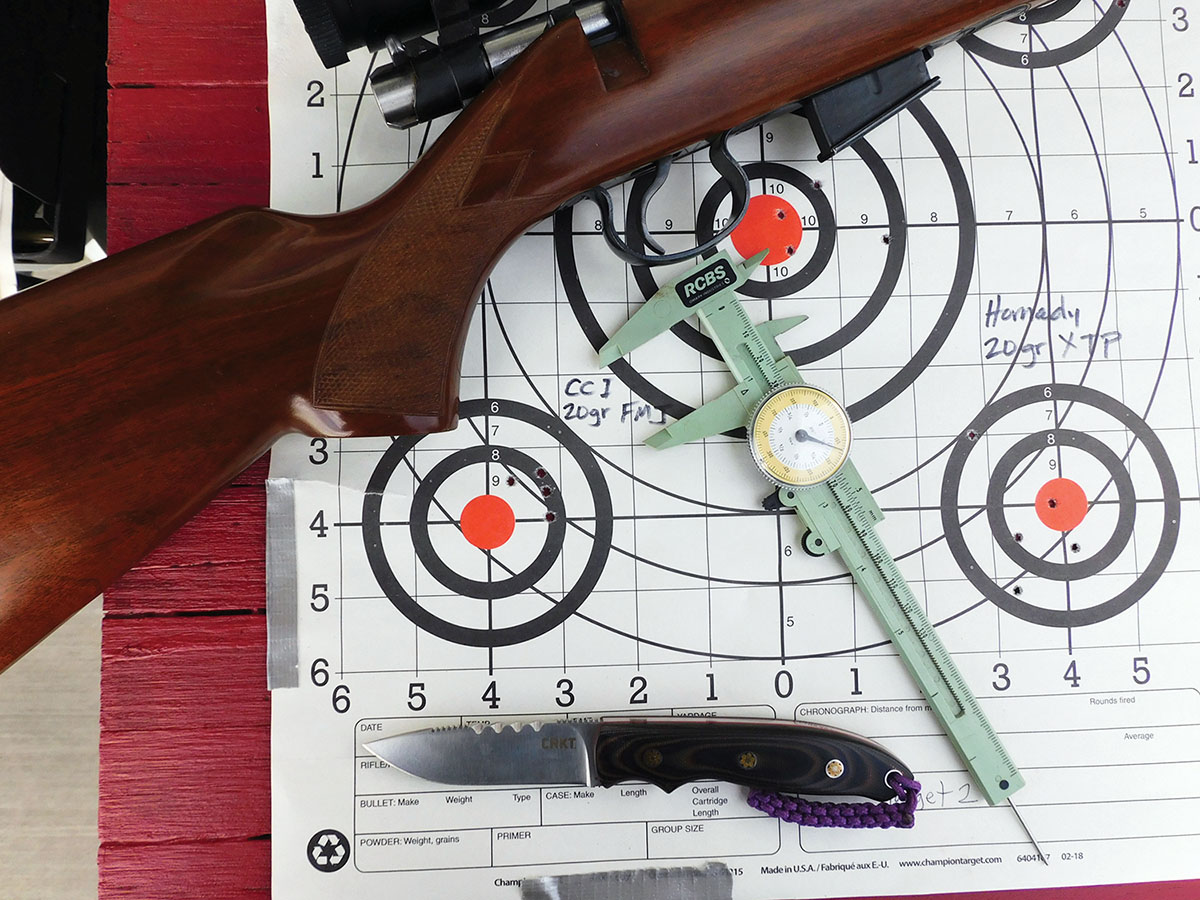
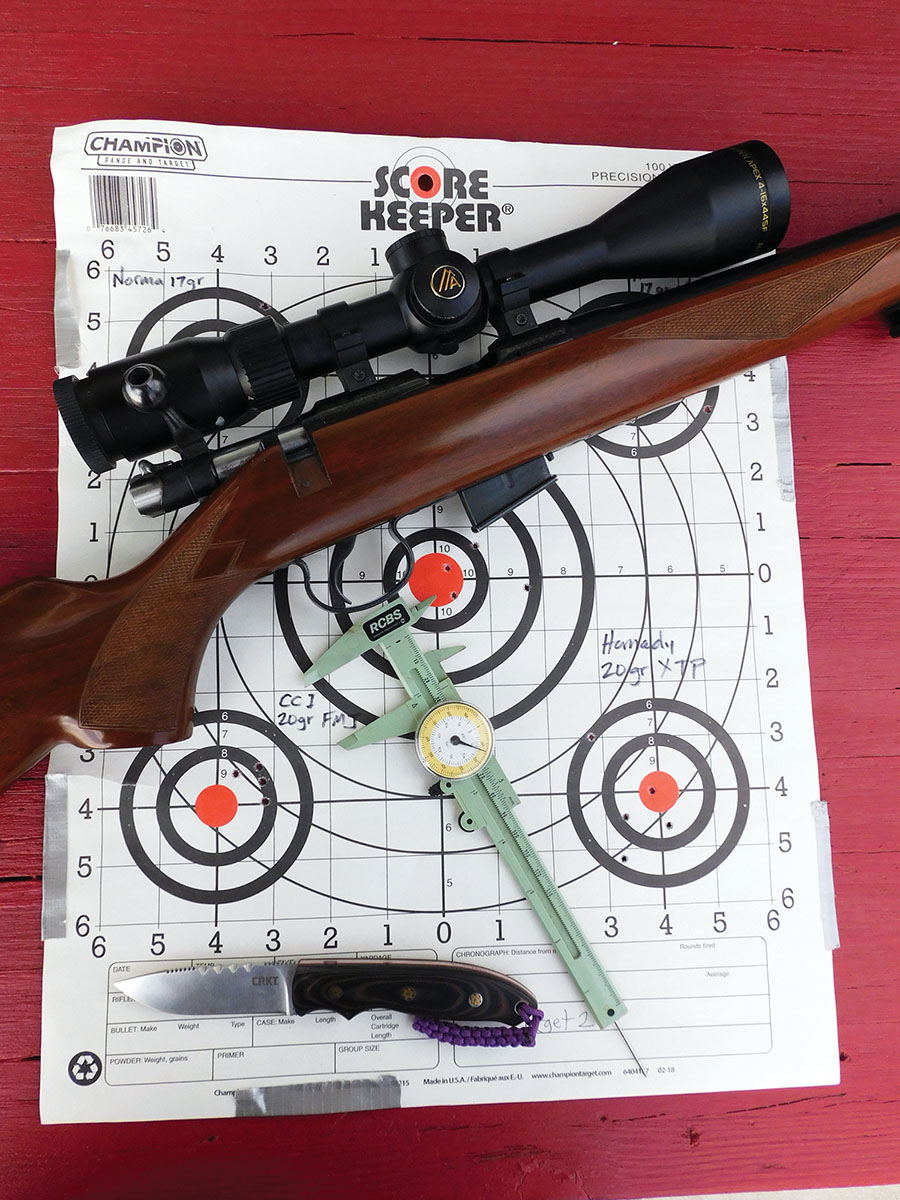
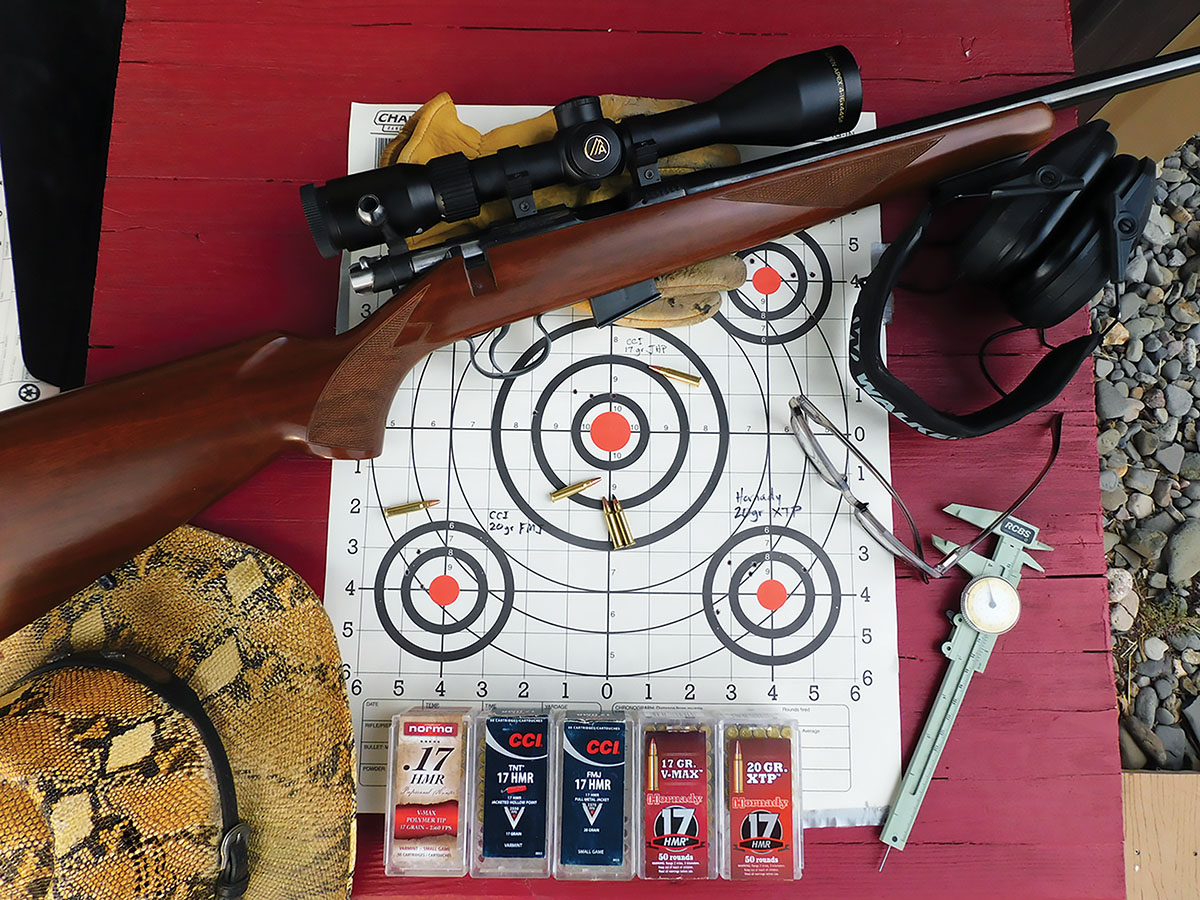
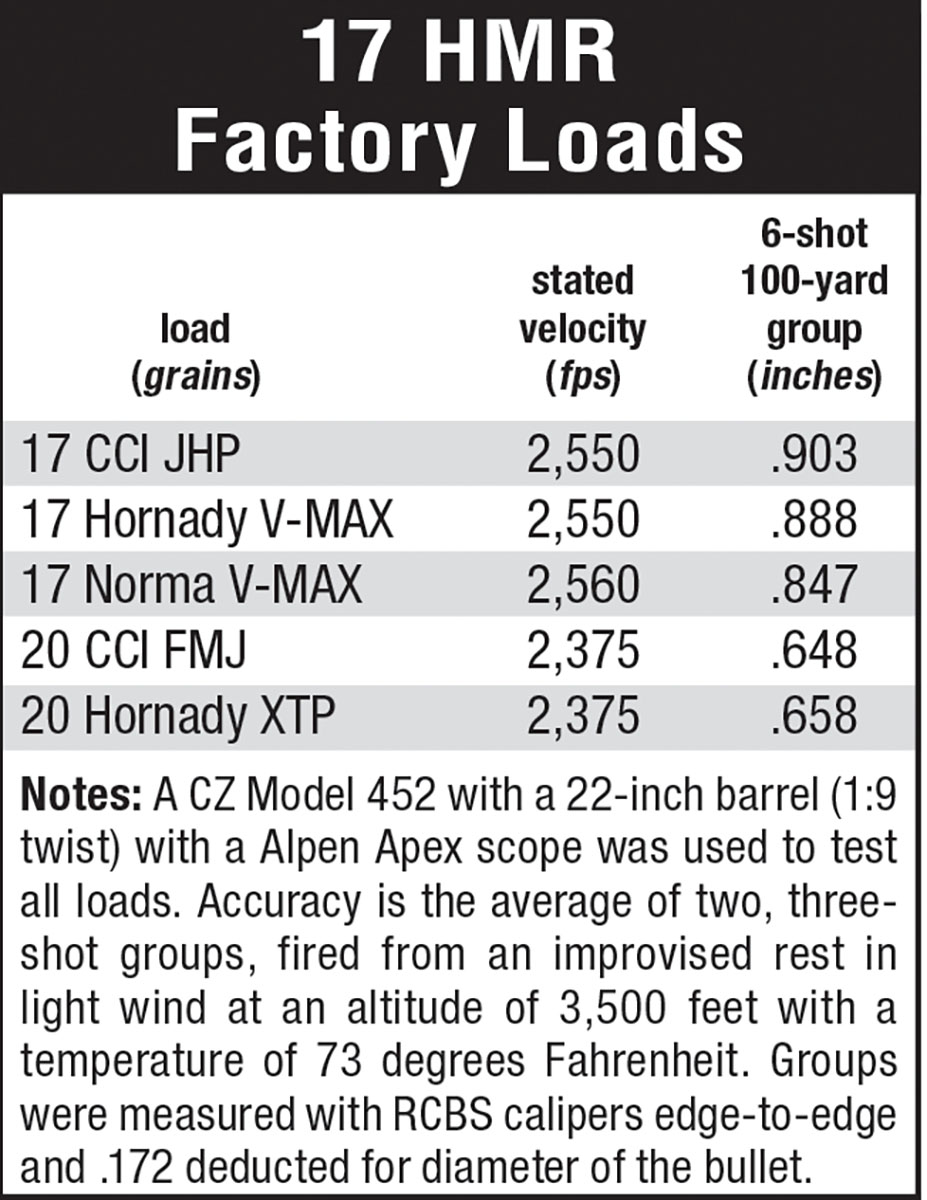
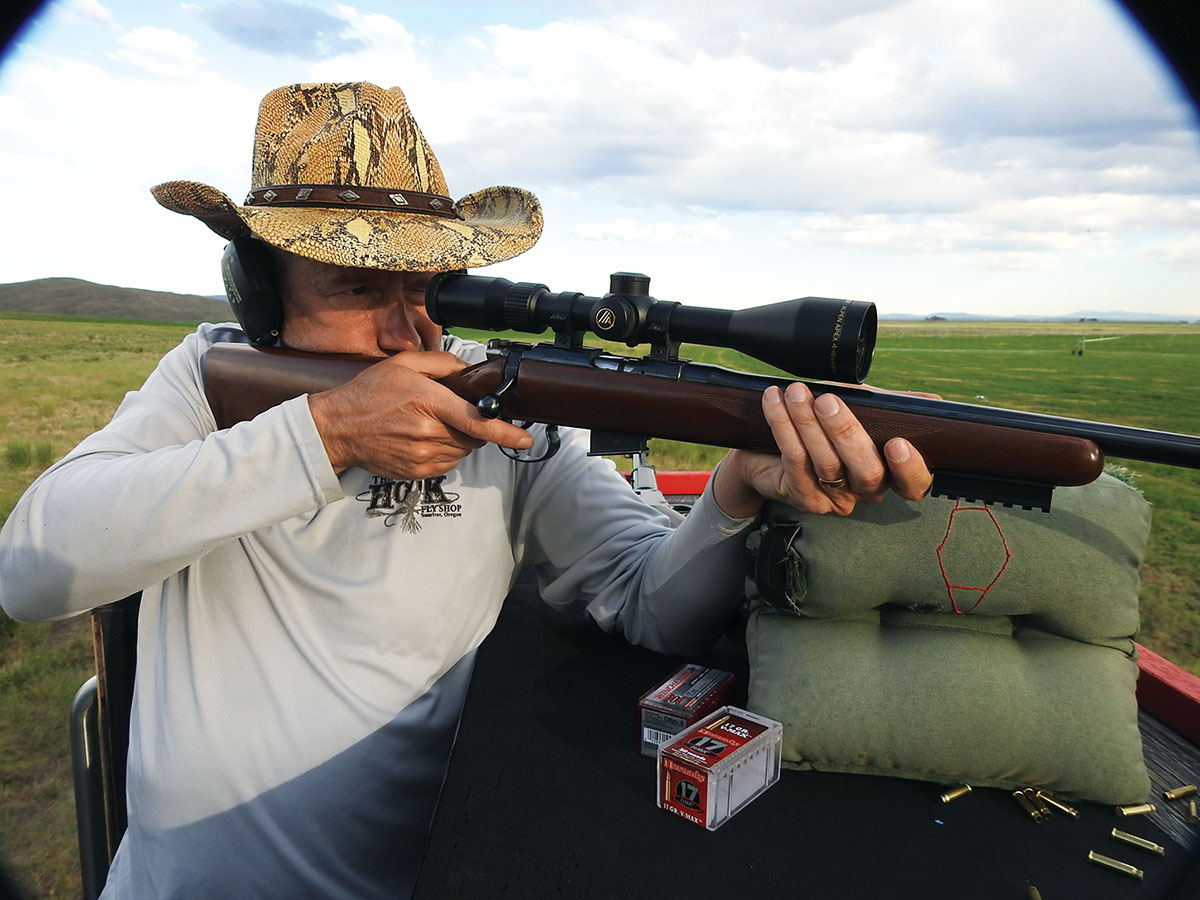
I took the CZ 17 for an August workout with a clean barrel and five boxes of Norma, CCI and Hornady, which included polymer-tipped, hollowpoints and full metal jackets. I wanted to see what accuracy I could expect in field conditions approximating how we shoot in the spring when the critters are in the crops. I also wanted to see if my barrel was worn out or not. I knew which bullets I preferred (the CCI 17-grain jacketed hollowpoints) but I wanted to know what the gun liked best.
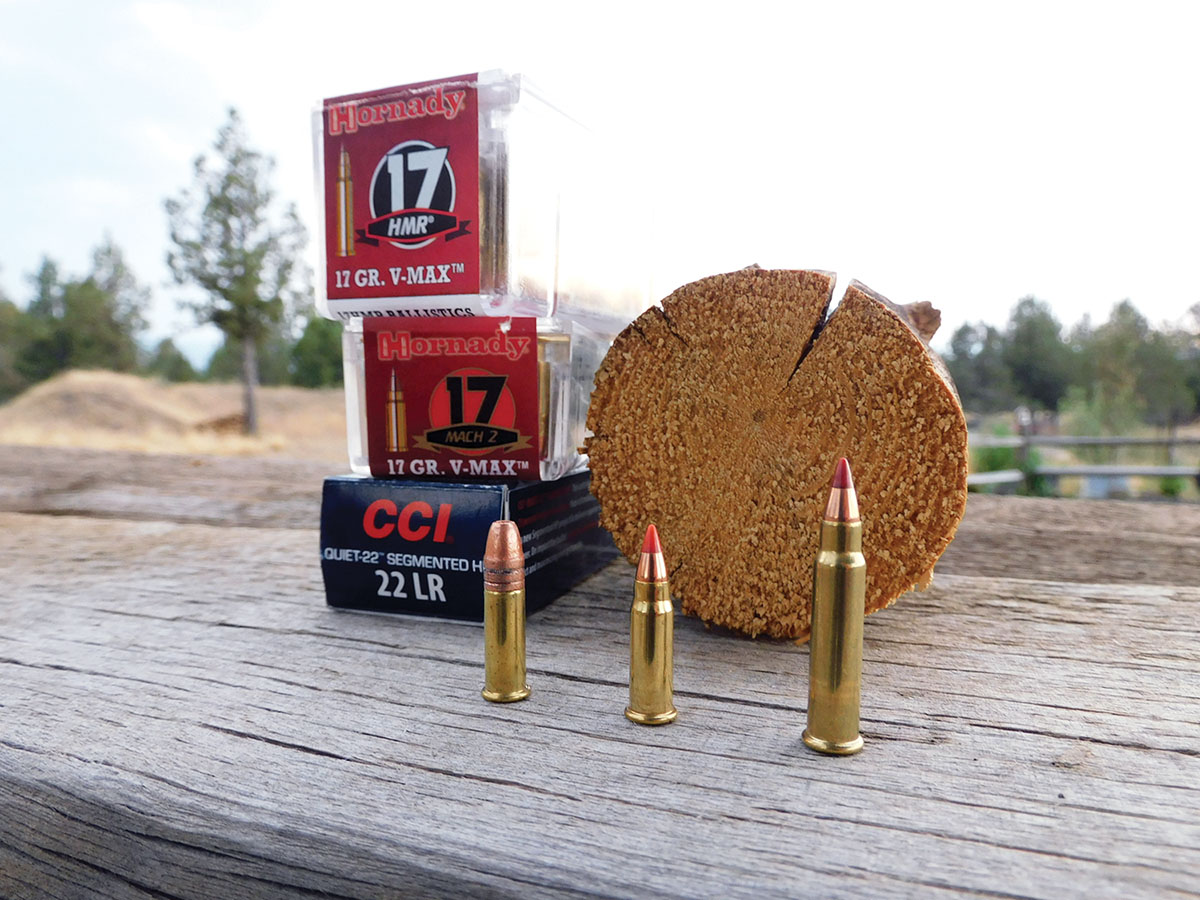
CCI’s 20-grain full metal jacket was the most accurate load in this barrel with a group I could cover with a quarter. The Hornady 20-grain hollowpoint XTP was second best. My favorite bullet, the CCI 17-grain jacketed hollowpoint, shot the poorest, averaging 1½ inches in five shots. No, the barrel was not worn out. My assumptions were worn out. Sandbags or a machine rest would have helped tighten the groups, but what was obvious was that with a little work on the trigger I might have a more accurate rifle. Back home, I measured the trigger pull at 4 pounds. With a 3-pound trigger, I could probably hit more diggers next spring.
Ruminations: From Whence Came the 17 HMR
The 17 HMR developed out of a desire to meet and exceed the ballistics of the 5mm Remington Rimfire Magnum (manufactured 1970 to 1974). The 17 projectile was an easier project to work on because 17 bullets were commercially available. The 22 Winchester Magnum Rimfire was already a winner in the marketplace so its case was the logical parent for this new kid on the block. All that was necessary for early adopters like Marlin, Ruger and Savage, with 22 WMR firearms in its catalog was a simple barrel change.
Optics for a Varmint Rifle
The old adage that you spend as much on your optics as on your rifle is still in play with the 17 HMR, but the main consideration is a wide adjustment range.
I find myself changing magnification a dozen times in a morning, dialing down for a 20-foot shot, then cranking to 16x on a critter at the fence line at 200-plus yards.
If I was selecting a new scope for the CZ right now, a 4.5-14x would be about right, but I would like to try it first in the store to make sure the adjustment ring is not too tight. Another consideration is ease of focus and parallax adjustment. For varmint shooting, I want the image crisp and tuned to the yardage.
Then There’s the 17 Mach 2
During the latest ammunition crisis, there were months when the 17 Mach 2 was the only thing on the shelf. It is also a great rimfire option and if a person lays in a big enough supply, it can make sense to pick up a new rifle. As if you needed a reason.
Gary’s latest book is Bob Nosler Born Ballistic. For a signed copy, send $30 to Gary Lewis Outdoors, P.O. Box 1364, Bend, OR 97709. Contact Lewis at garylewisoutdoors.com.