222 Remington
Still Shines After 70 Years
feature By: Layne Simpson | October, 23

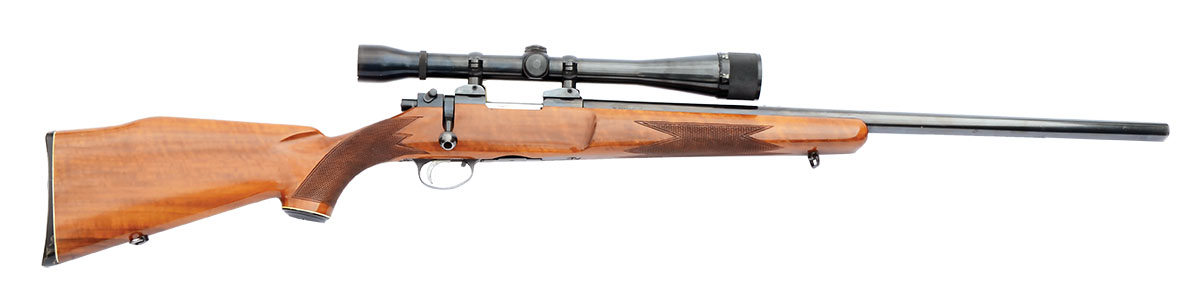
Sako of Finland began exporting the trim L46 bolt-action rifle to the U.S. in 22 Hornet and 218 Bee in 1949 with the 222 Remington added in 1951. My L46 in 218 Bee has the thin barrel typical for those rifles, but my 1952 vintage 222 has the optional heavy barrel. It came with the standard three-round detachable magazine as well as a six-rounder offered by Sako at the time. Prices were $135 for the standard rifle and $144.75 for the heavy-barrel version.
Before leaving the subject of Finland, I will mention that the 222 Remington has long been popular among hunters there and in a number of other European countries who hunt capercaillie. Often described as the world’s largest grouse, the cock bird can weigh more than 12 pounds. Hunters often stalk the bird with rifle in hand as it sings a courting song (much like spring gobbler hunting in the U.S.). For many years, both Sako and Lapua have loaded the 222 with a 55-grain full metal jacket (FMJ) bullet specifically for taking that bird without greatly damaging the skin and plumage which makes a beautiful mount. I took my capercaillie in Finland and the Sako L461 I used belonged to my guide who worked at Sako. It was in 6x45mm rather than 222 Remington.
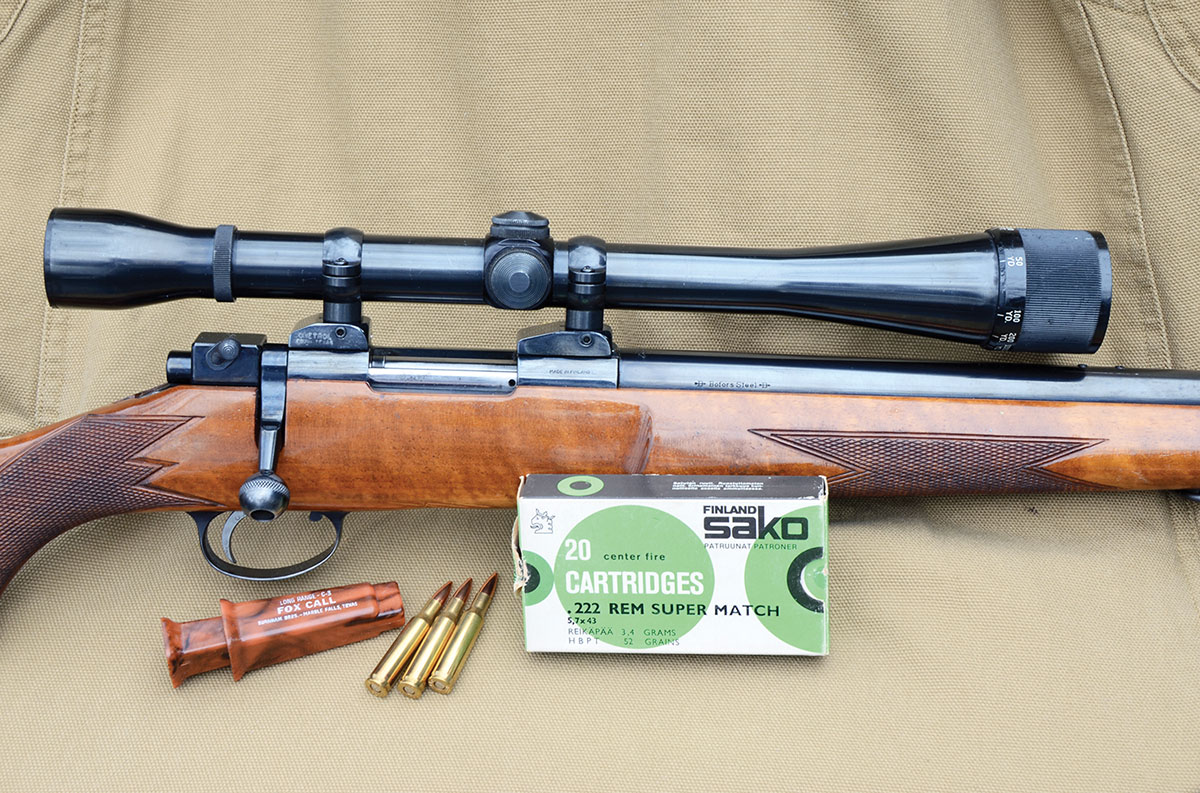
Other rifles of both foreign and domestic manufacture followed and many were quite accurate. When Remington replaced the Model 721/722/725 series of rifles with the Model 700 in 1962, the 222 Remington was among its very first chambering options. Other extremely accurate 222s built by Remington were the Model 600 and Model 788, the latter offering better accuracy than any other rifle in its price range as well as some rifles costing much more. Other great 222s of yesteryear were the Browning Hi-Power, the Harrington & Richardson 317 and the Colt Coltsman, all on the Sako L461 action. In any discussion of really good varmint rifles, the Kimber Model 84 and the Anschutz Model 1533 must not be overlooked. Moving way down to a price of $59.95, the Savage 340 was the first knockabout-grade rifle offered in 222 Remington and the one owned by a shooting pal was surprisingly accurate.
Earlier varmint cartridges were descendants of other cartridges and all had rimmed or semi-rimmed cases. As examples, the 22 Hornet was the old black powder 22 Winchester Centerfire (WCF) loaded with smokeless powder, the 218 Bee was the 25-20 Winchester case necked down and the 219 Zipper was the 25-35 Winchester case necked down. The 222 Remington case was an original design and it was the second commercially-developed cartridge of its caliber to have a rimless case (the 22 Newton was first). Early in its development, a 48-grain bullet was tried, but when long-distance performance on varmints proved to be unsatisfactory, a 50-grain bullet with a thinner jacket became standard. A metal case bullet of the same weight was also available for those who shot foxes and coyotes for the fur market. With a velocity of 3,200 feet per second (fps), the 222 offered greater range than the 22 Hornet, while offering longer barrel accuracy life than the 220 Swift. A 20-round box of Remington Hi-Speed ammunition was $2.80, a mere two pennies more per groundhog tail than for the 22 Hornet and 218 Bee.
During the 1950s, there were two groups of varmint shooters, those who had a rifle in 222 Remington and those who desperately wanted one. It took Remington’s production capabilities several years to catch up with the demand for Model 722s chambered for the new cartridge and in the meantime, many rifles in 22 Hornet were rechambered for it. Much to the later chagrin of collectors, the Winchester Model 70 in 22 Hornet was one of the more popular rifles for the conversion. I had one and while it was accurate enough, groups fired on paper were never as small as those delivered by the Remington 722 and the Sako L46.
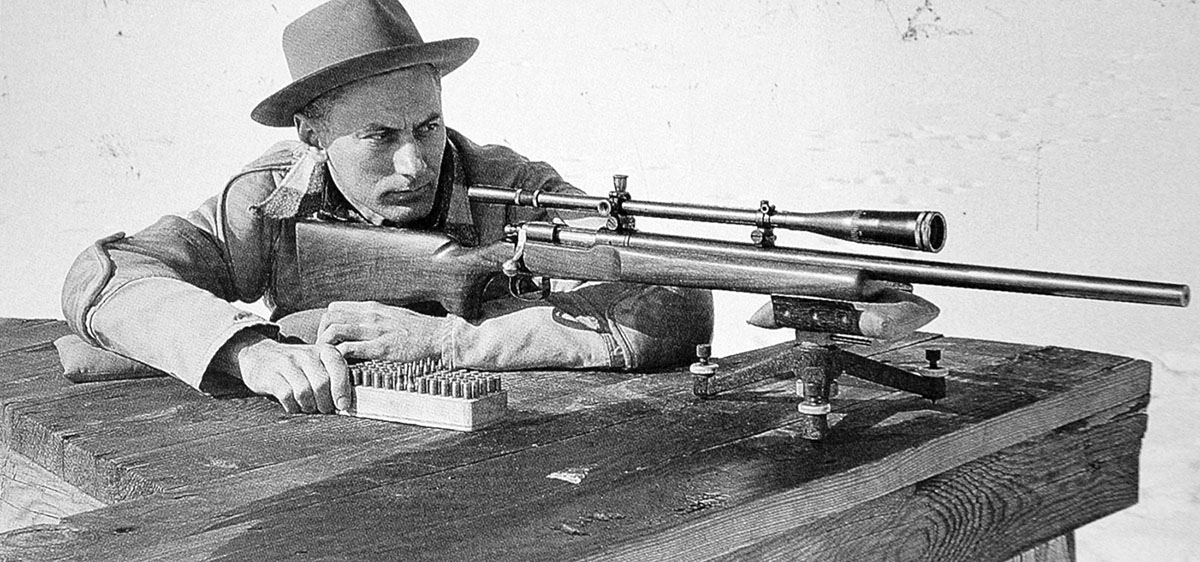
As an added note of possible interest, the rifle Walker used in that 1950 match would soon evolve into the famous 40X target rifle built in the Remington custom shop that he founded. The 40-XBBR introduced several years later, was built specifically for the sport of benchrest competition and it was guaranteed to consistently average .45 inch for five shots at 100 yards. In the hands of experienced benchrest competitors, it proved capable of averaging considerably better. It was the most accurate factory rifle available at the time and for many years to follow.
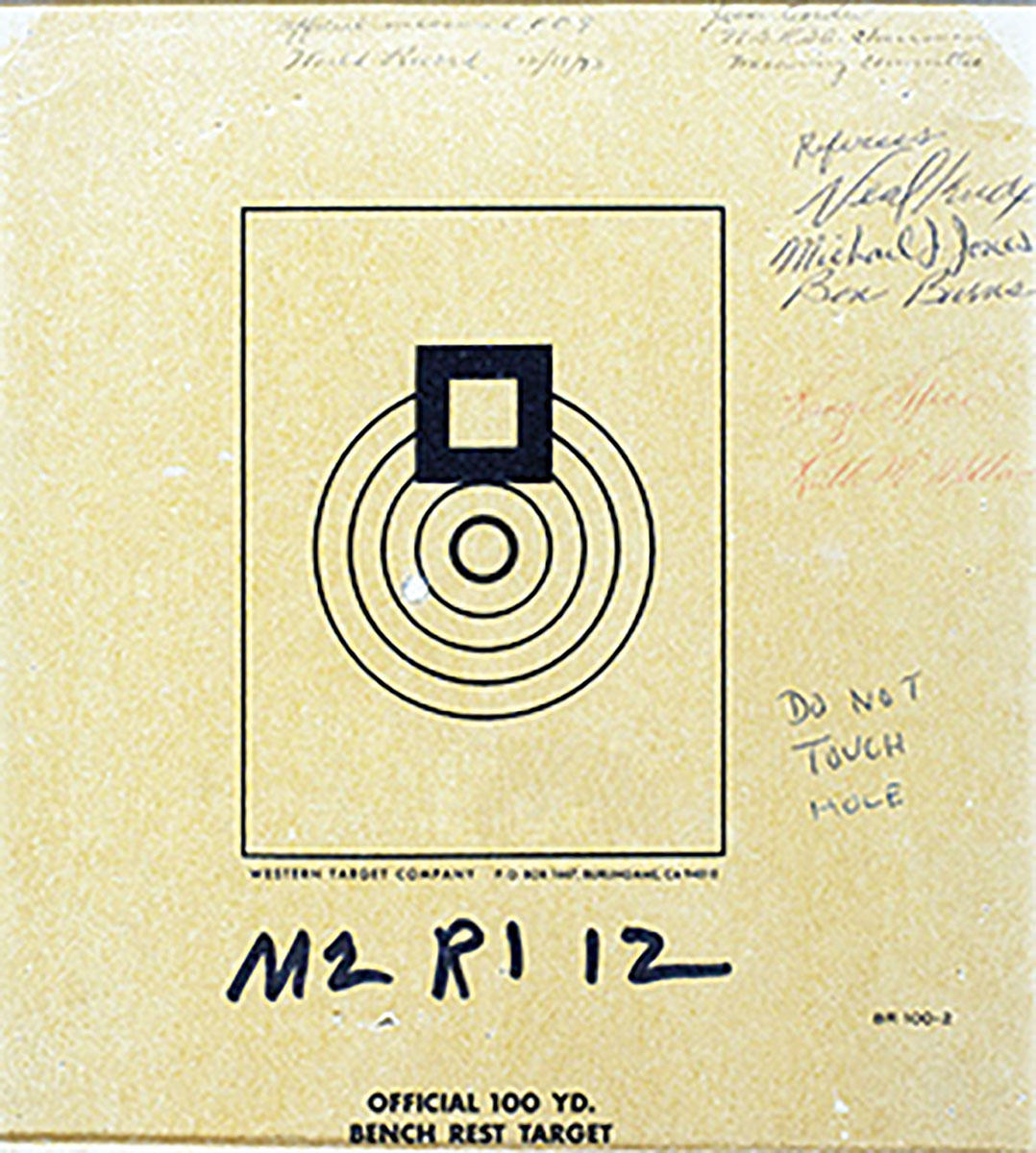
McMillan’s 100-yard group was measured by match officials with a dial caliper modified with the addition of a clear Plexiglass plate containing a .224-inch circular reticle. All five bullets had gone through a single hole in the paper target so the group fit inside the reticle for an official group size measurement of .0000 inch. When next verified by a special 60x microscope, the group still measured .0000 inch. The perfect one-hole group had finally been fired in registered benchrest competition! Unfortunately, the story does not end there. As required for official recognition, the paper target was mailed to seven members of the NBRSA records committee who lived in as many different parts of the country and after all that handling, group size had increased to .009 inch. Even so, the record stood for 40 years until Mike Stinnett used a rifle in 30 PPC to shoot a five-shot group measuring .007 inch.
Mike Walker’s little cartridge went on to excel in other competitive shooting games as well. In 1960, the U.S. Army Marksmanship Unit at Fort Benning, Georgia, adopted highly-modified Remington Model 760 slide-action rifles in 222 Remington for 100-meter international running deer competition where a rapidly moving target is exposed to view for only 4 seconds. Their rifles had Redfield International target sights and heavy, match-grade barrels. During 1961, the army team won the double-shot aggregate (30 double-shots) at the world championship matches in Oslo, Norway. During a later match held at Fort Benning, Sgt. Norman Skarpness won the single-shot (50 single-shots) championship while SFC. Loyd G. Crow, Jr. took first honors in the double-shot event.
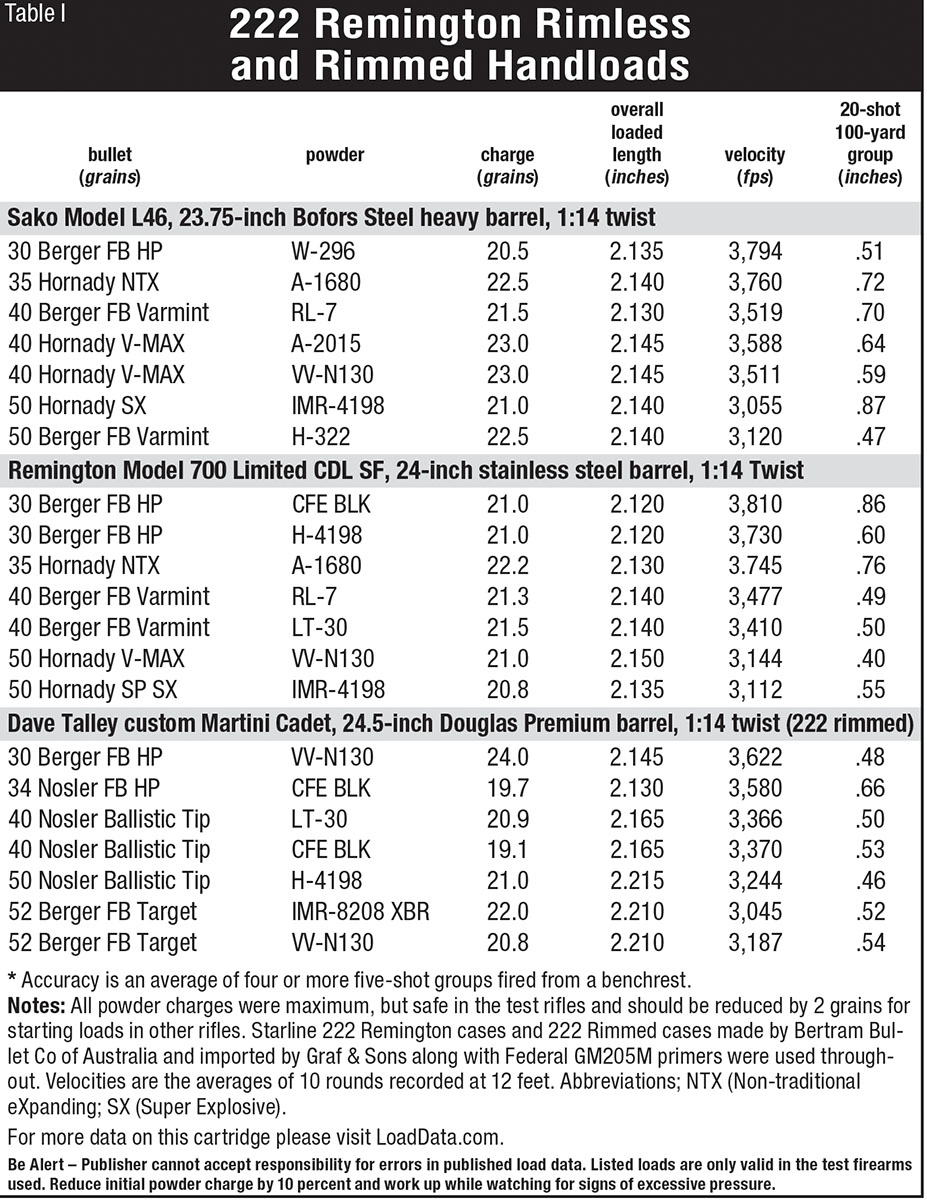
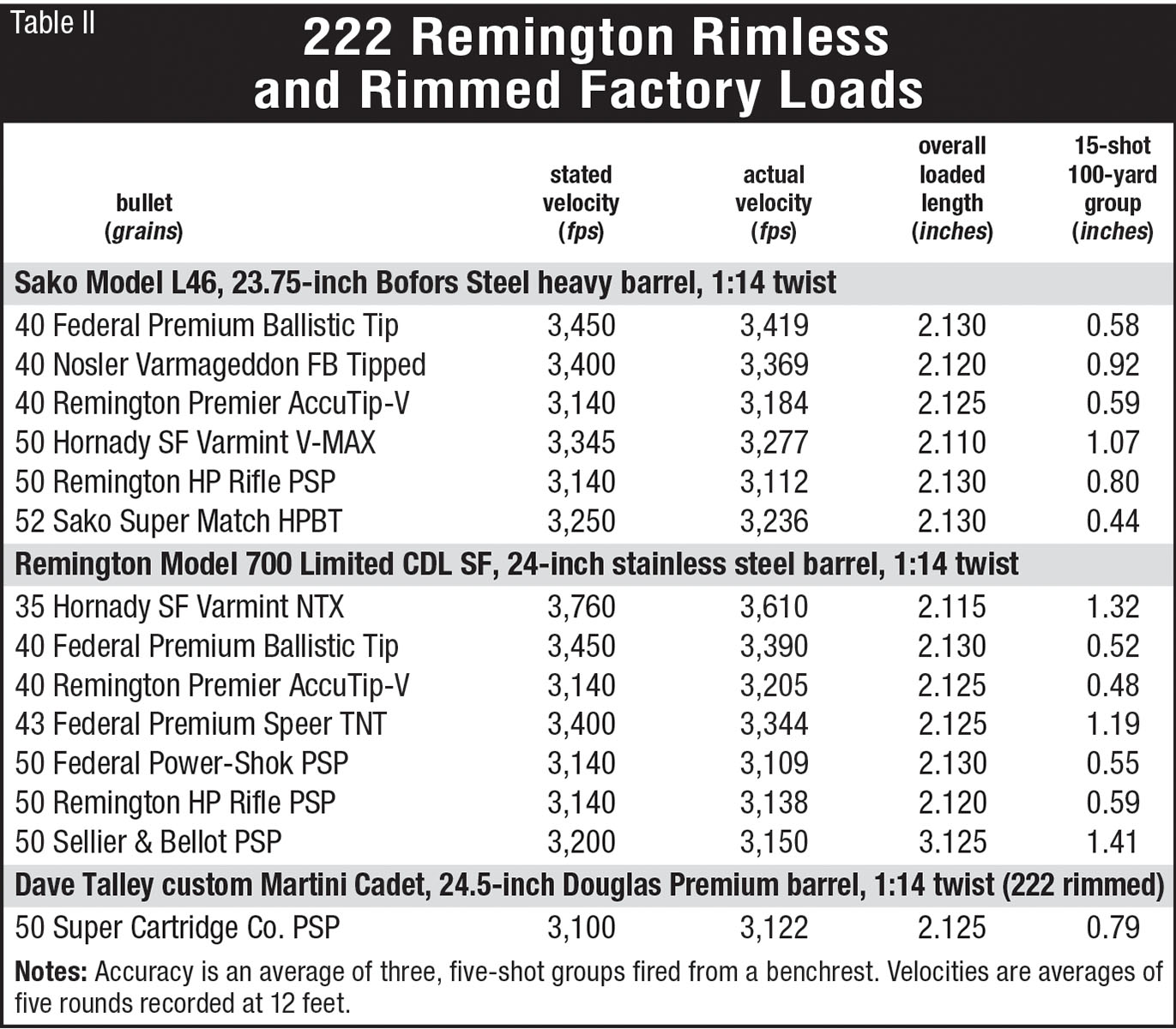
Through the decades, I have owned several rifles in 222 Remington and still have the heavy-barrel Sako L46 mentioned earlier. Another favorite is a Remington Model 700 CDL Limited Edition with walnut stock and a barreled action of stainless steel. That rifle was offered in a number of old and new cartridges including the 300 Savage, 257 Roberts and 243 Winchester. I still have two, one in 17 Remington Fireball, the other in 222 Remington. Both have fairly light, 24-inch fluted barrels.
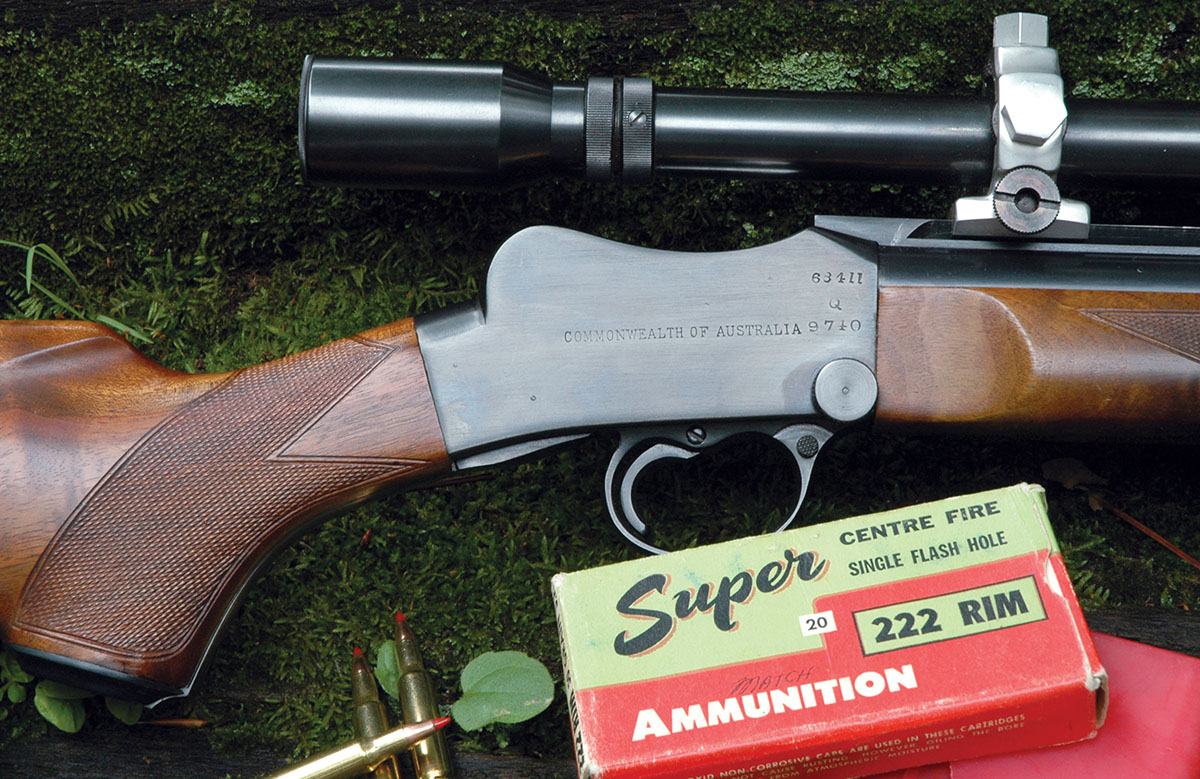
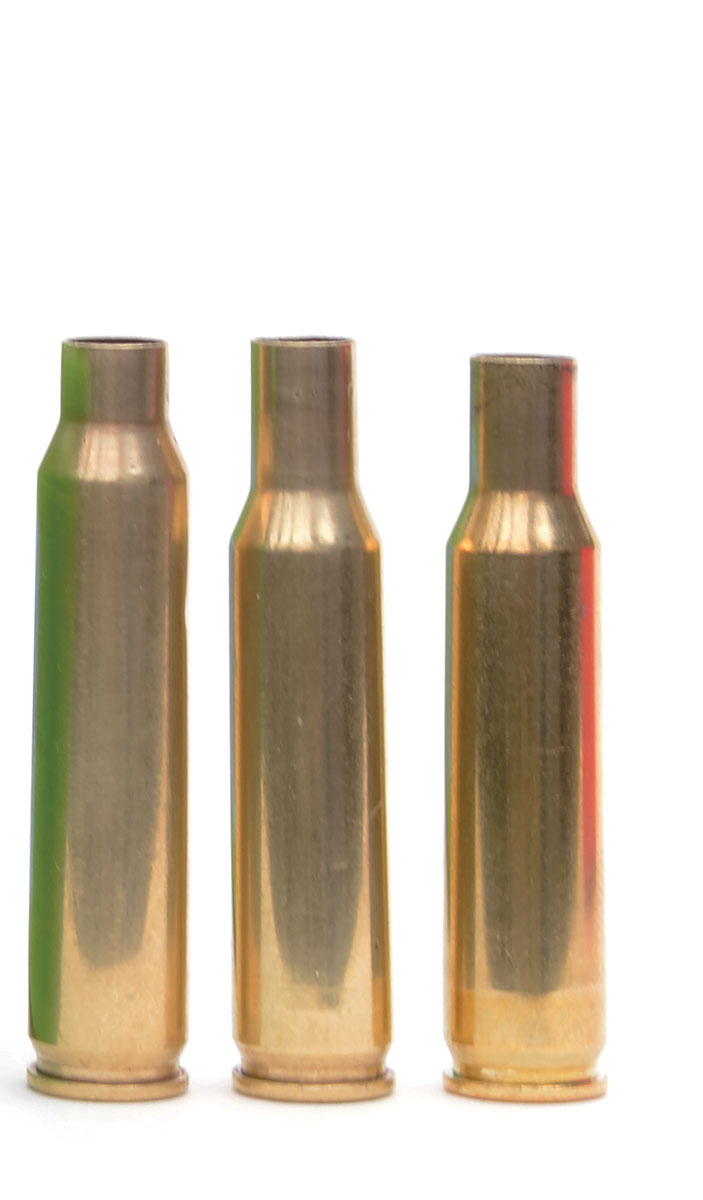
I doubt if many of today’s shooters are aware of the existence of a rimmed version of the 222 Remington. It was developed during the 1950s by the Super Cartridge Company of Australia for use in the small Martini Cadet action and it was often called the 222 Super. Giving the 222 Remington case a rim of the same diameter as the 38 Special made it compatible with the extractor of the Martini action. Those cases are presently made by Bertram Bullet Co. Pty Ltd of Victoria, Australia, and are imported by Graf and Sons of Mexico, Missouri (Grafs.com 573-581-2266). Due to a slightly thicker body wall, the 222 rimmed case is a bit stronger than the 222 Remington case, and gross water capacity is about a grain less.
My custom rifle in 222 Rimmed on the Martini Cadet action was built in 1977 by longtime friend, Dave Talley, who later founded Talley Scope Mounts. Its heavy, 24.5-inch barrel was made by Douglas and it has a 1:14 twist. The stock and forearm are nicely figured American walnut, both given a hand-rubbed oil finish and flawlessly-executed 24-line checkering. With its Unertl Varmint scope in 12x magnification, it weighs 10 pounds, 5.3 ounces. The very first five-shot group I fired with the rifle at 100 yards measured a very satisfying .552 inch.
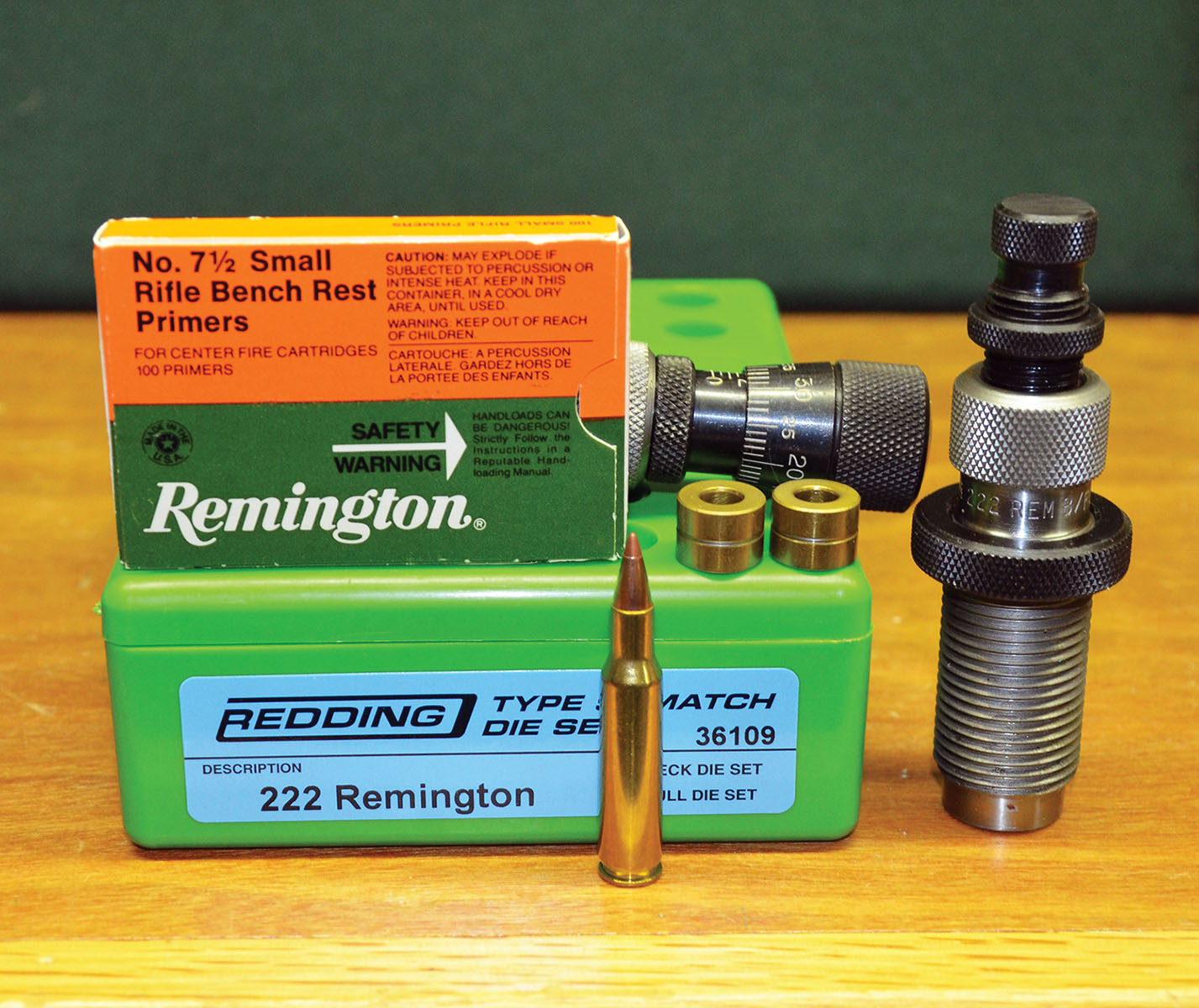
The 222 Remington has always been a great candidate for handloading. During its 35-year reign over benchrest competition, IMR-4198 was the most popular powder used with Bruce Hodgdon’s military-surplus BL-C in a distant second place. Its eventual replacement, BL-C(2), never became as popular. H-322 and Reloder 7 have long been excellent choices and as newer propellants go, Reloder 10X, Vihtavuori N130 and Ramshot X-Terminator are worthy of a try. I have long favored the Remington 7½ Bench Rest primer.
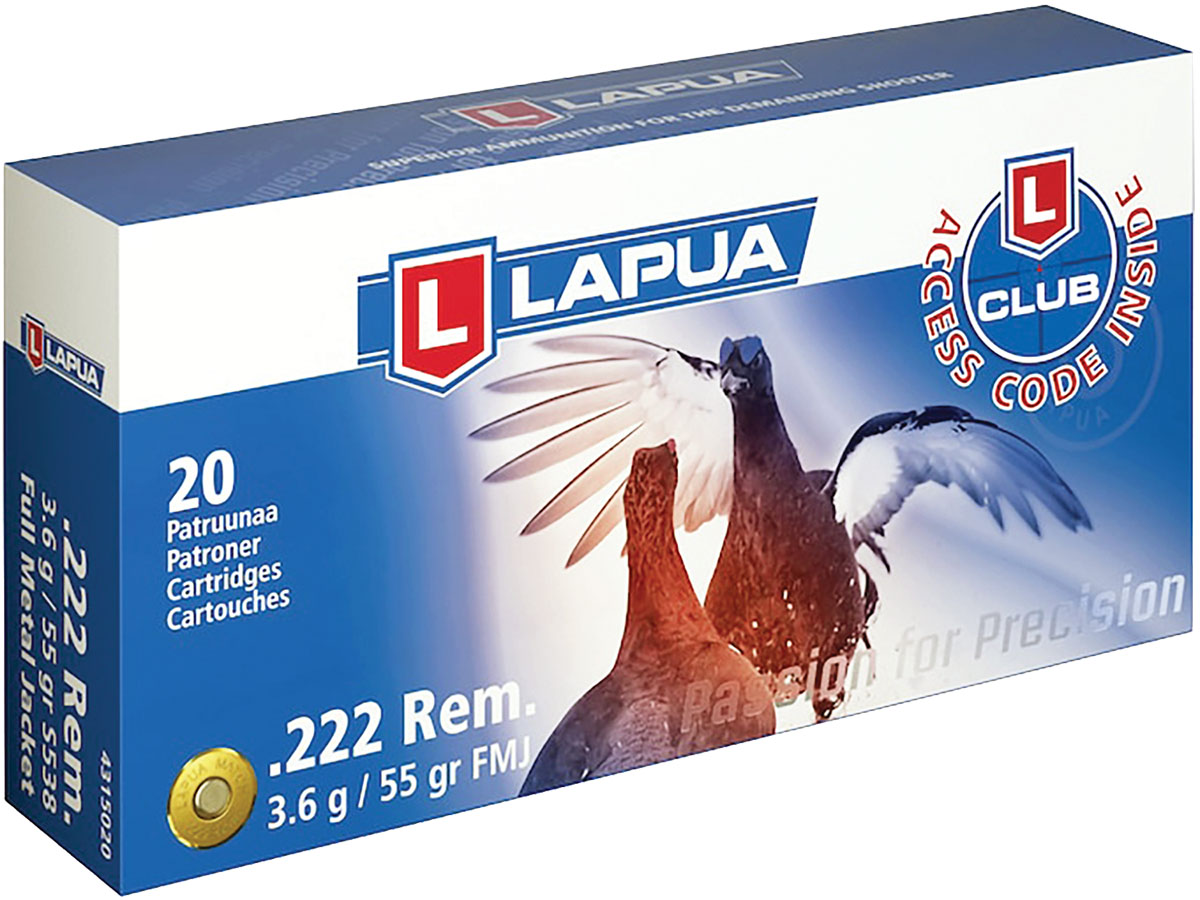
As choices in varmint bullets go, Hornady’s thin-jacketed 50-grain SX (Super Explosive) that was designed specifically for the 222 Remington, is as good now as it was back in the 1950s. Other favorites are the Hornady 40- and 50-grain V-MAX and the Nosler Ballistic Tip in those two weights. The 40- and 50-grain Berger Match Grade Varmint bullets are also quite effective in the varmint fields. While using the 222 on varmints ranging in size from prairie dogs to coyotes, I have yet to discover any advantage to using a bullet heavier than 50 grains. For those who do not handload, Remington, Hornady, Nosler, Federal, HSM, Sellier & Bellot, Prvi Partisan and Winchester presently list 222 Remington ammunition. Sako and Lapua load the ammunition but it seldom shows up on our side of the big water.
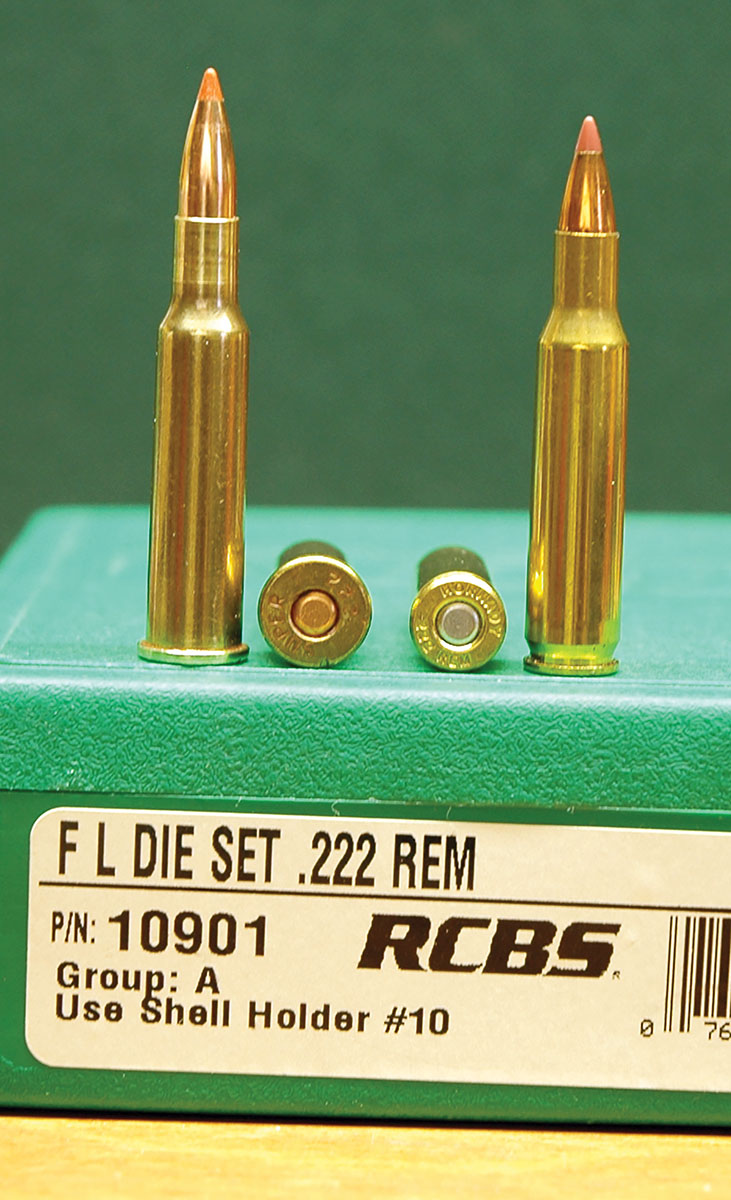
When handloading the 222 Remington for the best possible accuracy, I first neck-size virgin cases using a Redding Type S neck-sizing die with a bushing .001 inch smaller than the neck diameter of a case with a .224-inch bullet seated. The necks of cases are then outside-turned just enough to uniform neck wall thickness. After the cases are primed and powder charges dropped in, bullets are seated with a Redding Competition seating die. Thinning the wall of the neck reduces neck diameter so fired cases are neck-sized with another bushing .001 inch smaller than the new diameter with bullet seated. Cases are never run through a standard full-length resizing die. If after several firings, cases resist being chambered, their shoulders are bumped back .002 inch using a shellholder of the correct height from Redding’s Competition Shellholder Set for the 222 Remington family of cartridges. If the bodies of cases eventually require resizing a bit, a Redding Body Die handles the chore quite nicely.
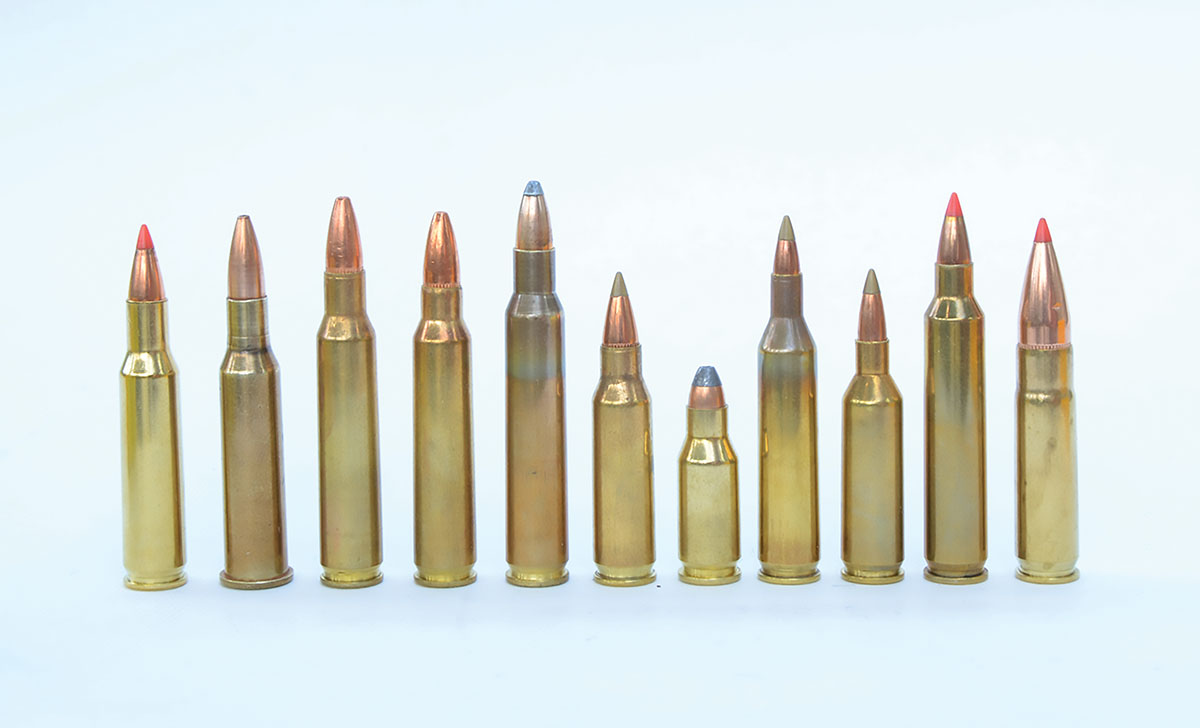
A number of commercial descendants makes the 222 Remington one of the most important cartridges developed. They include the 222 Remington Magnum, 5.6mm/223 Remington, 221 Remington Fireball, 22 TCM, 204 Ruger, 17 Remington, 17 Remington Fireball, 300 Whisper/AAC Blackout and the European-developed 5.6x50mm Magnum, which was introduced during the 1960s for use on Roe deer. The 222 has long been quite popular in other countries, especially in those where owning a sporting rifle chambered for a military cartridge (such as the 223 Remington) is prohibited. For that market, Beretta, Sako, Tikka, Steyr, Sauer, Anschutz and other manufacturers continue to offer rifles chambered for Mike Walker’s grand little cartridge.