Small and Speedy
The 204 Ruger in an AR-15
feature By: Zak May | October, 23
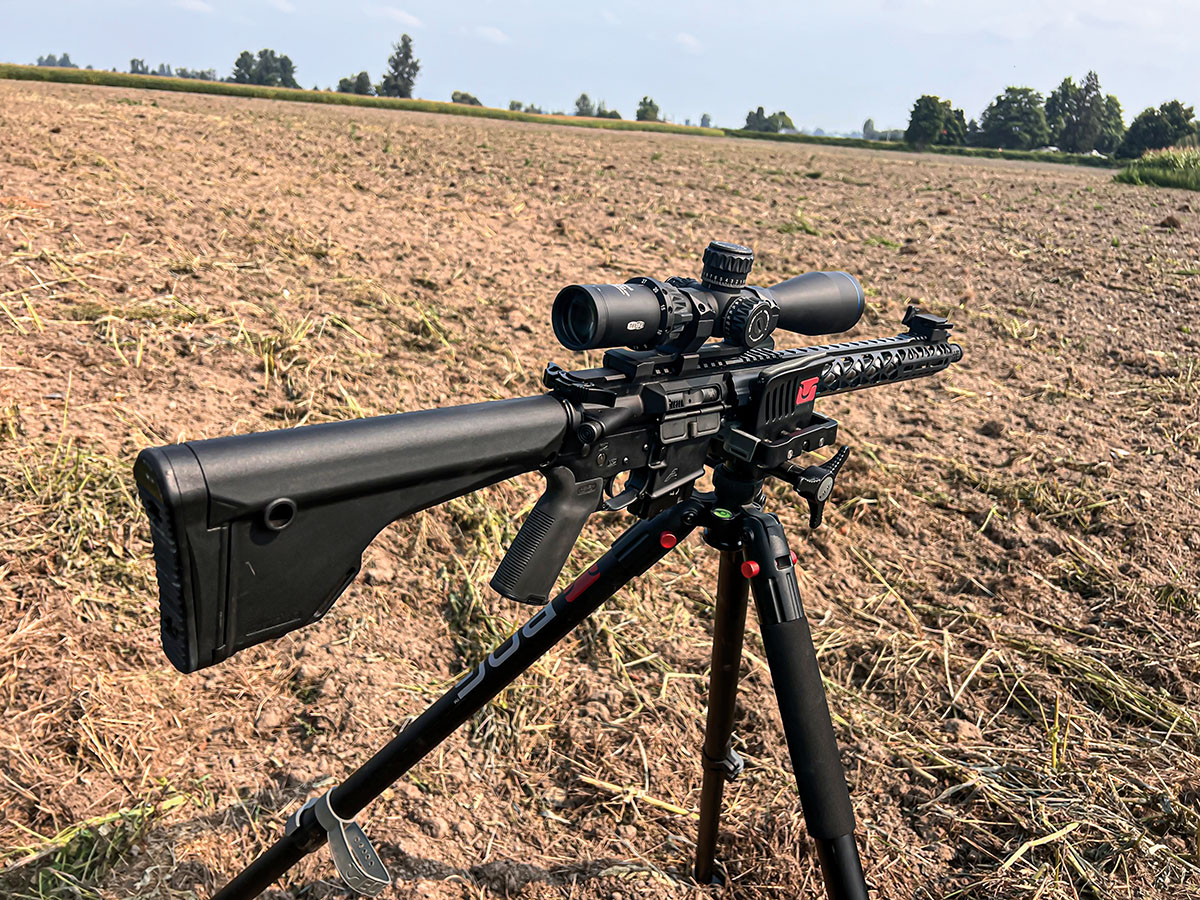
One day, while at a friend’s house helping him out with some handloads, we got to talking about varmint cartridges. He asked if I ever played with the 204 Ruger. I had not. We started talking about the fast, little cartridge and found it interesting. One thing led to another and after some research, it was found that not only could you run it in a bolt gun, but also in the AR-15 platform as well. This was around 2018 and I decided that I wanted to build an AR-15 in 204 Ruger because the barrel life on these can be short, especially if the shooter is running light bullets at high speed and letting the barrel get hot. A barrel was ordered and it was as easy as that. All that was needed to do was take one of my 5.56 NATO barrels off and put the new 204 Ruger one in and I was off to the races. The first barrel I used was a Shilen Match 24-inch barrel with a 1:9 twist. I wanted to make sure I could shoot heavy bullets in the 40-grain range.
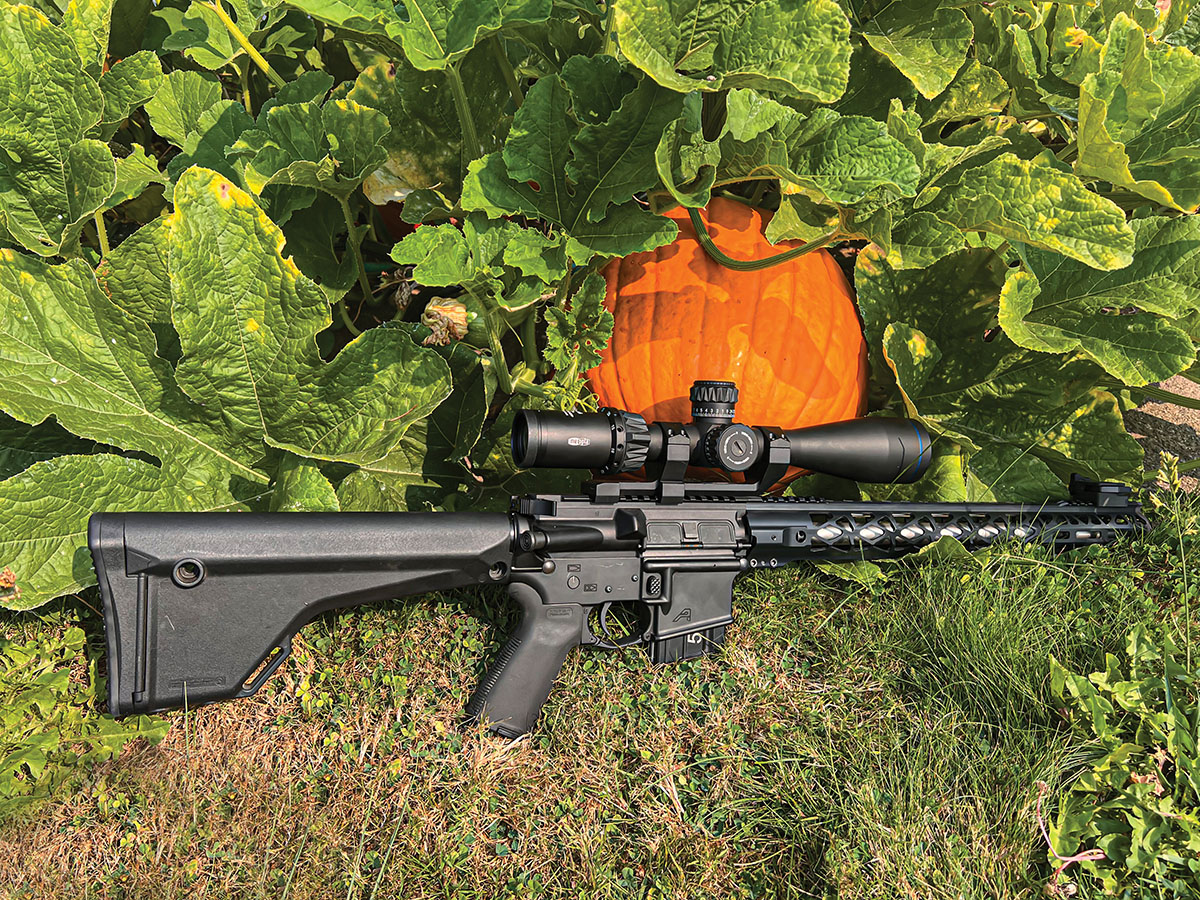
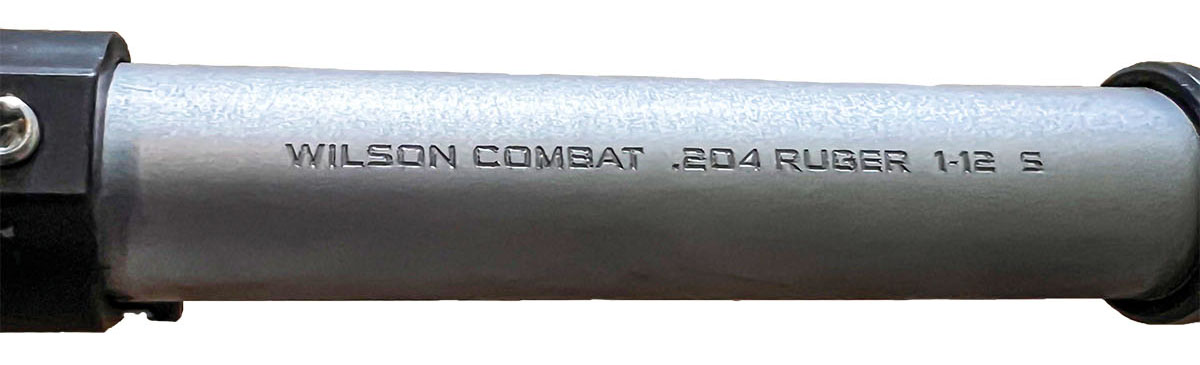
I saw great performance out of this barrel, but it was just too long and heavy for chasing after coyotes. Now, here we are in 2023. After some research, a Wilson Combat barrel in 204 Ruger was purchased, it was 18 inches in length and had a twist rate of 1:12 inches. I was wondering if it would stabilize the 40-grain bullets, but the main bullet I wanted to shoot in this rifle was the Hornady 32-grain V-MAX and the Nosler 32-grain ballistic tips. These have been my favorite varmint bullets for a few years now. With a shorter barrel, I did give up velocity, but I gained mobility and the rifle is lighter and threaded for a brake or silencer should I choose to add one down the road. This has turned out to be a great build for getting after groundhogs and coyotes out to 300 yards.
The 204 Ruger was developed together by Hornady and Ruger and designed from its parent case of 222 Remington Magnum. This allowed for plenty of powder to propel the small .20-caliber bullet at high velocity. This translates to flat trajectories at typical varmint distances. The one downside to this bullet is its ability to fight the wind with its low ballistic coefficient (BC), but it makes up for it with speed. The 222 Remington Magnum provides about 5 percent more usable case capacity than the most popular member of the family, the 223 Remington. To make the 204 Ruger, the 222 Remington Magnum case was necked down to fit a 20-caliber projectile and its shoulder moved forward and the angle increased to 30 degrees. This made the 204 Ruger a success right away in the varmint-hunting world. With Ruger making popular rifles like the bolt-action Model 77 MKII, and the single-shot Ruger No. 1, gave the hunter some good options. Also, Hornady offers factory ammunition offerings like Superformance Varmint Ammunition 32-grain V-MAX whichmakes for a great coyote round. There now are also a lot of factory offerings from Remington, Winchester, Nosler, Fiocchi and HSM all offering great ammunition for varmint hunting.
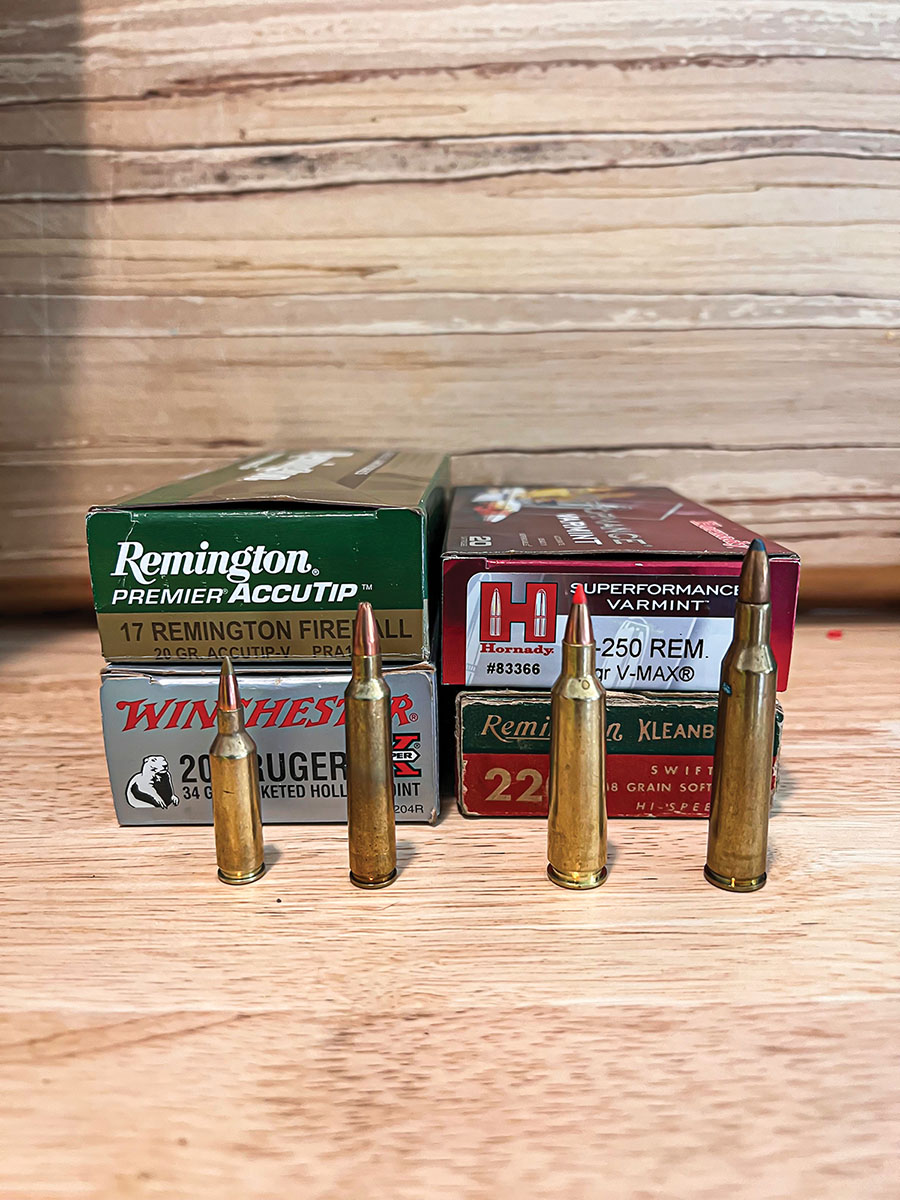
It compares well with the 220 Swift and the ever-so-popular 22-250 Remington, in regard to velocity and efficiency. Another advantage of the 204 Ruger is that it achieves these velocities with less powder and less recoil and less heat than larger cartridges like the ones above. There are of course the .17-caliber cartridges such as the 17 Fireball, 17 Remington and my favorite, the 17 HMR that are great for keeping those groundhogs at bay inside 150-250 yards. However, they all fall short of the 204 Ruger with it comes to velocity and kinetic energy, giving the hunter more range and ability to hunt larger varmints.
While the 22-250 will always have a special place in my heart, the 204 Ruger fills a gap when I want to go with something a little smaller and a little cheaper to shoot and load for; and with being able to run it in an AR-15 platform is a big bonus. When the barrel is shot out, I can just swap barrels, which makes the 204 Ruger appealing to me.
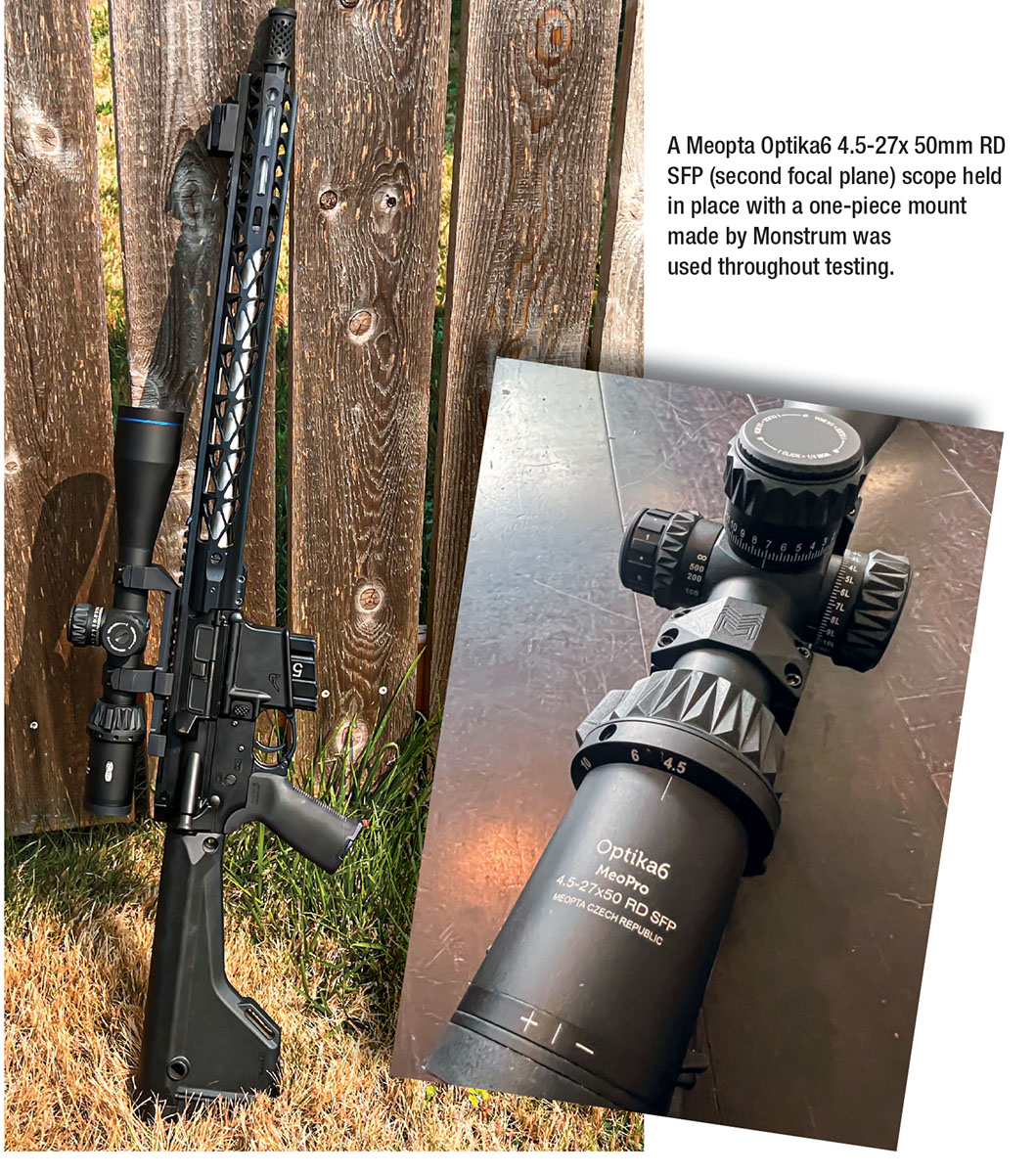
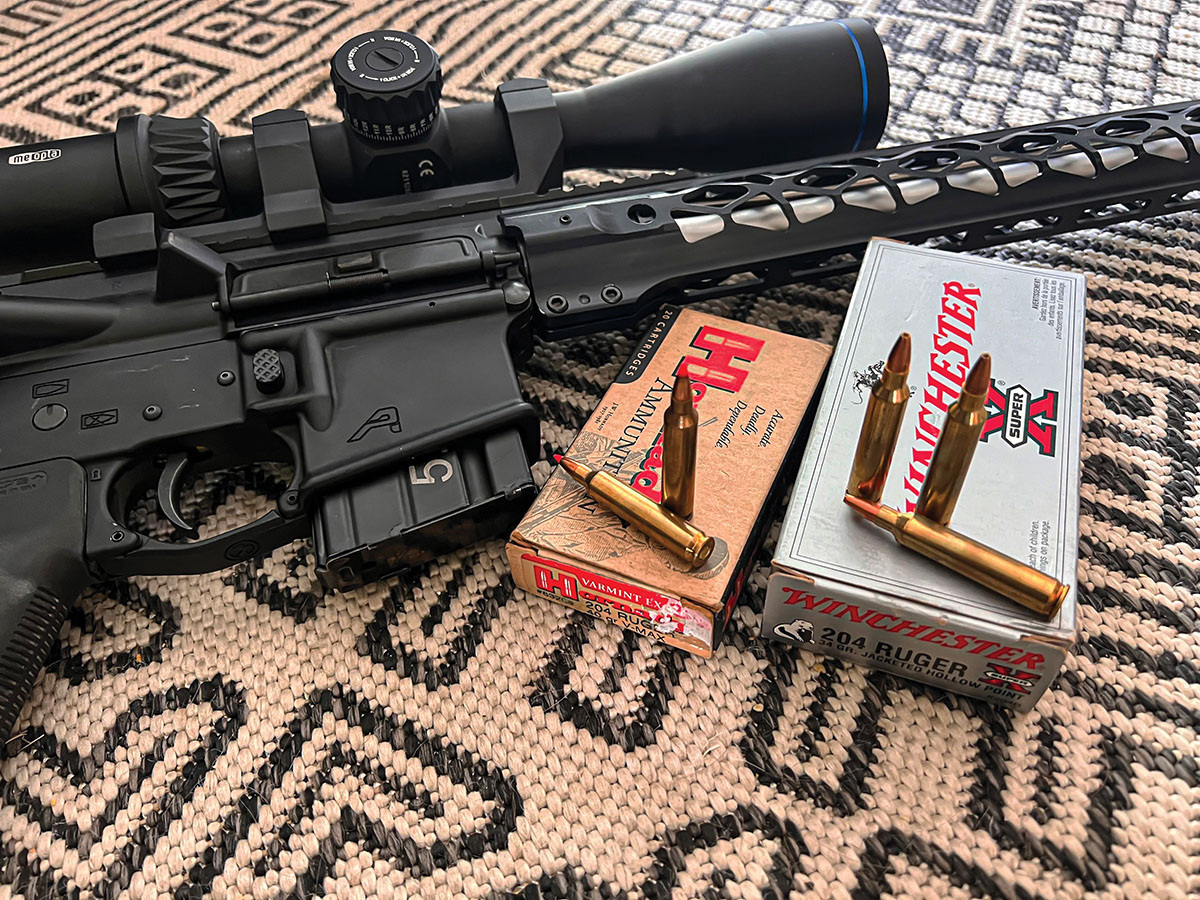
Let’s talk about the rifle itself. As mentioned above, I went with a Wilson Combat 18-inch barrel, Spikes Tactical phosphate bolt carrier group with a 5.56 bolt face, Aero Precision Gen 2 stripped lower receiver and upper, Aero Precision MOE lower parts kit. The trigger is a Geissele 2 Stage (G2S) Trigger which breaks at 4.5 pounds nonadjustable, Spikes Tactical adjustable low pro gas block and rifle length gas tube, Odin Works R2 17.5-inch Handguard, Magpul MOE Rifle Stock, Trybe Defense ambidextrous charging handle topped off with a one-piece Monstrum scope mount and some awesome glass, a Meopta Optika6 4.5-27x 50mm RD SFP. By far, my favorite part of this build must be the glass. The 4.5 zoom on it is clear and easy to find targets, but if you need to reach out and touch something, like a little rockchuck or ground squirrel, just crank that baby up to full zoom. The parallax is nice and easy to adjust but not so easy that if you bump it, it will move on you, Also, with top-locking adjust turrets, this was the perfect choice for the build. This was my first scope by Meopta, but will not be my last as I have ideas for use on a couple of upcoming builds.
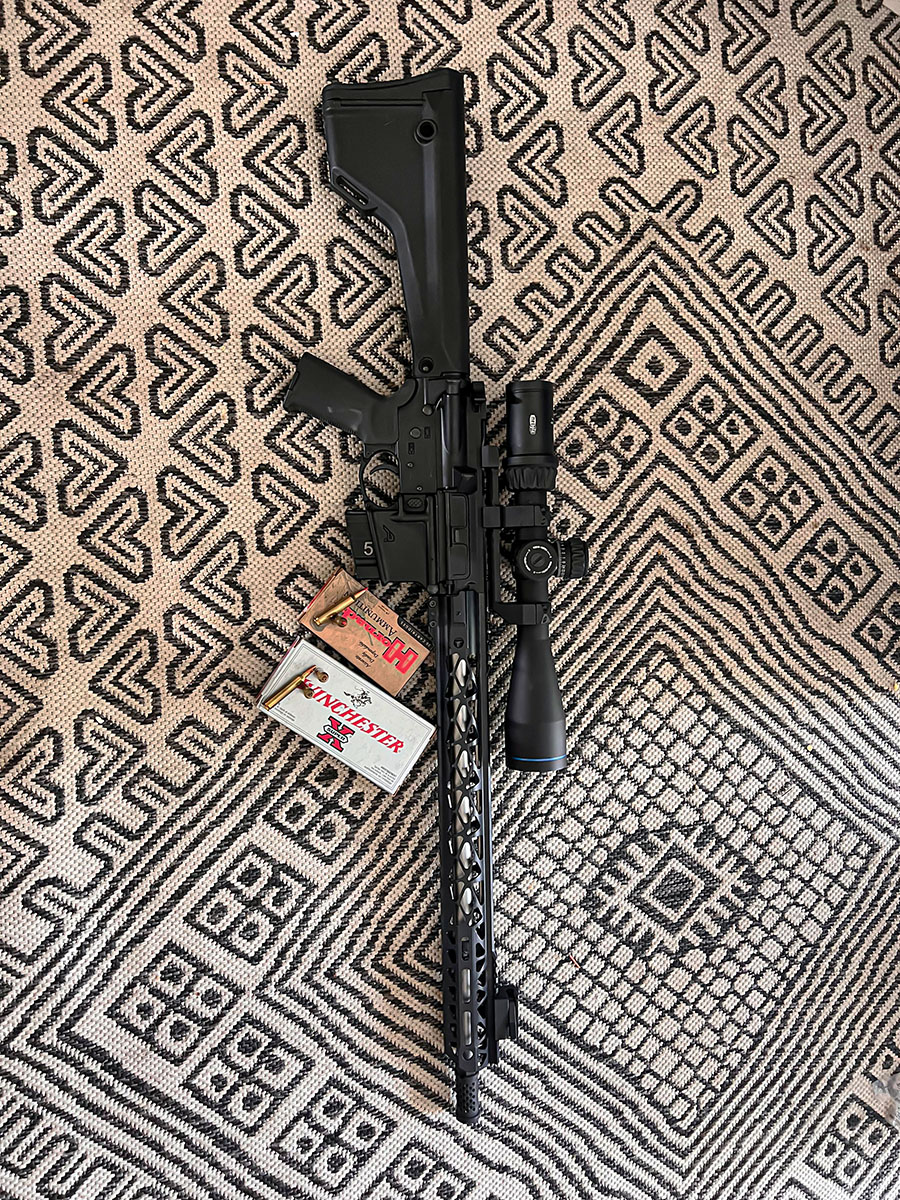
Now that I have covered some history and the rifle build, let’s get into how it shoots. I started with some factory ammunition to get the new barrel broken-in just playing with some steel. After getting 40 rounds down the barrel and a deep cleaning, it was time to test. I was limited on factory ammunition as this stuff is still hard to come by. What I was able to find to test was Hornady 40-grain V-MAX Varmint Express and 34-grain jacketed hollowpoint
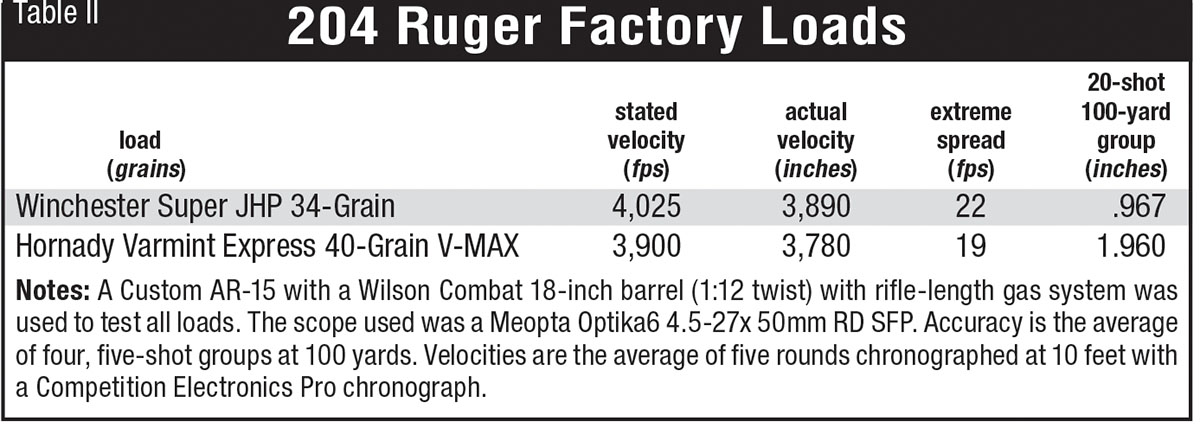
Winchester Super Varmint CXP1. I shot four groups of five of the Hornady loading and got great standard deviations (SD) and extreme spreads (ES), but could not get the gun to shoot under 1.75-inch groups, I saw an average velocity of 3,780 feet per second (fps), which is slower than what Hornady states it should be shooting, but I am sure they used a 24-inch barrel in their testing. However, there is still more than enough velocity for use on coyote-sized game at reasonable ranges. However, the accuracy was an indication that the 40-grain V-MAX was just not going to shoot well in this 1:12 twist barrel. This was mildly disappointing, but I didn’t plan to shoot that heavy of a bullet anyway. The four groups averaged out to be 1.96 inches. The Winchester ammunition shot well, averaging out about an inch grouping while also shooting four groups of five with the best group of .856 inch, the SD and ES were also good. I saw an average velocity of 3,890 fps, which I was very happy to see, Winchester states on their site that they got 4,025 fps, so I was just trailing behind that with a shorter barrel.
Handloading opens up the potential of the 204 Ruger, with options ranging from 26 grains up to 55 grains. However, a faster twist barrel may be needed for heavier bullets. If you went with a 1:9 twist like my previous barrel, that would stabilize everything just fine. In this case, I knew I was going to be shooting lighter bullets 24-to 34-grain range and I knew that 1:12 twist would work well with those weights. I’d be more than happy with those bullet weights because the main goal of this was to get out there shoot rockchucks with a 24- or 34-grain bullet and be able to take a coyote within 300 yards as well.
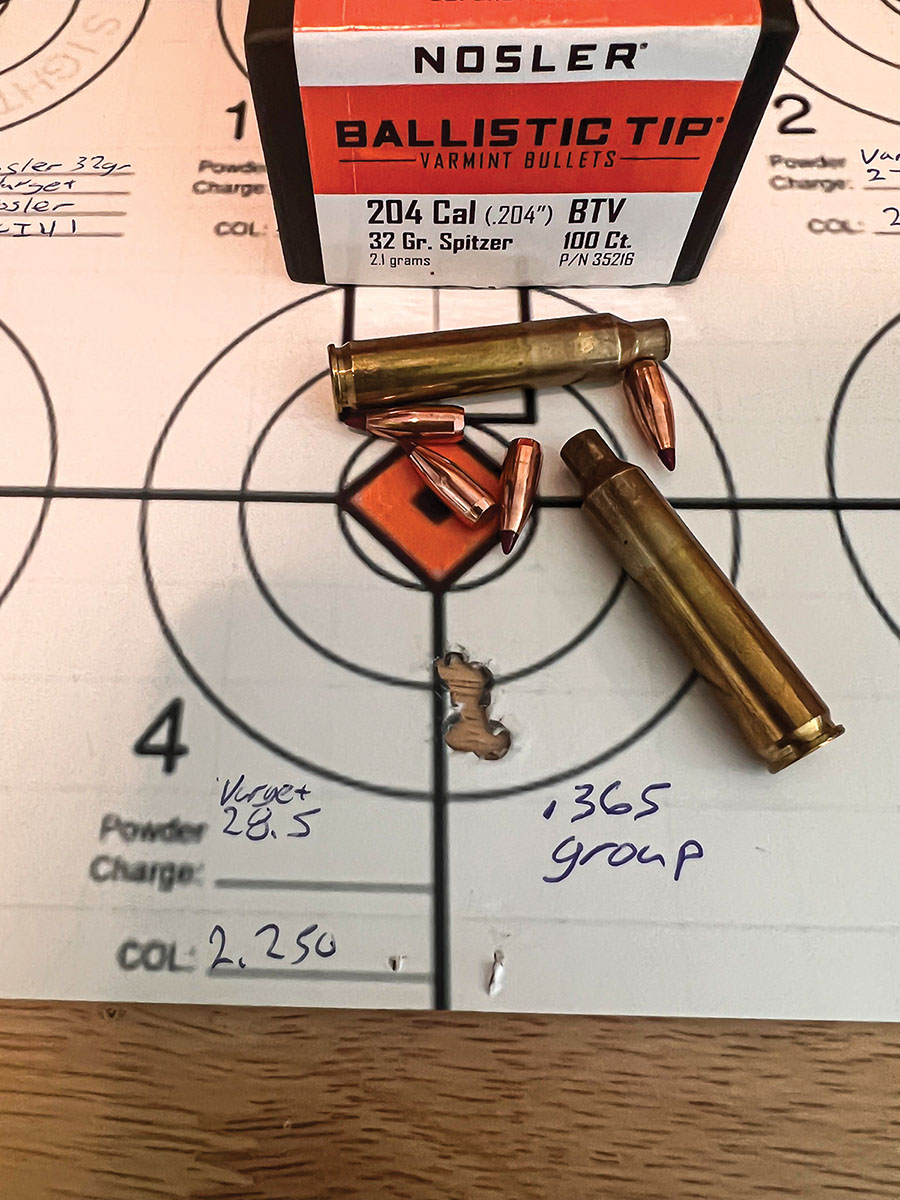
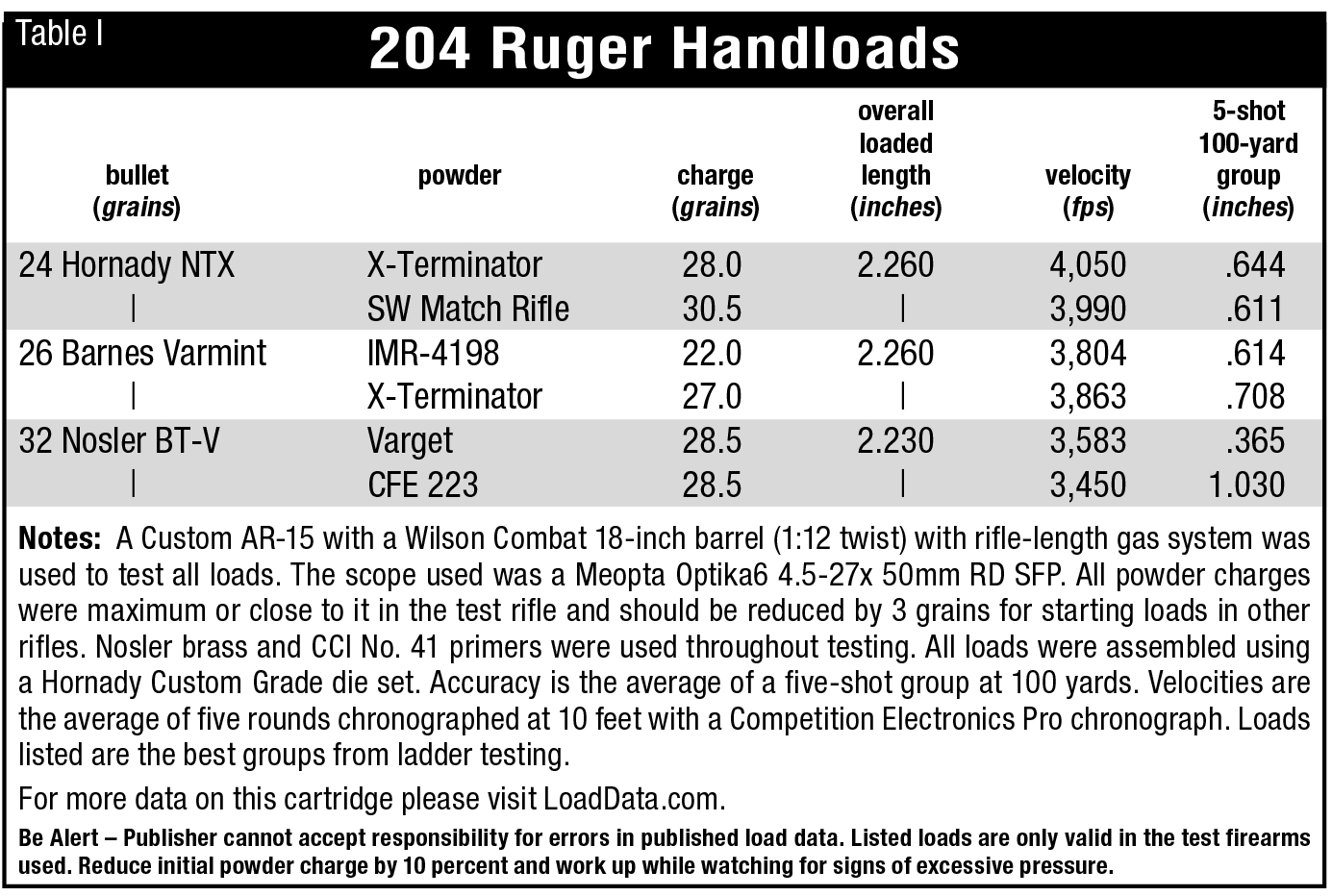
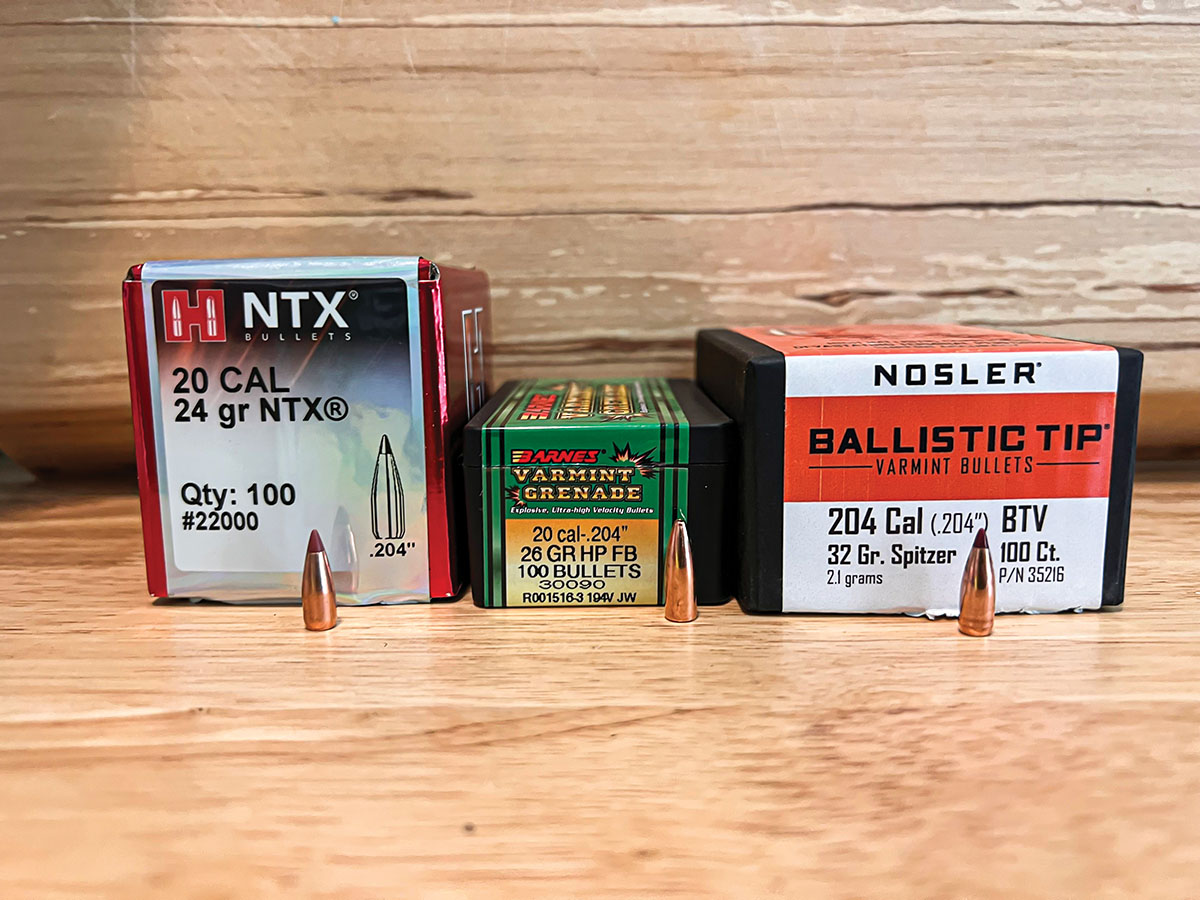
Let’s get into handloading, which is my favorite part of getting a new rifle, to see what shoots well and get time behind the rifle. This is all excellent practice in becoming familiar with a new rifle and cartridge. Testing loads always irons out the rifle and the shooter, providing a baseline and better understanding of how the rifle will perform. New Nosler brass was used for all loads along with CCI No. 41 Small Rifle primers. To start testing, I went with one of my favorite bullets, the Barnes 26-grain Varmint Grenade hollowpoint flatbase. I have found these to be devastating on squirrels and groundhogs. I decided to try two different powder types for this loading – IMR-4198 and Ramshot X-Terminator, I was hoping the latter would generate good velocity. Accuracy was established at 100 yards using five-shot groups. For the IMR-4198 powder charge of 22 grains, it produced a .614-inch group with an average velocity of 3,804 fps with an SD of 14 and ES 30. The Ramshot X-Terminator powder charge of 27 grains was a .708-inch group with an average velocity of 3,863 fps along with an SD of 26 and ES of 33.
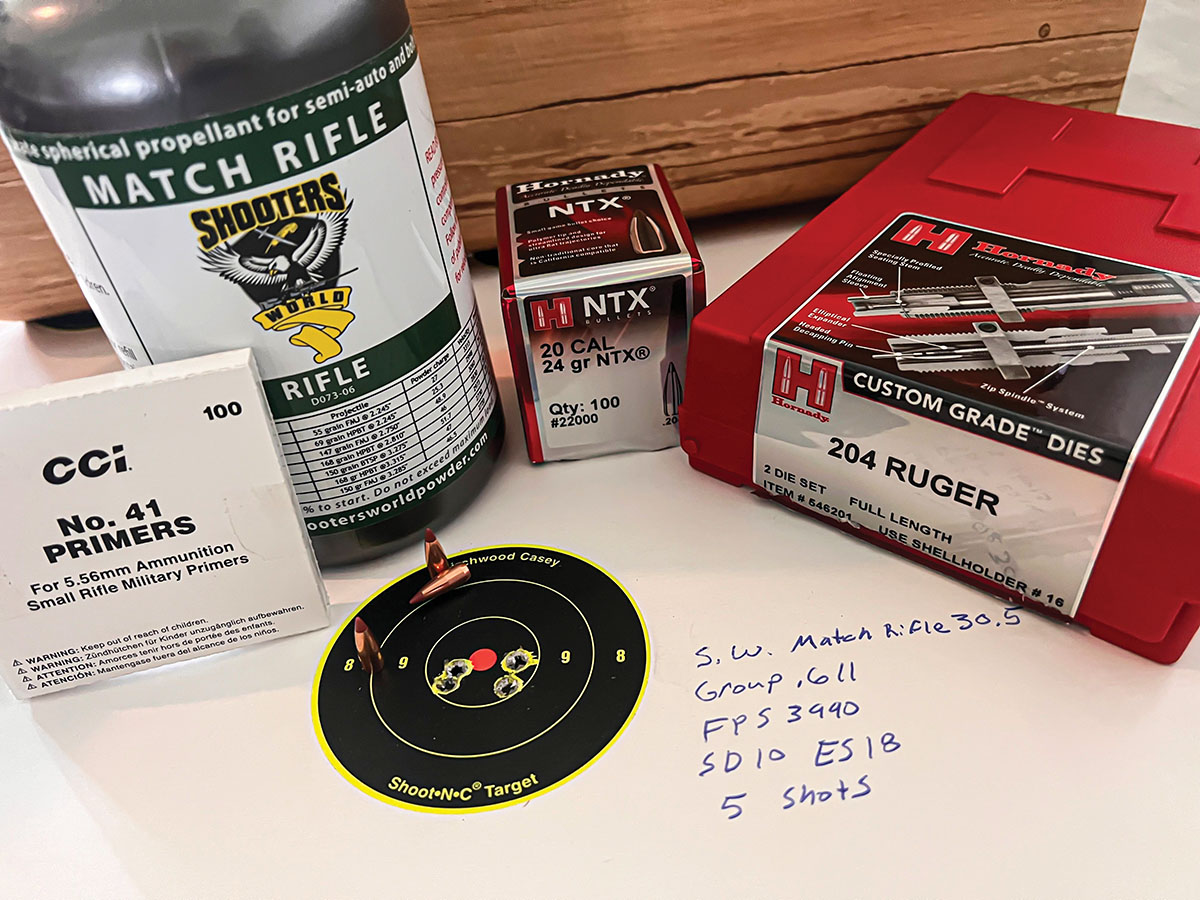
With the second test, a new (to me) bullet was chosen, the Hornady 24-grain NTX. I’ve heard great things about it, so I wanted to test it for myself. The two powders I tried were Ramshot X-Terminator and Shooters World Match Rifle as I am slowly becoming a big fan of Shooters World powder. With Ramshot X-Terminator, I was only able to test two of my assembled loads as I saw pressure signs earlier than expected. Despite this, the second group shot well with 28 grains and a group size of .644 inch with an average velocity of 4,050 fps, an SD of 18 and an ES of 36. The Shooters World Match Rifle with a powder charge of 30.5 grains and group of .611 inches with an average velocity of 3,990 fps, an SD of 10 and an ES 18. I was very happy with both these results as they showed great speed and potential to be devastating on groundhogs.