22-250 Remington Loads
New Powders and Bullets for One of America's Favorites
feature By: Patrick Meitin | October, 23
My early 220 Swift fascination made me late to the ’250 party. To be quite honest, I acquired my first 22-250 only after finding a deal too good to pass up. However, I soon found the cartridge capable of essentially everything the Swift was, including the ability to break the 4,000-feet per second (fps) mark, and exceptional accuracy, when the right load combination is hit upon.
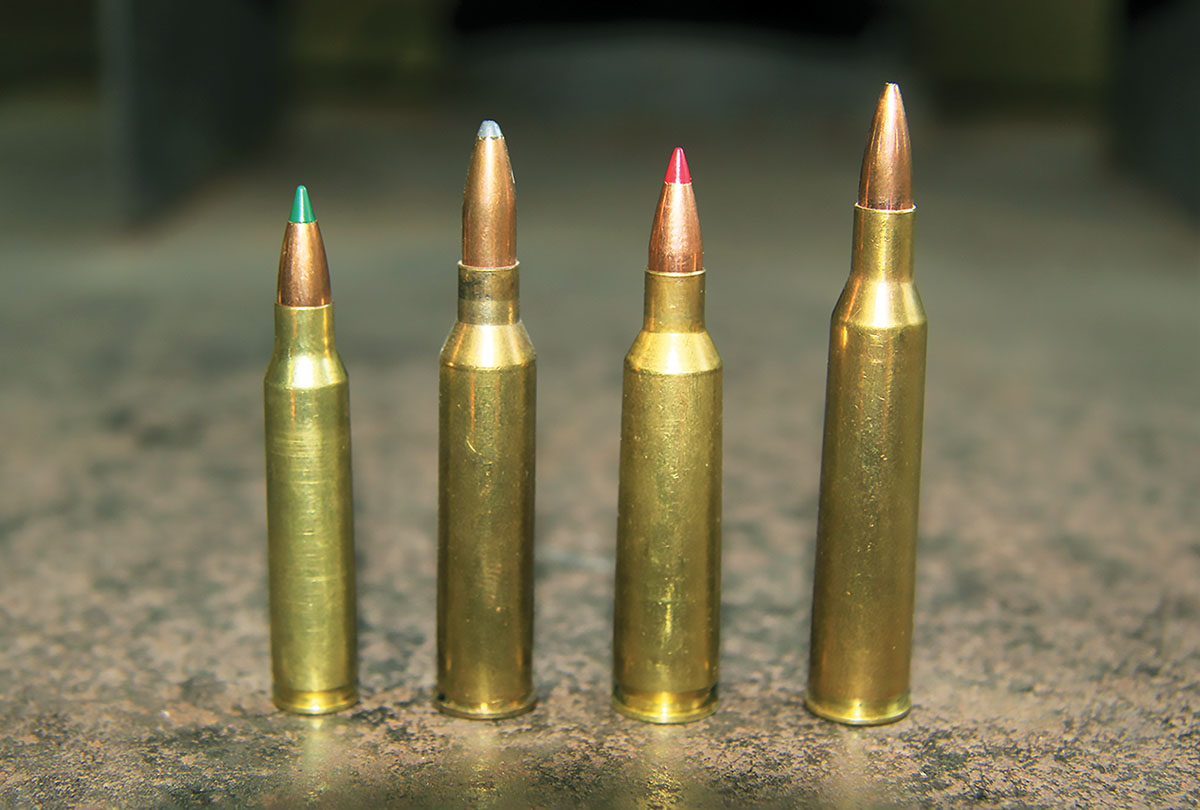
A recent load-development feature for Varmint magazine (Fall 2022) comparing classic and modern varmint bullets unearthed some extremely accurate load combinations, including some of the tightest groups ever shot with my own rifle. A couple of these surprised me, for example, a .19-inch group using Sierra’s Varminter hollowpoint and 36 grains of Hodgdon Benchmark at 4,100 fps, and .28 inch using Sierra’s 55-grain BlitzKing and 39.5 grains of Hodgdon H-380 at 3,782 fps. The Sierra hollowpoint and H-380 were a big part of my childhood, making them old-fashioned, and well, just old. This dispels the intuitive notion that superior accuracy comes only through everything new and modern. Classics gain that status for a reason. Still, while powders like Hodgdon’s H-380, H-4895 and H-335, IMR’s 4064, IMR-3031 and discontinued IMR-4320, plus Winchester’s W-760, Accurate’s 2460 and 2520 – just as quick examples – have been around awhile. They remain top ’250 choices, that earlier test got me to thinking about what I might be missing. What compatible powders had I ignored? What recent releases might be waiting to unleash still more accuracy and/or velocity? and what benefits are to be found in formulas promising added temperature stability or cleanliness? These are, after all, important factors during high-volume varmint shoots under a hot sun. In many cases, modernized bullets are also available to offer higher ballistic coefficients (BC) and explosive terminal performance.
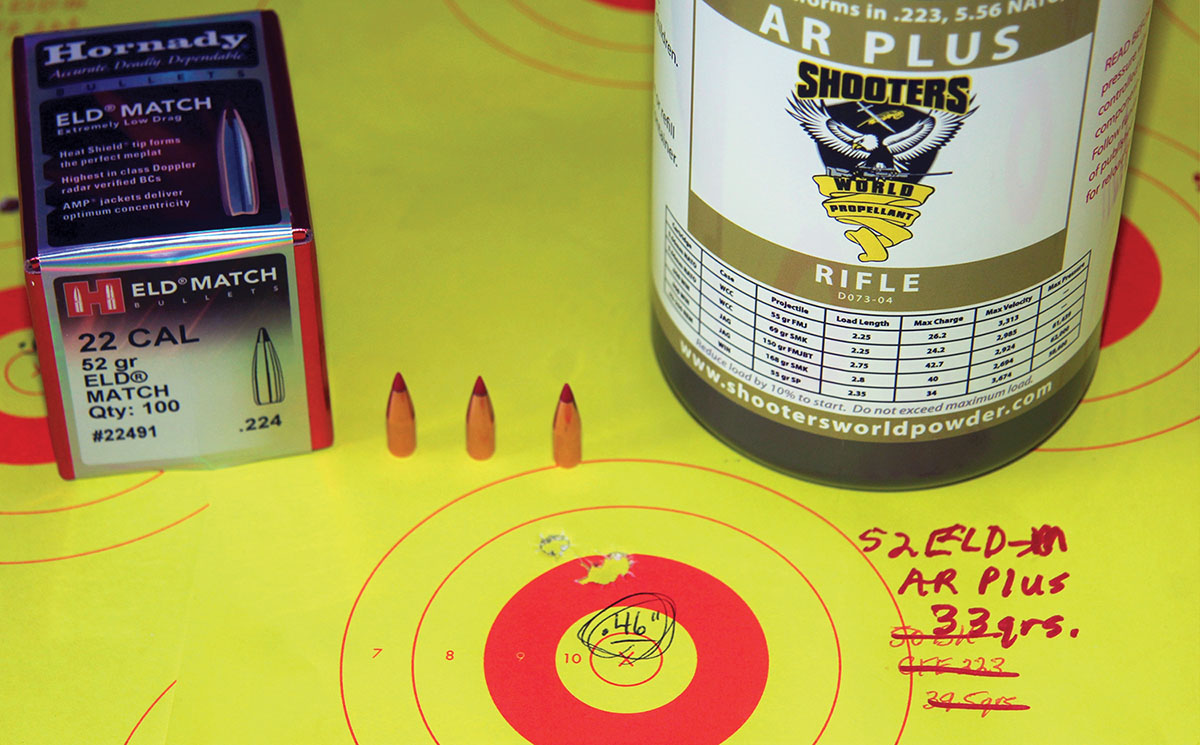
Powders that are certainly not new, but proved new to me in direct regard to the 22-250 Remington, would include Vihtavuori N150, Alliant Reloder 10X, and Accurate 4064. Newer powder releases include Hodgdon’s CFE 223, Winchester’s StaBALL 6.5 and newer StaBALL Match, Shooters World AR-Plus, Aliant Reloder 16 and even newer Reloder 15.5 TS.
Hodgdon’s CFE 223 has become a ’250 favorite, offering extreme temperature insensitivity combined with a copper-erasing ingredient for consistent velocities and clean shooting. In 2019, Winchester’s StaBALL 6.5 was the first true ball powder to include both extreme temperature stability and a decoppering agent in StaBALL Match, a 2023 introduction to that line and then the slower StaBALL HD for magnum cartridges. Shooters World AR Plus is the company’s newest offering, a spherical powder that includes a cleaner formula and an added flash suppressant. Swedish-made Reloder 16 offers extreme consistency across temperature extremes using new TZ technology, which also utilizes a decoppering additive for cleaner bores. Finally, the new Reloder 15.5 TS delivers superior temperature stability and a decoppering agent to keep barrels clean during high-volume varmint shoots.
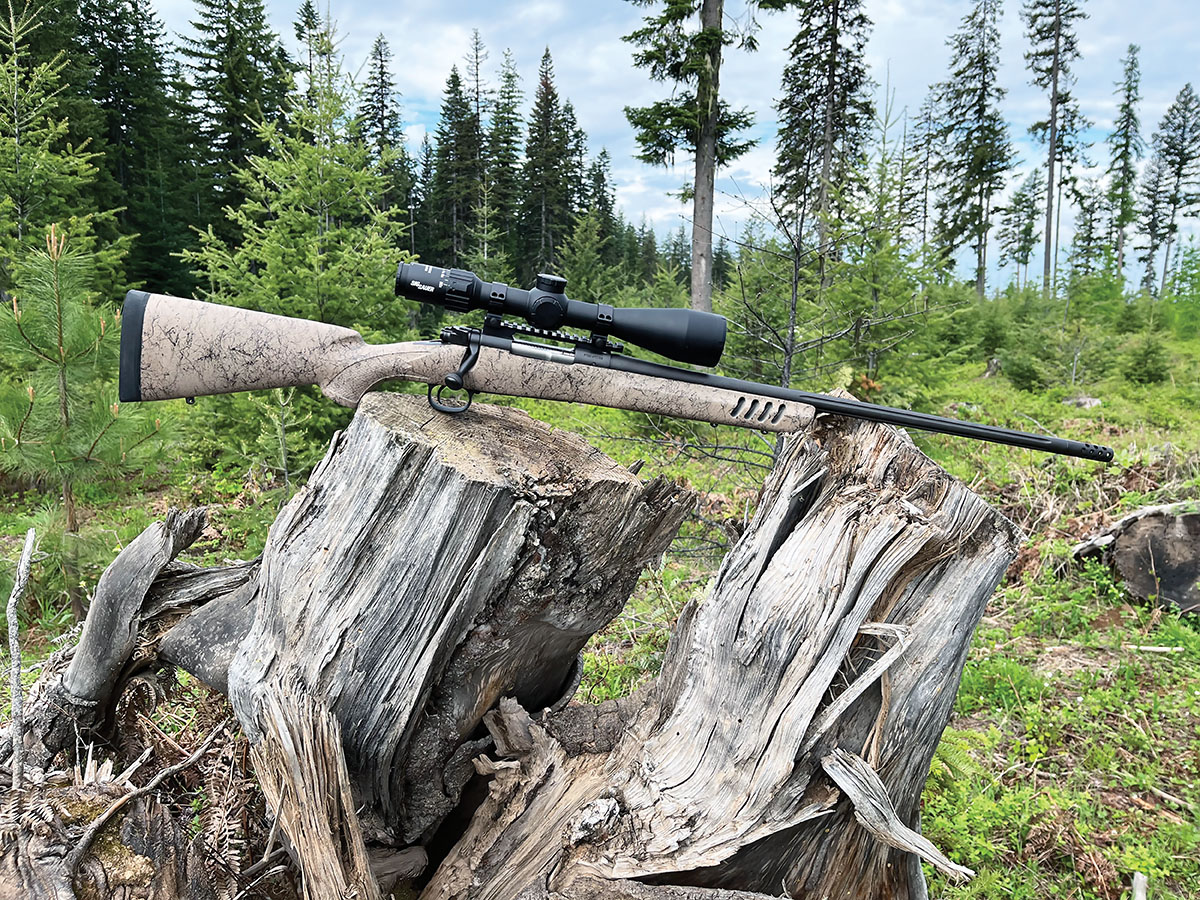
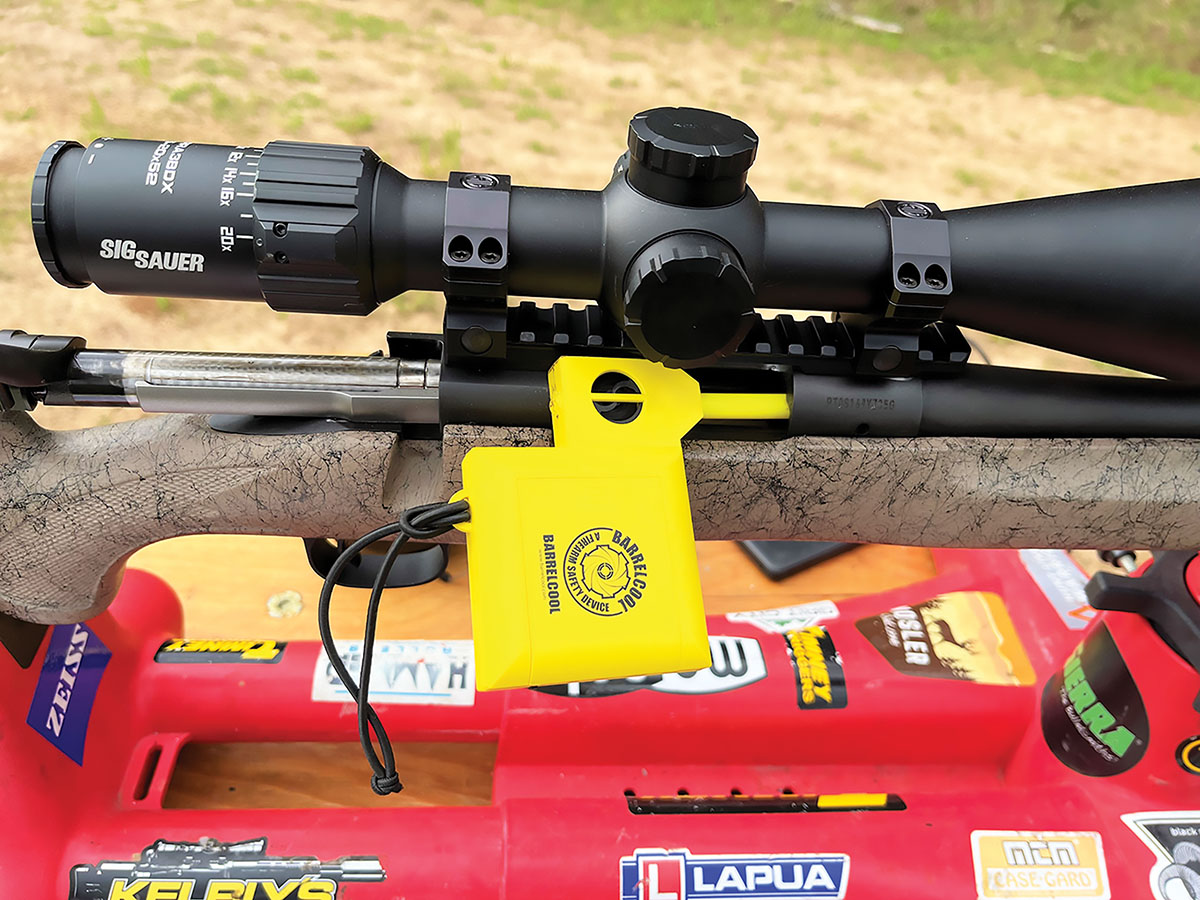
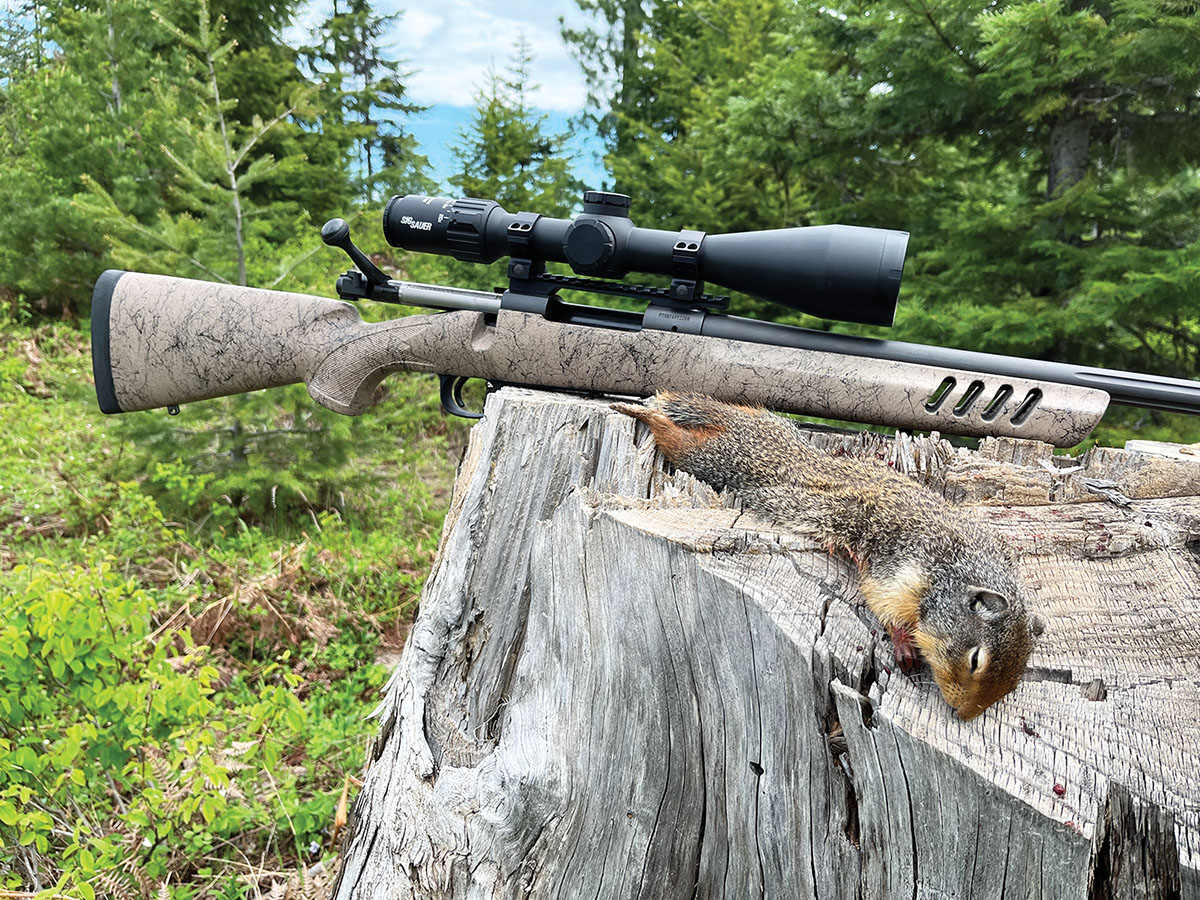
As I was auditioning new facets of the ’250 dynamic, I also ordered a new rifle instead of using my old Mauser ’98-based standby. Winchester’s Model 70 Long Range MB is set in a tan/black spiderweb finish Bell & Carlson stock. This hand-laid composite stock includes an aluminum bedding block, wide forearm with cooling vents, and is fitted with a Pachmayr Decelerator recoil pad to create a 13½-inch length of pull. The short action is matte black and fitted with a free-floated, 24-inch fluted/medium-contour barrel with muzzle brake. The MOA trigger system broke crisply at a touch less than 4 pounds out of the box. The rifle included a Pre’64-style claw extractor for positive extraction, but allowed single feeding. The cartridge feed lips are machined as part of the receiver for improved reliability. The rifle was fed from a five-round, top-load magazine with a hinged floorplate. The classic three-position safety offers SAFE and FIRE positions, plus a middle position that locks the firing pin, yet allows the bolt to be operated for safe unloading. The rifle weighed 7 pounds, 8 ounces out of the box, and slightly more than 10 pounds after the addition of a SIG Sauer

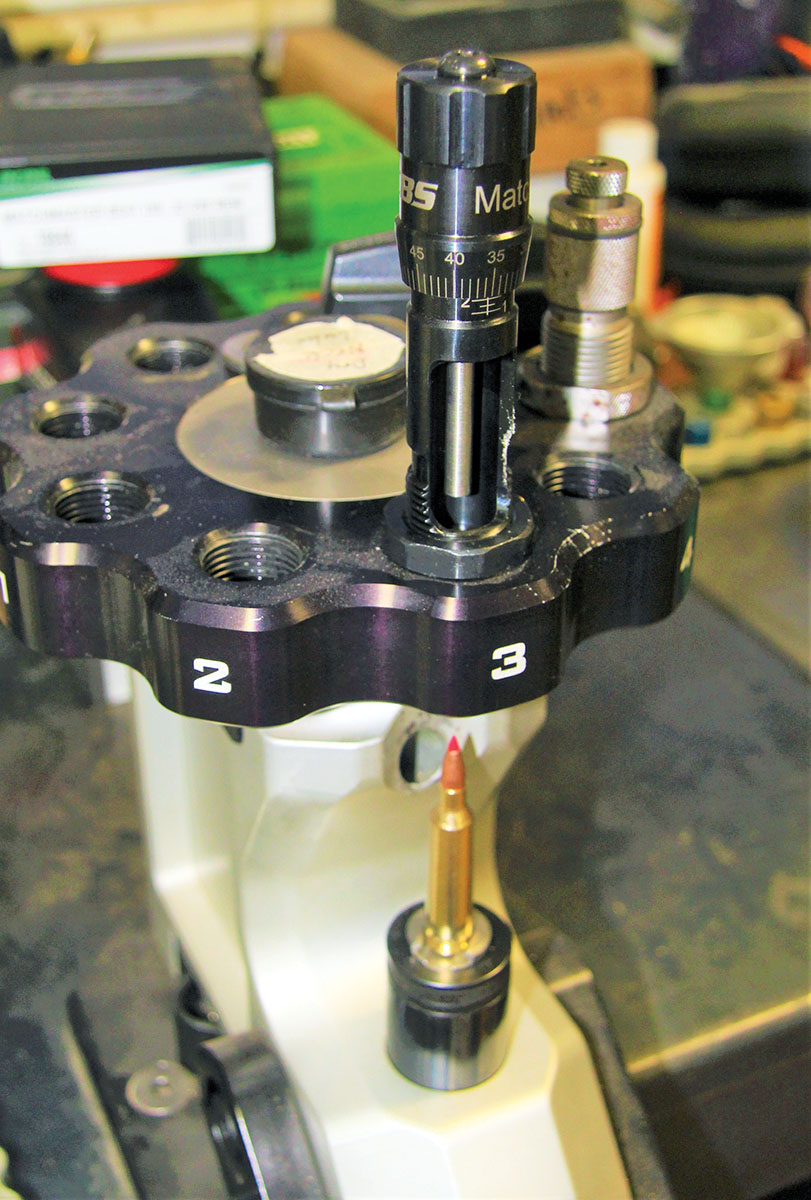
A new rifle called for fresh brass for this test. New Nosler cases were selected, all trimmed lightly to a trim-to length of 1.902 inches to ensure square mouths. Then they were chamfered inside and out. I chose CCI BR-2 Large Rifle primers on the promise of greater consistency. Hornady Custom Grade new dimension full-length dies served for sizing, while a new RCBS MatchMaster Seat Die was used for final load assembly, a “window die” allowing quicker and more precise bullet seating.
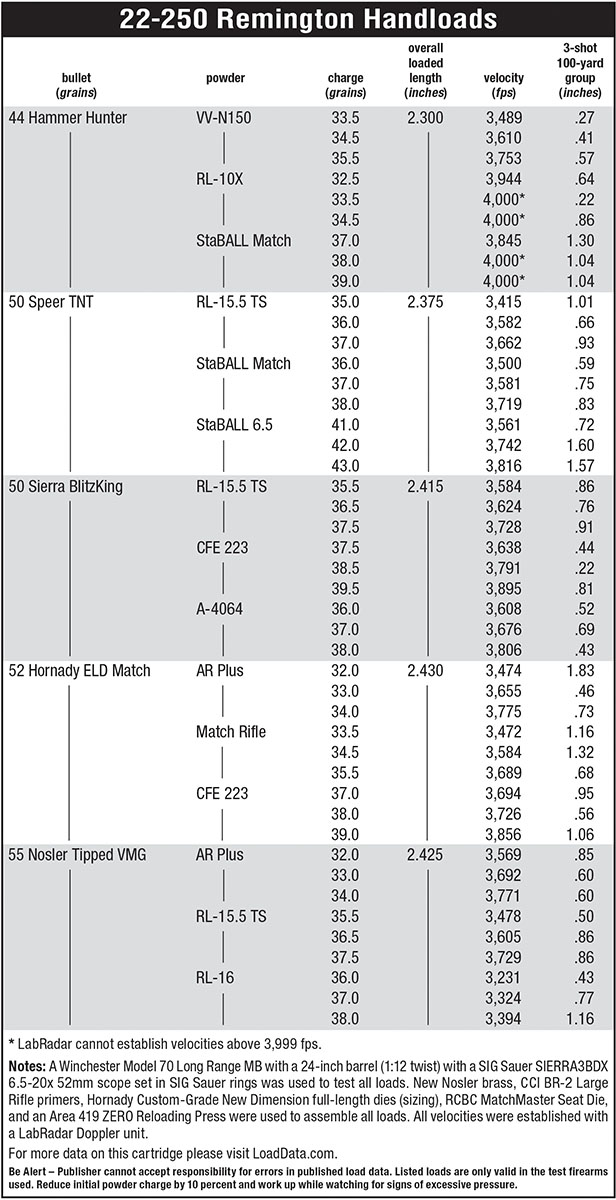
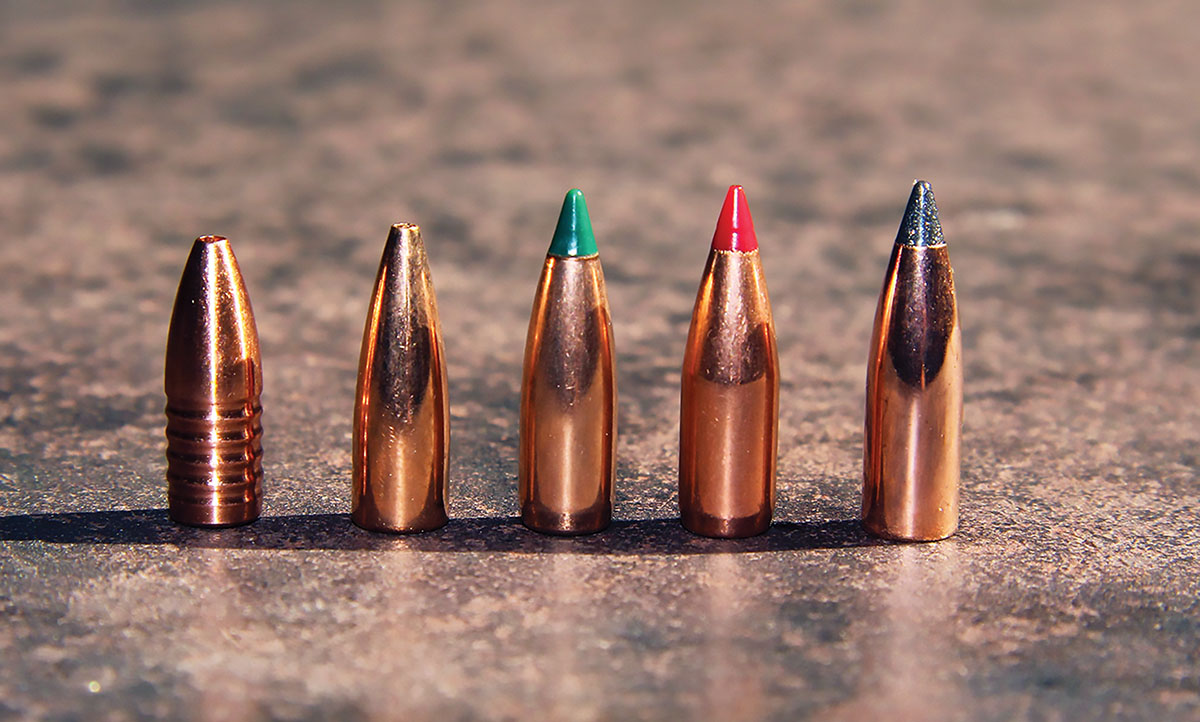
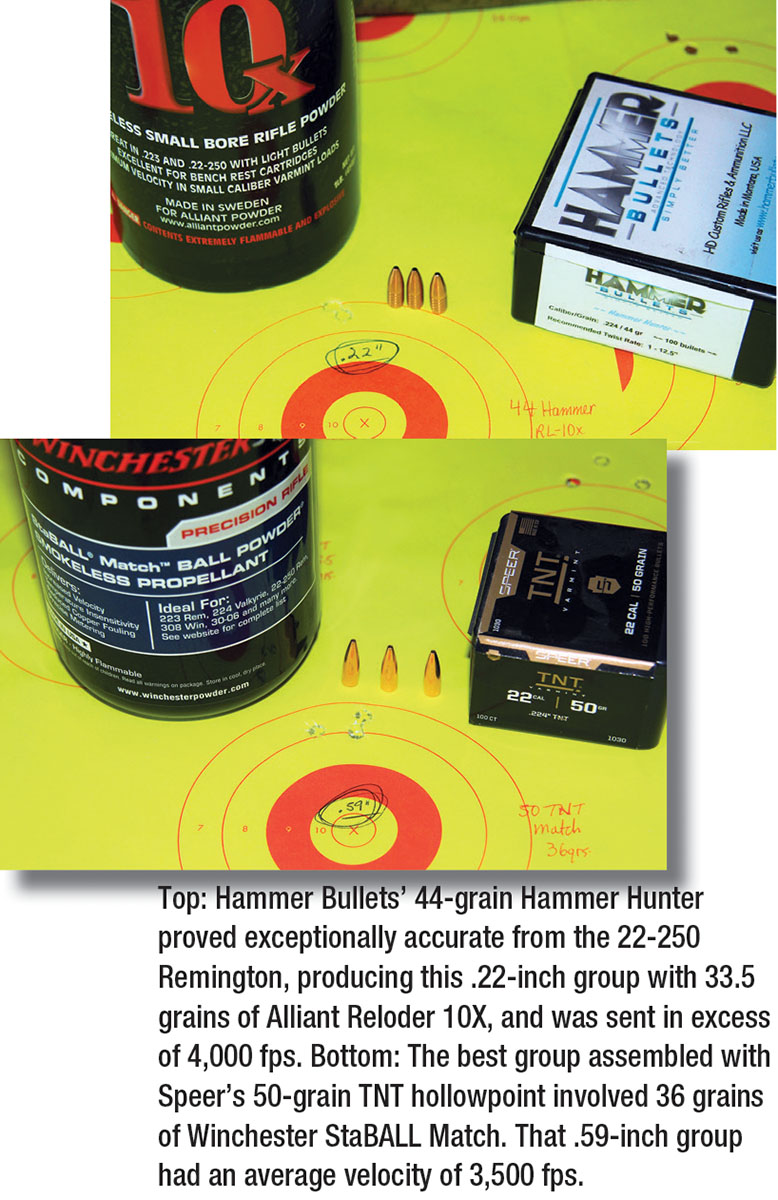
Bullets for this project were chosen to represent a wide spectrum of styles and updated designs were selected when available. This included a lead-free, monolithic copper bullet I hoped would prove compatible with the Winchester’s 1:14 twist rate. The Hammer Bullets 44-grain Hammer Hunter hollowpoint comes with a 1:14 to 1:12.5 minimum twist recommendation and included a .192 G1 BC. It was paired with Vihtavuori N150, Alliant Reloder 10X and Winchester StaBALL Match. This bullet proved particularly accurate with all assembled groups averaging .71 inch, which was heavily skewed by Winchester StaBALL Match’s 1-inch-plus groups. In fact, StaBALL Match proved a poor choice for this bullet. Vihtavuori N150 provided consistent accuracy with all loads, but failed to break the 4,000-fps mark like the other two powders. Still, .27- and .41-inch groups at 3,489 and 3,610 fps are nothing to get snooty about. Alliant Reloder 10X tied for the smallest group using 33.5 grains of powder and pushing things along in excess of 4,000 fps (my LabRadar only records velocities to 3,999 fps). That group measured .22 inch.
Speer’s 50-grain TNT is a flatbase hollowpoint that lives up to its name, while including a decent .228 G1 BC for weight and proving quite accurate in the right rifle. Alliant Reloder 15.5 TS, Winchester StaBALL 6.5 and StaBALL Match averaged .96-inch groups with this bullet. Alliant Reloder 15.5 TS provided decent results with its best group at .66 inch at 3,582 fps, while Winchester StaBALL 6.5 produced two of the largest groups of the entire test. StaBALL 6.5 did manage a .72-inch group at 3,561 fps, but adding more powder sent things completely off the rails – though velocity topped out at 3,816 fps. That left StaBALL Match, which shot good with the TNT in spite of doing poorly with the Hammer. The tightest group resulted from 36 grains of powder, sending three bullets into .59 inch at 3,500 fps, the other two groups stayed inside an inch, and the maximum load hit 3,719 fps.
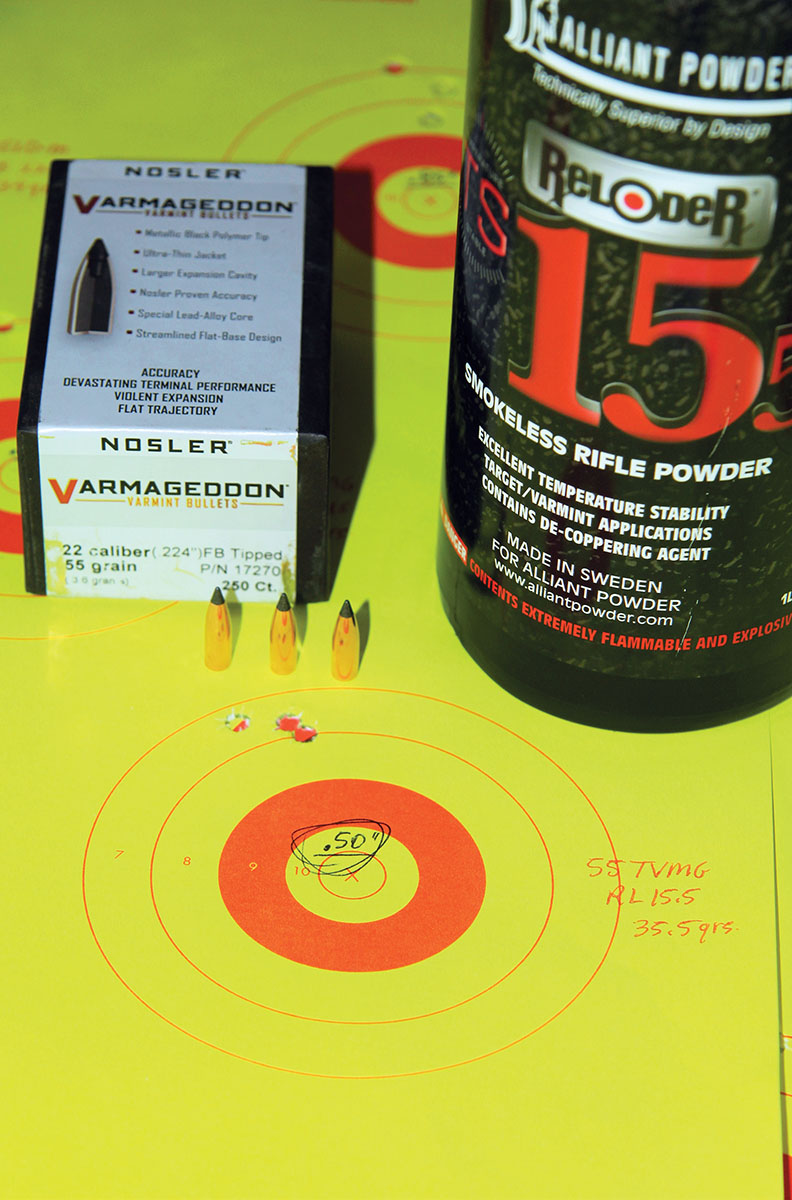
Nosler’s Tipped Varmageddon has become one of my favorites, offering excellent accuracy at a more affordable price than Ballistic Tip Varmint bullets. The flatbase 55-grain version provided a .255 G1 BC and dismantling expansion – especially at ’250 velocities. AR-Plus, Alliant Reloder 15.5 TS and Reloder 16 served up a .74-inch group average. AR Plus proved more consistent with this bullet, producing identical .60-inch groups at 3,692 and 3,771 fps with 33 and 34 grains of powder (the latter a maximum load). Reloder 15.5 TS came into its own with the 55-grain bullet printing an even .50 inch at 3,478 fps – the maximum load hitting 3,729 fps and printing into .86 inch. Alliant Reloder 16 started out well with this bullet’s best group of .43 inch, though groups widened as more powder was added. Reloder 16 also proved pretty pokey from this cartridge with velocities starting at 3,231 fps with 36 grains of powder and topping out at just 3,394 fps with a maximum load of 38 grains.
I certainly learned a lot during this project, discovering some new powder options for the old favorite varmint cartridge, as well as some bullets I am now anxious to test in my own 22-250 Remington. Those Hammer Hunter bullets printed one-hole groups at 4,000-plus fps are at the top of that list! I also confirmed Hodgdon’s CFE 223 still has it, in both the accuracy and velocity departments. Vihtavuori N150, Reloder 10X, and Accurate 4064 will certainly become part of my regular repertoire, while Winchester StaBALL Match, Reloder 15.5 TS, and Shooters World AR Plus obviously deserve further experimentation.
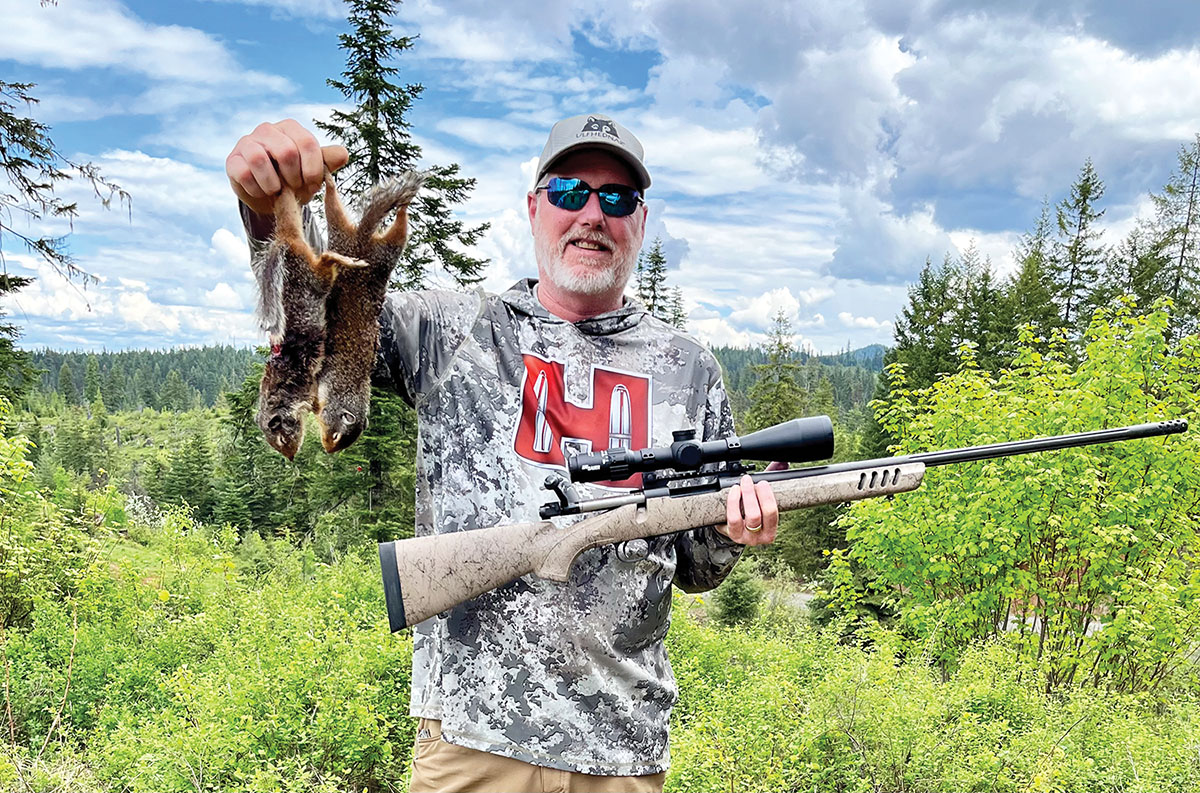
Plus, Winchester has proven yet again why they are so well respected in the gun world. The Model 70 Long Range MB rifle ran slick, without a single hiccup experienced throughout the entire test, and not a little bit of in-field varmint shooting. It will assemble tiny groups with the right load, the stock was ultra comfortable and the muzzle brake was effective at allowing a varmint shooter to mark their own shots.