225 Winchester
A Blast from the Past is Still Here to Enjoy
feature By: Stan Trzoniec | October, 23

My dealings with the 225 are fairly recent, only because I was working up the chain of vintage cartridges like the 219 Zipper, 22 K-Hornet, 219 Donaldson Wasp and the 220 Weatherby Rocket. This in part stems from my adolescent experiences on my uncle’s farm in New York state hunting chucks with his single-shot
Winchester rimfire rifle and watching the sports come with their heavy-barreled rifles topped off with a Unertl scope with that long, return to battery spring on top. Picking off chucks at only distances I could only imagine put me on the road to future endeavors of working with those wildcat cartridges of the time and bringing them up to modern standards.
All of these took time to gather information on ballistics, loads and of course that most important ingredient, the rifle. While most of the former parts to the formula are available through various online or history articles, the rifle always seems to be the most difficult to get to the finish line, but in the end, all came together including the addition of a heavy octagonal barrel to mate perfectly to the vintage 225 Winchester cartridge. To most, the 225 Winchester is hardly worth a second glance, but give it some time. Introduced in 1964, the 225 seemed to be on the right track from the start as Winchester, having lackluster sales for its flagship Model 70 rifle, introduced a new rifle at the same time while dropping the famed 220 Swift from its ranks from the wrongful press it was getting with reference to “shot-out” barrels. Come to find out from research and my own Swift rifles, because of heavy fouling with some loads, in the past the Swift could become inaccurate at times, which a good cleaning of the bore would take care of and bring it back to its full potential.

Having the same numerical designation as the previous Model 70 but nowhere as handsome, it featured a push-feed action instead of a controlled feed. While spirits were high at the Winchester office, doom and gloom followed with the introduction of the “legitimized” Remington 22-250 cartridge the
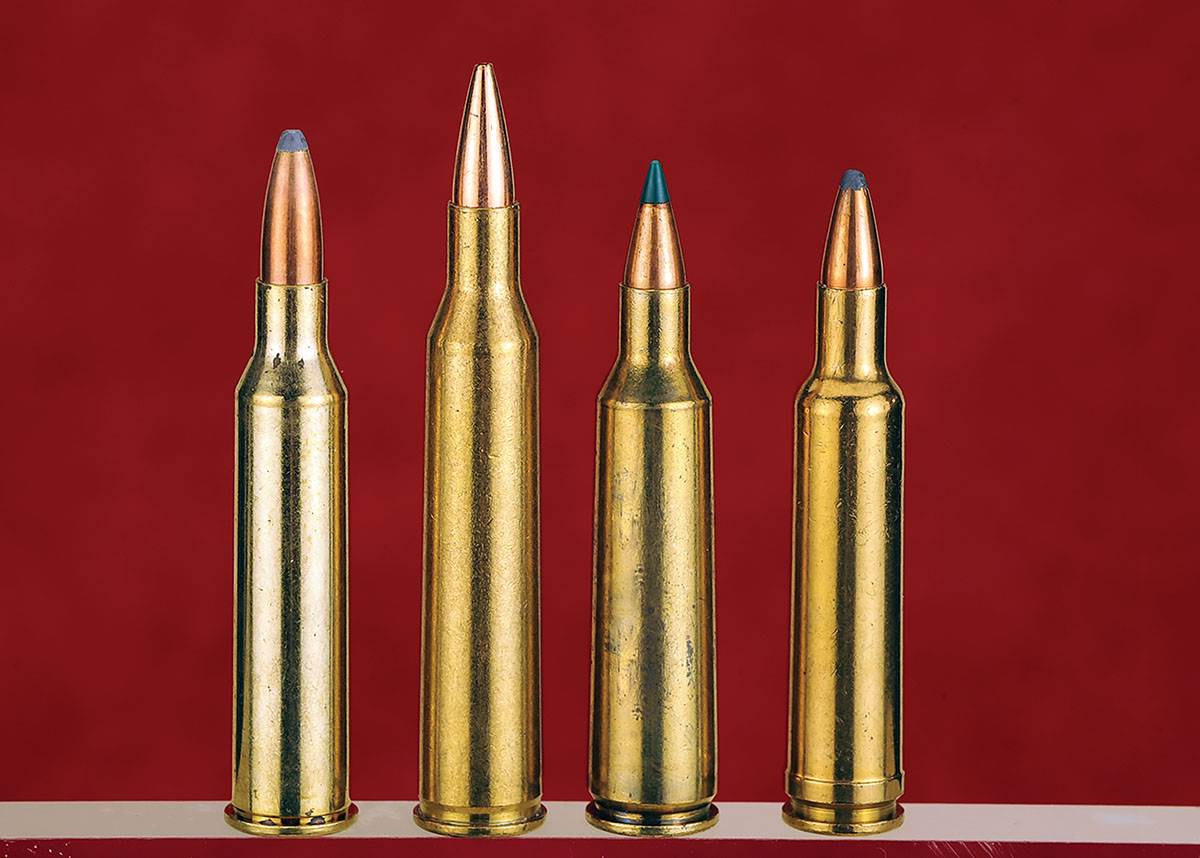
I don’t know how it came to be, but in looking at both the 22-250 and the 225, the margins are so close, I wonder if someone at both factories were comparing notes. First, when comparing factory ballistics, they were only about 3 percent in feet per second (fps) apart with the 225 Winchester at 3,570 fps, the 22-250 Remington at 3,580 fps with both employing a 55-grain bullet.
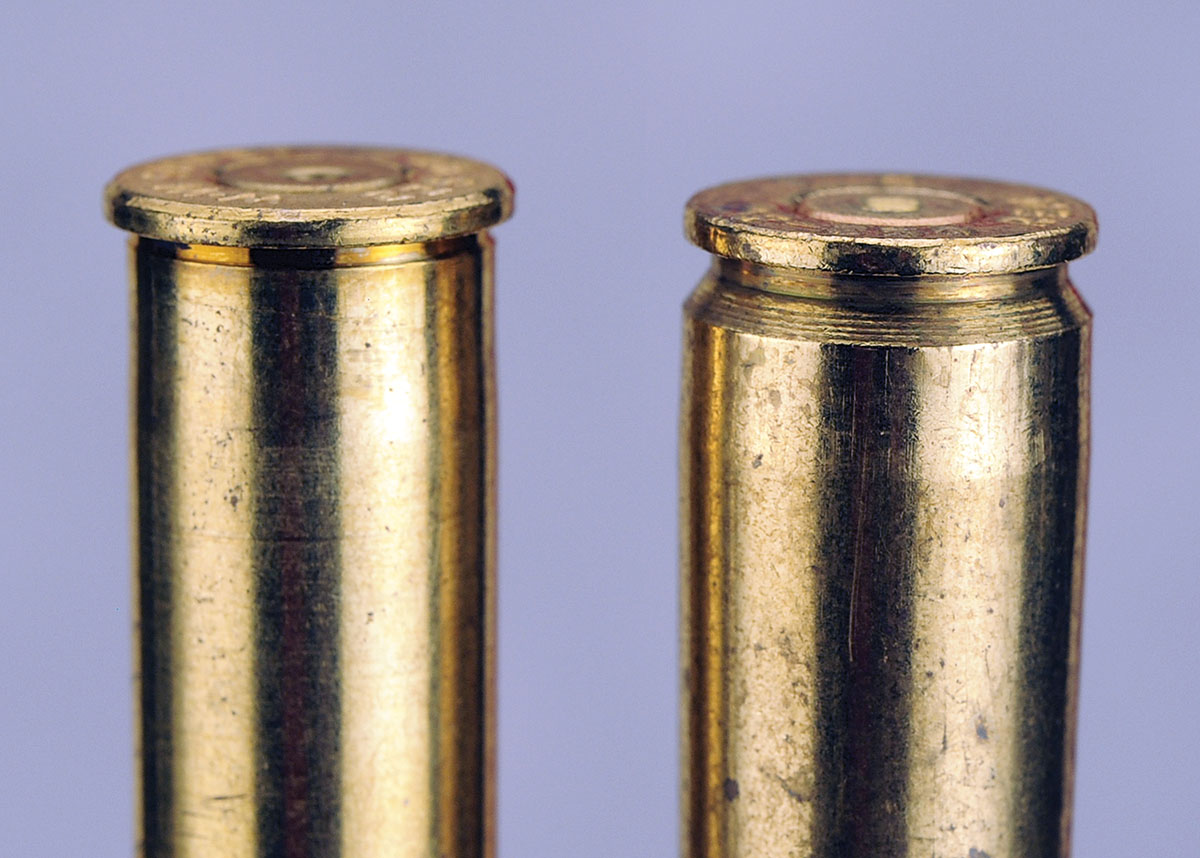
Granted, the 225 case is a semi-rimmed cartridge headspacing on the shoulder while the 22-250 is rimless design making it somewhat more appealing to handloaders, rifle manufacturers and those wanting flawless feeding of their ammunition in the field. Both cartridges use a large rifle primer, both have


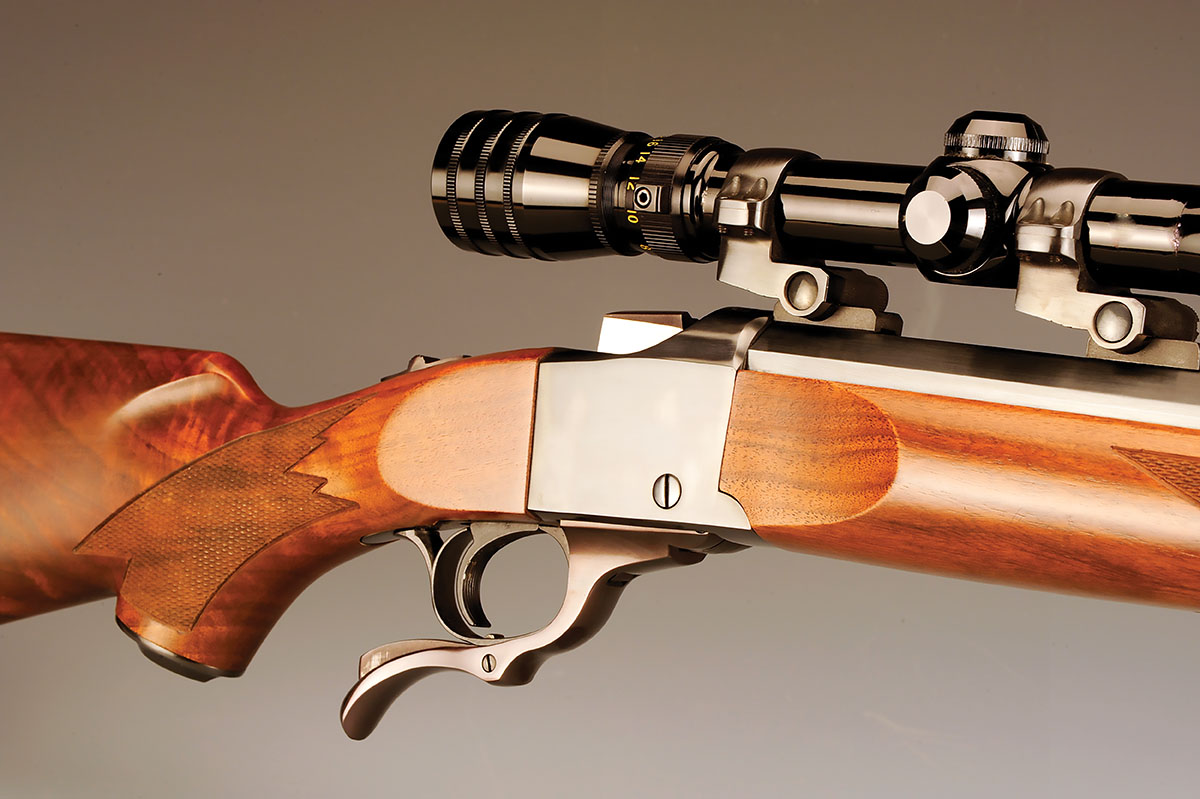
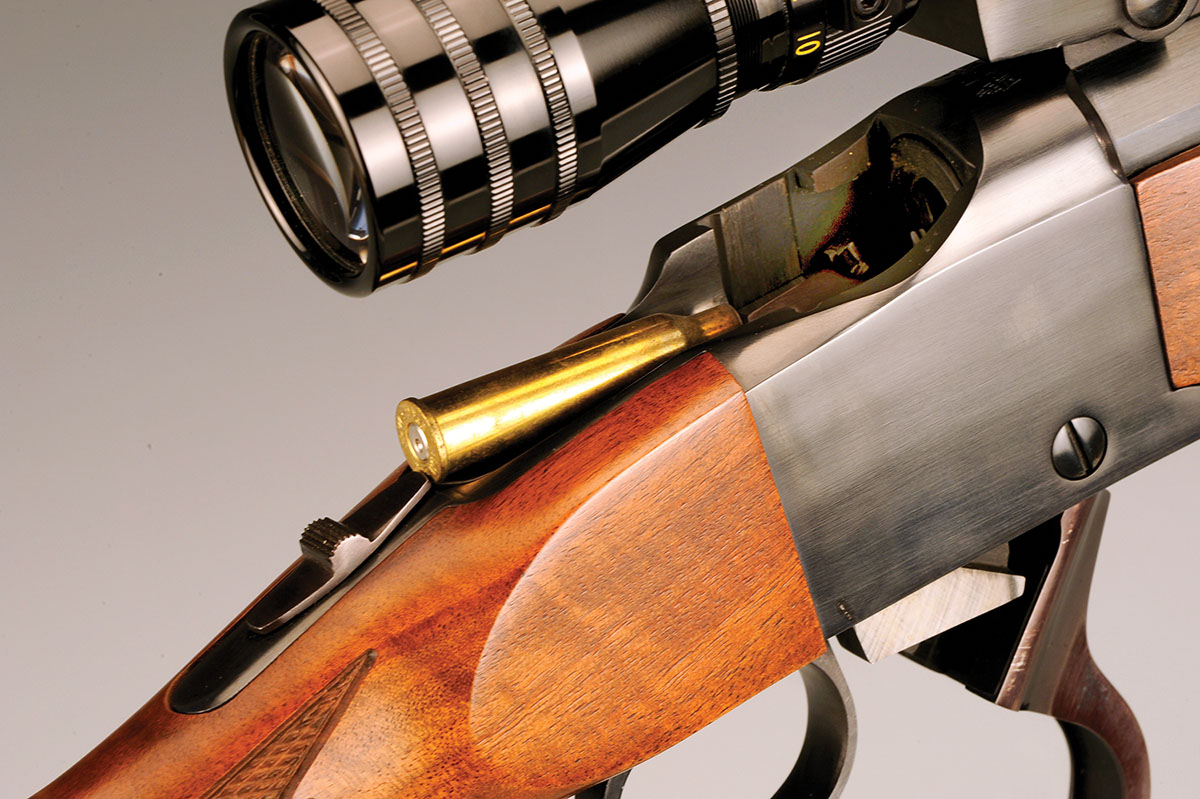
In the past, when it came to a shootin’ iron, for the 225, it was easy but that has changed. Before I contacted the staff at the Montana Rifleman and they took care of everything once I supplied the rifle. The gun of choice was the Ruger No. 1, a rifle that is very adaptable to just about any cartridge you might want to shoot just because of its single shot, falling-block action. Since there is no bolt face to open up or modify – only a bit of help on the extractor – the hunt was on for that just right rifle.
Back then, Ruger used to outfit its classy No. 1s with premium wood, so now it became a search for a gun with fancy wood. A sample was found in 243 Winchester and it was shipped to Montana. Regardless of the wood on the gun, the Ruger No. 1 is a classy rifle to work with. The lines are true for a period rifle just the way Bill Ruger wanted it to be and over the years, the Standard 1B version with the longer forearm was always my choice for a varmint rig…modified or not.
In any event, come to find out that the Montana Rifleman was acquired by the Remington cartel and since that is history, so is this company. However, checking online with some of the major sellers, I did come across a half dozen Model 70s chambered for the 225 Winchester and for those who might like a custom rifle, the pages of Rifle magazine have listings for custom rifle builders across the country.
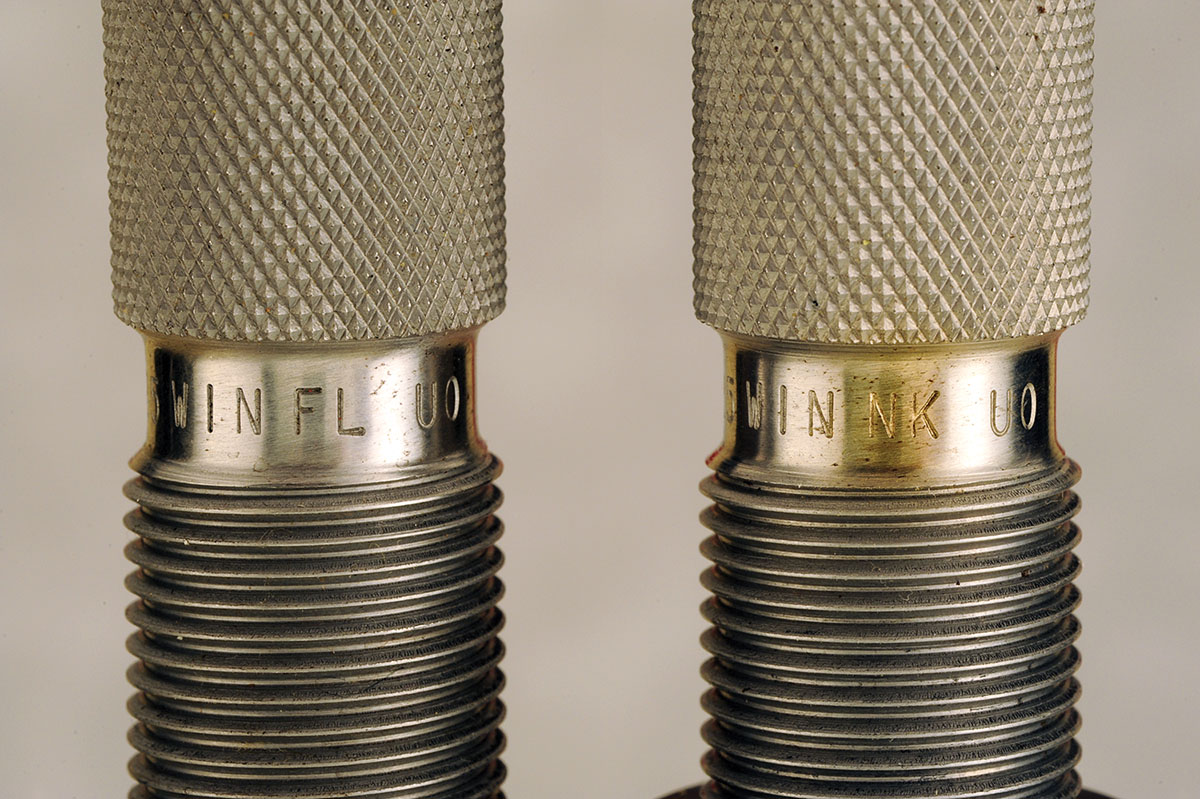
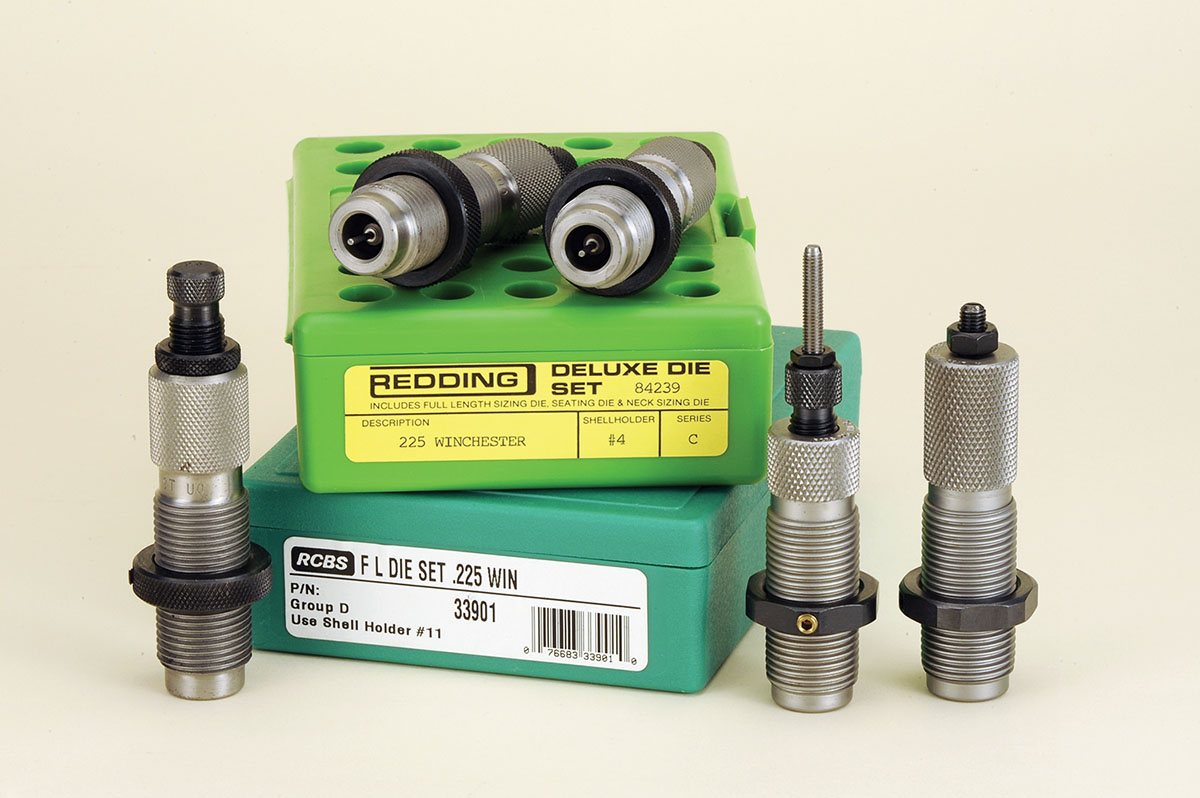
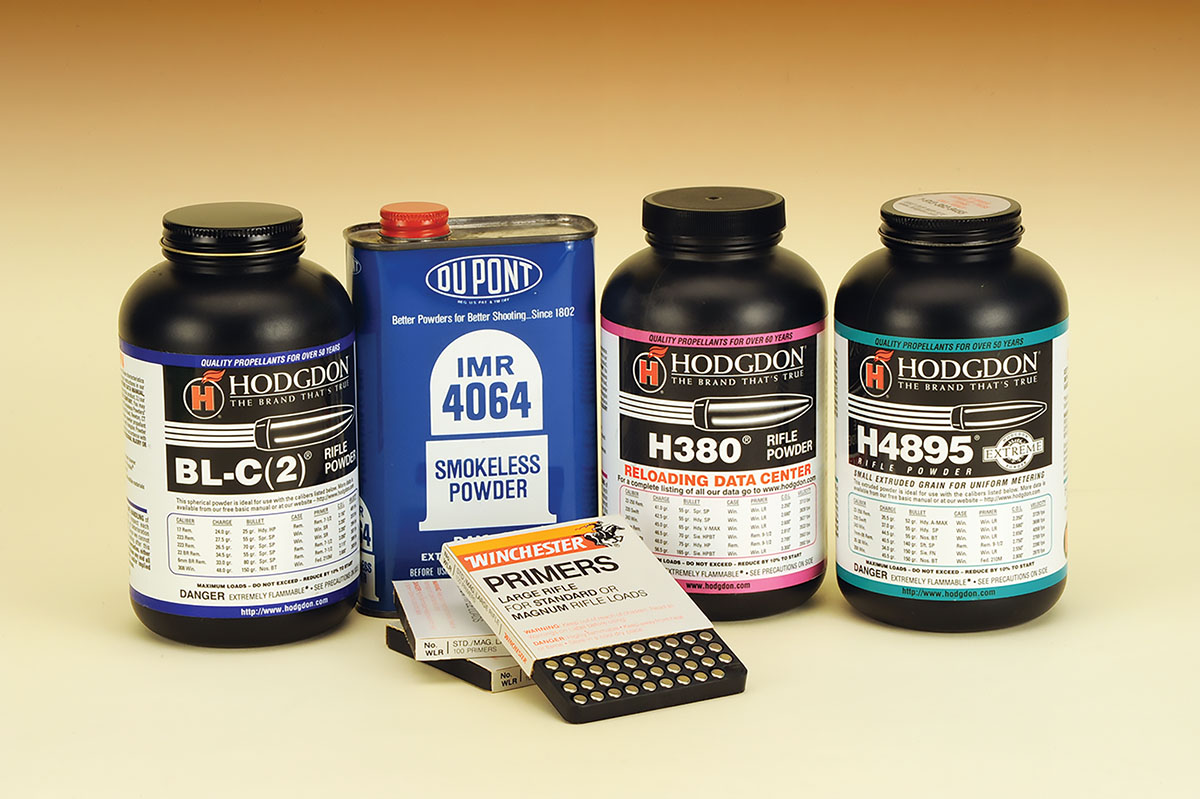
When it came to the brass, many years ago I purchased six boxes of Winchester brass before it was discontinued. For loading, I received the Redding No. 84239 die set that included both the full-length and neck-size die that would be used after I had the once-fired cases ready for loading. Working with a new cartridge, I like to full size all the cases to correct any of the factory defects (out of round necks, dents) before fireforming. With the 225, I used a mild loading of around 31 grains of BL-C(2) with a 55-grain bullet to form these cases to the rifle. After that, I smoke or mark the neck, making sure the neck-sizing die is adjusted to precisely size the neck only down to the neck/shoulder juncture.
No matter what cartridge you are working with, you may get some neck splits, so discard them. In the case of the 225, my loss was nil, so a bit of touchup with cleaning the neck and primer pocket set the stage for the next part of working up loads. For the record, cases out of the box measured 1.928 inches, after the first go-round, they stayed the same with only a bit of the original pressure on the Ruger’s operating lever to lock any of the loads in place.
After neck-sizing, cleaning and checking the overall length of the case to be no more than 1.920 inches, then chamfering the inside of the neck, the choice of bullets was next. In all the reference material and notes from previous shooters and historical backers of the 225 Winchester, all seemed to favor the 55-grain bullet as the best all-around projectile for this
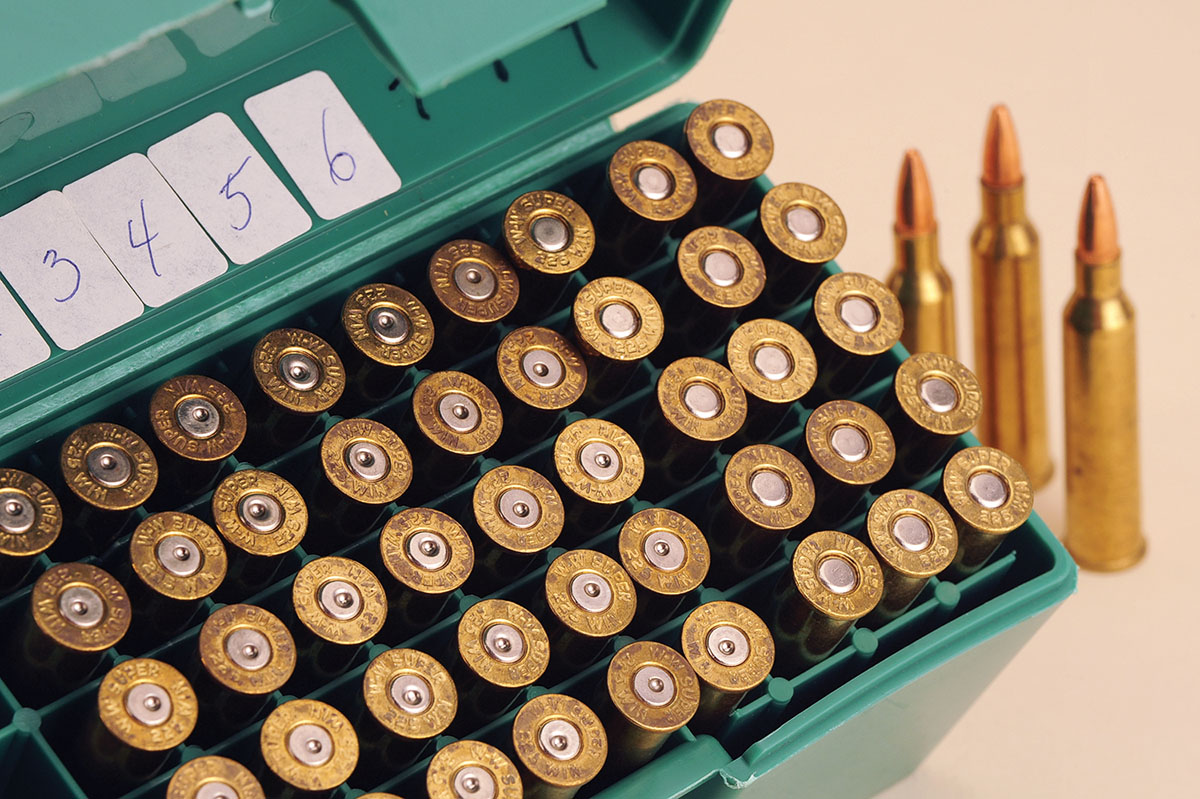
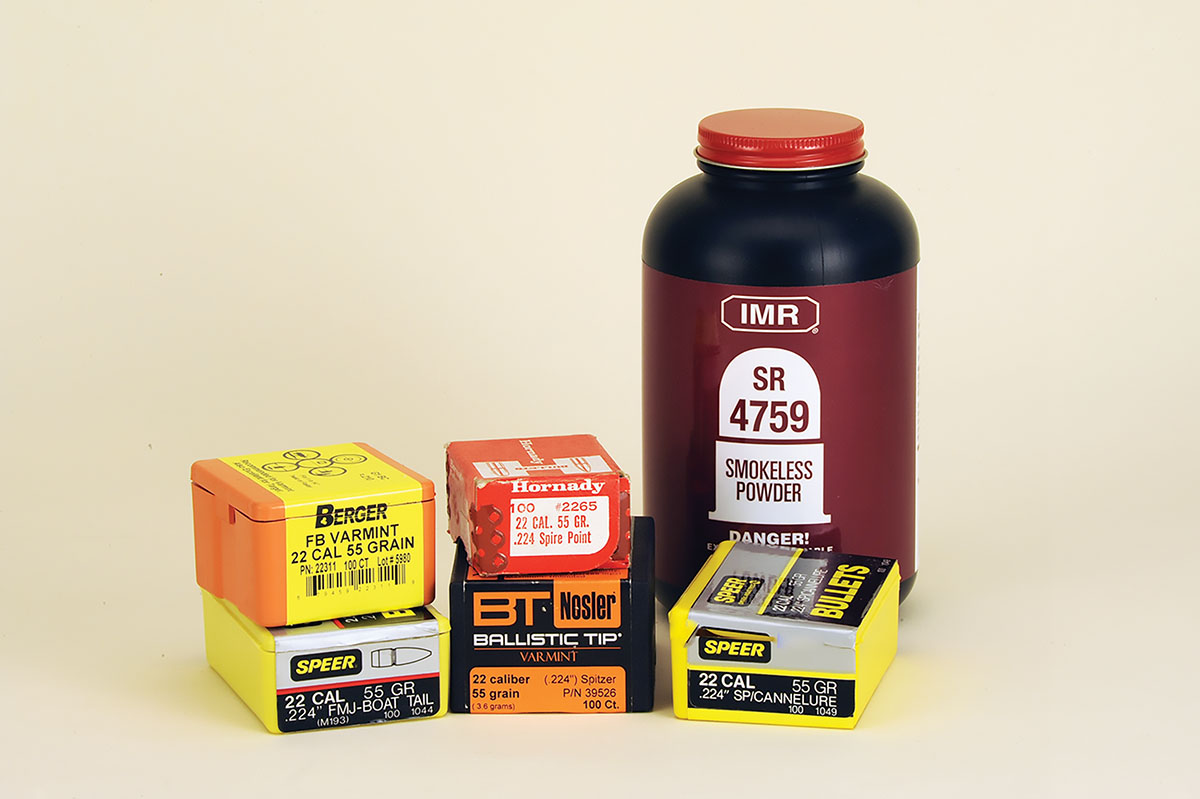
When it came to a bullet brand, its a personal choice that seems to fill the bill here. For this time around, my choice ran to the Berger flat base, Speer boat-tail, Nosler boat-tail Varmint and the Hornady Spire Point with a reduced loading topped off with the Speer softpoint. Overall length on all rounds with the bullet seated came to 2.420 inches. Since we are shooting a single-shot rifle, no crimp was needed.
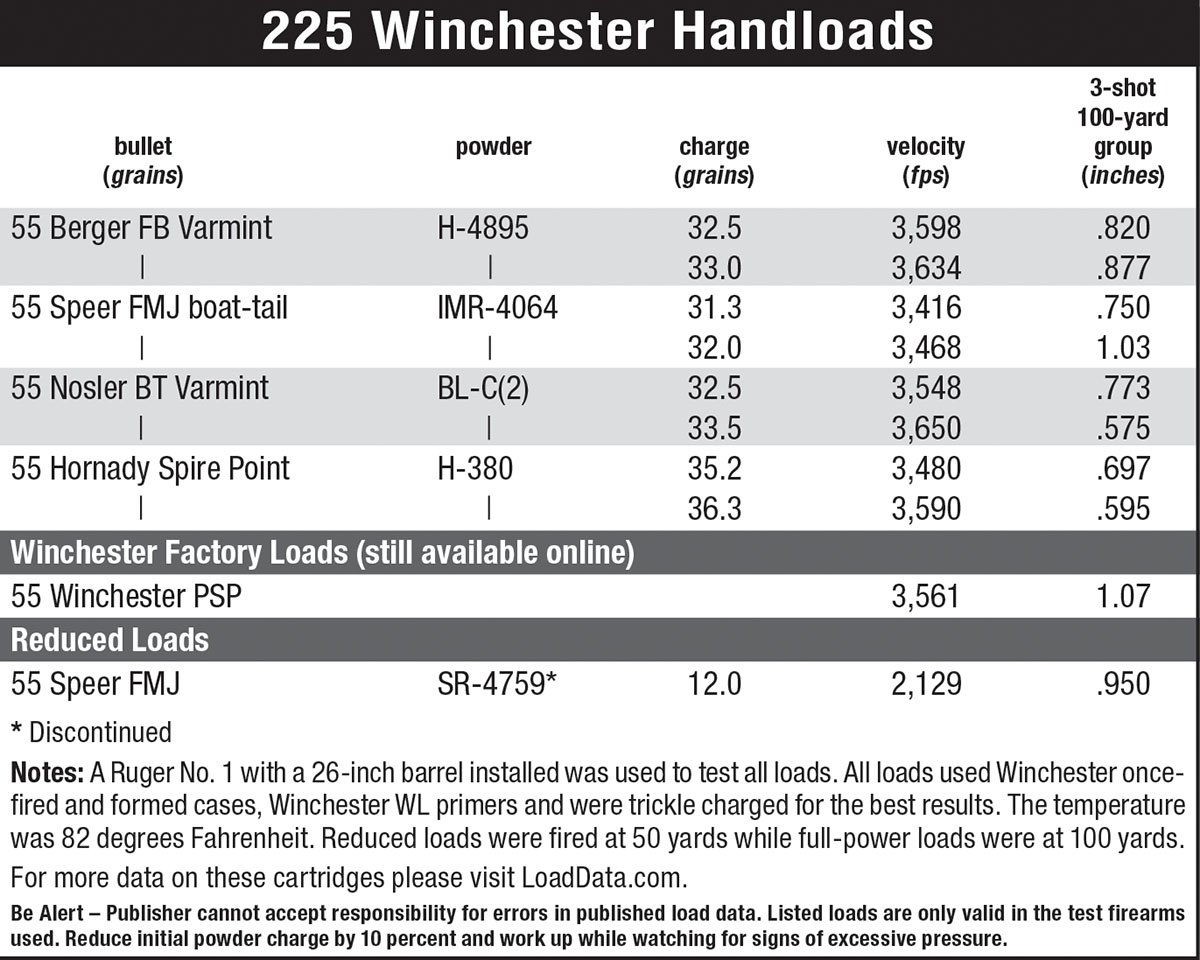
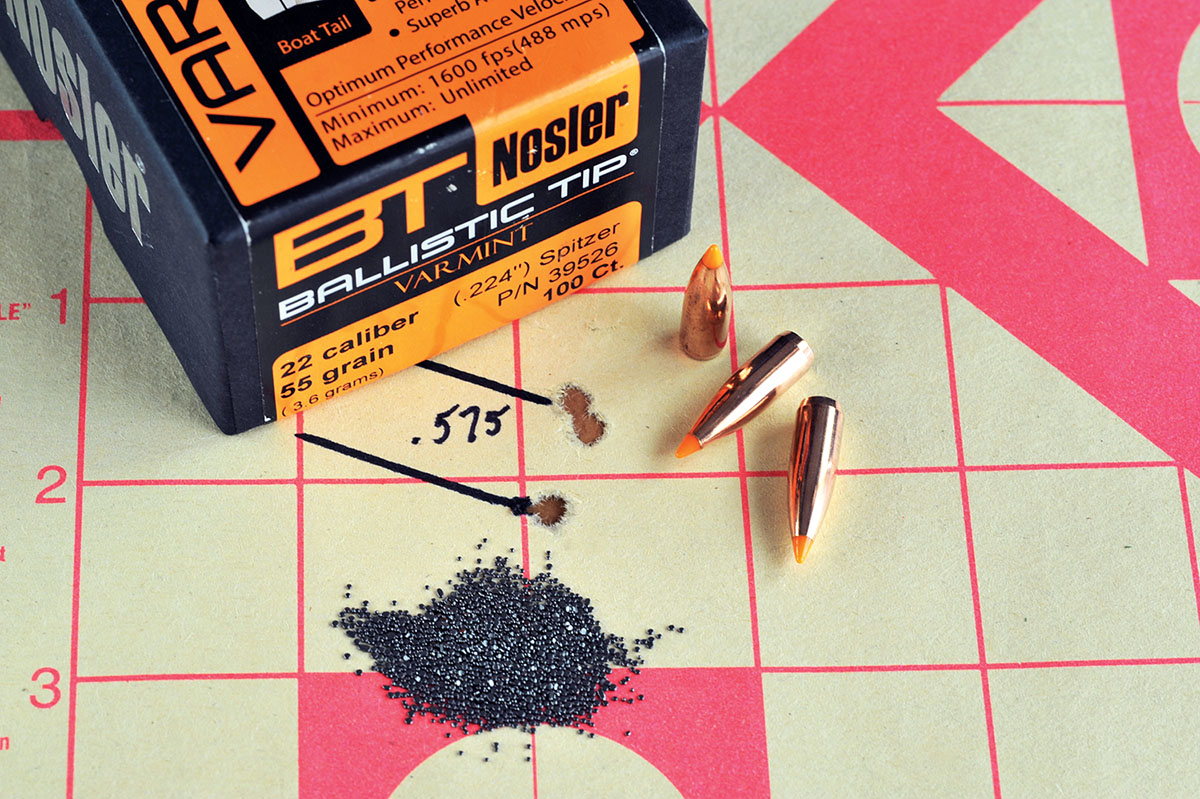
Out on the range, the 225 Winchester still proves its worth as a varmint cartridge. Combining all the components, for velocity readings, BL-C(2) led the pack with an average of 3,650 fps followed by H-4895 with 3,634 fps and again in third place hitting 3,598 fps. When it came to accuracy, it’s hard to fault BL-C(2) again beating out my previous session of three shots totaling .775 inch with a new group of .575 inch by just upping the ante from 33 to 33.5 grains and changing the bullet from a Remington to a Nosler Ballistic Tip Varmint.
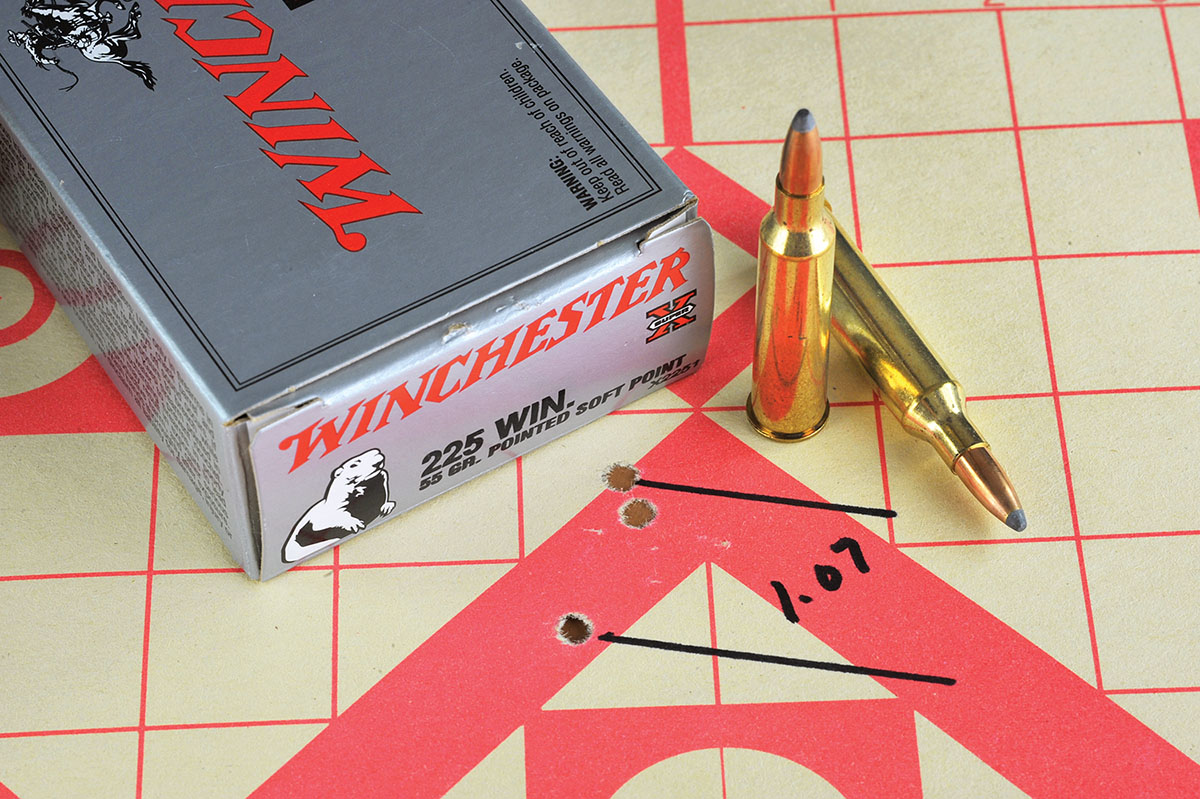
Working with any varmint cartridge, I like to load up some “reduced” loads using the famed, but discontinued, SR-4759 powder, which is perfect for the job of plinking or small game for the pot. Groups over time were always under an inch at 50 yards with 12 grains tamped down on the primer with a tuft of cotton and finishing up, for illustrative purposes, Winchester’s factory ammunition topped off with its 55-grain pointed softpoint steadied up around an inch.
Stay tuned! We may get there yet.