22-30-30 Ackley Improved 40 Degree
Bringing a Popular Old Varmint Round Back to Life
feature By: Gil Sengel | April, 15

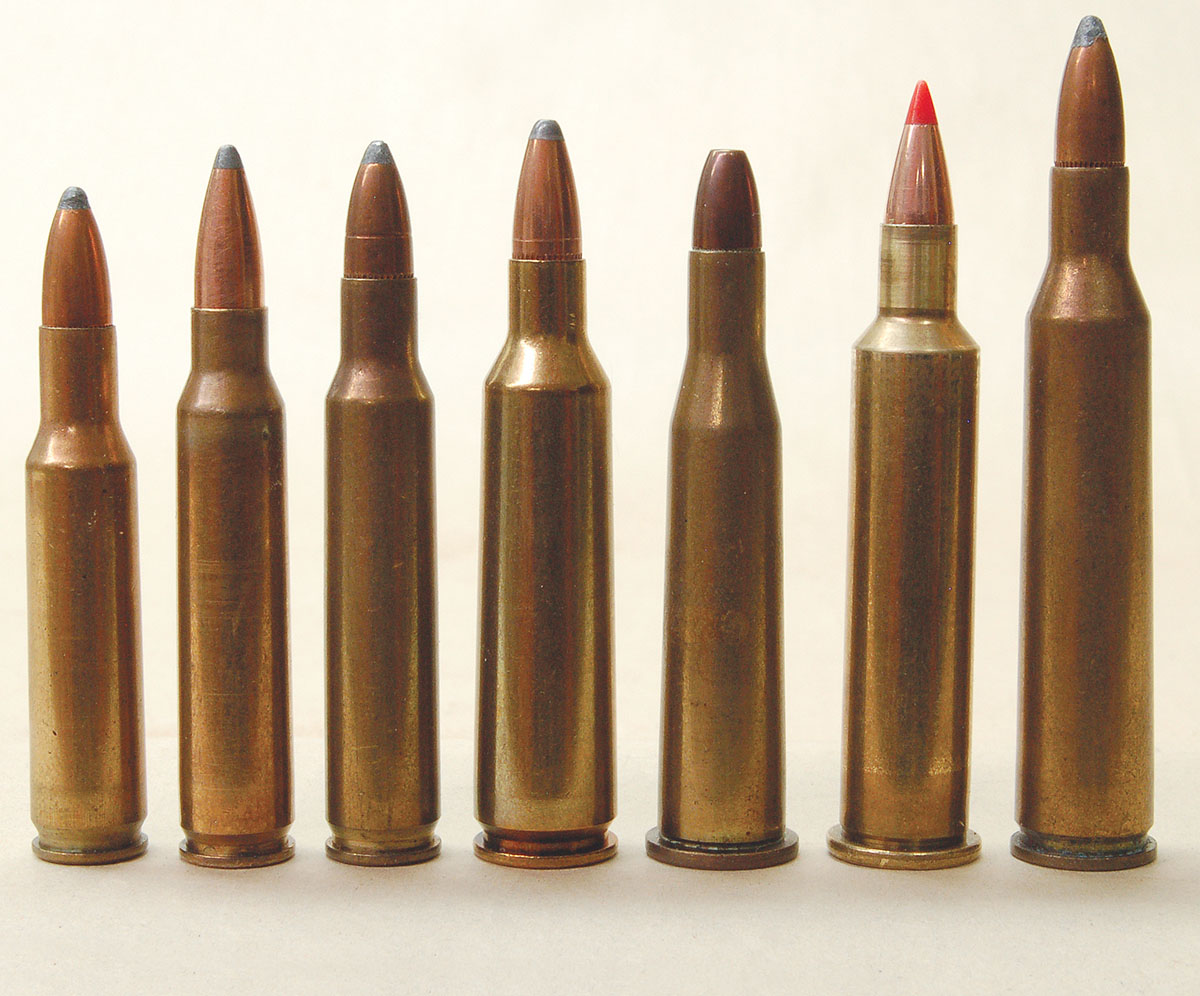
From a historical perspective, the 22-30 represents a transition. It is the last of the old-time rimmed varmint cartridges. At the same time, it represents the then-evolving modern case shape featuring minimum body taper, large powder capacity and a sharp shoulder angle.
Designer of the 22-30 was a fellow by the name of Parker O. Ackley. Anyone who has studied the rifle has heard of P.O. Ackley. Besides owning his own shop, he was an instructor in the Gunsmith Degree Program of Trinidad State Junior College in Trinidad, Colorado, from 1946 to 1951. While in Trinidad, Ackley did much of the experimental work that led to his two-volume Handbook for Shooters and Reloaders, a must-read for serious handloaders.
The exact date for the first 22-30 is hard to pin down, because wildcats aren’t formally introduced. The late 1940s is pretty certain. Research shows it to have been rather popular for a wildcat. Thus there are rifles not being shot for lack of current data. That is about to change.
Rifles found chambered for this round are quite varied. Heavy-barreled, single-shot, .22-caliber varmint rifles had been the rage since the 1930s, so the Winchester Single Shot and Stevens 44½ were rebarreled. Mauser actions were everywhere, and all it took was opening the bolt face .025 inch to accommodate the 30-30 rim. Rounds would even feed from most magazines. This seems odd today, but at the time many riflemen mistakenly believed rimmed cases could handle higher pressures than rimless cases because of the extra metal in the rim.
Then there are the leverguns. Winchester 30-30s were not candidates, but the Savage 99 had been made in 30 WCF since 1900. Ackley himself recommended rebarreling 99s to his wildcat, because the magazine could use pointed bullets.
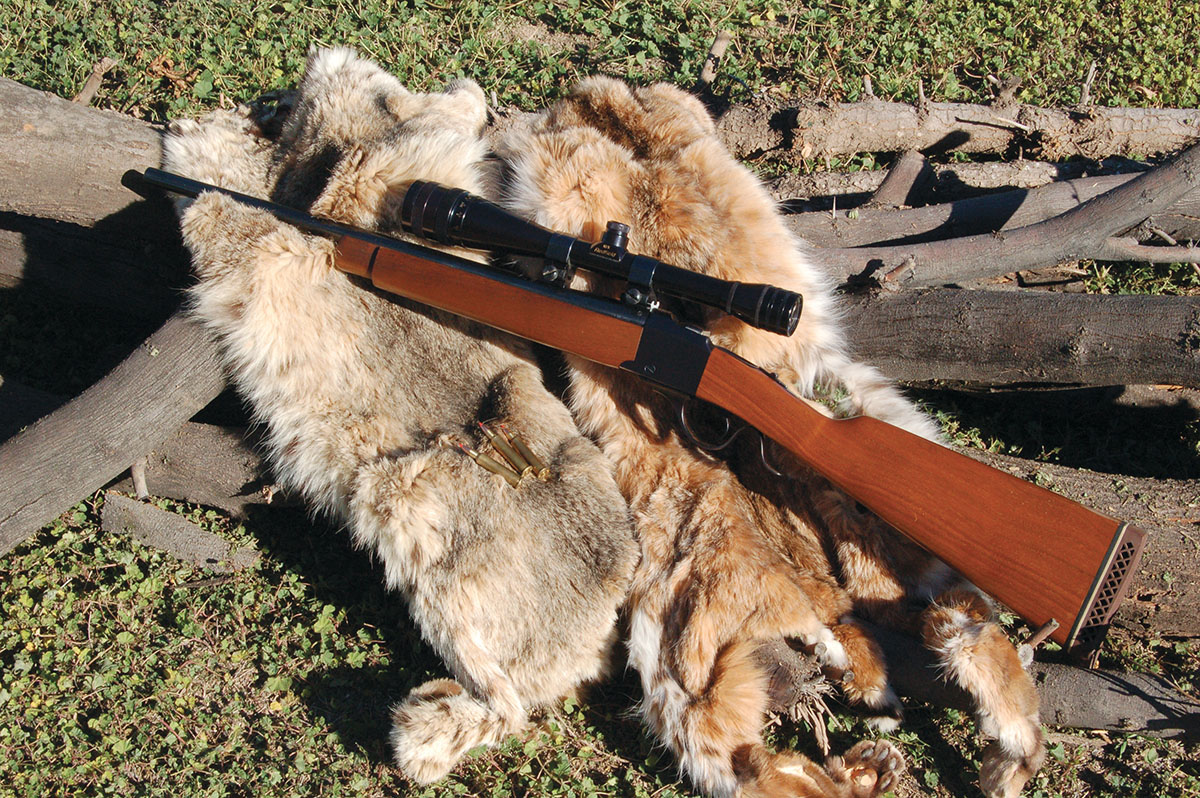
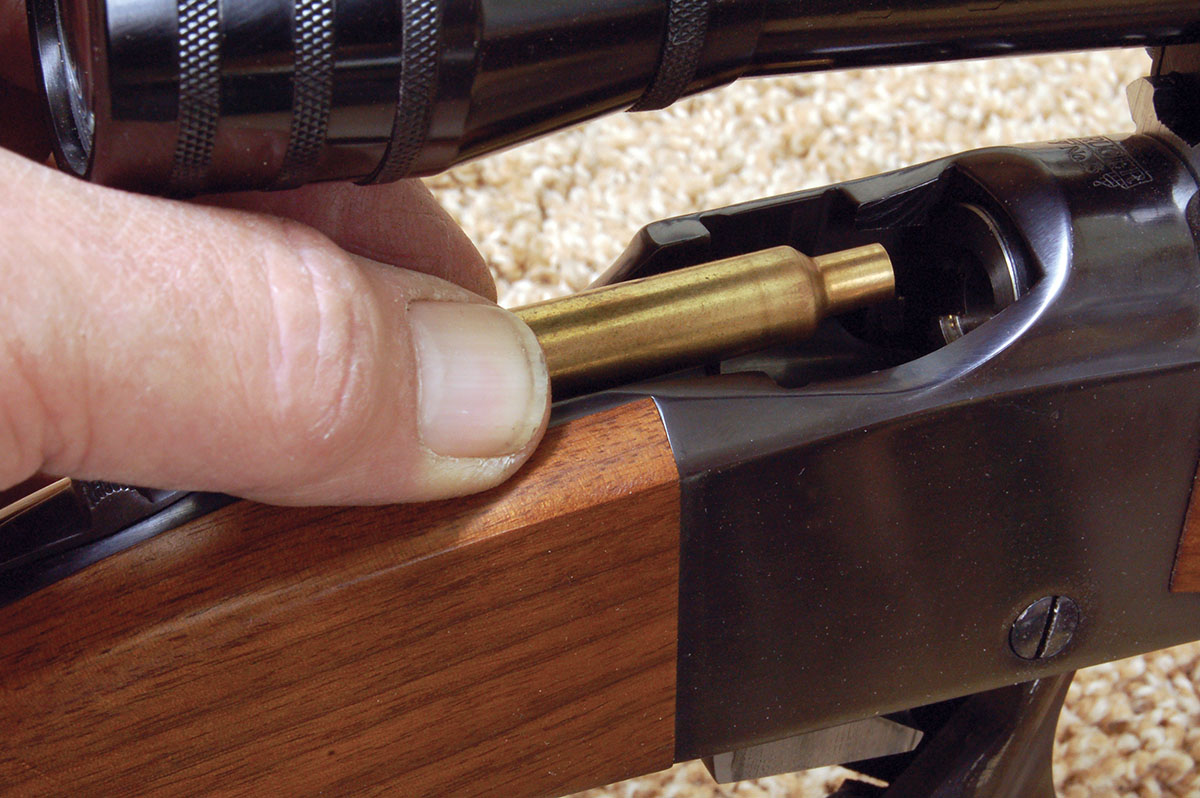
The rifle used in load development is not built on one of the old actions. It is a strong Ruger No. 3 that left the factory firing 223 Remington rounds. Purchased a few years ago at a gun show, the seller knew nothing of the rifle’s history. Since the No. 3 wasn’t available in 223 until about 1979, it would be interesting to know why it was rechambered to the old wildcat.
Reloading dies did not come with the rifle. It’s no secret that wildcat dies are becoming hard to get, often requiring months of waiting. Thus it was a surprise to find this Ackley wildcat listed in the current Redding Reloading catalog as a Series D die set. A call to Redding confirmed not only that a two-die set was in stock, but that a chamber cast was not needed. I was told the wildcat was new enough (post-World War II) that chamber dimensions were fairly well standardized. The full-length sizer worked perfectly.
Also required were case-forming dies. Although available, special dies are not needed, as the only die-forming required is necking down the 30-30 to .22. This can be done using standard, full-length sizing dies from other die sets. Handloaders are natural scroungers, and the things we scrounge most are loading dies and fired brass. Any cartridge we ever hope to own is fair game. The next best thing is a friend who has built up a good supply of both.
Sorting through my die stash yielded 30-30, 7mm-08, 6.5 Japanese, 250 Savage, 243 Winchester and 22-250 Remington. All are about the same length as the 30-30. Obviously, other dies could be substituted. Brass used was from a large bulk purchase of factory-new Winchester cases obtained for other projects.
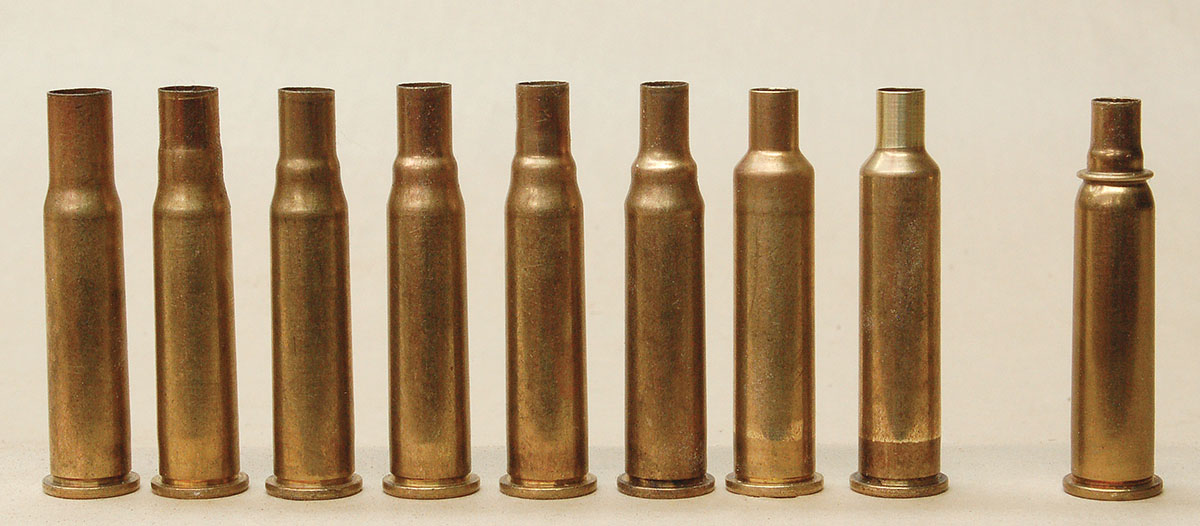
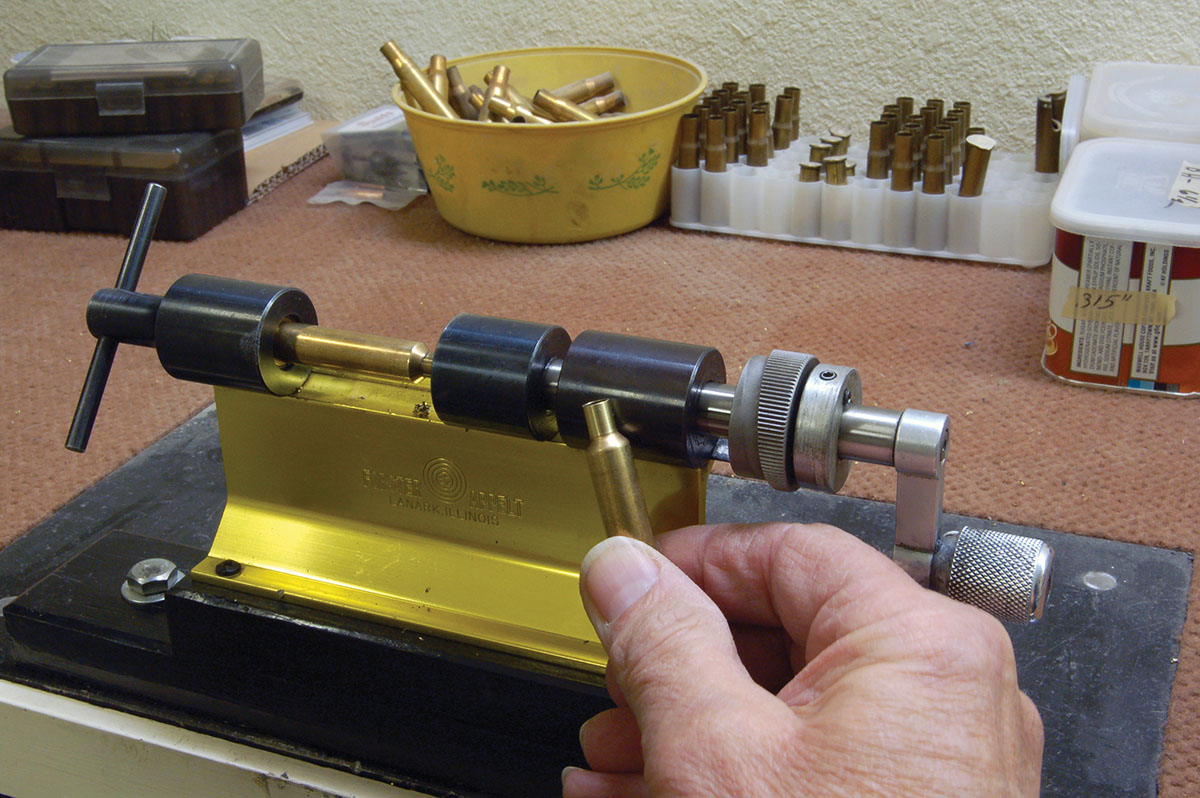
Cases are first sized in the 30 WCF die to iron out any deformity in the necks. Failure to do this will cause many necks to collapse inward during one of the reduction operations. Cases are then run into the other dies (expander assemblies removed) in turn, reducing neck diameter and making it just slightly longer than the finished 22-30 neck (about .325 inch). The final die is a 22-250 Remington rather than the 22-30, because the latter collapsed cases when reducing the neck from 6mm to .22. Apparently this was due to the sharp shoulder in the wildcat die. Cases should be sized only far enough to allow the action to close.
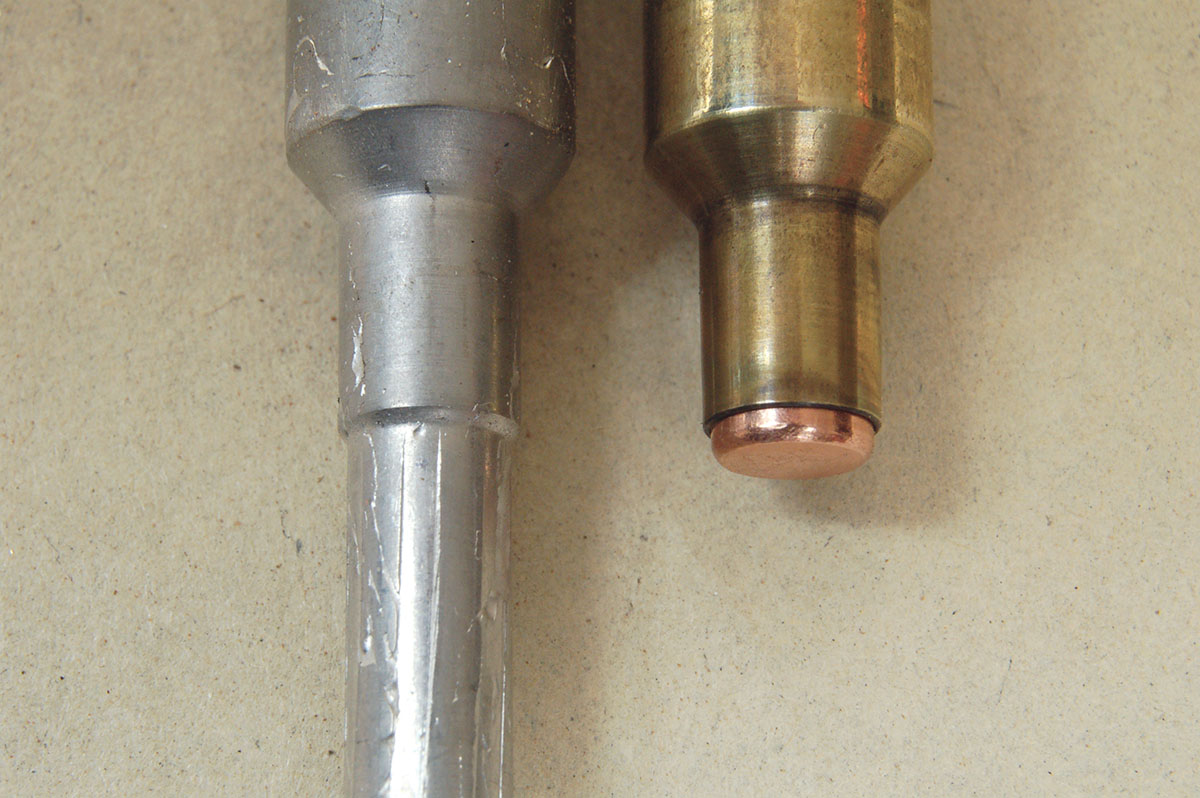
Full-length sizing in the Redding die with the expander in place is the next step. Reduction from .30 to .22 caliber made the neck walls too thick to allow a round to chamber with a bullet seated. Outside neck turning to give .012 inch wall thickness took care of this. Trimming to standard 30-30 trim length of 2.030 inches finished the job.
Case annealing must be mentioned, because normally this much re-forming would require neck annealing somewhere in the process. I kept going until a ruined case indicated it was time to anneal, but that never happened – not even during fireforming. Twenty cases were annealed after fireforming then used randomly to verify maximum loads and in accuracy testing, but it proved unnecessary. There was simply no difference from unannealed cases. Many of the unannealed cases have now been fired eight times with no failures. I will probably anneal them all now anyway, just because I think it’s the right thing to do.
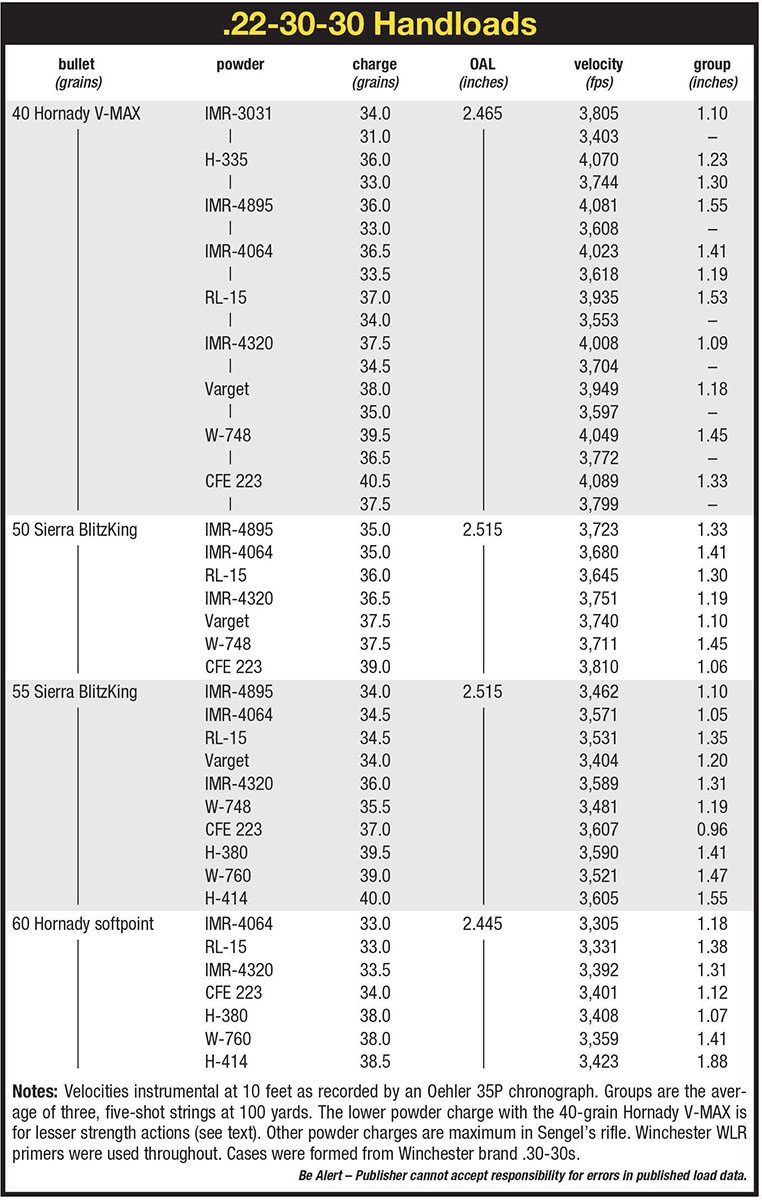
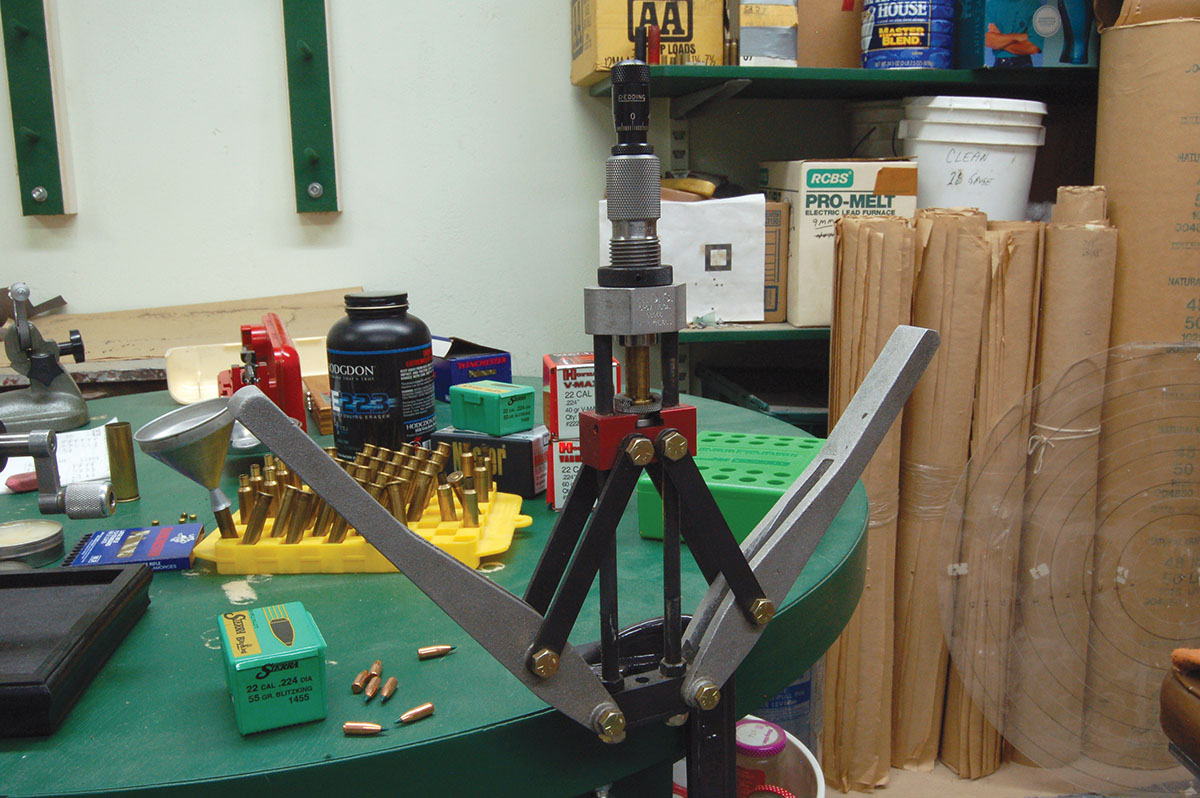
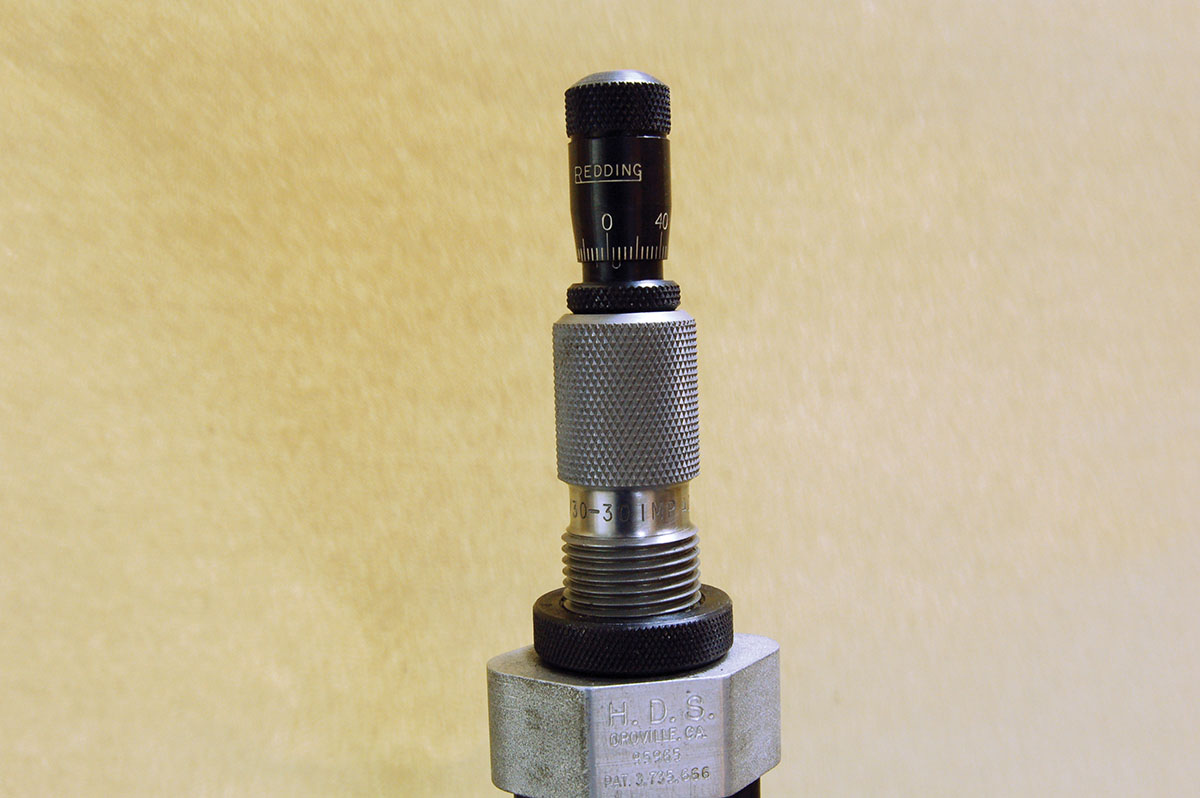
Appropriate powders listed were either on hand or enough could be begged or borrowed for load development. Charges were increased until measurable case head expansion of .0005 inch was reached. Loads were then reduced until there was no expansion in previously unfired cases. Bullets were seated .030 inch off the lands using a Redding micrometer seating die, which made the operation simple.

The Hornady 60-grain softpoint produced round, five-shot, 1.45-inch or smaller groups at 100 yards, except for H-414, which didn’t go under 1.6 inches. Clusters using H-380 and CFE 223 kept getting smaller as velocity went up. Twist of the Ruger barrel is one in 10 inches.
Data for the Sierra 55-grain BlitzKing shows 3,600 fps was achieved with two powders. While several five-shot groups under an inch were fired, only CFE 223 would average that for three consecutive tries. Ruger single shots have their idiosyncrasies, but there was no time to look into them properly.
Other 55-grain bullets shot for pressure and accuracy were the Hornady V-MAX, Sierra GameKing spitzer boat-tail, Sierra Varminter spitzer and Nosler Ballistic Tip. Pressure-wise, the first three track with the BlitzKing and can be used depending upon whichever is available. The Nosler reached maximum pressure using roughly .5 grain less powder than the others, yet velocities were equal or very close. Perhaps this is due to the Ballistic Tip’s solid base construction.
Results of the Sierra 50-grain BlitzKing show 3,700 fps was easily reached and 3,800 fps obtained with CFE 223. Again the Hornady V-MAX turned in essentially the same pressure and velocity numbers. CFE 223 and Varget stood out in the accuracy department but still wouldn’t allow three groups to average quite one inch.
The Hornady 40-grain V-MAX was included to provide a high-velocity option for weaker actions barreled to the 22-30. The magic 4,000 fps velocity was reached with six powders at top pressure. Accuracy was very good. Unfortunately, not enough bullets remained to test all the lighter powder charges. However, I did shoot two groups each with H-335 and IMR-4064. The first was unchanged from the top load, and IMR-4064 shot better. Granted, this was severely limited, but it is encouraging.
Regarding old rifles that will be found chambered for the 22-30, the strongest are the Mausers; Winchester single shots are next. Cutting the top charge a grain or two for the Stevens 44½ and Martini would be advised.
Since Ackley recommended rebarreling Savage 99s originally chambered in 30 WCF, a drop of 3.0 to 3.5 grains should put pressure in the 38,000 CUP maximum range of that cartridge. Don’t worry about velocity loss. Classic rifles will have barrels of 24 to 26 inches that will give back much of it compared to my rifle’s 22-inch barrel. Also, using the 40-grain bullet leaves plenty of power and flat trajectory out to the accuracy limits of the levergun.
In summation, the 22-30 surprised me; it’s almost a 22-250 Remington. The Ruger No. 3 is not ideal because of the excessive blast from its short barrel. Certainly somewhere, however, there is a neglected Winchester single shot or Mauser with a long tube and 20x Unertl looking for a new home and varmints to conquer.