223 Remington
Western Powders gives the veteran varminter a velocity boost.
feature By: John Haviland | April, 15
It’s a puzzle why the 223 Remington was given such a low maximum average pressure limit of 55,000 psi when the cartridge was introduced in 1964, especially when the limit of its military twin, the 5.56 NATO, was set at 62,350 psi.
“Honestly, I think the 223’s pressure limit was a mistake,” said Rob Behr of Western Powders. “When pressures were switched from copper units of pressure [CUP] to the piezoelectric transducers method, most cartridges saw an increase in pounds per square inch of pressure, but the 223 actually went down in pressure,” he said.
Keith Anderson, a Western Powders ballistician, said the 5.56 NATO’s pressure is measured at the case mouth and translates to over 62,000 psi recorded toward the rear of the case, where pressures are normally measured. In Europe, the 223 Remington’s maximum average pressure is much higher than the Sporting Arms and Ammunition Manufacturers’ Institute (SAAMI) limit in the U.S. The European Permanent International Commission for the Proof of Small-Arms (CIP) lists 62,366 psi as the average maximum pressure for the 223 Remington.
“The chambers of the 223 and the 5.56 NATO are slightly different,” Anderson said. “The 223 chamber has a 3.0-degree lead angle and about .025-inch freebore. While the 5.56 has a 1.5-degree angle and about double the 223’s freebore. Why Remington didn’t make the 223 chamber the same as the 5.56 is a mystery.”
The 223 Remington case holds a rather light amount of powder, and Anderson suggests working up to these higher-pressure loads by starting with the listed minimum charges and increasing powder weight 0.3 grain at a time. Behr said the higher pressure loads were developed in a 223 Remington chamber with Winchester cases, so they are okay to shoot in 223 Remington or 5.56 NATO chambers.
“Of course, the slower burning powders work best with the heavier bullets,” he said.
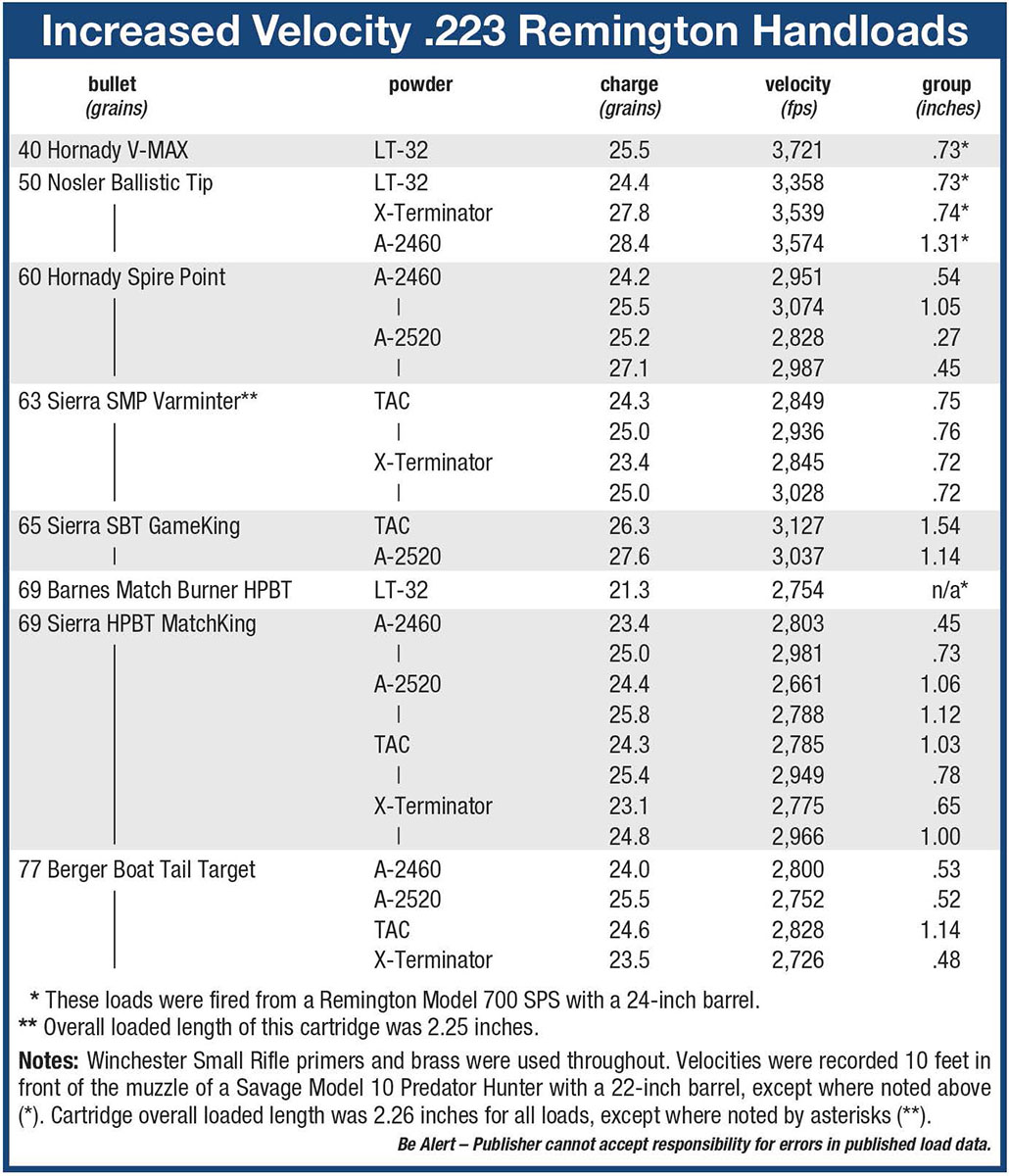
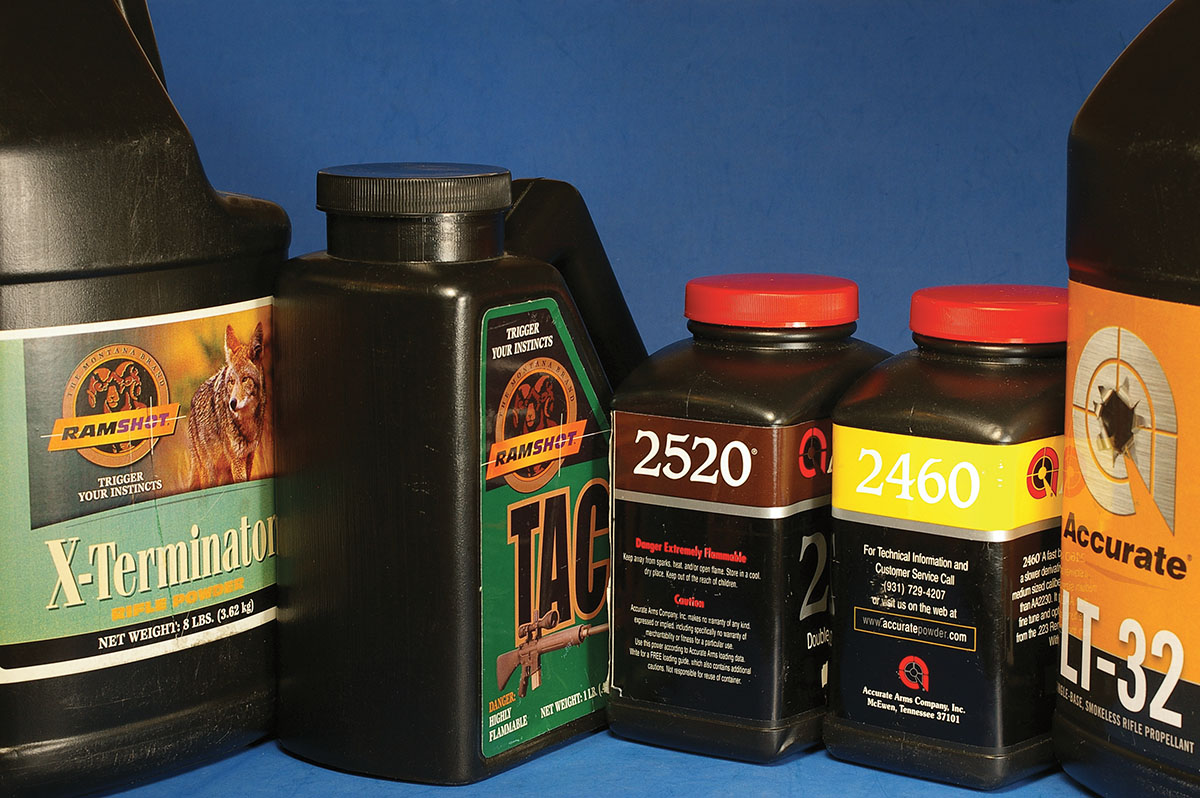
The accompanying table lists some of these loads with Accurate LT-32, A-2460 and A-2520 and Ramshot TAC and X-Terminator. Some of the top loads certainly put some zip in the 223 Remington. Nosler 50-grain Ballistic Tips fired at nearly 3,600 fps is not all that much slower than the much larger 22-250 shoots 55-grain bullets.
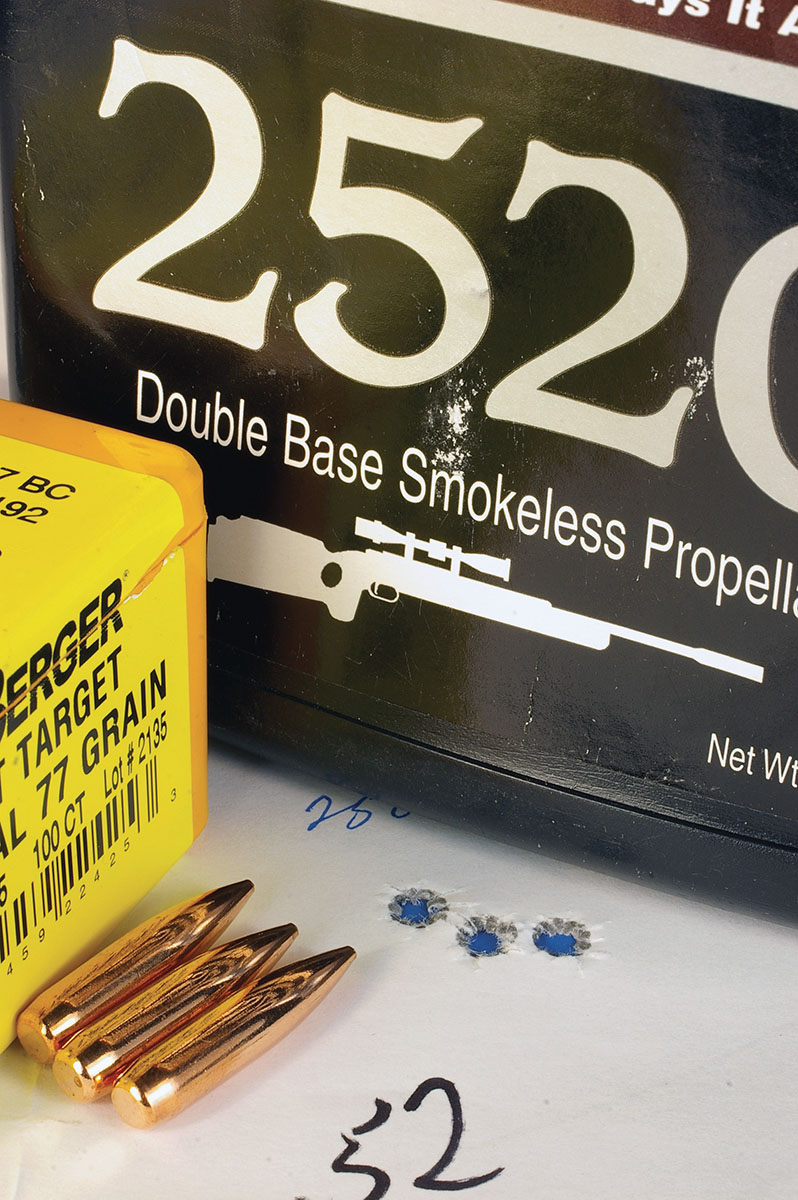
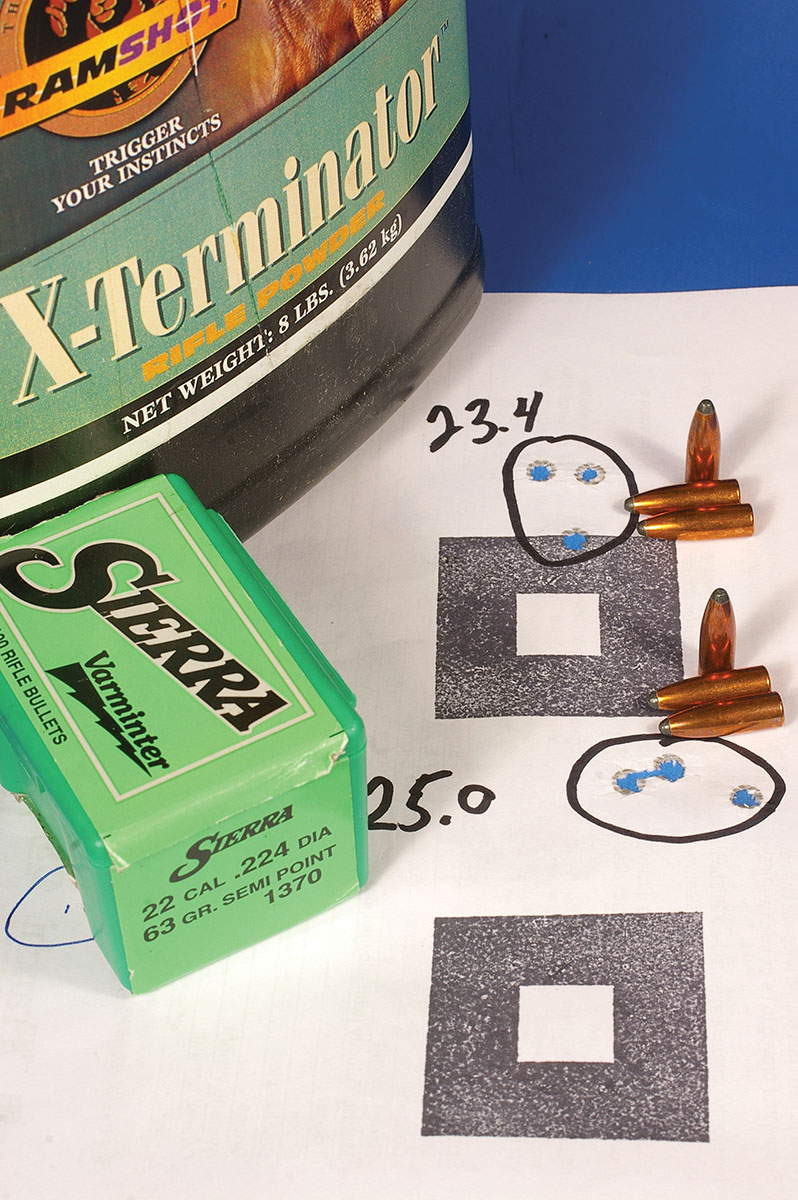
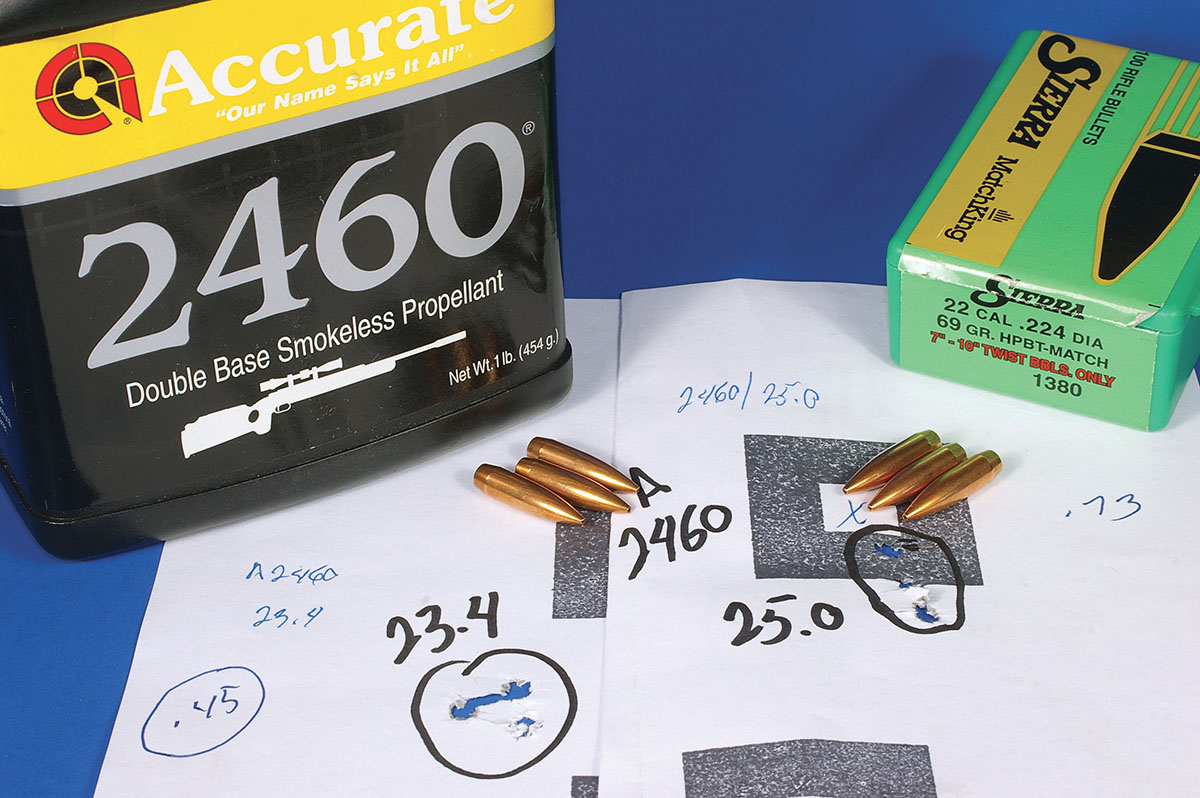
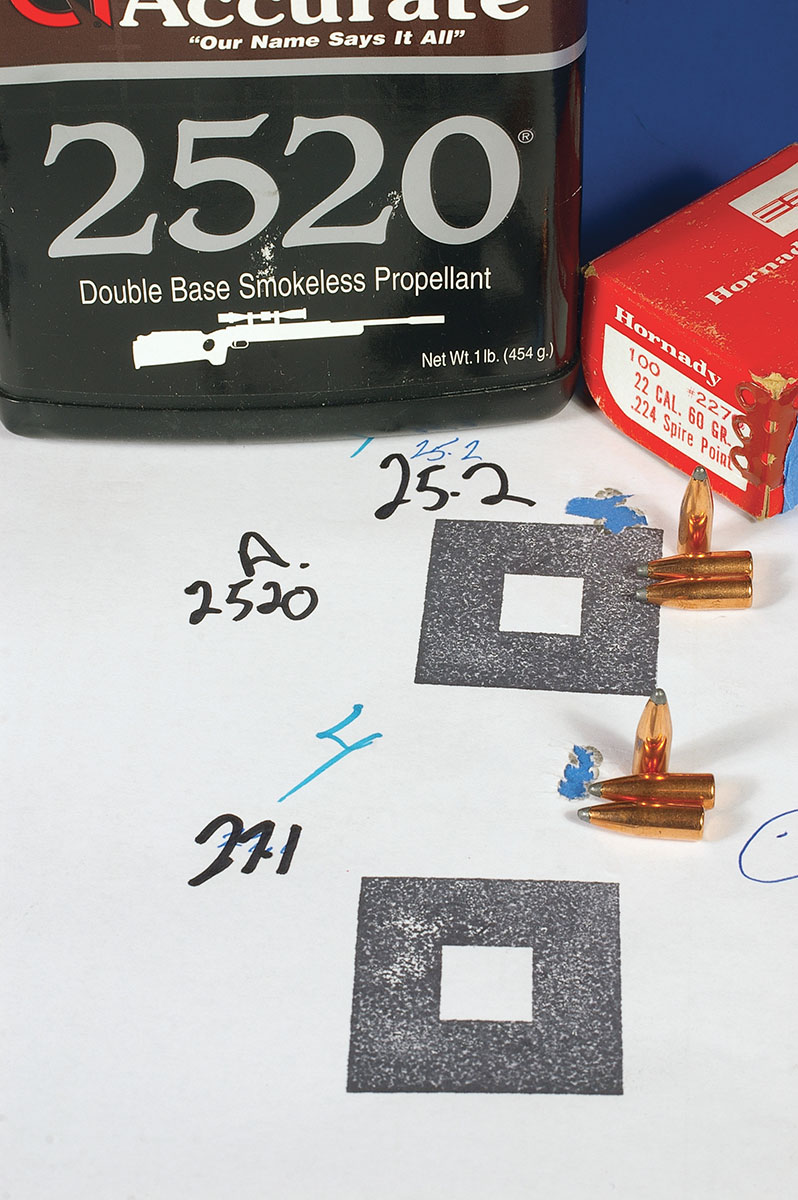
Some of the loads in the table include Western Powders’ top powder weights for standard pressure 223 Remington loads, followed by the heaviest powder weights of the increased pressure loads. Both powder weights for A-2460, A-2520, TAC and X-Terminator were fired in a Savage Model 10 Predator Hunter with a 22-inch barrel with a 1-9 twist. The Savage has shot well in the past with bullets weighing up to 80 grains, and it kept up its good shooting with both powder weights paired with Hornady 60-grain Spire Point, Sierra 63-grain SMP Varminter and Sierra 69-grain HPBT MatchKing bullets.
From the Savage, velocities of the three bullets were about 80 to 100 fps slower than the same loads listed in the Reloading & Load Data Guide. Some of that velocity variation can be attributed to the Savage’s 22-inch barrel (2 inches shorter than the barrel used by Western Powders), and my chronograph was set 10 feet in front of the Savage’s muzzle.
Nevertheless, velocity increased considerably between the lighter and heavier powder charges. The higher pressure loads, except one, improved velocity at least 127 fps over the lighter loads. For example, Sierra 69-grain MatchKing bullets gained 191 fps fired with 24.8 grains of X-Terminator compared to 23.1 grains. The Sierra’s velocity increased 178 fps from burning 23.4 to 25.0 grains of A-2460. The Hornady 60-grain bullet increased 159 fps from 25.2 to 27.1 grains of A-2520. Those are suitable returns in exchange for less than two grains of additional powder.
Seating bullets for a cartridge length of 2.26 inches did compress the majority of the powder charges, but not unduly. Nor did any of the loads show any sign of excessive pressure. All the fired primers remained rounded on their edges, and firing pin dents remained free of a raised ring. The bolts in the Savage and Remington rifles used to fire the loads opened easily. Velocities were in line with those listed in the Reloading & Load Data Guide.
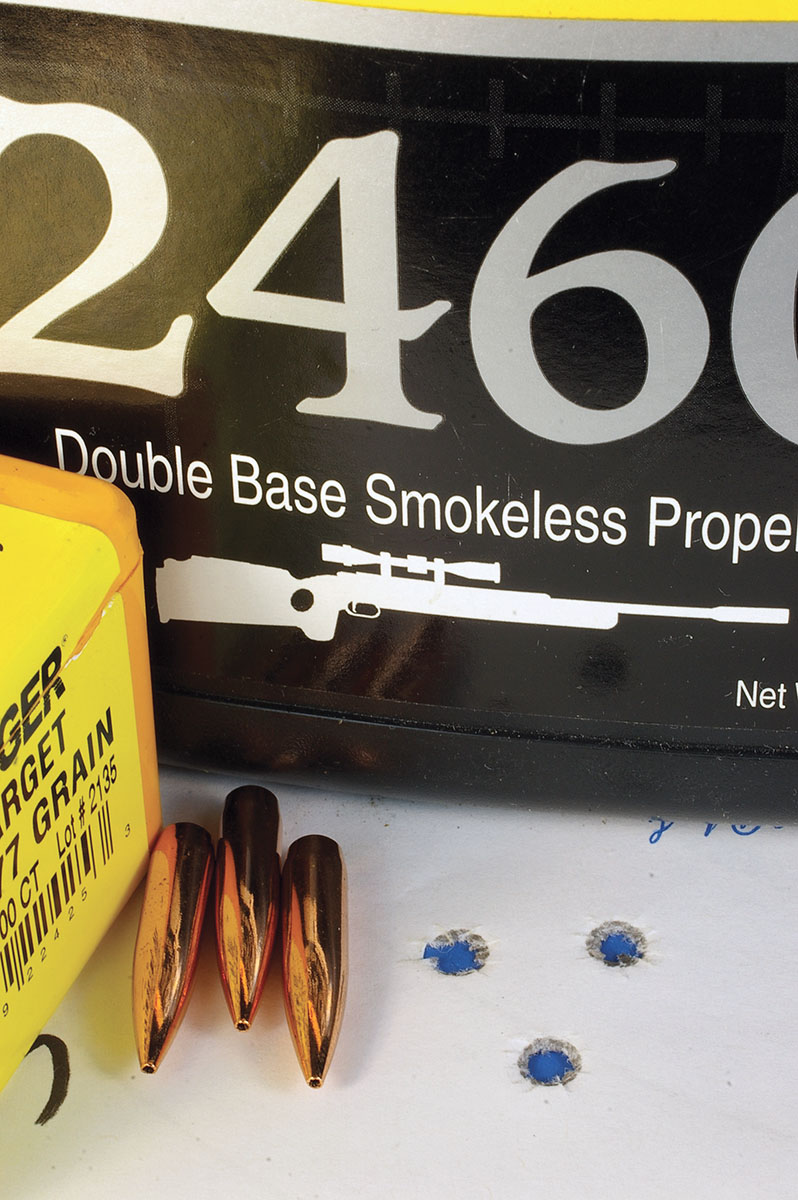
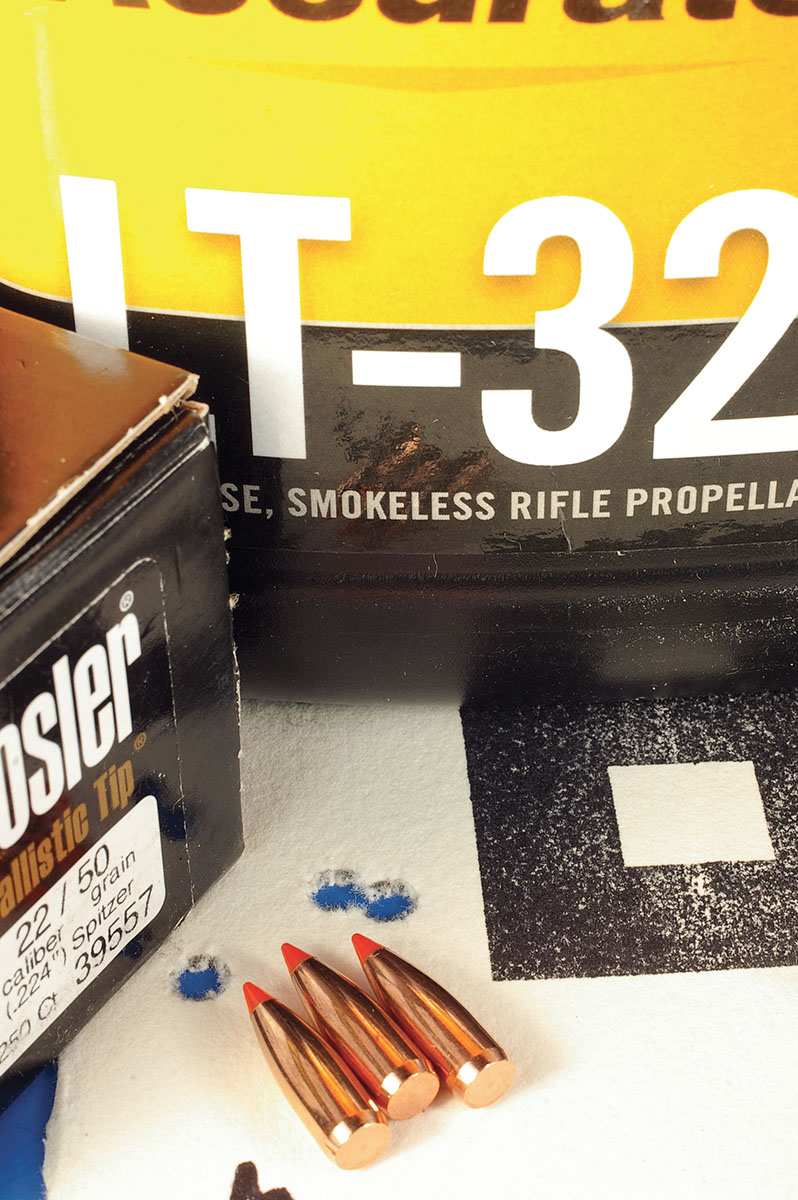
As the table shows, the top weights of Accurate and Ramshot powders increased the speeds somewhat shooting 69- and 77-grain bullets over the other powder brands. That’s because other powders match up better with those bullet weights and also because there is not enough room in the small 223 Remington case to hold more powder and such long bullets. The additional two grains or so of Accurate and Ramshot powders, however, were a good trade for more energy and a flatter trajectory with 60-grain and lighter bullets loaded in the 223 Remington.
For instance, Hornady 60-grain bullets at 3,074 fps shoot 3 inches flatter at 300 yards and 7 inches flatter at 400 yards than the same bullet starting out with a velocity of 2,828 fps. The faster bullet also carries about 17 percent more energy. When the run on powders subsides and cans of powder actually remain on store shelves for more than a few hours, I would like to try Accurate 2200 in the 223 Remington to see if it is possible to break 4,100 fps shooting 35-grain bullets and 3,900 fps with 40-grain bullets as the Western Powders guide states.
My favorite increased velocity 223 Remington load is the Nos-ler 50-grain Ballistic Tip with 28.4 grains of A-2460. The bullet clocks 3,574 fps from the 24-inch barrel of a Remington Model 700 SPS. Only X-Terminator comes close to that velocity. No other powders are even in the neighborhood. With the bullets hitting an inch above aim at 100 yards, they drop only 6 inches at 300 and a marmot’s whisker more than 11 inches at 350 yards.
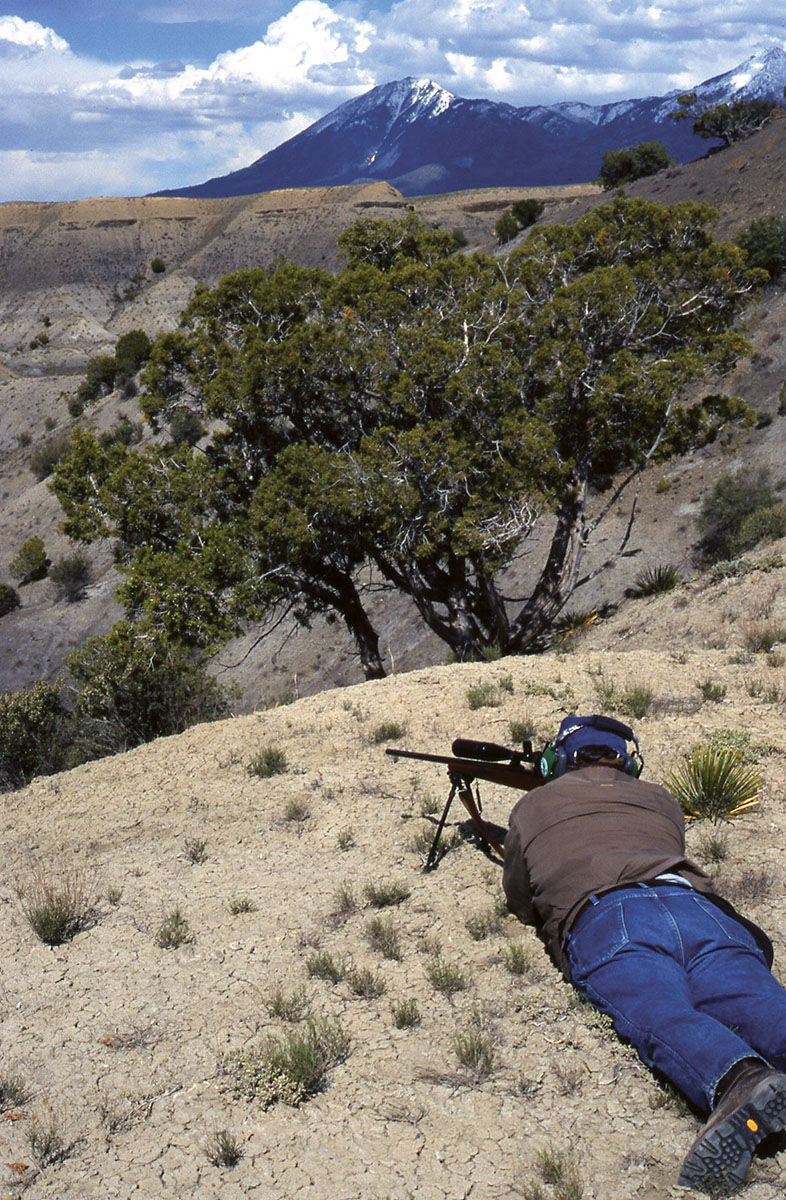
Last summer my sons Paul and Thomas put the hurt on a colony of marmots. The rockchucks ran back and forth along the distant edge of a meadow and trees and sunned themselves on boulders and logs. The two shooters sat in the shadows within the trees and supported their rifles over downed trees. Thomas shot his 22-250 Remington loaded with 55-grain bullets with a muzzle velocity of 3,700 fps. Paul shot the Remington SPS 223 Remington loaded with Nosler 50-grain Ballistics Tips and A-2460. I watched with a binocular as they shot out to 250 yards or so.
Hits from the 22-250 Remington had an edge, but the 223 Remington loads did a respectable job assisting. The difficult shots were at the nose and eyes peeking over rocks and peering around trees. The 223’s bullet trajectory is within an inch at 250 yards and drops slightly more than an inch farther at 300 yards than the 22-250’s bullet. So the boys pretty much aimed right on the marmots’ whiskered black noses to send the rodents to that sweet clover afterlife. At the end of the day, a tally of both shooter’s shots to hits came out, no jest, dead even.
“These increased pressure 223 [Remington] loads really have no downside,” Rob Behr said. “They’re at the same pressures as the 308 Winchester and work fine in a 223 bolt action or autoloader.”
Their increased velocity makes the great 223 Remington cartridge even better.