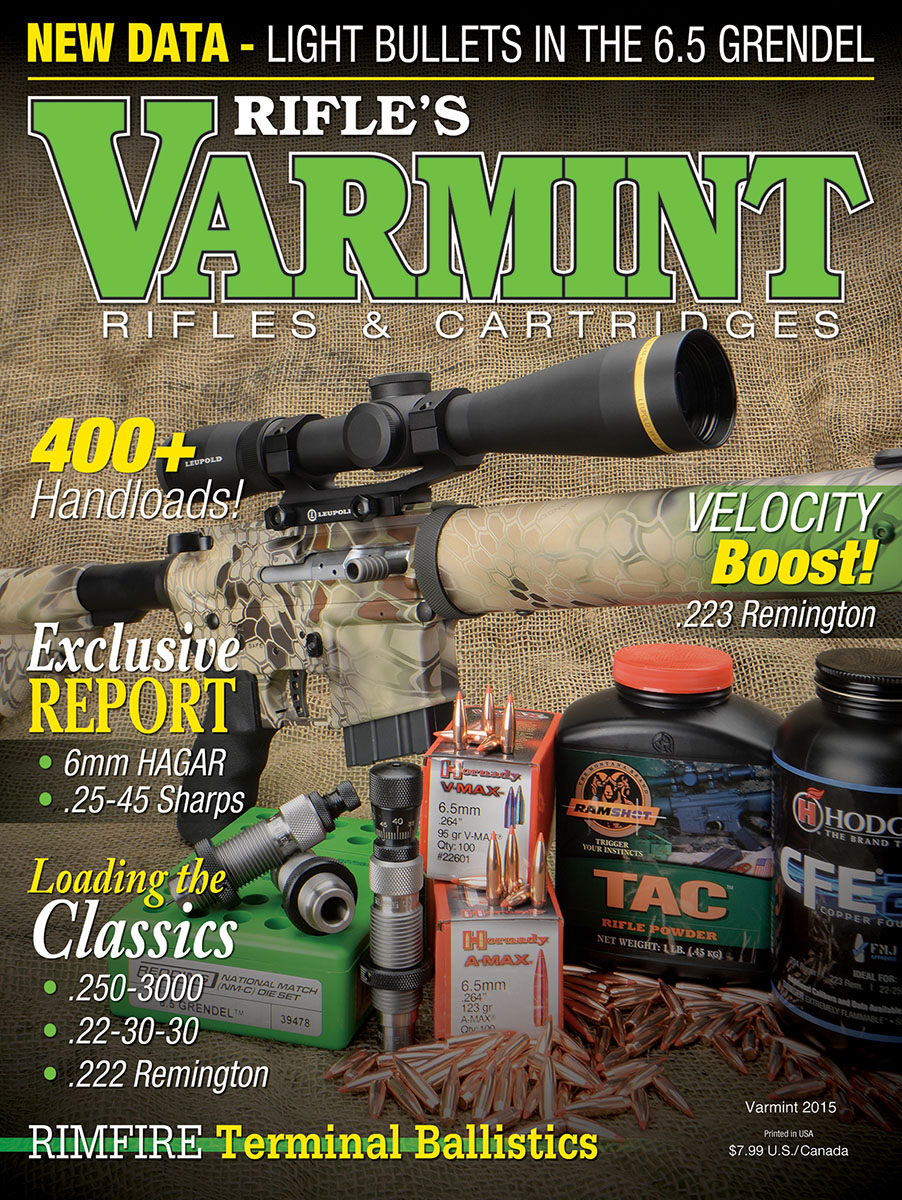
6.5 Grendel
Varmint Bullets in a Popular AR Cartridge
feature By: Brian Pearce | April, 15
A large part of my job includes testing cartridges and loads for accuracy and developing extensive new data for handloaders. Here that includes the 6.5 Grendel cartridge. It offers benchrest class accuracy, efficiency, long-range potential and hunting versatility that ranges from varmints to big game. It also boasts of being suitable for AR-15 rifles.
The 6.5 Grendel was unveiled in 2003 at the Blackwater training facility in North Carolina and was compared directly with the 7.62 NATO (308 Winchester) cartridge with military specification loads. Shooters quickly noticed the Grendel offered much lighter recoil, roughly half of the 308’s. At 1,200-yard targets, the 6.5 Grendel quickly proved superior, as its high ballistic coefficient bullets remained supersonic. As a general rule, the longer that bullets can stay above supersonic speeds, the better the accuracy, as many have difficulty remaining stable during the transition to subsonic speeds, resulting in accuracy losses.
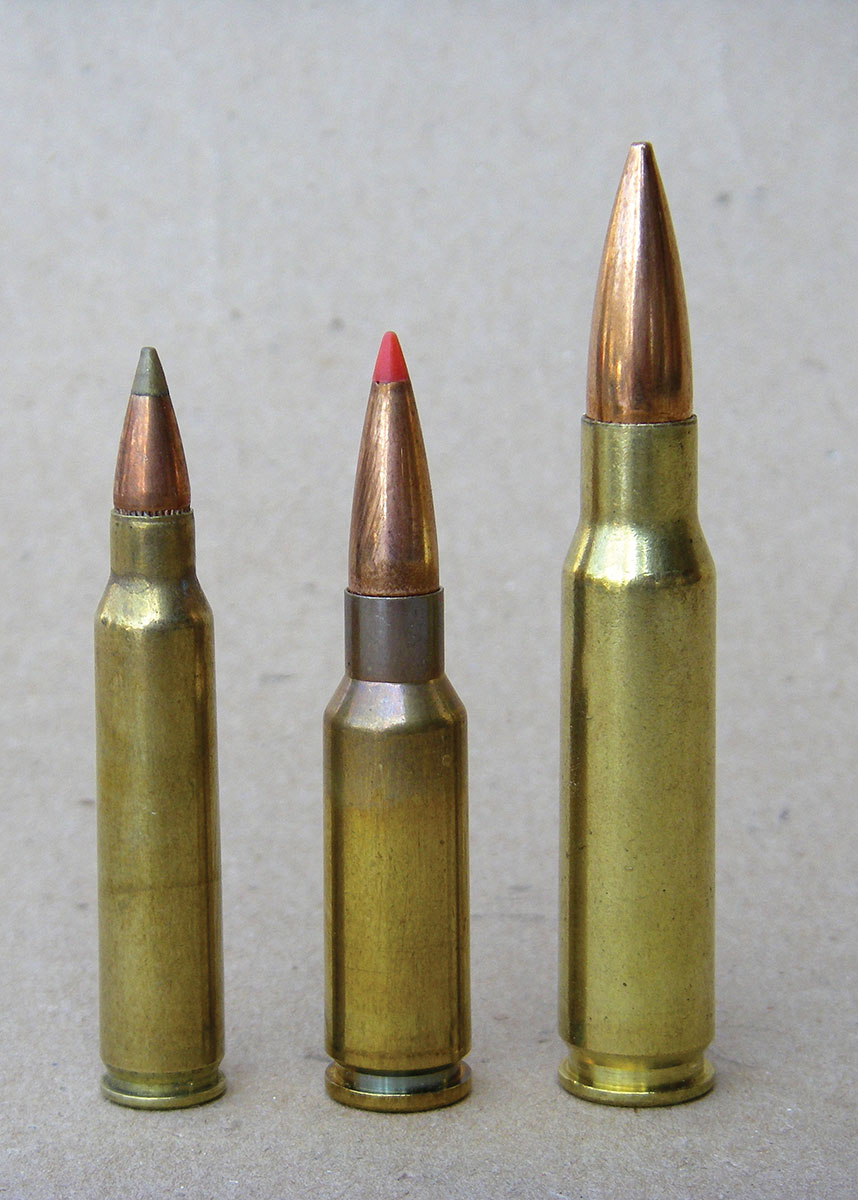
The 6.5 Grendel is based on the PPC case that was originally developed by Dr. Lou Palmisano and Ferris Pindell during the 1970s for the express purpose of winning benchrest competitions, and it has performed extremely well. This cartridge series was based on the 220 Russian case, a descendant of the 7.62x39 Soviet military case with a small primer pocket and other changes.
Beginning in 2002, Bill Alexander wildcatted the PPC case with the primary intent to create a cartridge that would not only work in AR-15 rifles but would also offer a unique blend of improved power and accuracy. In studying, shooting and handloading the 6.5 Grendel, it would appear that Alexander has possibly created the most versatile commercially available cartridge for this rifle action. As a result, it is suitable for cleaning out a prairie dog town and general varmint shooting applications, but it also hits coyotes with authority. Changing to loads that contain big game hunting bullets, the Grendel is capable of cleanly taking deer and similar game.
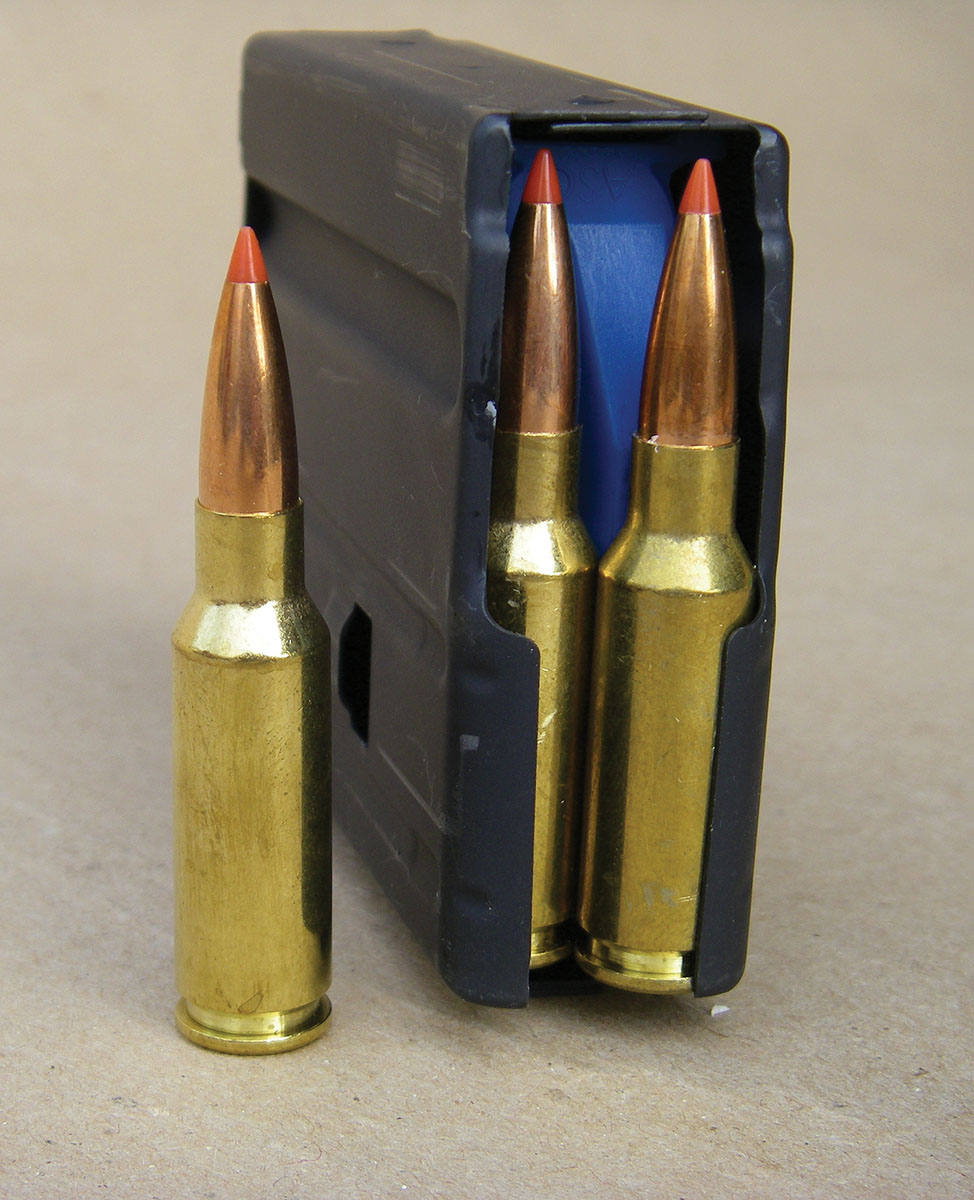
Alexander Arms began offering factory ammunition and rifles, but the Grendel was a trademarked cartridge. That effectively prevented it from becoming an “industry” standard precluding other companies from loading ammunition or building rifles. By April 2010, Hornady Manufacturing obtained a license agreement to begin offering factory ammunition, reloading dies, etc., and soon thereafter introduced the cartridge to SAAMI for industry adoption. Alexander Arms formally released its trademark in 2011 and SAAMI officially adopted it in 2012, all of which has resulted in other manufacturers chambering rifles, and interest has mushroomed.
In my previous testing and handloading experiments with the 6.5 Grendel, an AR-15 “upper” that was fitted with a heavy (one-inch diameter) 22-inch match barrel (by SSK Industries) was used to test factory loads and develop handloads. Accuracy and performance was good. For the purposes of this article, however, an Alexander Arms Model AAR15 Hunter Series with an 18-inch barrel was obtained that produced different velocities than previously published data.
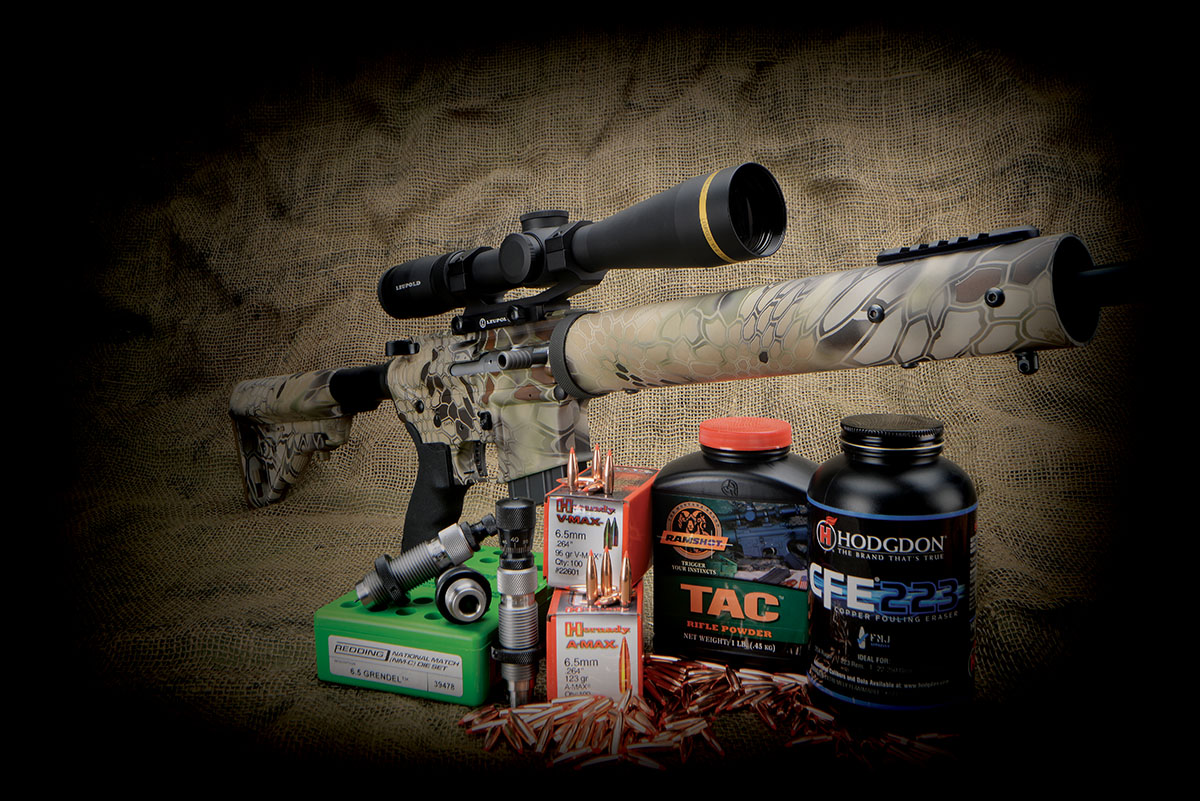
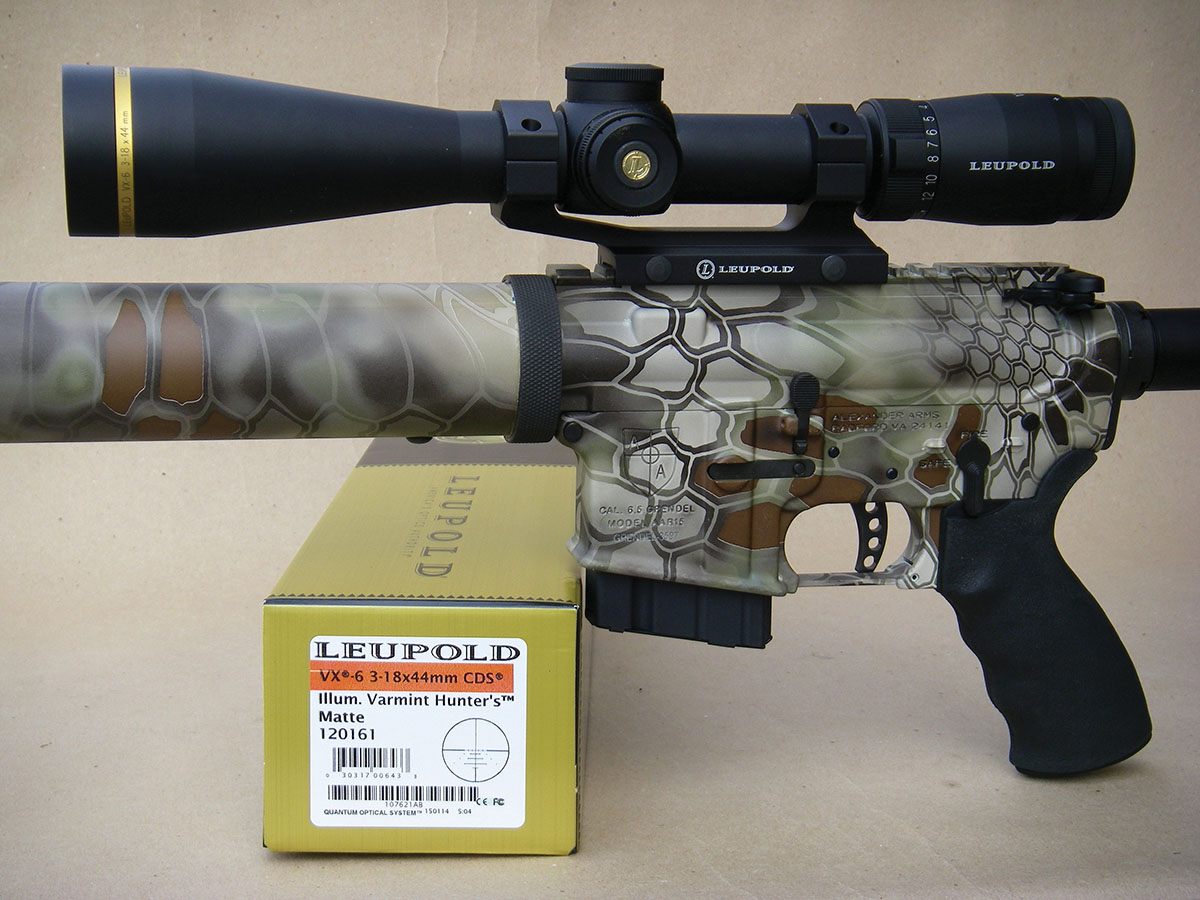
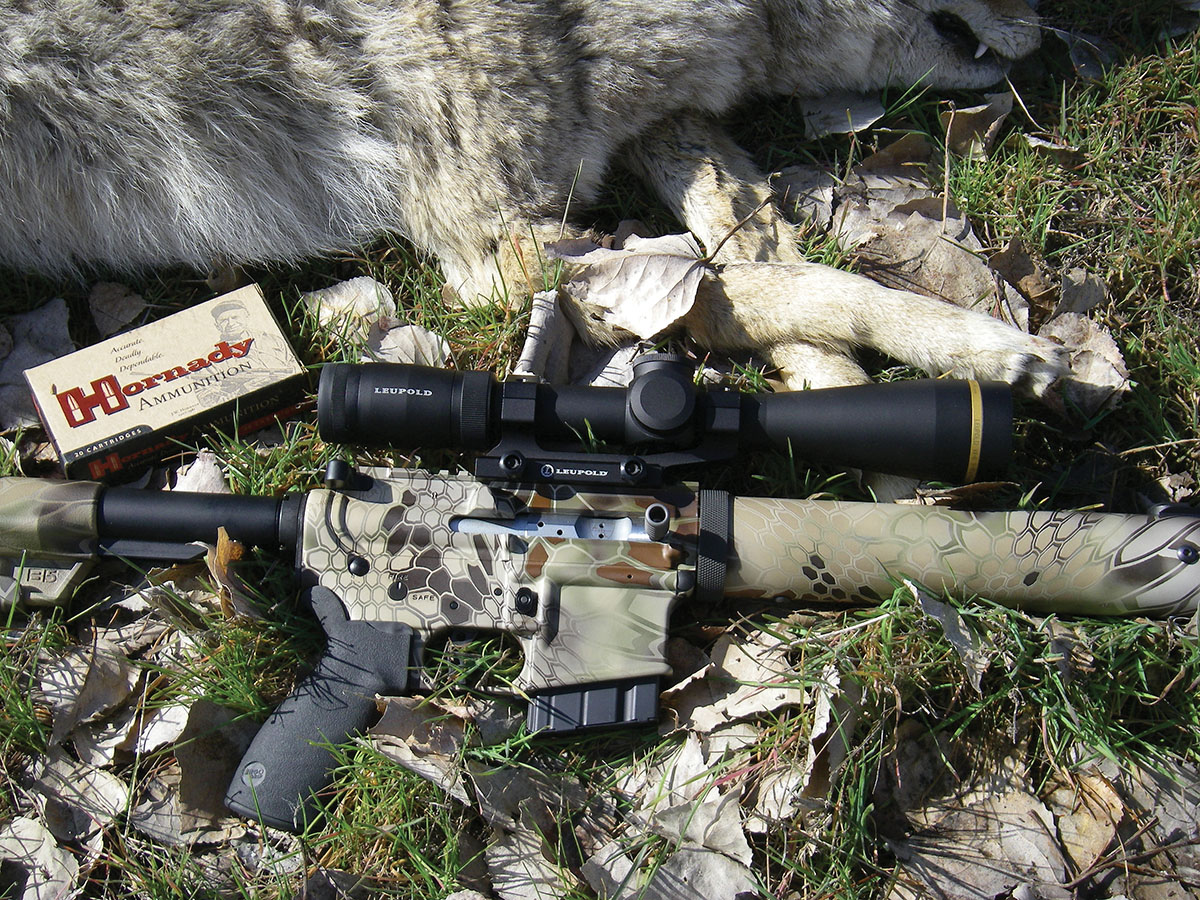
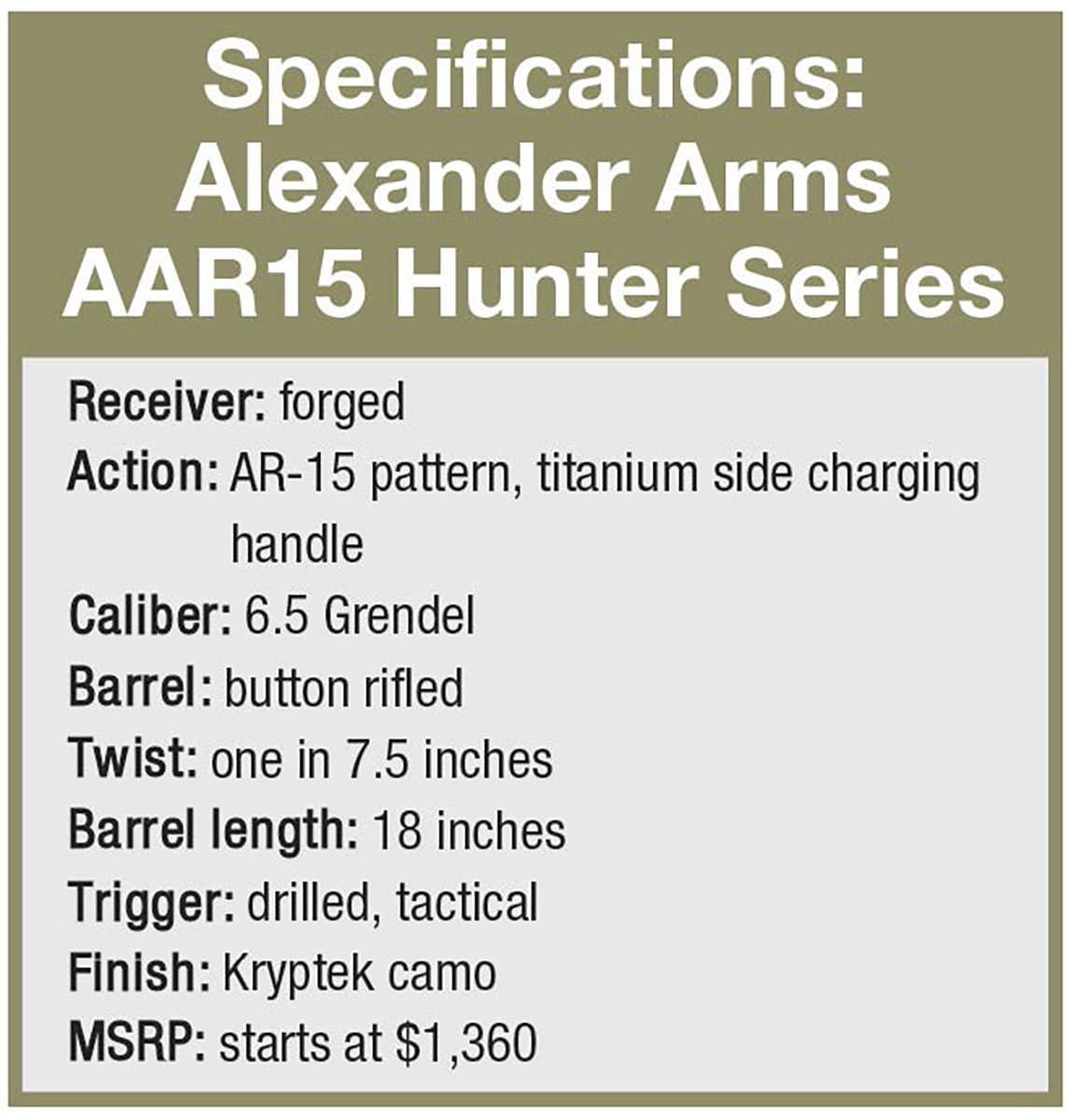
Alexander Arms offers a wide variety of rifles designed for tactical and field use, and they are offered in many specialty cartridges such as the 338 Lapua and .50 Beowulf. They are ready to go right out of the box. The Hunter Series is dipped in Kryptek camouflage, features a “rifle” length free-floating forearm for improved reliability, an adjustable B5 stock, tactical drilled trigger and hammer for faster lock time and other features. The 18-inch barrel measures .700 inch at the muzzle, is button rifled with a one-in-7.5-inch twist that will stabilize a variety of bullet weights, including lightweight varmint versions. The trigger pull on the test sample breaks crisply and consistently at 4¼ pounds. The upper does not offer a “chamber assist,” but there is a titanium side charging handle that allows “assisted” chambering as needed. The weight and compactness of this rifle lends itself to being a “walking varminter.”
A Leupold VX-6 3-18x 44mm CDS scope was installed in Leupold’s Mark 2 Integral Mounting System, which offers unusual strength. All screws were carefully torqued to specifications. The 6x optical zoom of the VX-6 is similar to having two variable scopes in one. For example, when used in the 3x to 9x ranges, it is suitable for offhand shooting at game that might be taken at close range, such as a coyote coming to a call in sagebrush or timber country, but still offers plenty of magnification for taking big game. When set on 9x to 18x, it transforms into a varmint scope to assist the shooter in making shots that extend several hundred yards. It also features side parallax adjustment, ¼-MOA finger click adjustments, fast-focus eyepiece and is illuminated. It boasts all the advancements Leupold has developed in recent years, including a twin-biased erector system with beryllium copper alloy leaf springs, argon/krypton gas purging for absolute waterproofing, Xtended Twilight coatings to optimize light transmission engineered specifically for the human eye and is ion-assisted coated for scratch resistance that exceeds all military specifications.
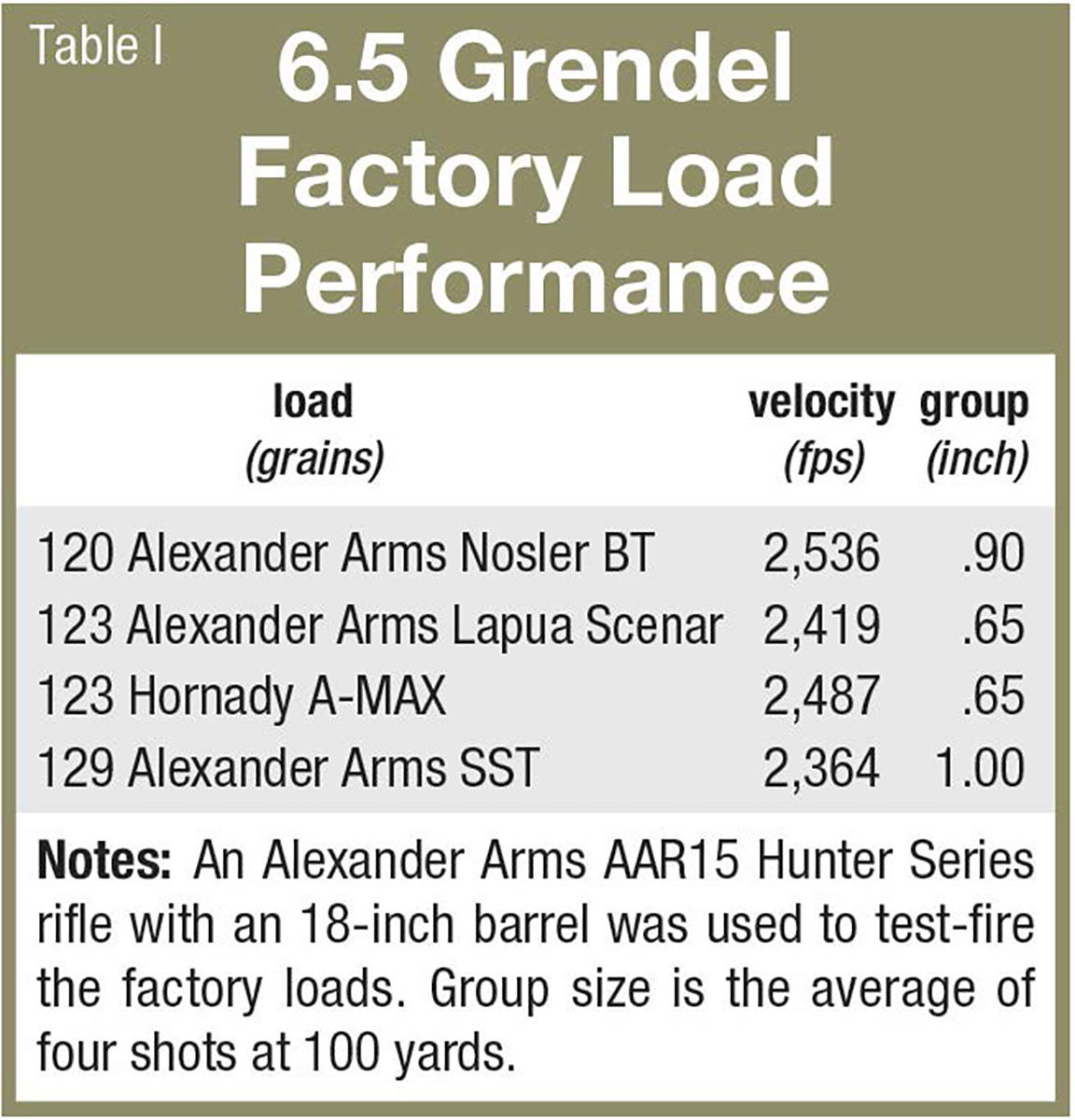
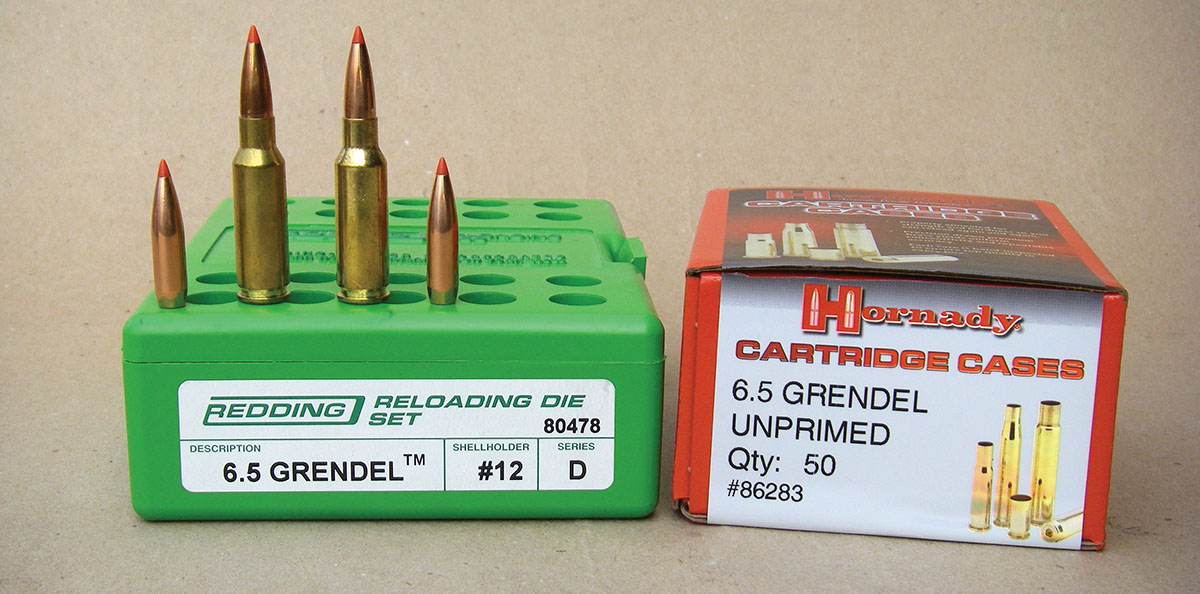
Cases should be full-length sized, trimmed and deburred as needed. When handloading for autoloading rifles, small-base sizing dies are usually recommended. When developing the accompanying data, however, a Redding full-length sizing die was used. Sized cases easily chambered, and there were no problems experienced with loaded cartridges throughout testing.
After primers are seated .003 to .005 inch below flush (to help prevent slam fires and aid with reliable ignition), the case charged with powder and the bullet seated, as a separate step bullets should be crimped in place. This will help prevent their “moving” while the cartridge is being cycled, or battered, through the action of an AR-15. In other words, bullets that are not crimped in place, and used with powder charges that are less than 100 percent load density, can become deeply seated while being chambered. When a cartridge is slammed home into the chamber, the inertia can also move bullets forward enough to engage the rifling leade, which can increase pressures and create other potential problems.
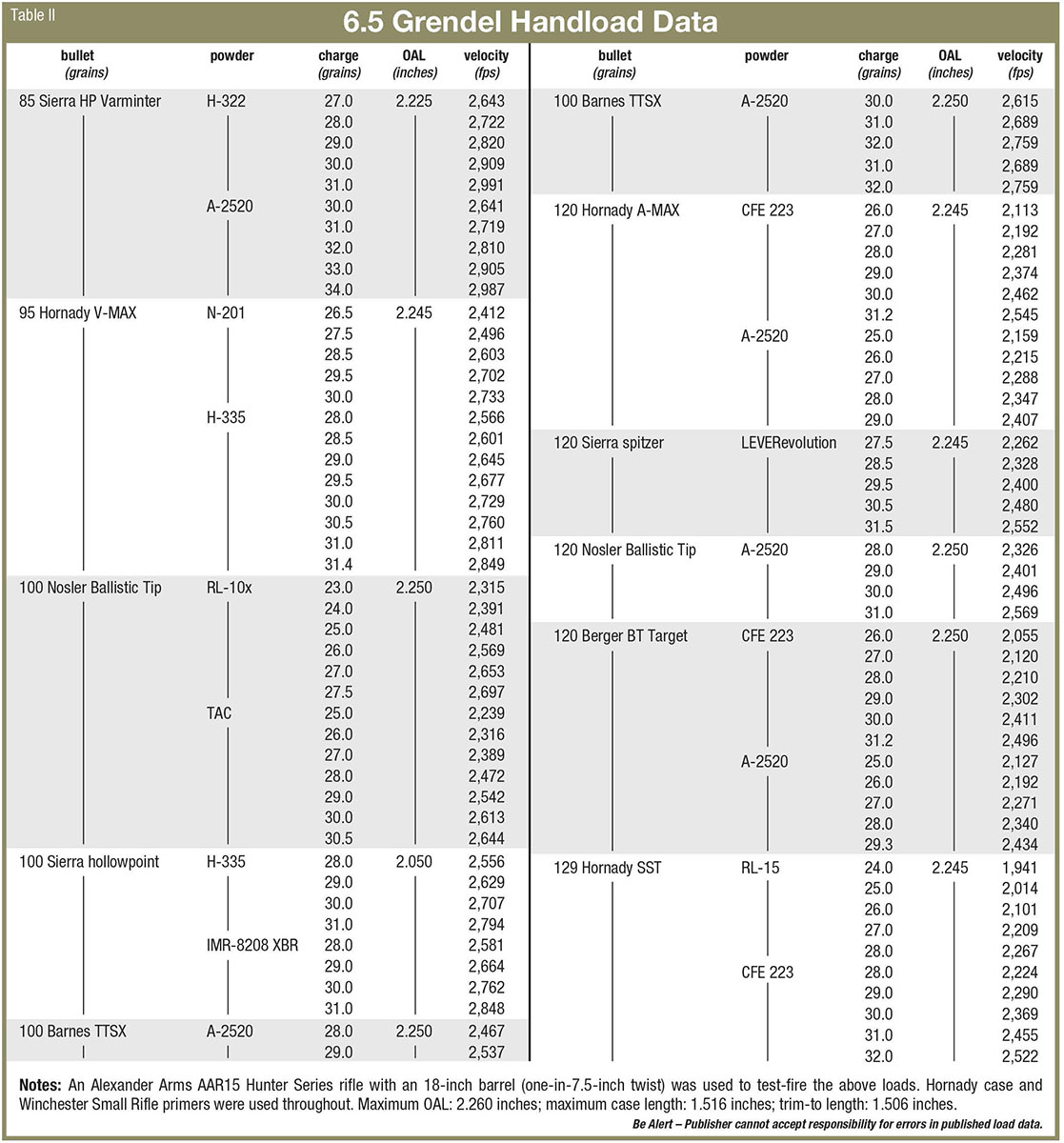
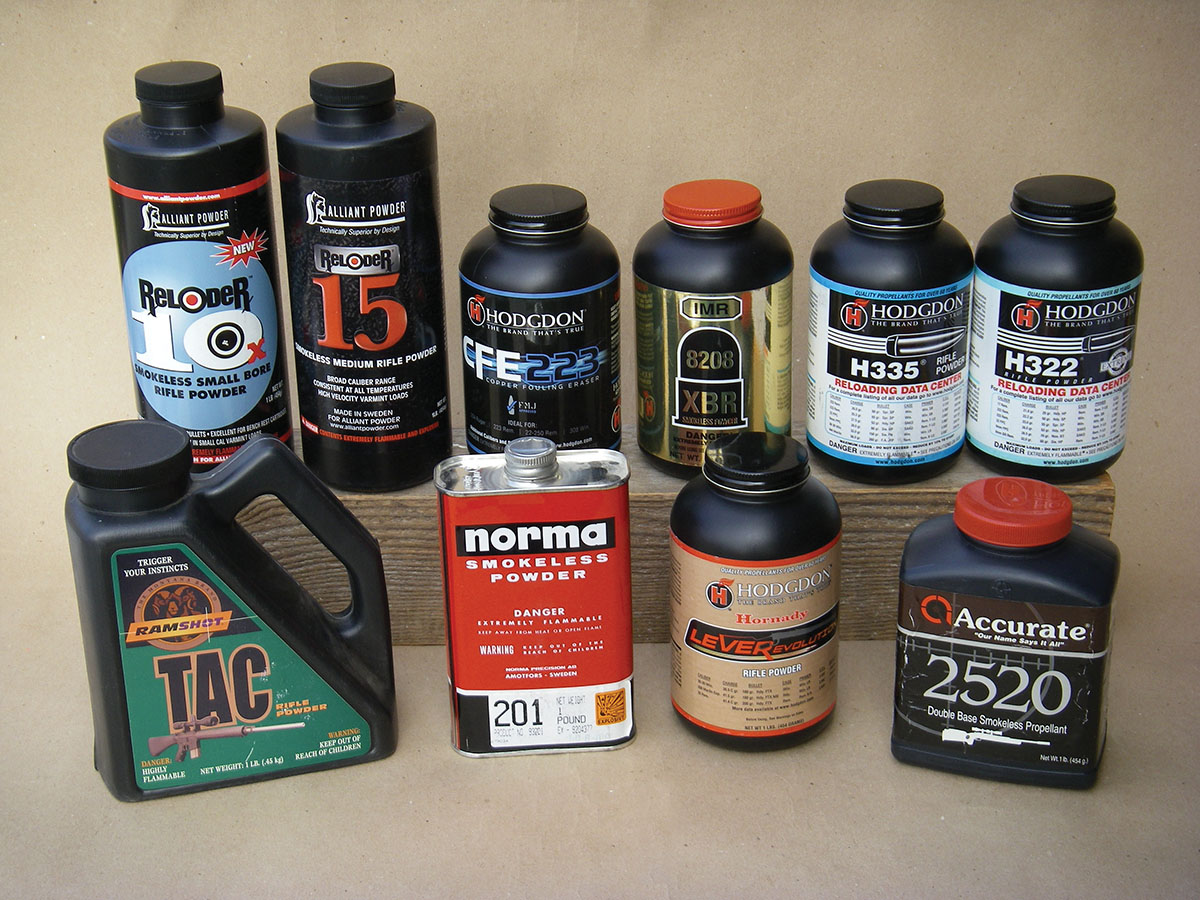
The Grendel thrives on many of the same powders that perform well in the 223 Remington and 308 Winchester, so the selection is very broad. Many of these are advanced with modern technology to produce “benchrest” type accuracy using spherical (ball) and extruded configurations. Examples include Alliant Reloder 10x, Hodgdon H-322, Ramshot TAC, IMR-8208 XBR, Accurate 2520 and many others. Hodgdon’s popular CFE 223 powder, with decoppering technology, is a good choice for the high-volume varmint shooter, but it also yields a blend of accuracy and respectable velocities. Hodgdon H-322 was also appreciated for its comparatively mild muzzle report, which makes it a good choice for the high-volume shooter. Accurate 2520 performed well with a variety of bullet weights and was consistently accurate.
Winchester Small Rifle primers were used to develop the accompanying data, but if a magnum primer is substituted, pressures will often increase. Be certain to start at least 5 percent below suggested maximum charges and check for signs of excess pressure before increasing the powder charge.
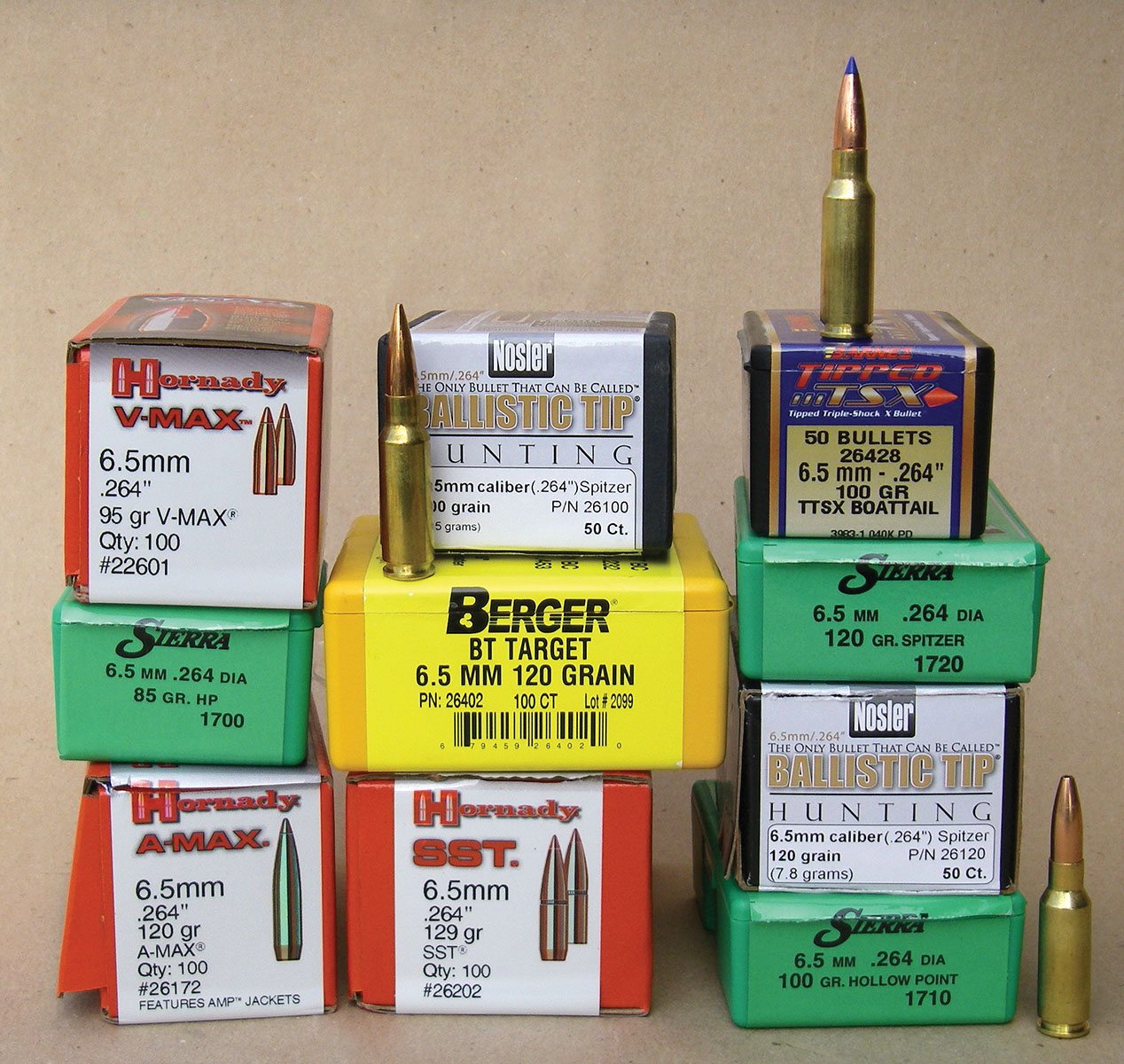
Varmint shooters generally favor the reactive, frangible effect of lightweight bullets, such as the Sierra 85-grain HP, Speer 90-grain TNT (not available at press time) and the Hornady 95-grain V-MAX. There are heavier bullets that likewise offer desirable results, and with their high ballistic coefficients are good choices on windy days. They are therefore included in the accompanying data. Examples include the Nosler 100- and 120-grain Ballistic Tips, Sierra 100-grain hollowpoint and 120-grain spitzer, Hornady 120-grain A-MAX and Berger 120-grain BT Target. Generally speaking, these are also good choices on large coyotes and wolves and can be used on deer. The Barnes 100-grain Tipped TSX and Hornady 129-grain SST bullets are especially good choices for taking deer-sized game.
It is important to seat bullets to the listed overall cartridge lengths, as ogive profiles and tip lengths vary considerably, and some bullets will contact the leade even when loaded within industry maximum cartridge lengths of 2.260 inches. For the utmost in feeding reliability, all loads were limited to 2.250 inches or less, the same as the factory loads used.
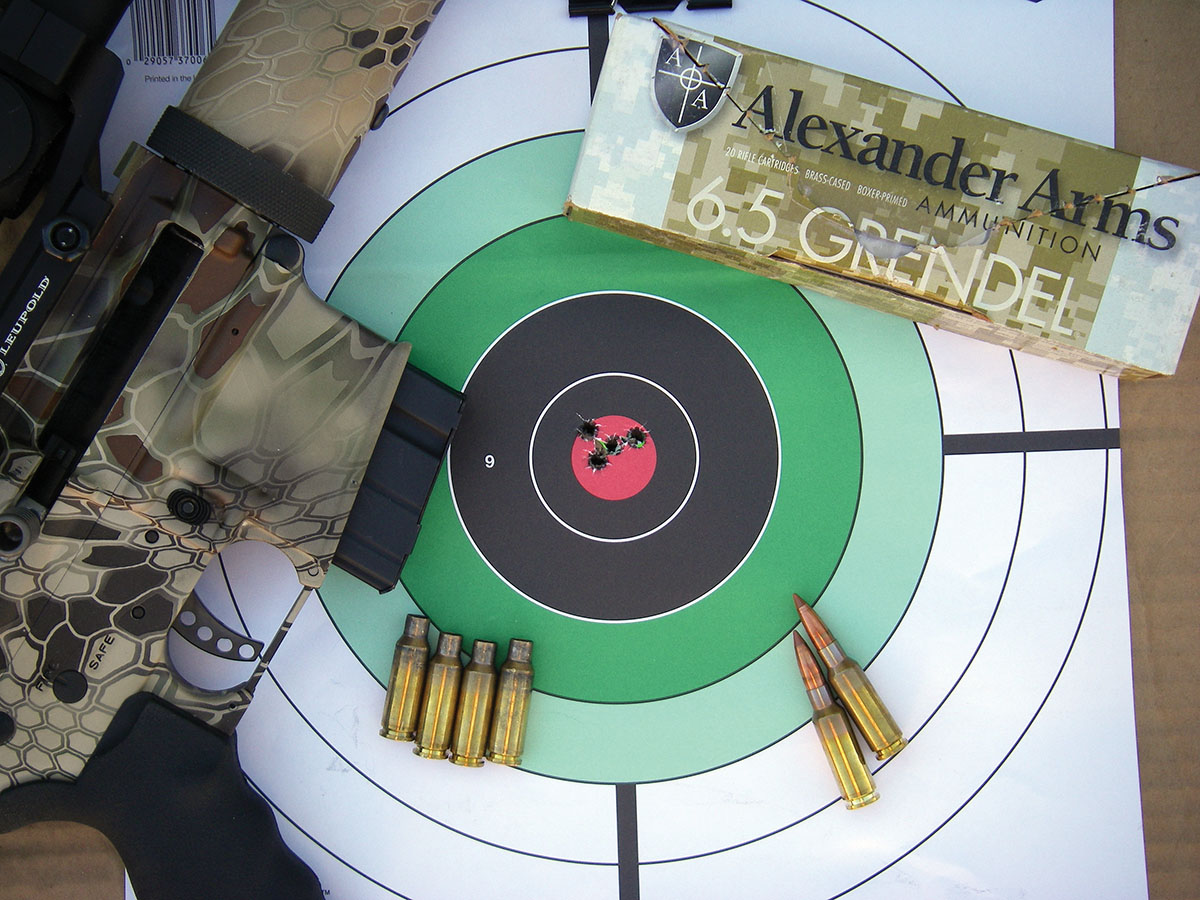
In testing factory and handloaded ammunition, the cartridge has exhibited low extreme velocity spreads, which translates into accuracy at all ranges, just like a benchrest cartridge. Many of the handloads recorded an extreme spread for five shots that ranged between 7 and 22 fps. This unusual consistency is an important ingredient for connecting on long-range varmints, pests and predators. With some “dialing in” of bullet seating depth and exact powder charge, several groups clustered four shots into .5 inch.