221 Remington Fireball
Exploring Powders Old and New
feature By: Patrick Meitin | April, 20
My Fireball introduction involved a “vintage” 10-inch hexagonal Thompson/Center Contender barrel. That combination made enough of an impression that I soon sought a rifle. Modern Fireball options include CZ-USA’s Model 527 American and Cooper’s Model 21. Kimber and T/C have produced rifles, Remington the Model 700 Classic (2002) and Model 700 Light Varmint Stainless Fluted (2007), but my Fireball rifle is a bit more pedestrian. It’s a homely Remington 788 originally chambered in 222 Remington, reamed to accept 223 Remington, and ultimately retooled to 221 Remington Fireball.
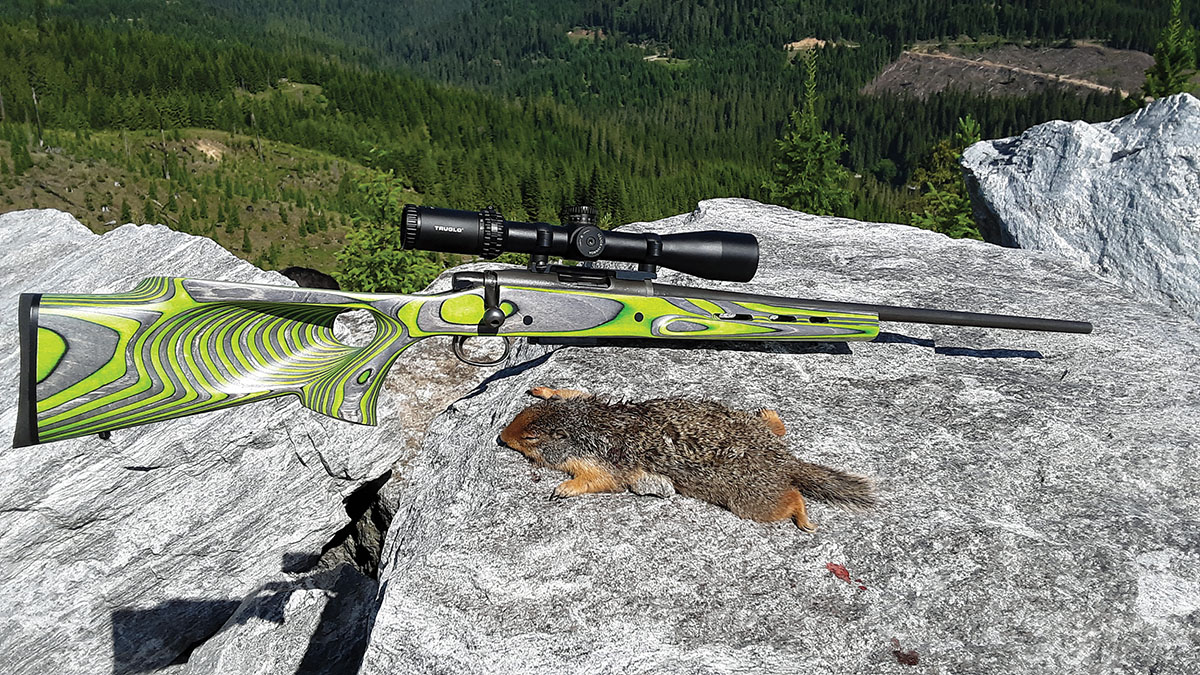
This 788 certainly isn’t a “one-holer” but will generally send five shots into sub-inch clusters with tailored handloads, though the ugly factory stock and my tall frame proved incompatible. A Boyd’s Zombie Hunter Featherweight Thumbhole stock solved immediate aesthetic issues, an order-to-fit length of pull remedying ergonomics. Action fit was snug, though I glass bedded the recoil lug area for good measure. An ugly gun I liked became a snazzy rifle I love.
A classic Burris Fullfield II 6.5-20x 50mm scope set in one-inch Burris Zee Rings atop an EGW Picatinny base was added. The optic holds a Ballistic Mil-Dot reticle designed for flat-shooting varmint cartridges, and the front bell parallax ring allows quick focus while on a cradle or sandbags. Low-profile windage/elevation knobs are finger manipulated, and high-performance, precision-ground glass and protective Hi-Lume multi-coated lenses provide excellent brightness, clarity and light transmission.
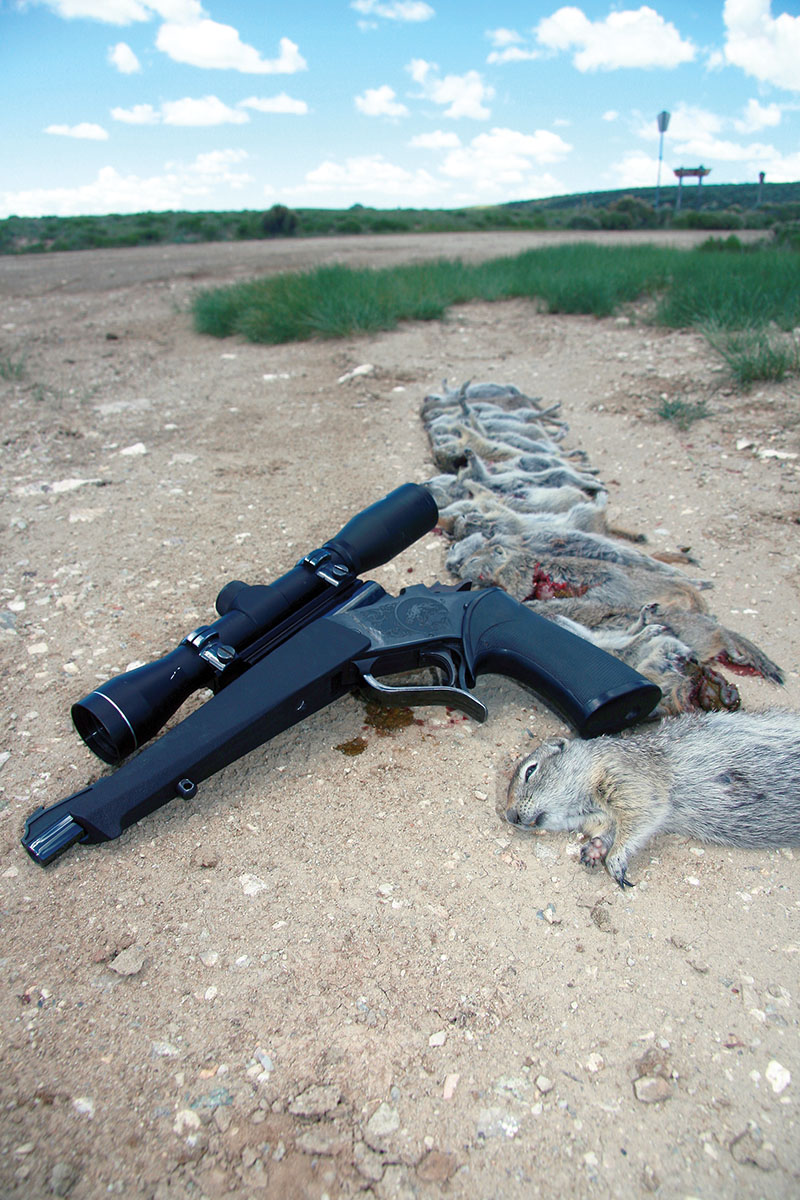
A newly-acquired Remington XP-100 – the 10¾-inch barreled turn-bolt single-shot handgun for which the 221 Remington Fireball cartridge was conceived in 1963 – was used for pistol-load testing, aided by a Burris Handgun 2-7x 32mm scope with Ballistic Plex reticle. I’ve owned many handgun scopes. This is unequivocally the best I’ve handled, providing quick target acquisition and edge-to-edge clarity, even at peak magnifications.
Fireball brass is available from Lapua, Norma, Nosler and Remington, yet owning both rifle and pistol introduced divvying issues. For the sake of keeping the rifle shooting during extended road trips, developing loads that also performed well in the pistol seemed worthwhile. As few 221 powders are compatible with both short and long barrels, harmonizing accuracy for two firearms proved tricky.
Limited case capacity creates a fairly truncated powder lineup, particularly with pistol ammunition. The Fireball’s fading popularity is another hurdle, as little load development has occurred recently, particularly for pistols. Given that, classic propellants were unavoidable, though I was determined to explore newer powders providing improved temperature stability or cleaner-burning characteristics.
An RCBS full-length die set, CCI BR-4 primers and new Lapua brass were used throughout. Lapua lived up to its stellar reputation, 10 unprimed cases showing an impressive .3-grain weight deviation. Lapua brass, on average, held 26.5 grains of water; on par with Remington, Nosler, Norma and reformed Lake City 223 Remington brass.
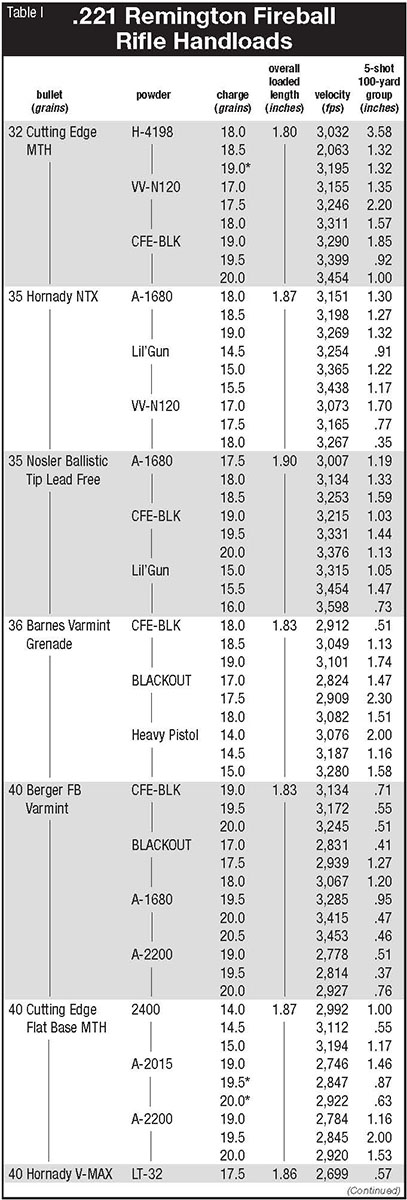
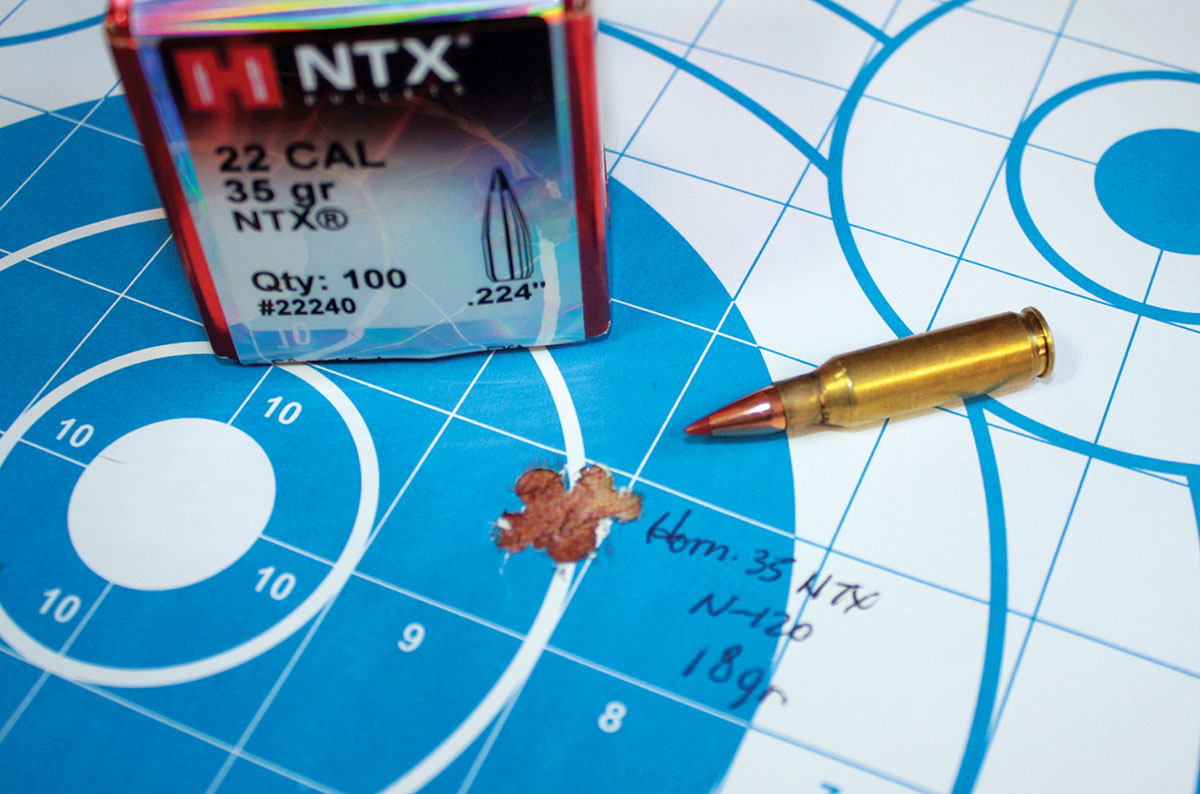
My Model 788 proved maddeningly finicky with light bullets, with few sub-one-inch groups resulting. I first wondered if my velocity obsession was responsible, as top loads often approach maximum (without pressure signs). But then the tightest groups resulted from near-maximum loads.
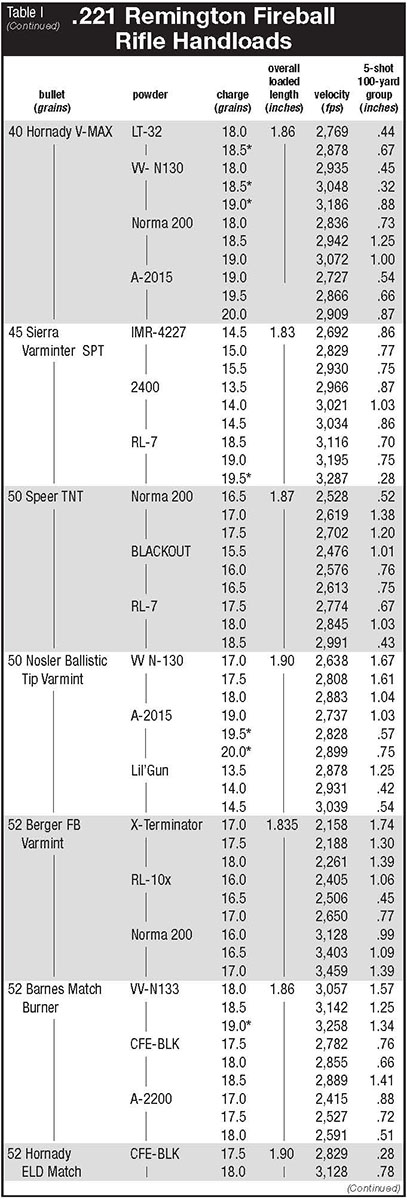
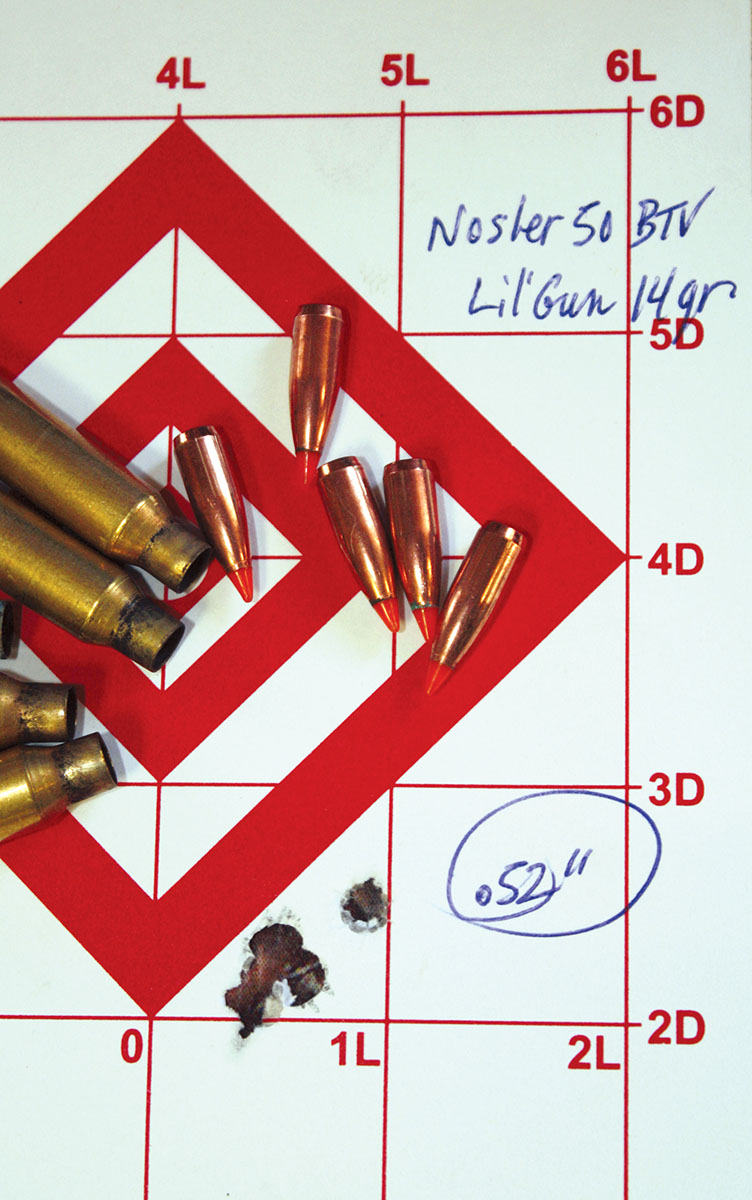
These included Hornady’s lead-free 35-grain NTX over 18 grains of Vihtavuori N-120 (.35-inch group, 3,267 fps), Nosler’s 35-grain Ballistic Tip Lead Free over 16 grains of Hodgdon Lil’Gun (.73 inch, 3,598 fps) and Barnes 36-grain Varmint Grenade over 18 grains of Hodgdon CFE-BLK (.51 inch, 2,912 fps). Honorable mentions included Hornady’s NTX over 14.5 grains of Hodgdon Lil’Gun (3,254 fps) and Nosler’s 35-grain Ballistic Tip Lead Free over 16 grains of Lil’Gun (3,598 fps).
More consistent results arrived at the 40-grain mark, with sub-one-inch groups outnumbering larger clusters. Two 40-grain bullets proved incompatible with the 1:12 rifling and were eliminated. Cutting Edge’s ESP Raptor punched round holes but produced patterns instead of groups (Raptors produce one-hole groups from my Savage 223 Remington with identical rifling). Nosler’s Ballistic Tip Lead Free didn’t like the rifle.
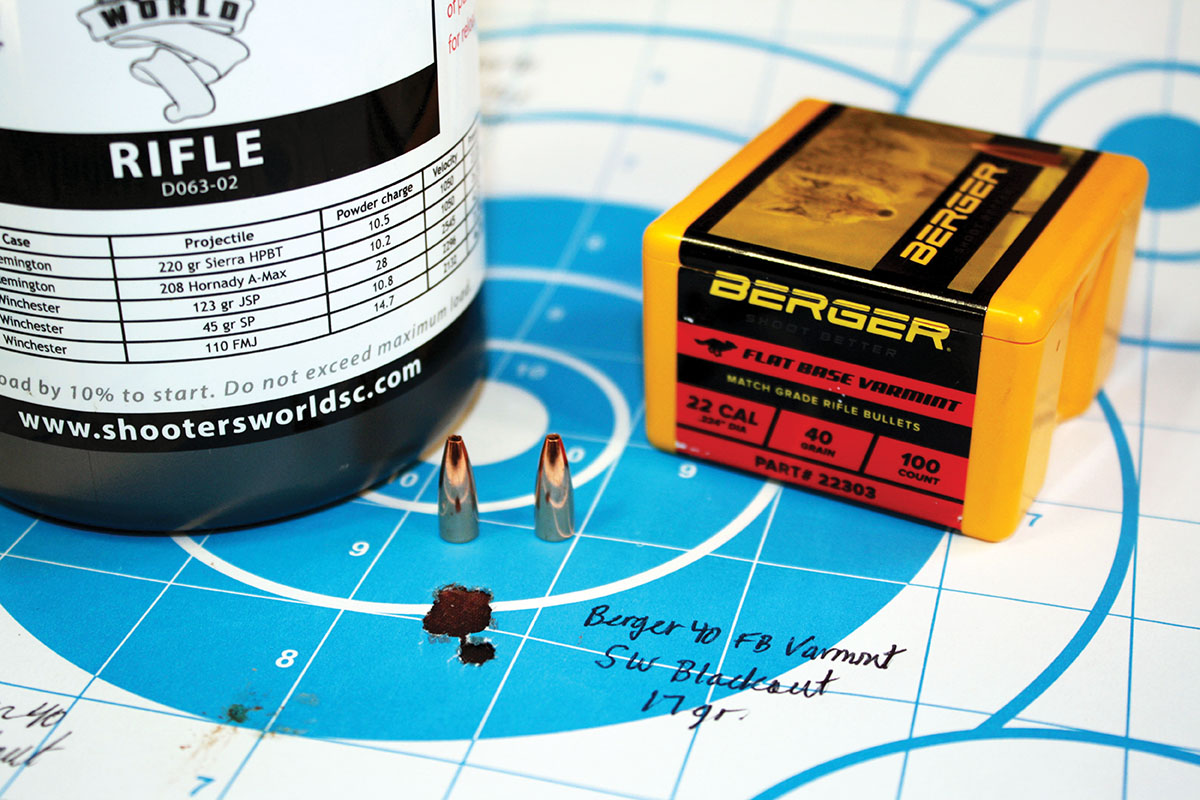
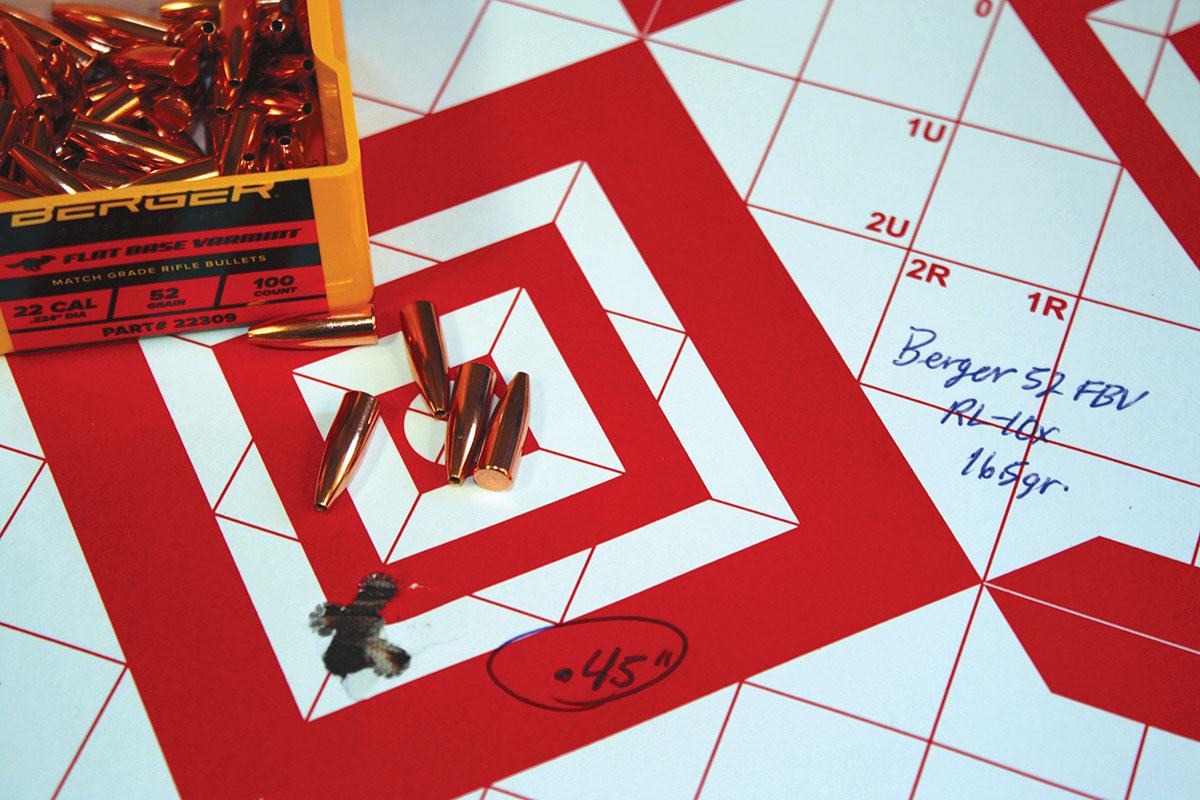
Berger’s FB Varmint started a consistent sub-one-inch trend, with standouts including 19.5 to 20 grains of Hodgdon CFE-BLK (.55 and .51 inch) and 17 grains of Shooters World BLACKOUT (.41 inch, 2,831 fps). Twenty to 20.5 grains of Accurate 1680 (.47 and .46 inch, 3,415 and 3,453 fps) and 19 to 20 grains of Accurate 2200 produced .51, .37 and .76 inch groups. Fireball load data was unavailable for BLACKOUT, so conservative charges were devised by extrapolating published Shooters World 300 BLACKOUT data and Western Powders Accurate 1680 loads for the same cartridge. Loads were somewhat slow and could no doubt be pushed faster while closely monitoring pressure signs.
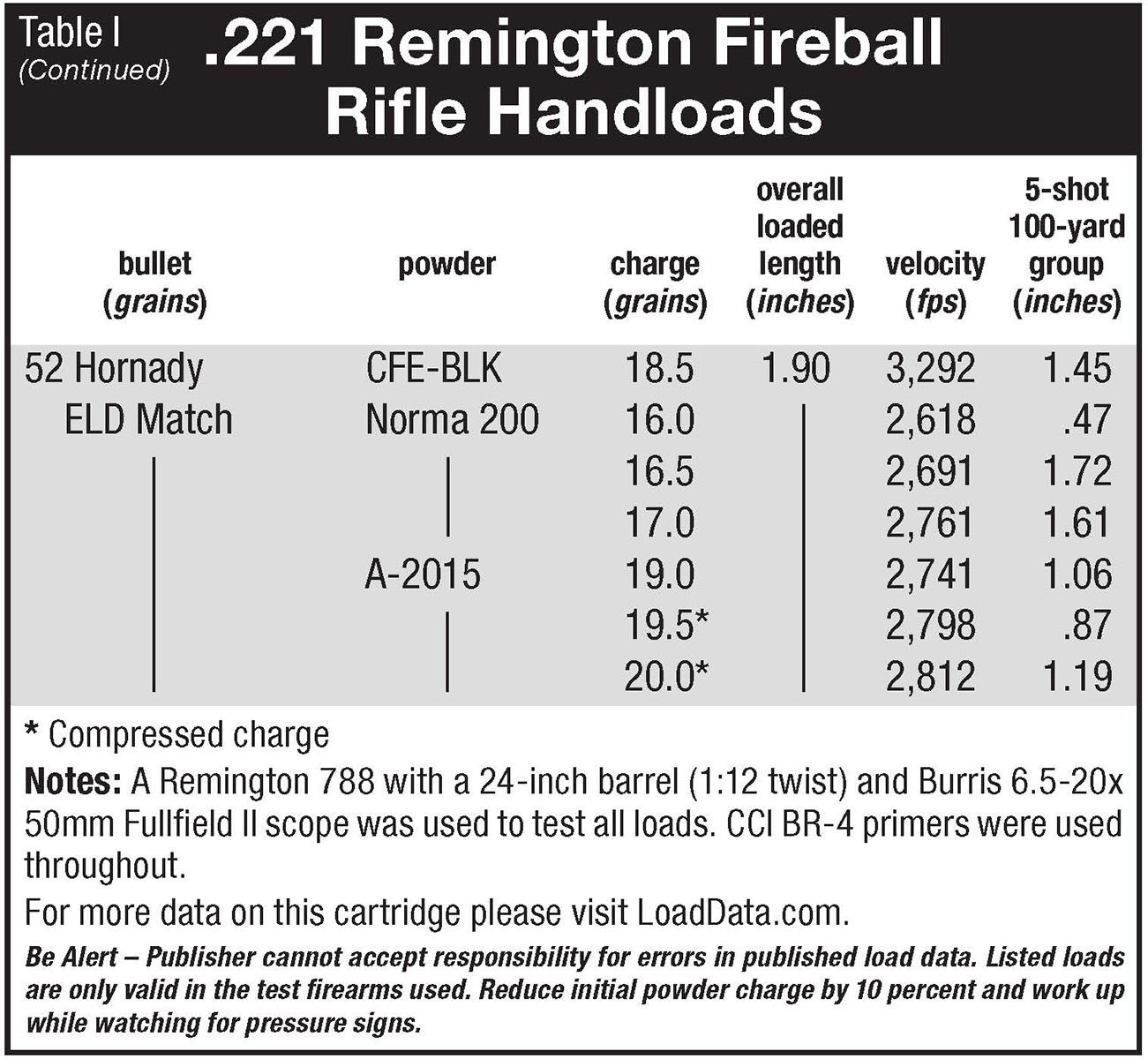
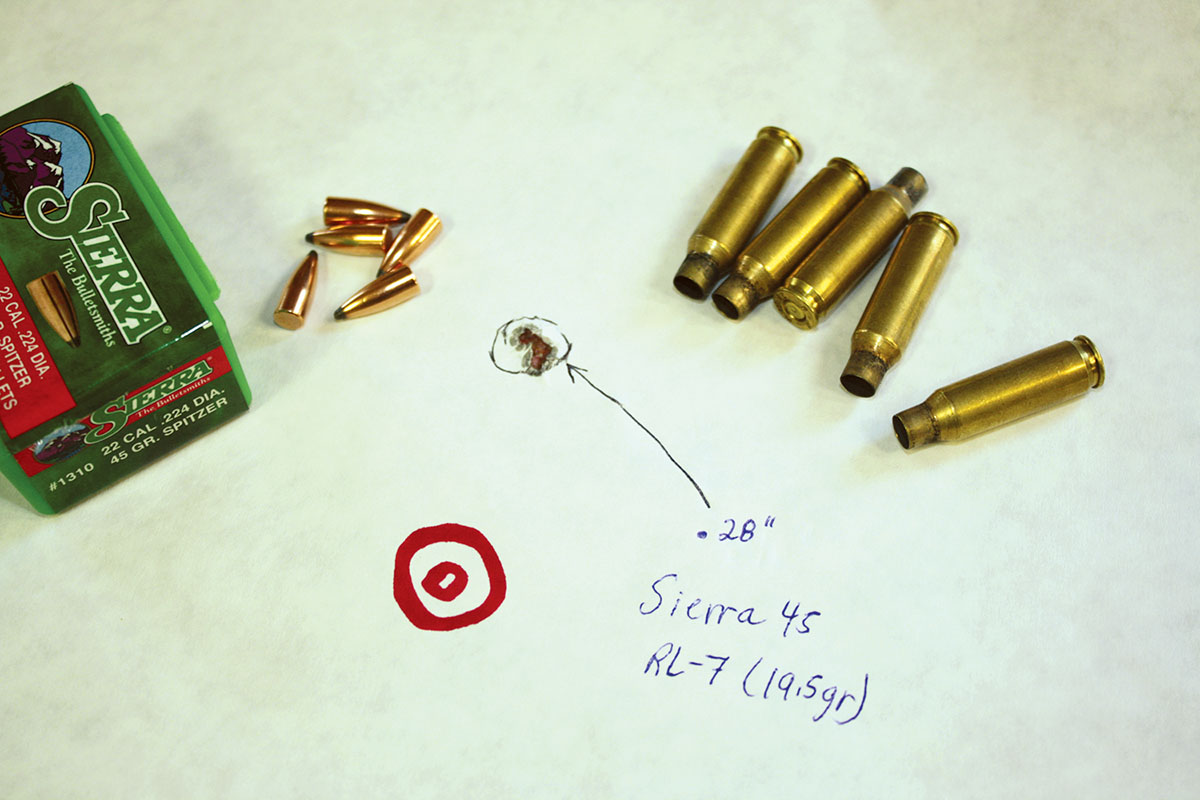
Sierra’s 45-grain Varminter SPT paired with IMR-4227 and Alliant 2400 and Reloder 7 showed that classics gain that status for good reason. All but one of 26 tested loads assembled sub-one-inch groups (most around .75 inch). A 19.5-grain charge of Alliant Reloder 7 shot one of the tightest overall groups recorded, a .28-inch one-holer propelled to 3,287 fps. That load will definitely become part of my permanent lineup.
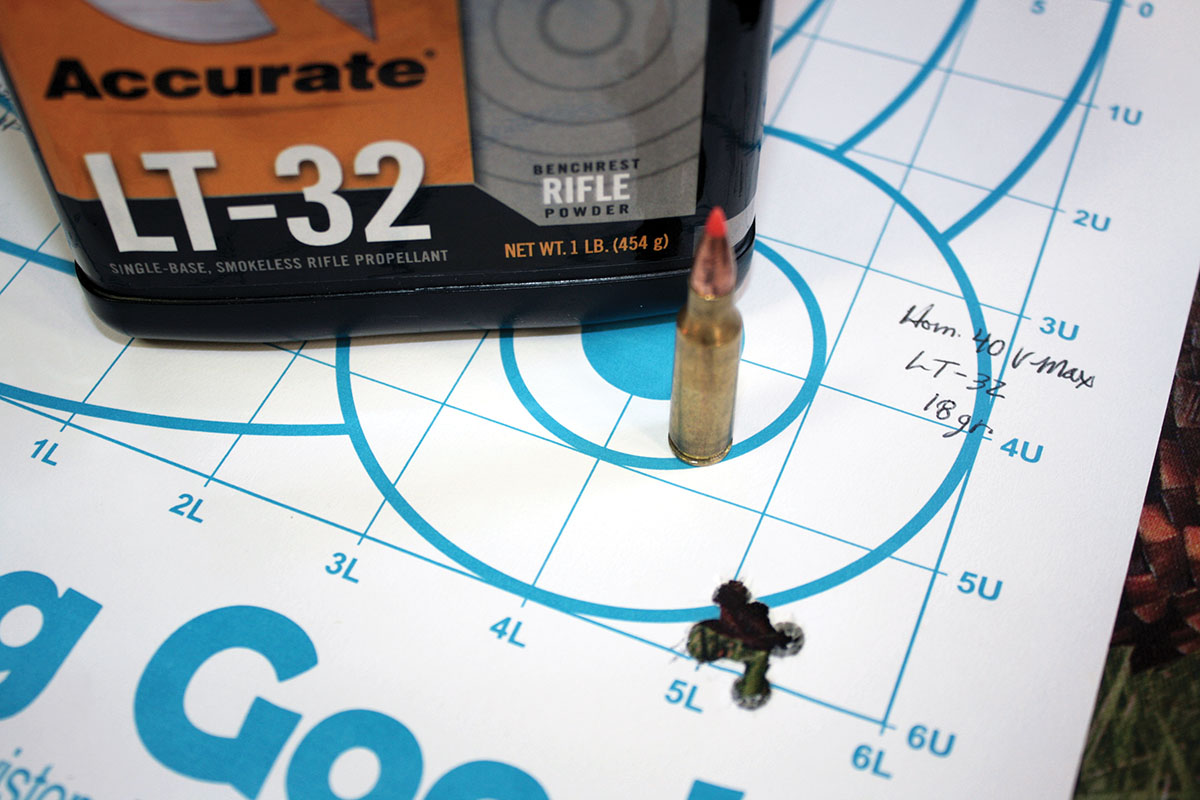
Clear accuracy winners include Hodgdon CFE-BLK and Accurate 2015 – CFE-BLK providing the velocity edge. Lil’Gun shouldn’t be ignored, proving accurate and fast. Accurate 2200 and Reloder 7 (tied for tightest group) should also be kept on hand. If accuracy alone is the goal, Accurate’s LT-32 proved extremely consistent.
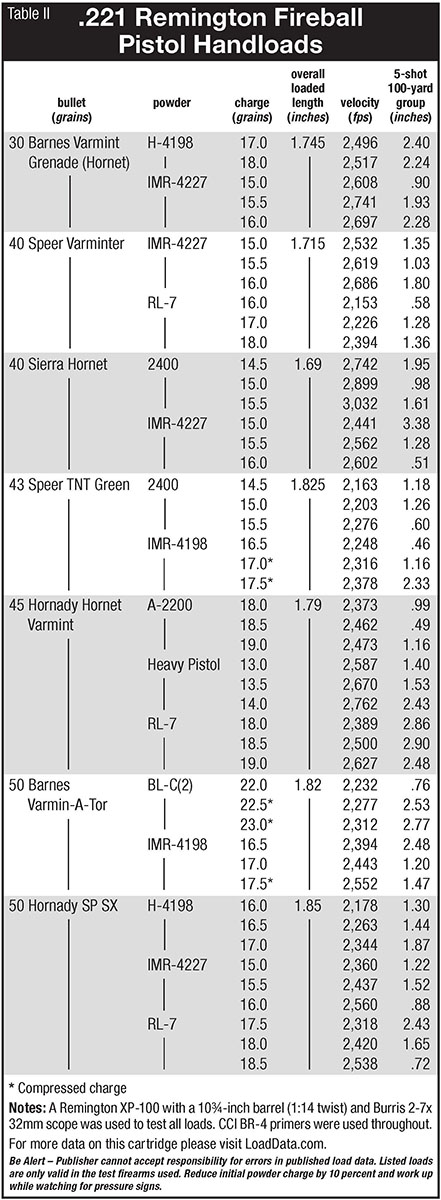
My Remington XP-100 pistol, shooting established Contender switch loads, assembled sub-one-inch groups during sight in. I took this as a harbinger of easy going moving forward, but alas, the pistol also proved fussy, though I’d be first to admit that results likely reveal my rusty pistol-shooting skills more than load potential. Many groups started tight only to be spoiled by frustrating flyers. Combine handguns and 100-yard shots, and anything printing less than an inch is noteworthy.
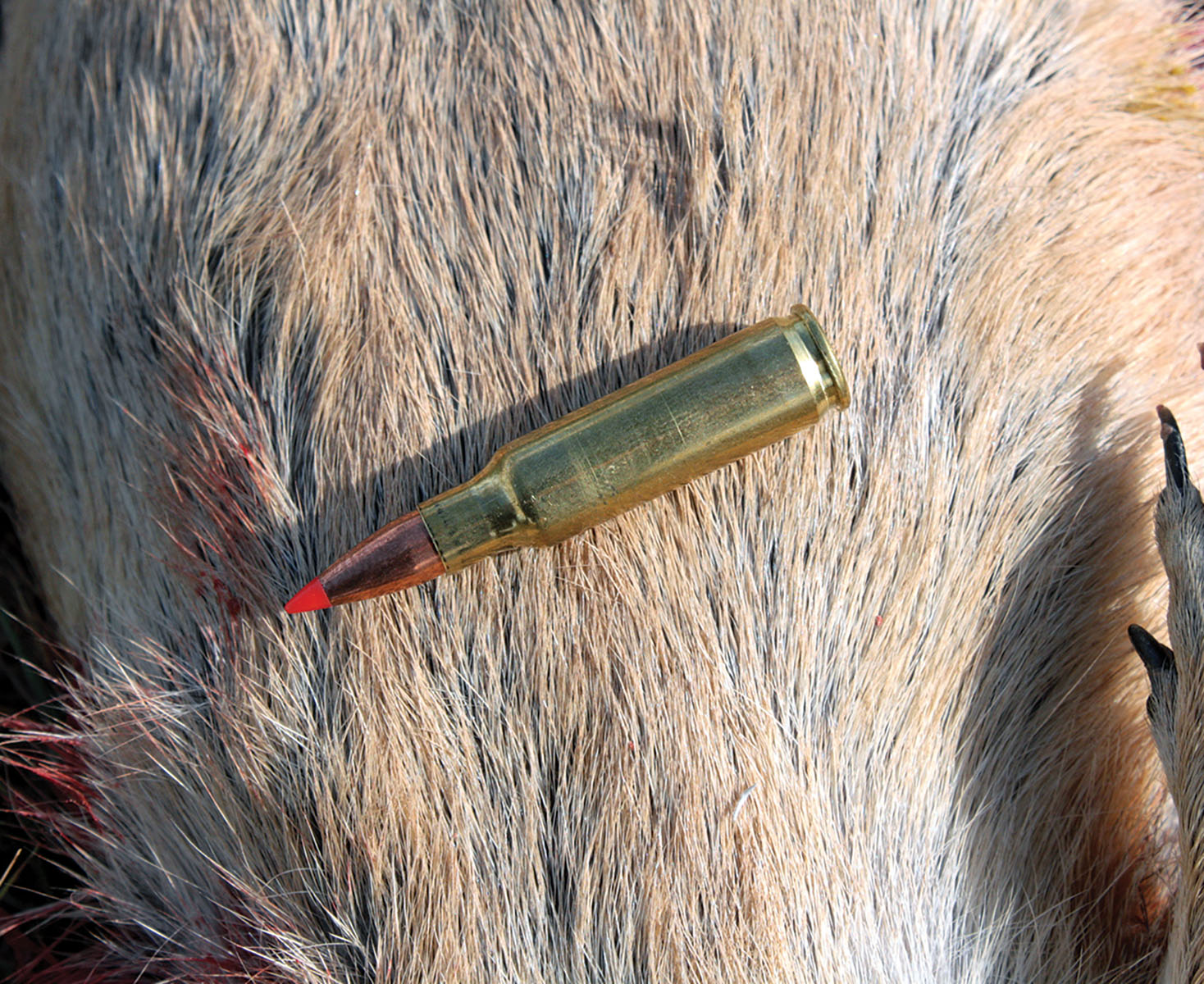
During load planning I chose several Hornet and/or “light-skinned” bullets, seeking reliable expansion at short-barrel velocities. Seating the first Hornet bullets, I feared this had been shortsighted, as the stubby bullets, seated to the bottom of the neck to assure proper neck tension, required substantial leaps into the lands. Once shooting began, I failed to see a marked accuracy difference.
The Barnes 30-grain Varmint Grenade Hornet grouped .90 inch over 15 grains of IMR-4227 (2,608 fps). Speer’s 40-grain Varmint grouped .58 inch over 16 grains of Reloder 7 (2,153 fps). Sierra’s 40-grain Hornet grouped .98 inch paired with 15 grains of Alliant 2400 (2,899 fps) and .51 inch with 16 grains of IMR-4227 (2,602 fps).
Speer’s longer lead-free 43-grain TNT Green shined with 15.5 grains of Alliant 2400 (.60 inch, 2,276 fps) and 16.5 grains of IMR-4198 (.46 inch, 2,248 fps). Hornady’s 45-grain Hornet impressed seated over 18 and 18.5 grains of Accurate 2200, with .99- and .49-inch groups, respectively, at 2,373 and 2,462 fps. Barnes’ 50-grain Varmin-A-Tor paired well with 22 grains of Hodgdon BL-C(2), printing .76 inch when pushed to 2,232 fps, though things went off the rails with increased charges. Hornady’s 50-grain SP SX grouped .88 inch with 16 grains of IMR-4227 (2,560 fps) and .72 inch with a near-maximum load of 18.5 grains of Reloder 7 at 2,538 fps.
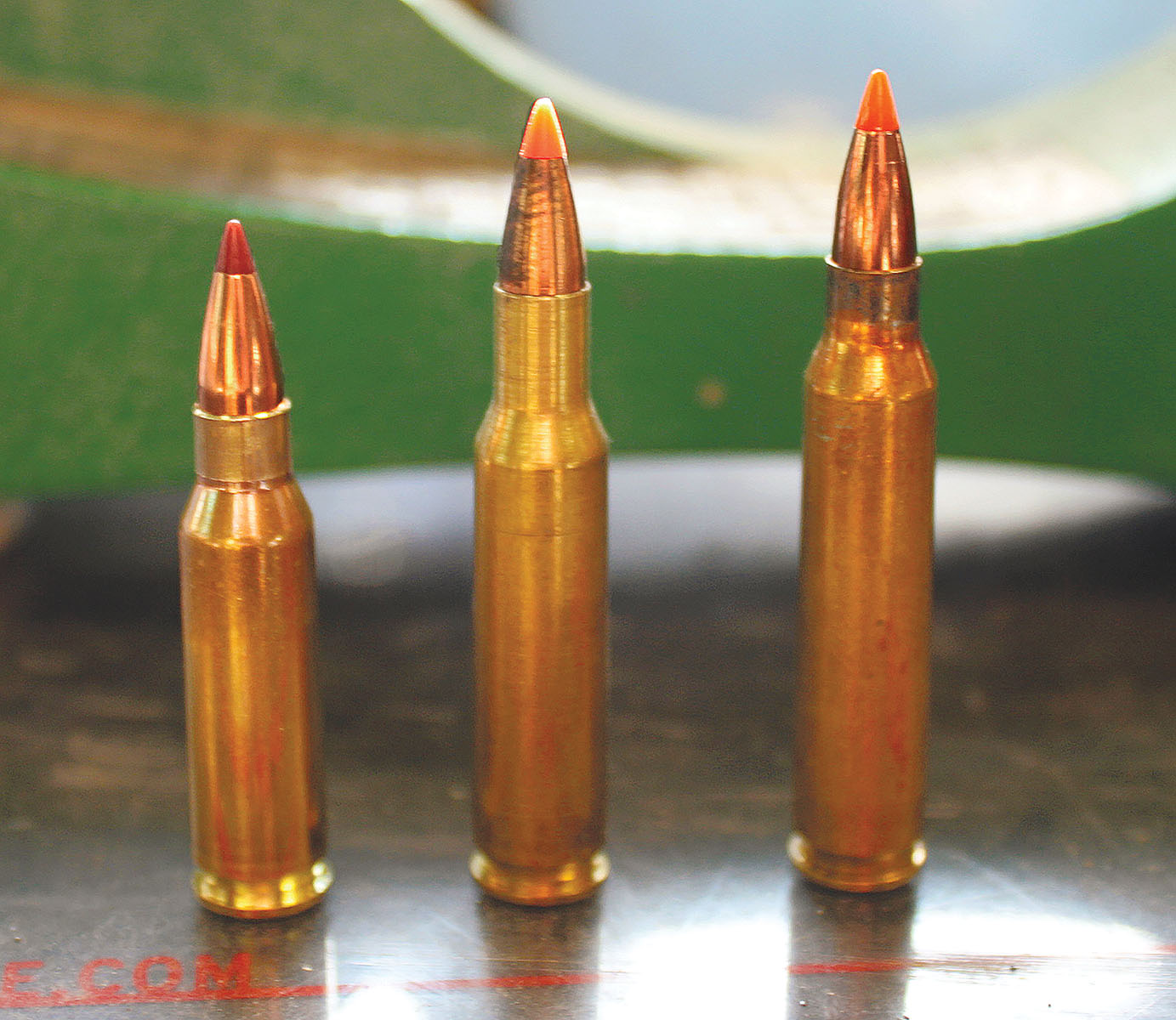
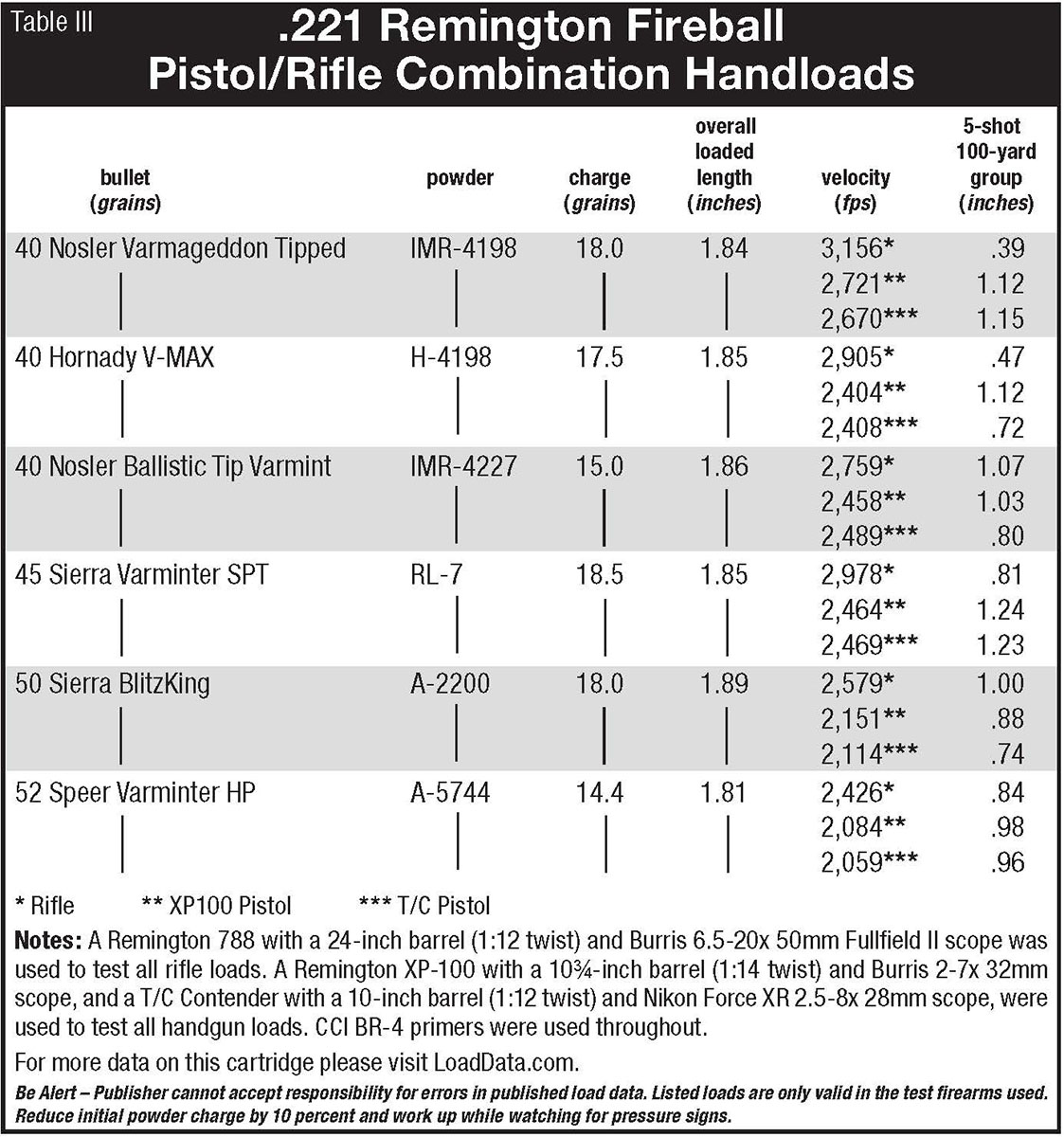
Tailoring one load that assembles acceptable groups from rifle and pistols became a series of compromises. Discovering combinations grouping exceptionally with a rifle but only decently from a pistol was par. Surprisingly, there were also loads that grouped better from pistols. My original Fireball switch load, tailored for the Contender, held up well. Loading Hornady’s 40-grain V-MAX over 17.5 grains of Hodgdon H-4198 produced 2,905 fps from the rifle, 2,407 fps from the XP-100 and 2,408 from the T/C Contender, resulting in .47-inch rifle, 1.12-inch XP-100 and .72-inch T/C groups. Nosler’s 40-grain Tipped Varmageddon over 18 grains of IMR-4198 resulted in a .39-inch group from the rifle and acceptable 1.12- and 1.15-inch groups from the XP-100 and T/C. Nosler’s 40-grain Ballistic Tip Varmint was one of the bullets that shot best from the pistols when loaded over 15 grains of IMR-4227. Those groups measured roughly one to .80 inch.
Sierra’s 45-grain Varminter SPT over 18.5 grains of Alliant Reloder 7 broke an inch with the rifle (.81 inch, 2,978 fps) but provided only “Minute-Of-Squirrel” groups with the pistols. Some charge juggling would likely improve pistol performance.
Sierra’s 50-grain BlitzKing paired with 18 grains of Accurate 2200 is another that did better through the pistols than the rifle, resulting in one-inch rifle groups (2,579 fps), .88-inch XP-100 groups (2,151 fps) and .74-inch T/C groups (2,114 fps), but with fairly lackluster velocity. Accurate’s coarse-grained A-5744 produced surprising consistency (.84 inch rifle, .98 inch XP-100 and .96 inch T/C) with 14.4 grains beneath Speer’s 52-grain Varminter HP.
I now own enough Fireball brass to sort evenly between rifle and pistols without fear of running short of flatter-shooting, harder-hitting rifle loads on extended forays. But my “go-to” pistol load will remain a rifle-compatible combination offering maximum short barrel velocity and accuracy, with the ability to feed the Remington 788. It’s a system that makes sense for shooters who enjoy the appeal of potent 221 Remington Fireball rifles, and the challenging fun of an accurate handgun.
Forming 221 Remington Fireball brass from 223 Remington is fairly straightforward. Three Redding 221 Remington Fireball dies are recommended: a form die, form and trim die and full length die set. Run a 223 case through the form die, and then into the form and trim die, cutting and filing away excess neck material. Deburr before reaming the inside of the neck or turning the outside to the desired thickness (around .029 inch) to assure necks have room to expand and properly release bullets without causing pressure spikes. Finally, run the case through the full-length die.