Switch Barrel Sako Quad Rifle
22 LR, 22 WMR, 17 Mach 2, 17 HMR
feature By: Layne Simpson | April, 20
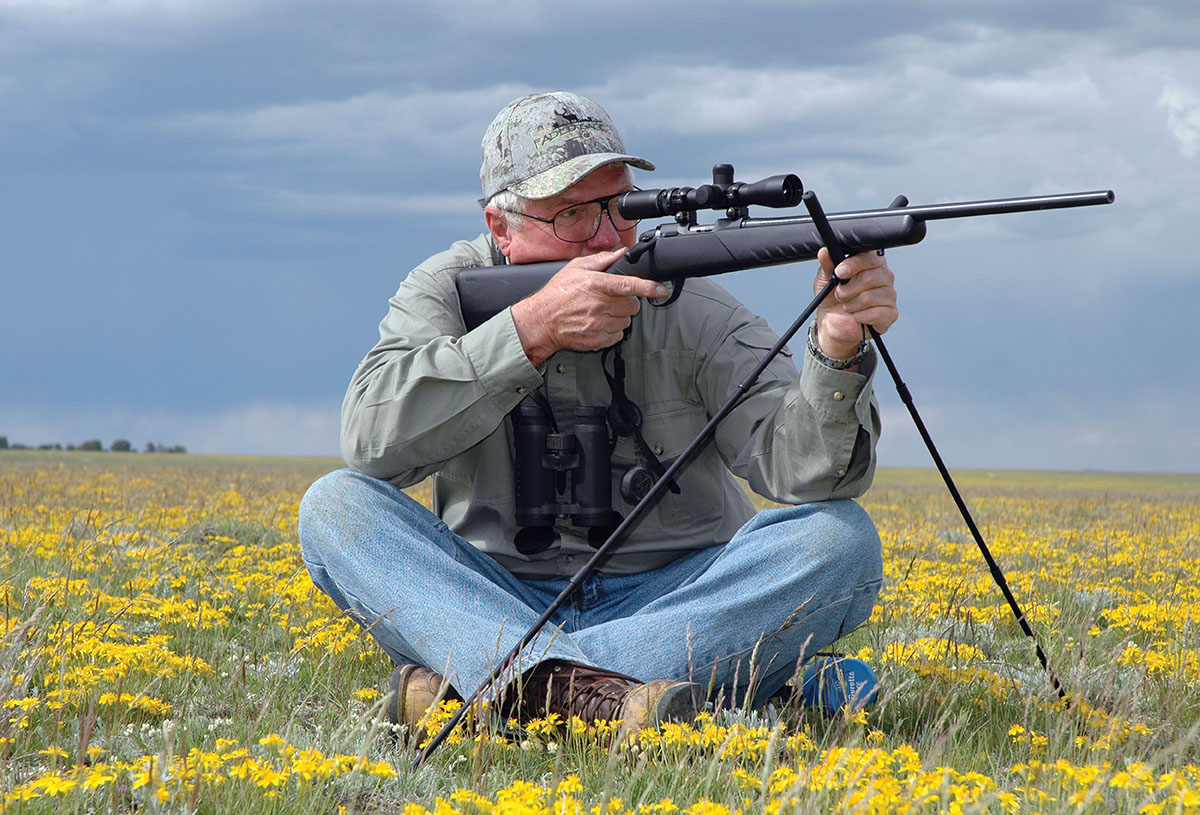
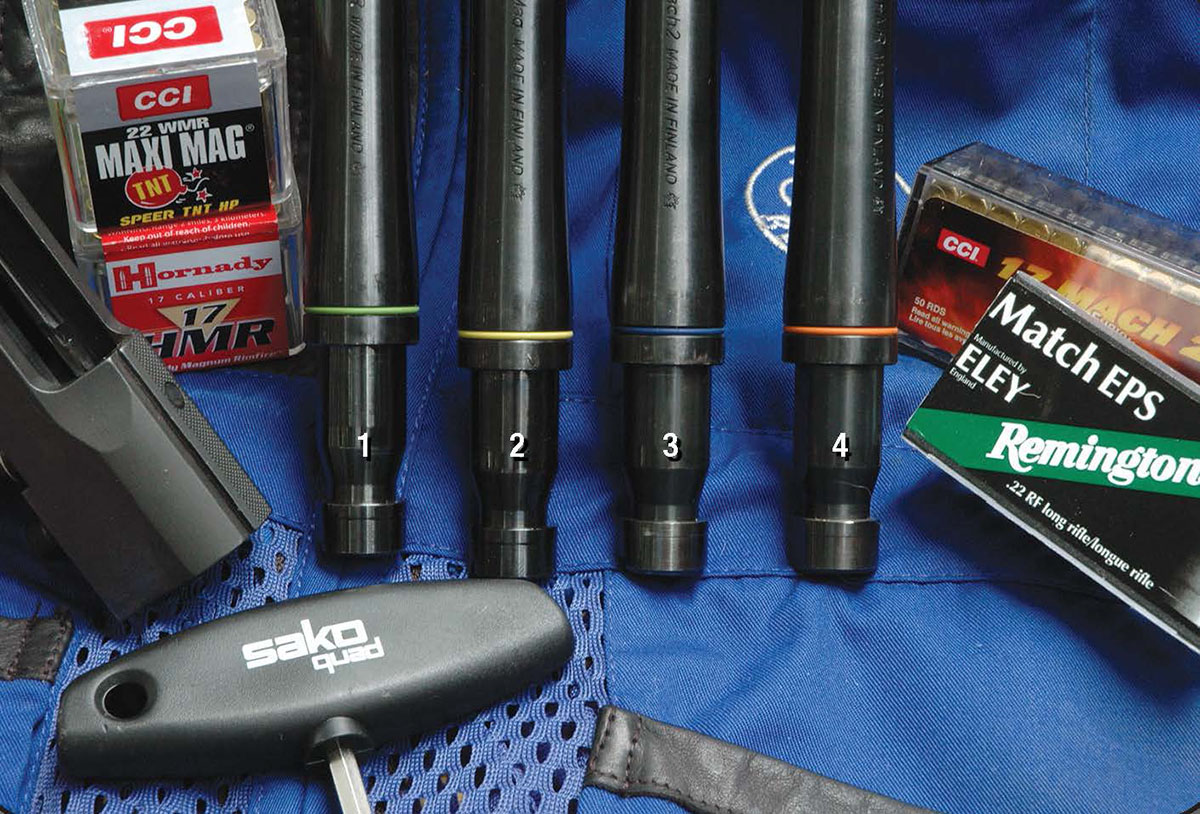
Five Quad model variations have been available, all with 24-inch, six-groove barrels. The Quad Synthetic with a black stock has a standard-weight barrel while the Synthetic Heavy Barrel has, you guessed it – a heavier barrel. Replace the synthetic stock of the latter model with European walnut and you have the Quad Varmint. Give that one fancy walnut, adjustable open sights and a single set trigger and you have the Hunter Pro. The Range model is described by Sako as a target rifle, and in addition to a single set trigger it has a laminated wood stock with a height-adjustable cheek rest.
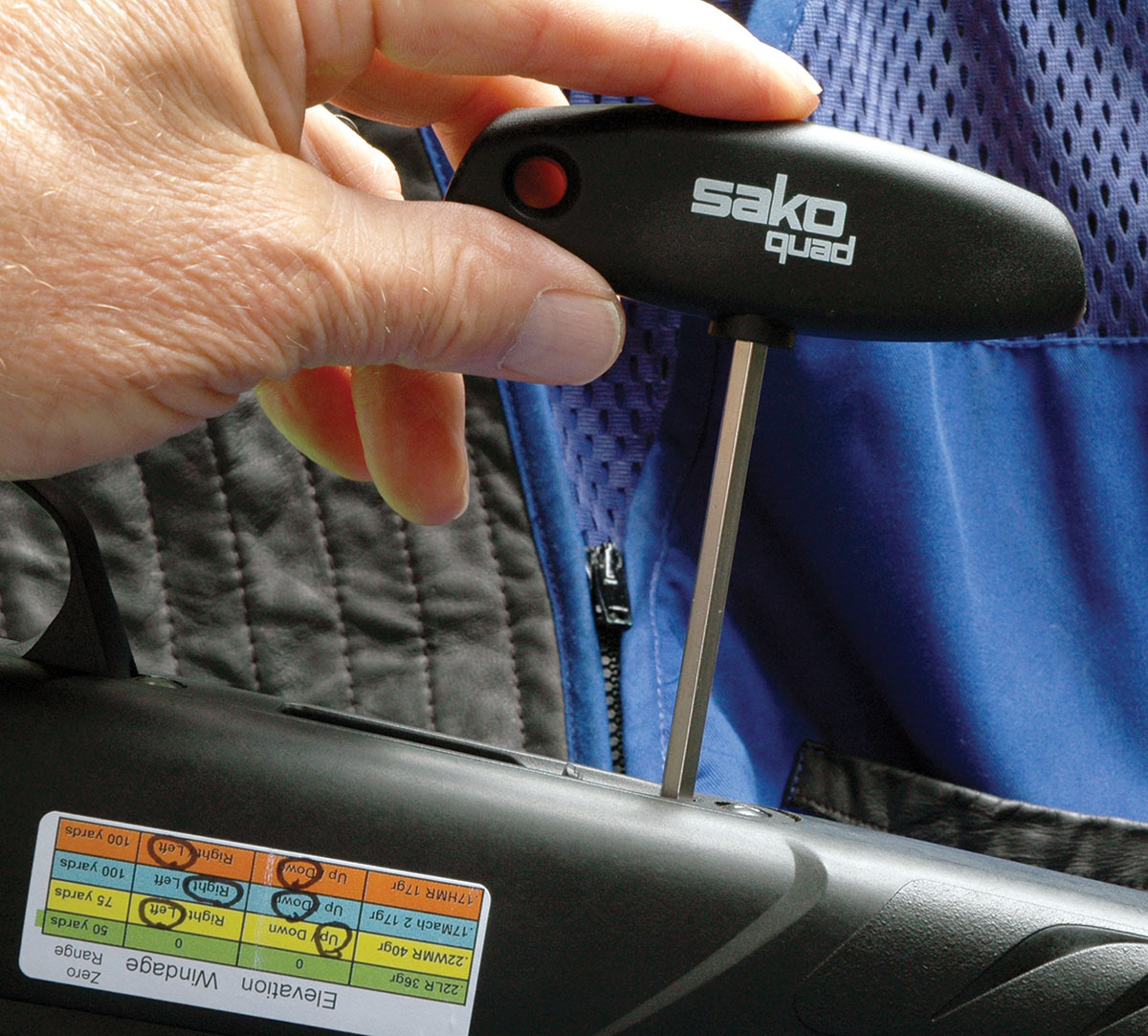
Switching barrels on the Quad is easy, and doing so does not require removing the stock. Retract the bolt, remove the magazine and use the included T-handle hex wrench to loosen a takedown bolt located just forward of the magazine slot in the bottom of the rifle. Pulling the barrel slightly upward and forward detaches it from the receiver. Slip in another barrel, tighten the bolt and it is done. As the takedown bolt is tightened, the flat surface of a spring-loaded riser block is forced hard against a matching flat on the shank of the barrel. A steel retention lug on the inner surface of the receiver ring engages a beveled groove in the barrel shank and holds it firmly in place. There is a precision V-block fit between the retention lug and the barrel.
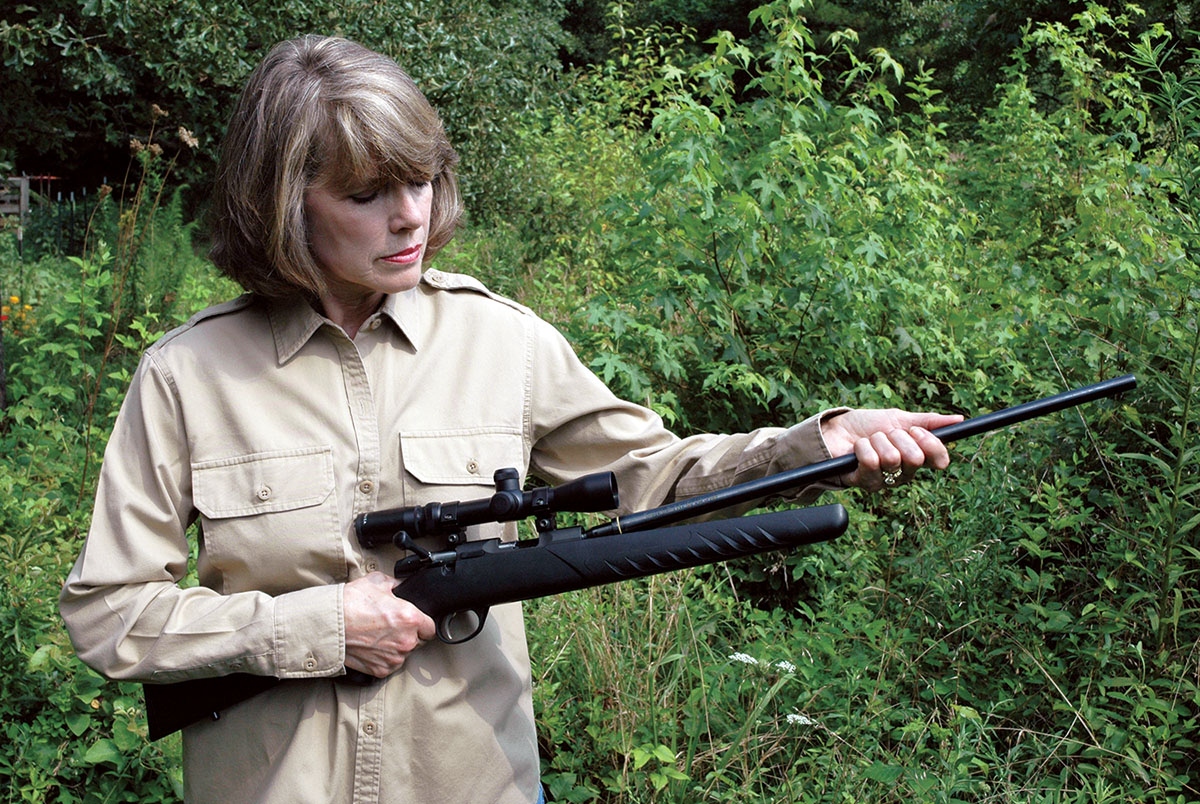
The Quad action is 7.5 inches long and from a distance it appears to be a scaled-down version of the Sako Model 85 centerfire action. Closer examination reveals its similarities to be only skin-deep. In addition to being nicely shaped, the top of the precision-machined receiver is grooved for scope mounting. Rings are available from both Sako and Burris. Retracting the bolt while pressing on a spring-loaded release removes it from the receiver. A two-position safety lever in the side of the receiver tang blocks trigger travel and locks the bolt from rotation. The fire control unit and magazine housing are bolted to the flat bottom of the receiver.
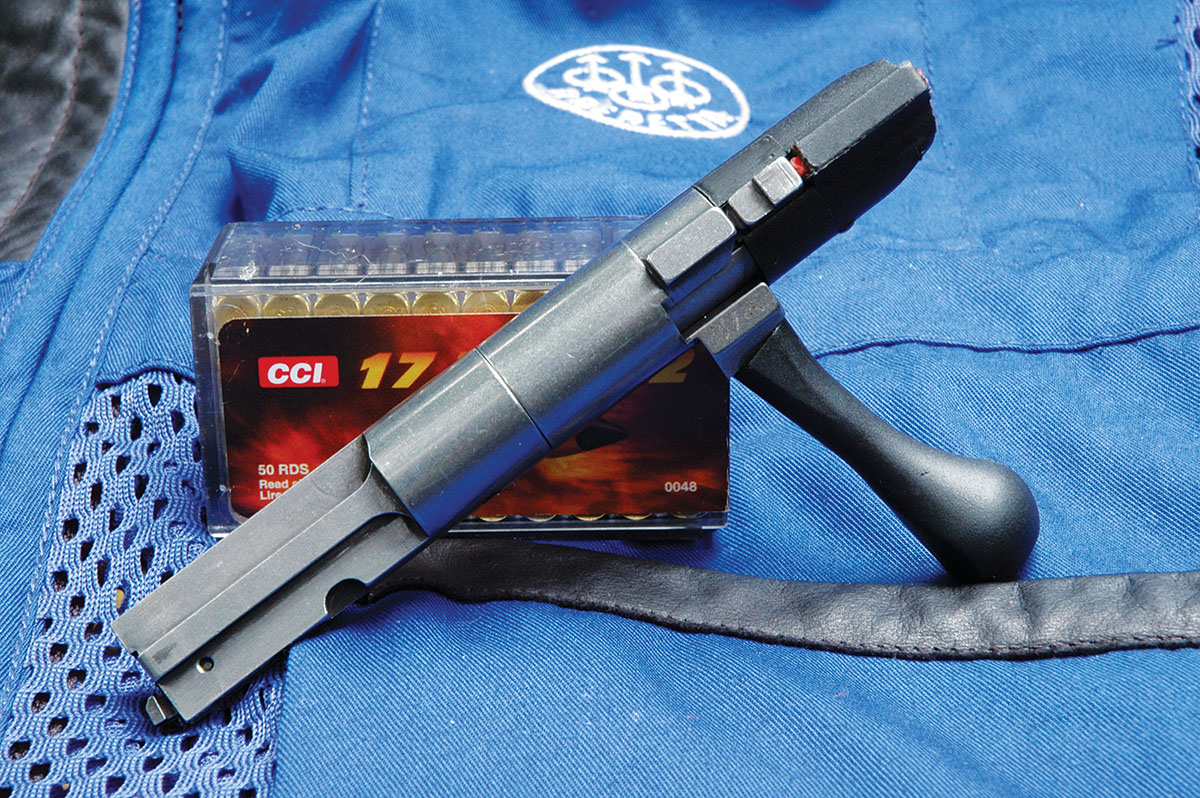
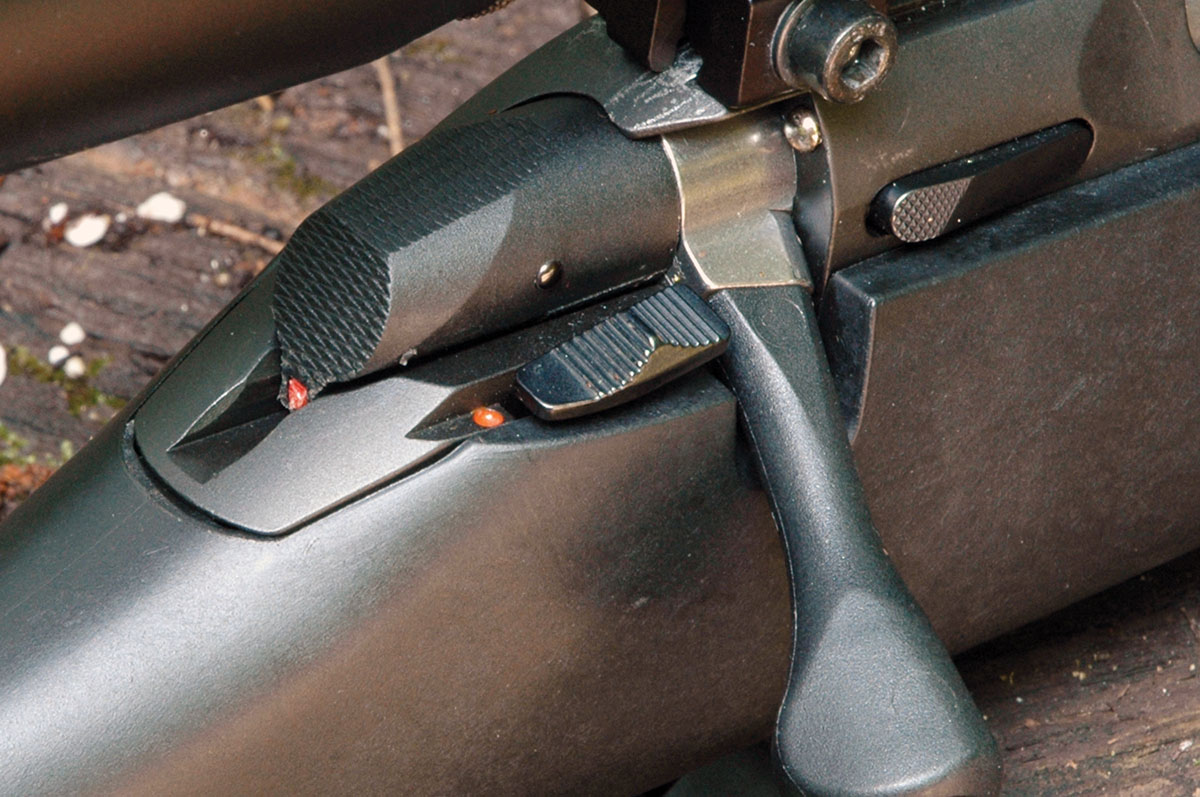
Bolt rotation is 50 degrees. Bolt diameter is 0.705 inch and it consists of two parts. The front, nonrotating section has a single extractor while a rotating section at the rear handles breech lockup. As is typical for many rimfire rifles, the root of the bolt handle contacts the front of the receiver bridge as the bolt is rotated to its locked position. But Sako took the design of the Quad a step beyond the ordinary. As the bolt is closed, a lug on its rotating section bears against a shoulder inside the receiver. The sturdy little action is more than strong enough to contain chamber pressures generated by the cartridges for which it is presently available. A red indicator in view just under the bolt shroud indicates a cocked firing pin. Exposure of another red dot to the right of that one indicates the safety tab is in its disengaged position and the rifle is ready to be fired.
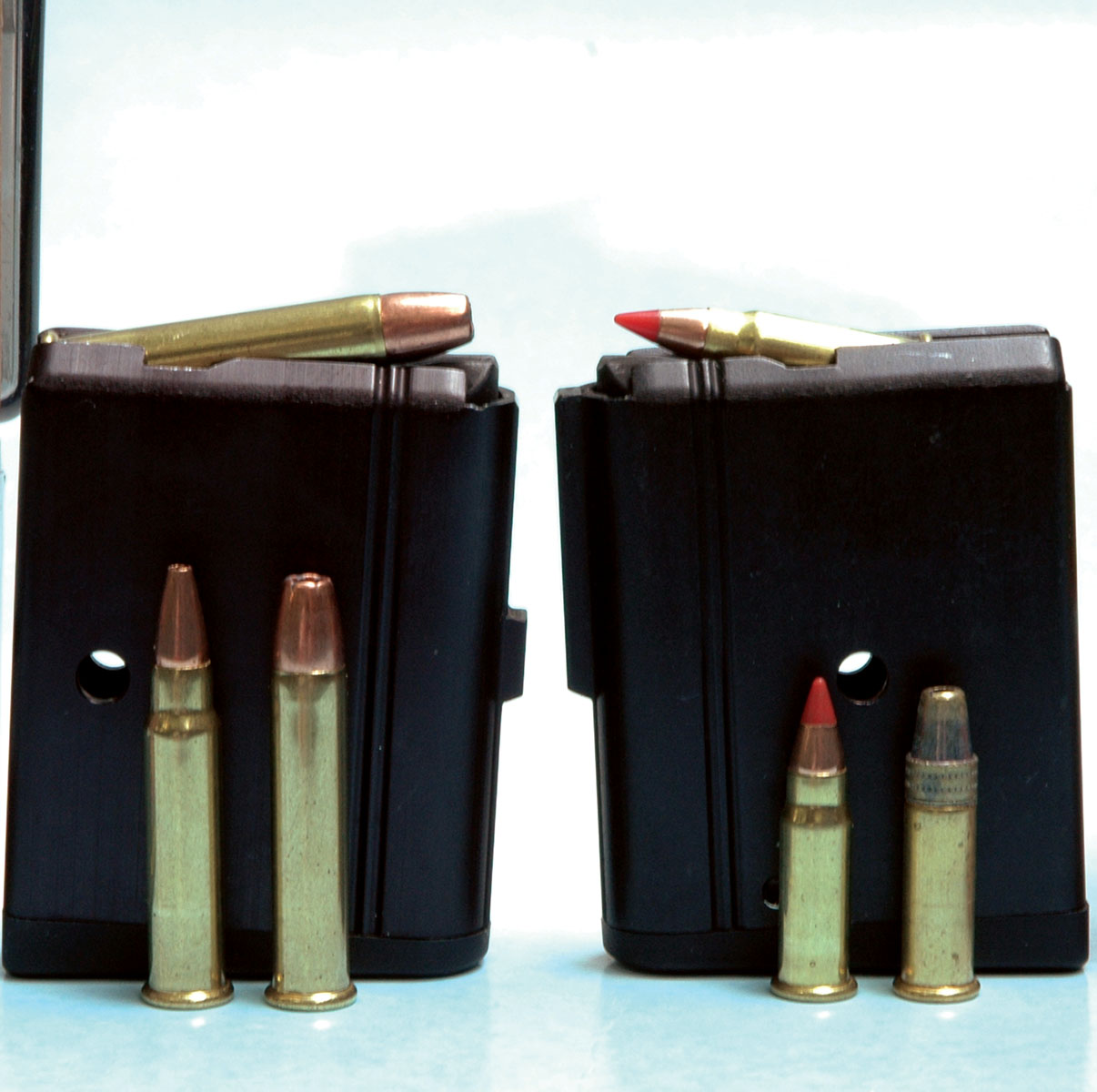
The long-cartridge magazine will seat fully in the rifle when a barrel chambered for one of the short cartridges is installed, but that presents no safety problem since the two magnums are too long and fat to enter the 22 LR and 17 Mach 2 chambers. A release tab at the front of the magazine housing is easy to operate even when wearing gloves, and since it only barely protrudes below the belly of the rifle, it is not likely to be accidentally bumped in the field.
The stock of the Quad Synthetic featured in this report is composed of fiberglass-reinforced polypropylene. The shape and dimensions of the grip are a comfortable fit with my hand. The forearm is slim enough to feel good in the offhand position, and it’s wide enough to resist canting when snuggled into a sandbag. The stock features quick-detach sling swivel posts and a silver-colored grip cap with the familiar “SAKO” logo. The rifle weighs 5.5 pounds on my postal scale. Even if you have no desire to buy one or more additional barrels for your Quad, shooters may find the takedown feature to be quite handy since it allows the little rifle to be broken down into a 29.5-inch package and stowed in places too short for longer guns.
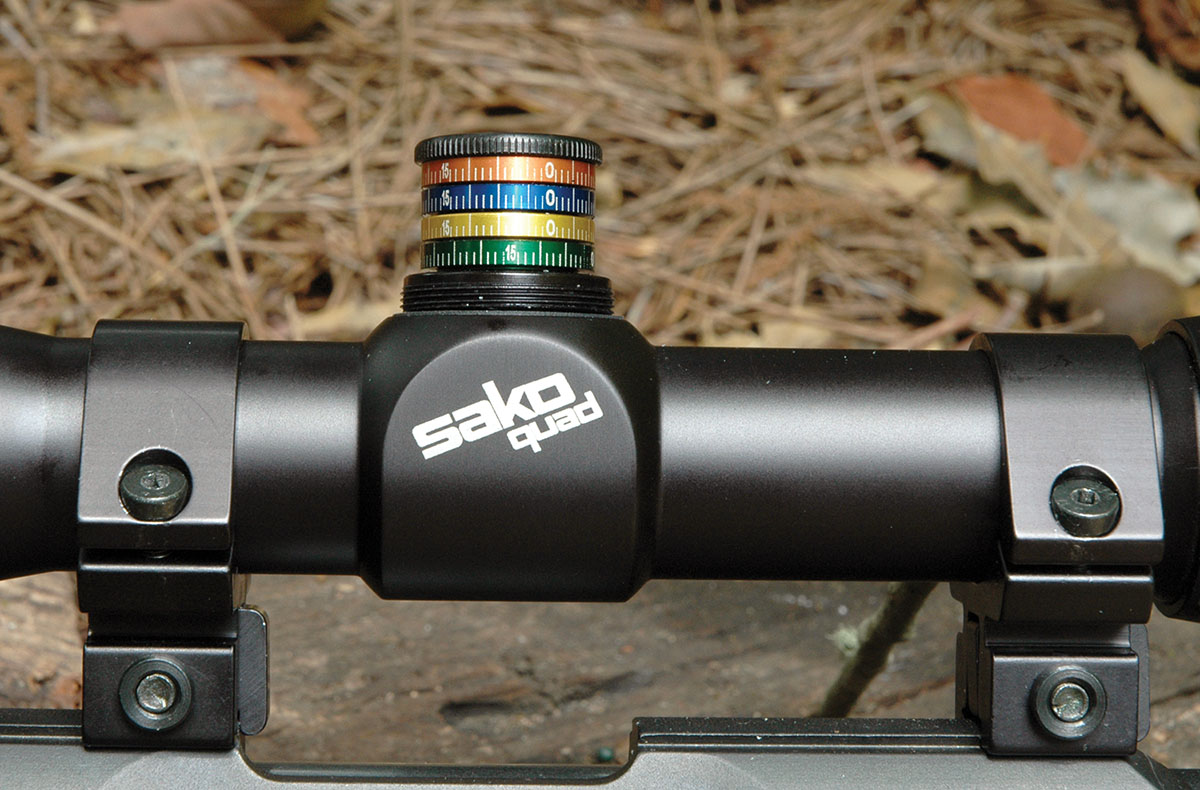
As a rule, the barrels of a switch-barrel rifle have to be zeroed individually due to differences in their points of impact, and Burris made doing so possible by developing a scope specifically for Sako Quad rifle. The scope may be even more interesting than the rifle. Burris discontinued it several years ago, but for the benefit of those who have a Quad rifle or plan to get one and discover a Quad scope at the next gun show but without its instructions, I have devoted a bit of allotted space to it.
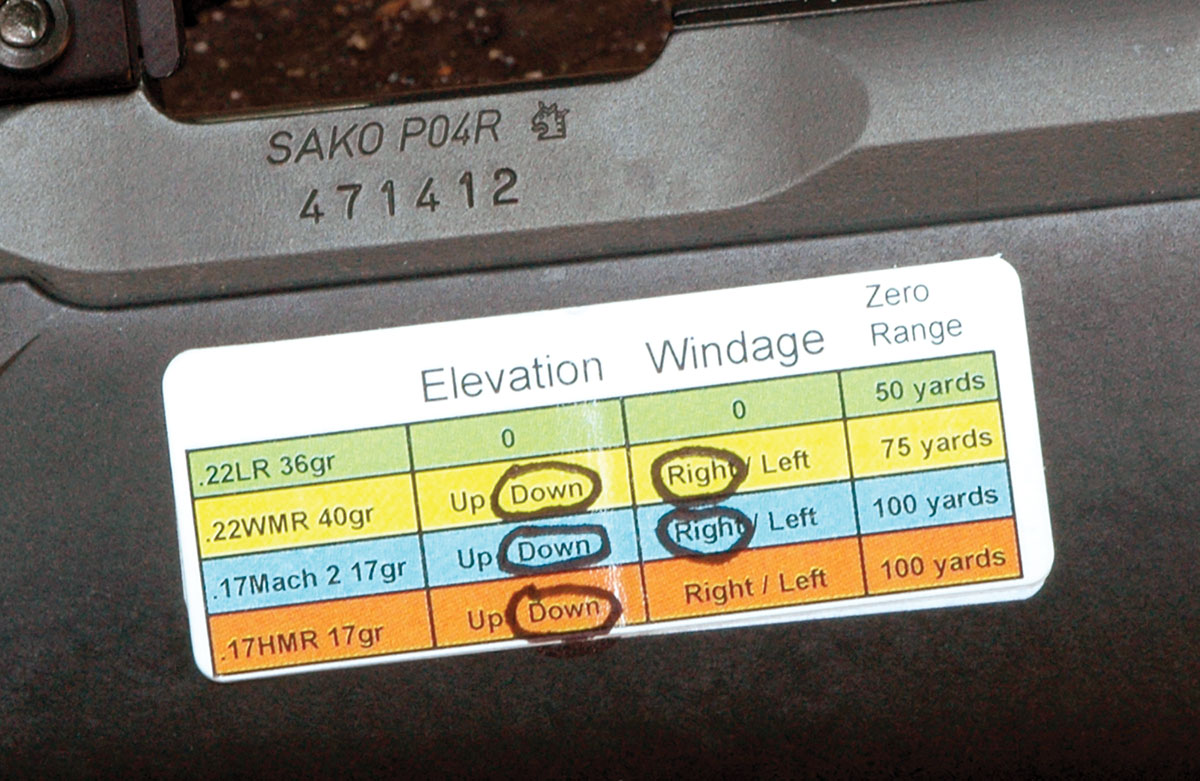
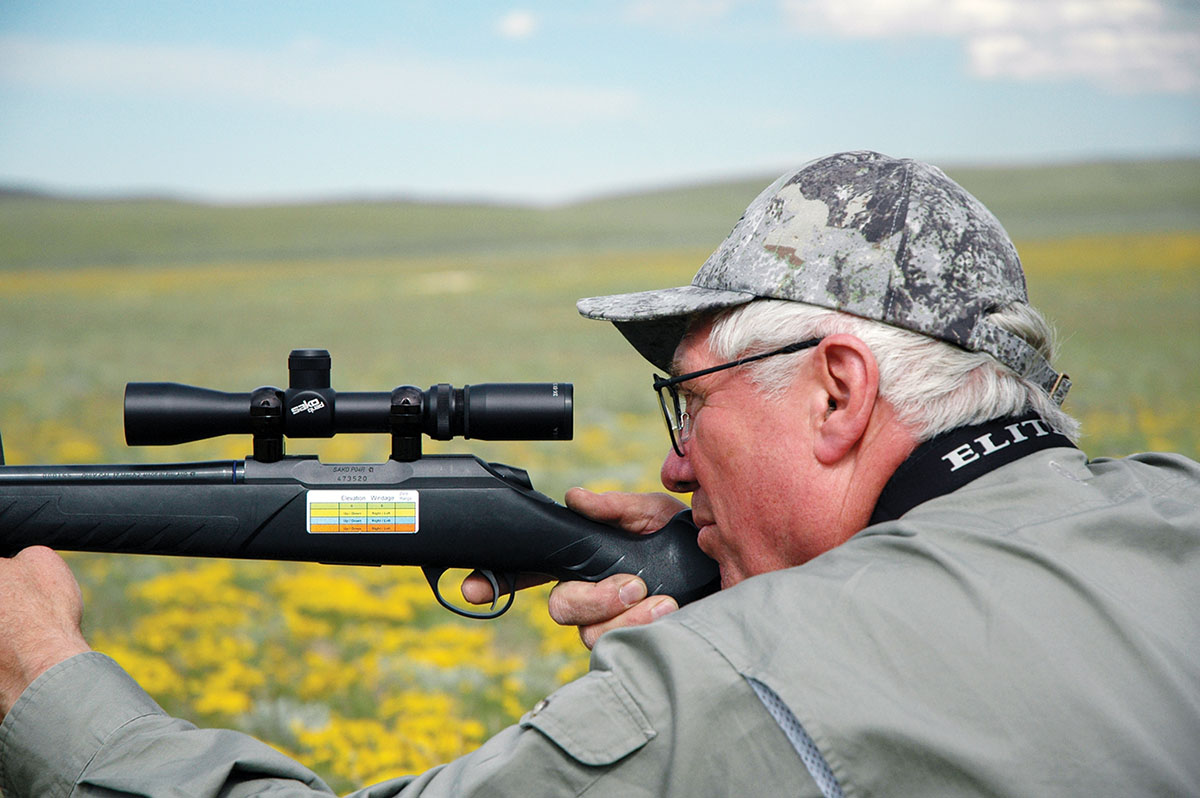
After zeroing the 22 Long Rifle barrel, it is important to note in which direction both adjustment knobs have to be turned in order to individually re-zero each of the other barrels because the directions can differ from barrel to barrel. Unless your memory is better than mine, mark that information on a stick-on reference label that was included with the scope. In its absence, the back of a business card taped to the stock will work. Point of impact of the 22 WMR barrel of my rifle was 4 inches higher and 3 inches to the left of the 22 Long Rifle zero, in which case the elevation knob had to be rotated “down” and the windage knob had to be rotated “right.” Points of impact of the other three barrels were also higher than for the 22 Long Rifle barrel, which made things easy to remember since all necessary elevation adjustments were in the same direction – “down.” Like the 22 WMR barrel, the 17 Mach 2 barrel shot to the left, but windage adjustment for the 17 HMR barrel was exactly the same as for the 22 Long Rifle barrel. You can see all of this in the photo of the reference label I filled out for the test rifle.
Another tip: Always return the scope to its 22 Long Rifle zero before switching barrels, regardless of which calibers are being switched. This makes it easier to keep up with the direction the scope will need to be adjusted for the barrel switch. For example, if going from, say, 17 HMR to 17 Mach 2, you would return to the 22 Long Rifle zero before switching barrels and then dial the scope to the 17 Mach 2 zero.
I still have a Quad scope, and while it no longer is used on the rifle it was designed for, I have found other uses for it through the years. Several years ago, U.S. Repeating Arms, then the maker of Winchester rifles, made a few Model 94 Angle-Eject carbines in 25-35 Winchester. I decided to use the rifle on a deer hunt in Texas and took along handloads with a Winchester 117-grain roundnose bullet at 2,300 fps. Upon hearing that the ranch had a good population of coyotes, I also took along an old faithful Burnham Brothers call and handloads with a 75-grain hollowpoint bullet at 2,700 fps. Those would be single loaded directly into the chamber.