

Rifle Talk
22 Hornet Lineage
column By: Lee J. Hoots | April, 20
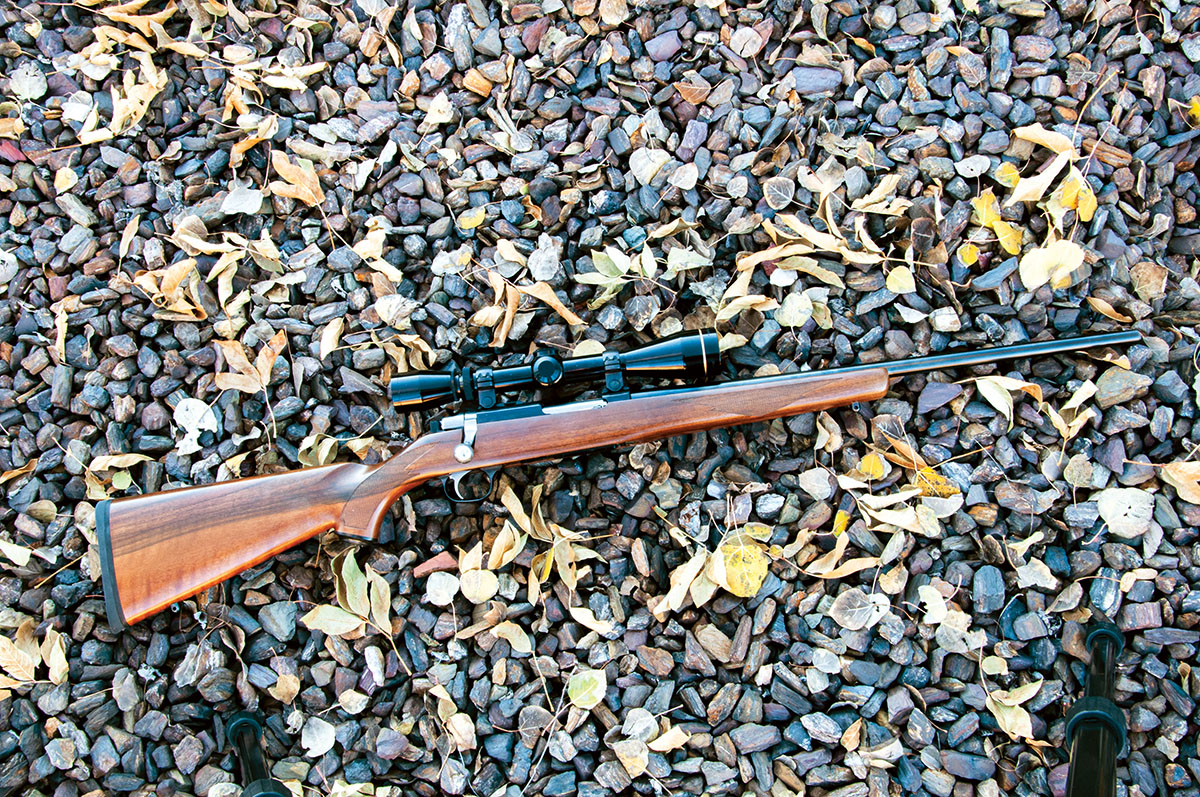
Perhaps for these reasons, the gun-making industry currently offers comparatively few rifle options for 22 Hornet enthusiasts, especially in regard to new options. The lone 22 Hornet on hand is a fairly new Ruger 77/22 topped off with a Leupold VX-II 3-9x 40mm scope in low Ruger rings. It too, is finicky when it comes to shooting groups, though its accuracy is good enough for plinking and the occasional poke at a big, Arizona jack. A Ruger 77/22 22 Winchester Magnum Rimfire shoots smaller groups, so gets more field use.
Its history is worth reexamining. However, in this internet age, where copyrighted work is knowingly “poached” and used for gain by unscrupulous “experts,” it’s important to point out that some of the historical information used here was gathered long ago by Gil Sengel and the late Ken Waters in older issues of Handloader magazine. Frankly, these cartridge’s histories have not changed, will not change, and there’s nothing new to say. Furthermore, since the 22 Hornet’s own history is well-known, only essential information will be provided as warranted.
In 1885 and 1886, Winchester Repeating Arms catalogs referenced a 22 Winchester and a 22 Winchester Center Fire. In another, later catalog in 1886, Winchester touted a 22 Winchester Single Shot cartridge. In an April 1886 catalog, the 22 Winchester cartridge showed up. Why Winchester so toiled with the name of the cartridge, who could guess? Today, however, it’s widely known as the 22 WCF.
According to Sengel’s research, the case held 15 grains of black powder topped off with a lead, 45-grain bullet of .228 inch diameter. Before 1920, the stated charge became 13 grains for a velocity of roughly 1,300 fps. Later a smokeless load reached more than 1,541 fps. That’s not even close to published Hornet loads in the 1954 Speer Handloaders Manual Volume One which, using the same bullet weight, suggests 2,600-plus fps at the muzzle using smokeless propellants of the day.
In The Rifle In America (1938), author Philip B. Sharpe states, in regard to the 22 WCF, “…this cartridge a few years ago was revised and became the Winchester Hornet now manufactured by all makers of ammunition.” Ken Waters may have found this treatment of the cartridge’s comeuppance too informal, so he published a cartridge biography that includes the fact that multiple people were involved in the final Hornet version, with G.L. Wotkyns perhaps being most significant in the 1920s by sharing his findings with the staff at Springfield Armory. Beyond that, perhaps the introduction of Hercules 2400 propellant in 1933 (now Alliant) put the 22 Hornet on the map. (Interested readers can purchase Pet Loads at wolfeoutdoorsports.com or by calling 800-899-7810.)
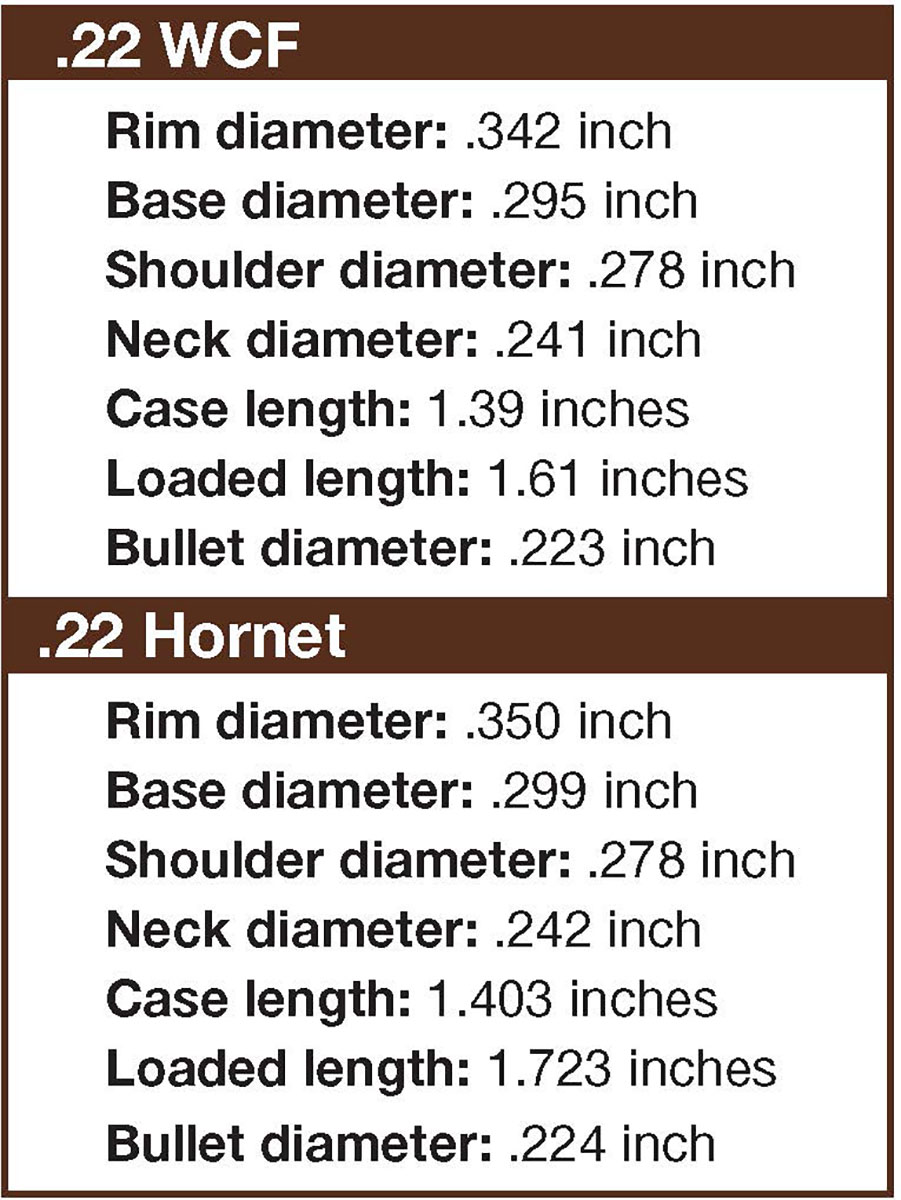
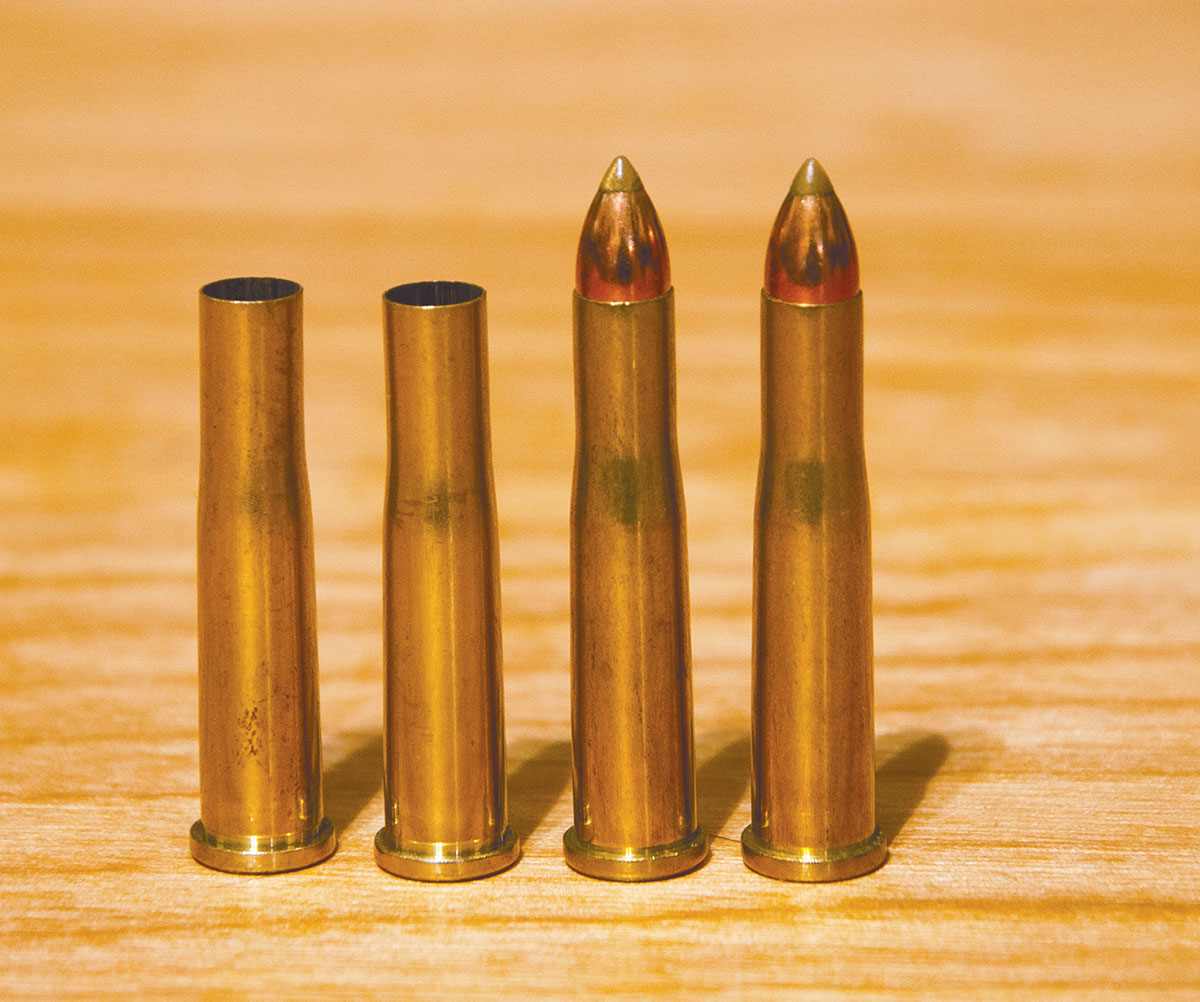
While the 22 WCF may have led to the development of the 22 Hornet, additional research was required to find out how distinctly different these two cartridges are. This lead first to purchasing “reformed” 22 WCF cases from Buffalo Arms Company. The cases that showed up were reformed Hornady 22 Hornet brass. Measuring the cases proved frustrating due to slight tolerance variations of the unfired brass. Fortunately, published cartridge art was found in archives. Relative measurements for both cartridges are listed here. There is very little difference between the two cases, but enough to clearly show the difference.
Published load recipes for the 22 WCF are limited, with only a couple of loads found on LoadData.com. Using 6.0 grains of Alliant 2400, a 45-grain softpoint can be pushed to roughly 1,650 fps (no barrel length given). For comparison, the Speer Handloading Manual Number 15 lists a 45-grain spitzer softpoint loaded over 8.0 grains of 2400 at 2,220 fps from a 22 Hornet with a 24-inch barrel. The manual also lists the 22 WCF as the Hornet’s parent cartridge.
According to Sharpe, when Winchester introduced the Hornet in 1930, the only cartridges available were loaded with 45-grain softpoints at roughly 2,300 feet per second, and a 46-grain hollowpoint at about 2,500 to 2,600 feet per second. Today, handloaders can easily exceed those velocities with lighter 35- and 40-grain, tipped varmint bullets.
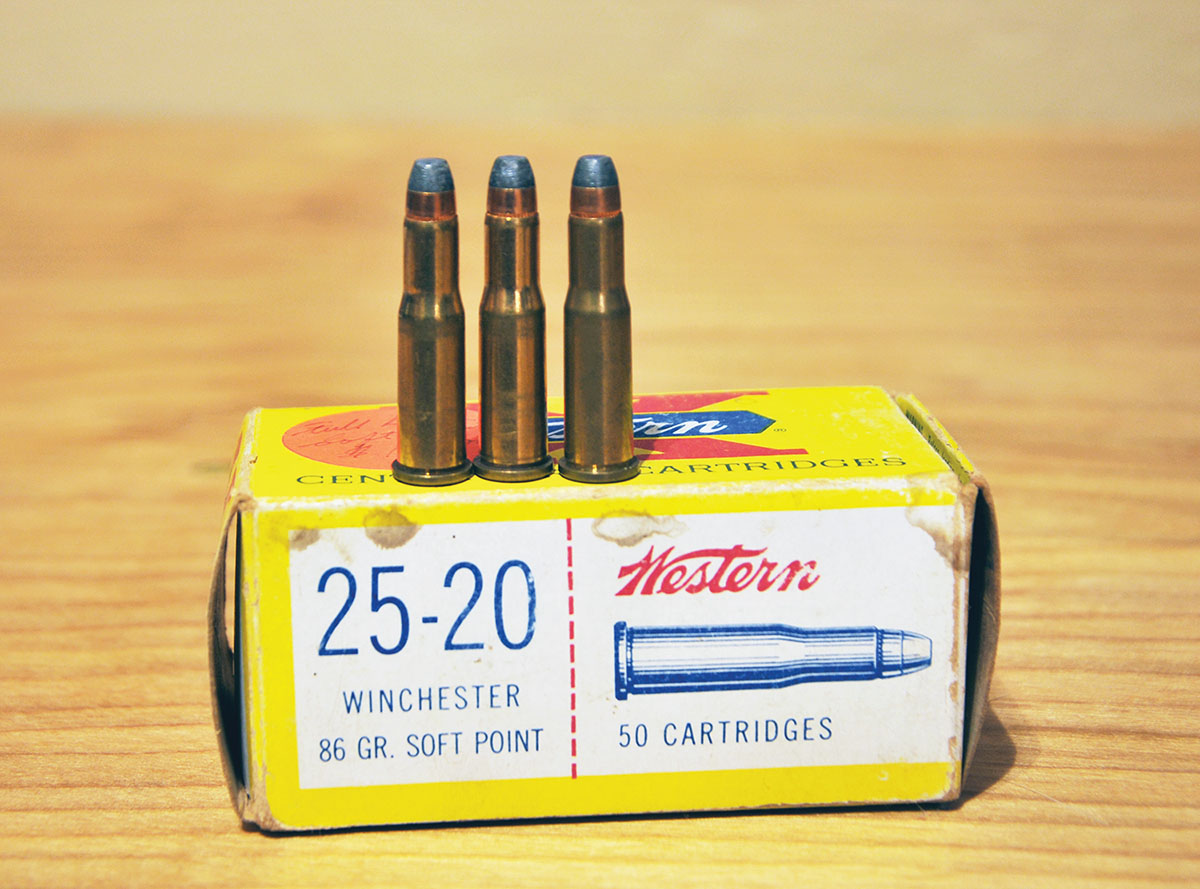
As far as rifles went, one might think Winchester Repeating Arms Co. would produce the first, having introduced the commercial cartridge, though it appears Griffin & Howe (according to Waters) was marketing a custom 22 Hornet-Springfield by the end of 1931. The Savage Model 23-D Hornet showed up in 1932. Lagging behind was the Winchester Model 54. It was not unusual for other manufacturers to beat Winchester to the market with rifles for cartridges it
introduced. Regardless, the 22 Hornet quickly became the varminter’s choice, and all but crushed the widely popular 25-20. But that piece of the 22 Hornet puzzle will have to wait for the next issue.