223 Remington Is Still on Top
Sako L461 Varmint Setup
feature By: Zak May | April, 25
I was talking to a few friends the other day about how they are controlling the coyote population on their dairy farms. Four out of five said they still had a 223 Remington bolt action rifle. The fifth friend said a 30-06 Springfield, which I could not argue
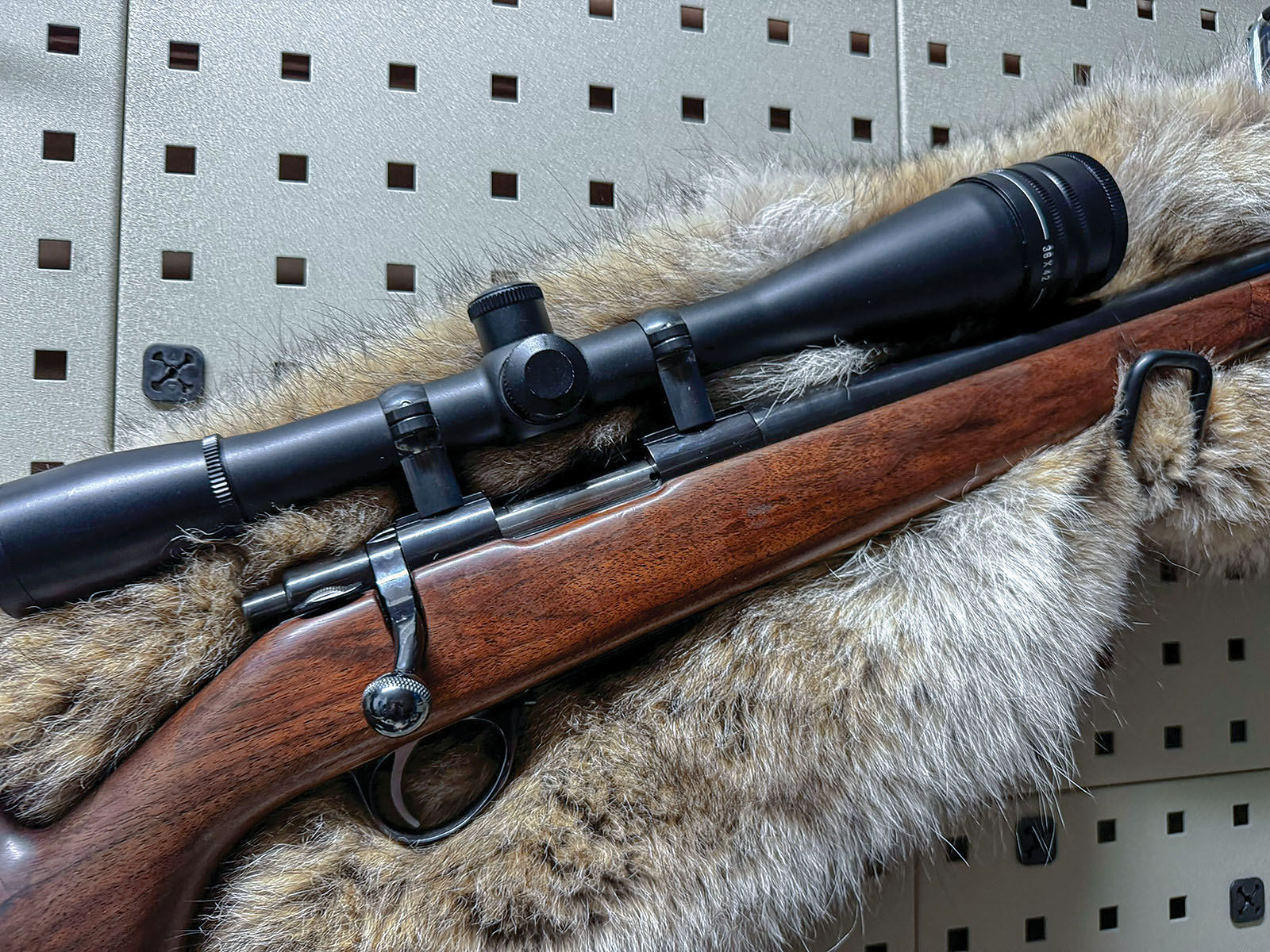
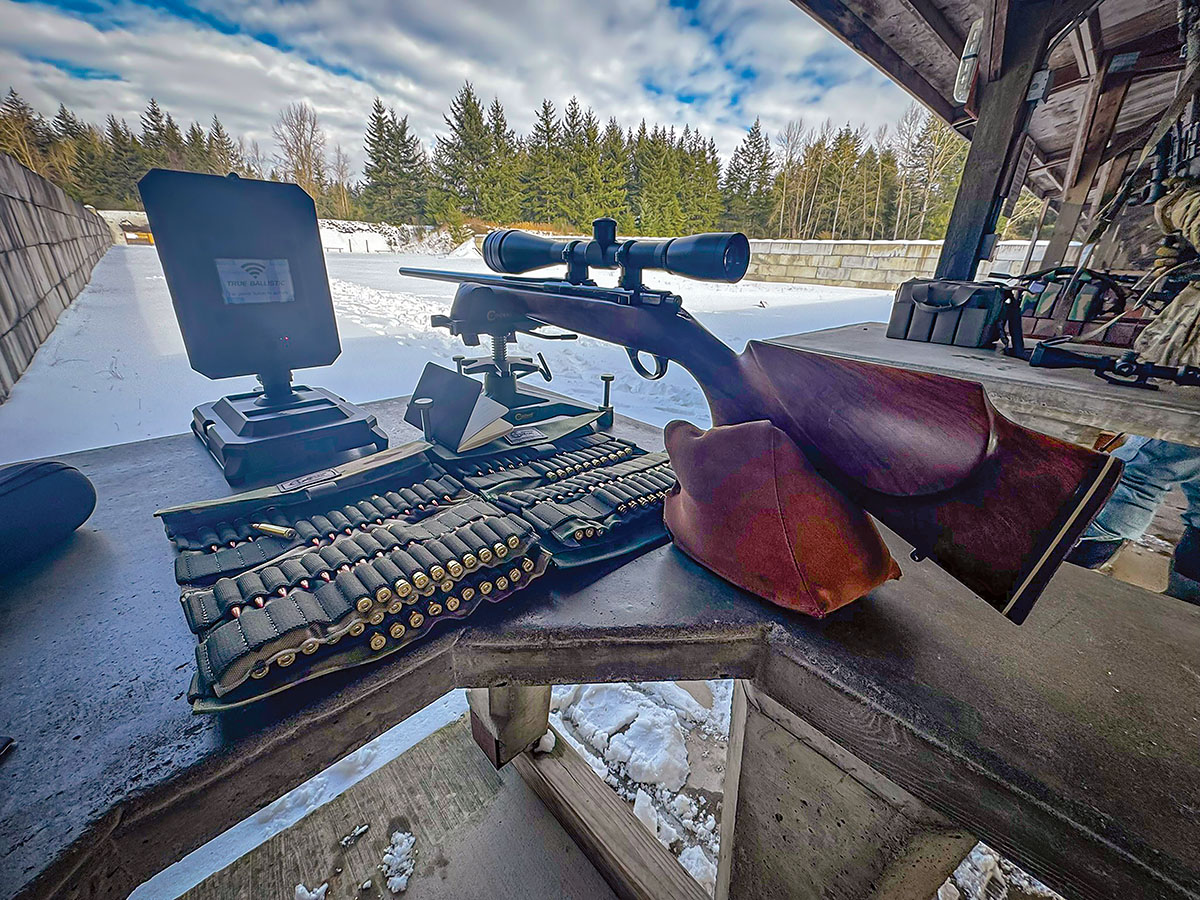
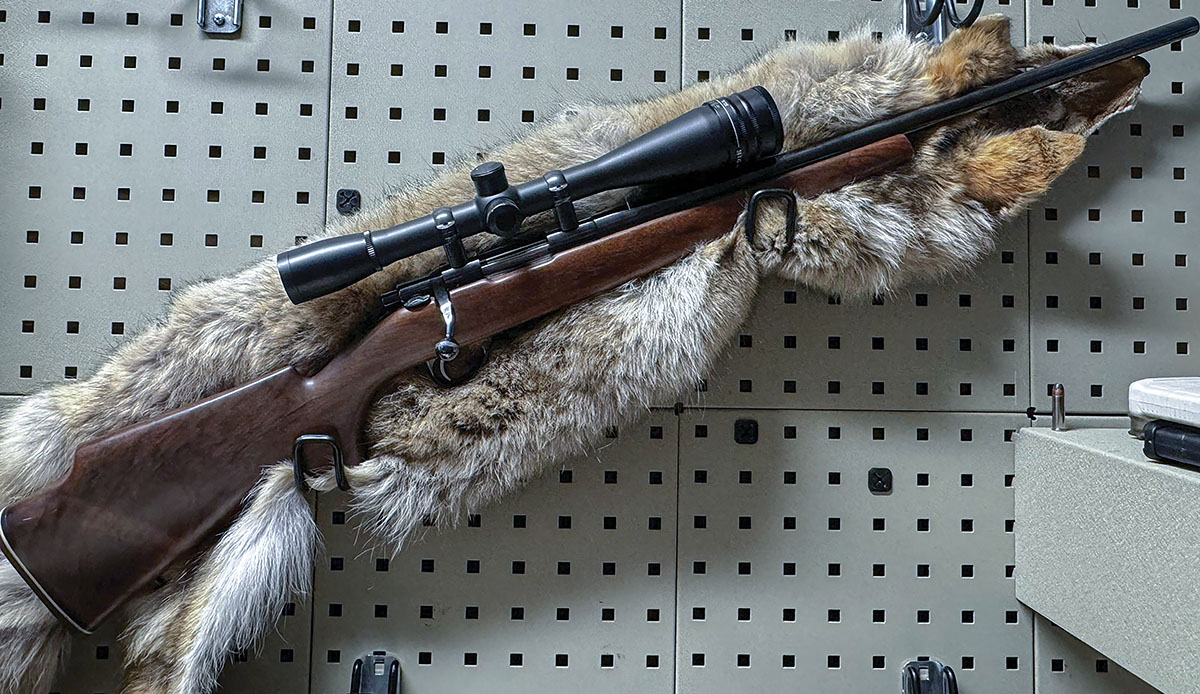
That conversion led me to think about what I wanted to use for coyotes this year. I looked in the safe and pulled out a Sako L461 Vixen Sporter chambered in 223 Remington. I had this rifle for some time but haven’t set it up for varmint hunting. I thought there was no better time than the present. I could take it to the east side of Washington for some prairie dogs this summer. At this point, I had only shot about forty rounds of factory Nosler ammunition, specifically, their 40-grain Nosler Ballistic Tip Varmint Lead-Free. When I first picked up this rifle, I put on a set of Sako medium-height, one-inch scope rings. I reviewed some of the scope options and decided on a Sightron SII 36x42 BRD competition scope. The Sightron SII features an adjustable objective with 720 degrees of focus adjustment, ranging from 45 feet to infinity. The locking ring on the 42mm objective prevents movement under recoil. The target knobs provide audible click adjustments in 1/8 MOA, resettable to zero. The scope features a fine crosshair reticle with a .125 MOA dot. This setup is an excellent option for varmints.
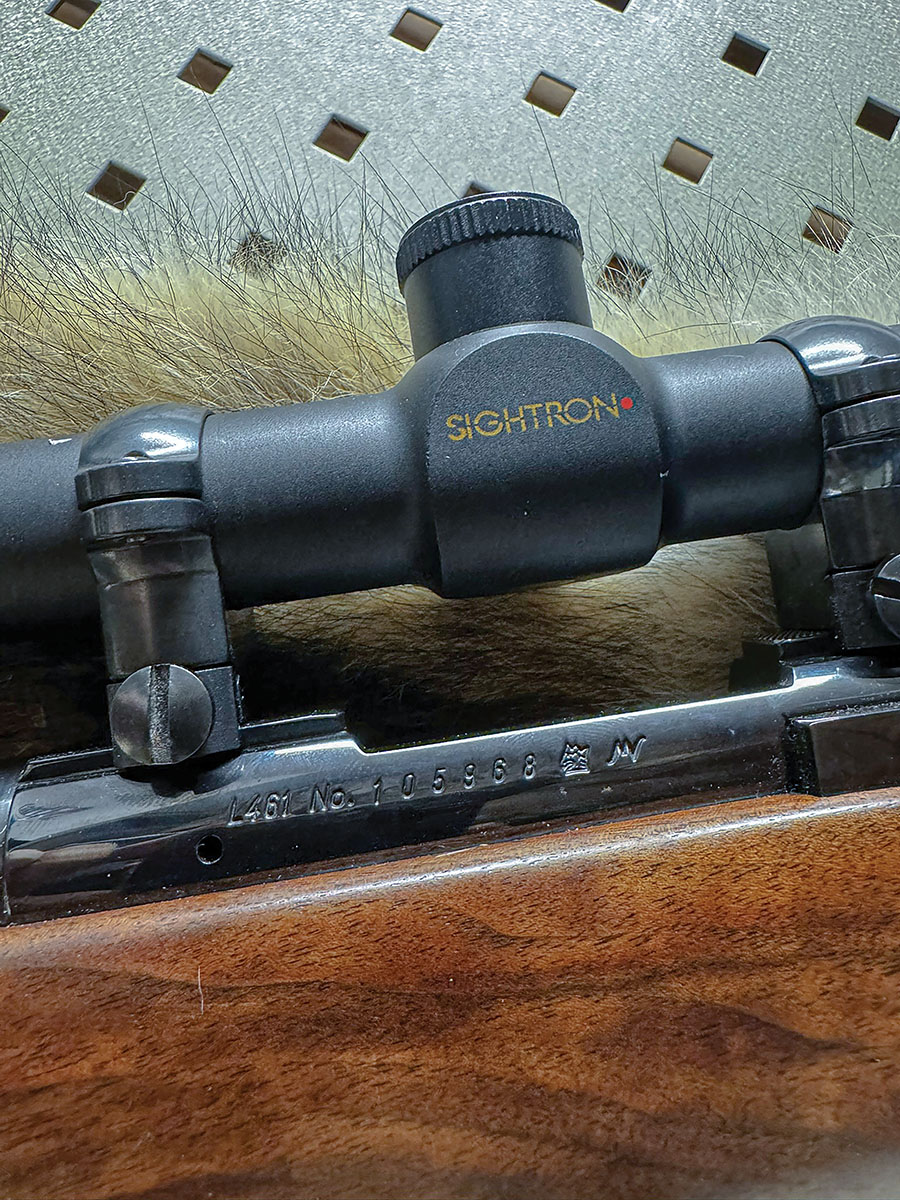
Now let us talk about the Vixen. This rifle was designed with the target and varmint hunter in mind. The rifle was offered in 17 Remington, which was rare, with 222 Remington, 222 Remington Magnum and 223 Remington which is what my rifle is chambered in. The L461 has a right-hand action that glides smoothly up and down the highly-polished raceway. It has a Monte Carlo walnut stock and the butt pad is a hardened rubber. The Vixen has a 24-inch length blued barrel and a single-stage trigger that has to be one of the best factory triggers I have ever felt – breaking smoothly at 1.5 pounds. The floor plate has a five-plus-one internal box magazine. The rifle weighs 7 pounds 9 ounces with rings and scope. This rifle is a beauty, and I will pass it on to my kids, as it has a classic look and it is a fantastic rifle that is easy to shoot. Along with the 223 Remington having little recoil for younger shooters, it also makes it an excellent varmint cartridge that makes it easy to stay in the optic to see the point of impact. The twist rate limits bullet selection, which restricts using the higher ballistic coefficient (BC) bullets for longer-range shots on prairie dogs.
With the 223 Remington being on top of the list for varmint hunting, it’s got some stiff competition with the ever-popular 22-250 Remington and, as of late, the 22 Creedmoor, which is my favorite for getting out there and knocking down some prairie dogs at 400 yards and beyond. Hornady’s new 22 ARC
(advanced rifle cartridge) can reach velocities close to, or the same as, the 22-250 Remington in an AR15 platform. I think that will be the future of varmint hunting. I am not saying it will completely replace the 223 Remington, but it will significantly cut into the spotlight. The 223 Remington will always be cheaper as the case is smaller and uses less powder. The main advantage of shooting the 223 Remington over the others, is less felt recoil. Talking ballistics between the 223 Remington and 22 ARC, let’s pick two offerings from the factory Hornady line: the 223 Remington Varmint Express 55-grain V-MAX with an advertised 3,240 feet per second (fps) and the 22 ARC V-Match 62-grain ELD-VT with an advertised 3,300 fps. As you can see, the speeds are similar. Where the 22 ARC overtakes the 223 Remington is shooting heavier, high BC bullets with the 55-grain V-Max G1 B.C. of .255 and the 62-grain ELD-VT of a G1 BC of .395. You see this at an expanded range, like 400 yards. If both rifles are zeroed at 200 yards, the drop at 400 yards for the 223 Remington is 21.4 inches; for the 22 ARC, it is 16.4 inches of drop, and that gap just starts to grow as you stretch the legs on the cartridge. The most significant difference will be shooting in the wind, as the 62-grain out of the 22 ARC will not drift as much in the wind.
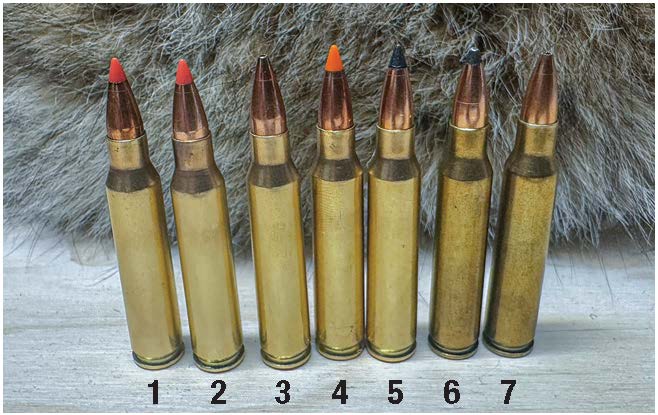
The history of the 223 Remington is widely known due to the military adoption in 1964 of the selective-fire M16. Before that, the 223 Remington arrived on the scene in 1957 as an experimental military cartridge for the Armalite AR-15 for testing. The 223 Remington is an improvement on the 222 Remington, getting around 100 to 150 fps on the same bullet.
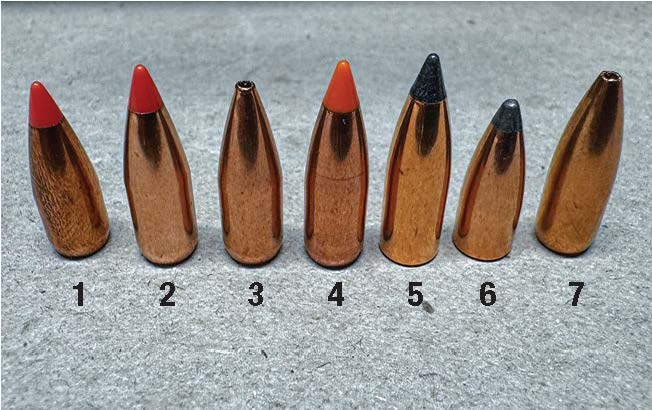
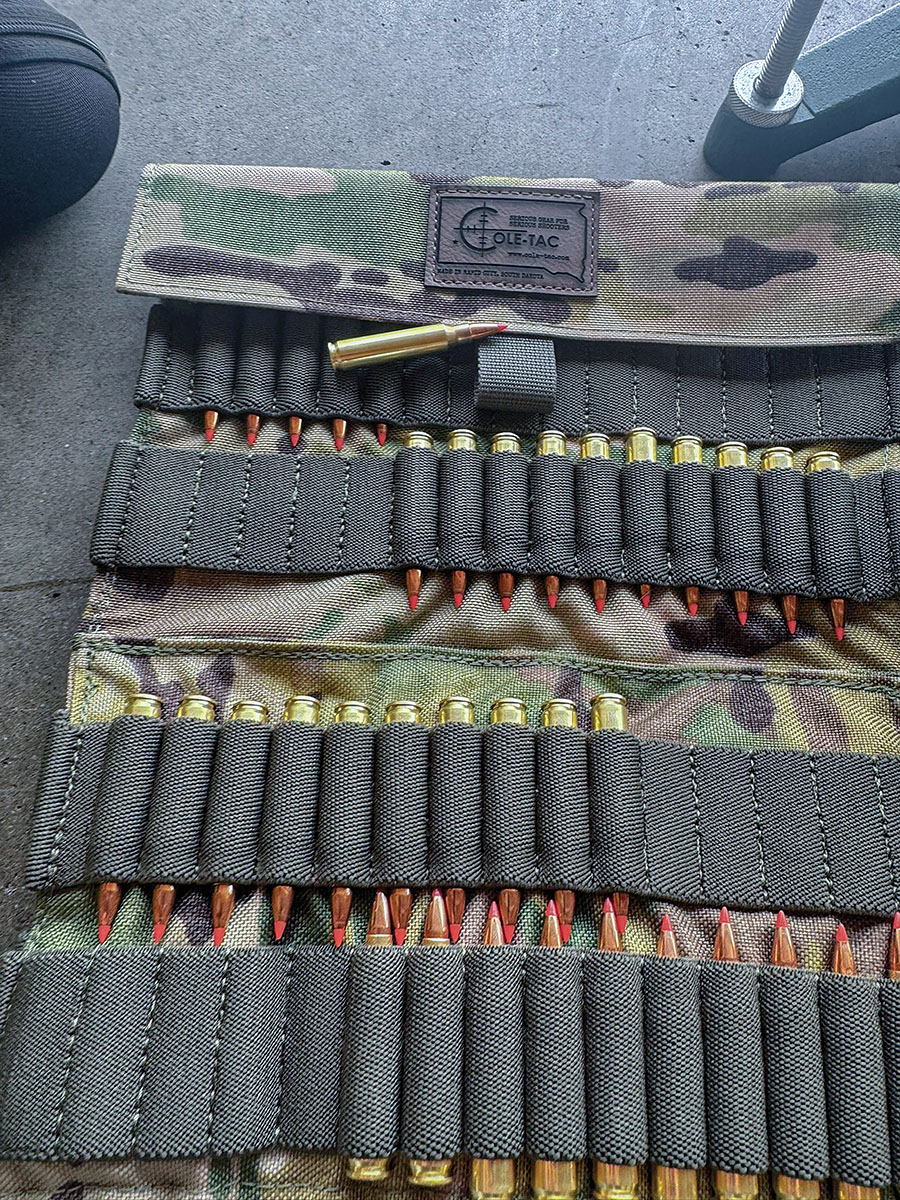
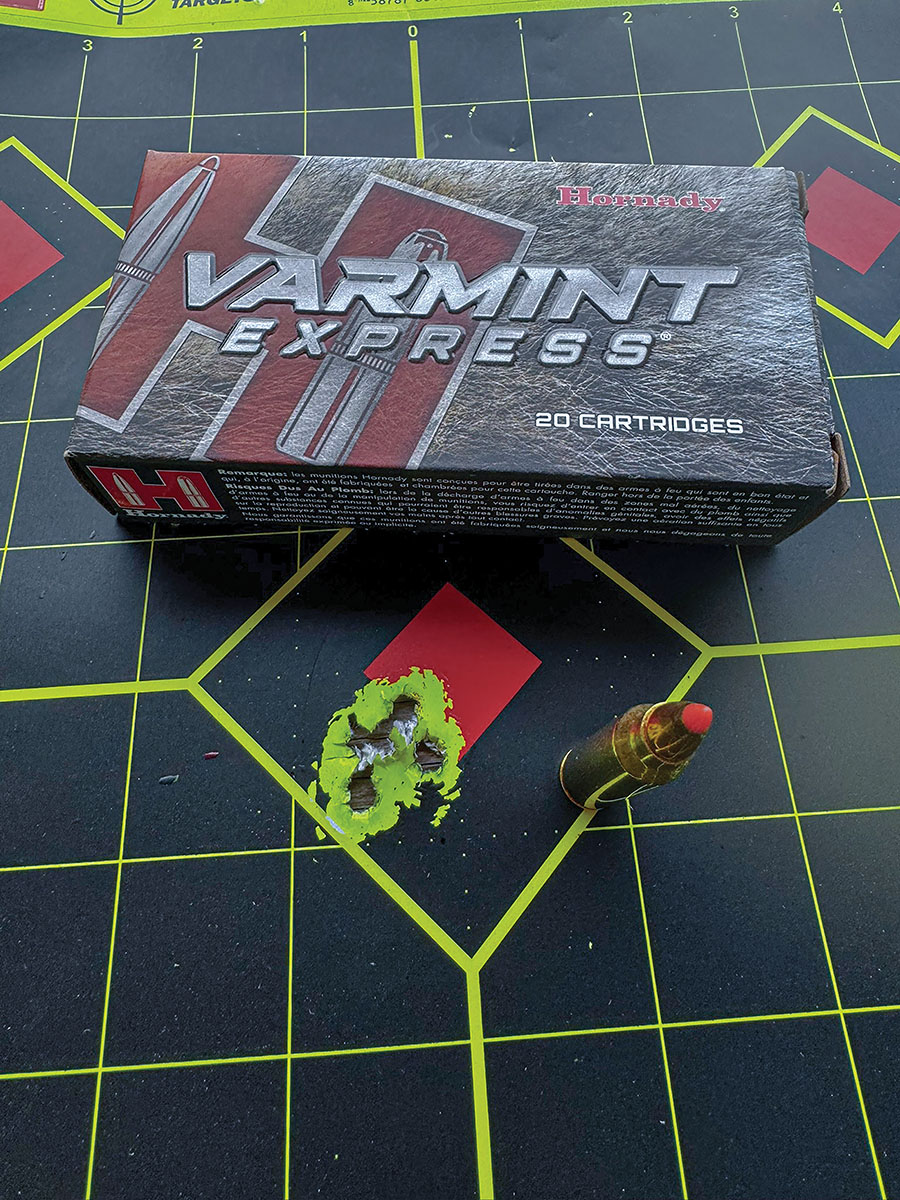
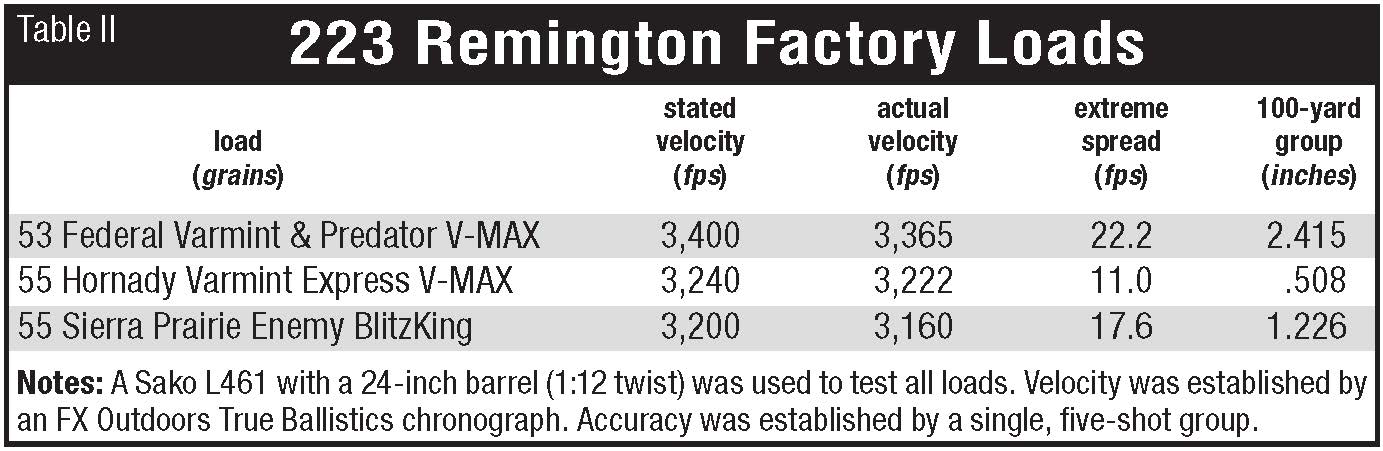
It’s hard to argue that the 223 Remington is not the main varmint round these days, what with the AR-15 platform and how many manufacturers like Hornady, Federal, Nosler and Barnes are making high-quality ammunition. The availability of walking into any gun shop and finding a box of 223 Remington is probably unmatched. It makes it easy just to get out and hunt prairie dogs. Of course, as I did, you must ensure the factory ammunition agrees with your rifle. I went to my local gun shop and looked at what was in stock for my rifle. I picked out three options that I felt might shoot well. The first option was the Federal Varmint & Predator loaded with Hornady 53-grain V-MAX, the second option was the Hornady Varmint Express 55-grain V-MAX and the third option was Sierra Prairie Enemy 55-grain BlitzKing Varmint & Predator.
The best result in the Sako was the Hornady Varmint Express 55-grain V-MAX shooting a five-shot group of .508 inches at 100 yards. I was disappointed with how the other two factory offerings shot. The Sierra Prairie Enemy 55-grain Blitzking Varmint & Predator’s best five-shot group was 1.226 inches. The other three groups were measured around 2 inches. The Federal Varmint & Predator, loaded with Hornady 53-grain V-MAX, did not stabilize in the Sako 1:12 twist, which I found interesting. I shot two groups with that ammunition; the best group was the 2.415-inch group.
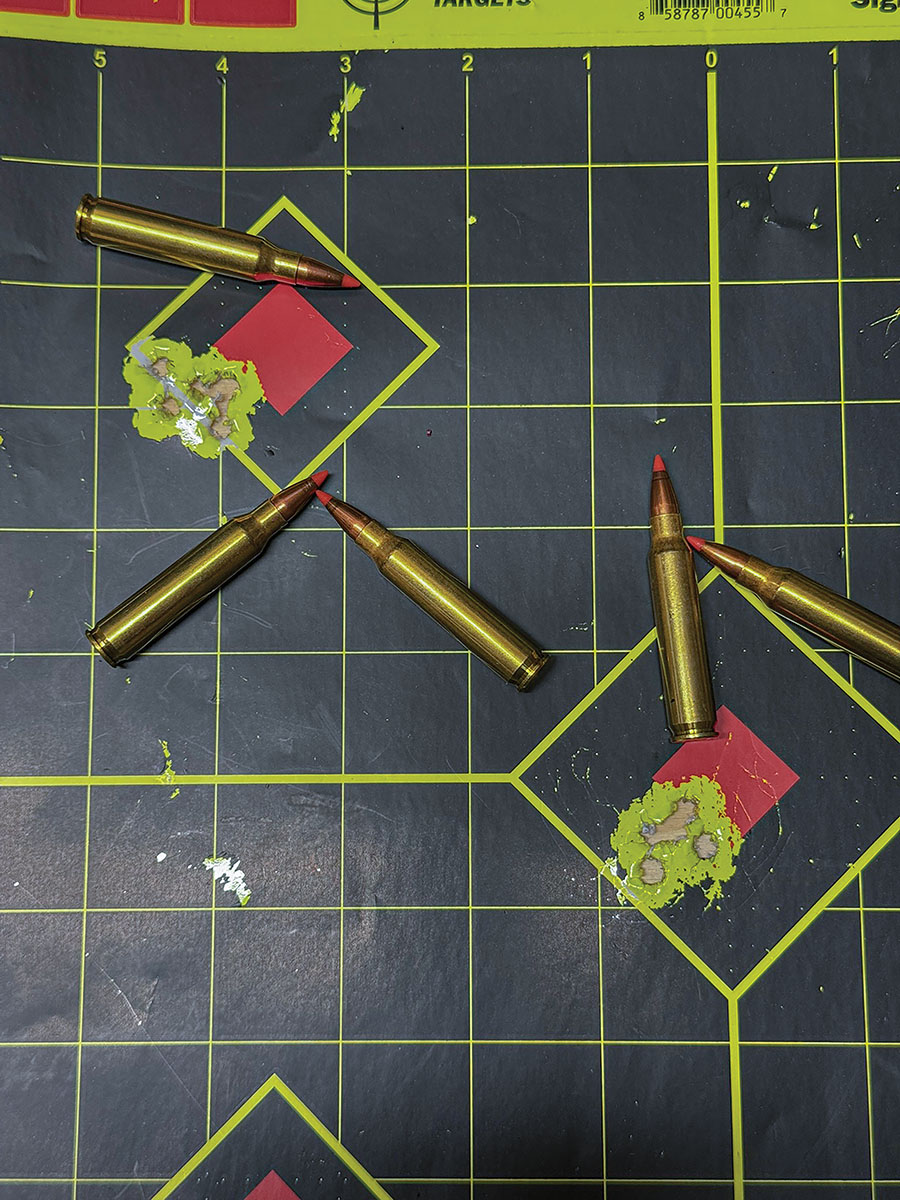
This is why it is essential to get out and test factory ammunition before you buy a bunch of it because you never know what the rifle will like. That way, you are not stuck with ammunition that does not perform optimally in the rifle.
One of the upsides of 223 Remington is the availability of handloading components and a wide range of powder options. The most significant advantage to handloading 223 Remington is the cost savings per round. There is a wide range of bullet options, such as the 40-grain Sierra BlitzKing and the 55-grain Hornady V-MAX.
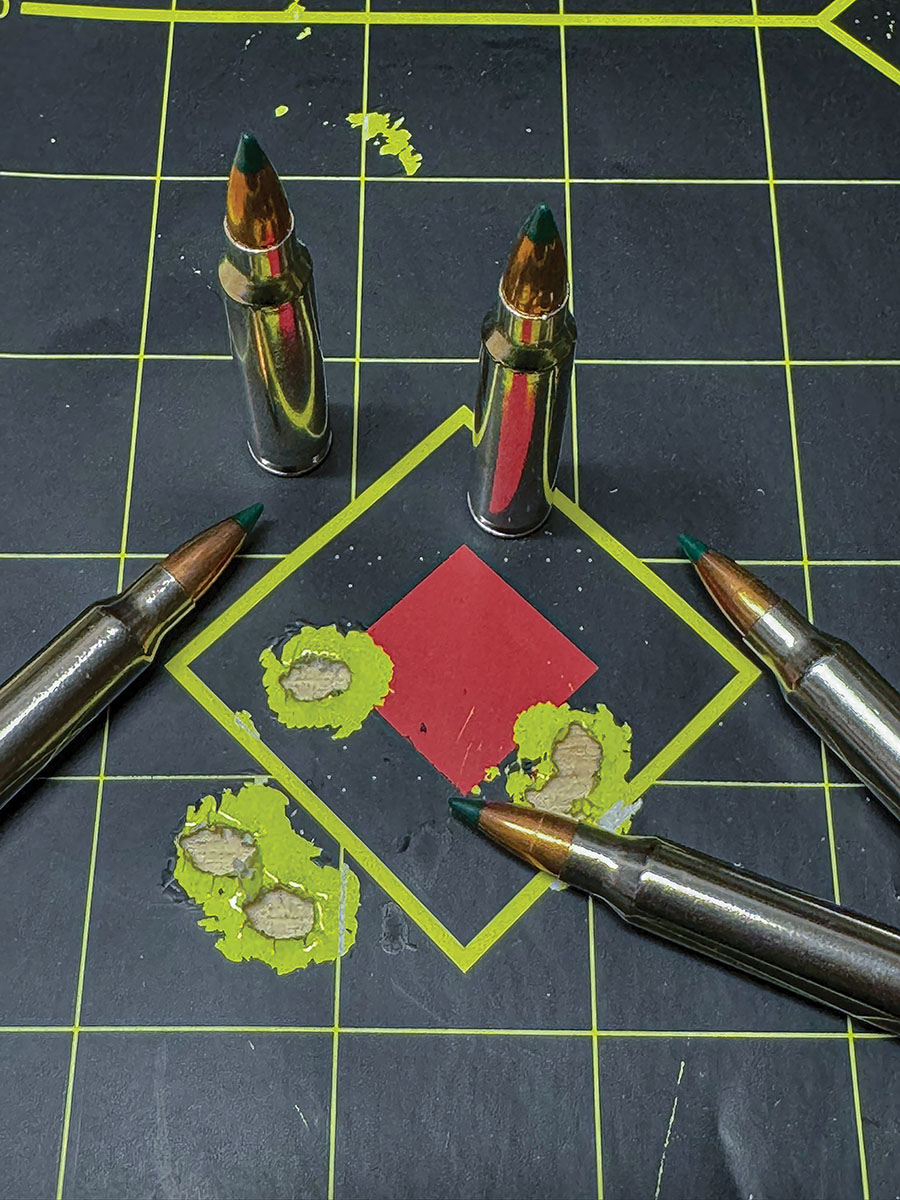
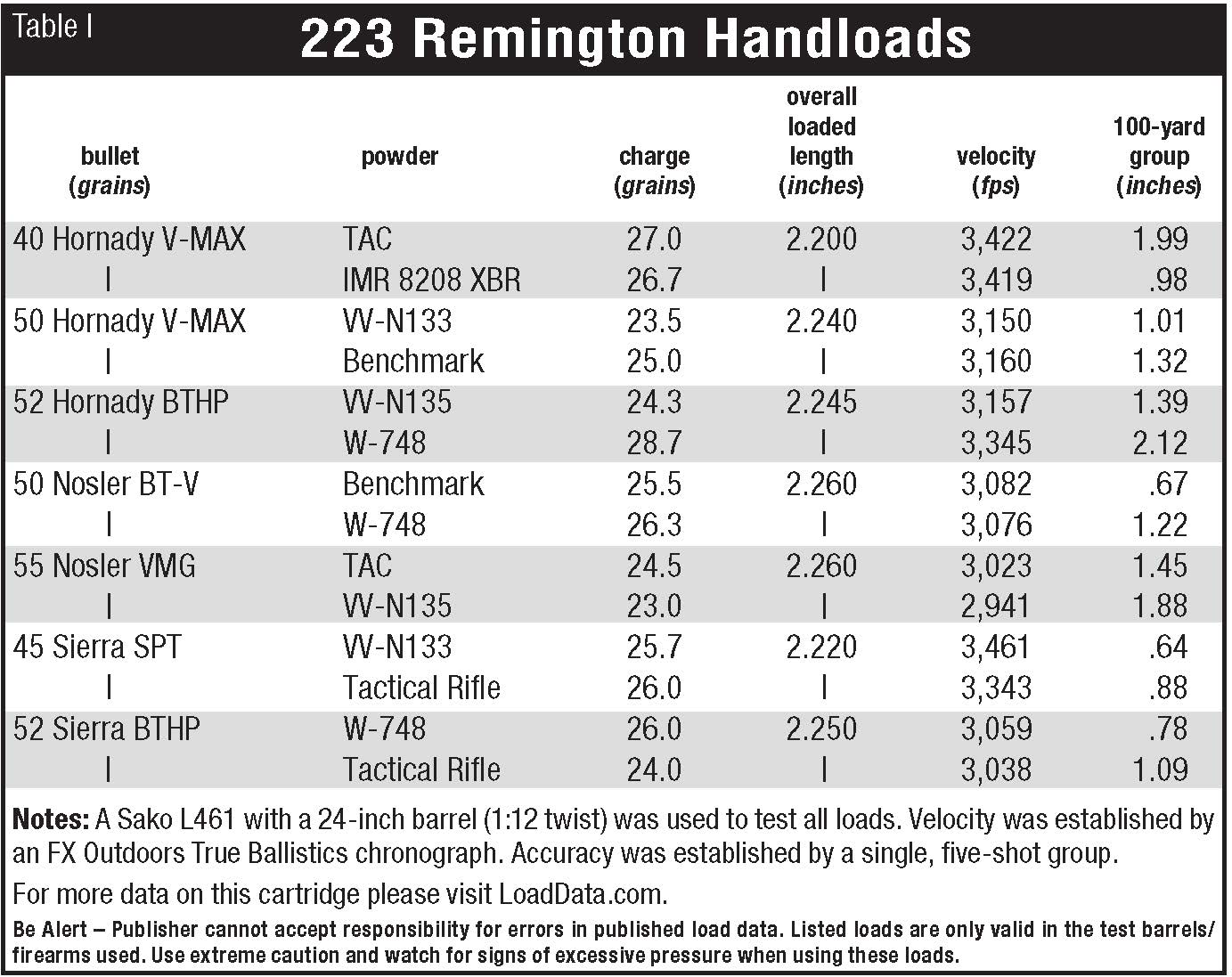
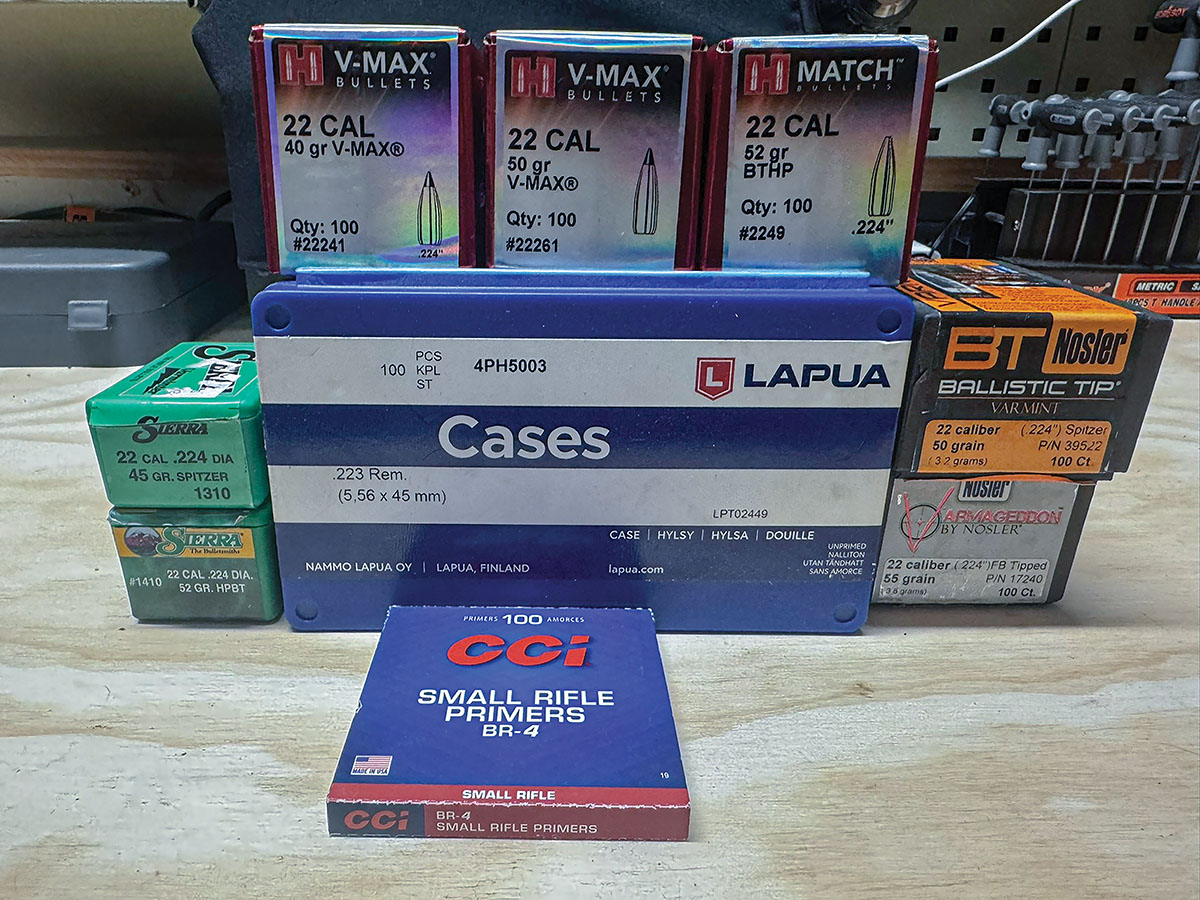
On the handloading side, I tested several different 40- to 55-grain projectiles. The components used for testing were twice-fired Laupa 223 Remington brass, and the primers used were CCI Small Rifle BR4. The top four results I got in my testing were with the 40-grain Hornady V-MAX and 26.7 grains of IMR-8208 XBR powder. A five-shot group was shot grouping .986-inch with an average velocity of 3,419 fps, a 19 standard deviation (SD), a 52 extreme spread (ES) and an average G1 BC .197 measured data using an FX Outdoors True Ballistics Chronograph.
The second-best bullet powder performance combination was the 50-grain Nolser Ballistic Tip Varmint and 25.5 grains of Hodgdon Benchmark powder. A five-shot group was shot grouping .673-inch with an average velocity of 3,082 fps, a 17 SD, a 46 ES and an average G1 BC .221.
The third-best bullet powder performance combination was a 45-grain Sierra SPT and 25.7 grains of Vihtavuori N133 powder. Shooting a five-shot group of .644-inch with an average velocity of 3,461 fps, 8 SD, 26 ES and an average G1 BC .178.
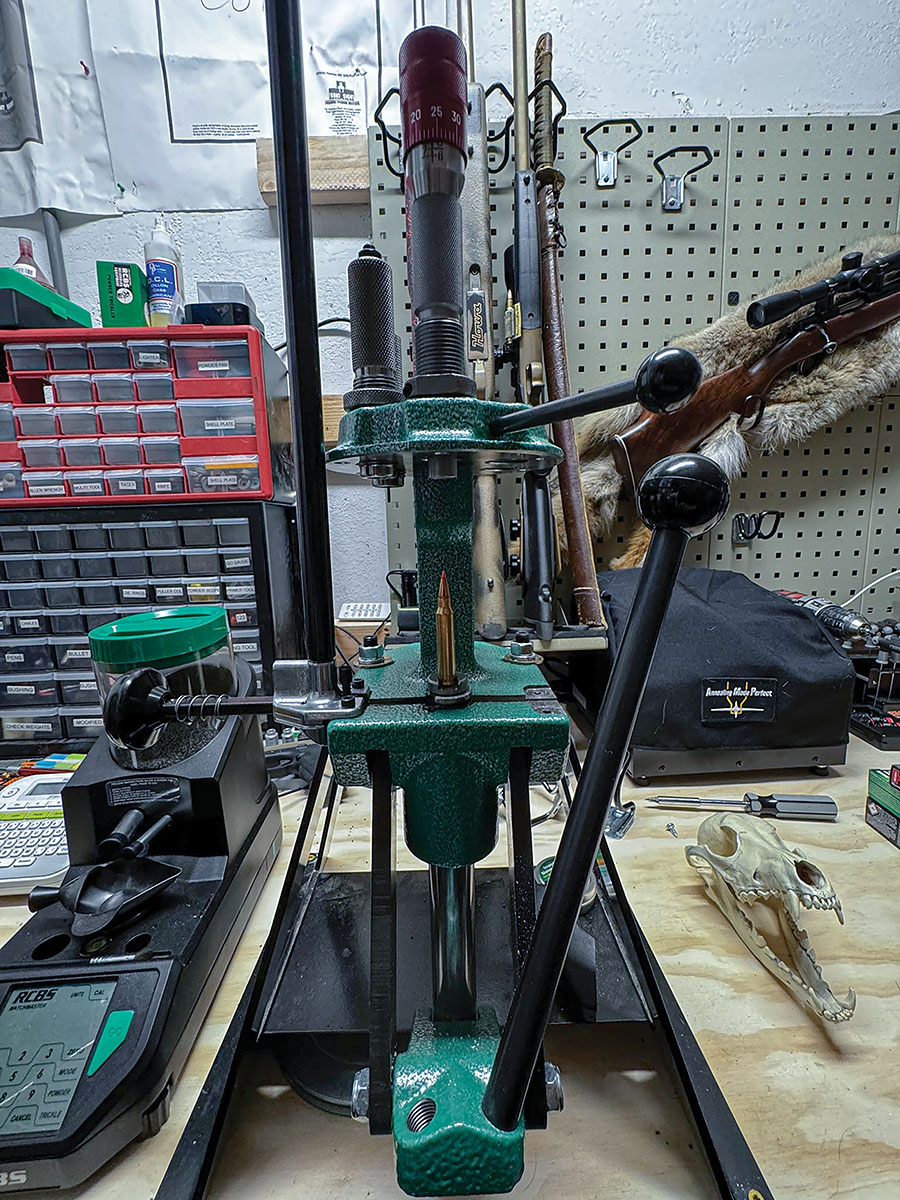
I also did some cold weather testing on some handloads, as most coyote hunting is done in fall and winter. When temperatures were below freezing, I found that some of the powder and primer combos caused hang fires, along with primers not lighting the powder at all, causing misfires. Out of the seven powders that I tested, only two did not have any problems with hang fires or misfires – those were Vihtavuori N133 and Vihtavuori N135. The other powders tested were Winchester 748, IMR-8208 XBR, Ramshot TAC, Hodgdon Benchmark and Shooters World Tactical Rifle. I then repeated the test by putting ten rounds in my pocket for five minutes and reran the test. I had zero failures by just doing this simple process. So, if you plan to get out and shoot or hunt varmints in below-freezing weather, maybe run a test like I did. An RCBS Turret Press was used to load all the ammunition for testing; powder charges were done with the RCBS Match Master Charge Master and annealing the brass was done with the Annealing Made Perfect (AMP) press using the pilot number 03 Analyze Code 003A. A full-length RCBS die with the expander ball removed was used to size the body of the brass; then, a 21st Century Innovation expander mandrel die and a .222 mandrel were used to set the case mouth tension. The primer seating method was a Frankford Arsenal hand primer, with primers set to a depth of .006 below the pocket. A Hornady seating die and a Click Adjust Micrometer Seating Stem were used. This setup has been proven to make high-quality handloads in a timely manner.
When it comes down to it, the 223 Remington is still just as great as ever. Cost effective and accurate for what it’s intended! Do yourself a favor – if you have one in the safe collecting dust, get it out, knock off the dust and have fun with it.