Login


Wolfe Publishing Group
    Menu

    6MM ARC (Advanced Rifle Cartridge)

    A Great Varmint Setup

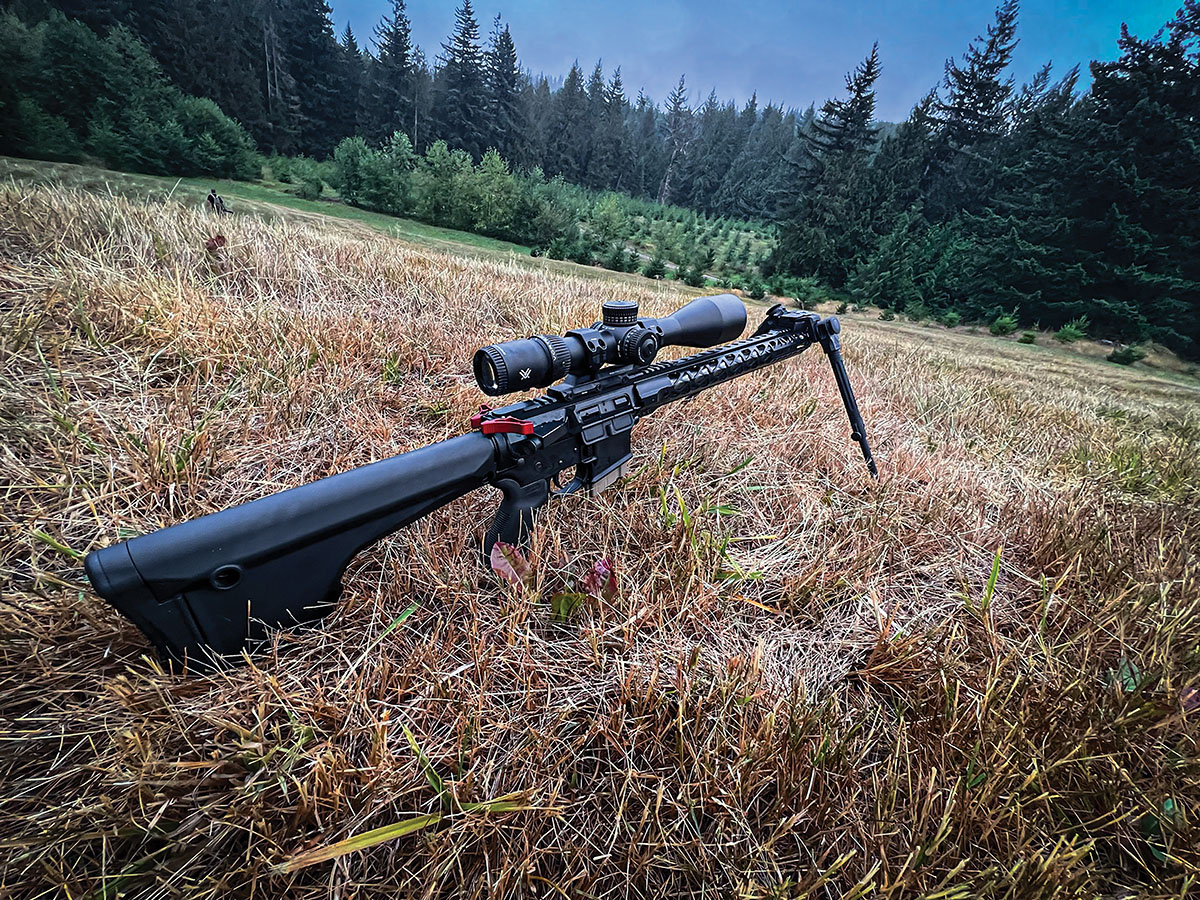
    The 6mm ARC in the field doing some coyote hunting with the Vortex Venom 5-25x 56mm, a Leapers UTG overbore bipod and handloaded Hornady 75-grain VMAX bullets.
    The 6mm ARC in the field doing some coyote hunting with the Vortex Venom 5-25x 56mm, a Leapers UTG overbore bipod and handloaded Hornady 75-grain VMAX bullets.
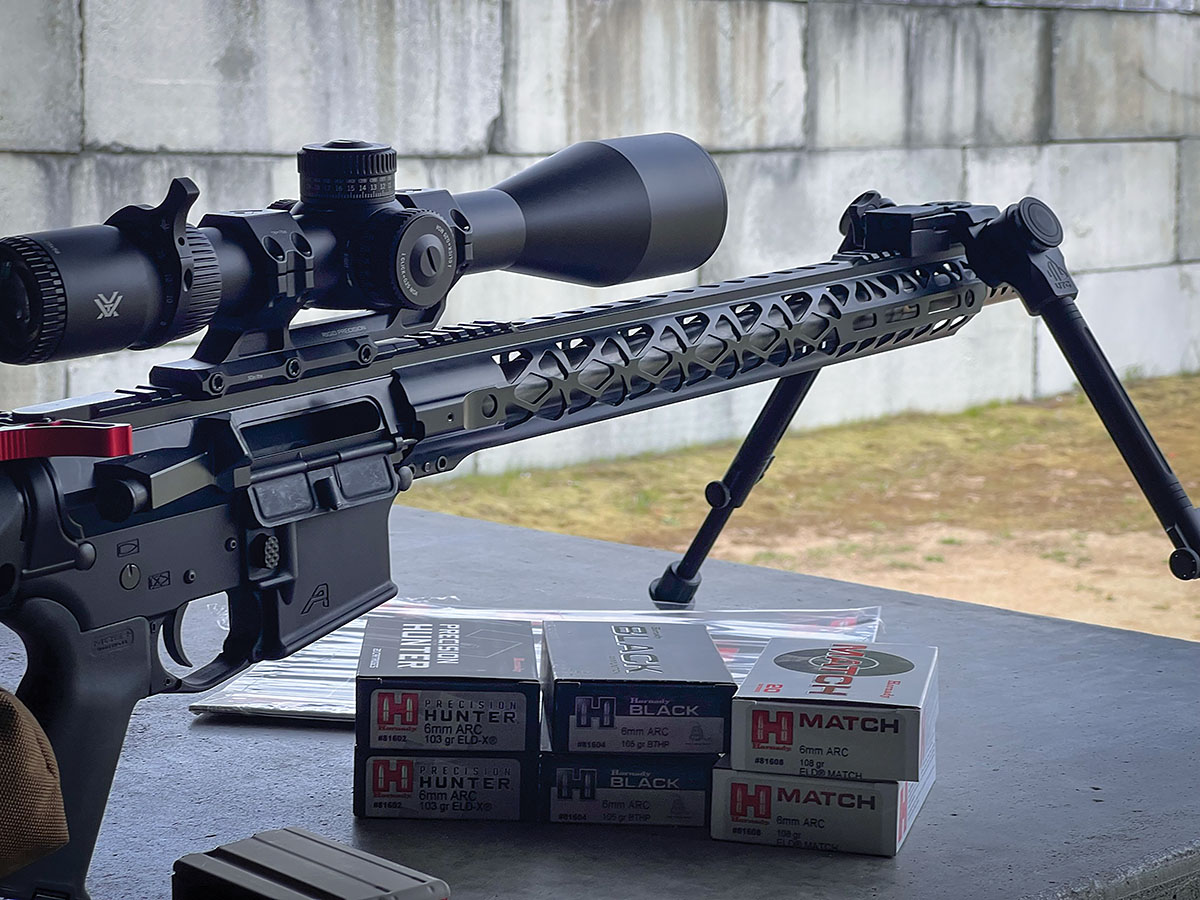
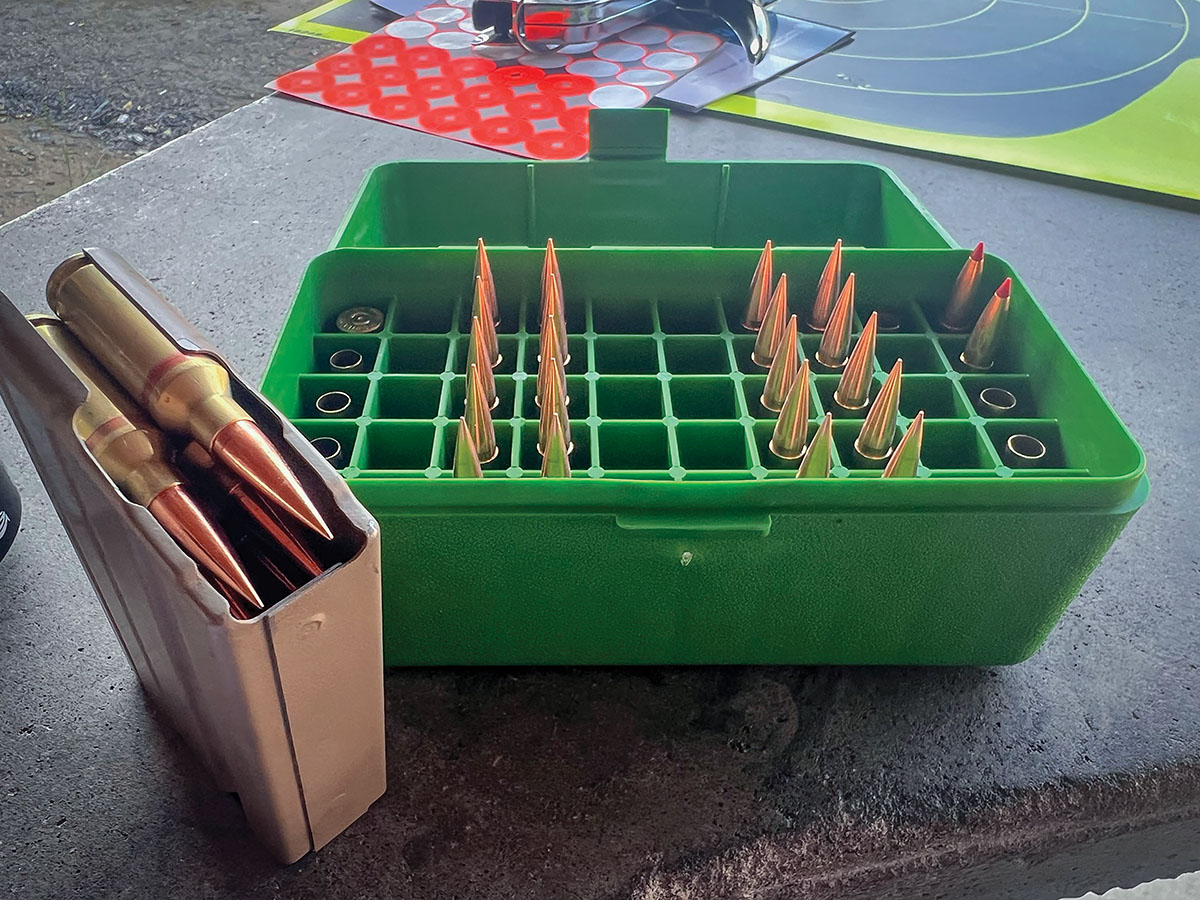
    The 6mm ARC at the range shooting the three-factory offering for Hornady: Hornady Precision Hunter 6mm ARC 103-grain ELD-X, Hornady BLACK 6mm ARC 105-grain BTHP and Hornady 6mm ARC 108-grain ELD Match.
    The 6mm ARC at the range shooting the three-factory offering for Hornady: Hornady Precision Hunter 6mm ARC 103-grain ELD-X, Hornady BLACK 6mm ARC 105-grain BTHP and Hornady 6mm ARC 108-grain ELD Match.
    In the spring of 2020, I was considering building a long-range rifle on the AR platform for target shooting and coyote hunting. At the time, my only good options were the 6.5 Grendel and 224 Valkyrie. I have never pulled the trigger on either of these because they have never interested me. The 6.5 Grendel was too slow, with a 130-grain bullet traveling approximately 2,500 feet per second (fps) and a 100-grain bullet reaching around 2,650 fps. The lighter bullets for the 6.5 Grendel suffer from a lower ballistic coefficient (BC) compared to the heavier bullets. Therefore, the Grendel never interested me. As for the 224 Valkyrie, made by Federal, the ballistics were not quite what I was looking for, and limited component availability was also a concern.

    Putting those two rifle cartridges aside, I was excited when I heard about the 6mm Advanced Rifle Cartridge (ARC). Hornady designed this cartridge for a specialized entity within the Department of Defense. The goal was to replace the 5.56 NATO and 7.62 NATO rounds and have the capability to engage targets at ranges of 300 to 600 meters. The cartridge would need to have low recoil and be capable of a high degree of accuracy without switching from the AR-15 rifles already in service. The new 6mm ARC case is based on the 6.5 Grendel. The main difference is that the shoulder and neck geometry was designed to accommodate the long and sleek 6mm (.243) bullets, which are known for their high ballistic coefficients and high sectional density. They offer less drag and better energy retention at extended ranges. The one limiting factor is the maximum pressure of 52,000 pounds per square inch (psi) in the AR platform, as per SAAMI (Sporting Arms and Ammunition Manufacturers’ Institute) specifications. A bolt gun can be run at a higher pressure (62,000 psi) mainly because the bolt heads are generally more robust than those in the AR-15.
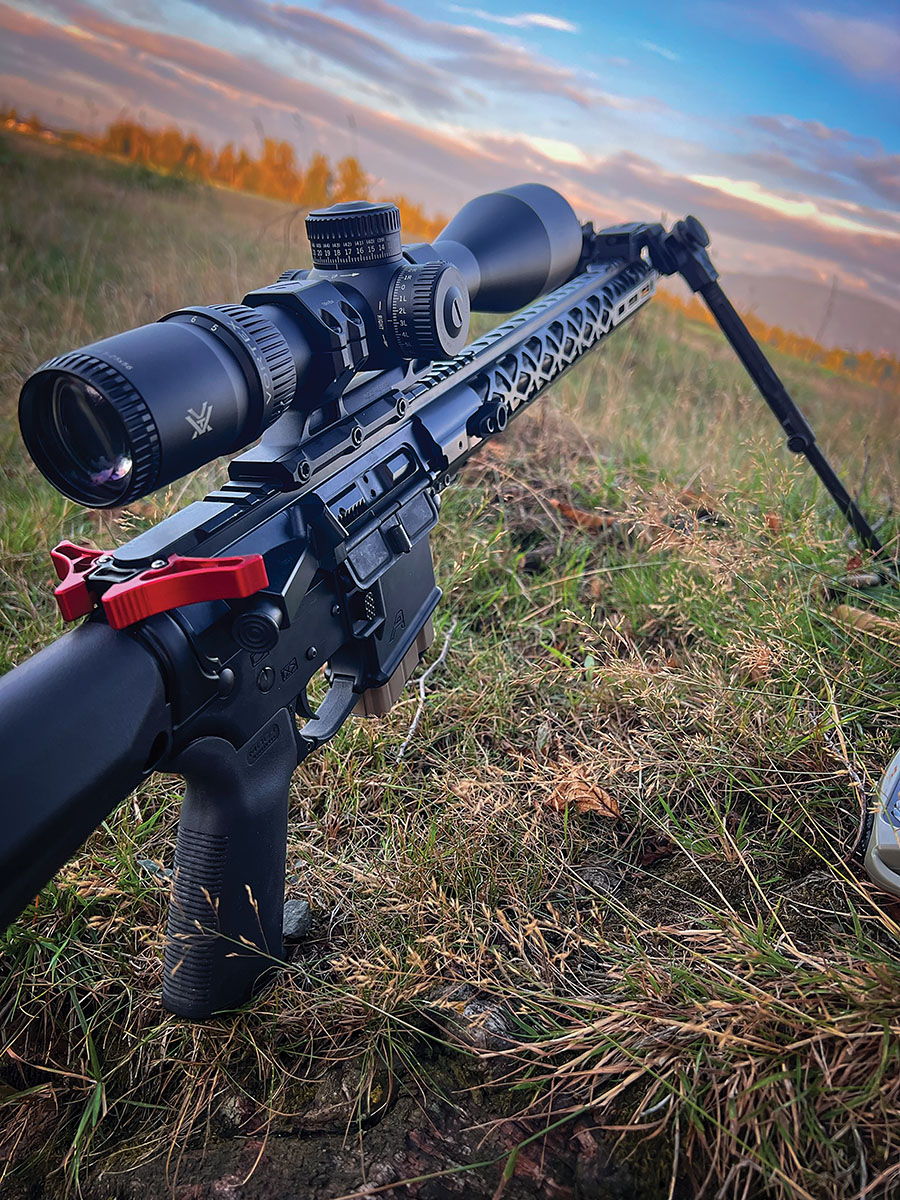
    The 6mm ARC in the field doing some coyote hunting with the Vortex Venom 5-25x56, a Leapers UTG overbore bipod and handloaded Hornady 75-grain VMAX bullets.
    The 6mm ARC in the field doing some coyote hunting with the Vortex Venom 5-25x56, a Leapers UTG overbore bipod and handloaded Hornady 75-grain VMAX bullets.

    The 6mm ARC performance holds its own against the 7.62 NATO cartridge. It has a lot less recoil and spotting shots is easy. With this cartridge being a third lighter in the rifle platform and
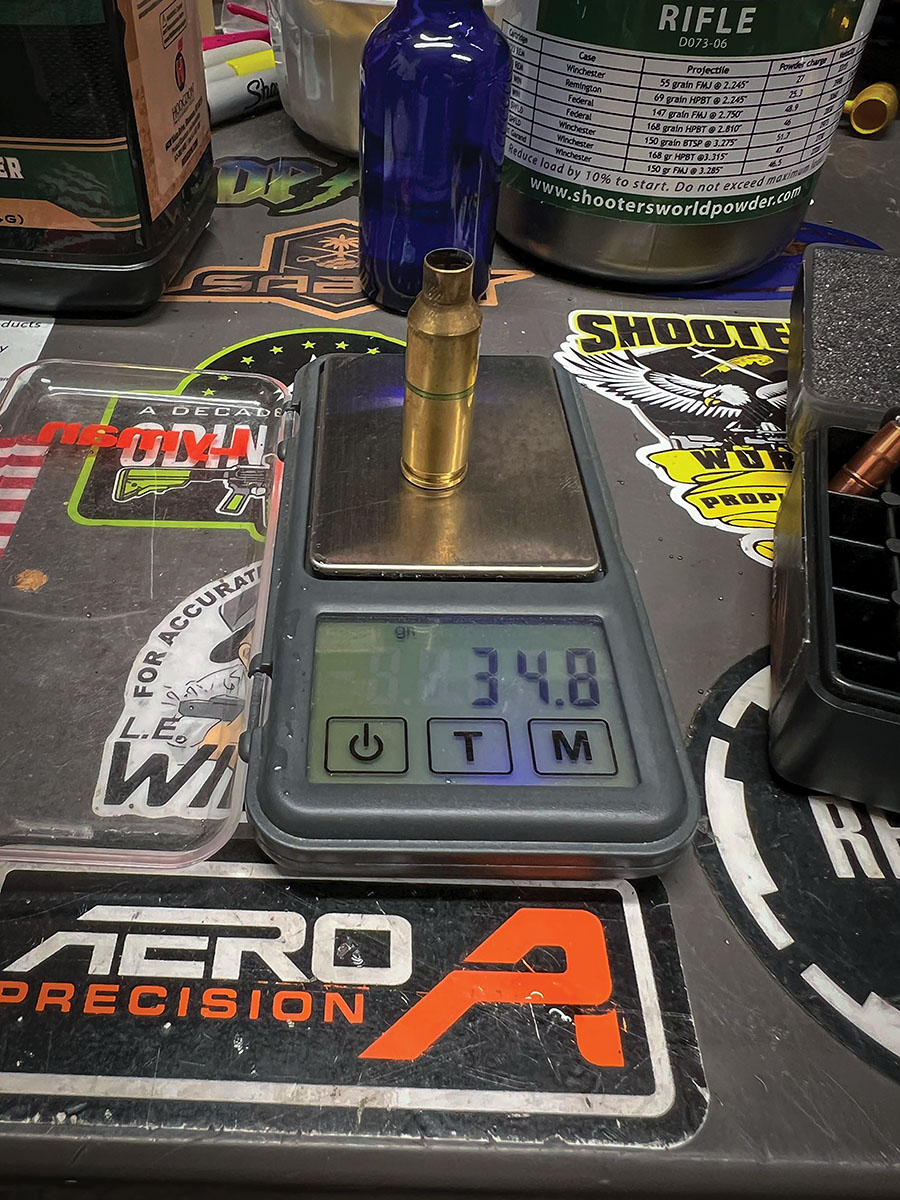
    Twice-fired Hornady brass showing case capacity with water of 34.8 grains.
    Twice-fired Hornady brass showing case capacity with water of 34.8 grains.
    ammunition weight, it’s a vast improvement for the varmint hunter and/or target shooter wanting to stretch their legs with an AR-15. What caught my attention about this cartridge was its ability to fire 105- or 108-grain bullets, at speeds ranging from 2,600 to 2,800 fps in an AR platform. The only drawback is that at this time, Hornady and Black Hills Ammunition are the only companies offering factory ammunition. However, if you are a handloader, Starline offers 6mm ARC brass. With handloading, the cartridge’s potential dramatically increases.

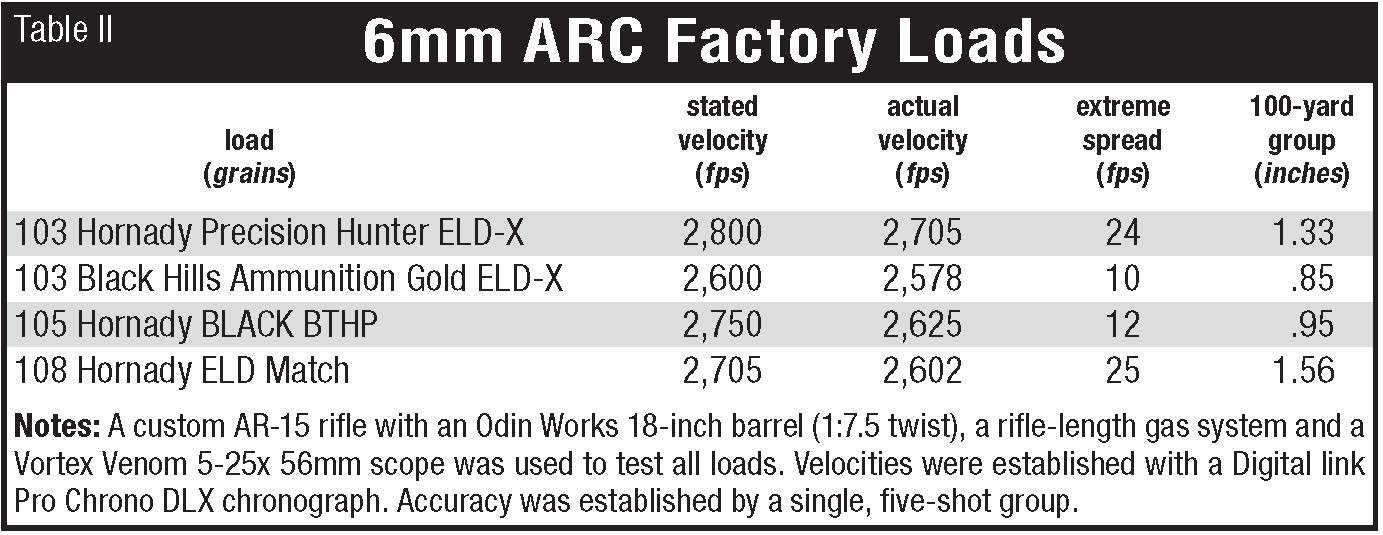
    Hornady offers three factory loads, the lightest one being the 103-grain Precision Hunter ELD-X with an advertised out-of-the-box velocity of 2,800 fps and 1,793 foot-pounds (ft-lbs) of energy using a 24-inch test barrel. This load is advertised as their hunting round. In my test rifle, I saw an average velocity of 2,705 fps and a five-by-five (5 groups of 5 shots for 25 total shots) average group size of 1.33 inches. The second offering is the 105-grain Hornady BLACK boat-tail hollowpoint, which is advertised to have a velocity of 2,750 fps and 1,763 ft-lbs of energy out of the box, using a 24-inch test barrel. This is Hornady’s do-it-all loading for the AR-15 platform – perfect for varmint hunting. My AR-15 loved this stuff, shooting an average velocity of 2,625 fps and a five-by-five produced a group size average of .95-inch. The third option is the 108-grain ELD Match from Hornady. As the title implies, this is their loading for match/target applications, offering a great G1 BC of .536. Hornady advertised a velocity of 2,750 fps and 1,813 ft-lbs of energy out of the box, using a 24-inch test barrel. My AR-15 did not shoot this as well as the Hornady Black, with an average velocity of 2,602 fps and a five-by-five shot an average group size of 1.56 inches.
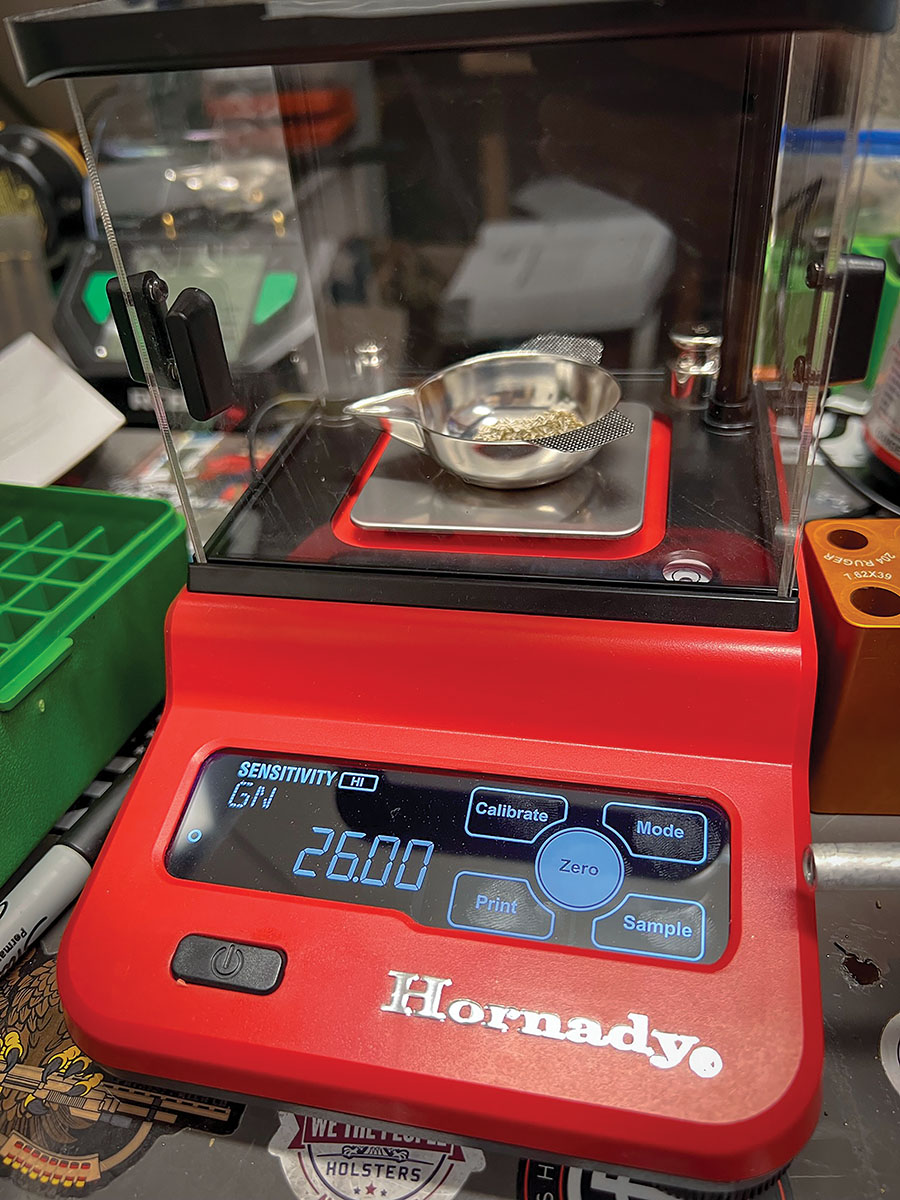
    Weighing out each powder charge with a Hornady Precision Lab Scale and using Shooters World Precision Rifle powder.
    Weighing out each powder charge with a Hornady Precision Lab Scale and using Shooters World Precision Rifle powder.

    Hornady brass loaded with Fort Scott Munitions 90-grain SCP2 bullets.
    Hornady brass loaded with Fort Scott Munitions 90-grain SCP2 bullets.
    Now that we have covered the factory ammunition performance, let’s discuss the test rifle used in this article. The barrel is an Odin Works 18-inch stainless-steel barrel with a 1:7.5 twist to help me stabilize those long, heavy, high BC bullets. An Odin Works ATLAS 6.5 Compensator was threaded onto the muzzle. An Odin Works Tunable Gas Block was also used, allowing me to tune the system to suit the specific handload I chose for this rifle. An Odin Works R2 17.5-inch Handguard with plenty of space for rails and other attachments was selected. The heart of the gun is an Odin Works 6.5 Grendel Type II bolt and bolt carrier group, along with an Odin Works Gas Tube.

    I used a Freedom Flag upper receiver with a Timber Creek Enforcer ambidextrous charging handle. I added an Aero Precision upper parts kit and a lower parts kit minus the trigger group. A Magpul MOE Rifle Stock, an Aero Precision lower receiver and a RISE Armament Special-Edition DTOM Trigger Assembly finished it off. The trigger had a pull of 3.5 pounds. I mounted a Leapers UTG overbore bipod 7- to 11-inch center height. For optics, I opted for a Vortex Venom 5-25x56 and a one-piece Arken Optics 20 MOA scope mount. I used five-round ASC magazines for 6mm ARC and 6.5 Grendel.
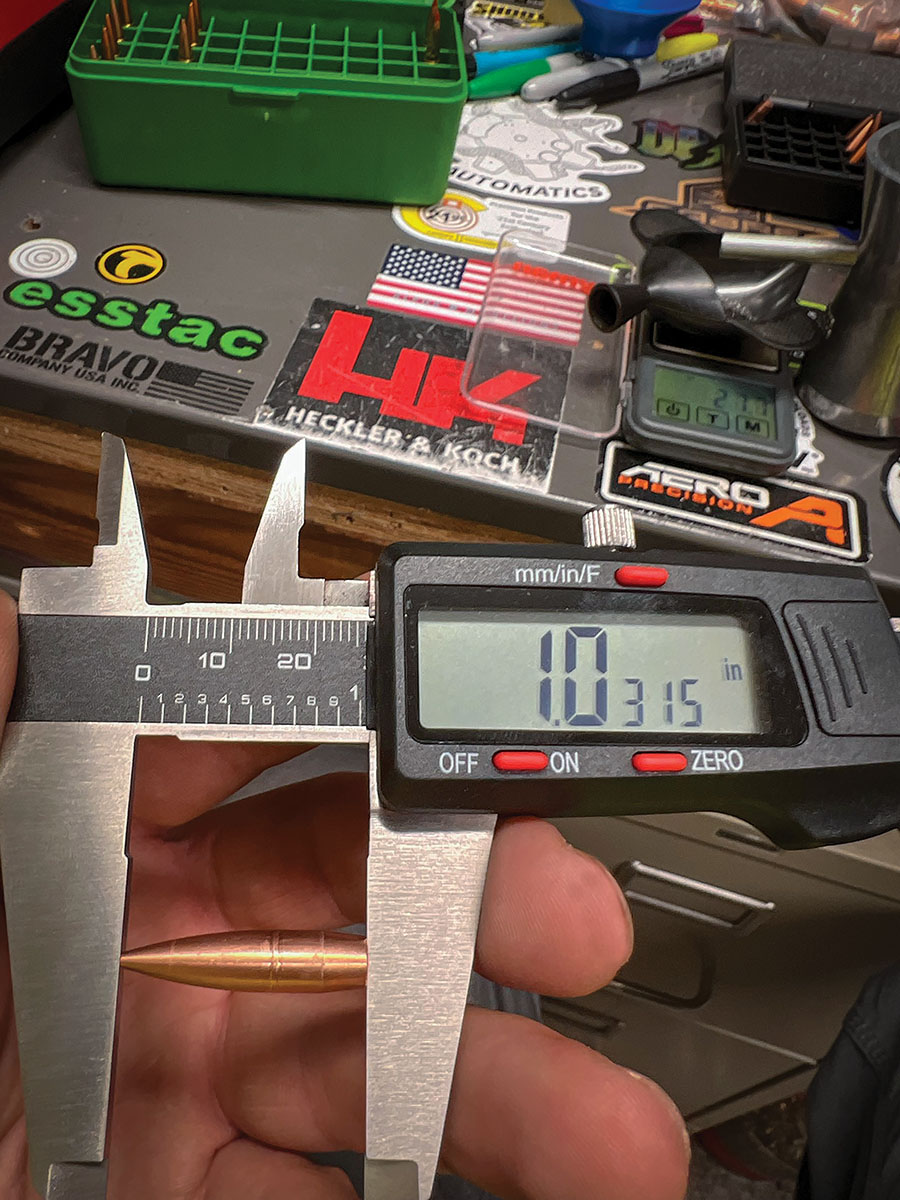
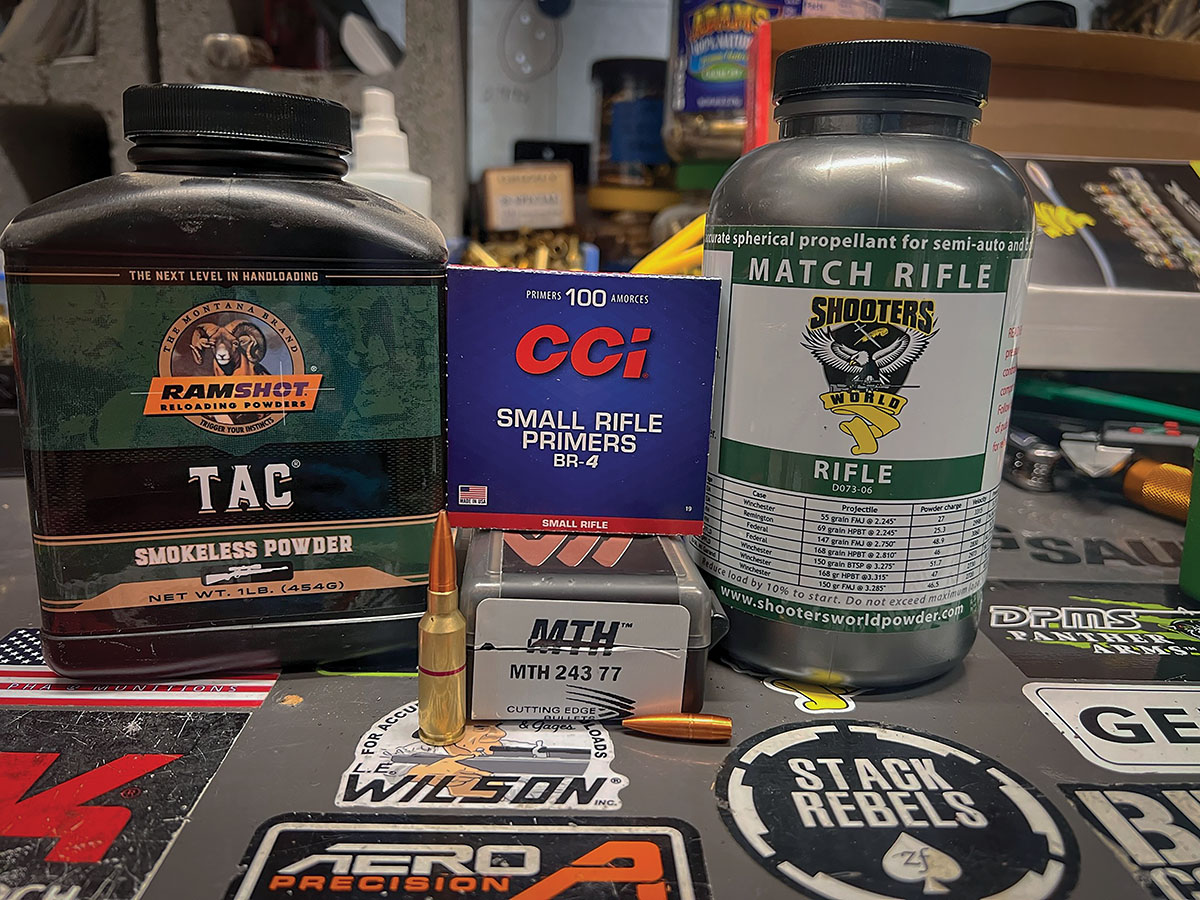
    Cutting Edge MTH 77-grain 6mm bullet length.
    Cutting Edge MTH 77-grain 6mm bullet length.
    You will not want to go backpacking with this rifle. It weighs 12 pounds 5.5 ounces with the bipod on. Take the bipod off the rifle and it weighs 10 pounds, 15.8 ounces. She’s not light, but I built it to be heavy. I wanted to make this rifle an easy shooter to sit behind and shoot all day, whether for coyote hunting or sitting and shooting long range and hitting steel. That’s what the 6mm Arc does. I can spot my shots with this rifle, it hardly moves, after-firing and follow-up shots are fast if needed.
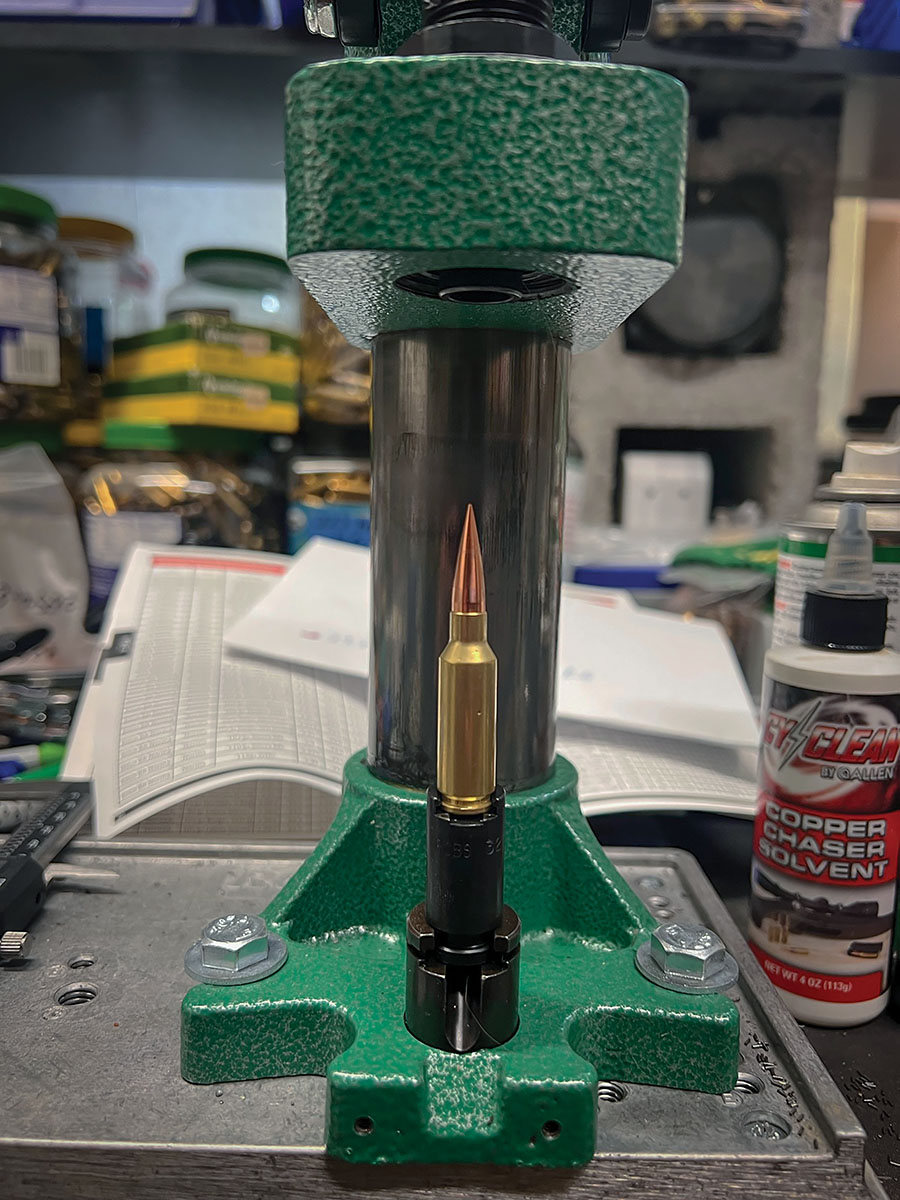
    Seating Fort Scott Munitions 90-grain SCP2 bullet on what is becoming my favorite press – the RCBS Summit press with must-have MatchMaster dies.
    Seating Fort Scott Munitions 90-grain SCP2 bullet on what is becoming my favorite press – the RCBS Summit press with must-have MatchMaster dies.

    All right, let’s get into the good stuff. With Hornady and Starline offering brass, the handloader now has options. People have taken 6.5 Grendel brass and necked it down to 6mm, then fire-formed the brass. This process takes time and is not necessary since I had a lot of once-fired factory brass from shooting Hornady ammunition. There are numerous good sources for load data; my primary sources were Hornady and LoadData.com. There were a few instances of copper bullets for which no data was available, so I used QuickLOAD to obtain the necessary data. A huge plus to the handloader is the vast number of bullets available for the 6mm ARC.

    When loading for the AR platform, to keep under the 52,000 psi point, make sure that you are loading for the gas gun section of the manual. As for me, I load for both a bolt-action rifle and an AR, so I need to be extra cautious and ensure that I keep the two different loads separate and well-marked in order to prevent them from being mixed up and used on the wrong platform.

    I used my Frankford Arsenal Platinum Series Rotary Case Tumbler to clean the Hornady brass. This method is by far the best way to clean brass, as it comes out looking brand new, and there is no coating on the brass to hurt the reloading dies. Also, if you decap the primers beforehand with a universal decapping die, the primer pockets come out nice and clean, eliminating the need for a primer pocket cleaner. Once the brass is dried, my next step is to anneal it with the EP 2.0 brass annealer. This helps to preserve the life of my brass. Then it’s off to full-length size the brass on my RCBS Reloader Special-5 single stage press.
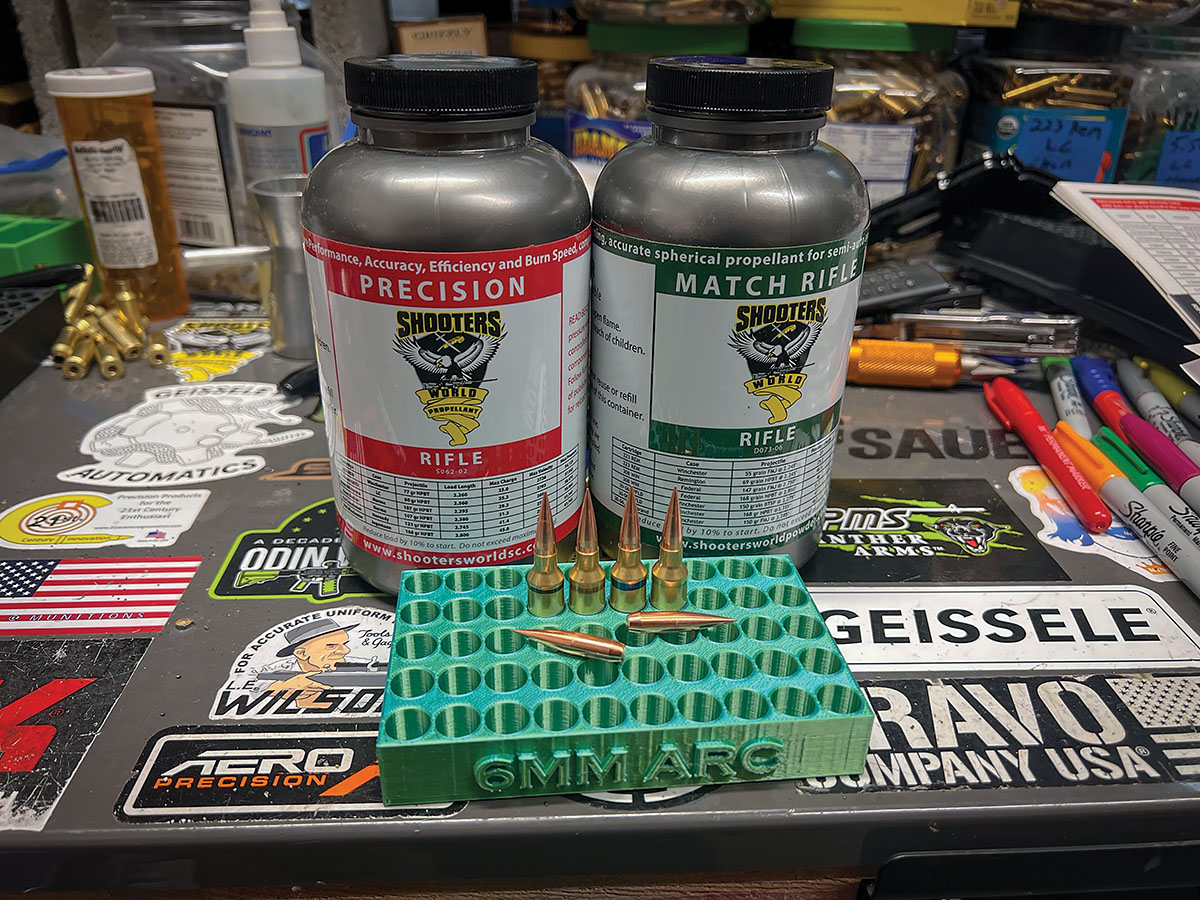
    A Fort Scott Munitions 90-grain SCP2 bullet loaded for some testing with Shooters World Precision Rifle and Match Rifle powder.
    A Fort Scott Munitions 90-grain SCP2 bullet loaded for some testing with Shooters World Precision Rifle and Match Rifle powder.
    A Cutting Edge MTH 77-grain 6mm bullet loaded up and ready to test in the 6mm ARC.
    A Cutting Edge MTH 77-grain 6mm bullet loaded up and ready to test in the 6mm ARC.
    The first thing I do is grab the sizing die and remove the expander rod and ball, as I will be sizing the neck with a 21st Century Innovation Expander Die Body and Black Nitride Expander Mandrel that is sized to be
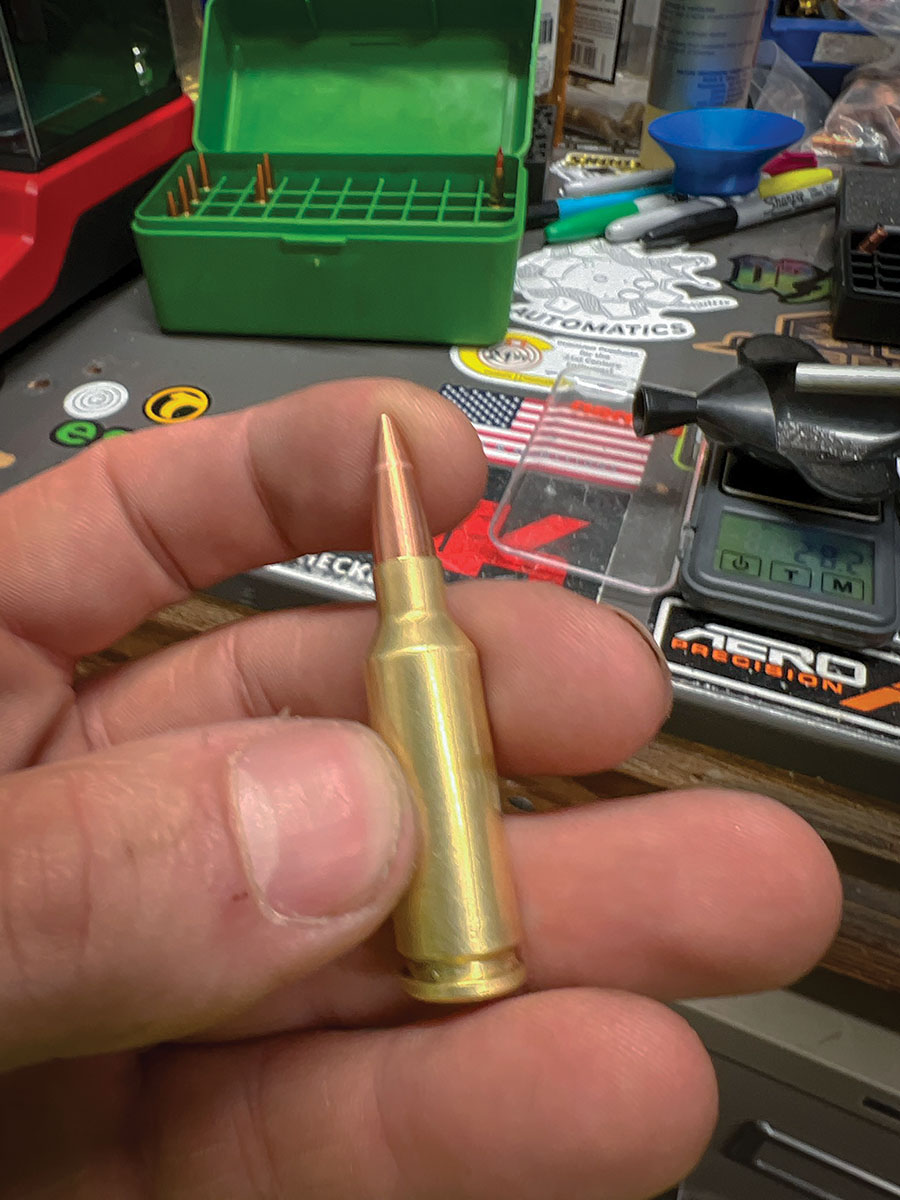
    A Cutting Edge MTH 77-grain 6mm bullet.
    A Cutting Edge MTH 77-grain 6mm bullet.
    .002 under the .243 bullet diameter. By doing that, I get my desired neck tension. After sizing, check the case length to see if trimming is needed. In this case, trimming was not, which is great because it is my least favorite part of this process. I then deburr and chamfer the case mouth to remove any of the burs. I use the Frankford Arsenal Platinum Series Perfect Seat Hand Primer tool to seat the CCI Benchrest BR-4 primers I selected. This is the best way to control primer precision seating, as it features a wheel dial that adjusts in 0.005-inch increments. In my testing, I have found the best results for standard deviation (SD) and extreme spread (ES) are with a seating depth of 0.007 inches below flush. Once that is done, it’s off to weighing the powder charge on the RCBS MatchMaster Digital Powder Scale and Dispenser. I have found that his scale is amazingly accurate and does not over- or under-throw the selected charge weight. Then, I seated bullets on my RCBS Summit Single Stage Press and MatchMaster Seater Die. I have found this combination to provide amazing runout and bullet-seating consistency. BAM, just like that, we have high-quality precision ammunition to go out and play with.

    There are many great powders to choose from with the 6mm ARC. I did some research on which powder performs the best and achieves the highest velocity. The powders I picked were Hodgdon Benchmark, Hodgdon CFE223, Hodgdon LEVERevolution, Hodgdon Varget and Shooters World Precision Rifle.
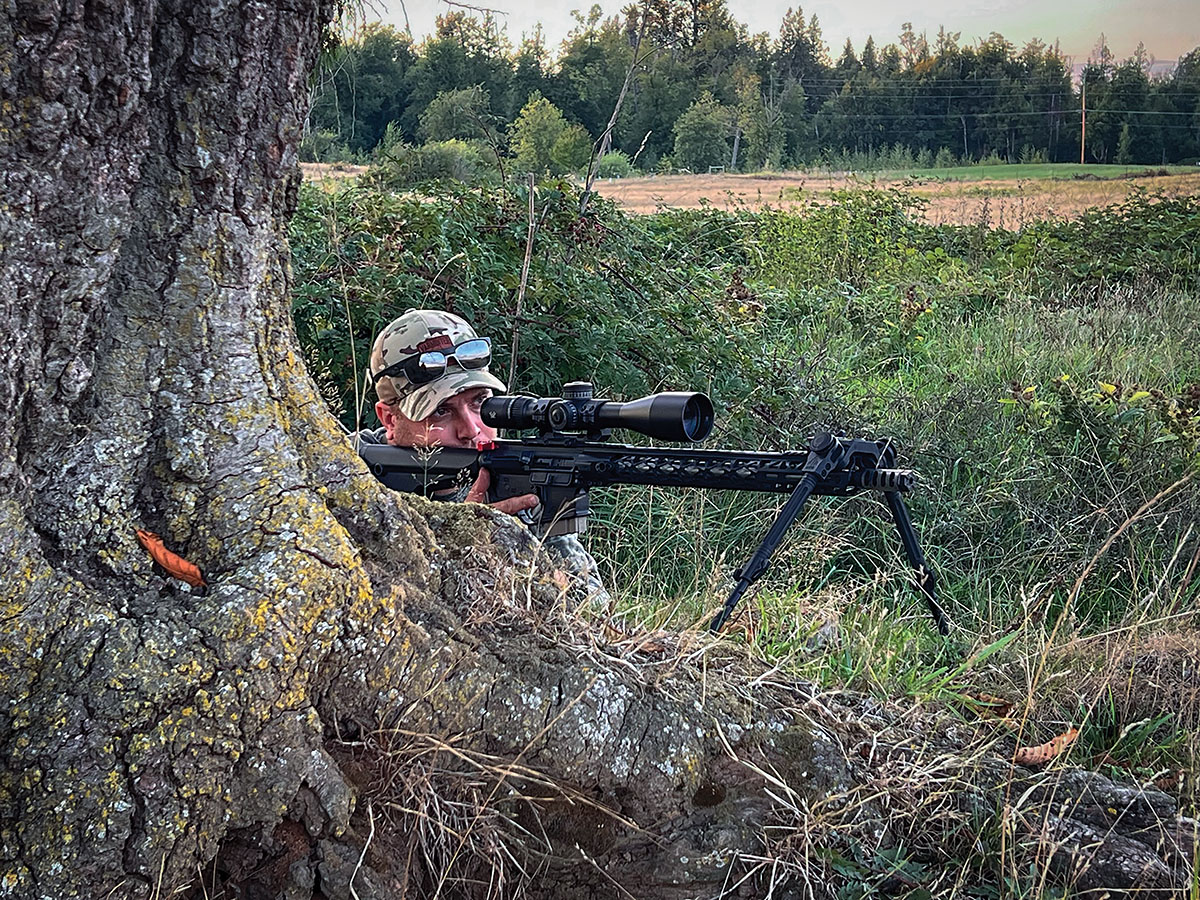
    Here I am behind the 6mm ARC trying to do some bobcat calling. Using a Vortex Venom 5-25x56, a Leapers UTG overbore bipod and handloaded Fort Scott Munitions 90-grain SCP2 bullets.
    Here I am behind the 6mm ARC trying to do some bobcat calling. Using a Vortex Venom 5-25x56, a Leapers UTG overbore bipod and handloaded Fort Scott Munitions 90-grain SCP2 bullets.
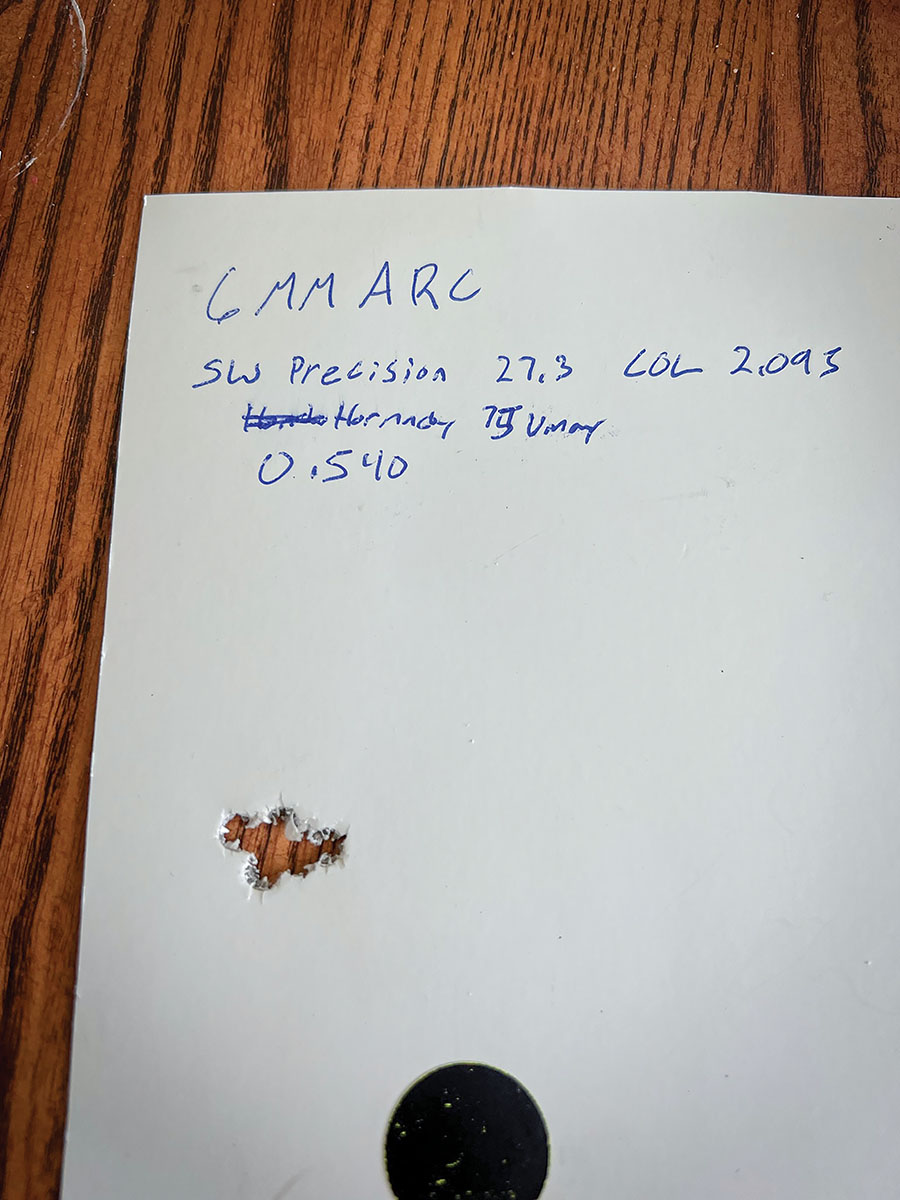
    A Hornady 75-grain V-Max group with Shooters World Precision Rifle, CCI BR4 and Hornady brass shot a group of .540 inches.
    A Hornady 75-grain V-Max group with Shooters World Precision Rifle, CCI BR4 and Hornady brass shot a group of .540 inches.
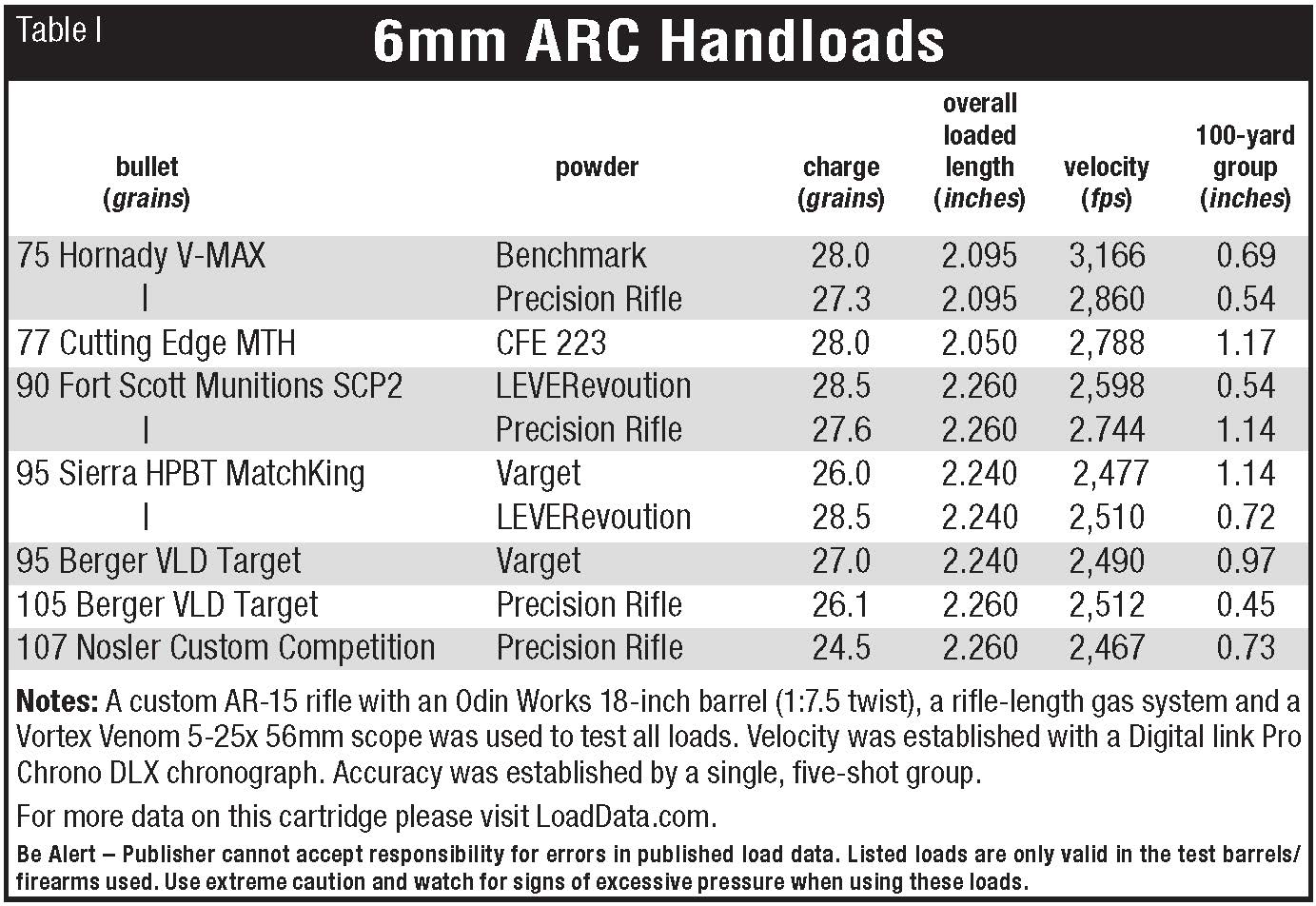
    For bullets, I was able to pick a good variety. The lightest one I tested was a 75-grain Hornady V-Max. I used Benchmark with 28.0 grains of powder and a case overall length (COL) of 2.095 inches for this load and shot a five-shot group of .692-inch, with an average velocity of 3,166. That would have been my go-to coyote round, but it would not cycle the bolt reliably for hunting. I also used Shooters World Precision Rifle with 27.3 grains and a cartridge overall length (COL) of 2.095 inches, and shot a five-shot group of .540 inches. There was no problem with the bolt cycling reliably for hunting coyotes. I had the best SD and ES with this powder throughout my testing. This was my first time using that powder, and I am a big fan now.

    The next bullet in the lineup was the 77-grain MTM from Cutting Edge Bullets, loaded with CFE 223 at 28.0 grains and a COL of 2.050. This load produced a five-shot group of 1.17 inches. I did have some feeding problems with my first round with a five-round magazine, but once I switched to a ten-round magazine, the feeding issue went away. I was limited in testing this bullet due to a lack of availability. I will find more bullets soon so that I can try out different powders – I love shooting solid copper bullets.

    The other solid copper bullet I tested was the 90-grain Fort Scott Munitions SCP2 bullet. These are awesome, sleek-looking projectiles. I was able to try two different powders with this projectile. The first was LEVERevolution with 28.5 grains and a COL of 2.260 inches. It shot a great five-shot group of .541 inches. LEVERevolution seems to be the go-to powder for most handloaders when loading this cartridge. It gives great velocity, SD and ES for the most part, with good accuracy. The second powder with this projectile was 27.6 grains of Shooters World Precision Rifle with a COL of 2.260 inches and a five-shot group of 1.14 inches. With this group, I got three stacked right on top of each other, then the last two walked vertically on me. But I believe with some tuning, this has a chance to be a very accurate load.

    Now, let’s delve into some of the heavier projectiles that were tested. Starting with the 95-grain Sierra HPBT MatchKing, I used 26.0 grains of Varget, with a COL of 2.240 inches. It produced a five-shot group of 1.14 inches. The second powder was 28.5 grains of LEVERevolution with a COL of 2.240 inches. This load produced a .724 inch group. This loading would be perfect for pronghorn and blacktail deer, but could also be pressed into varmint hunting. The heavier 95-grain Berger VLD Target was next. I used 27.0 grains of Varget with a COL of 2.240 inches. It produced a .970-inch group just under one MOA.

    Let’s talk about some other projectiles. I used a 107-grain Nosler Custom Competition HPBT loaded with 24.5 grains of Shooters World Precision Rifle with a COL of 2.260 inches. It produced a .730-inch, five-shot group. I also tested the 105-grain Berger VLD Target with 26.1 grains of Shooters World Precision Rifle and a COL of 2.260 inches. This combination produced a .456-inch, five-shot group. These two loadings are what I plan to shoot out to 1,000 yards and they should perform well with the accuracy and higher BC that they offer.
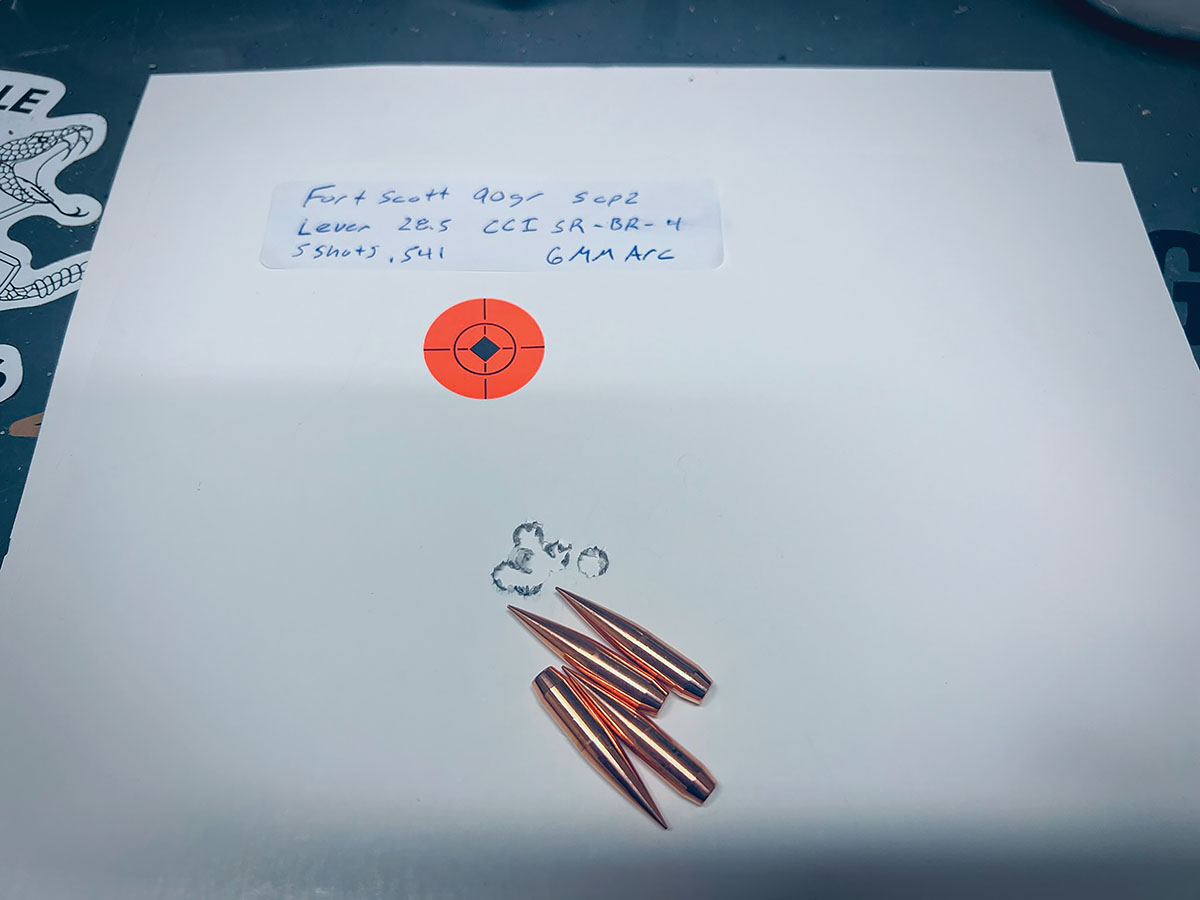
    A Fort Scott Munitions 90-grain SCP2 group with LEVERevolution, CCI BR4 and Hornady brass, shot a group of .541 inches.
    A Fort Scott Munitions 90-grain SCP2 group with LEVERevolution, CCI BR4 and Hornady brass, shot a group of .541 inches.

    So, to sum it up, I am a fan of the 6mm ARC not only for the ease of shooting but also for the ease of seeming to be able to get great accuracy while handloading. It’s a plus that factory ammunition shoots well. If you’re looking for a fun, longer-range cartridge to shoot from your AR platform, you can’t go wrong.

    Wolfe Publishing Group