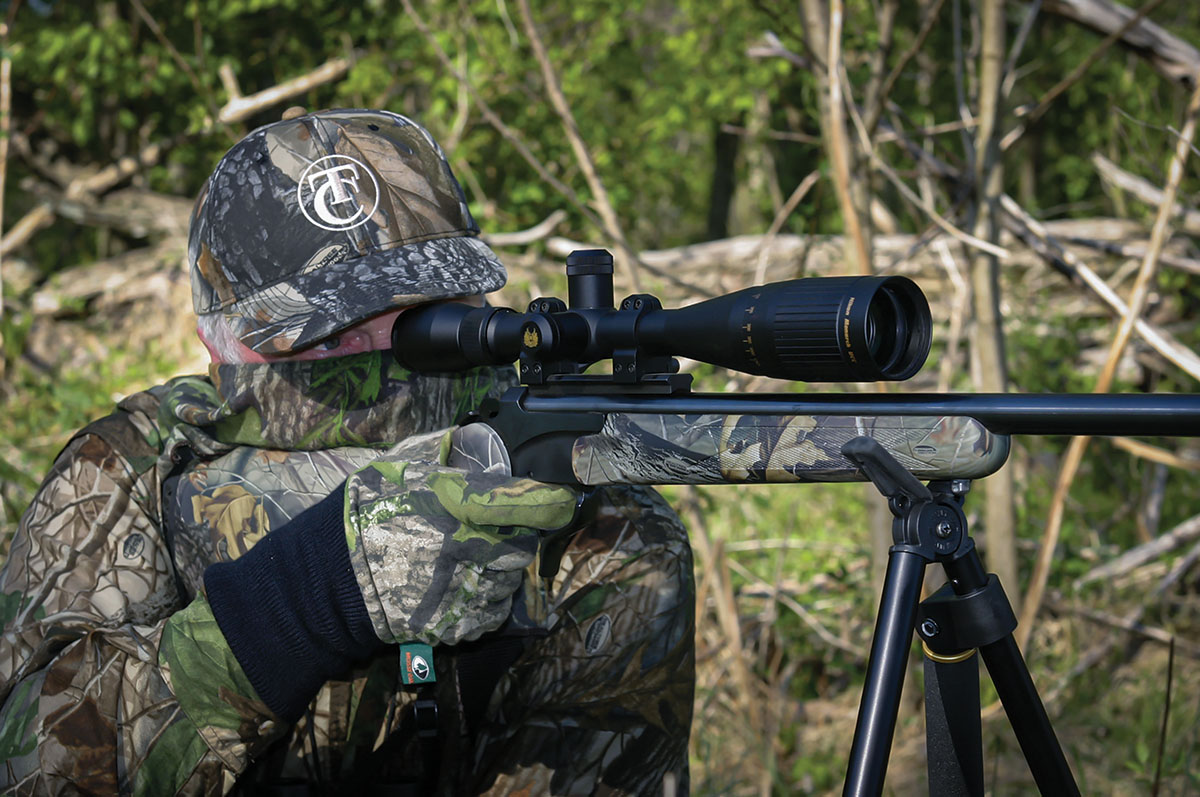
While the 17 Remington is a great cartridge, some believe a rifle like this SSK custom Encore in 204 Ruger is a bit better. Either cartridge fills an important slot in any varmint rifle battery.
From a purely practical point of view, two rifles chambered for the right cartridges are all anyone needs for bumping off varmints anywhere in America. The most useful of the magnificent pair would be chambered for the 223 Remington. Accuracy is hard to beat, cases are easy to find, and given proper care, barrel accuracy life is long. In order to pull off shots halfway across the county, something faster and flatter shooting is needed, so the second rifle would be in 22-250 or 220 Swift. For those who classify feral hogs as varmints, heavier bullets too long to be stabilized by the standard 1:14 rifling twist rate for those two cartridges are needed, and that would require replacing the barrel with one having a quicker twist. You could do as I did and order Mark VII rifles in 22-250 and 22 Creedmoor with 1:7 twist barrels from E.R. Shaw. Another option is to simply head to your favorite gun shop and buy a factory-built rifle in 22 Creedmoor with the standard 1:8 twist for that cartridge.
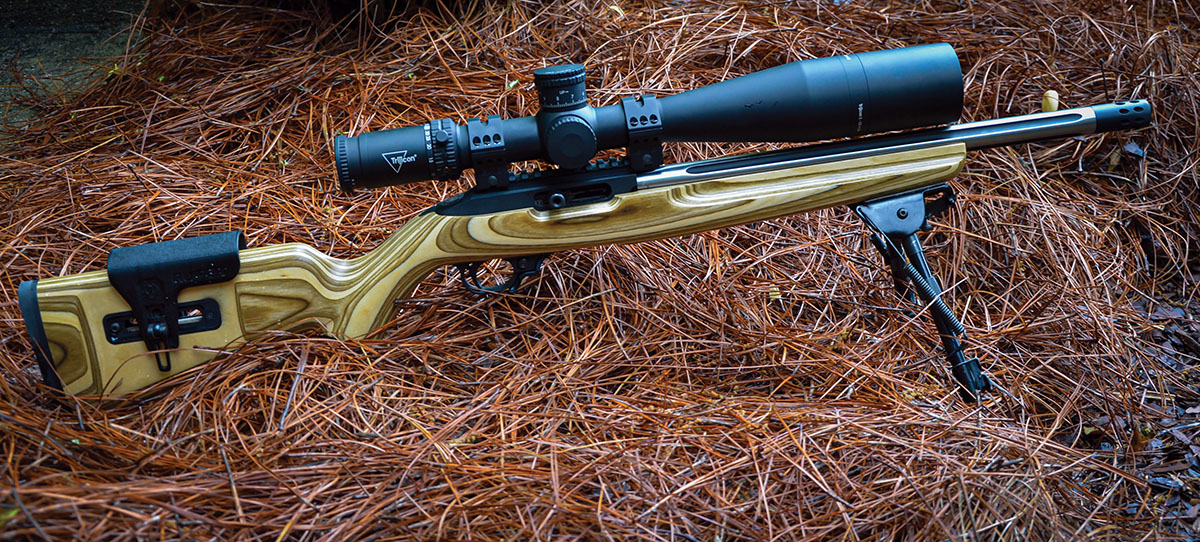
Do you have an over-abundance of squirrels (flickertails) and a good supply of 22 Long Rifle ammunition? This extremely accurate 10/22 Custom from Ruger is a solution to that pleasant problem and great fun to shoot.
While owning just two varmint rifles is a workable plan, many will agree when I say that expanding the battery beyond a pair is more fun. The truth of the matter is, there is no such thing as owning too many rifles; and yet, there was a time when I was a one-rifle varmint shooter. I grew up on a farm, and at the
The all-encompassing varmint battery must have a rifle chambered for the 17 HMR, and this Volquartsen Deluxe is a top-tier choice.
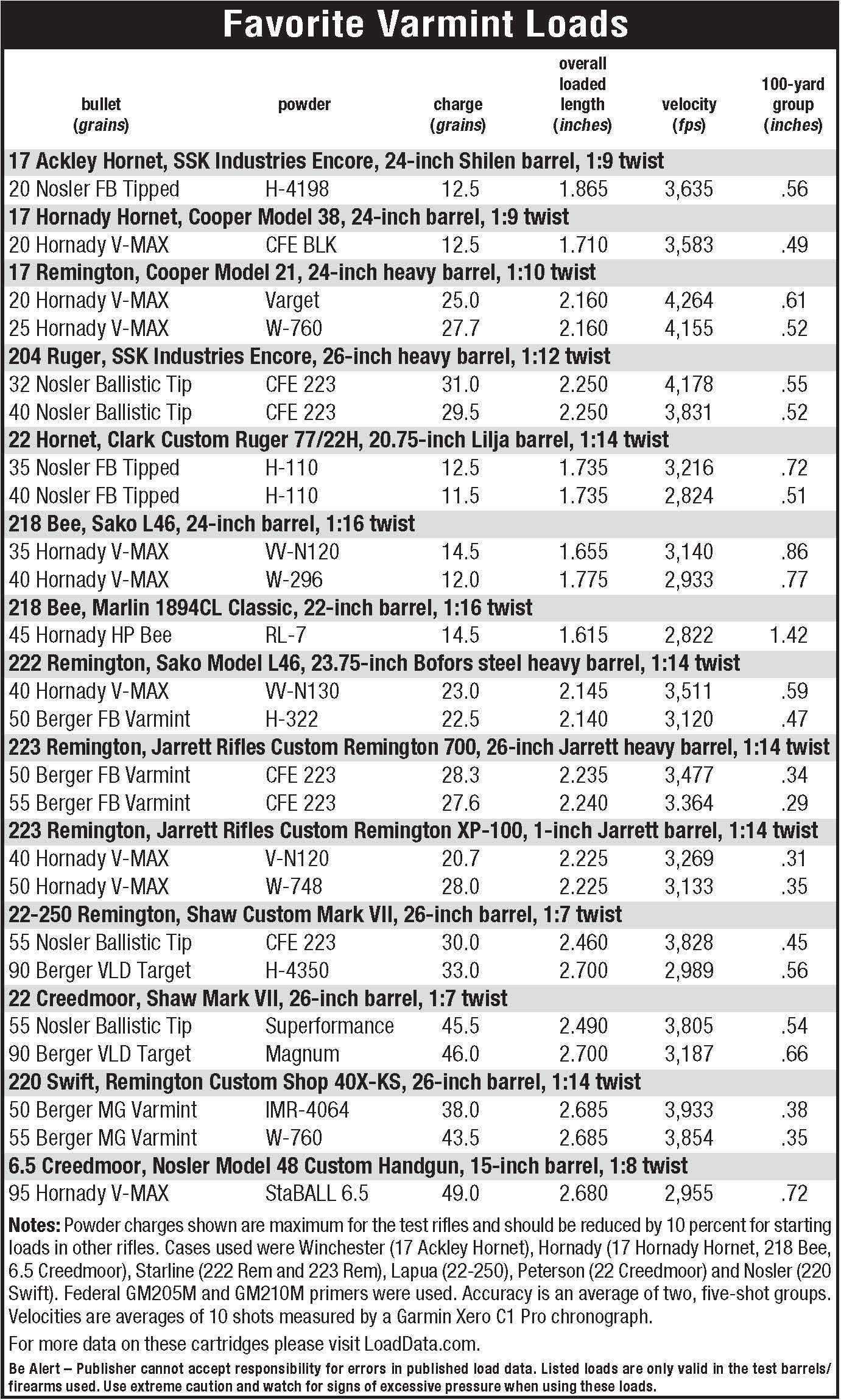
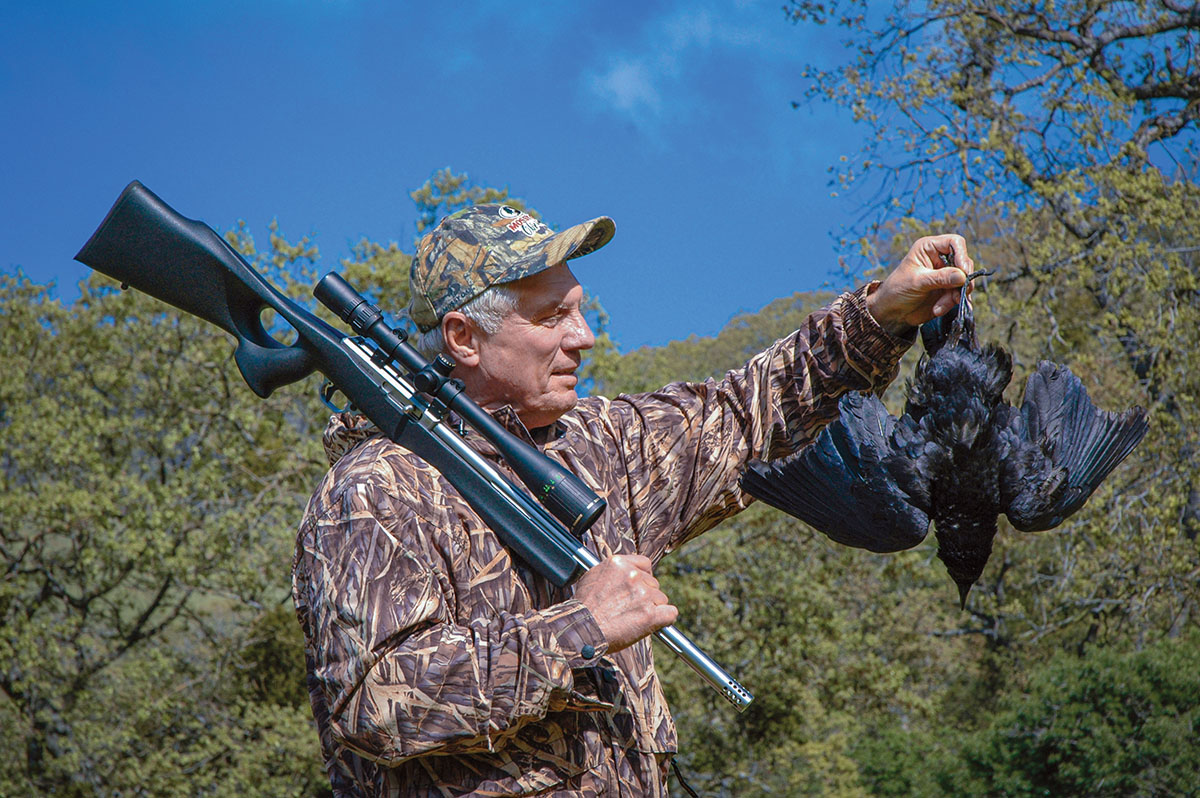
ripe old age of 10, my father put me in charge of varmint control with a Savage 219 single-shot rifle in 22 Hornet. While I dearly loved that little rifle,150-yard shots with Remington ammunition on a windless day were about the limit of its effective range. Even so, I never completely outgrew the 22 Hornet and now have several rifles chambered for it. They include a Kimber Model 82, an Anschutz Model 1730 and a custom Winchester Model 54, the latter restocked during the 1940s by Hart Arms of Cleveland, Ohio. The most accurate 22 Hornet in my battery was built years ago by Jim Clark, Jr. of Clark Custom Guns. On a tuned Ruger 77/22H action, it has a fairly heavy Lilja barrel with a 1:14 twist.
I am equally fond of the sweet little 218 Bee introduced in 1938. While Winchester designed it for the Model 65 lever-action rifle, it was also available in the Winchester Model 43 and Sako L46 bolt-action rifles. In those days, a new cartridge was not introduced monthly, and varmint shooters spent a lot of time comparing the performance of the 218 Bee with that of the slightly older 22 Hornet. Pushing a 46-grain bullet along at 2,860 feet per second (fps), the Bee was 170 fps faster than the 45-grain bullet of the Hornet, and while that does not sound like much today, it was probably quite exciting to varmint shooters 86 years ago. Hornady 218 Bee ammunition is loaded with a 45-grain JHP at 2,790 fps, and unprimed cases are also available from that company. In a pinch, Redding form and trim dies for the 25-20 Winchester and 218 Bee can be used to form 218 Bee cases from Starline 32-20 Winchester brass. Annealing between each step is recommended. I once owned a Winchester Model 43 in 218 Bee and still have a Sako L46 chambered for it. I am equally fond of a lever-action Marlin 1894CL Classic in 218 Bee. With that said, 22 Hornet ammunition and unprimed cases, along with rifles chambered for it, are usually easier to find, so I nominate the Hornet as a more practical choice than the 218 Bee for a multiple-rifle battery.
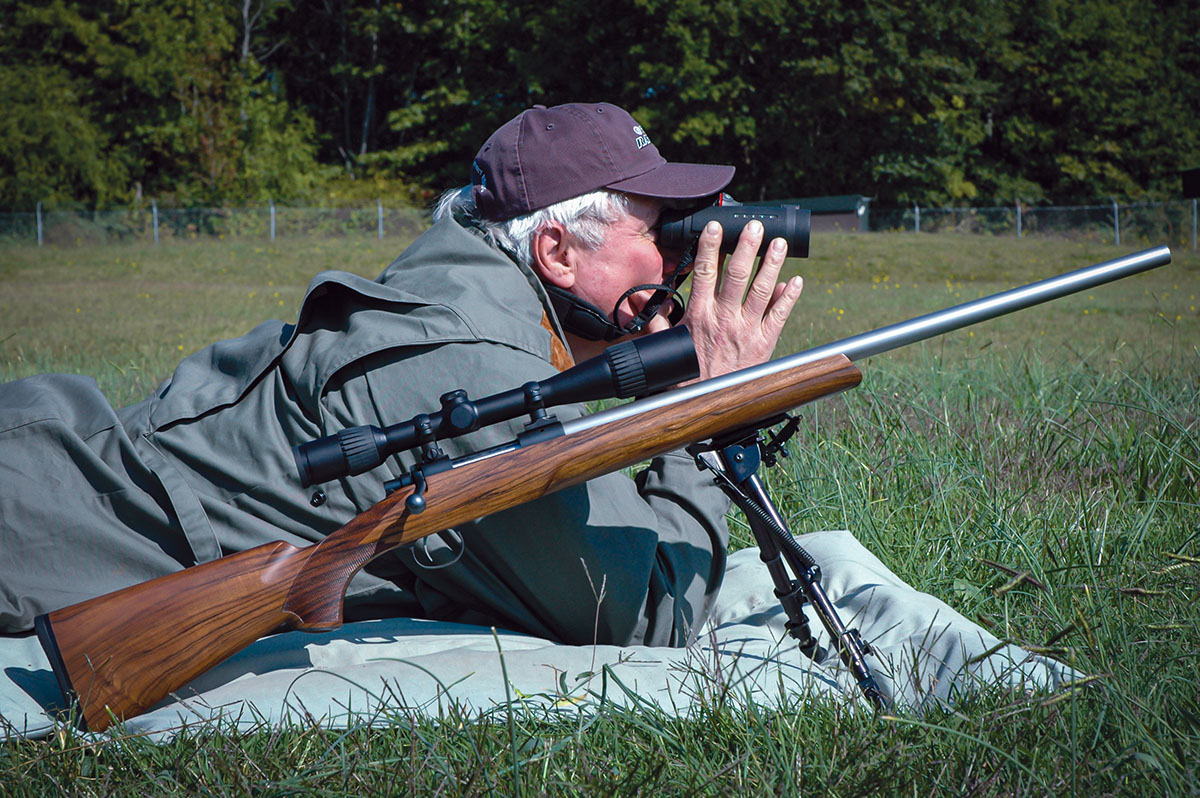
Staying with the .17-caliber but greatly increasing effective range, this Cooper Model 21 in 17 Remington shoots flat, kicks light and is a pleasure to shoot.
The 222 Remington was introduced in 1950, and Sako rifles chambered for it were extremely popular among varmint shooters in my area. A heavy-barrel Sako L46 chambered for that cartridge has been with me for many years, and it is still quite accurate. When all are loaded to the same chamber pressure with a 50-grain bullet, the 222 Remington Magnum and 223 Remington are about 300 (fps) faster from a practical point of view, which is not enough to matter significantly when shooting varmints at reasonable distances. For this reason, every varmint battery should contain at least one rifle chambered for the 222 or 223. The 221 Fireball is a member of the same family, but it is about 200 fps slower than the 222.
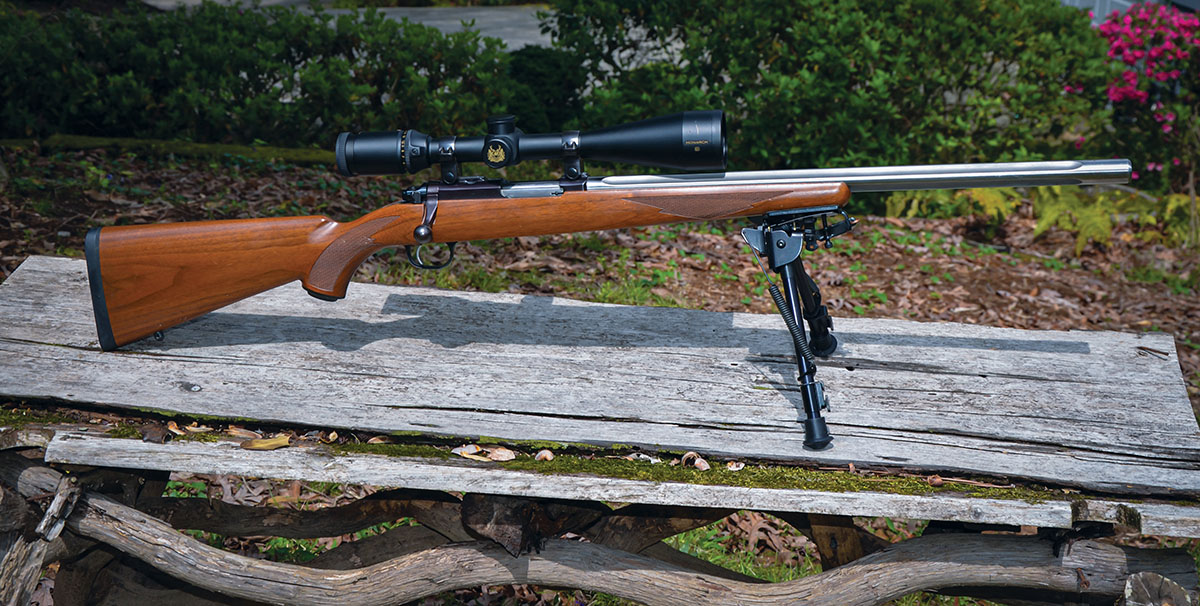
When selecting .22-caliber centerfire cartridges for the battery, the 22 Hornet has always been, and always will be, a good place to start. This one built years ago by Jim Clark, Jr. of Clark Custom Guns on a tuned Ruger 77/22H action is the most accurate rifle of its caliber that Layne has shot. It has a fairly heavy Lilja barrel with a 1:14 twist.
The all-around battery should contain rifles chambered for a couple of rimfire cartridges with the plain old 22 Long Rifle a great place to start. I cannot recall having more fun than when sitting behind a Ruger 10/22 and plinking away at flickertails, or Richardson’s squirrels, their preferred name. One of my favorites is a heavy-barrel rifle built by Don Fraley on the 10/22 receiver. After discarding the factory V-block method of attaching the barrel, Don line-
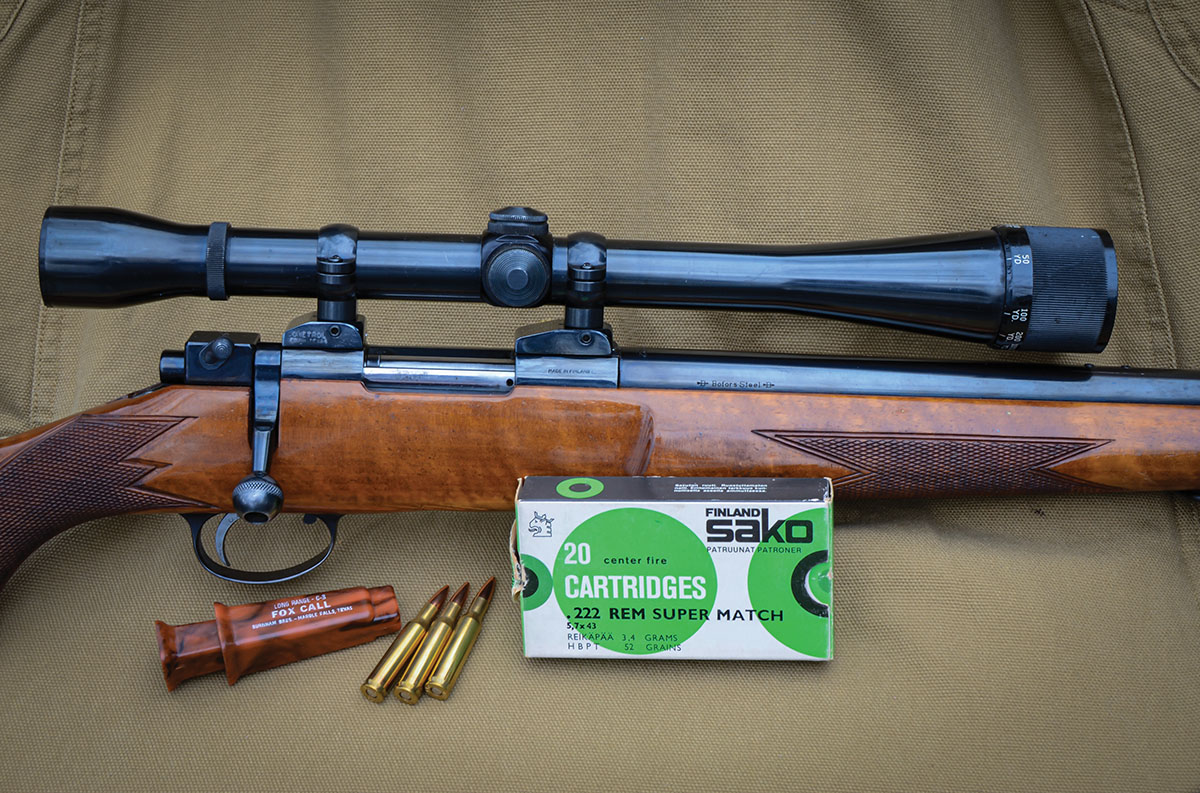
While the classic 222 Remington for which this 1950s vintage Sako L46 is chambered has been dropping varmints for three-quarters of a century, it is still one of the most useful varmint cartridges ever developed. Factory ammunition is still available and Starline offers unprimed cases of excellent quality.
bored and threaded the receiver when attaching a Lilja barrel with a Bentz chamber. The aluminum 10/22 receiver was not designed to handle the stress of
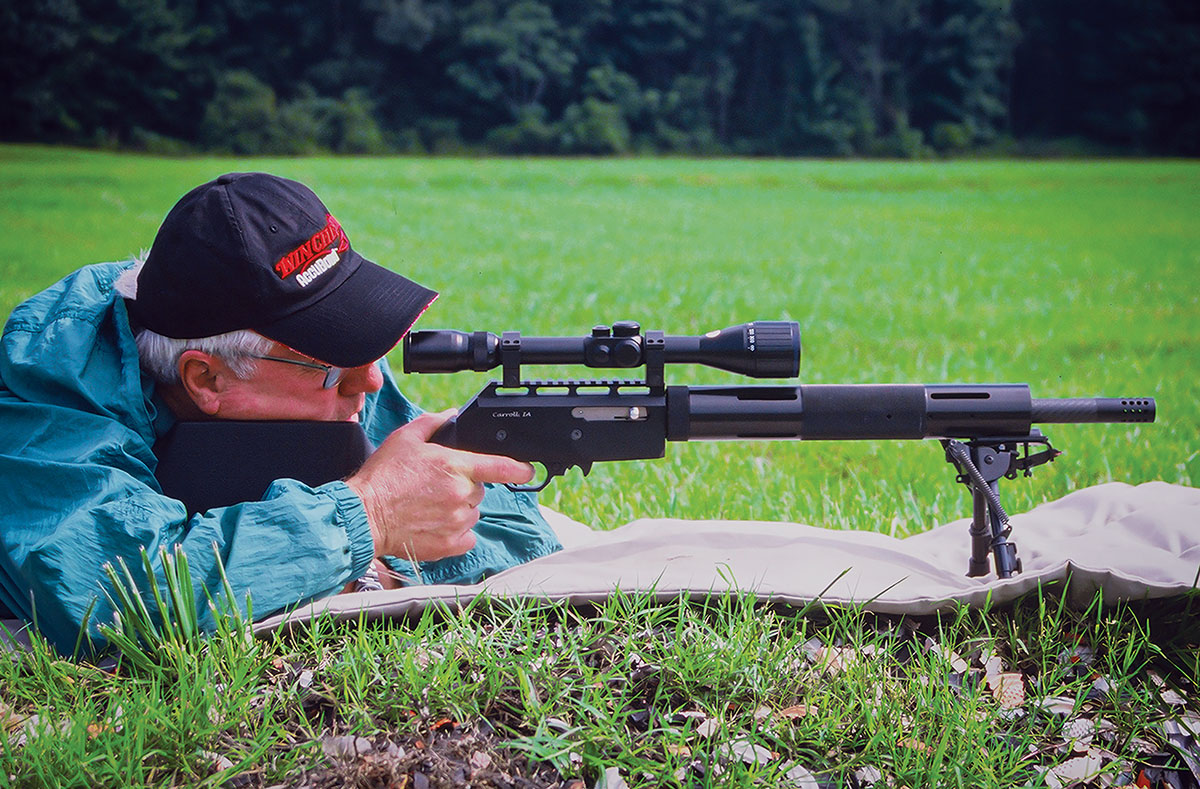
Can’t decide between the 17 HMR and 22 WMR? This Volquartsen Fusion with quick-switch barrels chambered for the two cartridges is the answer to that question. It allows comparing the performance of the two cartridges in the varmint fields without taking along two rifles.
that much weight, so the barrel was bedded in the laminated wood stock, and the entire action free-floated. While not quite as accurate, the 10/22 Custom Competition from Ruger is precise enough to drop ground squirrels as far away as they should be shot with the 22 Long Rifle cartridge. A dozen BX-25 10/22 magazines from Ruger allow me to send 300 bullets downrange fairly quickly but a volunteer who would enjoy loading magazines while I am shooting has yet to show up.
A rifle in 17 HMR or 22 WMR also belongs here. Tom Volquartsen was the first to offer autoloading rifles chambered for those cartridges that worked satisfactorily, and his secret was no secret at all. Whereas other companies modified existing rifles designed for the 22 Long Rifle, Volquartsen designed a rifle specifically for the two magnum cartridges. I have his rifles in 17 HMR and 22 WMR, and in addition to being totally reliable with a variety of ammunition, they are extremely accurate. I also enjoy shooting my Volquartsen Fusion because its two quick-switch barrels allow me to compare the performance of the 17 HMR and 22 WMR on varmint shoots without taking along two rifles. Barrels are fast and easy to change; unscrew the AR-15-style aluminum barrel shroud from the receiver, remove the barrel by pulling it forward, install the other barrel, reattach the barrel shroud, and keep on sending bullets. Like all Volquartsen rifles, the Fusion uses the rotary magazine made by Ruger for its 10/22 rifles and it consistently shoots five bullets inside an inch at 100 yards. While the Fusion is no longer in production, a web search will occasionally turn one up at an affordable price.
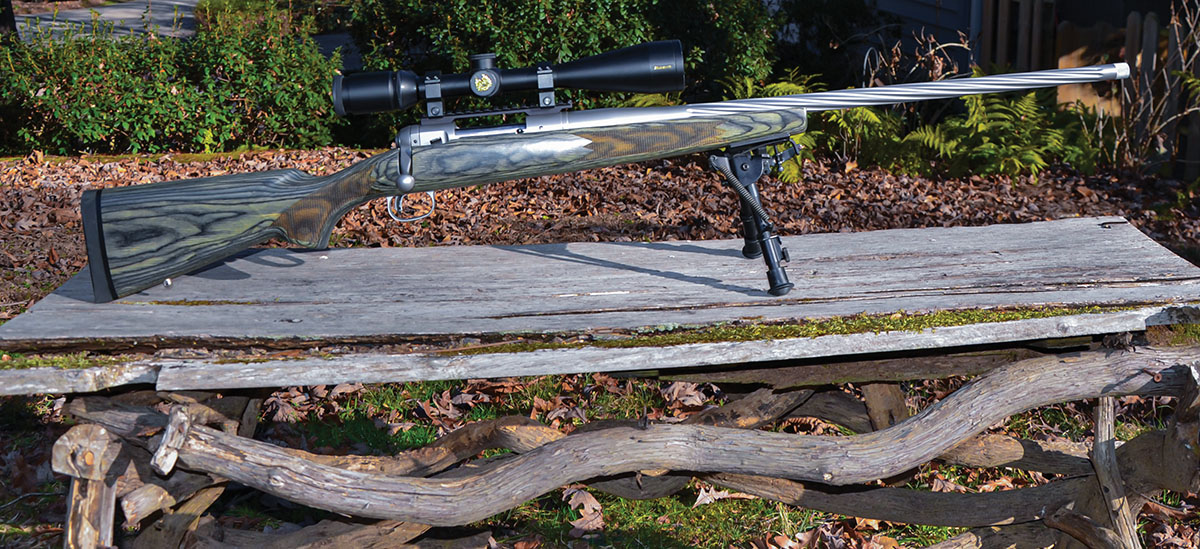
Many varmint shooters prefer to do it all with one rifle. Delivering excellent accuracy with bullets ranging in weight from 55 to 90 grains, this E.R. Shaw Mark VII with a 26-inch, 1:7 twist barrel in 22 Creedmoor would not be a bad choice. The color of its laminated wood stock is described by Shaw as “Pepper.”
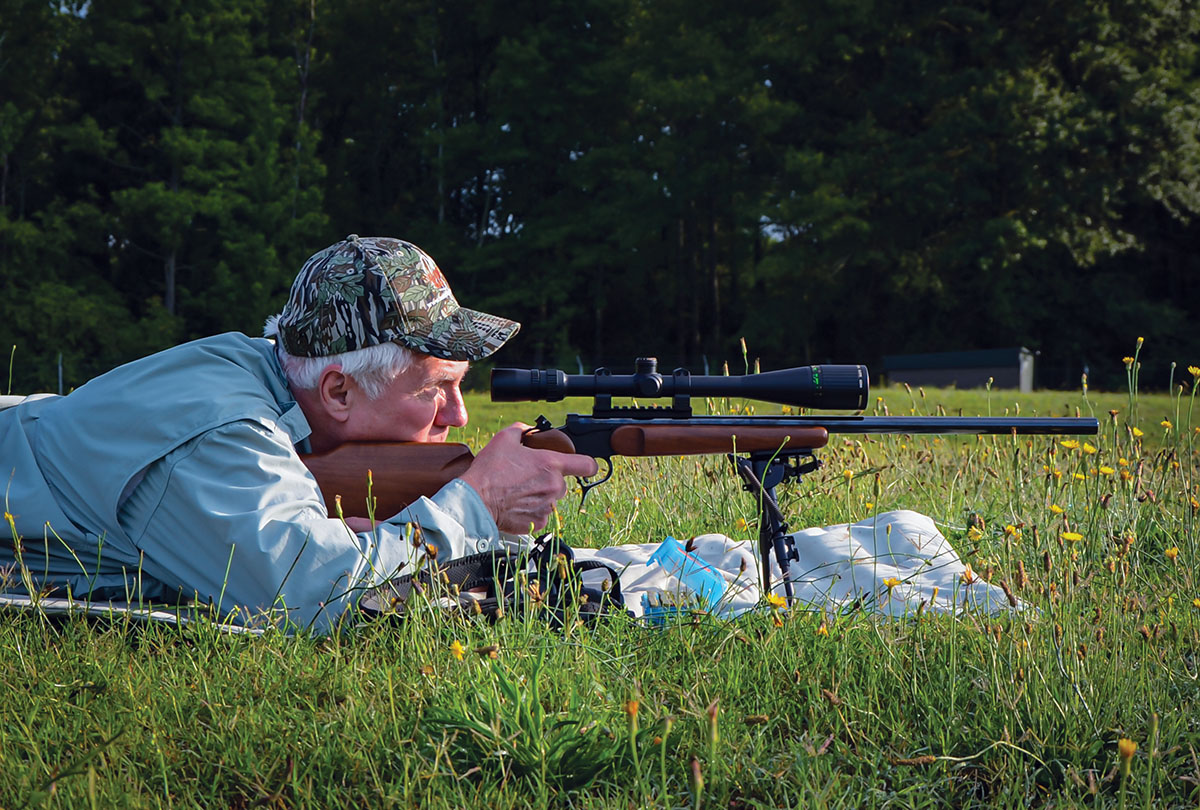
Moving up to a centerfire cartridge, this SSK custom Encore in 17 Ackley Hornet shoots flat, and with no misses, a pound of W-296 will allow you to drop 700 prairie dogs.
Our all-around battery simply must have a couple of 17-caliber centerfires with the 17 Ackley Hornet – one of my favorites. The 17 Hornady is as good, but I had an SSK Industries T/C Contender rifle chambered for the Ackley version and a big supply of formed cases long before it was introduced, so I am sticking with it. That leaves the 17 Remington and the 17 Fireball to choose between. Those who say the Fireball is as fast have not looked at any reloading manuals. They are great cartridges, and while I have rifles chambered for both, an incredibly accurate Cooper Model 21 with a heavy barrel in 17 Remington will be the last to go. For those looking for a cartridge shooting bullets larger in diameter than those two, but still smaller than the 22 centerfire, the 204 Ruger is worthy of a serious look. My SSK Industries Encore with a 26-inch Shilen barrel squeezes maximum velocity from that cartridge and is quite accurate to boot. While the 204 Ruger might be a better choice than the 17 Remington, I have too many fond memories of being in the field with that cartridge to ever give it up.

Only slightly faster than the 22 Hornet, the 218 Bee is another fun little varmint cartridge. In addition to a bolt-action Sako L46, Layne has this lever-action Marlin 1894CL Classic chambered for the Bee and he is quite fond of it as well.
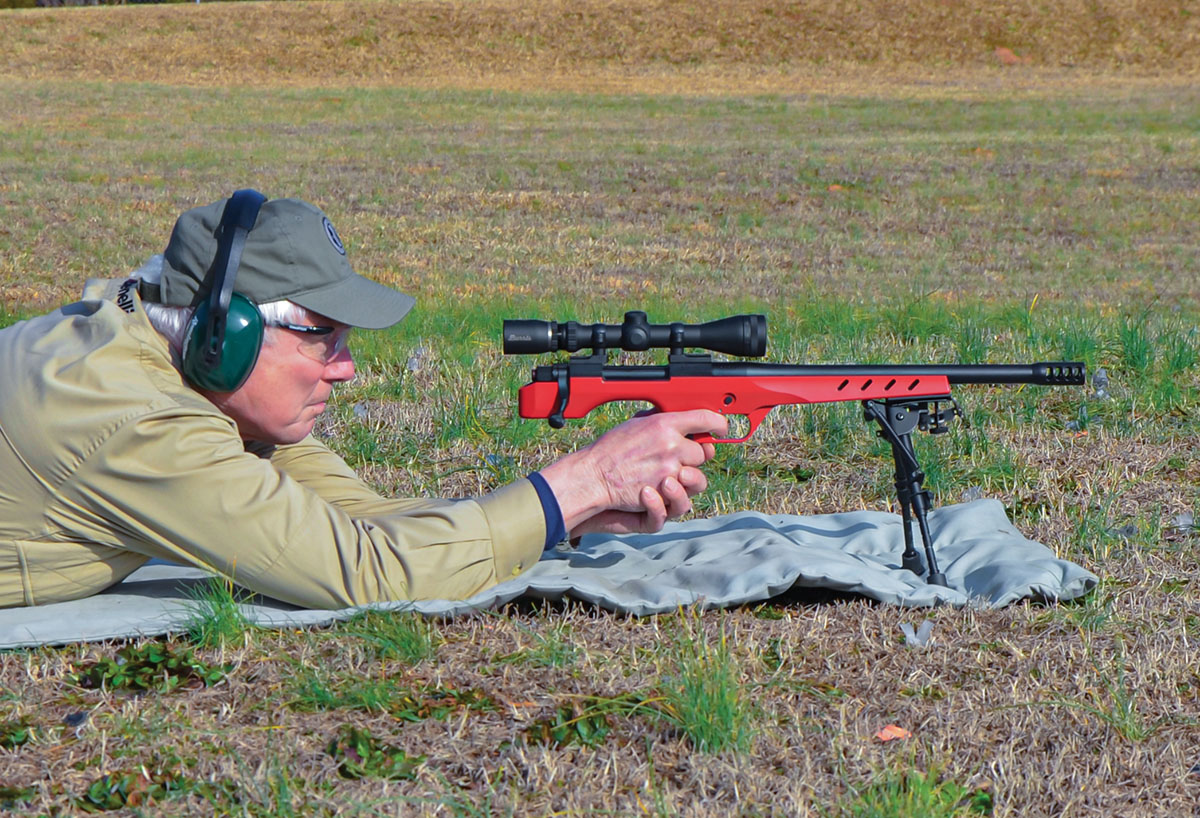
No all-around varmint shooting battery is entirely complete without at least one long-range handgun. When the original version of the Nosler single-shot handgun on the Model 48 rifle action was introduced back in 2018, it was called the Custom Handgun, and this one is in 6.5 Creedmoor. It is known today as the Model 48 Independence, and among its available cartridge options, the 22 Nosler is the logical choice for picking off varmints.
Last but most certainly not least, no varmint battery is complete without at least one long-range handgun. I have several, including an original Remington XP-100 in 221 Fireball, that started it all back in 1962. I eventually increased my range with XP-100 and T/C Super 14 Contender pistols in 223 Remington. The most accurate is a custom gun on the XP-100 action in that caliber built by Kenny Jarrett. Several years ago, I tried a Nosler Model 48 Custom Handgun with a 15-inch barrel in 6.5 Creedmoor, and it also proved to be quite accurate. It is now called the Model 48 Independence, and among its available chamberings, the 22 Nosler is the logical choice for varmint shooting.
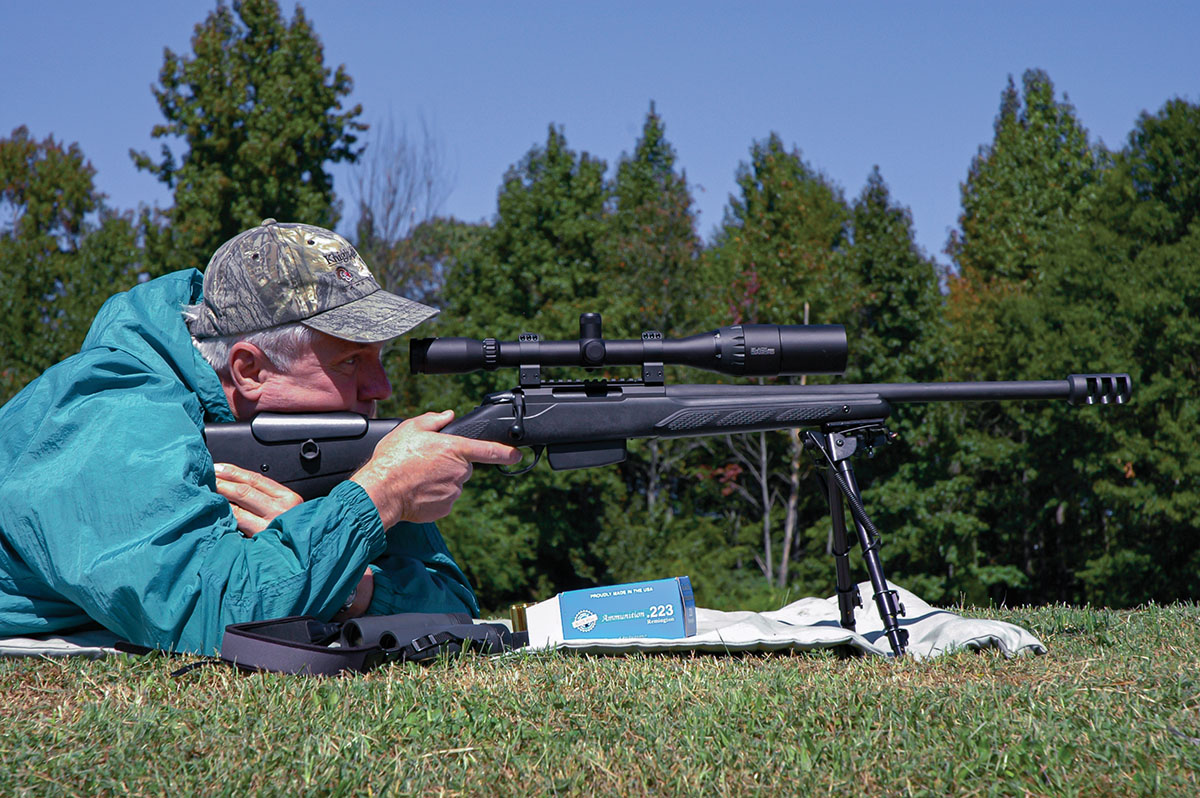
When both are loaded to maximum pressures with a 50-grain bullet, the 223 Remington, for which this Tikka rifle is chambered, is about 300 feet per second faster than the 222 Remington. Zero rifles chambered for both cartridges two inches high at 100 yards, and bullet drops below the point of aim at 300 yards will be six inches for the old-timer and three inches for the young upstart, not a lot of difference, to say the least.