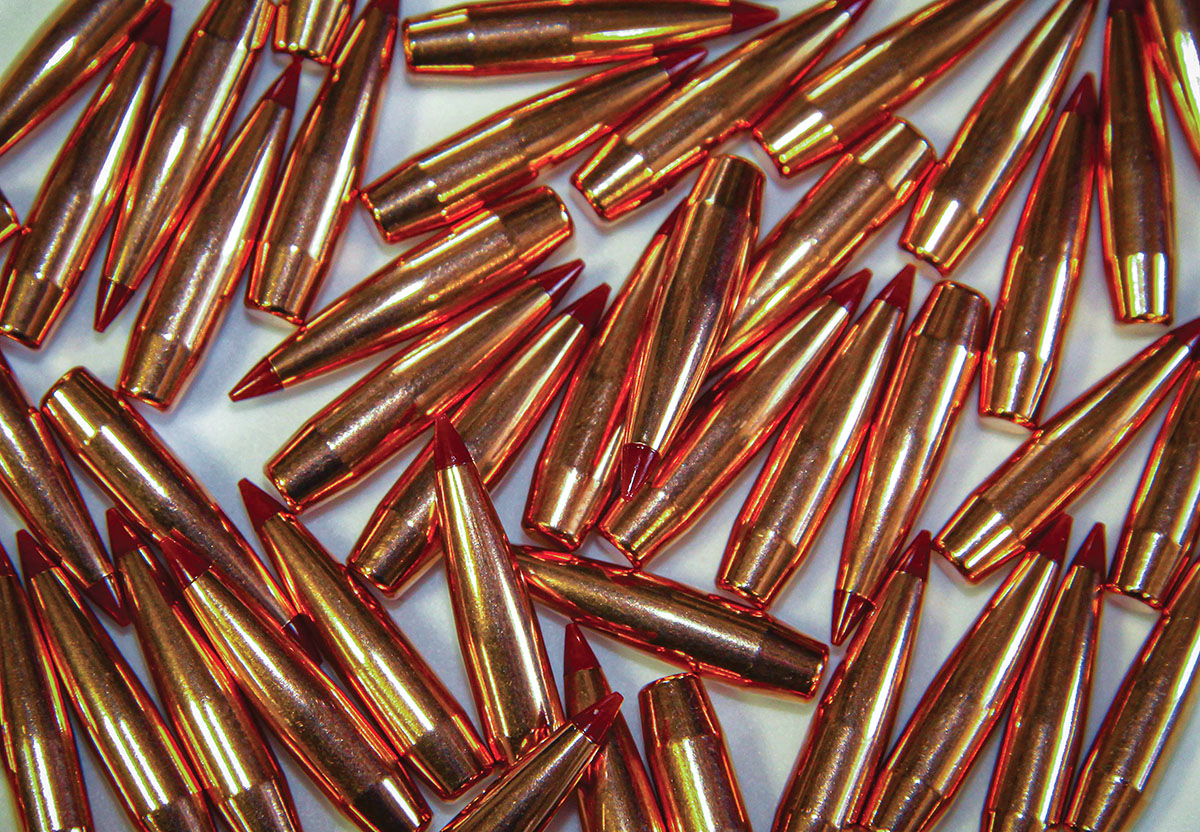
Hornady’s 62-grain ELD-VT was released last year, providing a fast and streamlined varmint bullet producing explosive terminal performance.
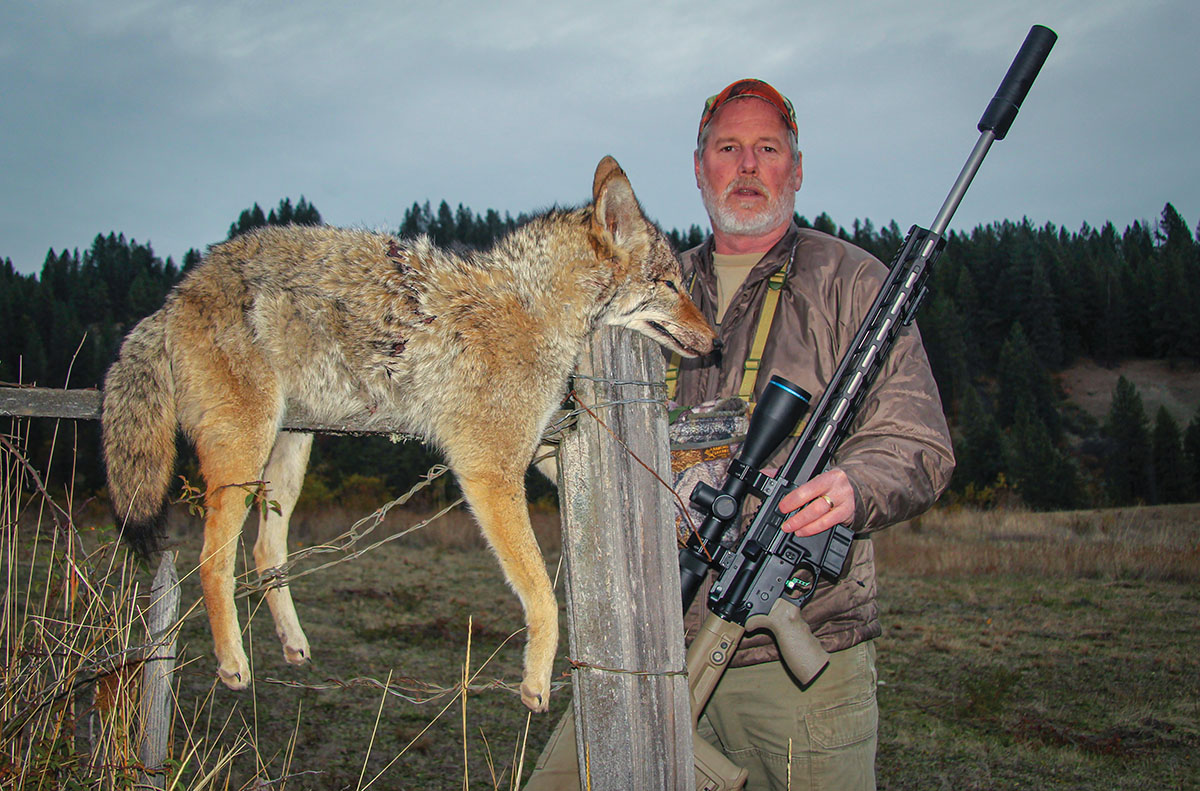
Patrick sniped this Idaho coyote from 285 yards using his parts-build AR-15 in 22 ARC. The Hornady 62-grain ELD-VT did slightly more damage to the pelt than he would have preferred during his fur-trading days.
For years, serious varmint shooters and fans of Hornady’s ELD (extremely low drag) series bullets have used the company’s .224-caliber ELD Match selection. The ELD design provides the accuracy needed to pick off distant varmints and high ballistic coefficients to buck prairie winds while also expanding adequately from faster varmint cartridges, like my 22 Creedmoor. To some of us, Hornady’s 2024-released ELD-VT was an answer to our prayers.
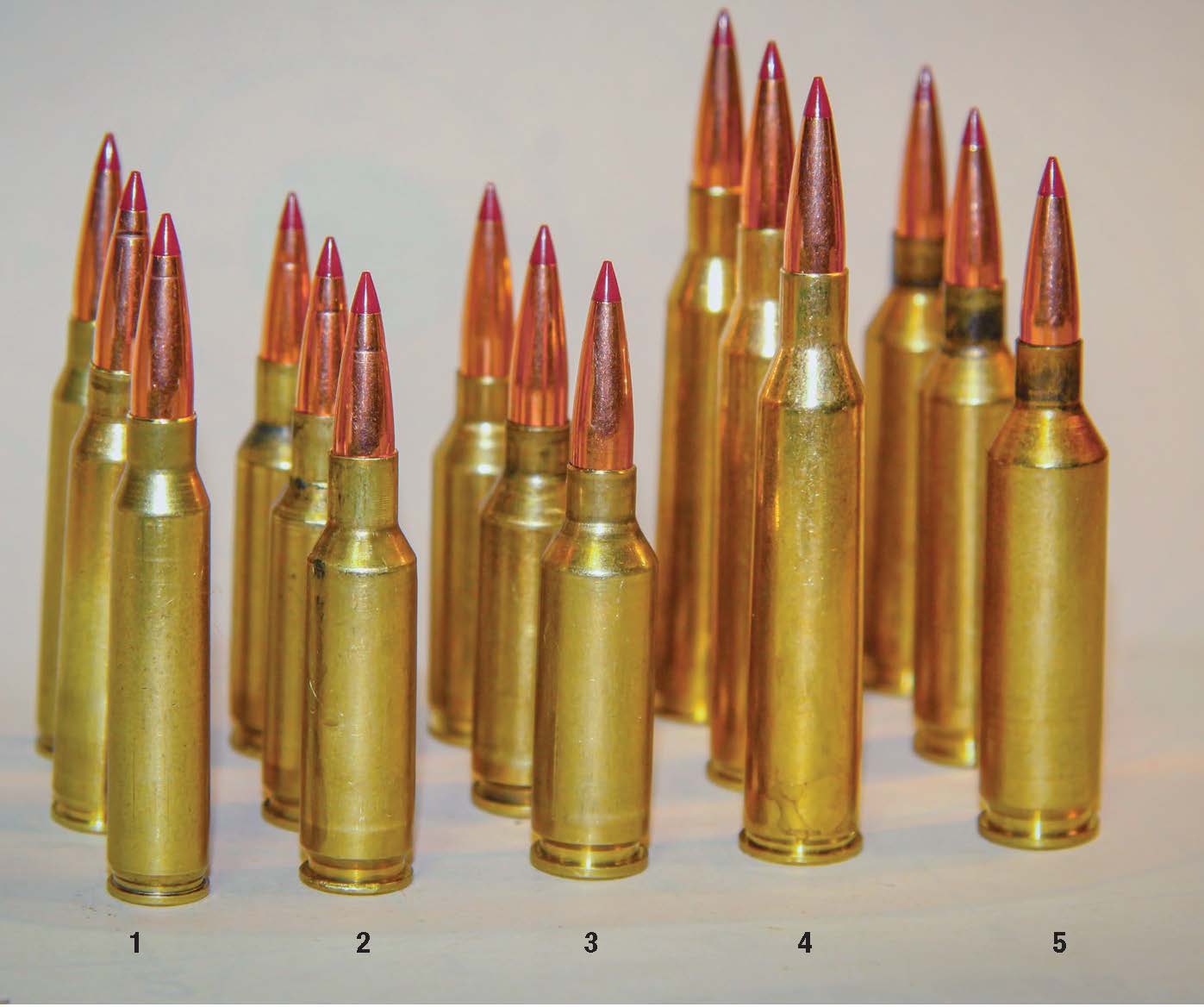
Cartridges used to wring out the 62-grain Hornady ELD-VT bullet include: (1) 223 Remington, (2) 224 Valkyrie, (3) 22 ARC, (4) 220 Swift, and (5) 22 Creedmoor.
The ELD-VT introduces the dramatic terminal performance of the company’s V-MAX but in a heavier, sleeker 62-grain profile ideal for modern .224-caliber cartridges such as the 224 Valkyrie, 22 ARC and 22 Creedmoor and the faster rifling twists typically accompanying them. The .224-caliber, 62-grain option includes a .395 G1/.199 G7 ballistic coefficient (BC), meaning it is ballistically superior to any other 62- to 65-grain .224-caliber bullet I can think of – even some 70- to 75-grain slugs. The ELD-VT is also offered in 80-grain 6mm (.410 G1 BC), 100-grain 6.5mm (.448 G1 BC) and 174-grain .308 caliber (.573 G1 BC).
The ELD-VT incorporates the many years of ballistic research that went into other ELD bullets, including exceptional low-drag aerodynamics and consistency. In the ELD-VT, varmint shooters get a lighter, higher-velocity option, providing explosive fragmentation, even at extreme ranges. Proprietary Hornady technologies include a thinner AMP jacket with proven consistency that improves accuracy and a Heat Shield polymer tip that resists thermal deformation to maintain integrity throughout the bullet’s entire flight path. Honestly, this likely doesn’t factor until 450 to 500 yards out, after the bullet has been given enough time in flight to actually warm through atmospheric friction. A significantly shortened lead core moves the center of gravity rearward and creates a large air void beneath the tip. As the tip is forced rearward following impact, that air cavity compresses to peel the jacket away and promote violent expansion, turning marginal hits into killing shots. That nose void also makes these bullets long for weight, boosting their BC.
That extra length generally requires faster rifling twists, meaning they won’t stabilize in older varmint rifles with classic rifling. Hornady suggests a 1:8 twist, though, as we shall see, I saw decent accuracy from rifles with a 1:9 rifling twist when shot at about 3,500 feet above sea level. This makes them a shoo-in at higher elevations where most serious Western varmint shooting is conducted (most of my best ground squirrel spots are located at 4,000-4,500 feet, my favorite western Wyoming varmint destinations closer to 7,000-7,500 feet above sea level). Every 5,000 feet of elevation gain roughly correlates to one inch of rifling twist, meaning that while the 62-grain ELD-VT may require a 1:8-inch twist at sea level, at 5,000 feet above sea level, a 1:9-inch twist is adequate or a 1:10-inch twist at 10,000 feet while shooting alpine marmots.
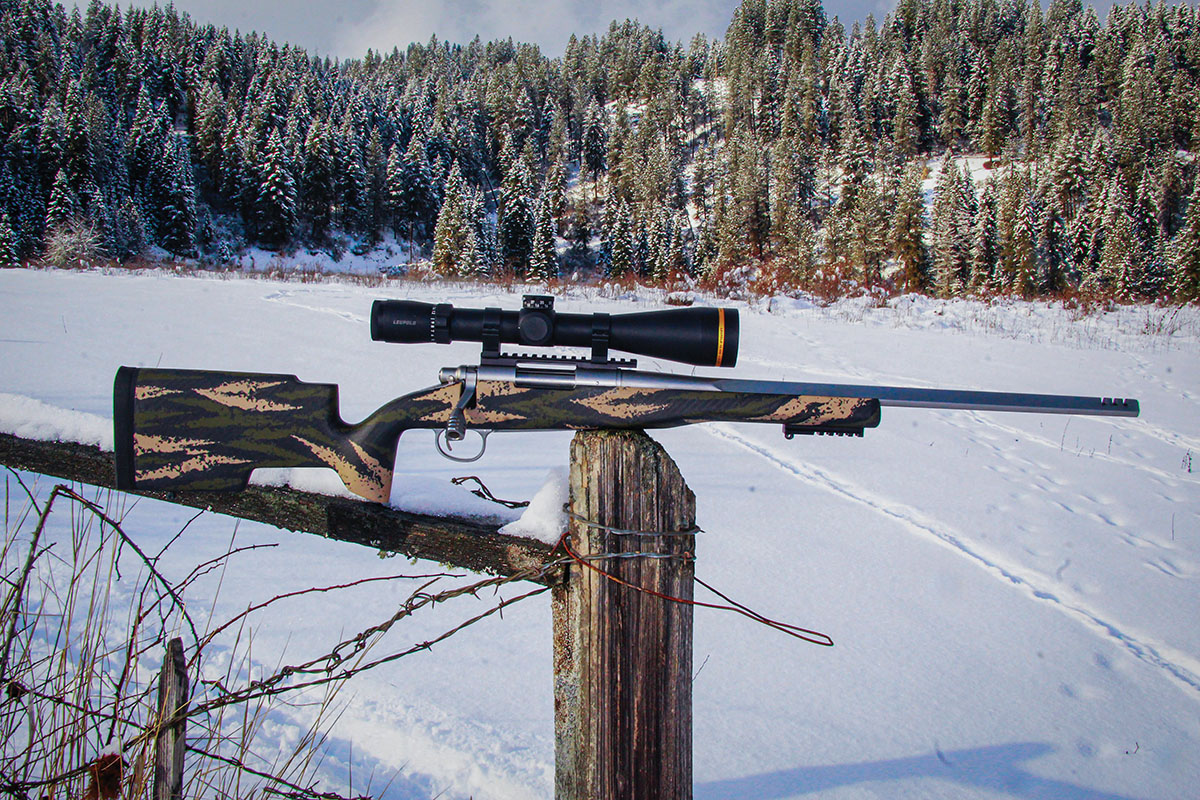
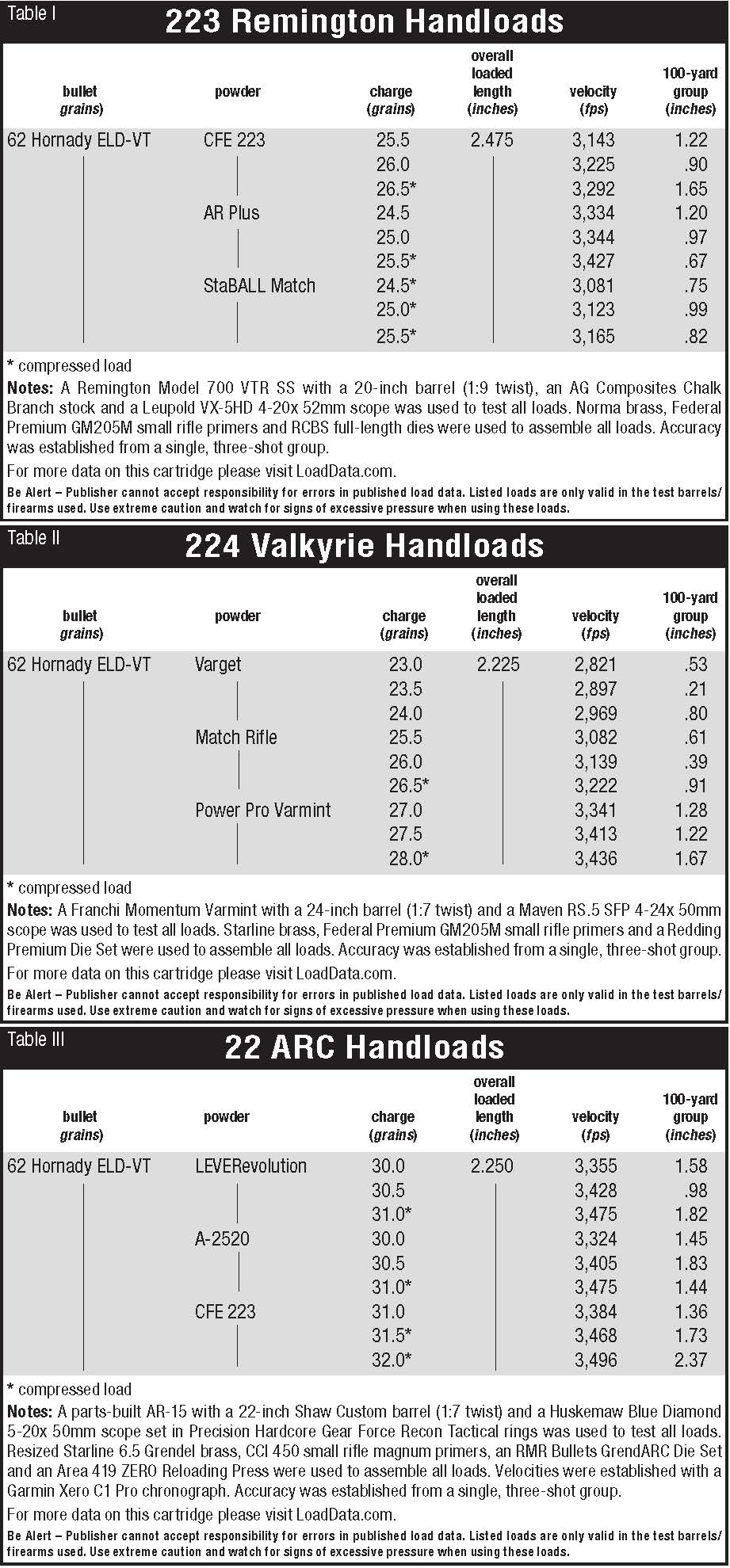
The rifle used to test 223 Remington loads was a Remington Model 700 VTR SS with a 20-inch barrel including a 1:9 twist and a Leupold VX-5HD 4-20x 52mm scope. The factory stock was replaced by an AG Composites Chalk Creek carbon fiber model.
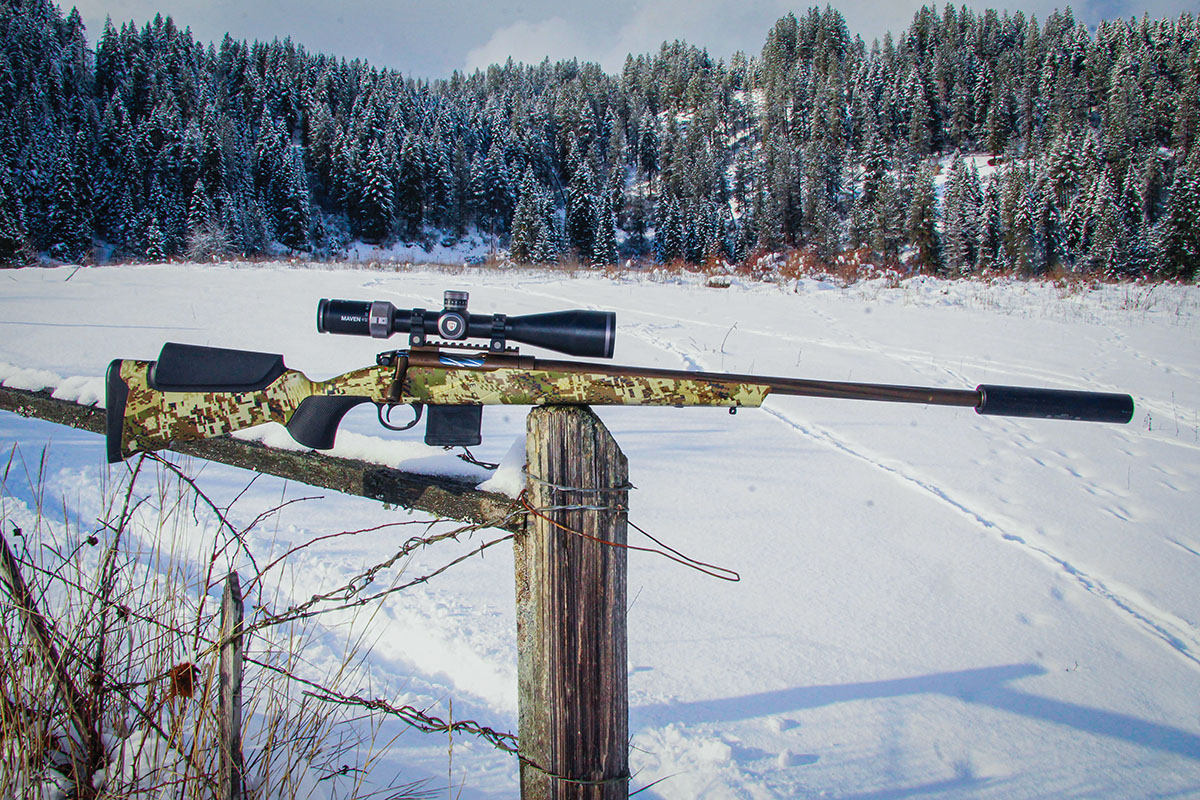
The 224 Valkyrie test rifle included a heavy 24-inch barrel with a 1:7-inch twist. It was Franchi’s Momentum Varmint topped with a Maven RS.5 SFP 4-24x 50mm scope set in Nightforce UltraLite rings.
I first shot the 62-grain ELD-VT from a 22 ARC via Hornady V-Match factory ammunition. My 22 ARC is a parts-built AR-15, and let’s just say not the most accurate rifle in my varmint-shooting arsenal. That said, making hits on fat Columbia ground squirrels to 300 yards proved a high-average proposition. In fact, and it pains me to say, that factory ammunition has generally shot better than the handloads I’ve assembled. Hornady V-Match factory ammunition holding ELD-VT bullets is offered in 22 and 6mm ARC, 6mm or 6.5mm Creedmoor and 6.5 Grendel.
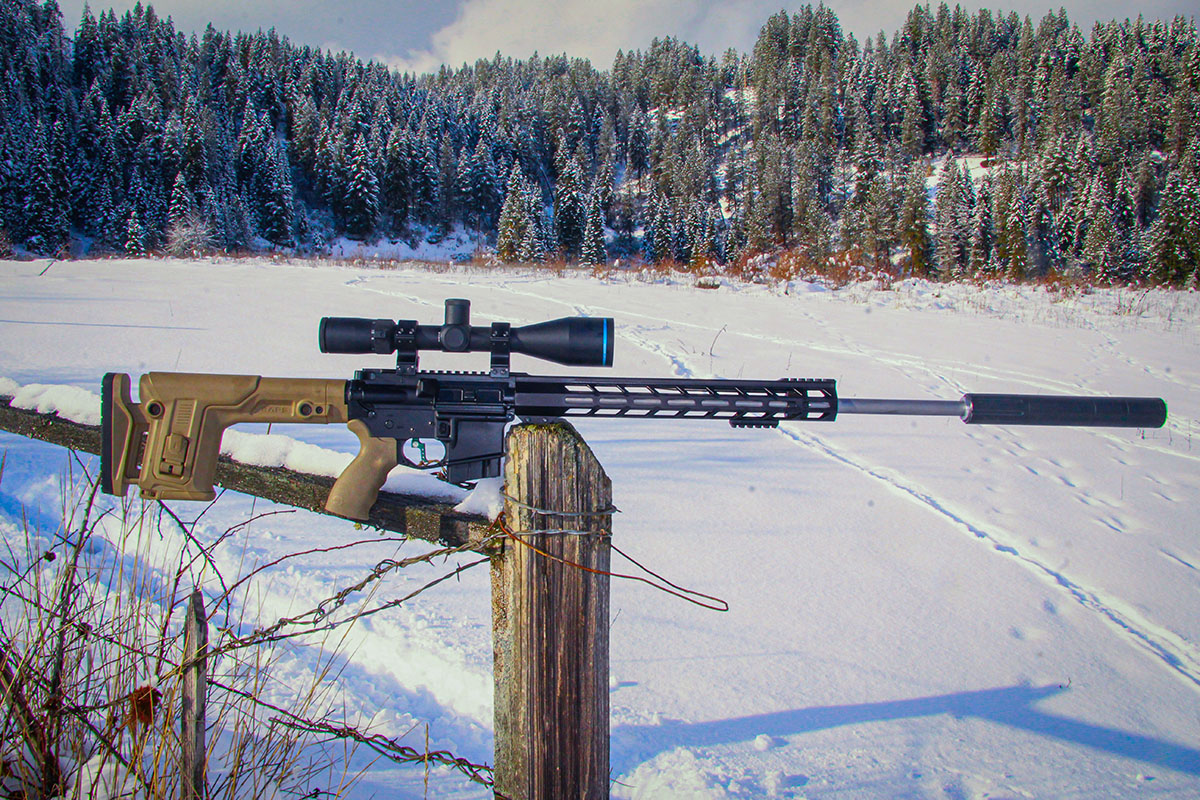
A parts-built AR-15 holding a 22-inch, 1:7-twist Shaw Custom barrel was used to test 22 ARC loads. It holds a Huskemaw Blue Diamond 5-20x 50mm scope set in Precision Hardcore Gear Force Recon Tactical rings.
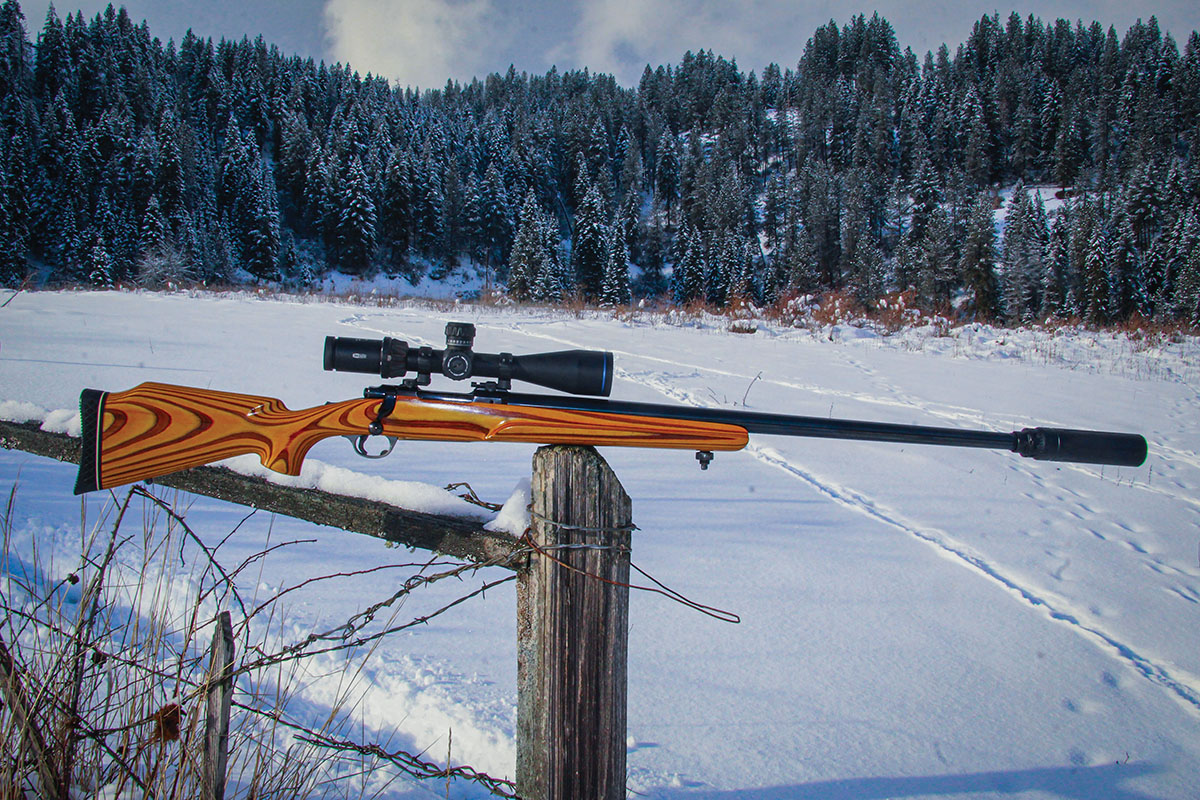
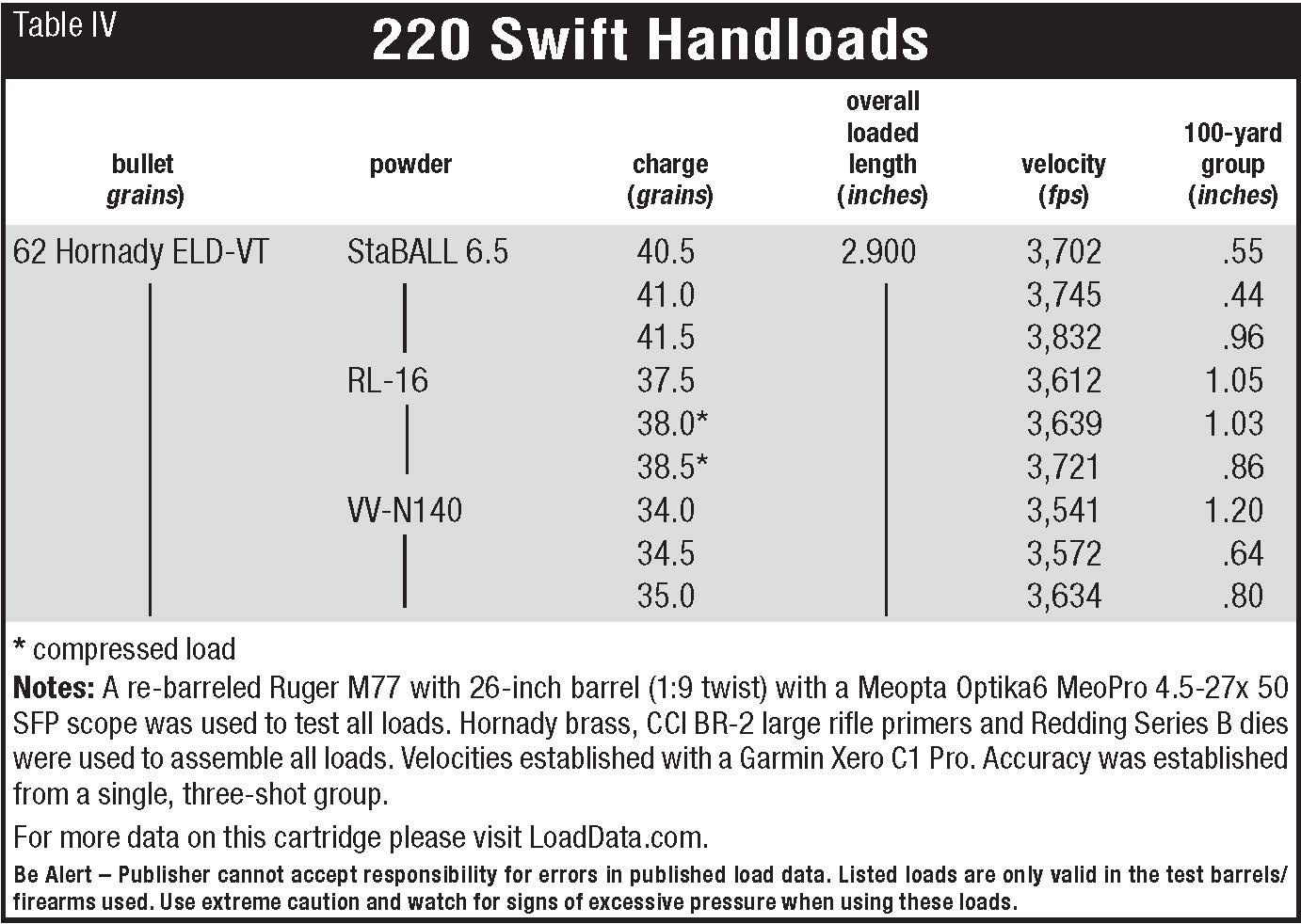
Patrick used a re-barreled Ruger M77 with a 26-inch, 1:9-inch twist barrel and a Meopta Optika6 MeoPro 4.5-27x 50 SFP scope to test 220 Swift loads with the 62-grain ELD-VT bullet.
After getting my hands on the first batch of 62-grain ELD-VT component bullets my next question was which of my varmint rifles would reliably digest this new varmint pill. Perusing my arsenal, I found my AG Composites’ stocked Remington Model 700 VTR SS in 223 Remington; Franchi Momentum Varmint in 224 Valkyrie; that aforementioned parts-built AR-15 with Shaw Custom barrel in 22 ARC; an ancient 220 Swift Ruger M77 re-barreled with a heavier, faster-twist tube; and the 22 Creedmoor Dale Hegstrom from Little Crow Gunworks built for me on a Remington 700 308 Win action using a Proof Research barrel. That represents a pretty solid cross-section of modern varmint rifles and cartridges suited to the 62-grain ELD-VT bullet.
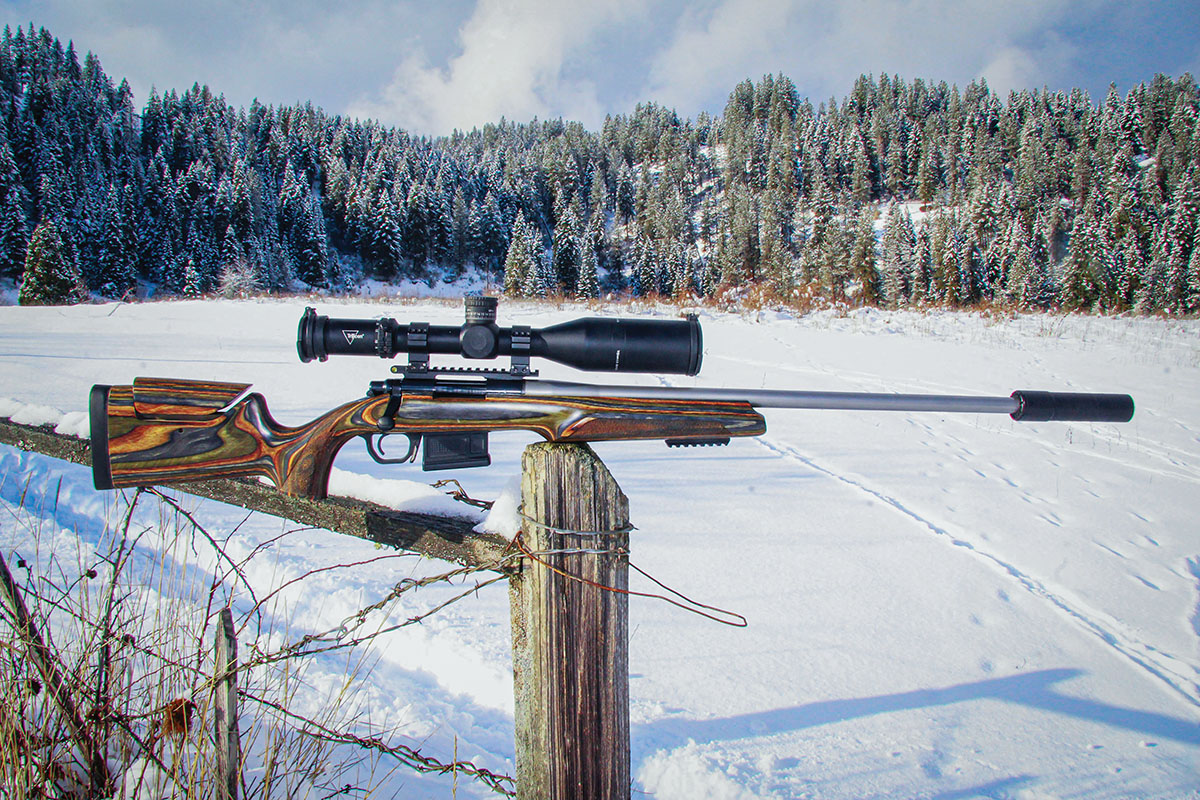
Dale Hegstrom of Little Crow Gunworks built Patrick’s 22 Creedmoor. It includes a heavy Proof Research 26-inch, 1:7-twist stainless-steel barrel and is topped by Trjicon’s AccuPower 4.5-30x 56mm scope set in Precision Hardcore Gear 34mm Ranger rings.
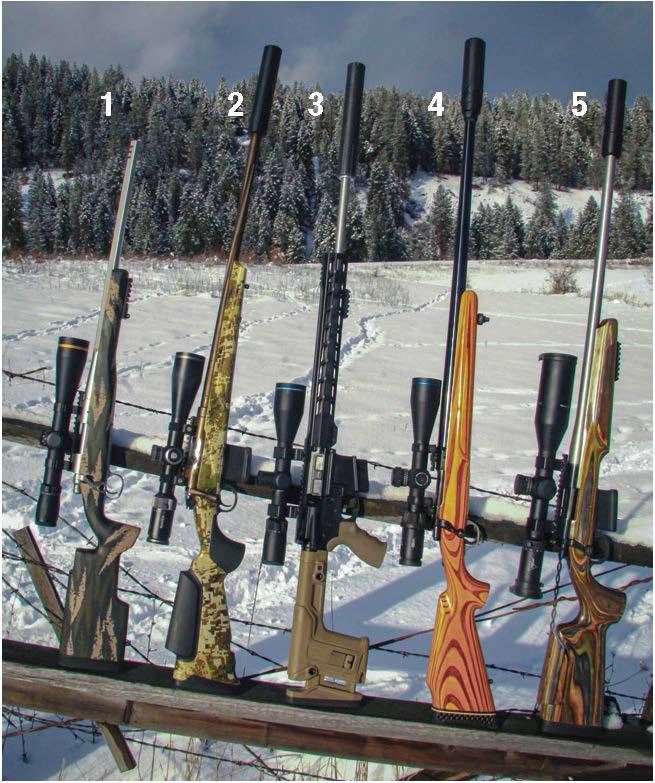
Rifles used to test Hornady’s 62-grain ELD-VT included: (1) 223 Remington Model 700 VTR SS (20-inch, 1:9 twist), (2) 224 Valkyrie Franchi Momentum Varmint (24-inch, 1:7), (3) 22 ARC parts-build AR-15 with Shaw barrel (22-inch, 1:7), (4) 220 Swift fast-twist Ruger M77 (26-inch, 1:9) and (5) 22 Creedmoor Little Crow Gunworks custom (26-inch, 1:7).
My Remington Model 700 VTR SS (Varmint Target Rifle, Stainless Steel) includes a 20-inch triangle-profile barrel with integral muzzle-brake cuts and a 1:9-inch twist. The plastic factory stock was replaced with an ergonomic AG Composites Chalk Branch carbon-fiber stock, and the rifle was topped with a Leupold VX-5HD 4-20x 52mm scope. This rifle has proven reliably accurate with bullets up to 69 grains (like the 3-Gun Hunter from RMR Bullets or the 69-grain MatchKing from Sierra Bullets). It suffers from minimal free-bore, requiring seating bullets to AR-magazine overall lengths, which creates issues with long-for-caliber bullets like the 62-grain ELD-VT. I used Hodgdon CFE 223, Shooters World AR Plus and Winchester StaBALL Match for this round of shooting, combined with an overall length of 2.475 inches (the longest I could get away with).
Norma brass, Federal Premium GM205M primers and RCBS dies were used to assemble 223 Rem loads. None of the loads tested lived up to this rifle’s past performance. Whether rifling twist/velocity in relation to bullet stabilization, seating depth, or just an unfortunate choice of powders, I cannot say. CFE 223 managed one sub-MOA group using 26 grains of powder and sent at 3,225 fps. AR Plus groups shrunk as more fuel was added, hitting .67 inch at 3,427 fps using a compressed maximum load of 25.5 grains of powder. StaBALL Match proved most consistent, printing groups from ¾-MOA to just under an inch using 24.5 to 25.5 grains of powder. All loads were compressed.
My Franchi Momentum Varmint holds a fairly heavy 24-inch, 1:7-inch twist fluted barrel. It is topped with one of my favorite varmint scopes, a Maven RS.5 SFP 4-24x 50mm set in Nightforce UltraLite rings. I like this scope’s clean lines and uncluttered, but useful Bullet Drop Compensating (BDC) reticle. I hated this rifle for years, struggling to find consistent accuracy. I eventually glass bedded the action, but placing blame on the rifle was ultimately misplaced. I would eventually discover the real blame lies with the cartridge itself. The 224 Valkyrie is simply unforgiving, its sweet spots frustratingly truncated and illusive. With the Hornady ELD-VT and an overall loaded length of 2.225 inches I managed to grab some of that accuracy magic.
The 224 Valkyrie was loaded with Hodgdon Varget (based on promised accuracy), Shooters World Match Rifle and Alliant Power Pro Varmint (based on promised velocity). Starline brass, Federal Premium GM205M primers and Redding Premium dies were used to assemble loads. Varget was Sierra Rifle & Handgun Reloading Data Edition VI’s “most accurate load” selection for this bullet weight. It certainly lived up to that promise, though velocity proved lackluster. Twenty-three grains of Varget produced a .53-inch group at 2,821 fps, while 23.5 grains printed into a .21-inch group at 2,897 fps. The maximum load of 24 grains topped out at 2,969 fps while providing lesser accuracy. Match Rifle did best with 26 grains of powder, not only producing a .39-inch group but running velocity up to a more impressive 3,139 fps. Power Pro Varmint delivered the promised velocity, hitting 3,341 to 3,436 fps using 27 to 28 grains of powder, but with such poor accuracy (1.22 to 1.67 inches) has to be easily dismissed in this rifle.
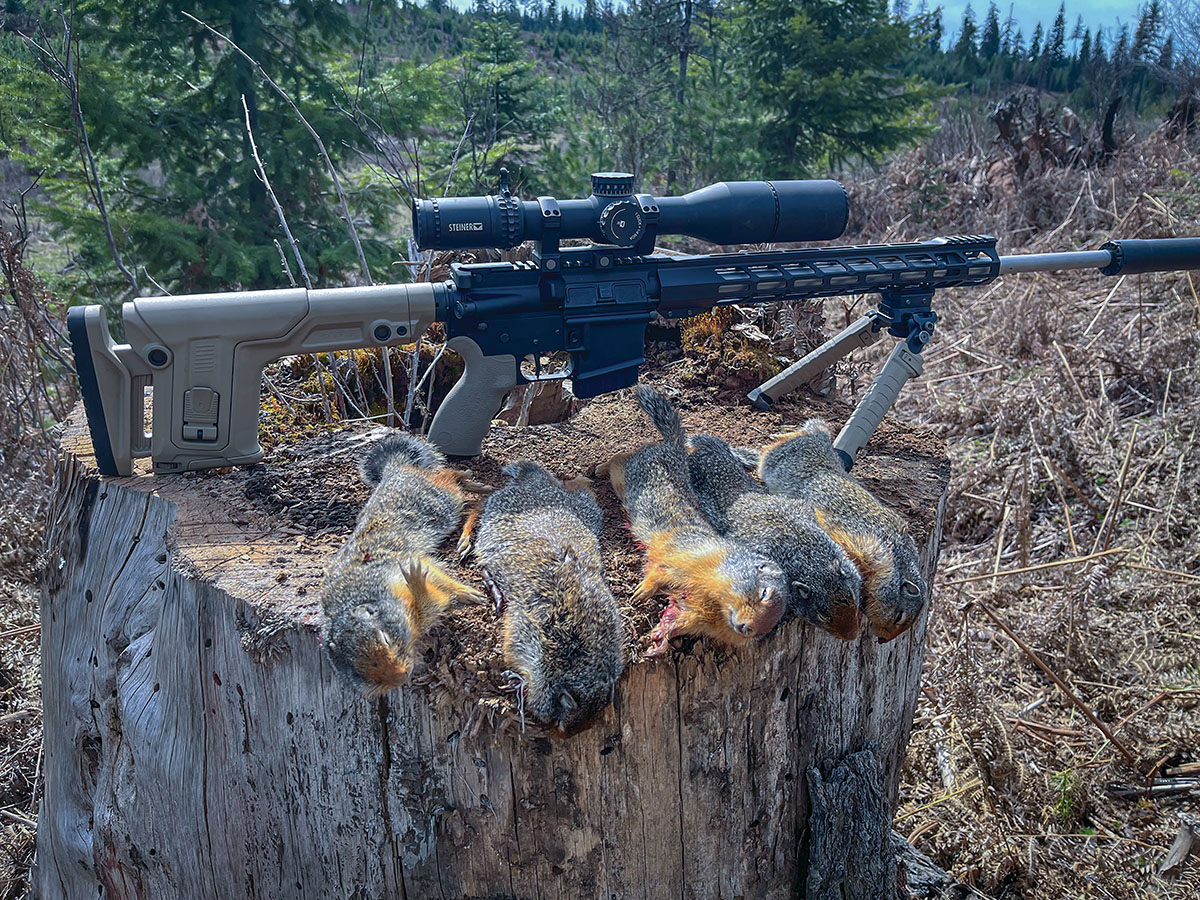
Patrick first used the 62-grain ELD-VT bullet by Hornady from his 22 ARC AR-15 using Hornady factory ammunition. The factory round proved accurate enough to make hits to 300 yards.
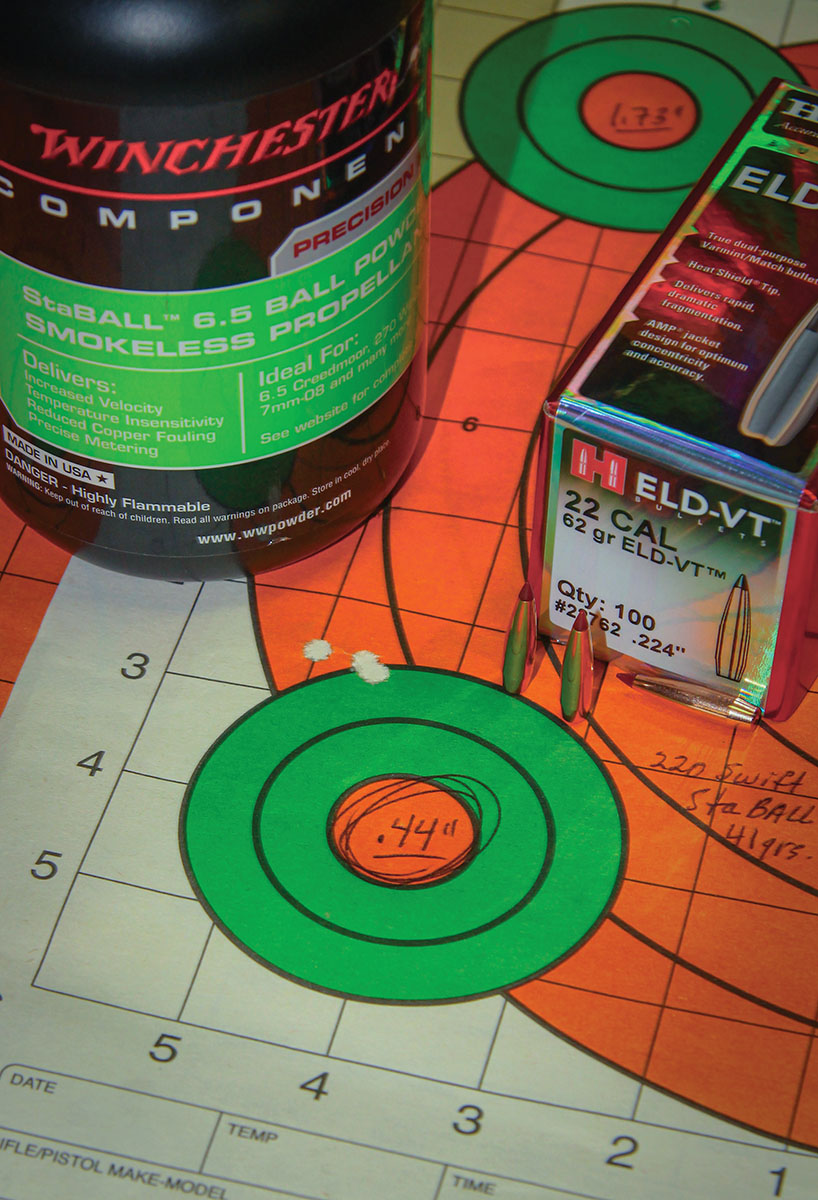
Patrick’s re-barreled 1:9-twist Ruger M77 in 220 Swift did best with 41 grains of Winchester StaBALL 6.5, printing into .44-inch and leaving the muzzle at a sizzling 3,745 fps.
As hinted, I’m not exactly enamored with my 22 ARC – or ARs in general in direct relation to burrowing rodents – though I do prefer them for wild hogs, which I also consider varmints. I first acquired a 22-inch Shaw Custom barrel with a 1:7 twist rate and then assembled a rifle with parts I had lying around. This included a DPMS Panther Arms multi-caliber lower, generic upper, handguard and buffer tube, H3 buffer (to manage the considerable gas blowback accompanying suppressor use), Velocity Triggers trigger and F.A.B. Defense RAPS buttstock and pistol grip. I topped it with a Huskemaw Optics Blue Diamond 5-20x 50mm scope set in Precision Hardcore Gear Recon Tactical rings. Resized Starline 6.5 Grendel brass, CCI No. 450 magnum small rifle primers and an RMR Bullets GrendARC die set were used to assemble ARC loads.
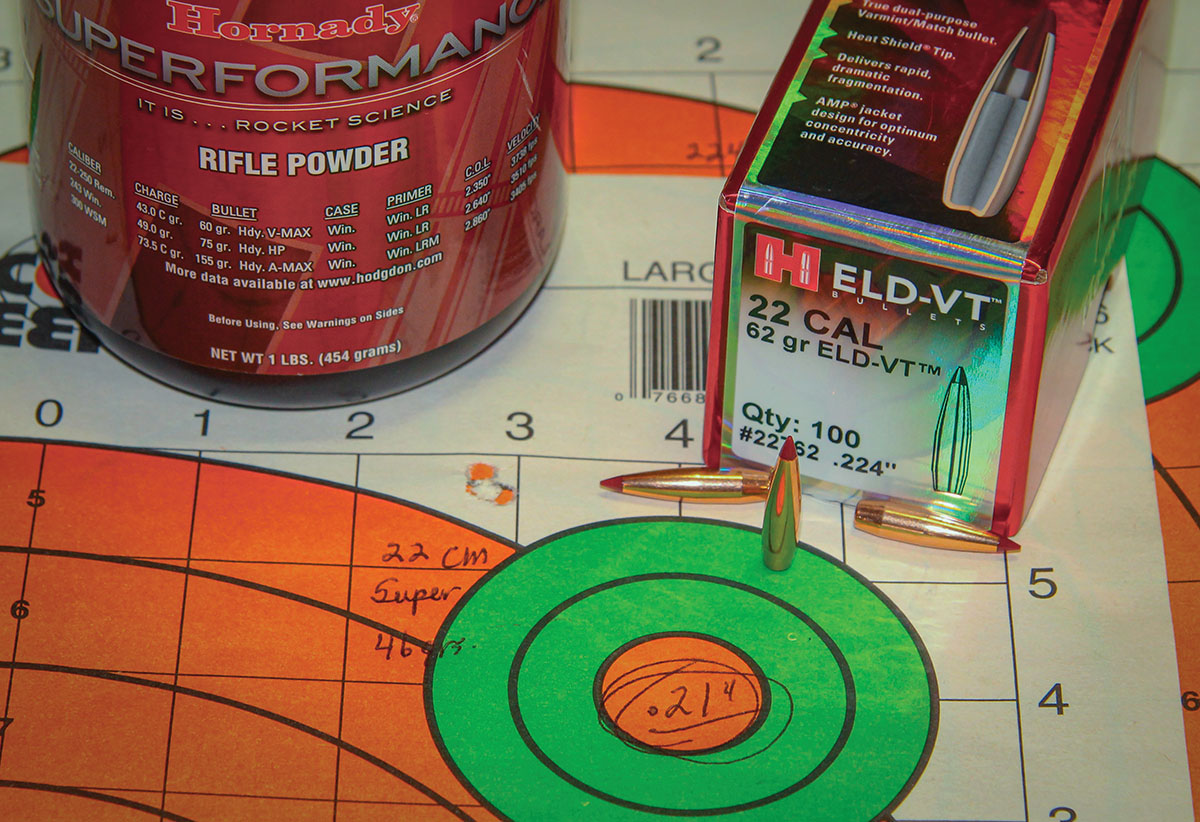
Patrick’s 1:7-twist 22 Creedmoor produced this .21-inch group at a smoking 3,815 fps using 46 grains of Hodgdon Superformance powder.
I chose Hodgdon LEVERevolution, Accurate 2520 and Hodgdon CFE 223 powders based on past experiences. All produced consistent results with this particular rifle. CFE 223 managed a 1.36-inch group at 3,384 fps using 31 grains of powder, with groups widening as more powder was introduced. Accurate 2520 produced two groups measuring less than 1½ inches. LEVER produced the smallest group, less than an inch, using 30.5 grains of powder. That group hit 3,428 fps, an obvious winner. A half grain of powder more or less added an inch to that group size.
My fast-twist Ruger M77 220 Swift came about after burning out the original tube and deciding that if any varmint cartridge warranted heavier bullets it was the Swift. Like the 223 Rem VTR and its identical 1:9 rifling twist, this rifle has shown an ability for greater accuracy with target bullets as heavy as 69 to 73 grains, though at least one powder did well in this series. The replacement barrel is quite heavy and measures 26 inches long. The Meopta Optika6 4.5-27x 50m SFP scope is another of my varmint favorites. New Hornady brass, CCI BR-2 primers and a Redding Series B die set were used to assemble all loads.
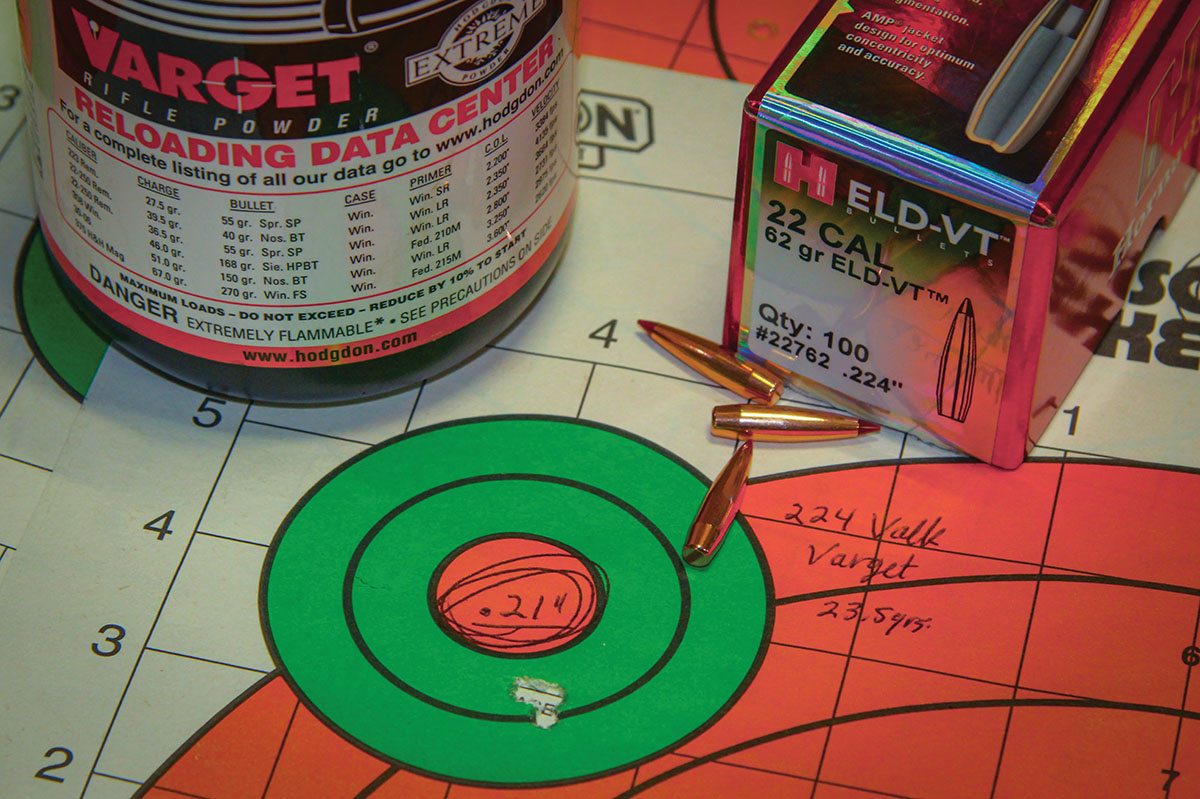
Patrick’s 1:7-twist Franchi Momentum Varmint 224 Valkyrie really liked the ELD-VT bullet, producing a .21-inch group using 23.5 grains of Hodgdon Varget, though velocity was a bit slow at 2,897 fps.
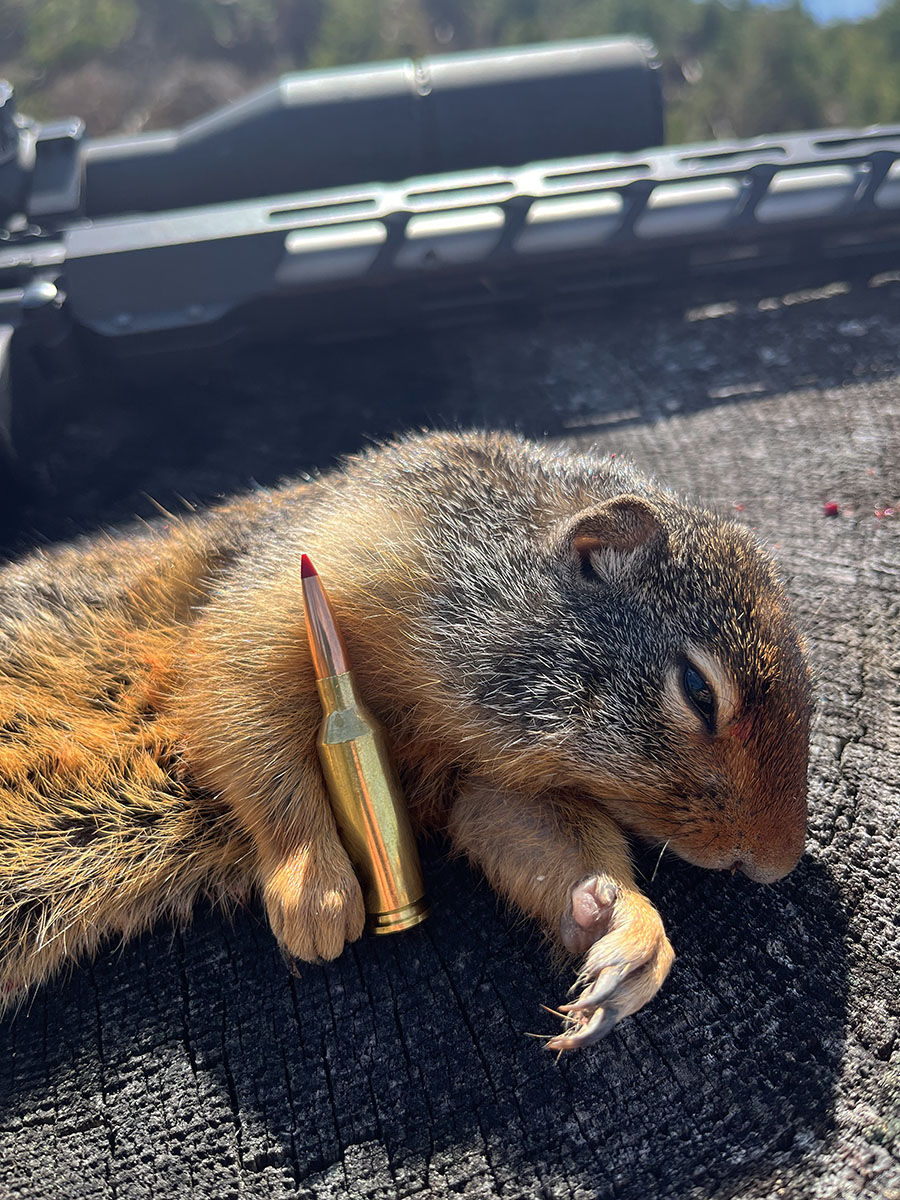
The 22 ARC cartridge is an ideal match for the Hornady 62-grain ELD-VT bullet, providing impressive velocities and dismantling terminal performance.
I made a couple of mistakes when choosing powders for the Swift, letting biases dictate at least two choices. Winchester StaBALL 6.5, Alliant Reloder 16 and Vihtavuori N140 fueled this series with the latter two proving less than ideal. Reloder 16, usually a juggernaut in other varmint rounds, performed the worst of the powders chosen, its best showing .86-inch at 3,721 fps using a maximum/compressed load of 38.5 grains. N-140, one of my favorite accuracy powders, managed just .64-inch at a relatively pokey 3,572 fps using 34.5 grains of powder. I might have suspected a rifle-twist inadequacy if not for StaBALL 6.5. This powder produced groups measuring .55 inch (40.5 grains of powder) and .44 inch (41 grains), with muzzle velocities of 3,702 and 3,745 fps, respectively. That .44-inch load will see some action this spring!
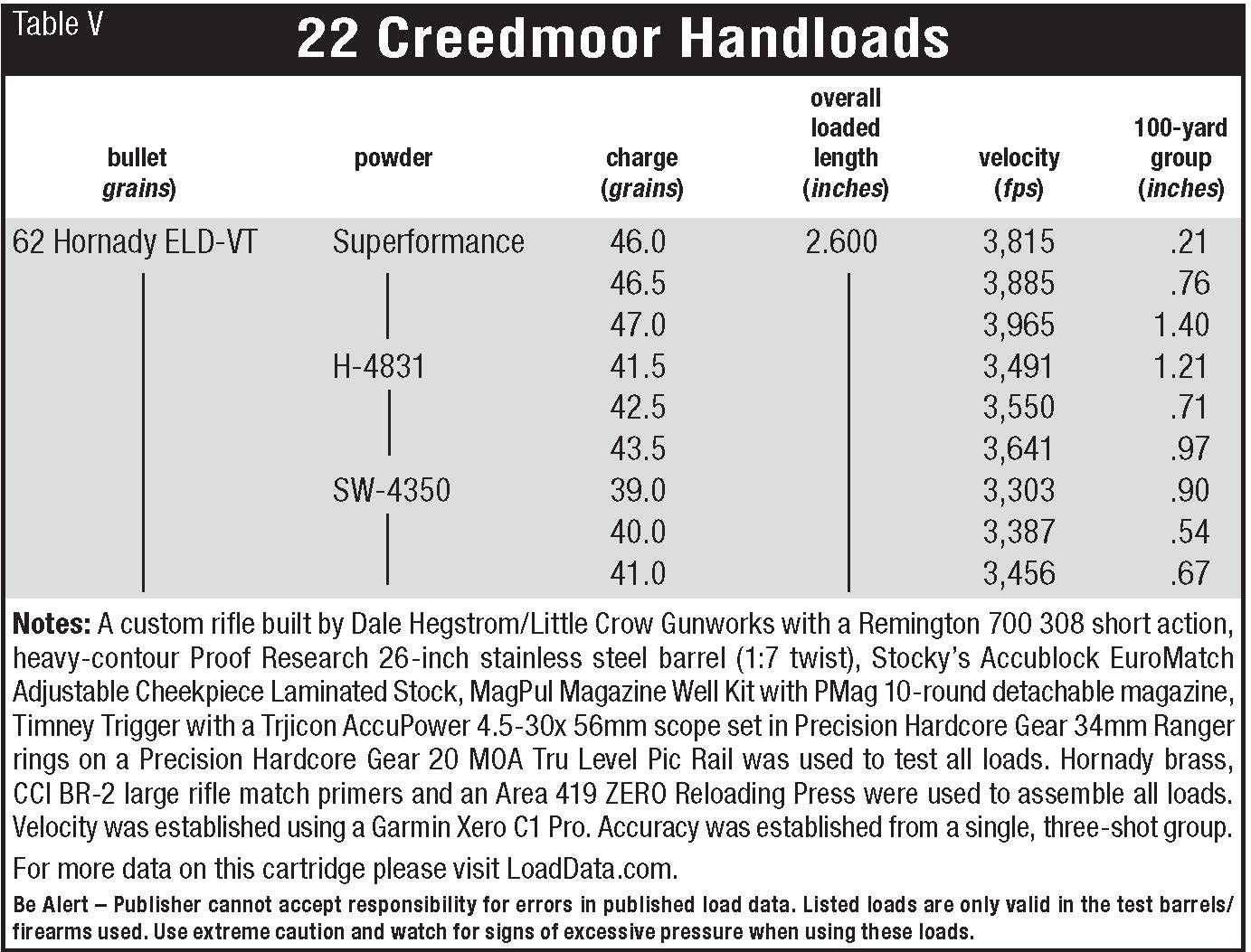
My 22 Creedmoor provides the ultimate .224-caliber performance, not only sending high-BC bullets at impressive velocities but usually proving impressively accurate. I believe the 62-grain ELD-VT was a bit light for this cartridge, posing as they say, too much of a good thing. The heavy Proof Research barrel is 26 inches long and includes a 1:7 twist. The action is slim bedded in a Stocky’s Accublock EuroMatch Adjustable Cheekpiece Laminated Stock with MagPul Magazine Well Kit holding a 10-round PMag. It includes a fine Timney Trigger. A Trijicon AccuPower 4.5-30x 56mm scope is set atop Precision Hardcore Gear 34mm Ranger rings and a 20 MOA Tru-Level Picatinny Rail. Hornady brass, CCI BR-2 primers and a Hornady Custom Grade die set were used to assemble all loads.
Hodgdon Superformance, H-4831and Shooters World 4350 were used as fuel. H-4831 faired worst; its best, showing just .71-inch at 3,550 fps. That’s double this rifle’s typical accuracy capabilities and also a touch pokey for this weight bullet. Not a great choice. SW-4350 did much better; its best showing .54-inch at 3,387 fps – again, pretty pokey for this weight bullet in this cartridge. Hodgdon Superformance showed this round’s true potential. Forty-six grains of powder hit 3,815 fps and printed into .21-inch, though groups opened quickly as more powder was added.
Hornady’s 62-grain ELD-VT will certainly become a significant part of my varmint-shooting regiment. This is particularly true with my 224 Valkyrie and 220 Swift, and the 22 ARC when I get around to building a decent bolt rifle. I have witnessed what this bullet from the 22 ARC is capable of on fat, spring ground squirrels, and those results were impressive indeed!