

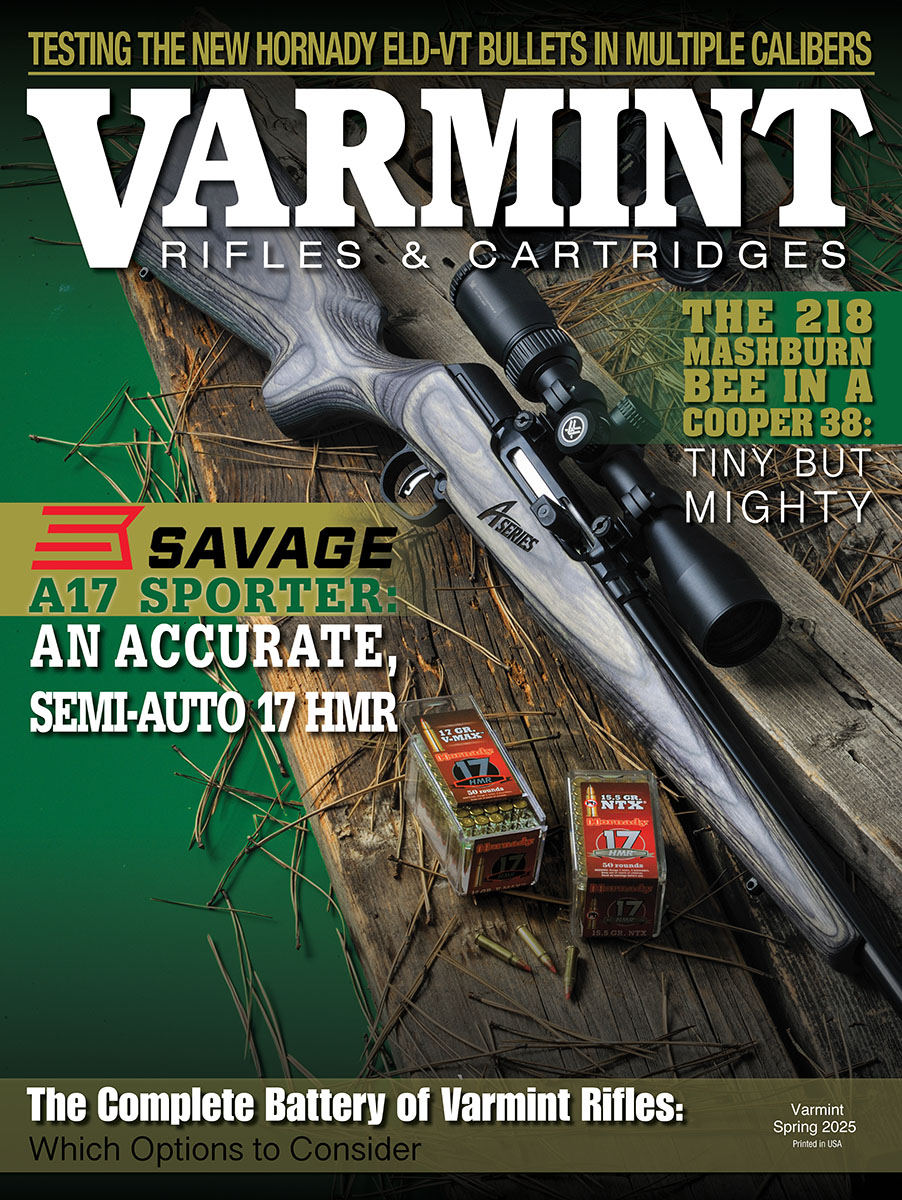
Savage A17 Target
A Semiautomatic 17 HMR
feature By: Stan Trzoniec | April, 25
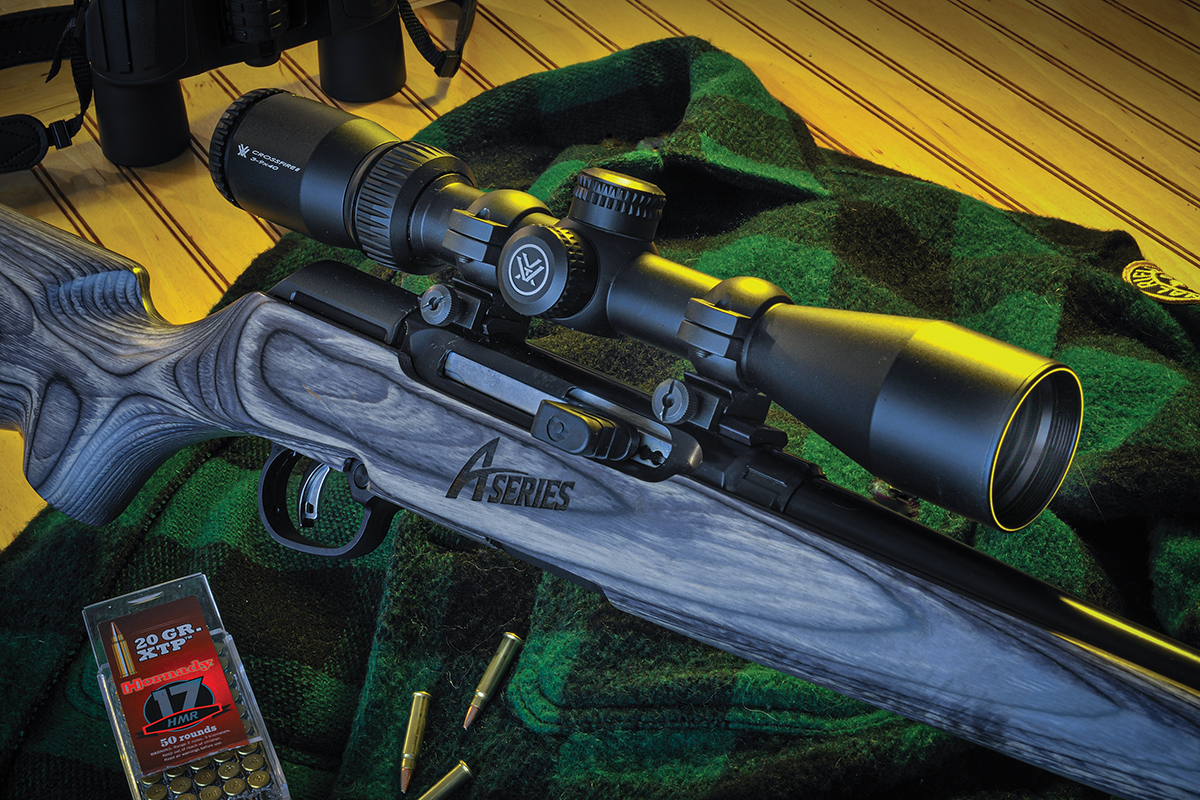
Less than a year later, the A22 was introduced chambered for the 22 Winchester Magnum (WMR) along with the 17 HMR cartridge with one model they called just the A22 Magnum. With an oversized bolt and 22-inch barrel, it sported the AccuTrigger and a synthetic stock for all-weather use.
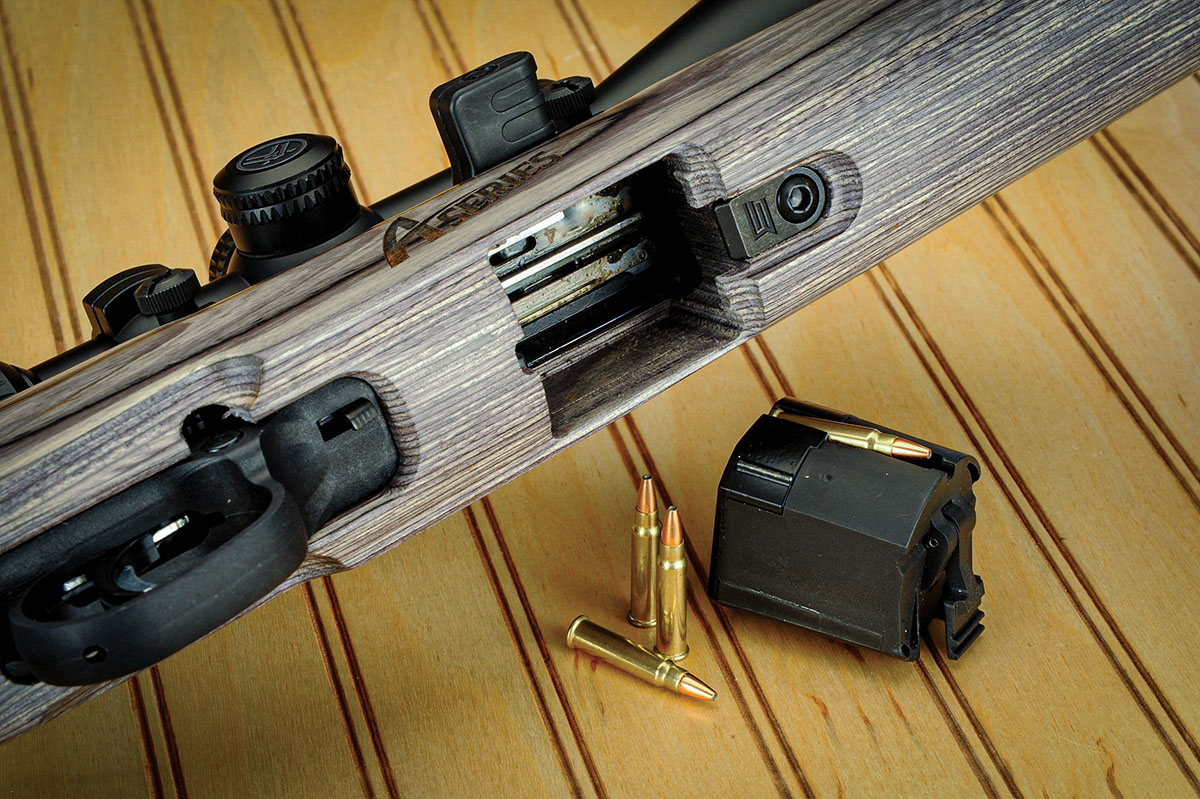
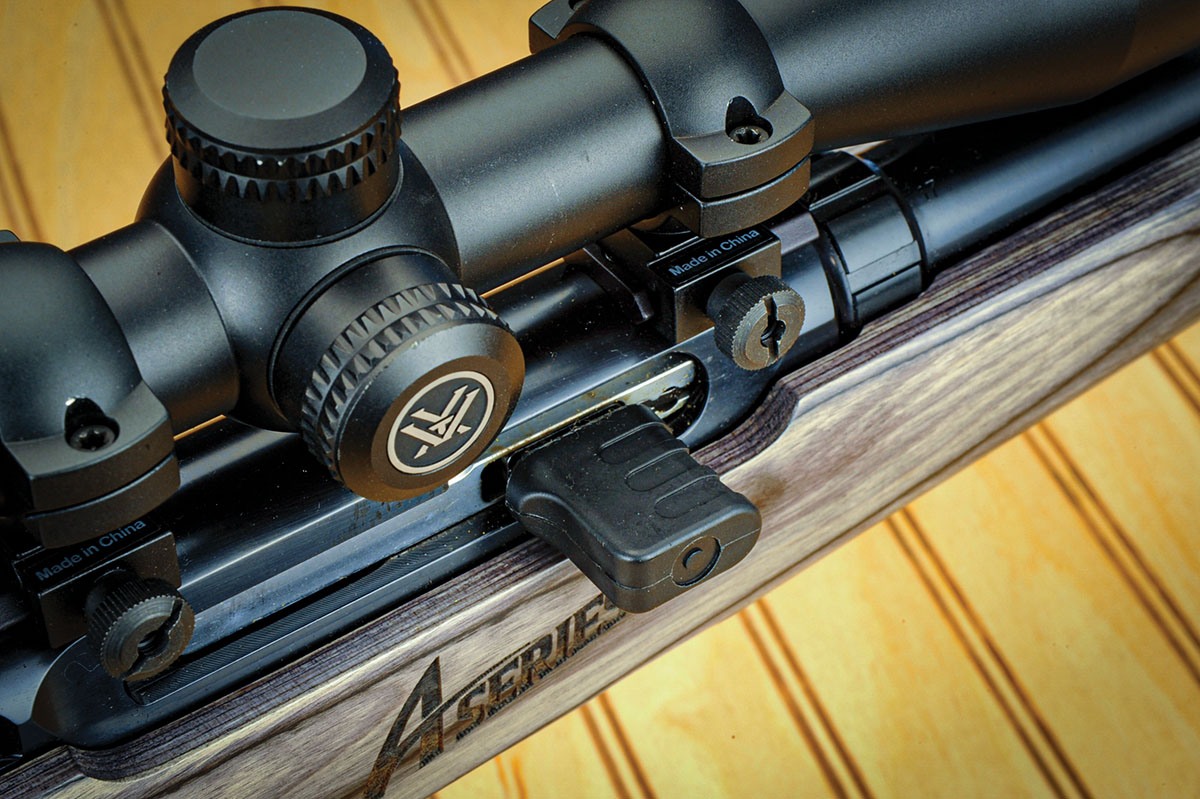
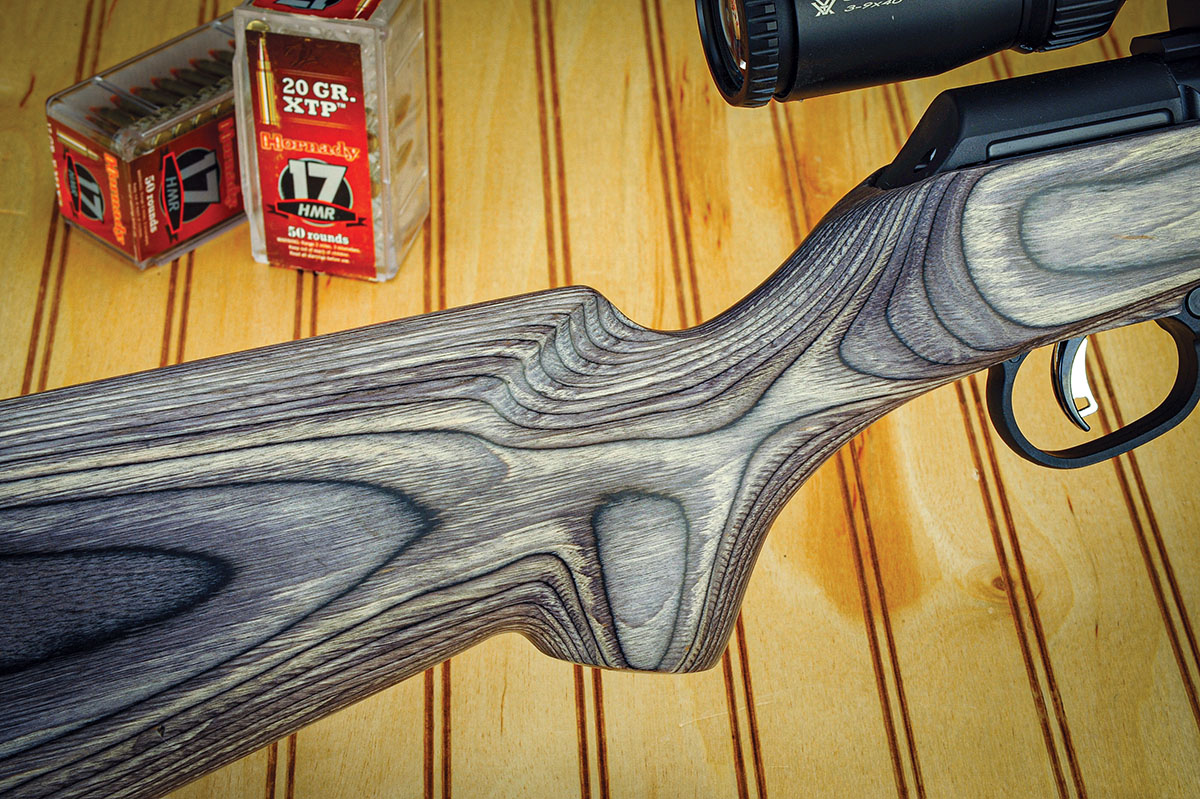
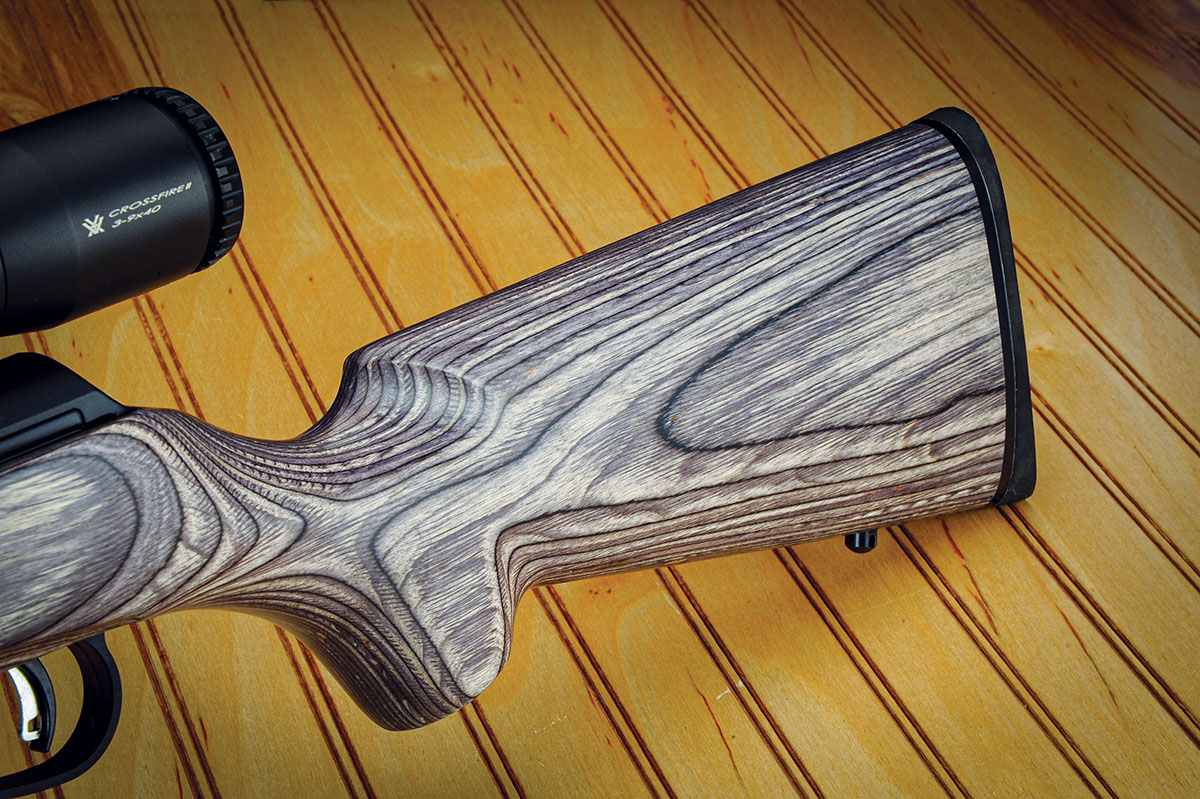
For all-weather protection, the tri-colored laminated stock is perfect for all seasons, keeping the action tight and secured within the stock. There is no checkering on this gun, but the gripping surfaces on the bottom and the sides of the stock are more than ample with the bare hand or with cold-weather gear. From the forend, the stock tapers to the rear and outward towards the magazine and trigger guard and flat on the bottom. It’s a good design for shooting offhand or for using the gun on an impromptu rest in the field.
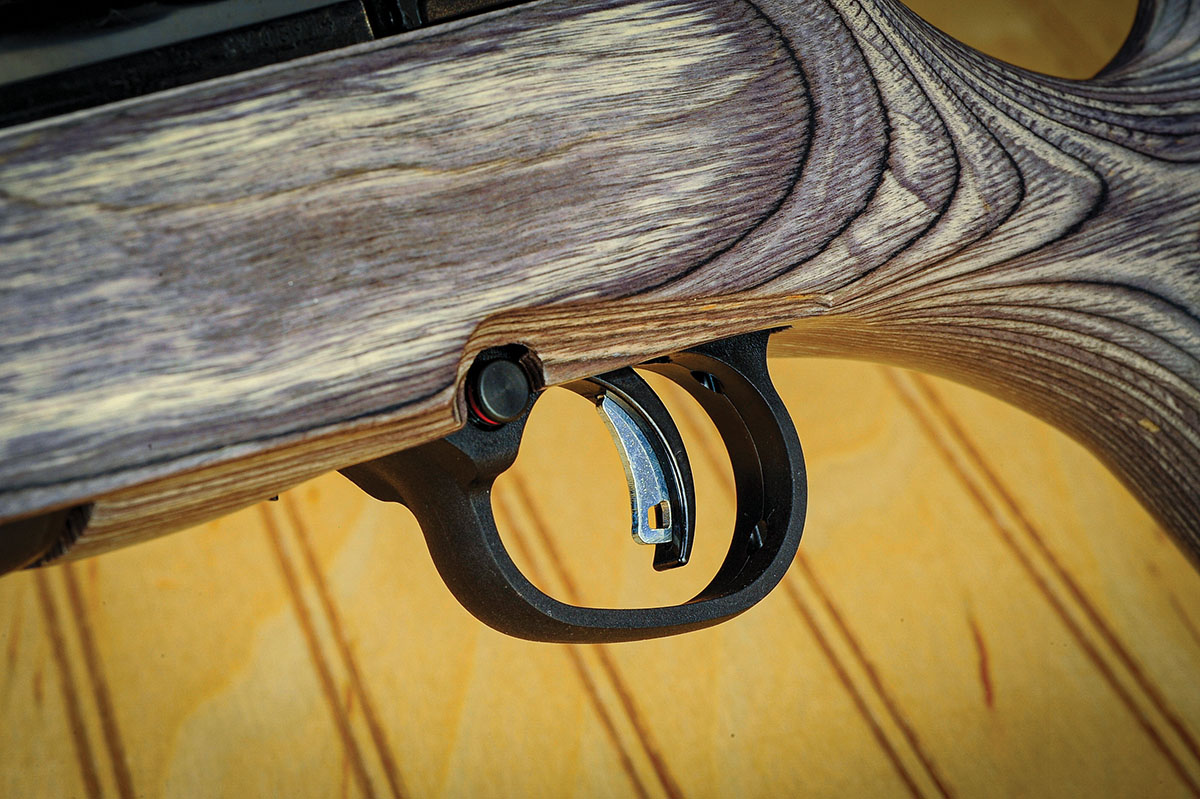
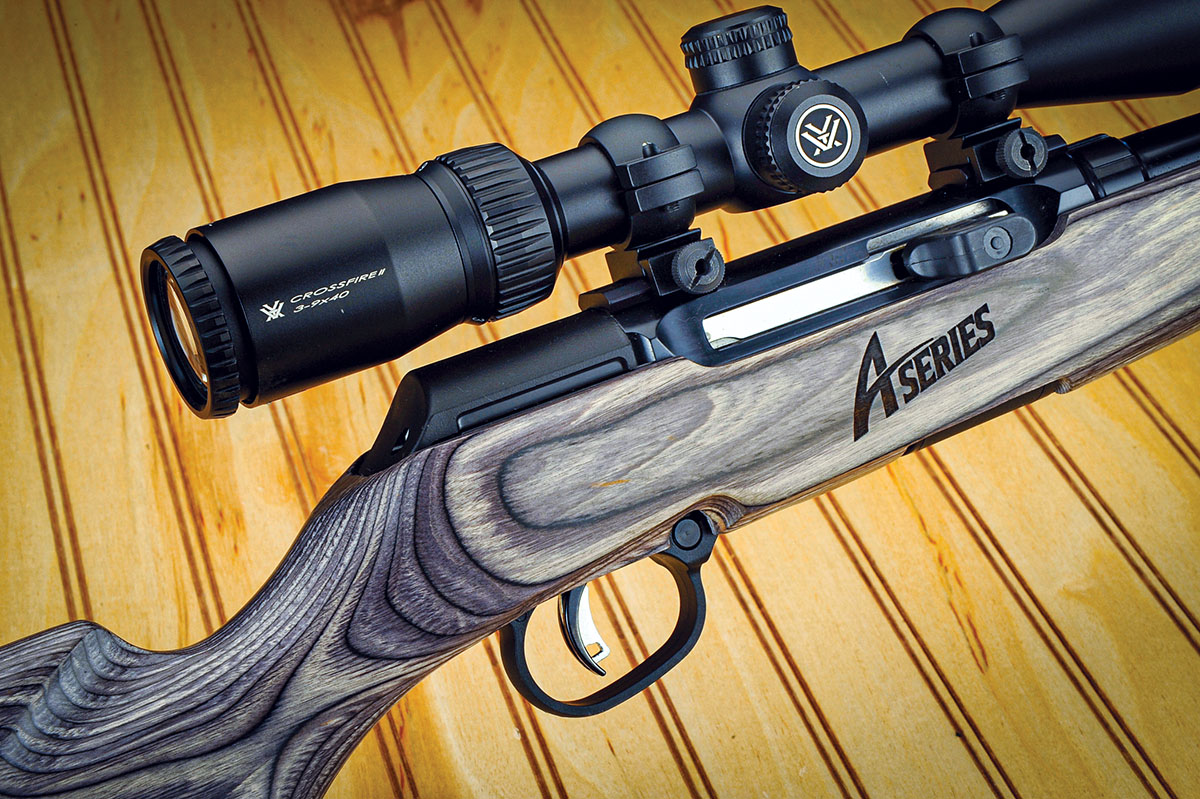
Still moving towards the muzzle, the bolt release is just ahead of the curve of the guard and can be used to hold the bolt open and release it. The magazine has a 10-round capacity, is released via a button on its forward end and sits flush with the gun when installed. Just a hint: When inserting it back into the rifle, to ensure it is fully seated, you should hear a definite click as it sits fully within the action. From here, all you do is load the rotary magazine, insert it into the gun, and with a slight pull to the rear of the bolt handle, the bolt will follow forward, picking up a round and being ready to fire with each pull of the trigger. I never found in my research, nor do they even make an extended magazine for this gun, but I do not believe this is a handicap for any field shooter.
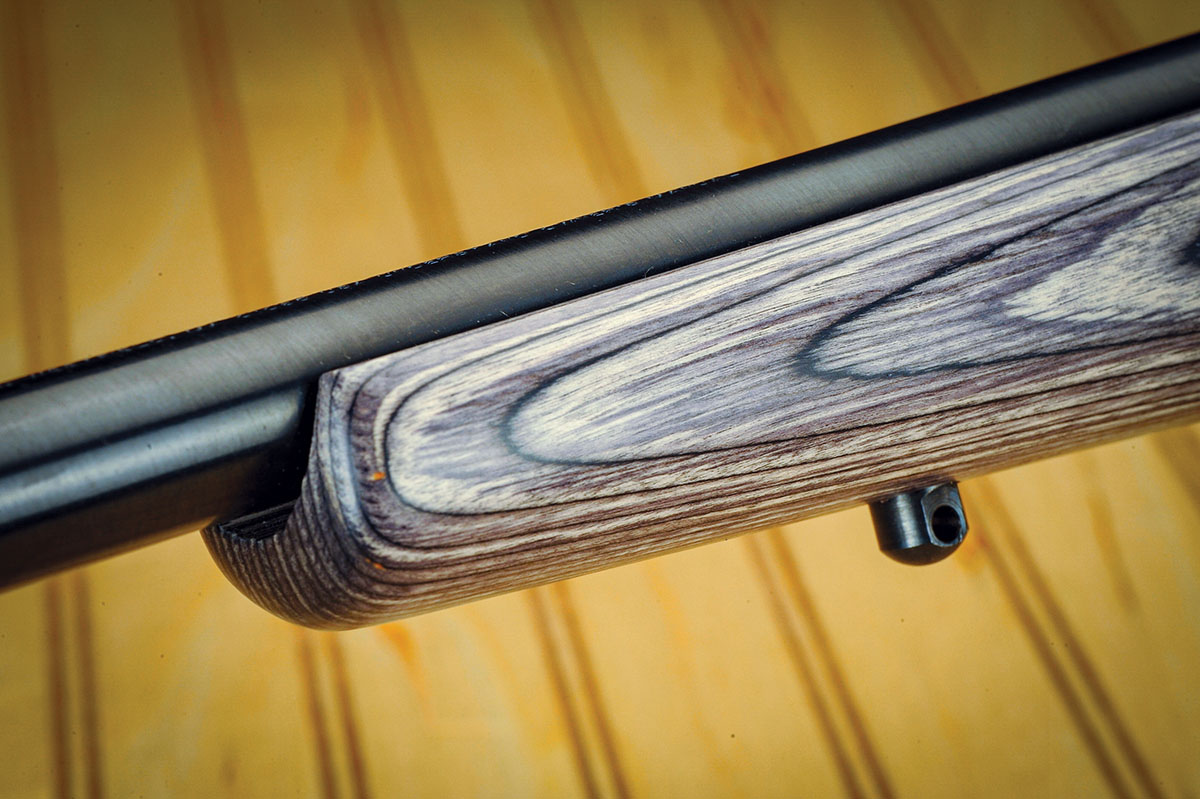
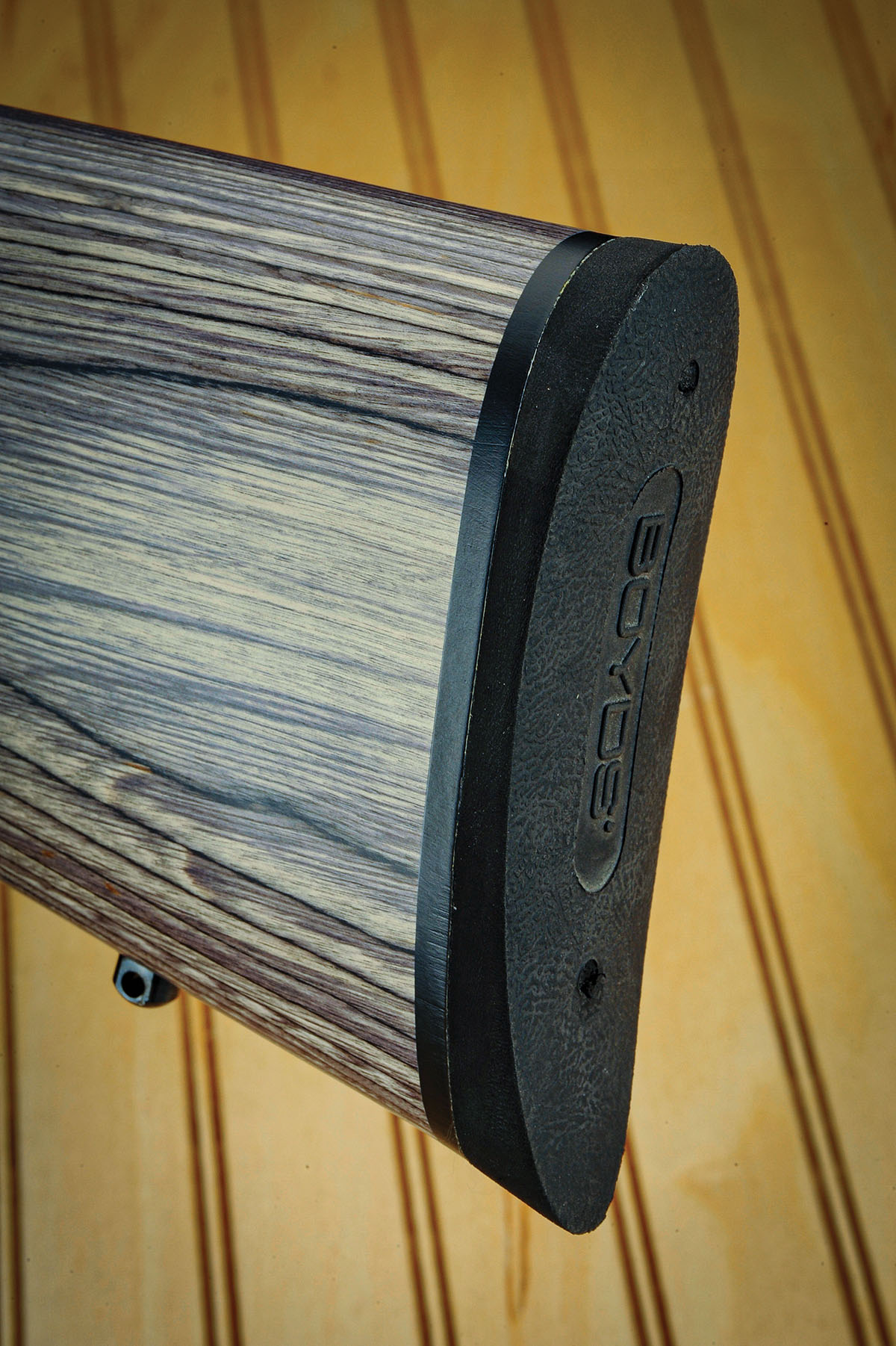
On this rifle, the pistol grip is thinner and very comfortable for anyone to shoot – be they an adolescent, female or veteran hunter. Again, there is no checkering, nor is there a grip cap on this part of the gun, so keep this in mind when you go prone in a hurry as you can chip the bottom of the pistol grip; flutes are cut on each side just behind the grip for shooting comfort. The rifle’s buttstock is profiled in a classic design sans cheekpiece and Monte Carlo, so popular today. Complete with a quarter-inch rubber butt pad, black spacer, sling swivels and a satin finish, this gun is ready for field duty with a length of pull of 13½ inches.
The clean barrel with a 1-in-9-inch twist (no sights, no provision for any suppressor attachments) is 22 inches long, more than enough to squeeze some impressive ballistics out of this gun. Configured as a carbon steel heavy barrel, it is button rifled, target crowned and attached to the receiver by Savage’s time-tested barrel nut. All are polished and then deeply blued to match the receiver.
The receiver is eight inches long, all steel in construction and complimented by a polymer bolt shroud. The bolt itself has one extractor with a mechanical ejector located on the inside of the receiver port. The bolt handle is oversized for field use, and the gun comes with a pair of Weaver-type bases for scope installation, to which I mounted a Vortex Crossfire II 3-9x 40mm scope. Turning the eyepiece ring to a close focus setting allowed my target to pop in clear and sharp at the range.
In short, it depends on the operation and design of the action. While cousin A22 was happy purring along with the 22 Long Rifle and 22 Winchester magnum low-pressure cartridges in straight blowback action, the .17, on the other hand, developed a bit too much pressure for this design. Savage found the answer in their gun, being fitted with a mechanism using the delayed blowback design.
With the more common straight blowback, shooters have been accustomed to using this type of weapon for seemingly eons. Simple to operate, these guns use the force generated by firing a round to cycle the action and eject the spent shell.
The action on the A17 is the delayed blowback in design that delays the bolt from moving to the rear immediately after firing a round. By using a mechanical delay through a series of additional springs and friction, a higher-pressure round like the 17 HMR can now be safely fired in the gun designed to handle this type of ammunition from ignition to ejection safely. The A22 series of rimfire rifles are not affected by this bolt modification, only the .17 series of current Savage rifles, and if you are not sure about using this ammunition in another brand of firearm, it’s always a good idea to consult the firearm’s manufacturer for the latest information.
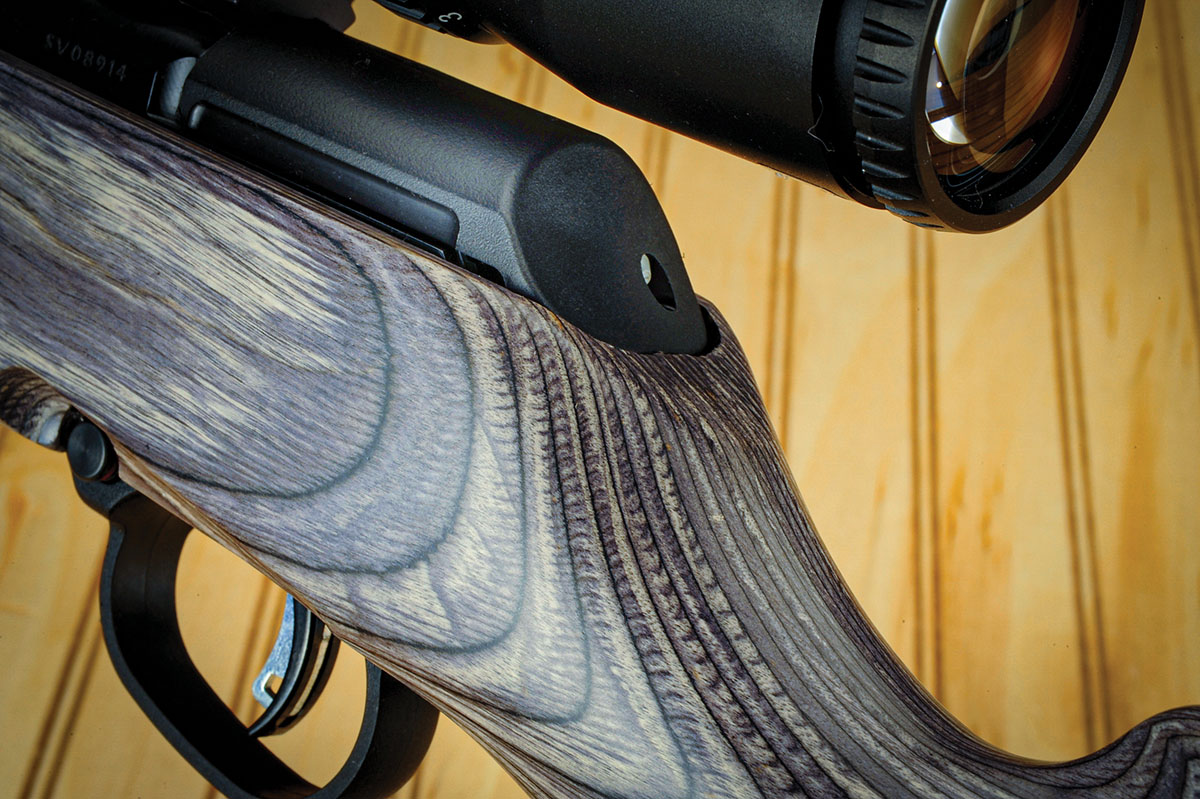
The gun was a pleasure to shoot repeatedly and functioned without any evident problems. With a semiautomatic, I thought there would be some malfunctions with a new, not broken-in gun, but nothing surfaced. The 10-round magazine showed no signs of feeding problems and except for a tight fit on the first couple of reloads, it fed the gun seamlessly. The AccuTrigger is a blessing for sure; as an added value feature, it was appreciated, as it was a predictable trigger pull from start to finish.
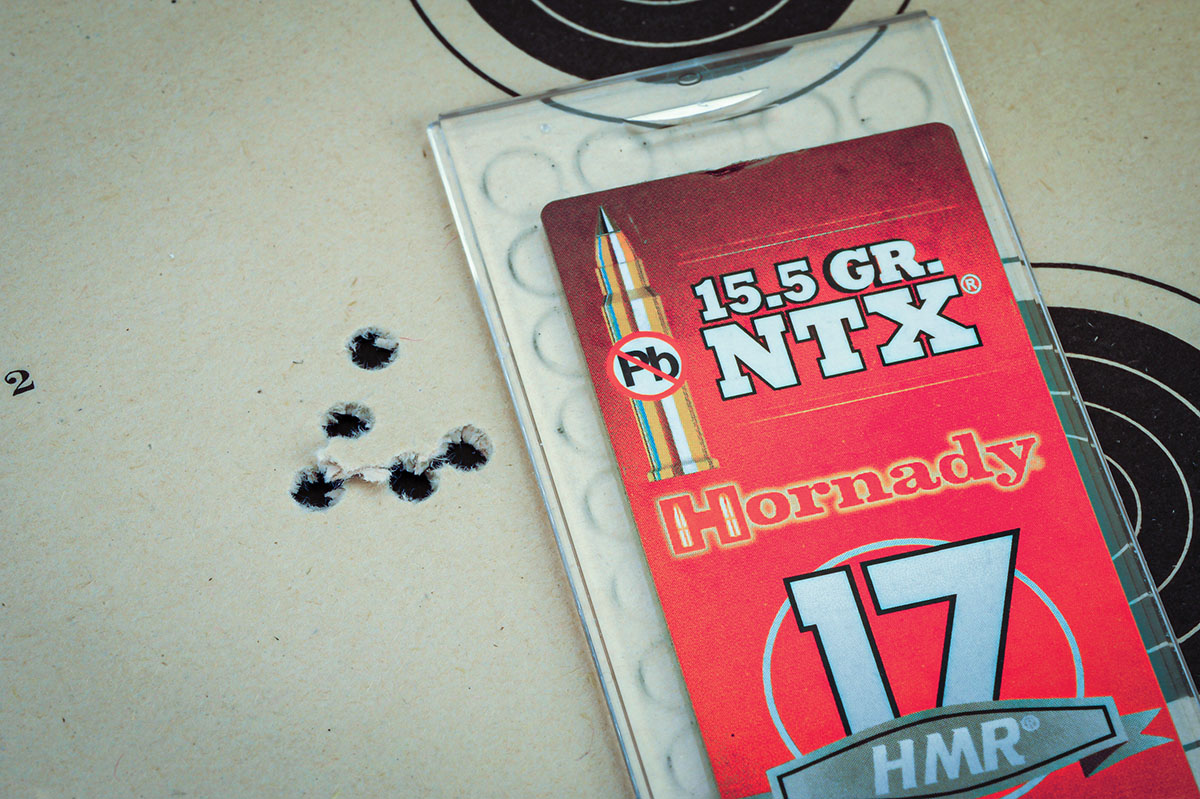
I live in the northeast, so in December, I had to wait for a day that was on the warmer side with no wind. When this arrived, and with a clean gun and breaking it in with around 50 rounds of assorted ammunition, testing began with the .17 Hornady NTX bullet. The best group of the day impressed me with a 5-shot cluster measuring a curt .425 inch with an average velocity of 2,720 feet per second (fps) over my Oehler Chronograph. In rotation, the middle of the ground 17-grain V-Max with a factory stated velocity of 2,550 fps showed up as 2,668 fps on my screen with a group of .665 inch. Finally, the “heavyweight” of the bunch, the 20-grain XTP was factory rated at 2,375 fps, was higher in my gun at 2,562 fps. The group size here came in second at .580 inch. In all cases, some groups of all the ammunition did show up a bit larger, but these are the best groups in all bullet weights.
For the small game hunter, if you were using the 17-grain bullet at the instrumental velocity at 2,668 fps, zeroed out to 50 yards, drop at 100 yards would still be right on. It would not hit at least an inch in drop until 140 yards, and then you are looking at 1.25 inches. At 150 yards, it takes a jump to 1.77 inches, then a stretch to 200 yards will get you a drop to 5.75 inches. Muzzle velocity at that distance would be around 1,800 fps, muzzle energy 122 foot-pounds of energy (fpe), so in the spirit of a humane kill and the size of the varmint, my take is to limit my shots to 100 yards on smaller game.
In short, the 17 Hornady Magnum Rimfire will make one heck of an addition to your varmint battery. Both the gun and cartridge are well designed for each other and will give you hours of enjoyment as a target shooter or hunter. With a variety of models to suit all tastes, Savage has a winner with the A17 and a great break from harder-hitting centerfire cartridges. Contact SavageArms.com for more information.