Blaser R8 in 22 Hornet
German Engineering in a Venerable Cartridge
feature By: Patrick Meitin | April, 25
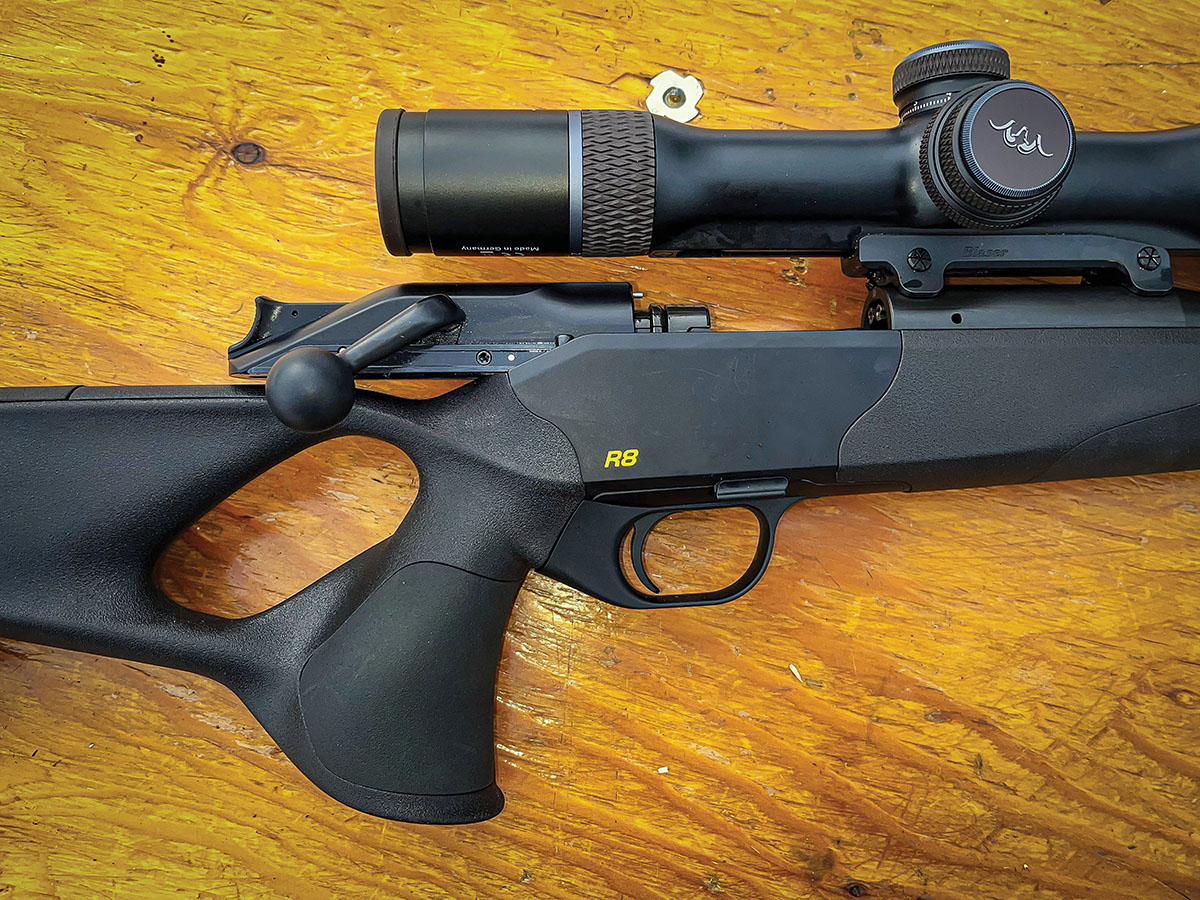
I’m one of those romantics who has kept the 22 Hornet alive. I own two bolt-action 22 Hornet rifles (Savage Model 340E and 25) and a couple of handguns (T/C Contender and Taurus revolver) that see regular action each spring. This has inspired untold hours of load development, as factory Hornet ammunition is prohibitively expensive, difficult to find and seldom loaded with the bullets I prefer. This load development has involved auditioning newer Hornet powder options and maximizing performance through modern bullet designs.
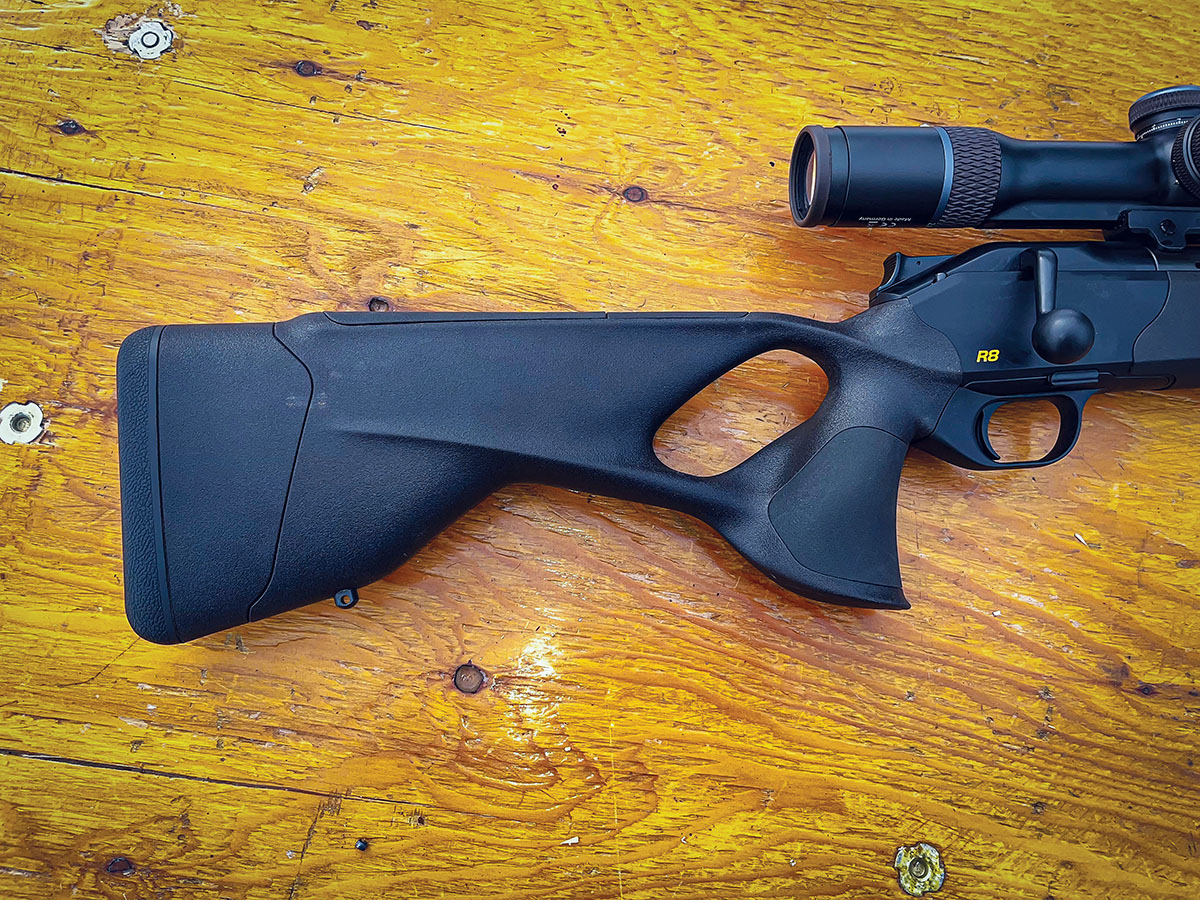
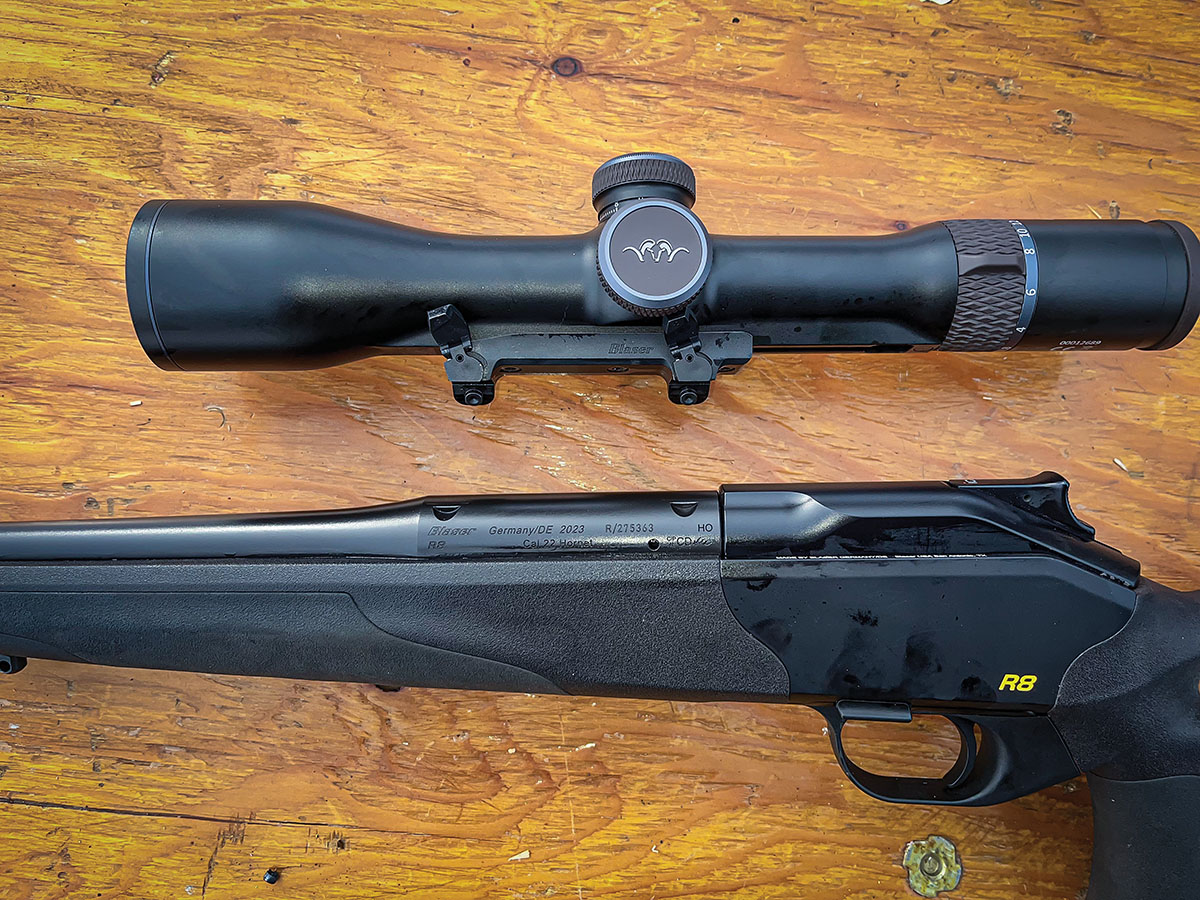
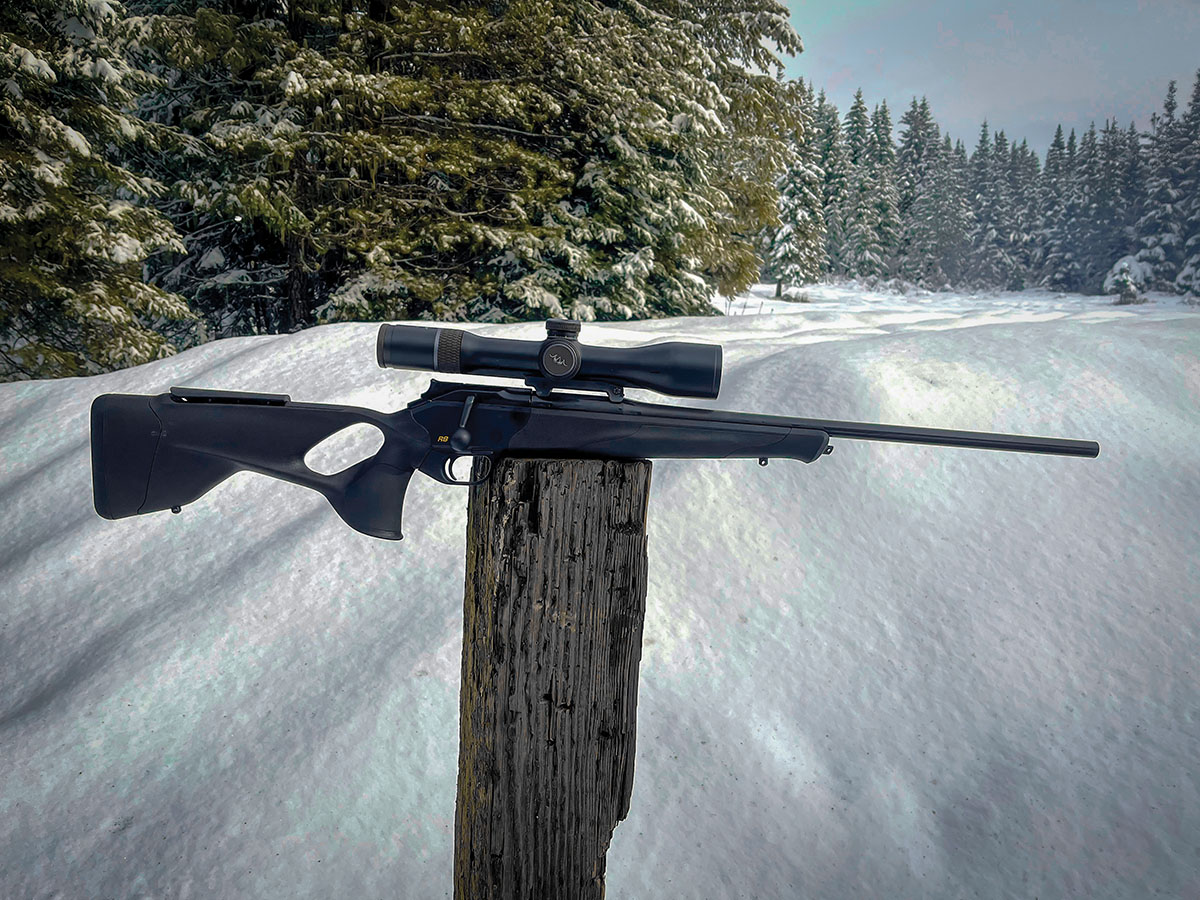
My two Hornet rifles are entirely pedestrian compared to the Blaser R8 Ultimate X under discussion here. The R8 has been called the most innovative bolt-action rifle of the 20th century. The R8 was introduced in the 1990s, but the Small Caliber Set accepting the tested 22 Hornet rounds is new.
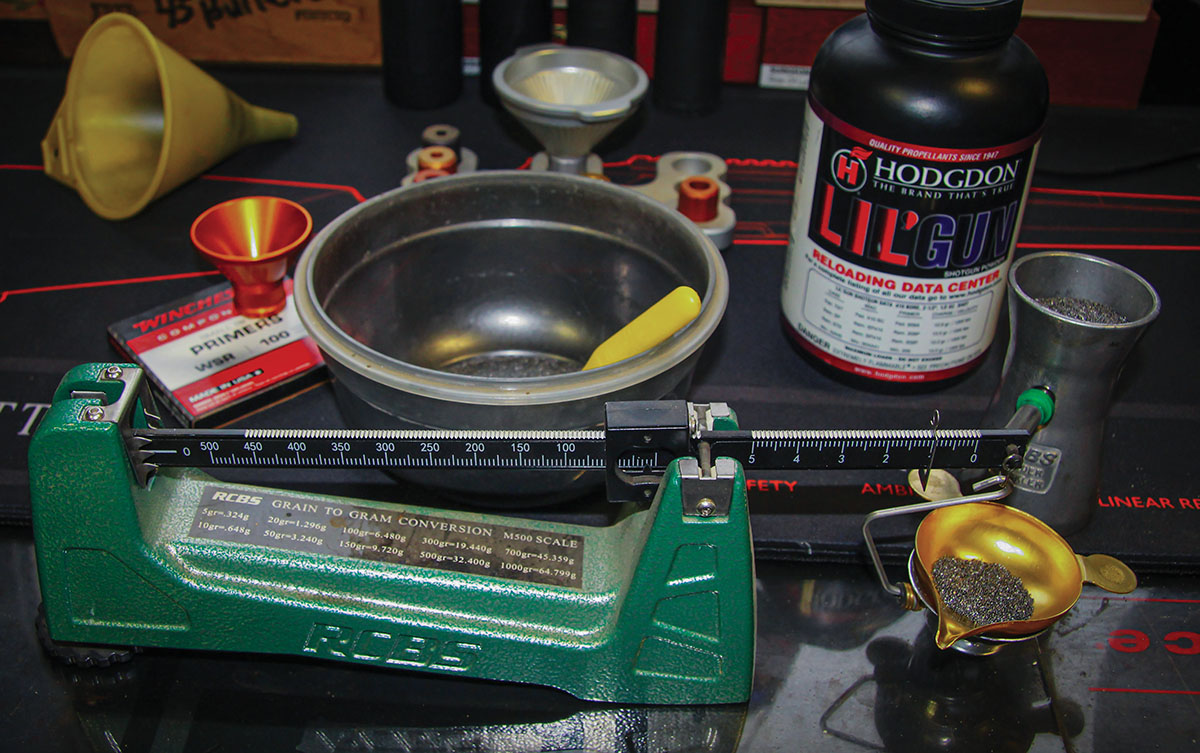
Several factors make the 22 Hornet frustratingly fussy: that antiquated case design, minuscule powder charges and the fact it headspaces on its prominent rim and not its sloping shoulder. The 22 Hornet is fueled by 9- to 13-grain charges of fast-burning powders. Those small measures of propellent mean small variances make a big difference to extreme velocity spreads and ultimate accuracy. When measuring 22 Hornet loads, take your time and split the scale needle finely, segregate headstamps carefully and trim all cases frequently and evenly.
Another approach is to employ long-for-weight bullets like Hornady’s 35-grain NTX or 40-grain/boat-tail V-MAX/Nosler Ballistic Tip Varmint/Sierra BlitzKing, seating them so they ever-so-gently contact the lands when in full battery. The bullet ogive then helps center cartridges in the chamber. The long bullets often seat with the ogives inside the neck. To alleviate this, I trim cases a couple of hundredths shorter than the standard 1.393-inch trim-to-length (the 22 Hornet offers plenty of wiggle room here), which also ensures rounds remain within magazine limitations.
The 22 Hornet can also be extremely primer finicky. Once you settle on a bullet and load, auditioning various primer options can dial in maximum accuracy. Some experience superior results employing small pistol primers; others use magnum small rifle primers. My standard load, using Hornady’s 40-grain V-MAX and a maximum load of Winchester 296, for instance, shoots best using Remington’s No. 7½ small rifle primer.
I received the opportunity to introduce full-bore, full-length resizing after discovering that Hornady’s 35-grain NTX produced patterns instead of groups, due to the R8’s slow 1:16 rifling twist (more momentarily). After adopting Hornady’s stubbier 35-grain V-MAX, I first trimmed cases to 1.393 inches and then set the full-length sizing die to make full contact with the shell holder. After that, loads chambered effortlessly and ejected smoothly.
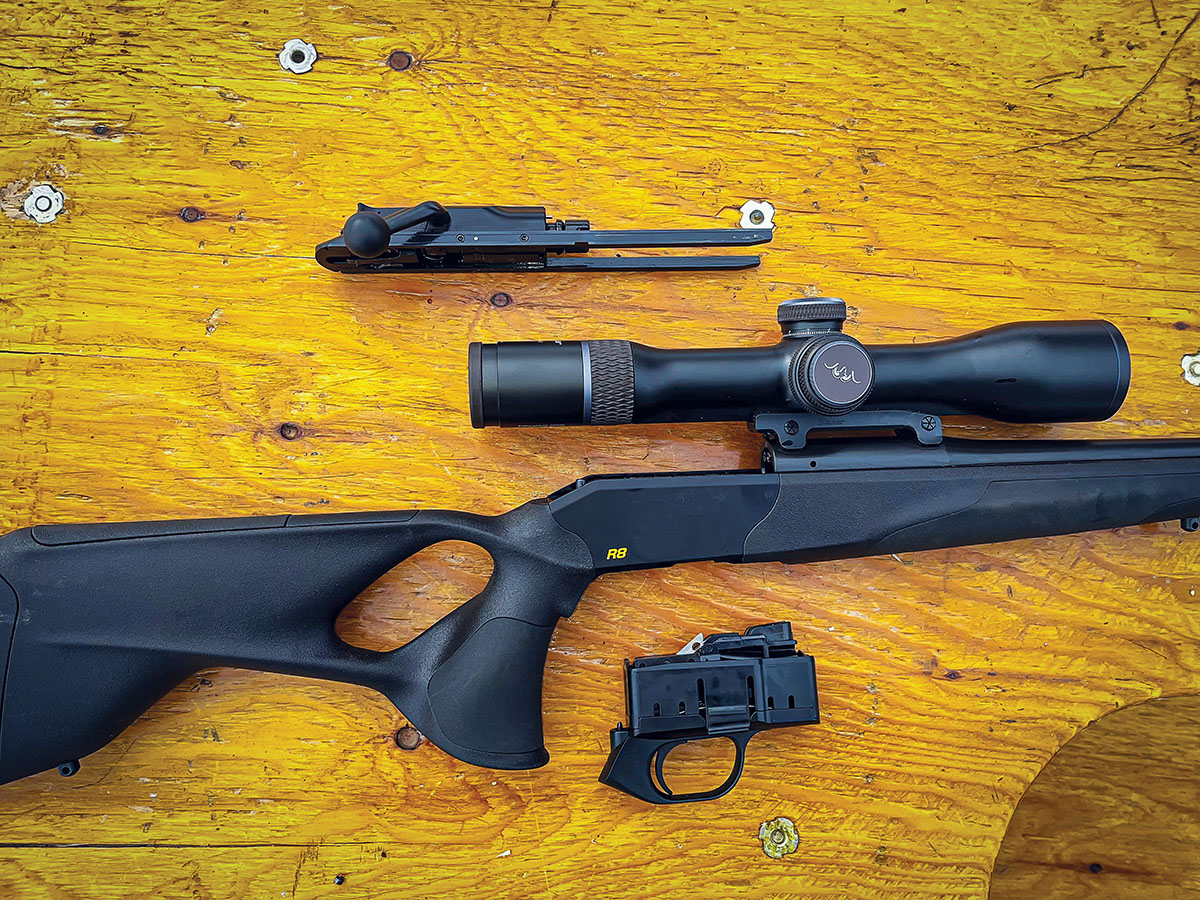
The Blaser R8’s straight-pull action incorporates an interchangeable collet-type bolt head, providing 360-degree lockup. The bolt head includes an encircling ring of thin, spring-like fingers about ½ inch behind the bolt face. The fingers wedge outward as the bolt is closed, the knuckles engaging a circular ring that is integral to the barrel. This provides 360 degrees of lockup, and as the cartridge head pushes against the bolt face after firing, the locking surfaces wedge tighter yet. This creates a safe and stout system.
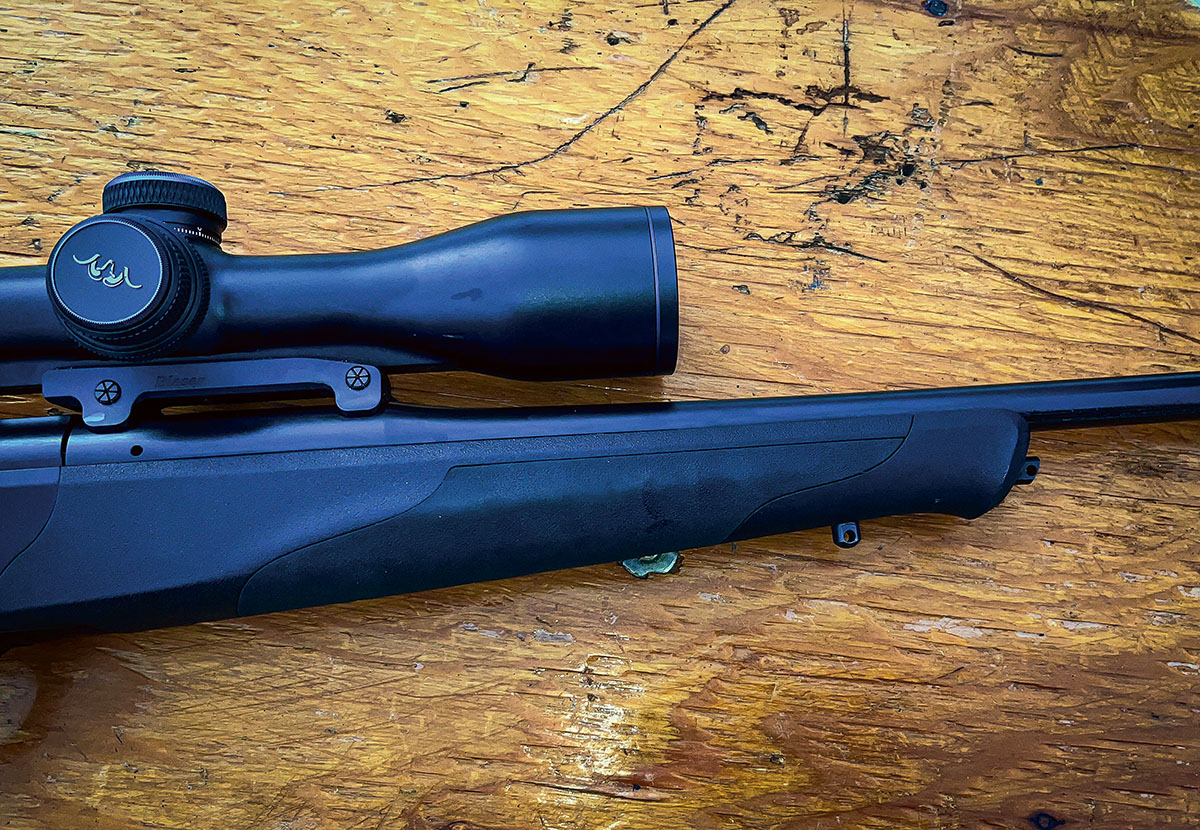
The R8 design also allows interchanging bolt heads, magazine inserts, and barrels – meaning one rifle can be set up to shoot everything from tiny rimfire rounds to asparagus-like dangerous-game cartridges. The rifle is based on an alloy frame, which also serves as a stock-anchored bedding block. The frame includes recesses for the bolt system’s bilateral side rails, and the barrel is attached to the bedding block by two threaded studs secured by integral floating nuts, accessed through the bottom of the stock with the provided T-wrench.
The test rifle introduced what Blaser calls the Small Caliber Set. This allows adapting smaller rounds – 22 LR, 17 HMR, 22 WMR, 17 and 22 Hornets – to the full-sized R8 system. The 22 Hornet test rifle came with an ultra-slow 1:16 rifling twist, which precludes the use of higher-ballistic coefficient, poly-tipped/boattail bullets like Hornady’s 35-grain NTX or 40-grain Hornady V-MAX, Nosler Ballistic Tip Varmint or Sierra BlitzKing. I puzzled over this, as it seems an odd feature on a modern, start-of-the-art rifle – that and the lack of muzzle threads allowing adding a suppressor… I then recalled the 22 LR and 22 WRM chamberings. Blaser is apparently saving production costs by utilizing the same barrels for the 22 Hornet. It is something that should certainly be rectified with, say, a minimum 1:14 twist, allowing this modern rifle to digest modern varmint bullets.
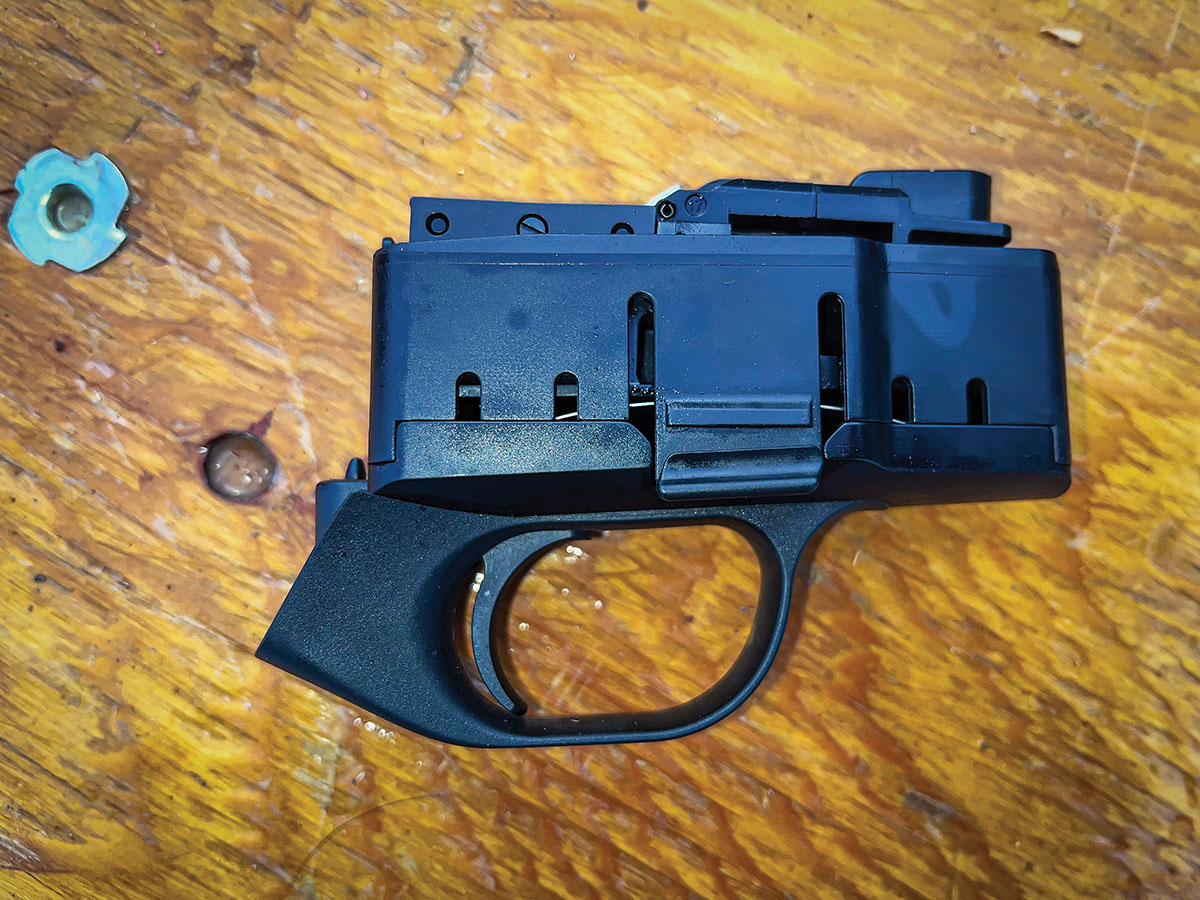
The R8’s magazine comes out as part of the trigger guard and trigger assembly. This allows a round to be left safely chambered, as there is no trigger to fire that round. When the magazine/trigger assembly is removed, the R8 automatically decocks, and when the magazine is out of the action, the cocking slide cannot be engaged. Cocking the firing mechanism is conducted by pushing the safety forward, revealing a red square below the cocking slide. This allows carrying the rifle with a cartridge chambered while the firing pin remains uncocked. The integral trigger group/magazine design reduces overall rifle length by 3.5 inches, making the R8 compact. The trigger broke crisply at a measured 1.75 pounds and remained consistent through many magazine exchanges.
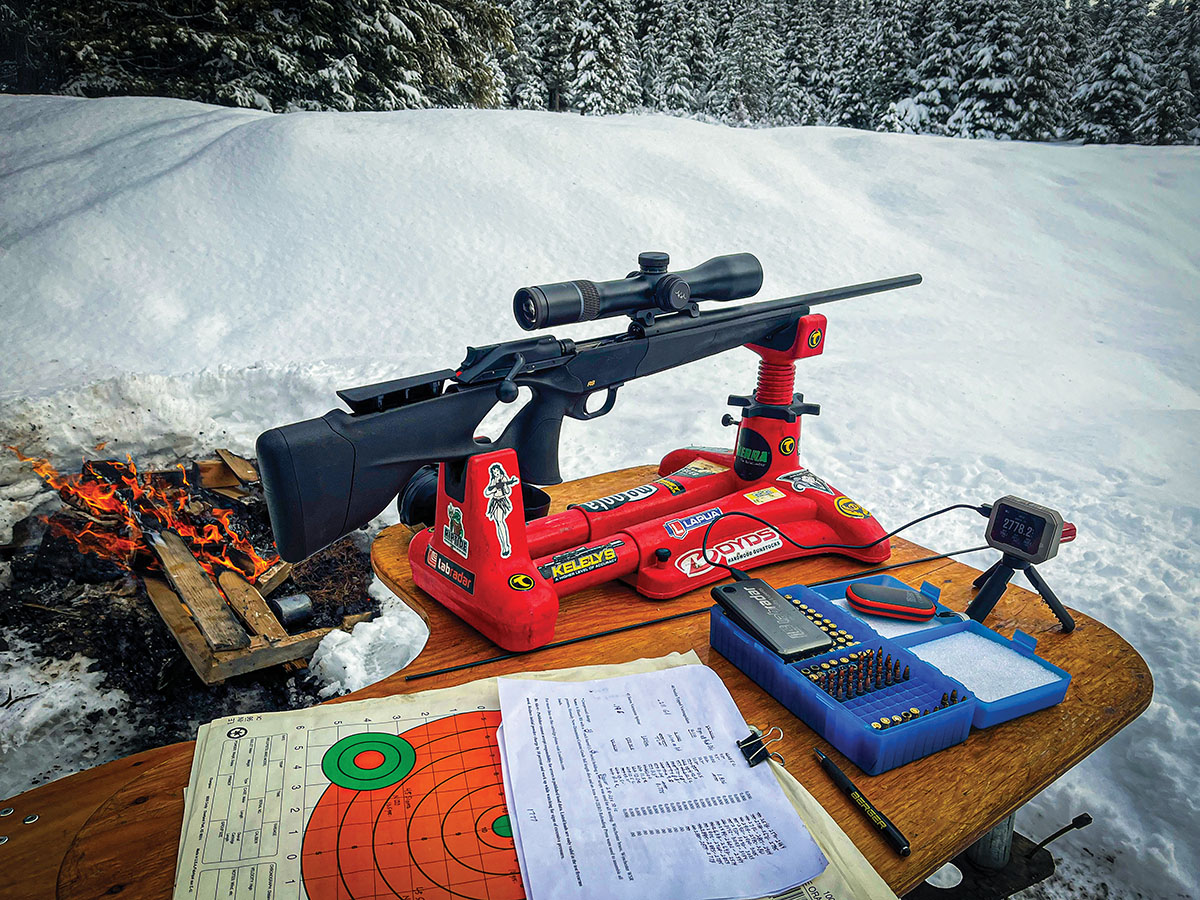
The test rifle came as a kit, including a handsome locking/lined hard case and Blaser Optics 2.8-20x 50mm iC scope. The optic is mounted to the rifle via a proprietary saddle-type scope mount incorporating swiveling levers that lock into recesses milled into the barrel. It was fast and simple, and apparently, removing and returning the scope won’t upset zero. Barrels are not drilled and tapped for standard scope mounting.
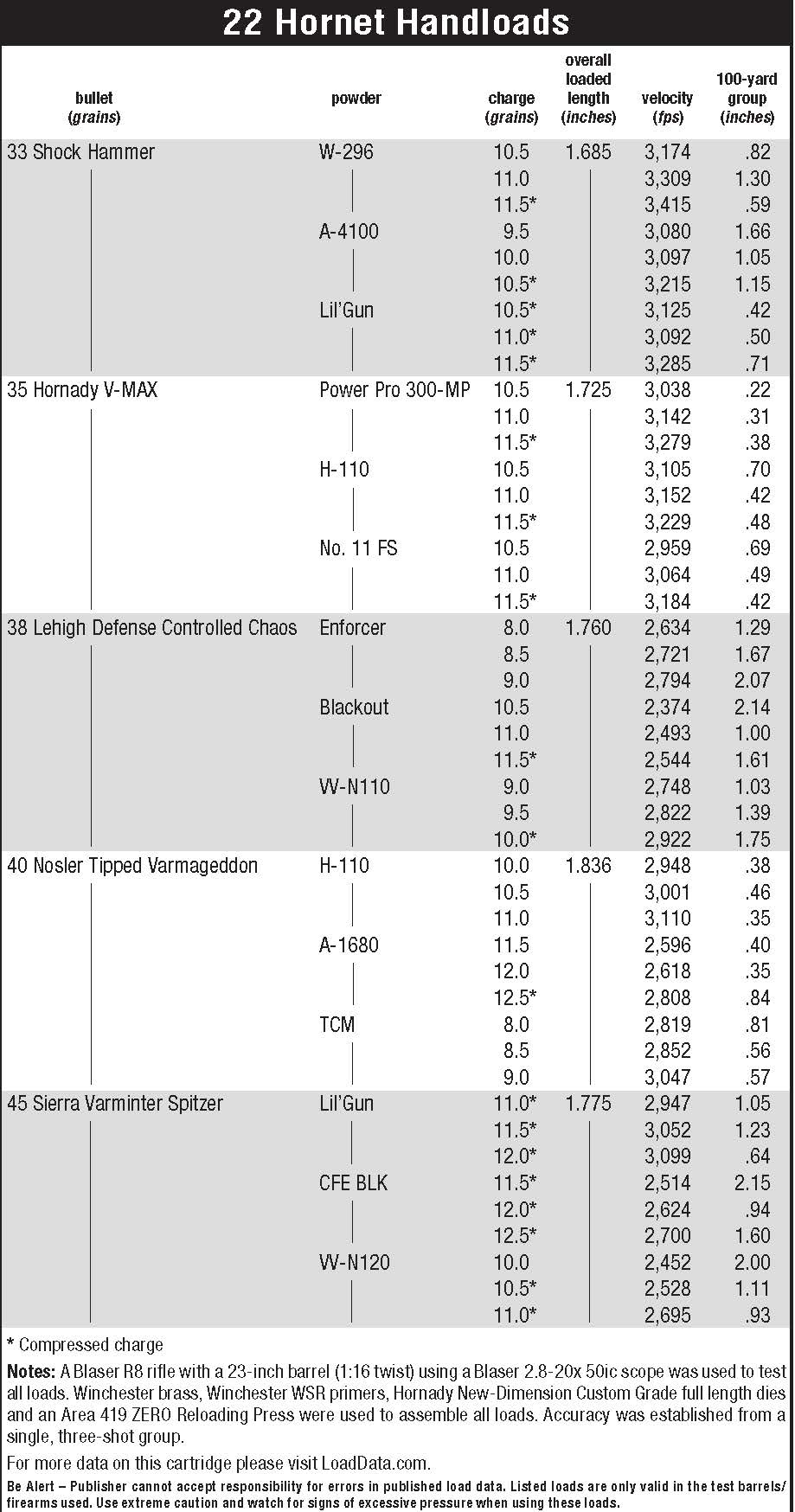
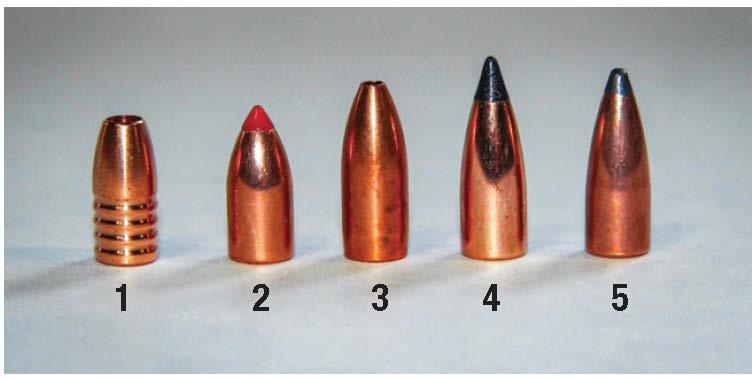
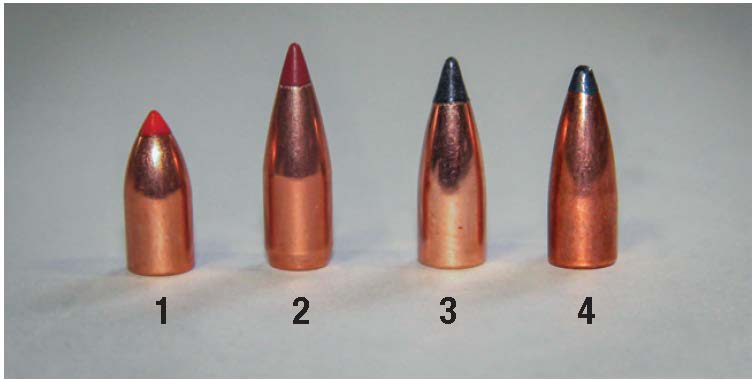
With all my freshest 22 Hornet brass loaded with 40-grain V-MAX varmint loads, I resorted to older Winchester Super-X cases of unknown vintage. Thus, they were trimmed to length and subjected to an Anneal-Rite and Tempilaq regimen to ensure proper annealing, chamfered inside and out, and Winchester WSR primers installed. Hornady Custom Grade New Dimension full-length dies were used. Initial bullet choices included Hammer Bullets’ 33-grain Shock Hammer, Hornady’s 35-grain NTX (later replaced with Hornady’s 35-grain V-MAX when the NTX failed to stabilize), Lehigh Defense’s 38-grain Controlled Chaos, Nosler’s 40-grain Tipped Varmageddon and Sierra Bullets’ 45-grain Varminter Spitzer.
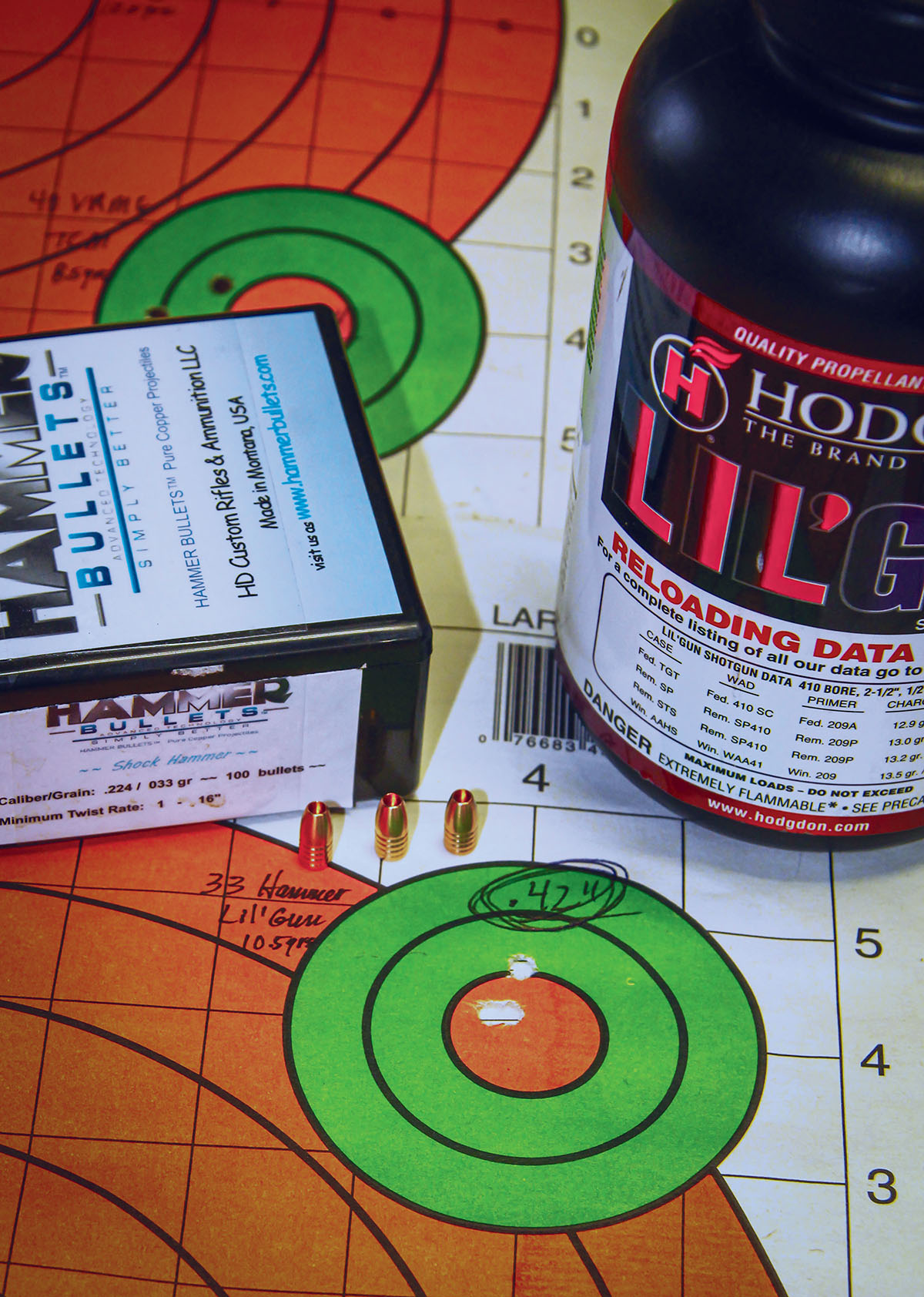
The 33-grain Shock Hammer is a milled-copper bullet with an aggressive hollowpoint and flat base providing a .125 G1 BC. It is compatible with a 1:16-inch twist. It was combined with Winchester 296, Accurate 4100 and Hodgdon Lil’Gun. Accurate 4100 failed to impress, relative to the other powders tested, with 10 grains producing the best 1.05-inch group with a muzzle velocity of 3,097 feet per second (fps). Winchester 296 produced a couple of sub-MOA groups but did best with a compressed load of 11.5 grains of powder and sent at a smoking 3,415 fps. That group measured .59 inch. Lil’Gun proved most consistent, producing a .42-inch group at 3,125 fps using 10.5 grains of powder, .50 inch at 3,092 fps using 11 grains and .71 inch at 3,285 fps using 11.5 grains.
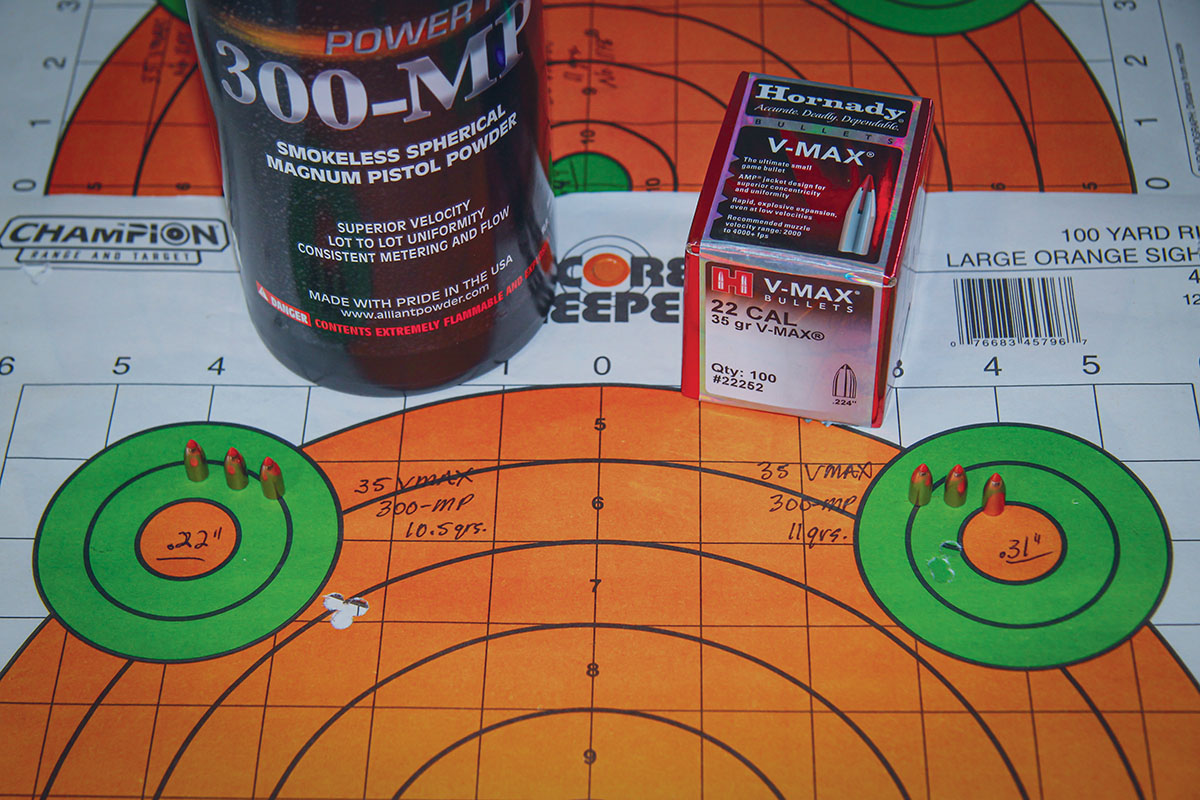
Hornady’s 35-grain V-MAX is a varmint-shooting standard. The polymer tip and flat base produce a .109 G1 BC. The design provides aggressive expansion even from the slow 22 Hornet. Alliant Power Pro 300-MP, Hodgdon 110 and Accurate No. 11 FS were used, producing the smallest overall group average of this test (.46-inch). Hodgdon 110 faired worst due to a .70-inch group likely caused by shooter error, while also producing .42-inch (3,105 fps) and .48-inch (3,329 fps) groups using 11 and 11.5 grains of powder. Accurate No. 11 FS did a little better; its worst group was .69 inch with 10.5 grains of powder while also producing a .49-inch group (at 3,064 fps) and a .42-inch group (3,184 fps) using 11 and 11.5 grains of powder. Power Pro 300-MP was the clear winner, producing .22-, .31- and .38-inch groups at 3,038, 3,142 and 3,279 fps and using 10.5, 11 and 11.5 grains of powder, respectively.
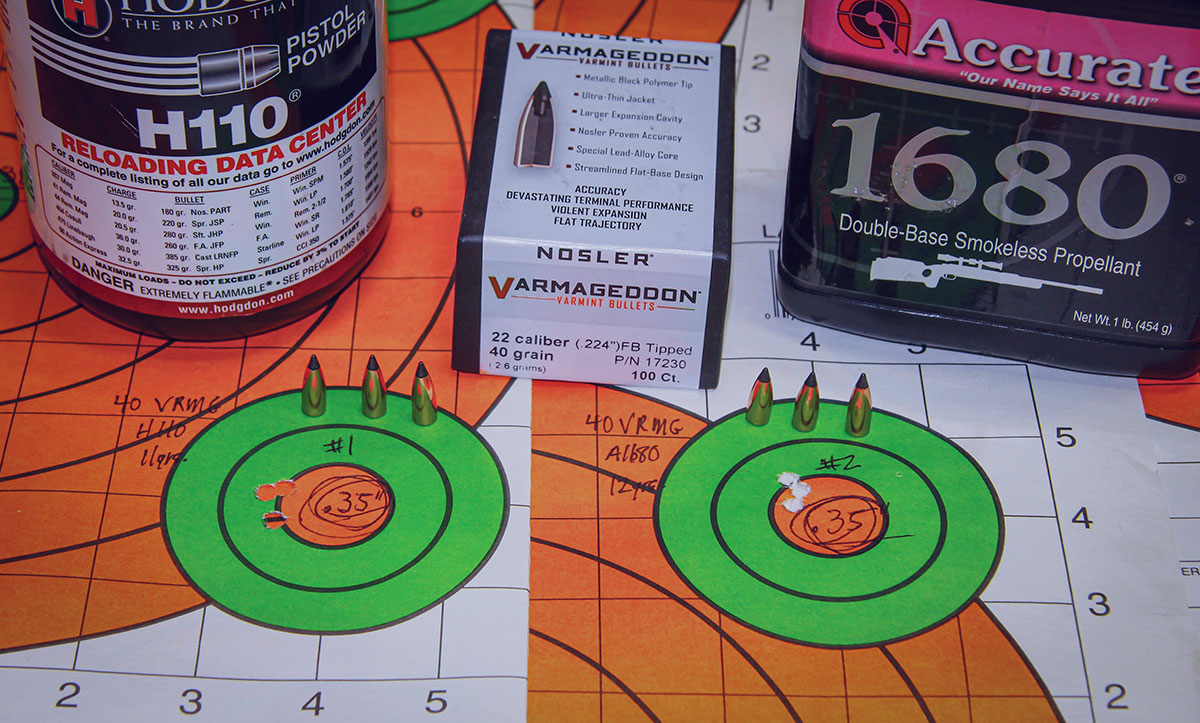
Nosler’s Tipped Varmageddon held the 40-grain slot, the flat base making it a touch squattier than poly-tipped slugs like the Nosler Ballistic Tip. It includes a .211 G1 BC. The ultra-thin jacket and special lead-alloy core ensure ample expansion at 22 Hornet velocities. It was paired with Hodgdon 110, Accurate 1680 and Ramshot TCM. It proved the second most accurate bullet of the test. Hodgdon 110 proved its worth, posting .38-inch (2,948 fps), .46-inch (3,001 fps) and .35-inch (3,110 fps) groups using 10-, 10.5- and 11-grain charges. Nothing to complain about there! Accurate 1680 turned in comparable groups – .40 inch (11.5 grains), .35 inch (12 grains) and .84 inch (12.5 grains) – but at much slower 2,596 to 2,808 fps velocities. TCM was a complete shot in the dark, though it did produce worthwhile accuracy. The best groups measured .56- and .57-inch at 2,852 and 3,047 fps using 8.5 and 9 grains of powder. Approach this fast-burning powder cautiously as pressures mount quickly.
Sierra’s 45-grain Varminter Spitzer is a bit “harder” and includes a sharper ogive than the average Hornet-labeled bullet. This gives it a .196 G1 BC at Hornet velocities but also makes it a more reliable “controlled expansion” option for larger targets like coyotes. It also means it sat on the ragged edge of stabilization limits with a 1:16-inch twist. A squattier 45-grain Hornet slug would make a better choice. Hodgdon Lil’Gun, CFE BLK and Vihtavuori N120 all produced sub-MOA groups. CFE BLK is simply slow, producing muzzle velocities from 2,514 to 2,700 fps using 11.5 to 12.5 grains. The best group, measuring just .94 inch, involved 12 grains of powder. This once and for all settles the matter of “Blackout” powders in the 22 Hornet for me. They can be quite accurate but lack velocity in an already pokey cartridge. N120 was even slower, clocking 2,452 fps (10 grains) to 2,695 fps (11 grains), the best group with that 11-grain maximum load, which measured .93 inch. Lil’Gun didn’t produce any wild groups, turning in the .64-inch group best with this bullet, sending it at 3,099 fps using 12 grains of powder.
With bullets compatible with the outdated 1:16 rifling twist the R8 Ultimate X shot beautifully, introducing a level of accuracy unusual for the 22 Hornet cartridge. Even so, I’d be deeply curious to see how this ingenious rifle would shoot with a more contemporary 1:14 or 1:12 rifling twist, combined with modern poly-tipped/boat-tail 40-grain bullets that give the Hornet more reach while minimizing wind drift at 300-plus yards.