Login


Wolfe Publishing Group
    Menu

    224 Valkyrie

    Testing a New Varmint/Target Cartridge

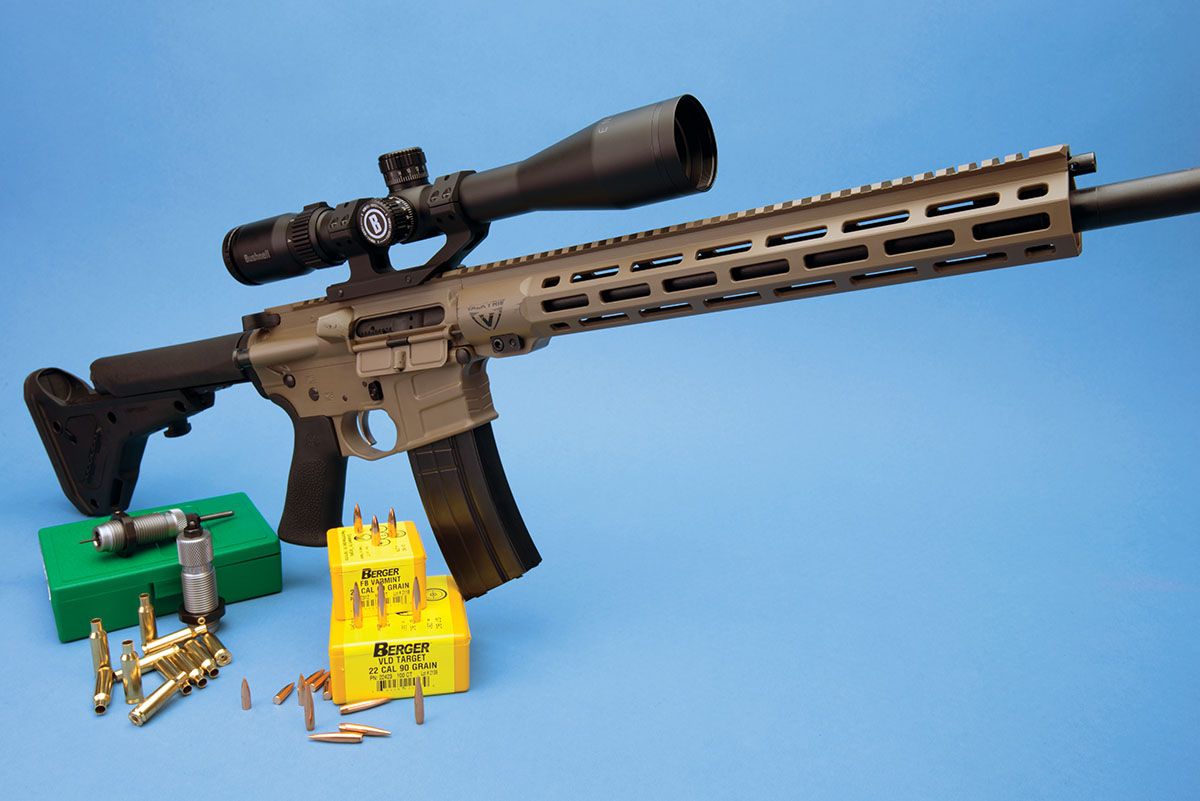
    The test rifle was a Savage MSR15 with an 18-inch barrel and a 1:7 twist. A Bushnell Engage 4-16x 44mm scope with a Deploy MOA reticle was used.
    The test rifle was a Savage MSR15 with an 18-inch barrel and a 1:7 twist. A Bushnell Engage 4-16x 44mm scope with a Deploy MOA reticle was used.
    Unless you’ve been in a coma for most of the last year, you’ve no doubt heard of Federal’s new 224 Valkyrie cartridge. Federal states the Valkyrie is based on the 6.8 SPC case necked down to .224 caliber, beats the ballistics of all other AR-15 cartridges and offers comparable performance to larger cartridges like the 6.5 Creedmoor with about half the recoil. Those are substantial claims.
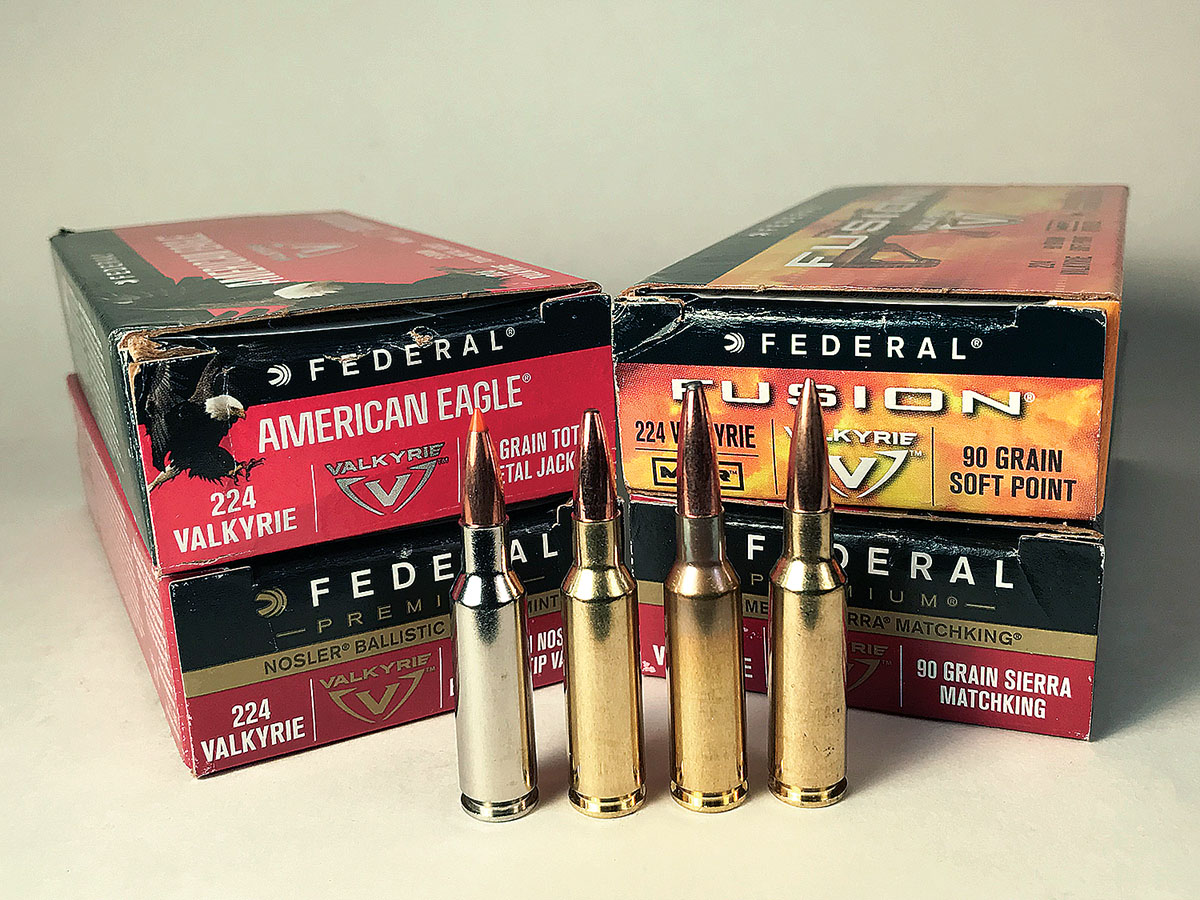
    Federal offered four loads for its .224 Valkyrie upon introduction. The loads contain the (left to right): Nosler 60-grain Ballistic Tip, Federal 75-grain Total Metal Jacket, Federal 90-grain Fusion and the Sierra 90-grain MatchKing.
    Federal offered four loads for its 224 Valkyrie upon introduction. The loads contain the (left to right): Nosler 60-grain Ballistic Tip, Federal 75-grain Total Metal Jacket, Federal 90-grain Fusion and the Sierra 90-grain MatchKing.

    At the outset, Federal offered four loads for its Valkyrie that focused on heavy, .22-caliber bullets, and stated the following velocities fired from a 24-inch barrel with a 1:7 rifling twist: Federal Premium Nosler 60-grain Ballistic Tip Varmint, 3,300 fps; Federal American Eagle 75-grain Total Metal Jacket, 3,000 fps; Federal Premium Gold Medal Sierra 90-grain MatchKing, 2,700 fps; Federal Fusion 90-grain soft point, 2,700 fps.

    The popularity of a cartridge depends initially on the availability of rifles. Savage Arms, Federal’s sister company, chambers the cartridge in its MSR15 Valkyrie and Recon LRP rifles. Airborne Arms, Barrett, CMMG, CMT JP Rifles, Mossberg and LaRue Tactical are also offering ARs for the cartridge. Palmetto State Armory is making an AR upper and Masterpiece Arms a bolt-action rifle, and there are probably others.

    The Valkyrie Case

    Federal employees searched through Norse folklore for a name for the cartridge. According to Norse mythology, Valkyries chose who died and who lived in battle. These female figures took those who died and brought them to Valhalla, the afterlife hall of the slain. Valkyrie goes along with Beowulf, as in .50 Beowulf, and Grendel, as in 6.5 Grendel, two other cartridges chambered in AR rifles.

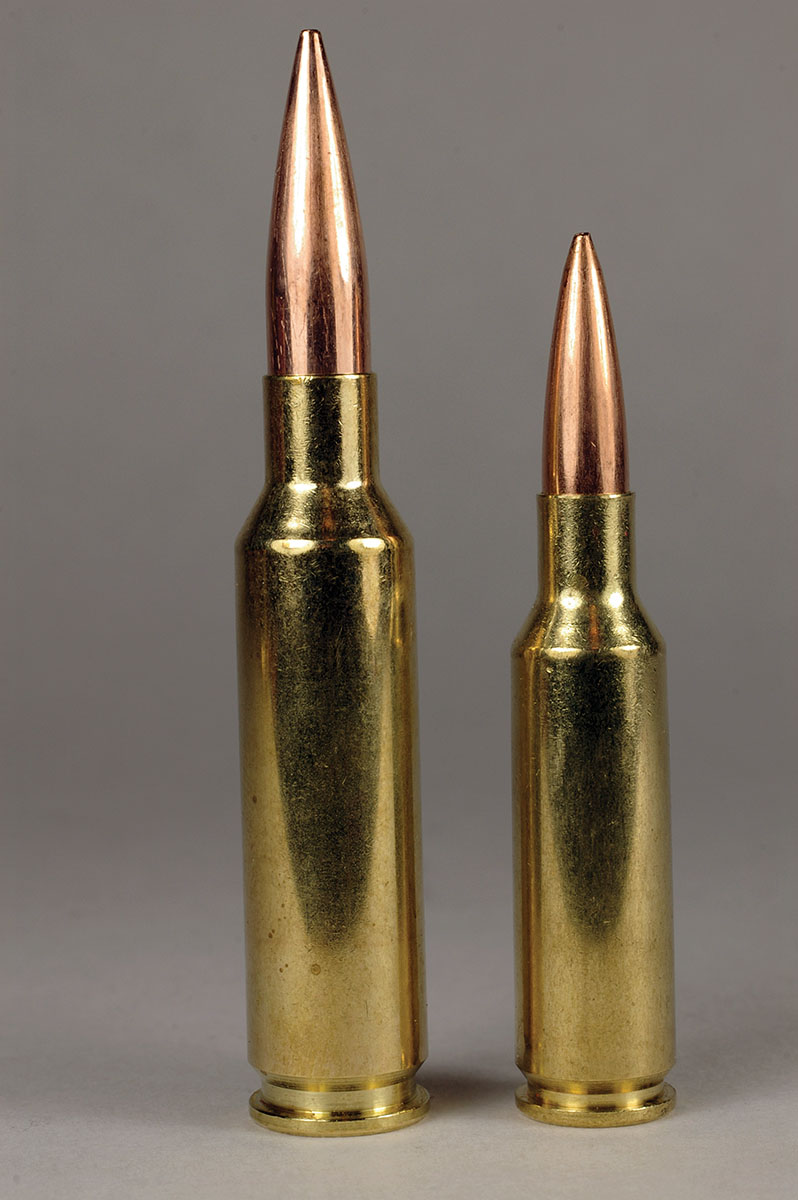
    The Valkyrie case is essentially a slightly shorter 6.8 SPC case necked down to hold .22-caliber bullets. That produces, as near as I can measure, a case length of 1.60 inches and a fairly long .2693-inch neck length. That shape allows seating long .22-caliber bullets up to an inch out of the case mouth to leave more room for powder. The Valkyrie looks like a miniature 6.5 Creedmoor or 6.5x55 cartridge.
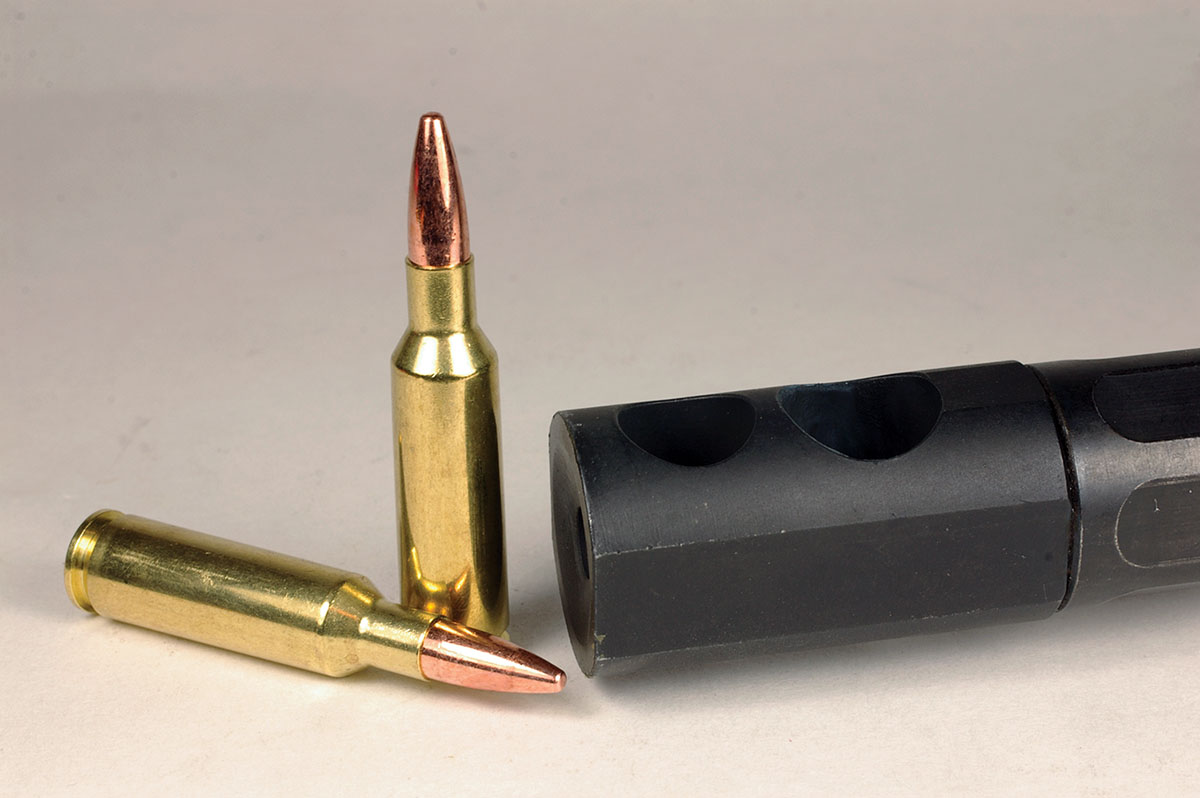
    Recoil of the 224 Valkyrie cartridge was nearly nonexistent with a muzzle brake on the Savage MSR15.  The rifle and scope had a weight of 10 pounds.
    Recoil of the 224 Valkyrie cartridge was nearly nonexistent with a muzzle brake on the Savage MSR15. The rifle and scope had a weight of 10 pounds.
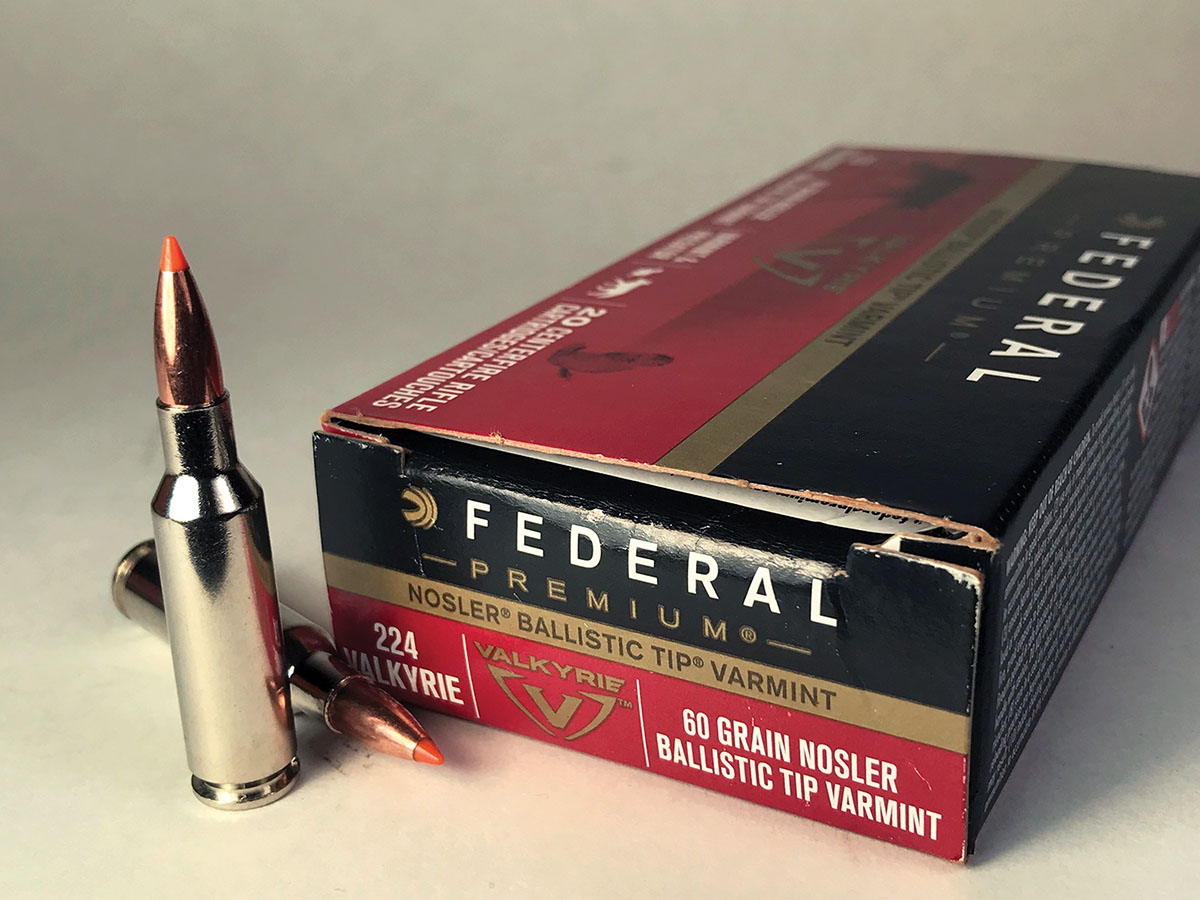
    The 224 Valkyrie cartridges loaded with 60-grain Ballistic Tips are intended for varmint shooting.
    The 224 Valkyrie cartridges loaded with 60-grain Ballistic Tips are intended for varmint shooting.
    The Valkyrie will mostly be compared to the 223 Remington and 22 Nosler. Five fired Valkyrie cases held an average of 31.8 grains of water. Nosler states its 22 Nosler case holds 34.2 grains of water. Five 223 Remington cases held an average of 28.1 grains of water. So the Valkyrie’s total capacity is not that much greater than the 223’s, and it holds 2.4 grains of water less than the 22 Nosler. The Valkyrie, though, increases usable powder capacity by seating long bullets well out of cases to more than beat the 223’s case capacity and come out even with the 22 Nosler.

    The Valkyrie and the 22 Nosler are sort of like the 260 Remington versus the 6.5 Creedmoor. A suitable powder charge and long bullet fit in the 260 and 22 Nosler, but it’s a tight fit. In comparison, the Creedmoor and Valkyrie hold a somewhat lighter amount of powder, and their bullets extend farther out of the case for a roomy fit. Either way, both combinations produce nearly the same velocity.

    Valkyrie Ammunition

    Federal’s four different Valkyrie loads are uniform in construction. On a Hornady Lock-N-
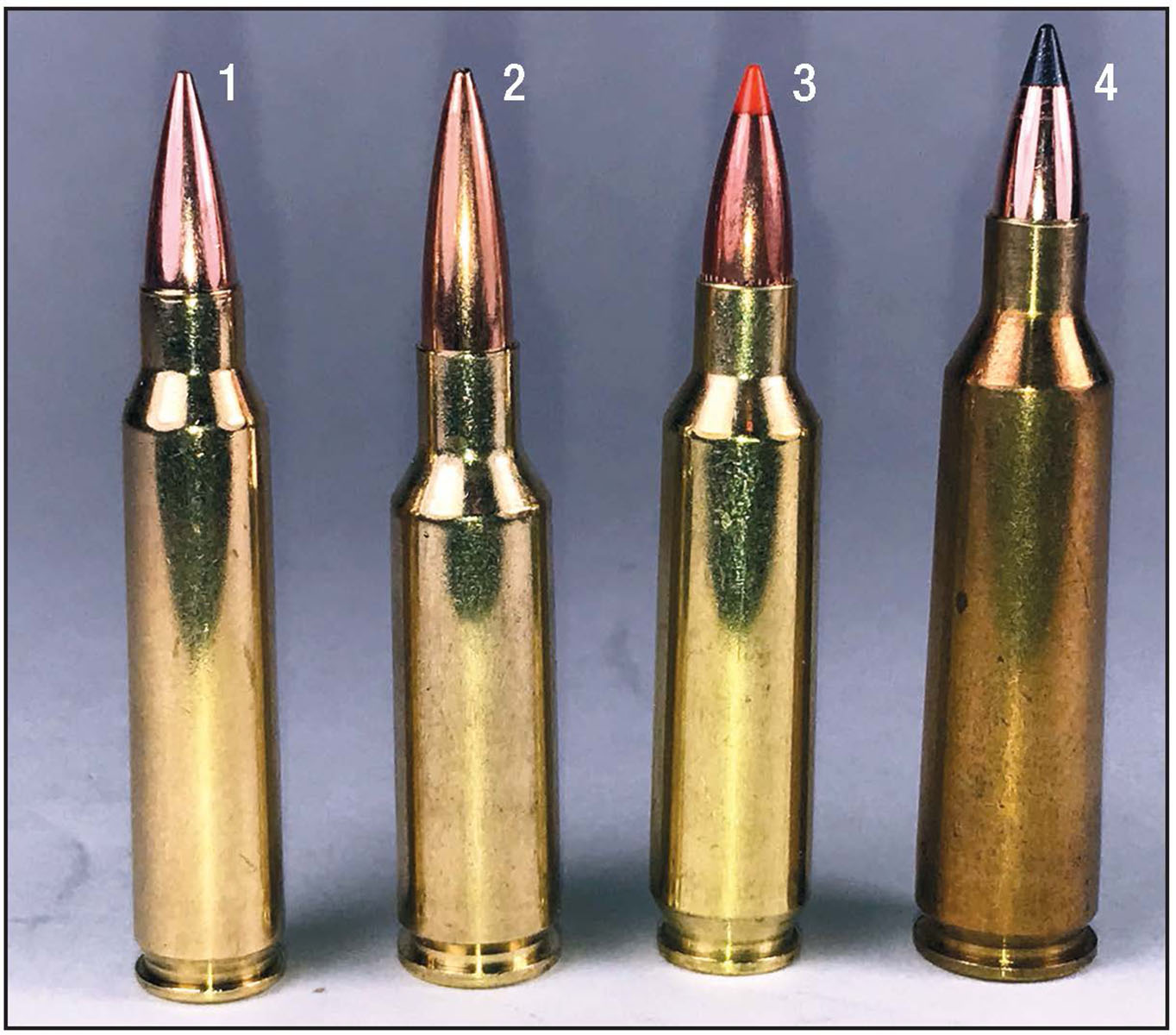
    Several .22-caliber cartridges provide plenty of competition for the Valkyrie. This line-up includes the (1) .223 Remington, (2) .224 Valkyrie, (3) .22 Nosler and the (4) .22-250 Remington.
    Several .22-caliber cartridges provide plenty of competition for the Valkyrie. This line-up includes the (1) 223 Remington, (2) 224 Valkyrie, (3) 22 Nosler and the (4) 22-250 Remington.
    Load Ammunition Concentricity Tool, five Federal American Eagle 75-grain Total Metal Jacket loads had a bullet run-out of .004 to .005 inch. Fusion 90-grain soft point loads varied from .002 to .004 inch. The tool’s dial barely moved when gauging bullet runout with five Federal Premium cartridges loaded with Nosler 60-grain Ballistic Tip and Sierra 90-grain MatchKing bullets.

    Over 10 shots, extreme velocity spreads were 42 fps for the American Eagle load, 45 fps for the Fusion load, 57 fps for the Federal Premium Ballistic Tips and 77 fps for Premium 90-grain MatchKing loads.

    Shot from the 18-inch barrel of a Savage MSR15 Valkyrie rifle, the four factory loads registered velocities about 120 to 200 fps slower than velocities that Federal states from a 24-inch barrel. Federal Premium cartridges loaded with Nosler 60-grain Ballistic Tip bullets registered 3,083 fps 10 feet from the muzzle compared to the 3,300 fps muzzle velocity printed on the box. Federal Fusion 90-grain soft point loads were chronographed at 2,509 fps instead of the stated 2,700 fps.
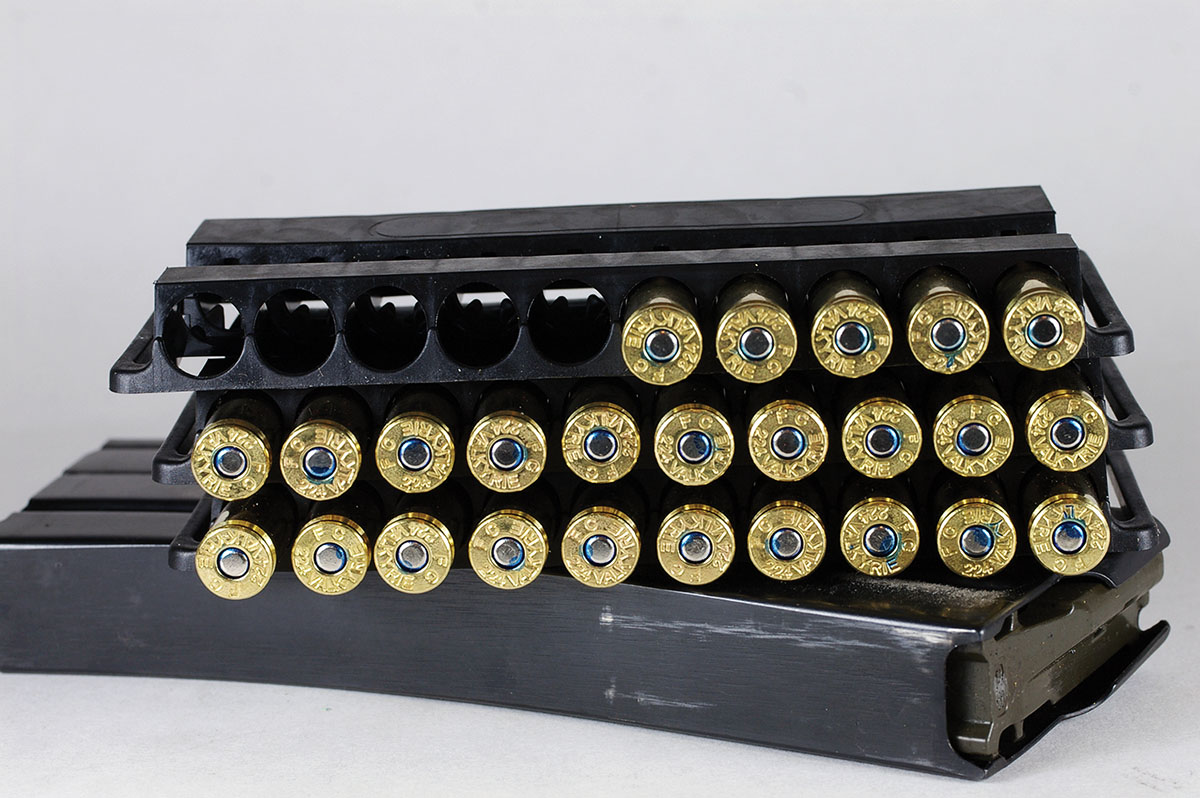
    The MSR15 .224 Valkyrie comes with a 25-round magazine.
    The MSR15 224 Valkyrie comes with a 25-round magazine.
    Half the shooters I talk to say there is no such thing as long-for-caliber bullets requiring 100 yards or more of distance to dampen their wobbles, causing the bullets to shoot more accurately at longer distances than they do at short distances; the other half says it is a fact. Valkyrie loads with 60-grain Ballistic Tips and 75-grain Total Metal Jacket bullets shot adequate five-shot groups at 100 yards, and their group sizes nearly tripled at 300 yards. However, Sierra 90-grain MatchKing bullets measure 1.172 inches long and look like a newly sharpened No. 2 pencil. At 100 yards, the Valkyrie rifle fired the Sierra bullets in five-shot groups of 2.56 and 2.97 inches. At 300 yards, the Sierra bullets shot groups of 2.37 and 1.87 inches. I adjusted the Engage scope’s parallax dial before shooting at 100 and 300 yards, so parallax can be eliminated as a cause.  
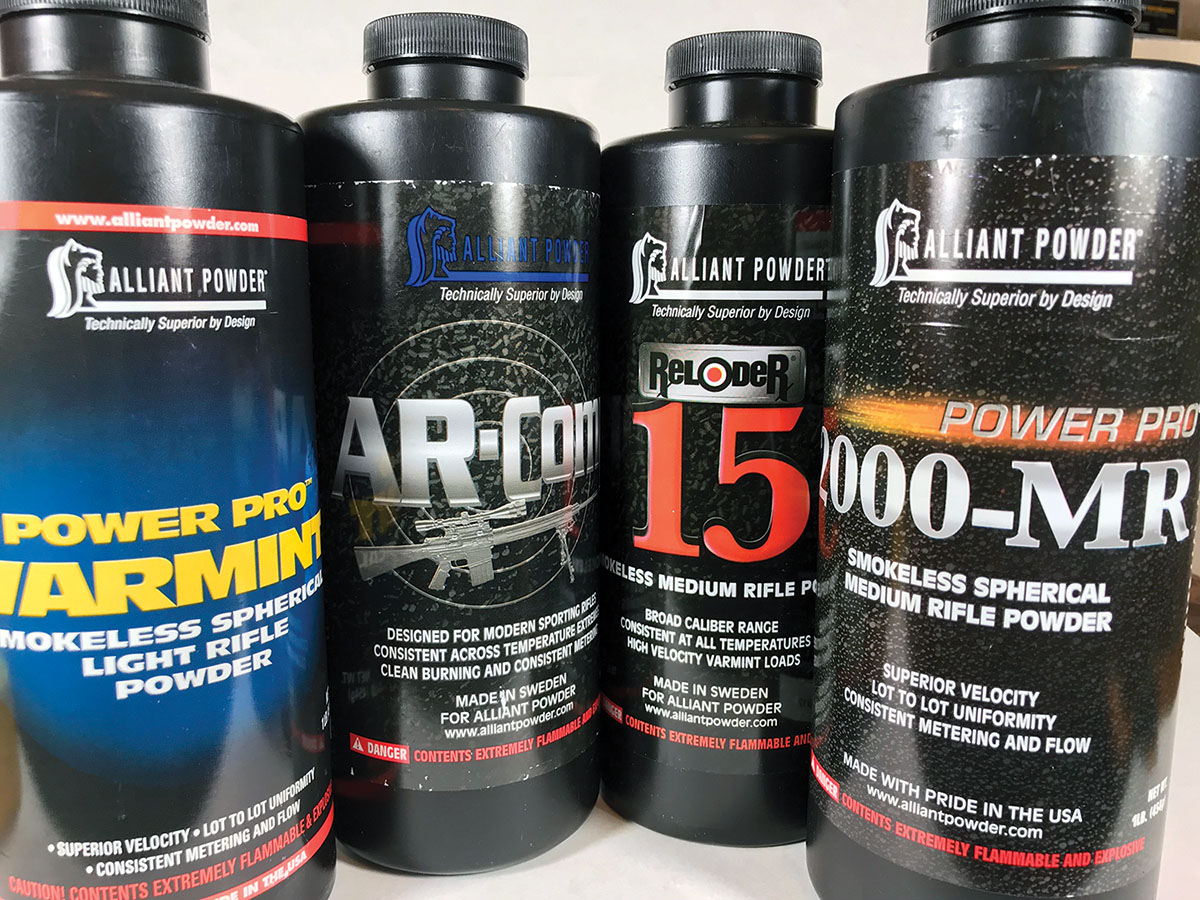
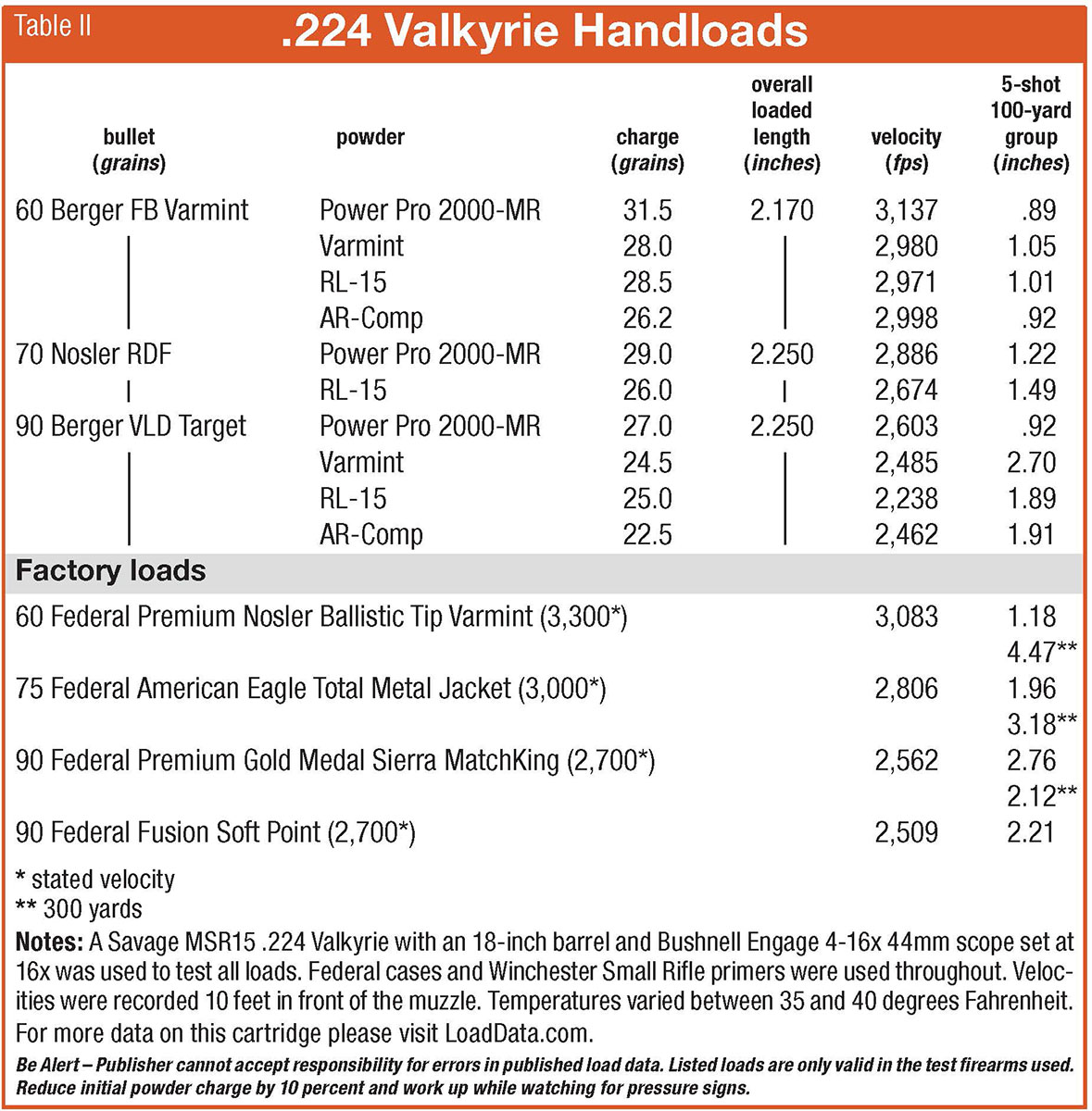
    When the rifle was tested, a limited amount of reloading data for the 224 Valkyrie with Alliant Power Pro Varmint, AR-Comp, RL-15 and Power Pro 2000-MR was available.
    When the rifle was tested, a limited amount of reloading data for the 224 Valkyrie with Alliant Power Pro Varmint, AR-Comp, RL-15 and Power Pro 2000-MR was available.

    Alliant Powder’s website (alliant powder.com), lists load data for Sierra 90-grain MatchKing and Nosler 60-grain Ballistic Tips for the 224 Valkyrie shot from a 24-inch barrel. The Valkyrie’s maximum average pressure (MAP) is set at 55,000 psi, the same as the 223. That relatively low pressure ensures the cartridge maintains a margin of safety fired in AR-type rifles. A ballistician said the Valkyrie uses relatively slow-burning powders that could cause high gas port pressures, resulting in elevated bolt velocity, and the 55,000 psi limit curbs that.
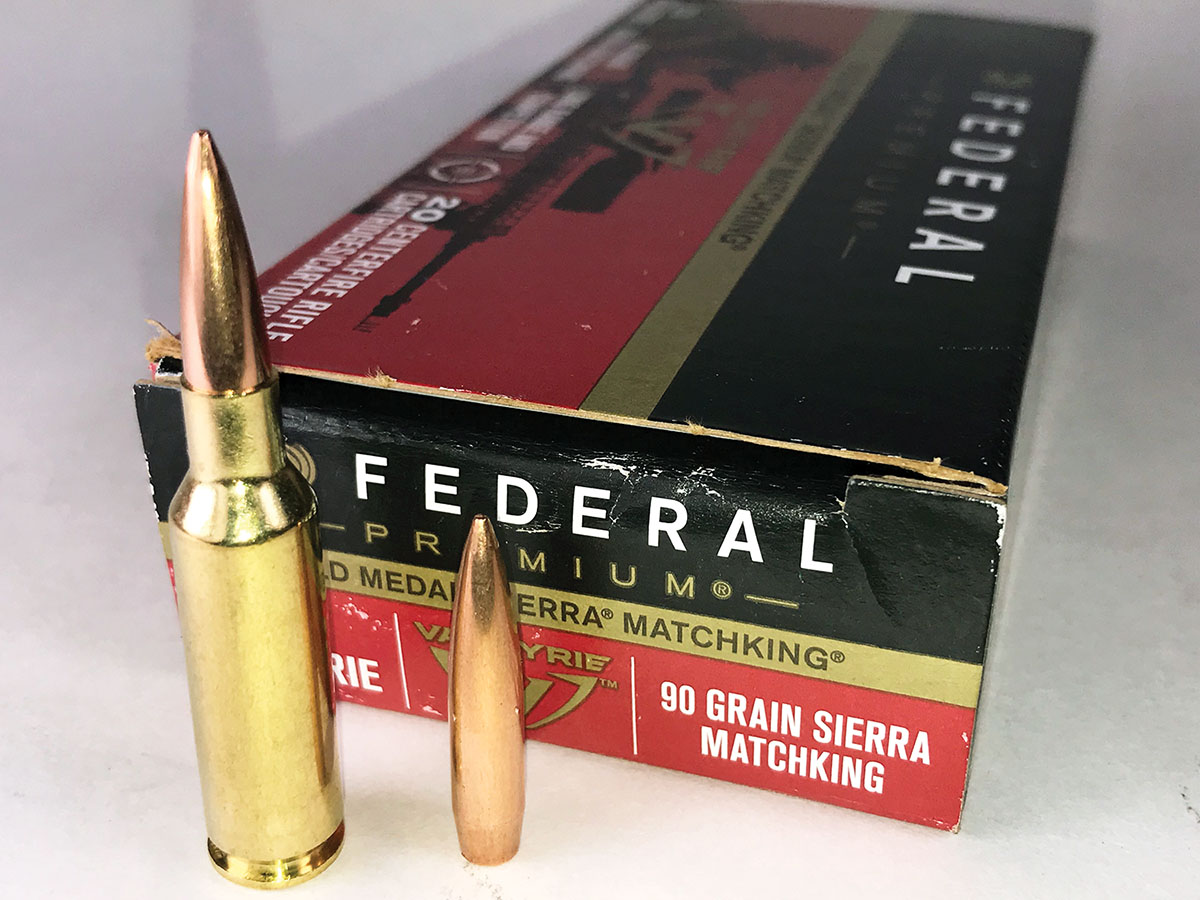
    Sierra 90-grain MatchKing bullets are slender and long, and they require a 1:7 rifling twist to stabilize.
    Sierra 90-grain MatchKing bullets are slender and long, and they require a 1:7 rifling twist to stabilize.
    At the time this was written, Federal did not have new Valkyrie cases for handloading, nor was a trim length provided for cases. Factory cartridge case lengths measured 1.591 to 1.594 inches. After firing, cases measured 1.596 to 1.603 inches. Sizing the cases in an RCBS full-length die lengthened cases to 1.600 to 1.605 inches. The Valkyrie’s case body taper of only .0176 inch and its 30-degree shoulder are mostly responsible for that minimal stretch. I trimmed fired cases to 1.590 inches.

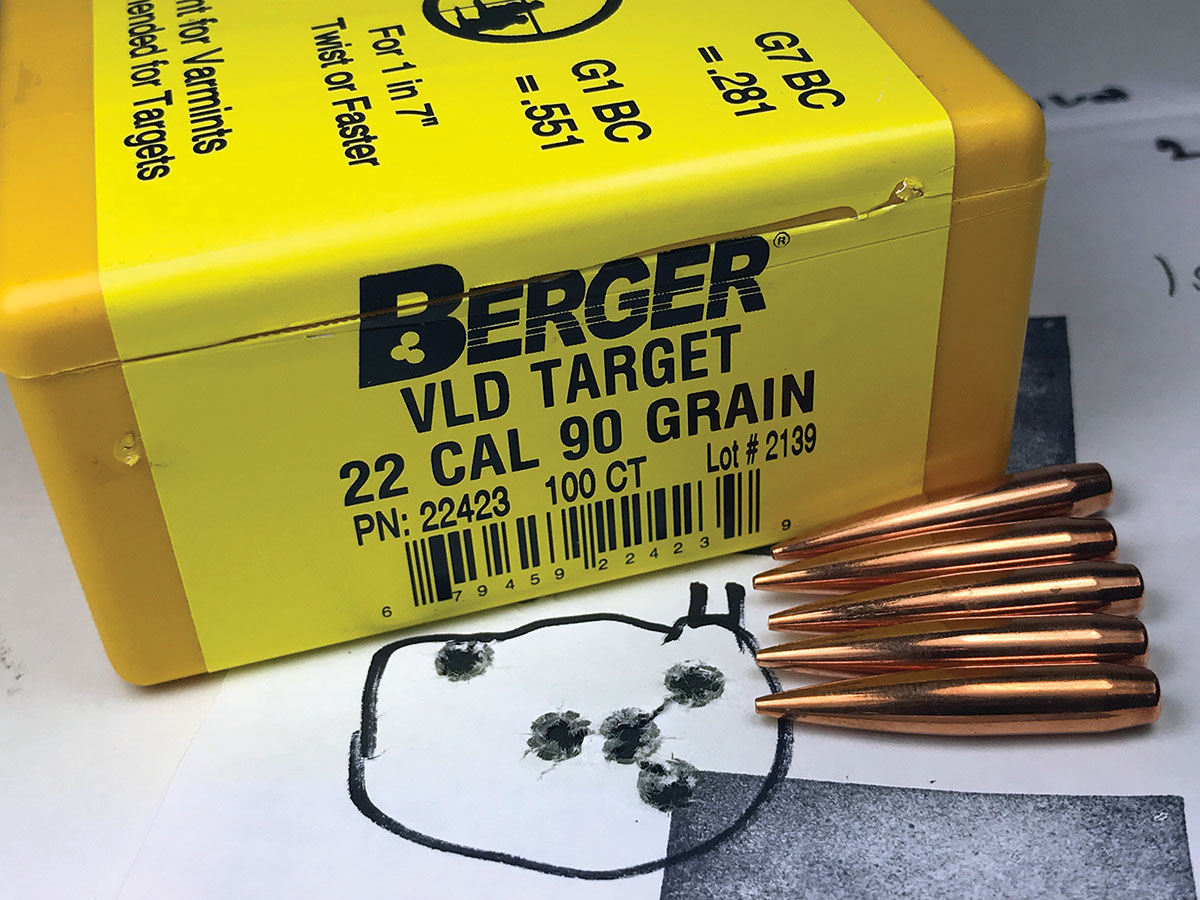
    The top velocities of handloaded Berger 60- and 90-grain bullets beat the velocity of Federal factory loads by about 50 fps. Berger 60-grain bullets turned in close to the same accuracy of Federal’s 60-grain Ballistic Tip load. Berger 90-grain VLD Target bullets paired with Power Pro 2000-MR powder was about the lone improvement over factory loads with a velocity of 2,603 fps and a five-shot group of .92 inch at 100 yards.

    224 Valkyrie’s Role
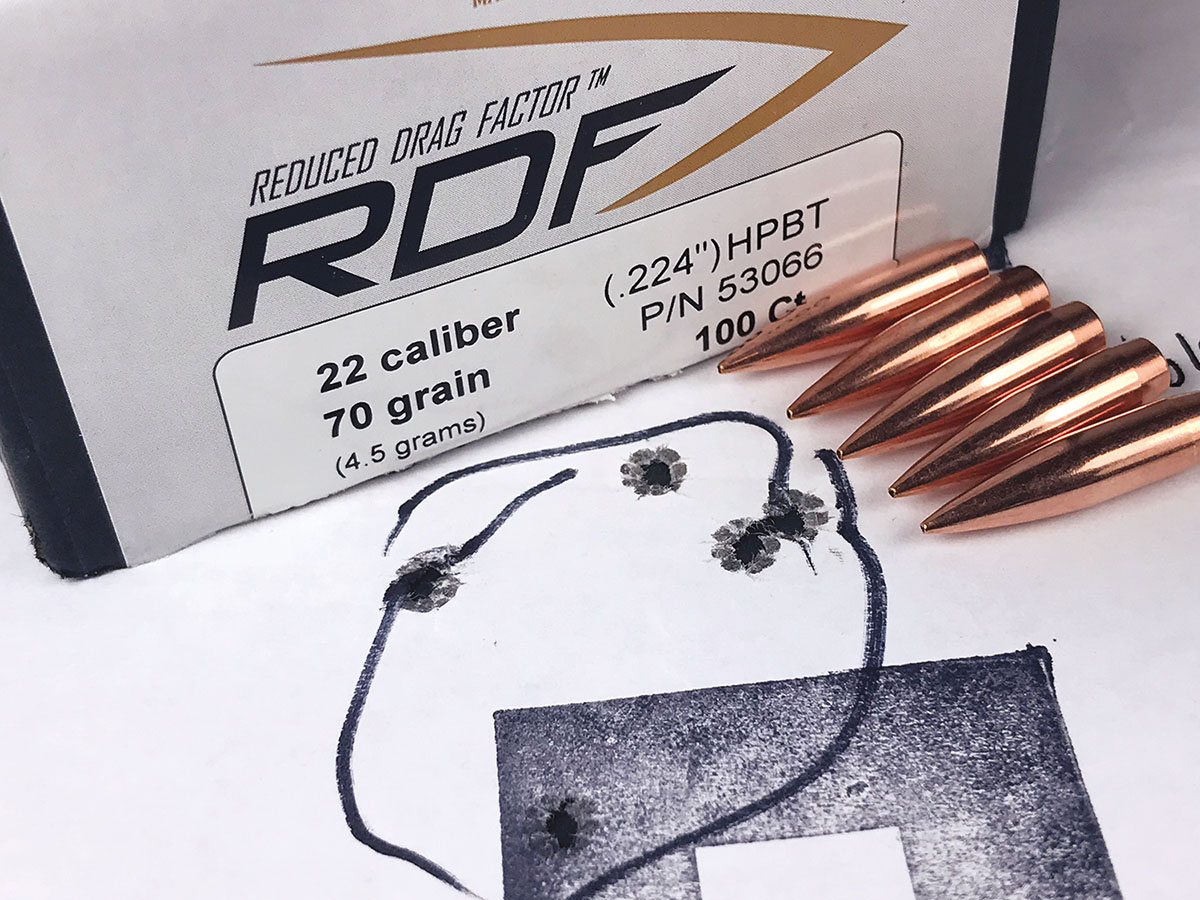
    Handloaded Nosler 70-grain Reduced Drag Factor (RDF) bullets paired with Power Pro 2000-MR resulted in this group at 100 yards.
    Handloaded Nosler 70-grain Reduced Drag Factor (RDF) bullets paired with Power Pro 2000-MR resulted in this group at 100 yards.
    The 224 Valkyrie fairly well splits the difference between the 223 and 22-250. Using Federal’s factory load velocities, the 224 fires 60-grain bullets at 3,300 fps. The 22-250 shoots a bullet of the same weight at 3,700 fps, but that added 400 fps requires 10.5 additional grains of much slower-burning powder. On the slower side, the 223 shoots 60-grain bullets at a top velocity of 3,175 fps burning 26.7 grains of CFE 223. So the 224’s nearly 5 additional grains of powder give it a step up of 125 fps over the 223.

    Berger 90-grain VLD Target bullets paired with Power Pro 2000-MR powder provided this group at 100 yards.
    Berger 90-grain VLD Target bullets paired with Power Pro 2000-MR powder provided this group at 100 yards.
    Shooting heavier bullets is where the Valkyrie starts to pull away from the 223 Remington. The Valkyrie shoots 75-grain bullets at 3,000 fps while the 223 tops out at 2,790 fps. The Valkyrie, shooting 90-grain bullets at 2,700 fps, leaves the 223 behind when shooting the same bullet weight at 2,500 fps.

    In a bolt-action rifle, the 22-250 Remington decisively runs away from the Valkyrie, at the expense of 5 to 10 grains of additional powder. Both cartridges fit on a short-action, and rifle weight would be about the same. The new Federal cartridge’s only advantage is that its factory loads are available with long, target-type bullets, while 22-250 factory loads are unavailable. Although, quite a few 22-250s with 1:8 rifling twists are made these days, so it’s only a matter of time before an ammunition manufacturer introduces suitable heavy bullet loads.
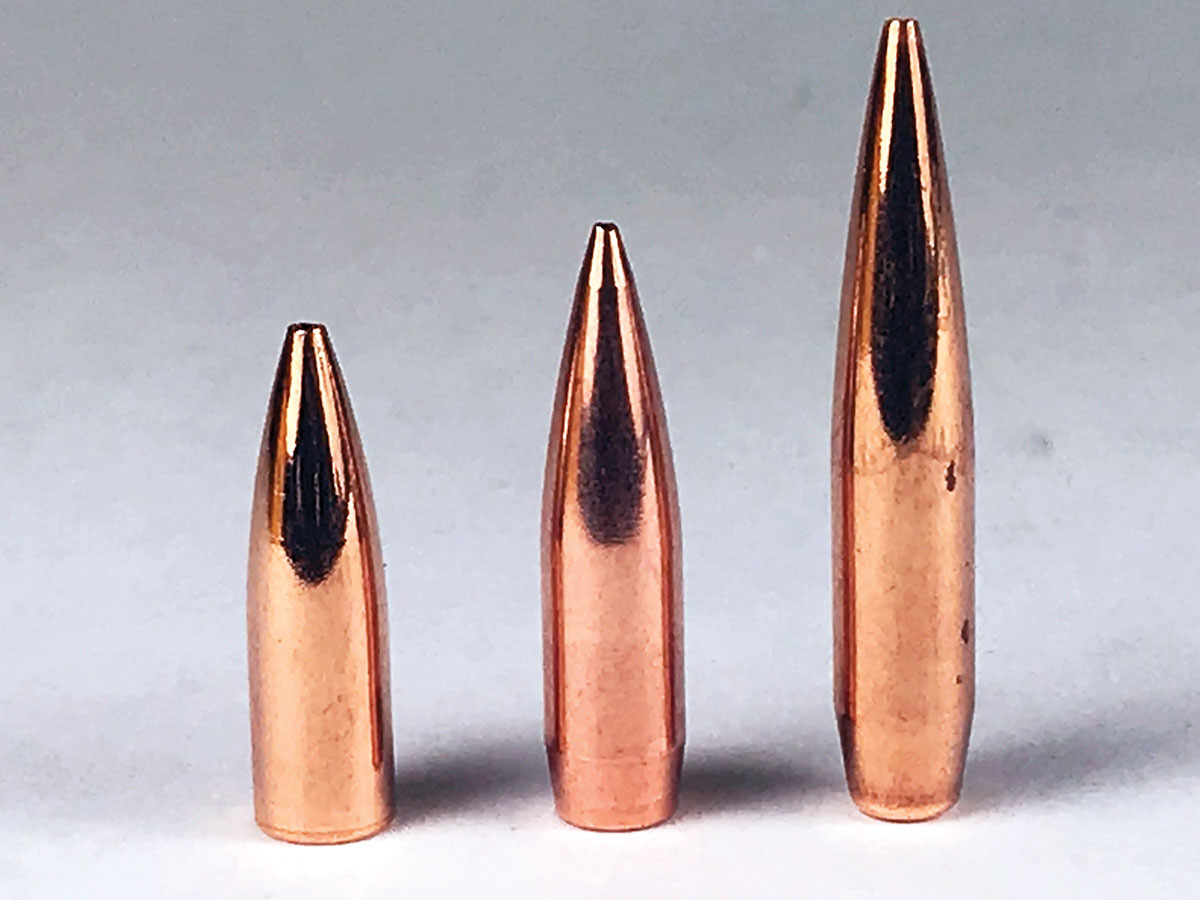
    Bullets handloaded in the 224 Valkyrie included the Berger 60-grain Flat Base Varmint, Nosler 70-grain RDF and the Berger 90-grain VLD Target.
    Bullets handloaded in the 224 Valkyrie included the Berger 60-grain Flat Base Varmint, Nosler 70-grain RDF and the Berger 90-grain VLD Target.
    The 224 Valkyrie (right) looks like a miniature 6.5 Creedmoor.
    The 224 Valkyrie (right) looks like a miniature 6.5 Creedmoor.
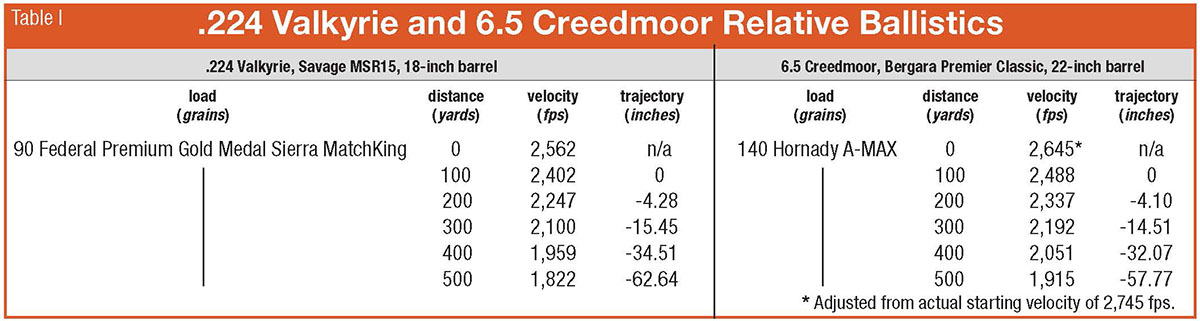
    Federal states the Valkyrie cartridge provides nearly the same trajectory as the 6.5 Creedmoor, but with about half the recoil.

    The fastest I have shot 140-grain bullets from a 6.5 Creedmoor is 2,745 fps from a 22-inch barrel on a Bergara rifle. Referring to table I, if that velocity is reduced 100 fps to compensate for the 6.5’s 4-inch longer barrel compared to the Valkyrie rifle’s 18-inch barrel and the drop of the two bullets are compared, the 6.5 holds onto its nearly 100-fps-higher velocity all the way out to 500 yards. It also drops 5 inches less way out there as compared to the Valkyrie cartridge. Nearly everyone thinks the 6.5 is the flattest-shooting cartridge ever to fire a bullet, but the 6.5’s advantage required it to burn 45.0 grains of powder compared to the Valkyrie’s 27.0-grain charge.

    The 22 Nosler is the Valkyrie’s main rival. The Nosler case has a touch more powder capacity, but bullets extend farther out of the Valkyrie case. Usable powder capacity is nearly the same for both cartridges. Nosler 70-grain RDF bullets over 29.0 grains of Reloder 15 had a muzzle velocity of 2,903 fps from a Nosler Varmageddon 22 Nosler rifle with an 18-inch barrel. The Nosler bullets had a muzzle velocity of 2,886 fps when loaded over 29.0 grains of Power Pro 2000-MR from the 18-inch barrel of the 224 Valkyrie rifle.

    Nosler added an 85-grain RDF bullet with a stated velocity of 2,750 fps in its Match Grade RDF 22 Nosler ammunition in the past year.

    The RDF has a ballistic coefficient (BC) of .498 compared to a BC of .563 for Sierra 90-grain MatchKing bullets in Federal Valkyrie loads at 2,700 fps. Only in a shooter’s imagination is there a difference between  trajectories.

    Federal is putting significant weight behind the success of its 224 Valkyrie. The Savage MSR15 rifle certainly proved it’s an accurate cartridge. The biggest challenge will be convincing AR shooters to switch from the extremely popular 223 Remington and buy a new Valkyrie upper for their rifle, or a new rifle. The heavy bullets that Federal loads in its Valkyrie ammunition will also help promote the Valkyrie for varmint and deer hunting and as a long-range target cartridge.

    Wolfe Publishing Group