6x45mm
An old benchrest wildcat earns its place with varmint hunters.
feature By: Rob Behr | October, 18
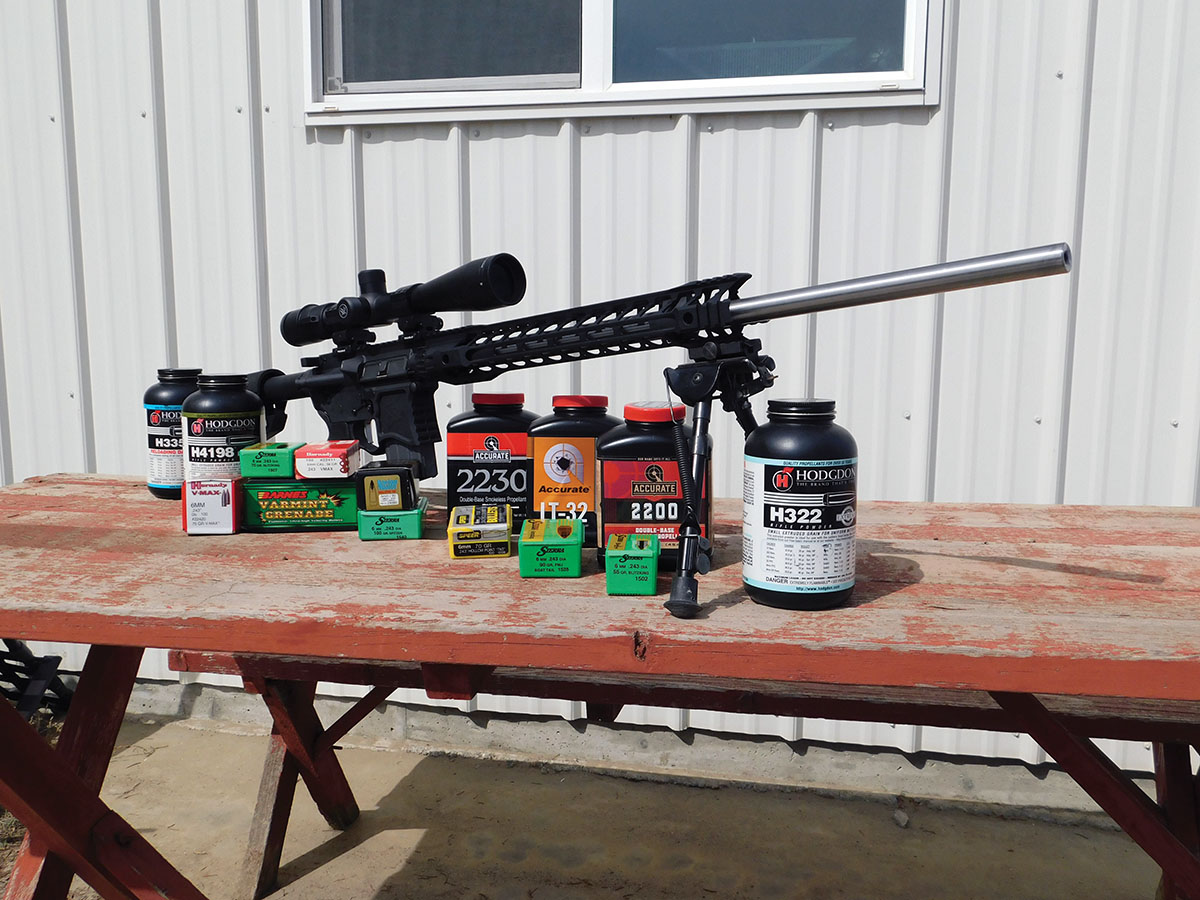
When Keith handed over the rifle, I was struck by its sharp lines. ARs are nothing if not modular, and there is no end to the variety of parts available to make a rifle stand out from the crowd. This one looked like something from Star Wars.
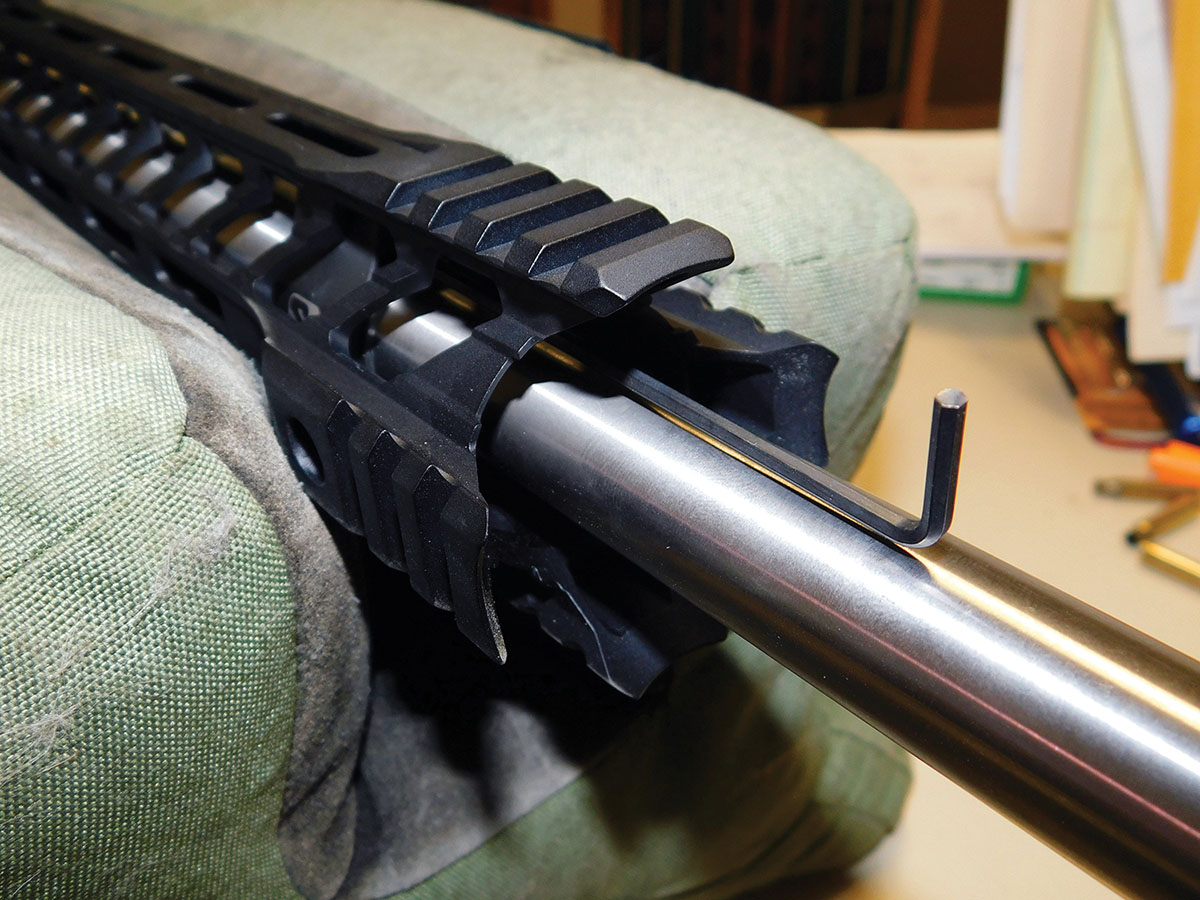
The Fortis Night Rail forearm, with its distinctive design, set the tone for the rifle. Fortis has developed a new two-piece barrel nut that makes the lightweight forearm extremely durable. The aluminum forearm has a few inches of Picatinny rail on top that quickly slopes into a narrow, squared middle section measuring 1.5 inches wide. Toward the muzzle, the forearm flares back out to about 2.300 inches with short Picatinny rails set on each corner. It is a thoroughly efficient-looking design.
At the heart of the rifle is a Kreiger barrel with a 1:9 rifling twist and a dished target crown. Measuring .808 inch at the muzzle and 26 inches in length, the heavy barrel gives the rifle a substantial feel. Its chamber was cut using a Pacific Tool and Gauge minimum dimension reamer. A quick look with a Hawkeye borescope showed concentric engagement with the rifling, a sign that the bore had been well indicated and cut. Mechanically, this rifle was made to shoot.
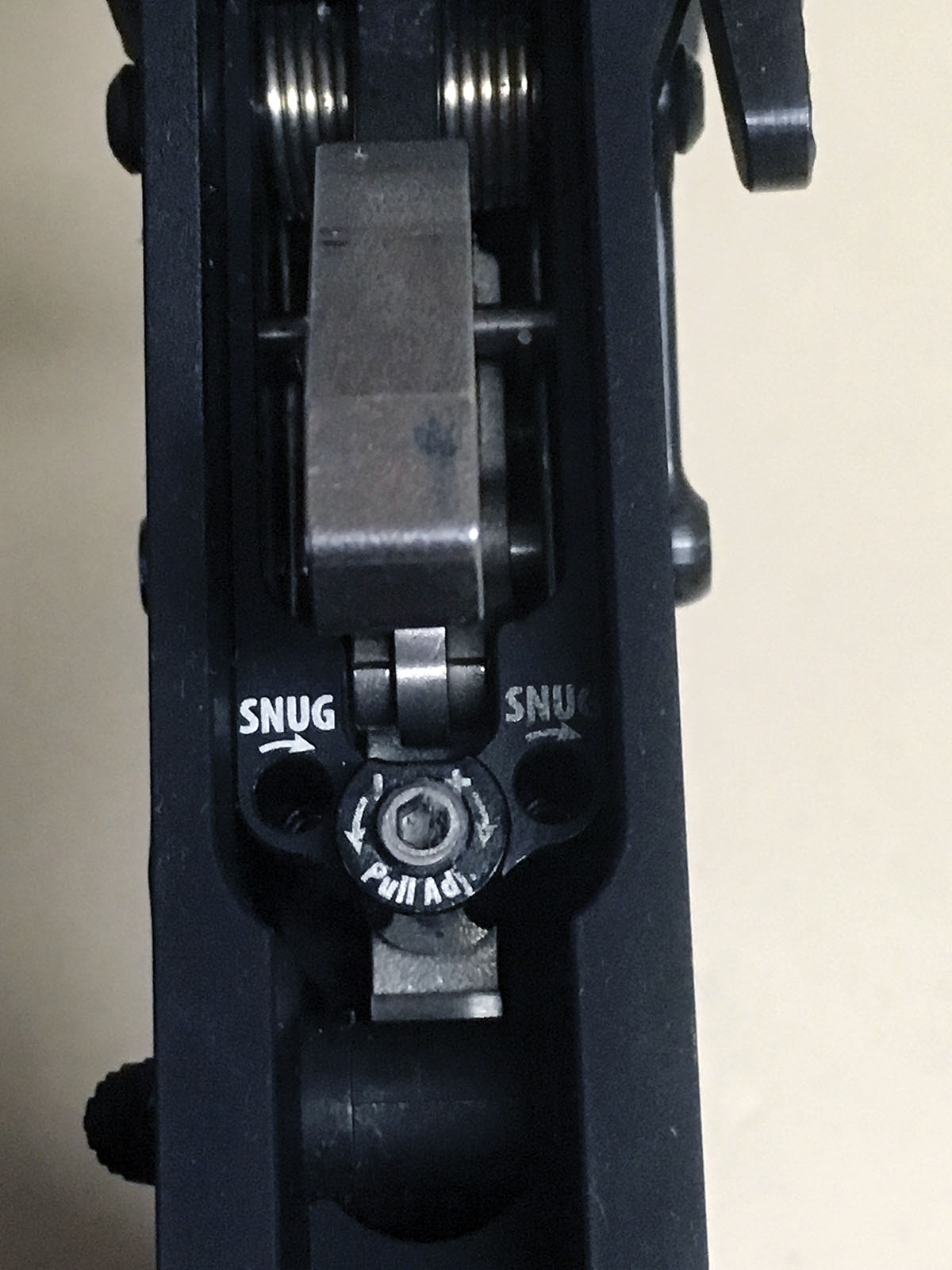
The trigger was also new to me. Having never used a TriggerTech product, the company has earned a new customer. The Competitive AR Primary Trigger uses a two-stage system with a short take up and crisp release. Company literature states that its product was designed to feel like a good 1911 trigger, and it does. Trigger specifications are impressive. The first stage pull weight is .75 pounds with a total pull weight of 3.5 pounds. The reset travel is less than .030 inch, and overtravel is less than .015 inch. At a suggested retail price of $215, this is an outstanding trigger.
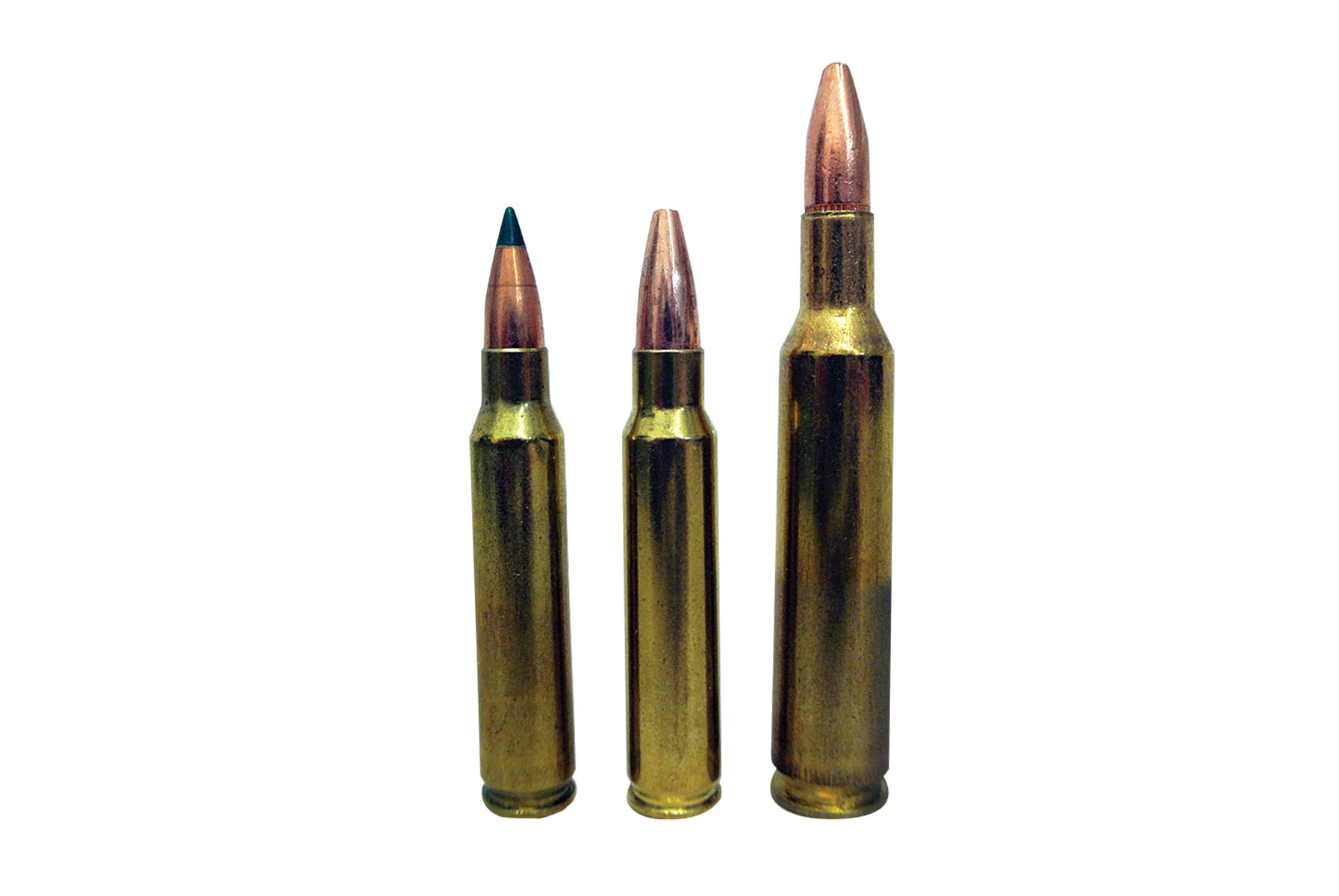
The 6x45mm is almost as old as its parent case, the 223 Remington. As a cartridge, it is not associated with a single well-known wildcatter. Instead, it seems to have sprung up as a logical modification to Remington’s new military and sporting cartridge sometime during the mid-1960s. Offering more case capacity than the 222 Remington, the 223 case, combined with a higher ballistic coefficient 6mm bullet, made the 6x45mm a common and successful competitor in benchrest competition. Cartridges of the World notes that Remington’s custom shop manager, Jim Stekl, used a 6x45mm to set an International Benchrest Shooters 200-yard Sporter aggregate record of .3069 MOA in 1973. As the PPC and BR cartridges came to dominate benchrest competition, the 6x45mm was pushed out of the winner’s circle, but its accuracy still guarantees a spot with custom varmint riflemakers.
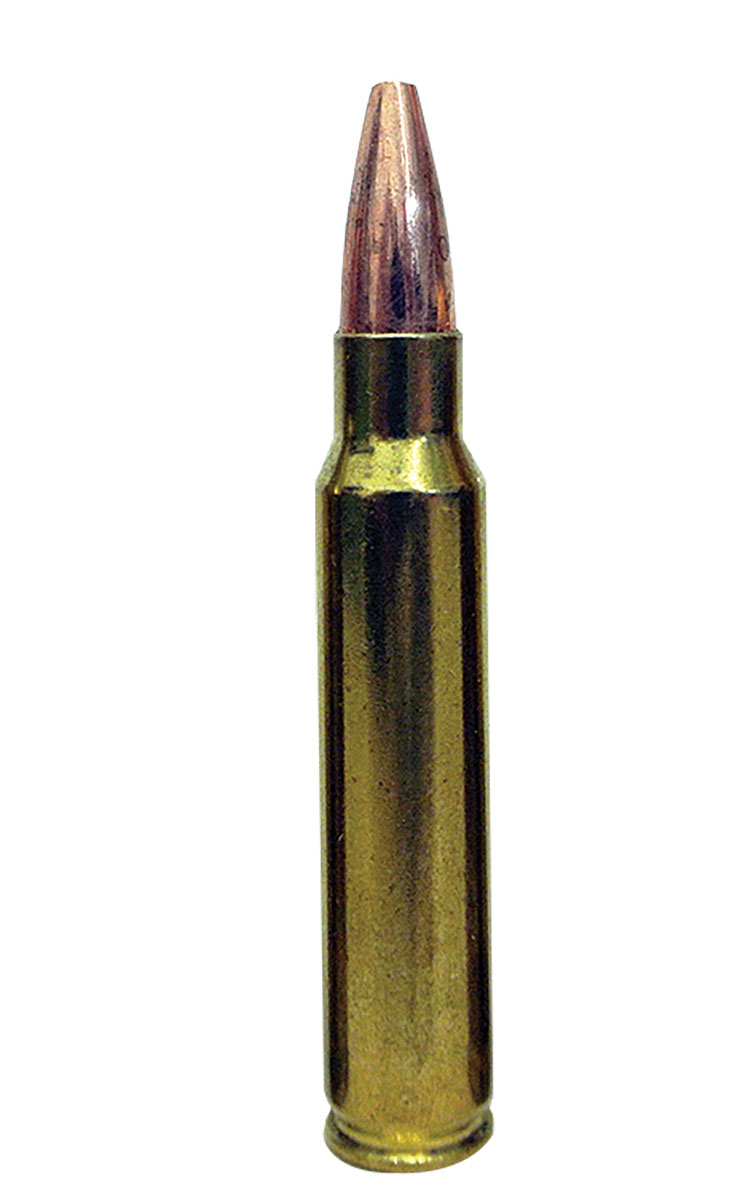
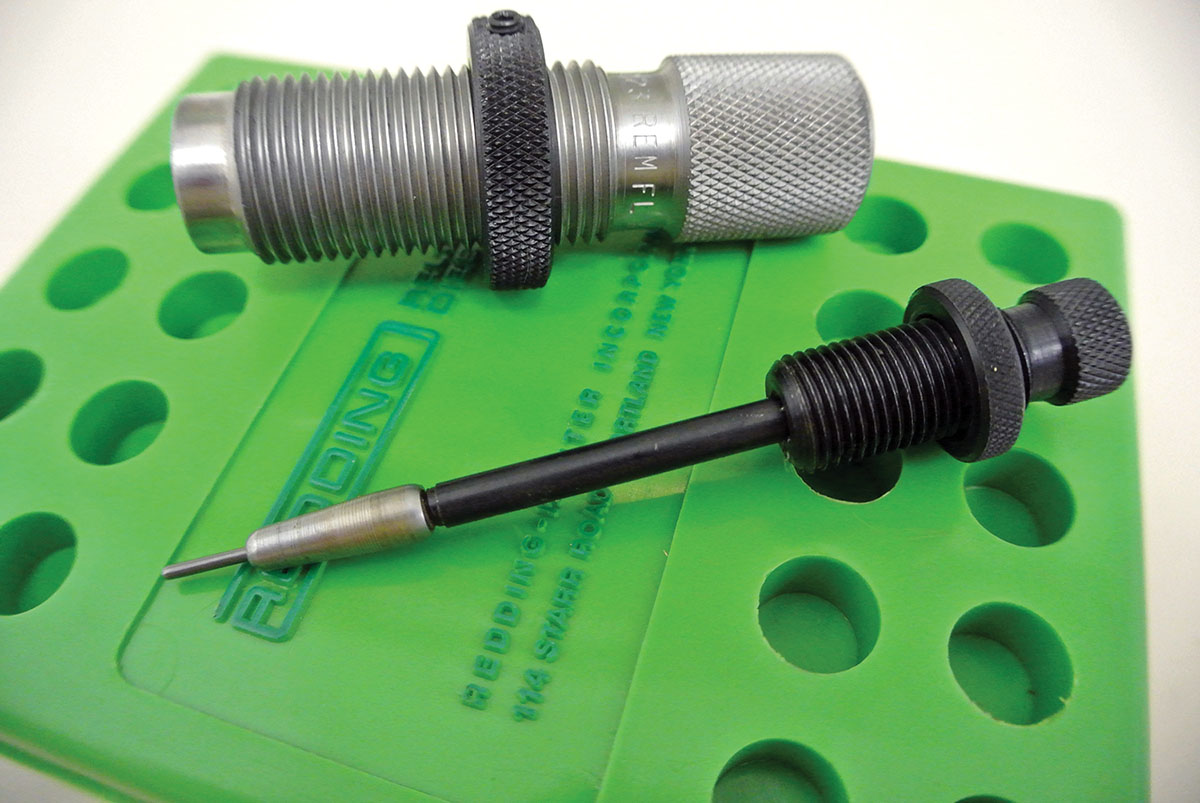
Few wildcats are as easily made as the 6x45mm. A single pass through a full-length sizing die expands the 223 Remington neck to 6mm, and the cartridge is ready for loading. Case life is very good and can be enhanced by necking up new rather than once-fired brass.
There is a safety concern that should be noted regarding the case dimension of the 6x45mm. Because only the neck dimension has been changed, the chamber will headspace with 223 Remington ammunition. This problem is compounded because the headstamp on both cartridges may still read “223 Remington,” and the .020-inch bullet diameter difference is not glaringly obvious. The loaded neck dimension on the 6x45mm cartridge measures about .265 inch. SAAMI standards for 223 Remington chambers are .254 inch. It would take a lot of work to swage a 6x45mm into a 223 chamber, but I imagine it could be done by a determined lunatic, so caution is warranted. A 223 Remington, however, will go right into a 6x45mm chamber and headspace. Upon firing, the case neck or top of the shoulder may crack and liberate gas into the chamber. In most instances the case neck partially or fully expands, making the 223 Remington case into a 6x45mm; a .22-caliber bullet bounces down the barrel and goes tumbling off downrange.
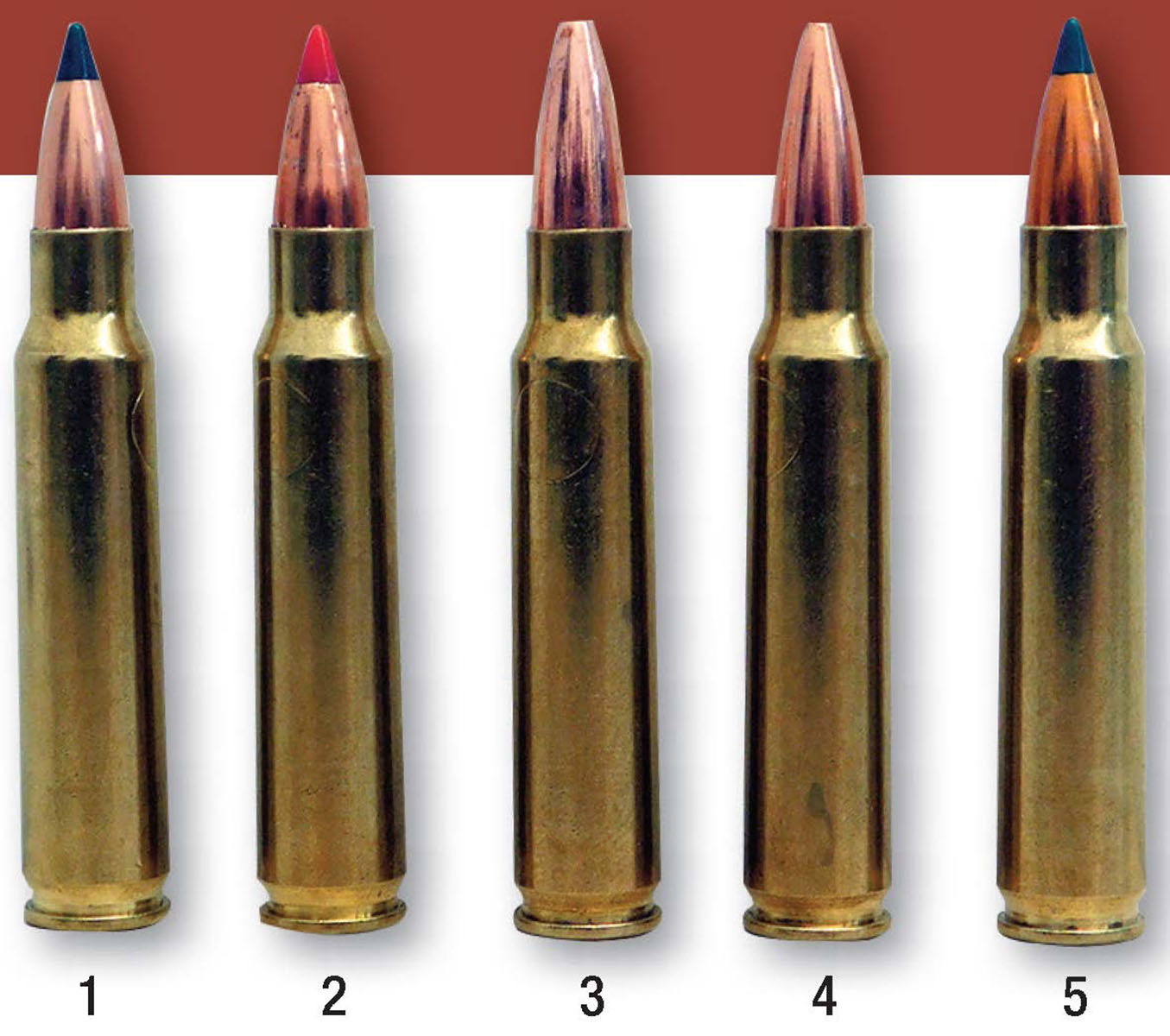
The 6x45mm is a very forgiving cartridge that produces good accuracy with a wide variety of powders. Any propellant that produces reasonable ballistics in the 223 Remington is a good candidate for load development. Bullet selection is also quite broad but is limited by several factors.
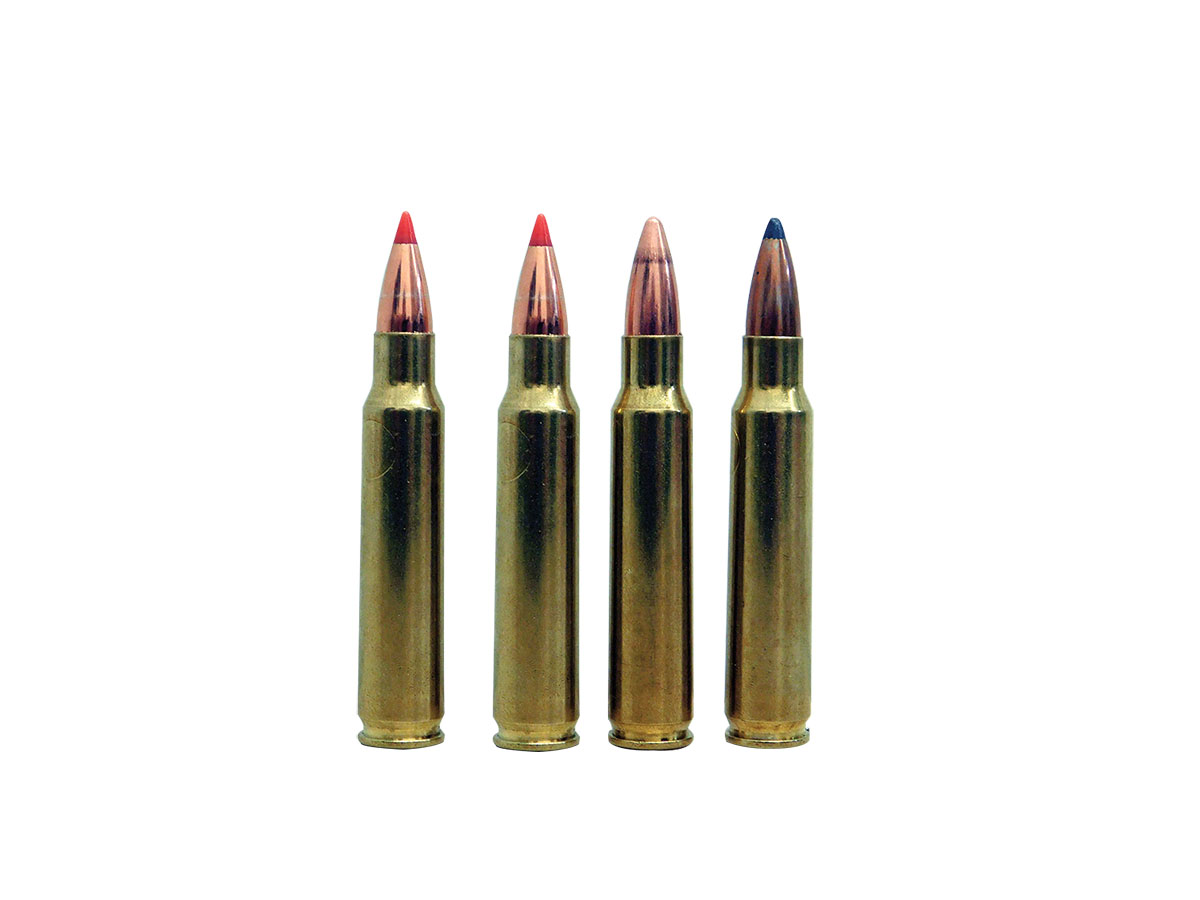
Another issue in bullet selection is the popularity of secant ogive bullets, a design that enhances long-range performance. The bullets’ short bearing surfaces combined with the long ogive make for a poor fit in the 6x45mm cartridge. In order to meet the magazine constraints, a bullet’s ogive is forced beneath the case mouth, leading to poor neck tension and the very real possibility that the bullet will be pushed completely down inside the case.
Three snowstorms in the span of a week hampered velocity testing. I finally ran out of time to test and ended up doing the velocity testing in a snowstorm. Further compounding my belief that the rifle was cursed, the adjustable gas block was set for minimum gas flow, reducing the AR to a single-shot rifle. (At least it was easy to find the brass – it was always there in the chamber waiting for me.) The Allen wrench so thoughtfully supplied by Superlative Arms was left on my bench at home. With the correct adjustments, the rifle loaded and extracted flawlessly.
During testing, several bullet and powder combinations proved promising enough to encourage further load development. There were also several bullets I expected to shoot well that left me disappointed. This is why handloaders test. The world of ballistics is always full of surprises. That evening I went home, prepped cases and crossed my fingers for a day that would allow accurate shooting.
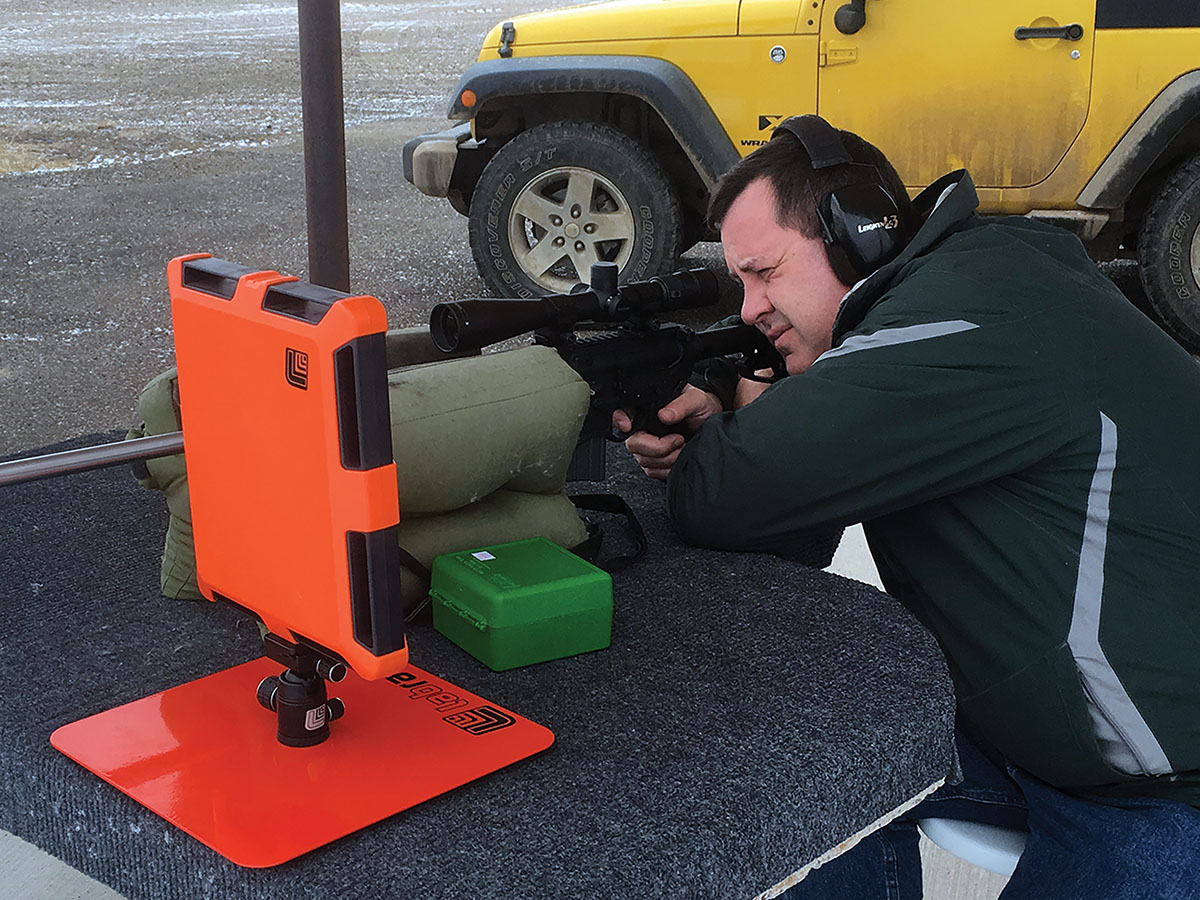
When it comes to shooting on deadline, you have to take what nature brings. The morning proved to be cold with a biting wind that blew from behind my right shoulder. My Kestrel showed a consistent 15-mph wind. With a steady wind chasing my bullets into the target it was not a horrible day for testing accuracy, but it was cold enough that shivering eventually became an issue. To be fair to this unlucky rifle, when it finally catches a break, it is going to be fantastically accurate.
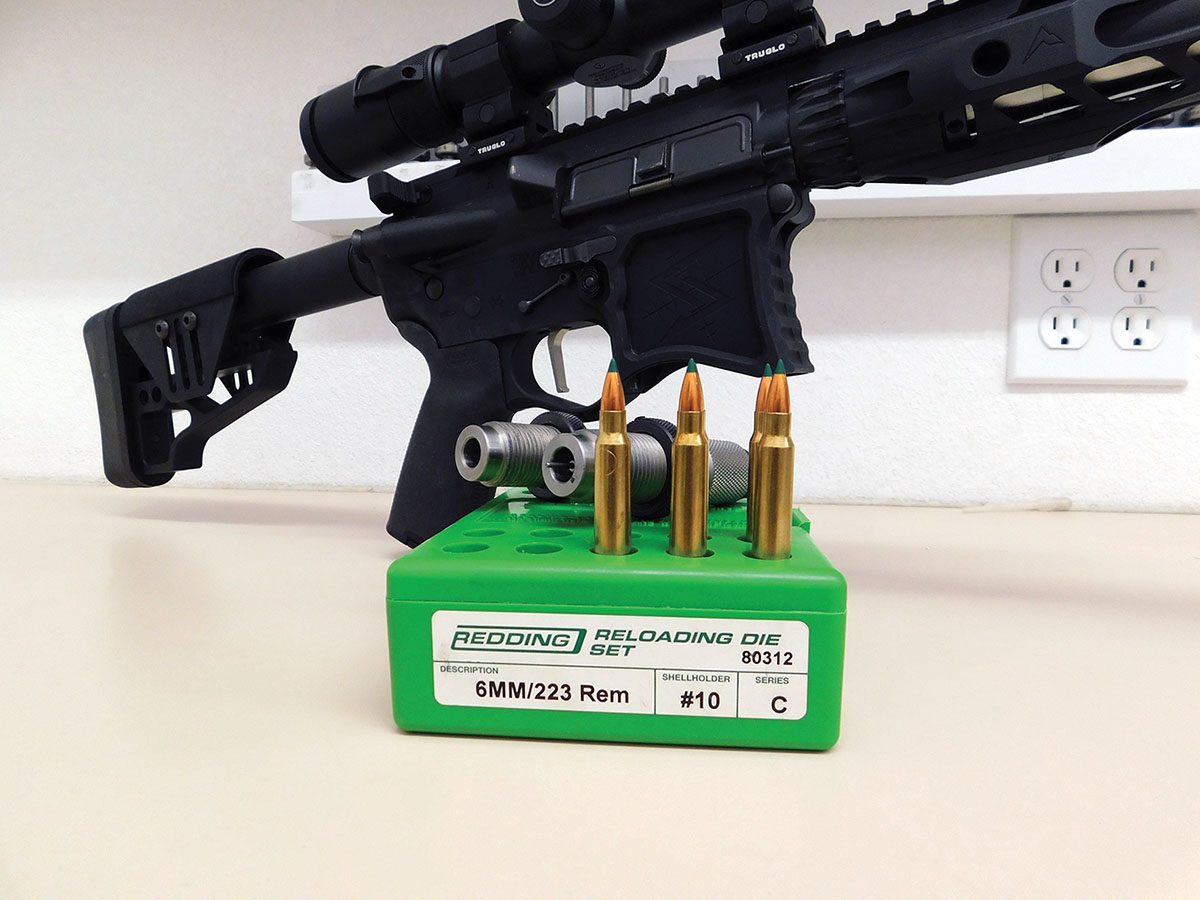
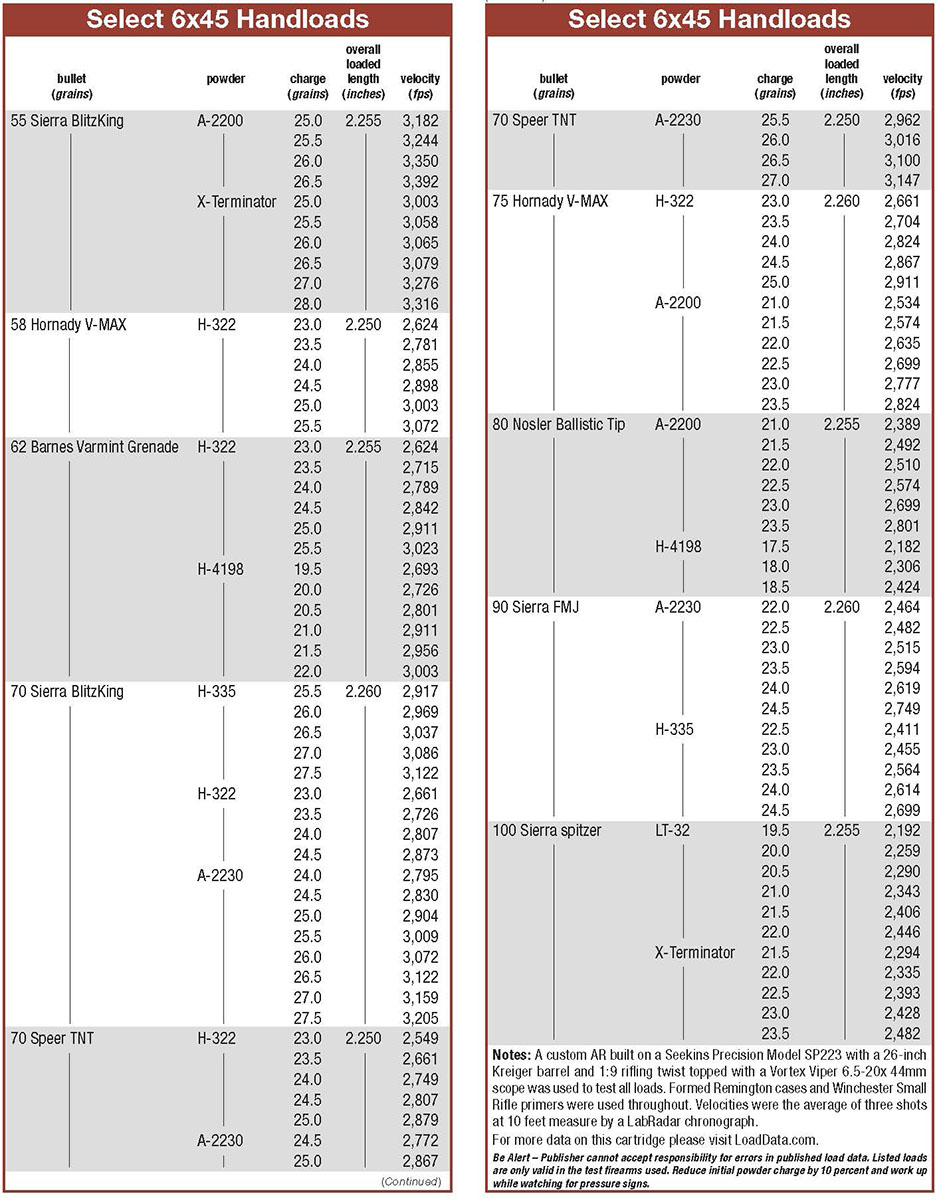
At 55 grains, Sierra’s flatbase BlitzKings seemed like an obvious place to start. I had hoped to see velocities in excess of 3,500 fps for the cartridge; it came close to meeting those expectations. With 27 grains of A-2200 the little BlitzKing topped out at an average velocity of 3,490 fps but suffered flattened and cratered primers. Dropping back to 26.5 grains, the cratering disappeared and the bullet showed a willingness to group. The best group was .802 inch, center to center, and the worst was just over an inch.
The Barnes Varmint Grenade was a pleasant surprise. These bullets use a compressed core inside an extremely frangible jacket. I’ve used them in .22 caliber on several prairie dog hunts, and their performance is hard to believe until you see them in action. Prairie dogs simply evaporate with solid hits. In larger animals the bullets tend to fail within the first several inches and do not leave an exit wound, making them ideal for pelt hunters. If they have a drawback, it is that they are long and light for caliber. Because of the limited case capacity of the 6x45mm, I had initially been skeptical about trying them. That would have been a real mistake.
At a maximum load of 22 grains of H-4198, the powder was quite heavily compressed. Velocities averaged 3,003 fps without obvious pressure signs. A charge of 21 grains produced very good accuracy, with the best group printing .502 inch. Considering the steadily deteriorating range conditions, I was impressed.
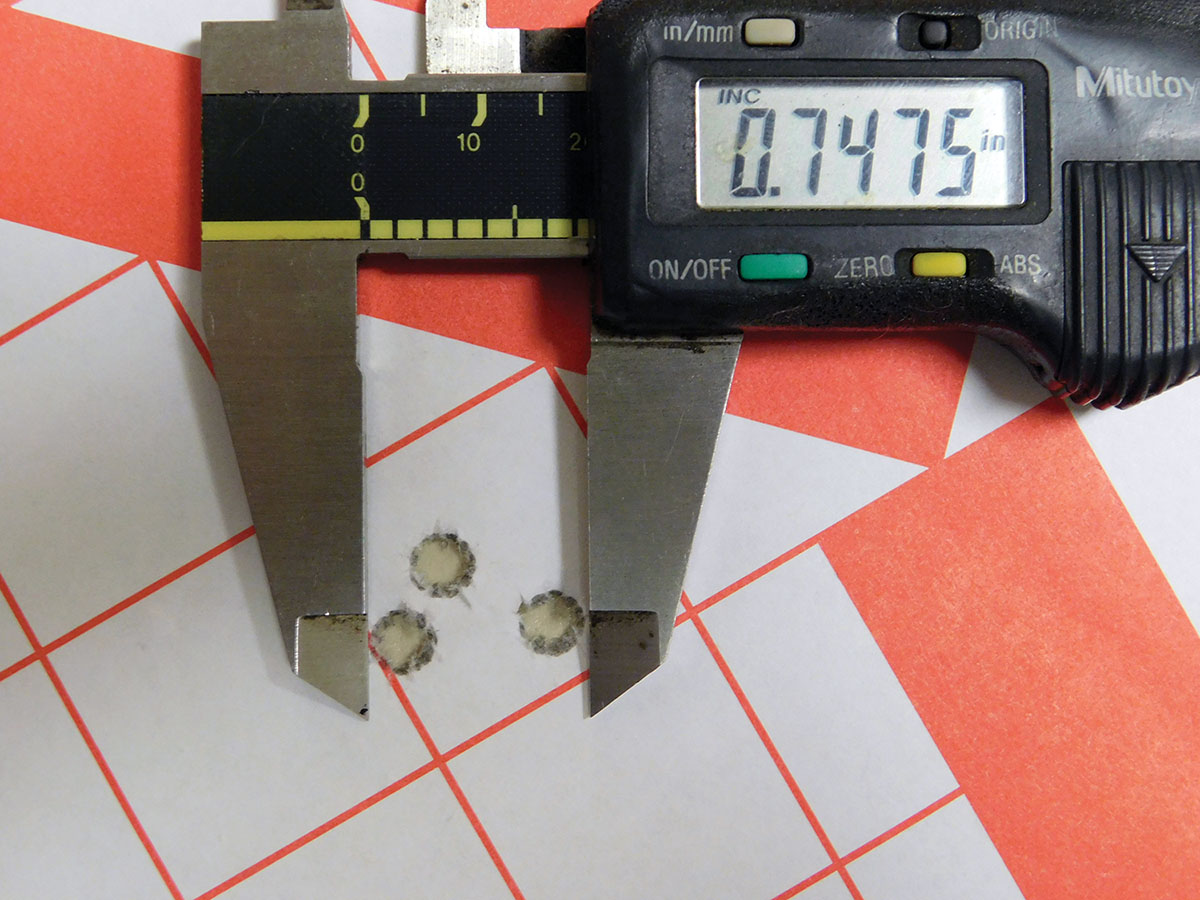
Coming into the testing, I had the highest expectations for the 70-grain BlitzKing. This bullet simply looks accurate. With a ballistic coefficient of .288 in the velocity range of the 6x45mm, it is a formidable bullet at practical varminting ranges. Both A-2230 and H-335 were able to achieve velocities around 3,200 fps without obvious overpressure. Test loads with H-335 produced the smallest group of the day, with 27.2 grains printing .330 inch.
The weather never really gave this rifle a chance to shine, and like all new rifles it had a couple of bugs that needed to be worked out in order to become reliable. Now that it is in shooting form and producing sub-half-minute groups under some really lousy shooting conditions, I think Keith’s rifle is going be the envy of his shooting partners. But it will always seem jinxed to me, even if I manage to convince him that I need it more than he does.