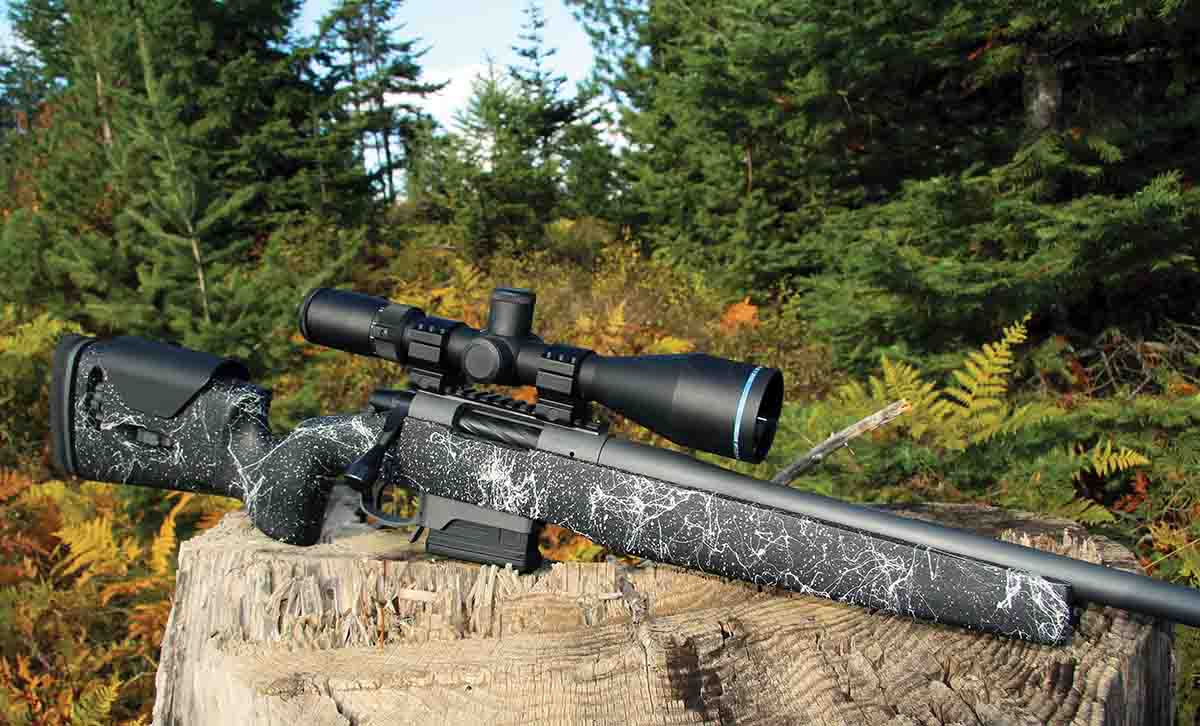
The completed rifle was created by a Terminus Actions Apollo receiver, Benchmark Barrels barrel, Pacific Tool & Die bottom metal, Timney Triggers HIT trigger and a Pendleton Composite Stocks T-11 handle.
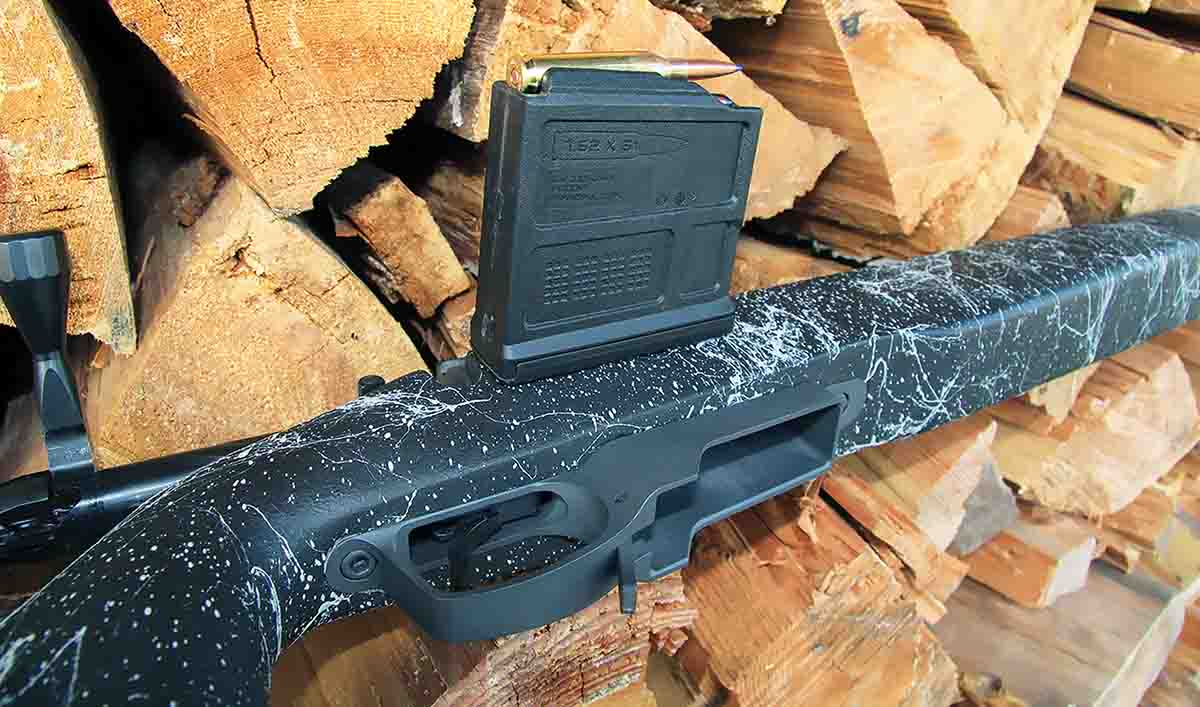
The test rifle included a Pacific Tool & Die trigger guard and bottom metal that was compatible with a Magpul detachable P-Mag. The rifle fed flawlessly and so smoothly that Patrick often believed the rifle had failed to feed.
A 243 Winchester was my first centerfire rifle because that is what the “expert” behind the gun counter convinced my non-hunting parents that a 12-year-old boy addressing local desert mule deer could handle. I was not exactly unhappy with this decision, as the raw fur market was booming and I harbored big plans for calling some of eastern New Mexico’s super-abundant coyotes. The 243 Winchester proved an ideal fit for the shooting my western childhood offered – annual desert mule deer and Barbary sheep hunts, the occasional lottery pronghorn or elk permit, a black bear, a monthly parade of coyotes and grey foxes during winter months and jackrabbits and burrowing rodents by the thousands during summers.
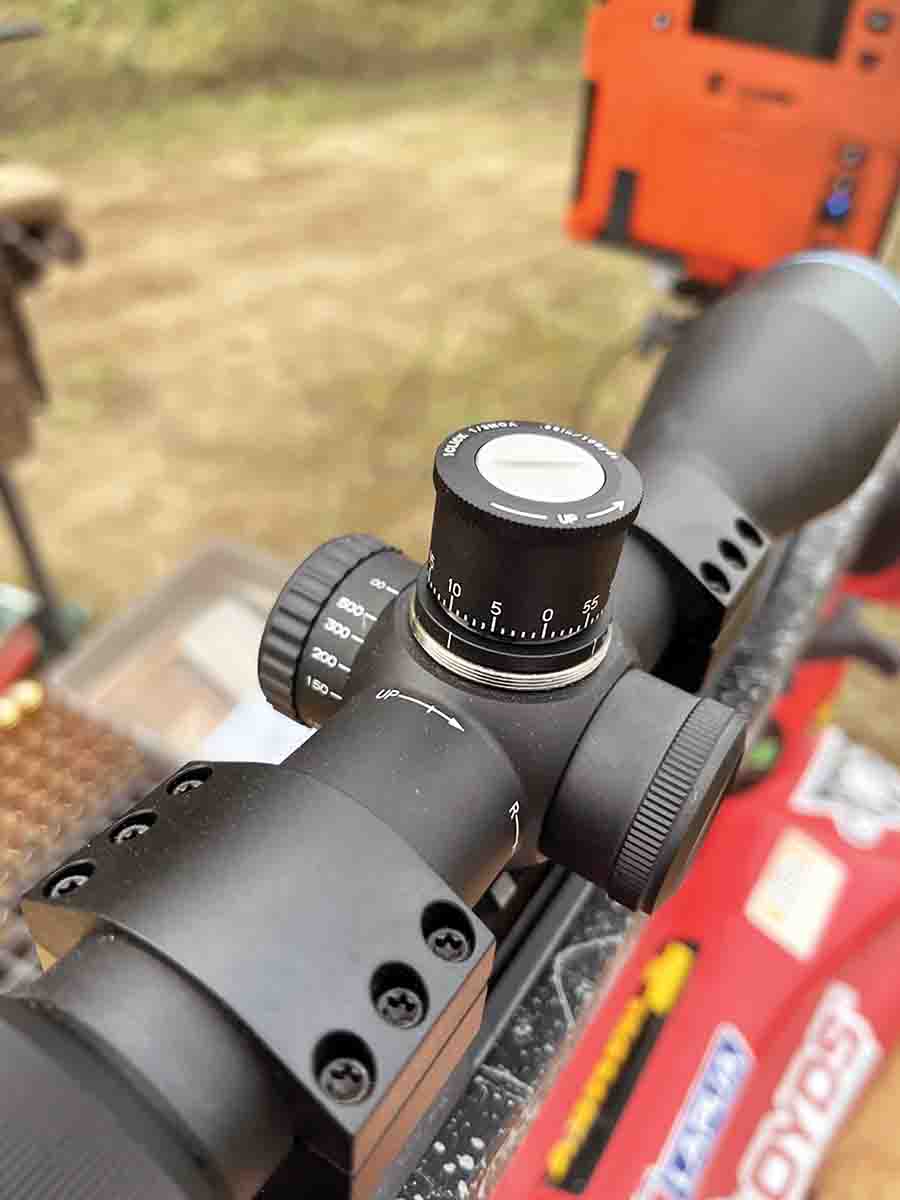
The test rifle was topped with a Huskemaw Optics Blue Diamond 5-20x 50mm Riflescope set in Burris Xtreme Tactical Rings. This optic includes a TrueBC ballistic compensating turret and patented wind hold HuntSmart reticle.
Many traditionally minded shooters, disdainful of all things new, are quick to point out the 2017 introduced 6mm Creedmoor is nothing more than the 1955 launched 243 Winchester given a faster rifling twist. Taken on dimensions alone, this assessment isn’t entirely off base, the two cartridges offering fairly similar powder capacities, though the Creedmoor includes a Sporting Arms and Ammunition Manufacturers’ Institute (SAAMI) maximum average pressure (MAP) of 62,000 psi compared to the Winchester’s 60,000 psi, and a steeper 30-degree shoulder verses the 243’s 22-degree shoulder. This generally gives the 6mm Creedmoor a 100 feet per second (fps) velocity advantage.
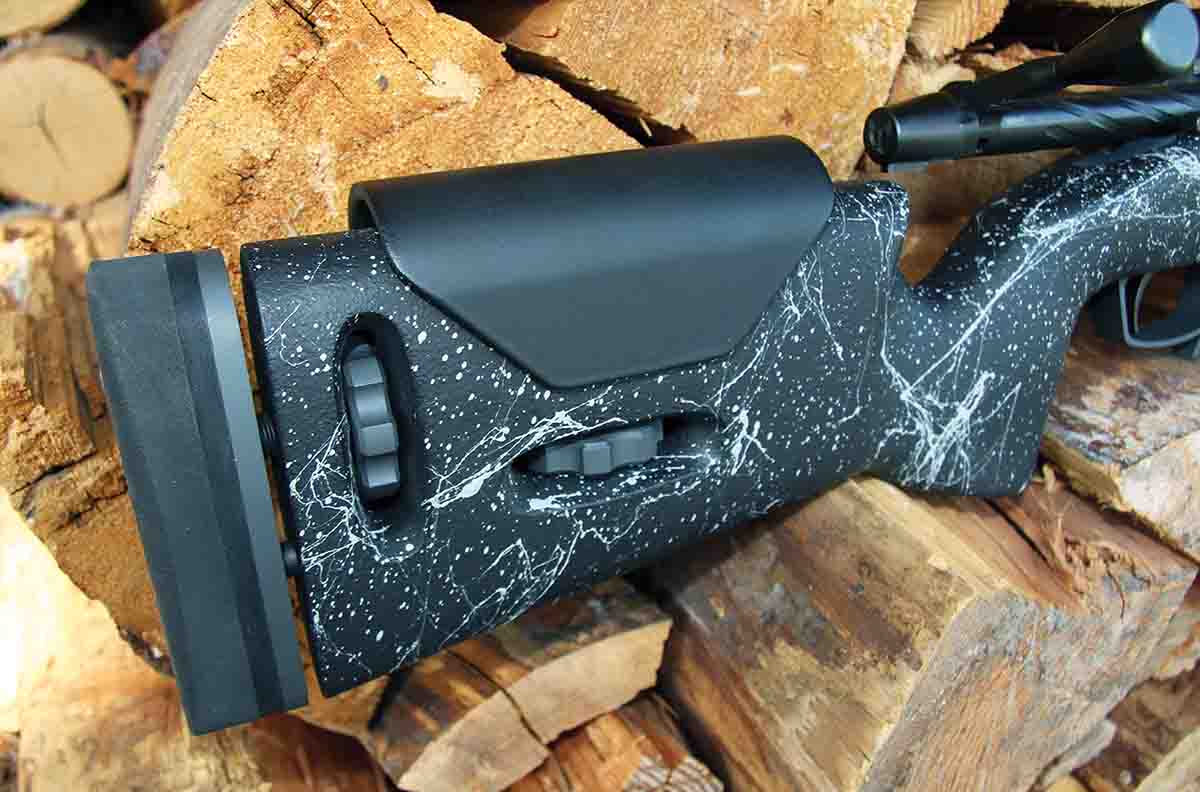
Wayne York set the fast-twist 243 Winchester barreled action into one of his Pendleton Composite Stocks T-11 models. If the stock design looks familiar, it is because they were once used with some of Montana Rifle Company’s heavier actions.
The Creedmoor comes with a near-standard 1:7.5 rifling twist, to Winchester’s universal 1:10 rifling twist. The 6mm Creedmoor was purpose-driven to handle sleek, heavy-for-caliber bullets with a talent for slicing through atmosphere with the greatest of ease, minimizing time in flight for less bullet drop and wind drift. The 243 Winchester was designed to perform duties precisely mirroring my childhood experiences – accommodating the lightest 6mm varmint bullets, but also standard 100-grain cup-and-core big-game projectiles. Introducing fast-twist 243 Winchester rifles and ammunition into the general marketplace would have only created confusion, considering the vast numbers of 1:10-twist 243 Winchester rifles in circulation. It made more sense to adopt a completely new cartridge, chambered in rifles that held barrels with appropriate rifling twist.
Yet, there are certainly no rules against creating your own purpose-driven 243 Winchester equipped with a fast-twist barrel. The custom aftermarket barrel trade is thriving, and rebarreling existing rifles is now common practice. I cringe to think of the rifles I’ve essentially given away due to burned-out barrels, which could have been easily rebarreled for $350 to $450, all in… The custom trade is also thriving, skilled craftsmen creating I-dotting rifles from readily available actions, barrels and advanced aftermarket stocks.
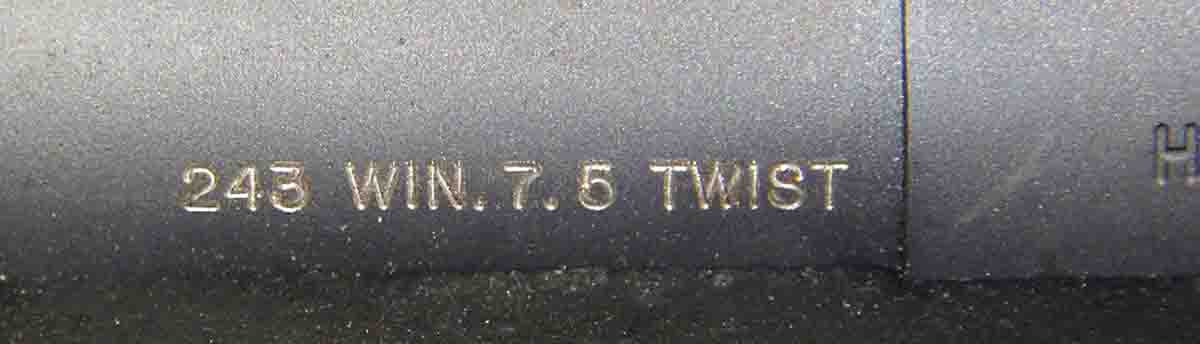
Oregunsmithing’s Wayne York equipped the 243 Winchester test rifle with a fast 1:7.5-inch twist rate. The barrel easily stabilized the longest, heaviest bullets, including Berger’s 109-grain Long Range Hybrid Target and Nosler’s 115-grain RDF.
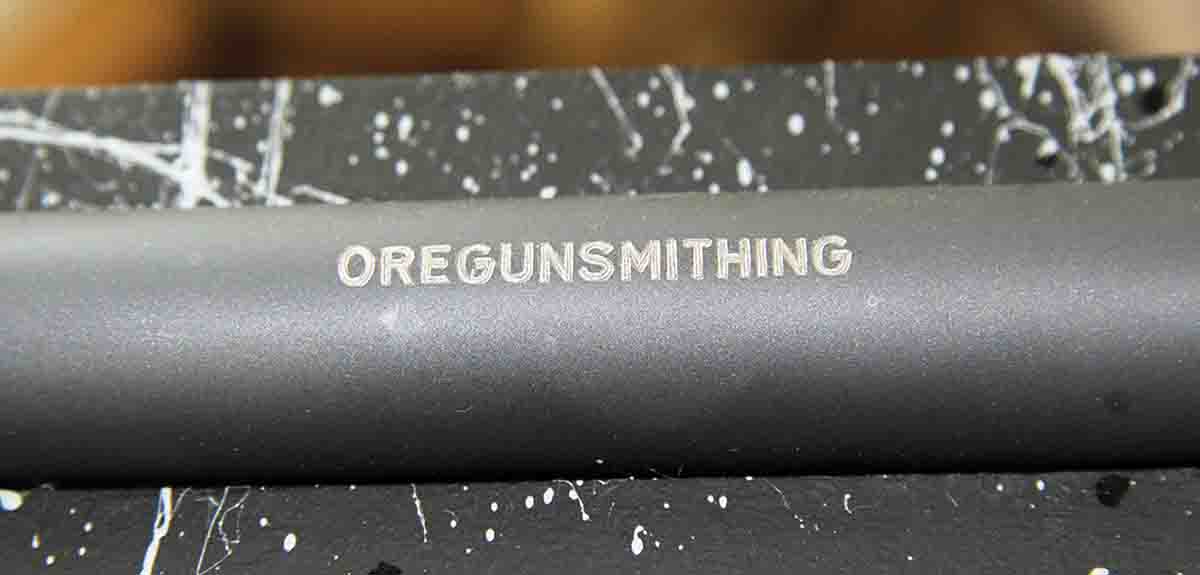
Wayne York’s Oregunsmithing rifles have proven extremely accurate in past tests, including an ultra-light rifle chambered in 24 York, and Patrick’s own 221 Remington Fireball.
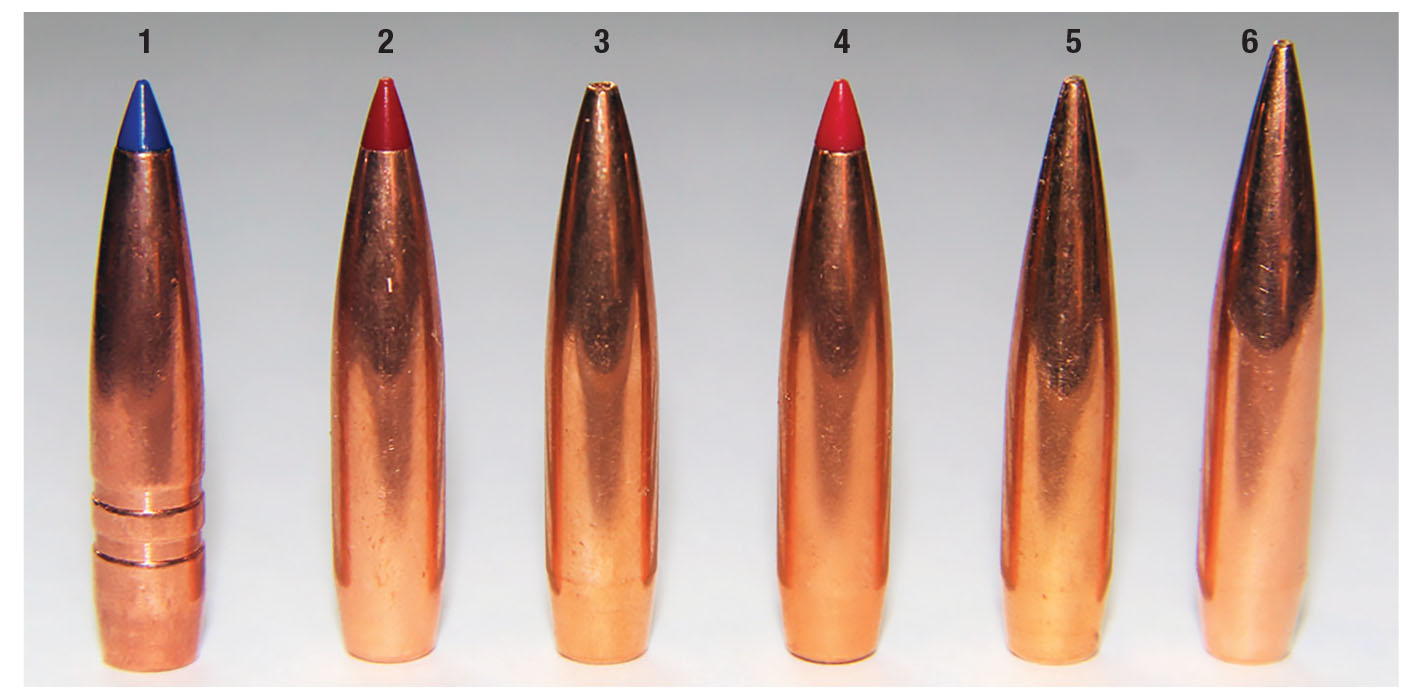
Bullets used for testing the Oregunsmithing fast-twist 243 Winchester included: (1) Barnes 95-grain LRX BT, (2) Hornady 103-grain ELD-X, (3) Lapua 105-grain Scenar-L, (4) Hornady 108-grain ELD Match, (5) Berger’s 109-grain Long Range Hybrid Target and (6) Nosler’s 115-grain RDF.
That is exactly what happened here; turning to friend and Master Gunsmith Wayne York, owner of Oregunsmithing and Pendleton Composite Stocks. A Terminus Actions Apollo served as the base, a receiver including a three-lug bolt with 60-degree lift, integral recoil lug, threaded trigger pins compatible with Remington-footprint triggers, superb magazine integration and a roller-tipped cocking piece for smoother operation. The bolt was machined from a single piece of 4340 chrome-moly and included spiral flutes and an M16-style extractor, the action cut from a single billet of quality steel. For a barrel, York added a Benchmark Barrel, a brand offering match-grade barrels made from 416R stainless steel, double stress relieved and double hand-lapped for bore consistency. The button-rifled, 5R barrel included fast 1:7.5 rifling twist and measured 24 inches long and .72-inch in diameter at the muzzle. The barreled action was bedded into one of York’s Pendleton Composite Stocks (PCS) T-11 models, which includes wheel-adjustable comb
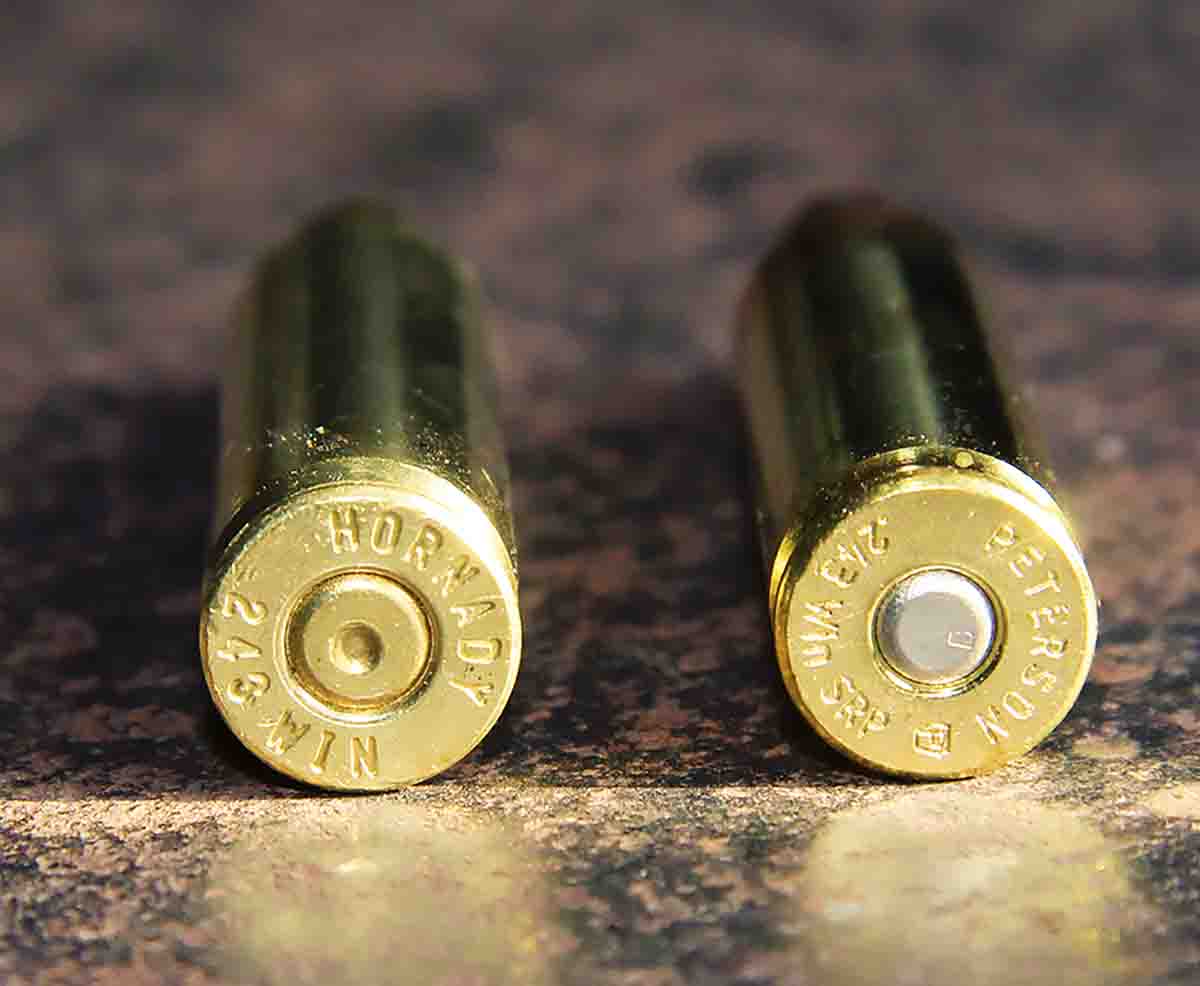
The vast majority of 243 Winchester cases are primed with large rifle primers, like the Hornady case (left). Patrick used Peterson Cartridge Small Rifle primer brass (right) for this test.
height and length of pull. PCS stocks are laid up by hand with carbon fiber and cured under intense pressure using proprietary epoxies and processes, a catalyzed coating was added to create a hard shell during finishing. These stocks include stainless steel pillars, and steel cross-pins behind the magazine box and stock web. A Pachmayr recoil pad was added. The Pacific Tool & Die trigger guard/bottom metal held a detachable Magpul 7.62x51 magazine, with a generous magazine release lever located between the trigger guard and magazine. An ultra-sweet Timney HIT trigger broke at 1.25 pounds.
A Huskemaw Optics Blue Diamond 5-20x 50mm Riflescope set in overkill six-hole Burris Xtreme Tactical Rings was added. This is the original long-range optic, incorporating a TrueBC ballistic compensating turret including titanium springs and backed by a patented wind hold HuntSmart reticle. This is a second focal plane (SFP) optic with an etched reticle sandwiched between two layers of glass, given high-density lens coatings and the grooved and bedded lenses anchored with proprietary adhesive for exceptional reliability. A one-piece 30mm aircraft aluminum body makes it impervious to the elements or hard use. It includes an adjustable zero index ring and side parallax knob. The 13.6-inch, 26.6-ounce scope provided 4 inches of eye relief. Mil movements provide 1⁄3-MOA adjustments with 60 clicks/20-MOA of correction applied per revolution and a maximum adjustment of 80-MOA.
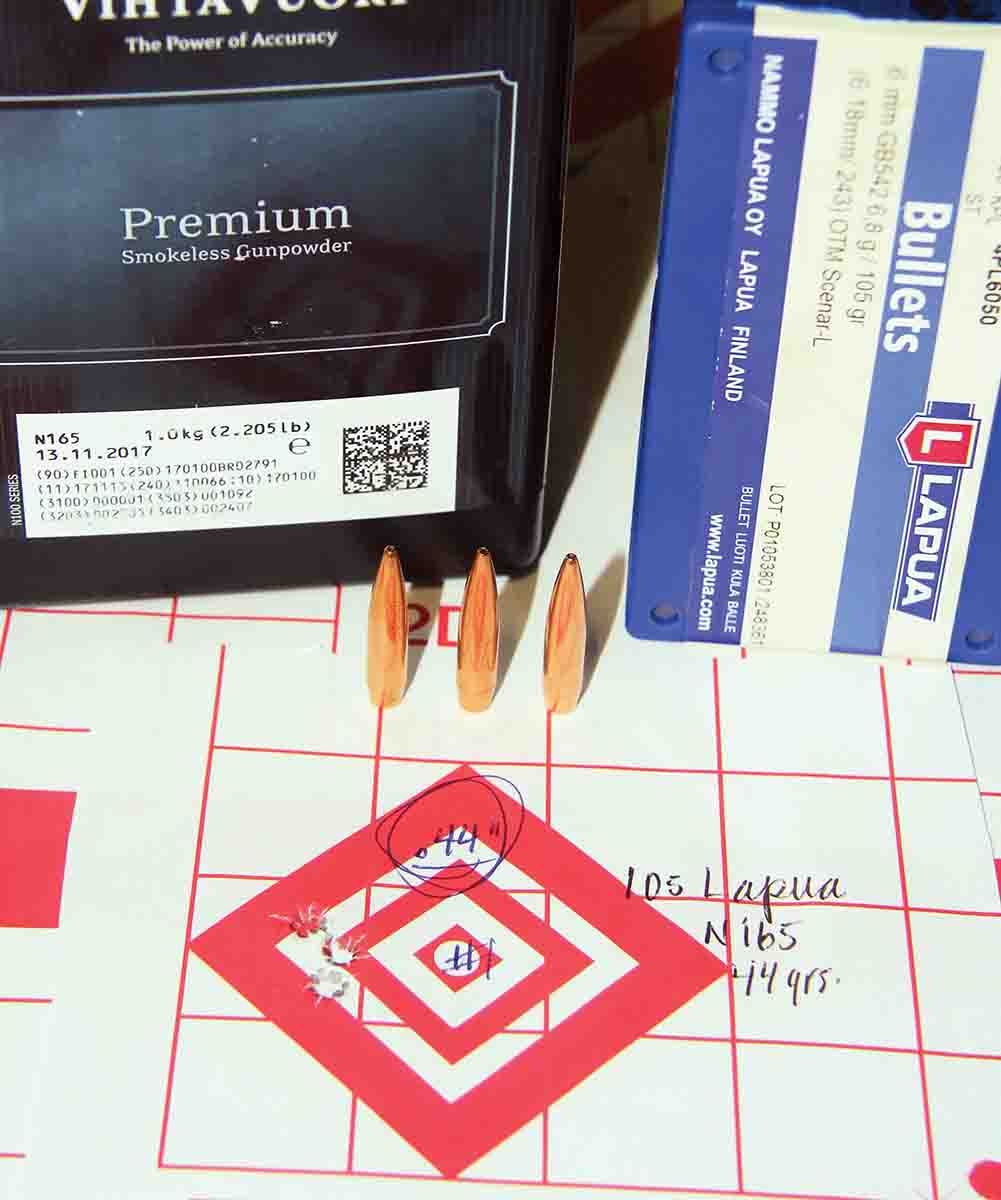
The only sub-half-inch group resulting from Lapua’s 105-grain Scenar-L was this .44-inch cluster, created by 44 grains of Vihtavuori N165 at a velocity of 2,599 fps.
Bullets were chosen to maximize the advantages of the Benchmark barrel’s 1:7.5 twist. Barnes’ 95-grain Long-Range X Boattail (LRX BT) comes with a minimum 1:8 rifle-twist recommendation, and included a decent .436 G1 ballistic coefficient (BC) that holds up well at extended ranges or in wind. I see this bullet as a pelt-shooting ideal, offering flat trajectories and wind-bucking performance that won’t shred valuable furbearer hides. Of course, it would also prove deadly on long-range hogs, which I also consider varmints. Hornady’s 103-grain ELD-X serves in the same capacity, while providing an even more impressive .512 G1 BC and more aggressive expansion on small varmints.
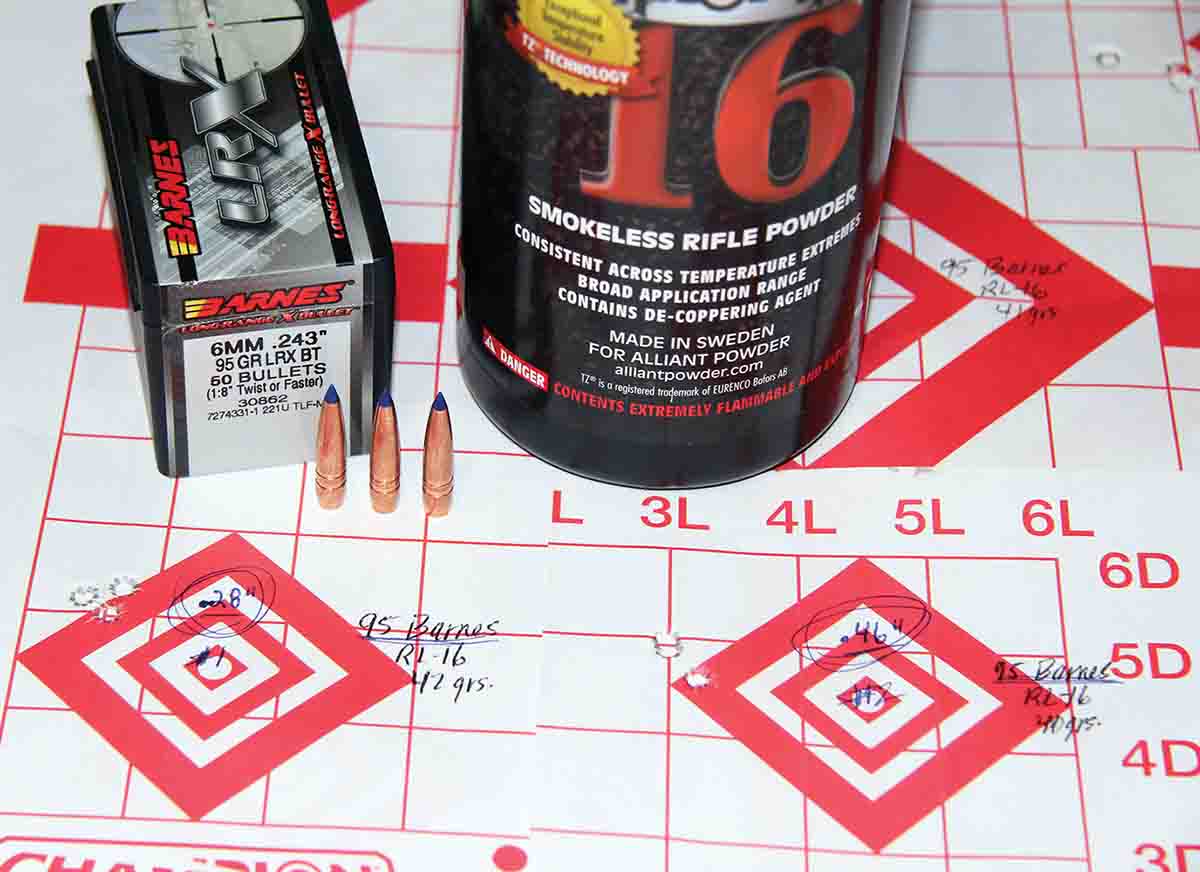
Barnes’ 95-grain LRX BT produced a .28-inch group at 2,931 fps using 42 grains of Alliant Reloder 16, and a .46-inch group at 2,625 with 41.5 grains of the same; the best groups with this bullet.
The 105-grain Scenar-L from Lapua offers a .472 G1 BC and marginally adequate expansion on burrowing rodents, though ideal performance on furbearers. The Hornady 108-grain ELD Match, with its phenomenal .536 G1 BC, has proven rockchuck deadly from my 6mm Remington, its polymer tip initiating expansion on burrowing rodents. Berger’s 109-grain Long Range Hybrid Target, like other target bullets from the company, will expand violently on small varmints, while also providing a .568 G1 BC welcomed in breezy conditions. Finally, Nosler’s 115-grain RDF (reduced drag factor) includes the highest 6mm G1 BC I am aware of – .634 – requiring all of the Benchmark barrel’s 1:7.5 twist.
Only newer, clean-burning, temperature-stable powders were chosen for this test, looking for the lowest possible extreme velocity spreads for minimal long-range vertical stringing. The Peterson Cartridge Small Rifle primer cases used were from a single lot and included small rifle primer pockets believed by many precision-minded shooters to provide an accuracy edge. The flash holes proved tight enough to occasionally pull the decapping pin from the Redding stem during resizing. Peterson brass includes lower capacities than common commercial cases, holding 50.7 grains of water when filled to the brim, compared to around 52.5 grains held by both Remington and Hornady 243 Winchester cases, for example. Seeking top accuracy, CCI BR-4 Benchrest Small Rifle primers were used throughout. A Redding National Match (NM-C) Die Set, including micrometer seating die, lso used. Every load was carefully hand-trickled onto an RCBS balance scale. Overall cartridge lengths from 2.77 to 2.85 inches accommodated the Magpul magazine, and free bore was cut accordingly.
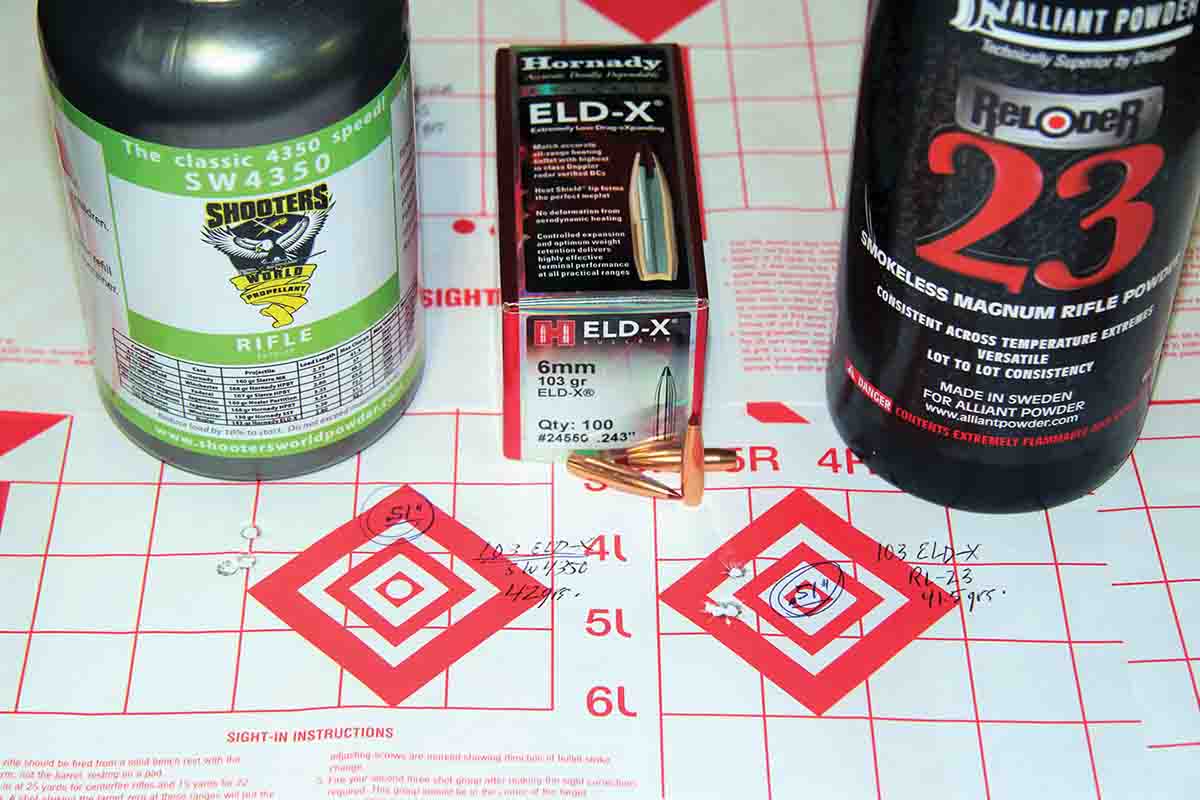
The two best groups with Hornady’s 103-grain ELD-X both measured .51 inch center-to-center, using 42 grains of Shooters World 4350 at 2,651 fps, and 41.5 grains of Alliant Reloder 23 at 2,625 fps.
The reduced capacity of the Peterson cases, and prior experience with 22 Creedmoor Small Rifle primer brass, prompted me to reduce powder charges from a half to full grain. This proved necessary while working small rifle primer loads for my 22 Creedmoor, many of my initial “midrange” loads showed pressure signs. In the case of the 243 Winchester, I believe the charge reductions proved premature, most of the listed loads seemed a bit anemic and not a single load showed the slightest signs of over pressure. Though you should do so with all due caution, I believe most of the listed loads could have been pushed a touch further.
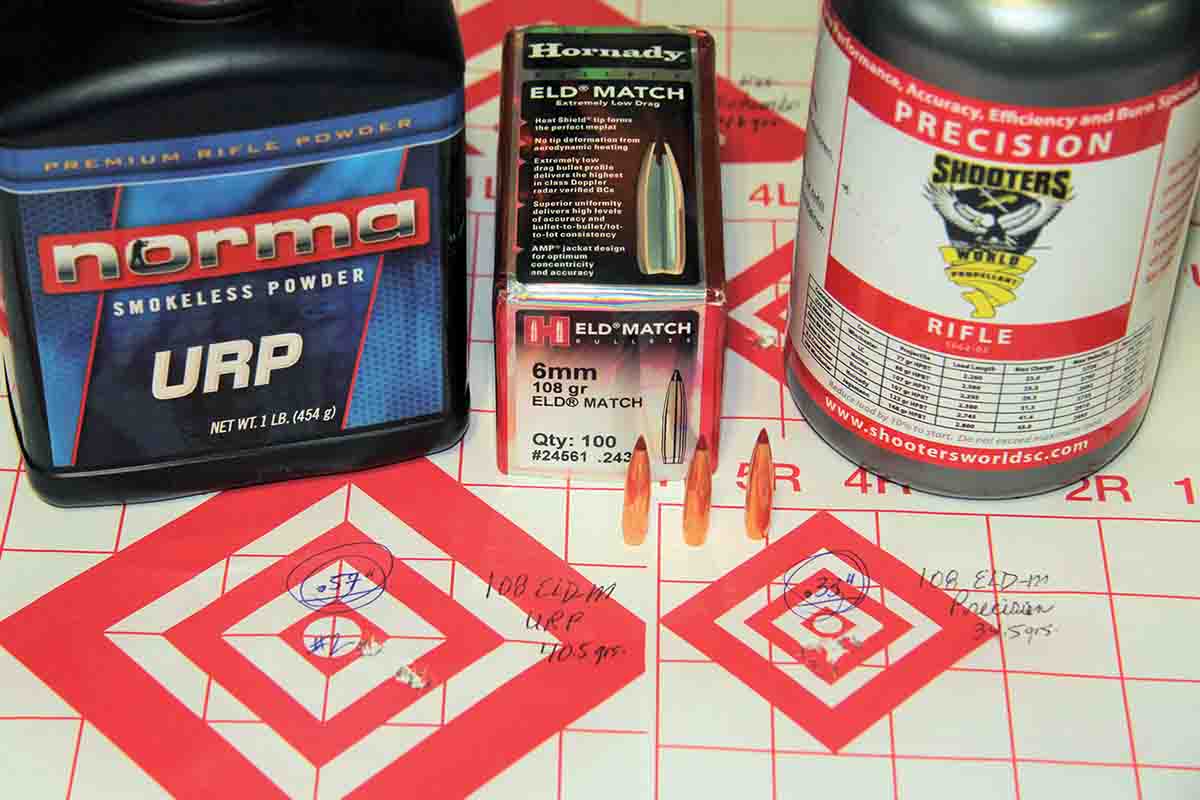
The 108-grain ELD Match by Hornady produced a .57-inch group at 2,707 fps with 40.5 grains of Norma URP, and .33 inch at 2,581 fps with 34.5 grains of Shooters World Precision Rifle.
I also encountered issues with the combination of the small rifle primers, perhaps the minimal flashholes, and several of the slower-burning powders tested. Annoying “click-boom” hangfires were experienced with Shooters World Precision Rifle and Long Rifle (which also included the lightest charges of the test), and especially Winchester StaBALL 6.5. Norma URP presented a slight ignition delay only with the lightest load listed. This was unexpected, as Lapua small rifle primer brass for my 6mm Creedmoor has never shown this tendency, while using the same powders. This unpredictable situation certainly sharpened my shooting form, requiring complete follow-through with every round; just in case. I might blame some of the less stellar groups on these hangfires, but one of the best groups of the test –.33 inch – resulted from three delayed-ignition shots. The problem with StaBALL 6.5 could be eliminated without regret, as no worthwhile groups formed while using that powder. Precision Rifle, on the other hand, was responsible for that .33-inch group, so perhaps magnum small rifle primers are warranted – something I have absolutely no experience with. Large rifle primers and cases would no doubt solve the problem as well.
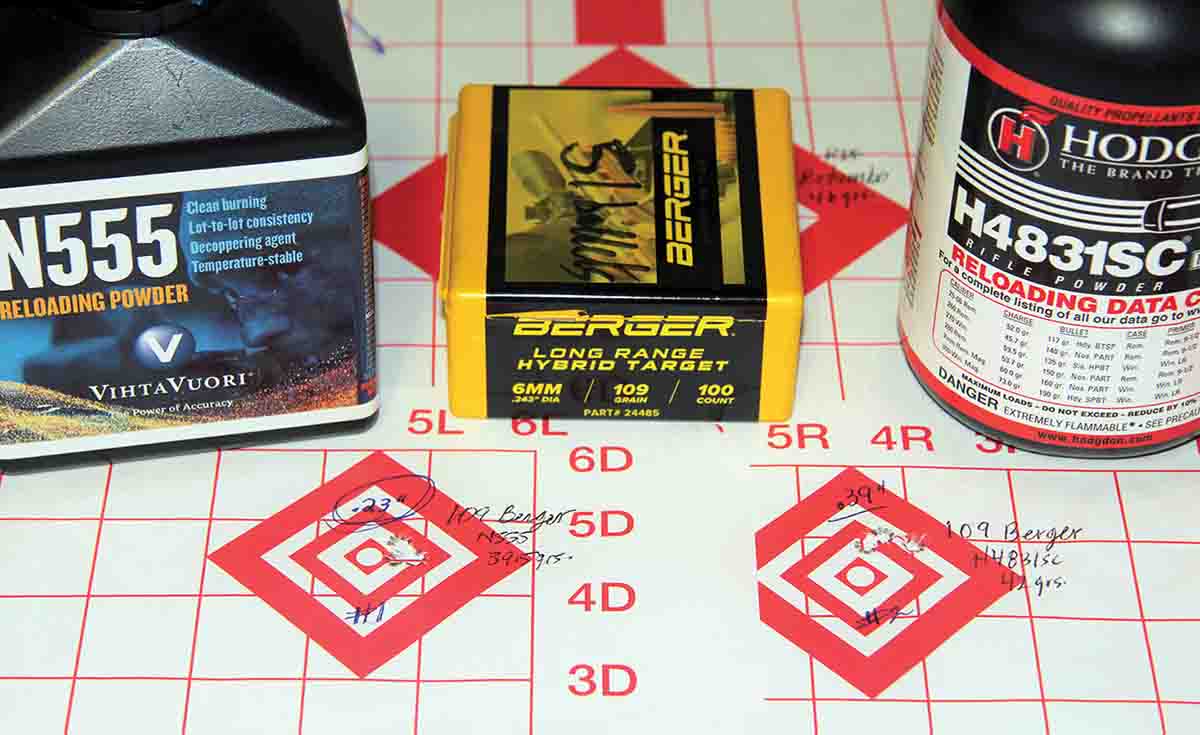
Berger’s 109-grain Long Range Hybrid Target produced the tightest group of the test, .23 inch at 2,600 fps using 39.5 grains of Vihtavuori N555, and a .39-inch group at 2,668 fps with 42 grains of Hodgdon H-4831sc.
The 95-grain Barnes LRX BT was paired with Shooters World Precision Rifle, IMR-4451 and Alliant Reloder 16, all groups averaged .82 inch. I usually don’t expect benchrest accuracy from Barnes monolithic bullets, so the slow start with Precision Rifle, which resulted in conspicuous hangfires, and IMR-4451, didn’t surprise me. Despite the hangfires, Precision Rifle produced a .77-inch group at 2,496 fps using 33.5 grains of powder, and IMR-4451 a sub-1-MOA group at 2,671 fps using 39.5 grains. Reloder 16 turned everything around, 40, 41 and 42 grains produced .46-, .48- and .28-inch groups at 2,745, 2,840 and 2,931 fps, respectively.
Hornady’s 103-grain ELD-X was set up with Winchester StaBALL 6.5, Shooters World 4350 and Alliant Reloder 23, all groups averaged .64 inch. StaBALL 6.5 was the worst hangfire offender, but did assemble a .61-inch group at 2,581 fps. The .51-inch, best-group prize was shared by two powders and loads; 42 grains of SW-4350 at 2,651 fps, and 41.5 grains of Reloder 23 at 2,625 fps – both including very low extreme velocity spreads.
The 105-grain Lapua struggled a bit, Accurate Magpro printed just .95 inch at 2,881 fps, and Reloder 26 .70 inch at 2,840 fps. Magpro takes top honors for velocity, hitting 3,055 fps with a maximum/compressed load of 50.5 grains, though accuracy was ho-hum. Some seating depth experimentation might do the trick. Vihtavuori N165 proved the right stuff, 44 grains generated 2,599 fps and assembled a .44-inch group.
Hornady’s 108-grain ELD Match was paired with Vihtavuori N565, Norma URP Shooters World Precision Rifle, all groups averaged just .71 inch. N565’s best showing was .65 inch at 2,653 fps using a “maximum” load of 45 grains, URP posting .57 inch at 2,707 fps using a “maximum” load of 40.5 grains. Precision Rifle, despite the hangfires, printed .33 inch at 2,581 fps using a “maximum” load of 34.5 grains.
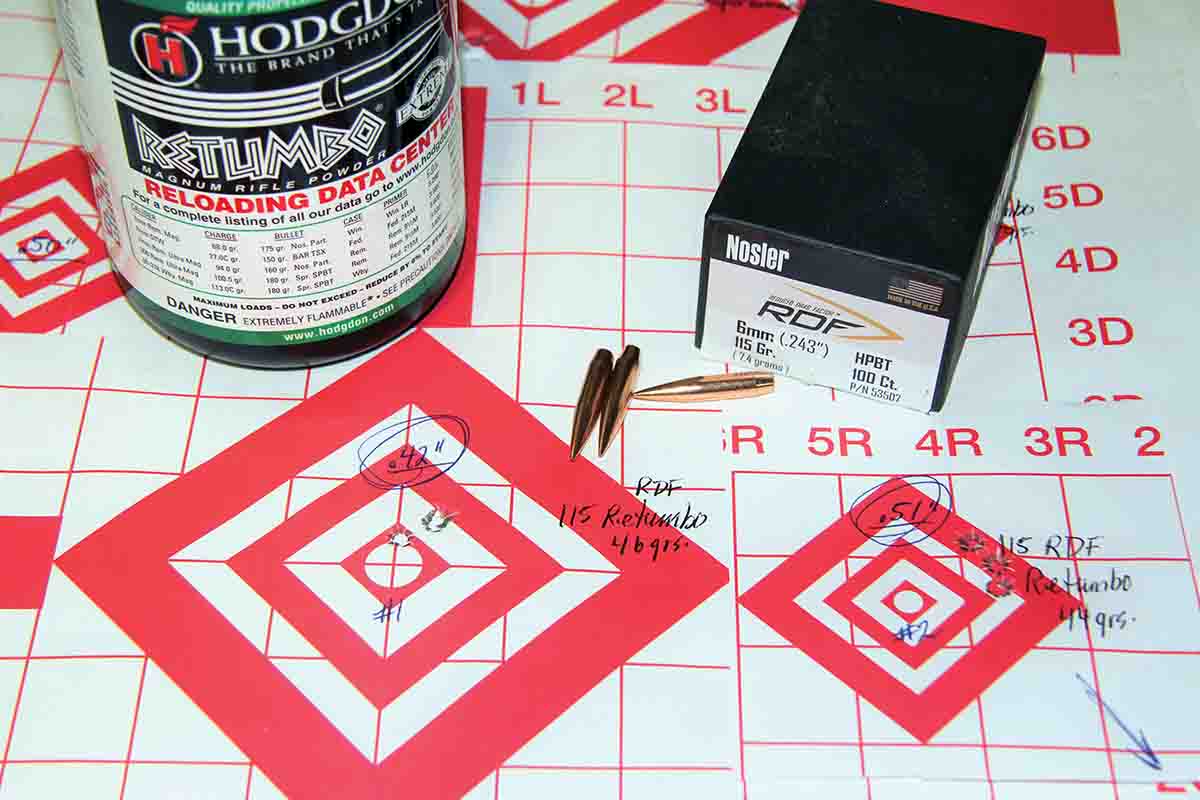
Nosler’s 115-grain RDF shot best with Hodgdon Retumbo, 46 grains of powder produced a .42-inch group at 2,618 fps, and 44 grains a .51-inch group at 2,511 fps.
Things started off on the right foot with Berger’s 109-grain Long Range Hybrid Target, its first group measured .23 inch center-to-center using 39.5 grains of Vihtavuori N555. Velocity was 2,600 fps. That was as good as it got. Hodgdon H-4831sc did well, producing .51- and .39-inch groups at 2,598 and 2,668 fps, pushed by 41 and 42 grains of powder. StaBALL 6.5 produced a sub-MOA group, but isn’t worth mentioning at this point due to its hangfire issues.
Nosler’s 115-grain RDF stabilized just fine from the 1:7.5 rifling twist, paired with Hodgdon Retumbo, Shooters World Long Rifle and Ramshot Magnum to produce a .64-inch group average. Long Rifle was at least consistent, if prone to hangfires, printed .75- to .78-inch groups at 2,396 to 2,504 fps. Magnum proved worthwhile, providing a .54-inch group at a speedy 2,750 fps. Retumbo was the clear accuracy winner, 44 grains produced a .51-inch group at 2,522 fps, a “maximum” compressed load of 46 grains printing .42 inch at 2,618 fps.
This Oregunsmithing rifle turned out to be an ideal tool for the job it was designed for – long-range varmint and predator sniping. For open-country coyotes or hogs at 400-plus yards, or marmots or prairie dogs in windy settings, it would be right at home, providing extra punch while accommodating today’s streamlined, high-BC bullets.


.jpg)