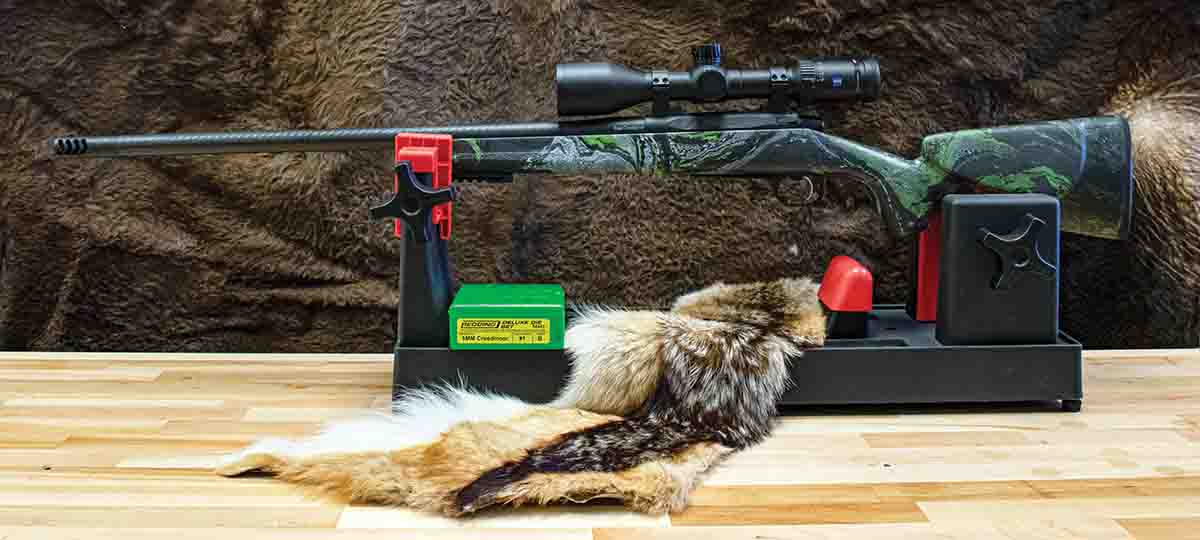
The AllTerra Arms Carbon Mountain Shadow chambered in 6mm Creedmoor makes for a very versatile rifle. This rifle is capable of taking medium-sized game, such as deer and antelope as well as smaller varmints such as coyotes and prairie dogs.
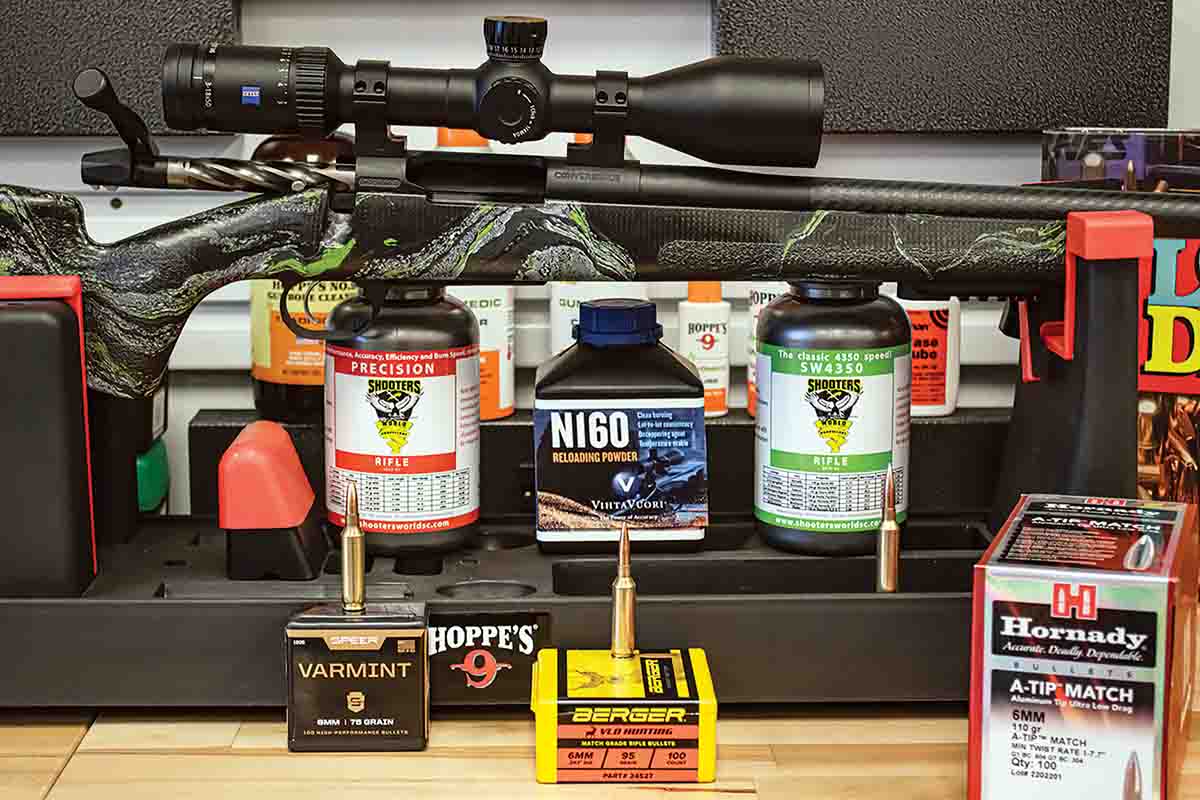
These three powder and bullet combinations were repeatedly tested across six days and varying environmental conditions with excellent results.
When selecting a varmint rifle and cartridge combination, there are many factors to take into consideration. Some prefer a dedicated rifle and cartridge setup for shooting lightweight bullets at light speed. Others steer towards heavy, longer barreled bench-style rifles in larger calibers to send bullets with a high-ballistic coefficient (BC) to help buck the wind and offer a flatter trajectory. There are many factors to take into consideration and various reasons why these factors may be more important for a given situation.
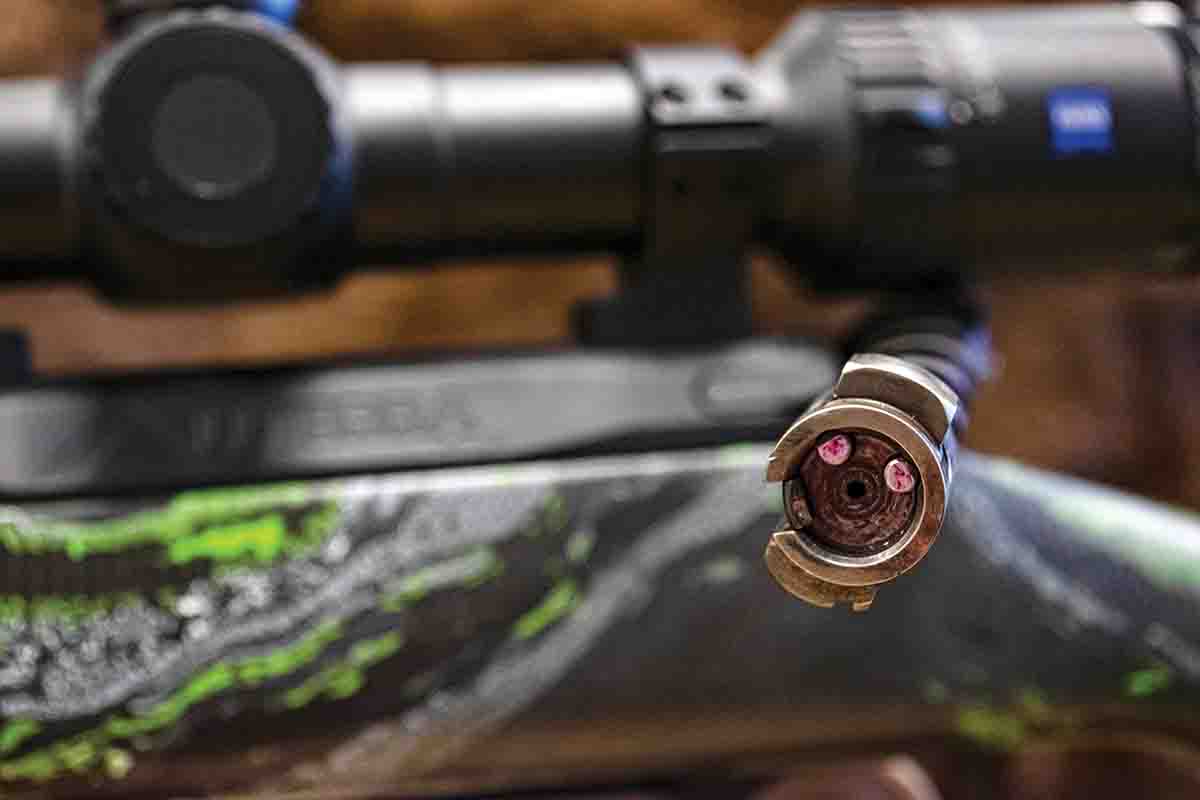
The AllTerra Arms rifle featured dual ejectors in the bolt for increased reliability and utilized an M16-style extractor for positive case extraction.
These thoughts started down a path toward an end-all-be-all versatile varmint rifle. Is there even such a thing that exists? If so, surely there must be some amount of give and take as after all, it is difficult to find a rifle that excels at a broad range of tasks. This rifle must meet certain goals, such as being lightweight and low recoiling. Comfortable enough to pack around all day hunting deer in the western states. Yet, its recoil must be light enough to self-spot misses on tiny varmints at extended ranges while still being able to shoot comfortably all day if need be. This leads me to the first consideration, the cartridge it is chambered in. Often, selecting the cartridge first makes the most sense, then building the rifle. As the cartridge brings the most performance to the table out of the starting gate. It doesn’t do any good to have the perfect rifle and have it chambered in a cartridge that doesn’t make sense for its intended application.
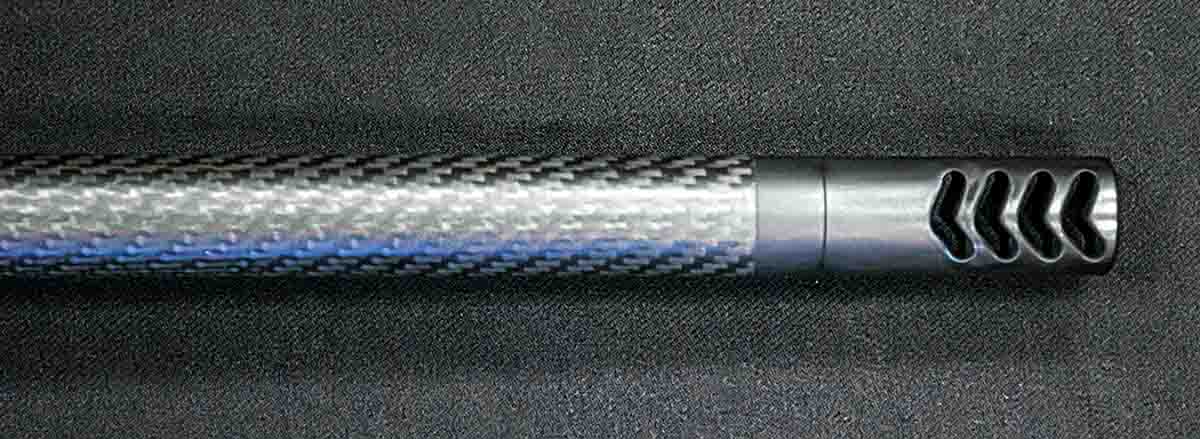
The V4 Muzzle brake did an excellent job of reducing the recoil to comfortable levels allowing for self-spotting hits or misses and making shooting all day quite comfortable. The only downside is the increased noise. However, it did a good job of redirecting the muzzle blast away from the shooter.
After reviewing several cartridges, I settled on 6mm Creedmoor for a variety of reasons, barrel life would be respectable, provided the barrel was not abused. Velocity is respectable and allows for good bullet performance and energy figures at extended ranges. Components are readily available given the popularity of the Creedmoor cartridges along with the capability to shoot heavy, higher-BC bullets for larger game, if need be, was the final deciding factor. It is adequate for deer with proper shot placement and good bullet construction. It mimics the ballistics of the 243 Winchester, a cartridge most folks are familiar with.
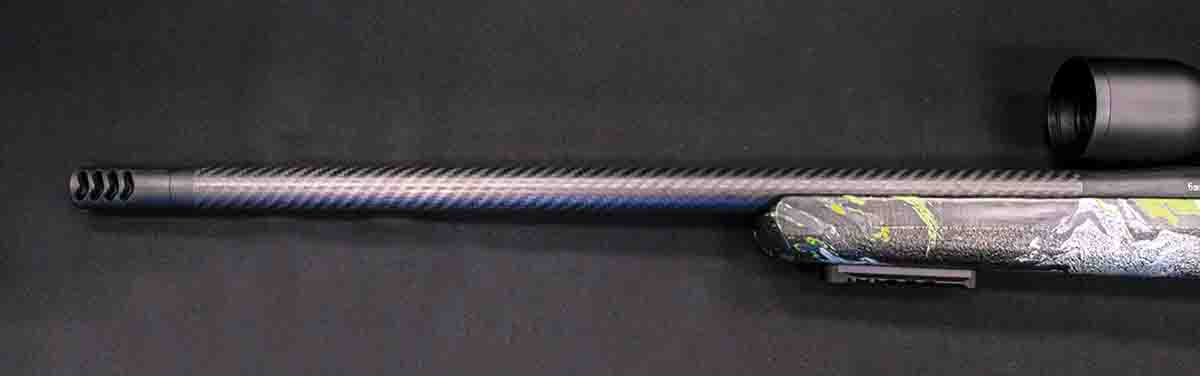
The hand-lapped, carbon fiber-wrapped barrel was 24 inches in length and had a twist rate of 1:7.5 inches.
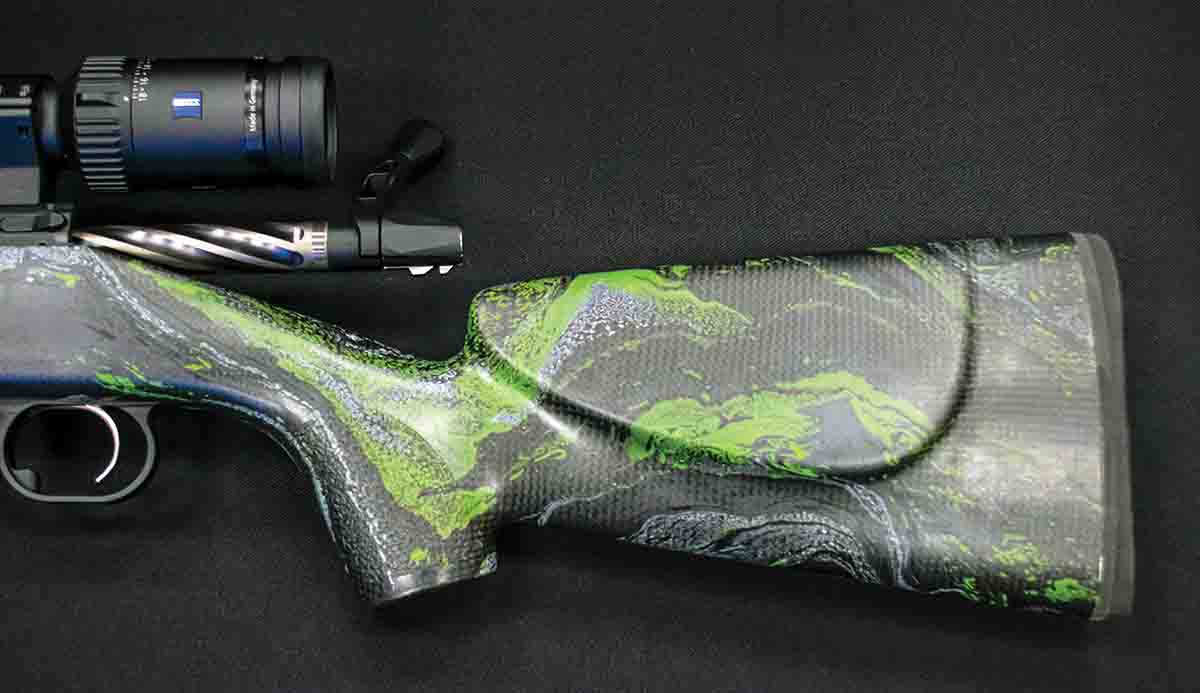
The stock on the rifle proved to be comfortable and offered a positive cheek weld that could be maintained under recoil to self-spot hits or misses.
While pondering all of these things, fate seemed to step in. A rifle came through the doors of my office that seemed to be a perfect match for what I was looking for. The rifle was an AllTerra Arms Carbon Mountain Shadow chambered in 6mm Creedmoor. The rifle had a lightweight carbon fiber stock, with excellent fit and finish. A Trigger Tech trigger broke crisp and clean at 2 pounds, 2.4 ounces. Aluminum bottom metal with a hinged floorplate and simple two-position safety that allowed the bolt to be operated while in the safe position. The magazine and ejection port was lengthened and can accept cartridges up to 2.920 inches in length. The action is AllTerra’s Convergence short action made from 416 stainless steel. The bolt slides through the wire cut EDM raceway like it’s on glass. The bolt itself has fluting, the handle is skeletonized with a nice, large but not excessively so knob. It features dual ejectors and an M16-style extractor for reliability in extreme environments.
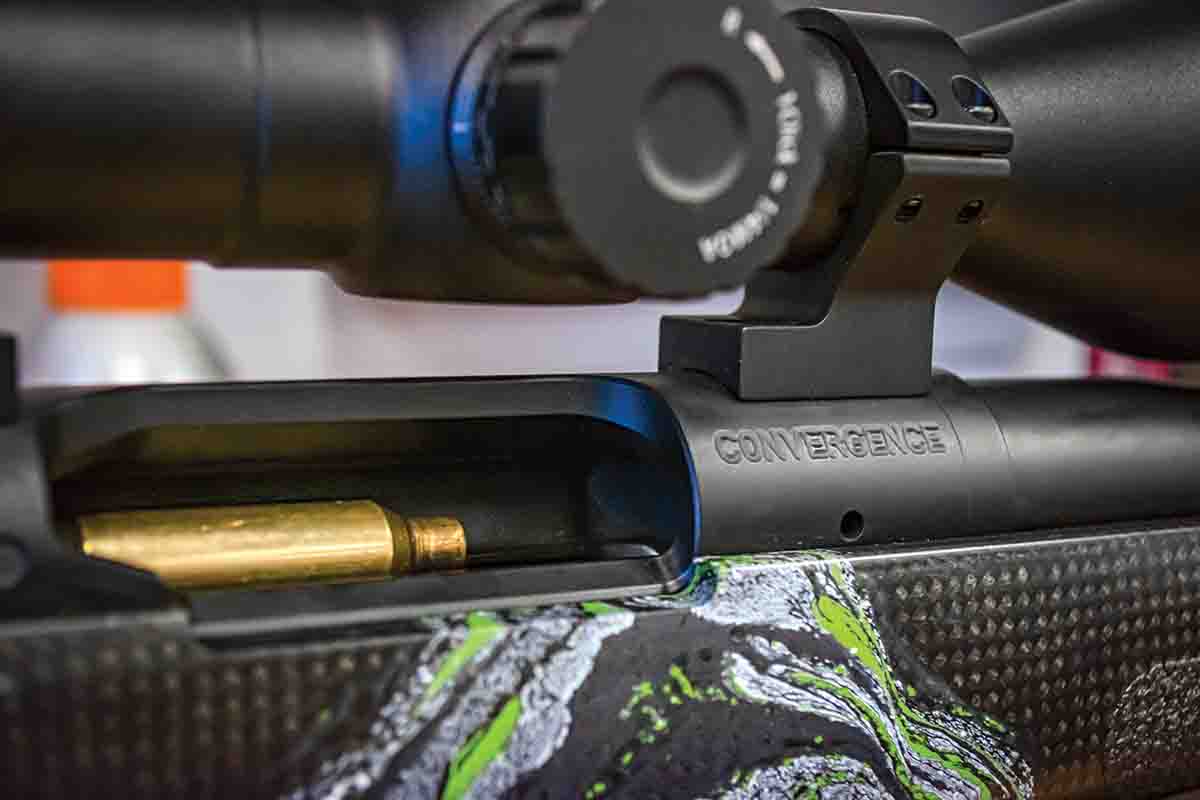
Feeding, extraction and ejection was slick as ice and 100 percent reliable throughout all testing.
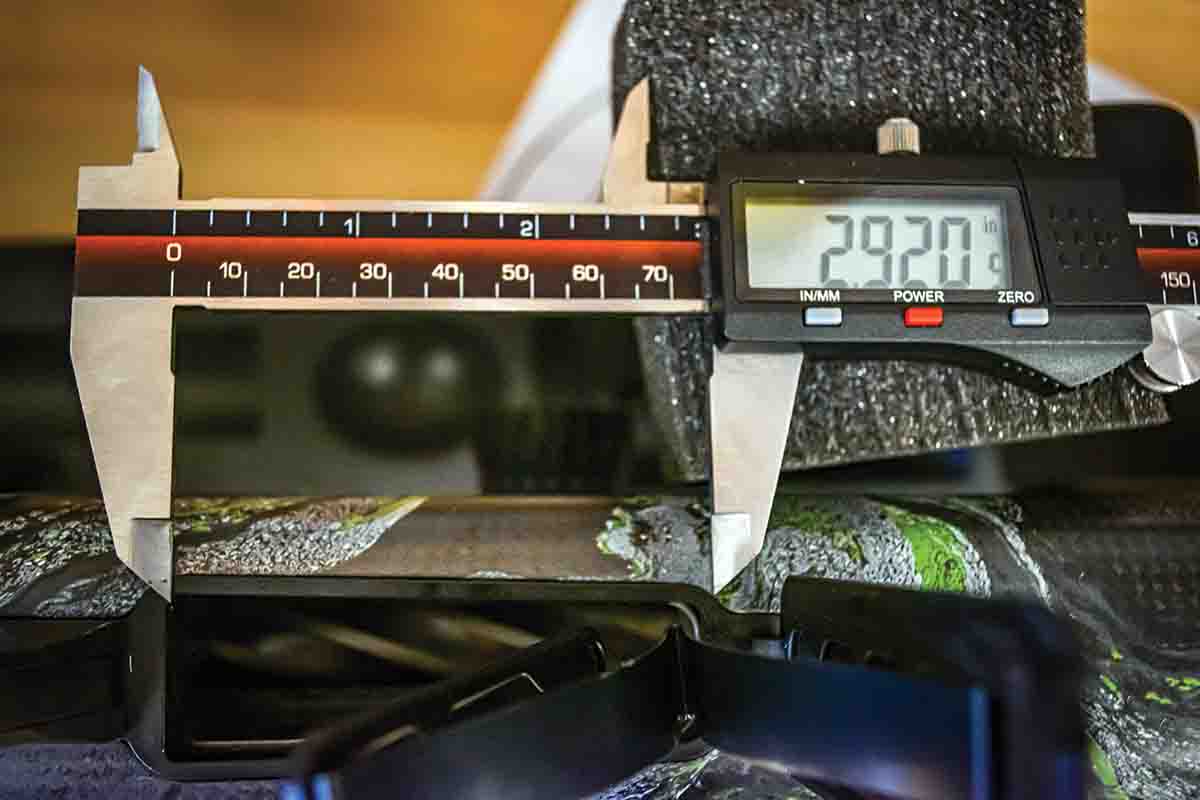
The lengthened magazine allows for cartridges as long as 2.920 inches to feed and function properly. This allowed the longer, higher-BC bullets to be seated further out and thus, increased case capacity. This also allows for more room to play with seating depth when developing a load.
The barrel is a match-grade, hand-lapped carbon fiber-wrapped barrel 24-inches long with a twist rate of 1:7.5 inches. The barrel was threaded 5⁄8-24 and had an AllTerra V4 muzzle brake affixed, which helped to cut down recoil and allow for self-spotting through the optic, which was a Zeiss Conquest V6 3-18x 50mm scope, held in place by Talley one-piece rings and bases. The rifle as configured weighed 8 pounds 13 ounces with the optic, front Picatinny rail with QD slot and sling studs. AllTerra Arms guarantees the rifle to shoot .5-MOA or better and included targets to prove it with three shots under the .3-MOA mark on each of the three included targets. Needless to say, this rifle boasts impressive features right out of the box. Speaking of the box, it ships in an SKB hard case with foam cut-out specifically for your rifle.
.jpg)
After inspecting the rifle and admiring its fit and finish, I knew that a range trip was in order. I started out shooting factory ammunition from Federal, Hornady and Black Hills ammunition. The more time on the range, the more I realized this rifle was fitting nicely into the many benchmarks I had laid out for a versatile varmint rifle. I was easily able to self-spot misses and make corrections, thanks to the efficiency of the muzzle brake. While it did not look like a bench gun or a long-range varmint rifle, it had the accuracy of one. Groups were consistently hovering around .5-MOA with the factory ammunition. With the Picatinny rail removed, the stock rode the bags nicely and was consistently hitting MOA-sized steel at 400 yards with ease.
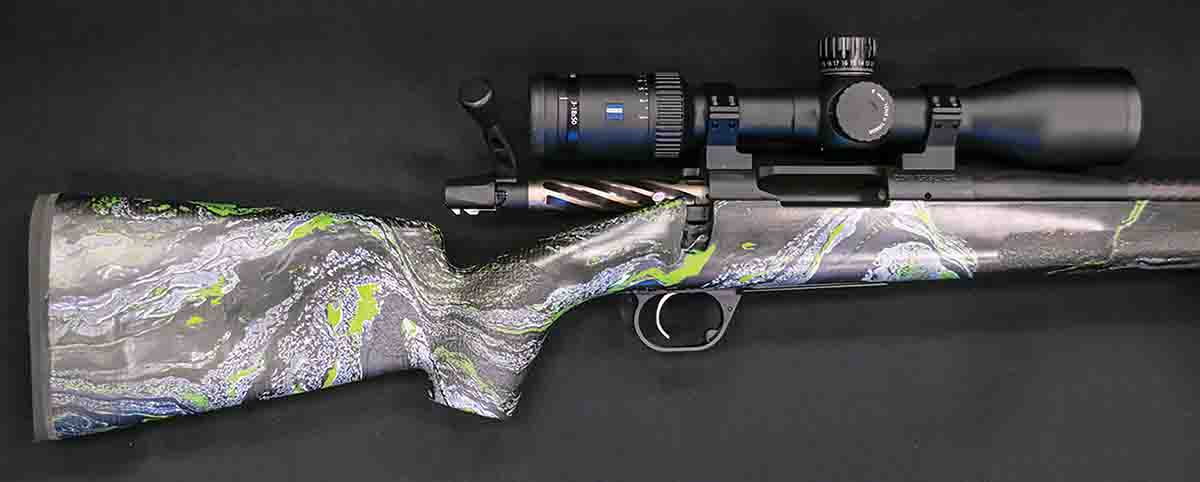
The smooth cycling, comfortable stock, excellent trigger, low-mounted optic and short bolt throw made staying on target easy after breaking a shot.
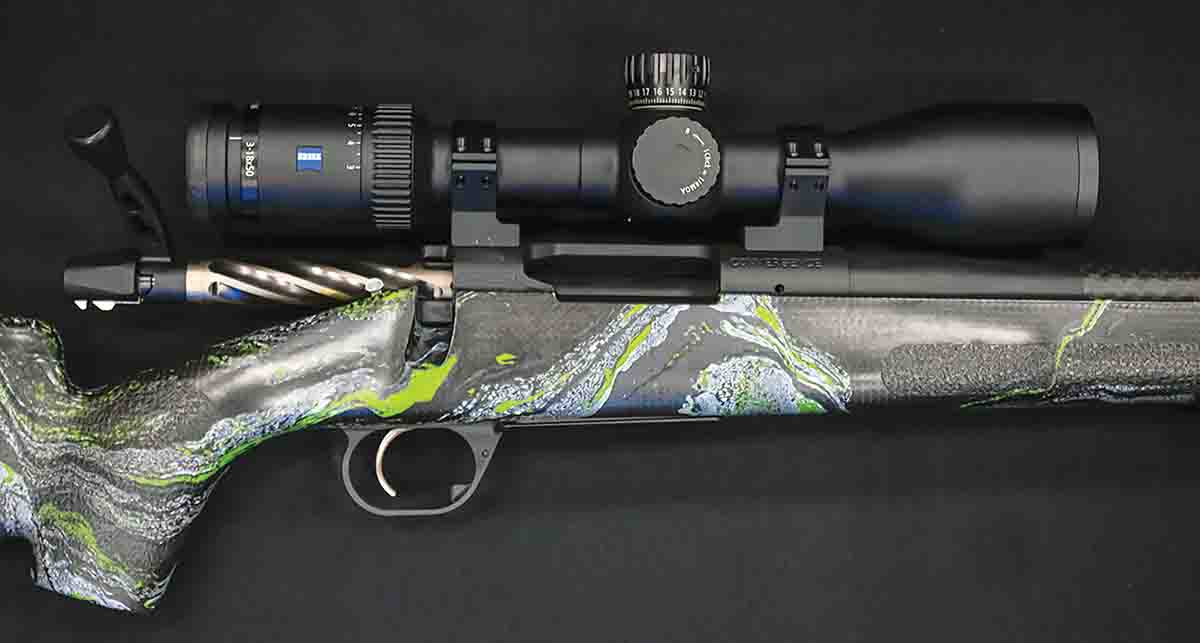
The heart of the Carbon Mountain Shadow rifle is the Convergence action, wire cut on an EDM machine and tolerances held to .0005 inch allow for tight lockup and smooth cycling.
The next step in this adventure was to work up some handloads to see just what this rifle was really capable of. After much deliberation, loads were sorted out with bullet weights ranging from 68 grains to 112 grains. With a single bullet selected for use on larger game, such as pronghorn antelope or mule deer at reasonable ranges, this bullet was the 108-grain Hornady ELD-X. While other bullets may be pressed into service, this was my personal selection for larger game.
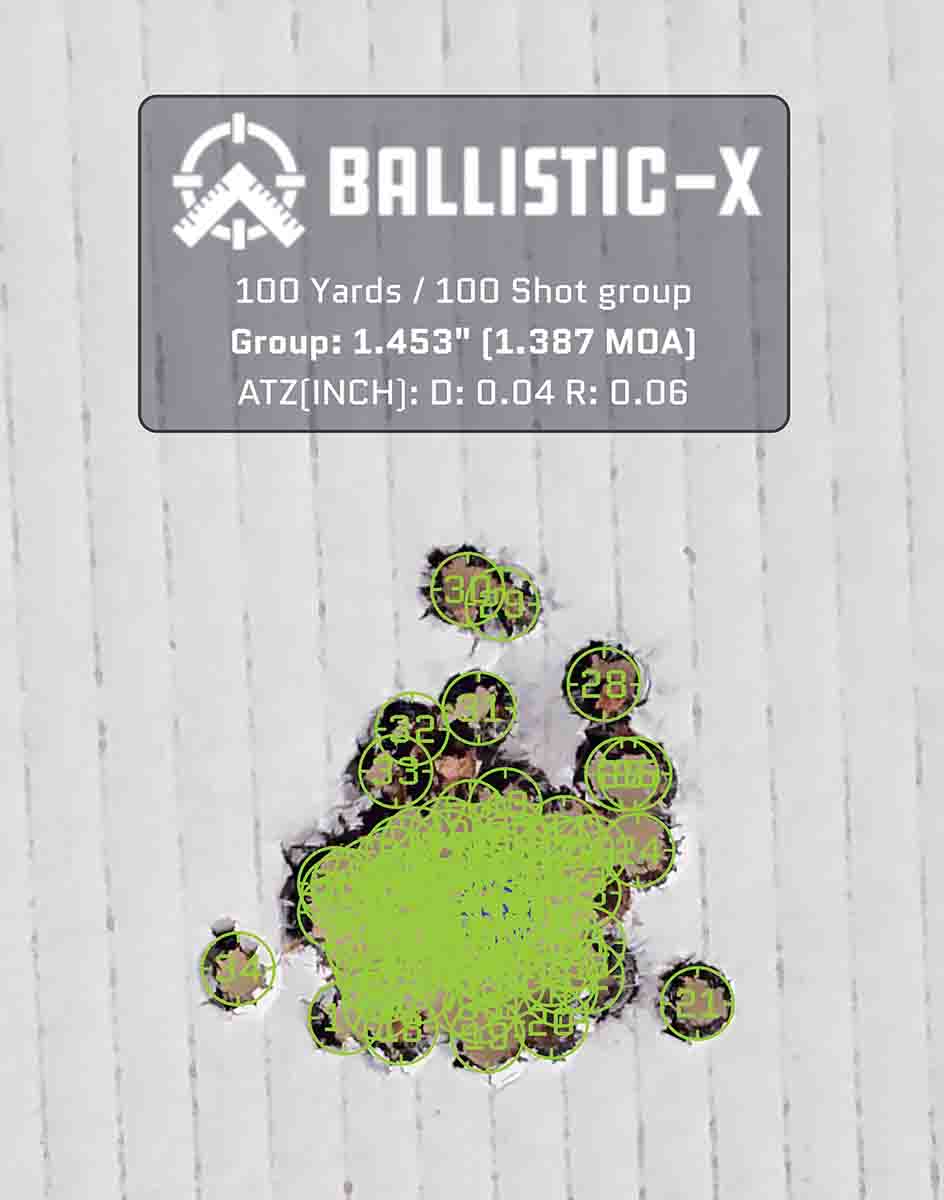
This was the best group on the cardboard backer for the targets. A total of 100 rounds across 20 different loads produced this group at 100 yards. A testament to the consistency of this rifle across a wide range of powders and bullets.
In order to give this rifle every chance to perform, each load was carefully assembled using a Redding Deluxe Die set in a Redding T-7 Turret Press with a Creedmoor Sports Enhanced Press Head installed. New Starline cases were selected for all loads and were prepped by running them into a Redding neck sizing die. This was done to ensure proper neck tension and iron out any dings from shipping. Neck tension was measured at .0015 inch using a Mitutoyo caliper, a slight chamfer and deburr was applied to all cases and then were primed on a Frankford Arsenal hand primer. Charges were weighed and dispensed on an RCBS MatchMaster and were accurate to .04 of a grain. The bullets were then seated using the Redding seating die and no crimp was applied to any of the cartridges.
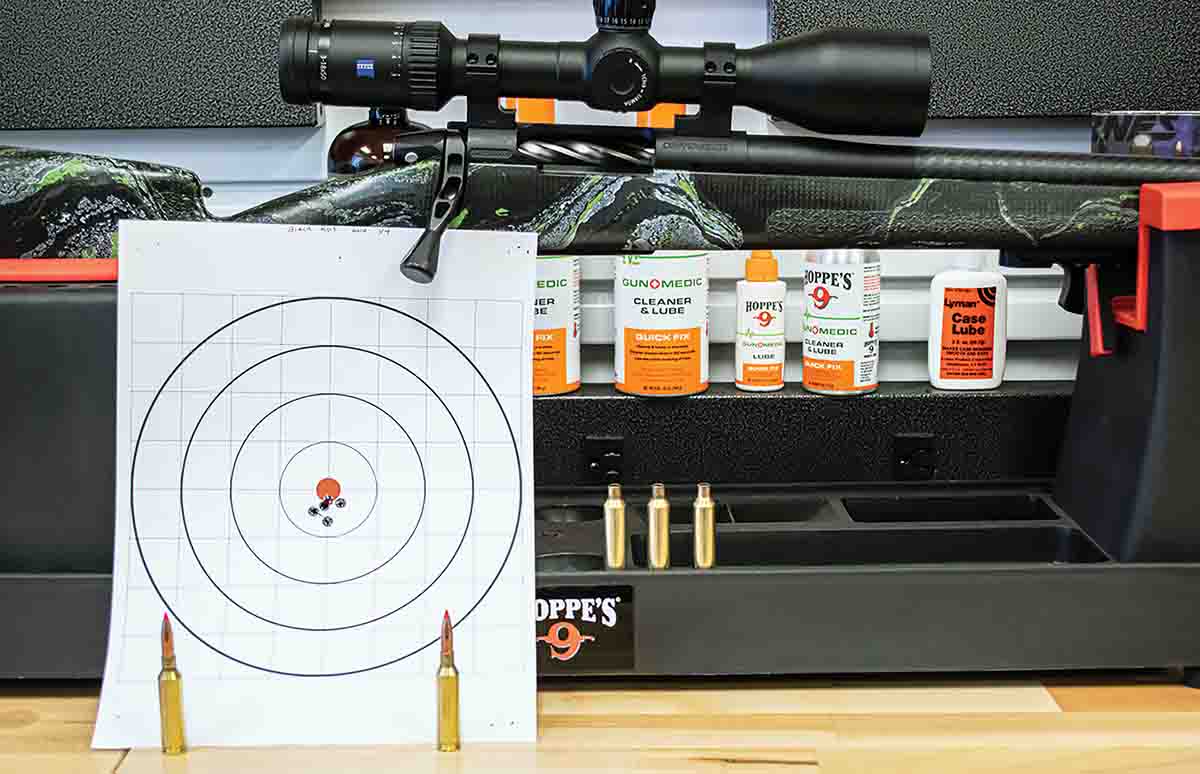
With Black Hills Gold factory-loaded ammunition, consistent .5-MOA groups were achieved using the Hornady 103-grain ELD-X bullet. This would be an excellent load for medium-sized game.
After filming and testing the loads for Handloader TV, the initial load development showed exceptional promise. In testing a total of 40 different loads, not a single five-shot group broke 1-MOA at 100 yards. At the end of the day, after removing the final targets from the cardboard backer, it revealed two 100-round groups that did not exceed 2 inches. This was across 20 different loads and 100 total rounds of ammunition per group. The rifle was able to maintain a consistent point of impact across a wide range of bullet and powder combinations. This is something extremely rare to see and was quite impressive. This is something that AllTerra advertises but I was skeptical until looking at the targets. This is something they attribute to their bolt-to-bore alignment and concentric harmonic pattern.
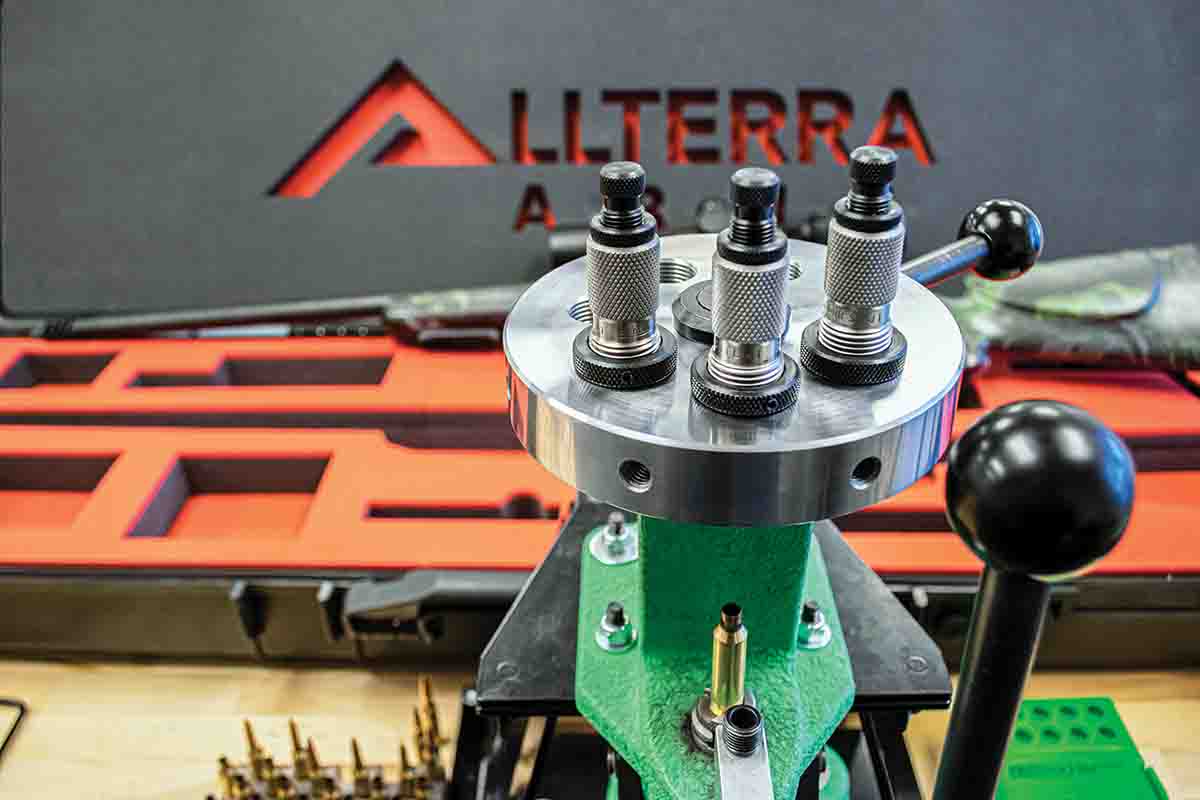
Great care was taken while handloading to ensure the loads were as consistent as possible. Shown here is the Redding T-7 with the Creedmoor Sports Enhanced Press head with Redding dies installed.
The last test to be conducted took several days and several loads. This was to check consistency from day-to-day in shifting environmental conditions. Five-shot groups were fired six times over several days and included the cold bore. Using the load containing the 95-grain Berger Classic Hunter and a 41.5-grain charge of VV-N160 as an example for sake of space. We find that a total of 30 rounds were fired, onto six different targets across a temperature variance of 40 degrees Fahrenheit. Humidity variation was from 15 percent to 60 percent thanks to a storm that blew through the typically dry Arizona high desert, where testing was conducted. The difference in point of impact was virtually nonexistent. This was true across all three loads that were subjected to this test. A true testament to the consistency of the loads and the rifle itself.
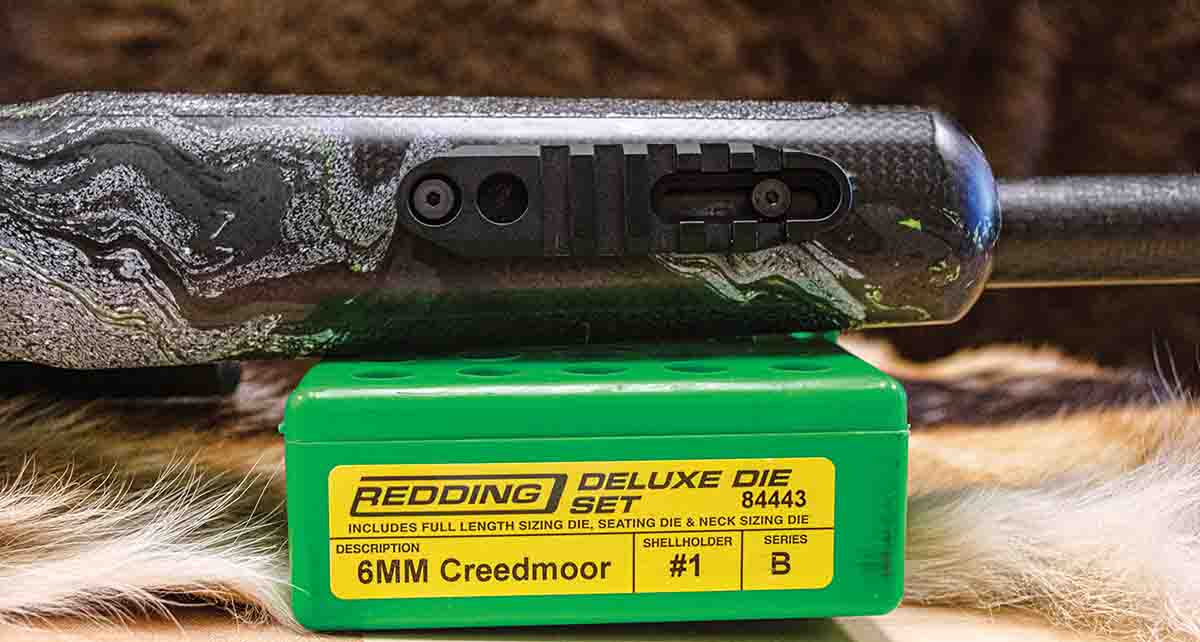
At the forend of the stock, a Picatinny rail with a quick detach socket for a sling swivel was securely mounted in place. Allowing for a bipod and other accessories to be mounted easily.
Throughout all the testing, the barrel routinely heated up, sometimes firing 20-30 rounds before having to change targets to let it cool. There was little to no noticeable point of impact shift during these extended shot strings. I was running out of different ways to challenge this rifle and after expending nearly 600 rounds through this rifle, the testing finally came to a close.
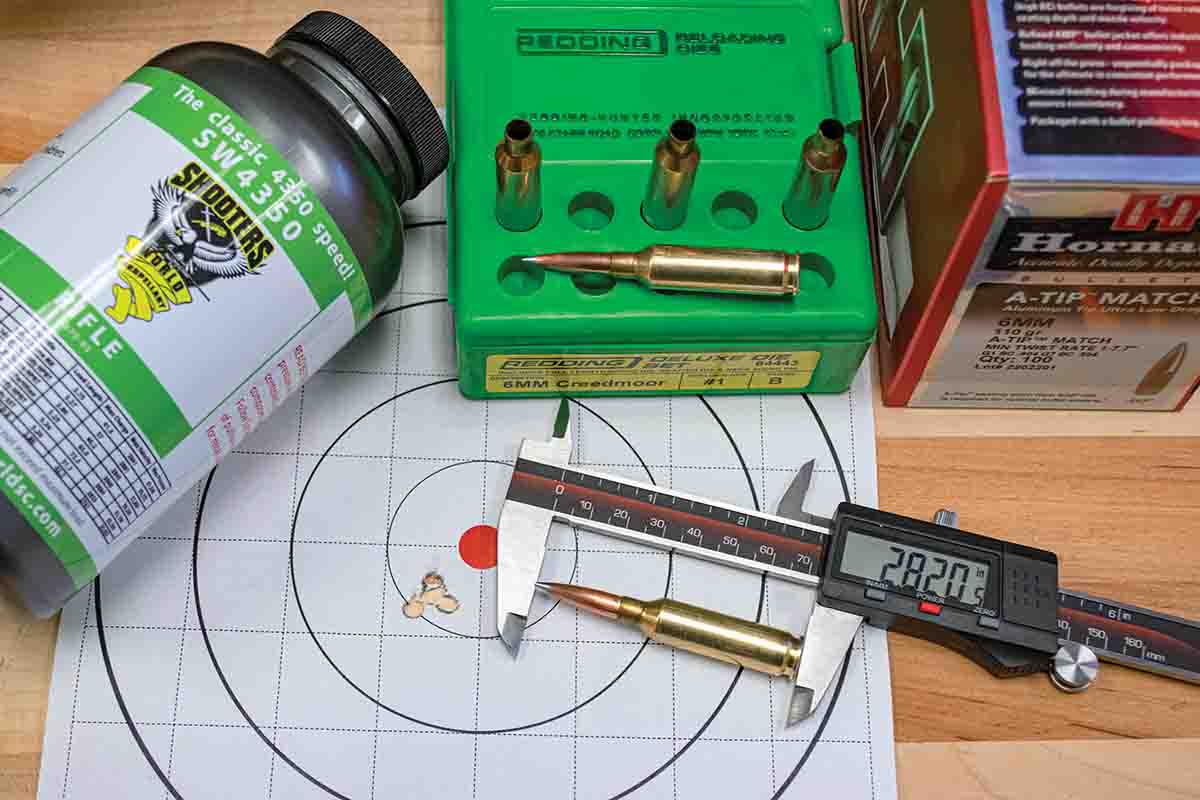
Shooters World 4350 offered consistent ignition resulting in low ES and SD across the board in the 6mm Creedmoor and turned in an excellent group measuring out to .35 inch.
Upon reflection and review of the overall performance, this AllTerra Carbon Mountain Shadow rifle chambered in 6mm Creedmoor, checks a lot of boxes for the versatile varmint rifle. It is capable of benchrest-level accuracy with many groups hovering around the .3-inch mark. The recoil is managed well enough thanks to the muzzle brake to be able to self-spot misses and hits. Something important for long shots in choppy winds at shifty critters. The rifle’s overall weight is more than reasonable to carry for hunting big game or for walking varminting. It seems an ideal bolt gun for coyotes and is capable of launching bullets with impressively high-ballistic coefficients for work at extended ranges, while still able to utilize heavier bullets of proper construction for use on mule deer, antelope and similar-sized game.
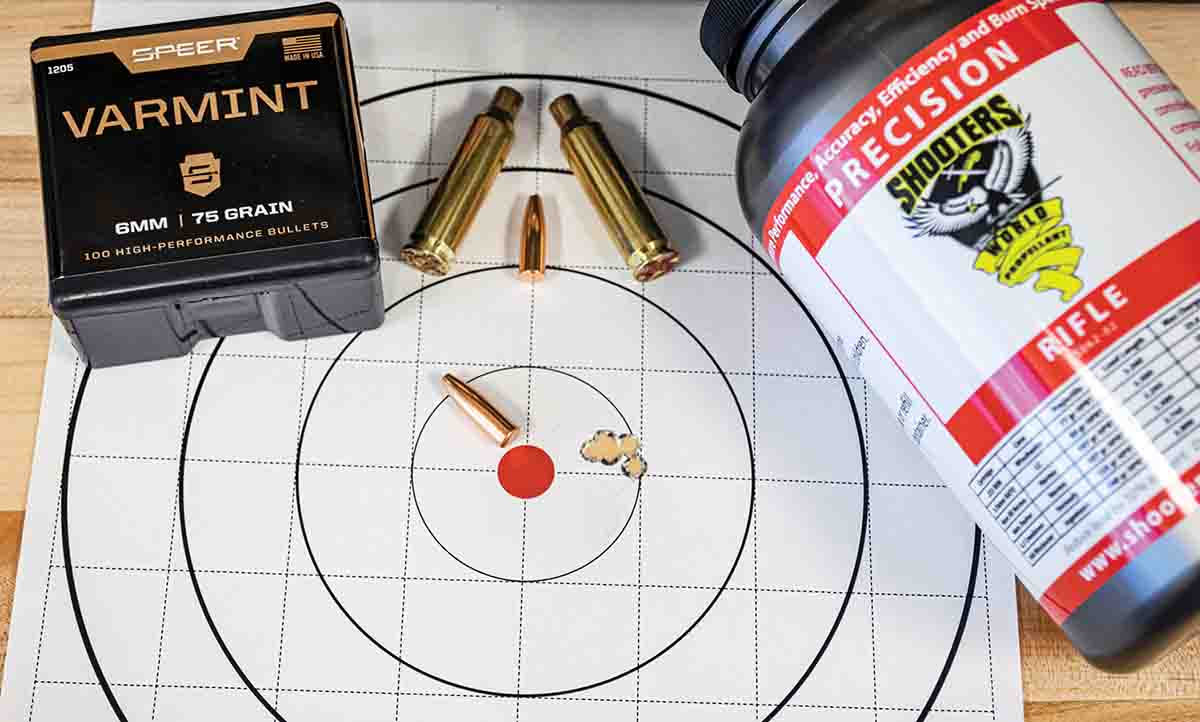
Shooters World Precision powder paired with the Speer 75-grain Varmint bullet made for an excellent solution for anything from coyotes to ground squirrels.
The rifle and cartridge combination are also capable of match-winning performance, with the 6mm Creedmoor tracing its roots back to Precision Rifle Series (PRS) competition. The rifle’s lockup is tight and the tolerances on the locking lugs ensure match-grade accuracy, however, the rifle still has loose enough tolerances in the raceway to ensure that dust, grit, grime and use in less-than-ideal field conditions won’t cause the rifle to malfunction. While it may not be ideal for a PRS match, it certainly is capable. While it may not be ideal for hunting mule deer, it too can accomplish that feat as well with relative ease.
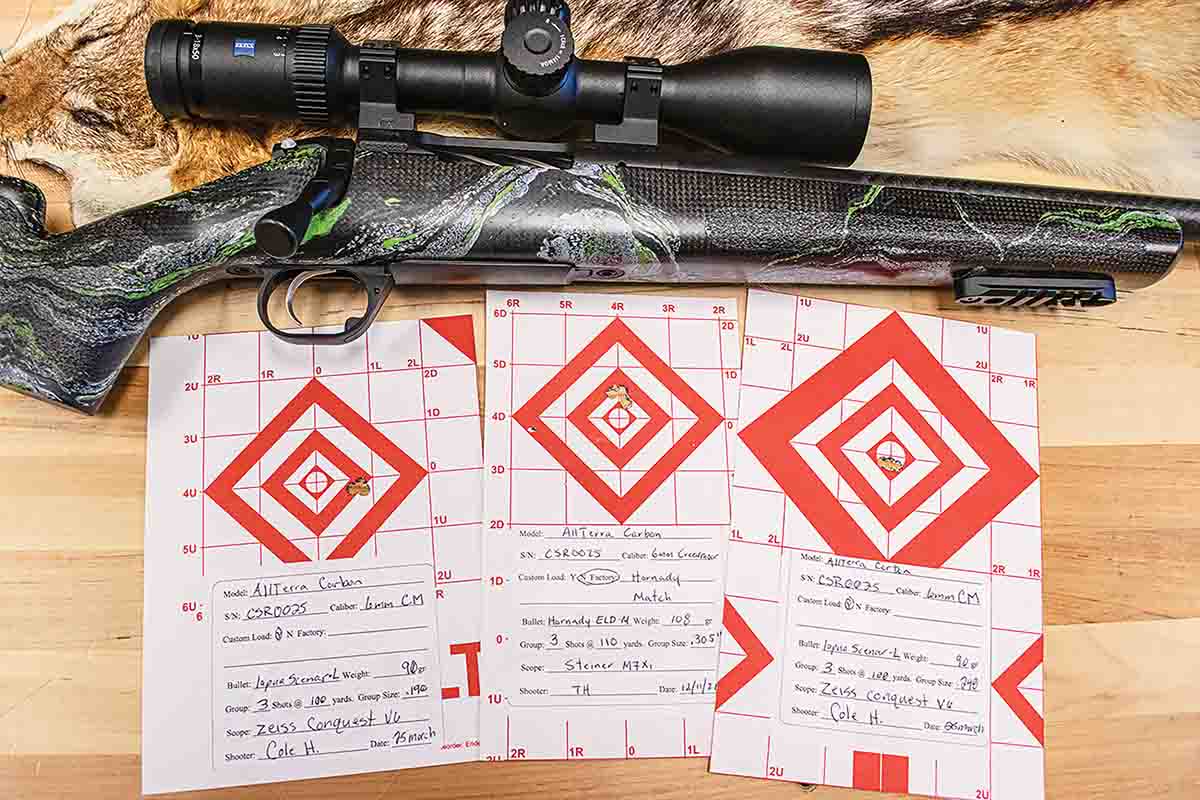
AllTerra rifles are guaranteed to shoot sub-.5-MOA groups, these targets were shipped with the test rifle as proof of the accuracy of the rifle.
The Zeiss Conquest V6 3-18x 50mm tracked flawlessly throughout testing while dialing in on targets from 100 to 500 yards. The glass was exceptionally clear and the parallax was easily adjustable for whatever distances you may be shooting. The optic provided a nice balance of weight, magnification and size for the rifle.
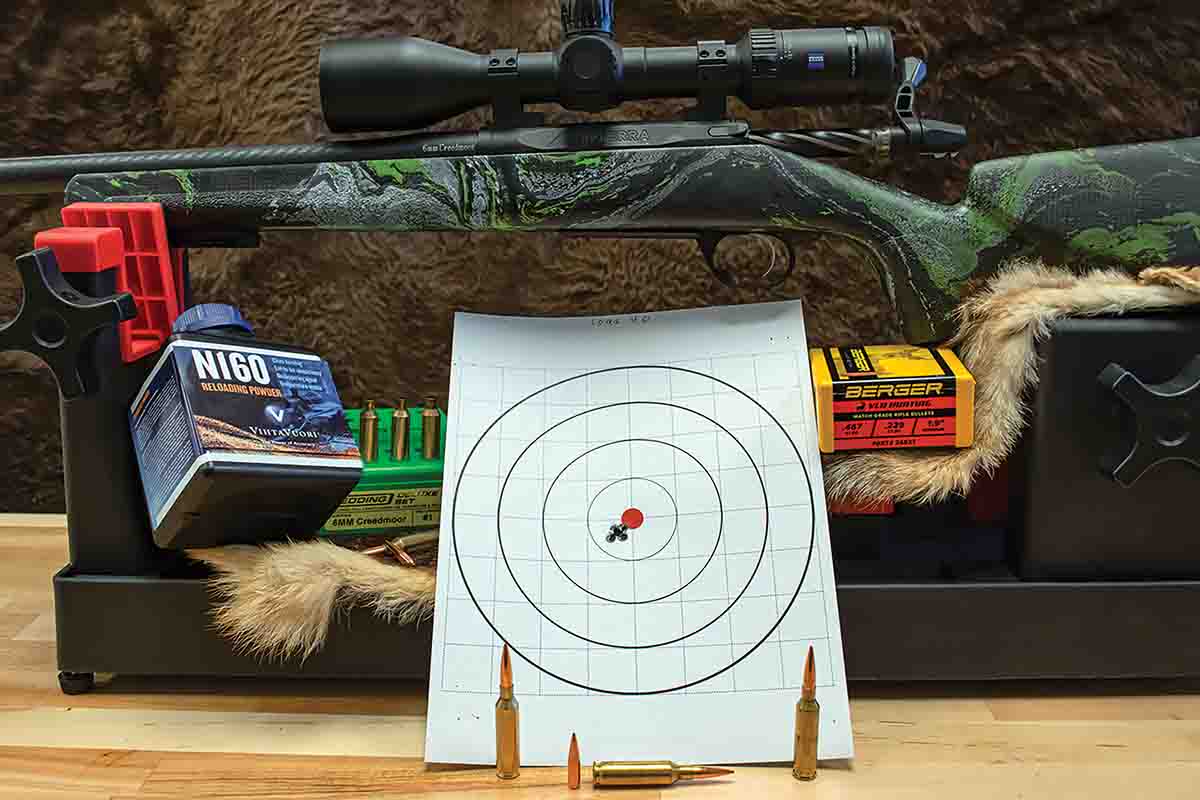
Using a 41.5-grain charge of Vihtavuori N-160 and the Berger 95-grain Classic Hunter, turned in this excellent group of .32 inch at 100 yards. This load proved to be consistent, shooting groups into the .3s several times.
The only downside to such versatility and impressive performance is cost, these rifles are expensive starting out somewhere around the $6,500 mark at the time of this writing. You truly are getting what you pay for from a performance and versatility standpoint. It is relatively easy to sink that much money across two or maybe three varmint rifles that may or may not be as accurate or consistent as this rifle proved itself to be. Picking one rifle to do everything and becoming intimately familiar with it has some merit. Especially for long-range shooting, as it allows the shooter to learn the bullet drop and ballistic characteristics of the cartridge and rifle without having to switch back and forth depending upon your particular situation. There also is some time-saving merit instead of learning multiple rifles and learning the ballistics of each of them, all that time can be put into a single rifle. Thus allowing for more time in the field and more experience shooting under field conditions with a single rifle, which is a consideration worthy of merit.
.jpg)