

Still Varminting After All These Years
Winchester's Model 69 & 69A
feature By: Art Merrill | April, 23
Several manufacturers are turning out 22 Long Rifle rifles that boast varmint accuracy right out of the box. At the other end of the scale, stores and gun shows are awash with affordably priced, used factory grade 22s - good plinkers, engineering curiosities or historically interesting rifles - but perhaps not possessed of varmint accuracy. There are exceptions though, and a lot of experienced shooters would agree that one of these is Winchester’s Model 69 series. Introduced in 1935, Winchester boxed up the last Model 69A in 1963. Part of its long success is surely due to the Model 69’s surprising accuracy.
“Surprising” is an apt adjective for a mass-produced 22 Long Rifle sporting rifle lacking a match chamber or any specific accuracy upgrade, and yet, routinely punches one-hole groups at 25 yards with hunting ammunition. It must have been risky for Winchester to offer a new model rifle in the very midst of the Great Depression, but somebody at Winchester decided the company needed a 22 Long Rifle bolt-action repeater to fill the gap between the low-end single-shot Model 67 and the match grade Model 52 competition rifles. It was the right decision, and the Model 69’s inherent accuracy earned it enough popularity for Winchester to hang heavier barrels, target sights and scopes on later versions.
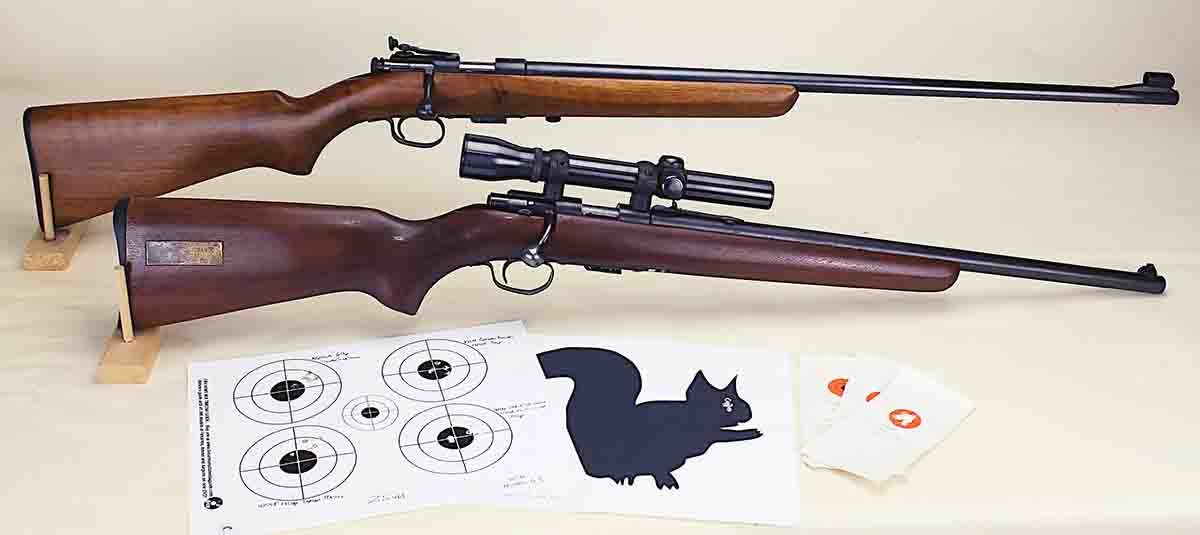
The two rifles presented here, an early Model 69 and a late Model 69A, bracket the series’ production life and are representative of the basic species that Winchester produced as Sporting, Target and Match Rifles. Winchester also made a short run of about 1,431 of the sightless Model 697 from 1937 to 1940 or 1941; it was intended to mount a scope (and some left the factory with scopes already mounted), but scopes were likely too expensive a luxury for most shooters during the Great Depression, and World War II permanently ended production of the Model 697. Post-war, Winchester grooved Model 69A receivers for scope mounting. Stamping firearms with serial numbers was not required before the Gun Control Act of 1968 (GCA 68); Winchester opted to eschew serial numbers for the Model 69 series, and so pinpointing a year of Model 69A manufacture is a head-scratcher, less so with the Model 69, which Winchester made only from early 1935 to late 1937.
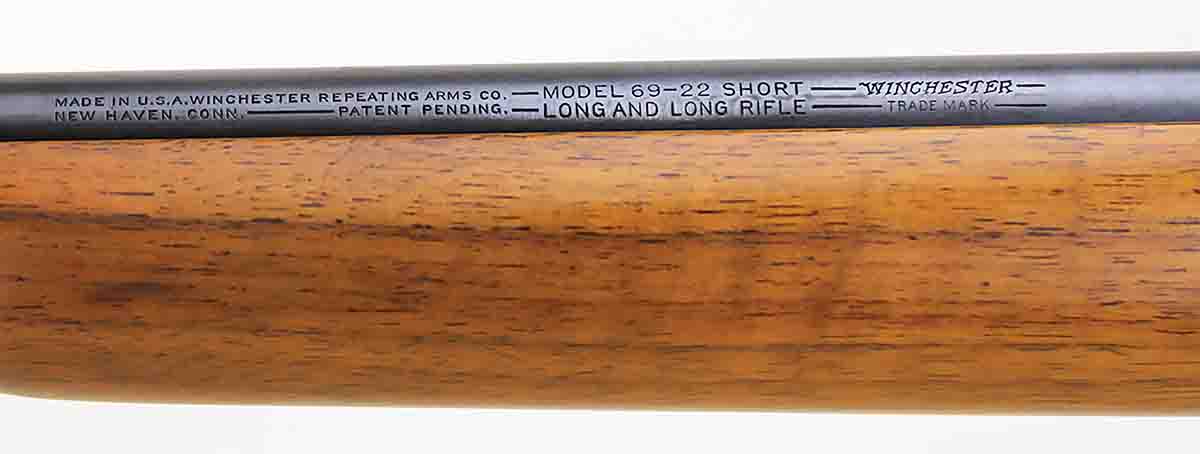
Model 69s hit store shelves in March 1935. Just five months later, in August that year, Winchester changed over to a rebounding firing pin on the Model 69 in order to comply with Canadian importation law for sales up north. In October 1937, the factory began inletting the wood stock so that the takedown screw would be flush with the surface. The Model 69 here has the rebounding firing pin but not a recessed takedown screw, so its manufacture is between August 1935, and October 1937. The rifle is in mint condition; while one might assume it is a restoration, such work would cost more than twice the value of the rifle, and the factory barrel stampings and the rifle’s sharp edges show no evidence of having felt a polishing wheel prior to any assumed rebluing, so doubt about a restoration is reasonable.
.jpg)
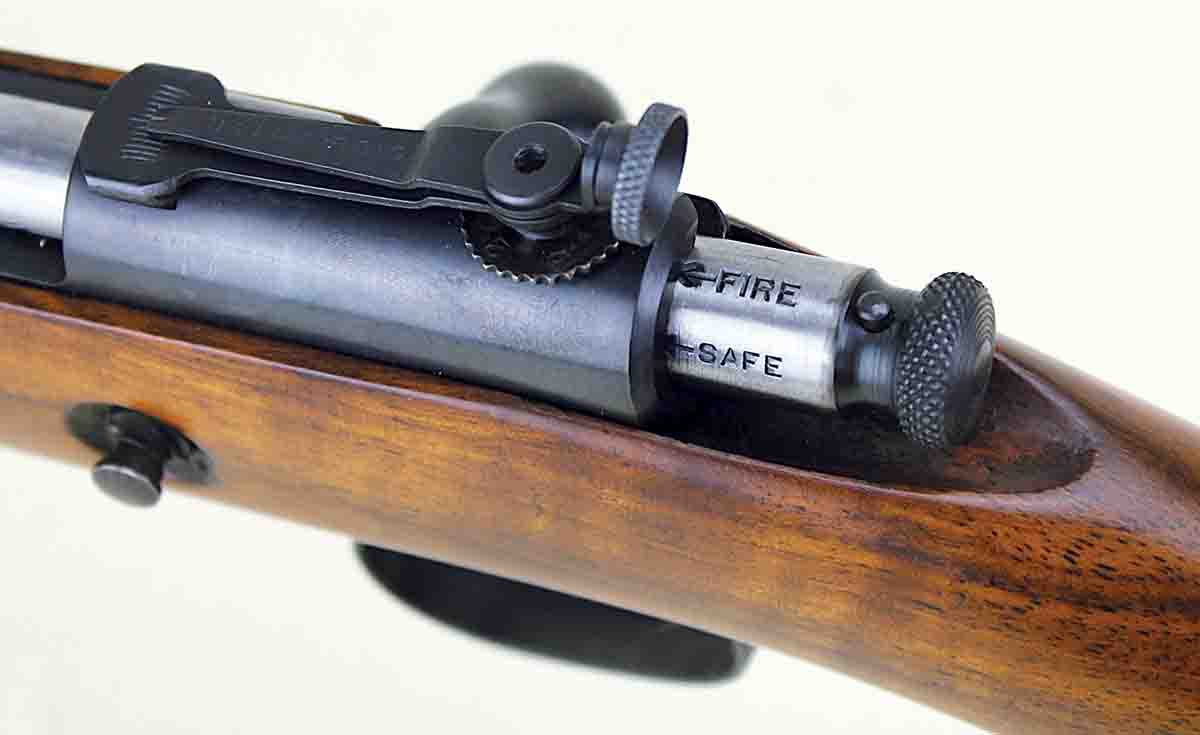
Standard rear sights on the Model 69 were the ordinary barrel-mounted buckhorn-style, with a Number 96-B aperture rear sight produced as a kind of optional standard. Aperture rear sights were not entirely uncommon on varminters 80 years and more ago. Admittedly, more appropriate to small-game hunting than varminting today, the aperture rear sight on this Model 69 is a remarkable piece of engineering when we consider that the austerity of the times prompted designing the sight to be made almost entirely from stamped metal parts. Designed by Winchester employee Frederick L. Humeston, the Number 96-B sight today is sometimes referred to by collectors as the Humeston rear sight. The aperture pivots left and right for windage adjustment, and a thumbwheel, like that on an AR-15 rear sight, adjusts elevation.
The front sight is a ramped bead under a hood mounted on a 25-inch long barrel, the barrel length and weight placing the balance point precisely at the takedown screw, making for easy carry in the field. The bolt cocks on closing. The cocking knob is also the safety – simply pull back and rotate on or off. Like most 22 Long Rifle bolt guns, the bolt handle root bears against the receiver to serve as the lone locking lug. Another clever bit of engineering, the trigger group has only four parts – trigger, sear, spring and pin – and breaks at 4.5 pounds. Length of pull is 13.5 inches, overall length, 41.5 inches. Though light and svelte, the Model 69 is a full-size rifle.
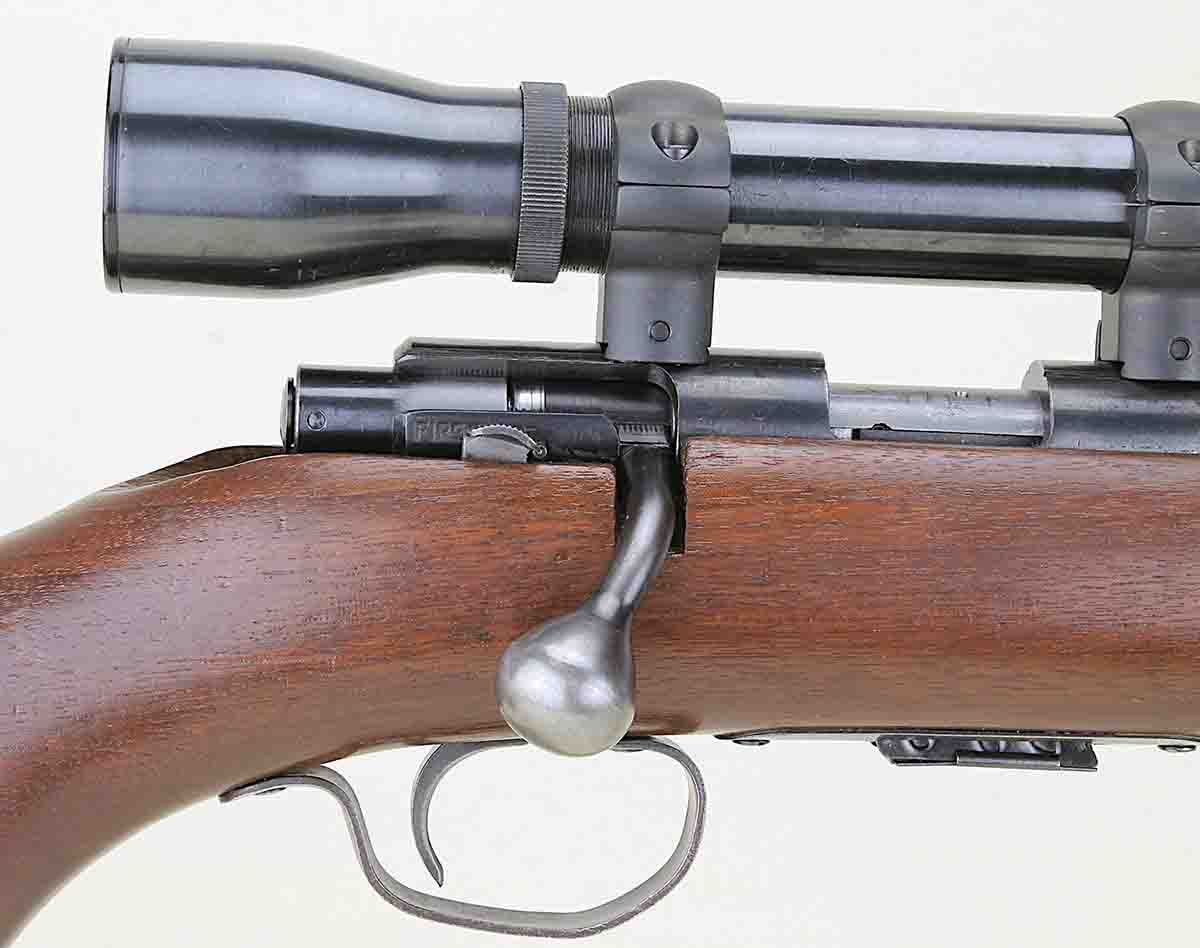
Winchester made enough modifications to the Model 69 that in November 1937, the company rebranded it the Model 69A. Changes include a straight (untapered) barrel, cock-on-opening and a side lever safety. Most Model 69 Series bolt handles were turned straight down, but the Model 69A here has the swept-back angle found only on late Model 69As. The rifle’s grooved receiver dates it no earlier than 1954, when Winchester began adding that feature for tip-off or claw-mount scope ring mounting, but no other still-extant original feature narrows down a manufacture date for this particular rifle.
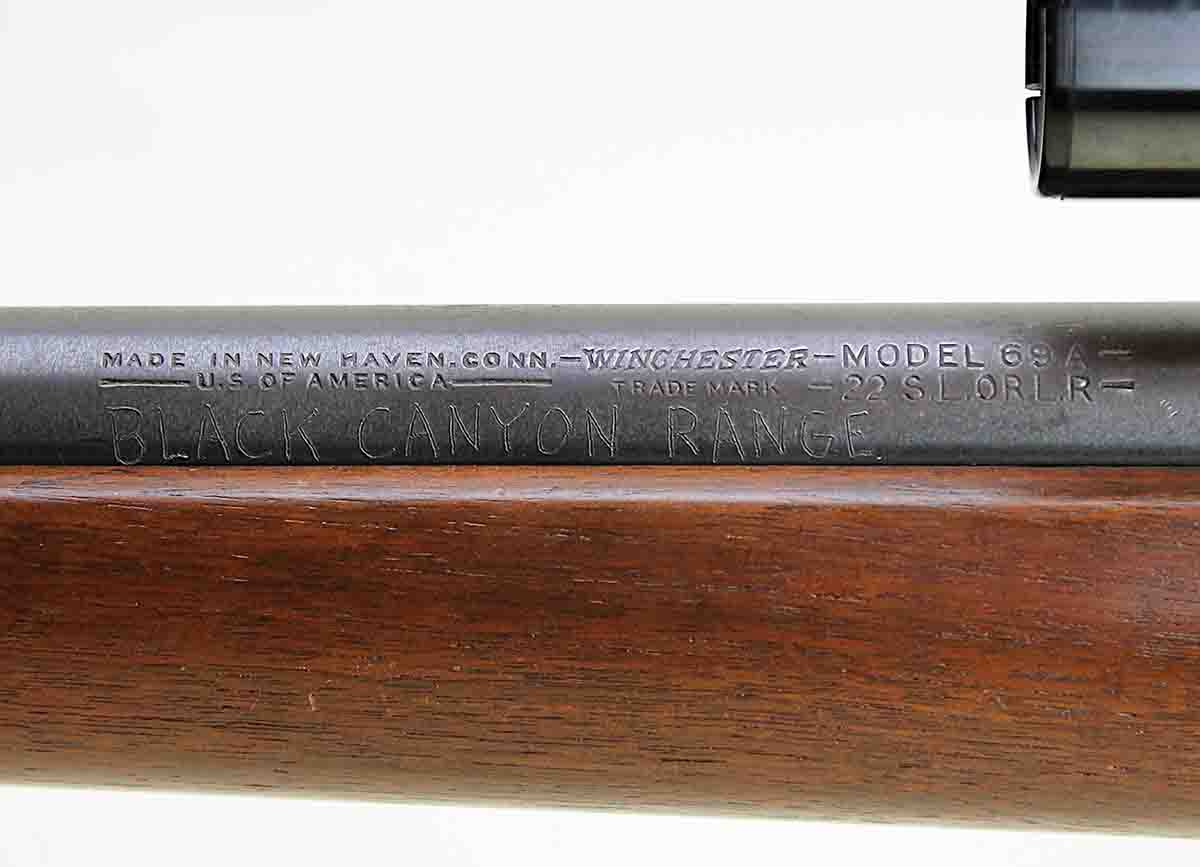
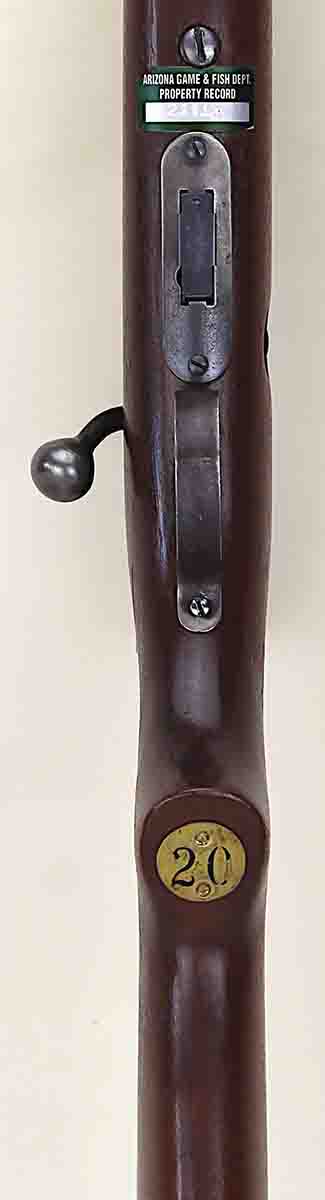
In appearance, the Model 69A shown here was the antithesis of the pristine Model 69 described above. Acquired from a gunsmithing school where it had served as a learning tool, the rifle had been considerably altered from its original form and closely resembled a pump handle attached to a piece of kindling. At some point, the rifle had belonged to the Arizona Game & Fish Department, which apparently utilized it to teach marksmanship and hunter safety at the Black Canyon Range in Phoenix, which, since 1992, is now called the Ben Avery Shooting Facility. Inlet into the right side of the buttstock is a small, faded brass plaque that reads, “Property of Black Canyon Range, Donated by O.S. Stapley Co.” There used to be an O.S. Stapley Company hardware store in Phoenix, established in 1894, but apparently now long gone.
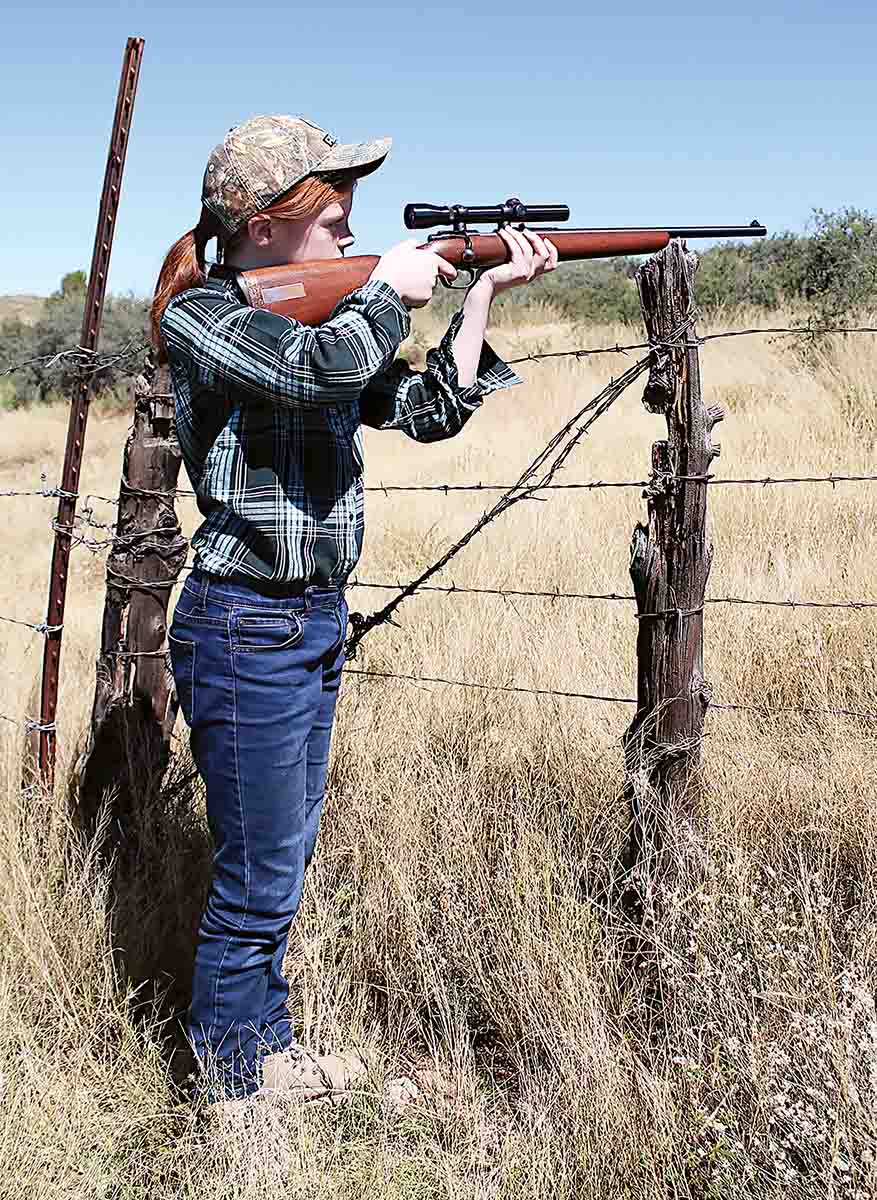
After stripping the stock’s spotty finish, a paste of TCE Cleaner Degreaser (trichloroethylene) and whiting (calcium carbonate), both available from Brownells (brownells .com), sucked from the wooden stock any old gun oil that was going to come out. A medium walnut stain with a bit of red added, simulated an original hue found on older Winchesters, and helped to hide any oily sins the whiting paste couldn’t address. A tung oil finish followed sealing, staining and sanding. Fitting a new buttplate and scrounging up other missing parts completed the work, at least to the point that it wouldn’t be embarrassing to be seen in public with the little rifle. For a shot at an appropriate enough period scope, I mounted a Weaver K2.5 before heading to the range.
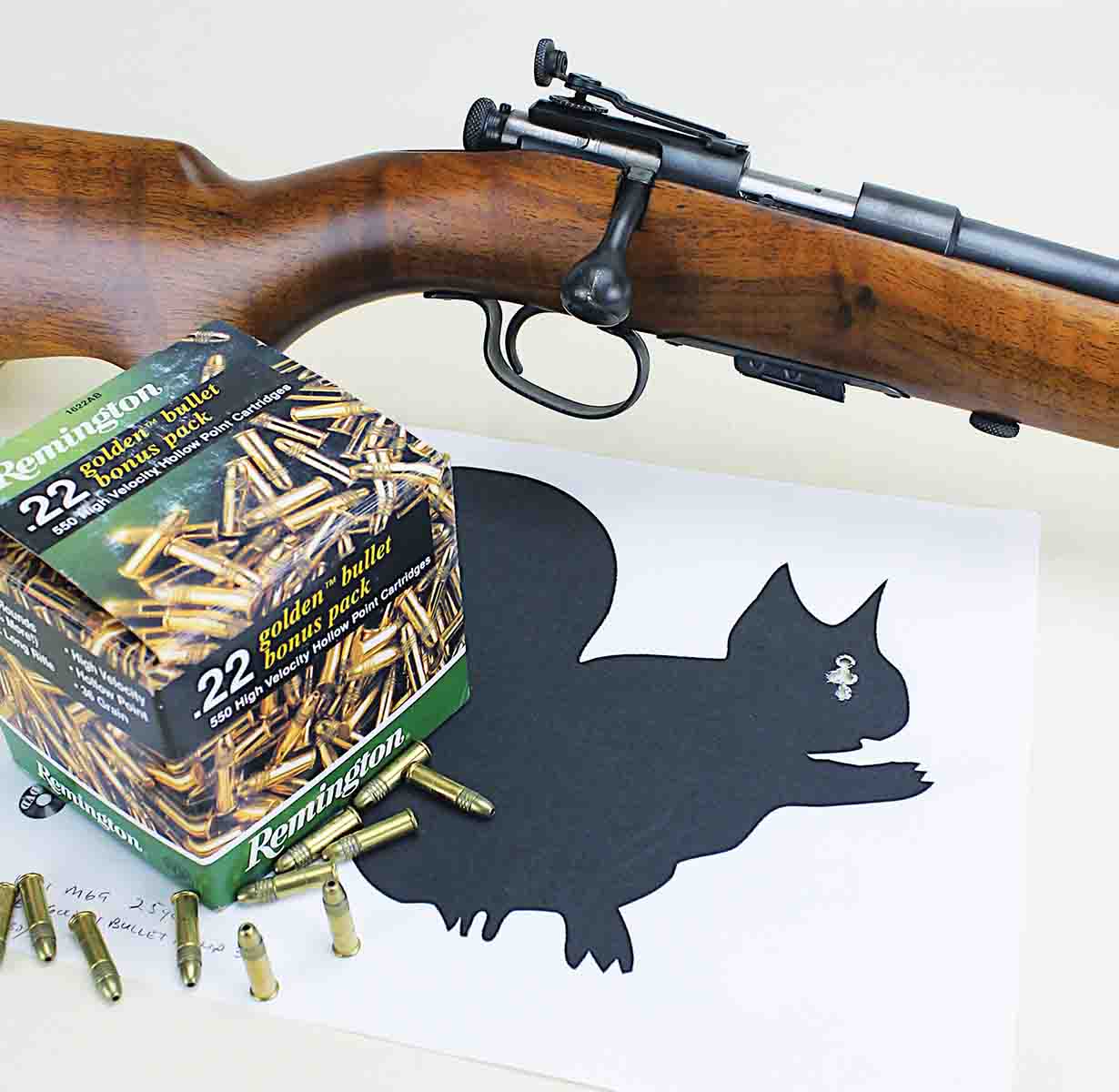
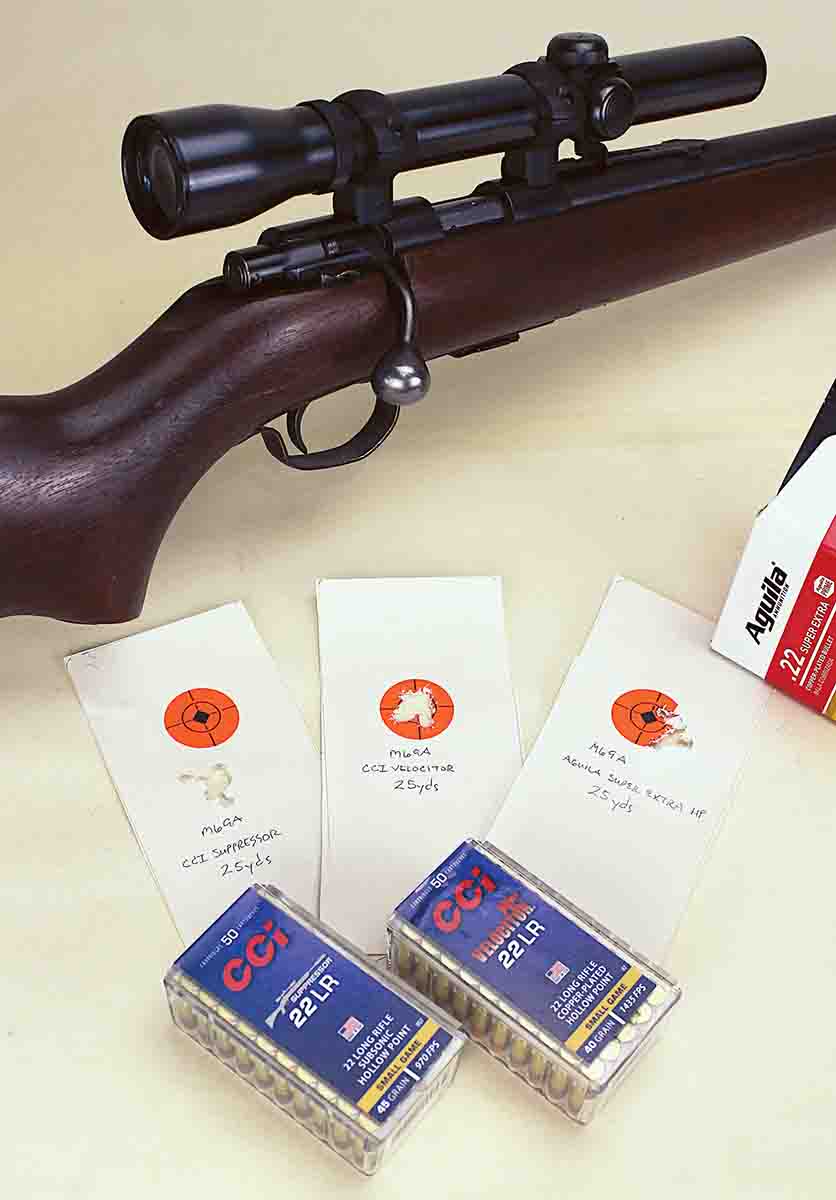
In addition to hunting ammunition, I brought along Aguila Sniper Subsonic to see, out of curiosity, how the ultra-heavy 60-grain bullets loaded in 22 Short cases would group in both rifles’ 1:16-inch twist. Wind is a daily factor here in the Arizona mountains, and yet the aperture-sighted Model 69 shot minute-of-ground-squirrel-head groups at 25 yards with hollowpoint ammunition, Remington’s 36-grain high-velocity hollowpoint Golden Bullet. If the rifle had provision for scope mounting, I’m confident it could shoot one-holers at 25 yards with its favorite 22 Long Rifle load, which is what the scoped Model 69A does with CCI Velocitor, CCI Suppressor and Aguila Super Extra hollowpoint, all hollowpoint hunting ammunition, and its 50-yard groups would be halved. By comparison, I have modern 22 Long Rifle guns that don’t shoot one-hole, 10-round groups with three different brands of hunting ammunition.
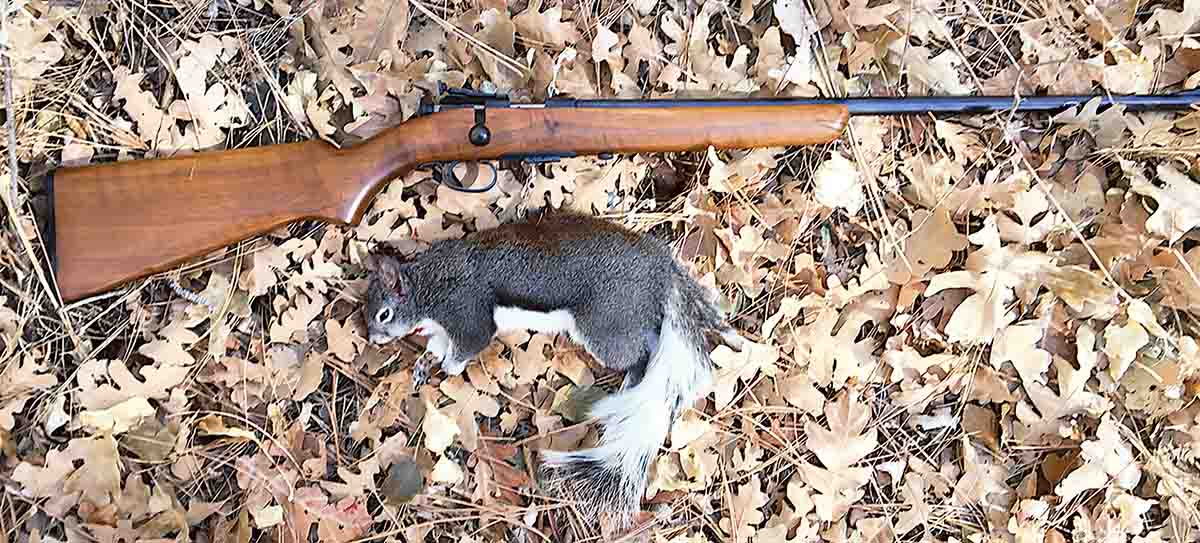
That’s one of the fascinations of varmint rifles: old or new, you never know what you’ve got ‘til you shoot it, and age may often surprise you. While 22 rimfires aren’t high on a varminter’s list of first-choice rifles, they do have their place and it’s a good bet most have one or more and at least occasionally bring it along on a hunt. Unlike high-velocity centerfire varmint rifles, the 22 Long Rifle also serves double duty as a small-game getter. Or maybe, it’s the other way around.
The Blue Book of Gun Values lumps the Models 69 and 69A together, which seems odd because there are so fewer Model 69s, so one would believe they are a bit more desirable. Online, Model 69As sold in 2022 from $115 to an overinflated $650; a reasonable price for a decent Model 69A shooter in NRA Very Good condition should be in the $350 neighborhood. As a matter of note, an internet search turned up a single Model 697 with original factory scope, a different and collectible beastie, that sold at a reputable live auction in 2018 for $2,300.
.jpg)
However, in varminting, real value is expressed in accuracy, and that’s a value these two Winchester 22s have retained.