Login


Wolfe Publishing Group
    Menu

    The Saga of the 219 Donaldson Wasp

    History, Development and Current Status

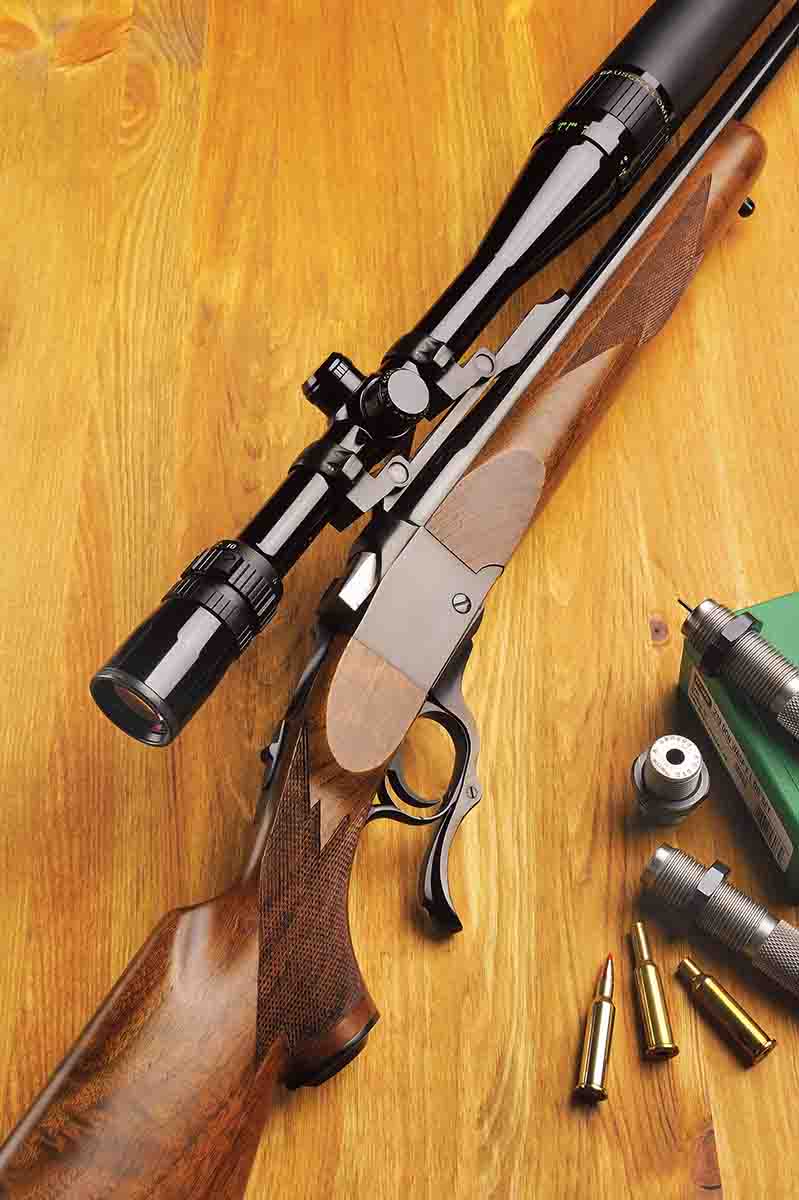
    The Ruger No. 1 custom chambered for the 219 Donaldson Wasp. The scope is a Bausch & Lomb 6-24x.
    The Ruger No. 1 custom chambered for the 219 Donaldson Wasp. The scope is a Bausch & Lomb 6-24x.
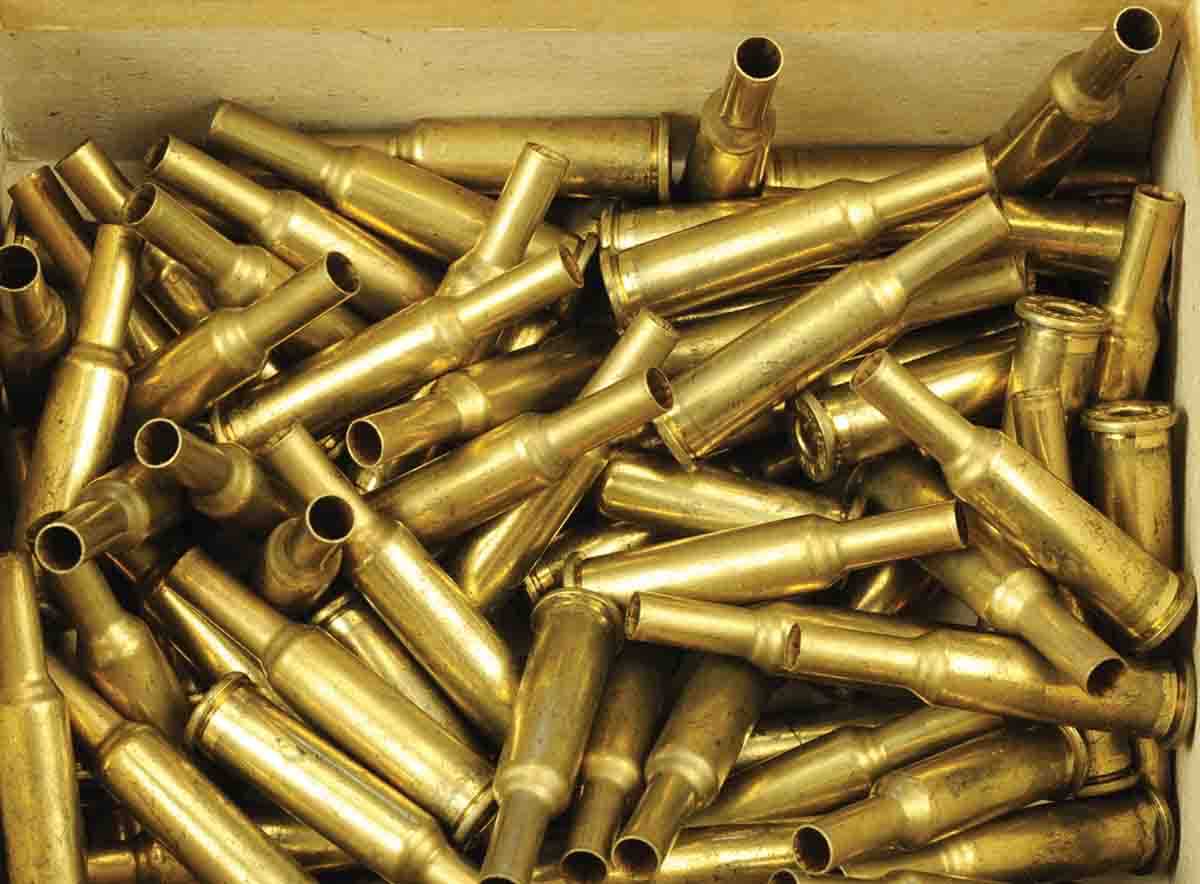
    When converting any case to another dimension, it’s good to have a quantity of brass made up after each stage of forming to help move the process along without interruption or changing the dies.
    When converting any case to another dimension, it’s good to have a quantity of brass made up after each stage of forming to help move the process along without interruption or changing the dies.
    Although I did not know exactly what farm I was on in Petersburg, New York, with friend Ed Hall, I did know that the chuck downrange was really starting to annoy me. Bolting back and forth, in and out of his hole made tracking it a bit more difficult, but I was still hoping it would take a break, stop, stand up and wait for its demise. That moment finally came, the Ruger No. 1 chambered for the 219 Donaldson Wasp barked, and the chuck was on its way to the big blue.
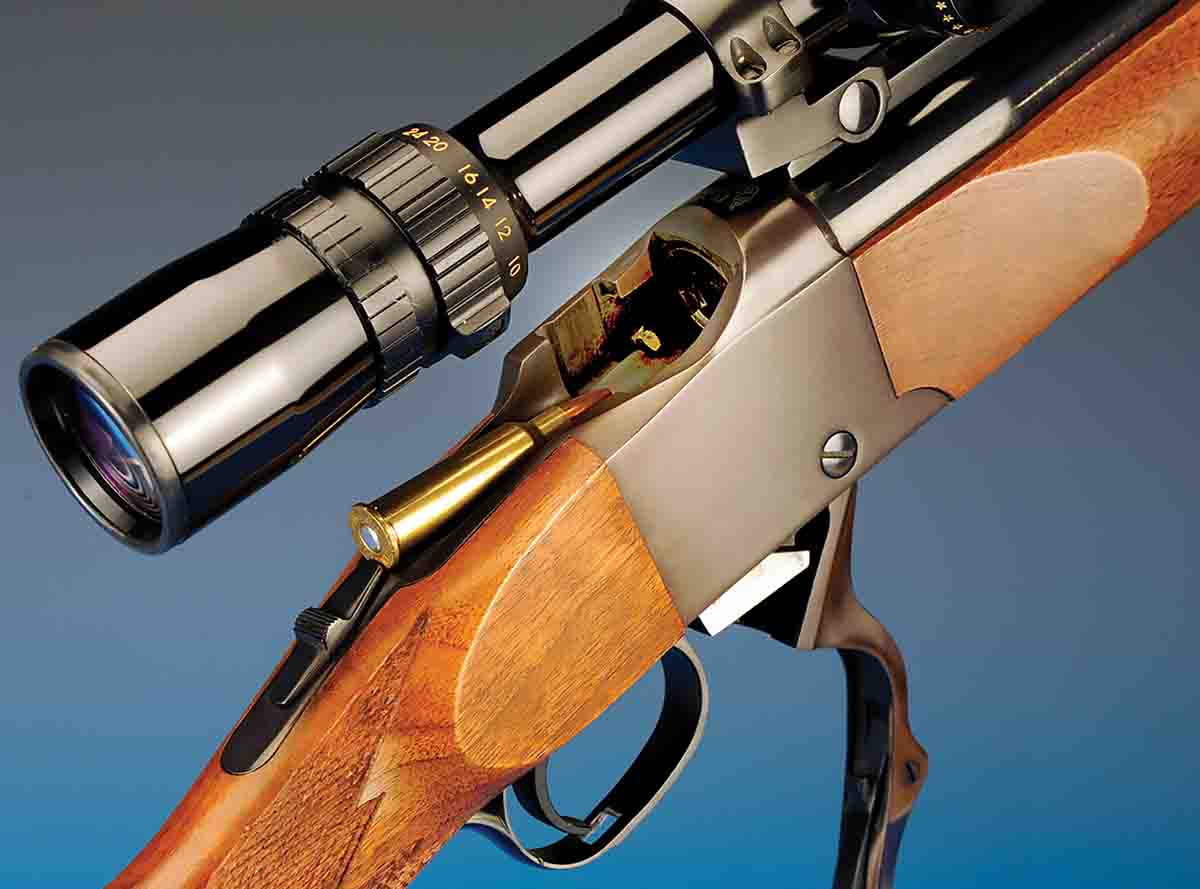
    Looking closer at the details, we can see the single-shot action of the Ruger No. 1 with the 219 cartridge position just before the breech. The rifle is finely finished and is equipped with a set of Ruger offset scope rings to set the scope a little further back for shooter comfort.
    Looking closer at the details, we can see the single-shot action of the Ruger No. 1 with the 219 cartridge position just before the breech. The rifle is finely finished and is equipped with a set of Ruger offset scope rings to set the scope a little further back for shooter comfort.

    This was not the first chuck we had seen that day, as some of the others were too far out, or the terrain behind them was not good for shooting to act as a backstop. Overall, the day was a perfect summer’s day, temperatures in the low 80s with just a bit of a breeze to take in the aroma of the freshly cut hay laying in the field before us.

    The rifle I had with me had been a combination of efforts between rifle and cartridge that I had wanted to see happen for a long time and finally did a few years earlier. Granted, the Ruger No. 1 is not a big thing, but considering it was open to rechambering to many varmint cartridges, it was my pick to have it enter into a second life as the 219 Donaldson Wasp, which turned out to be the easier part of this journey.

    The model number of the Ruger is the 1-B, a standard variation chambered for the 218 Bee with a 26-inch barrel and longer forearm. It was rechambered by Bullberry Barrel Works of Hurricane, Utah, but recently, Fred Smith had retired and handed the reins over to his right-hand man, so the business will continue if you are serious about working with the Donaldson cartridge. Along with a Bausch & Lomb 6-24x power scope, I was eager to get the ball rolling.
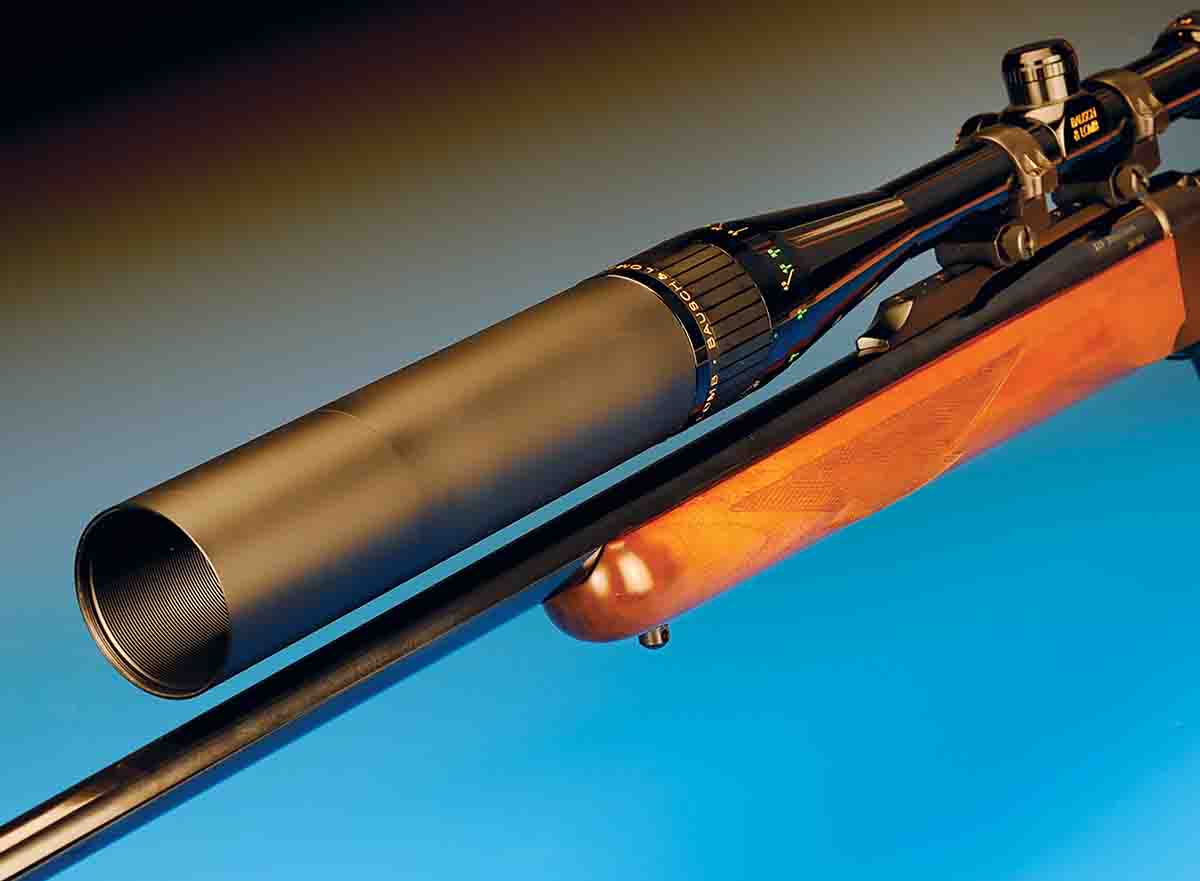
    For all-day shooting, regardless of the position of the sun, Stan equipped the scope with a set of extended lens shades from Bausch & Lomb to keep the glare off the objective lens.
    For all-day shooting, regardless of the position of the sun, Stan equipped the scope with a set of extended lens shades from Bausch & Lomb to keep the glare off the objective lens.
    While some may have never heard of the “Wasp,” the cartridge certainly has paid its dues right up to recent times. It was designed for and rolled into most benchrest records of the 1950s with 70 to 80 percent of the contestants having one of these rifles on their bench. After that, my opinion is the Wasp had a large influence on some of today’s modern benchrest and varmint cartridges.
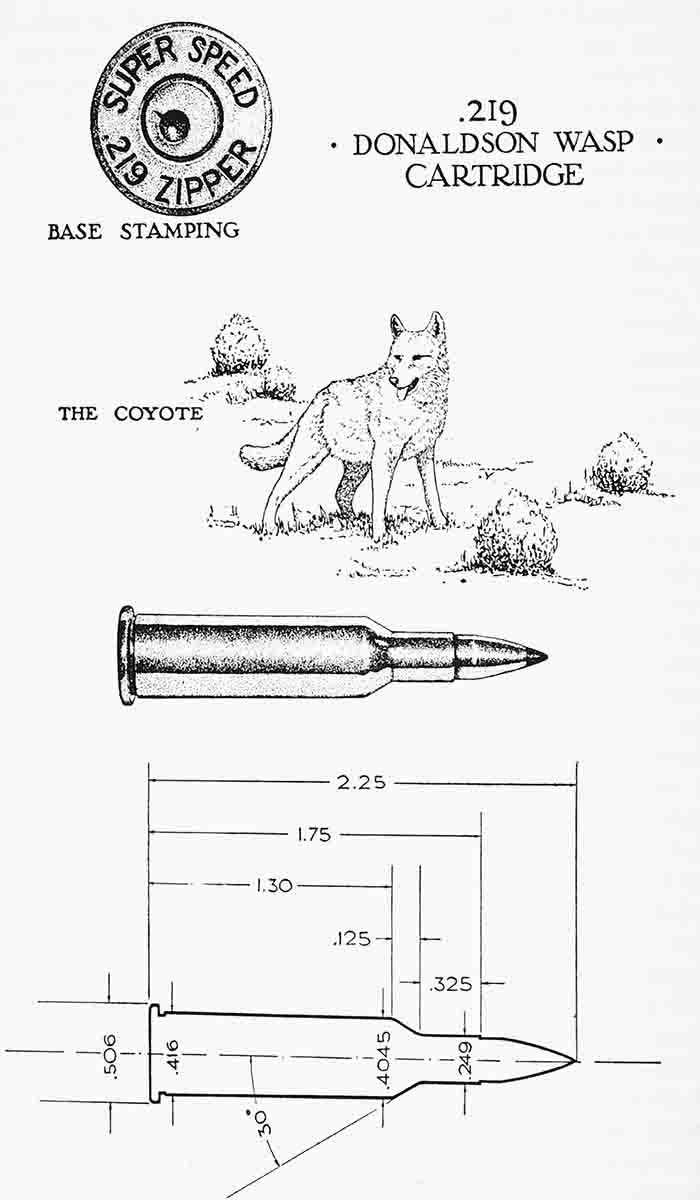
    For reference, and right out of the Landis book on varmint rifles, this is the drawing and specifications of the 219 Donaldson Wasp cartridge showing the 219 Zipper headstamp.
    For reference, and right out of the Landis book on varmint rifles, this is the drawing and specifications of the 219 Donaldson Wasp cartridge showing the 219 Zipper headstamp.
    Sadly, however these newer attempts pushed the Wasp to the wayside with the introduction of high-stepping 22-caliber entries like the 222 Remington. Nevertheless, after checking into its detailed background, I decided to bring this cartridge into my battery of varmint rifles for use in the field using the Ruger No. 1 as my base rifle.

    I found that after some work by Donaldson himself, at that time, the Wasp was considered by many to be nothing more than a blown out Zipper (ill informed). Velocities are similar, maybe so, but keep in mind the Zipper had limited availability and use – only being chambered in lever-action guns – and here is where the Wasp pulled ahead in popularity with its use in bolt-action rifles.
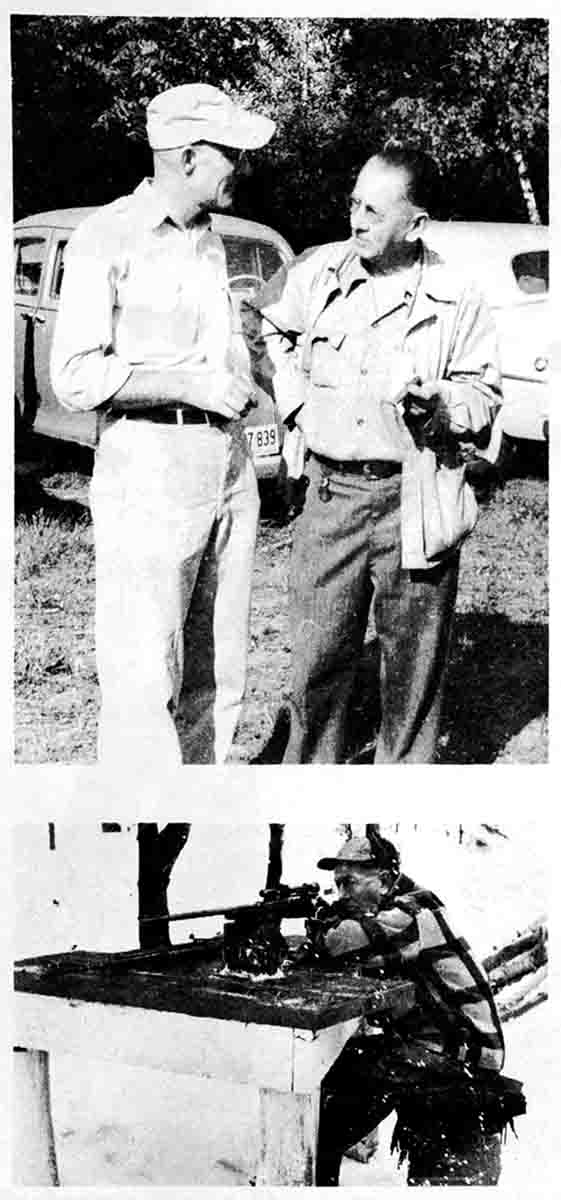
    Harvey Donaldson was an active man, shown here talking to Manley Butts, a benchrest shooter in 1949, about accuracy. The bottom photo shows Donaldson at the bench shooting for groups.
    Harvey Donaldson was an active man, shown here talking to Manley Butts, a benchrest shooter in 1949, about accuracy. The bottom photo shows Donaldson at the bench shooting for groups.
    The development of this cartridge took time on Donaldson’s part, and it is interesting to follow, especially with the amount of reference material available today. It seems in 1935, Harvey Donaldson was living in Fultonville, New York, and started a 10-year undertaking on the development of a small capacity, highly efficient .22-caliber round we know as the 219 Donaldson Wasp.

    By now, he had accumulated more than 52 years as a rifleman and experimenter who was always on the lookout for a better varmint cartridge without going toward “improving” the same, but something that would be worthy of long-run applications with a smaller case. He was working with the 22 Niedner that lit the spark to continue down the line – away from larger cases that simply held more powder leading to more throat erosion and possible higher pressures – not very suitable for spending a day in the field with multiple shots and more recoil.

    Next up, was the 25 Remington, a rimless case with a larger interior volume holding about 8 more grains of powder, necked-down to his pet .22-caliber round and fireformed in the rifle. Shooting it more, he liked it less, as it never was up to the velocity he had expected with unburned powder still left in the case after firing. A shorter,
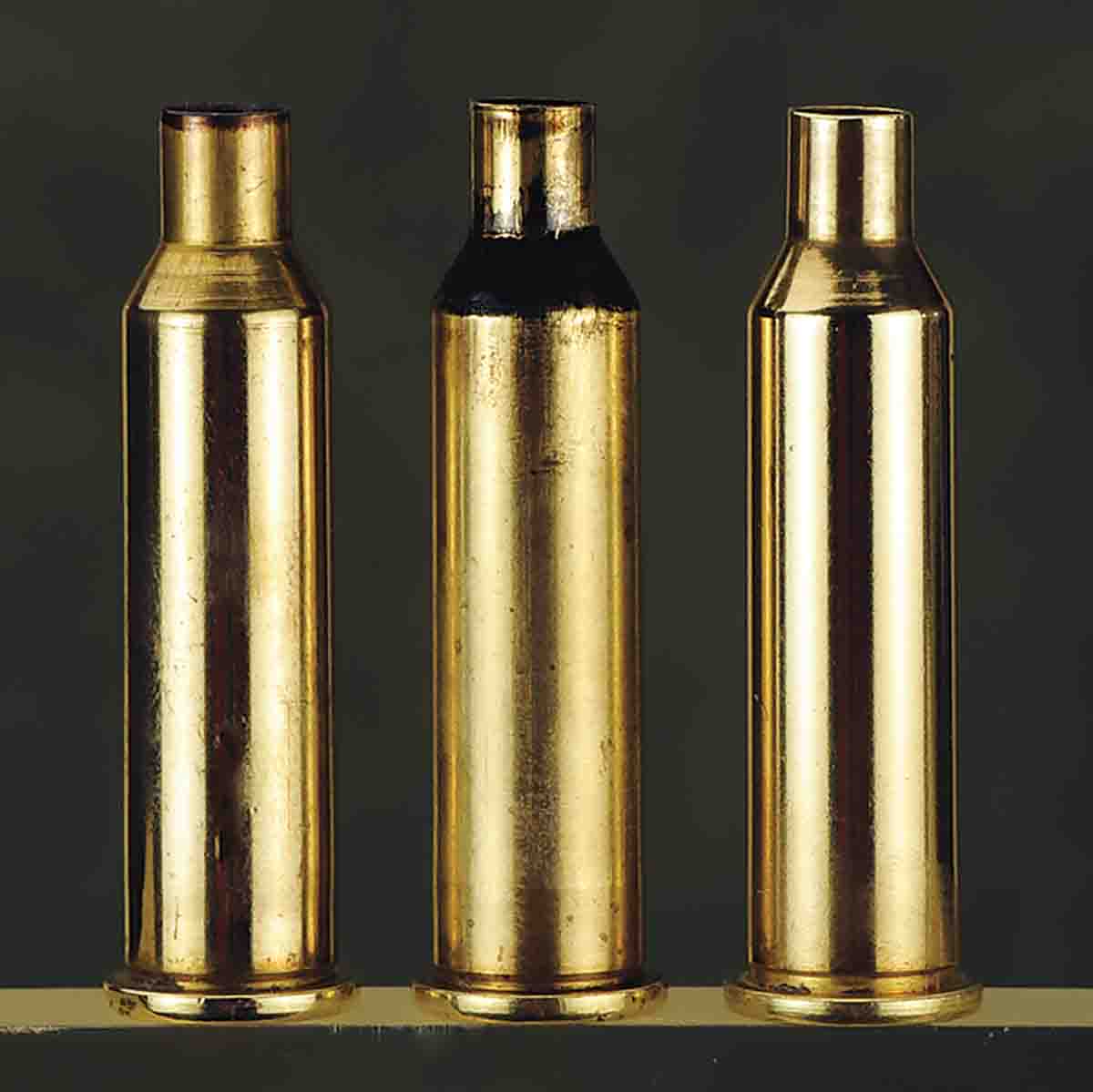
    From left to right, a once-fired case, neck-sized only case and a ready for loading case.
    From left to right, a once-fired case, neck-sized only case and a ready for loading case.
    fatter case was next, still on the 25 Remington, but again, while he did feel he was going in the right direction – after spending three years on this research – the light grew brighter in the form of the 219 Zipper as announced by Winchester. Could this be the magic combination Donaldson was looking for?

    Apparently, it was and came in many forms. For one, it was left in its original shape, the shoulder was made a little more abrupt allowing it to be formed right in his Winchester 30-30 bolt-action rifle with just a barrel change with a 1:14 twist and without any case-forming dies, much like the improved cases of today. The Zipper was a case of hefty proportions and employing the same receiver delimited the need for a change in the bolt, bolt head or extractor.

    Still another important fact holding true today and emphasized in Twenty-Two Caliber Varmint Rifles by Charles Landis (Wolfe Publishing, 1991). In his writings, Landis goes on to say and I’ll quote, “the .219 Wasp design was worked out by Donaldson with the idea of having both bullet weight and the powder weight so balanced that a case full of powder could be used without exceeding safe pressures, or without having it fail to reach adequate burning pressures.” Donaldson was finally on the way with his pet project – the 219 Donaldson Wasp – still hard to beat and still within a class to itself. Looking back, the demise of the 219 Zipper and brass did not help the situation, but today, there are ways of getting around this in bringing the Wasp up to speed.
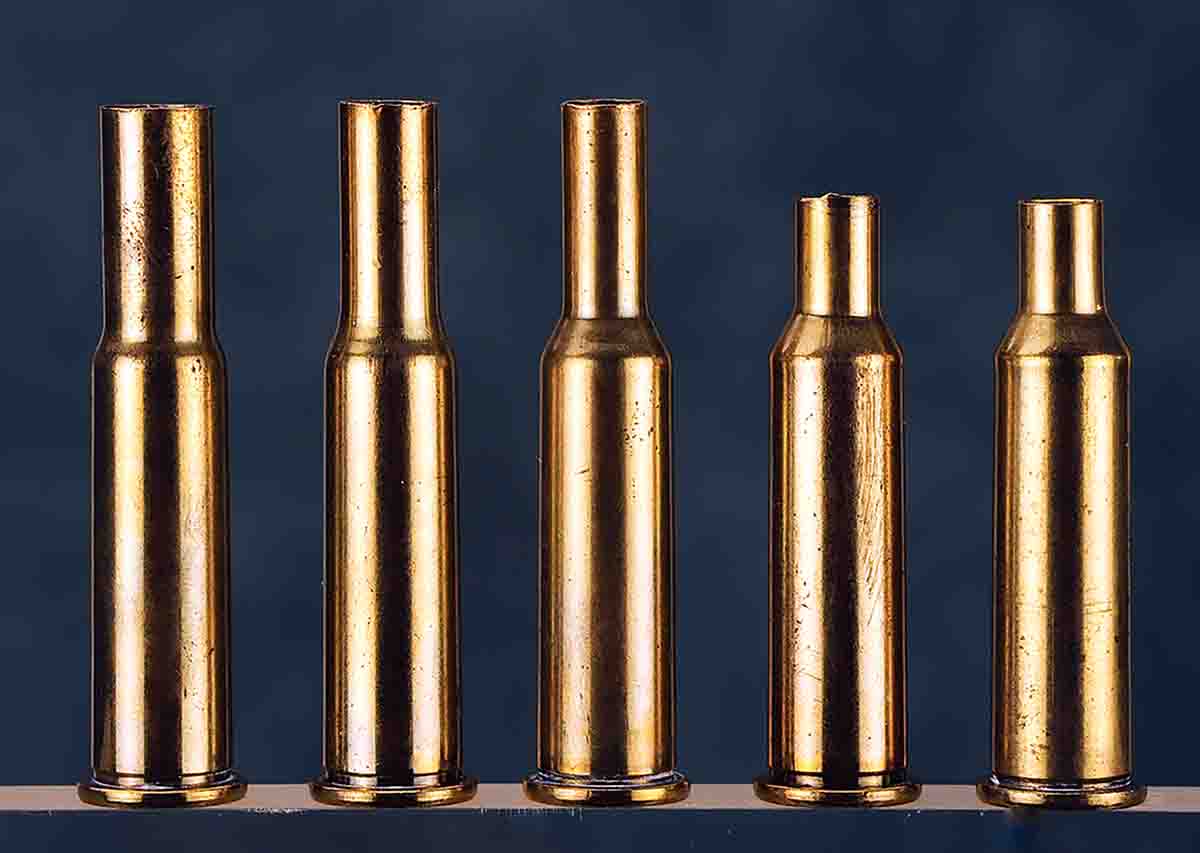
    The five basic steps to forming the parent 30-30 case to the 219 Donaldson (left to right): The first three push the neck back while squeezing it down more and more with each step, then the last two go through the trim die where the neck has been trimmed to its last stage of forming.
    The five basic steps to forming the parent 30-30 case to the 219 Donaldson (left to right): The first three push the neck back while squeezing it down more and more with each step, then the last two go through the trim die where the neck has been trimmed to its last stage of forming.
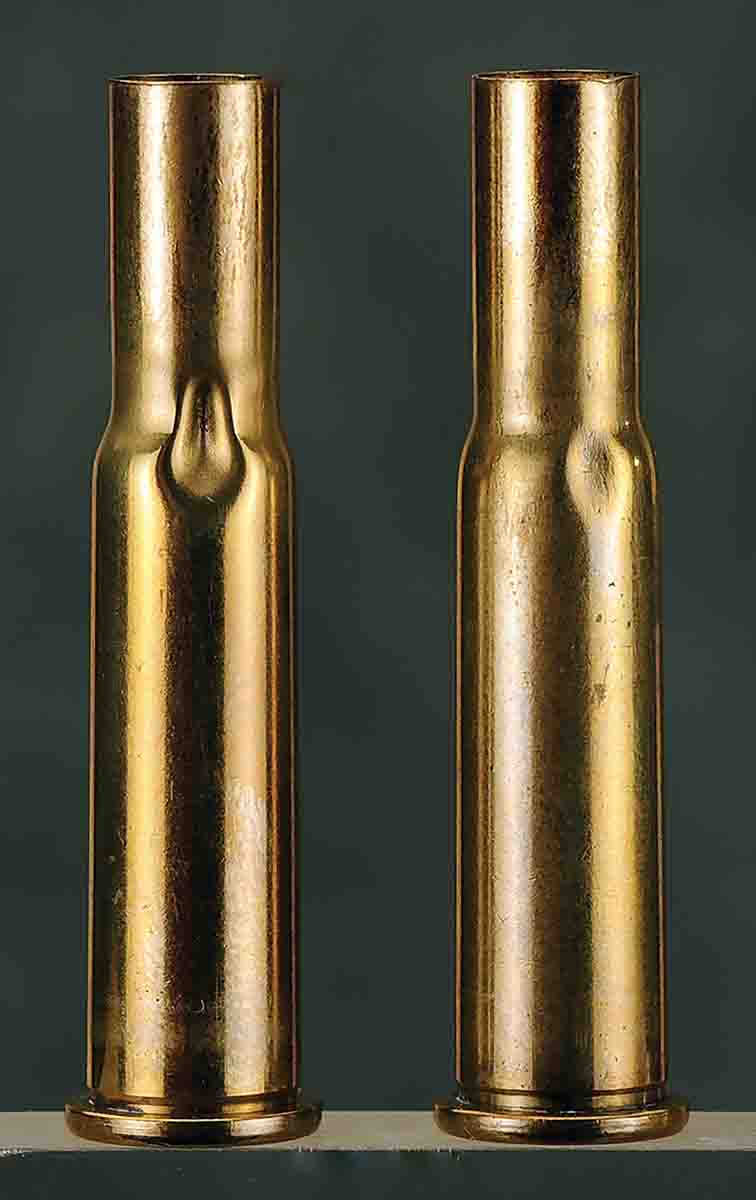
    One thing handloaders have to watch out for, with such extensive forming, is the matter of neck dents. Keep the lube off the shoulder area and use only a minimum amount on the neck and you will be okay.
    One thing handloaders have to watch out for, with such extensive forming, is the matter of neck dents. Keep the lube off the shoulder area and use only a minimum amount on the neck and you will be okay.
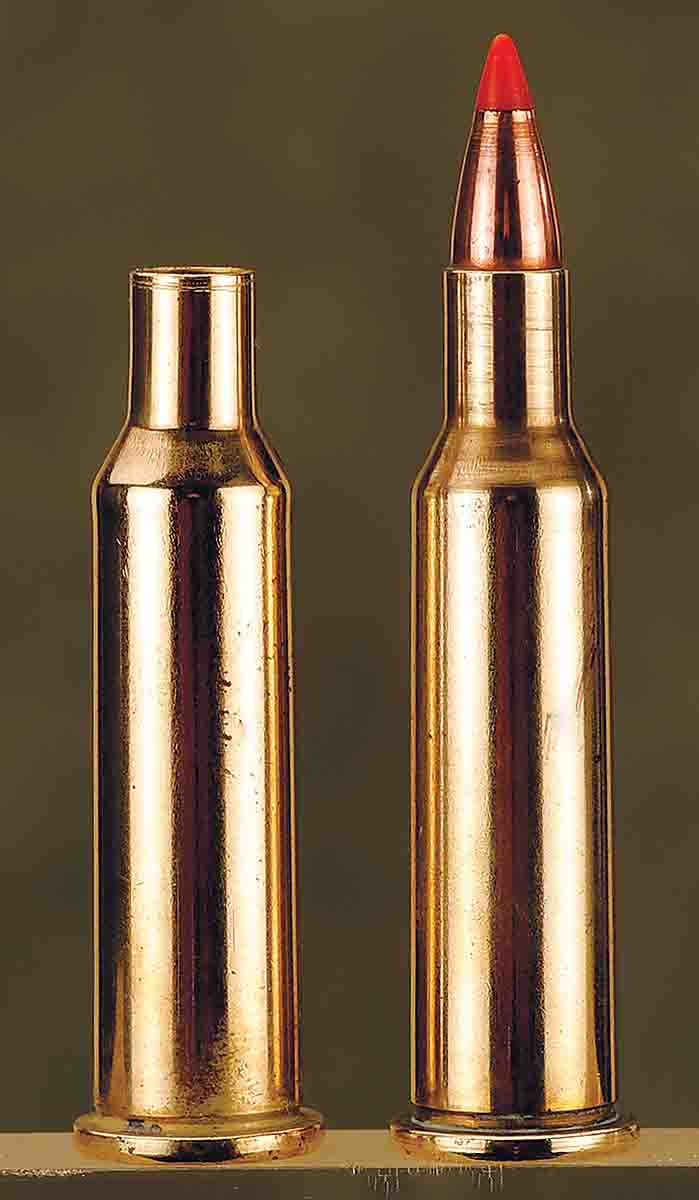
    After all the forming, then fireforming in the rifle to confirm the details, the case is ready for loading and hunting (right).
    After all the forming, then fireforming in the rifle to confirm the details, the case is ready for loading and hunting (right).
    To start to form the Wasp, you can purchase formed brass from Arthur Brown or Buffalo Arms. If you really like to get into the feel of handloading and start from scratch, brass in the form of the 219 Zipper obviously is the best bet if you can find it, however with the Wasp, the 32 Winchester, 25-35 Winchester or the 30-30 Winchester as a great alternative and is readily available as America’s favored hunting cartridge. Checking my cache, I had plenty in stock, so the process began with a list of dies, components and powders.
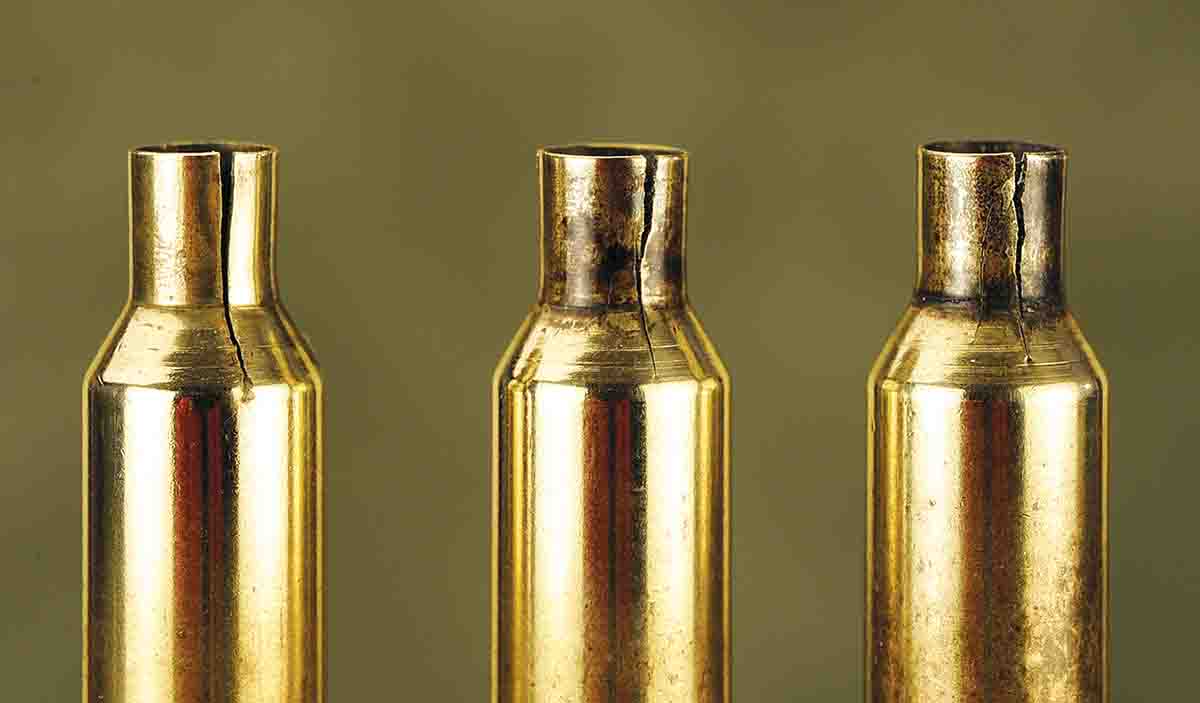
    When fireforming the cases in the rifle for the first time, you are bound to get some neck splits. With the Wasp, Stan only came up with about three or four per hundred, which is a good average, considering the amount of steps necessary in working the brass to this stage of production.
    When fireforming the cases in the rifle for the first time, you are bound to get some neck splits. With the Wasp, Stan only came up with about three or four per hundred, which is a good average, considering the amount of steps necessary in working the brass to this stage of production.

    Assuming you have the rifle, as you will need it for the final fire-forming, the next step is getting the 30-30 into the 219 case – a number established by the Wasp starting out from this case. Order the RCBS case forming set under the number 358024, which is a three-die set including a forming/trim die. Additionally, you will need the traditional full-length set under the number 56003 and the number 2 shellholder. Count off about 20-25 cases for your first time through the dies assembly line style.

    The first die requires some effort on your part as it pushes the shoulder back roughly .635 inch, or about a third of the 30-30 case. When working with this first step, I found it’s best to roll the case softly on the lube pad being careful to keep the lubricant off the shoulder area. This prevents case dents from forming and although they can be blown out during the fireforming, they can weaken the case for future reloads. Now, take a bit of lube between your finger and thumb placing just a small amount on the neck to ease it into the die. At this point, the Winchester case has not grown in size but retains its original 2.039-inch length; with the outside neck diameter slightly reduced to .326 inch.
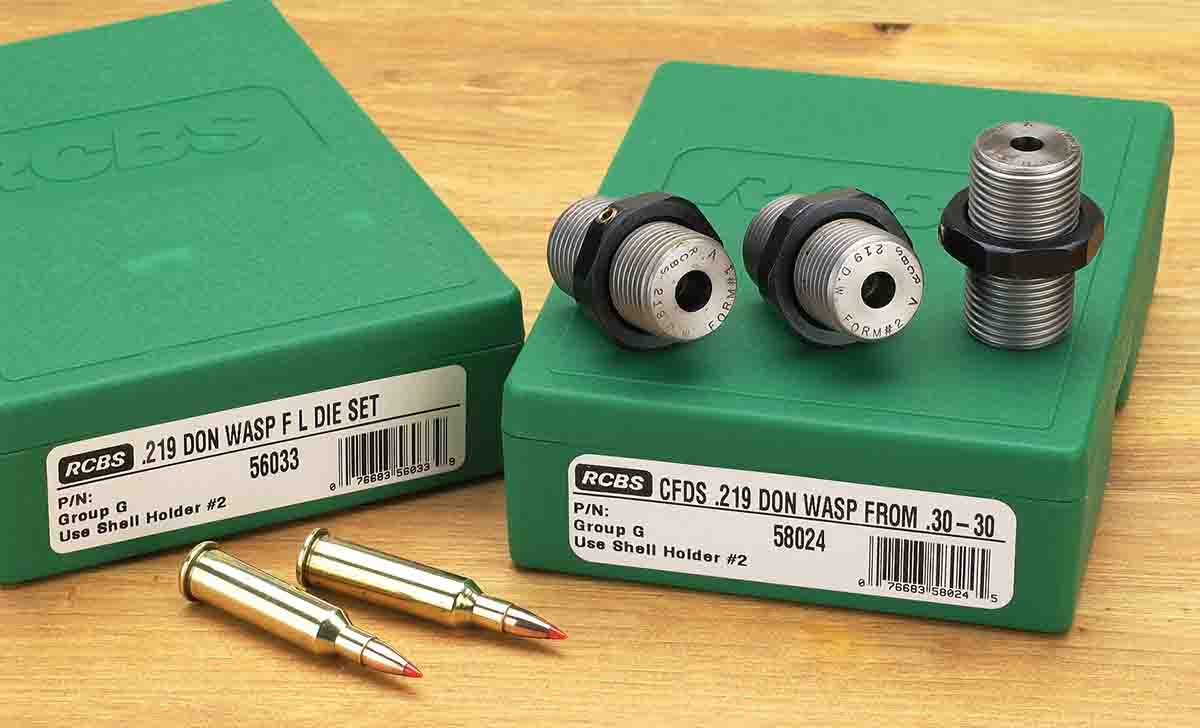
    When working the 30-30 Winchester brass, forming it down to the 219 Zipper, you need two sets of dies – full-length sizing (left) and case-forming (right).
    When working the 30-30 Winchester brass, forming it down to the 219 Zipper, you need two sets of dies – full-length sizing (left) and case-forming (right).
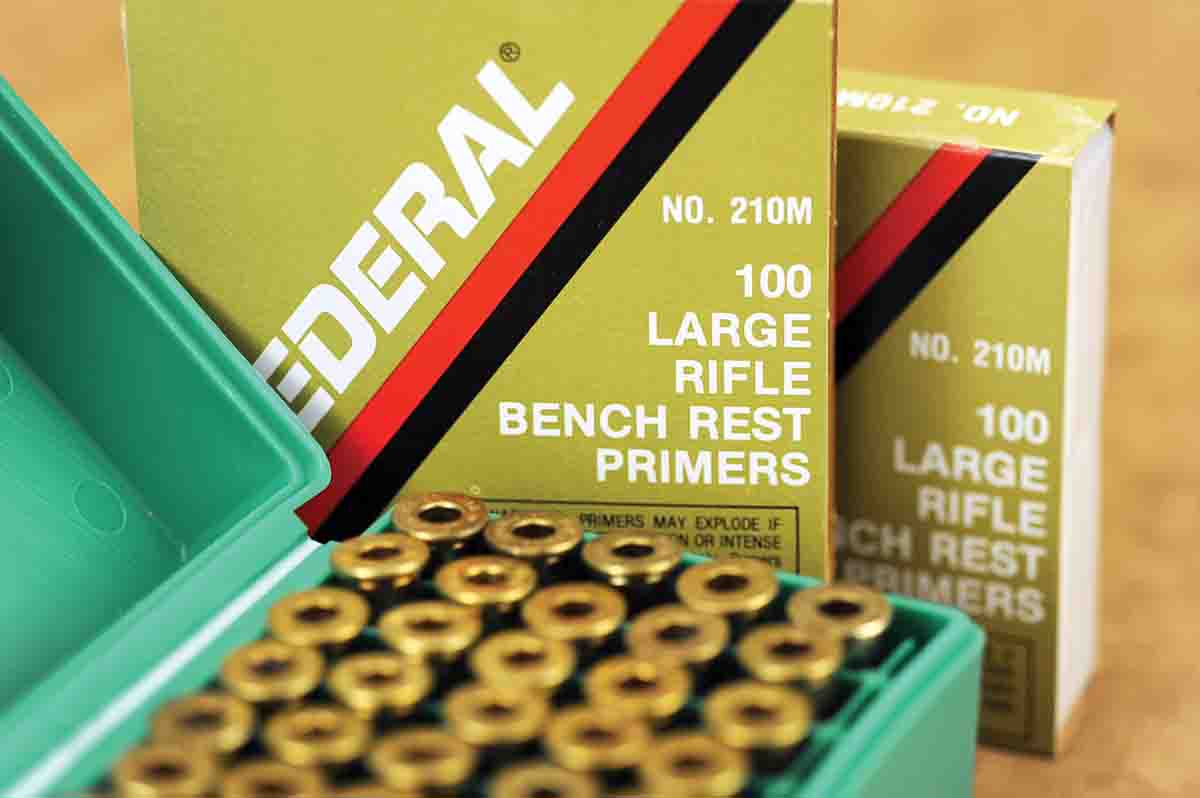
    When it came to primers with the Donaldson Wasp, Stan had good luck with either the standard or the benchrest primers, but found he could realize a bit more accuracy with the latter.
    When it came to primers with the Donaldson Wasp, Stan had good luck with either the standard or the benchrest primers, but found he could realize a bit more accuracy with the latter.
    In die number two, the shoulder is starting to show a distinctive and well-defined shape, the outside neck is down to .289 inch; inside to .265 inch and the overall length now grew to 2.055 inches.

    The last die is the trim die and will reduce the outside dimension to .255 inch, an inside measurement of .228 inch. Now, trim the cases with a hobby hack or razor saw right down to the die body finishing off with a file, which should finish up to 1.765 inches. Finally, set your case trimmer to 1.745 inches, which is the perfect length for the Wasp that will max out to no more than 1.750 inches after some firings finishing up with a trip through the full-length sizing die just to square things up including the neck.

    One thing I want to make clear, and I believe I went over this before, is that the dimensions in the Hornady 7th and 8th loading manual are in error for the traditional cartridge as Donaldson designed it. These dimensions are for the longer, modern version of the cartridge “as a result of measurements taken from the front of the rim instead of the rear” that amount to a case length of 1.813 inches (1.750 plus .063-inch rim thickness) an error that has been noted on other wildcats.
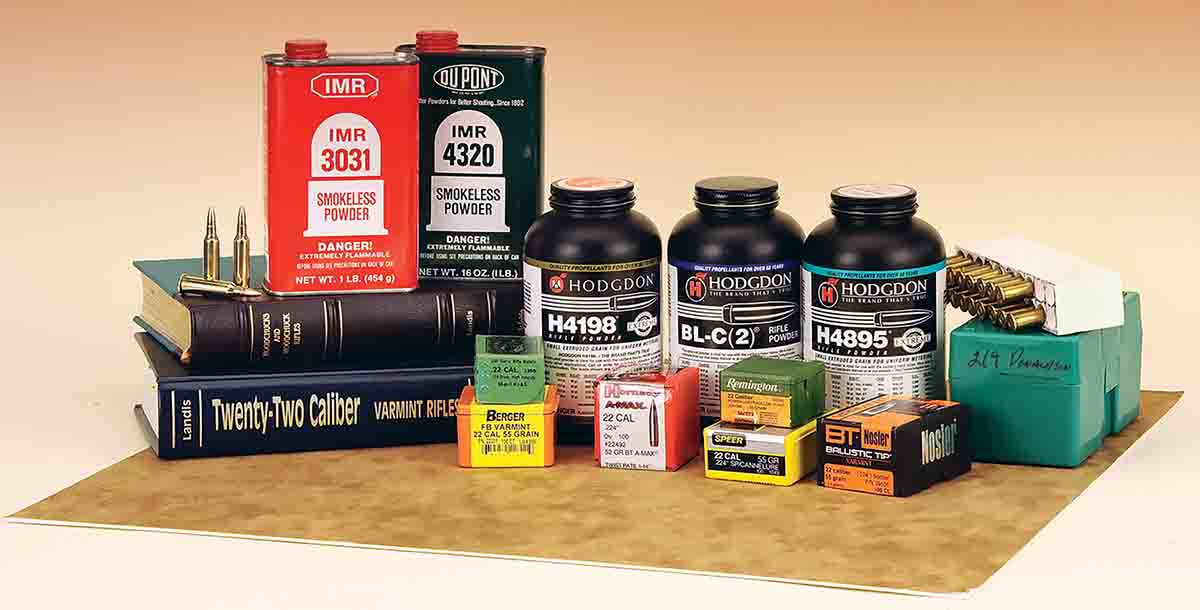
    With the Wasp, over time, Stan found that powders in the medium-to-slow category work the best with this cartridge.
    With the Wasp, over time, Stan found that powders in the medium-to-slow category work the best with this cartridge.
    Primers are always worthy of conversation, with my choice of the CCI No. 200 or the Federal No. 210 benchrest primers that might give a bit more of an edge in squeezing the average of groups down over previous loadings. If you are going out for the first time with your new rifle, make up around 20 cases using 26 grains of Hodgdon H-4895, a 55-grain bullet with an overall length of 2.215 inches to clean up the rifling and have a selection of fireformed cases to work with on the resizing end.

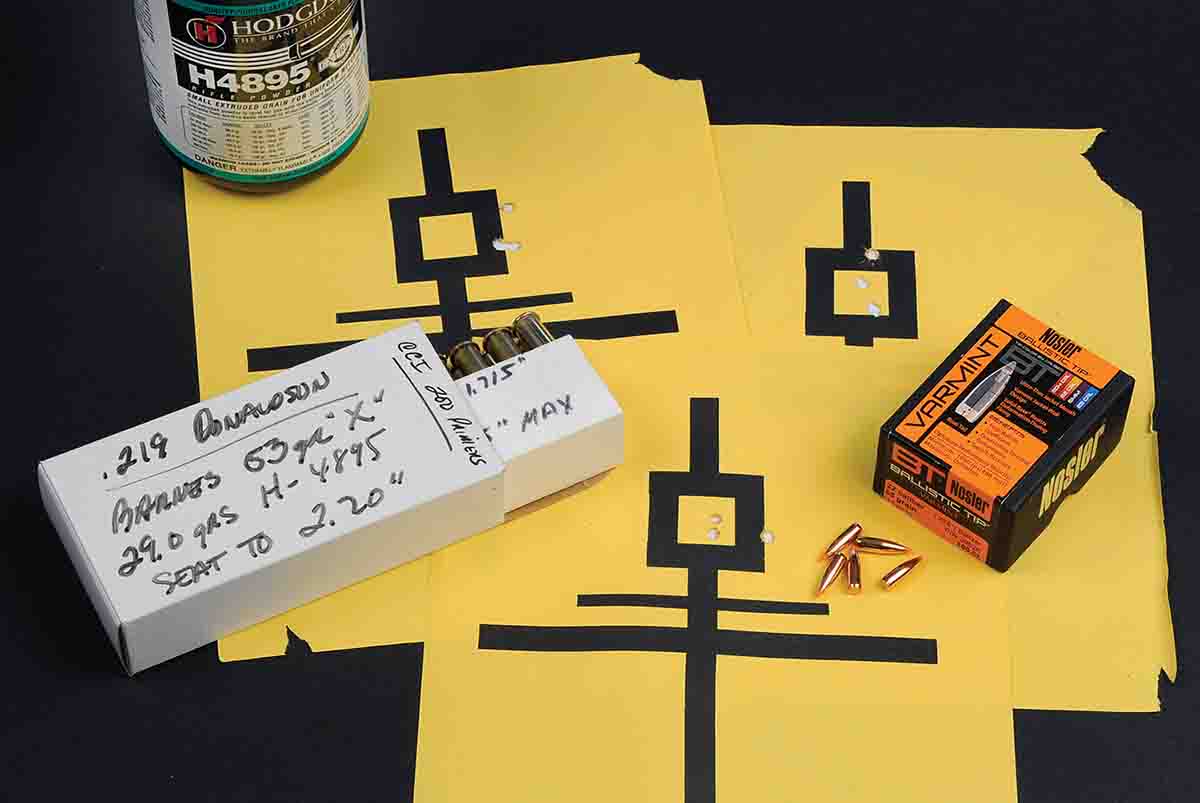
    In testing the Wasp with numerous bullets, powders and primers, Stan found it was not only a fun cartridge to shoot but accurate as well. Witness these random targets at 100 yards.
    In testing the Wasp with numerous bullets, powders and primers, Stan found it was not only a fun cartridge to shoot but accurate as well. Witness these random targets at 100 yards.
    Since these and subsequent cases would be used in the Ruger No. 1, I felt no need to full-length size, only neck-size for long case life and the best accuracy.

    When it came to powders, the Wasp is perfectly at home within the medium to slow category on the burning rate scale. From H-4198 to H-380 and everything in between, the cartridge just happily purred along with more than decent velocities and great accuracy.

    Bullets, of course, are always a matter of personal choice depending on the game hunted, distance and the preference of the rifle to produce the best groups. Like some of the factory ammunition on the market today, bullets made by Sierra, Speer, Berger, Hornady or Barnes seem to have no end to what they can produce downrange. By some serious handloading, I found that with the Wasp’s case design, I had little or no problems in setting the tone for some tight groups and velocities that would get me over the mark for the modest distances we have here in New England between the older stonewalls. During “chuck” season, the Ruger rifle proved its mettle and going afield with a single-shot rifle chambered for an extraordinary vintage cartridge just added to the fun of the hunt.

    If you want a cartridge with consistency, the Wasp may be on your short list. Here are 10 shots at 100 yards under an inch.
    If you want a cartridge with consistency, the Wasp may be on your short list. Here are 10 shots at 100 yards under an inch.
    In the end, I found that one of Donaldson’s original loads of 28 grains of IMR-4064 produced one of the best groups under an inch with either a quality 52- or 55-grain bullet at around 3,100 feet per second seated to 2.215 inches. Zeroed-in at 200 yards, the 55-grain bullet will rise about 1.6 inches at 100 yards; drop to minus 8 inches at 300 yards. I am happy with that!

    No doubt, you have sensed my favoritism towards the 219 Donaldson Wasp. Mention has always been made as to how the 22/250 Remington could be, might be or should be a better alternative, but when I dig into the cartridge like this, chamber a rifle for it and work the round into a wildcat I can fire, it wins hands down – all the time.

    Harvey led a full life doing what he wanted to do. He gave birth to a number of productive cartridges, was deep into handloading and ballistics and his book titled Yours Truly is a classic and something every rifle enthusiast should read. Donaldson died on November 6, 1972.

    Thanks Harvey. You did good.


    Ode to “Chuck Huntin”

    He’s prolific, he’s terrific
    and with any kind of luck,
    I’ll be three score ten and plenty
    when I shoot my last woodchuck….
    – D.M. Moroughan


    Wolfe Publishing Group