

22-284 Winchester
Extreme-Range Varmint Zapper
feature By: Patrick Meitin | October, 22
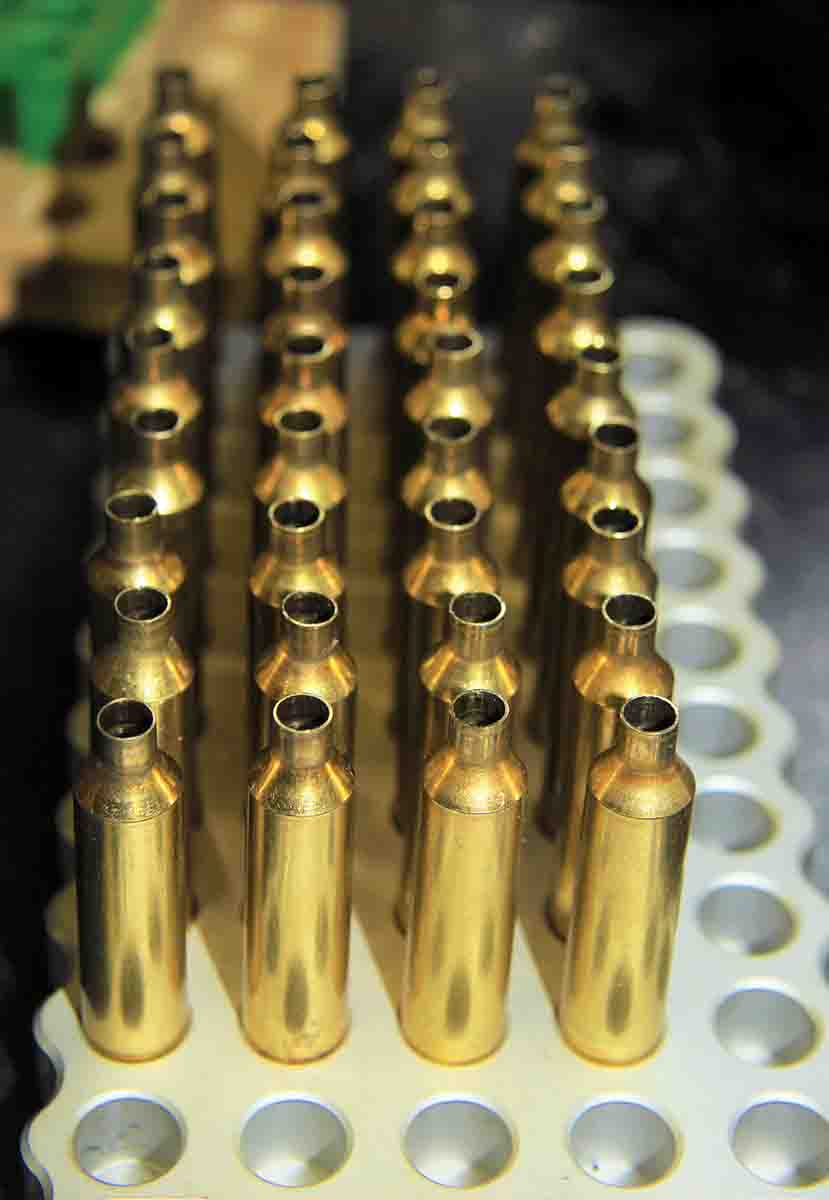
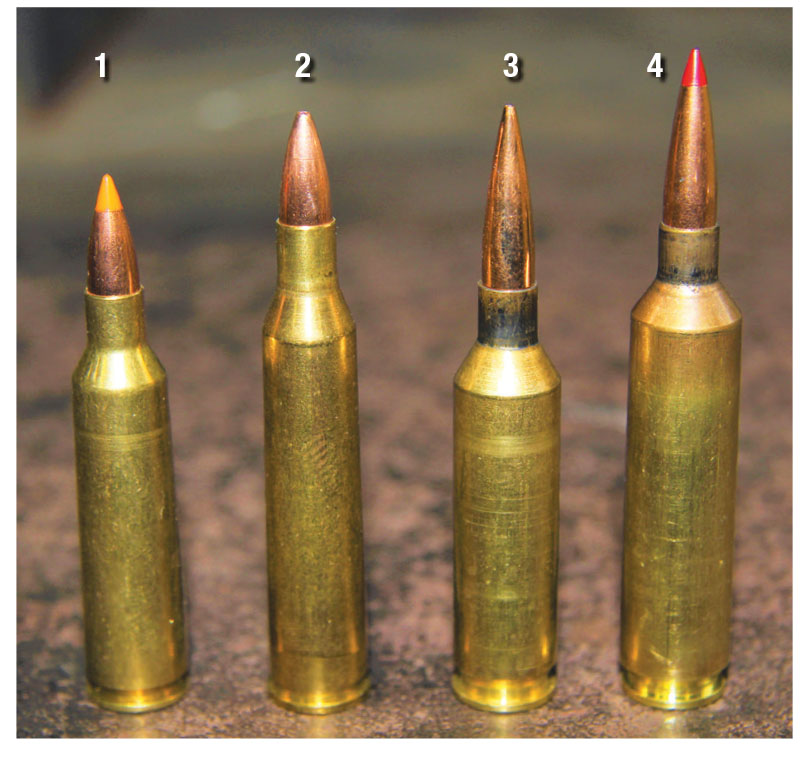
While the 284 Winchester is all but dead in the commercial market, the case has been necked up and down to every conceivable diameter by intrepid wildcatters. The most popular is the 6.5-284 Winchester and Norma (the latter includes more generous freebore to accommodate longer, heavy-for-caliber bullets), which has become wildly popular with the long-range set. The 284 Winchester has also served as the basis for wildcats holding .243-, .257-, .277-, .308-, .338- and .358-caliber bullets. The list of 284 Winchester wildcats would also include the 22-284 under discussion here.
The 22-284 is wildcatting taken to extremes. The round is grossly over-bore, and would make absolutely no sense without the test rifle’s 1:7 rifling twist. Okay, the round is still a bit much, but loading long-for-caliber bullets with G1 ballistic coefficients (BC) in the mid .400s to high .500s does create one heck of a long-range speed
True, barrel life will undoubtedly prove short, in terms of lifetime round count, as I expect to get no more than 2,000 rounds out of this rifle – maybe less – before throat erosion begins to negatively impact accuracy. But this is not a rifle I’d carry into high-volume varmint arenas. This is a highly specialized, 10-shot-a-day-maximum rockchuck or groundhog rifle, an extreme-range coyote gun, something I might snipe the occasional wild hog with. Those 2,000 shots should last me a lifetime. I took more life off this barrel during load development than will ever occur in the field.
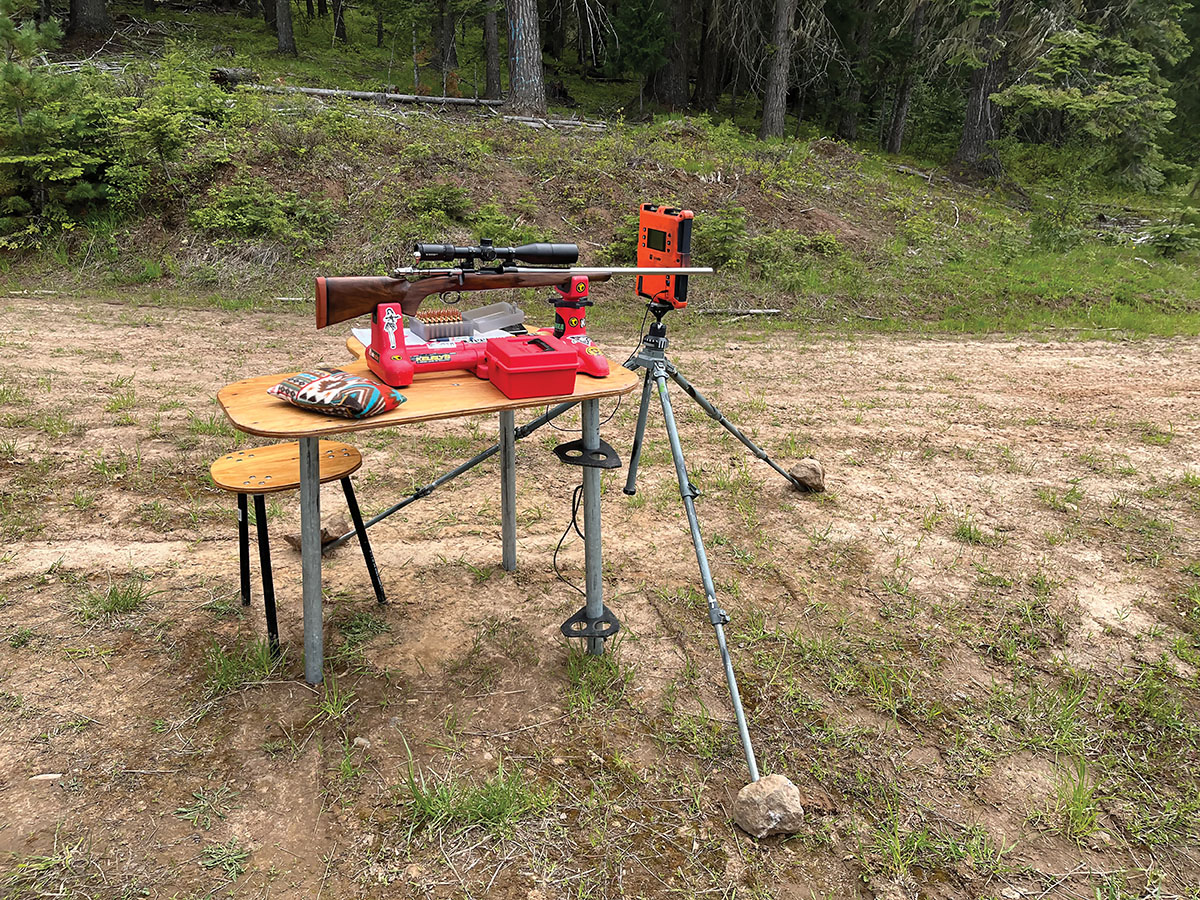
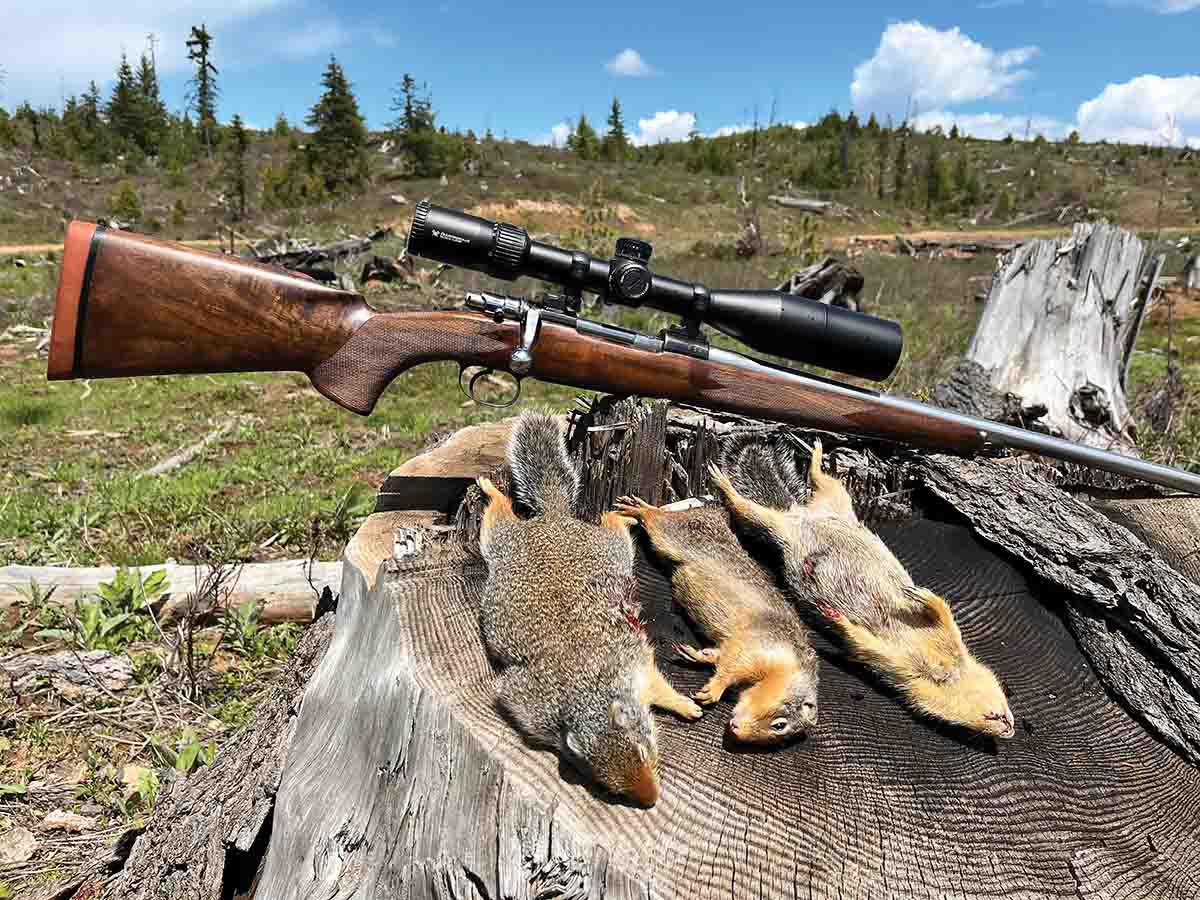
The test rifle is obviously a custom job, built on a Gewehr Model 98 Mauser action. The side stripper-clip thumb indent marks it as a military weapon. A mystery 26-inch stainless-steel barrel was added, holding only the markings “22-284.” The barrel measures a healthy .82 inch at the muzzle and included very little taper from the breech. The stock is gorgeous, carved from well-figured walnut and included a snazzy Schnabel forend, 24 lines per inch hand-checkering on the forend and grip areas, raised-cheek comb, quick detach sling sockets and an orange Decelerator recoil pad. The Timney replacement trigger is very crisp, breaking at 1.04 pounds. A side Remington-style safety has been added. I mounted a Vortex Optics Diamondback Tactical 6-24x 50mm scope, set in Leupold STD 30mm rings and two-piece STD bases. The rifle weighs 11.18 pounds as tested. The 13-inch length of pull is a bit short for me, but overall, the rifle is comfortable enough.
Dies for the 22-284 are readily available. Redding Custom full-length dies and a Redding Form & Trim Custom die were used to assemble test ammunition. The latter is actually important, as simply shoving 6.5-284 brass through a 22-284 Winchester full-length die will result in crushed cases every time due to the steep shoulder angle. The Form & Trim die eases the .06-inch transition from 284- to .224-inch necks. Nosler and Lapua 6.5mm-284 Norma parent brass are readily available (Quality Cartridge and RCC Brass offer properly headstamped cases), or I should say they are usually available, except for the latest spate of component hoarding and resulting shortages of everything gun related. These are but minor challenges.
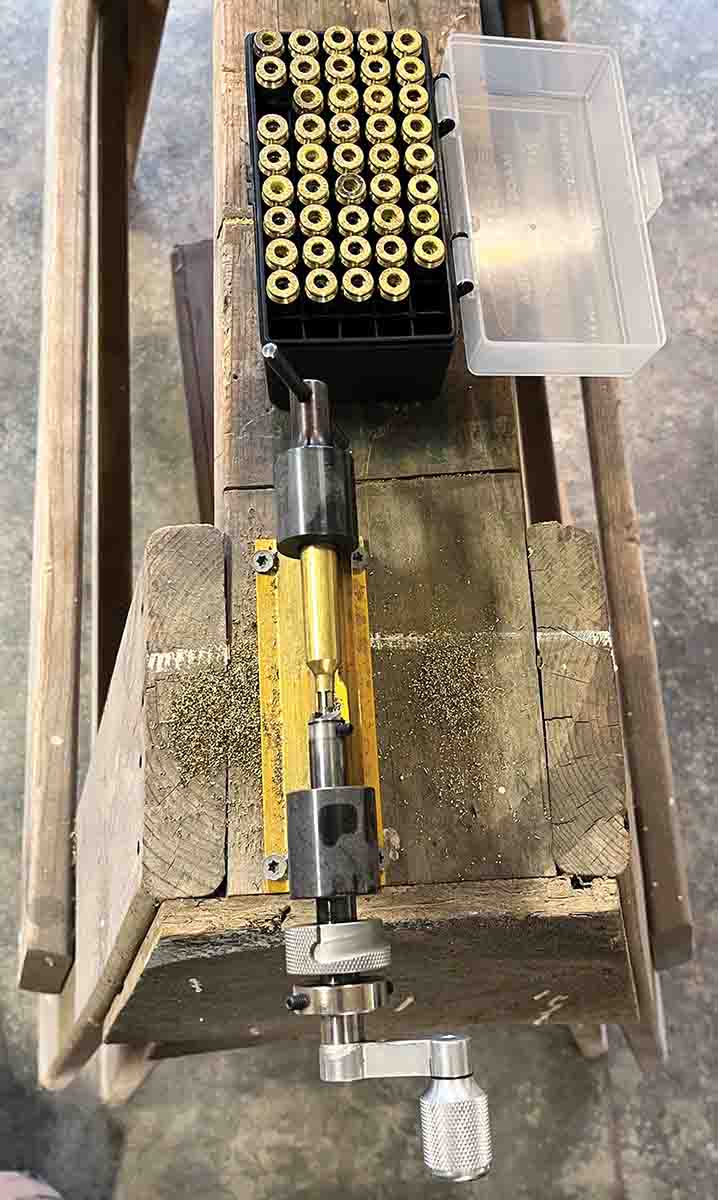
A handful of new Quality Cartridge 22-284 brass was used to establish maximum case length – 2.147 inches – the necked-down 6.5mm-284 brass coming out of the Form & Trim die a bit shorter and then gaining a bit after full-length resizing. All were trimmed to 2.145 inches for symmetry. I then discovered that after seating bullets into the resized 6.5-284 brass, cartridges would not chamber in my rifle. Those loads would have to be disassembled, brass resized with the decapping pin removed to save precious primers, and inside reaming conducted with a Forester Appelt neck-turning/reaming tool. This took necks from .015-inch to .013-inch thick. Another run through the full-length resizing die made them ready to load again. Both new Quality Cartridge and resized brass required this treatment.
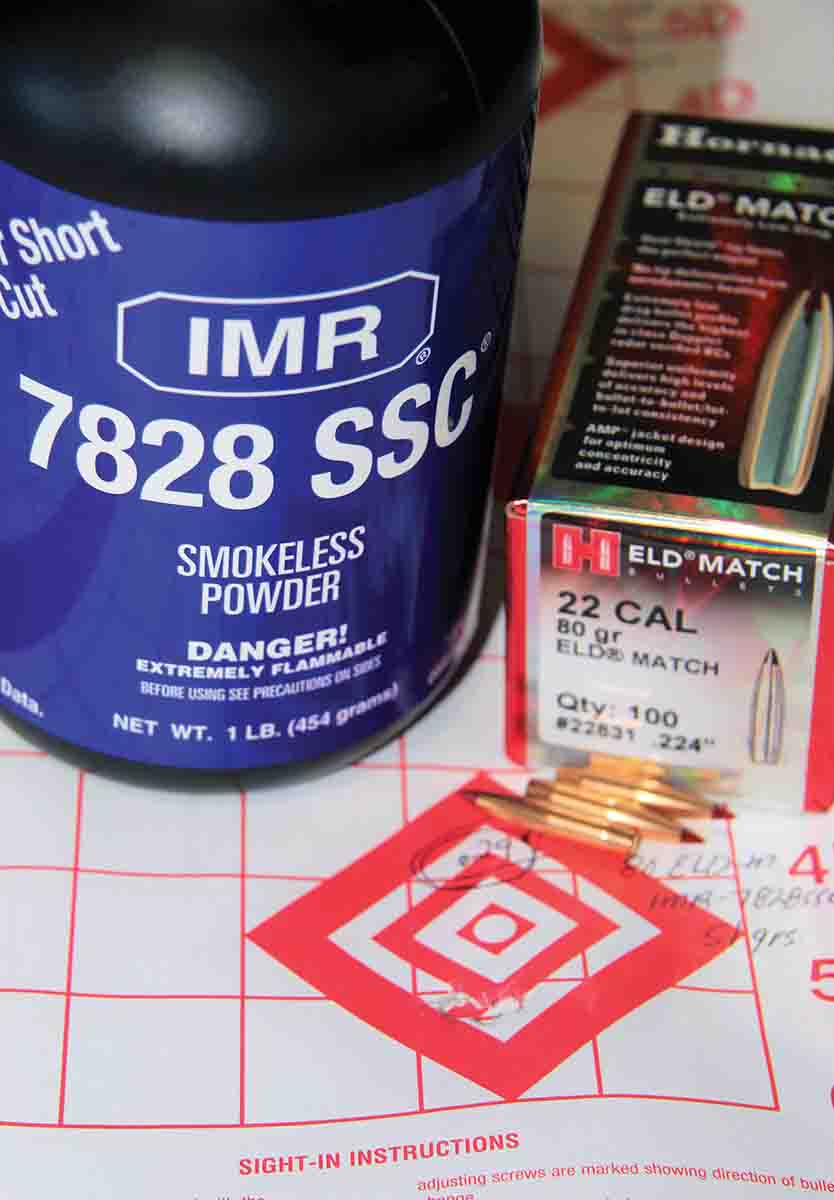
Quality Cartridge 22-284 brass held an average of 61.3 grains of water when filled to the brim, reformed Lapua brass held 63.5 grains and Nosler 63.3 grains of water on average. Powder charges ran from 44 to 53 grains, depending on the powder chosen.
My initial load development, conducted last summer, revealed that the 22-284 runs hot – very hot. A single three-shot string (the new normal during these times of component shortages) would turn the barrel conspicuously hot to the touch. Water-soaked towels were wrapped around the barrel between groups to speed cooling. Failing to cool the barrel between shot strings resulted in bullets occasionally flying apart before reaching the target. I’d guess this was from a combination of excessive bore heat, the fast twist rate and constricted bore. This resulted in a very slow shooting pace, with listed loads requiring several days at the bench.
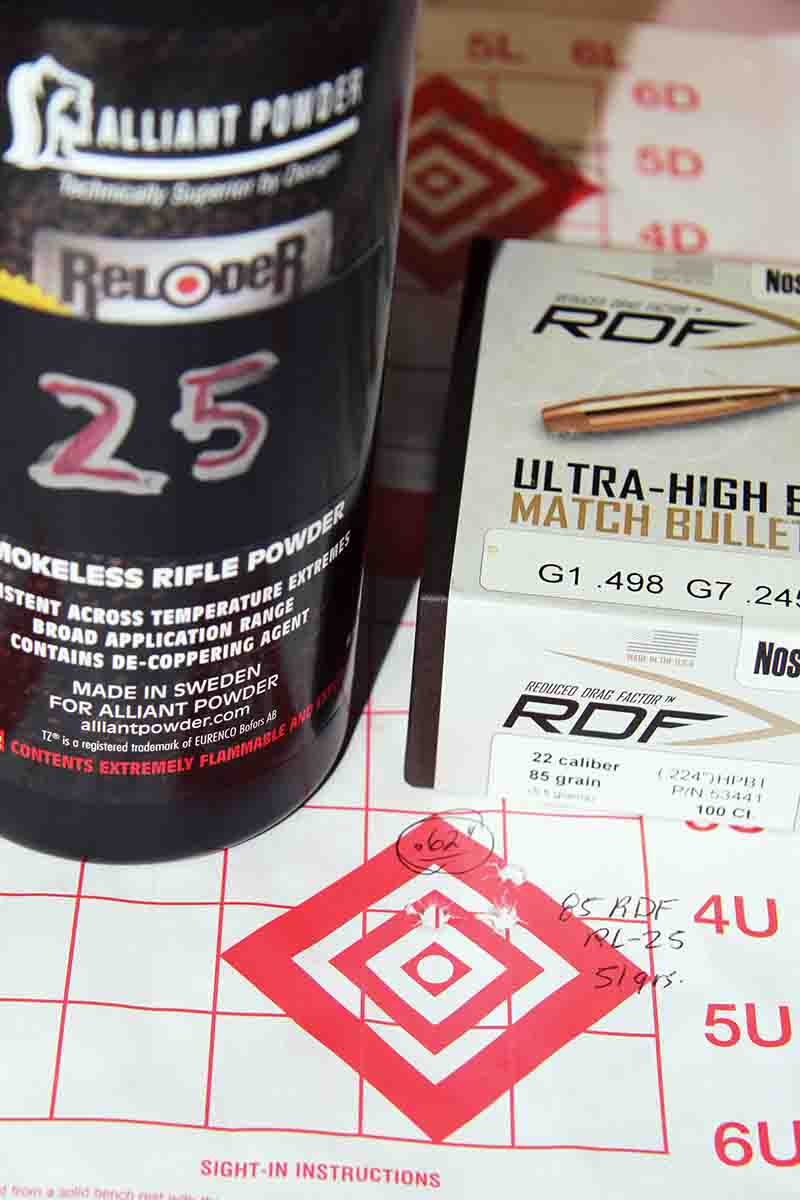

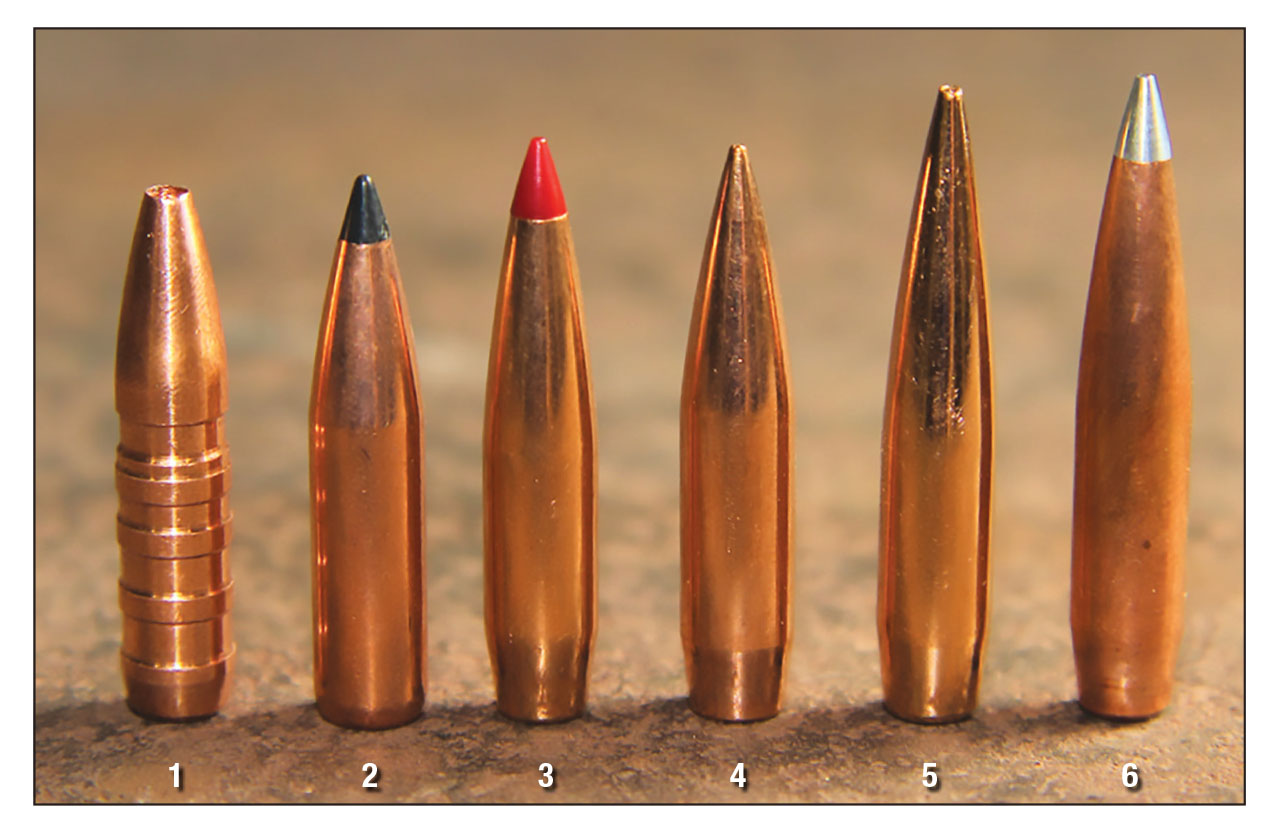
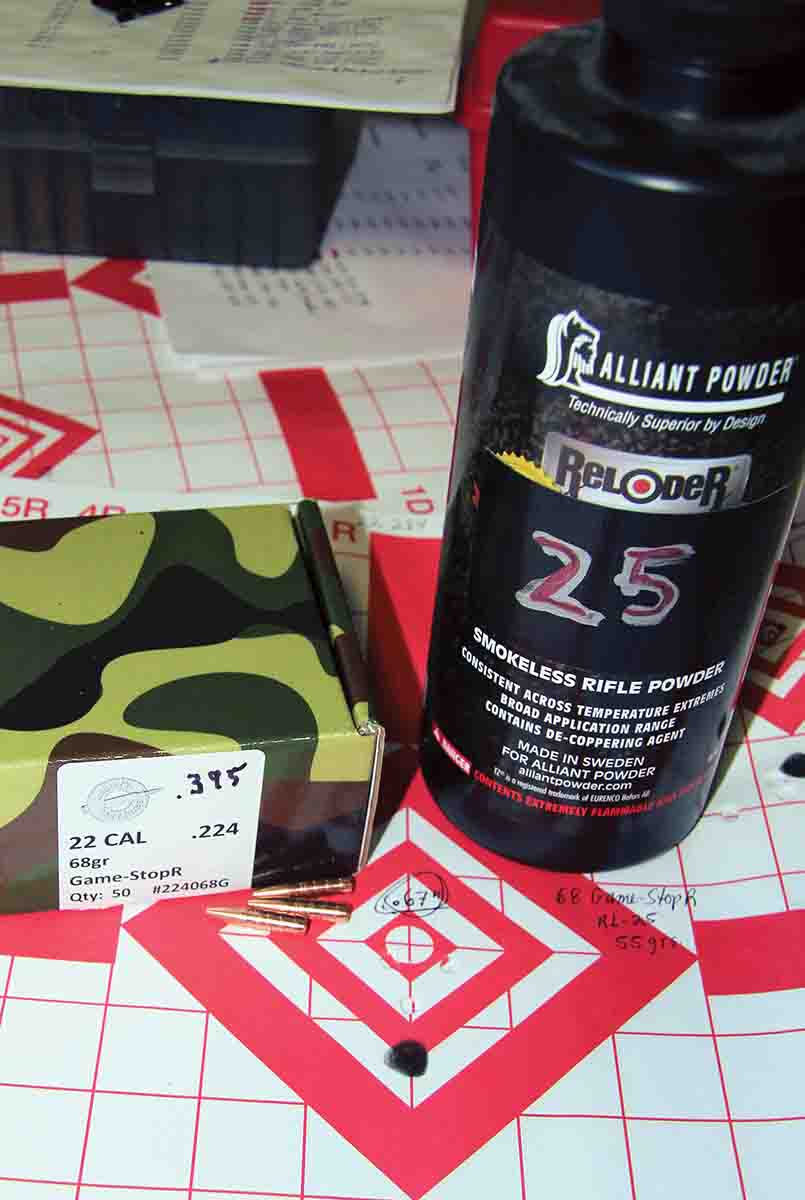
Quality Cartridge’s new 68-grain Game-StopR is a monolithic copper hollowpoint bullet with a .395 G1 BC. They showed signs of minimal stabilization during a recent 1:9 twist .220 Swift project, so I judged that they would work perfectly with the 1:7 twist of the test rifle. That proved correct. At 22-284 velocities, I also suspect they should prove explosive. Alliant Reloder 25 and Vihtavuori N165 were paired with this bullet. Reloder 25 showed a decided accuracy edge, all loads averaging just shy of ¾-inch, the best a .67-inch group at 3,768 fps using a maximum load of 55 grains. N165 did not perform as well with this bullet, the best group was just .88 inch.
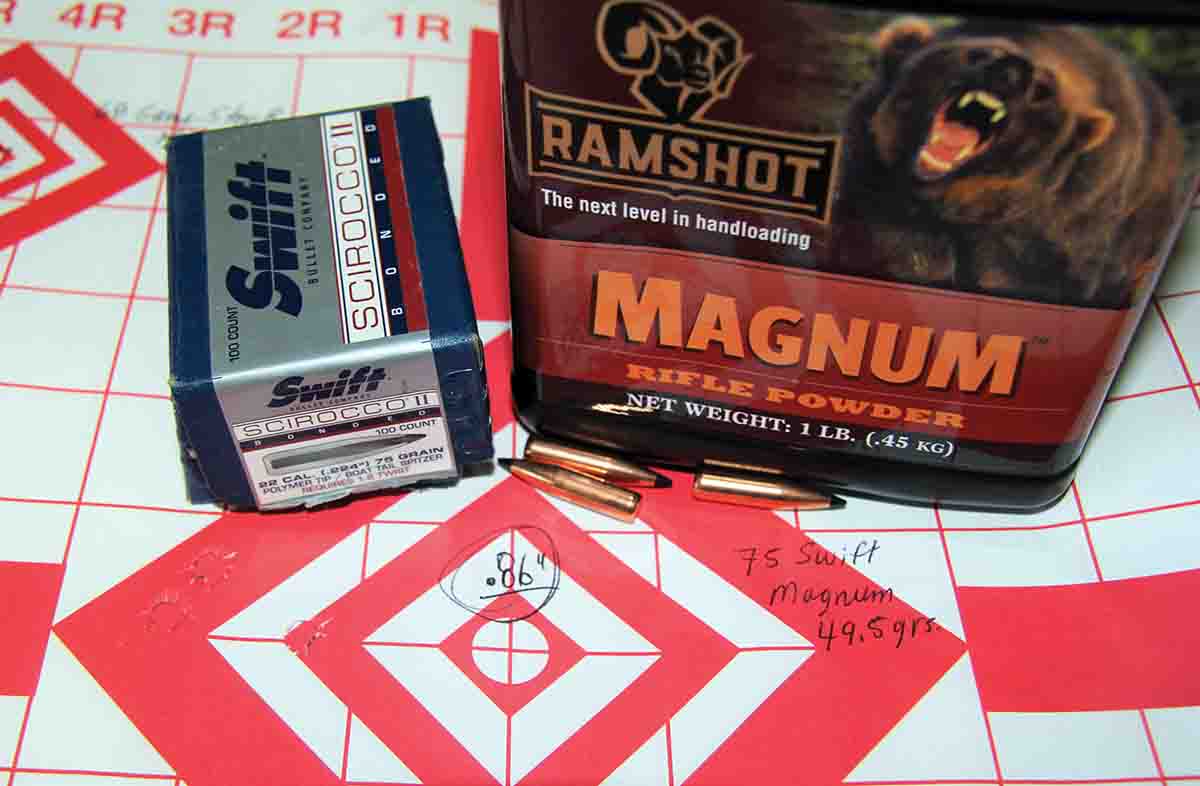
Swift’s 75-grain Scirocco II is an ultra-tough, tapered-jacket/bonded core bullet with a minimal recommended twist rate of 1:8. I wouldn’t hesitate to shoot a wild boar (or deer) with this bullet, though it would also make an ideal pelt-shooting option producing minimal hide damage. The black polymer tip and boat-tail give it a .419 G1 BC. Ramshot Magnum and Hodgdon H-4831sc were used to test this bullet. Magnum gave the best overall group average and the tightest group at .86 inch at 3,415 fps using 49.5 grains of powder. Hodgdon H-4831sc, usually a stellar choice in this round, did much worse. Overall, it would appear my rifle just didn’t care for this bullet, or perhaps just the seating depth chosen.
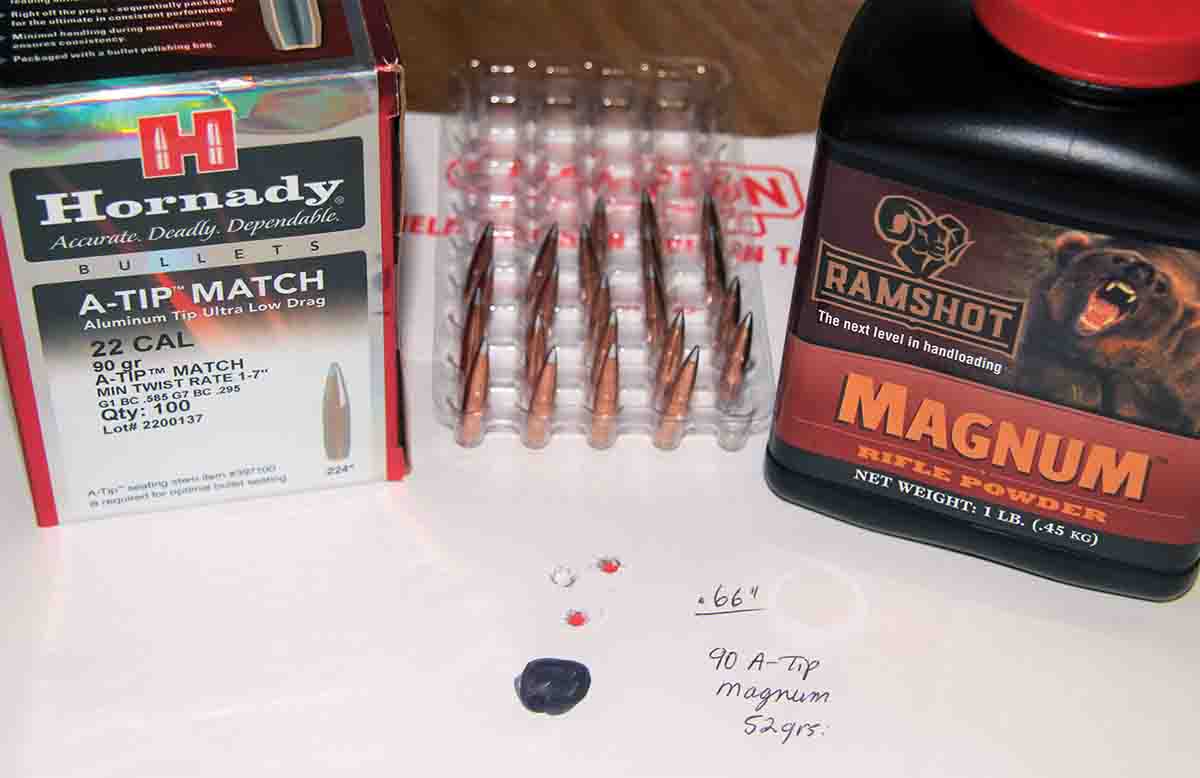
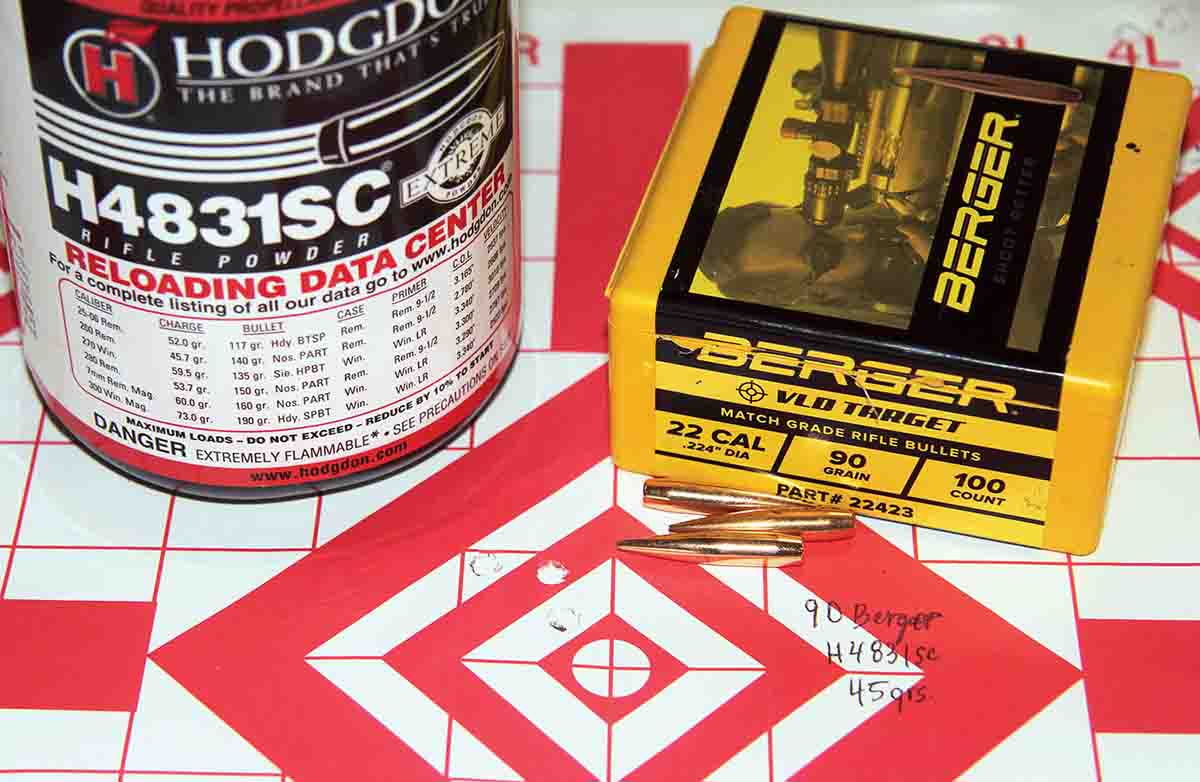
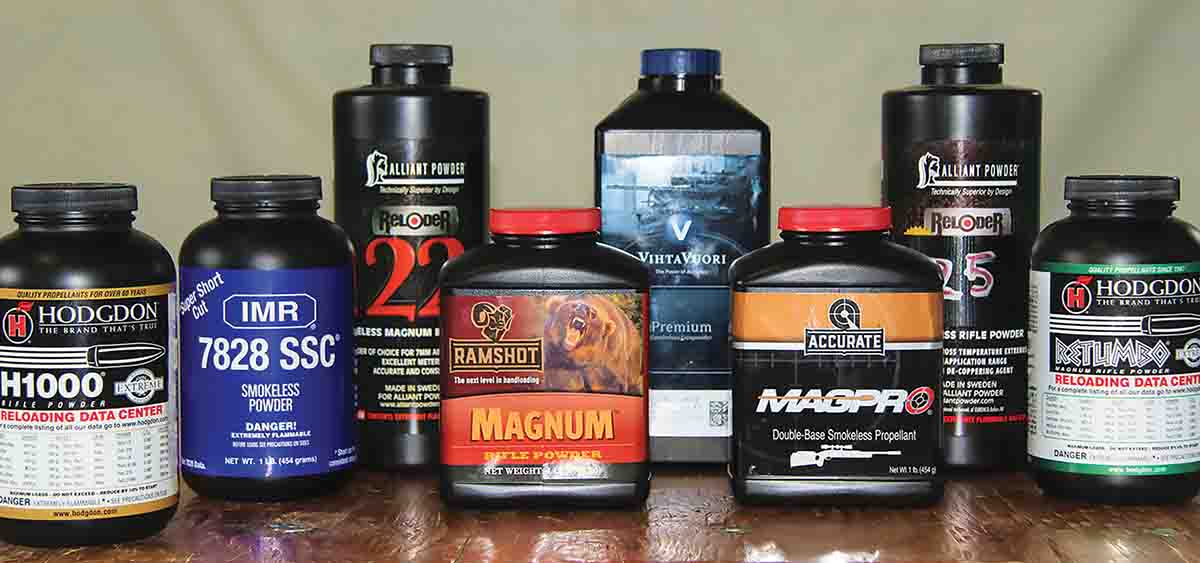
The 90-grain bullets actually struggled a bit, a VLD Target/H-4831sc pairing doing best, printing .64 inch at 3,091 fps using 45 grains of powder, while 46 grains opened the group to 1.08 inches. Magpro managed three groups surrounding 1½ inches. On average, the A-Tip Match did a little better, the best group was .66 inch at 3,362 fps using a maximum load of 52 grains of Magnum. Retumbo and Magnum both produced impressive velocities, the latter is a powder that likely deserves more experimentation with this cartridge; though its best group here was just .91 inch at 3,309 fps using a maximum load of 51 grains.
Would I recommend having your own 22-284 built? That really depends on your willingness to tinker, and what your varmint-shooting inclinations are. The round requires several extra steps during loading, seems extremely finicky (at least from my rifle), and barrel life is guaranteed to be short. For specialized varminting – long-range/windy-country rockchucks, groundhogs or prairie coyotes, shooting where daily round count seldom exceeds 20 rounds – it just might be the solution to your problems. It is wildcatting taken to extremes, but since when has wildcatting been viewed as completely practical? This is all about pure speed!
.jpg)