

Classic vs. Modern Varmint Bullets
Are Classic Bullets Obsolete?
feature By: Patrick Meitin | October, 22
Classic varmint bullets do include net positives. High on my list is cost, especially when faced with high-volume varmint-shooting in areas such as eastern Oregon for Belding ground squirrels, or a remote Wyoming prairie dog town that has seen minimal shooting. The classics, with some exceptions, are typically much more affordable – in some cases – half the cost when purchased in bulk from outfits such as Midsouth Shooters Supply or Midway USA. I also callout the above varmint-shooting destinations specifically because shots rarely run beyond 250 yards, unless you purposely seek such shooting, which means high ballistic coefficient (BC) bullets generally aren’t mandatory. In general, I’ve also found the classics to be pretty darn accurate. My 22-250 rifle, used for testing here, seems to actually prefer them.
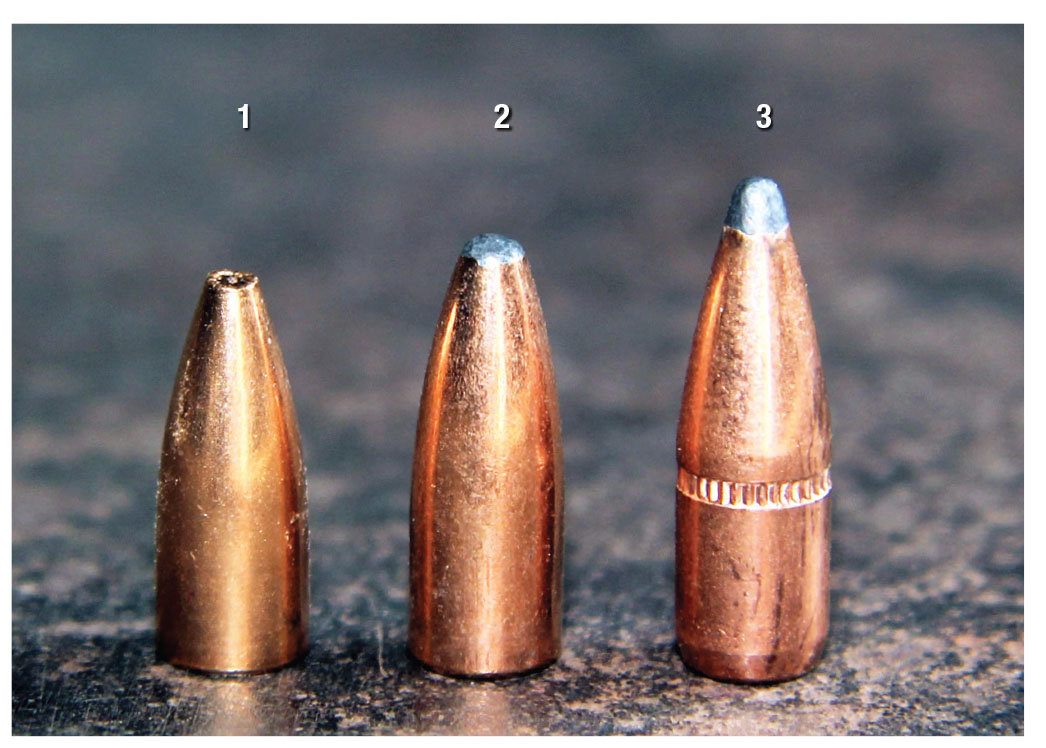
The classics chosen for this test included three designs mirroring those used during my early days as a varmint shooter – all that was available in the late 1970s to early 1980s and still popular today. Filling the 40-grain slot is Sierra’s Varminter Hollow Point with a G1 BC of .165. This is a fairly “hard” bullet, suitable to 22-250 Remington or 220 Swift velocities. I loaded these bullets in my 22 Hornet once upon a time, for instance, looking for improved ballistics over standard blunt-nosed Hornet bullets. They acted like full metal jackets on varmints, requiring velocities in excess of 3,500 feet per second (fps) to perform as designed. My 50-grain classic is Remington’s pre-bankruptcy PSP (Pointed Soft Point) with a G1 BC of .193. My 22-250 Remington typically loves these squatty bullets, producing tiny cloverleaf clusters at 100 yards with the right load. I used them here because I scored a great deal on a thousand some years ago, there are lots of them still floating around, and the new Remington seems to be offering them once
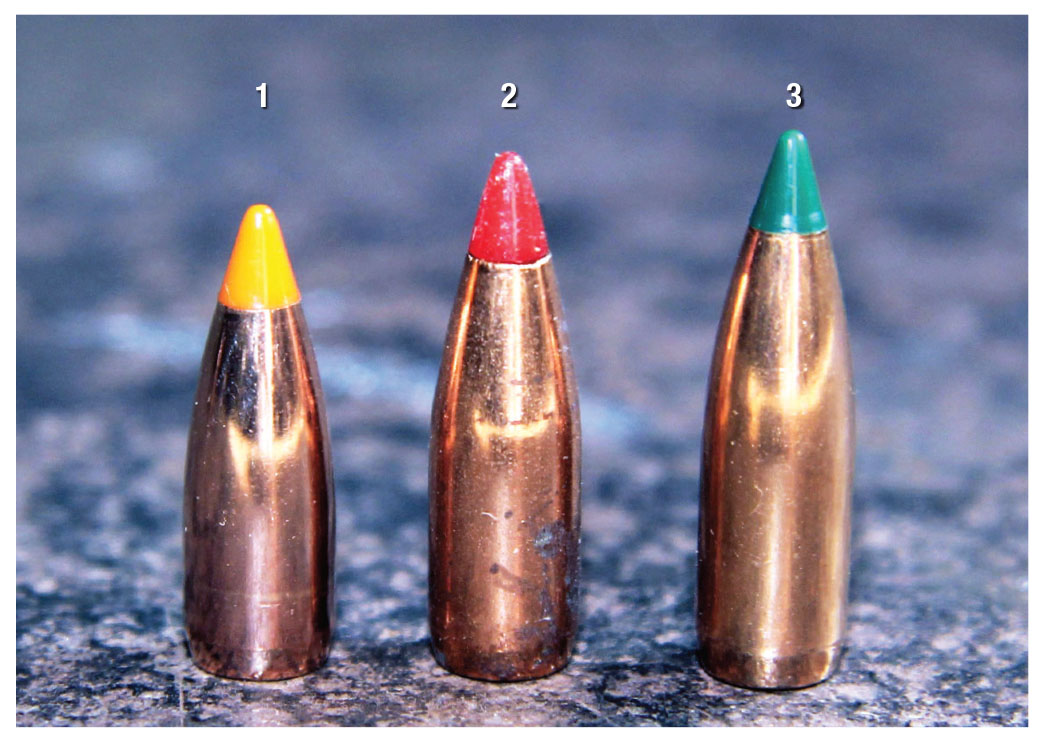
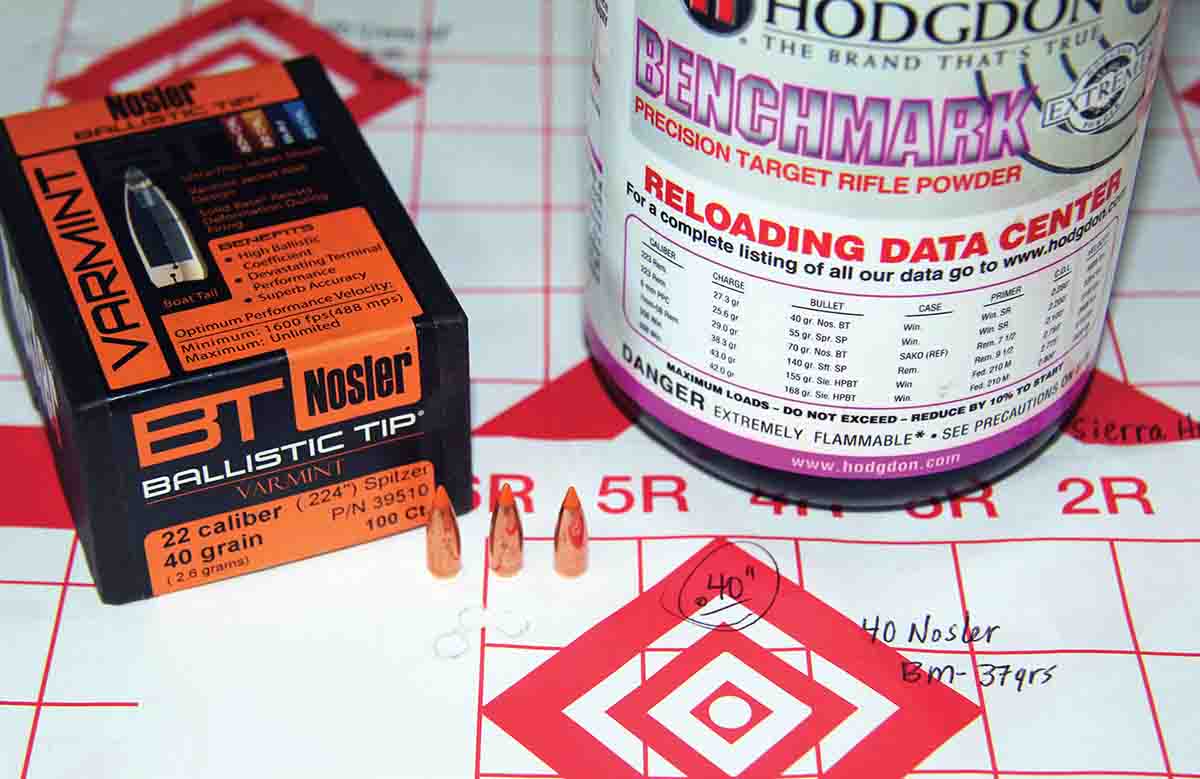
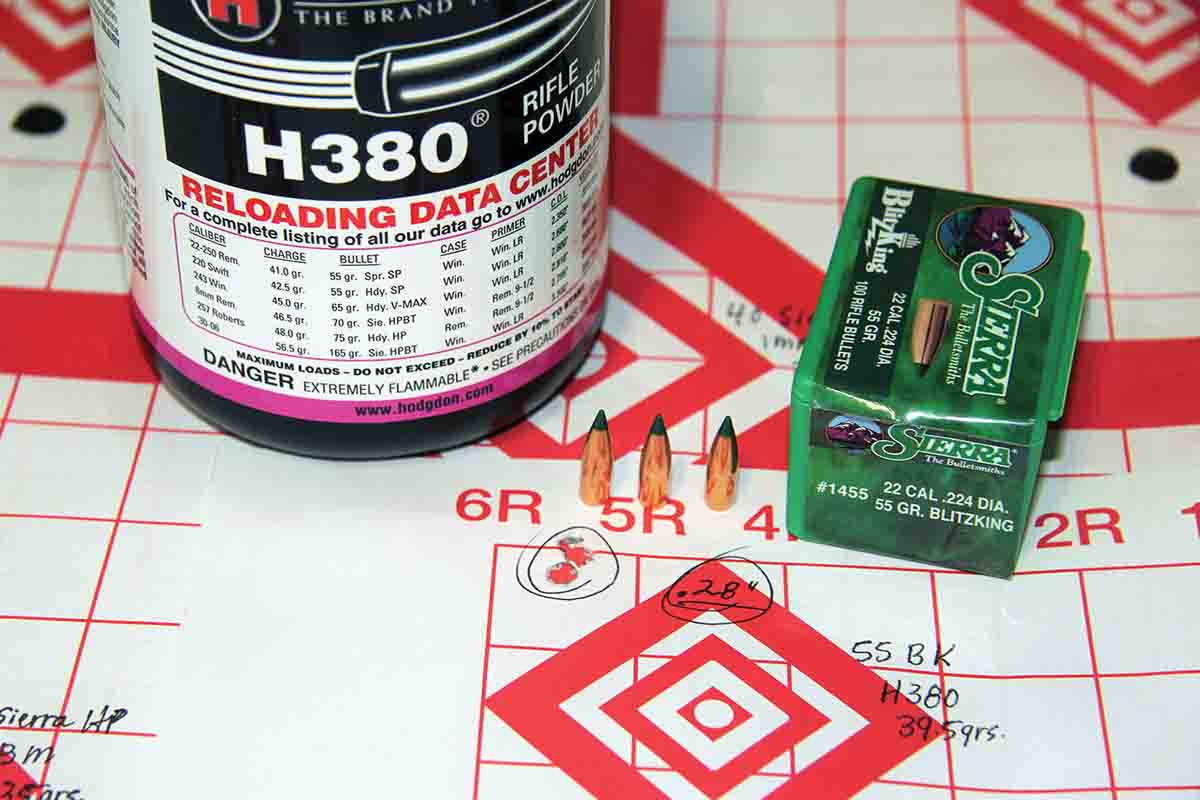
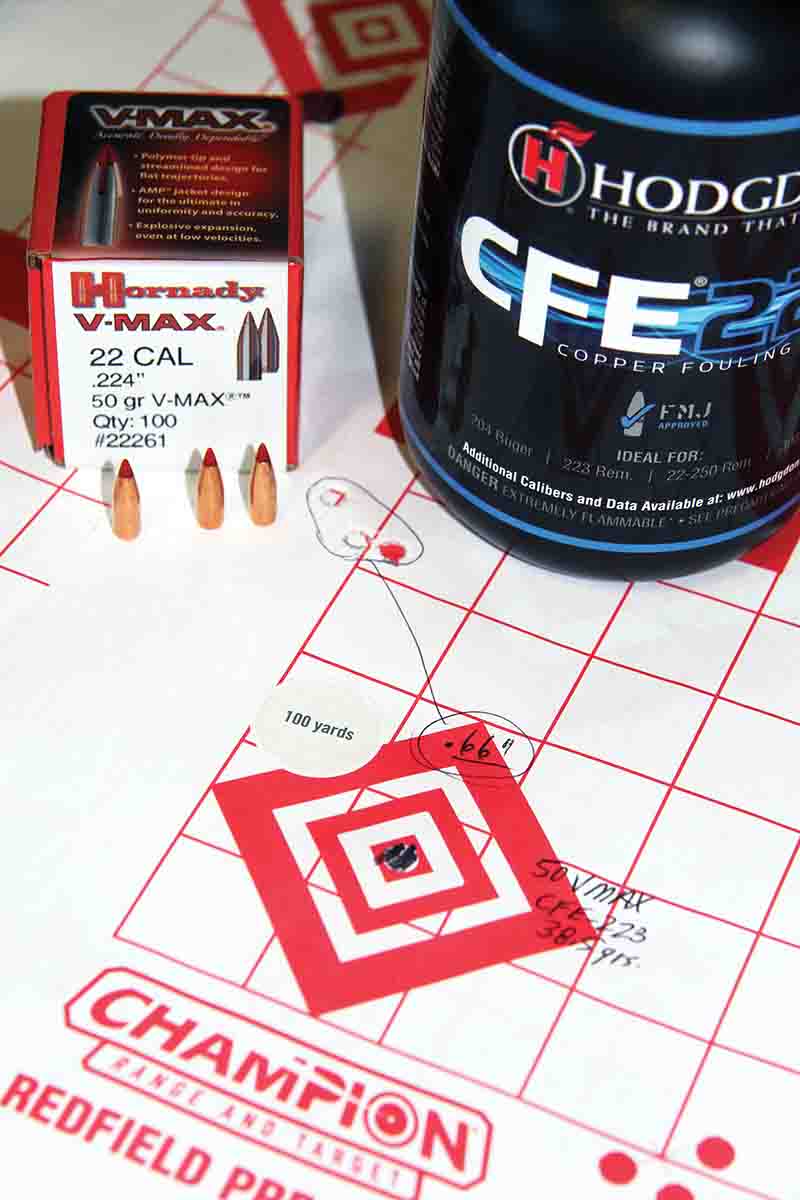
The modern bullets in this test all wore polymer tips, if fired from a rifle with even slightly faster rifling twist than the ultra slow 1:14, I might have included one of Berger’s spear-like, boat-tail hollowpoint match-style offerings. In 40 grains, Nosler’s groundbreaking Ballistic Tip Varmint made an obvious choice. Its sharp plastic nose and boat-tail profile give it a 221 G1 BC. Hornady’s 50-grain V-MAX, with its G1 BC of 242, filled that slot nicely, while Sierra’s BlitzKing represented the 55-grain weight, bringing a 271 G1 BC to the table. Those .049 to .056 differences in BC – a lesser .007 for the 55-grain bullets – aren’t entirely insignificant if you’re in the habit of shooting beyond 300 yards; bullet drop and wind drift in particular widening substantially between the classic and modern bullets (see accompanying ballistics table). That is what the extra money spent on premium bullets buys you mostly, less drop and wind drift at distance. If you aren’t working to those outer parameters, the extra cost is likely wasted.
In working up loads, I included one classic powder and a more modern counterpart, and then added a proven favorite with each bullet weight. Classic powders included IMR-4064 (40-grain bullet), Accu-rate 2460 (50-grain bullet) and Hodgdon 380 (55-grain bullet) – 22-250 stalwarts all. The latter two are smooth-flowing ball powders. I’ll admit a certain bias against older powders, with temperature stability being vitally important to me because I tend to push toward maximum loads while assembling varmint ammunition and fear getting into redline territory should outside
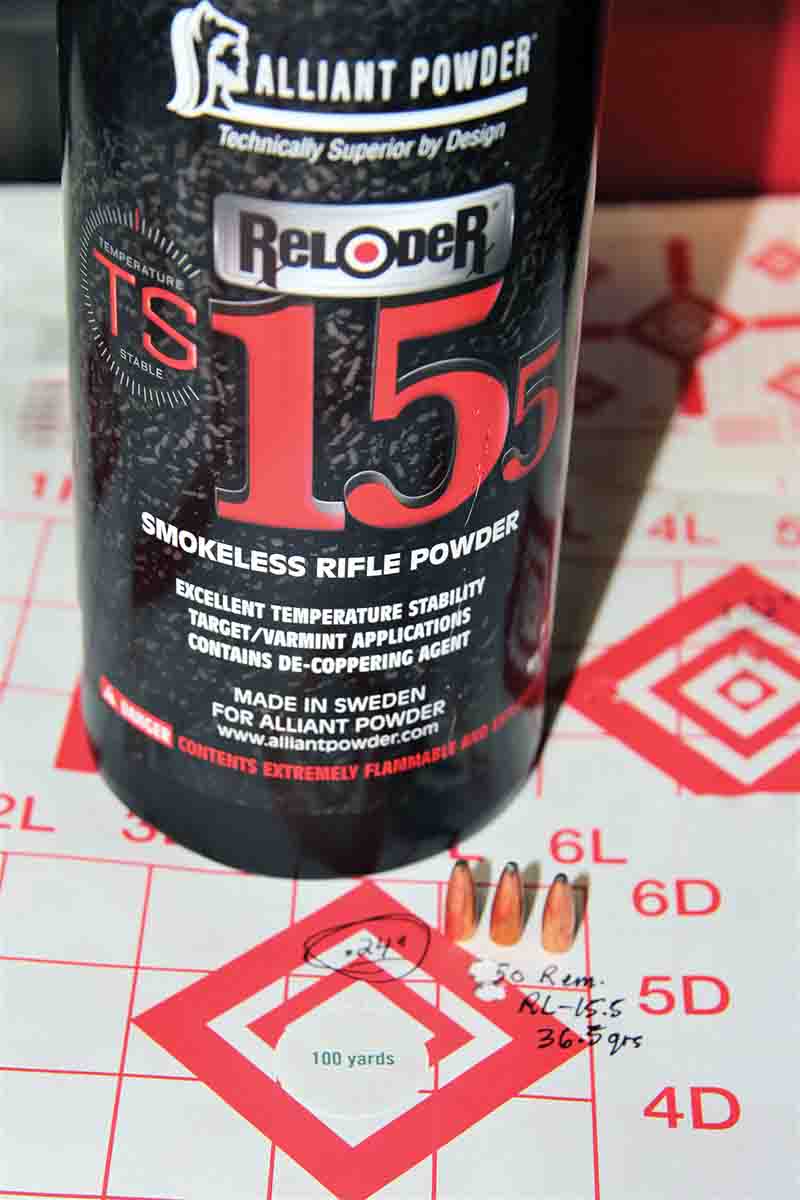
Modern powders include short-kerneled Hodgdon Benchmark (40-grain bullet) and Varget (55-grain bullet), and Alliant’s Reloder TS 15.5 (50-grain bullet). Hodgdon’s contributions are both part of its Extreme Series, meaning they’re temperature insensitive and clean burning. Reloder TS 15.5 is spanking new for the year, TS meaning Temperature Stable, the powder also containing a de-coppering agent. My proven favorites include Vihtavuori N140 (40-grain bullet), Hodgdon’s copper-erasing CFE 223 (50-grain bullet) and Western Powders’ Ramshot Big Game (55-grain bullet), the latter two smooth-flowing ball powders. N140 has proven reliably accurate with most bullet weights from my 22-250, producing that rifle’s first sub-half-inch groups after initial struggles. I then discovered CFE 223, which if anything, tightened groups further. I don’t shoot many 55-grain bullets from this rifle, but limited experimentation has shown Big Game to be a worthy option.
The program here was to create two sets of loads with identical powders and charges, one set for the three classics, another for the modern bullets. I was interested to see if velocity and accuracy would vary substantially from the same rifle. Matching SIG Sauer brass – each trimmed to 1.902-inch specifications and then chamfered and Federal 210 Large Rifle primers were used for all listed loads. Seating depths varied according to ogive profiles.
It had been awhile since I’d done any load development with this rifle. Initially, I struggled
Up front, I’m not a big fan of 40-grain bullets from larger varmint cartridges like the 22-250 Remington (though the test rifle’s super-slow rifling twist certainly likes them). I just never saw the point in it and worry about barrel life. But some people certainly like seeing a chronograph spin out 4,000 plus fps velocities. It is intoxicating to many. The Sierra 40-grain Varminter hollowpoint certainly provided those thrills. With a 3,999 fps speed limit, I was unable to use my LabRadar on these loads, forcing me to wait for sunny weather to deploy the shadow-powered chronograph during an especially rainy/cloudy spring.
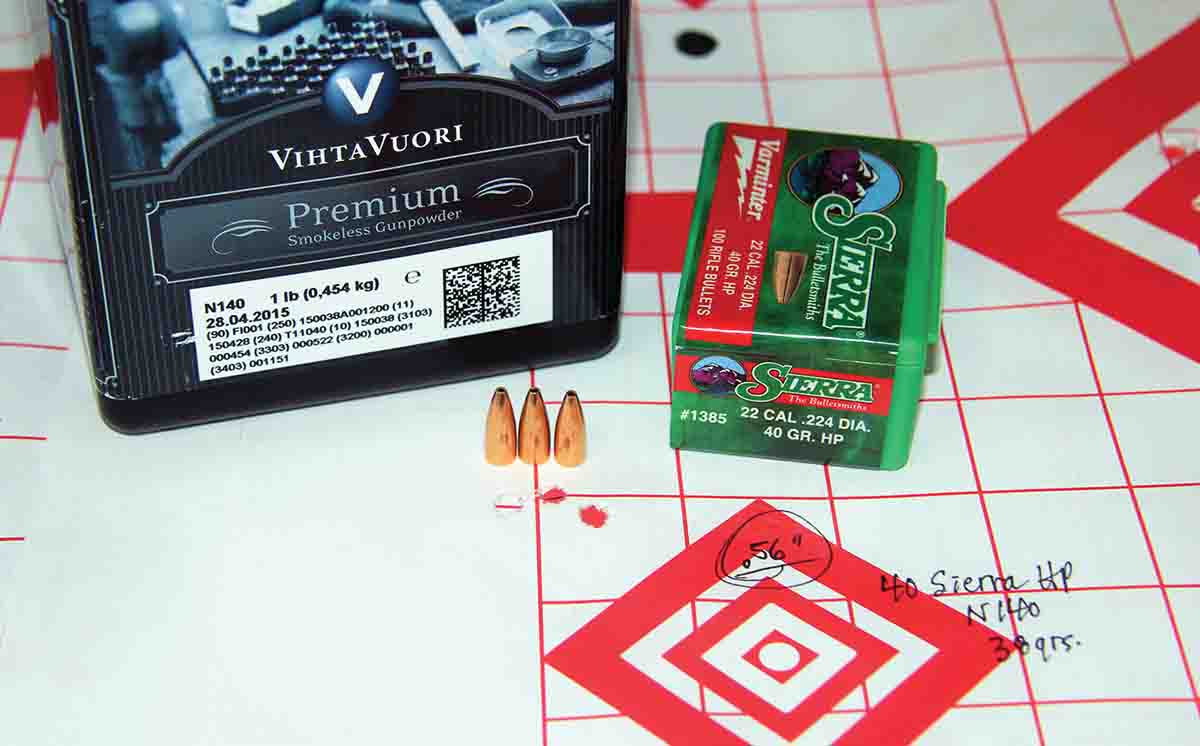
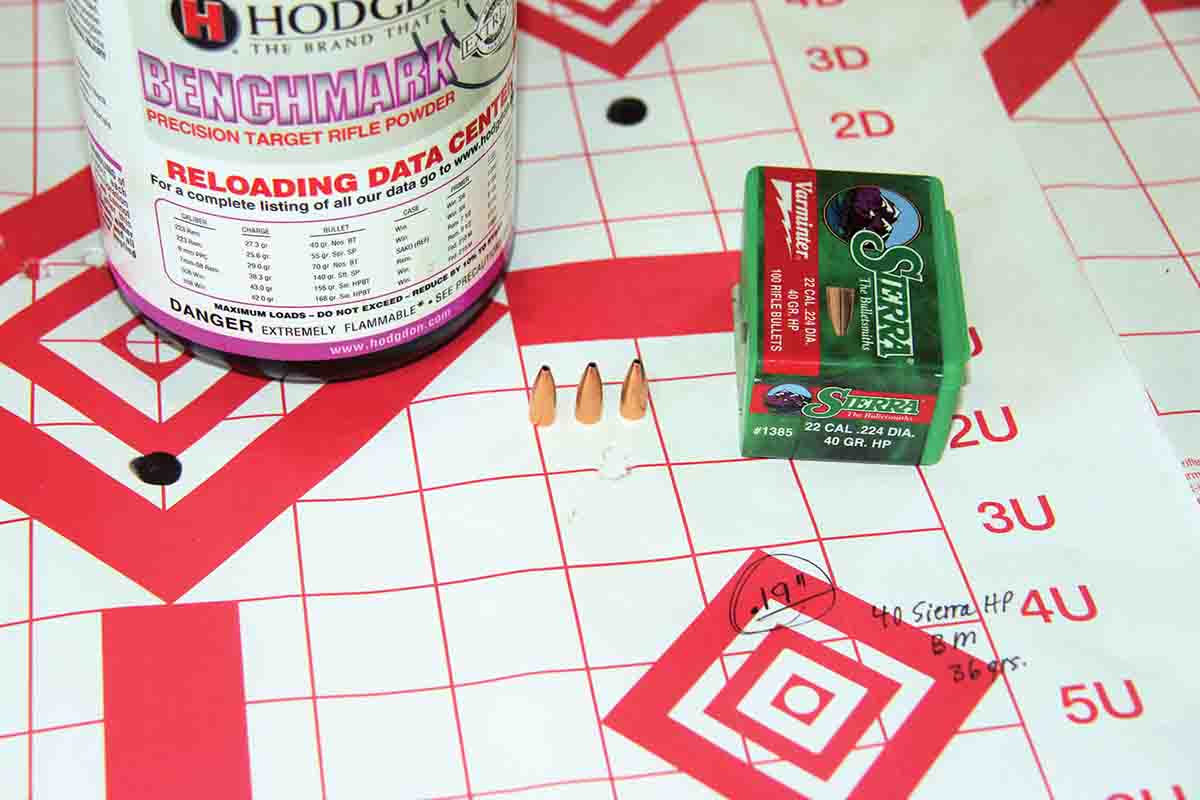
Velocity proved as impressive as accuracy, particularly with the classic Sierra bullet. IMR-4064 didn’t do as well as I had expected, a .62-inch group sent at 4,130 fps resulting, its best showing. Vihtavuori N140 duplicated past experiences, with the maximum load of 38 grains producing the best group, .56 inch and at 4,111 fps. Benchmark proved the big surprise, a powder I’ve not previously tried in this cartridge. A 37-grain charge produced a .47-inch group at 4,187 fps, and 36 grains produced a phenomenal .19-inch group at an even 4,100 fps. That is by far the best group this rifle has ever shot.
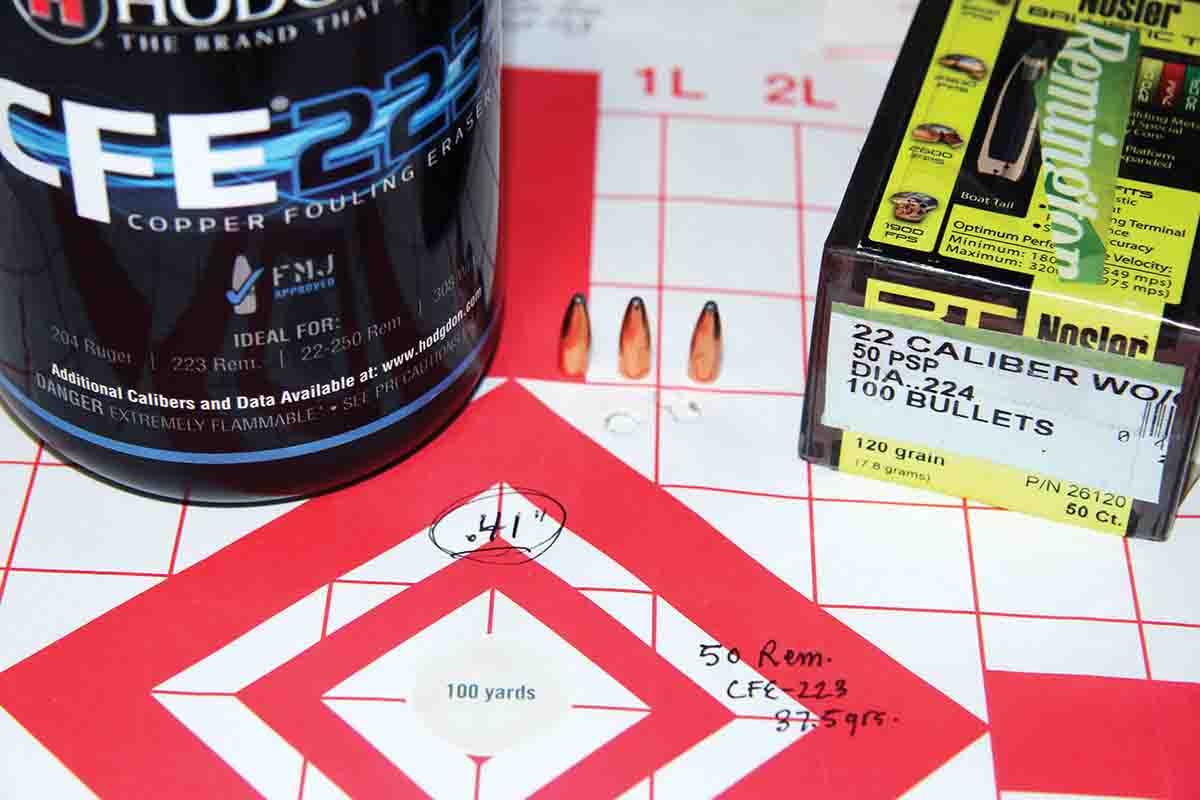
Fifty-grain bullets are my go-to weight for this 22-250, providing a good balance of velocity, overall accuracy and useful ballistic coefficients for longer pokes or windy conditions. Shooting classic bullets, A-2460 did best with a maximum charge of 35 grains, printing .51 inch at 3,764 fps. My go-to CFE 223, by contrast, did best with my start load of 37.5 grains, that load grouped at .41-inch at 3,542 fps with the classic 50-grain bullet. The 50-grain classic bullet star proved to be Reloder TS 15.5, which produced the best group that rifle had assembled to that date, measuring 24 inch at a scorching 3,746 fps. That’s one to put in the bank!
Moving to modern 50-grain bullets, group size certainly didn’t improve (.86 compared to .94 inch, classics to modern), though velocity improved by an average of 78 fps. I would attribute this to the greater bearing surface of the modern designs – the same reason the slow 1:14 rifling twist often struggles with modern options. A-2460 never really came together with the modern 50-grain bullet, managing just 1.17 inches with a maximum load of 34 grains at 3,749 fps. Reloder TS 15.5 did better, with all groups printing less than an inch, the best was .67 inch at 3,738 fps with 35.5 grains of powder. CFE 223 produced comparable results, the best group was .66 inch at 3,722 fps using 38.5 grains of powder. The V-MAX might not be the right bullet for this rifle.
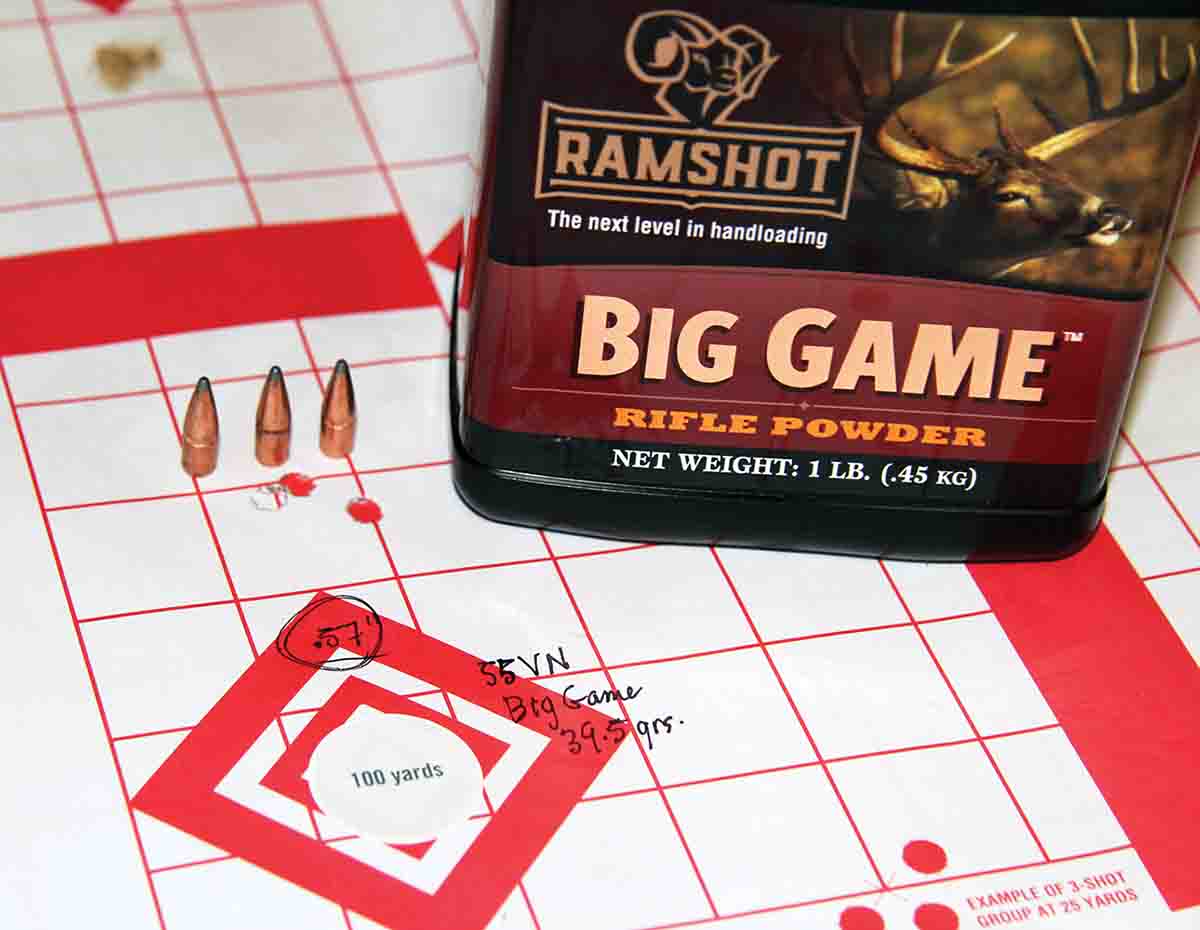
As hinted, I haven’t run a lot of 55s through this rifle. I was curious to see if a bump in bullet weight might offer some advantage in the areas where this rifle truly shines. H-380 didn’t impress with the classic 55-grain bullet, the best group was just .76 inch at 3,516 fps using 37.5 grains of powder. Varget did slightly better with the classic 55-grain bullet, 36 grains of powder resulted in a .60-inch group at 3,666 fps. My preferred Big Game powder produced .58- and .57-inch groups at 3,635 and 3,650 fps using 38.5 and 39.5 grains of powder, so I’ll stick with it.
.jpg)
So there you have it – proof positive that the classics don’t give up any accuracy edge to modern bullets, and a handful of loads for me to put in the bank against future needs.
.jpg)