

Savage Mark II BRJ
Rimfire Accuracy in a Sensible Package
feature By: Phil Massaro | October, 22
When I married Suzanne, I suggested to her that we honeymoon on safari in the African country of Zambia – with Cape buffalo being the primary target – and conclude with a few days at Victoria Falls; no one was more surprised than I was when she agreed. It was on the way home from that fantastic safari when she shocked me even further: “I think I want to start hunting with you.”
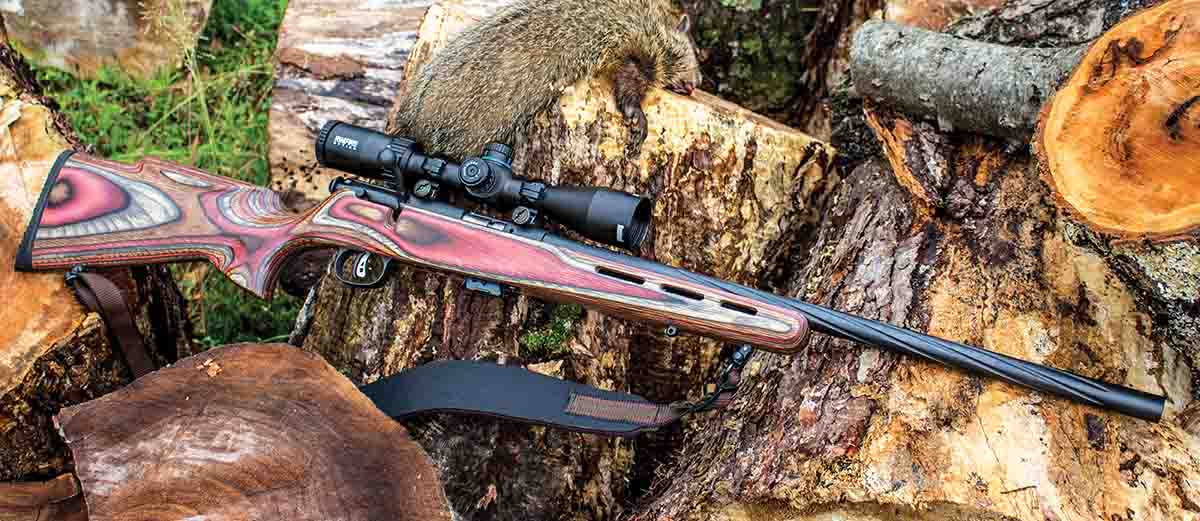
I bought her a Savage LadyHunter Model 111 in 308 Winchester, stocked to best fit a woman’s dimensions, and she enjoyed our range sessions, becoming proficient with the rifle. She next wanted a rimfire rifle of her own – we’d been sharing my Ruger Model 77/22 – so we sat down to peruse the possibilities. What we settled upon was the Savage Mark II BRJ, a slick bolt-action rifle with a laminate wood stock and fluted, heavy-target barrel, which turned out to be a perfect choice.
Savage has, over the last couple decades, gained a reputation for fantastic accuracy at a working man’s price point, and that simply equals value. The Mark II BRJ comes packed with some impressive features, and has proven itself both in the woods and at the range. Looking at the rifle, I immediately accused my wife of picking that particular model because its stock was pink. “It is not pink; it’s a blend of rose, grays and browns,” she said.
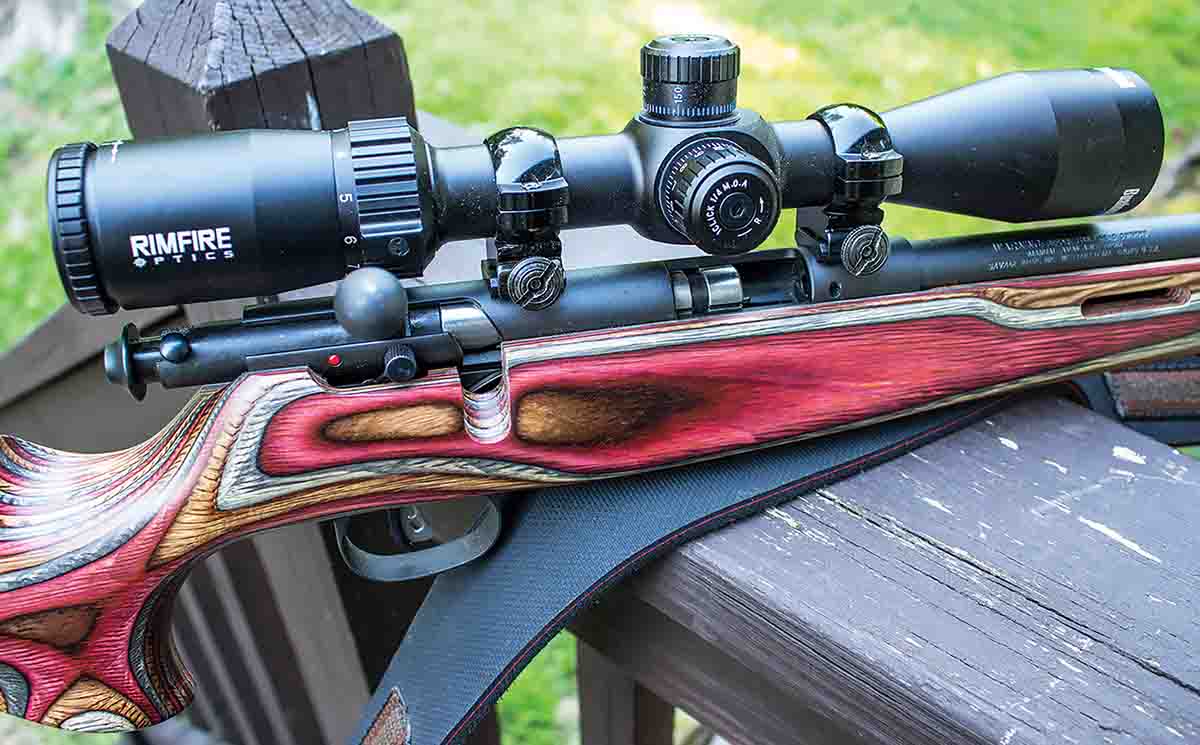
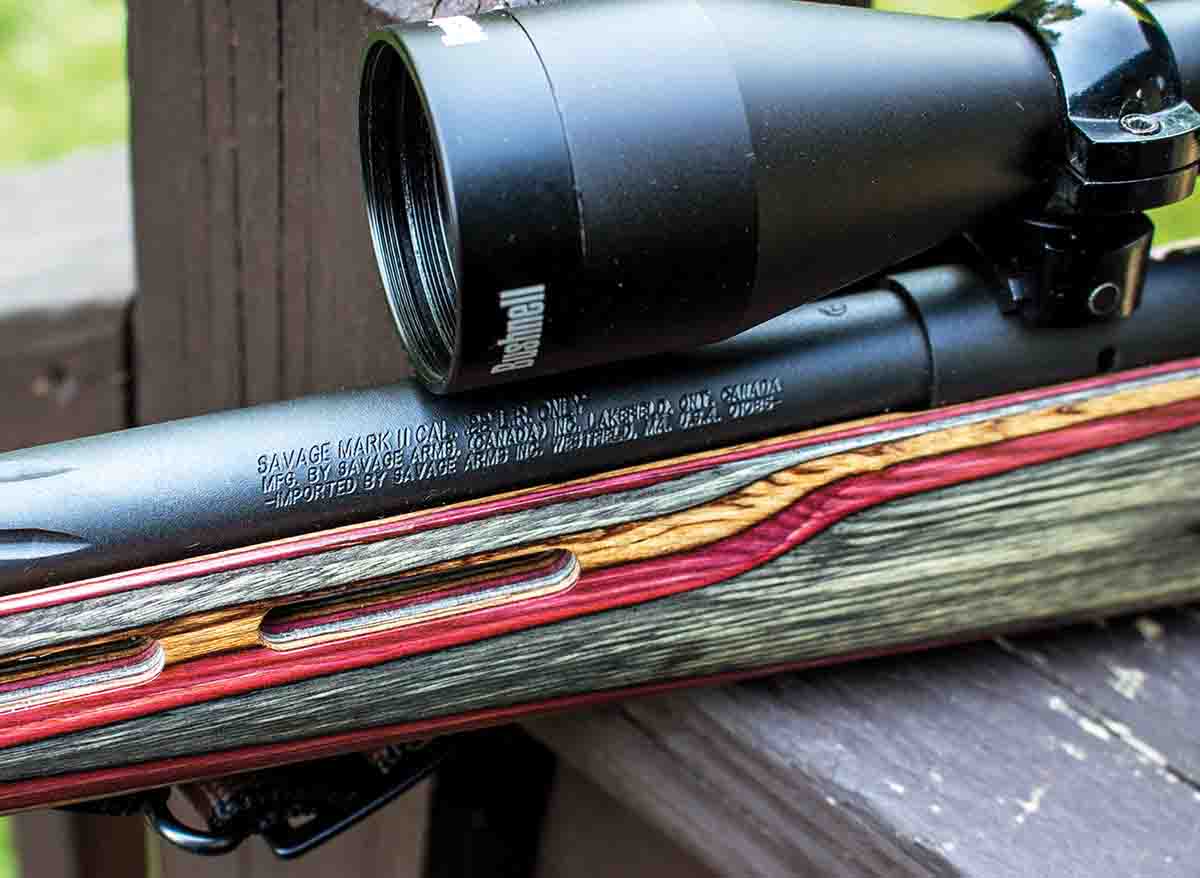
The laminate stock does have some light-reddish hues to it, but it isn’t really pink. It is actually rather attractive, and among laminate stocks, one of the more interesting looks out there. Starting there, it is nicely shaped, with a strong cheekpiece on the left side. Though it has the standard 13¾-inch length of pull, it feels short to me, which is perfect for my wife, especially in warmer weather when just a shirt or light jacket will suffice. The BRJ’s stock has no checkering, but can be gripped firmly; I like the feel of the pistol grip, which is a bit more vertical than the norm, feeling more like a target rifle. There is a rubber buttpad, which is better for keeping the rifle firmly on the shoulder than to mitigate the nearly nonexistent recoil of the 22 Long Rifle cartridge. The forend has three long oblong cuts throughout the stock, allowing air to flow under the barrel, assumedly to help keep the barrel cool in high-volume shooting situations. Savage provides sling-swivel studs fore and aft, with an extra stud on the forend for a bipod. Savage described the stock of the BRJ as a varmint stock, though if in fact it is considered such, it is definitely on the slim side of that class of stock. Whether shooting for accuracy from the bench, head-shooting gray squirrels or stalking vegetable-raiding woodchucks, the BRJ’s stock just feels comfortable.
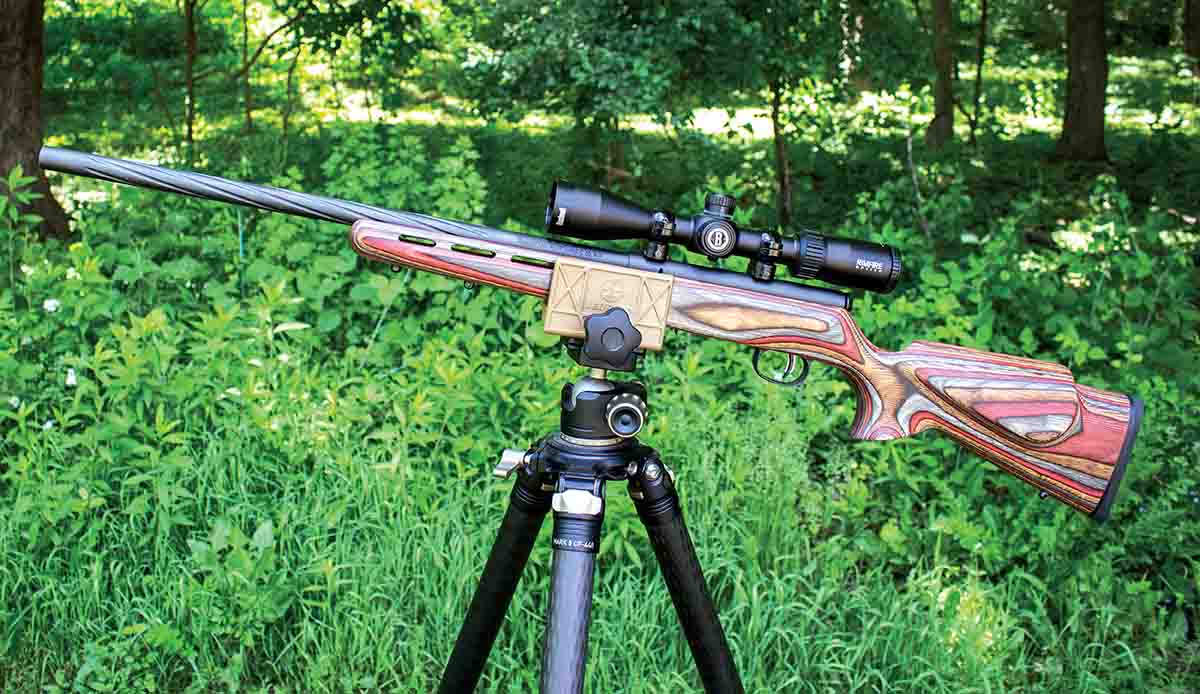
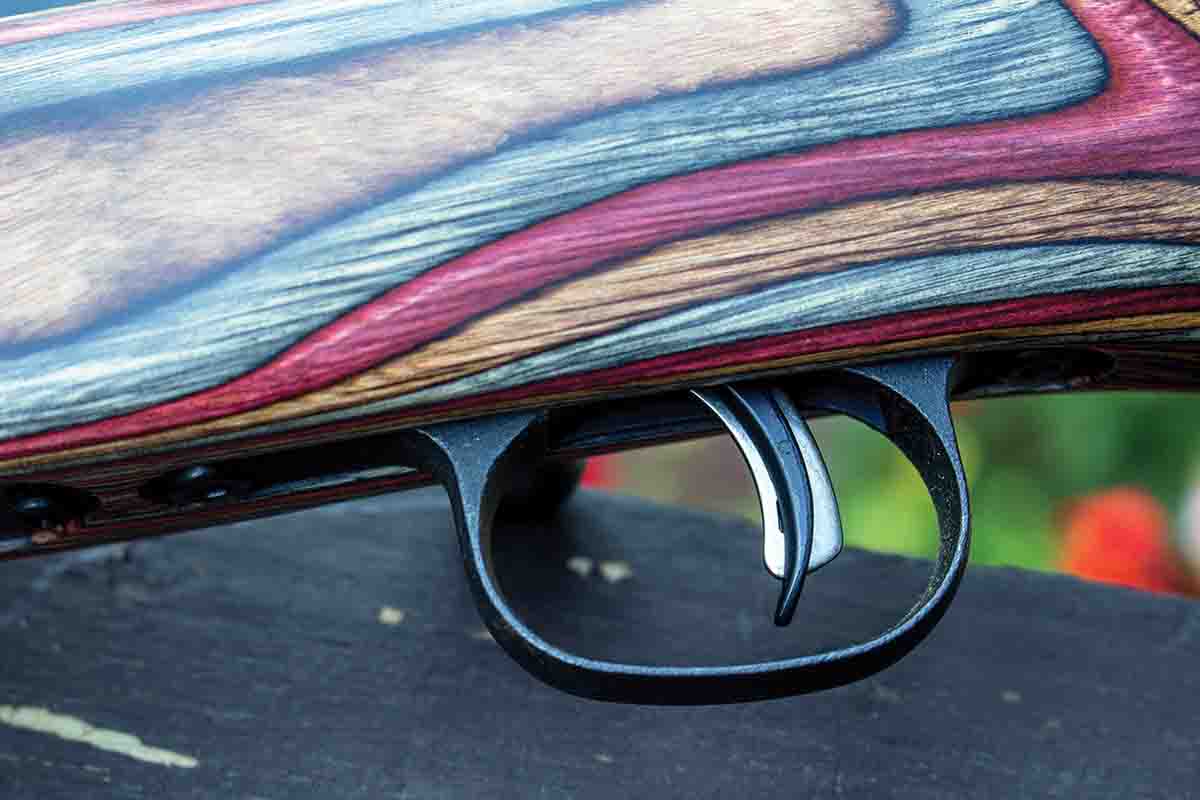
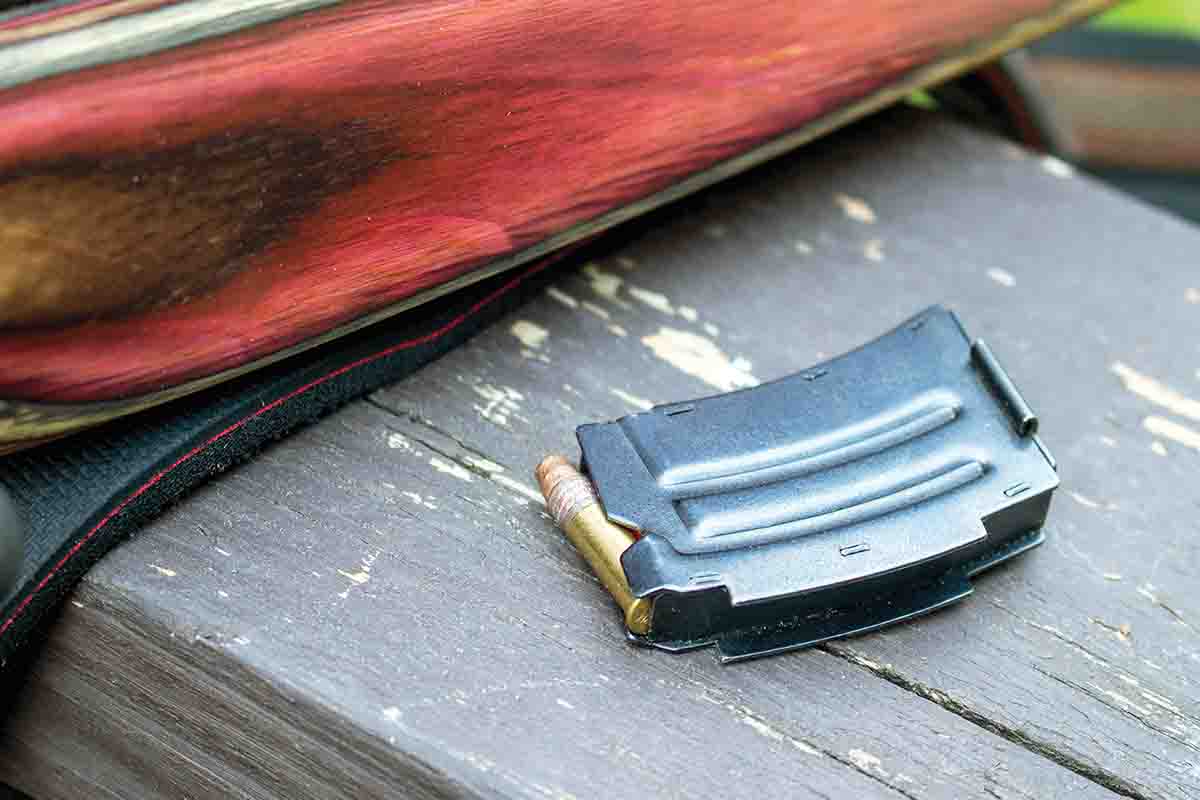
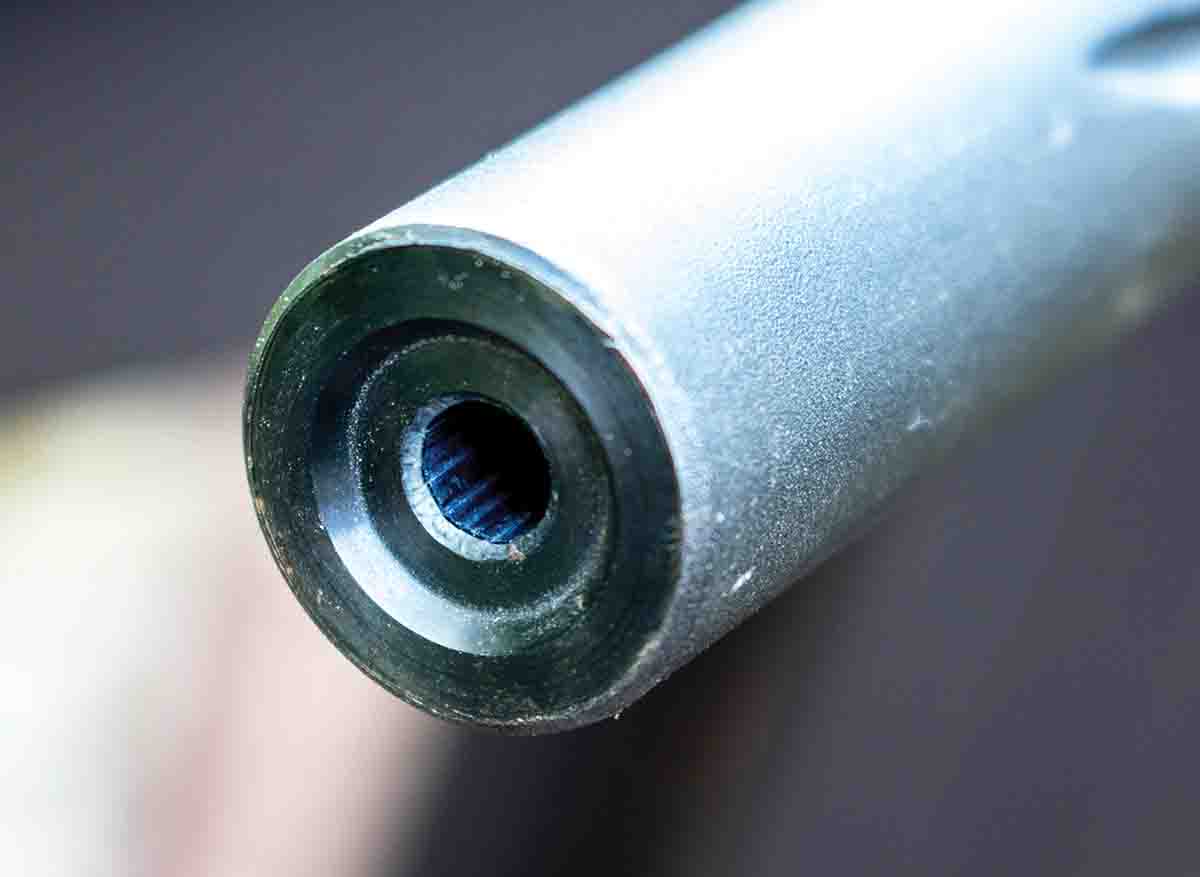
The 21-inch fluted steel barrel measures .80 inch in diameter, and culminates in a recessed target crown. Savage provides cross-slot Weaver scope bases with the firearm, though there are no iron sights on the rifle; this rig is designed for a telescopic sight. Using the common 1:16 twist rate, this barrel gives bull barrel performance without that excessively weight-forward feel, associated with truly large barrels. In the centerfire big-game rifles, I’ve always appreciated a barrel with a bit more weight, as they settle down quicker for the shot, and the BRJ can easily do double duty as a training tool for the big game season. The barrel and receiver have a matte finish to reduce glare.
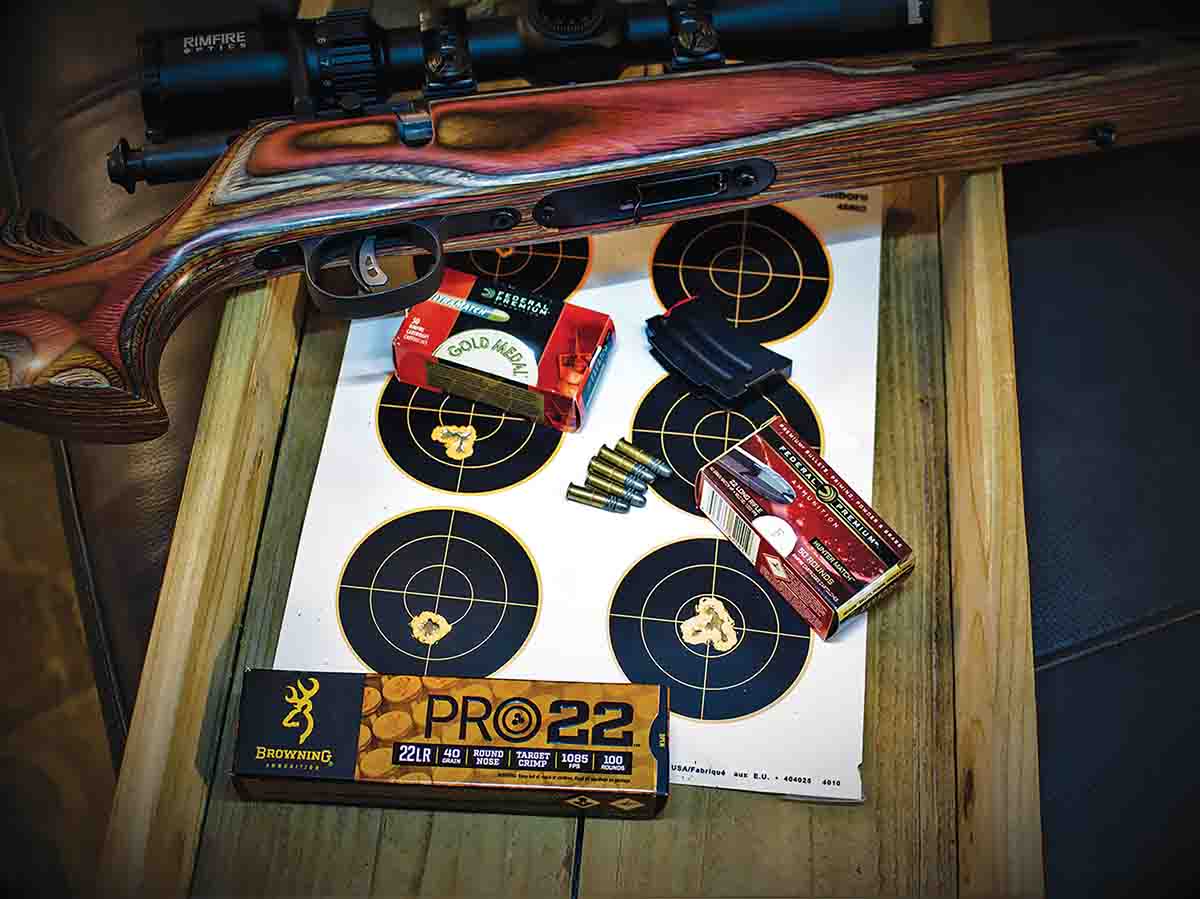
I put the BRJ through its paces with a dozen different types of ammunition, from the cheap stuff I loved so much in my youth to modern match-grade ammunition, and there really wasn’t a bad choice in the lot. Aguila’s Rifle Match Competition is loaded with a match-grade 40-grain roundnose lead bullet and has always been a solid performer. With a subsonic muzzle velocity, the Aguila printed sub-MOA groups and would be a fine choice for both target work and hunting. Browning’s new PRO22 ammunition is in the same class, built for precision by using a target-grade crimp to keep things as uniform as possible, and it shows; this new ammunition was one of the best performers of the lot. Like the Aguila match stuff, the Browning PRO22 is purposely made to be barely subsonic, with the idea being that if you don’t break the supersonic window, you can avoid all the transonic weirdness. It works; keep your eye on this one if you like printing tight, little groups.
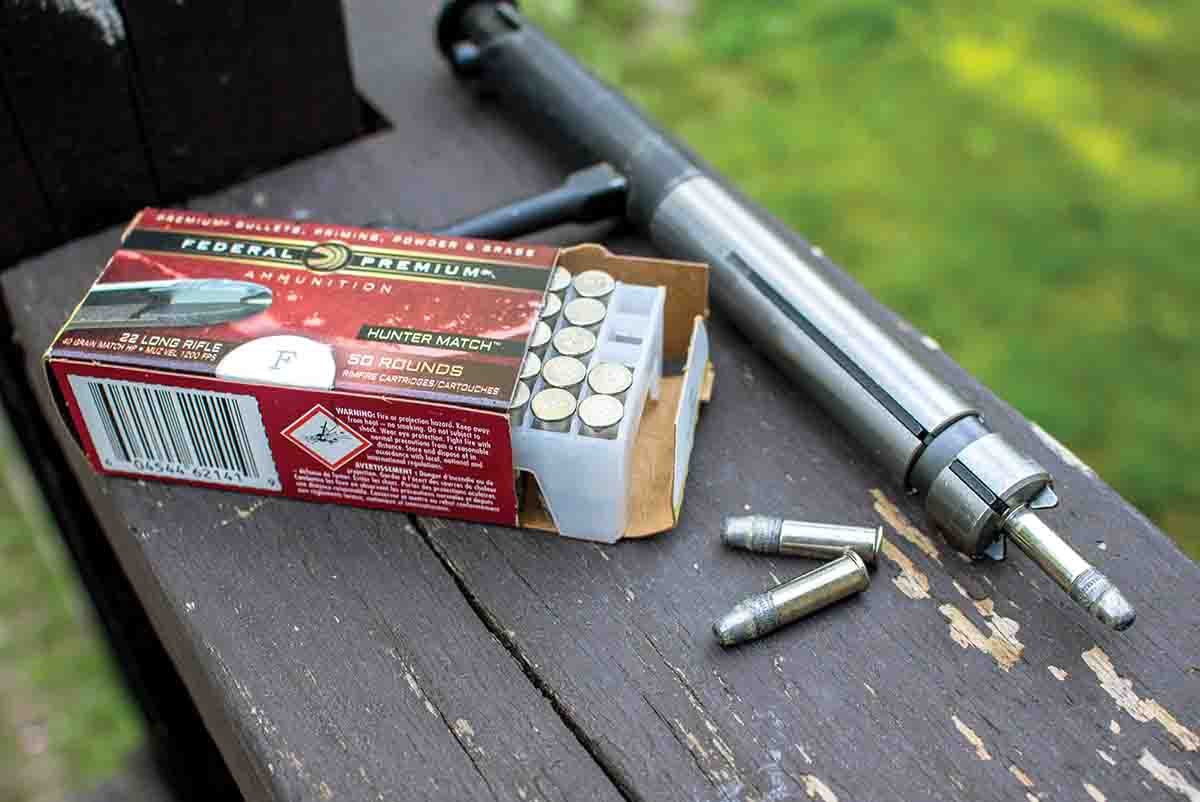
Federal also has a wide and useful selection of rimfire ammunition, and I’ve long relied upon their UltraMatch ammunition for its hairsplitting accuracy. I made sure that was included in the lot, as well as the similar 40-grain Hunter Match ammunition, which is loaded in nickel-plated cases. The classic Federal Champion ammunition uses a 36-grain copper-plated hollowpoint bullet, and has long been a serious performer, especially in bolt rifles. Rounding up the Federal representatives, their new Punch ammunition is designed as a self-defense round, but it shot very well from the Savage BRJ. Using a nickel-plated 29-grain bullet loaded in nickel cases at a sedate muzzle velocity 1,070 fps, the Punch stuff is a perfect choice for lighter game species.
.jpg)
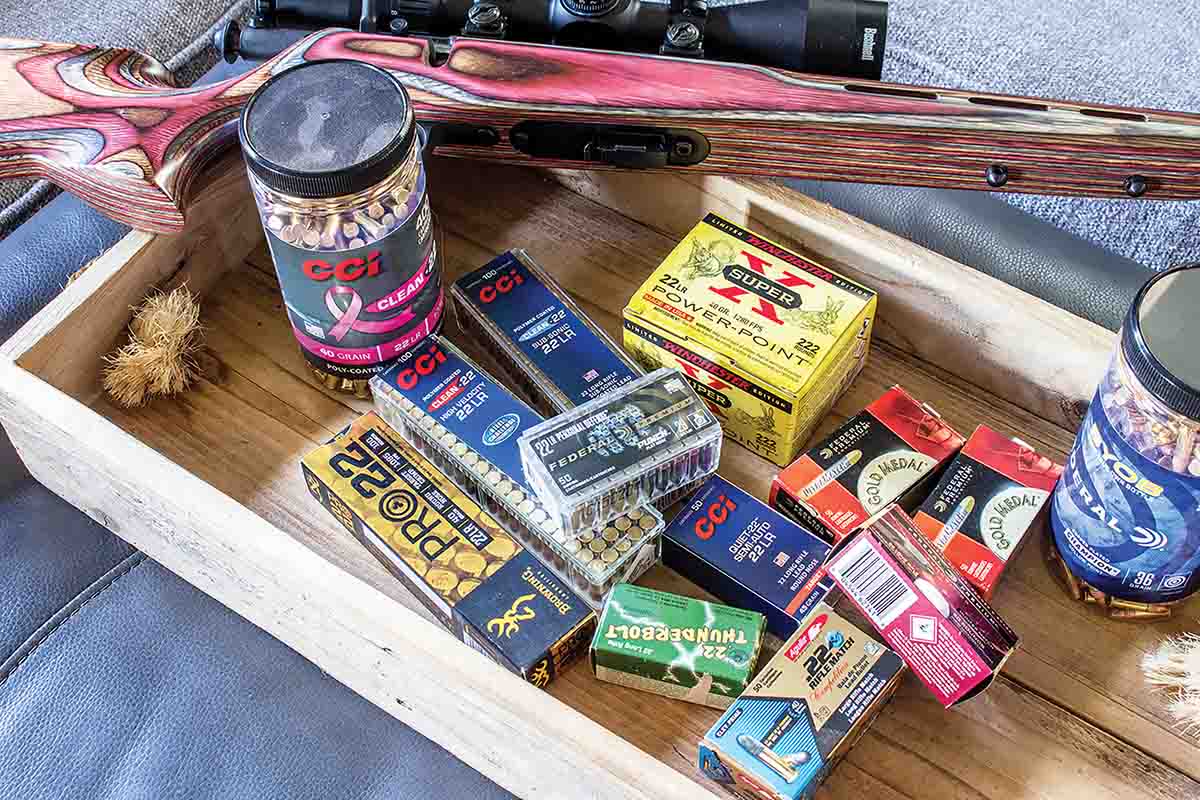
Bringing up the rear was the 100th Anniversary box of Winchester Super-X Power Point jacketed hollowpoint ammunition; it comes in a creamy-yellow box of 222 rounds, with a charcoal drawing of a gray squirrel and cottontail rabbit and is immediately nostalgic. I honestly had a hard time opening the box and shooting this ammunition, but that’s what it’s there for.
It was immediately evident that this rifle absolutely loves match-grade ammunition, with five of the Browning PRO22 cartridges printing one ragged hole, and the Federal match ammunition running right around a half inch at 50 yards. The other, standard ammunition printed groups of about 1 inch, or 2-MOA at that distance. The Federal Punch, with the lighter 29-grain bullet, didn’t agree with the Savage rifle, putting five shots into a 2-inch group; I guess there had to be one brand it didn’t like. If this were my rifle – and my wife routinely reminds me that it is not – I’d run the Browning PRO22, Federal UltraMatch, and Aguila Match ammunition exclusively.
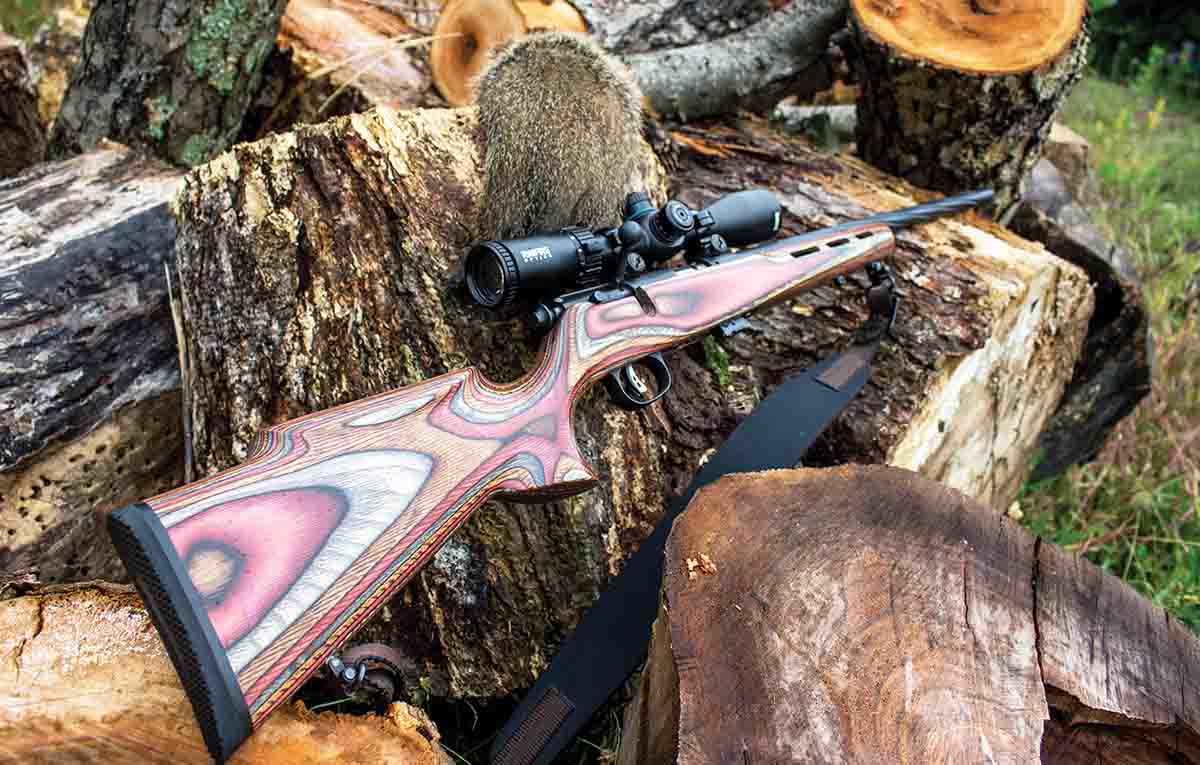
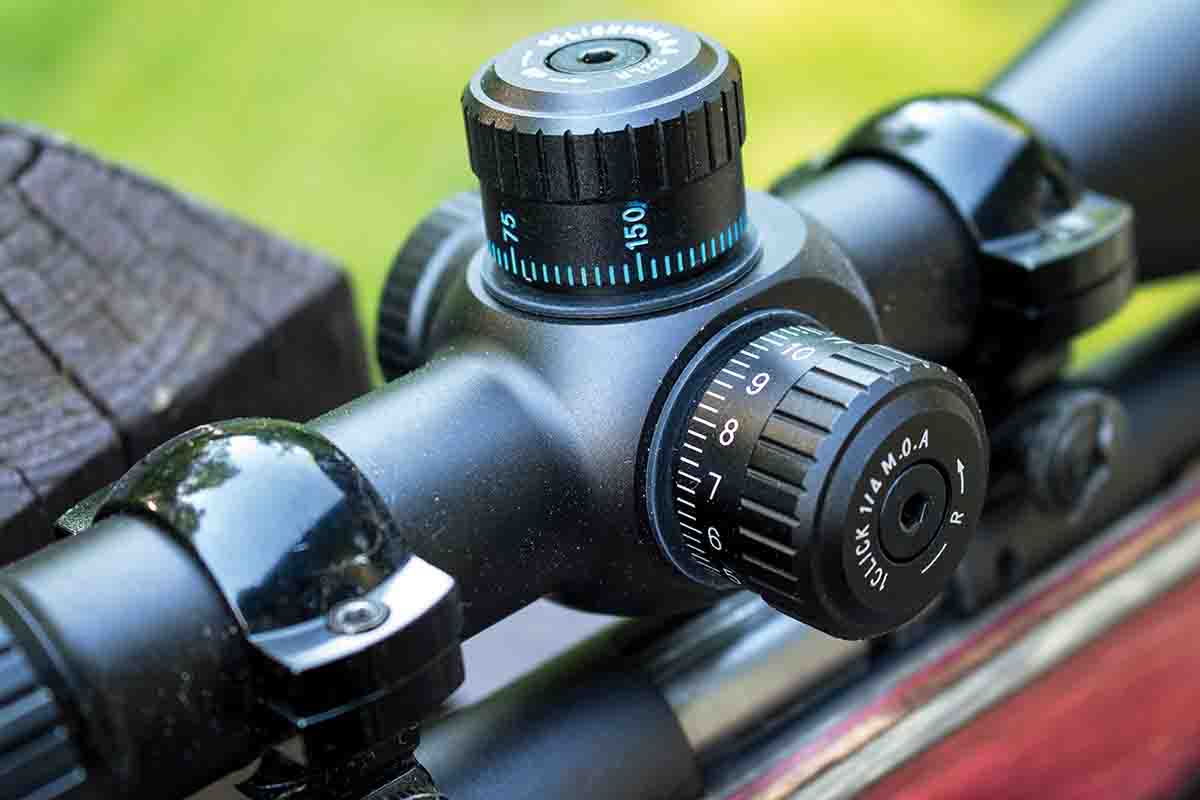
Because I – well, actually the Mrs. – owns this rifle, it has been used to dispatch a good number of pests, from red squirrels who try to eat the soffits, to the woodchucks, which make every attempt to feast in the vegetable garden, to the rogue skunk which has made his or her presence much too known. It carries well, balances perfect, and that Bushnell 3-9x40 scope can hit a running ‘chuck in the lawn at lower power, yet head shoot a bushy-tail in the top of a hickory tree when cranked up, and that adjustible objective makes all the difference in the world.
Mated with a lightweight Spartan bipod – one of the carbon fiber affairs that doesn’t seem to be there at all, yet makes field positions rock solid – the Savage Mark II BRJ becomes a one-shot game getter. The rifle is on the heavier side – scoped, yet unloaded, this rifle weighs 8 pounds, 2 ounces, but not so much that carrying it all day would become a burden. I enjoy this rifle off of shooting sticks, the tripod type used in Africa, as the weight helps the rifle settle down quickly, and it feels similar enough to a big-game rifle to make a great practice tool for a small fraction of the cost of safari ammunition, not to mention the complete lack of recoil.
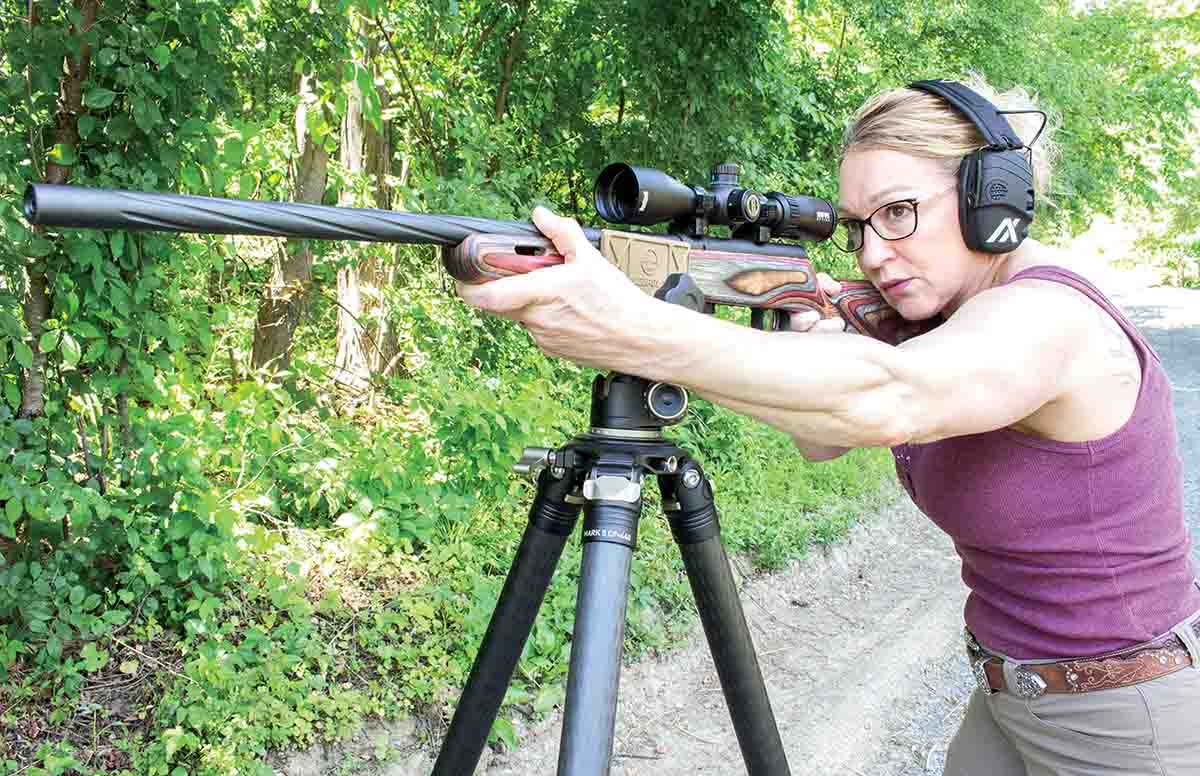
Other than that, I believe Savage has a great value here. The trigger is fantastic, and it can be seriously accurate, so for me, all the major boxes are ticked. The stock is close enough to a common hunting rifle to be a good substitute for big-game practice, and with all of its attributes combined, a woodchuck would not want to be within 100 yards of this rifle.