

John Browning's SA-22
Big Performance Small Package
feature By: Randy Bimson | October, 22
My guess is that most shooters, even die-hard varmint hunters, would miss adding one of Browning’s most iconic designs, and the focus of this article, to the list, the Browning SA-22 self-loading rifle.
All so often when we talk varmint rifles, the discussion is centered around cartridges and rifles that will reach way out there with shots taken at ranges anywhere nearing the 200-yard mark being considered as close. Shooters will banter about cartridges like the 204 Ruger, 22 Nosler, 224 Valkyrie, the classic 220 Swift and 22-250 Remington, and big guns such as the likes of the 243 Winchester, 6mm Remington, 6mm Creedmoor, 25-06 Remington and a host of wildcat cartridges. The virtues of the bolt-action rifle and whether it is still the king for long-range accuracy, or if the ever more prevalent semiautomatic actioned rifles, will knock the bolt rifle off the throne will be a heated debate. Seldom though will the conversation focus on the cartridge and rifles that introduced most of us to the challenge of varmint hunting. That cartridge is one form or another of the 22 rimfire.
Every varmint hunter should own a good 22 rimfire rifle. Whether it be a 22 Short, 22 LR, or 22 WMR is going to be a matter of where a person lives and what opportunities are native to their location. Targets of opportunity may range from rats at the garbage dump to gophers, crows, squirrels and rabbits to prairie dogs, racoons, woodchucks and fox. There may be hunting seasons for some species in some locations and in others there may be an open season all year long. Either way, there is a lot of varmint/small-game hunting opportunity for those who have a good 22 rimfire rifle.
Enter John Browning, he was issued three patents, two consecutively in June 1913, and one on January 6, 1914. Covering the extremely clever design elements of a graceful 22 rimfire semiautomatic rifle that would over the course of the years, be known as the Browning 22 Automatic Rifle, the Browning Auto-22, and more recently, as the Browning SA-22.
While often quoted in print that Browning’s SA-22 was the first rimfire semiautomatic rifle, that statement is not quite correct. Winchester owns that claim to fame with the Model 1903 semiautomatic rifle designed by Thomas C. Johnson. Chambered for the 22 Winchester Auto, a proprietary Winchester cartridge, it never really caught the attention of shooters of the time. What the SA-22 can claim the right to is being the first semiautomatic rifle chambered for the 22 Short and 22 Long Rifle cartridge.
FN was granted marketing rights to the rifles in all of Europe and some other countries. Browning, lacking a substantial manufacturing and marketing entity in the U.S. at that time, licensed Remington to manufacture a version of the SA-22 known as the Model 24, and later the 241, from 1922 through 1951. The SA-22 made its official appearance under the Browning banner in 1956 when Browning Arms Company began the importation of Browning marked rifles from FN Belgium in 1956. Production of the SA-22 remained with FN Belgium until 1974, when it was transitioned to Browning’s manufacturing partner in Japan, Miroku. To date, total production of the FN-Browning variants of the SA-22 far exceeds 500,000 rifles.
Like most varmint hunters, I cut my teeth on a well-used, hand-me-down, single-shot 22 rimfire bolt-action rifle and a ration of 22 Short hollowpoint cartridges. By the time I was 11 or 12, I was a regular visitor in the local gun shops, and while I was too young and did not have the means to buy a rifle, used or new, I could and did ask a lot of questions. I was starting to pay attention to the different makes and the design aspects that set them apart. That was when I first became aware of the Browning SA-22.
The first element that struck me was that other than the screw that attached the forearm to the barrel, and less obvious, the slotted nut that secured the buttstock to the receiver, there was not one screw or pin visible. That was a pretty ingenious piece of engineering I thought. Of course, I would go on to learn that Browning came up with a lot of pretty ingenious design details.
In my younger years, I was enthralled with the fact the SA-22 was available in a model chambered specifically for my then favorite varmint cartridge, the 22 Short, loaded with the hollowpoint bullet.
The SA-22 has never been an inexpensive rifle, and I seldom see one discounted, but when looked at in perspective, it is understandable. I happen to have in my archive files a 1958 Browning catalog and the introductory to the SA-22 sums it up: “The Browning 22 Automatic Rifle is so different from any other on the American market it can rightfully be considered in a class by itself. Appropriate to the cartridge it shoots, characteristics essential to heavy-caliber rifles did not influence its design. Ideal proportion, neat slender lines, a compact action, light weight, and comfortable balance all contribute to its popularity with shooters and hunters of all abilities.”
.jpg)
So, what makes the SA-22 a unique rimfire varmint rifle? One of the features that immediately stands out is the receiver which totally encloses the top and both sides of the action. The underside of the receiver has the only opening and that is covered by the trigger-guard plate. A 2-inch long by ½-inch wide slot milled into the trigger-guard plate serves as the ejection port for fired cartridge cases and that too is covered, by the breechblock, except at the moment the rifle is fired. The receiver offers the action considerable protection from the elements and affords the shooter a high degree of protection from propellant gases and powder debris. A dual-claw extractor ensures positive extraction of the cartridge from the chamber.
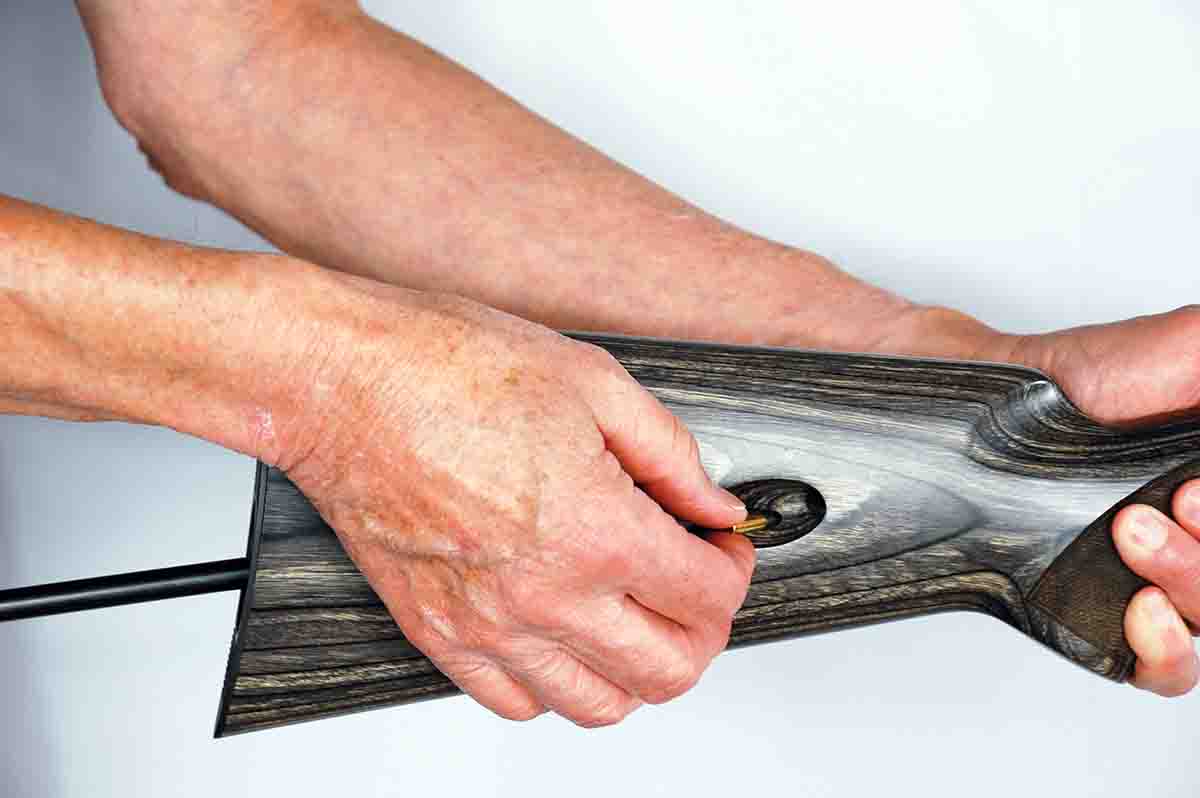
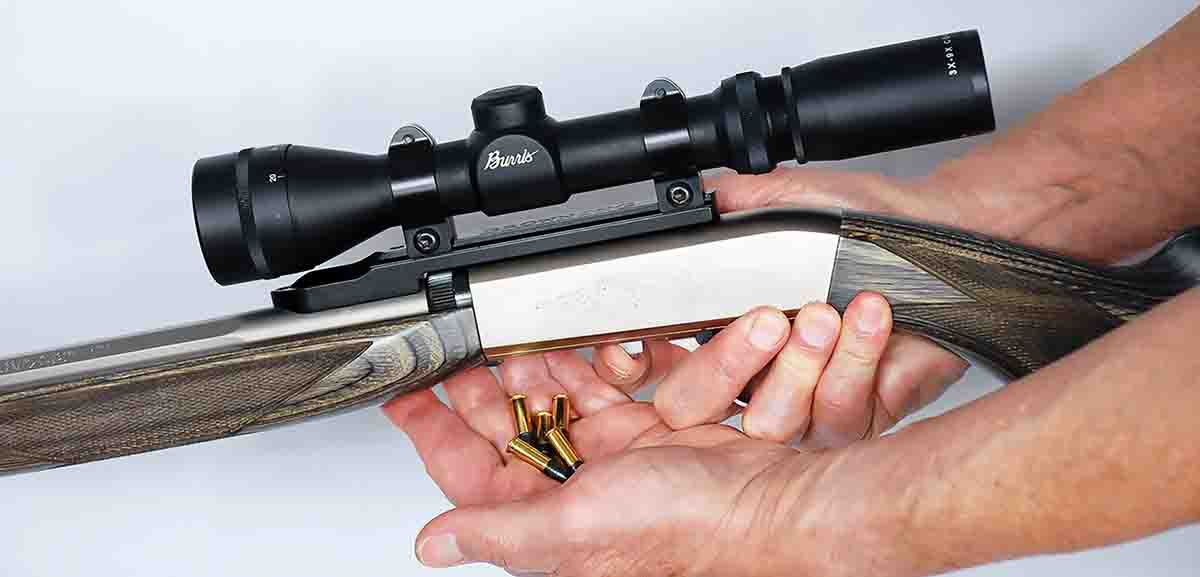
The rifle feeds from a tubular magazine, located in the buttstock where it is protected from damage, through a port machined in the rear of the receiver. It is a near straight-line feed from the feed channel in the receiver into the chamber of the barrel. When prime winter varminting weather sets in, I find the tubular magazine a lot easier to load than fumbling with a handful of loose 22 cartridges and cold-numbed fingers attempting to load the typical detachable magazine and not drop most of the cartridges in the snow! The magazine for rifles chambered in 22 LR hold 10 cartridges and the 22 Short version holds 16 cartridges.
I have never been overly fond of the typical tubular magazines that sit below the barrel and require the rifle be pointed in front of your face when loading it. The SA-22 tubular magazine, by the very nature of being located in the buttstock, necessitates that the rifle be pointed in a much safer downward direction when loading cartridges into the magazine via the contoured loading port, located in the right-hand side of the buttstock.
One point of caution, while the bottom ejection is praised for making the rifle equally friendly for left-handed and right-handed shooters and for not lobbing hot brass at your shooting buddy on your right side, when shooting prone with a long-sleeve shirt on, it will on occasion drop a hot case right down your shirt sleeve. Ouch!
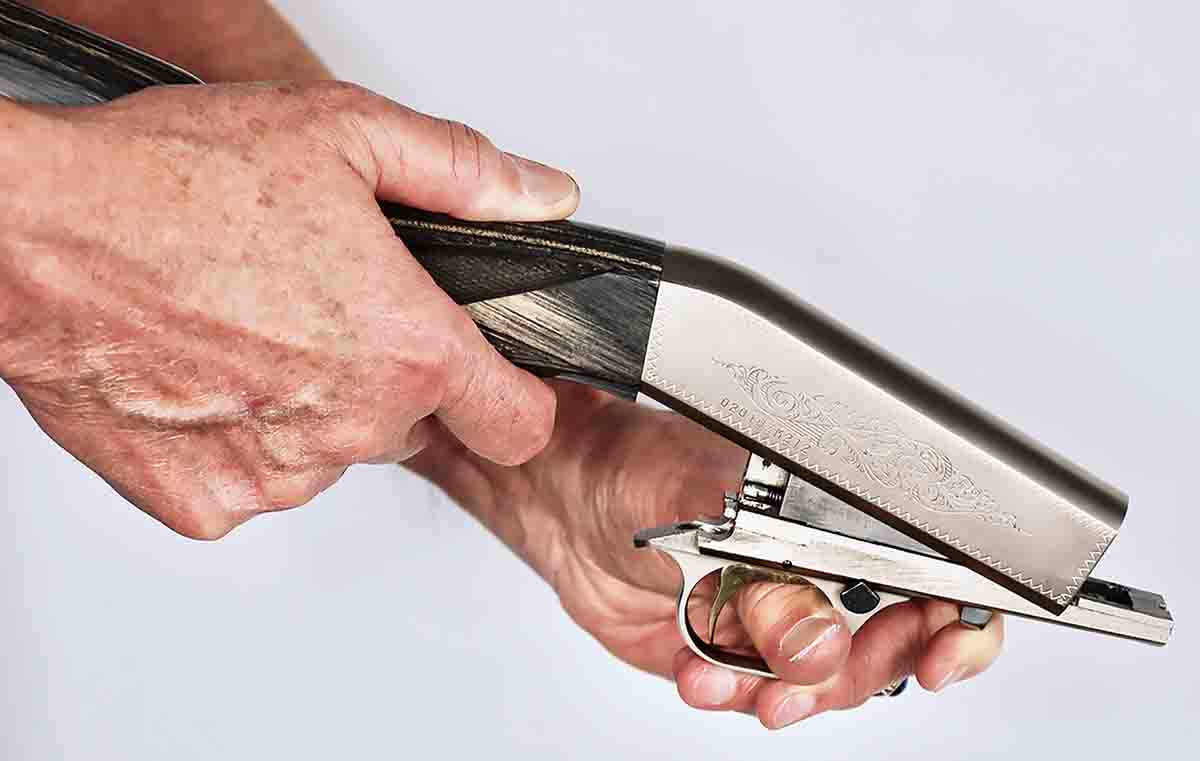
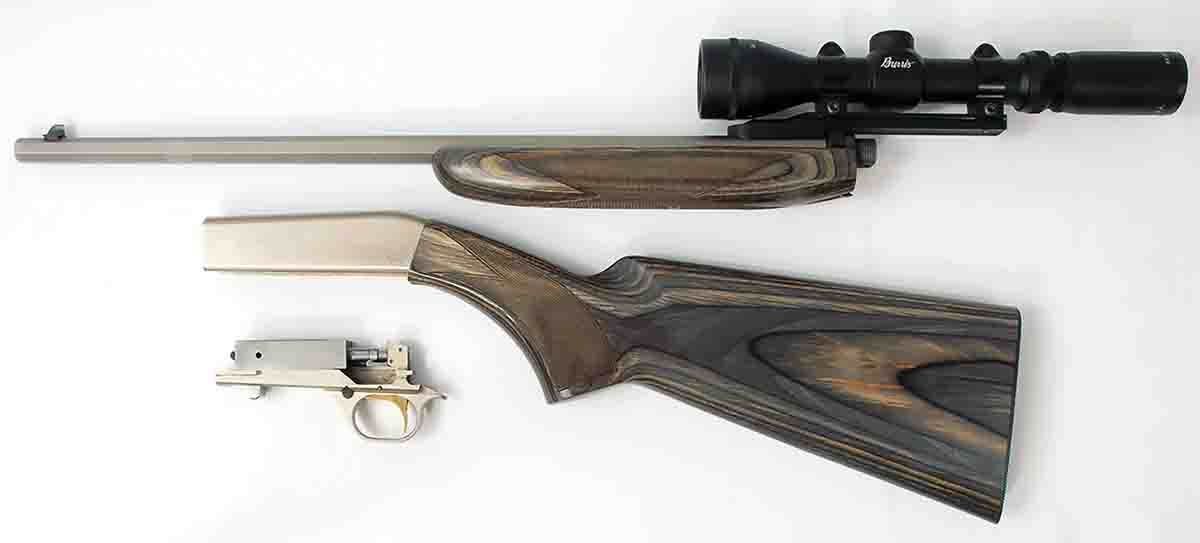
A century ago, when Browning designed the SA-22, travel was not as easy as it is today, or maybe it was easier given the current state of affairs worldwide. Having a rifle or shotgun that was easily transported was a major concern to many shooters and hunters, so it is logical that Browning designed the SA-22 as a takedown rifle. His patent, #1,065,341 of June 24, 1913, spelled out the “takedown construction for firearms” and was applied to the SA-22. I travel all over North America and overseas to hunt and I can attest to the benefits of a takedown, whether it be a rifle, or a side by side, over-under, pump, or autoloading shotgun. Being able to stow the rifle in a backpack is a plus as well.
While some shooters would say that it is sacrilegious to include the phrase “takedown rifle” in a publication dedicated to varmint rifles, I assure you it is not blasphemy. Browning was very much aware of the potential perils of a takedown system effect on rifle accuracy. To that end, his patent showcases an adjustable takedown system that ensures the barrel to receiver face interface is always tight and can compensate for any wear that might occur over time. I think you will find the shooting results of our test rifle substantiates that a takedown rifle can deliver a high degree of accuracy.
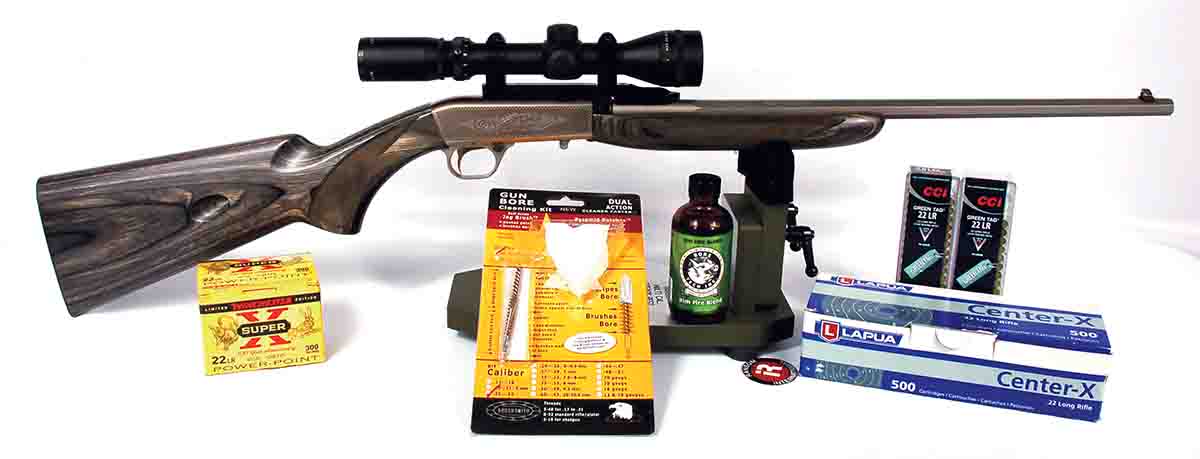
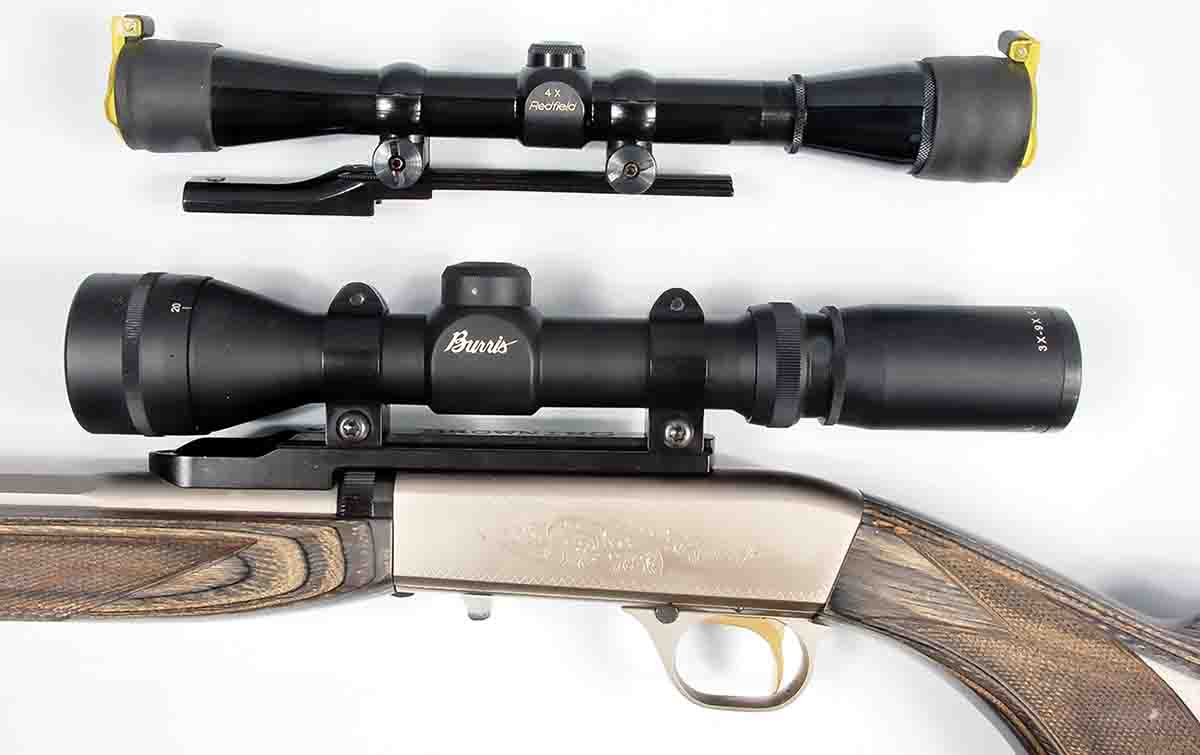
The SA-22 weighs 6.25 pounds complete with a Burris adjustable-objective Compact 3-9x variable set in Browning supplied Talley 1-inch rings and mounted on a Talley cantilever-type base made especially for the SA-22. The Browning/Talley base attaches using two factory-drilled and tapped 6x48 tpi scope mount screw holes located on breech end of the barrel. When the rifle is taken down, the base and scope stay with the barrel and retain zero. The Browning/Talley base is a significant improvement over the earlier cantilever base that Browning offered some years ago.
The trigger pull on my rifle registers spot-on a very respectable 3 pounds and breaks about as clean and creep-free as one can expect from a trigger on a production semiautomatic rifle.
Just like any of the other SA-22 rifles I have owned over the years, the fit, finish and function of this SA-22 is excellent. A common trait of any of the SA-22 rifles I have owned is the function has always been 100 percent when they are fed with any ammunition that is manufactured to the Sporting Arms and Ammunition Manufacturer’s Institute (SAAMI) or European CIP standards.
How does this 6.25-pound rimfire varmint rifle shoot? Let me tell you, if you are hunting prairie dogs in May or June when the spring-of-the-year-born pups are sitting on the mounds around their holes oblivious to danger, just keep the range inside of 100 yards or so, and you will have a great time.
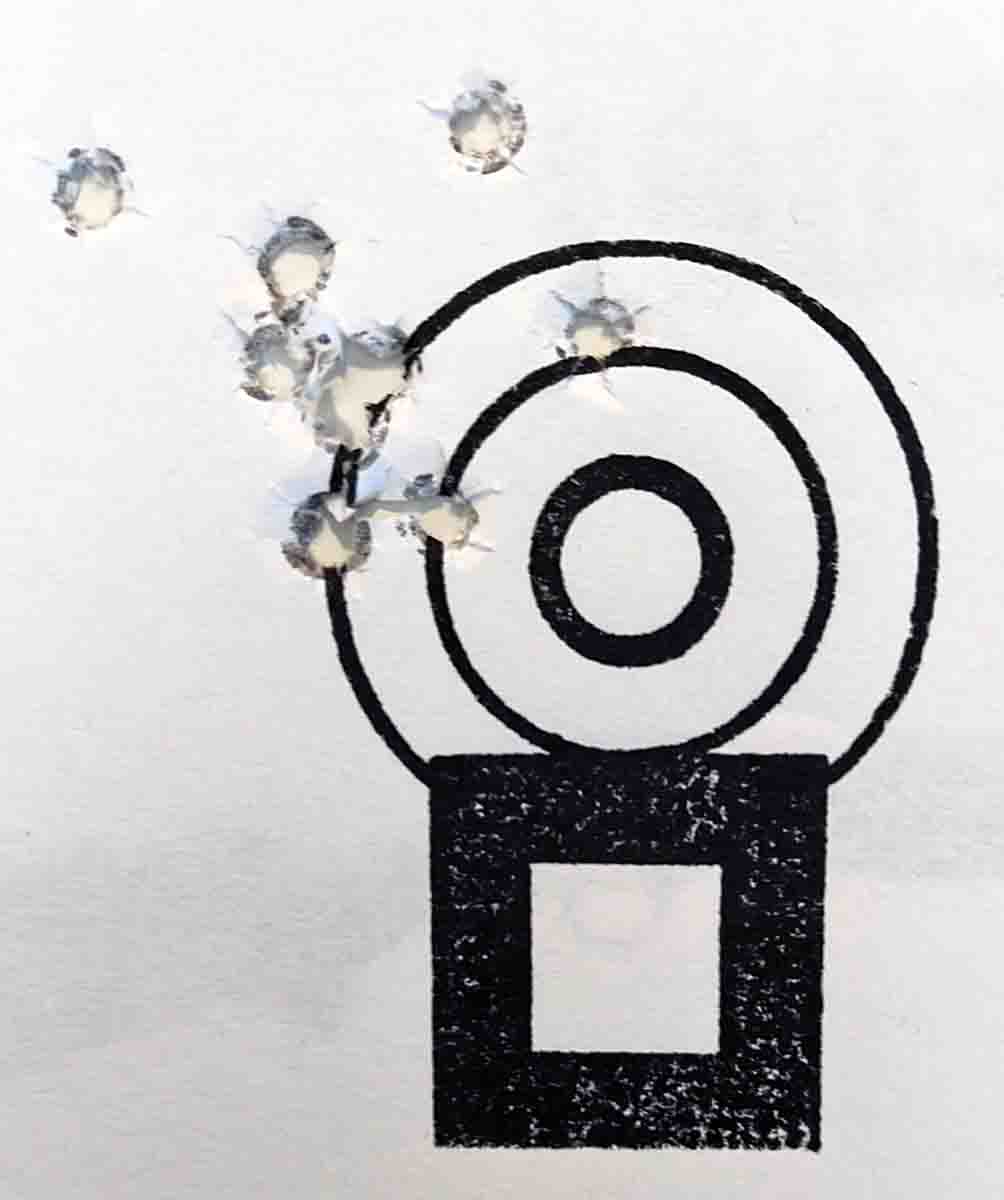
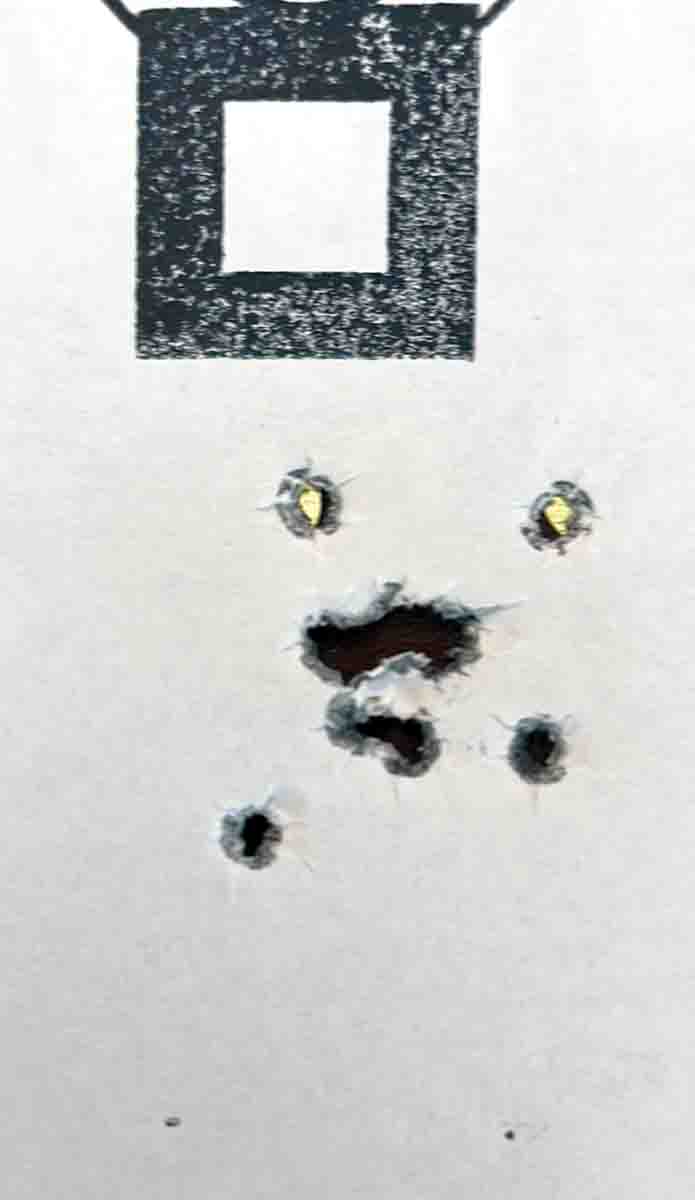
For this report, I shot three brands of ammunition for accuracy: Winchester’s 40-grain Super-X Power Point hollowpoint, originally developed for rabbit-control hunting in Australia, a longtime favorite for varmint hunting; CCI Green Tag, a match-grade 40-grain solid point that is great for head-shot placement on squirrels and gophers when paired with a compatible rifle; Lapua Center-X, another high-quality 22 LR match ammunition that again delivers the confidence when shot placement is paramount.
All tests were 10-shot groups fired from a Hart benchrest at 50 yards. Utilizing the SA-22’s super-quick takedown feature, the barrel was removed from the receiver and the bore cleaned using Rigel Products Pyramid Patches in conjunction with their unique Jag Brush and soaked with Bore Tech Rimfire blend cleaning solvent in-between ammunition changes. A 10-shot string was fired through the clean barrel before shooting the 10 shots for group size.
Conditions were windy, as can be expected on the plains of Iowa, with gusts from 10 to 15 mph from left to right. I did forget my wind flags, which made it a little tougher to minimize wind-induced group spread.
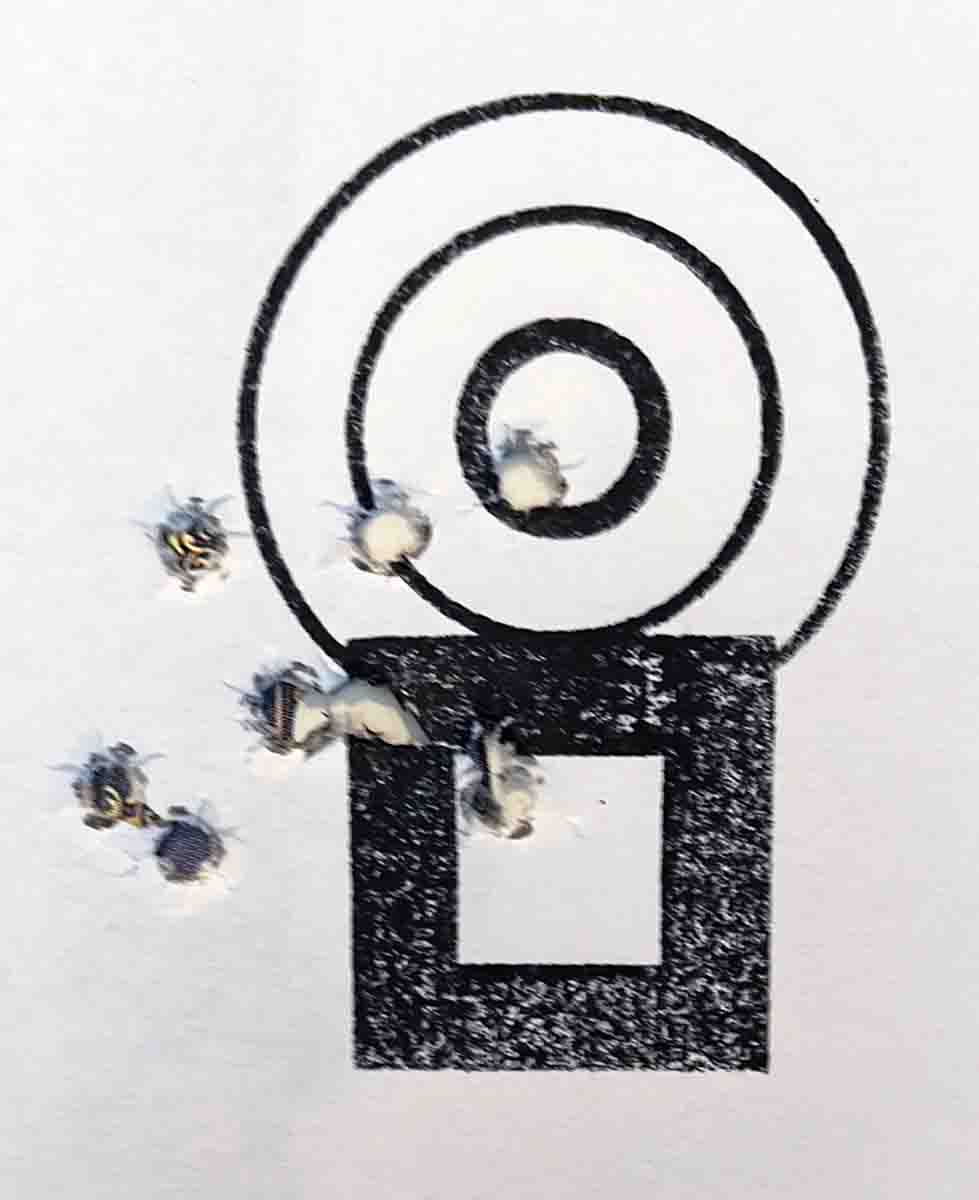
The accompanying ammunition data table shows the whole story, but the short of it is, Lapua Center-X produced the tightest group at 1.225 inches. CCI Green Tag came in second place. Discounting four shots that I attribute to the wind, Green Tag showed the potential for the most consistent group formation with a 6-shot cluster forming up the main group at a very respectable .376 inch if I had read the wind better.
The Browning SA-22 is old school in some ways, unlike the Ruger 10/22, it does not lend itself to the table-top gunsmithing trade. The receiver and internals are still machined from solid steel alloys, blued, or polished bright, and the stocks are finely finished wood, not synthetic.
Not to say that it has not kept up with times.
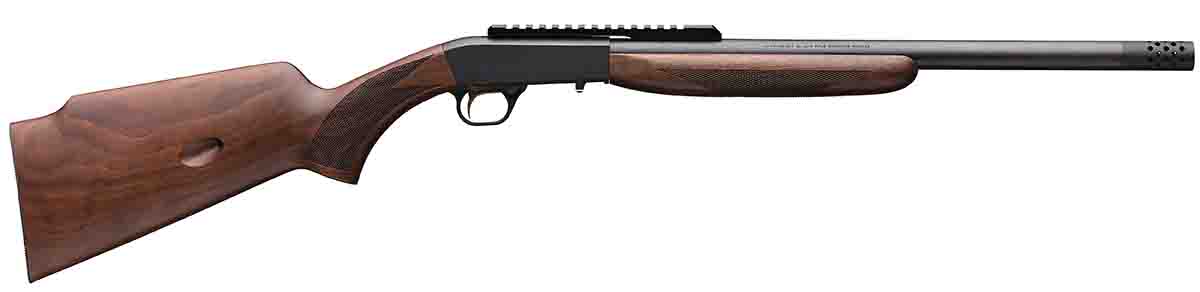
For 2021, Browning gave the classic rifle a makeover with several features that will endear it even further with the varmint hunter. Called the Browning SA-22 Challenge, it features a 16¼-inch bull barrel threaded rigidly into the receiver (no takedown feature), a Picatinny scope base and high-comb, Monte Carlo-style stock for a solid-cheek weld, and the barrel is threaded ½-28 tpi making it suppressor ready.
When it comes to varminting with the 22 LR, remember to keep it simple, know the limitations of the cartridge versus your quarry, keep the range reasonable and have fun!
Oh, by the way, 56 years after first seeing that SA-22 chambered in 22 Short, I bought one while on a visit to the FN-Browning Custom Shop in Liege, Belgium. When loaded with the CCI high-velocity 22 Short hollowpoint, it may just be the best squirrel hunting combination there is!