

A Do-Everything Wildcat
The 25-270 WSM
feature By: Jim Matthews | October, 22
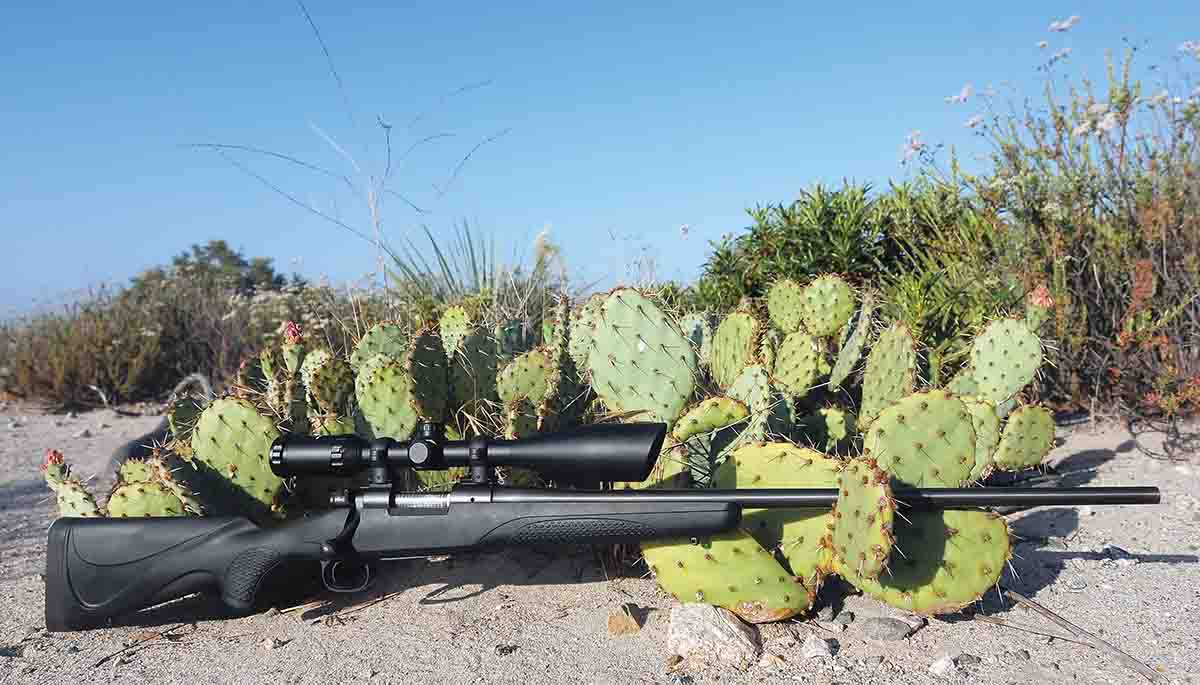
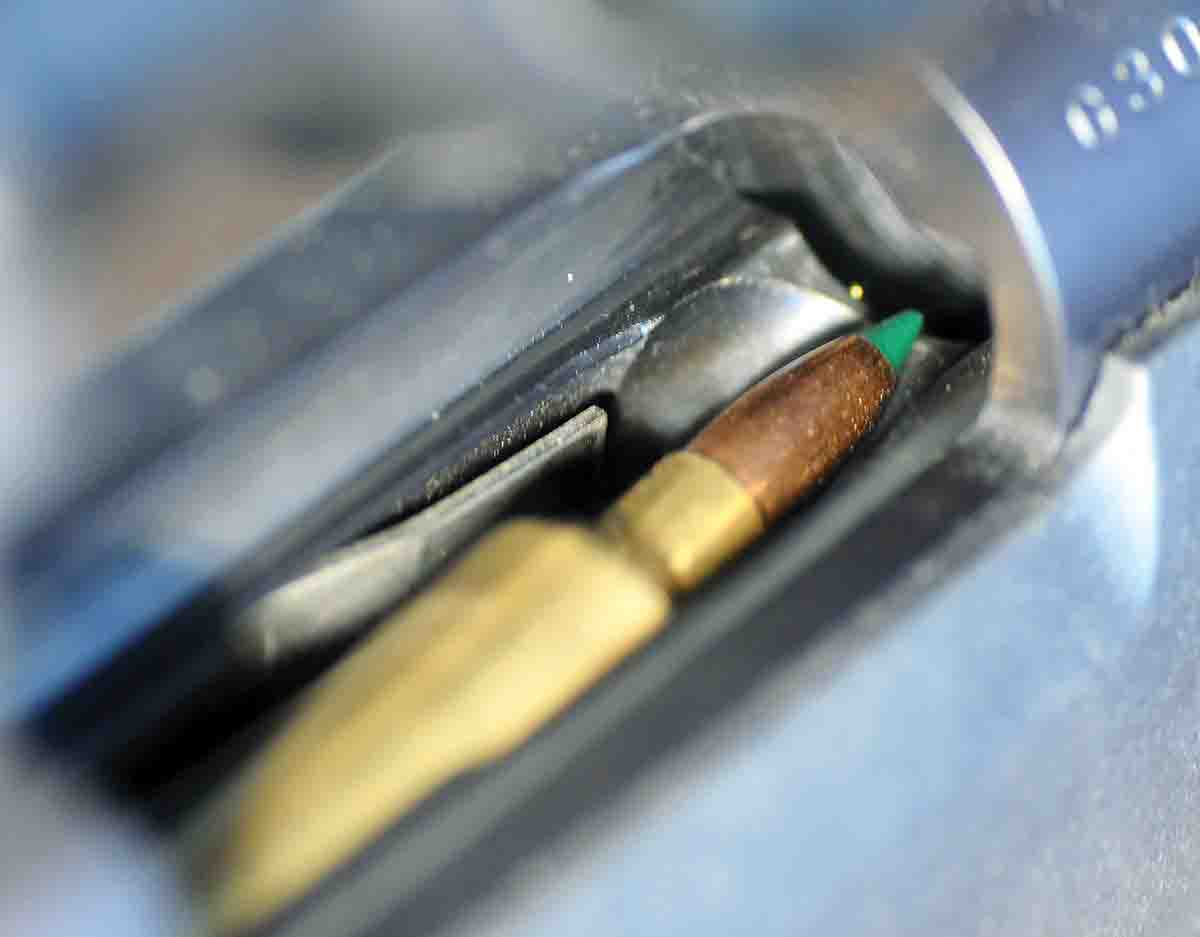
Ballistics of the 25-270 WSM fall comfortably between the 25-06 and the 257 Weatherby, but it has the advantage of being able to run through shorter bolt actions. It seemed like an ideal cartridge to make up into a lightweight walking varminter and big-game rifle that could serve double duty.
For real-world varmint hunting, speed and flat trajectories out to 300 to 400 yards matter more than uber long-range performance. This obviously flies in the face of the
A rifle cartridge-bullet combination where I don’t have to think much about range out to 300 or 400 yards is ideal for coyotes or rockchucks (or similar species). In the 25-270 WSM, with a 75-grain Hornady V-MAX bullet going nearly 3,800 feet per second (fps), I have sighted the gun so it is less than 8 inches low at 400 yards. The sight setting is 2½ inches high at 100 yards. I can hold dead-on a coyote offhand out to about 320 yards and know the bullet is going to strike mid-body if I use a center-shoulder hold.
Of course, in the real world, we should know our rifle’s trajectory. On targets the size of coyotes, we might think about that the bullet might hit a couple of inches high on close or smaller targets like jackrabbits or ground squirrels and adjust slightly when shooting. We surely will notice how big a distant coyote looks in our scope and adjust our hold upward an inch or three or six at long ranges. The goal is to have a rifle that shoots flat enough so we don’t need to hold above the animal even on longer shots. With this system, we can hit coyotes at 300 to 400 yards or a little more without holding off the fur if the trajectory is flat.
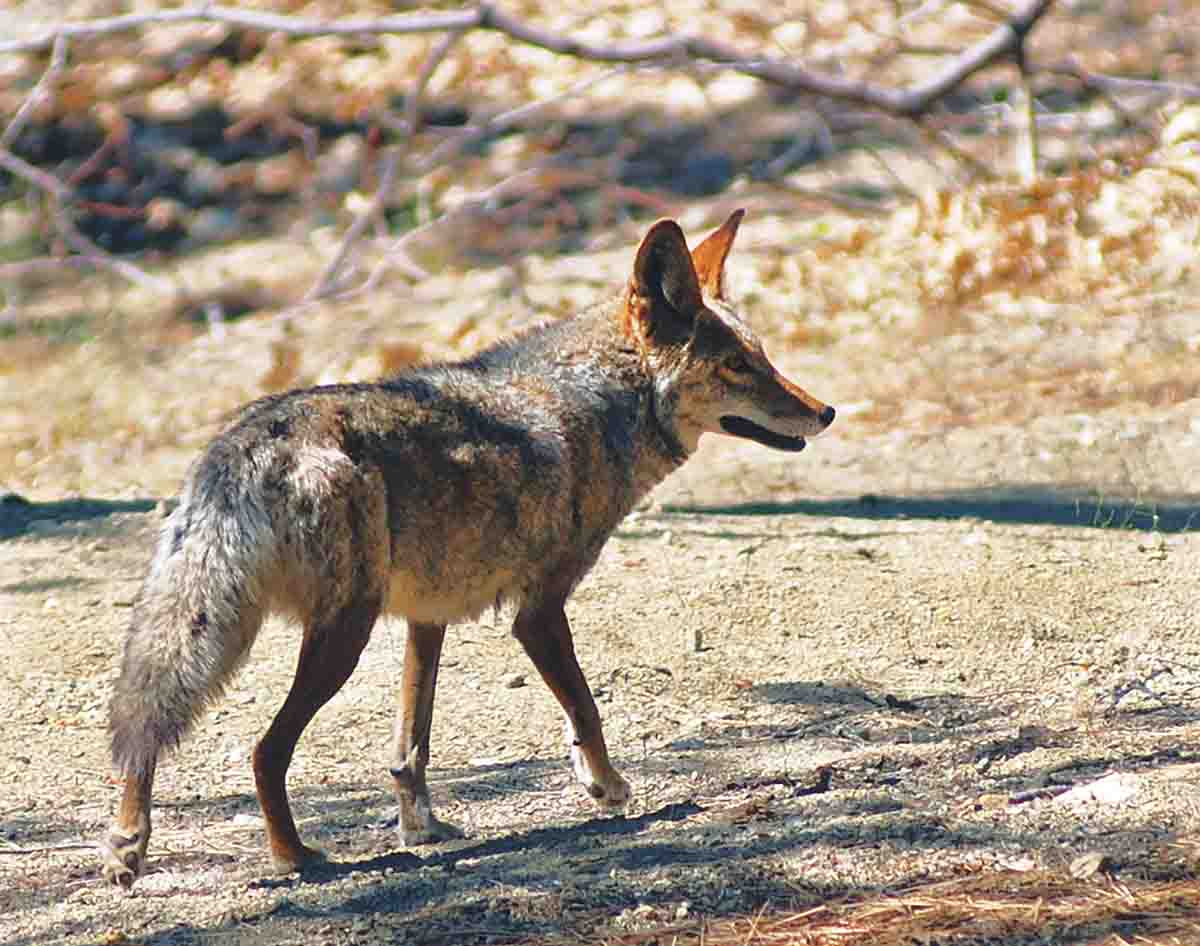
On a recent hunt, I was hiking through an oak savanna in California’s Sierra Nevada foothills. I was climbing up to a low ridgeline moving sidehill across the ridge, gradually working up to the top. I was cutting across and through small draws that came off the top of the ridge. A young male coyote was bumped in one of the side draws and angled up this draw to the same ridge I was heading toward. I quickly dropped into a sitting position and my mind was whirring about his likely track up the gentle slope. He was running behind a screen of oak branches preventing a shot, but I looked ahead and decided the coyote would run through the opening just ahead. I was tracking him in the scope when he stopped and the rifle roared. I never thought about distance once because I knew he was in my point minute-of-dead coyote range.
This is a real-world hunting situation like varmint hunters face every day. It is not about taking lots-of-time to measure range, determine wind drift and bullet drop, and then make the adjustments to shoot. A coyote or jackrabbit bumped out of a brush thicket, disappearing down a draw, and then reappearing running at some unknown distance as it streaks across a flat is another game. It requires that a shooter quickly gets into a shooting position, make a ballpark distance estimate, and then take a shot at fleeing game or they are ready when the critter stops for a look back. Rifles that handle well and have a flat trajectory at normal shooting distances are preferred. A lightweight 25-270 WSM is a shiny apple in the varmint rifle fruit bin for this type of hunting.
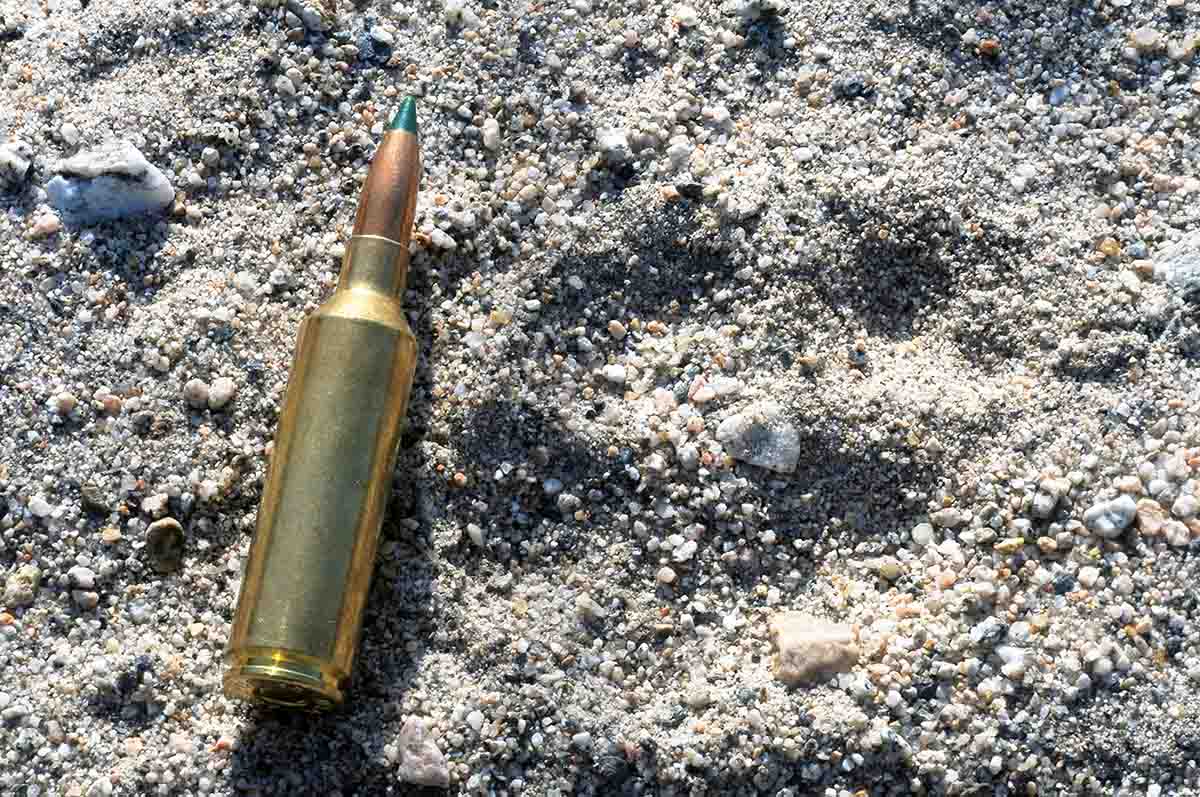
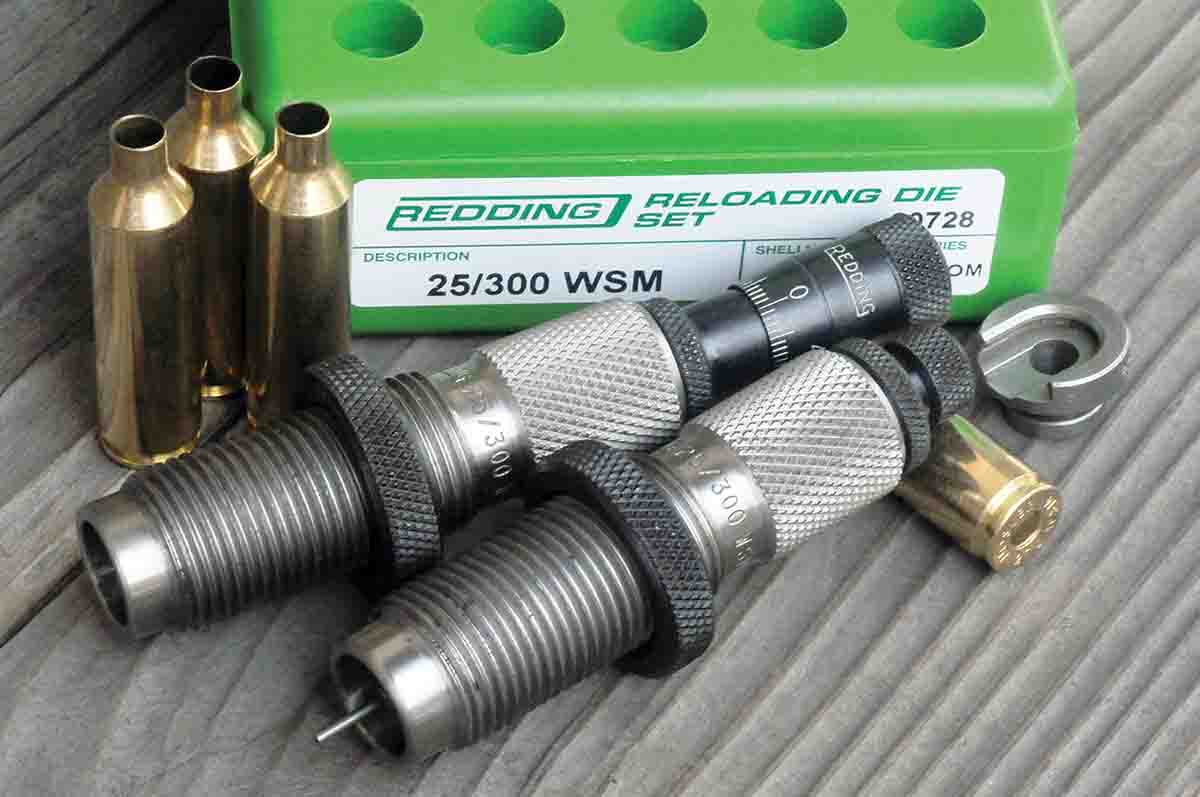
The beauty of this wildcat is that the dies are a stocked item for companies like Redding. They try to keep a few sets in inventory and in the supply chain pipeline. When I called, Redding had a set available and I added a micrometer seating adjustment to the seating die.
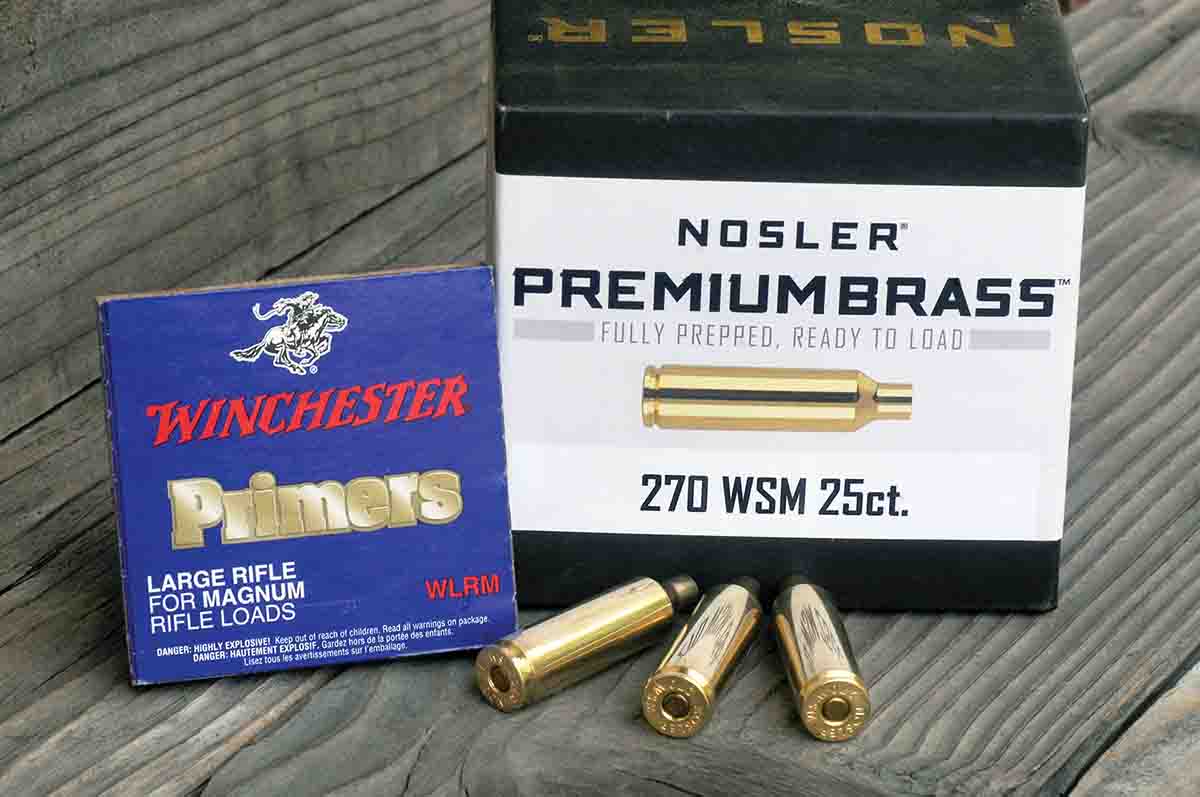
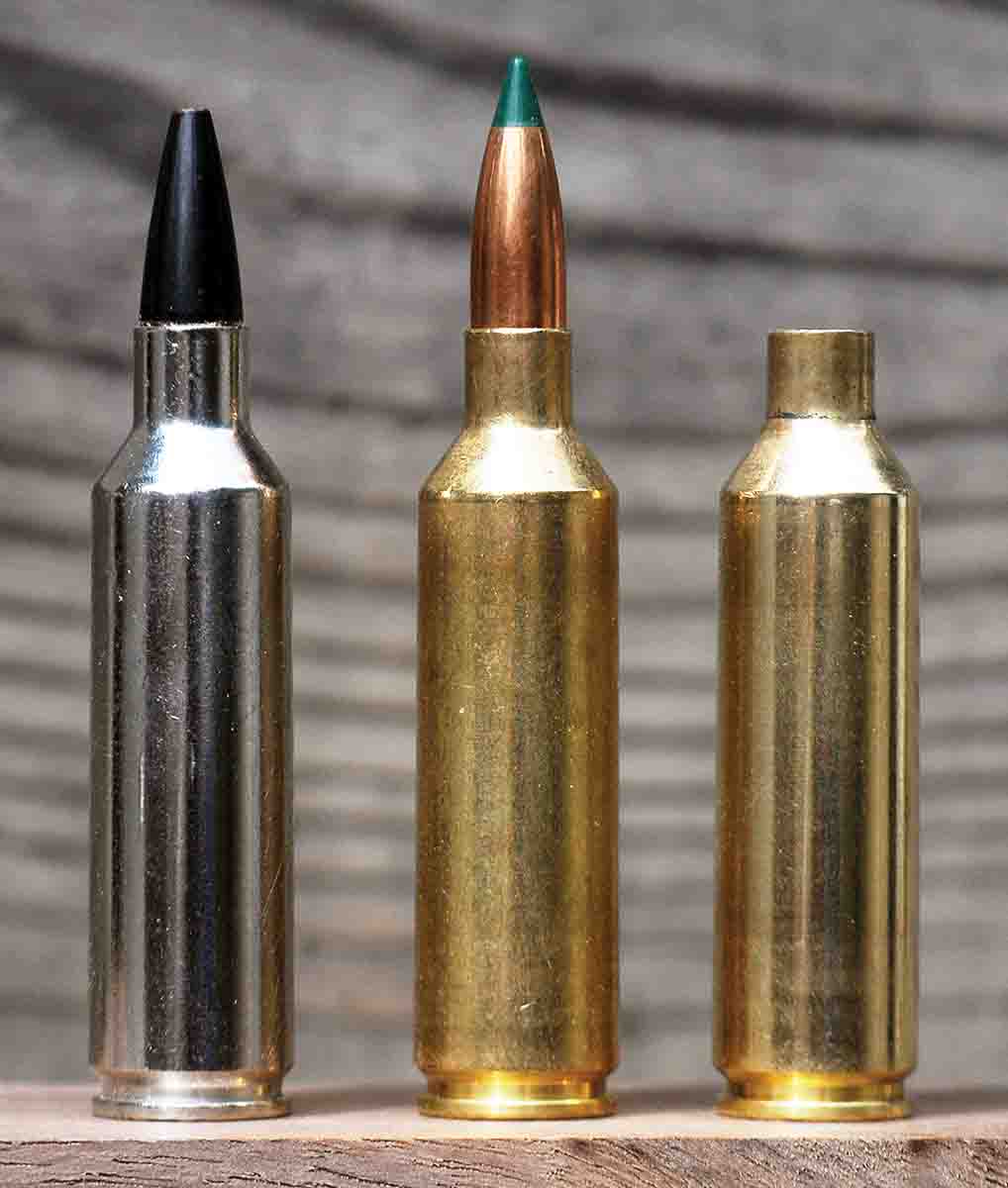
Forming cases is a simple process. Using 270 WSM brass, it takes a single pass through the full-length sizer to make a completed case, with no intermediate steps necessary. Finding 270 WSM brass, like all reloading components right now, is difficult and can be pricey when it is located. I used new Nosler brass for all the testing here.
While I have been unable to find primers lately, always seeming to arrive just before shipments arrive at local shops or just after they have sold out. Thankfully, I have a pretty good stash of both standard and magnum large rifle primers on hand, all purchased a decade or two ago. I used both Winchester Large Rifle Magnum (WLRM) and regular Winchester Large Rifle (WLR) primers throughout the testing.
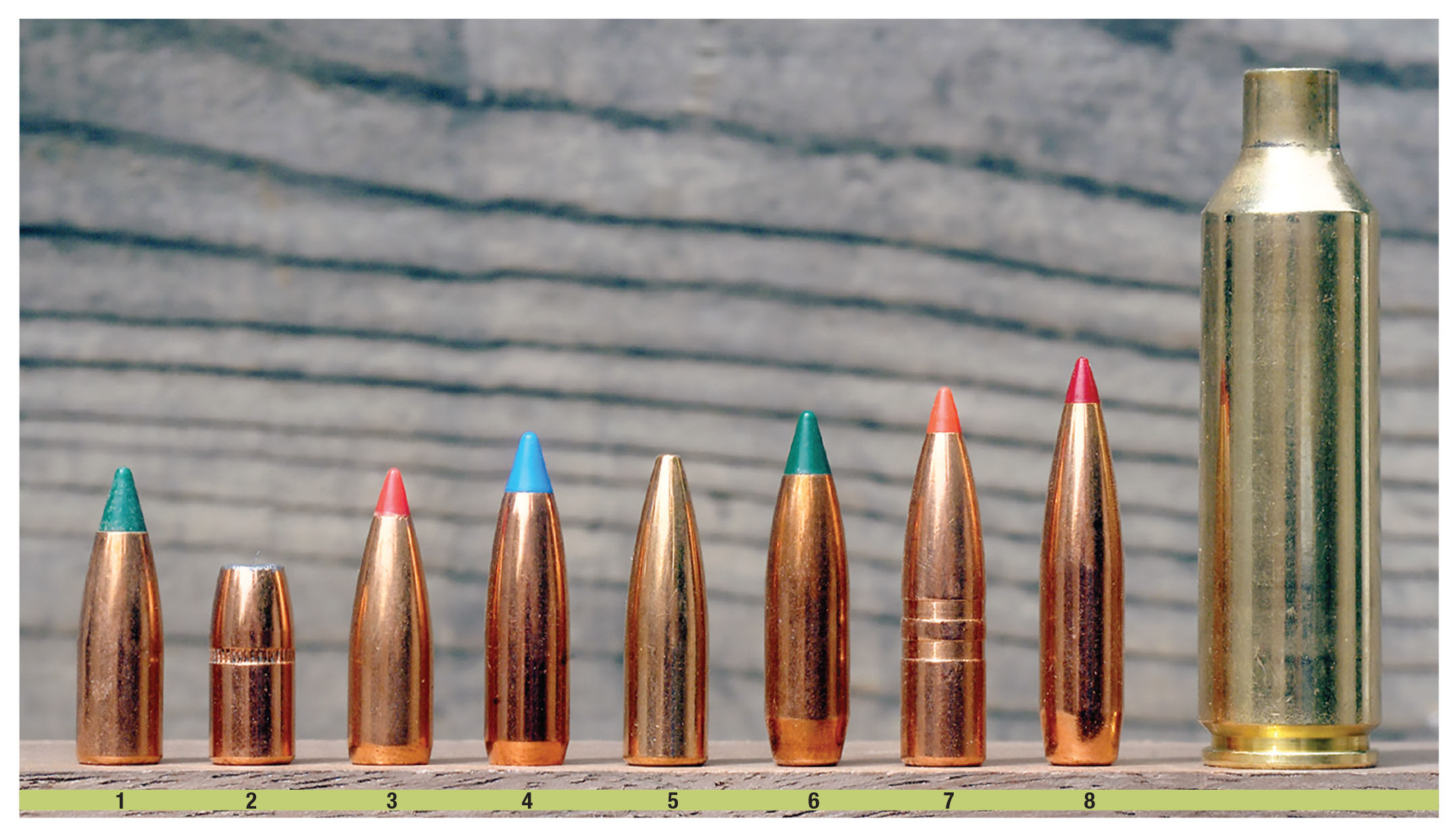
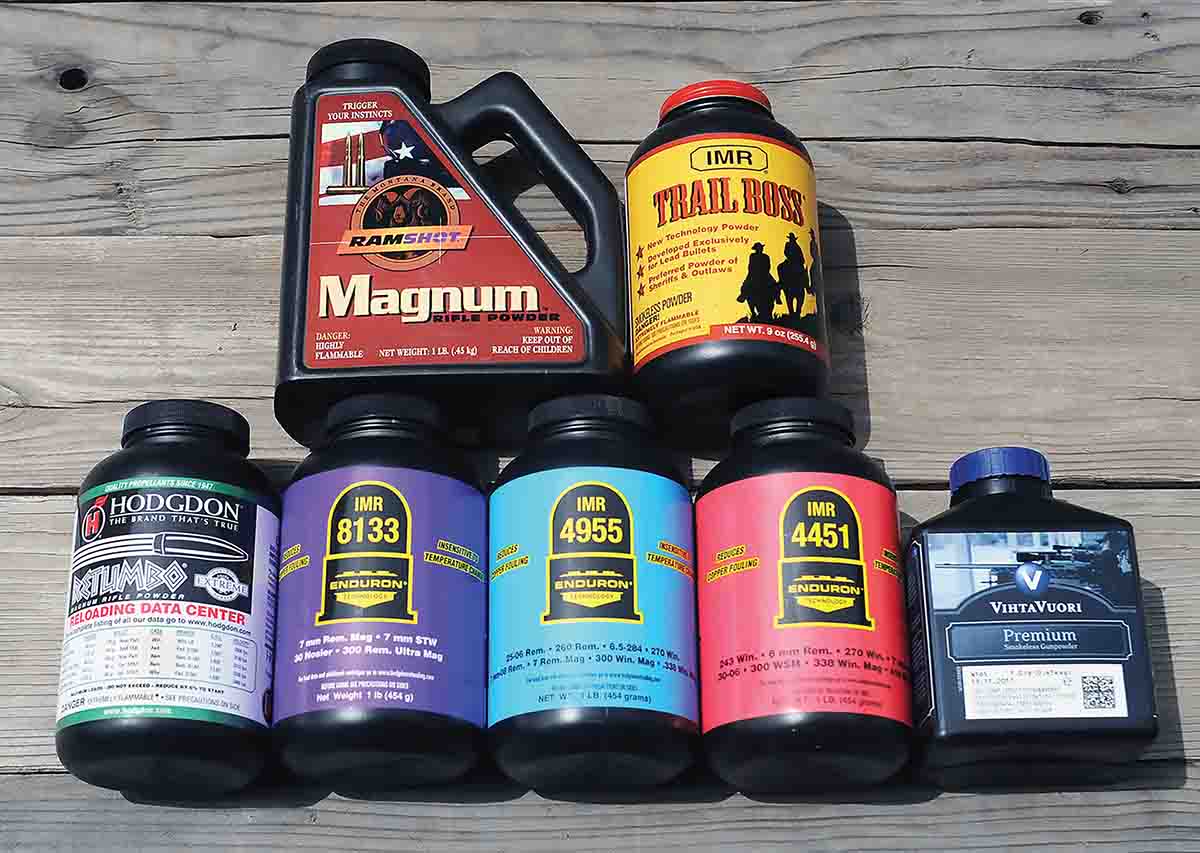
I also wanted to use a range of bullets, from the lightweight slugs to the heavier models with higher ballistic coefficients. With that in mind, I selected eight bullets for testing, ranging from 70 to 110 grains. I also used mostly newer powders in the slower end of the spectrum with IMR-4451 being the fastest powder tested and IMR-8133 being the slowest for full-power loads. I always include Trail Boss or other reduced-velocity loads in my testing as light, easier-on-the-barrel loads for volume ground squirrel shooting or plinking. Two of the bullets selected were chosen with this in mind, the Speer 75-grain flatpoint designed for the 25-20 and the Speer 87-grain TNT, which is very frangible and might come apart in flight if run at high velocities attainable in the 25-270 WSM. Both were used to shoot a few spring ground squirrels in playing with the rifle, and these bullets at the modest 2,000 to 2,200 fps velocities pieced out the squirrels like 22-caliber slugs at much higher speeds.

I used three-shot groups in deference to the pencil-thin barrel. The barrel was hot after one shot and too hot to touch after three rounds. Frequently, the first two shots would be touching or nearly touching, and then the group would open up with the third shot as heat mirage waved up through my view in the scope. That is clearly evident in the load table on the previous page.
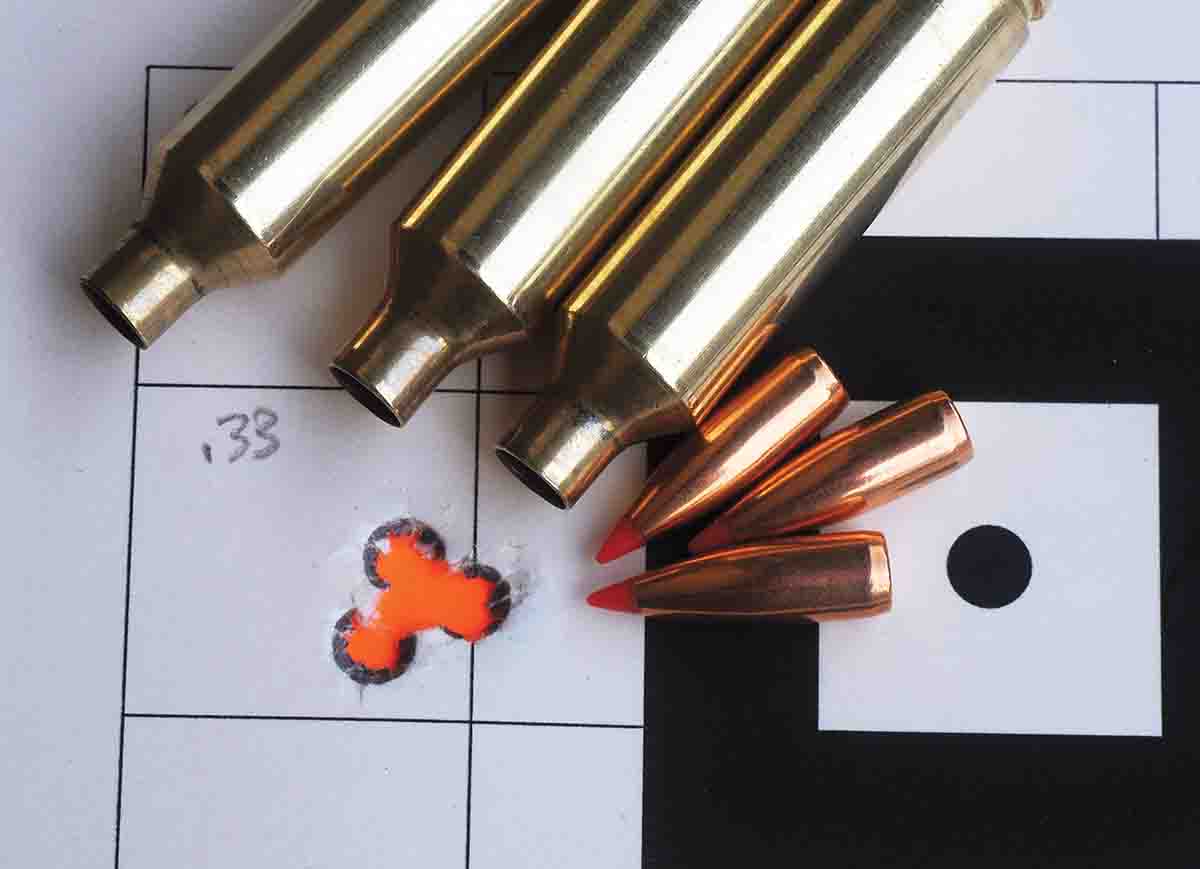
Over the years, I have shot a variety of 25-caliber rifles from several 250-3000s, through the Roberts, to the 25-06. I have had excellent accuracy from the Hornady 75-grain V-MAX bullets in all of them and that was true again with this rifle. Both IMR-4955 and Vihtavuori N165 produced the best groups shot with the rifle in my limited testing. While the velocity wasn’t scorching with the N165, at just 3,434 fps, the .33-inch group was the best shot with the rifle.
While this testing was very limited, I will probably end up settling on using two loads for varmints in this rifle. I will use the Hornady 75 grain with IMR-4955 for walking-up jackrabbits, and either the Nosler 85 grain or Sierra 90 grain for coyote hunting. IMR-8133, Retumbo, and Ramshot Magnum powders all showed good results with both velocity and consistency with 85-grain and heavier bullets. Some of the loads with these powders showed impressive extreme spread of less than 20 fps at these high velocities.
How do fast bullets out of a 25-270 WSM, featuring relatively low-BC bullets, compared to uber-popular rounds like the 6.5 Creedmoor on paper. It’s an eye opener. With an identical sight-in point of 200 yards, the difference in drop at 500 yards is 6 to 16 inches, depending on which loads are used (see table).
Out to 500 or 600 yards, speed is the determining factor in bullet drop. Even the 22-250 with 50-grain bullets with a BC of just 242 will drop 6 inches less at 500 yards than the best 6.5 Creedmoor loads.

Serious coyote hunters have long gravitated to speed so they can make shots out to 400 yards or more without serious thought about bullet trajectory, allowing the hunter to focus on field shooting. The 22-250, 220 Swift, and later, the 17 Remington developed a big following precisely because of their long point-blank-coyote range. The 25-270 WSM falls into that same category of flatness, but its higher BC 25-caliber slugs also drift less in the wind than the 22s.
.jpg)
The reality is that we miss a lot of those shots just because they require a lot of field practice and a flat-shooting rifle to make consistently. This new 25-270 WSM will be seeing a lot of field use year-around. It has all the ingredients.
.jpg)