22 Winchester Magnum Rimfire
Testing Loads for Accuracy and Velocity
feature By: Phil Massaro | April, 21
It has the distinction of being the only truly successful rimfire cartridge introduced in the twentieth-century. The 5mm Remington had a brief moment in the sun, but has been a rarity at best since the 1970s, and the 22 Magnum possesses a unique geometry in comparison to all the other rimfire cartridges that came before it. It uses the .224-inch diameter bullet common to the 22 Short, 22 Long and 22 Long Rifle, but where that trio shares a body diameter of .226 inch and a rim diameter of .278 inch, the 22 WMR has a body diameter of .242 inch and a rim diameter of .294 inch. This larger size prevents the latter from possibly being chambered in any of the older rimfires. The 22 Magnum is also considerably longer than any of the earlier rimfires, having a case length of 1.055 inches (.442 inch longer than the 22 Long Rifle) and an overall length of 1.350 inches.
All that extra length and girth results in greater velocity and increased energy. Where the 22 Long Rifle drives a 40-grain bullet at a muzzle velocity of roughly 1,200 feet per second (fps), the 22 Magnum will achieve over 1,800 fps. The 22 Long Rifle generates about 130 foot-pounds of muzzle energy, and the Magnum over 320 foot-pounds. This velocity and energy increase extends the effective range of the 22 Magnum to make it a reliable 100-yard, small-game rifle. With most loads, a 100-yard zero will provide a midrange rise of not much more than an inch, and about 6 inches of drop at the 150-yard mark. Though most of the time I try to stay inside of 125 yards.
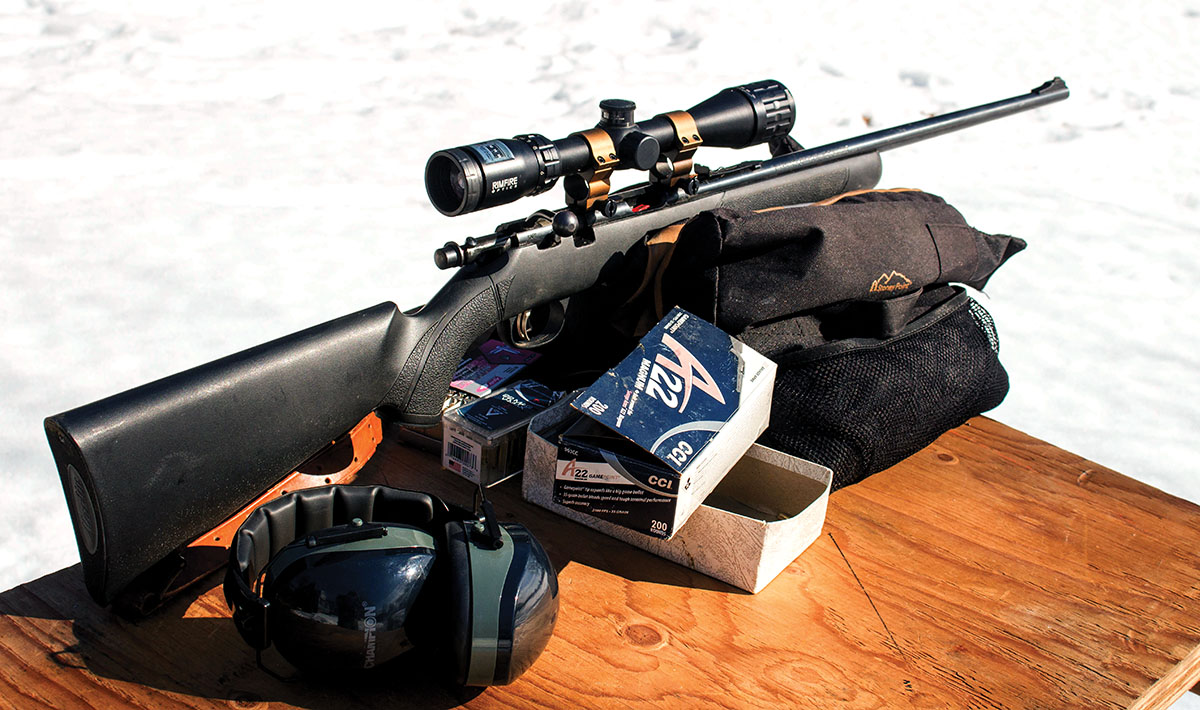
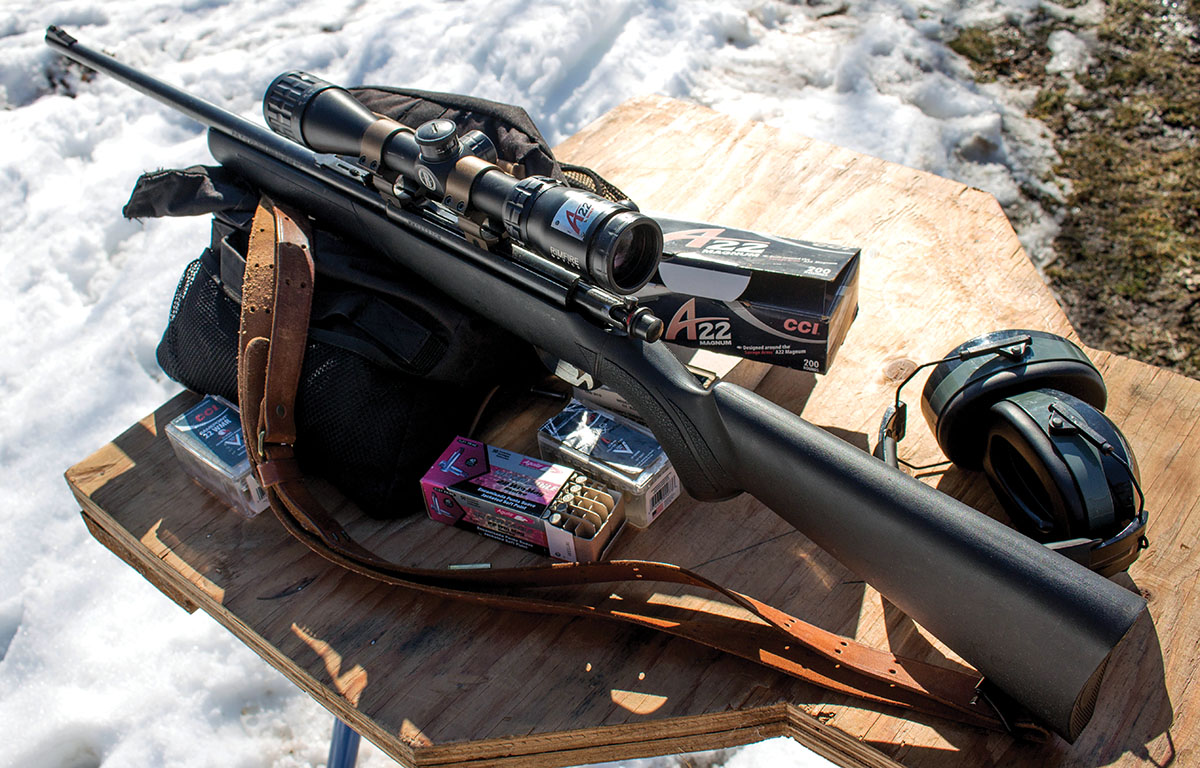
The 22 Winchester Magnum Rimfire is available in all sorts of rifles and handguns, from lever-action Henry rifles to the autoloaders from Savage, CZ and Rossi. Combination guns and numerous revolvers show up now and then, but bolt-action rifles are the most popular. My dad, “Ol’ Grumpy Pants,” is most pragmatic, not to mention frugal, when it comes to his choice of firearms, though I must admit they all perform well. His favorite rimfire is a Marlin XT-22 bolt-action rifle. It’s a no-frills, polymer-stocked affair with a detachable magazine, that famous Micro-Groove barrel and the company’s Pro-Fire adjustable trigger. Is it pretty? No, no it isn’t. But it is a shooter, and he enjoys the fact that he doesn’t need to worry about scratches, scrapes or dings; it is just a hunting machine. He uses a Bushnell A22 Rimfire 3.5-10x 36mm AO scope mounted in – much to my consternation – see-through mounts. “I’ve gotta have the iron sights too!” There is no changing his mind. But, I digress.
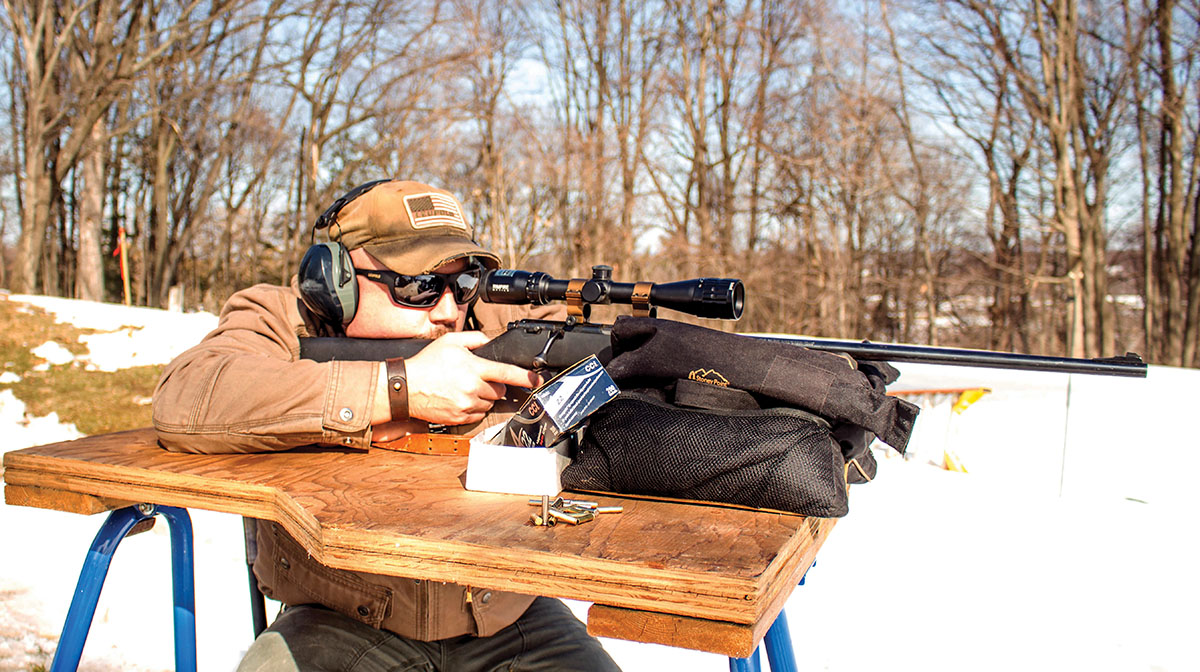
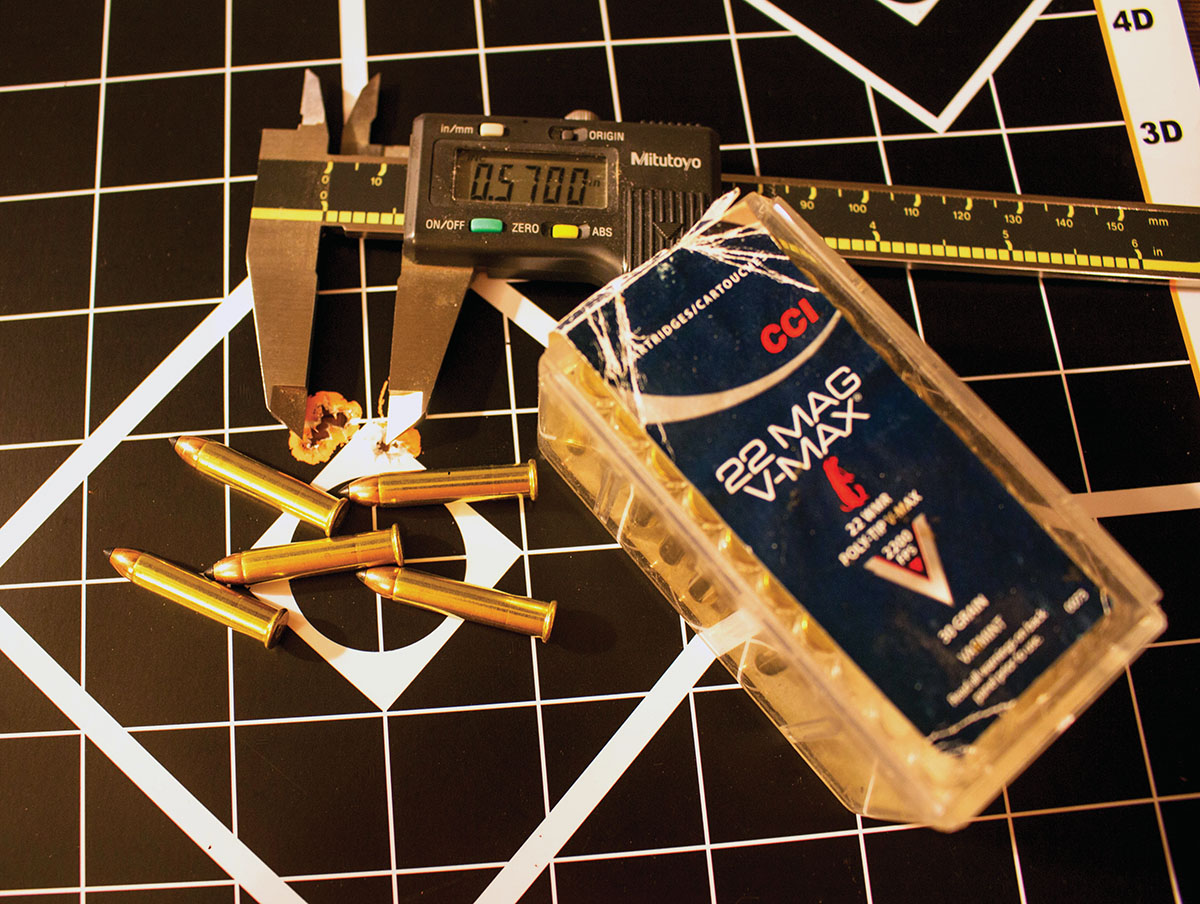
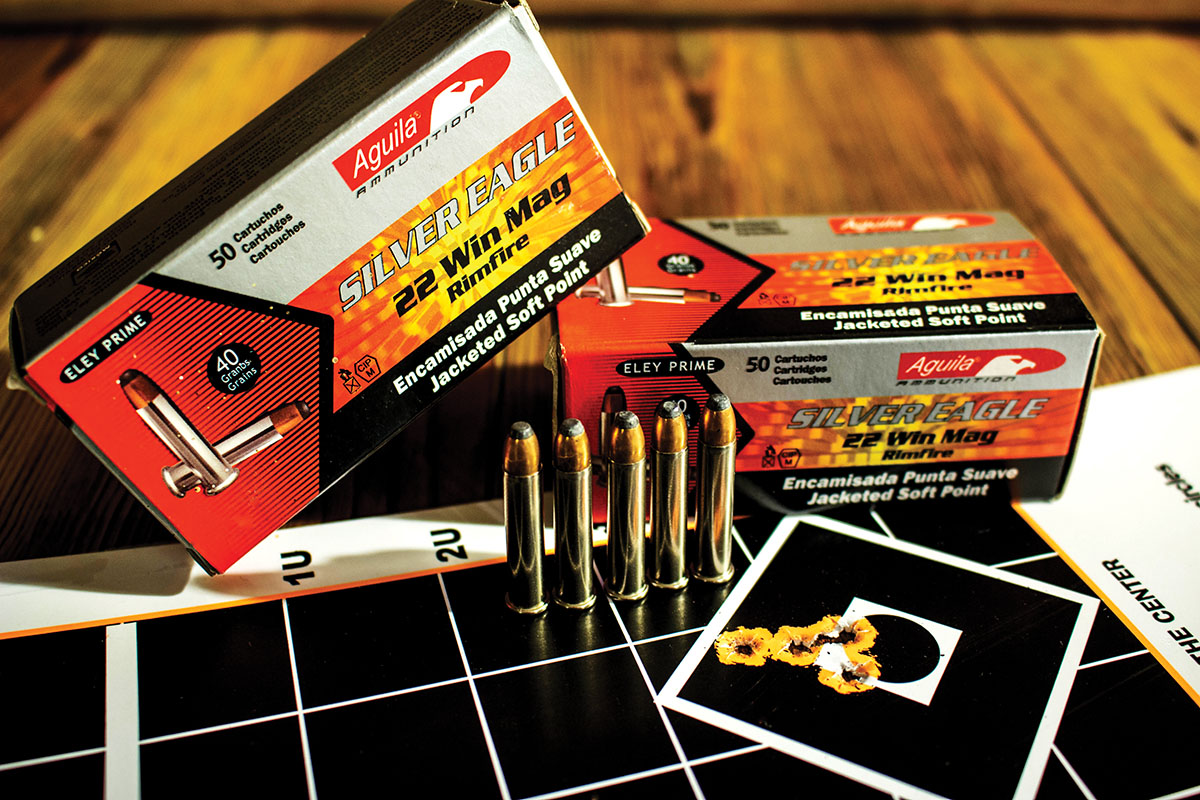
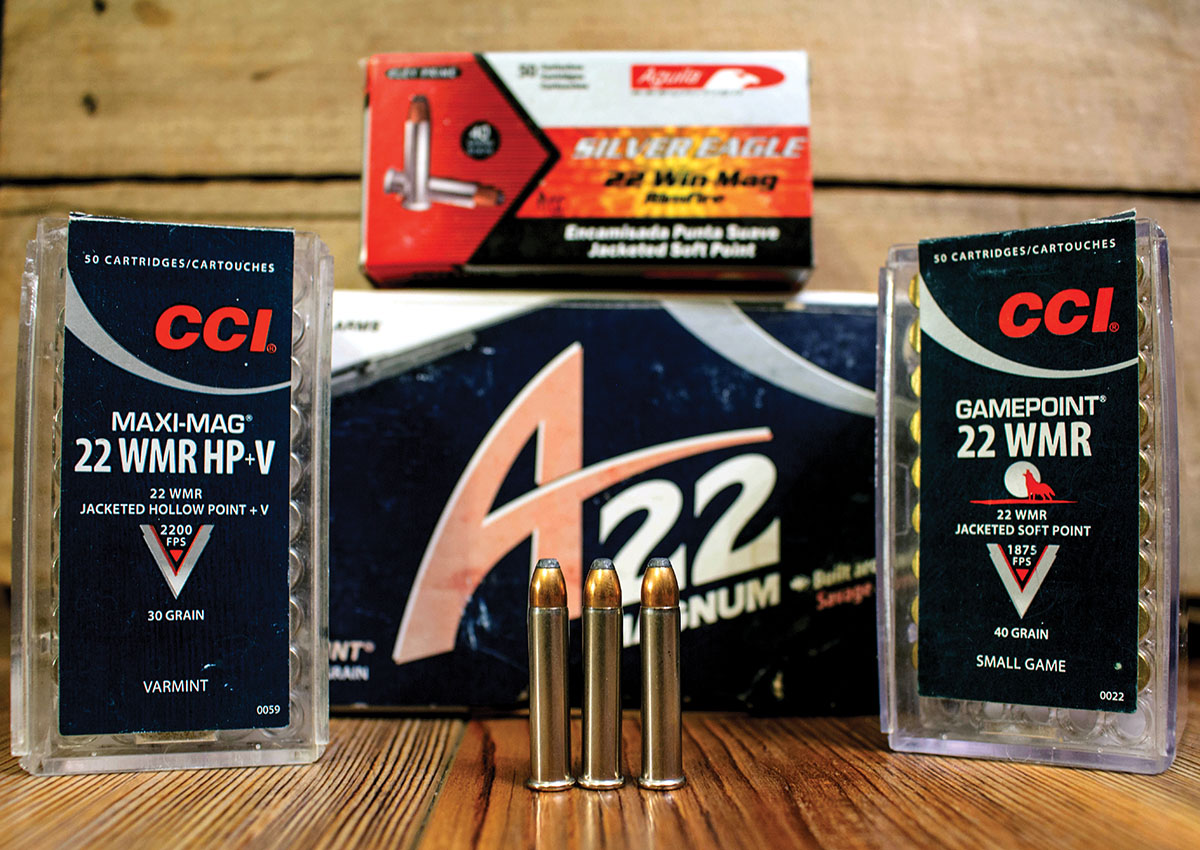
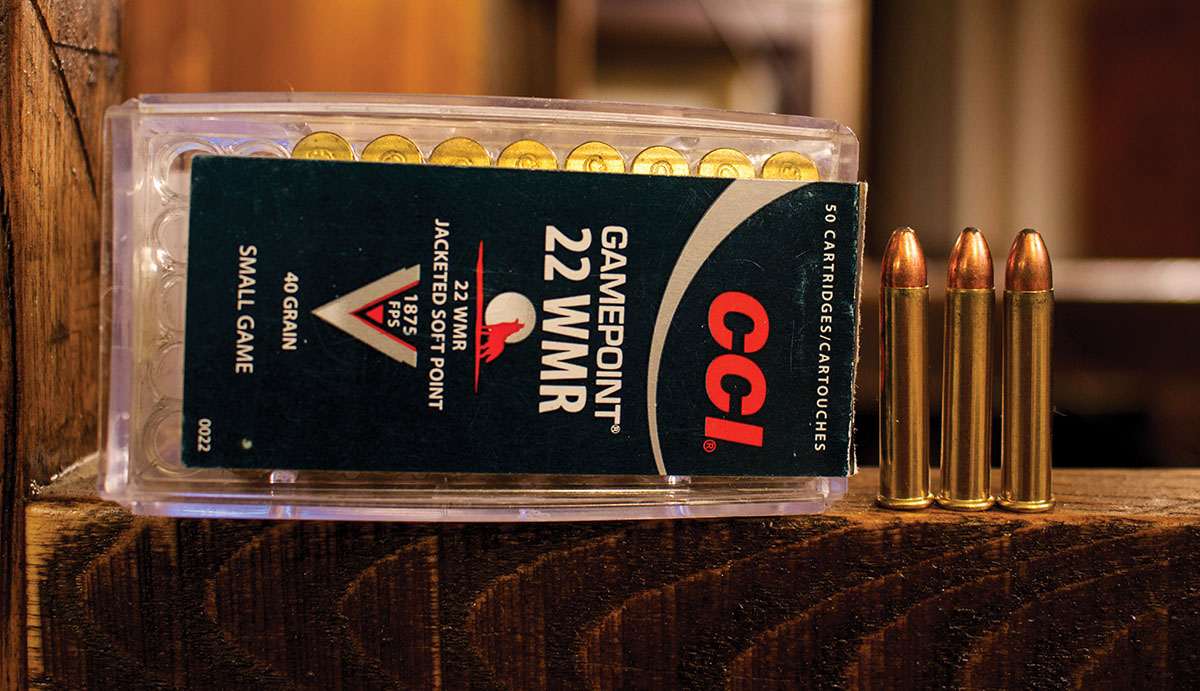
The Marlin XT-22 shoots CCI ammunition very well, and so do I. When it comes to rimfire ammunition, I feel CCI’s loads rank among the best available, and its 22 WMR products are no exception. For testing, I grabbed some different types of CCI ammunition – the A22 load with the 35-grain Gamepoint bullet, the 22 MAG V-MAX with the 30-grain polymer-tip bullet, the Maxi-Mag HP+V load with the 30-grain hollowpoint bullet, the Maxi-Mag load with the 40-grain TMJ bullet and the Gamepoint load with the 40-grain jacketed softpoint. Aguila’s Silver Eagle load with a 40-grain jacketed softpoint was also tested. This gives a decent cross-section of bullet choices and weights for what most hunters would use on varmints and predators.
The 22 WMR is a cartridge that will handle small-game animals like squirrels and rabbits, as well as varmints like woodchucks and prairie dogs, right on up to the furbearers like foxes and coyotes. With muzzle velocities in the realm of 1,850 fps to 2,200 fps, the cartridge has enough oomph to cleanly take even the largest coyote, and it has been known as the “poacher’s cartridge,” as its mild report has been a favorite of those lawbreakers who take deer when and where they shouldn’t. It is accurate enough to routinely hit small targets – i.e. head shots on gray or fox squirrels, or eradicating red squirrels high up in the trees – and has a nice selection of projectiles, including some full metal jacket options like the CCI Maxi-Mag TMJ, which will minimize pelt damage on the furbearers.
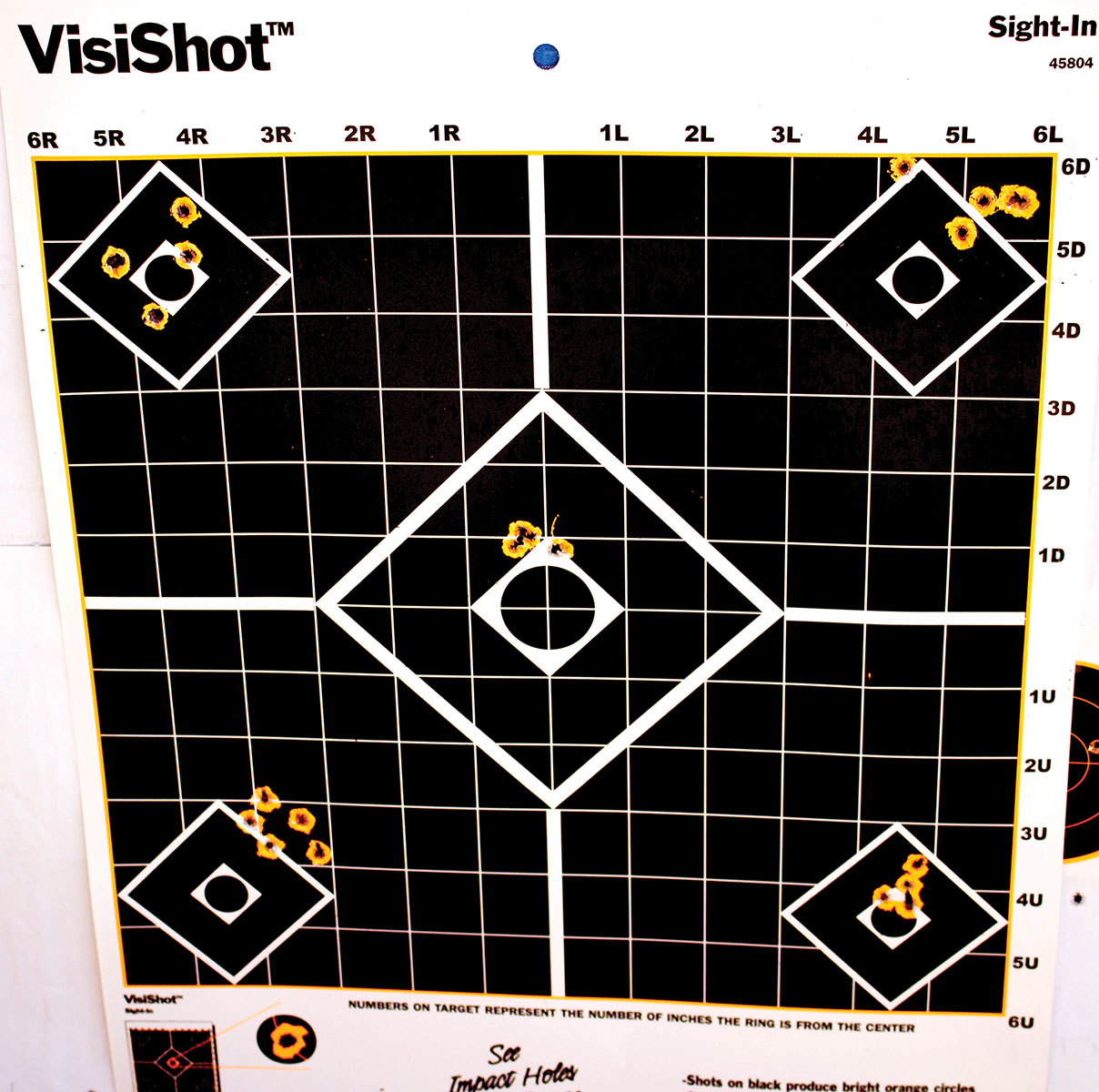
CCI 22 Mag V-MAX loads shot the best groups of the lot, with groups averaging .60 inch at 50 yards. Using the Hornady 30-grain V-MAX bullet – the thin jacket plus the polymer tip work together for explosive terminal performance – at an advertised velocity of 2,200 fps. This load is fantastic for both varmints and predators alike. The pointed polymer tip gives the bullet a G1 ballistic coefficient of .116, and the high velocity helps to flatten the trajectory as well as transfer energy.
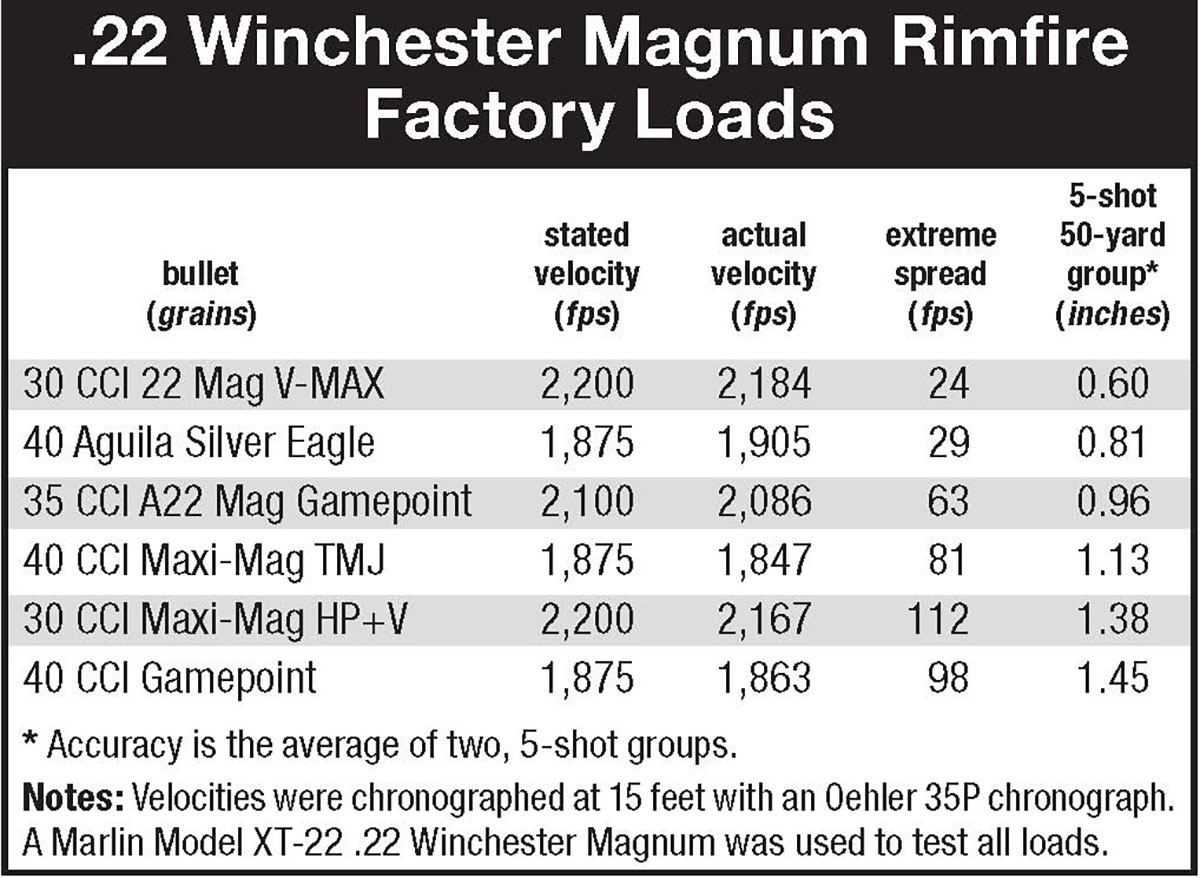
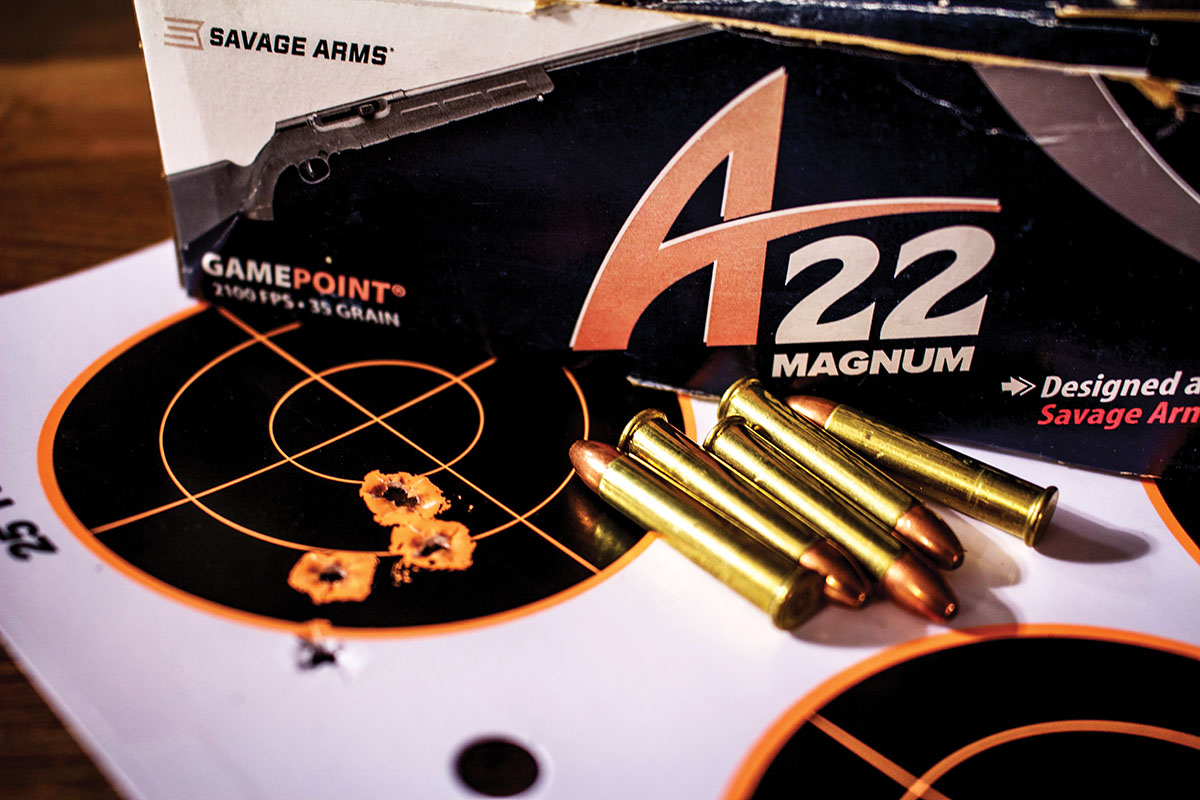
Third on the list, the A22 Magnum load from CCI, was designed to give optimum performance in the Savage A22 Magnum autoloader but worked just fine in the Marlin XT-22, though I did get the occasional flyer. The 35-grain Gamepoint softpoint bullet gives great expansion, and the lighter bullet at 2,100 fps makes for a good blend of flat trajectory and minimal meat loss on edible game. This load gave groups measuring just under an inch.
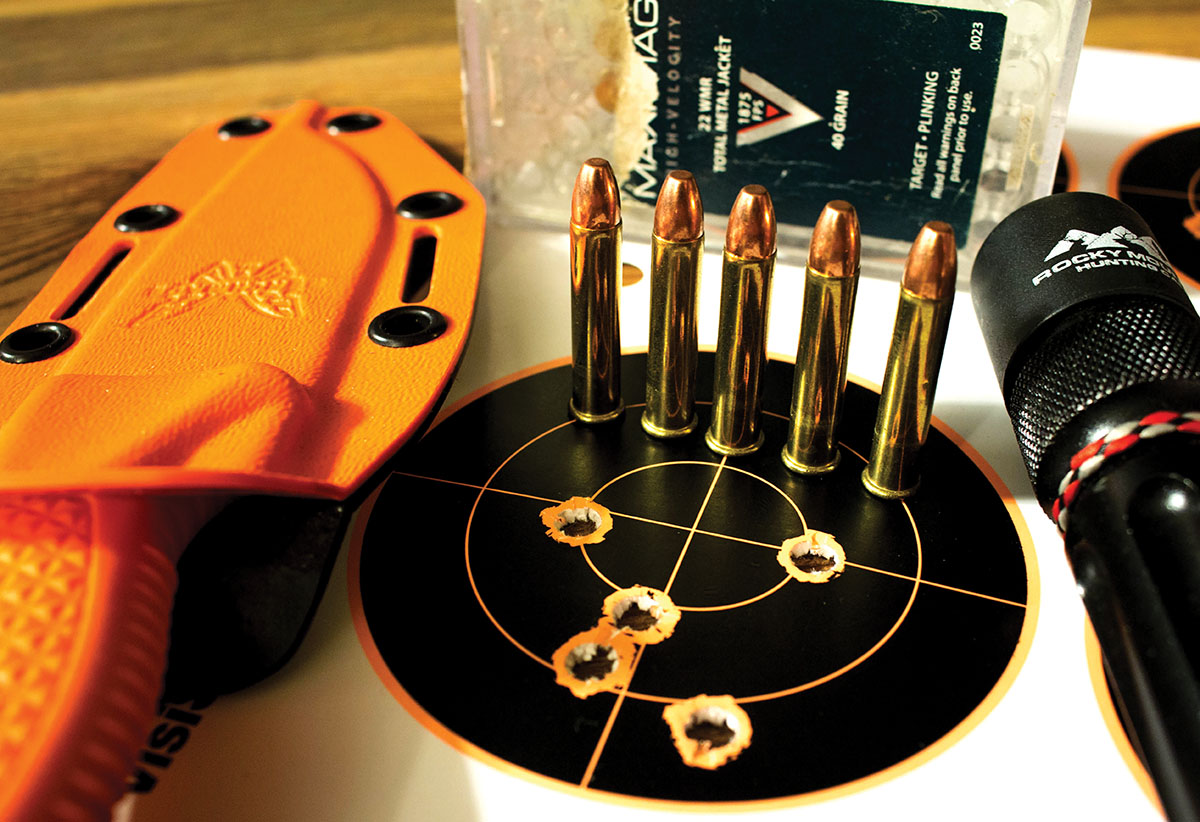
CCI’s Maxi-Mag 40-grain TMJ load printed five-shot groups averaging a bit over an inch. I’d choose this load for fox, bobcat and coyote hunting at woods distances, as the full metal jacket bullet will definitely reach the vitals, yet the lack of expansion will keep pelt damage to a minimum in order to preserve the value of the fur. Though the accuracy was not as consistent as that of the CCI 22 Mag V-MAX, it was good enough to cleanly take the larger predators. Velocity ran about 30 fps slower than the advertised 1,875 fps.
CCI Maxi-Mag HP+V 30-grain jacketed hollow point: CCI loads its jacketed hollowpoint bullets into nickel-plated cases, but the Marlin test rifle wasn’t exactly enamored of them. Five shots averaged 1.38 inches, center-to-center, often with the first three in a much tighter group and the last one or two spoiling the party. I suspect these are sensitive to barrel heat as well. Velocities averaged 2,167 fps versus the advertised 2,200 fps.
Where does the 22 WMR sit in the mix of rimfire cartridges? Well, it hits much harder than the 22 Long Rifle, 22 Long or 22 Short, though ammunition costs three to four times the price. The 17 HMR also shoots much flatter at the same price, but that cartridge comes with its own set of issues, namely the need to clean that tiny little bore much more often than others in order to maintain accuracy, and the specialized tools needed to perform that chore. Many hunters complain about the wind drift issues with the .17s, but if you look at the data, they’re not really much worse than the 22 Mag. The 17 WSM is more expensive yet, though it ramps up the velocities considerably, and still has the issue with the tiny bore. While the .17-caliber rimfires can handle the larger furbearers, the 22 WMR does a much better job, as it offers bullets weighing up to 50 grains, and the heavier bullets will offer much more in the penetration department.
The recoil and report of the 22 Magnum is negligible, and though it is greater than that of the 22 Long Rifle, it is still mild enough to teach a new shooter – young or old – the principles of marksmanship in both the hunting fields and at the shooting bench. In comparison to the .22 centerfires – especially the 22 Hornet, the mildest of the .22 centerfires, but still much faster than the 22 Magnum – the 22 Winchester Rimfire Magnum is no speed demon, but considering that the effective range of the cartridge is about 125 yards, this isn’t much of an issue inside that distance. There is also a definite and appreciable difference in the report and recoil of the 22 WRM and the 22 Hornet, let alone the 223 Remington or 22-250 Remington, not to mention the increased cost in shooting a centerfire.