Year-Round Varmint Loads
Loading for Versatility
feature By: John Haviland | April, 21

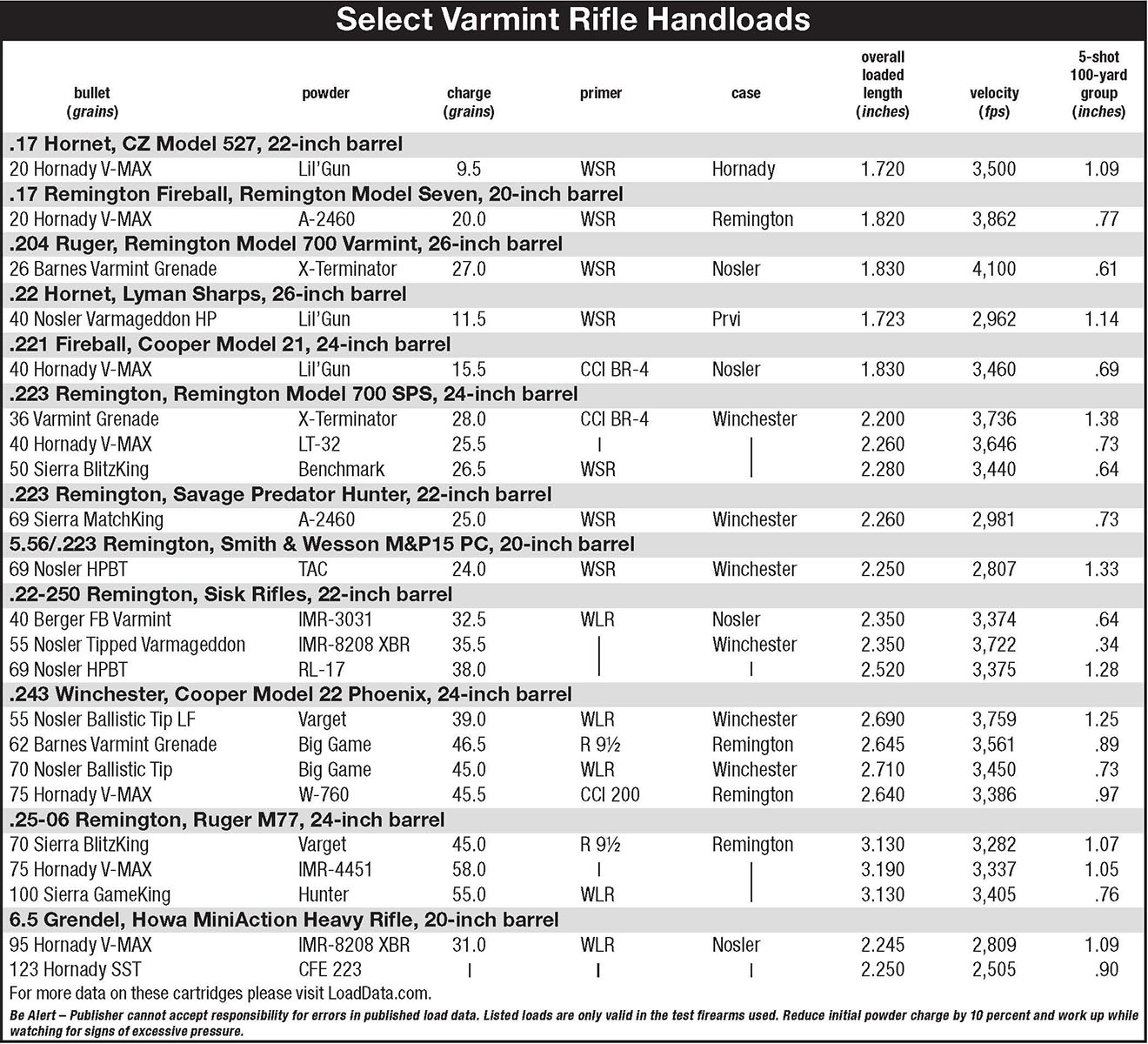
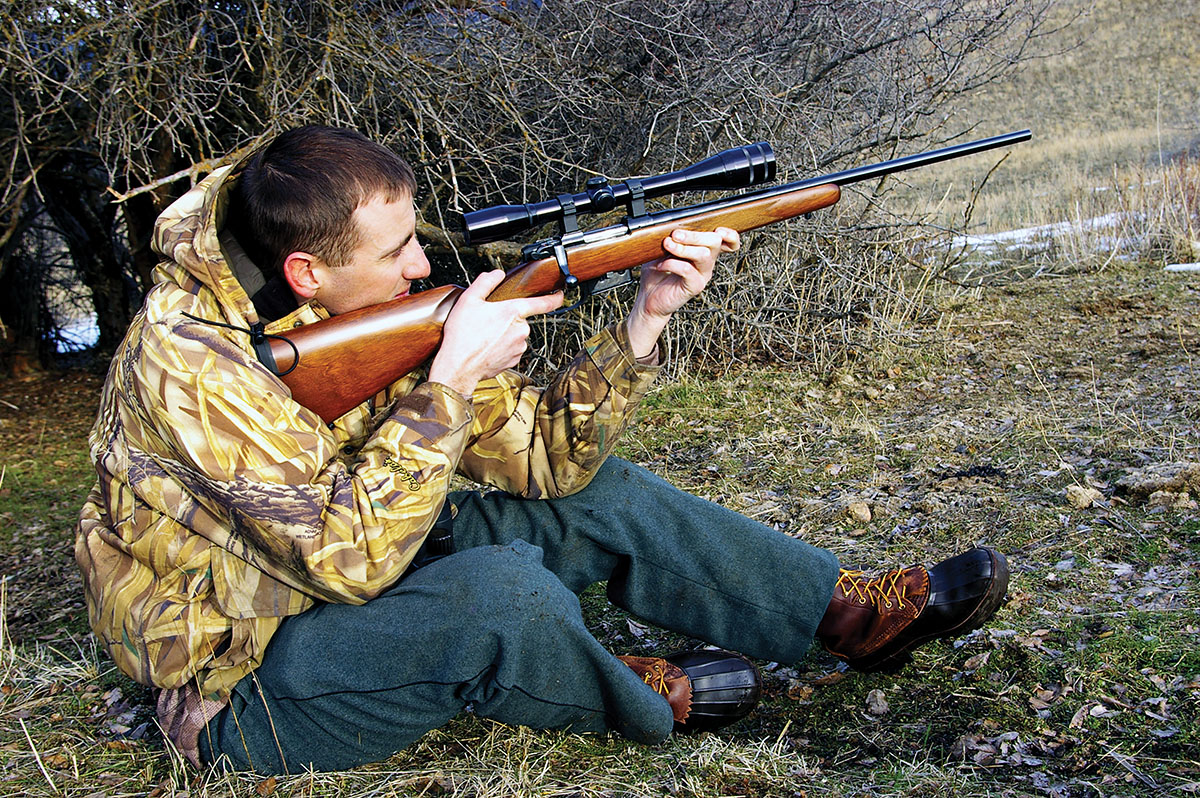
Some rifles and cartridges make a very versatile pair. My 25-06 Ruger M77 weighs a candy bar’s weight under 9 pounds with a Leupold VX-3i 3.5-10x 40mm scope. That’s a fairly easy load to carry across sagebrush foothills during the winter to hunt coyotes. Over the years I’ve handloaded 75-, 80- and 85-grain bullets at top velocities for that shooting. In recent years, I’ve been shooting Sierra 100-grain GameKing bullets that exit the rifle’s 24-inch barrel a touch over 3,400 feet per second (fps). With the GameKings hitting 2 inches above aim at 100 yards, the bullets drop only 2.25 inches at 300 yards, and 12 inches at 400 yards. With that trajectory, I can aim with the crosshairs a sliver over a coyote’s back when it stops way out there at an indeterminable distance while coming to the call, when any movement to take a reading with a rangefinder would spook the coyote.
A couple of winters ago, I skied across the snow and stopped in the sagebrush at the edge of an open basin. No coyotes came to the rabbit “squeals” from my electronic call, and after a while I continued shuffling along on my skis. Late that morning I started back across the basin with my head down, leaning into the skis. Happening to look up, I spotted a coyote far out in the basin hunting mice. I kicked off my skis and dropped down with the 25-06 over my pack. The snow-covered ground provided no reference to determine range, and the coyote was staring toward me. I guessed the range at close to 400 yards and fired. The coyote tipped over and its fur paid for my gas for the day.

Ground squirrels are so thick in some fields it would be easy to burn out the 25-06’s barrel over a weekend. So with some restraint, I shoot just enough to keep my hand practiced with the rifle for big-game season. The 25-06 will fire bullets such as the Sierra 70-grain BlitzKing and Hornady 75-grain V-MAX to upward of 3,700 fps. However, that would be a waste of powder and barrel steel. Hitting a gopher much past 300 yards is a prayer when shooting from less than perfectly still field positions and with the scope turned all the way up to 10x.
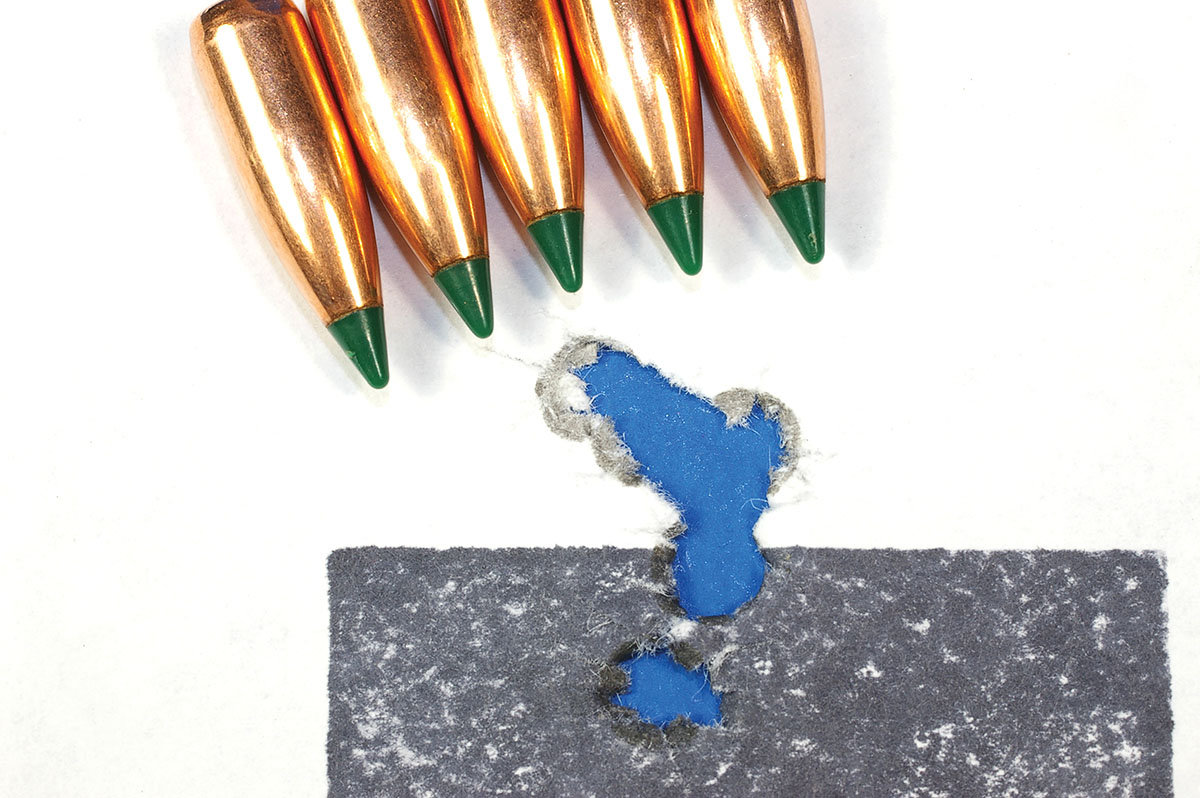
A Sierra 70-grain BlitzKing starting out at a relatively slow 3,300 fps is just right for that shooting, and saves about 4 grains of powder per shot compared to a maximum load. It’s also much gentler on the barrel bore. With BlitzKings hitting an inch above aim at 100 yards, they drop about 6 inches at 300 yards. With that trajectory, I can aim with a sliver of daylight above the head of one of the little varmints way out there and knock it off its mound.
My Cooper Firearms Model 22 243 Winchester sits at the opposite end of the field from the Ruger 25-06. The Cooper is a heavy rifle with a 24-inch bull barrel and Leupold VX-3 4.5-14x 50mm scope. The rifle’s wide forearm does help steady it on a sandbag rest to take advantage of its excellent accuracy shooting full-power loads with lightweight bullets, like the Nosler 55-grain Ballistic Tip Lead Free to the Hornady 75-grain V-MAX.
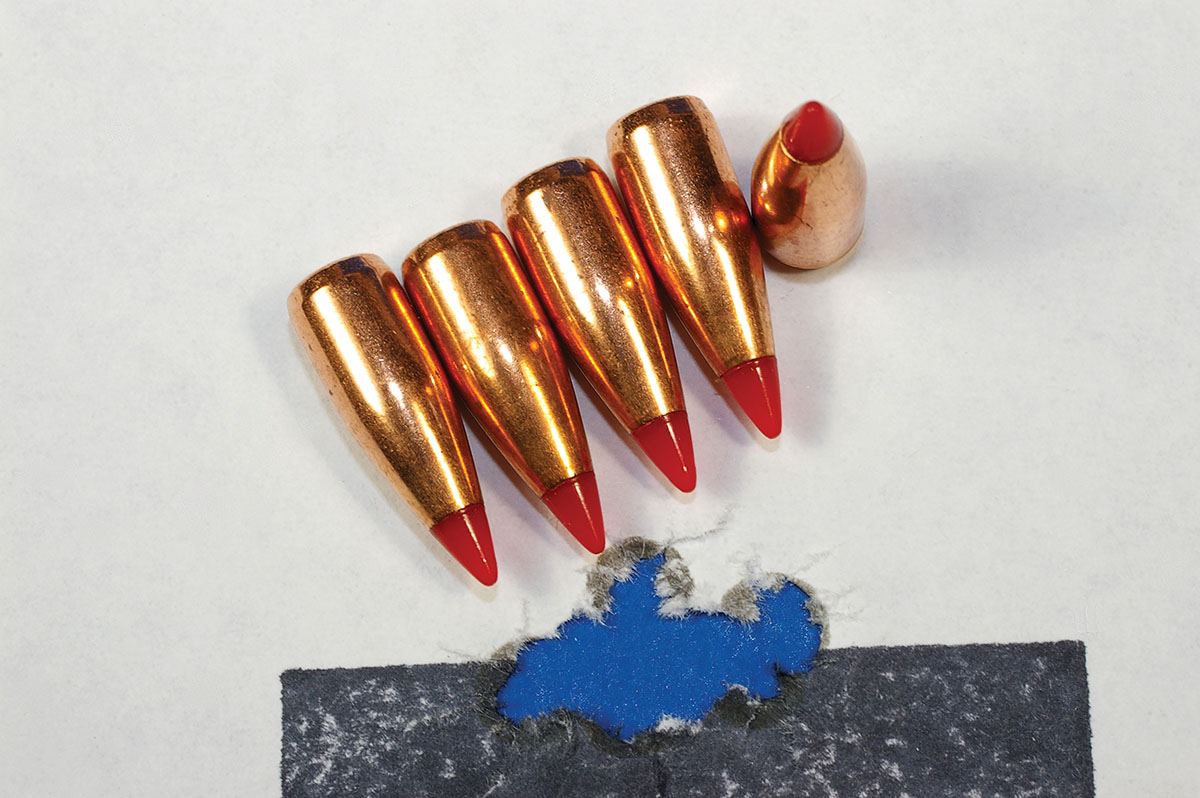
The same goes for my Cooper 22-250 Remington with its 1:12 rifling twist. The Cooper 22-250 accurately shoots bullets in lengths up to about the Nosler 60-grain Ballistic Tip, which handles most normal shooting.
However, a faster rifling twist in the barrel of a 22-250 extends year-round versatility by accurately shooting long and high ballistic coefficient bullets. My Sisk Rifles 22-250 has a Lilja barrel with a 1:8 twist and, on the heavy end, shoots Sierra 80-grain MatchKing bullets upwards of 3,200 fps. On the light side, 40-grain bullets rapidly depart the rifle’s barrel at 4,200 fps. Now that rifling twist, together with the 22-250’s high velocity, will tear apart some lightweight, thin-jacketed bullets such as the Hornady SX. The solution to that is to shoot bullets that withstand such rotational forces, such as Hornady 40-grain V-MAX bullets.
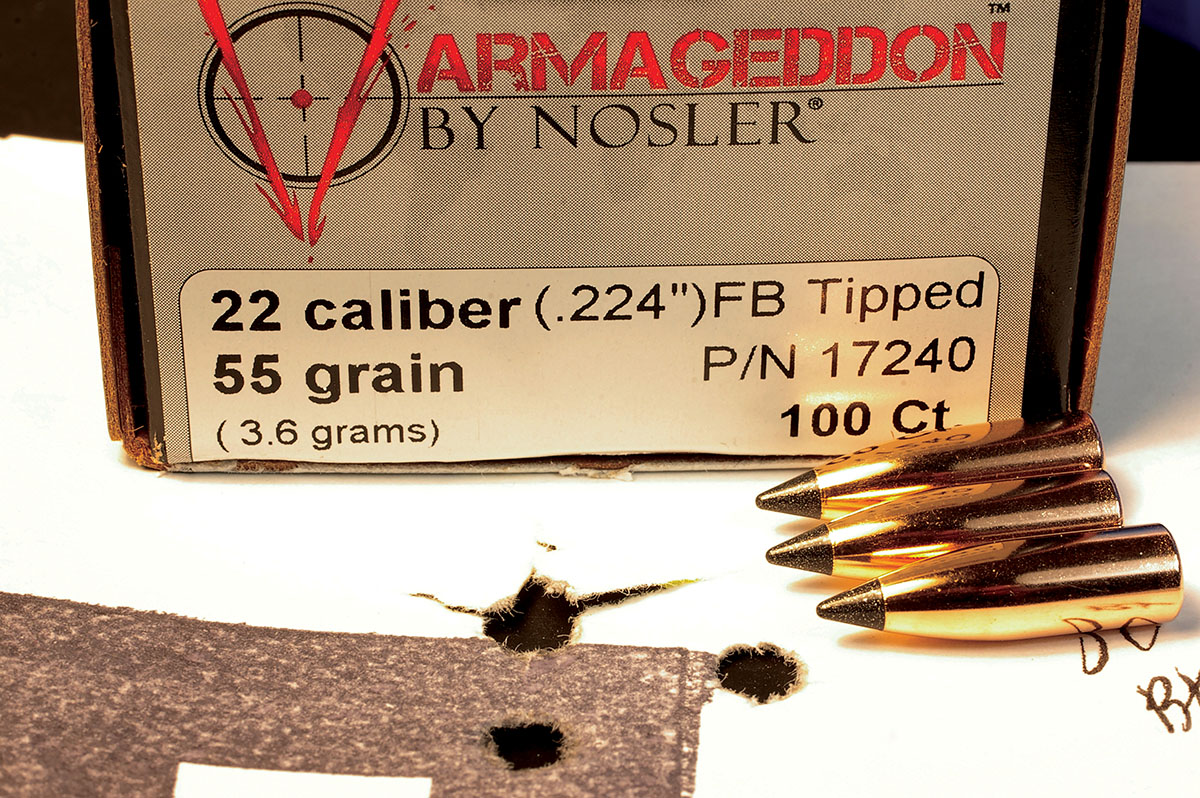
A nice feature of the Sisk rifle is it shoots bullets of different weights and velocities close to the same place at 100 yards and farther without needing to change the sight setting. Trajectories are within an inch of each other out to 400 yards, with Nosler 55-grain Tipped Varmageddon bullets starting out at 3,722 fps and Nosler 40-grain Varmageddon FB Tipped bullets with a muzzle velocity of 3,800 fps. As good luck would have it, the Sisk 22-250 rifle places Nosler 69-grain HPBT Custom Competition bullets, fired at 3,375 fps, .60 inch higher at 100 yards than Nosler 55-grain Tipped Varmageddon bullets. The resulting trajectories are within 2 inches of each other at 500 yards. The 69-grain bullets do drift a few inches less than the 55-grain bullets. So when the wind picks up before morning light to foretell a blustery winter day of coyote hunting, I fill my rifle’s magazine with 22-250 cartridges loaded with 69-grain bullets.
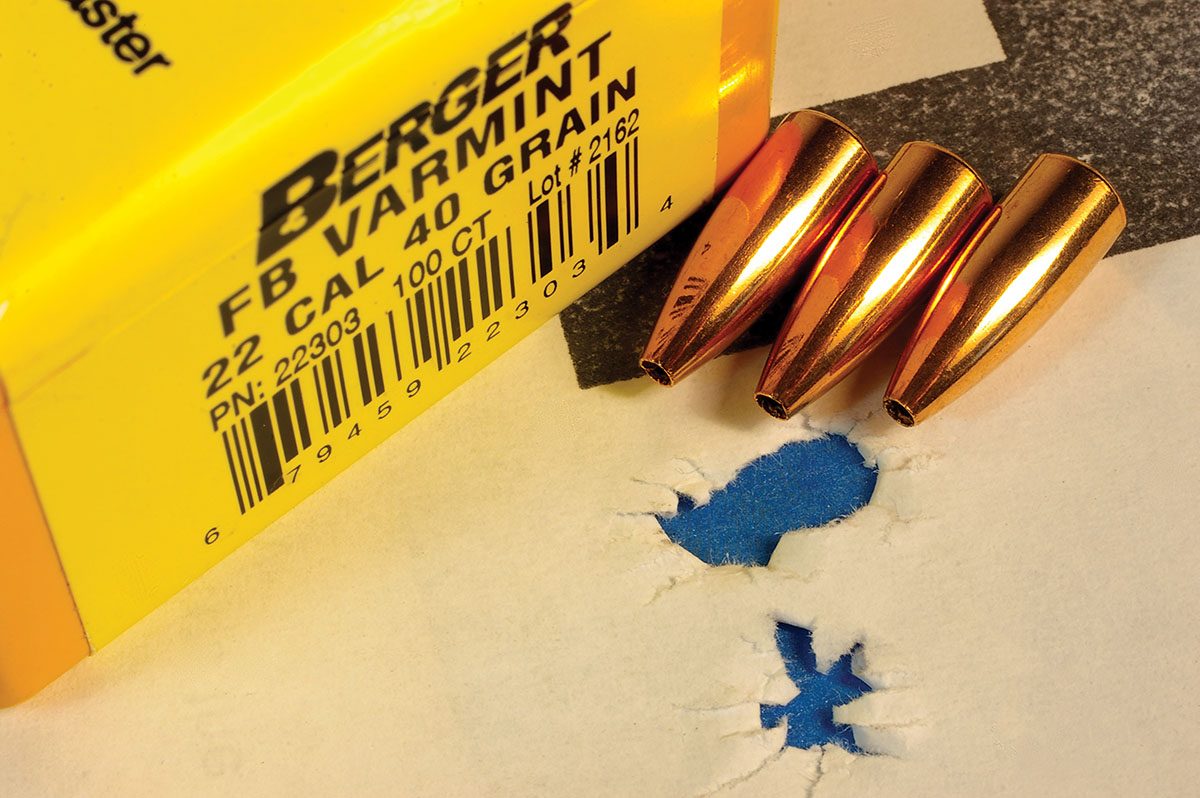
On a good day, I might fire a couple of shots at coyotes. However, during a summer day after prairie dogs or ground squirrels, I could shoot so much the 22-250’s barrel would wind up hot enough to start a grass fire. So shots are limited and they are taken with reduced velocity loads. A good one consists of Berger 40-grain FB Varmint bullets fired at 3,374 fps from 32.5 grains of IMR-3031. This load’s extreme velocity spread is rather high at 94 fps for five shots. Similar velocity swings also occurred with the Berger bullet shot with reduced amounts of IMR-4895, Reloder 15 and W-748. But that’s expected with powder weights that only partially fill a case.
The 223 Remington is a close second for year-around shooting. The 223’s versatility has made it the number one rifle cartridge in America, and it fairly well buried other cartridges in its class. Cartridges such as the 204 Ruger, 22 Hornet, 221 Remington Fireball and 222 Remington are great fun to shoot. However, they perform best with pretty much one bullet weight. The relatively new 22 Nosler and 224 Valkyrie provide a miniscule improvement over the 223’s ballistics, yet have not made so much as a dent in the 223’s popularity.
The .223 is 57 years old, or should that be young, as the cartridge is constantly evolving due to continual experimentation with better bullets and powders to fire them. Thirty-some years ago, the .223 fired 50-grain bullets at close to 3,300 fps and 55-grain bullets 100 fps slower, and bullet weights pretty much topped out at about 70 grains. Today, bullet weights and styles range from the Nosler 35-grain Lead Free Ballistic Tips to Sierra’s 95-grain MatchKings, and powders such as CFE 223 and Varget have boosted velocities a good 200 fps.
I shoot mostly with 40-grain bullets in my .223s to start the spring campaign on gophers infesting farm fields. Often, the little varmints are so thick the ground looks like it is moving and I might shoot several hundred rounds during a day.

All that shooting is fairly economical. A pound of powder, such as X-Terminator, LT-32 or Varmint, loads about 275 cartridges. That figures out to about a dime a cartridge for powder, and what else can you buy for a dime? Add fifteen-cents for a bullet, a few more pennies for a primer and a box of box of 20 .223 cartridges costs slightly less than $6.
As spring turns to summer, snowbanks in the mountains melt to reveal green meadows. I’m supposed to be fishing in creeks tumbling down from the mountains. Marmots whistling from the rock canyon walls beckon, though, and my fly rod is switched for a Remington Model 700 SPS 223. One of the most accurate loads the Remington shoots includes Sierra 50-grain BlitzKing bullets paired with Benchmark. With BlitzKings hitting 2 inches above aim at 100 yards, they drop only 3 inches way out at 300 yards. Most shots at the marmots are a touch on the far side of that distance, so a slight high aim is dead-on. After an hour or so my trigger finger is content enough for me to return to the creek.
As the end of the year nears, storms blowing out of the north carry cabin fever so a hike along creek bottoms carrying a rifle to help sweep out winter cobwebs. An AR 223 rifle is handy if shots at coyotes might be close, and especially for quick repeat shots when several coyotes might come to the call during breeding season.
Most current ARs have a 16-inch barrel. But the 223 needs all the bullet velocity possible, and that barrel length loses upwards of 200 fps of velocity compared to a 20-inch barrel, and 300 fps measured against a 24-inch barrel. The 20-inch barrel, on a Smith & Wesson M&P15 PC, though, gives up only about 50 fps to a 24-inch barrel.
I carried the M&P15 coyote hunting on a December morning at the tail end of a blizzard. I hiked a mile across foothills knee-deep in snow. Snow continued to fall and the wind drifted it up around my legs as I snuggled into a patch of sagebrush to call. Within a few minutes I was covered in snow. I called for 20 minutes and nothing. I walked for half an hour and called again, but still nothing. After another hike and calling, I wondered if the predators were still holed up from the storm, because not even a magpie had circled overhead in curiosity.
My fourth stand was on a bench with a strong wind. I set the caller 40 yards upwind and could barely hear the squealing rabbit call with the caller on full volume. Within two minutes, though, a coyote came running out of the sagebrush, loping across the wind. It saw me move the rifle and turned to run. But the rifle was on the coyote and it was too late.
As this spring approaches, the earth will have started to tilt back toward the sun, and I’ll be ready to commence the ground squirrel campaign to keep my varmint rifles afield all four seasons of the year.