Login


Wolfe Publishing Group
    Menu

    Field-Proven AR-15 Hog Loads

    AR-15 Cartridges and Loads for Hog Hunting

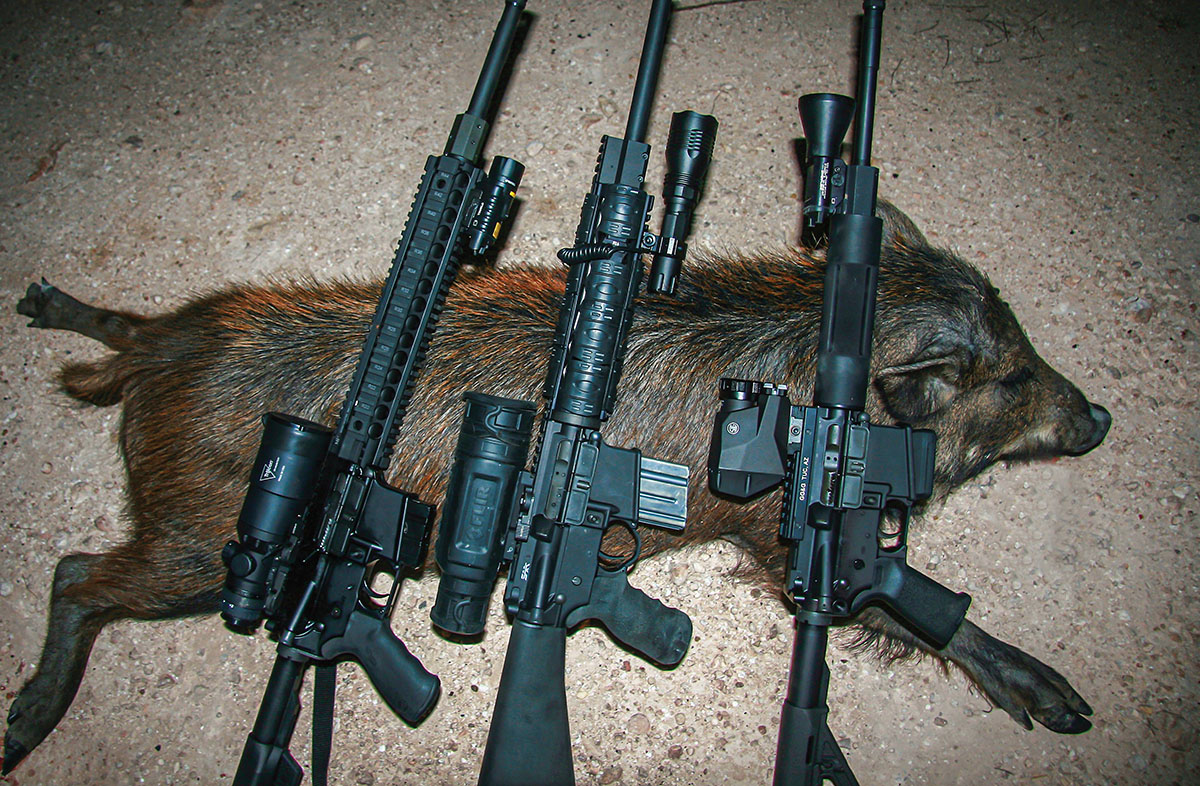
    Patrick and Texas friends out for a typical night of hog shooting and culling used the following equipment shown (left to right): a 6.5 Grendel with a Trijicon IR-Hunter, a 6.8 SPC with a FLIR ThermoSight Pro and a 224 Valkyrie with a SIG Sauer ECHO1 Reflex Sight.
    Patrick and Texas friends out for a typical night of hog shooting and culling used the following equipment shown (left to right): a 6.5 Grendel with a Trijicon IR-Hunter, a 6.8 SPC with a FLIR ThermoSight Pro and a 224 Valkyrie with a SIG Sauer ECHO1 Reflex Sight.
    Varmint is a term tossed about loosely among hunters with many inclined to include any small-game species. Varmint is an American-English colloquialism of vermin, which might be best defined as animals that are considered a nuisance to man and/or generally unprotected by game laws. Further, varmints are animals widely believed to spread disease or inclined to destroy crops, livestock or other private property. Edible cottontail rabbits, snowshoe hares or tree squirrels with applied hunting seasons may not constitute varmints, though a western jackrabbit ravaging a farmer’s alfalfa would certainly qualify. Common predators such as coyotes, foxes and bobcats, though regularly afforded seasons and license requirements, often incur the varmint label, especially if they are killing livestock or a farmer’s poultry. Nearly all burrowing rodents – ground squirrels, prairie dogs, woodchucks and marmots – garner varmint status, given their propensity for wrecking agricultural fields and pastureland.

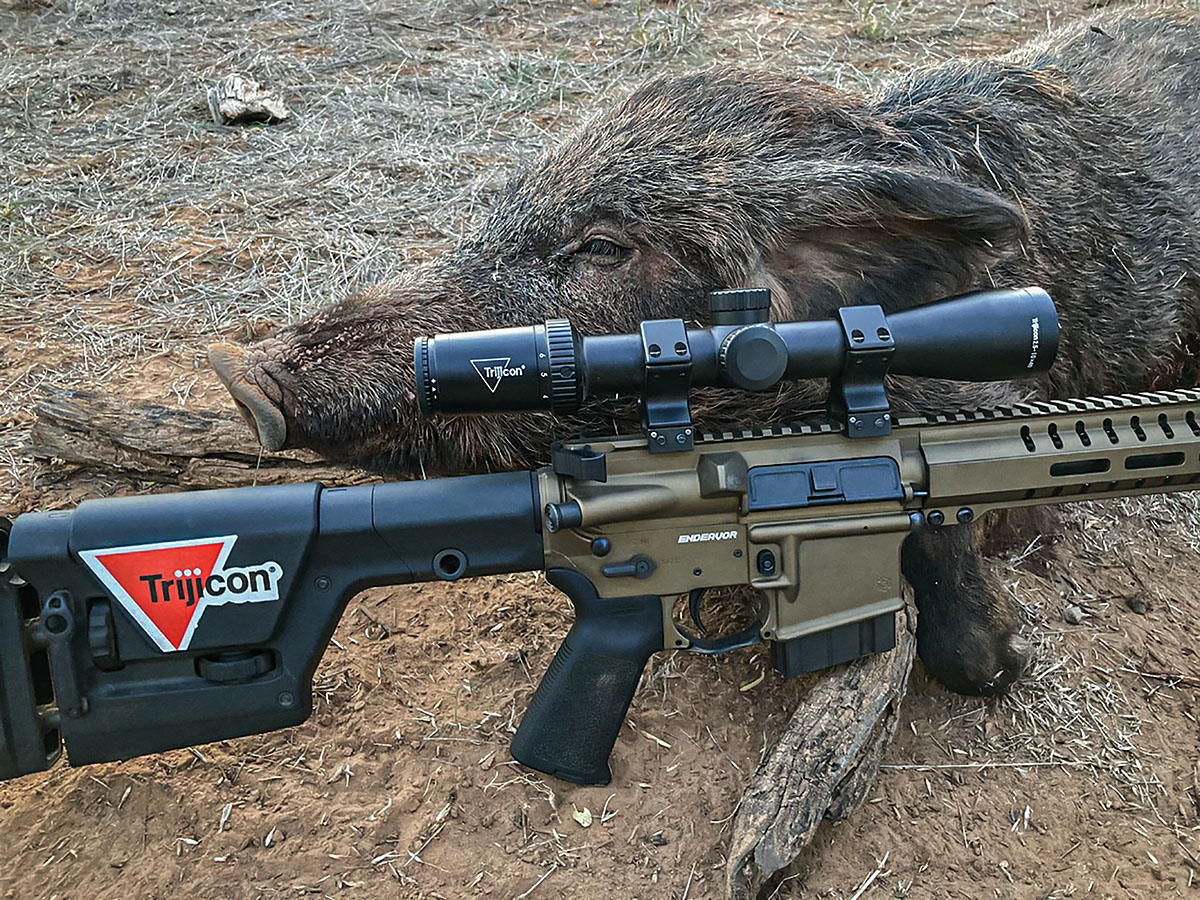
    CMMG was one of the first companies to come on board with the 6mm ARC, though the cartridge has quickly become a staple in the AR-15 platform due to its  highly-efficient nature.
    CMMG was one of the first companies to come on board with the 6mm ARC, though the cartridge has quickly become a staple in the AR-15 platform due to its highly-efficient nature.
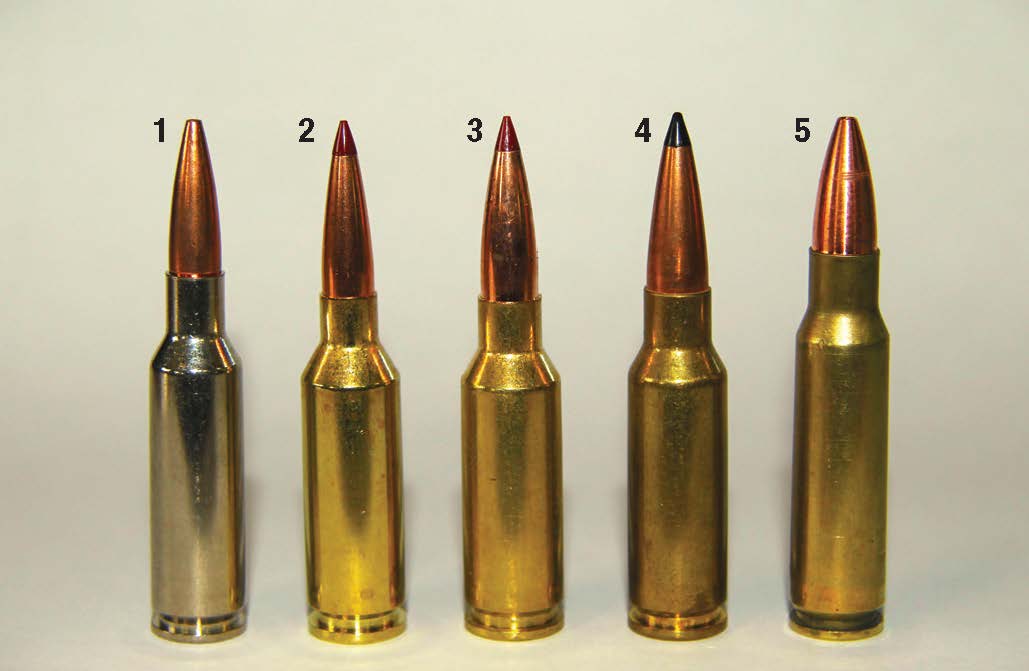
    Patrick’s favorite AR-15 cartridges include the (1) 224 Valkyrie, (2) 22 ARC, (3) 6mm ARC, (4) 6.5 Grendel and (5) 6.8 Remington SPC (Special Purpose Cartridge).
    Patrick’s favorite AR-15 cartridges include the (1) 224 Valkyrie, (2) 22 ARC, (3) 6mm ARC, (4) 6.5 Grendel and (5) 6.8 Remington SPC (Special Purpose Cartridge).
    In my humble opinion, one animal often overlooked for varmint status, viewed as appealing big game or worthy of extermination according to perspective, are non-native, highly-invasive feral hogs. Wild hogs undeniably wreak havoc on private farmlands and infrastructure, while also directly competing with native wildlife for available resources, even pillaging native avian nests and consuming newborn fawns. This automatically marks them as varmints to landowners who must suffer their depredations. I’m one of those who sees wild boars as a welcome sport, so I am happy to invest in 30-hour drives to aid Texas friends in their hog wars. Better yet, these are varmints you can put in the freezer in the form of delicious chops and sausage.

    While my Texas friends long ago abandoned any notions of sport, viewing hogs as I might a gopher in the vegetable garden, I can’t get enough. I took my first with bows and arrows, losing count of how many I have arrowed long ago. I have taken many with handguns and deer rifles, but it was when I discovered the utter lethality of thermal-optic-topped, suppressor-equipped AR-15s then the truly impressive head counts began to accumulate. With no license requirements, no seasons, no bag limits and none of the fair-chase strictures routinely associated with deer (at least in Texas, with places like California having entirely different ideas), the serious culling my friends had longed for quickly began. Hogs are largely nocturnal by nature, and thermals allowed us to own the night – and rack up the impressive piles of dead hogs that make landowners happy.
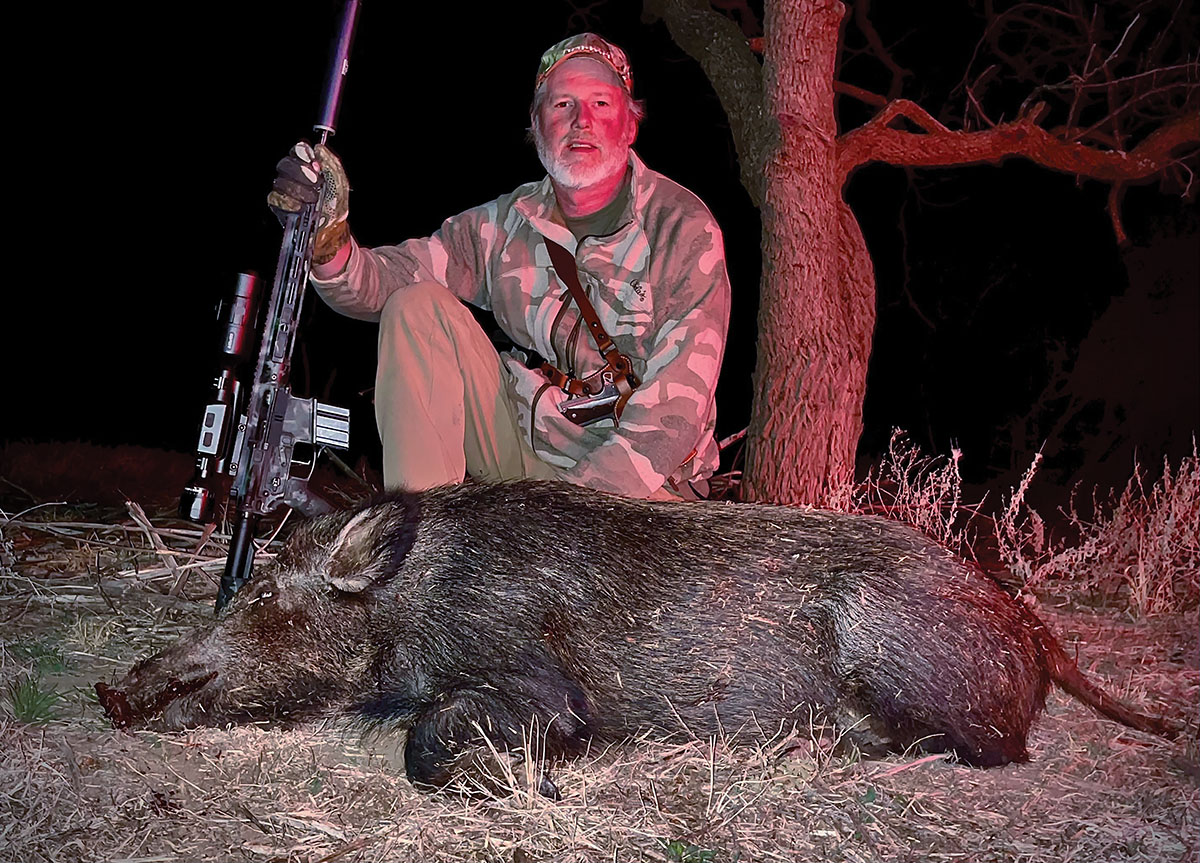
    Patrick now mostly uses his 6.8 Remington SPC while hunting Texas hogs. He dropped this nighttime boar where it stood at about 90 yards while shooting Hornady’s 120-grain SST bullet.
    Patrick now mostly uses his 6.8 Remington SPC while hunting Texas hogs. He dropped this nighttime boar where it stood at about 90 yards while shooting Hornady’s 120-grain SST bullet.

    Mention of the AR-15 – and exclusion of the AR-10 – is no mistake. The case for the AR-15 is easily explained. The AR-15 is much more agile than heavier, beefier AR-10s. The mild nature of AR-15-based cartridges – translated into milder recoil – allows quicker follow-up shots and higher head counts while addressing a shifting or fleeing sounder of hogs.

    There are plenty of deadly rounds chambered in today’s AR-15.

    Having attended a major university in Texas for seven years, I made many durable friends during those days (who also happened to do well for themselves financially), I have ready access to world-class hog hunting. Due to the high volume afforded by these prime properties, I have literally eliminated hundreds of wild hogs with everything from bows and handguns to long-range chassis rifles. It has also allowed me to audition a healthy cross-section of firearms and cartridges, with some solid favorites emerging based on the criteria already outlined above.
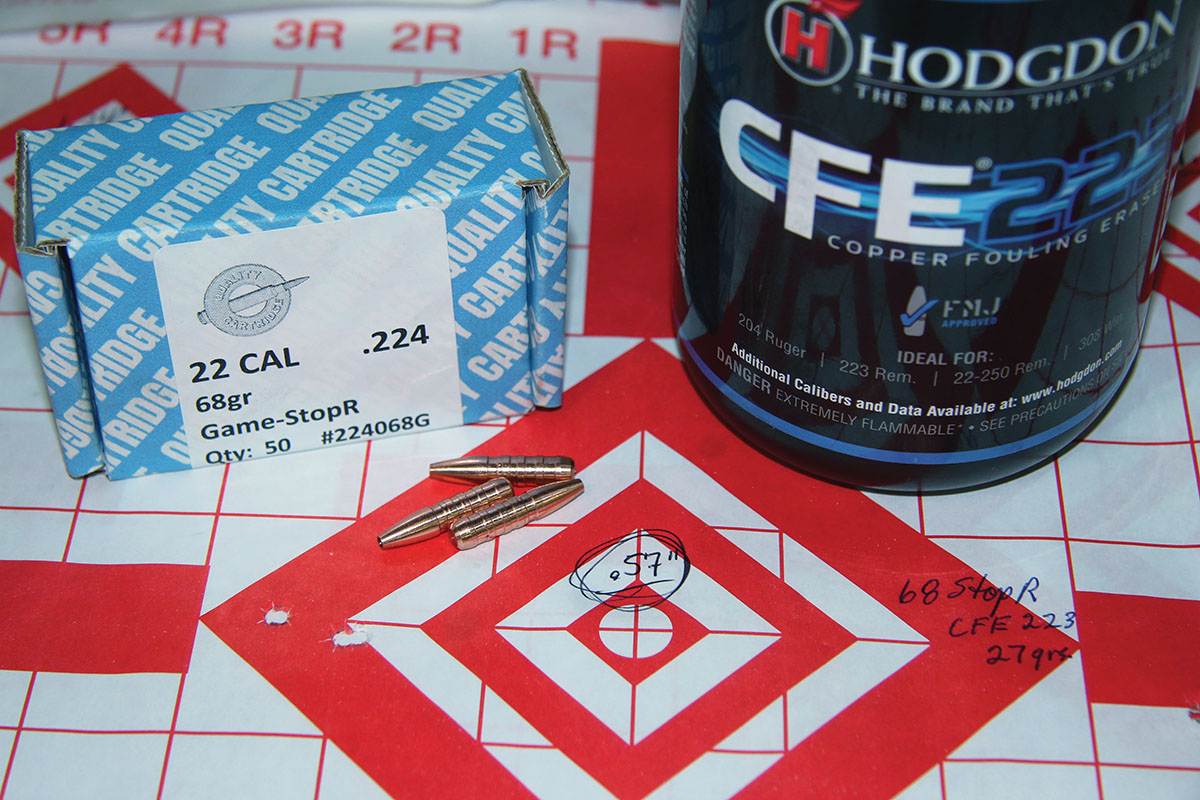
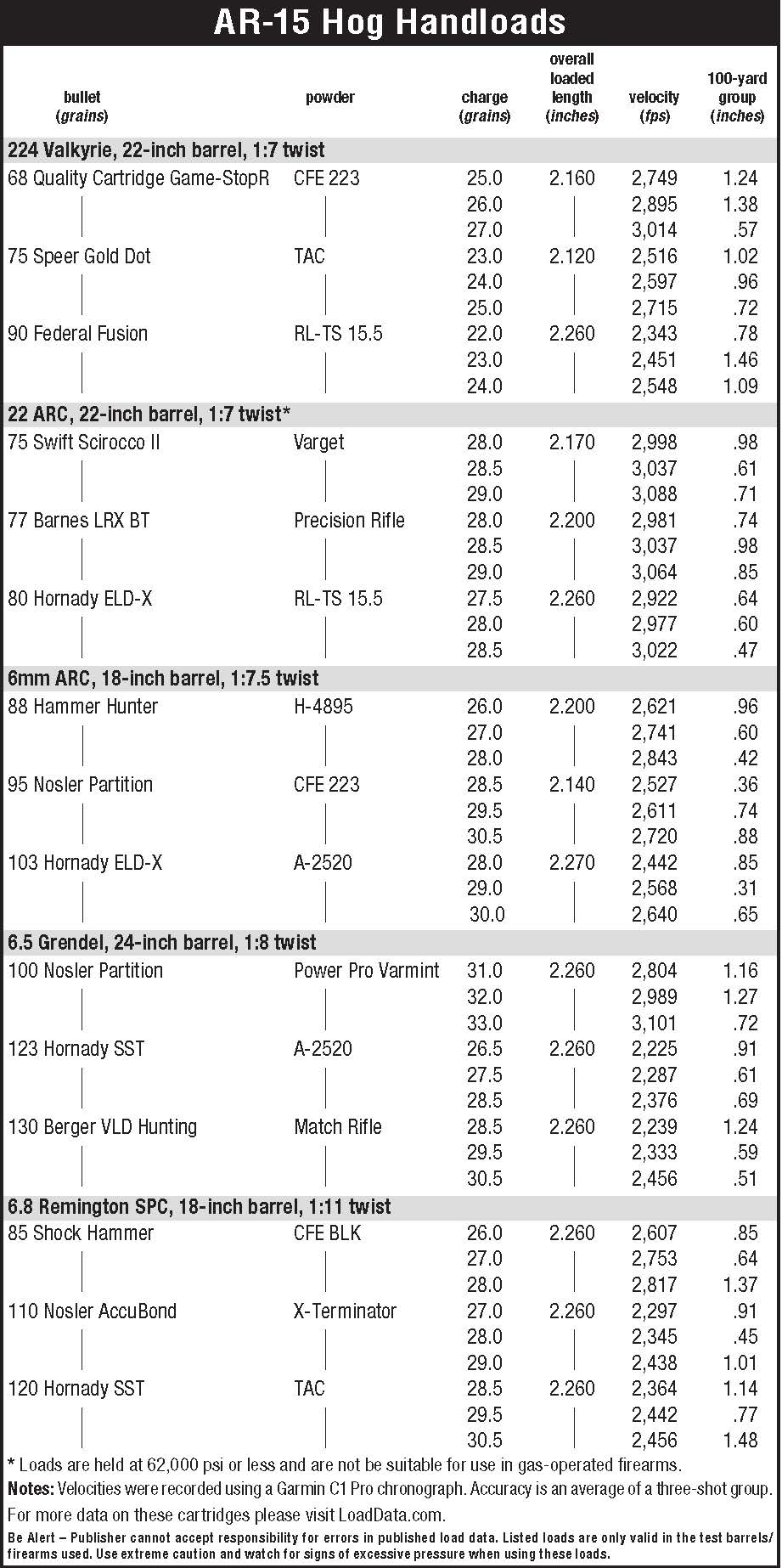
    Quality Cartridge’s 68-grain Game-StopR seated over 27 grains of Hodgdon CFE 223 has proven particularly effective on hogs from Patrick’s 224 Valkyrie AR-15.
    Quality Cartridge’s 68-grain Game-StopR seated over 27 grains of Hodgdon CFE 223 has proven particularly effective on hogs from Patrick’s 224 Valkyrie AR-15.
    My favorites include the 224 Valkyrie, 22 ARC (which I became acquainted with as the essentially identical 224 Grendel), 6mm ARC, 6.5 Grendel and 6.8 Remington SPC. The smaller of these cartridges, of course, depend on the right bullet and load combination to provide the terminal performance needed to put hogs down decisively. You might notice I’ve excluded the 300 Blackout, which I have a decent amount of experience with, and the 300 Ham’R. The 300 Ham’R no doubt makes a fine hog round, but I simply have no experience with it. The 300 Blackout has failed to impress, most particularly with subsonic ammunition, which was an absolute and utter disaster in many ways. Also, I see huge potential in the 350 Legend as a hog killer, but I don’t own .35-caliber compatible suppressors, which I now consider mandatory for nighttime hog hunting.
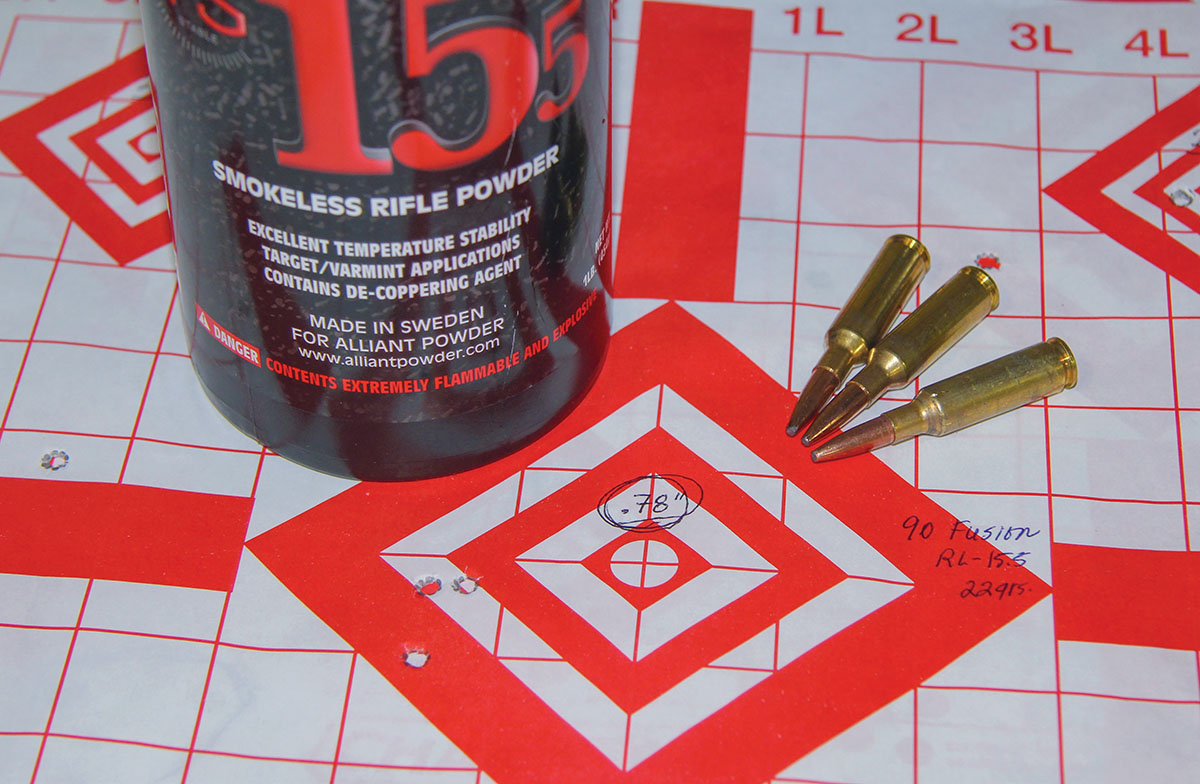
    Federal offers fine 90-grain Fusion factory MSR loads for the 224 Valkyrie, but Patrick’s best handload includes 22 grains of Alliant Reloder TS 15.5.
    Federal offers fine 90-grain Fusion factory MSR loads for the 224 Valkyrie, but Patrick’s best handload includes 22 grains of Alliant Reloder TS 15.5.

    Understand, in the thorny, cactus-infested areas of west Texas where we hunt, killing hogs is not good enough, particularly during nighttime thermal hunts. You must drop them where they stand, or at least within 10 yards, or suffer the wrath of said thorns and spines. There is also the fact my friend prefers to keep moving – again viewing hogs as vermin and shooting them as damage control and not sport. If I wish to take some pork home, dead hogs must be easily retrieved and tossed into the truck quickly.

    The “right-bullet” caveat becomes vital with the .224-caliber rounds, which in turn revolves around bonded lead core or monolithic copper designs. Federal’s copper-electroplated 90-grain Fusion is absolutely deadly effective on hogs from the Valkyrie, so performance can only improve from the faster 22 ARC. Speer’s 75-grain Gold Dot or Swift Bullets’ 75-grain Scirocco II are examples of fine bonded-core bullets that have proven the task for hogs (at Valkyrie/22 ARC velocities), as well as mono-copper bullets such as several from Cutting Edge, Hammer Bullets and Barnes – the 77-grain LRX BT in particular. Such designs have also proven effective in the 6mm ARC, though the vast majority of my 6mm ARC hog kills have involved Hornady’s 103-grain ELD-X, including tenacious boars up to 300 pounds.
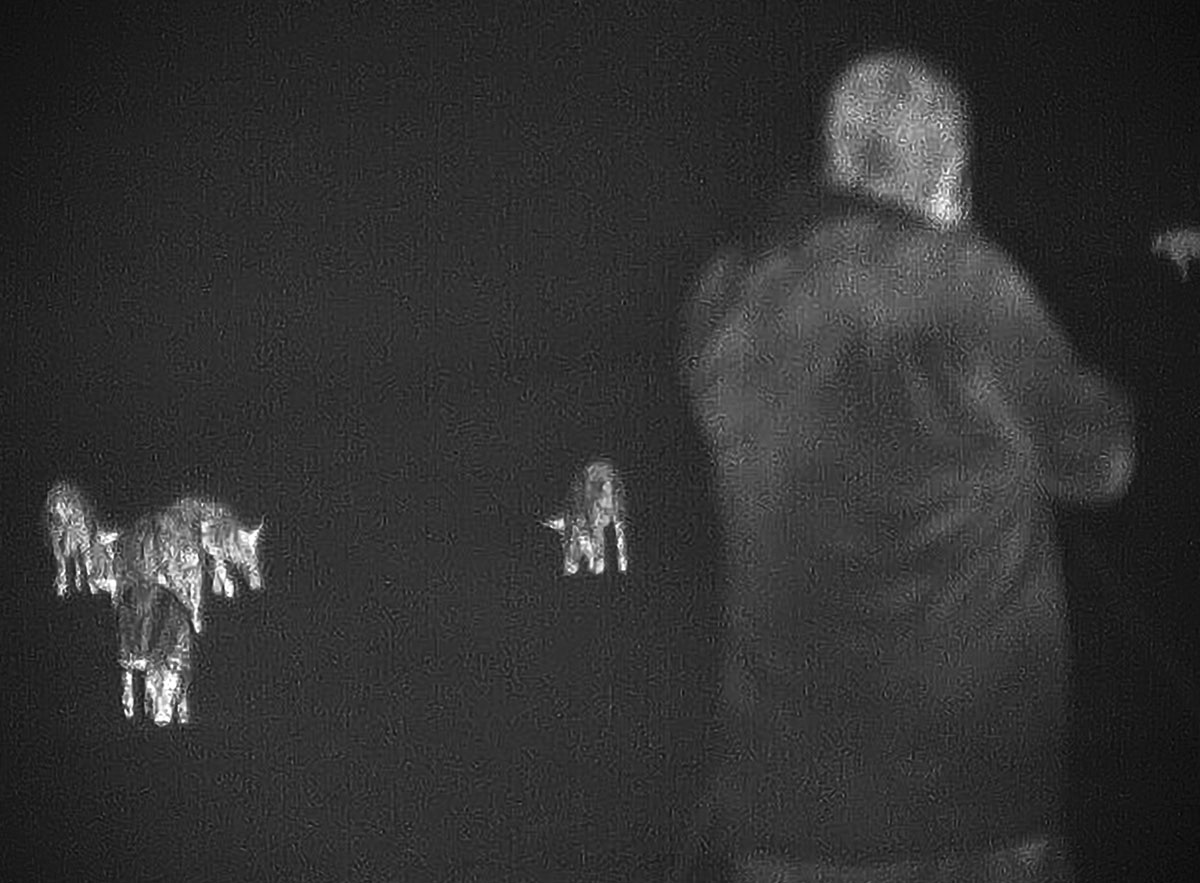
    Patrick’s Texas hog hunts changed dramatically after adopting thermal optics, allowing owning the night and racking up the numbers of dead hogs landowners had long wanted, including some 25-30 hog nights.
    Patrick’s Texas hog hunts changed dramatically after adopting thermal optics, allowing owning the night and racking up the numbers of dead hogs landowners had long wanted, including some 25-30 hog nights.
    I would call the 6.5 Grendel and 6.8 SPC ideal AR-15 choices for hogs with nearly any but varmint-targeted bullets. Bonded and mono-copper bullets become less critical and in fact, generally over-penetrate, punching through vitals with little expansion and resulting in 50-yard trailing jobs – fine for daytime work, but a bit of a pain during the black-dark night. In this respect, I have become partial to Hornady’s SST, the tip blows off to initiate dramatic energy dumps, the InterLock base pushing deep to create blood-letting exit wounds. The SST typically results in drop-right-there terminal performance, especially at the shorter ranges experienced during nighttime thermal hunting. The nature of nighttime hunting (less spooky, more approachable animals) and the nature of thermal technology (the inability to readily discern intervening brush and grass) means most shots are taken at less than 100 yards, sometimes as close as 50.

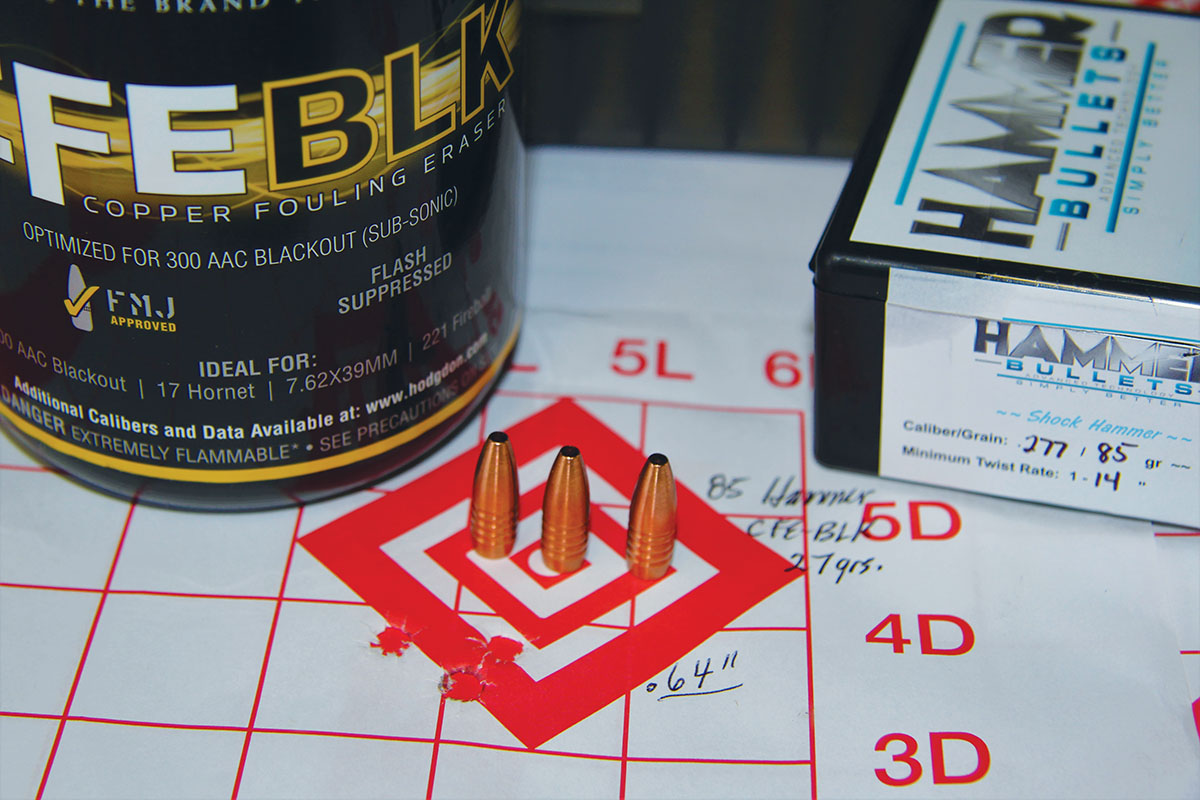
    Hammer Bullets’ 85-grain Shock Hammer and 27 grains of Hodgdon CFE BLK have proven deadly effective on hogs from Patrick’s 6.8 Remington SPC rifle.
    Hammer Bullets’ 85-grain Shock Hammer and 27 grains of Hodgdon CFE BLK have proven deadly effective on hogs from Patrick’s 6.8 Remington SPC rifle.
    This brings to mind the long-standing 6.5 Grendel versus 6.8 SPC debate. In a nutshell, the SPC provides slightly higher energy delivery at closer ranges, while the Grendel, due to higher ballistic coefficients (BC), overtakes the former past, say, 250 yards. At nighttime thermal ranges, there is no significant difference.

    In choosing hog loads to highlight, I relied on results experienced in just the past few years, recalling the most dramatic performance, meaning hogs that dropped where they stood, or were rolled like a shotgun-throttled cottontail rabbit while running.

    Based on the 6.8 SPC necked to .224 caliber, the 224 Valkyrie was introduced by Federal in 2018. Most Valkyrie rifles have barrels with a 1:7 rifling twist needed to stabilize long-for-caliber projectiles. The result was a cartridge that remains supersonic to 1,300 yards while firing high BC 90-grain bullets sent from 18-inch barrels. That original 90-grain Fusion, as hinted already, is still difficult to beat. I recall a recent event in particular, sneaking up on a small bunch of hogs with
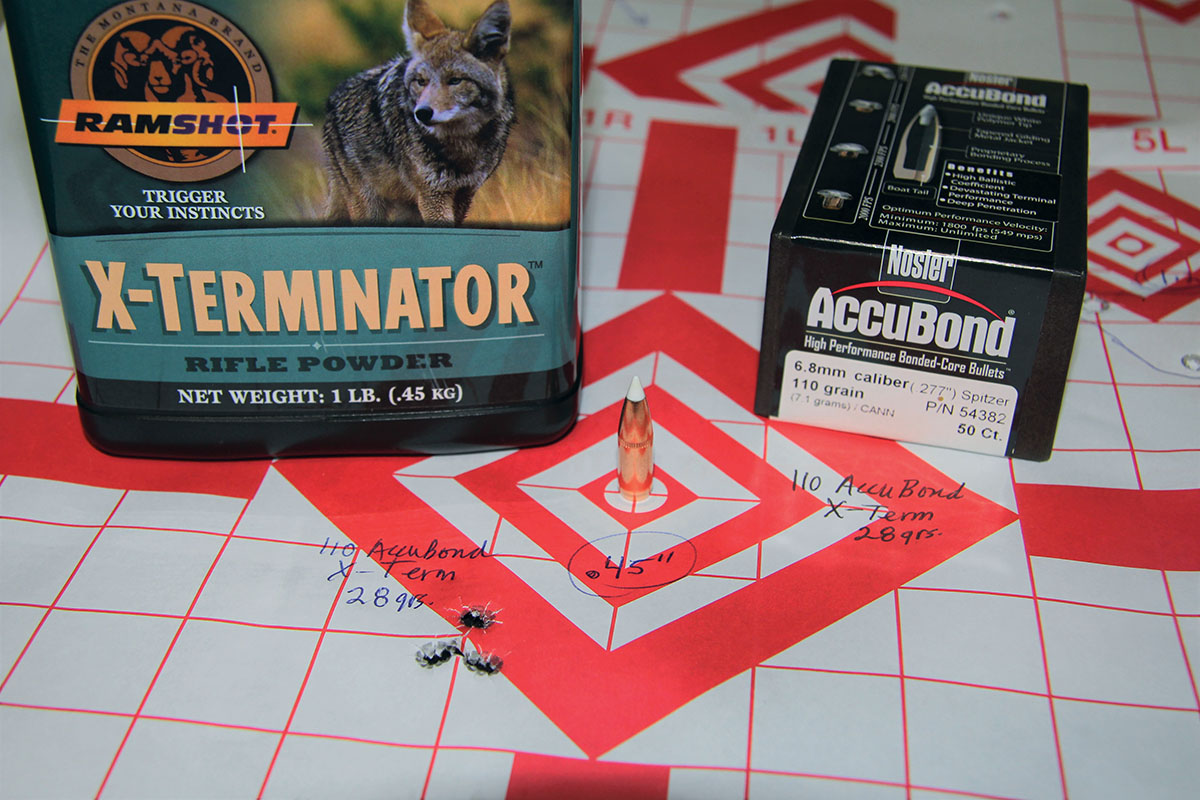
    A combination of Nosler’s 110-grain AccuBond and 28 grains of Ramshot X-Terminator have proven especially accurate from Patrick’s 6.8 SPC AR-15.
    A combination of Nosler’s 110-grain AccuBond and 28 grains of Ramshot X-Terminator have proven especially accurate from Patrick’s 6.8 SPC AR-15.
    evening light going fast. Pressed for time, I plopped on my rear and took the first 150-pound sow at around 125 yards, dropping it on the spot. Turning my attention to a fleeing sow of about the same size, I swung ahead and rolled it like a head-shot rabbit, one of the most satisfying running shots of my hunting journey. Those 90-grain Fusion bullets proved their worth. Other recent successes involved Quality Cartridge’s 68-grain mono-copper Game-StopR and Speer’s 75-grain Gold Dot, which I have also used from several other cartridges with success. If I had one knock against the Valkyrie, it would be how frustratingly finicky it can be, requiring a good deal of load development to tame.

    I was introduced to the 22 ARC as the 224 Grendel several years before Hornady standardized it in early 2024. I was impressed enough that I built an AR-15 rifle as soon as a barrel became available – a 22-inch Shaw Custom. It has proven to be easier to tame than the Valkyrie. I have conducted load development with Swift’s 75-grain Scirocco II, finding some ultra-accurate and hard-hitting loads, but I have not had the opportunity to test that load on hogs. Barnes’ 77-grain LRX BT is a bullet my friends Jack Allman and Justin Stout (who introduced me to the 22 ARC) have used successfully on California and Texas hogs. This past spring, I watched Stout drop a 300-pound Texas boar at 300-plus yards with a single shot while shooting this bullet. The Hornady 80-grain ELD-X is new, but I have a suspicion that like the 103-grain version I have used from the 6mm ARC, it will prove deadly.
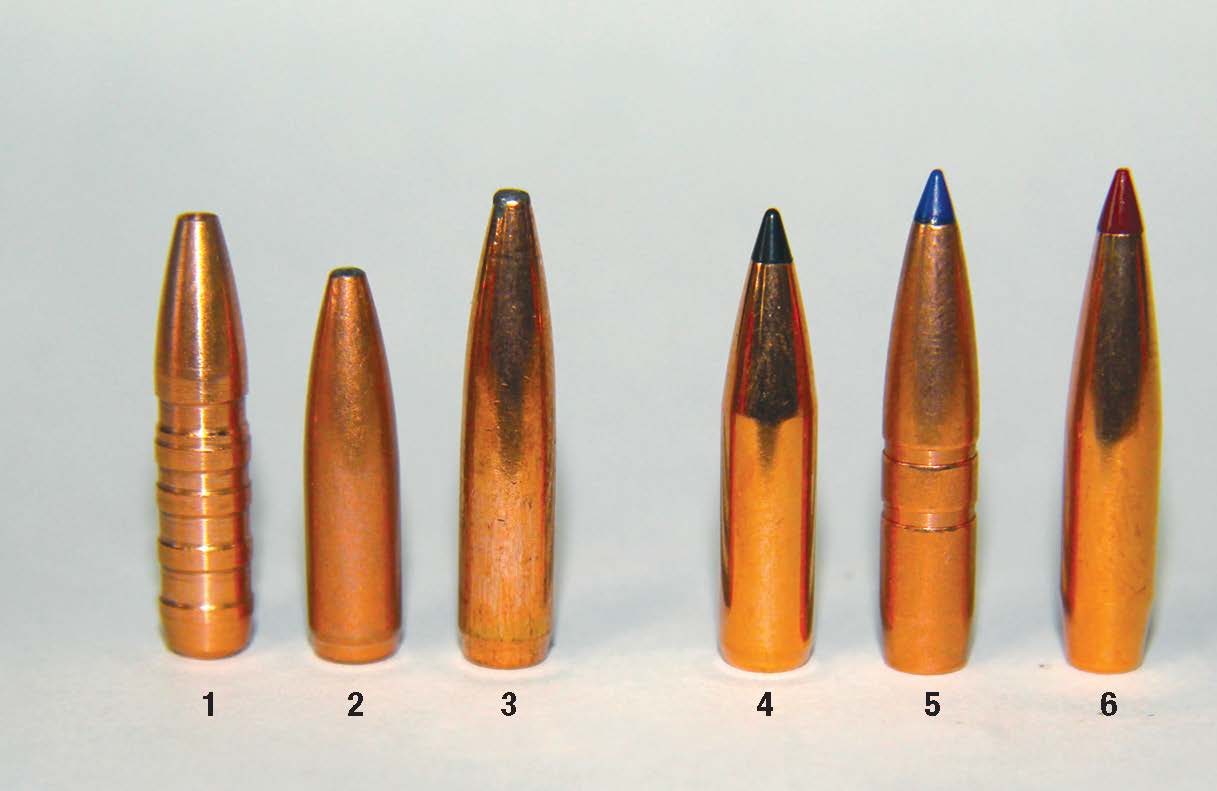
    Bullets must be chosen carefully when hunting hogs with .224-caliber AR rounds. Some proven favorites include: (1) Quality Cartridge’s 68-grain Game-StopR, (2) Speer’s 75-grain Gold Dot, (3) Federal’s 90-grain Fusion (224 Valkyrie), (4) Swift’s 75-grain Scirocco II, (5) Barnes’ 77-grain LRX BT and (6) Hornady’s 80-grain ELD-X (22 ARC).
    Bullets must be chosen carefully when hunting hogs with .224-caliber AR rounds. Some proven favorites include: (1) Quality Cartridge’s 68-grain Game-StopR, (2) Speer’s 75-grain Gold Dot, (3) Federal’s 90-grain Fusion (224 Valkyrie), (4) Swift’s 75-grain Scirocco II, (5) Barnes’ 77-grain LRX BT and (6) Hornady’s 80-grain ELD-X (22 ARC).
    I did some of the first extensive work with the 6mm ARC – another Hornady creation released just a few years ago – a cartridge I have a great deal of affection for, so in turn, I have taken quite a few hogs with it. Hammer Bullets’ 88-grain Hammer Hunter did well on several hogs, dropping them or resulting in them falling within sight, the front petals breaking off to reap vital destruction while the solid base pushes deep. They are also reliable around bone. Nosler’s 95-grain Partition did as admirably, the front portion expanding aggressively, while the lead core behind the partition pushed deep. The Hornady 103-grain I have already addressed at length, with Accurate 2520 proving an ideal pairing for speed and accuracy.

    The 2003-released 6.5 Grendel is the brainchild of Bill Alexander, owner of Alexander Arms and former British Ministry of Defense contractor. It is loosely based on the 22 PPC, itself based on the 220 Russian case. It was designed specifically to run in AR-15-style rifles, but has also become popular in bolt rifles.
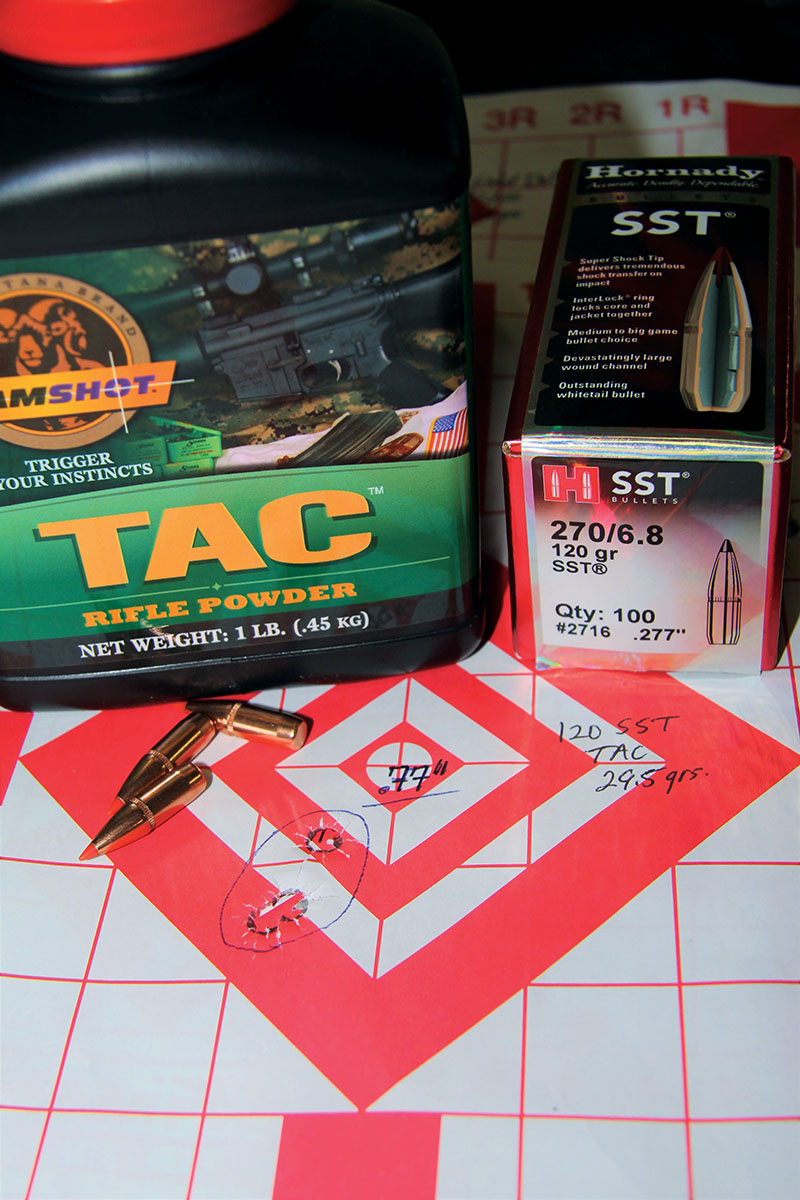
    When hunting hogs with his 6.8 Remington SPC, Patrick’s go-to load is usually Hornady’s 120-grain SST over 29.5 grains of Ramshot TAC.
    When hunting hogs with his 6.8 Remington SPC, Patrick’s go-to load is usually Hornady’s 120-grain SST over 29.5 grains of Ramshot TAC.

    As discussed, the Hornady SST (123 or 129 grain) has become my bullet of choice in this cartridge for its lightning-bolt-like terminal performance. The Nosler 100-grain Partition runs a close second and gives this round a little more dependability around major bone. Berger’s 130-grain VLD Hunting is a bullet I prefer for daytime shooting when ranges stretch well beyond nighttime yardages. All are serious hog killers.

    The 6.8mm Remington SPC (Special Purpose Cartridge) was developed by Remington in collaboration with members of the U.S. Army Marksmanship Unit, U.S. Special Operations Command. The idea was to create a replacement for the 5.56 NATO in 16-inch barreled M4 carbines. The cartridge was fielded by special ops units, but when the theater of war moved to Afghanistan, its stubby .270-caliber bullets were found lacking for the longer engagement ranges faced there. At shorter nighttime thermal-imaging ranges it has proved difficult to better. Hammer Bullets’ 85-grain Shock Hammer, a mono-copper bullet, provided some serious velocity and aggressive expansion on impact that dealt a real smackdown on hogs inside 100 yards. Like similar designs, multiple sharp copper petals peel off after a couple of inches of penetration to shred vital organs, while the solid base pushes deep. Nosler’s 110-grain AccuBond has proven exceptionally accurate from my own 6.8 SPC, though the bonded core does tend to over-penetrate due to less aggressive expansion, though this is the bullet you want if heavy bone is encountered. The .270-caliber version of the Hornady SST weighs 120 grains and has proven deadly on hogs of all sizes.

    All the cartridges and loads listed will get the job done on even the largest hogs. The smaller-caliber rounds provide the option of shooting lighter, more frangible bullets best suited to dismantling burrowing rodents, which makes them a bit more versatile. All, when loaded with hog-ready bullets, also provide viable deer-hunting options for multi-season hunters.

    Wolfe Publishing Group