
Login


Wolfe Publishing Group
    Menu

    The Marlin 39A

    A Classic Rimfire Levergun

    This Marlin 39A (right) was manufactured in 1947 and is mounted with a Weaver scope of the same vintage. The youth model Henry lever action (left) is a good close-range varmint gun especially when paired with CCI’s Quiet-22.
    This Marlin 39A (right) was manufactured in 1947 and is mounted with a Weaver scope of the same vintage. The youth model Henry lever action (left) is a good close-range varmint gun especially when paired with CCI’s Quiet-22.
    No two guns are the same and each one will perform differently. Want match-grade accuracy? There’s a cartridge for that. Want quiet one-shot kills at under 20 yards? There’s a round for that. Want to snipe ground squirrels at 100 yards and beyond? Got you covered there too.
    No two guns are the same and each one will perform differently. Want match-grade accuracy? There’s a cartridge for that. Want quiet one-shot kills at under 20 yards? There’s a round for that. Want to snipe ground squirrels at 100 yards and beyond? Got you covered there too.
    I stopped in about once a year, usually around mid-October and usually with a black-tail buck in the back of the rig. The place was called Blackpowder Jack’s and it was in a one-horse town in Oregon called Idleyld Park, located along the North Umpqua River. A person could get just about anything they wanted in that store, I reckon. This time, it was like Jack had been expecting me.

    “I have something you’re gonna want,” old Jack Curry said. “I’ve been saving it for you.” I mentally calculated what I had in my wallet and it was close to $200 and I think Blackpowder Jack was a mind reader because he had a satisfied smile on his face when he handed the rifle over the counter.
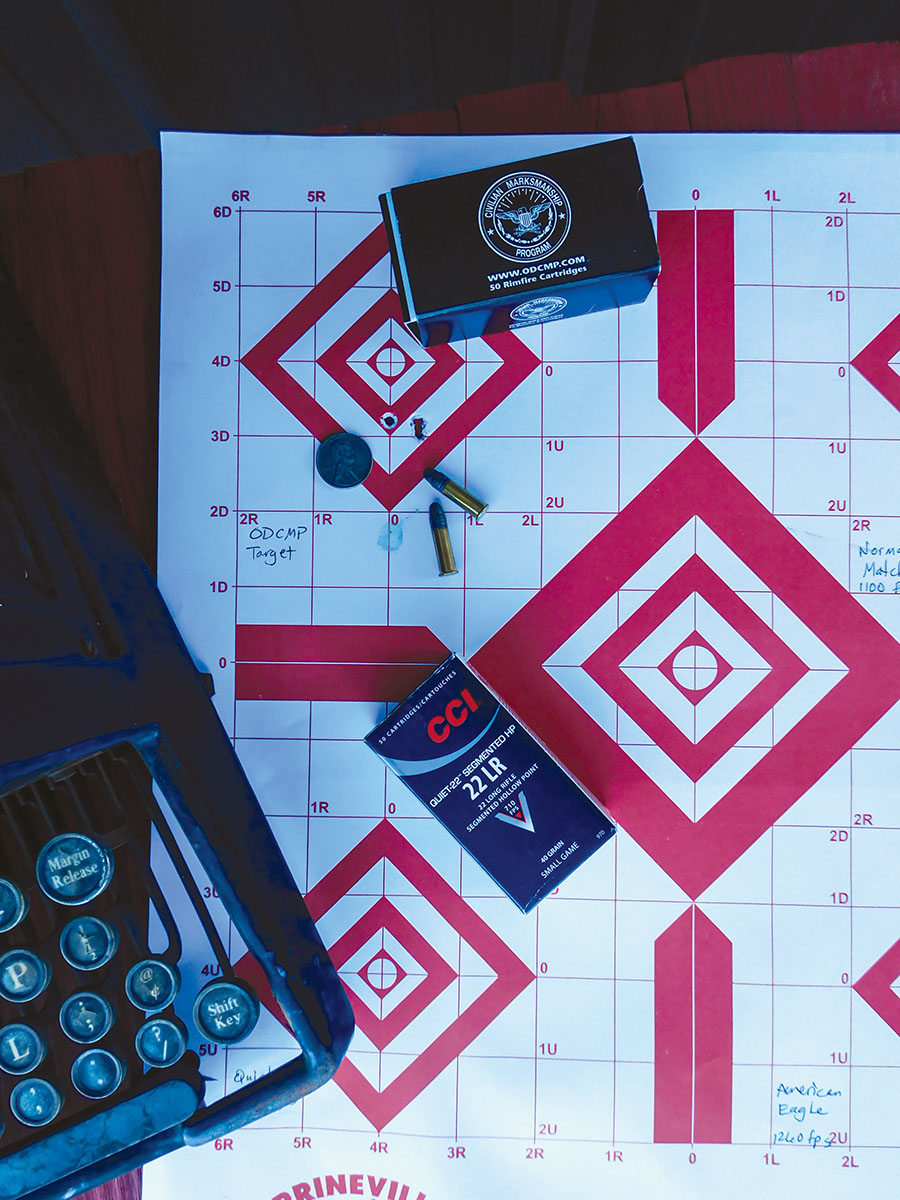
    This three-shot group (upper left) with two holes touching demonstrated the accuracy of the long-barreled Marlin at 50 yards.
    This three-shot group (upper left) with two holes touching demonstrated the accuracy of the long-barreled Marlin at 50 yards.

    It was a lever-action Marlin 39A, a little worn at the muzzle with shiny wear spots on the bell of the old Weaver J 2.5. He extolled its virtues but I don’t remember what he said because the rifle was speaking to me at the same time, whispering of bushy-tail squirrels and August afternoons.

    I Need a Lever That Won’t Drive Me Crazy

    This was not my first lever-action rimfire. The previous one had been beset with feeding issues. This one was smooth to cycle, and although I didn’t shoot it first to find out, I decided to take a chance. After the requisite opening and closing of the action, and shouldering it in the light to peer through the dusty glass, and a little back and forth on the price - $180, if I remember right - the rifle was mine.

    By its look, it had been cared for, passed down from one generation to the next. It was 64 years old when it came into my hands. It had probably accounted for many a ruffed grouse and bushy-tailed grey digger and silver-grey tree squirrel that are abundant in southwest Oregon’s Umpqua Valley. It had probably rested quietly in someone’s gun case for many years before being pawned at Blackpowder Jack’s. According to the serial number beginning with the prefix D, the year of manufacture was 1947, two years after World War II when game was abundant and there was no telling what a guy with a rifle might bring home for dinner.

    100+ Years of Production

    The first lever-action rifle chambered in 22 Long Rifle was the Marlin Model 1891, designed by Lewis L. Hepburn. The 1891 was fed through a side gate in the receiver, but because of the inherent difficulties of loading the smaller round, the gun was redesigned to front-load cartridges into the tube, necessitating a change in designation to the Model 1892. Five years later, the takedown Model 1897 was introduced, which would later be rebranded as the Model 39 in 1921 and then the Model 39-A in 1939. A variant, the Golden Mountie 39A, was introduced in 1954 and Model 39As continued to be built with the introduction of the Golden 39A in 1983. With the exception of the Mountie models that had 20-inch barrels and a straight stock, the Model 39A is most often encountered with a 24-inch barrel, a pistol grip and a magazine capacity of 19 rounds of 22LR, 21 rounds of 22 Long or 26 rounds of 22 Short.
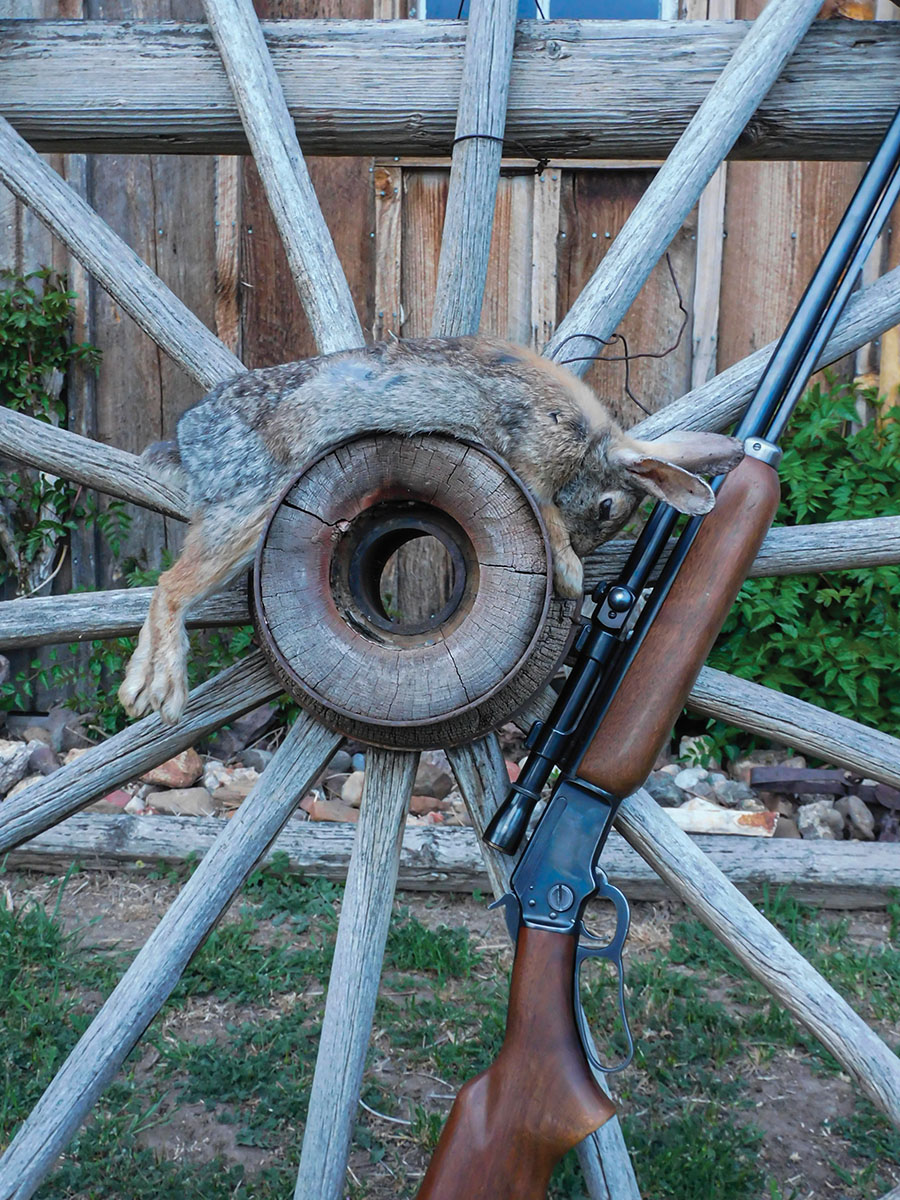
    No telling how many rabbits this old Marlin has spoken to.
    No telling how many rabbits this old Marlin has spoken to.
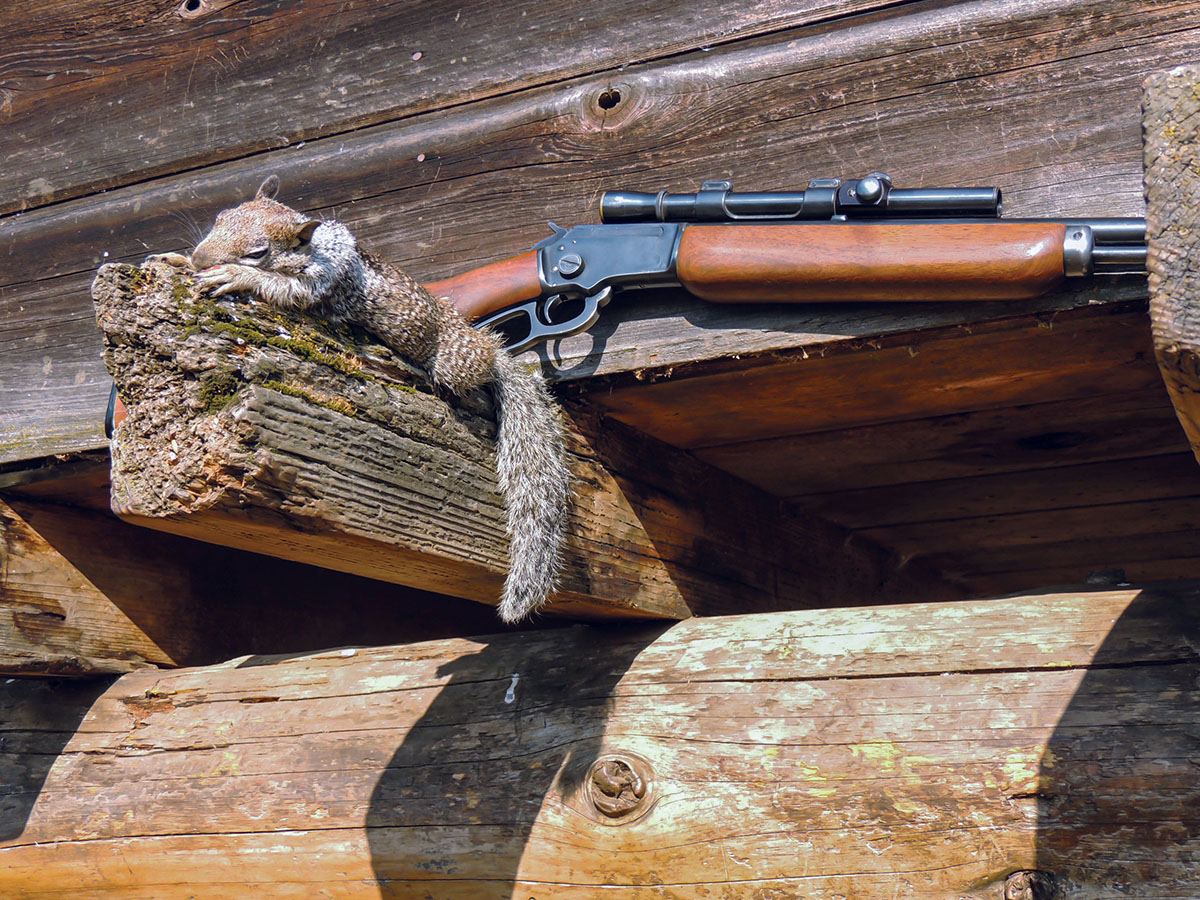
    This grey digger’s tunneling days are over.
    This grey digger’s tunneling days are over.
    From the start, the Marlin models 1891, 1892, 1897, 39 and 39As were a favorite with target shooters, including the Wild West shows. Annie Oakley owned an 1891, an 1892 and an 1897. Peters Cartridge Company provided exhibition shooters with many Marlin guns. Another exhibition shooter for Buffalo Bill’s Wild West Show (and a sometimes stand-in for Buffalo Bill), according to my grandmother and her father, was my great-great-great uncle, Paul (Peppercorn) Cunningham, who shot a Model 1892 and hunted with Marlin leverguns.

    In 2022, the Model 39A went out of production when the ownership of Marlin Firearms was transferred to Ruger. However, in 100-plus years of production, more than 2.2 million of these rifles were sold.

    Cottontails. You can’t trust ’em. What this town needed was a new sheriff.
    Cottontails. You can’t trust ’em. What this town needed was a new sheriff.

    Levergunning for Small Game

    As much as I have shot this rifle, the young people I take hunting have shot it more. There was a time when it was not uncommon for me to take a half-dozen youngsters who did not have their dads around to take them out to the woods and the desert. In some cases, their fathers had passed away and in other cases, their fathers had left for reasons voluntary and otherwise. It is safe to say the disciplines developed behind the Marlin and Weaver glass have helped instill a love for hunting and the outdoors in at least two dozen young men and women I worked with over the years. They are all adults now and have gone on to become productive and honorable citizens, some of them with children of their own.
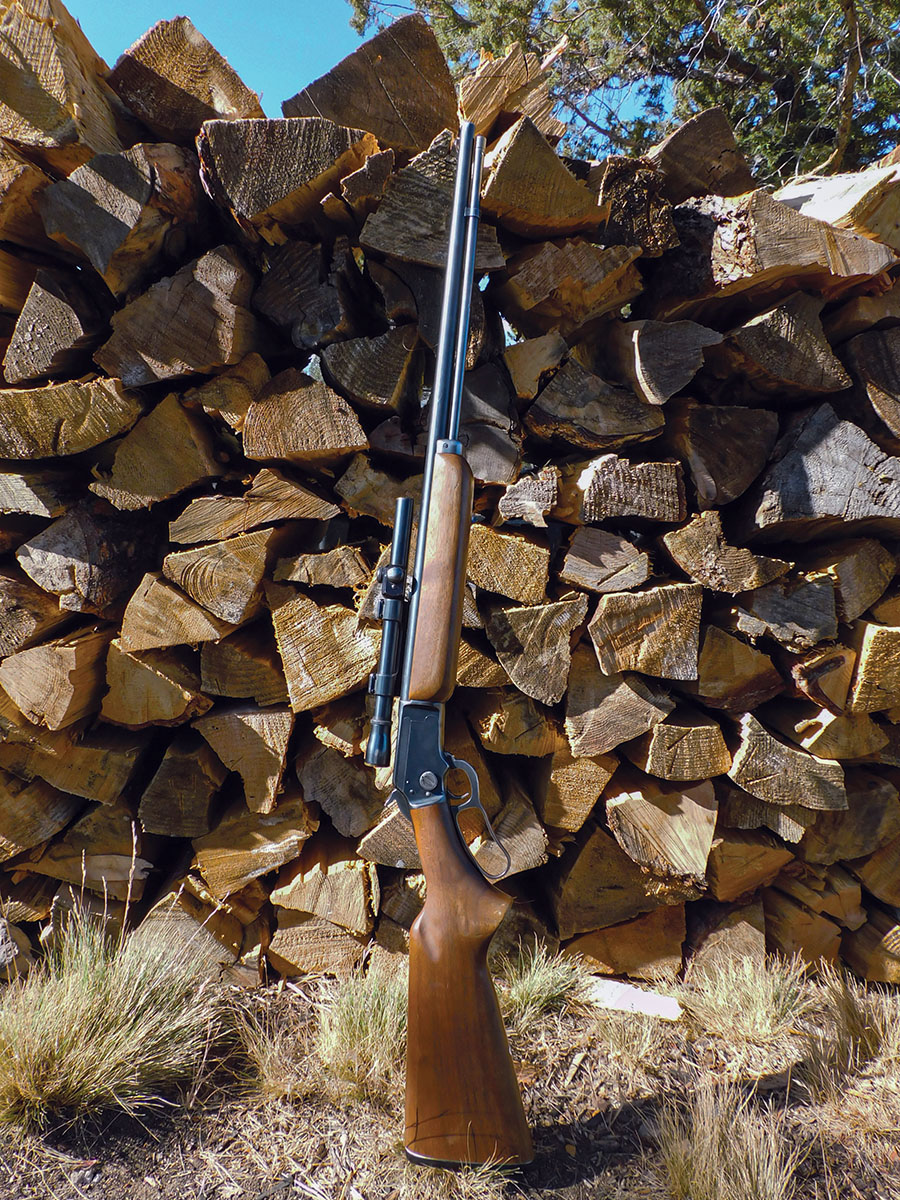
    This Marlin 39A (circa 1947) has accounted for many a Belding’s ground squirrel, bushy-tailed grey digger and silver-grey tree squirrel and who knows what else in its long career.
    This Marlin 39A (circa 1947) has accounted for many a Belding’s ground squirrel, bushy-tailed grey digger and silver-grey tree squirrel and who knows what else in its long career.
    Let’s face it, there are better optics than the 2.5-power ’47 Weaver. But I’m not going to be the one to separate this rifle from its glass. Instead, the 39A gets the nod when cottontails, jackrabbits or ground squirrels are likely to be encountered at 50 to 75 yards. I’ve owned this rifle for 13 years and it tends to see action in May and June for Belding’s ground squirrels and sometimes again in August for California grey diggers. It is a great choice for a new shooter once I teach them the mechanics of shooting. Three fingers in the loop. Keep the gun at your shoulder for the follow-up shot. Also, know how to let the hammer back down gently with the muzzle in a safe direction. When a friend of mine told me in May that he was having trouble with varmints at his place, I knew this was a job for the old Marlin.

    Everybody Wants Results

    “Everybody wants results, but nobody wants to do what they have to do to get them done.” I heard that in a movie. My friend looked at me sideways. He had a problem in his town and I looked like the feller that could get the job done. “You see, we have a small western town. And it’s being overrun by the varmints. They tunnel under the buildings and undermine the foundations.” He was talking about rabbits. I knew their kind. “Bout time this town had a new sheriff,” I mumbled to myself.
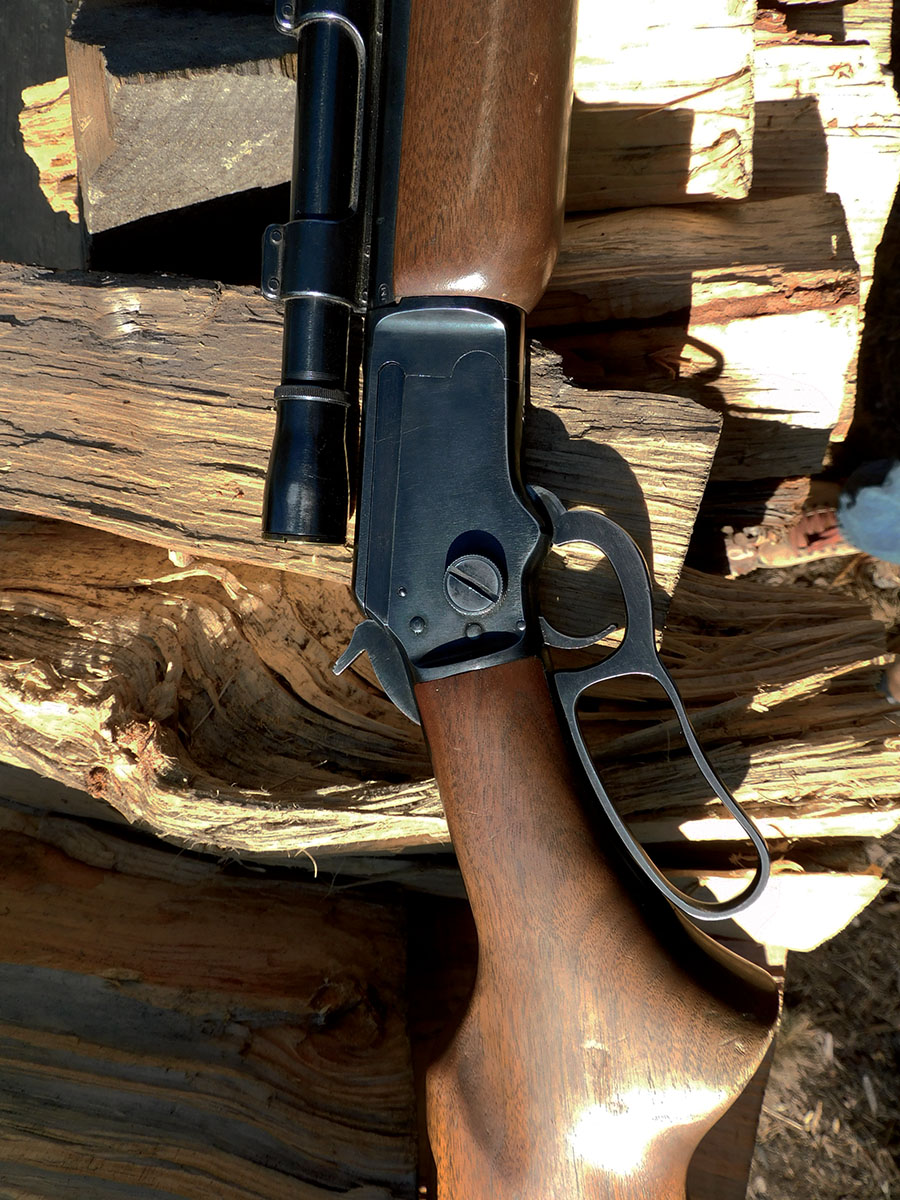
    The Marlin 39A is easily taken down by loosening this screw in the receiver then applying sideways force.
    The Marlin 39A is easily taken down by loosening this screw in the receiver then applying sideways force.

    “When a man’s got money in his pocket, he begins to appreciate peace.” I heard that in a different movie. But I reckon that’s why the landowner decided to leave me to put together the posse. I could picture him sitting in the rocking chair on the porch and talking to the rabbits – “Get off my lawn, varmint.”

    I rounded up my friend, Brian, and his daughter, Lexie. “We’re going rabbit hunting in a small western town,” I told Brian. “You’re going to need cowboy hats and a blanket. You know what I’m talking about?” He did. Lexie had never held a gun before, but she had a hankering to go hunting, and Lexie, she’s a girl that plumb makes rabbits afraid.

    We pulled up on the edge of the small western town, parking my digital camo F-150 outside city limits. I assessed the situation with squinty eyes, pulling my hat down tight against the wind. “You brought the blanket?” Lexie handed it over. It would do - a striped and herringbone weave with fringe. I laid it on the tailgate and cut a hole in the middle and put the poncho over Lexie’s head. She pulled her hat down with both hands. She strapped on sixguns.
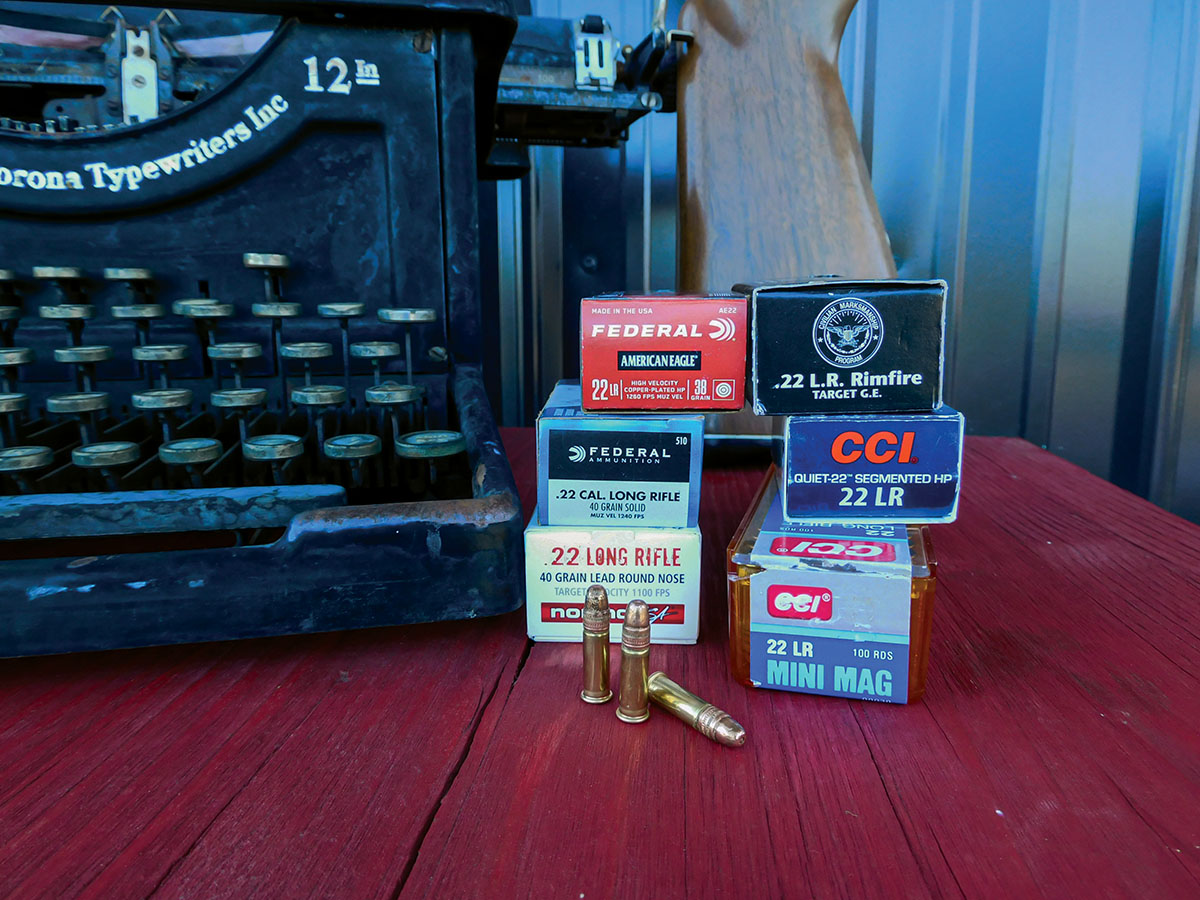
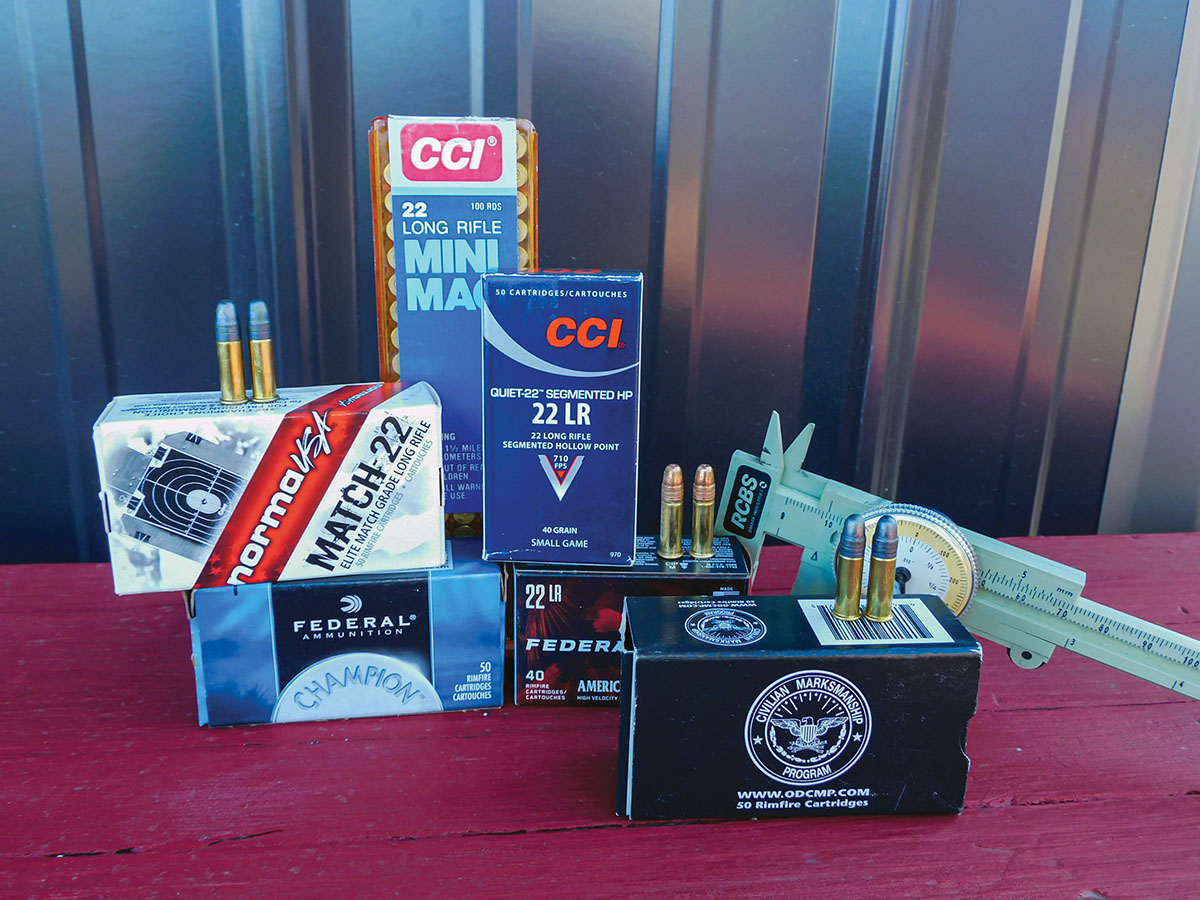
    Every cartridge has its own application. The hollowpoints may not be as accurate for close-range varmint work, but they are a good choice when the targets are 50 to 75 yards out and need to be stopped with one shot.
    Every cartridge has its own application. The hollowpoints may not be as accurate for close-range varmint work, but they are a good choice when the targets are 50 to 75 yards out and need to be stopped with one shot.
    On the left, a kitchen, solidly built. Over to the right, a sheriff’s office and the jail. Up the street to the left, a bunkhouse, a general store, a blacksmith shop, a hitching rail and a barn. At the end of the street, a corral. Under each of the buildings and under the boardwalk there were rabbit runways, rabbit tunnels weakening the structures and over there, a California grey digger mound. This was worse than I thought. With the toe of my boot, I eased the door of the bunkhouse open. On the wall, pictures of the family that had built this town. Memories of happier times before the varmints took over.

    The rabbits were making themselves scarce, so I set up a target and while I coached, Lexie kept the muzzle in a safe direction, set the Colt on half-cock, opened the loading gate and turned the cylinder. These were nickel-plated Umarex Colts shooting CO2-powered pellets. Lexie shot the sixguns first, then tried the Umarex saddle ring lever action, proving adept at punching paper at 675 feet per second (fps). Could she face down a rabbit? We will have to see.

    Shadows lengthened and the wind subsided. A rabbit emerged from behind the general store and Brian spotted it where it crouched next to the propane tank as if it was saying, “Well, do you feel lucky, punk?” Careful, Lexie. If that rabbit were to push a wagonload of propane tanks toward us, things could get western.

    The old Marlin levergun in Lexie’s hands was stoked with CCI’s Quiet-22s, which are a great option for close-range shooting. I wanted to ask if she was going to pull those pistols or just whistle Dixie, but Lexie circled around behind the kitchen and rested the rifle on a fence post. When the rabbit bounded away from the propane tank, the long-barreled Marlin thumped. She had bagged her first rabbit.
    That Marlin 39A is equipped with a 2.5-power scope that is the same vintage as the rifle. With the right ammunition, it is one of the most accurate guns in my collection, but looking through the ancient glass in low light is like trying to stare down your sweetie through a mason jar of sarsaparilla. I put a cut-down Henry levergun in her hands and dialed up the clear optics Burris to 6x. Another of the varmints came out from beneath the hay barn and the Henry cracked. Every gun makes its own tune.

    Favorite Loads for the 39A

    One of the significant features of this rifle is the screw on the receiver used to hold it together and take it apart for cleaning. Simply loosen the screw then apply sideways pressure to take the gun apart. I had deep-cleaned the rifle after last spring’s varmint shooting, so it was ready for accuracy testing. Given the scope’s low power, I opted to try six different loads, first at 50 yards and then at 25 yards. I had shot hundreds and hundreds of rounds through this gun and knew it was accurate, but now was a good time to prove it.
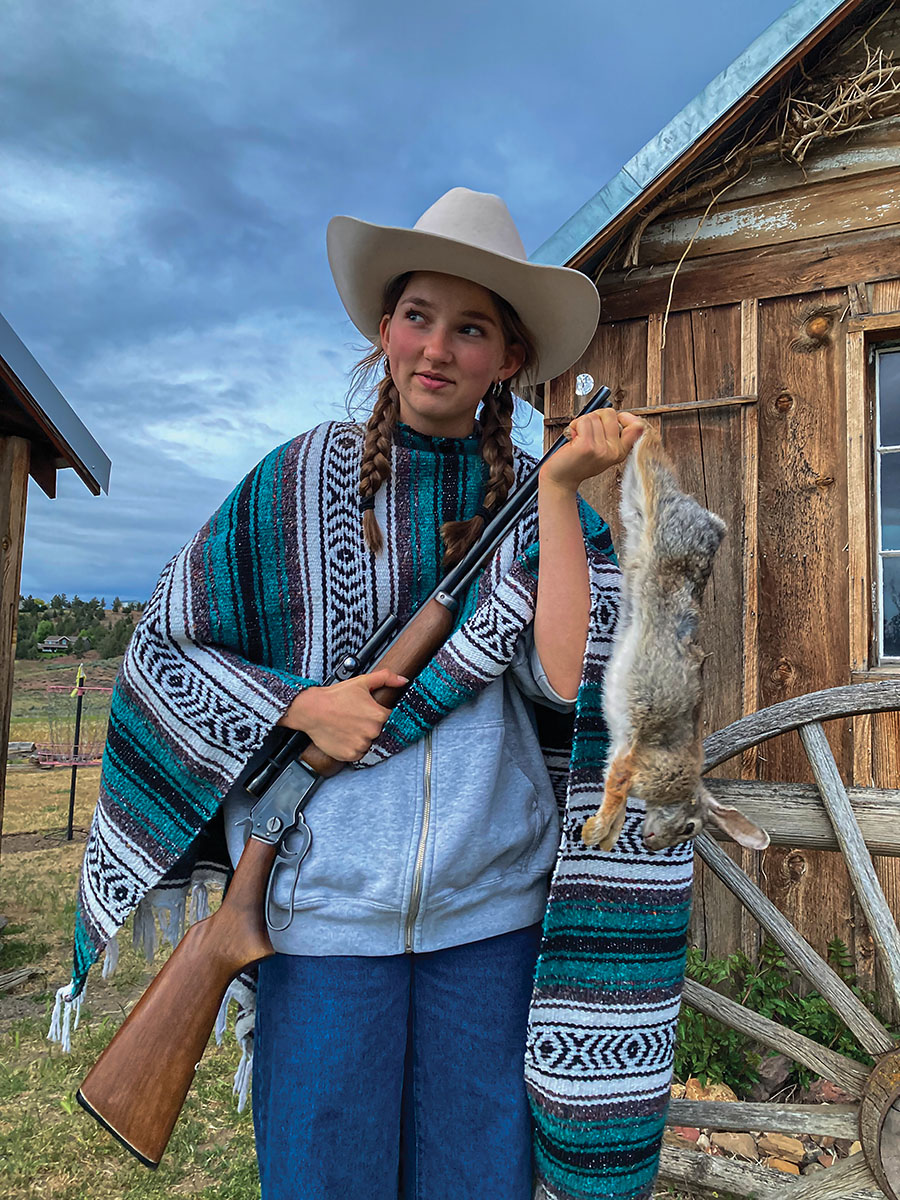

    This teenaged hunter borrowed her mom’s blanket for a poncho. Mom can always buy a new blanket, but a first time rabbit hunting, that’s worth remembering.
    This teenaged hunter borrowed her mom’s blanket for a poncho. Mom can always buy a new blanket, but a first time rabbit hunting, that’s worth remembering.
    Cottontail numbers go up and down and when there are rabbits in the garden and tunneling under the outbuildings, it helps to have a long-barreled levergun close to hand.
    Cottontail numbers go up and down and when there are rabbits in the garden and tunneling under the outbuildings, it helps to have a long-barreled levergun close to hand.
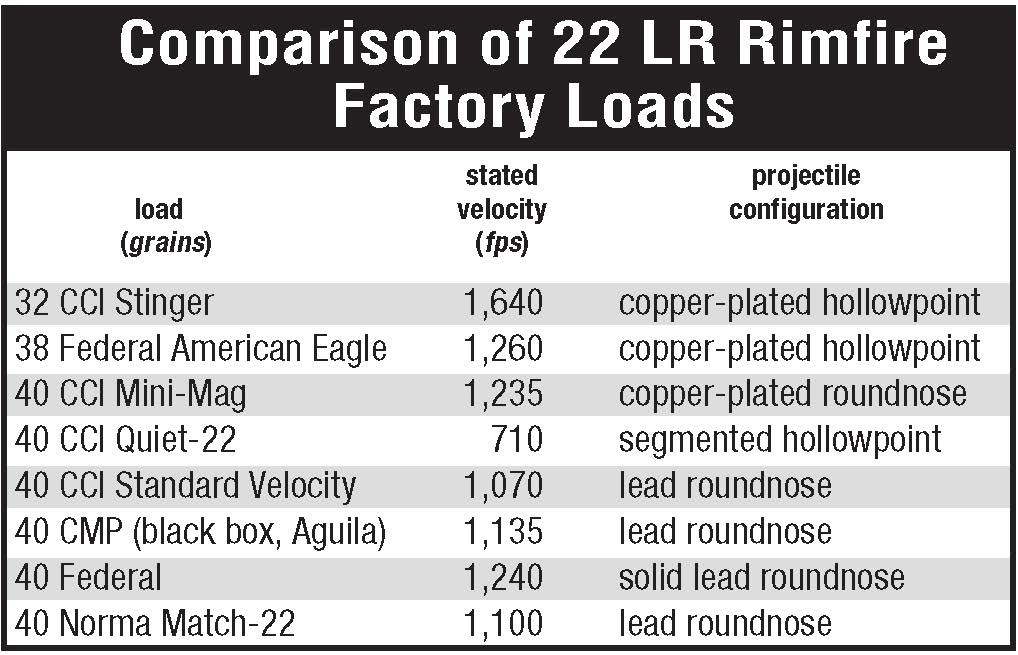
    With the target at 50 yards, I loaded three rounds of CCI’s Quiet-22, which uses a segmented 40-grain hollowpoint at an advertised 710 fps. With the first shot, I missed the target entirely. The second shot was low and the third was 31⁄2 inches low. Okay then. Confirming what I should have known already. The Quiet-22, which I have used with great success on varmints in places where loud shots bring disapproving stares from neighbors, is not the load for 50 yards. Next, I fired three rounds from a black box of 50 rimfire cartridges purchased through the Civilian Marksmanship Program about 12 years ago. This ammunition was manufactured by Aguila in Mexico and was reputed to be produced under strict quality control. At 50 yards, with a 77-year-old 2.5x optic, I shot a three-shot .5-inch group with two holes touching and an overall diameter that could be covered by a 1943 steel penny that I just happened to have. I could have covered it with a dime – except for inflation.

    Since my friend, Levi Mallory, was out visiting from Missouri, I had him shoot the 25-yard target. The Quiet-22 ammunition performed better at 25 yards and so did the Norma Match-22. The CMP Target ammunition again shot a very tight group with two holes touching and the CCI Mini-Mag turned in a respectable performance with a three-shot group that could be covered by a penny. My takeaway is that I should have bought a Marlin 39A when I was a teenager instead of putting it off as long as I did.

    Emmett Stevens bagged his first bushy tail with the old Marlin levergun. He graduated to deer hunting a couple of years later.
    Emmett Stevens bagged his first bushy tail with the old Marlin levergun. He graduated to deer hunting a couple of years later.
    I’m glad I stopped in to see old Jack Curry that day when he talked me into buying this gun. For casual plinking, I think I will be more intentional about what I feed the Marlin. High-speed hollowpoints will always get the nod when shooting sage rats or rabbits out to 75 yards, and  Quiet-22 will be the choice when the critter is at 20 yards or less. I’m going to hoard that black box CMP ammunition against the next time someone wants to try to out-shoot me. When the chips are down, I’m reaching for that CMP black box.


    Wolfe Publishing Group