Login


Wolfe Publishing Group
    Menu

    The Savage Model 12 FVSS

    Affordable Accuracy

    The Savage Model 12 FVSS was offered as an economical way to get into a highly-accurate shooting platform and was offered in 223 Remington, 22-250 Remington and 308 Winchester.
    The Savage Model 12 FVSS was offered as an economical way to get into a highly-accurate shooting platform and was offered in 223 Remington, 22-250 Remington and 308 Winchester.
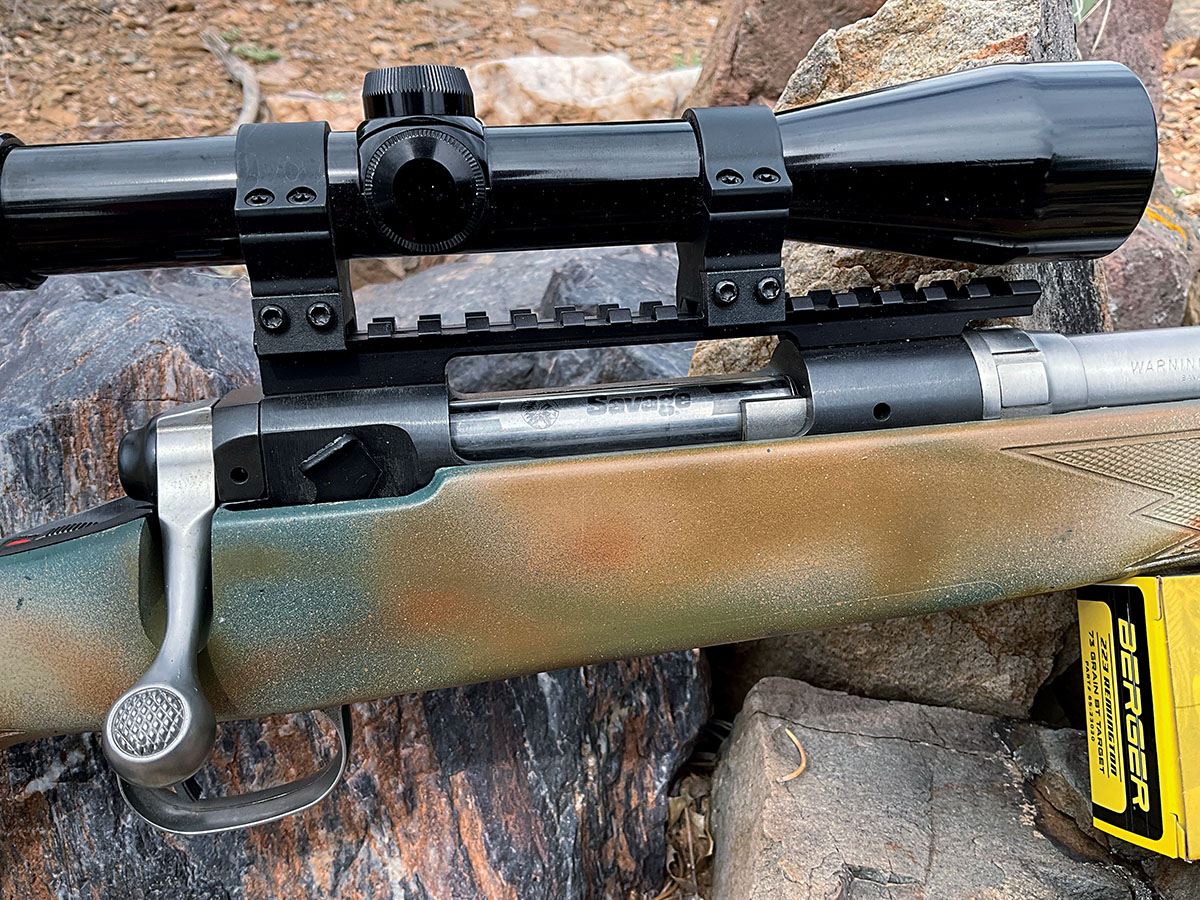
    The Savage Model 12 FVSS was produced with a blued receiver and a stainless barrel. The earlier Savage actions had a flat at the rear, which makes finding a scope base challenging, but not impossible.
    The Savage Model 12 FVSS was produced with a blued receiver and a stainless barrel. The earlier Savage actions had a flat at the rear, which makes finding a scope base challenging, but not impossible.
    The sounds of a jackrabbit in distress from my electronic caller echoed through the frigid early morning air. The small valley was still frosted and in the shadow of the rising sun. Suddenly, a coyote appeared like a phantom, an easy rifle shot away. The 80 yards may have well been a mile as I gripped my 12-gauge shotgun. After presenting a broadside shot for a full minute, the coyote dipped back into the wash and vanished. Two sets later, another coyote crested a hill and stared at me 150 yards away. It would have been a chip shot for a rifle. The coyote trotted off, never coming close enough for the shotgun to be effective. I had already been toying with getting a rifle in 223 Remington and those two close calls cemented it.

    There was just one problem. The pandemic was in full swing and the costs of an AR-15 had skyrocketed past my budget. I really wanted the accuracy of a bolt-action rifle, but my visits to the local pawn and gun shops yielded nothing that excited me. Then one day, an ad popped up on a local gun club website. The ad was minimal in description as all it stated was that a 223 bolt-action rifle was for sale at what I considered a reasonable price.
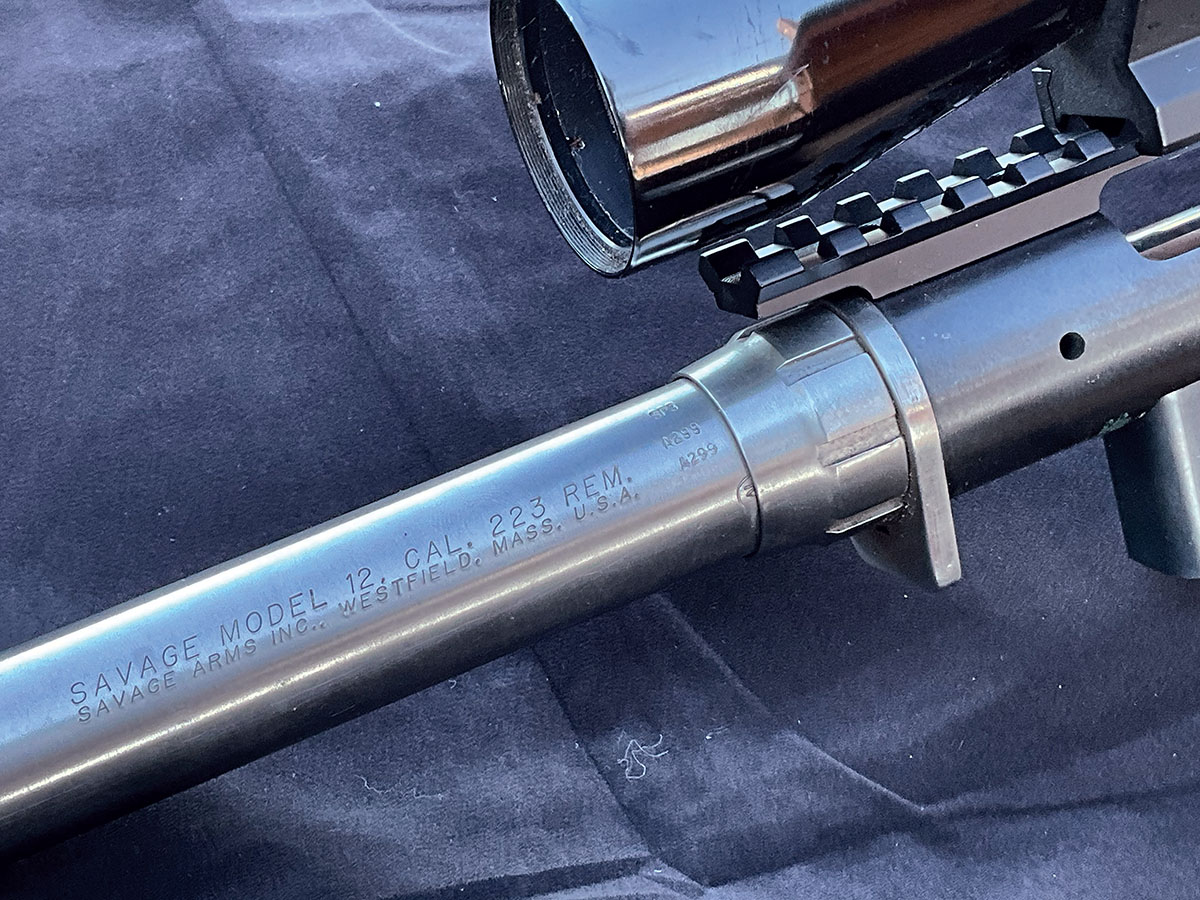
    Savage is noted for its barrel nut configuration, which makes changing barrels easier as long as the gunsmith knows how to set headspace.
    Savage is noted for its barrel nut configuration, which makes changing barrels easier as long as the gunsmith knows how to set headspace.

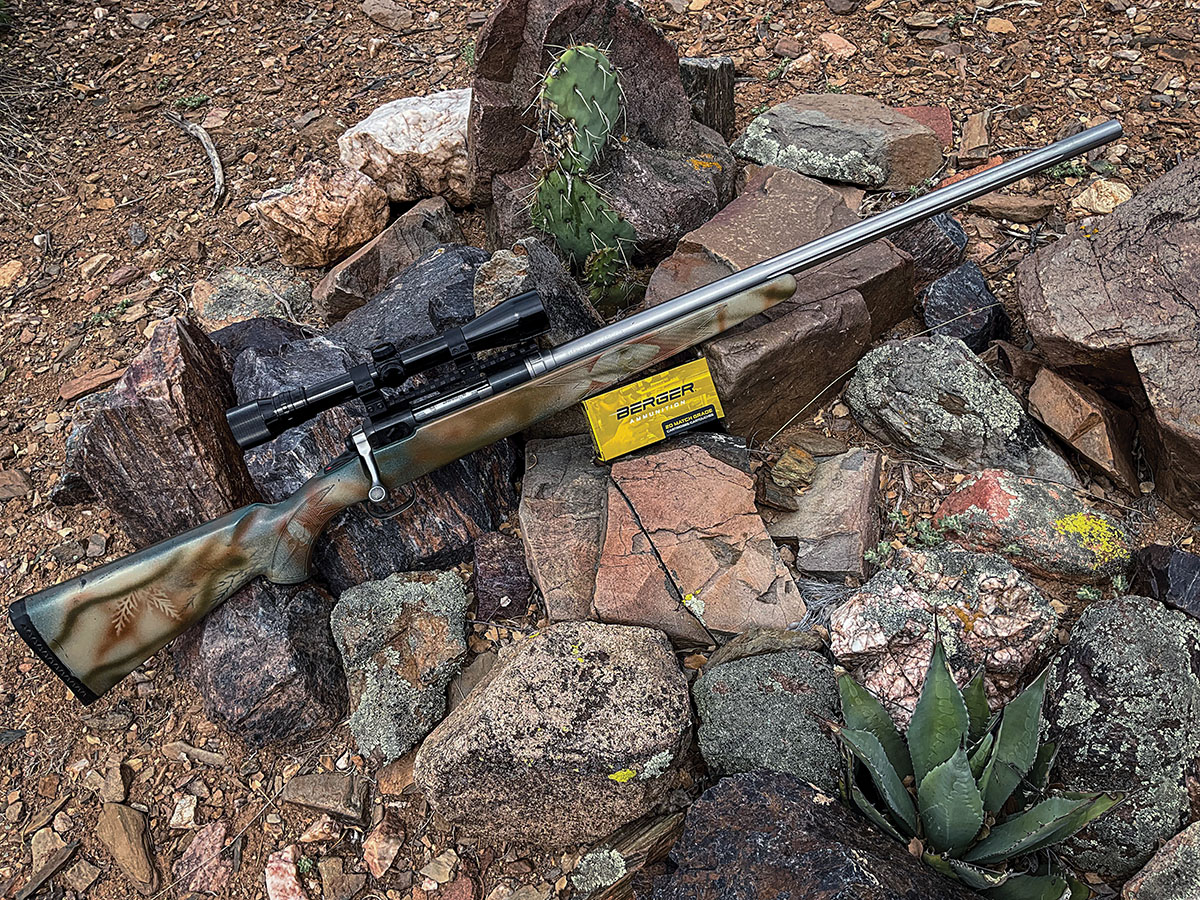
    The seller was a retired gentleman who was getting too old to use the rifle as he once did. At first glance, I was ready to walk away. It looked like someone fastened a poorly-painted, plastic rifle stock to a truck axle! After the shock wore off, I listened to what the seller was saying. The rifle was a Savage Model 12 with a blued receiver and stainless steel bull barrel. The stock and trigger guard had been decorated with rattle-can camouflage colors. It looked the part of a truck gun through and through. I tried to hide my disappointment as I dutifully inspected the gun.
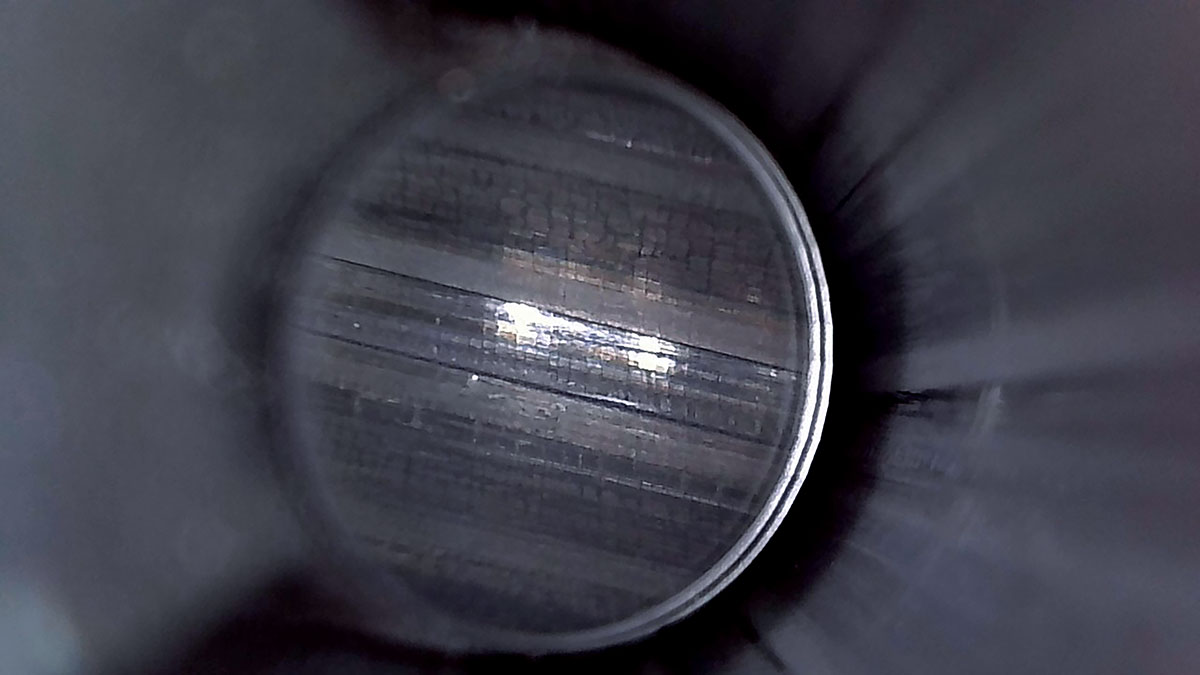
    While a quarter of a century old, this Savage has minimal fire cracking at the beginning of the rifling.
    While a quarter of a century old, this Savage has minimal fire cracking at the beginning of the rifling.
    As we talked, the owner regaled me with stories of the adventures he had been on with that rifle including coyote calling, jackrabbit hunting, and my favorite, prairie dog shooting. He explained that the gun could shoot sub-MOA all day long and twice on Sundays. The more I held the rifle and listened to his stories, the more I wanted to continue that tradition. As I pulled the crisp $20 bills from my wallet, he confided that his pet load would drive tacks and scribbled it down on a scrap of paper.

    The rifle came with an old cheap scope that he threw in for free. I wasn’t too keen on using it as I had another scope in mind. In my dealings, I picked up a Bausch & Lomb 2-8x power scope that I figured was new in the late 1960s, but it looked clean and the optics were clear. In sighting it in, one thing became apparent – the rifle could shoot!

    The more I worked with the gun, the more I wondered what I had. The blued receiver and stainless barrel made me think it was a marriage of surplus Savage parts. As much as the rifle assaulted my sense of aesthetic balance, a gun should be all blue or all stainless, but the accuracy kept me coming back for more. Hunt after hunt, I reached for the ol’ Savage Model 12 and left the other guns in the safe.
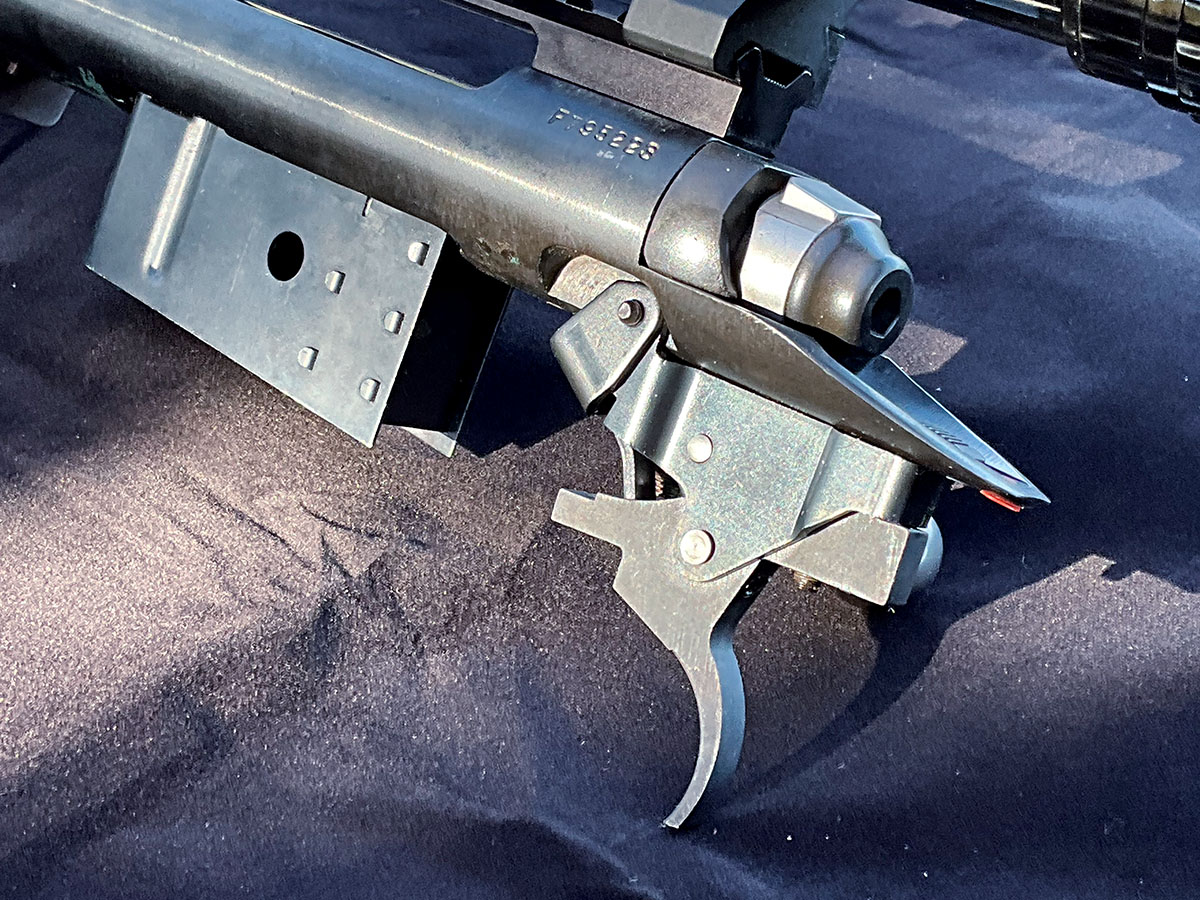
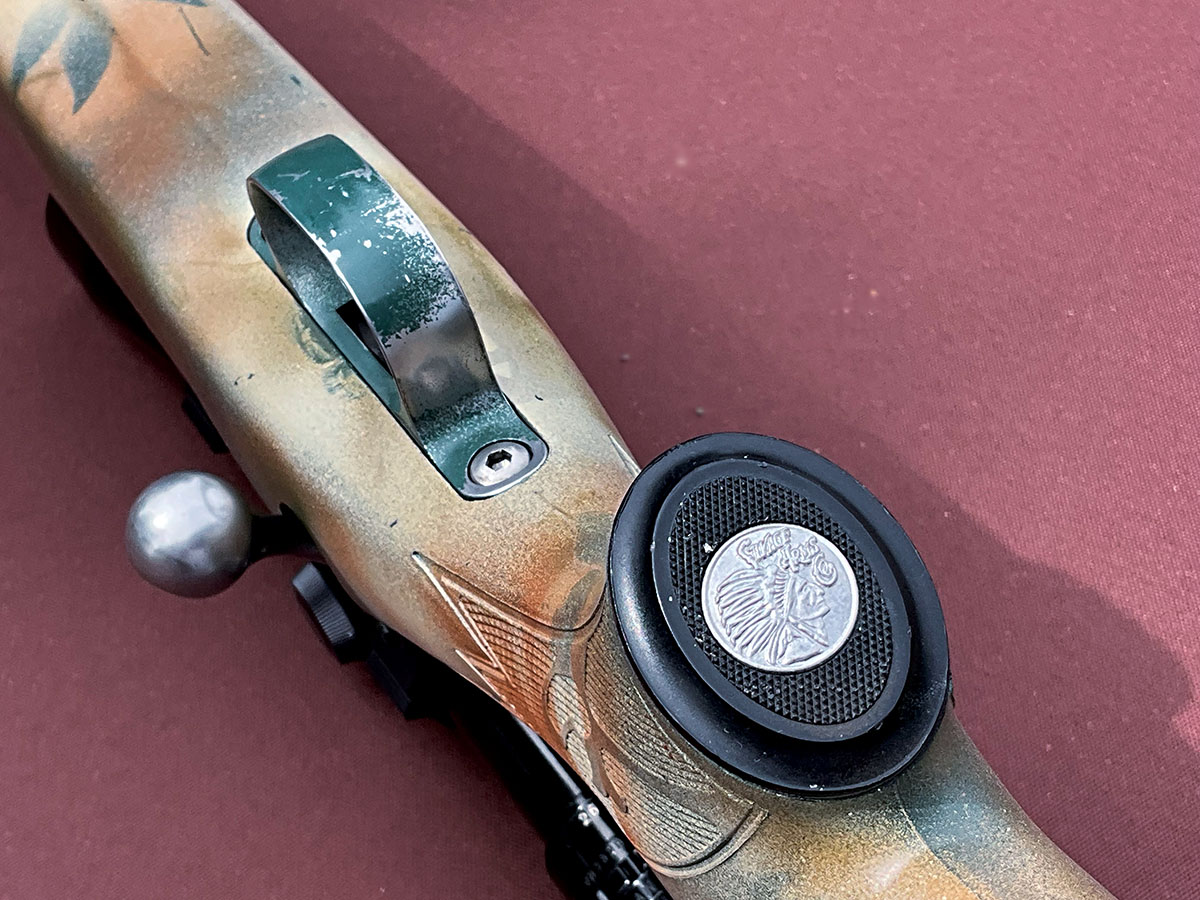
    This Model 12 was manufactured before the change to the AccuTrigger, but it still breaks crisp and clean.
    This Model 12 was manufactured before the change to the AccuTrigger, but it still breaks crisp and clean.

    As time went by, I decided I wanted to get a few questions answered. The biggest, did I really have a Model 12 as it left the factory? A friend suggested it might be, as he remembered Savage putting out two-tone rifles for a period. I finally started looking at other Model 12s on the internet. The majority were new versions with high-grade wood or polymer stocks. YouTube videos featuring the Model 12 sang its praises to anyone who would listen, but none looked exactly like mine. Mine was missing the well-known AccuTrigger, didn’t have the AccuStock, and the receiver was the older, flat-back style.
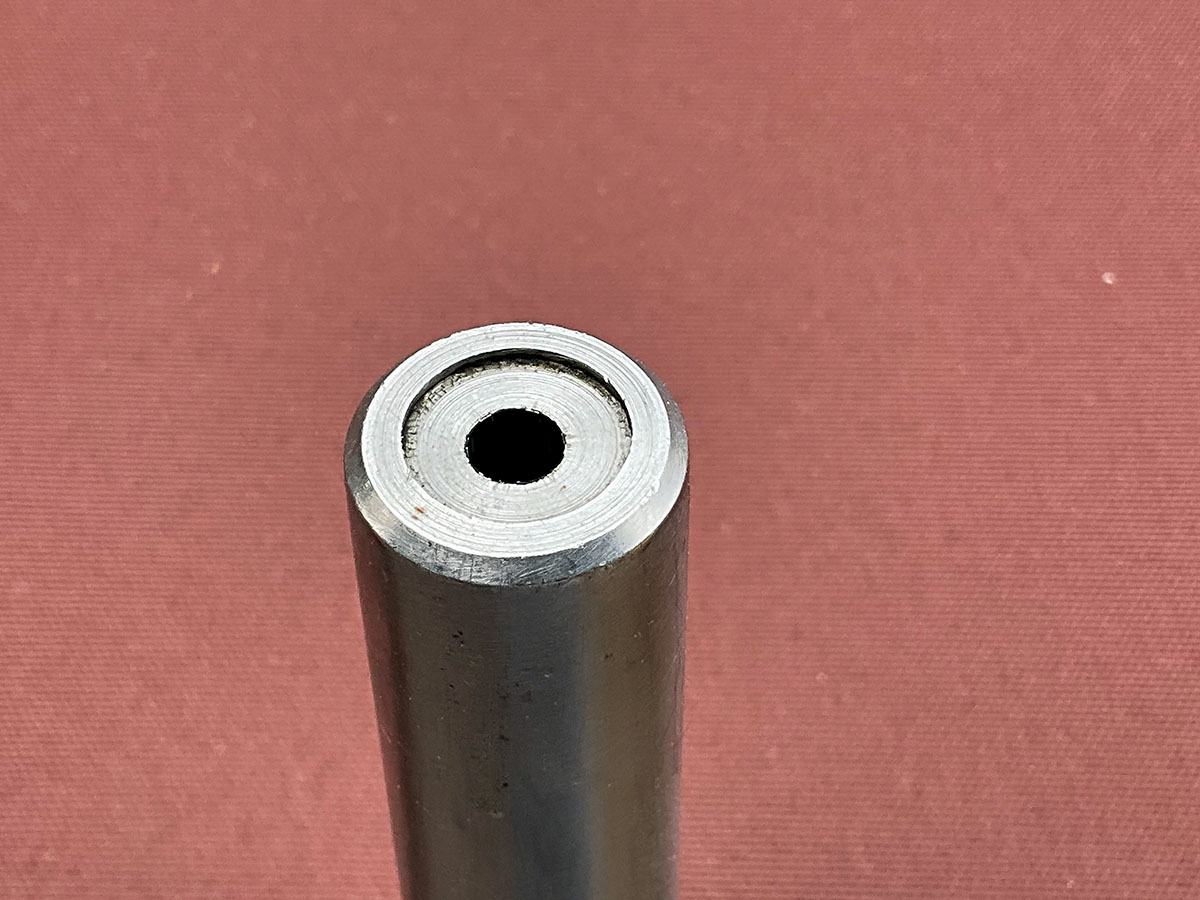
    Any barrel maker concerned about enduring accuracy recesses the crown to prevent damage from dents and dings. The Savage Model 12 is no exception.
    Any barrel maker concerned about enduring accuracy recesses the crown to prevent damage from dents and dings. The Savage Model 12 is no exception.
    Finally, I found someone who spoke Savage. He suggested that I look up the older Savage FVSS line. Bingo! My rifle was in the 1998 Savage Arms catalog. Mystery solved.

    According to the 1999 Gun Digest, the Savage Model 12 FVSS Long Range Rifle was similar to the Savage Model 112, but the Model 12 was an actual short action in multiple chamberings. The 1998 Savage catalog put the new offering inside the front cover and proclaimed that the Model 12FVSS came in 223 Remington, 22-250 Remington and 308 Winchester.

    The ad copy drew attention to the fluted 26-inch stainless steel bull barrel with a recessed crown and the dual pillar-mount synthetic stock that free-floated the barrel. It was assumed the rifle would get a scope as it came with no sights and yes, it came with a blued action. Finally, I could rest easy because I had a genuine Savage Model 12 and not just a collection of parts from the corner of a gunsmith’s shop.
    So, what does a 25-year-old rifle with an unknown round count have to offer?

    The Savage logo honoring Chief Lame Deer still graced the Model 12 stock in 1999. It has since vanished from its products.
    The Savage logo honoring Chief Lame Deer still graced the Model 12 stock in 1999. It has since vanished from its products.
    If one were to believe comments on the forums, it would be a tack driver with the right ammunition, but few seemed to agree with just what the right ammunition was.

    The Savage Model 12 usually comes with a 1:9 twist, which this rifle has. The talking heads claim that it is a good, one-twist-fits-all offering. But, some claimed if something was good for everything, it wasn’t great for anything. That was the focus of my testing.

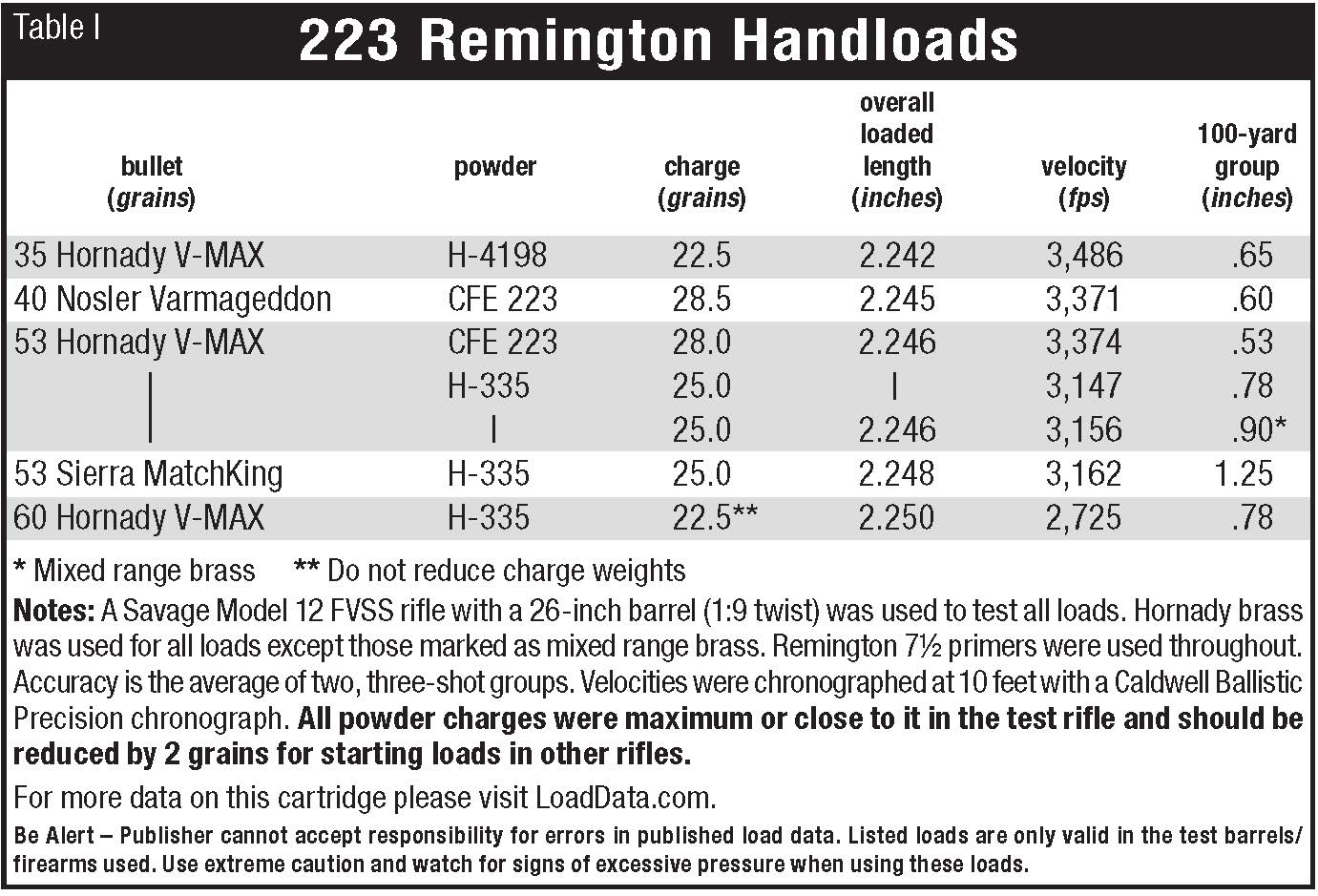
    The previous owner preferred the Sierra .224-inch 53-grain hollowpoint in front of 25 grains of Hodgdon H-335 powder. He didn’t say what brass or primer he used. That’s a failure on my part to have not asked.
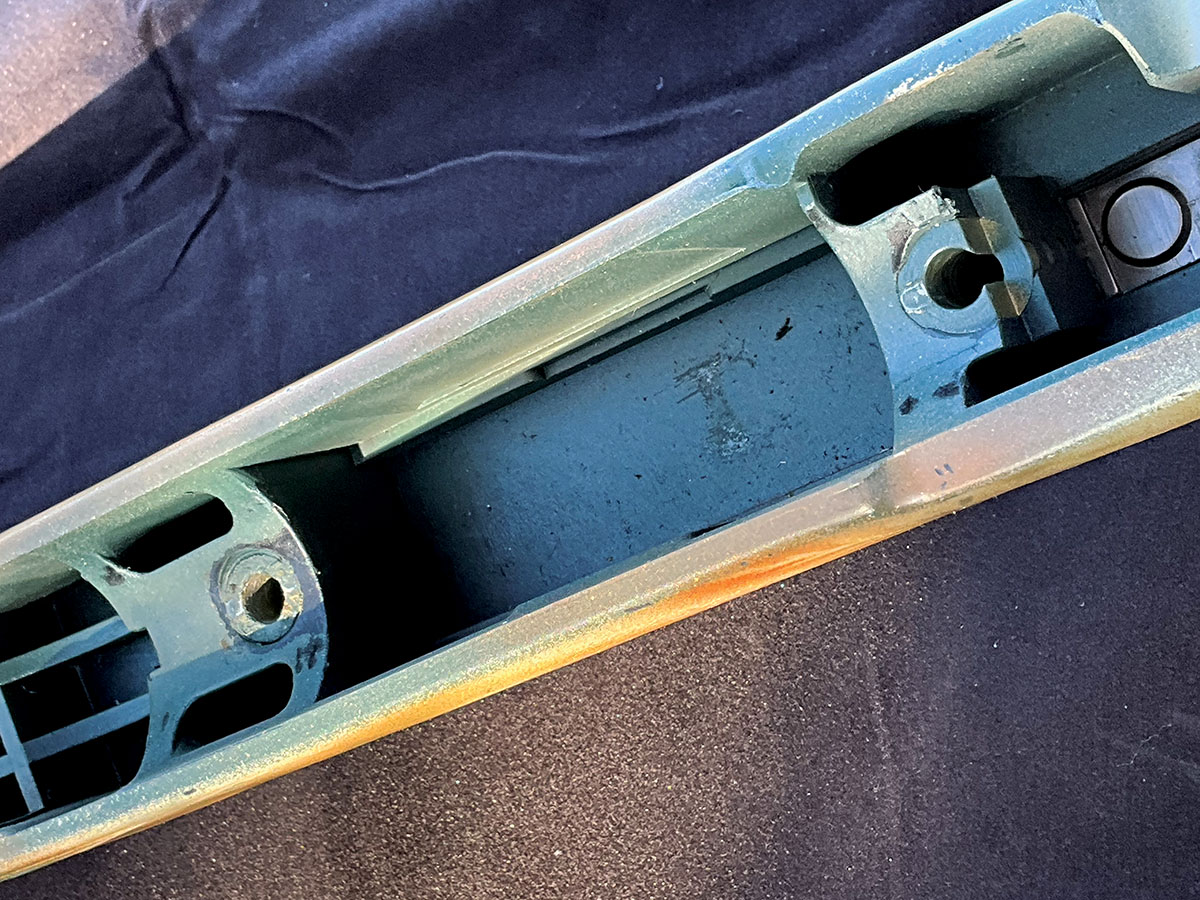
    The Savage Model 12 FVSS had aluminum pillars molded into the stock to provide secure bedding. Even using mixed headstamp range brass didn’t hamper the rifle’s accuracy. All were well within a minute of prairie dog.
    The Savage Model 12 FVSS had aluminum pillars molded into the stock to provide secure bedding. Even using mixed headstamp range brass didn’t hamper the rifle’s accuracy. All were well within a minute of prairie dog.

    I decided to play around. I loaded up new Hornady cases and went through a box of range brass with mixed headstamps and crimped-in primers. The mantra of precision shooting is to use the same lot on brass, powder, bullets and primers. That would have been an option in 2018, with shelves full of components. These days, I have to jump on overpriced powder, primers and bullets when I see them so matching lots is a fantasy.
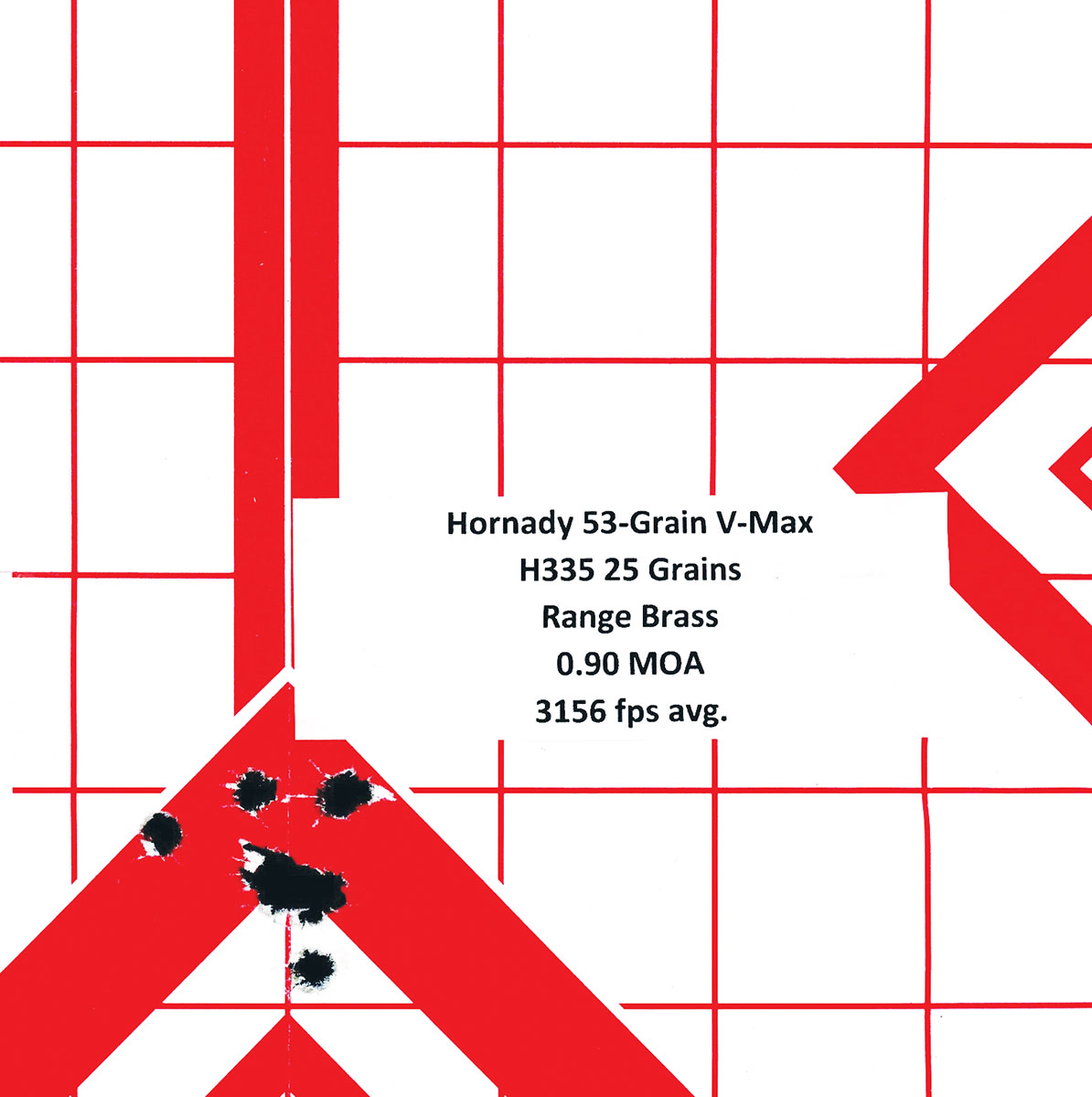
    Even using mixed headstamp range brass didn't hamper the rifle's accuracy. All were well within a minute of prairie dog.
    Even using mixed headstamp range brass didn't hamper the rifle's accuracy. All were well within a minute of prairie dog.
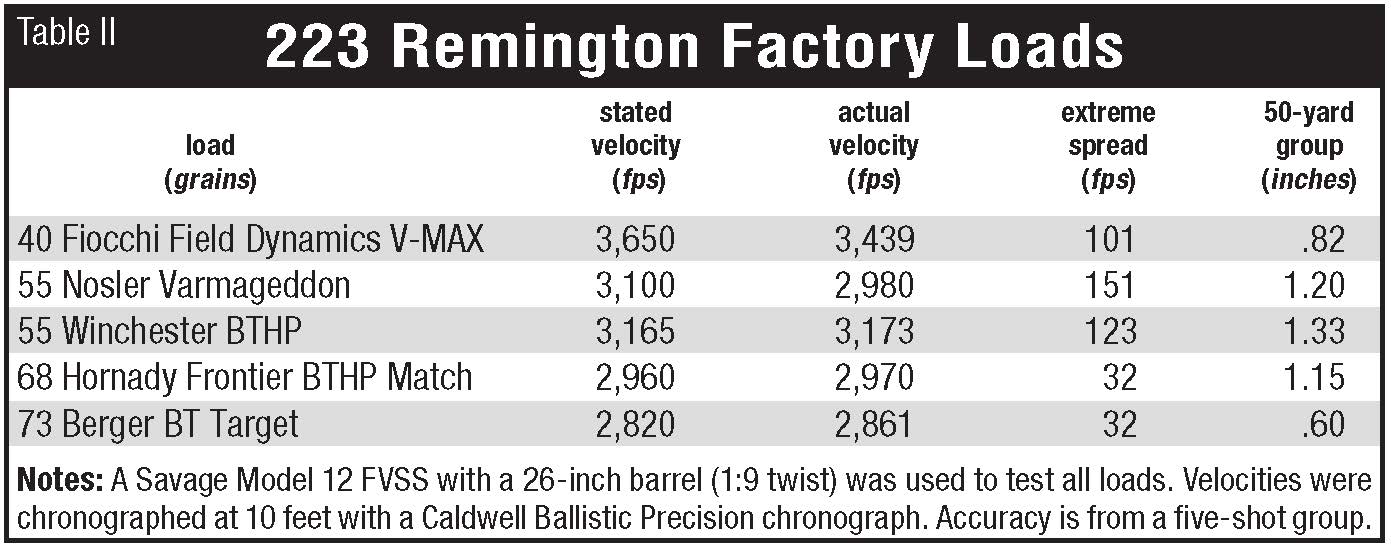
    I repeatedly tried the original owner’s load using the Hornady 53-grain V-MAX and Sierra 53-grain MatchKings. Each time, the results were sub-MOA, which is what I expected. In fact, almost every factory and handload I fed it did the same or close to it. I tried every Hornady V-MAX from 35 to 60 grains in weight accuracy and the point of impact was exactly what I expected.

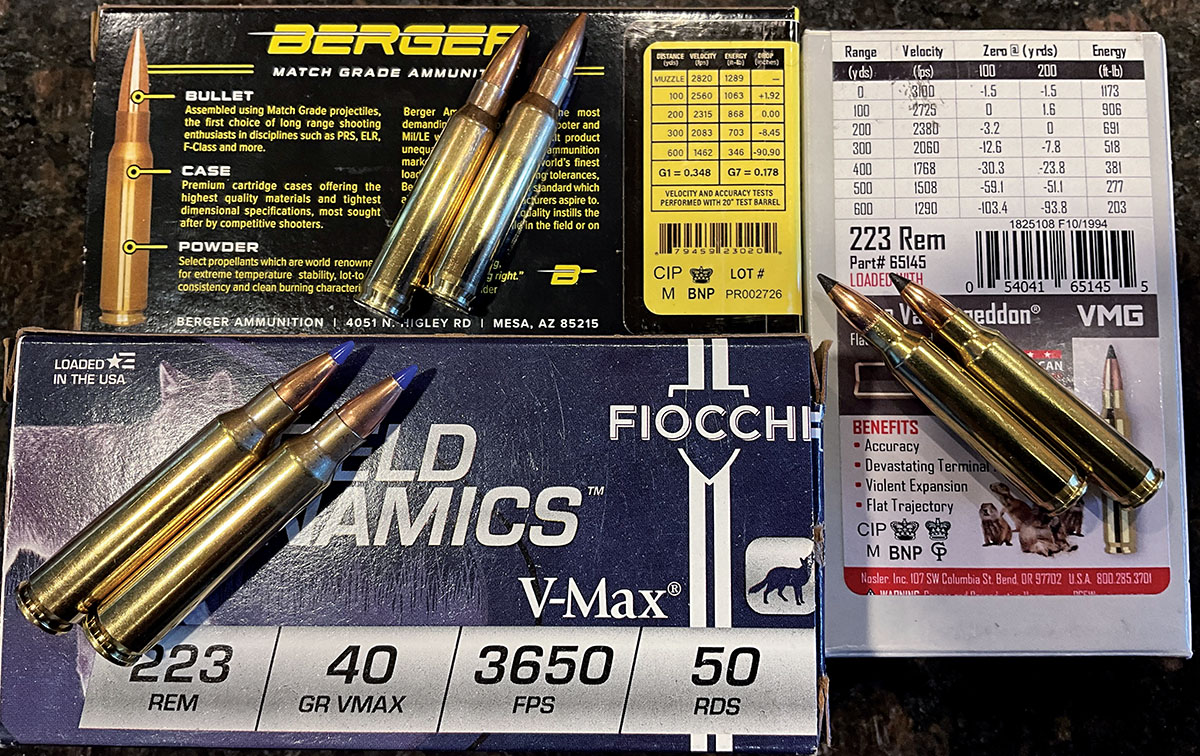
    Before I blame the rifle, right up front, I hamstrung the rifle using the scope I had. The maximum power is 8x, and the center is a 1-MOA dot. The scope is perfect for me to find a fast aiming point on a moving coyote. However, trying for target accuracy with a scope reticle that covers up the center of the target makes it challenging to shoot great groups. That said, the Berger 73-grain BT Target ammunition gave me the tightest group at .6-MOA. Building on what the previous owner had told me, my handloads using the Hornady 53-grain V-MAX on top of CFE 223 powder went .53-MOA at a crazy 3,374 feet per second (fps). Now, can you see why I fell in love with this rifle?

    So, what does the future hold for me and the Savage 12FVSS? Part of me wants the new version with the modern advancements and the AccuTrigger. Sadly, the inexpensive Savage 12FVSS is no longer offered. The higher-grade Savage 12 BVSS version sports a premium wood laminate stock.

    Part of me whispers I should upgrade the stock. If I do, would I hunt the same? No. I would be worried that I would scratch or ding something. As it is now, I can use the stock to push through the chaparral of central Arizona, brace off of granite boulders as I watch for bobcats, or creep through sagebrush without care as I stalk closer to a field of prairie dogs.
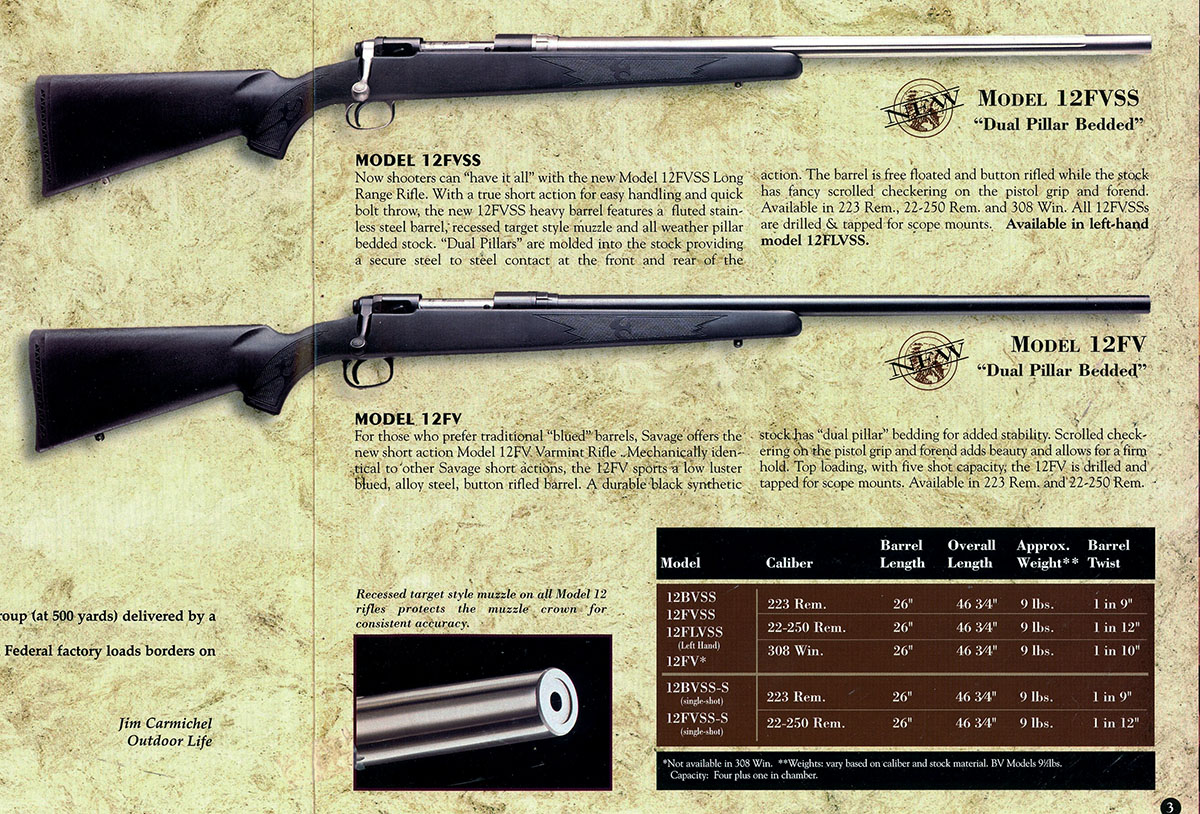
    In 1998, the Savage catalog heralded the new Savage Model 12, including the FVSS.
    In 1998, the Savage catalog heralded the new Savage Model 12, including the FVSS.
    The Savage is an inexpensive way to practice calling wind and mirage, something most of us fail at learning. I have an antelope and elk hunt coming up, so I need all the practice I can get. The lessons learned with a 223 Remington readily build skills for heavier cartridges.

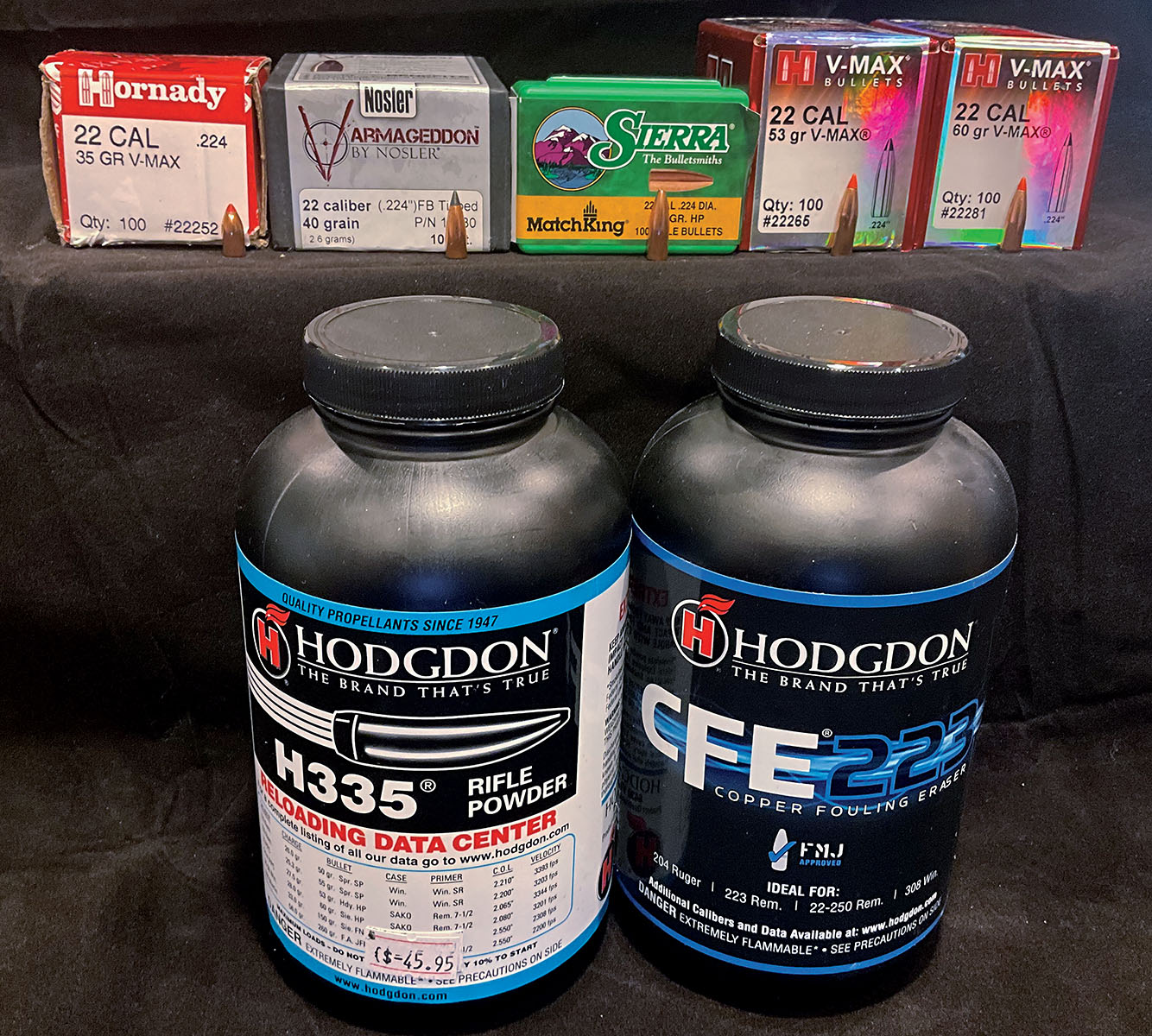
    The choices of powders and bullets for the 223 family of cartridges are vast enough to provide options in a limited market. Hodgdon’s H-335 and CFE 223 are two favorites. Hornady offers a variety of bullet styles and weights to cover just about any task a hunter or plinker cares to pursue.
    The choices of powders and bullets for the 223 family of cartridges are vast enough to provide options in a limited market. Hodgdon’s H-335 and CFE 223 are two favorites. Hornady offers a variety of bullet styles and weights to cover just about any task a hunter or plinker cares to pursue.
    There are only a few changes I might make. First, I need to change the scope for something that aids my aging eyes. Something that goes from four power to 14 to 20 power is more to my liking as I age.

    Due to availability, options and economy, the 223 Remington is one of the most popular cartridges, with most offerings being in target shooting, self-defense and varmint loadings, which is precisely why Alan prefers it to other similar cartridges.
    Due to availability, options and economy, the 223 Remington is one of the most popular cartridges, with most offerings being in target shooting, self-defense and varmint loadings, which is precisely why Alan prefers it to other similar cartridges.
    Rechambering is an option. The new 22 Creedmoor and 22 ARC sound awfully sweet, but the barrel twist rate is too slow to use the new cartridge capabilities fully. The barrel is long enough that I could have it set back and refreshed to make a new throat. Ironically, I saw a new/old stock 22-250 barrel in a local shop that would have fit easily. Admittedly, a 22-250, the king of varmint cartridges, is tempting. But, as the saying goes, think long, think wrong. The barrel was gone when I went back to the shop.

    That’s fine. The truck axle barrel still shoots lights out, and I know of some prairie dog towns that will be brimming with young and dumb pups when the season opens in July. I will be keeping an eye out at pawn shops and local gun shows just in case another Savage 12 FVSS needs a new home.

    Wolfe Publishing Group