17 Remington Fireball
Loading 20- and 25-Grain Bullets
feature By: Stan Trzoniec | April, 17
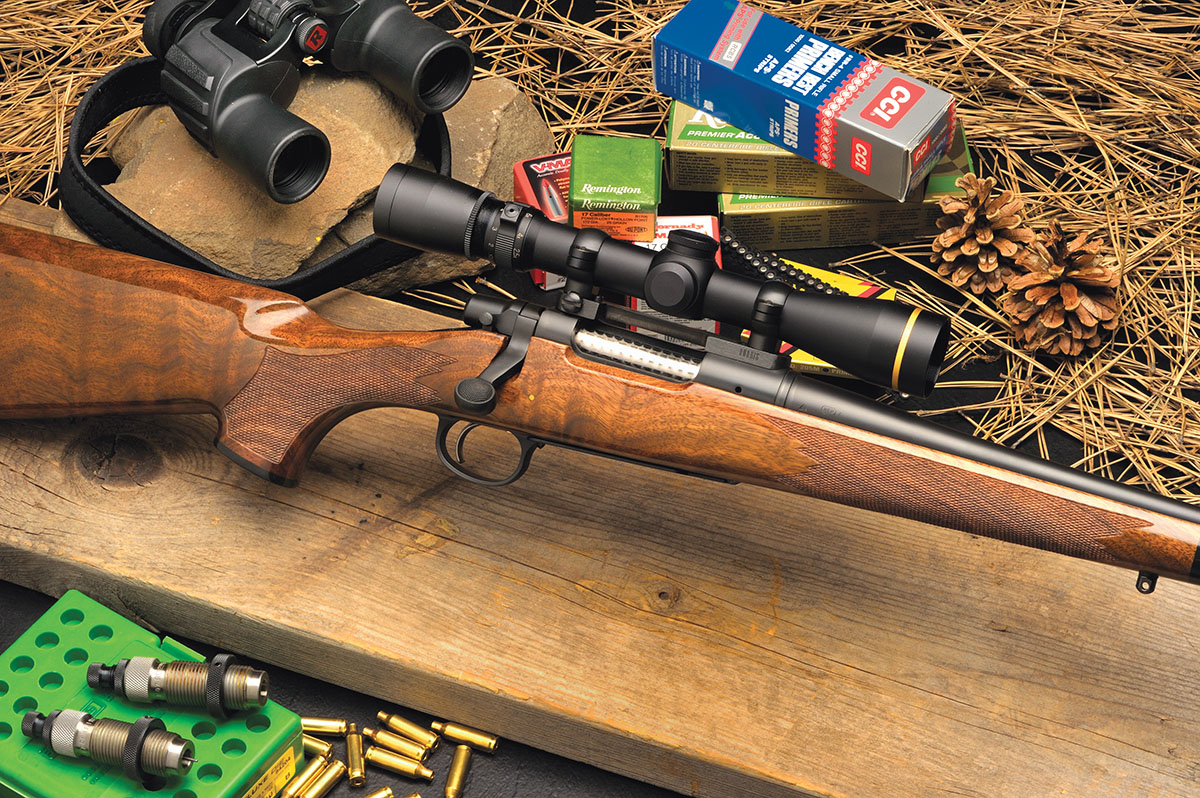
Since I have a soft spot for the Model Seven, I decided to go first-class on this project by ordering a rifle from the company’s custom shop. While not fancy or engraved, it features a nice stock with a straight (classic) comb, cheekpiece, ebony tip and grip cap, traditional point-pattern checkering and a glossy finish. The metalwork is matte finished, and a Leupold VXIII 2-9x 36mm scope was added in Leu-pold rings on a one-piece Burris base. While some shooters might balk at the mild magnification of the scope, please take into account the cartridge and the ranges at which I will be shooting (between the stone walls here in the Northeast). This is a “walking” varmint rig, so light is good. To finish the package, the rifle has a 20-inch barrel with a muzzle diameter of .560 inch, a target crown and a trigger that breaks at 2½ pounds.
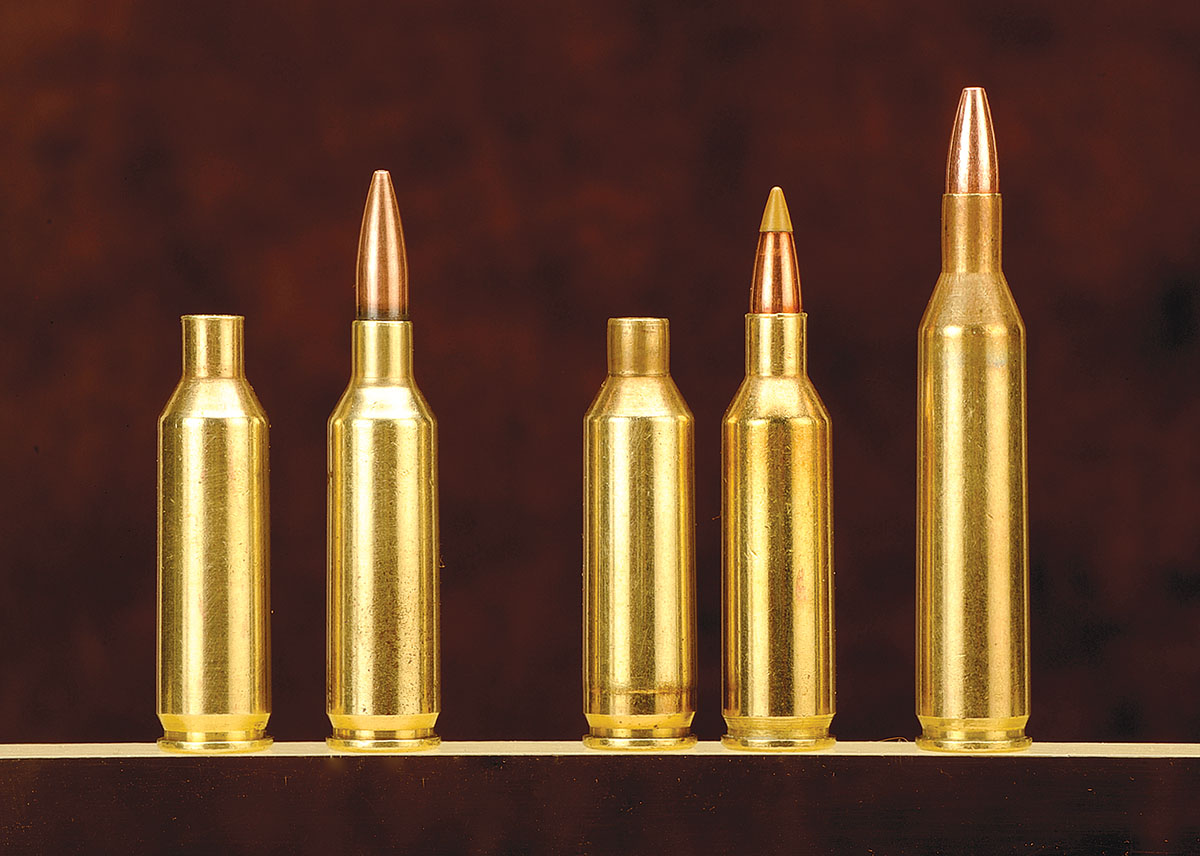
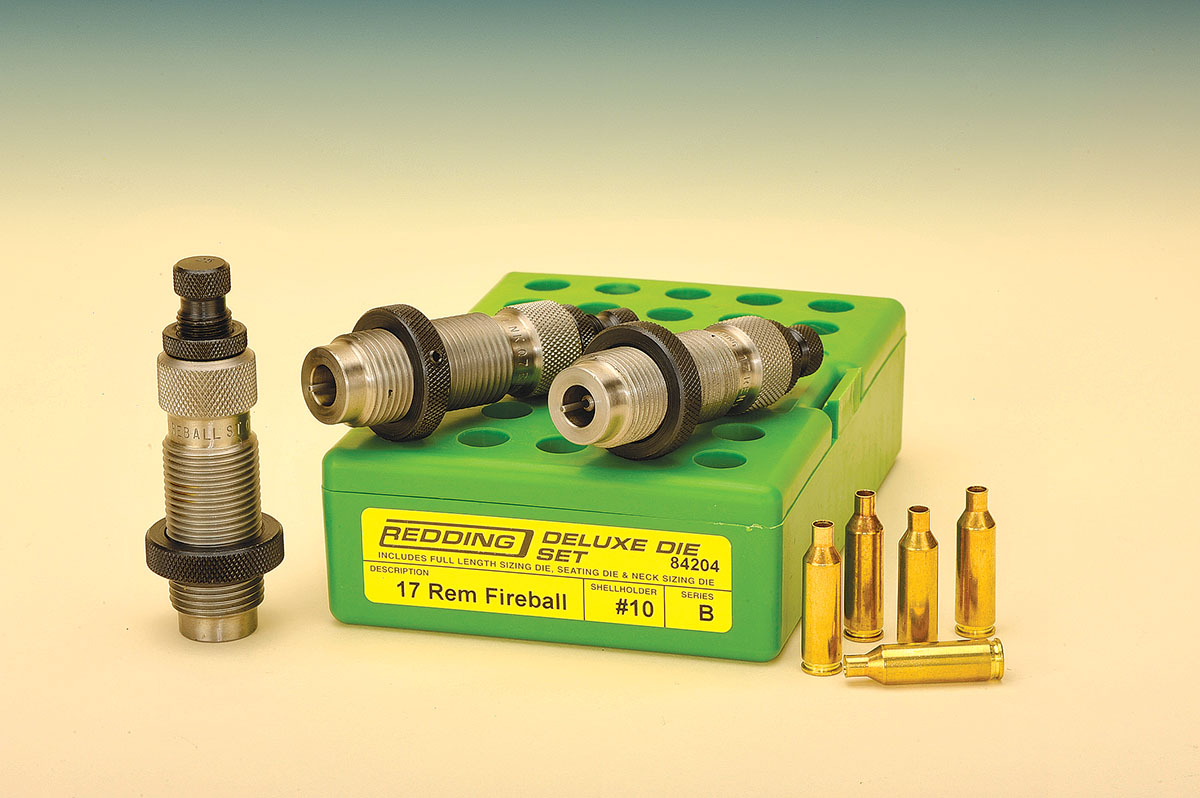
Remington introduced the 17 Remington Fireball in 2007. Using the Fireball case, Remington engineers noted that this is a “balanced” cartridge offering match grade accuracy, a flat trajectory, and since it requires a small amount of powder, barrel fouling is held at bare minimums as compared to other .17s now available to hunters. [This may or may not be true, depending on the individual rifle. – Ed.] Even at the targeted velocity goal of around 4,000 fps, Remington was quick to note that, compared to the 22-250 Remington, the 17 RFB uses a 50 percent reduction in powder, generating around 86 percent less recoil, all with less heat and fouling while still holding its own at 300 yards with a 20-grain bullet.
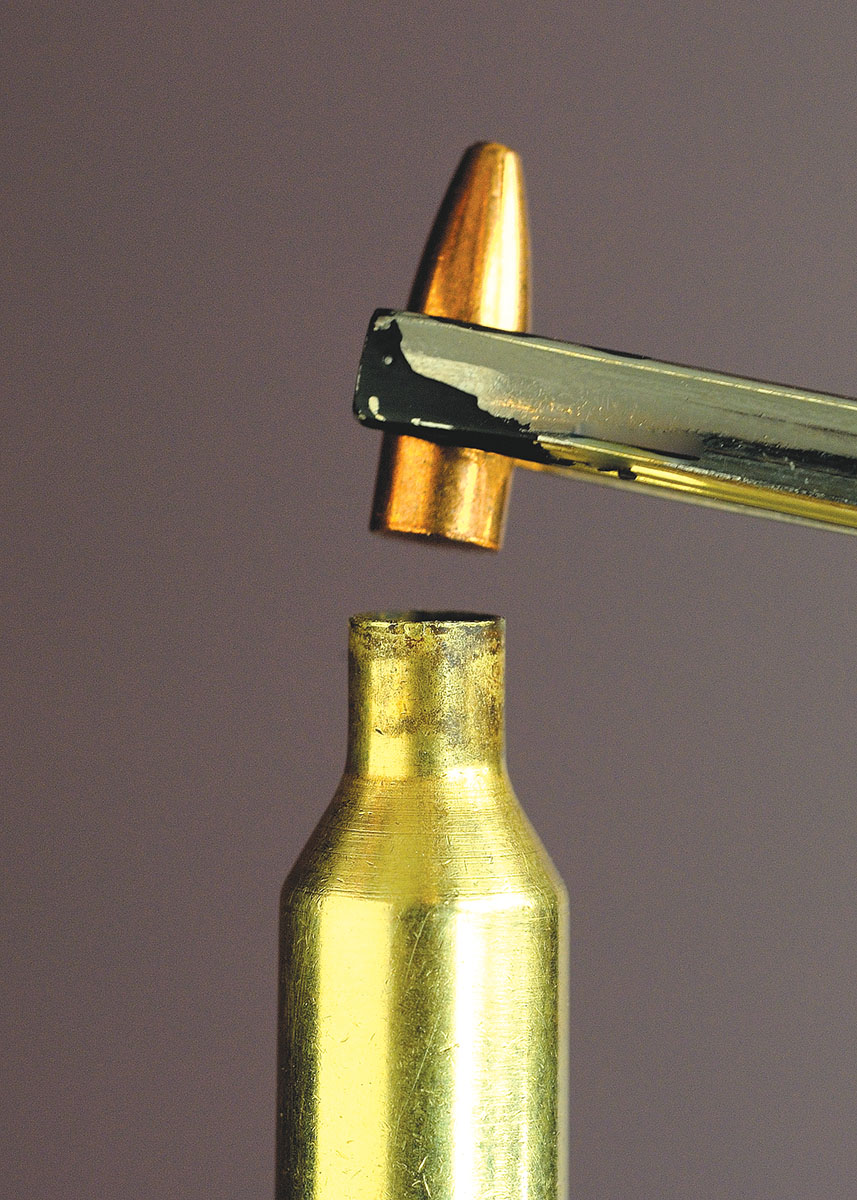
The 17 RFB is not difficult to load, but a few issues did surface. First, anyone with big hands will find that tiny, .17-caliber bullets can be a nuisance during the seating process. The best approach is to use tweezers to hold the bullet in position. I like the ones that work in an opposite direction; squeeze the tool and it opens, let it go and it closes. This holds the bullet on the case until you can push the case up and into the seating die.
Because it is a small case, powder charges are equally small, so any weight variation – 0.10 grain can make a difference – in any direction can mean erratic groups or pressure problems. I would advise weighing each charge to make sure it is right before pouring it into the case. Get into the habit of checking every powder charge placed into a case.
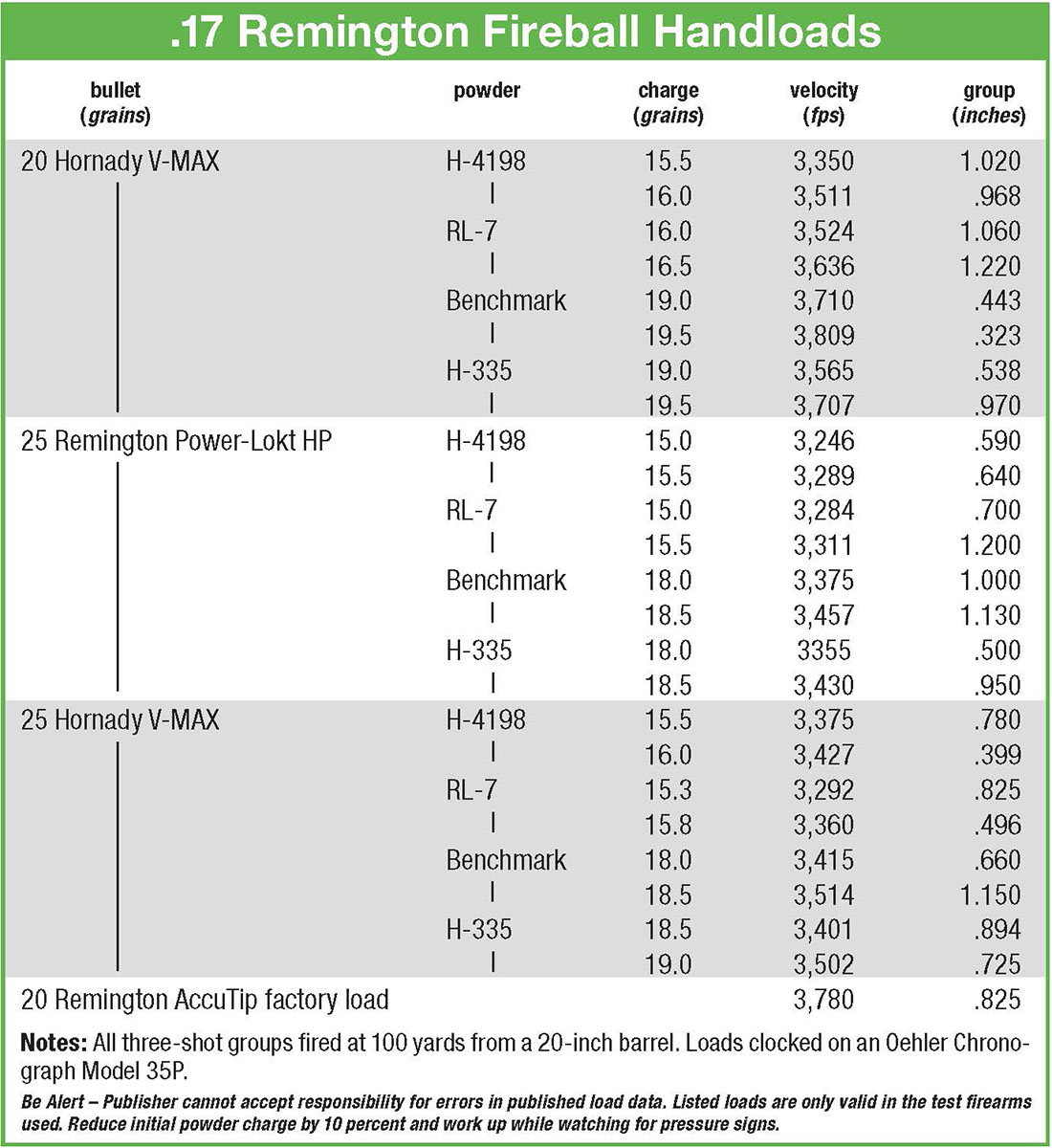
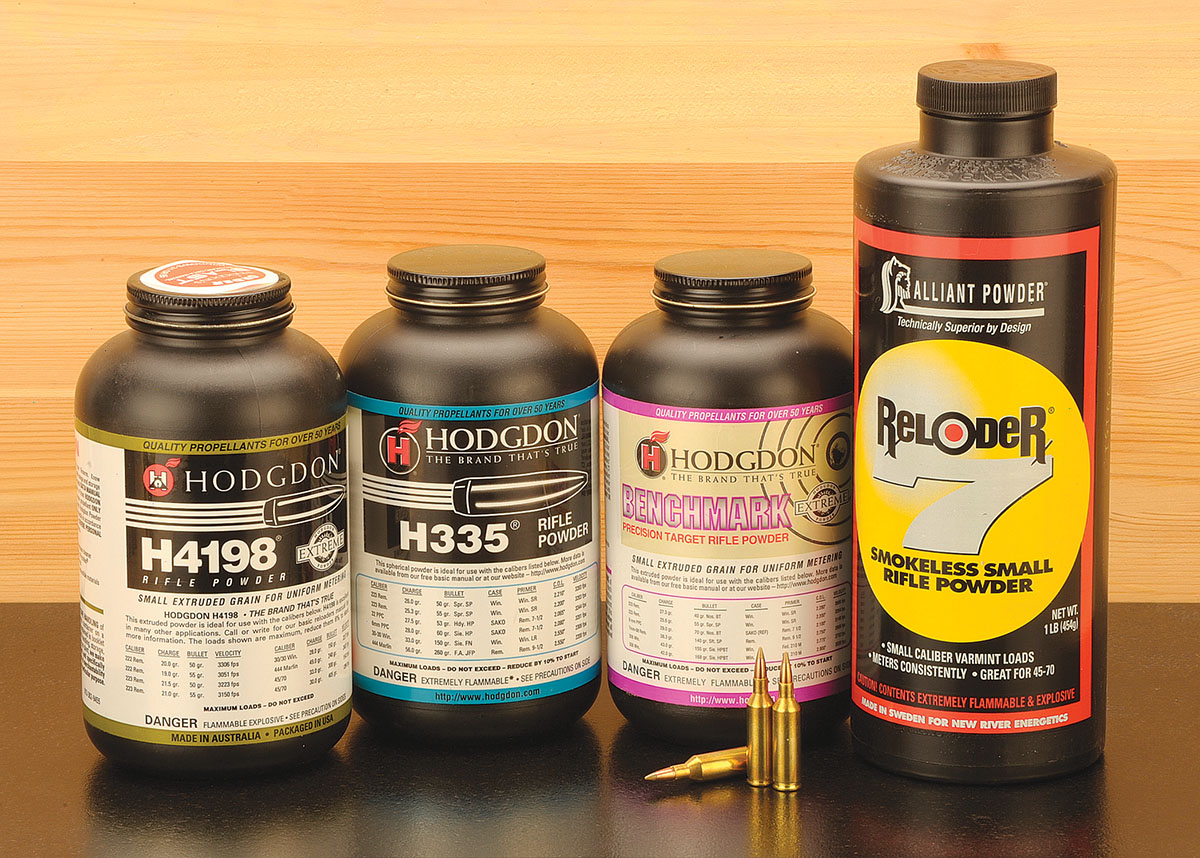
After spending time comparing ballistic tables and powder recommendations, and considering the limited powder capacity of the 17 RFB cartridge, there appeared to be few powders to choose from to maximize accuracy and velocity. The powders shown here in the table are those that provided good overall accuracy and velocities from my rifle.
Looking at the burn rates, they are all very close in the Hodgdon Annual Manual. I have used the fastest – Reloder 7 – in a variety of small cases, like the 222 Remington, 222 Remington Magnum and the 223 Remington. While it did well with the lighter 20-grain bullets, it found its niche with the slightly heavier 25-grain Hornady with groups averaging around 0.5 inch. For economy, for a pound of powder with around 15.0 grains to each load, if this is the powder for your rifle, you might get over 450 loads per can at roughly 6¢ per shot! Come summer, that is a lot of shooting with the 17 Remington Fireball.
H-4198 is another powder used regularly in my varmint cartridges. Over time, the kernels have been shortened for better metering, and it has been a great powder for .22-caliber centerfire cartridges. Benchmark worked very well with 20-grain bullets, with the best overall group (.323 inch) and the highest velocity (3,809 fps) for its relative burn rate.
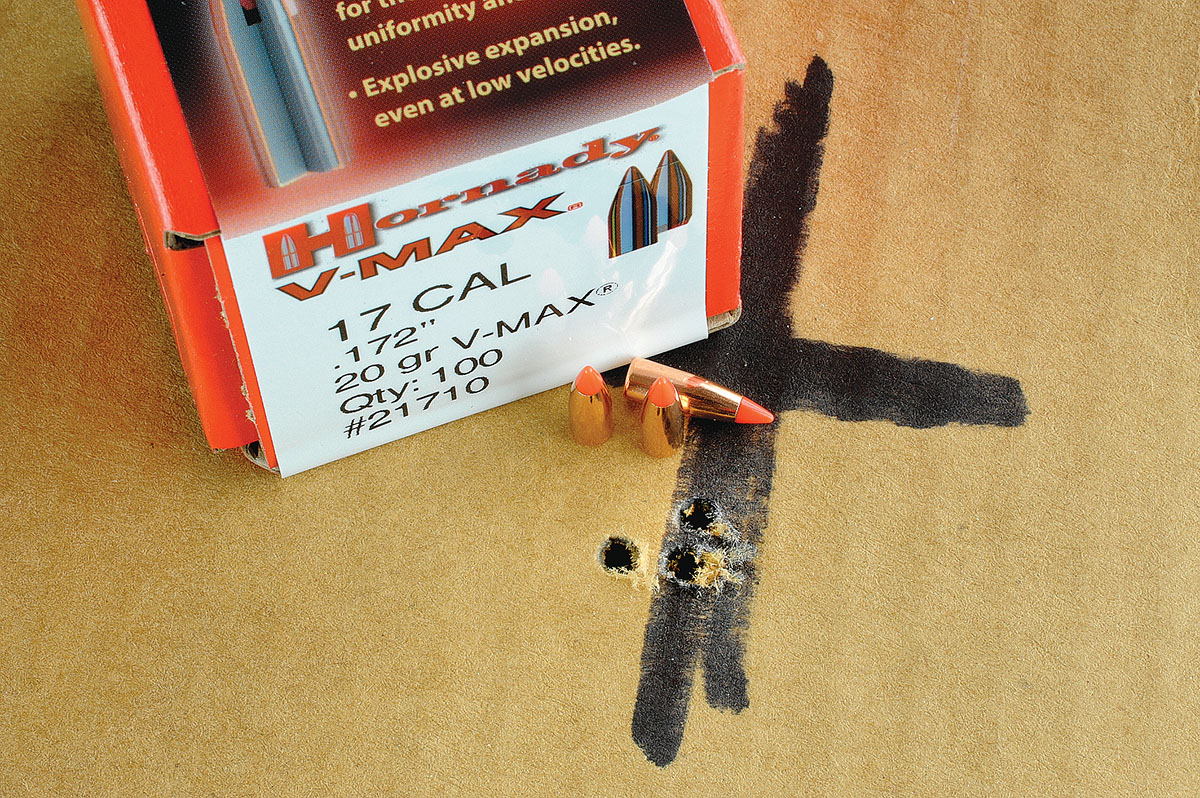
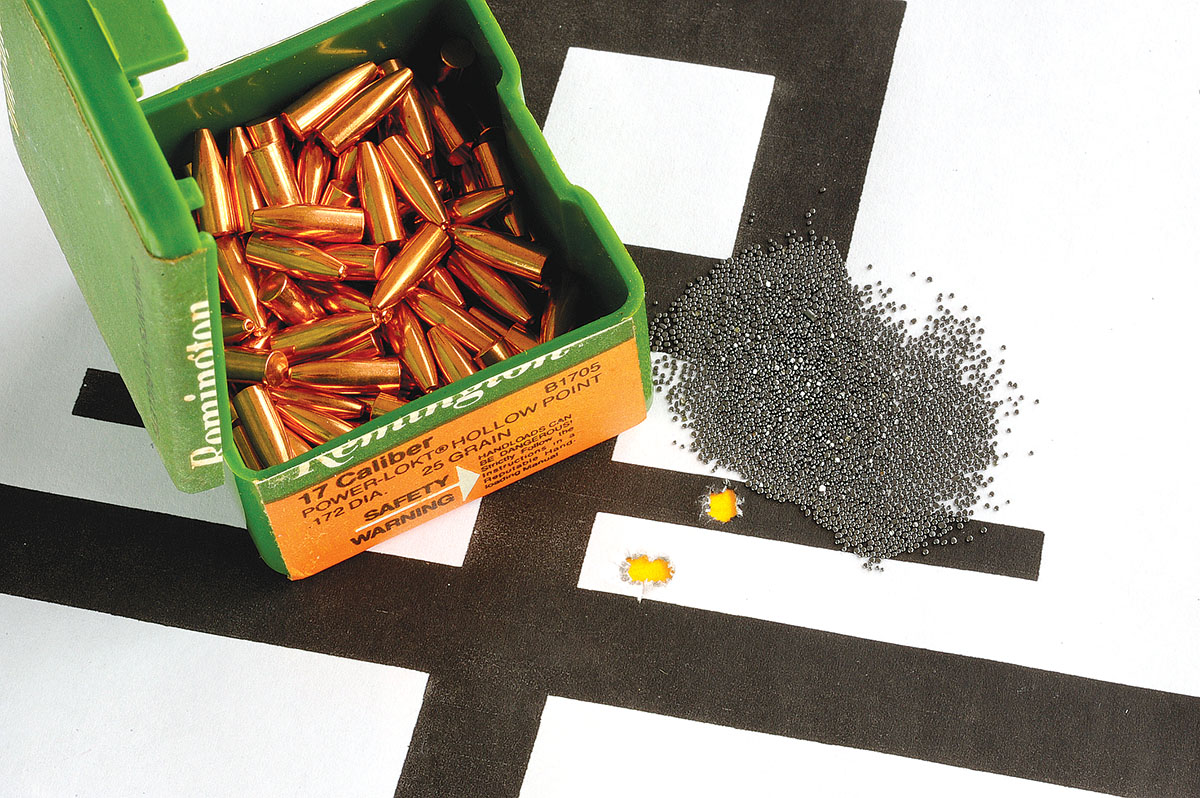
When it came to bullets, I ran into a slight problem with availability. In any event, bullets from Hornady and Remington sufficed. Hornady supplied its 20- and 25-grain V-MAX bullets, and Remington sent 25-grain hollowpoints. As seen in the table, all fared well. With the Hornady 20-grain V-MAX, I found Benchmark to be the powder of choice. For example, with 19.5 grains of Benchmark, the best three-shot group came in at .323 inch. This was the best group overall with all the bullets and loads tried, and velocity was 3,809 fps. Granted, the 17 Remington Fireball is touted to provide velocity approaching 4,000 fps, but with a 100-yard zero, bullet drop will still net an average woodchuck at 300 yards.
Benchmark gave the second best group with 19.0 grains at 3,710 fps and three shots going into .443 inch. H-335 shot the next groups of .538 and .970 inch, and only a half-grain of powder boosted the velocity up almost another 150 fps with a doubling of group size. With this in mind, it is easy to see how just a slight increase in powder can lead to a significant change. The last group that came in under an inch was with H-4198, with 16.0 grains providing 3,511 fps.
With the Remington 25-grain hollowpoint, 18.0 grains of H-335 provided a .5-inch group and a velocity of 3,355 fps. Opening the group to .590 inch, 15.0 grains of H-4198 gave 3,246 fps; another half-grain reached 3,289 fps with a group of .640 inch, and 15.0 grains of Benchmark grouped three bullets into .700 inch. For the record, other loads with RL-7, Benchmark and H-335 came close to MOA accuracy.
Finally, with the Hornady 25-grain V-MAX bullet, all but one group went under an inch. The best here was with 16.0 grains of H-4198 grouping .399 inch and delivering 3,421 fps from the 20-inch barrel. RL-7 gave .496-inch groups at 3,360 fps, and a second Benchmark load grouped .660 inch.
Remington factory ammunition containing 20-grain AccuTip bullets at 3,780 fps placed three shots consistently into the .75-inch range at 100 yards.
So where is the 4,000 fps quoted as par for the 17 Remington Fireball? Add 40 to 50 feet per second for another 4 inches of barrel on a production rifle, depending upon the load, and velocities will come pretty close to that magic number. I simply traded convenience (lighter rifle) for less velocity from a shorter barrel.
For ease of shooting, you can’t beat a .17-caliber rifle. Recoil is soft with the rifle hardly rising after each shot, which makes it suitable for varmint shooting as you can see your hits downrange. Handloading is a matter of pairing the cartridge to the rifle and a hunter’s needs in the field.