223 Remington
Berger Bullets for a Classic Varmint Cartridge
feature By: John Haviland | April, 17
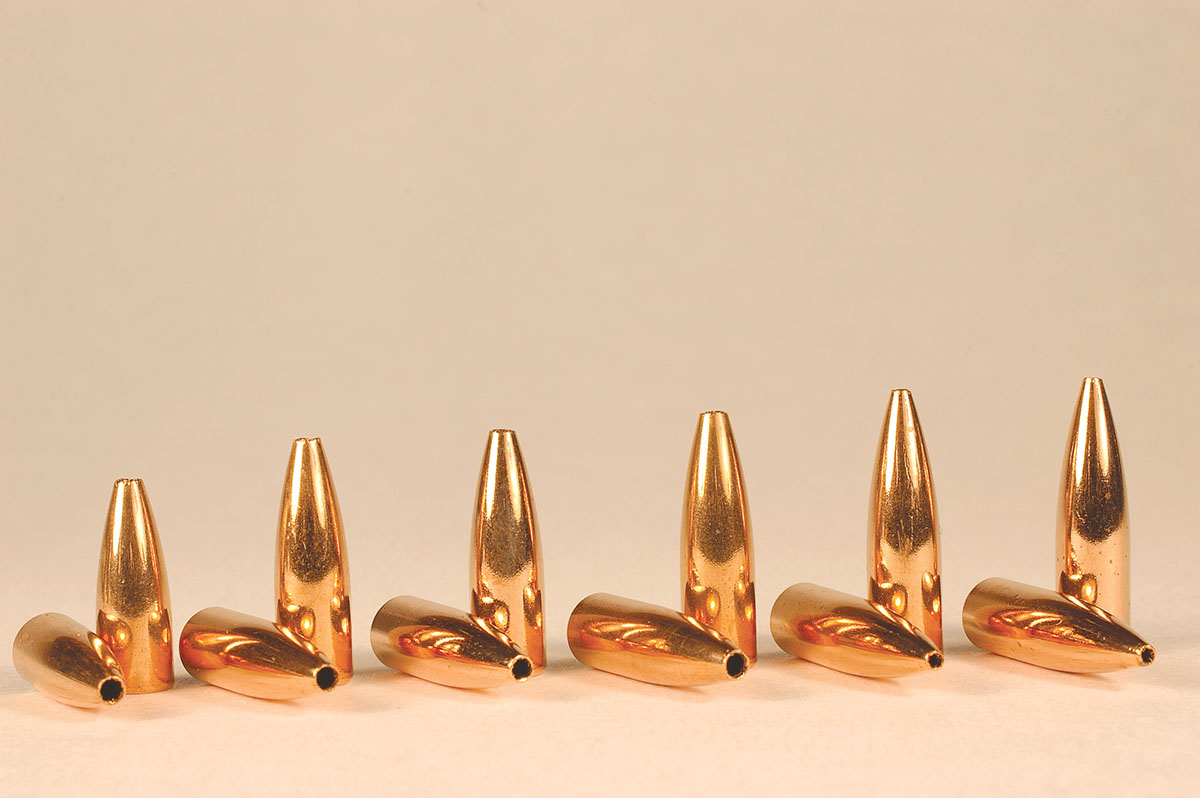
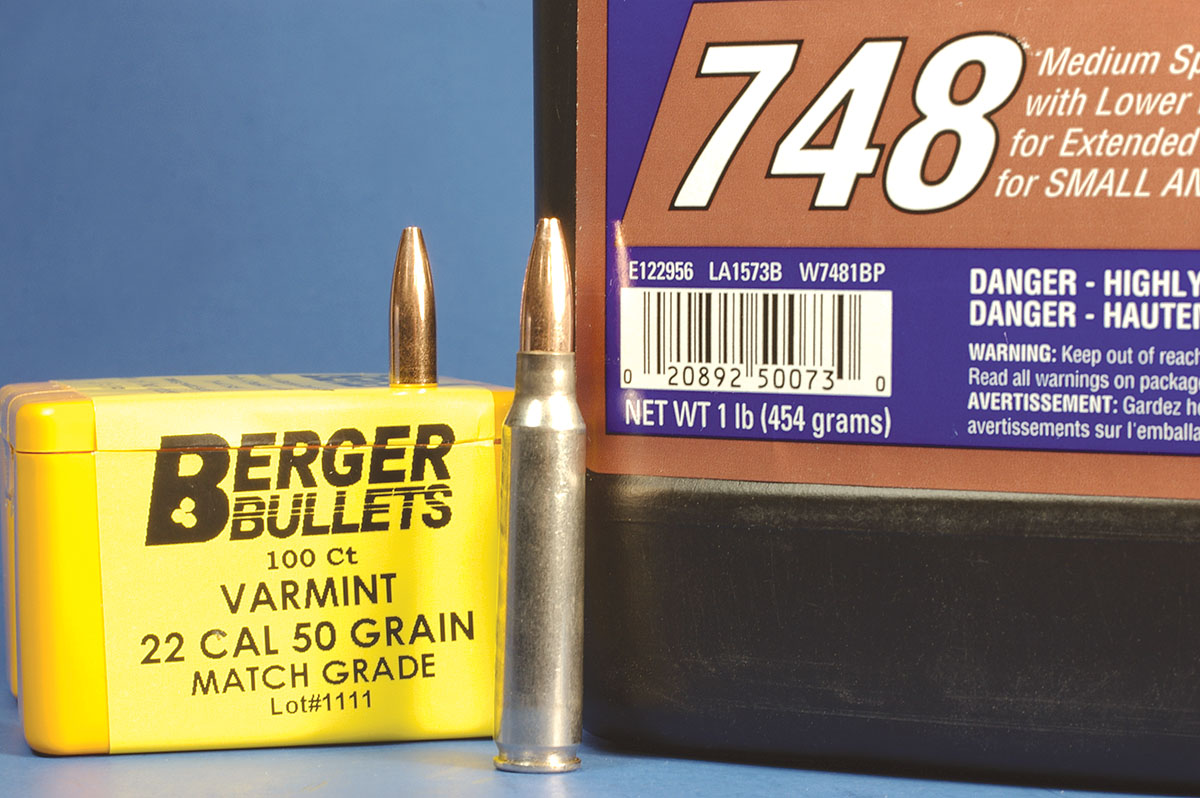
The bullet’s tangent ogive is also easier to make shoot accurately than a secant ogive. Yet, according to the Berger Bullets Reloading Manual, “A tangent ogive of the same length as a secant ogive will not perform as well in the wind; however these bullets are used primarily for 300 yards or less so this is of little concern.”
That started me thinking I could achieve the best of both worlds for my 223s by loading Berger Varmint bullets for general shooting and also Berger’s Boat Tail (BT) Target and Very Low Drag (VLD) Target bullets of various designs and weights for the ultimate in ballistic performance when shooting at extended – and then some – distances. So that’s what I did, with an eye on the coming summer gopher campaign.
Varmint Bullets
Berger lists a 223 Remington overall cartridge length of 2.26 inches for all its bullets from the short 40-grain FB Varmint to its 90-grain VLD Target bullet
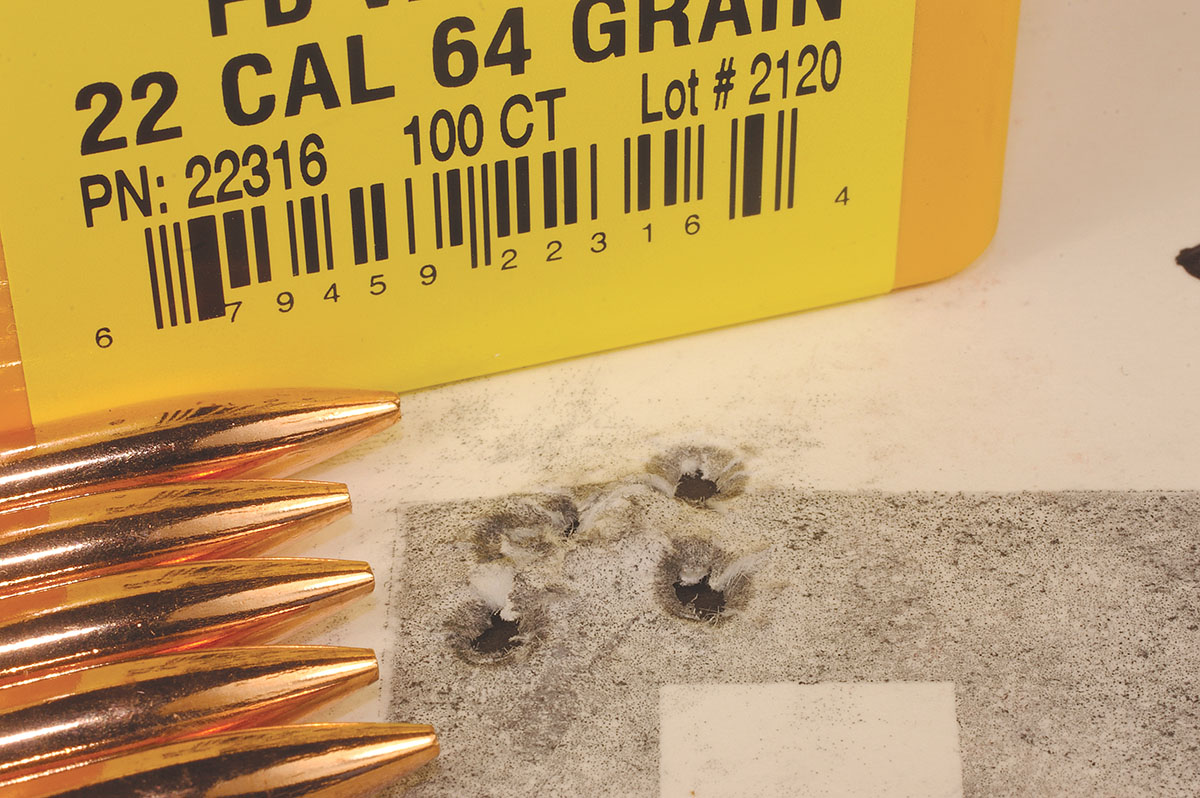
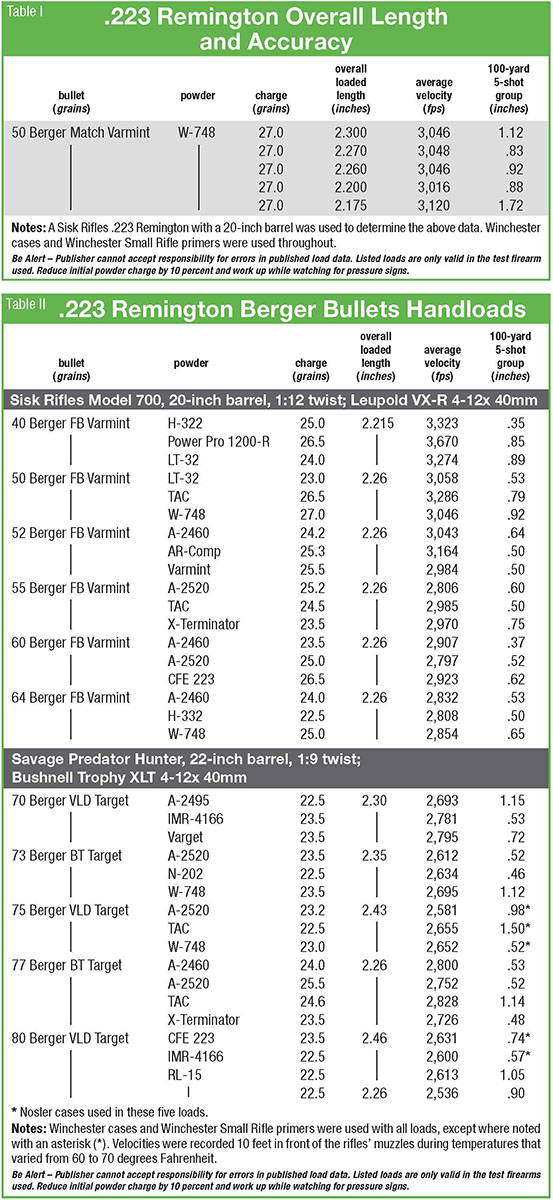
Different seating depths were tried with the 50-grain Varmint bullet before settling on a cartridge length of 2.26 inches. As the accompanying Table I – “223 Remington Overall Length and Accuracy” – shows, accuracy was poor, and velocity took a jump with a short cartridge length of 2.175 inches. Velocity and accuracy remained about the same with cartridge lengths between 2.20 and 2.27 inches. Group size grew with a long cartridge length of 2.30 inches.
Just as important, the bullets were seated straightly in case necks so they were centered with the rifle’s bore. This straightness was checked by placing the first five cartridges loaded with each bullet weight in a Hornady Lock-N-Load Concentricity Tool and turning the cartridges to make sure bullets were no more than .003 inch from straight in cases.
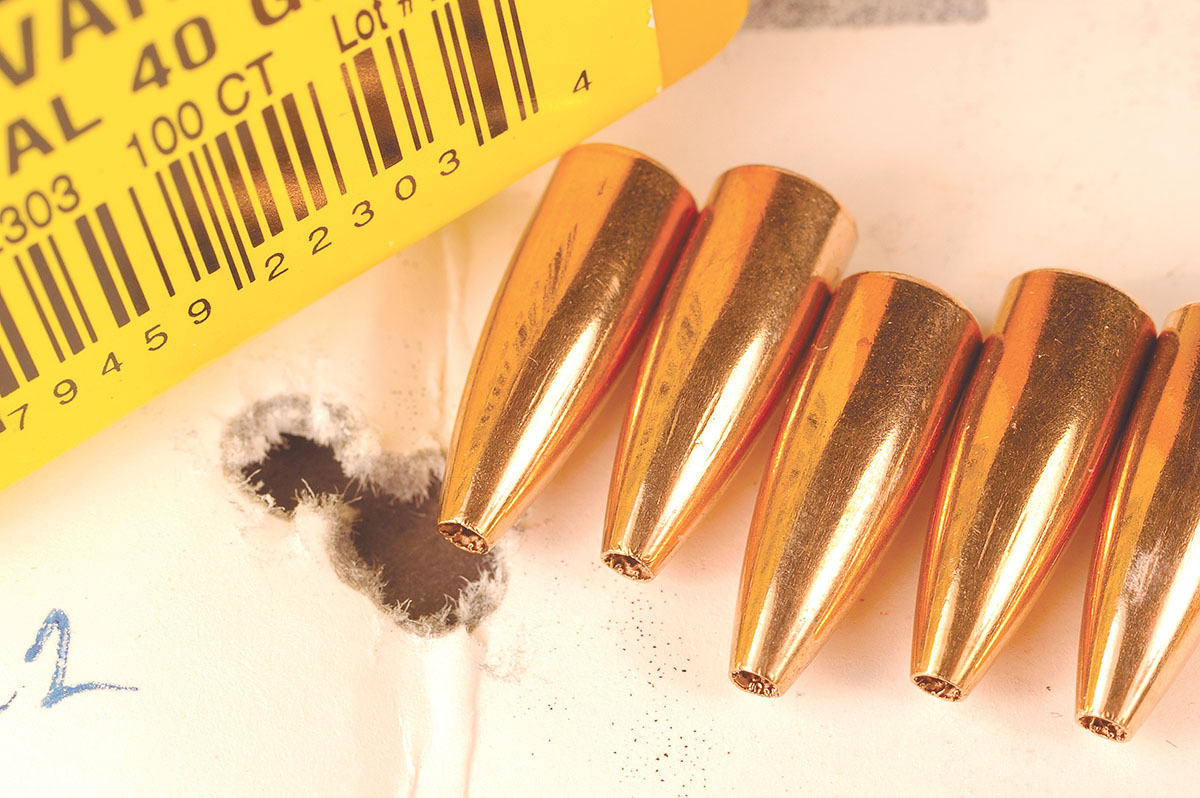
Some velocities of the various Varmint bullet weights were a bit slow from the 20-inch barrel of the Sisk rifle. For instance, the 40-grain bullet, loaded with H-322, clocked about 200 fps slower than the velocity listed from a 24-inch barrel in the Hodgdon Reloading Annual Manual. The velocity of that load from the 20-inch barrel was compared in rifles with 22- and 24-inch barrels, and it came up about 20 to 40 fps slower, respectively.
Taking the Sisk rifle for a walk last summer, I loaded a batch of 223s consisting of 40-grain Varmint bullets and 26.5 grains of Power Pro 1200-R. The rifle was sighted to place the bullets an inch above aim at 100 yards. Walking across pastures, I used shooting sticks to steady the rifle while shooting at ground squirrels out to 150 yards or so. I missed a few and hit a few. I got serious on the longer shots. The rifle was stock-still rested over gopher mounds. Out to 250 yards or so, I aimed right on the little rodents. If a bullet missed, it was to the side from a stutter on the trigger or wind gust. There was no doubt of a hit on the pop bottle-sized varmints. The bullets’ hollowpoints and thin jackets caused the bullets and gophers to tear apart on contact.
Target Bullets
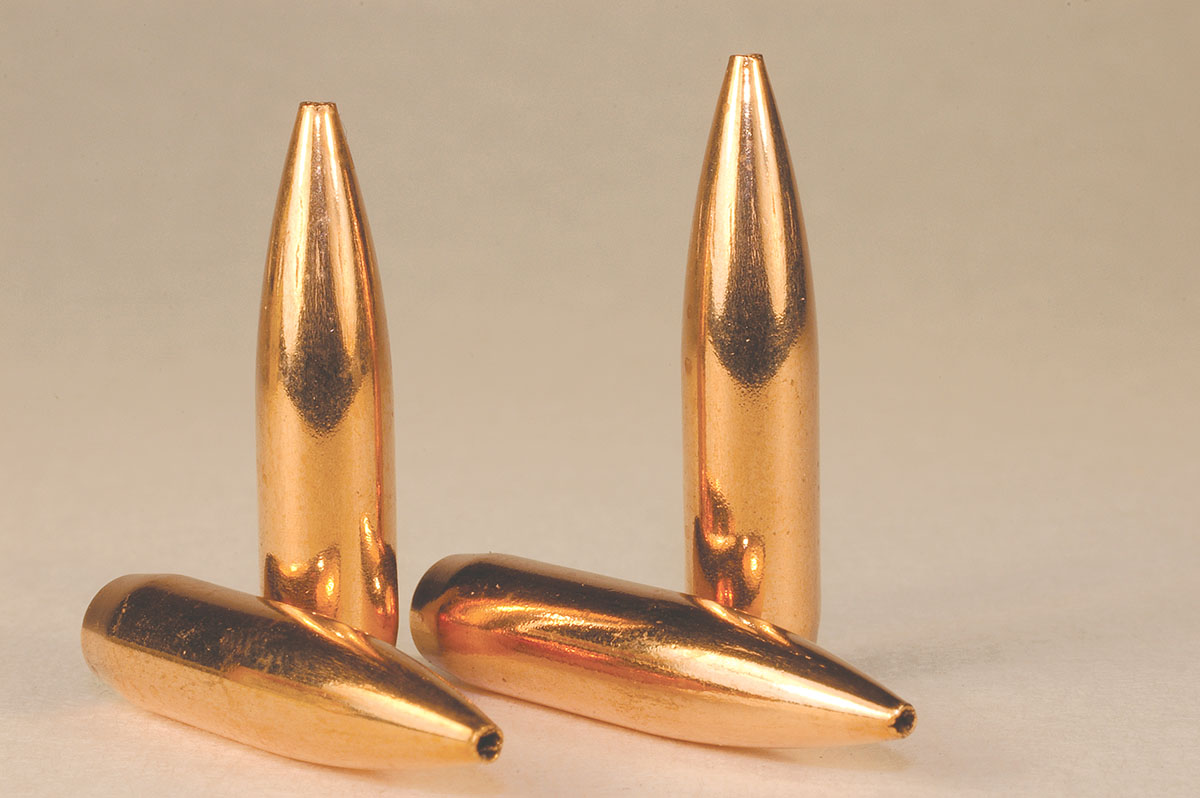
The Varmint bullets really started to drop and drift with the wind when shot at 300 yards. I wondered if one of Berger’s VLD Target bullets would reduce that drop and drift, as their boat-tail and secant ogive decrease air drag to better retain velocity and lessen wind drift.
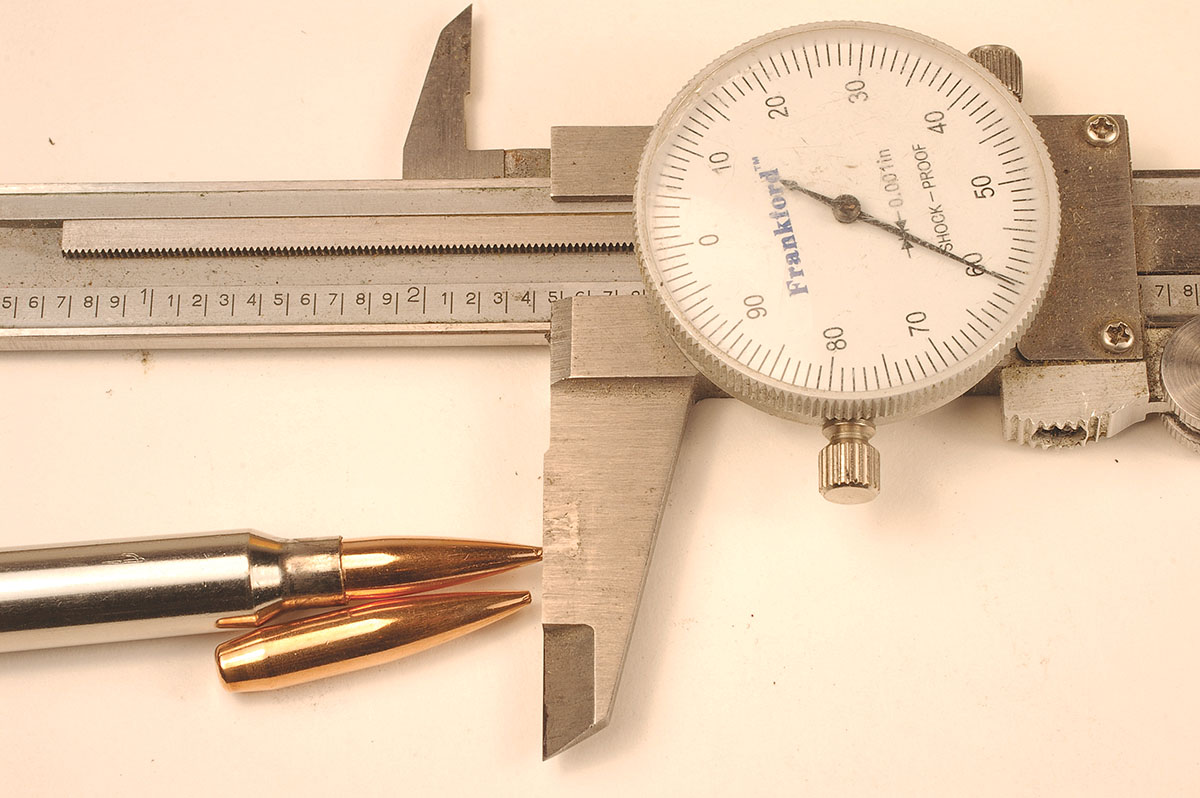
I fiddled some with seating depth for the VLD bullets in the Savage rifle used to shoot part of the loads in Table II. The rifle has been shot quite a lot over the years, and its throat is worn. For instance, a cartridge length of 2.496 inches put 80-grain VLD Target bullets in contact with the rifling lands, but the Savage’s magazine only takes cartridges up to 2.48 inches in length. So for that bullet, a cartridge length of 2.46 inches was settled upon. Even if the magazine would accept longer cartridges, it is not sensible to seat bullets into the rifling, as a bullet might remain stuck in the bore when a cartridge is withdrawn while unloading a rifle.
The long 80-grain VLD bullet was also seated at the shorter cartridge length of 2.26 inches listed in the Berger reloading manual. Loaded with Reloder 15 powder, group size was a touch tighter than the longer cartridge length. Velocity was about 80 fps slower. The 75-grain VLD Targets were set .66 inch from touching the lands in the Savage rifle. That’s a fairly long jump, yet the bullets shot well with W-748 powder.
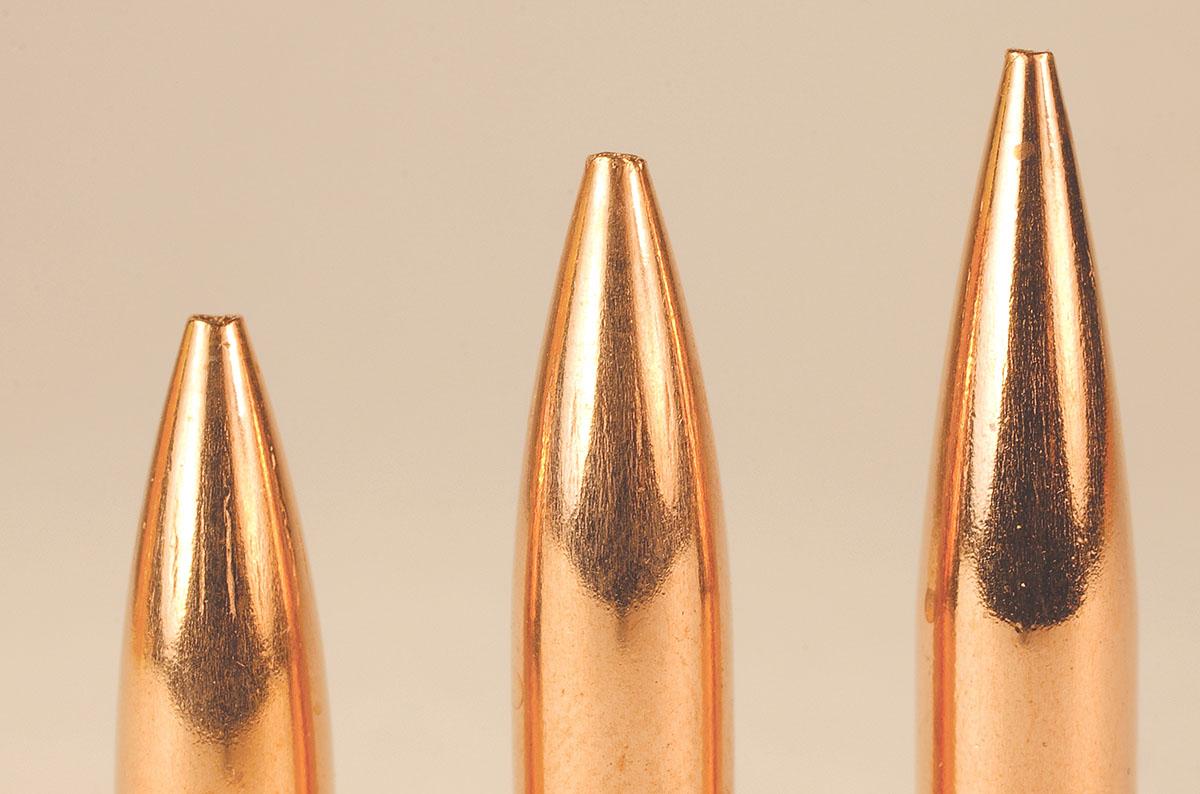
These 70-grain and heavier target bullets have a much higher ballistic coefficient, so they fly through the air with less resistance. When compared to 40- to 55-grain bullets, their velocity is much slower due to their heavier weight. At 400 yards, 75-grain VLD Target bullets drop about 6 inches more than blunt, 40-grain Varmint bullets starting out nearly 1,000 fps faster. The long, slender bullet drifts in the wind about half as much as the short bullet.
Marmots sun on the rocks along a creek bottom in a canyon in the mountains where I go to flee civilization. When the wind comes up in the afternoon, it sweeps down one wall of the canyon, across the creek bottom and on up the other side. Shots stretch from 100 to 400 yards, and the confounding wind makes a trial of where to hold the sights.
Last spring I loaded a big box of 223s with 70-grain VLD Target bullets and 23.5 grains of Varget for the Savage. Berger states its Target bullets are made with a thicker jacket than Varmint bullets to withstand enormous centrifugal force created by quick rifling twists coupled with high velocities. Walking into the canyon, I worried whether the Target bullets would expand all that well in marmots.
There was no need for concern. The first bullet knocked a marmot right off its rock perch at about 150 yards. I had to hold into the wind some as the rockchucks grew smarter and the distances longer. Connecting on one shot required aiming half a marmot length into the wind, much less correction than the lighter bullets would have demanded. I did have to aim a bit higher on the long shots, but that was a good trade.
With a choice of 40- to 80-grain Berger Varmint and Target bullets loaded in my 223 Remington rifles, the campaign in the varmint fields is going to be a good one this spring and summer.