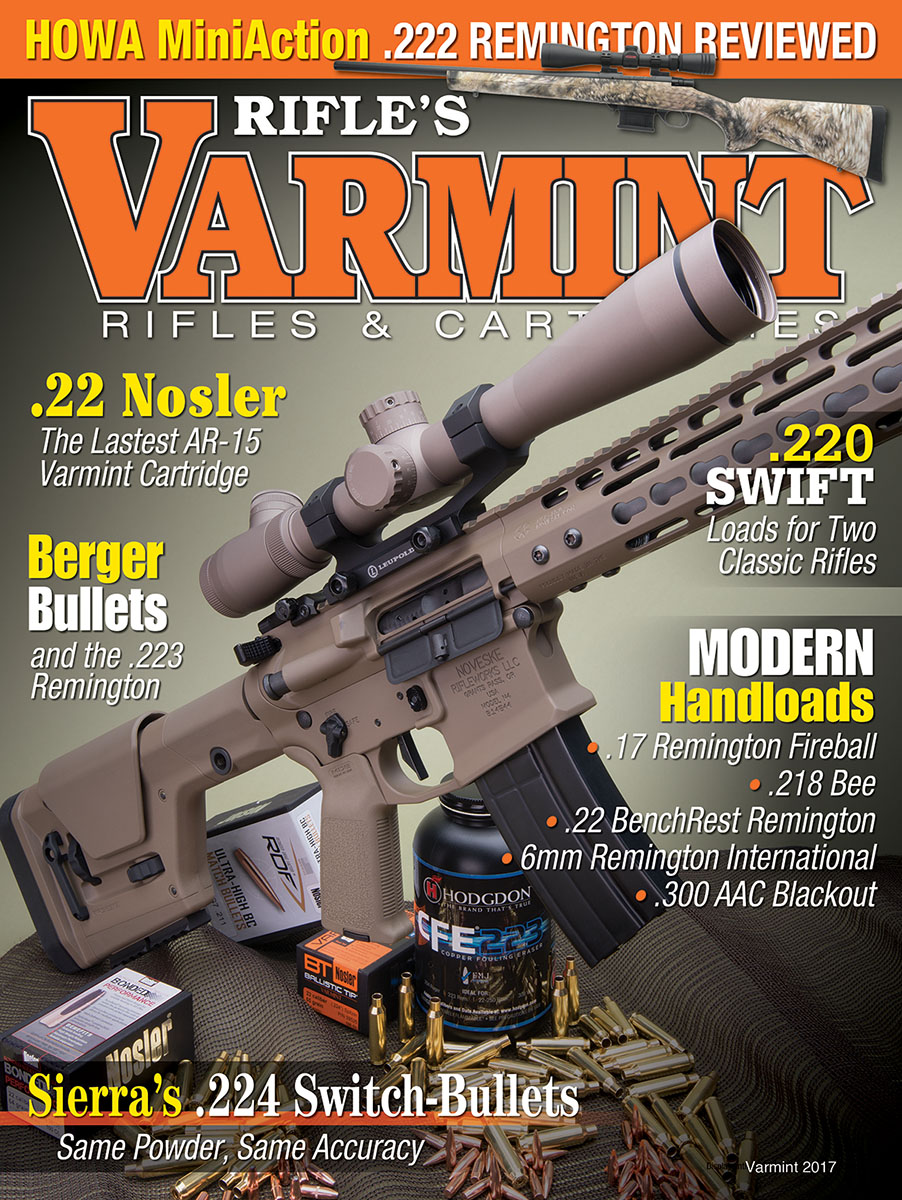
22 Nosler
Exclusive Loads for the Newest AR Cartridge
feature By: John Haviland | April, 17

The initial popularity of a cartridge depends on the availability of rifles, ammunition and cases for handloading. AR-15 uppers and rifles are already on the market or are planned from Colt, Noveske, Stoner, Barrett, X-Caliber, MidwayUSA, Olympic Arms, War Sport, North Tec Defense and Proof Research. Nosler is planning on chambering the cartridge in its Model 48 bolt action.
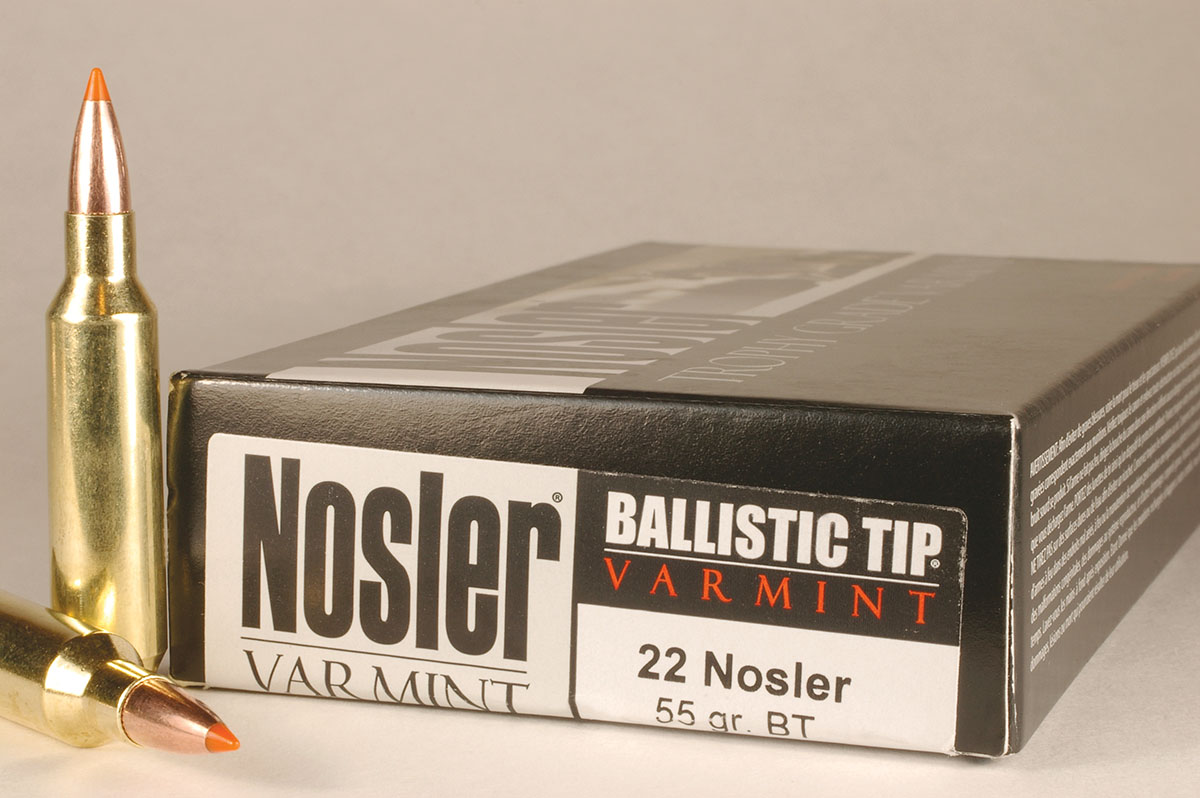
Nosler currently sells three loads for the 22 Nosler. Trophy Grade Varmint cartridges are loaded with 55-grain Ballistic Tip bullets at a stated velocity of 3,350 fps from an 18-inch barrel. Varmageddon cartridges are loaded with 62-grain HPBT Varmageddon bullets with a muzzle velocity of 3,100 fps, and Match Grade cartridges loaded with 77-grain Custom Competition bullets have a stated velocity of 2,950 fps from an 18-inch barrel. Nosler also sells 22 Nosler cases, and handloading data is available for four bullet weights at www.nosler.com.
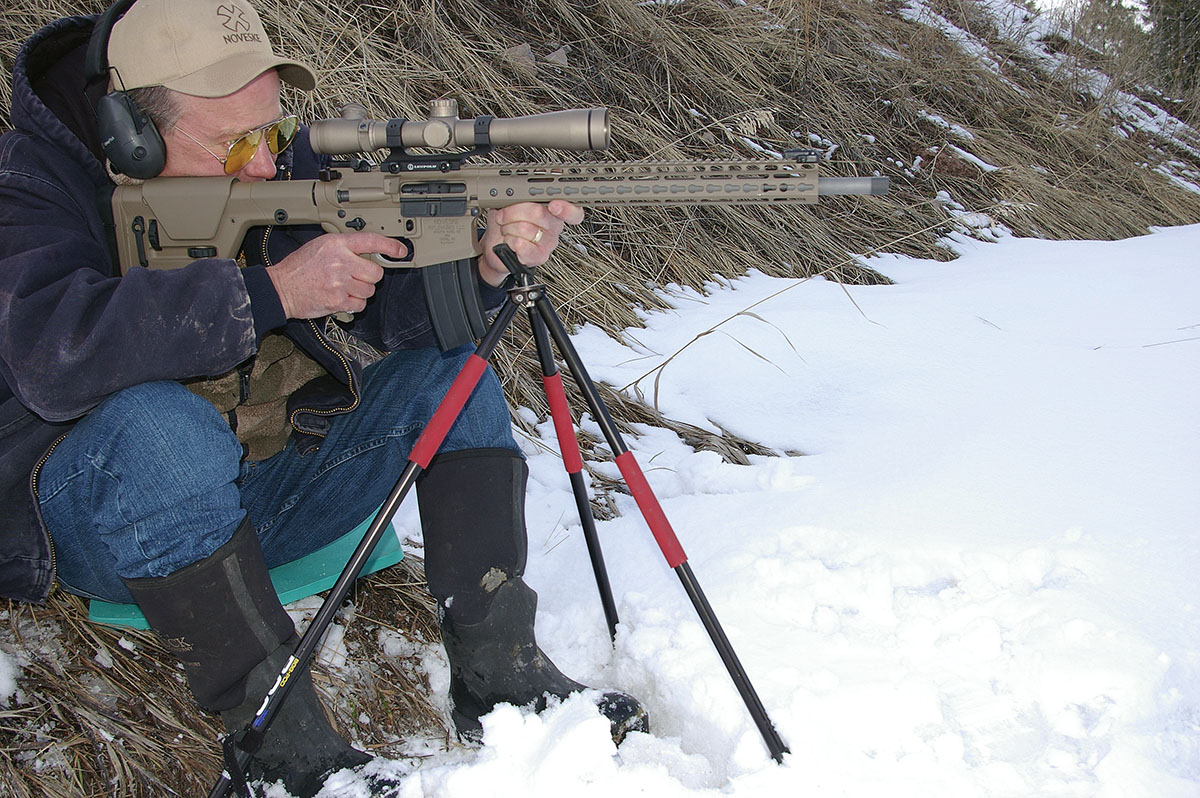
I’ve been shooting the 22 Nosler from a Noveske Rifleworks N4 AR Nosler Varmageddon rifle with an 18-inch barrel. The barrel has a one-in-8-inch rifling twist, which will stabilize bullets weighing up to 80 grains. Even from that short barrel, the cartridge certainly surpassed 223 Remington velocities and was not that far behind the 22-250 Remington.
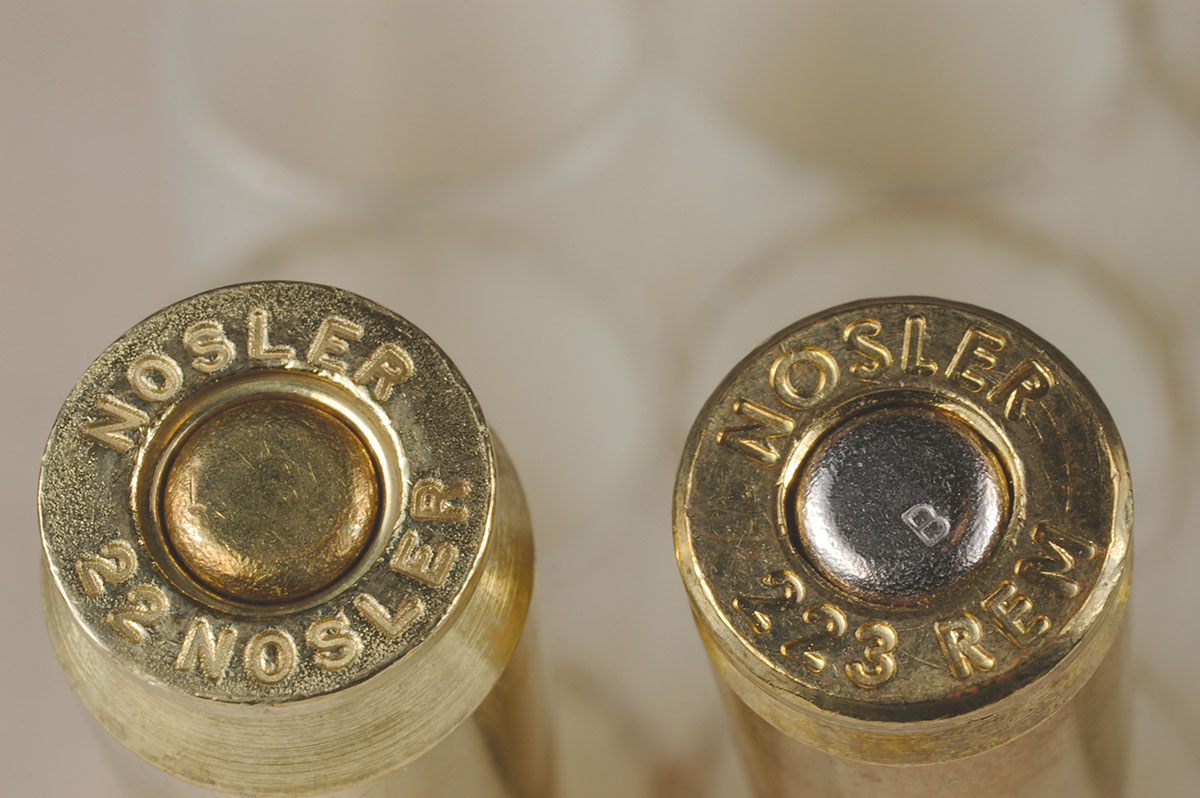
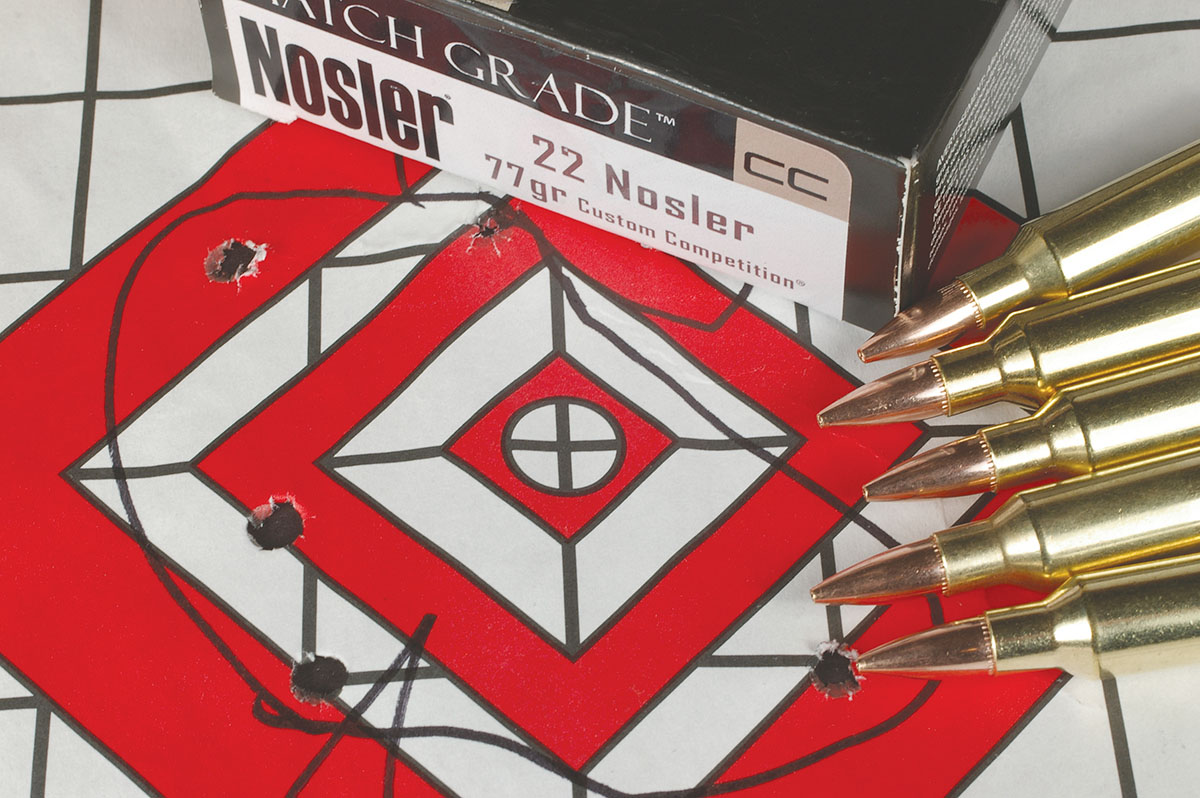
Nosler currently sells three factory loads for the 22 Nosler. First is the Trophy Grade Varmint loaded with 55-grain Ballistic Tip bullets. A second is Varmageddon cartridges loaded with 62-grain HPBT Varmageddon bullets, and the third is Match Grade cartridges loaded with 77-grain Custom Competition bullets. The Varmint and Match Grade cartridges are very uniform in construction. On a Hornady Lock-N-Load Ammunition Concentricity Tool, 10 Varmint cartridges had a bullet runout of .001 to .003 inch on the case neck and body. The tool’s dial gauge barely moved while measuring 10 Match Grade cartridges. For those who are interested, standard deviation of velocity was 19 fps for the Varmint cartridges and 25 fps for the Match Grade cartridges.
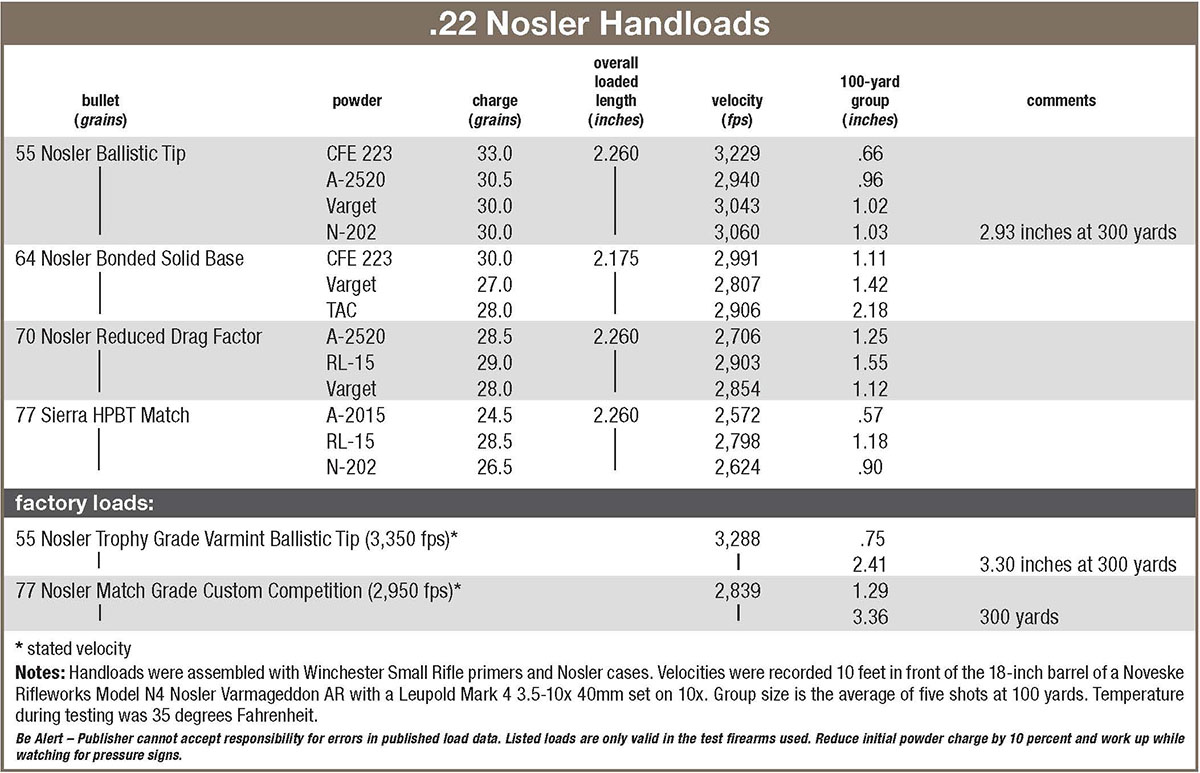
Velocities for the Varmint cartridges loaded with 55-grain Ballistic Tip bullets at 10 feet in front of the Noveske rifle’s 18-inch barrel averaged 3,288 fps – close to the 3,350 fps Nosler states for that length barrel. Match Grade cartridges firing 77-grain bullets turned in an average velocity of 2,839 fps, while Nosler states 2,950 fps.
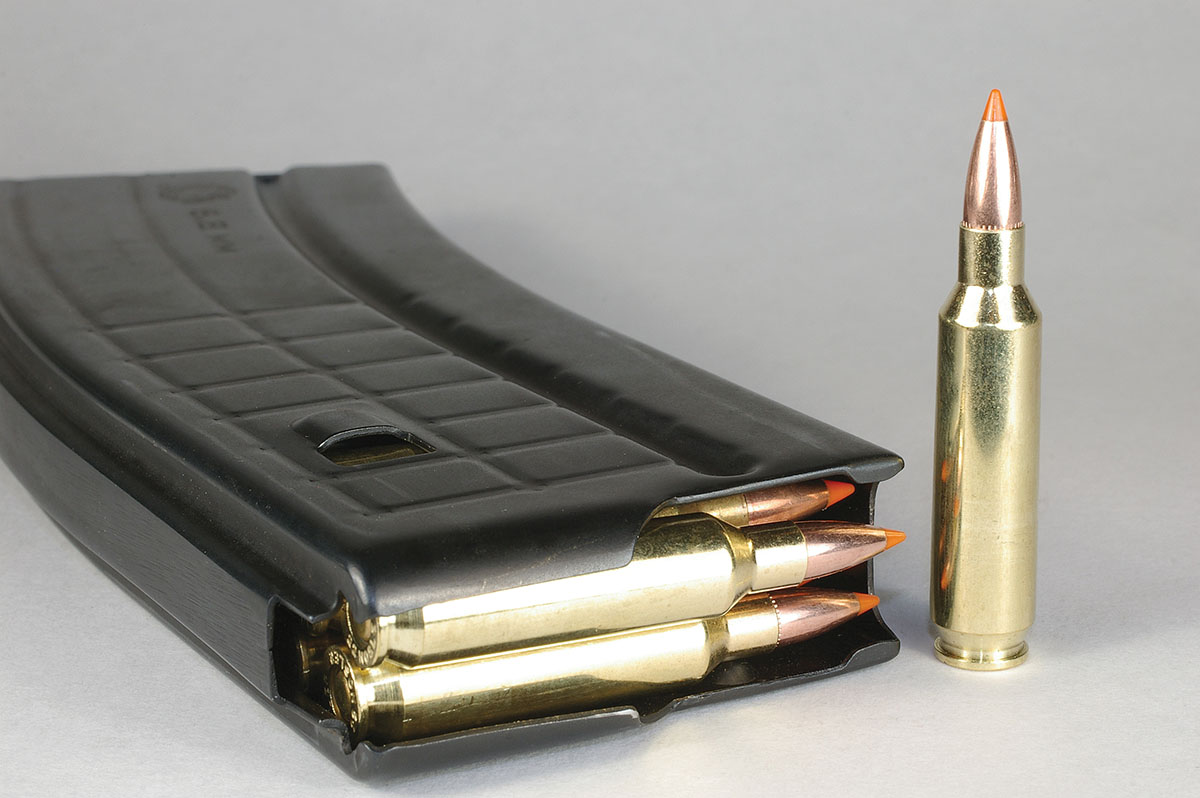
The Noveske rifle, together with a Leupold Mark 4 3.5-10x 40mm scope, weighed a candy bar less than 11 pounds. Due to the rifle’s recoil buffer and weight, recoil was next to nothing while shooting from a bench. Targets remained in view through the scope, and the crosshairs jumped only a bit off target.
The load data for the 22 Nosler listed on the company’s website was shot from a 24-inch barrel. The cartridge’s maximum average pressure is 55,000 pounds per square inch (psi), the same as the 223 Remington. With that relatively low maximum pressure, I loaded the maximum amounts of powder listed by Nosler.
Redding makes a complete lineup of reloading dies for the 22 Nosler, from its Premium full-length sizing and seating dies to bushing sizing dies. The standard full-length sizing die and seating die set were used. Seated bullets had a runout of .003 to .004 inch at the most, gauged on the Hornady concentricity tool. New cases measured 1.745 inches in length. After firing one time, they measured 1.743 inches and stretched from 1.745 to 1.746 inches after full-length sizing. Maximum case length is 1.760 inches. Case body taper of only .020 inch and a 30-degree neck are mostly responsible for that minimal stretch.
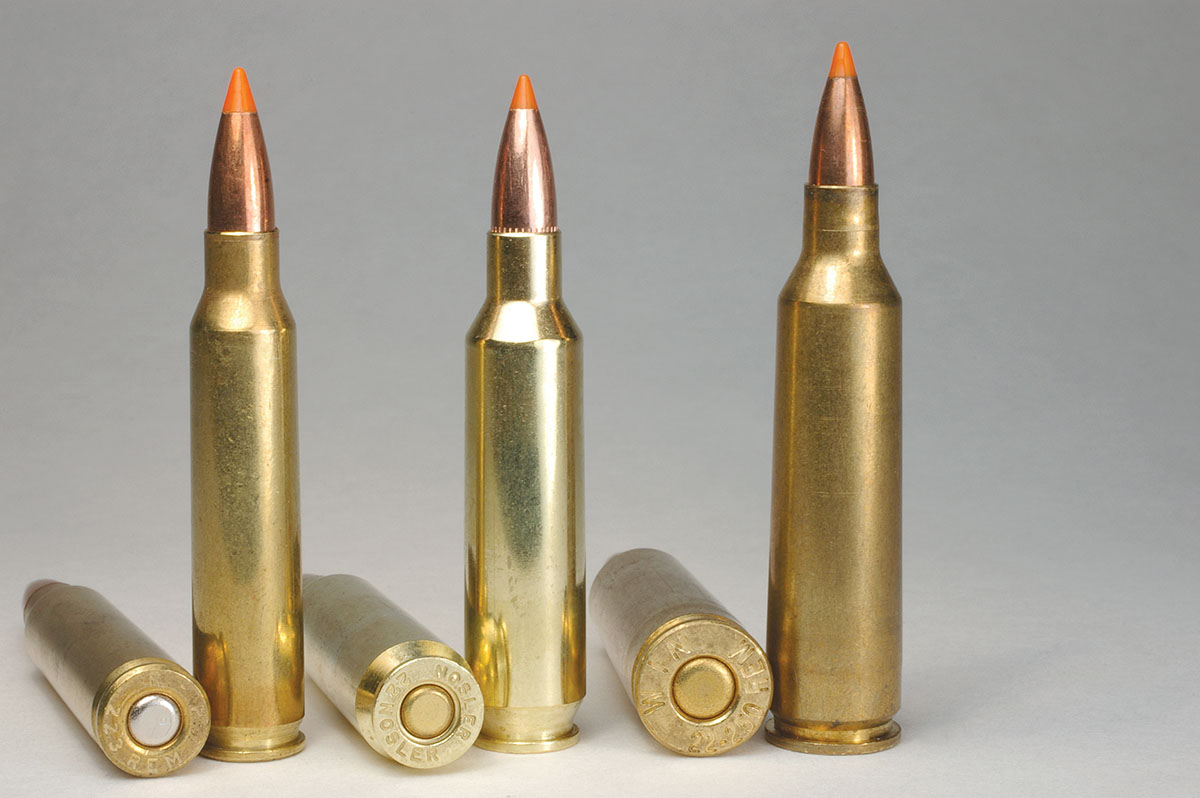
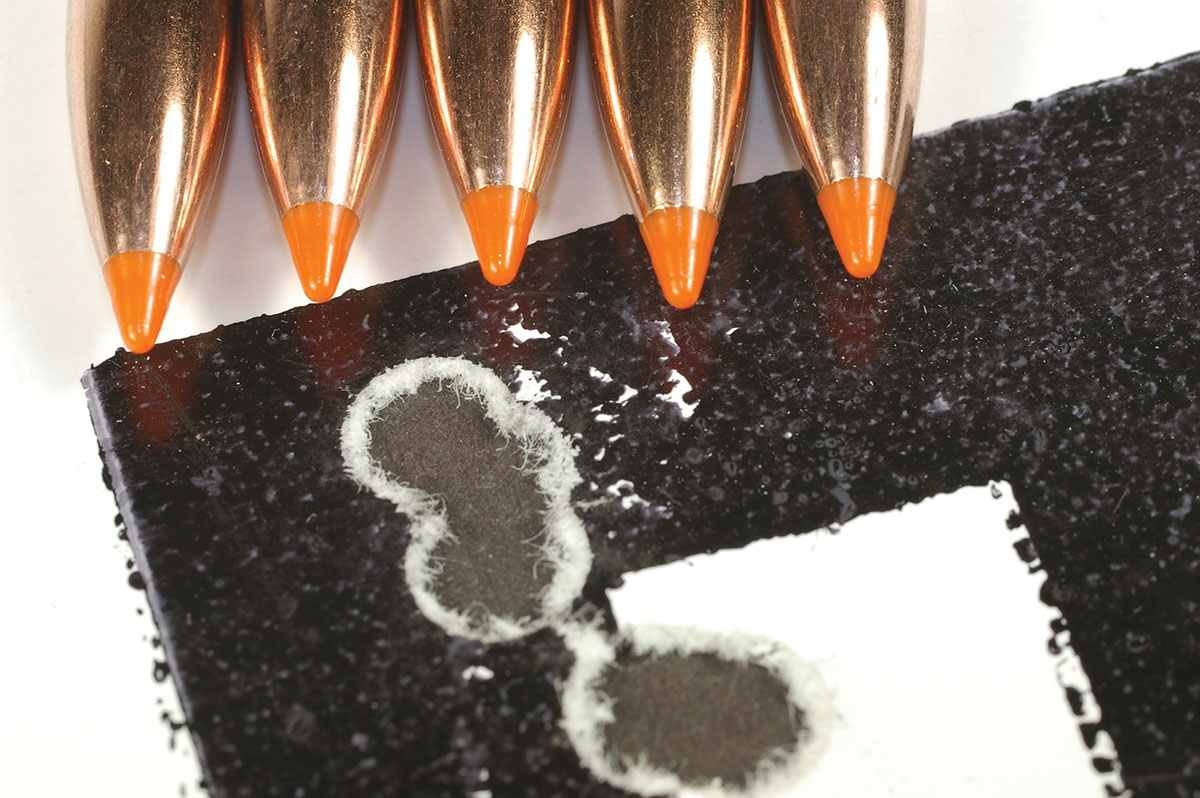
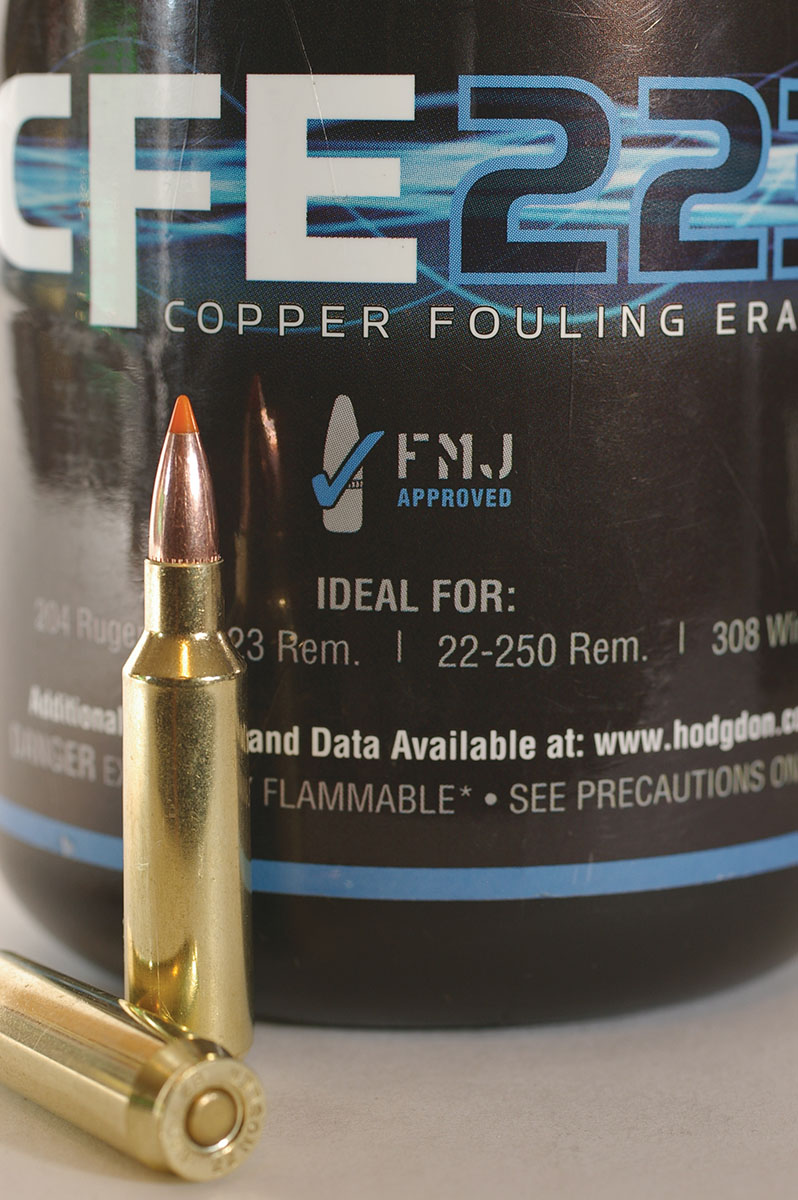
The 22 Nosler fairly well splits the difference between the 223 and 22-250 Remingtons. Consulting Nosler load data (shot with 24-inch barrels), the 22 Nosler fires 55-grain bullets at a top velocity of 3,516 fps with 33.0 grains of CFE 223. The 22-250 shoots the same weight bullet at 3,803 fps with 39.0 grains of CFE 223. So for 6.0 additional grains of powder, the 22-250 Remington gains about 300 fps over the 22 Nosler. That’s a good trade. On the slower side, the 223 Remington shoots 55-grain bullets at a top velocity of 3,292 fps burning 28.0 grains of CFE 223. So the 22 Nosler’s 5.0 additional grains of powder give it a step up of 224 fps over the 223. That’s also a fair trade.
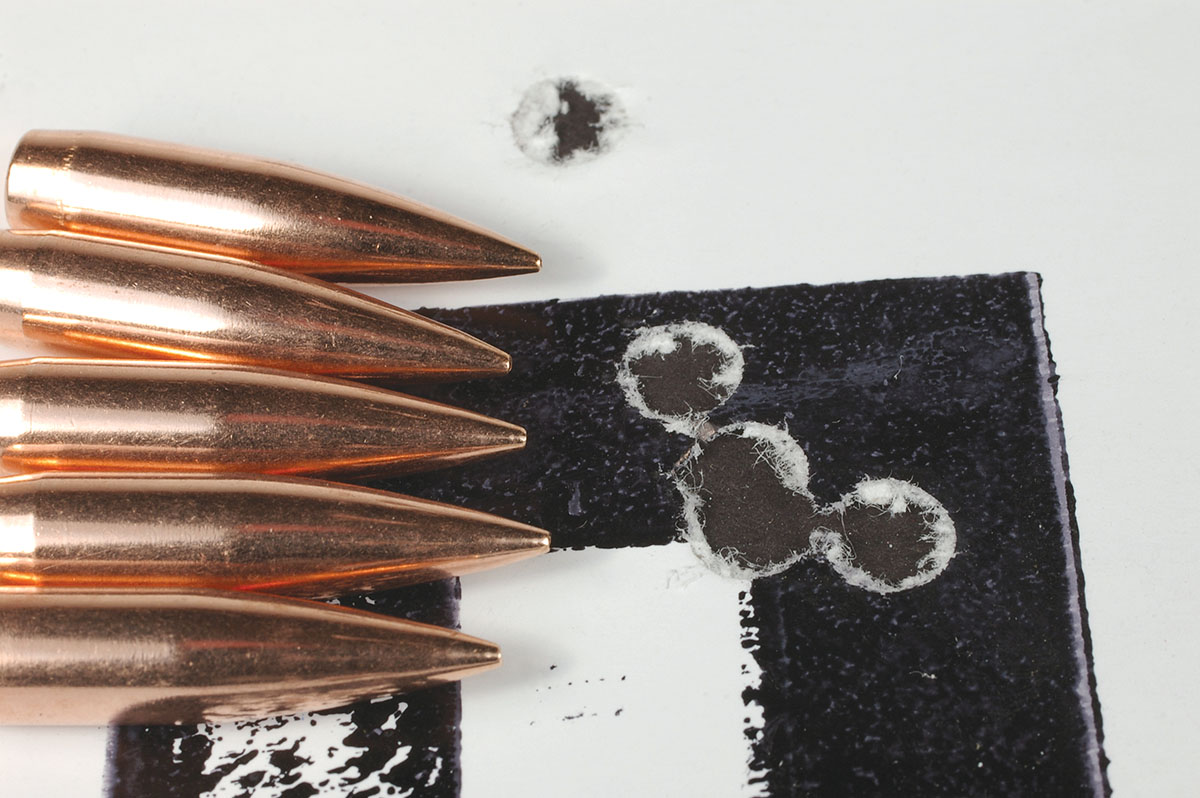
The 22 Nosler’s niche is in an AR rifle. Those rifles are usually made with 16- to 20-inch barrels to make them less cumbersome. From the Noveske’s 18-inch barrel, Nosler 77-grain Custom Competition bullets at 2,839 fps has it all over the 223 Remington shooting bullets of similar weight. From a 223 with a 22-inch barrel, Hornady Black 223 cartridges loaded with 75-grain BTHP bullets left the muzzle at 2,643 fps. From the same barrel, Sig Sauer Elite Performance 223s loaded with 77-grain bullets registered 2,445 fps. Handloaded 223s narrow the gap, at least somewhat. From a 223 Remington with a 22-inch barrel, the fastest I’ve been able to fire 77-grain bullets is 2,711 fps and 3,255 fps for 55-grain bullets. Taking into account the 223’s 4-inch longer barrel, the 22 Nosler is likely to add another 100 fps.
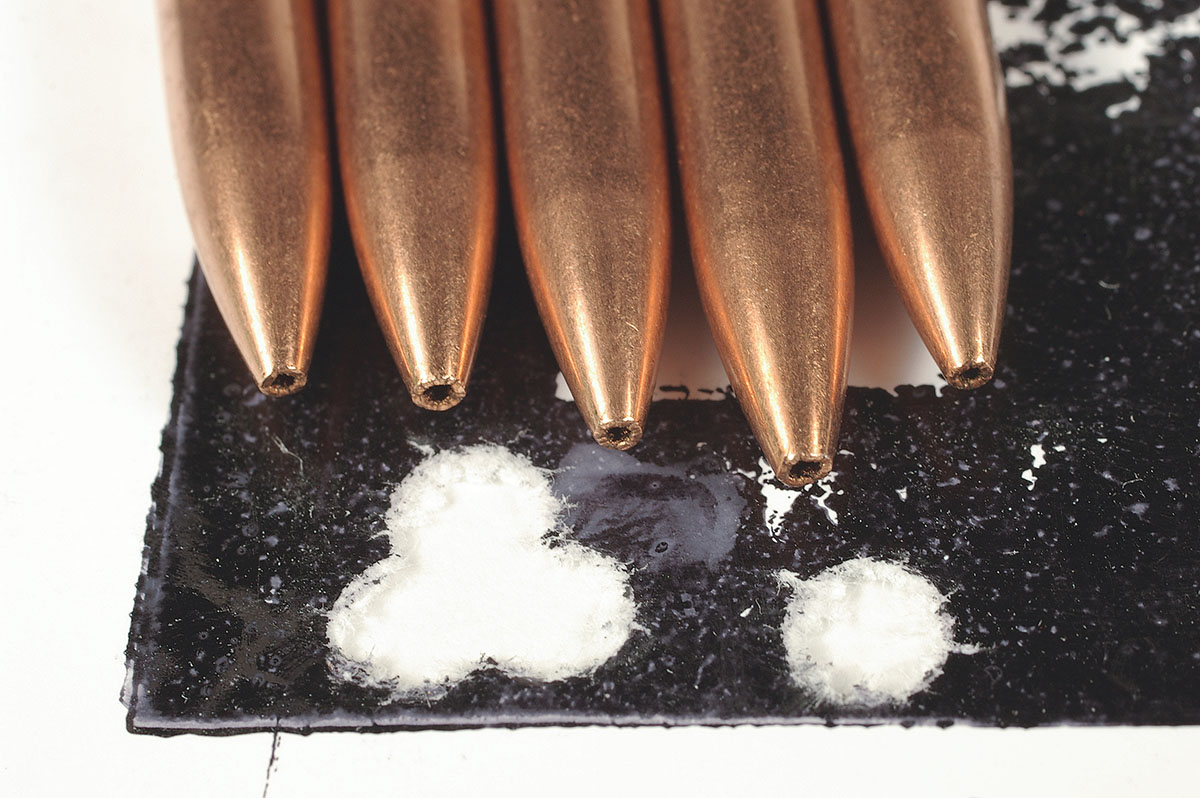
The 22 Nosler’s relatively low maximum average pressure (55,000 psi) ensures the cartridge is suitable for AR rifles. As it is, the 22 Nosler is a good cartridge. Nosler factory cartridges certainly best the everyday 223 Remington. With handloads, it burns only a few more grains of the same powders as the 223 in trade for a considerable increase in velocity. The Noveske rifle certainly proved it’s an accurate cartridge.