300 AAC Blackout
Varmint Bullets for ARs and Bolt Rifles
feature By: Richard Mann | April, 17
In 2011 the Sporting Arms and Ammunition Manufacturers’ Institute (SAAMI) approved a new cartridge called the 300 Blackout at an operating pressure of 55,000 psi. The request was submitted by Advanced Armament Corporation (AAC), a division of Remington. The 300 Blackout was essentially a SAAMI-approved version of the 300 Whisper, and AAC began marketing the cartridge as the “next best thing” for the AR-15.
The Blackout took the shooting world by storm. This was partly due to the fact it offered the conversion of an AR-15 223 Remington to a .30-caliber rifle with nothing but a barrel change. It was also partly due to a newfound interest in suppressed firearms. It is likely, however, that the 300 Blackout gained lots of followers and found no shortage of appeal solely due to its cool-sounding name. Had it been named the 7.62x35mm – which is exactly what it is – I doubt it would have become so popular.
Regardless, the 300 Blackout has remained one of the hottest-selling cartridges since its commercial introduction. Shooters are turning to it for its low noise, subsonic performance and as a .30-caliber AR alternative for hunting big game. (A handful of states do not allow the use of the 223 Remington for big-game hunting.) This popularity has led to an ever-growing selection of factory ammunition, but the loads available are mostly for subsonic shooting, target practice or pig- and deer-sized game.
.30-Caliber Varmint Bullets
Thirty-caliber rifles such as the 30-06, 300 Savage and 308 Winchester are, from time to time, used on varmints and predators. Though factory varmint and predator loads for these three cartridges are almost nonexistent, there is a reasonably good selection of component bullets suited to the job. None of this is to suggest that common .30-caliber, high-velocity rifle loads will not kill a rock chuck or coyote. It’s just that serious varmint hunters can handload these cartridges with bullets that do not impart undo recoil and will provide violent tissue destruction on small, thin-skinned critters.
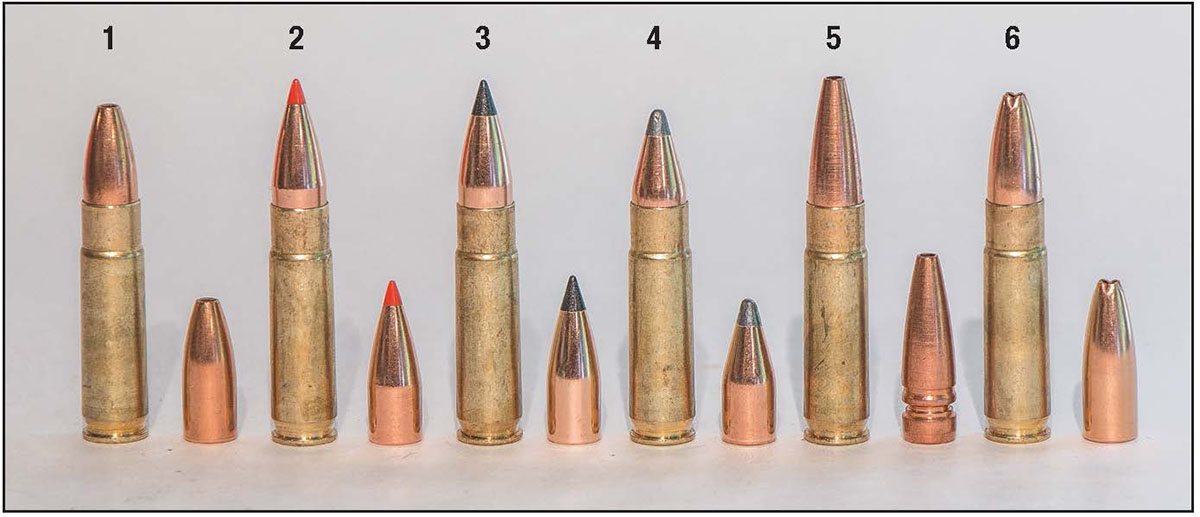
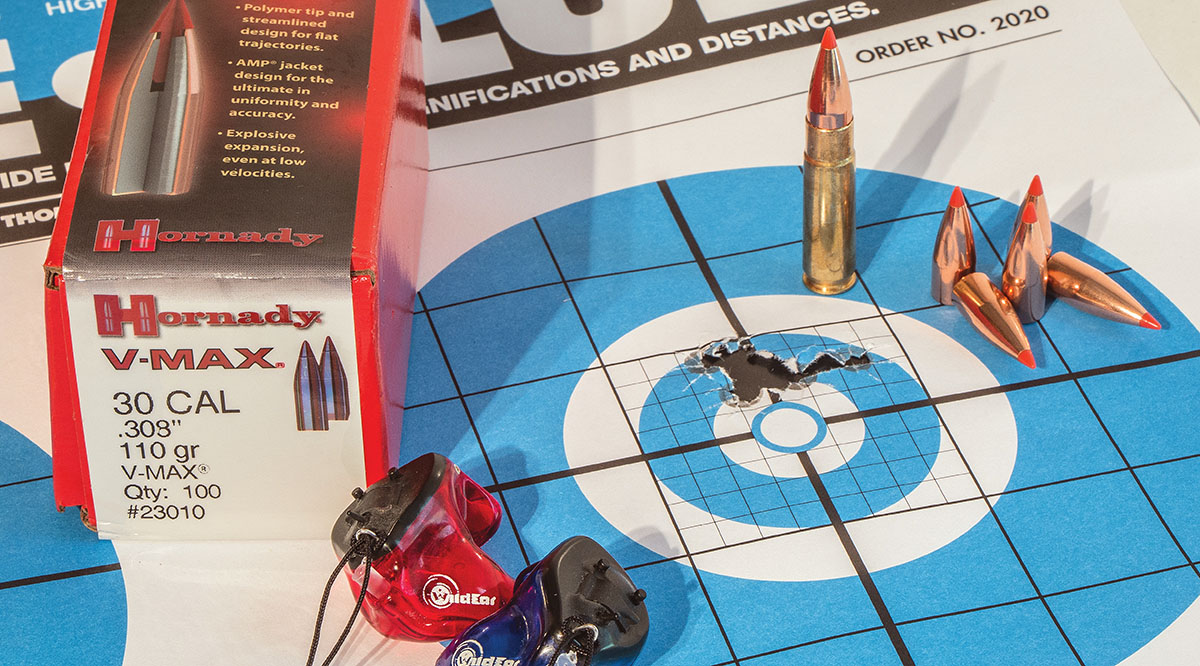
Fortunately, in addition to some of the old standby .30-caliber varmint bullets, new frangible bullets specifically engineered to work at 300 Blackout velocities are becoming available. Nosler is now offering a 110-grain Varmageddon bullet as a reloading component. The same bullet is offered in 300 Blackout Varmageddon factory ammunition. Sierra Bullets is offering a new .30-caliber, 135-grain Varminter HP bullet. Surprisingly, Sierra engineered this bullet at the request of hog hunters who wanted a highly volatile 300 Blackout load for dropping hogs in their tracks. At close to moderate ranges, it will also deliver shocking results to varmint- and predator-sized critters.
Another interesting bullet that might be best described as a shrapnel delivery device is the Chaos bullet from Lehigh Defense. Lehigh Defense is a little-known bullet and ammunition company located in Pennsylvania. It has been making high-end machined bullets for special military applications for some time. The Chaos bullet is all brass and creates hydraulically driven explosion-like expansion inside game.
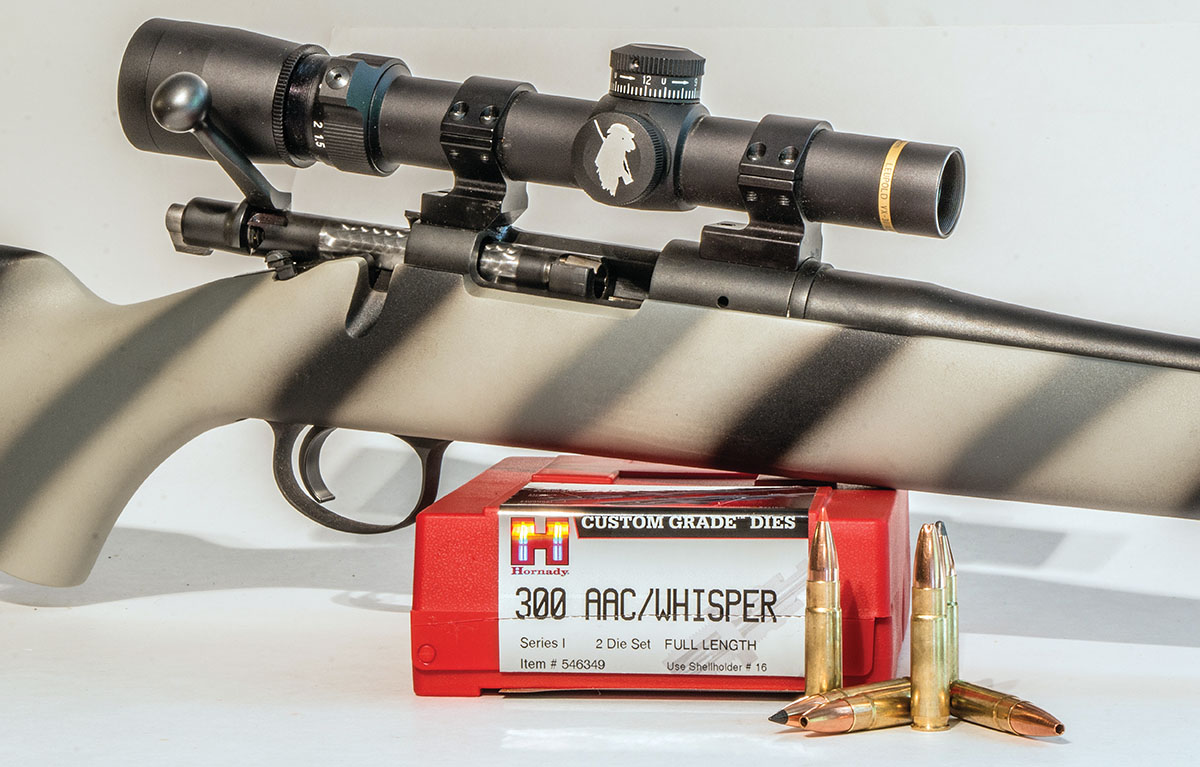
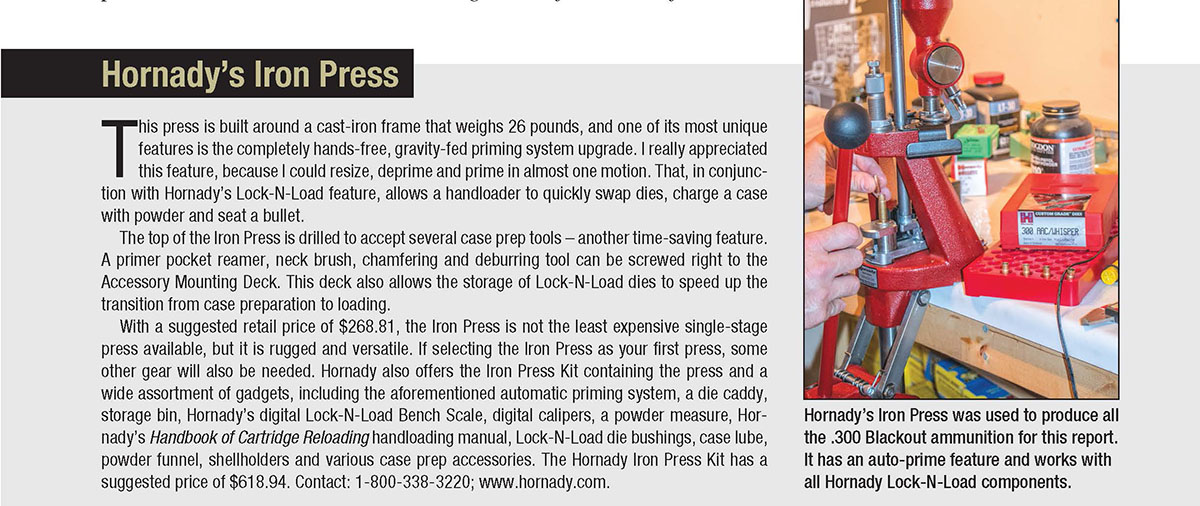
Though not as devoted to the Blackout cartridge or the AR as some shooters, the cartridge does appeal to me, even more so now after handling the new 300 Blackout Pathfinder bolt-action rifle from New Ultra Light Arms (NULA). This lightweight rig is perfectly suited to eastern whitetail hunting, and with the threaded muzzle, it would also be at home silently whacking feral hogs. Interested in seeing how well I could load this rifle to offer dual service for large and small game, a collection of new and old lightweight .30-caliber bullets were handloaded with a new Hornady Iron Press (see sidebar).
Powders and a Plan
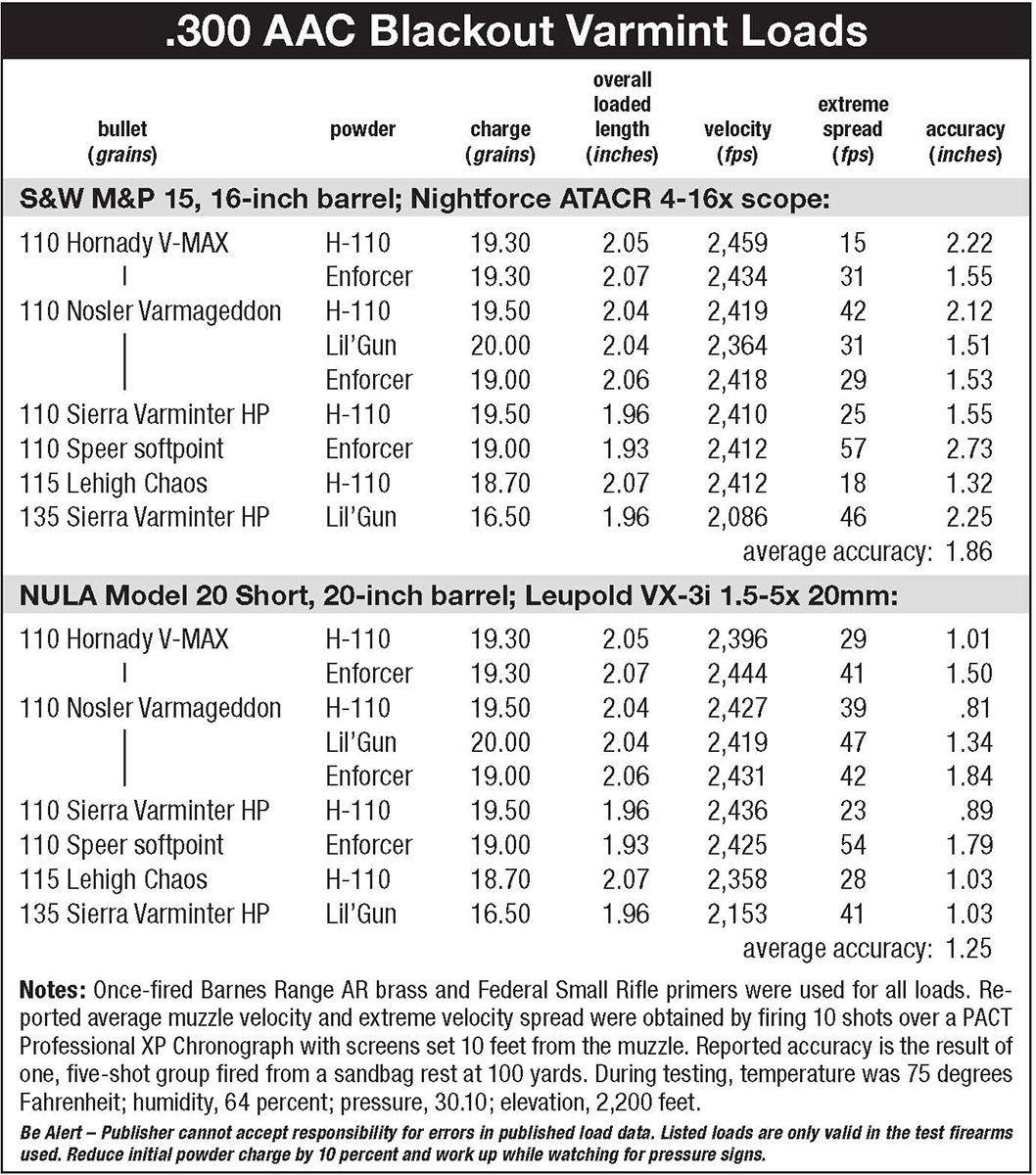
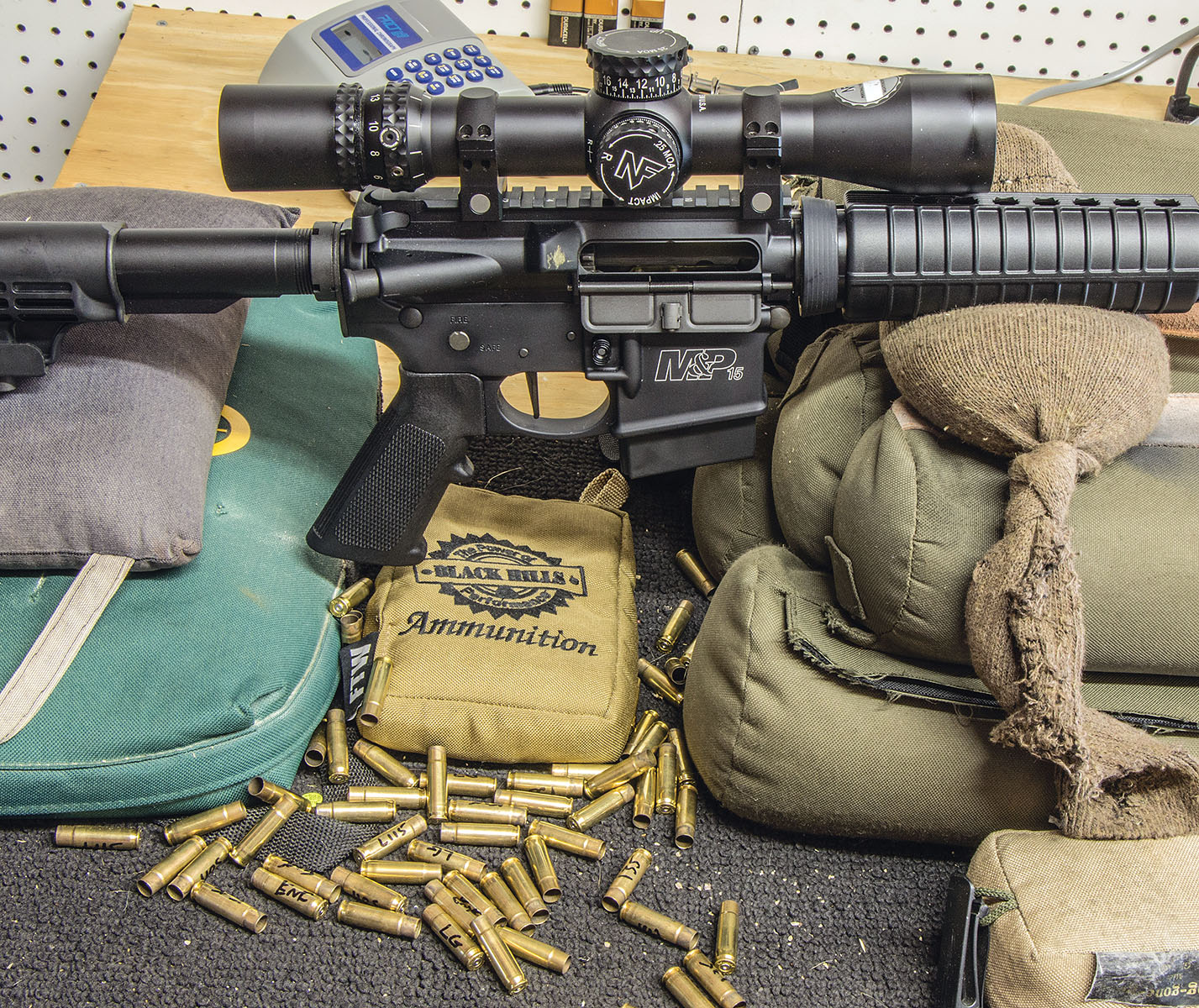
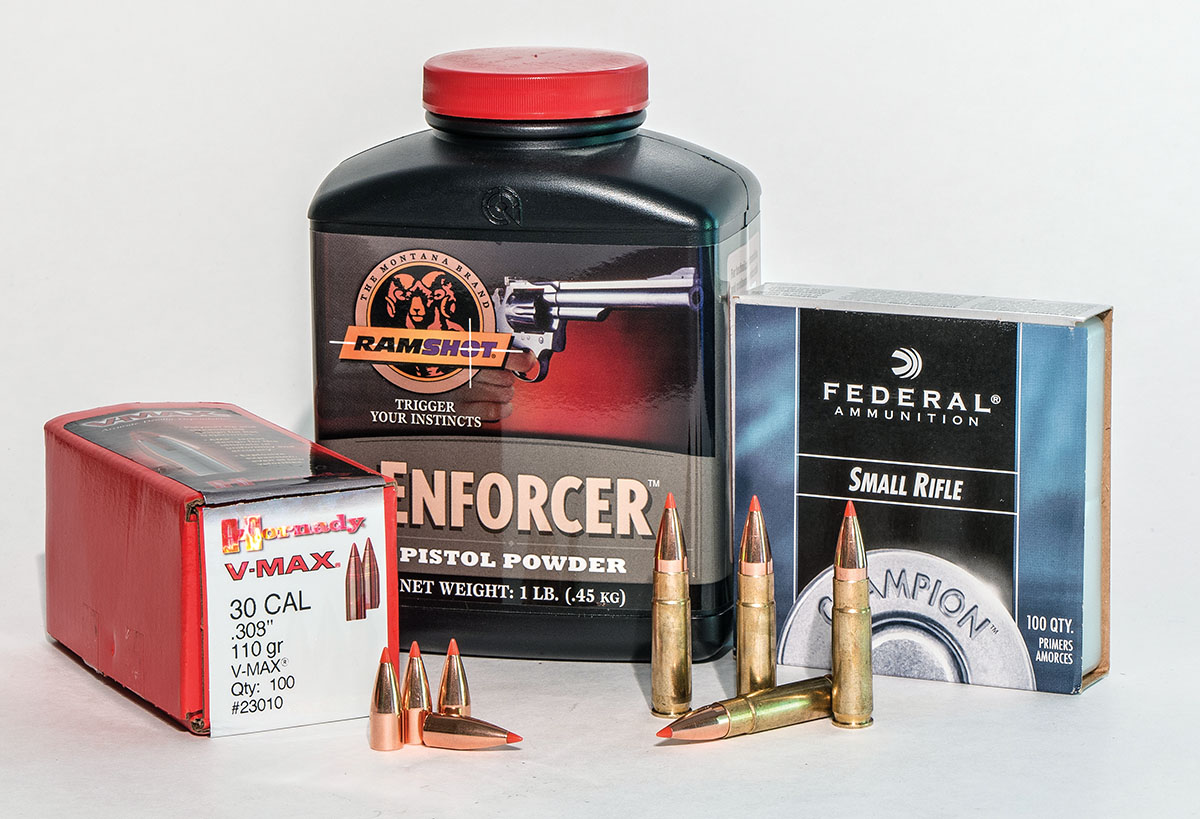
I didn’t get creative with powder selection. Instead, I followed load manual suggestions from Ramshot and Hodgdon; there is plenty of data out there for the 300 Blackout. I also did not try to push the pressure envelope. After all, if velocity is required, any of the older .30-caliber cartridges make more sense. Three powders were ultimately decided upon: Hodgdon H-110, Hodgdon Lil’Gun and Ramshot Enforcer. All loads were assembled with Federal Small Rifle primers. Also required were loads that would be suitable for both the bolt-action and a semiautomatic rifle, so I used the NULA bolt rifle and an S&W M&P 15 300 Blackout. With these two rifles, a bench full of varied lightweight bullets and several pounds of gunpowder, I hoped to discover several things.
First, I wanted to see if loads generated for the bolt-action rifle would provide serviceable accuracy and total reliability in the AR. Second, I wanted to know if handloads for the 300 Blackout using lightweight frangible bullets would offer enough accuracy for varmint or predator hunting out to around 300 yards. Finally, I was curious to see if there were any special considerations that needed to be addressed when loading lightweight bullets in the 300 Blackout.
Experience has proven that the 300 Blackout is easy to load for; cases require no special prep work. All the loads listed in the accompanying table were assembled using once-fired Barnes brass from its Range AR ammunition line. The brass was then sized using a Hornady sizing die with the neck expander ball removed. Primers were punched with a Frankford Arsenal depriming tool, and the cases were then bathed in an RCBS sonic cleaner and dried in a Hornady case dryer. The auto prime feature on the new Hornady Iron Press then came into play. I’d prime one case, charge it with powder and seat the bullet. The procedure was fast and simple. It was easy to overrun the disperser speed of my RCBS ChargeMaster 1500. That was okay. It gave me time to chamfer the inside and outside of the case necks between rounds.
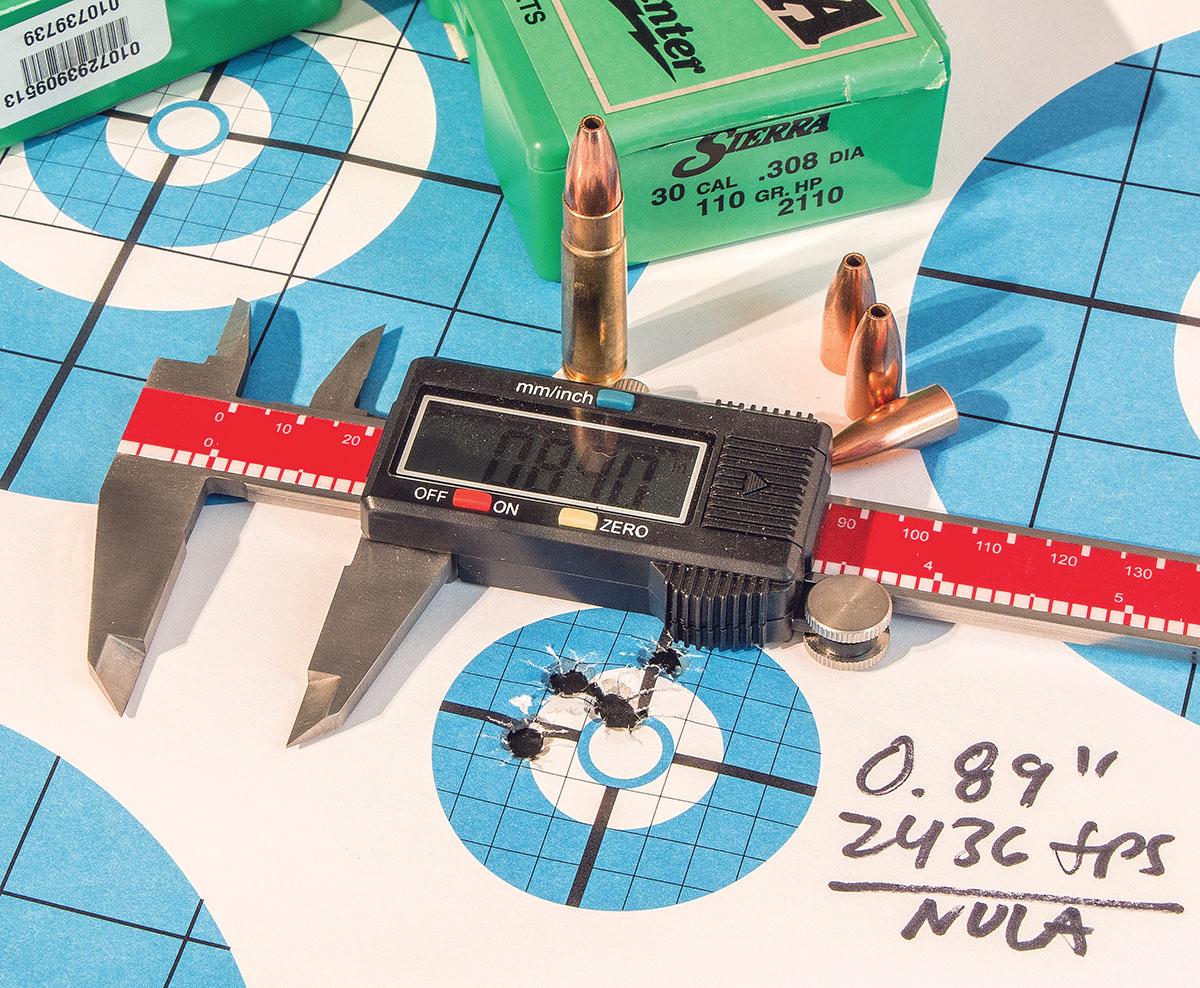
At 100 yards, velocity consistency does not always guarantee on-target precision, though in the case of these 300 Blackouts, there was correlation. Comparing the results of both rifles and the three different powders used, the H-110 loads were 11 percent more accurate than the loads using Lil’Gun and 25 percent more accurate than the loads utilizing Ramshot Enforcer.
I had heard from several sources that H-110 is the supersonic powder of choice for the 300 Blackout, and while this test is limited in scope, the evidence seems sufficient to support the claims. Further verification of this conclusion is the fact that the most accurate groups fired with each rifle were done so with loads using H-110 and different bullets. The lowest single velocity deviation numbers with both rifles were provided with H-110 as well – in this case with the same and different bullets.
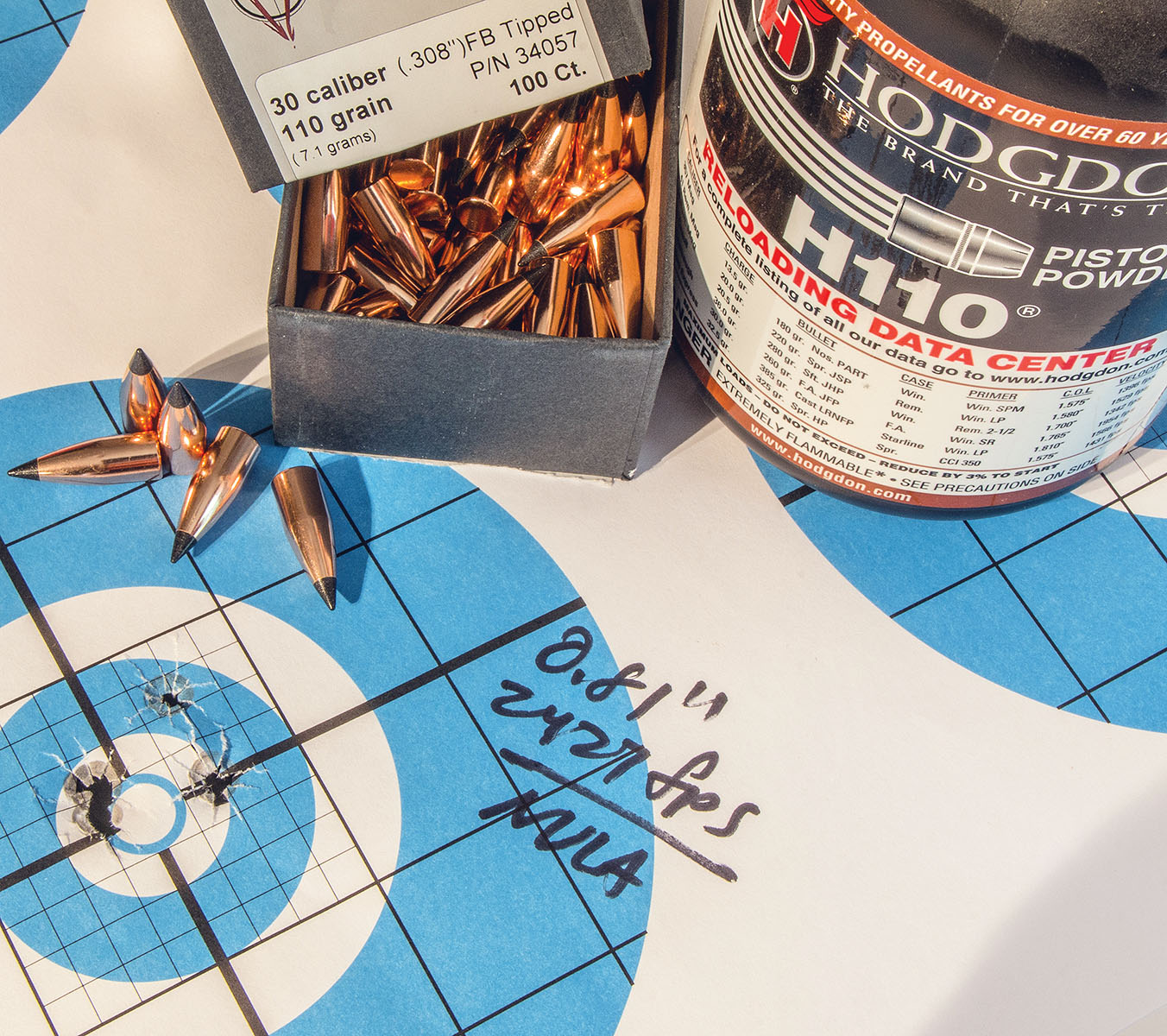
With the loads assembled, it would be stretching things to use my AR-15 at distances much beyond 150 yards on smallish varmints. With larger-bodied critters, like coyotes, 200 yards might be a reasonable maximum range. The test rifle simply did not offer the precision necessary to hit little targets at distance. With the NULA Pathfinder it was a different story. In that rifle the Sierra 110-grain Varminter HP and the new Nosler Varmageddon bullets both produced sub-MOA, five-shot groups. (It should also be noted that both of these bullets provided the best accuracy out of the AR too.) Sierra’s new 135-grain Varminter HP bullet consistently put five shots into clusters right at the MOA mark, as did the extremely devastating Lehigh Chaos bullet. I’d not hesitate to take 300-yard shots on a rock chuck, fox, bobcat or coyote using any of these loads in the NULA.