218 Mashburn Bee
Simple, Straightforward and Accurate
feature By: Stan Trzoniec | October, 19
Today, with the wide availability of rifles, high-tech machining and components, most, if not all, can be chambered into fine shooting machines. Digging around I found a gunsmith that would rechamber a Ruger No. 1 rifle for the 219 Donaldson Wasp. I had read every page I could relating to this cartridge and its maker, and since he was from New York, a place I frequent for woodchucks, I could almost feel ole Harvey laying prone right next to me calling the shots! Another time, I sent out my Ruger Target bolt-action rifle to another gunsmith and he chambered it for the 220 Weatherby Rocket, with its double-radius shoulder that put Roy Weatherby on the map. In addition, some rifle makers have stepped up to the plate by offering their wares chambered for the likes of the 220 Swift, the 22 K-Hornet or the 218 Mashburn Bee, which we will be dealing with in this article.

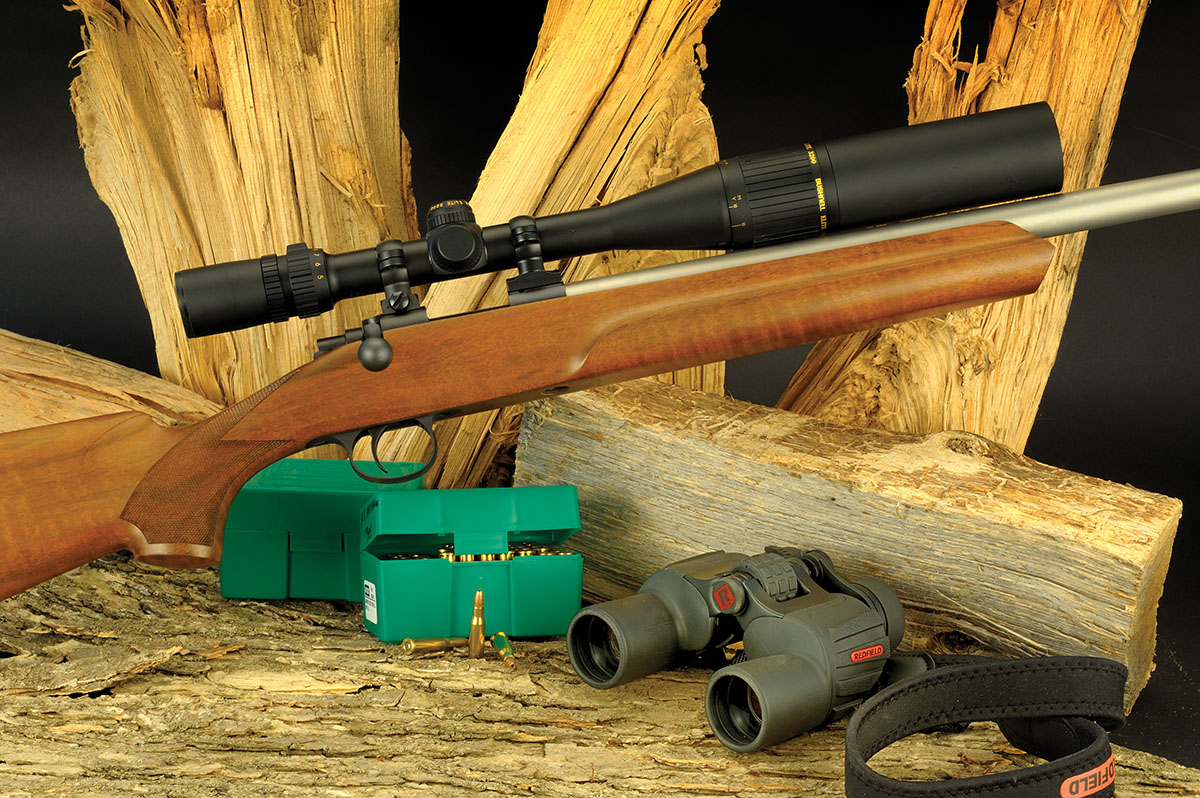
I became interested in the 218 Mashburn Bee and working with this cartridge over the years. Looking up classic cartridges online a while back, I came across a notation of a Cooper rifle that was factory chambered for the 218 Mashburn Bee and a few others of interest in the Hornet class of cartridges. When I saw that, I immediately placed an order with Cooper for a varmint version of the Model 38 single-shot rifle. The Model 38 was the second rifle to be produced by this fledgling company in 1990; the first was called the Model 36 TRP-1.
The stainless air-gauged barrel is 24 inches long and heavy in that the muzzle diameter is .770 inch. The bolt is the three-lug variety, very smooth in operation. On the bolt face is the extractor with the mechanical ejector hidden just under the rear bridge of the receiver. The two-position safety is mounted behind the bolt handle. Trigger pull measured 2.5 pounds with literally no slack before the sear broke. For optics, I mounted a Bushnell Elite 3200 scope for range testing.
The 218 Mashburn Bee is an interesting cartridge and in all probability started the craze on improved cartridges that are easy to work with while being fire-formed right in the chamber of the rifle. Its parent, the 218 Bee was introduced in 1938 by Winchester and chambered in its Model 65 lever action by necking down the 32-20 Winchester to .22 caliber. While it is still on the market with a rifle being chambered for it here and there, varmint shooters looking for a little more power turned to the 218 Mashburn Bee.
In reality, A.E. Mashburn of Oklahoma City, Oklahoma, was the man who took the Bee to another level with his Mashburn version. At the time, other cartridges like the Ackley 218
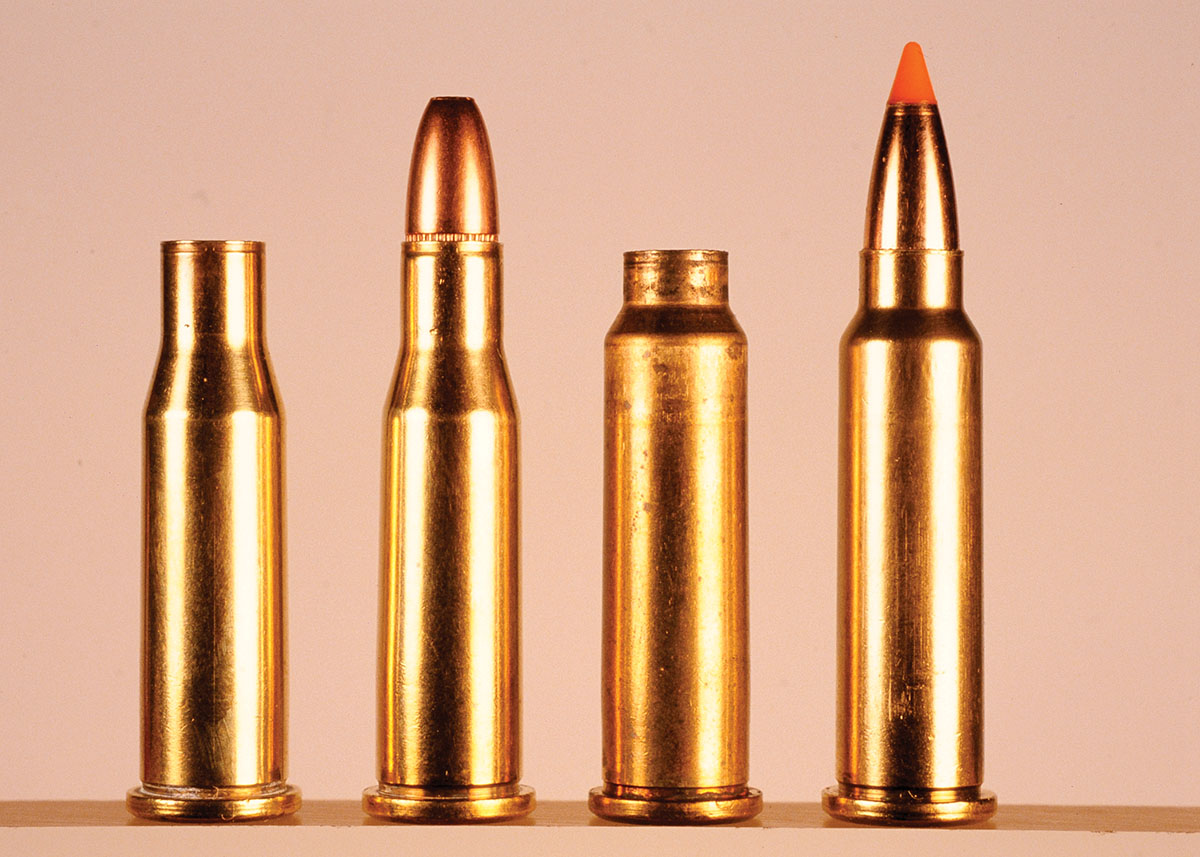
As mentioned, the nice side of the 218 Mashburn Bee is that forming the case is done in the rifle, which then equates to what I call an “easy wildcat.” Over the years while shooting the Mashburn, I have had to add to my supply of brass, not from damage but to be able to take a variety of loads to the range for testing, or when I go on a trip with more of my favorite loads without the need to reload again and again. On the other side of the coin, if I do run into that much trouble with a lack of ammunition and if the local gun store has it, I can take 218 Bee ammunition and fire it in my 218 Mashburn rifle.
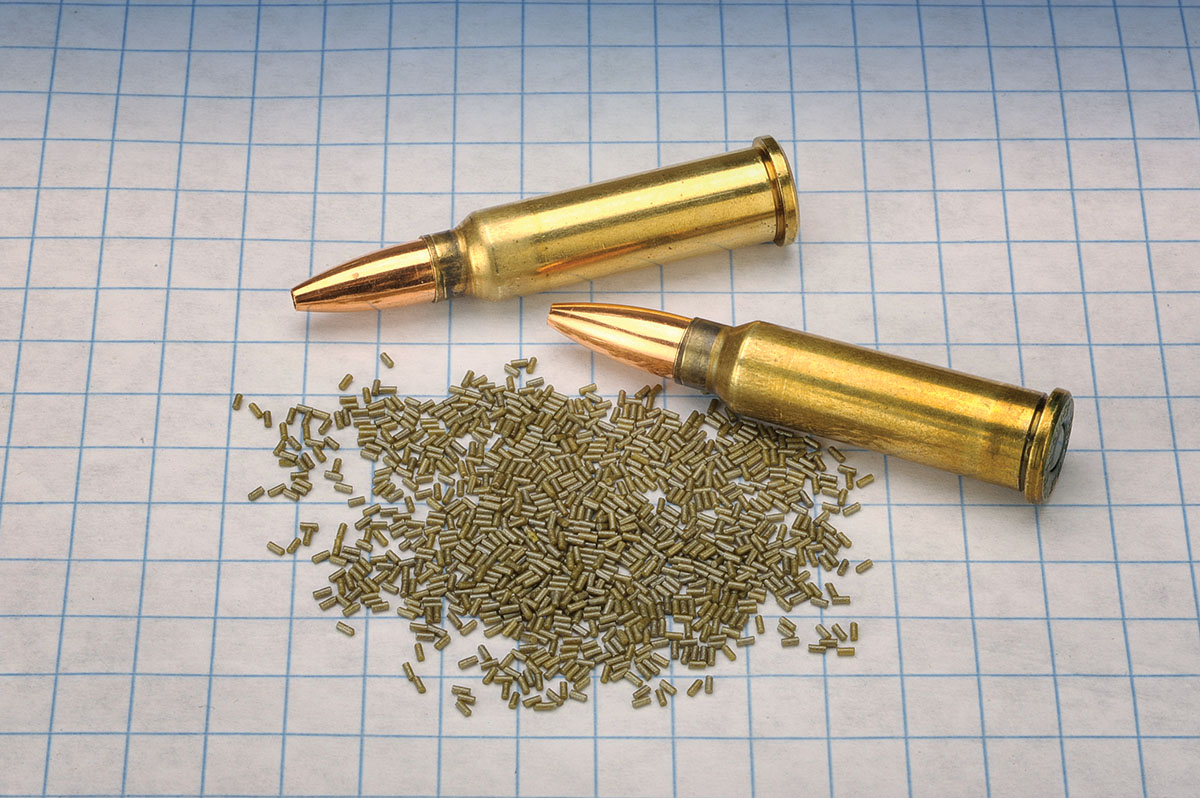
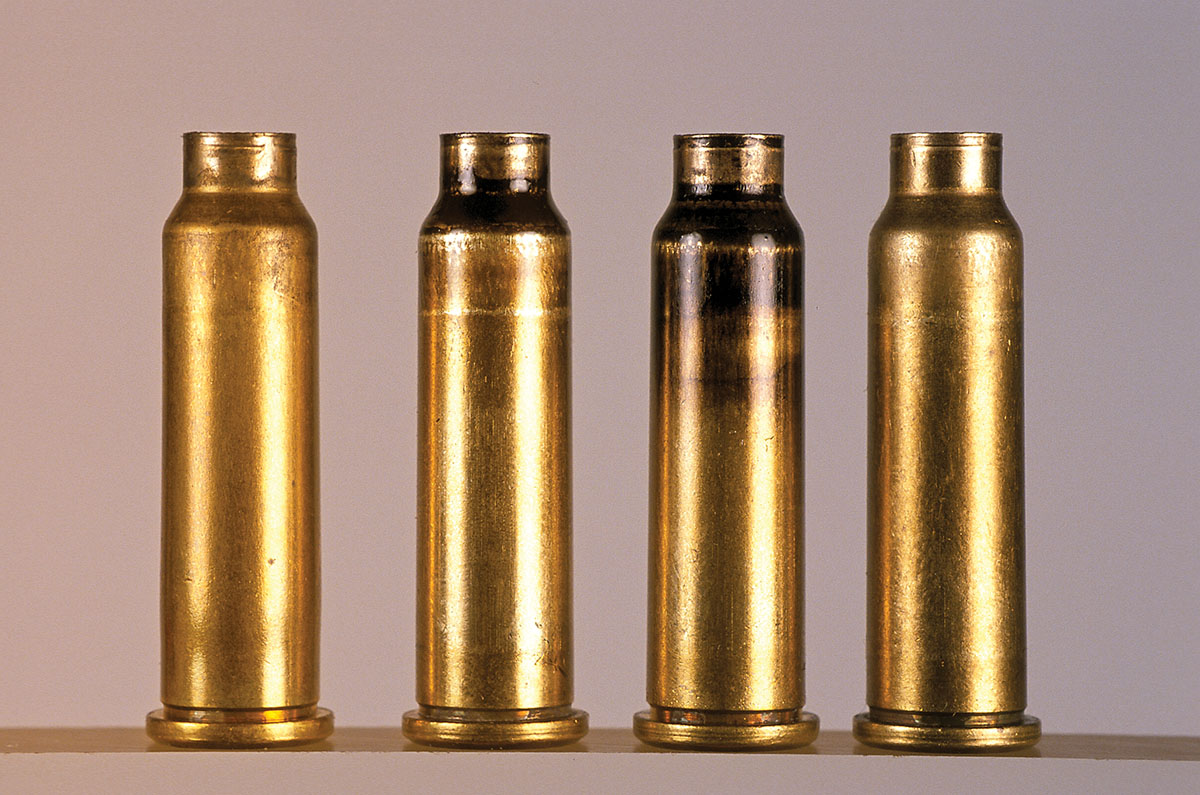
Using water capacity of once-fired cases, the 218 Bee held 17.2 grains while the improved Mashburn held 17.7 grains. Reading up on the history of the cartridge, this is a normal comparison (0.5 to 0.7 grains) and what I consider the maximum in grains of powder (usually 17.5 is best) for the Mashburn with favored 50-grain bullets.
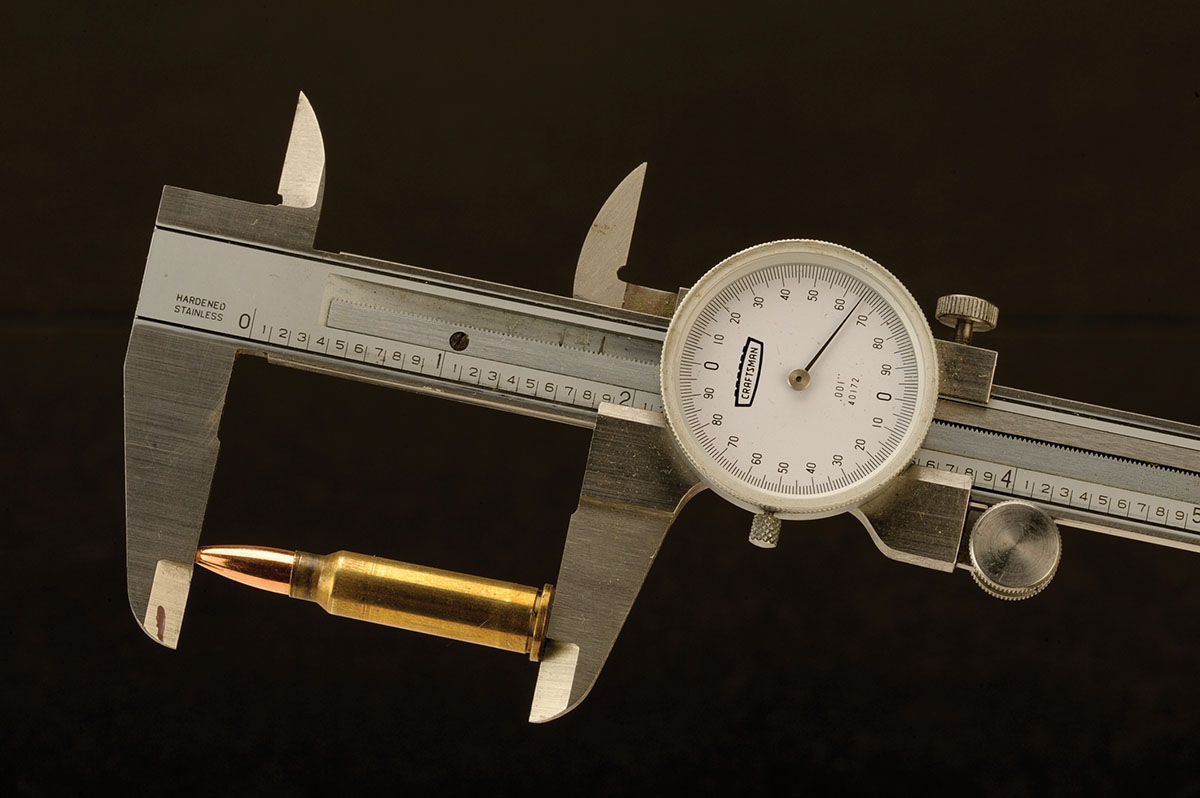
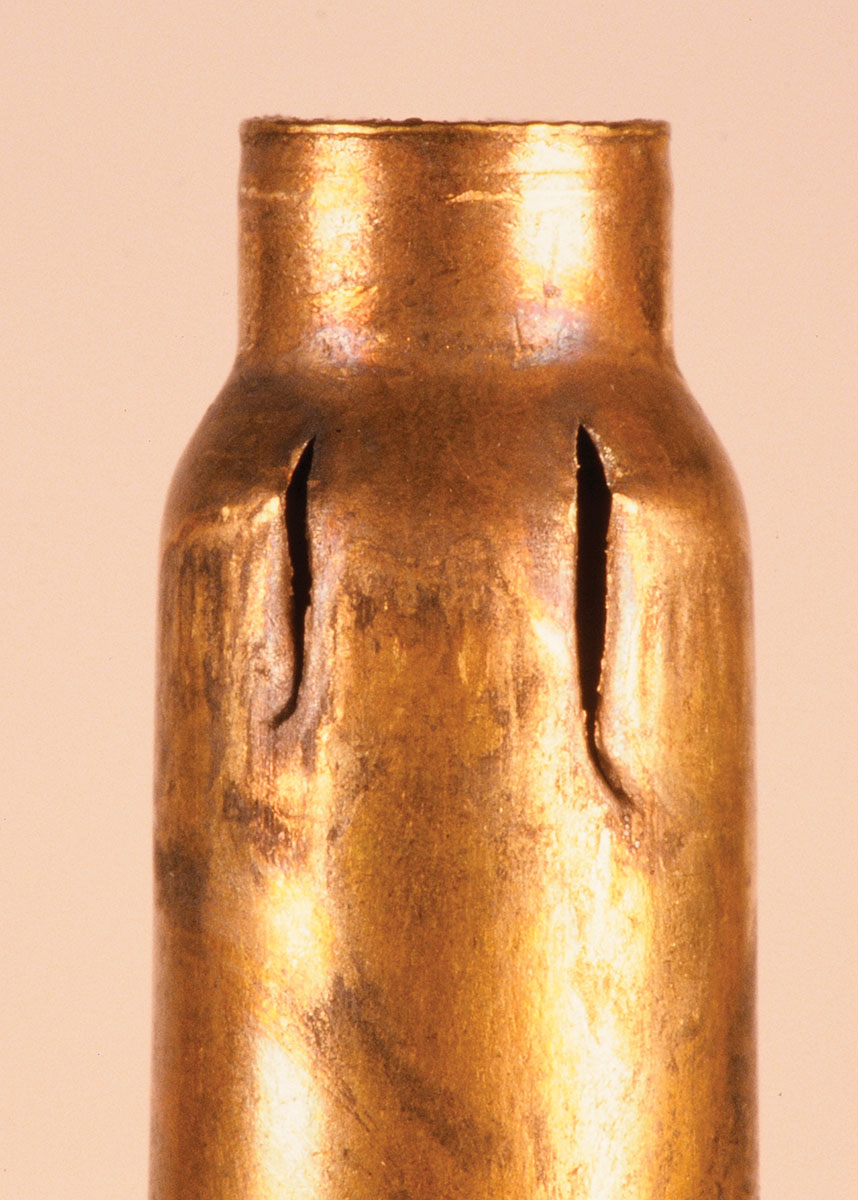
When fire formed in the chamber, the improved version did not lengthen and stayed within the 1.345-inch limit imposed on this cartridge. This is not to say that case splitting could be a problem but with the Mashburn, setting up the case in the Cooper rifle netted only a one-percent loss in the shoulder area – hardly worth losing sleep over. Additionally, using the host 218 Bee, case life was never left wanting with repeated firings, even with the modest 10- to 15-percent gain in velocity.
For forming the cases, a handloader can either use factory ammunition or purchase brass for this job. Factory ammunition works great – just load up the rifle and fire away. Reloading your own with 13.0 grains of Hodgdon 4198 topped off with 50-grain bullets and standard primers is a good combination to sight-in your rifle while forming cases. However, the 218 Bee seems to be relegated to the “not so popular” category in favor of newer cartridges, so it might be more difficult today than in the past to get either ammunition or brass.
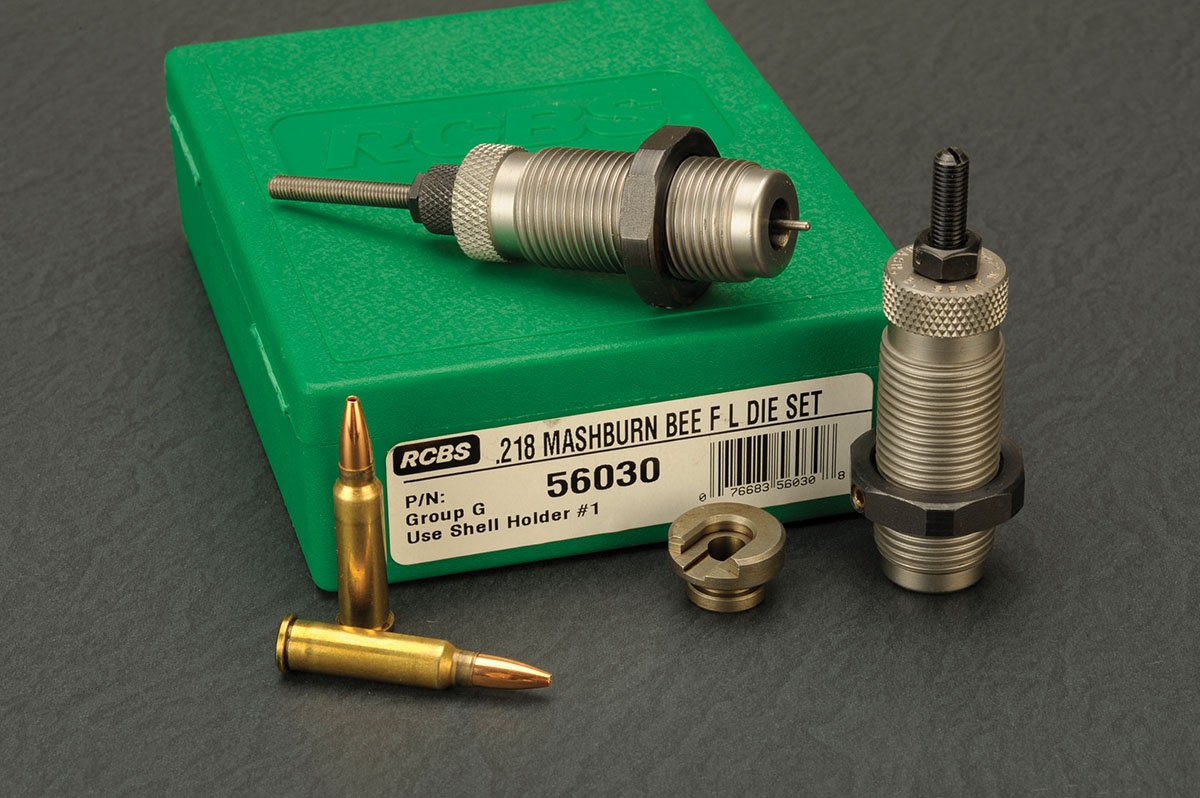
RCBS dies were used for this cartridge. Use shell holder No.1 and stock up on benchrest primers for the best in accuracy. Remington 7½ Bench Rest primers work well.
From here, the next step is to neck size the Mashburn cases for an exact match in your rifle. With a small case like this, use case lube sparingly as not to destroy the integrity of the finished case. My usual drill is to smoke the top of a case and run it into the die to make sure the sizing die just touches the shoulder while depriming the case. To finish up, each primer pocket is cleaned, and then all the cases are immersed into a commercial cleaning fluid.
After much research, three powders showed up to include IMR-4227 and H-4198 with the addition of Alliant 2400 for lighter 40-grain bullets.
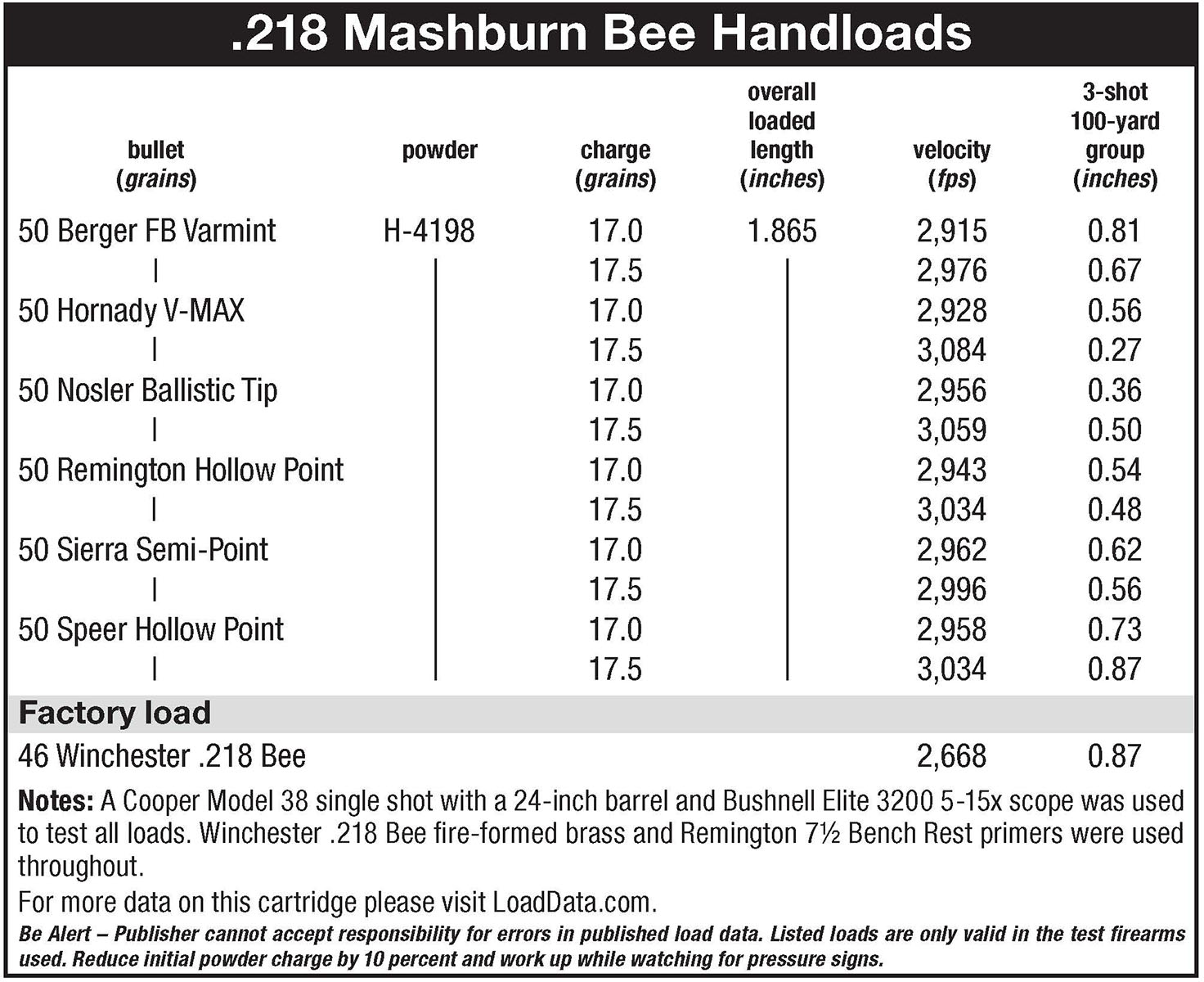
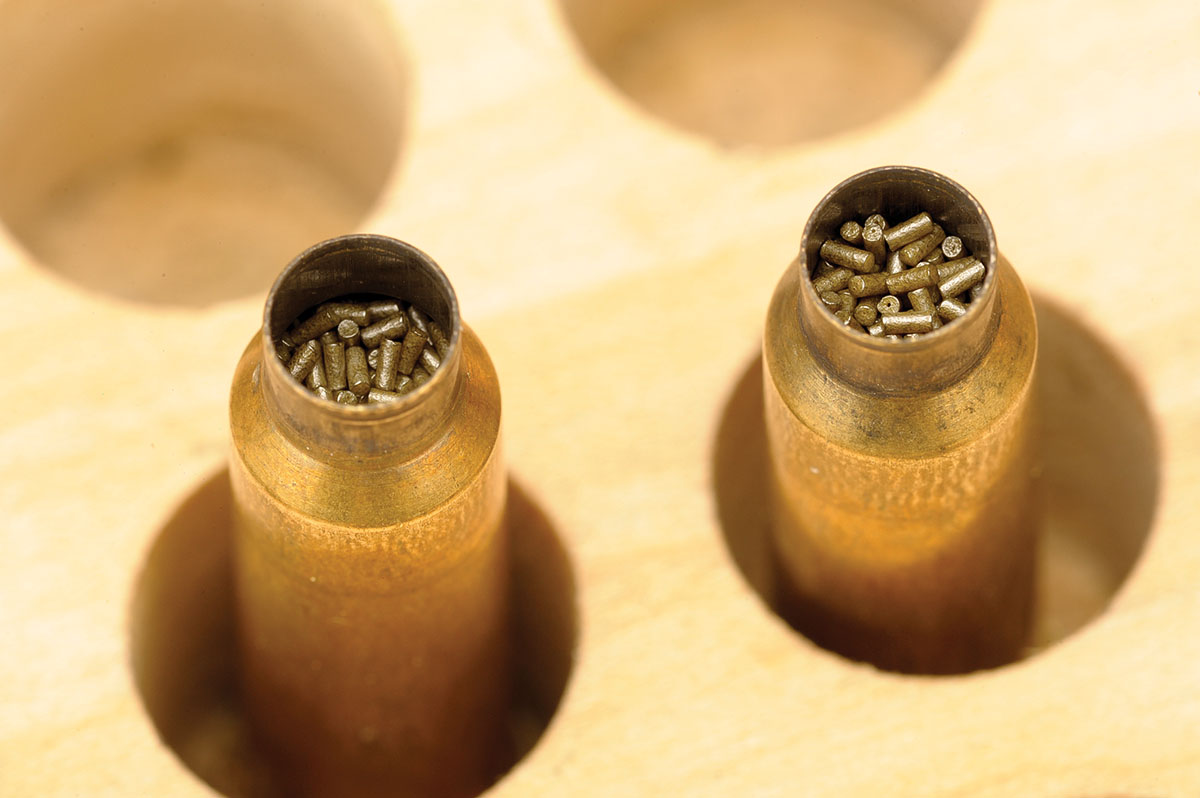
New data showed 50-grain bullets to be balanced for the cartridge in velocity and accuracy. Bullets from Berger, Hornady, Nosler, Remington, Sierra and Speer filled out the list fired with both 17.0 and 17.5 grains of H-4198. Careful attention to details followed each step of the way insured consistency, and all charges were finished off by trickling the powder into every case.
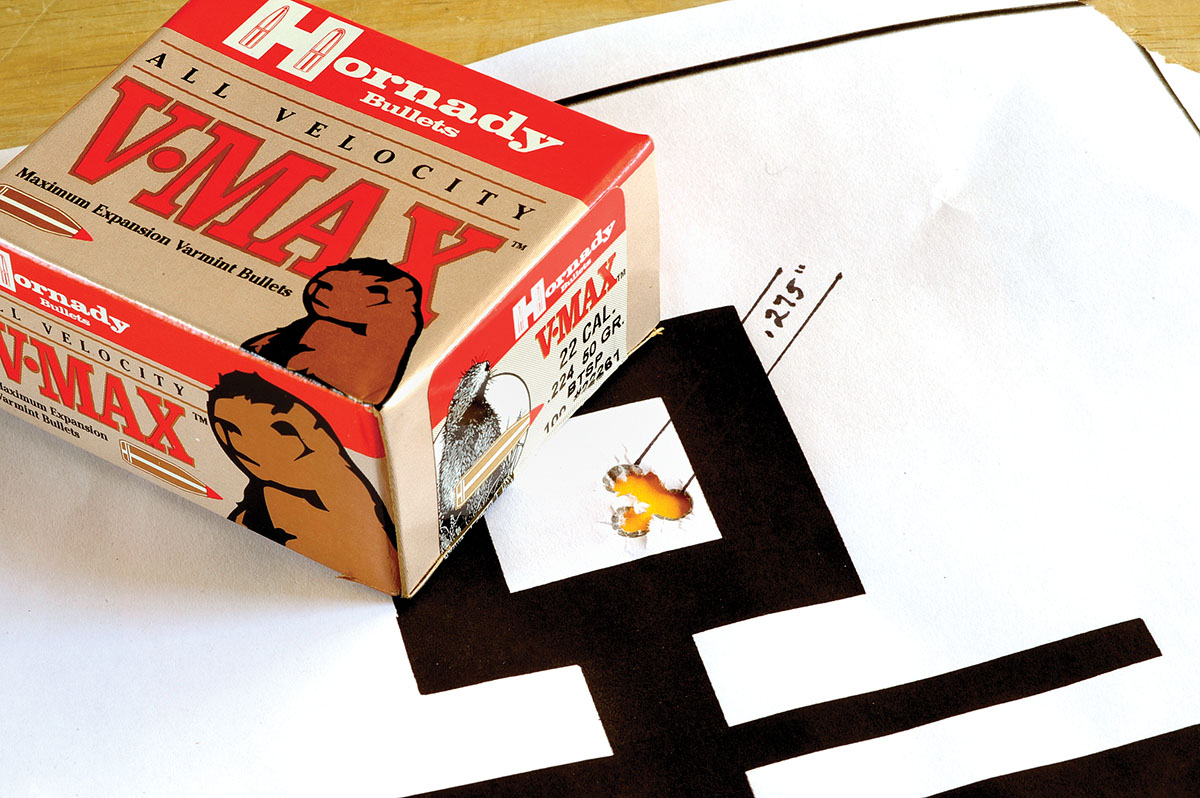
The combination of 17.5 grains of H-4198 and a variety of 50-grain bullets hit the mark with some outstanding groups at 100 yards. In previous testing, the Hornady V-MAX provided the best group with a three-shot spread of .185 inch at 2,956 fps on a 70-degree day. This time around, the best group came in at .275 inch with a velocity of 2,928 fps on a 55-degree day.
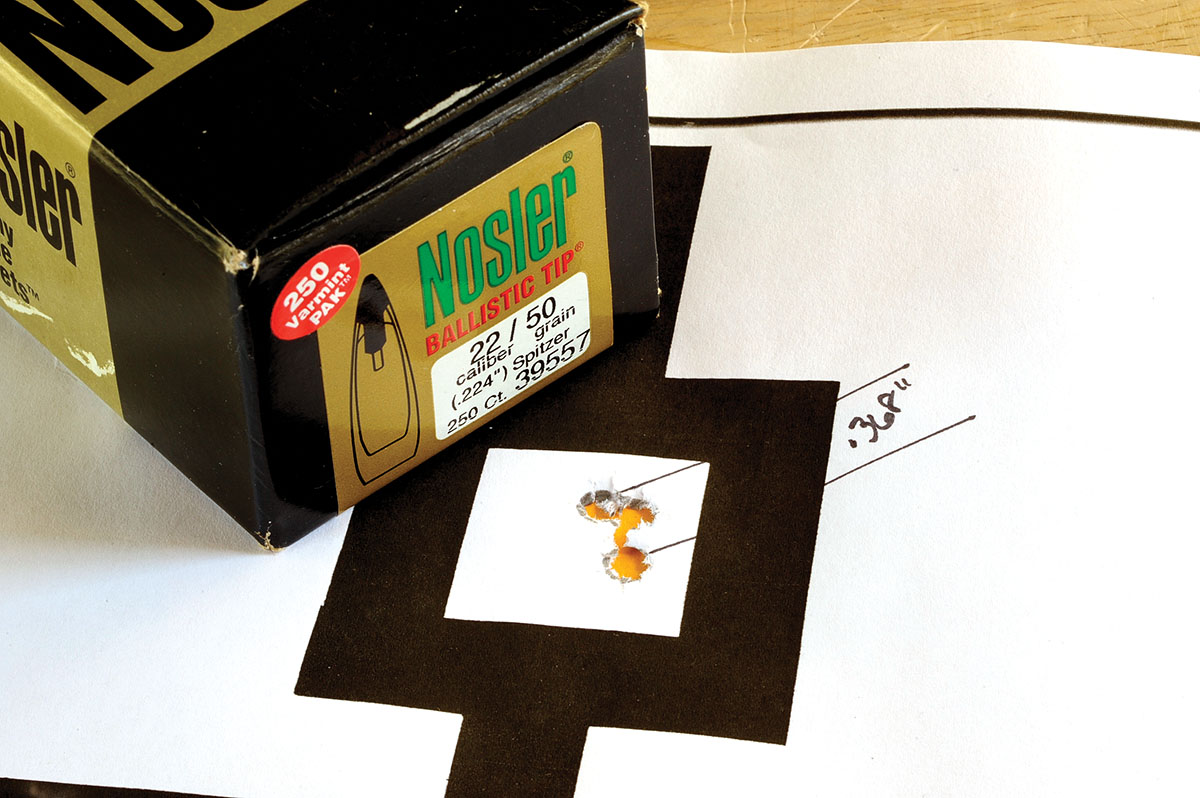
Second place went to the Nosler 50-grain Ballistic Tip with a .368 inch group at 2,956 fps while third place went to the Remington Hollow Point with a .485 inch group at 3,034 fps.
The rest of the list is still impressive with an overall average of about .600 inch – a remarkable achievement for a cartridge so deep-rooted in the history of varmint shooting.
With a velocity around 3,000 fps, the 218 Mashburn with a 100-yard zero will drop around 3.8 inches at 200 yards and 15 inches at 300 yards.
It is hard to think back to when I was so impressed with a varmint cartridge. Sure, it took some research, time at the range and a fine rifle, but in the end, the results were worth it.