

22 Winchester Magnum Rimfire
Shooting the Browning T-Bolt
feature By: Stan Trzoniec | October, 19
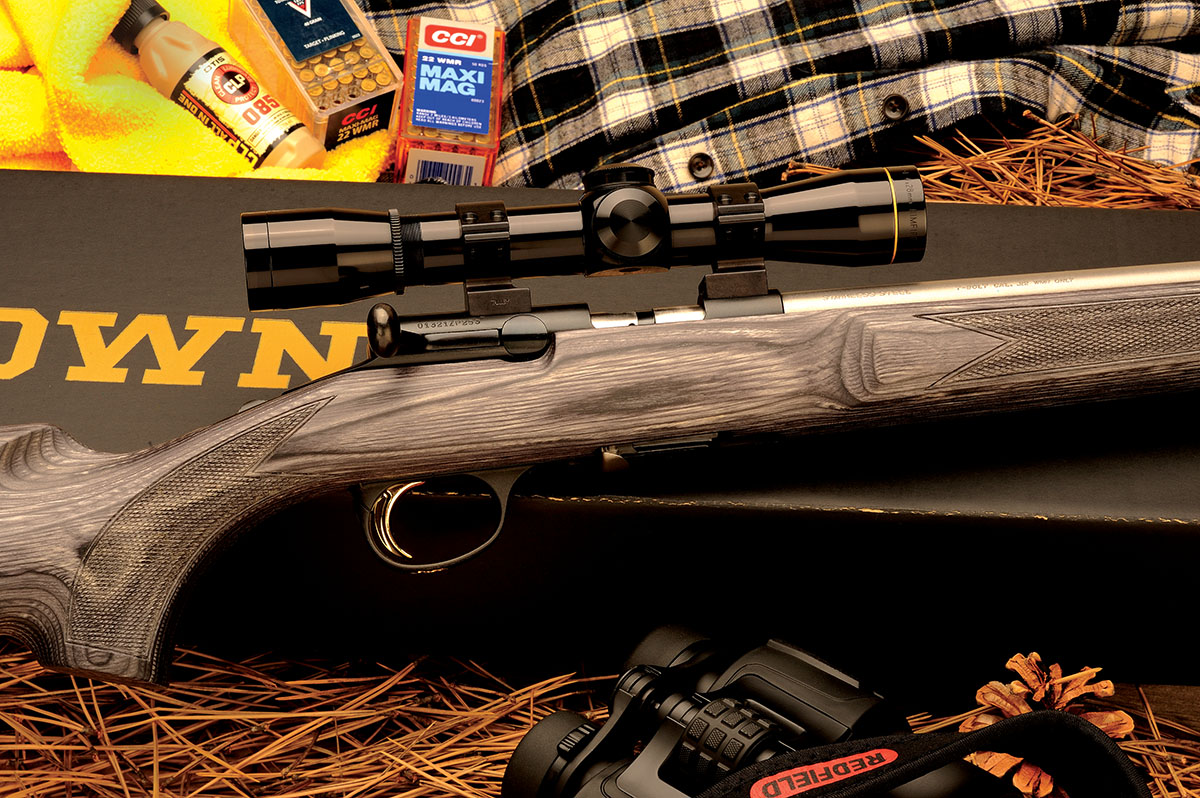
We can change that right now. Recently, I received a Browning T-Bolt with a laminated gray/black stock and touted as the T-Bolt Varmint rifle. Surely, that was worth my attention as a small game hunter, and it’s offered in the 22 Winchester Magnum Rimfire along with the popular 22 Long Rifle and the 17 HMR. I was not disappointed when the rifle arrived.
History is always an important part of any firearm, and if we dig into the T-Bolt we find it was first manufactured from 1965 to 1982 in a wide variety of models including both a right- and left-handed actions. Stocks included everything from composite to wood to a present day laminated stock. Interestingly, the rifle was available with a suppressor-ready carbon fiber stock along with a two-tone composite stock. A Micro Midas model is made for younger shooters. In fact, there have been too many versions to list them all here.
Reviewing the recent lineup of T-Bolt’s, Browning lists a Composite Sporter and Varmint, a walnut-stocked Sporter in both a right- and left-handed model and a T-Bolt Target/Varmint rifle with a satin-finished checkered walnut stock. Concluding the list is the Laminated Target/Varmint rifle with a heavy stainless steel barrel. Sporter rifles have a more conservative classic stock profile with a slimmer forearm. Target and varmint guns have a stock complete with a beavertail forearm and a higher comb, which I find easier to use with a scope.
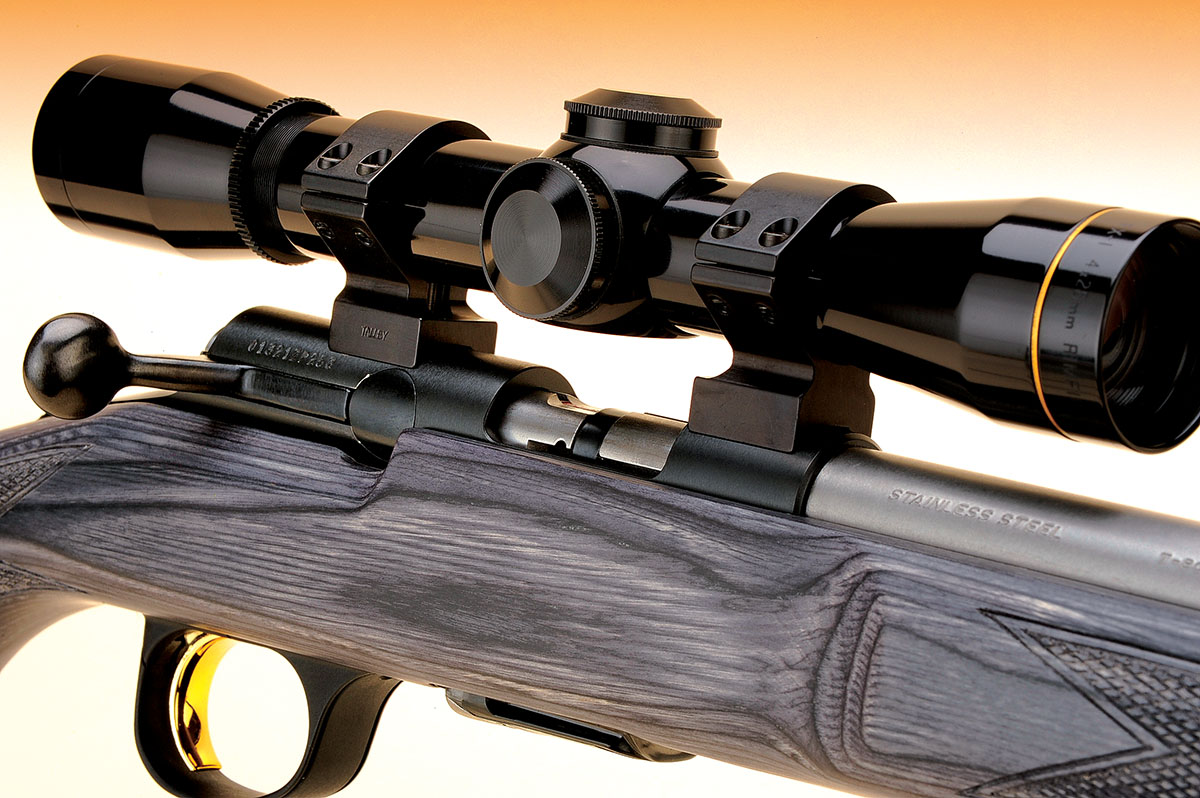
From the start, I knew this rifle was made for the dedicated small-game hunter interested in using a rimfire rifle in the field. The lines of this laminated stock are clean and crisp with attention paid to all the details. While most shooters are used to a high-gloss finish on Brownings, the emphasis here was to down-play the finish on the entire rifle, from the action right to the stock, to keep reflection minimal in the field.
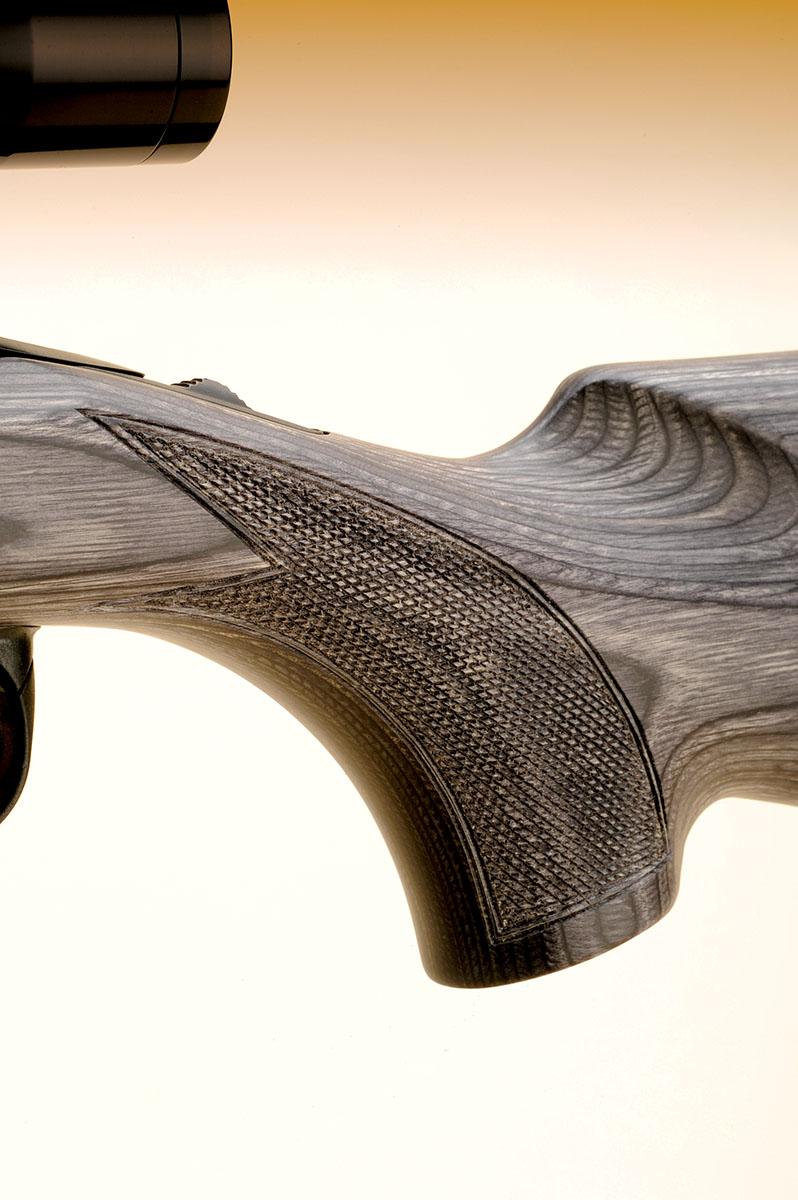
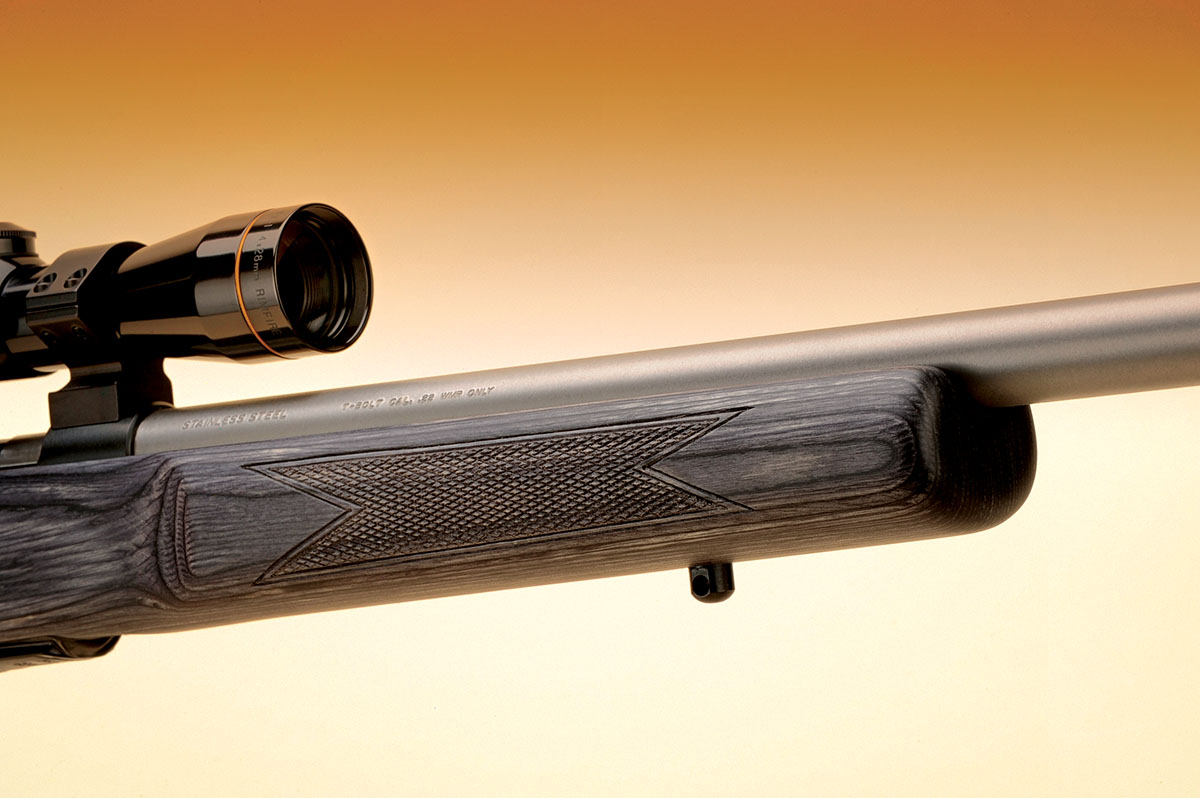
Looking closer at the stock, the forearm is 2 inches wide, making the rifle easy to rest for those longer shots. There is no forend tip; instead the stock is cut square and rounded off for appearance. This part of the stock is checkered in a traditional point pattern complete with a border, giving it the appearance of a custom gun. From there the stock tapers back under the receiver to the grip.
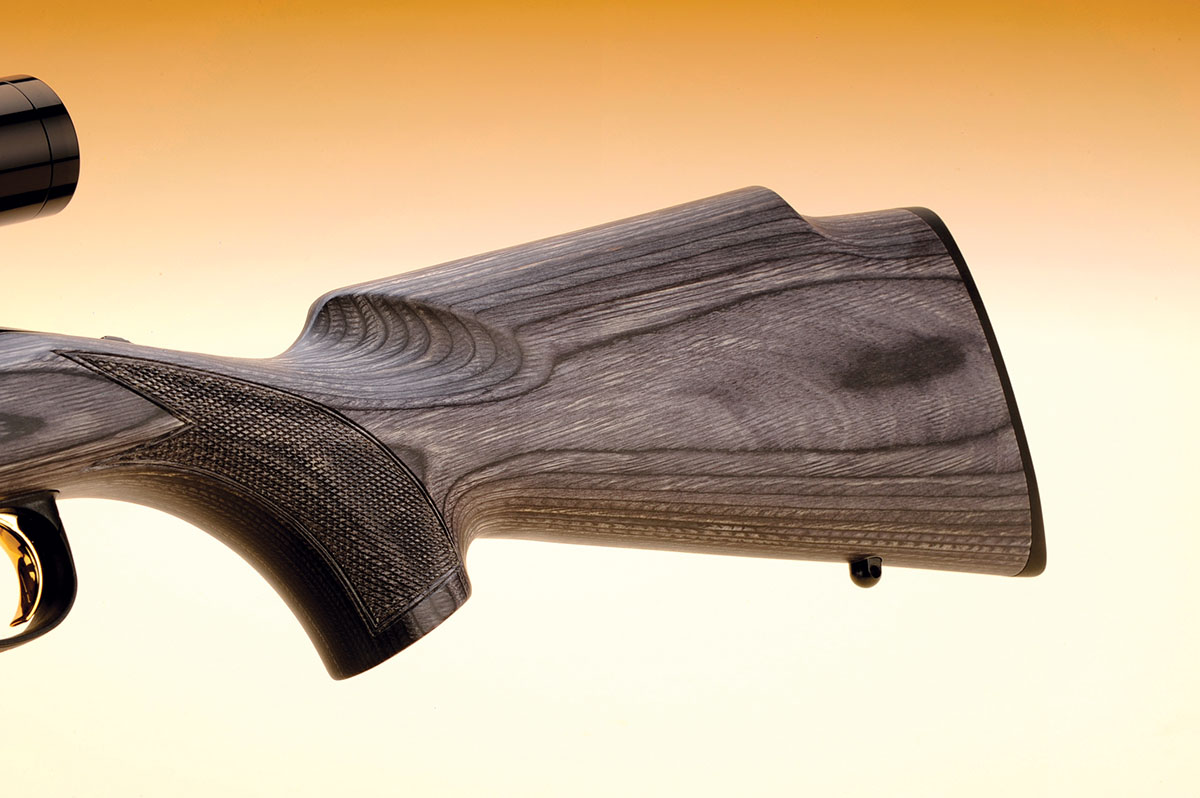
The pistol grip has a natural curve to it, making it adaptable to all shooting positions. Interesting to note is that there is a slight palm swell on each side, thus allowing Browning to use the same stock design for both right- and left-handed shooters, as mentioned. This part of the stock is also checkered in a point pattern with a border on the grip, which does not include a pistol grip cap for protection in this vulnerable area, which subject to chipping when the rifle is used in a prone position. Two flutes compliment the stock rearward of the tang area. A modest Monte Carlo comb is followed by a plastic buttplate that is fitted perfectly around the periphery of the buttstock. In my opinion, a thin rubber buttpad would be a better addition to this Browning, as experience in the field shows that plastic is prone to slipping in the early morning dew when resting the gun for the purpose of closing a gate. Sling swivel studs are included on both ends for field carry and inletting of the stock to the action was done with precision.
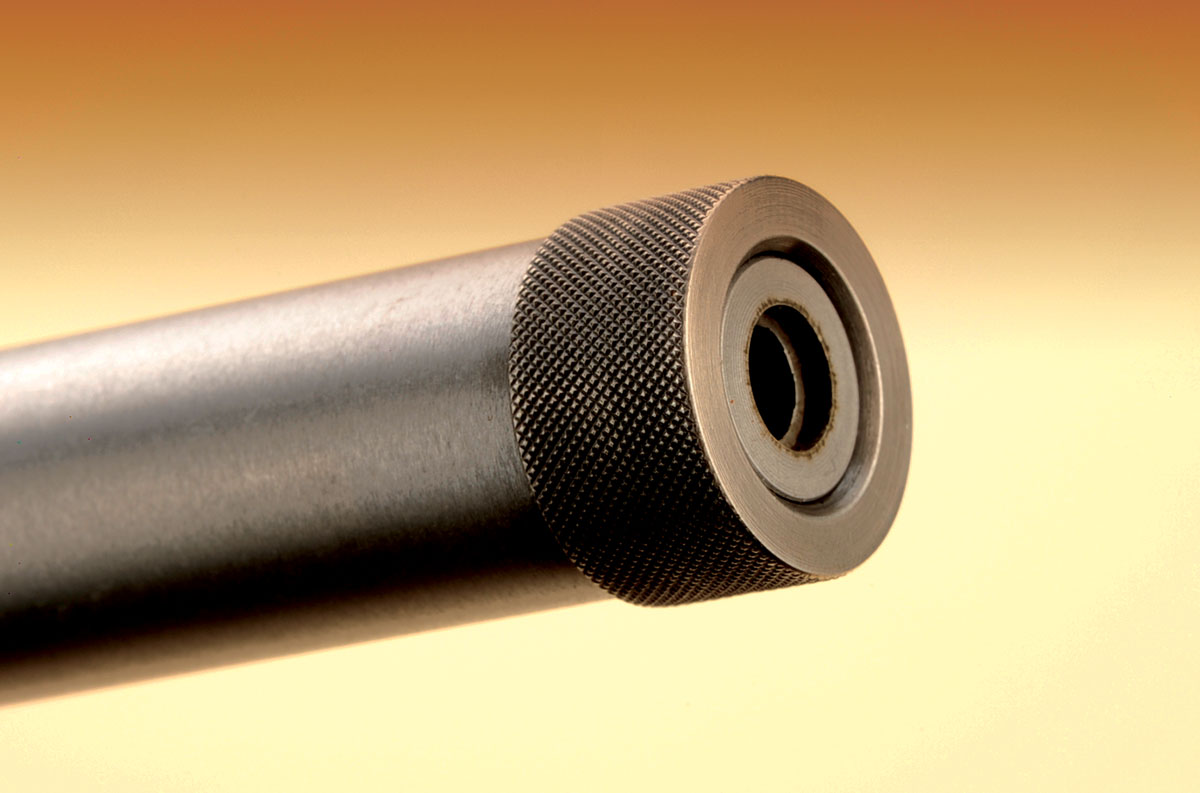
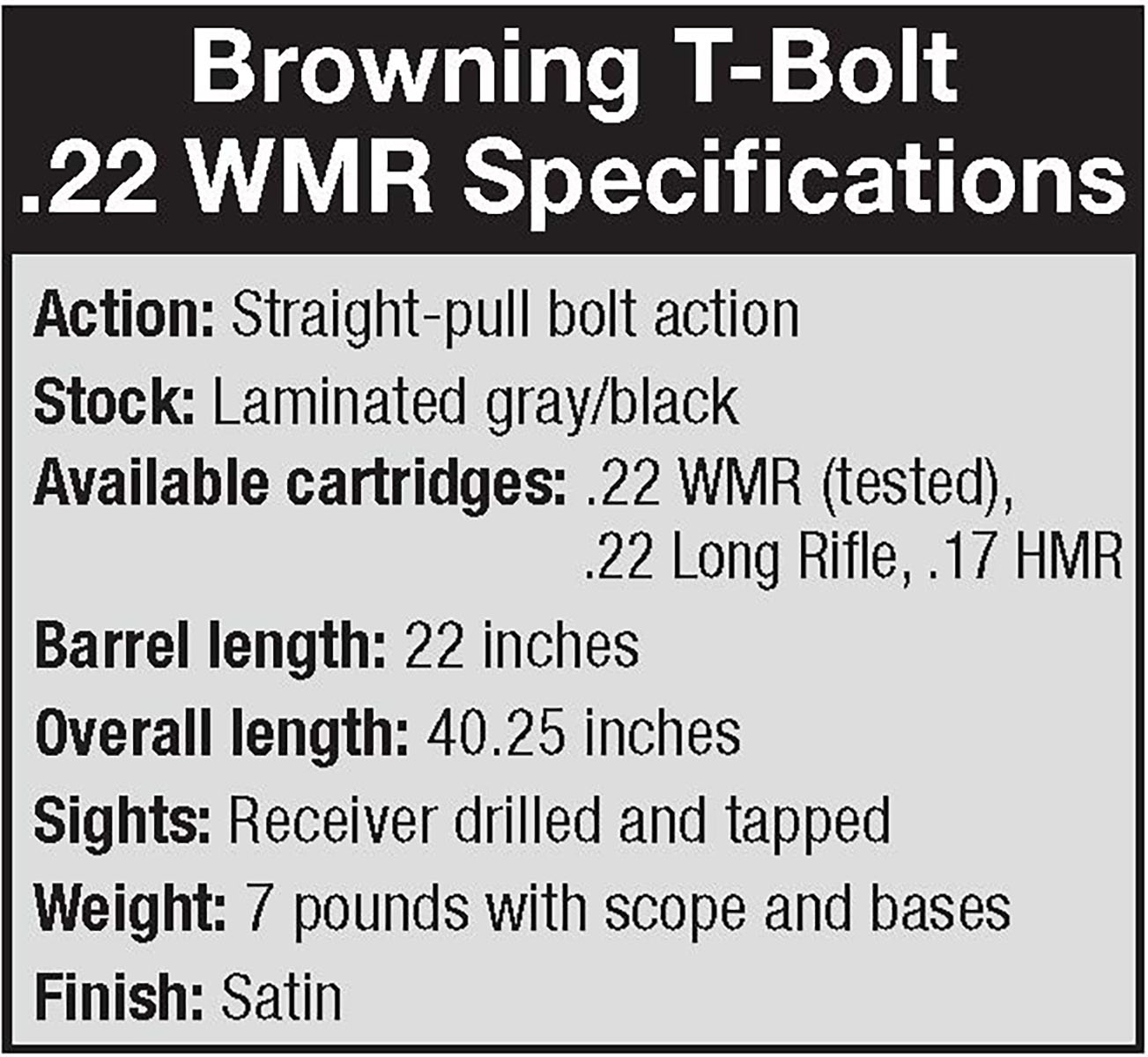
The barrel is clean with no sights. It is 22 inches in length, made of stainless steel and toward the “medium target” side as compared to the sporter version. The free-floating barrel includes a semi-match chamber with a target muzzle crown that is threaded for ½-28 suppressor use and is supplied with a threaded cover for protection.
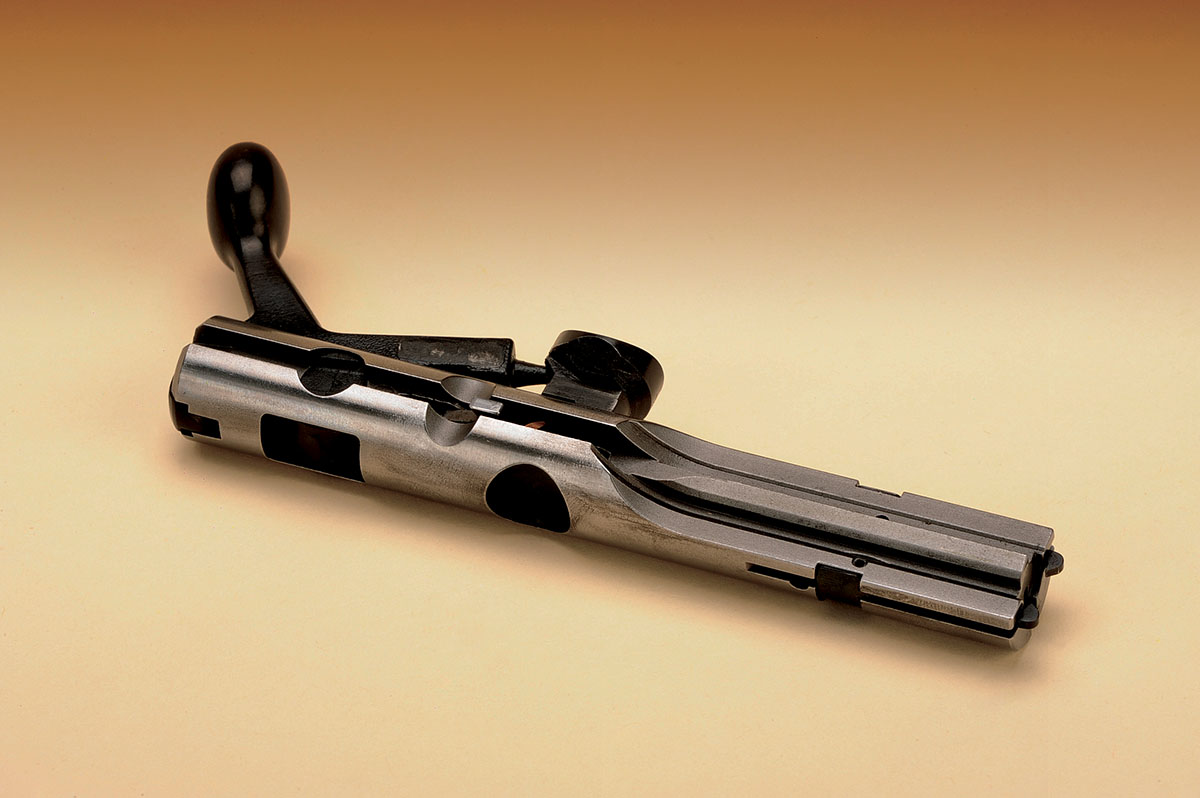
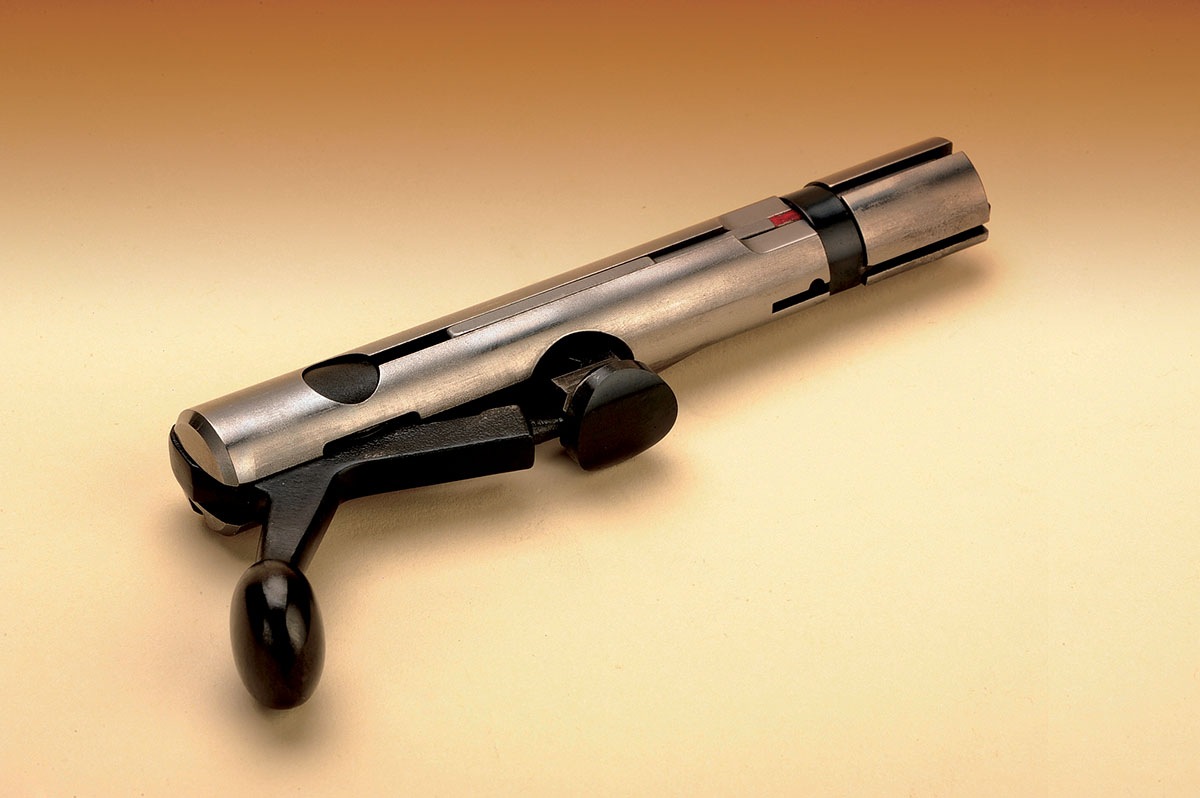
Anyone looking for a different kind of action than the more standard, everyday bolt action will find the T-Bolt appealing. For one thing, to charge or unload it, the action is a straight pull; a back-and-forth design rather than a turn bolt. This type of operation has been seen on modern biathlon rifles, and since the T-Bolt chambers rimfire rounds, bolt travel on this rifle can be relatively short, making the design perfect for its intended purpose.
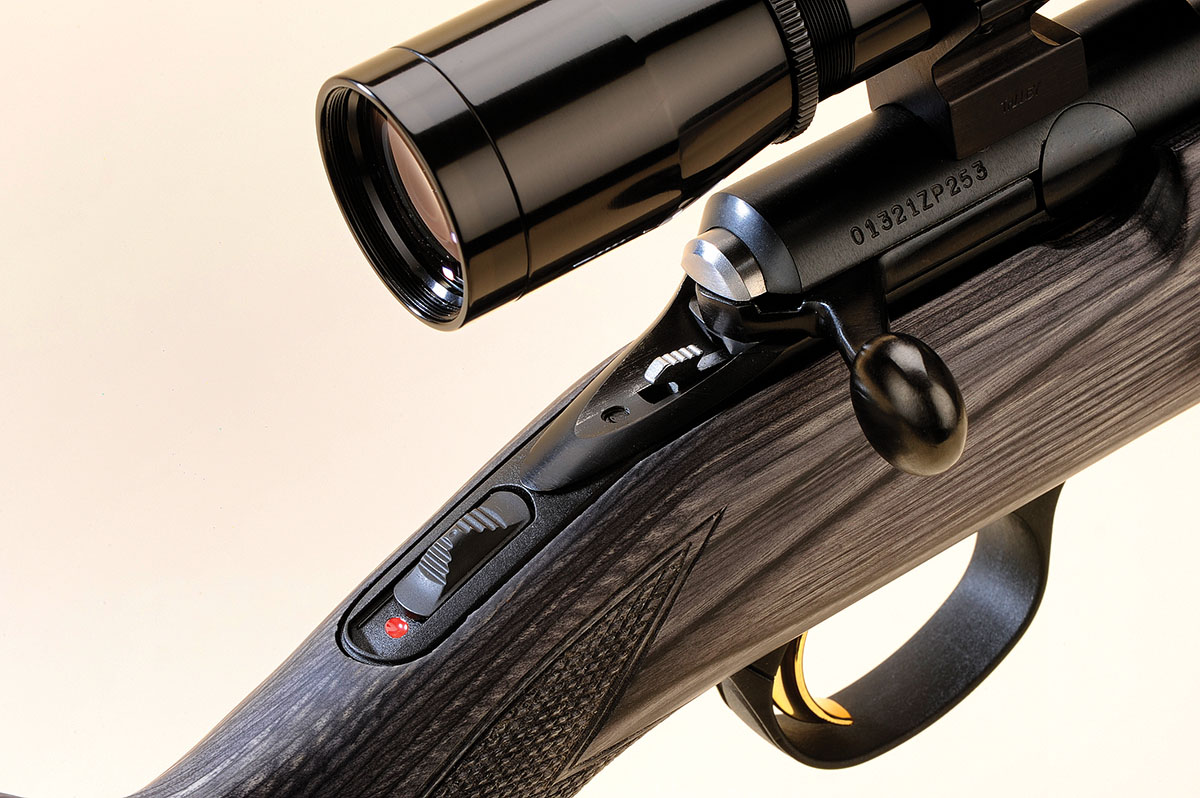
The bolt face features twin extractors for flawless operation and a red cocking indicator shows when the rifle is ready to be fired. The indicator is placed mid-bolt, and with a scope mounted you have to tip the rifle to check its position relative to a round in the chamber. Regardless of a right- or left-hand action, the rifle ejects all spent shells to the right of the shooter. Finally, for durability and a lifetime of hunting, the receiver is machined from a piece of solid barstock.
The T-Bolt has a tang-mounted, two-position safety, again important in a true ambidextrous gun. The trigger is adjustable, within limits, without taking the stock off. Browning suggest adjustment between 3¼ to 5¼ pounds, but I could not tune the sample any lower than 4½ pounds. On the plus side, there was only a minute (and I mean minute) amount of travel before the sear broke, so it was acceptable for both range testing and hunting.
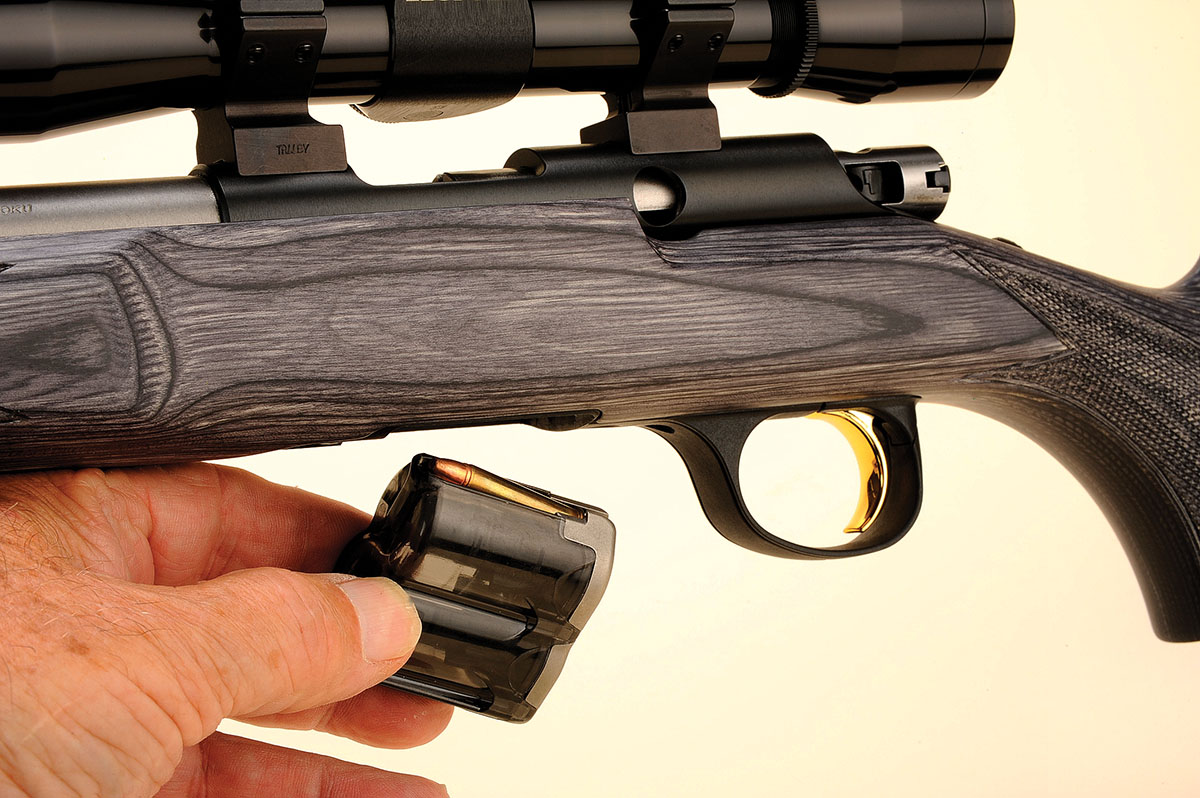
Hitting a release drops the magazine smartly into your hand and loading the Browning to full capacity involves nothing more than charging the rifle with one round, setting the safety, removing the magazine and adding more rounds. There are now 11 rounds in the rifle.
To finish the rifle off for testing, a Leupold 4x 26mm scope was mounted in a Browning standard ring/base set. With this type of arrangement, the base part of this combination fits perfectly around the contour of the T-Bolt’s receiver for a custom look.
My test rifle was chambered for the 22 Winchester Magnum Rimfire, a cartridge I have used for years in the field in both handguns and rifles with good results if I watch my range and wind conditions. Introduced by Winchester in 1959, the first gun commercially available for the cartridge was the Marlin Model 57M, followed a year later by the Winchester Model 61 pump-action rifle.
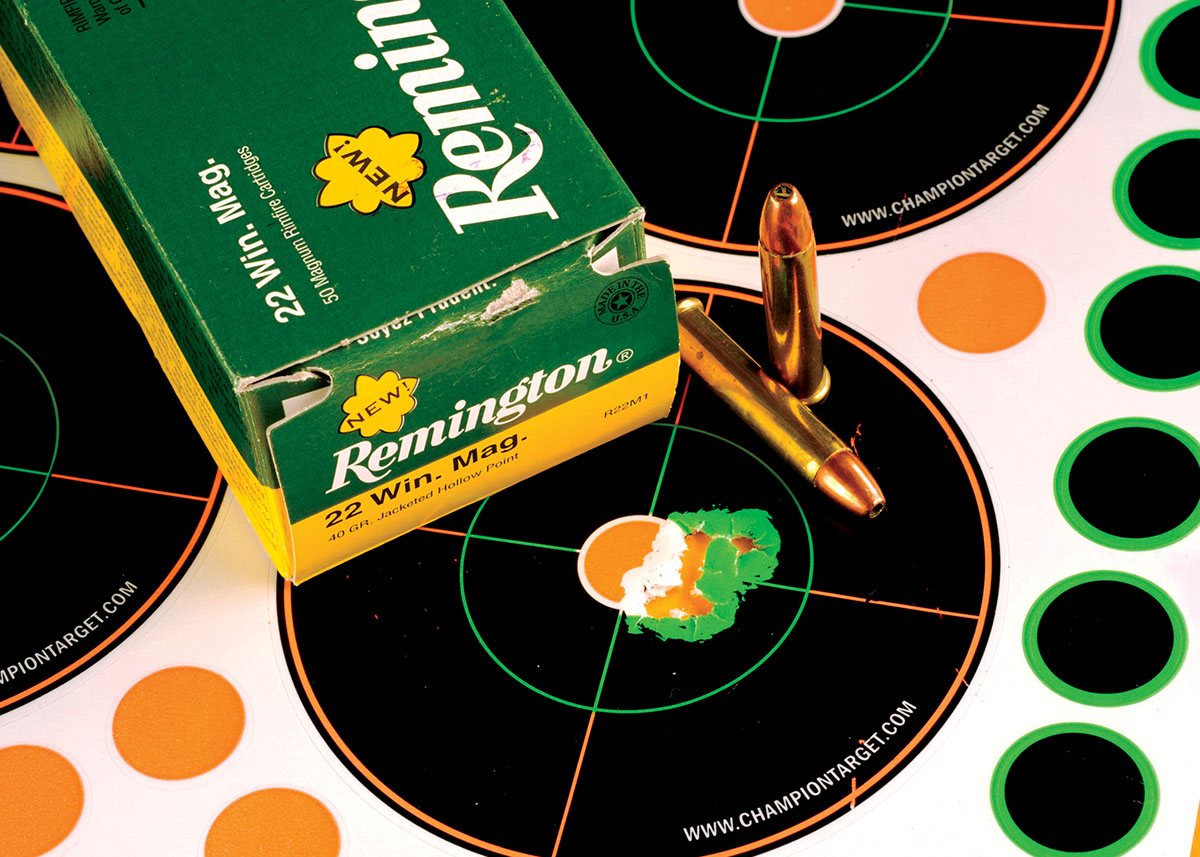
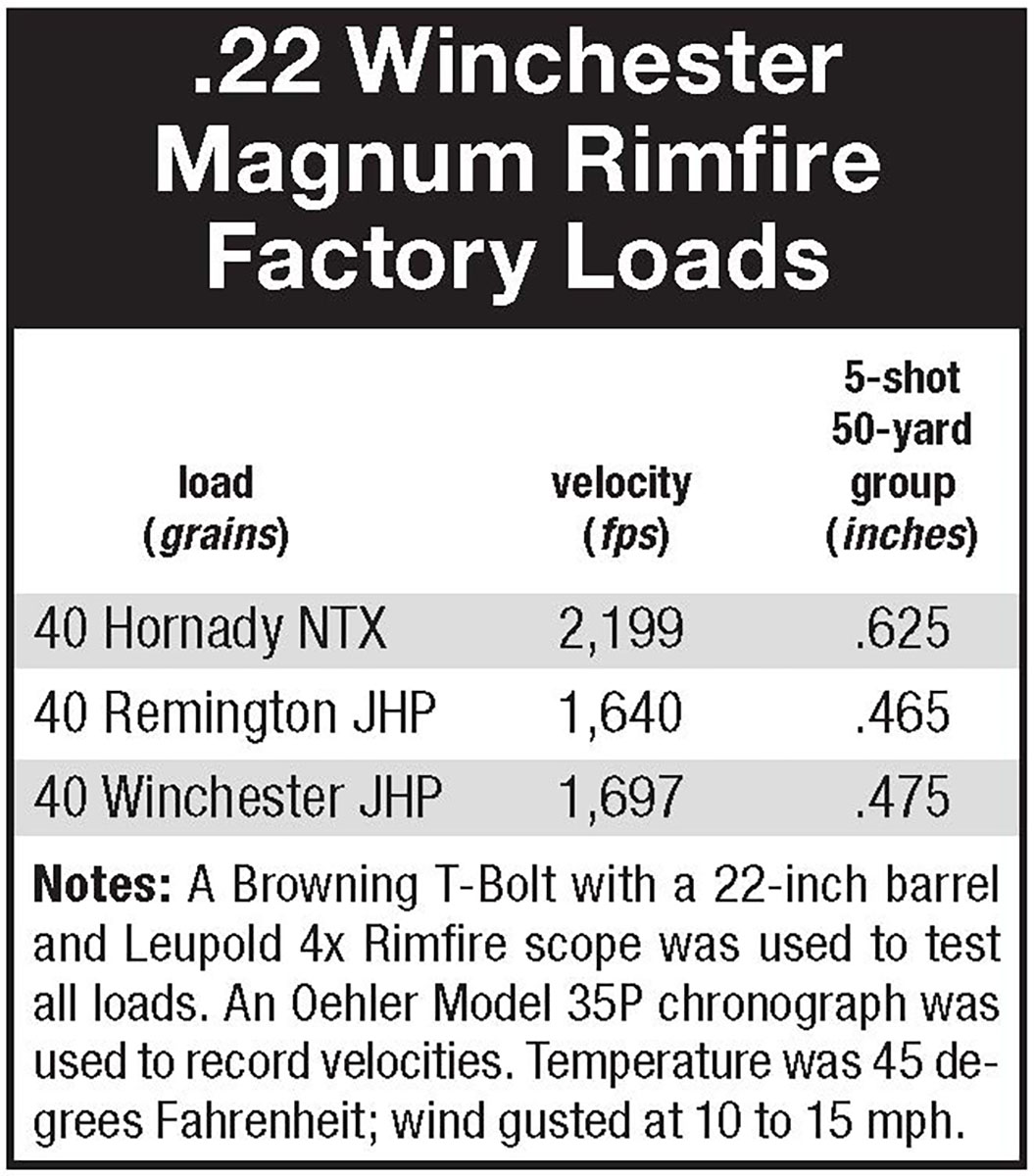
Out on the range, the Browning T-Bolt performed as expected. While the action was a bit stiff out of the box, shooting soon rendered the action smooth and easier to use. In the days that followed, the rifle soon proved to be a handy rig to shoot. While it seemed awkward at the beginning, pulling the bolt rearward soon became second nature. With a choice of WMR ammunition from CCI, Remington and Winchester, groups at 50 yards went under an inch and more toward the .5-inch mark. As noted in the table, all of the ammunition was very consistent and it would be difficult choosing one favorite. Also noted was the fact that the three brands of ammunition gave different impact points on the targets. CCI grouped high and left, Remington grouped slightly to the right while the Winchester loads followed on the lower left of center, so it’s good advice to rezero your scope when changing ammunition.
As the morning wore on, I found the Browning T-Bolt a fun rimfire to shoot, with great accuracy to boot. The rifle is well made and with the laminated stock and a stainless barrel, any type of weather would be no match for this Browning. The stock is right for the average adult hunter, but the addition of a rubber buttpad would only enhance its durability in the field. The gun operated without fail when it came to loading and ejection.
With the wide assortment of rimfire ammunition available today, the Browning T-Bolt makes for a fine companion for small game or varmint hunting. Using a typical 40-grain bullet centered about an inch above center at 50 yards, it would be zeroed at 100 yards and 2.2 inches low at 125 yards.