Cooper 22-250s
Testing a Pair of Varmint Rifles
feature By: John Haviland | October, 19
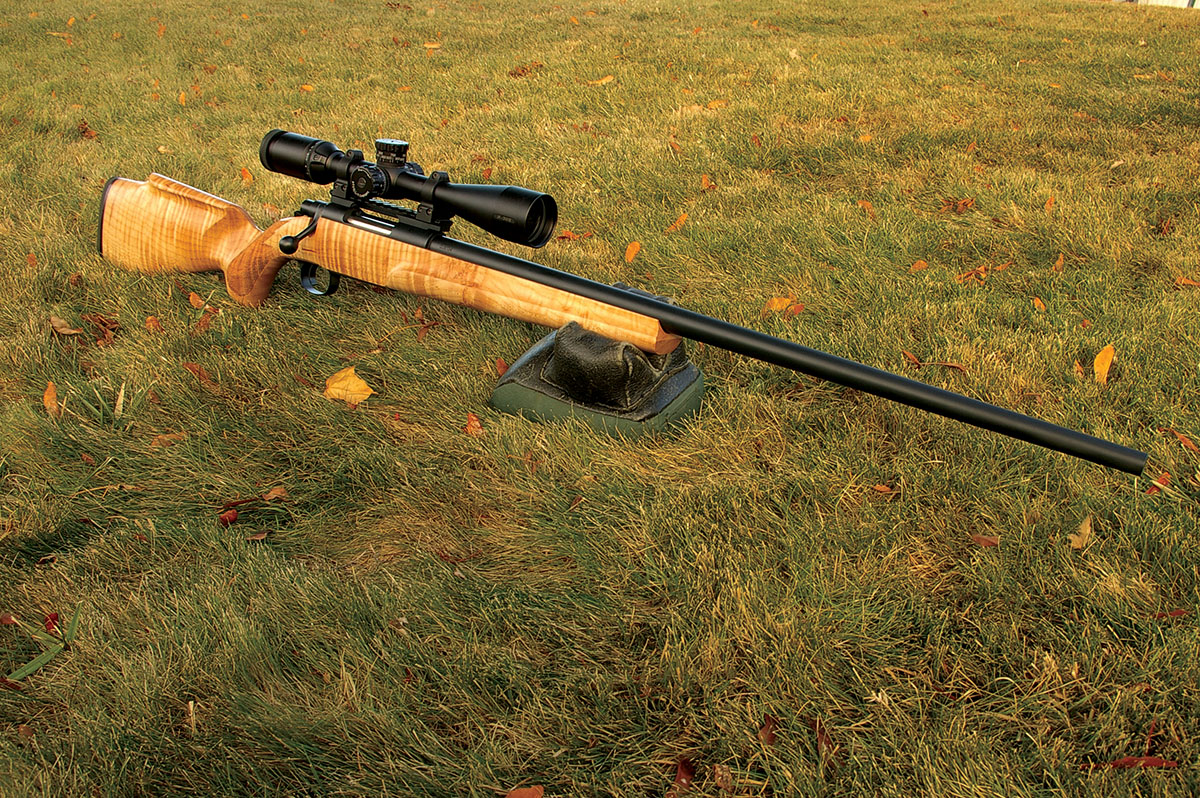
In years past, Cooper was known for its beautiful Claro walnut stocks of figured feather, flame and fiddleback. French and English walnut, maple and exotic woods are also available in grades that reach as deep as a pocketbook can afford. Stock designs include Classic, Custom Classic, Western Classic, Mannlicher, Jackson Game and Hunter and Schnabel.
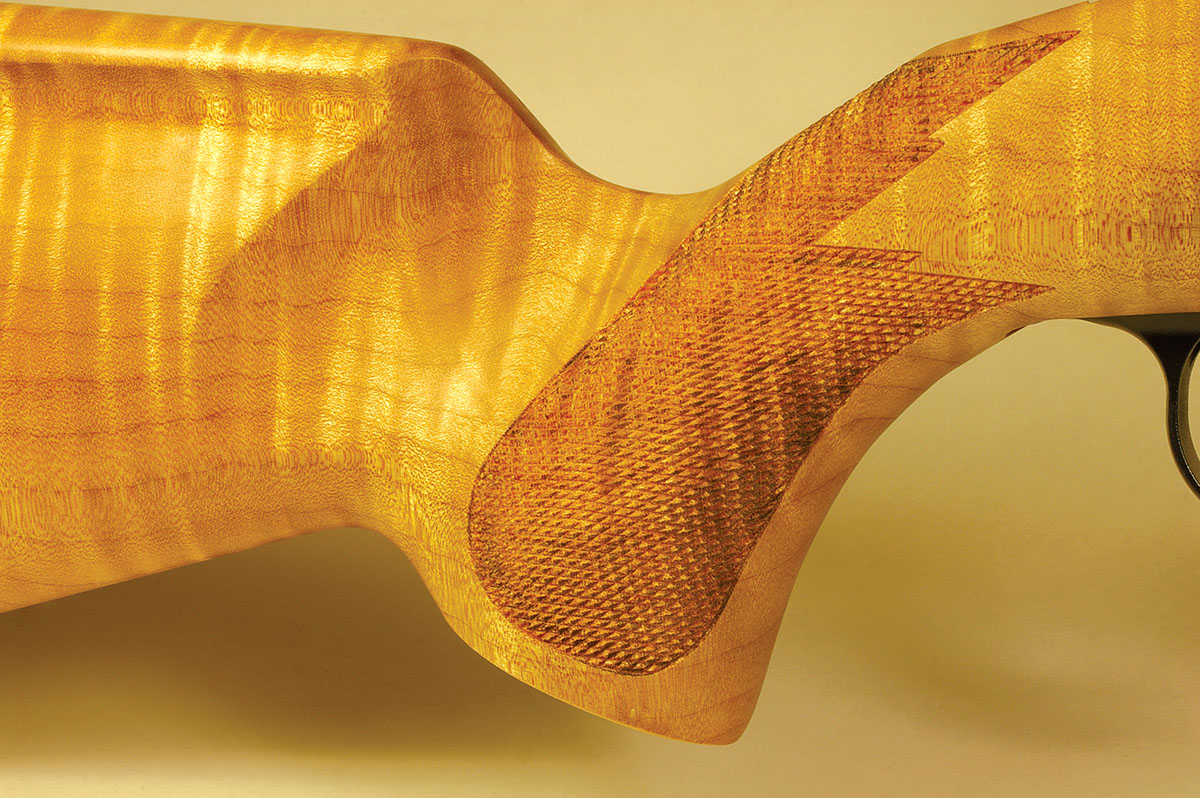
One such 22-250 rifle is a Custom Model 54 with a blond maple stock with auburn bands running its entire length that contrasts nicely with a black-matte finish on its metal and 26-inch heavy barrel. The stock is a hybrid of Cooper’s Hi-line Varminter and a hunting stock. The stock has a high comb with a rollover cheek piece that provides plenty of contact for a shooter’s cheek and positions the eye to see through a high-mounted scope. The beavertail forend fills the forward hand and steadies the rifle on a rest. The deep flute on the right side of the nose of the comb is the stock’s most notable feature. The deep hollow looks somewhat excessive but has a pleasing shape. Grasping the grip, the base of the thumb fits exactly in the flute, the wrist remains straight and the hand is so deep into the stock the web of the hand is aligned with the centerline of the bore.
With the shooter’s hand deep into the stock and fingers around the grip, the rifle is easy to control. “We made about a dozen trial stocks before we got the shape right for that flute,” May said.
Model 50 series rifles are bolt-action repeaters with, depending on the cartridge, either a four- or three-round straight stack magazine. For years Cooper fans asked for a repeating rifle chambered in big-game cartridges. Cooper responded in 2007 with its Model 52 chambered in standard and magnum-length cartridges, followed by the Model 54 short action chambered in 22-250 Remington through 308 Winchester. Dan Cooper, the original owner of the company, designed the repeating rifles. He believed a magazine directly attached to a receiver adversely affected accuracy, so Cooper rifles are made with a magazine attached to a frame.
The Model 54 magazine and action provide plenty of room for 22-250 cartridges that measure longer than the established maximum of 2.35 inches. For instance, 22-250 cartridges with a length of 2.45 inches fit with room to spare in the Model 54 magazine. That cartridge length set Sierra 55-grain BlitzKing bullets short of contacting the rifling with the base of the bullets three-quarters of the way into the neck to hold and align them.
“We thought the stocks needed bedding, because that’s what we normally do,” May said. “Tom Manners said they didn’t, and he was right because the inletting is so precise.”
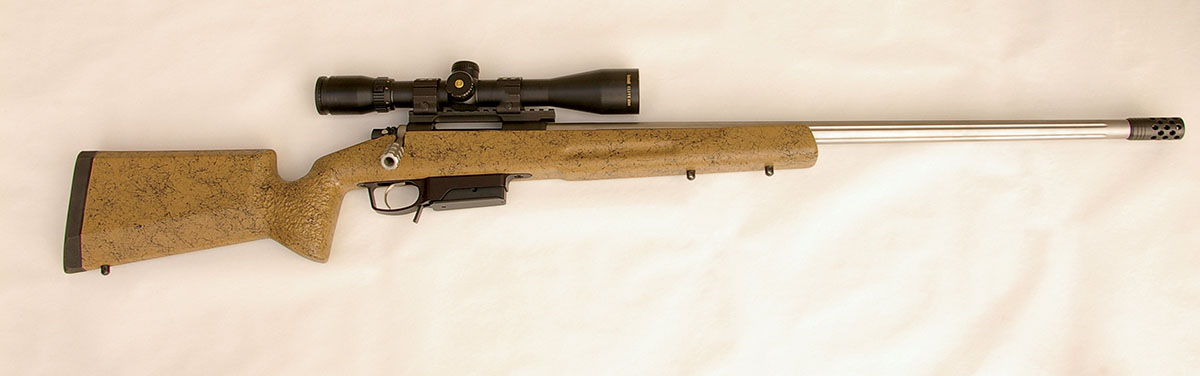
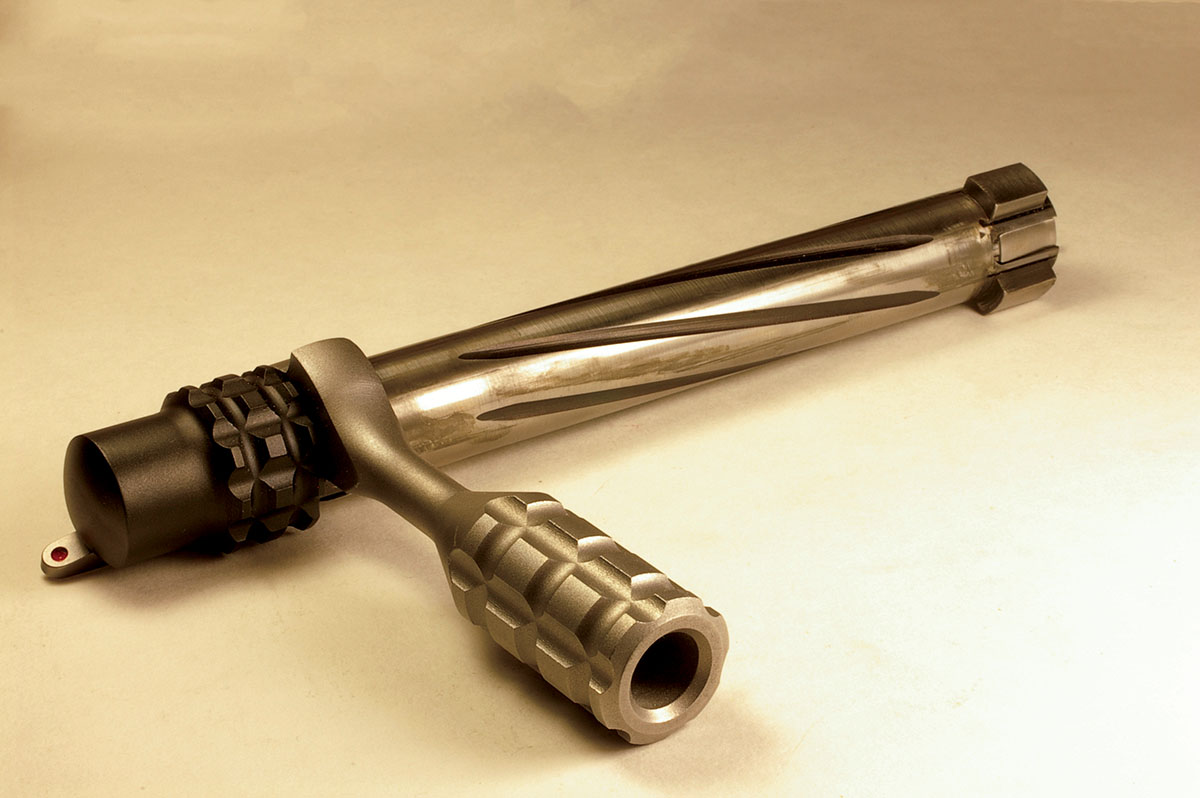
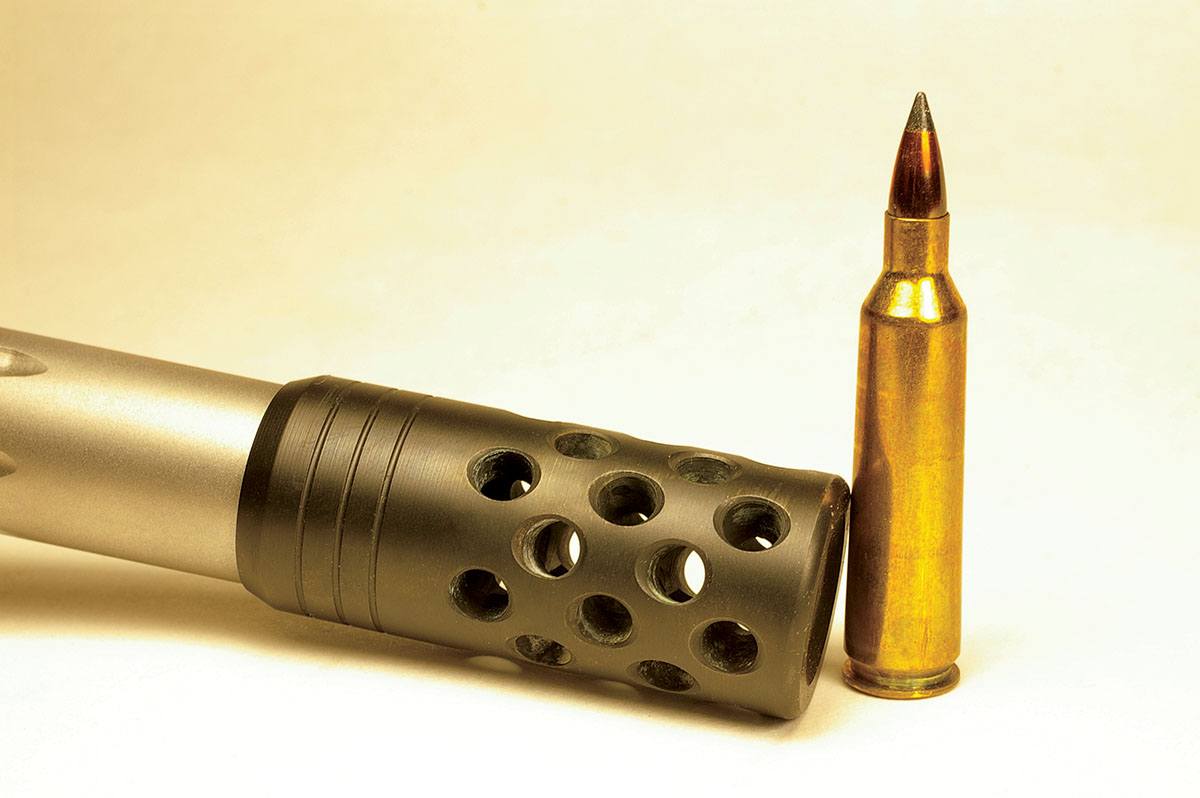
The Raptor’s fluted bull barrel is free-floated; standard length is 22 inches. Cooper, however, put on a 26-inch barrel with a 1:12 twist and threaded on a Cooper muzzle brake. Cooper rifles are normally made with Wilson barrels, owned by Hugo Vivero, who also owns Cooper. May said the barrels are match grade, button rifled, lead plug-lapped, heat relieved and air-gauged to ensure internal dimensions.
Rounding out the Raptor’s features is a TriggerTech trigger that adjusts down to 2 pounds by turning a screw accessible near the shoe with the stock in place. The spiral-fluted, three-lug bolt features a “grenade-looking” shroud and matching bolt handle. The detachable magazine holds five cartridges.
May said certain cartridges just seem to shoot better than others: “Rifles chambered in 6.5 Creedmoor seem to shoot accurately. Actually, any of the smaller varmint cartridges shoot well,” he said. “The 204 Ruger is especially accurate.”
He considers the 22-250 the gold standard of varmint cartridges because of its great accuracy and high velocity. To authenticate his claim, I thumbed through my records for my Cooper single-shot Model 22 Phoenix 22-250 I’ve been shooting for years on end. The average size of 73 five-shot groups was .62 inch.
According to May, a few basics make an accurate rifle. “One is a good barrel mated to a receiver made with as much steel as possible to make it stiff and machining the receiver correctly to make it square with the barrel bore,” he said. Another is a fast lock time, and Cooper rifles are made with a lightweight firing pin and a stout spring that provide a fast lock time. The rifles feature three locking lugs. Many riflemen believe three lugs provide even pressure around the receiver to dampen torque.
However, the 60-degree lift of the three-lug bolt on older Cooper rifles requires quite a bit of force on the bolt handle over its relatively shorter arc of movement to break a fired case’s grip on the chamber wall, draw back the firing pin and compress the main spring. The necessary amount of muscle applied to a bolt handle for this primary extraction has been lessened quite a bit, starting with the Model 50 series repeating rifles. As the bolt handle is lifted, the root of the handle contacts an angled face on the receiver bridge that pushes the bolt body rearward. The old design of the cocking-cam notch had a rather steep angle that required quite a bit of force to overcome while opening the bolt. That resistance is heard as a double-click. A new, less acute camming angle contributes to a smoother lift.
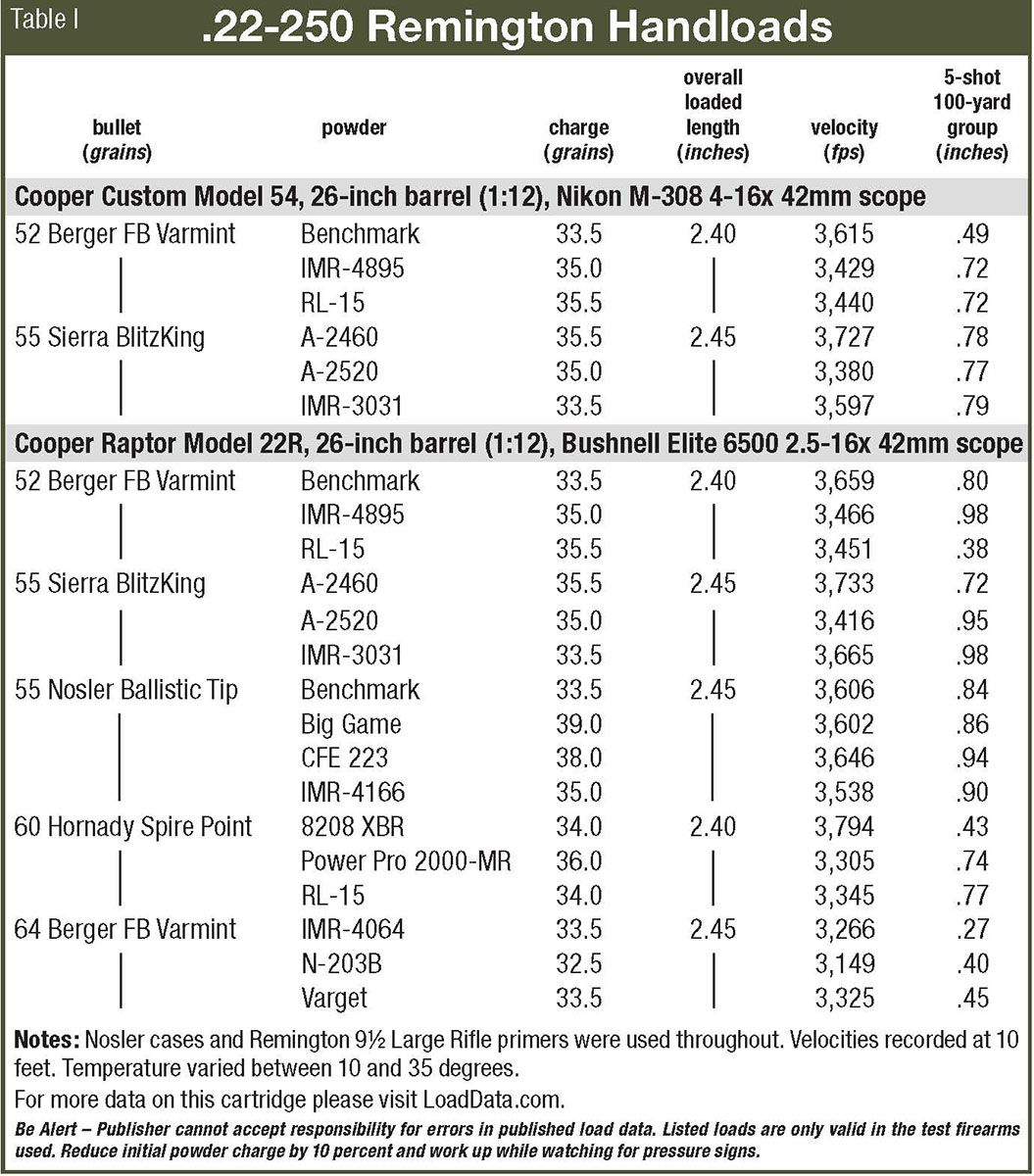
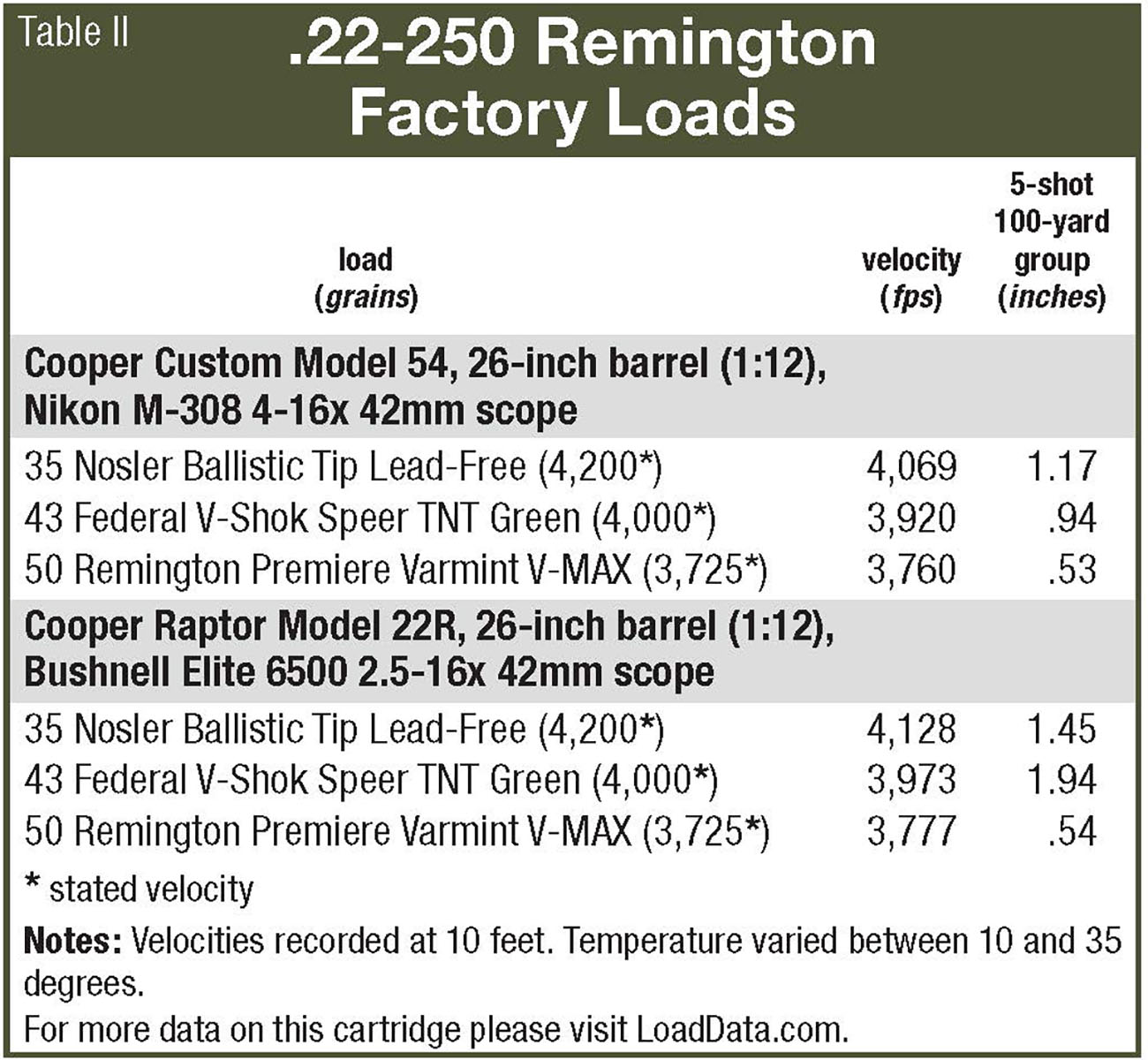
Cooper had already sold the Model 54 Custom rifle, but the owner said it was okay if I borrowed it. I treated the rifle kindly. Loads shot from its 26-inch barrel came up only 30 to 80 fps short of the advertised velocity of two factory loads. It exceeded the velocity of the Remington factory load by 35 fps. The three factory loads shot through the Custom rifle met Cooper’s guarantee of three bullets in .5 inch at 100 yards. I shot five-shot groups, though, which slightly enlarged the size of groups. Remington Premiere Varmint cartridges loaded with 50-grain V-MAX bullets shot best in the rifle.
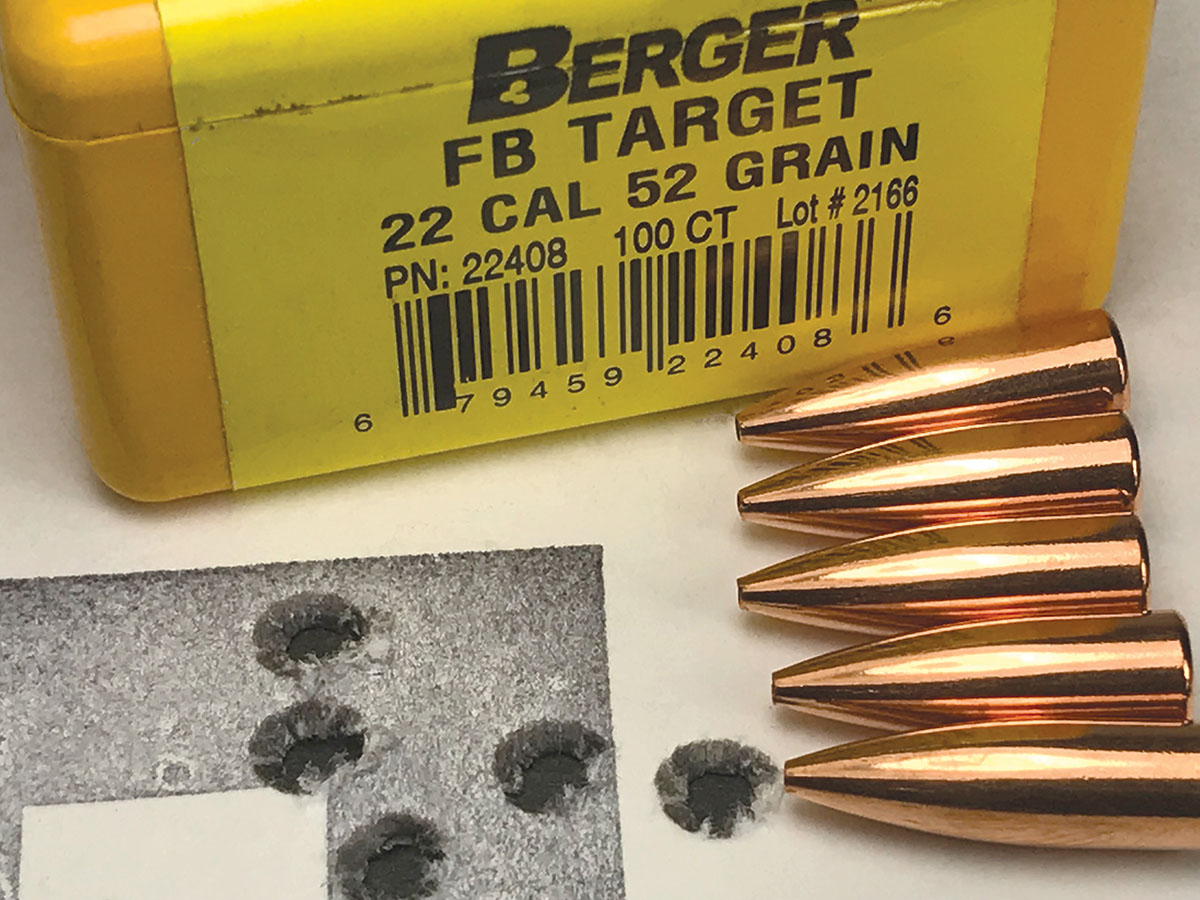
Six handloads also shot well in the Custom rifle. All three loads with Berger 52-grain FB Varmint bullets met Cooper’s guarantee of .5 inch at 100 yards. Five of the 52-grain bullets paired with Benchmark printed a group slightly under .5 inch. Five-shot groups with the five other handloads averaged about .75 inch. The rifle handled and pointed easily, which resulted from hand control due to the stock grip and head support from the full comb.
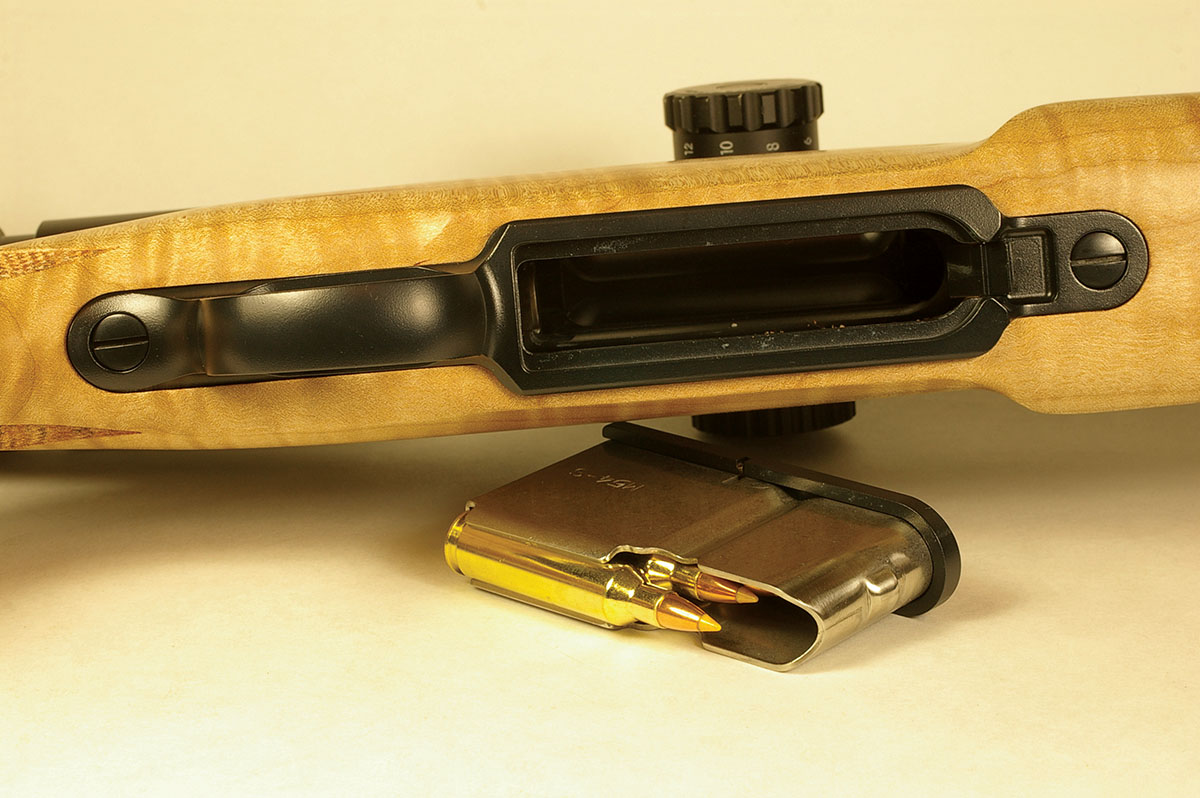
The Model 22R action is an intermediary-length action that Cooper uses to chamber cartridges up to the 35 Whelen. The action is more than long enough for 22-250 cartridges. In fact, 22-250 cartridges fit in the Model 22R’s magazine with about a half an inch of room to spare.
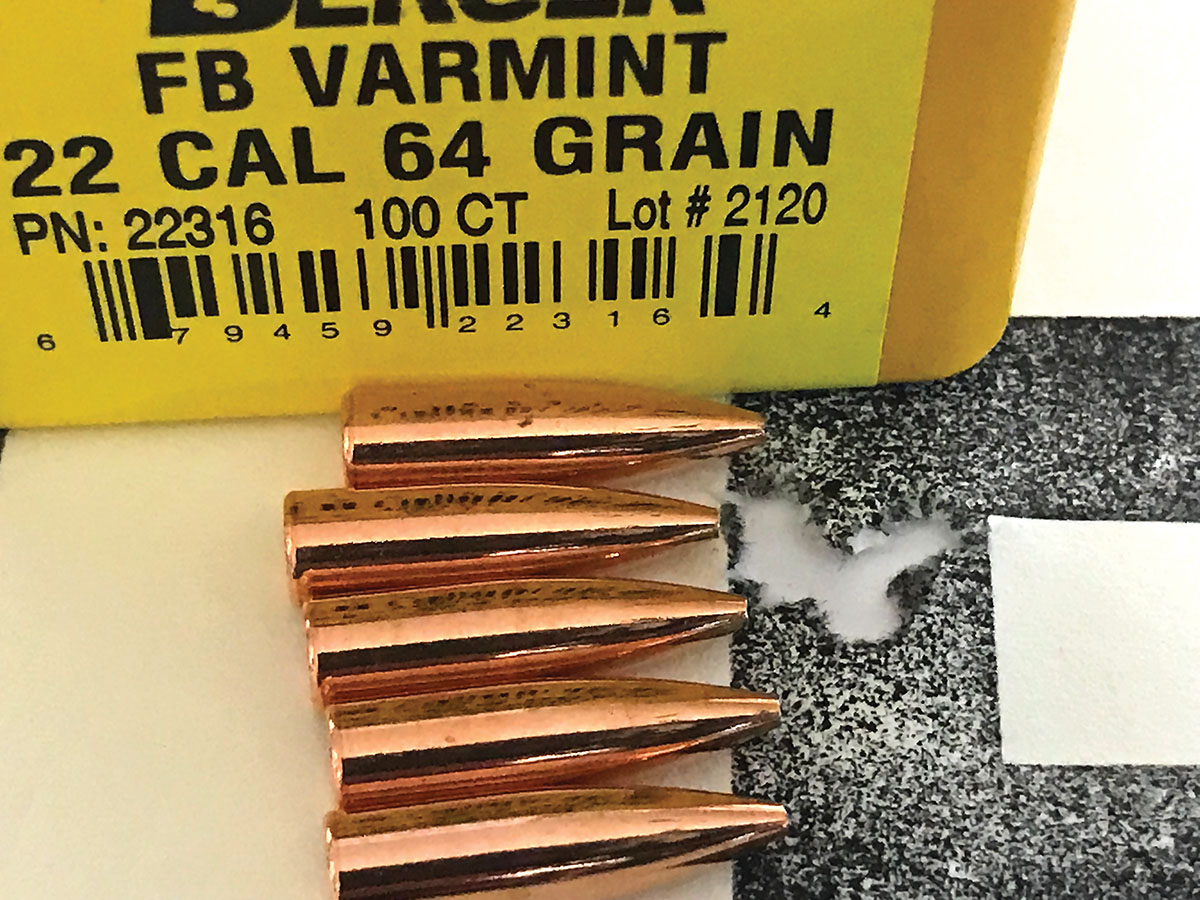
That meshed with the test rifle’s fairly-long chamber throat. Berger 64-grain FB Varmint bullets were short of touching the beginning of the rifling with a cartridge length of 2.45 inches. That cartridge length placed the base of the Berger bullet even with the bottom of a case neck with no encroachment in powder space.
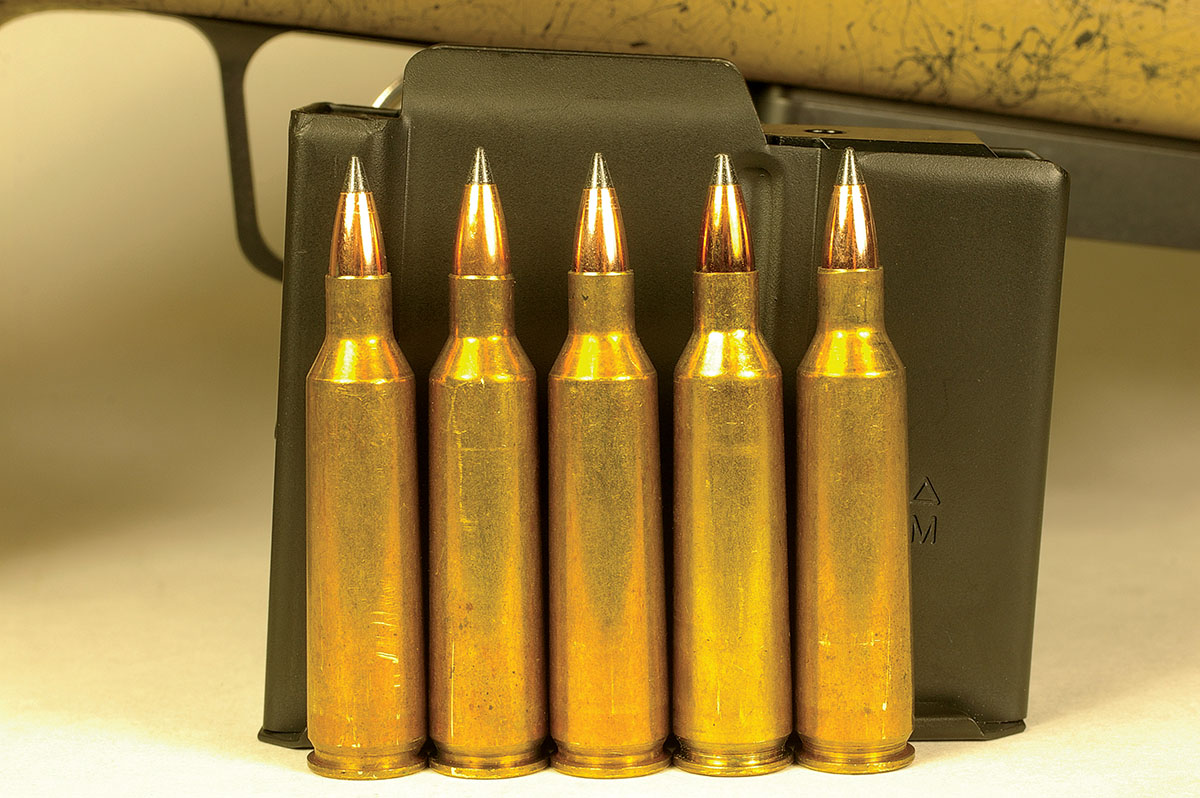
Nearly every 22-250 load shot through the Raptor grouped three bullets in .5 inch at 100 yards. Several handloads did the same with five shots. Berger 64-grain FB Varmint bullets shot especially well with three powders. Three of the Berger bullets together with Varget powder shot 1.34- and 1.10-inch groups at 300 yards.
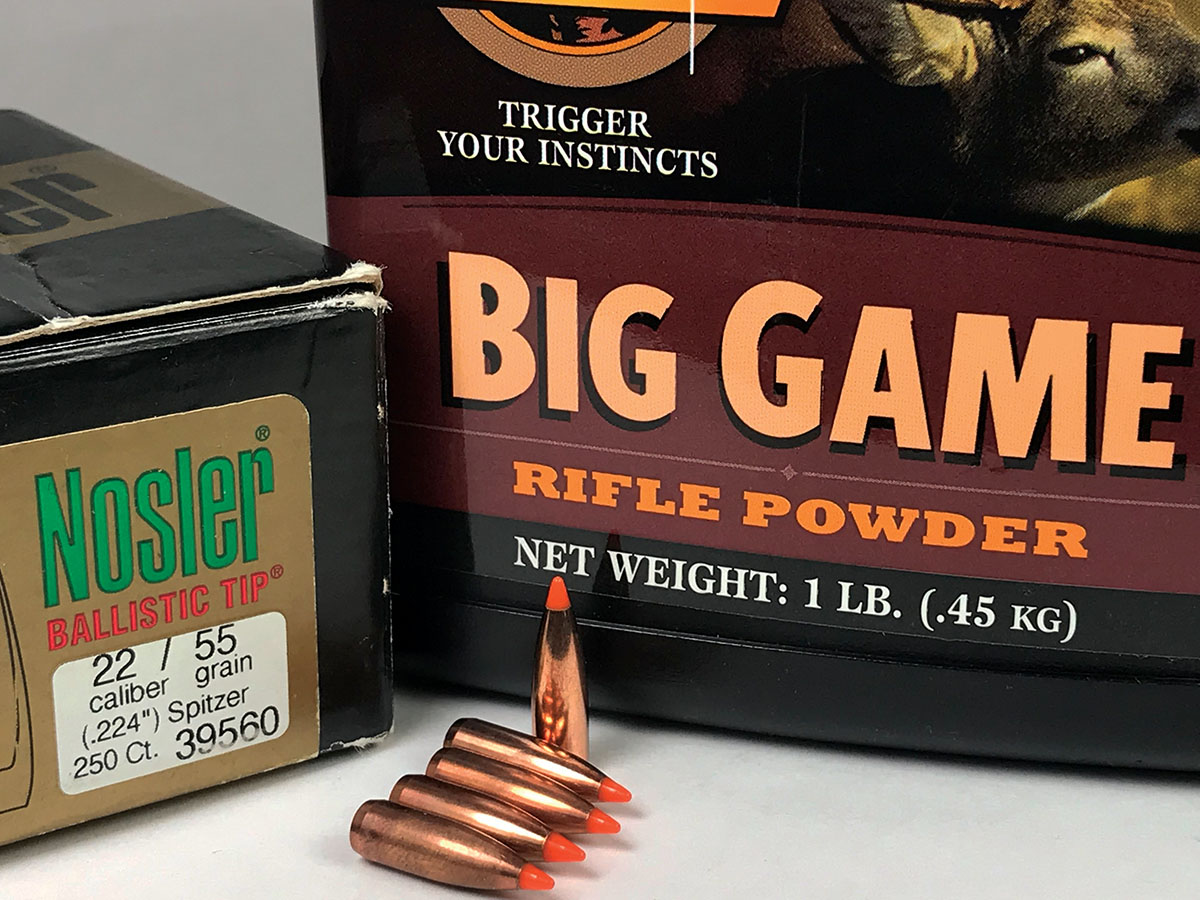
None of the handloads pushed the gas pedal all the way to the floor. Most powder charges were one to 2 grains below the maximum listed in various reloading manuals. Sierra 55-grain BlitzKing bullets combined with Accurate 2460 powder produced somewhat higher velocity than listed in the Western Powders Handloading Guide, Edition 1, and extreme velocity spread was about 20 fps in both Cooper rifles. The Sierra bullet starting out at 3,730 fps and hitting 2 inches above aim at 100 yards drops only 1.50 inches at 300 yards and 10 inches at 400 yards. Most any other cartridge requires a hatful of powder to meet or beat that trajectory.
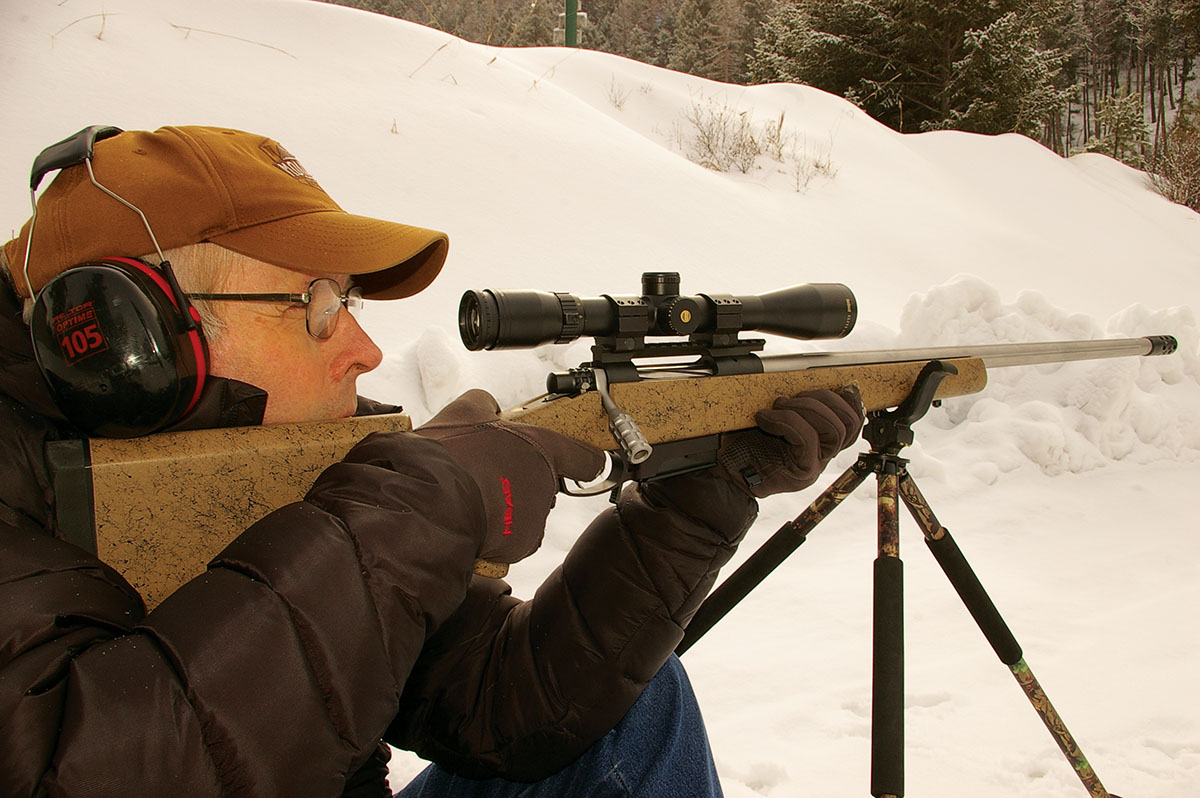
Stepping away from the bench, I sat and shot the Custom Model 54 supported on a Primos Trigger Stick tripod, and prone with the Raptor supported on a Harris bipod. Shooting the Custom was a walk in the park. I’d look at a target at 200 yards, the rifle came to bear as if on its own, and I fired. The Raptor required some muscle to bring it to bear. Once aligned, though, it barely moved. The end result with both rifles was great accuracy as bullets holes stacked one on top of the other.