One Big 243 Winchester
Building a New Varmint Rig
feature By: Rob Behr | October, 19
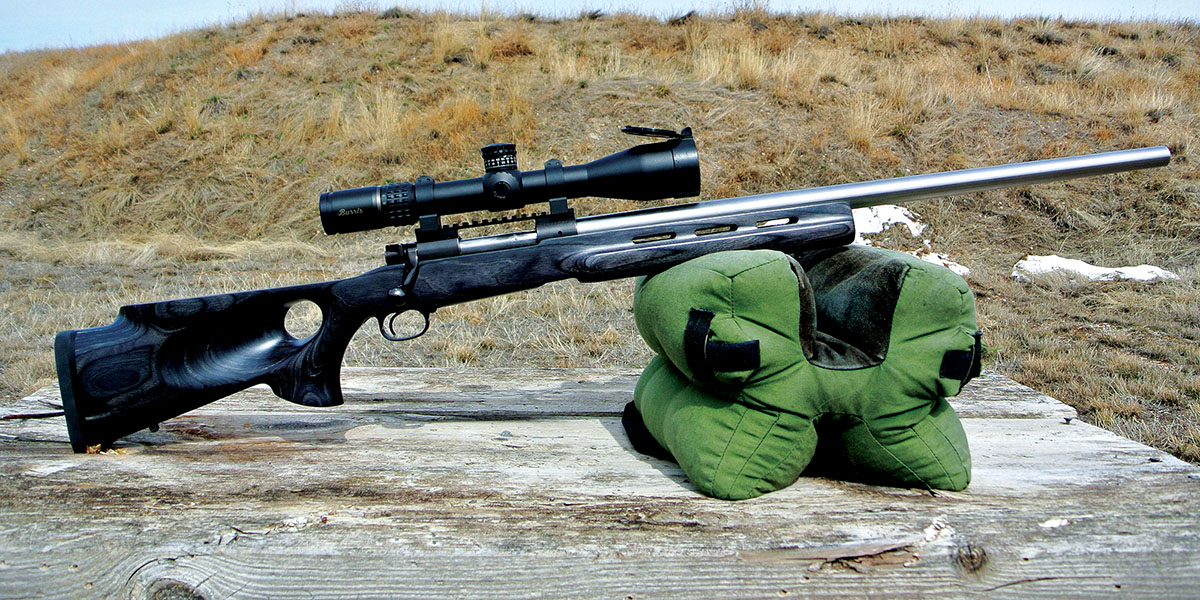
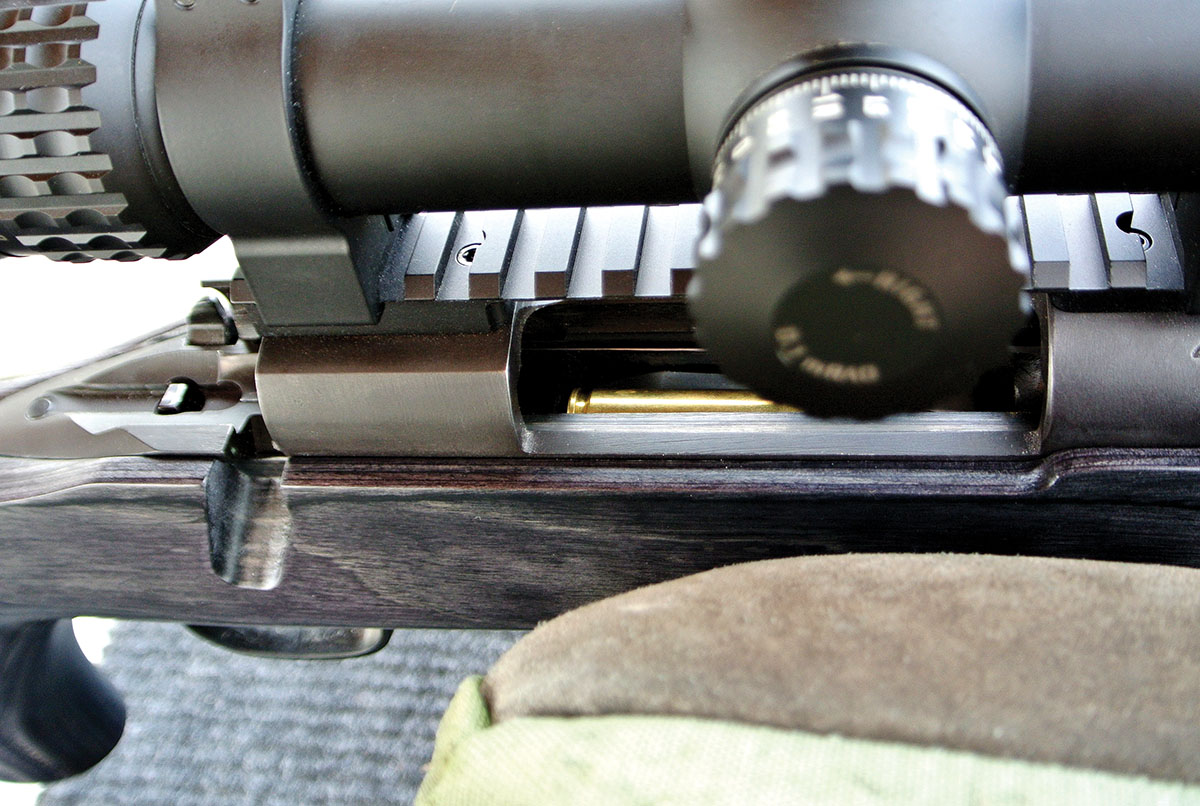
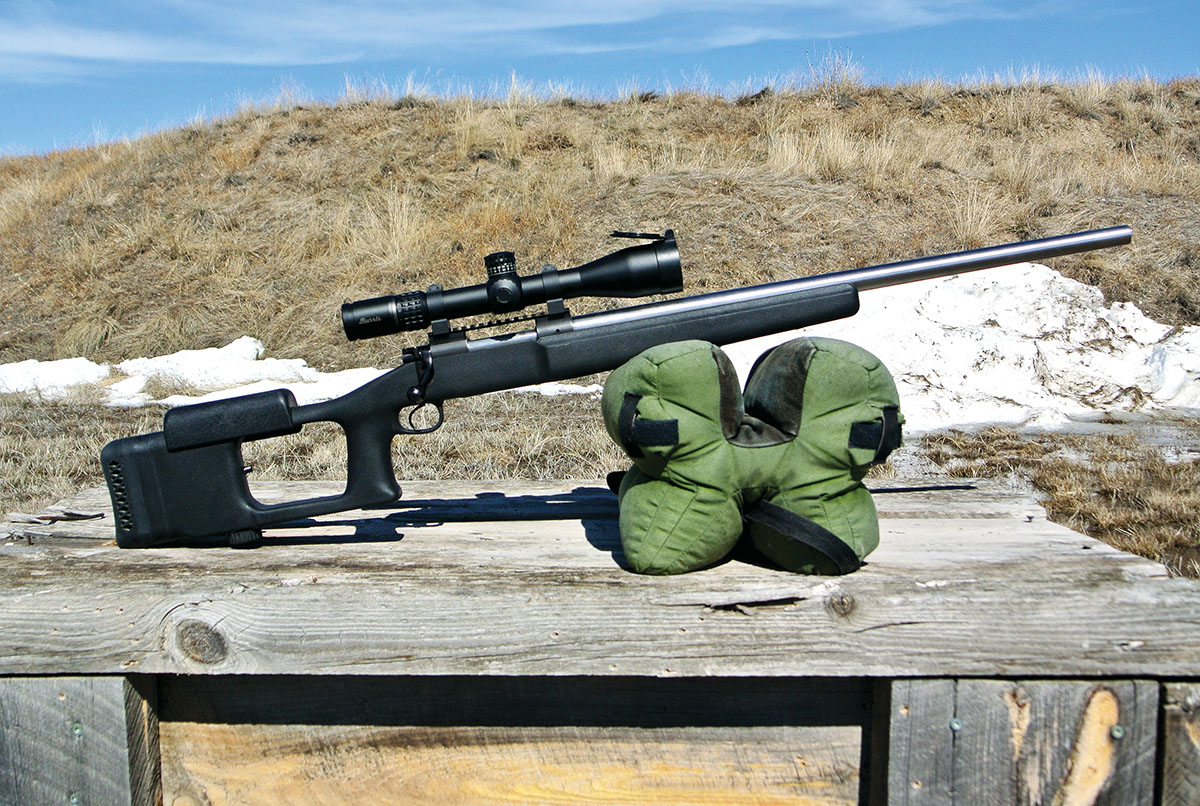
The Model 770 was only available in Winchester’s lineup from 1969 until 1971 and is certainly one of the lesser-known variants of the popular Model 70 rifle. It was intended to offer a more affordable option for hunters who wanted a Model 70. Overall, the rifle had a good reputation for accuracy and quality. Its long action was factory shimmed to facilitate the 243 Winchester case, which looks odd but functions without problems. Feeding is from a simple blind magazine using Winchester’s post-1964 push-feed action. In its time with me, the rifle shot modestly well, but it became an orphan as my kids grew up and my wife lost interest in hunting. Eventually it was relegated to the back of the safe and became the perfect “donor” rifle.
When I look back, it is easy to see when this project went off the rails. Bender asked me about the barrel contour while we were passing time at the SHOT Show in 2016. I can still remember telling him I didn’t care, as long it was heavy. I got what I asked for. When the package arrived, it contained my old barrel and the barreled action sporting a new Proof Research stainless steel barrel. The package’s shipping weight was 10 pounds.
For readers who haven’t seen what Proof Research is doing with barrels in its Columbia Falls, Montana, plant, the products deserve a look. The company began with a patent acquired from Mike Degerness’ Advanced Barrel Systems, a company that used carbon fiber wraps to reduce weight on steel barrels. Proof Research now manufactures its own line of both conventional and carbon-wrapped barrels using some of the most advanced manufacturing techniques available.
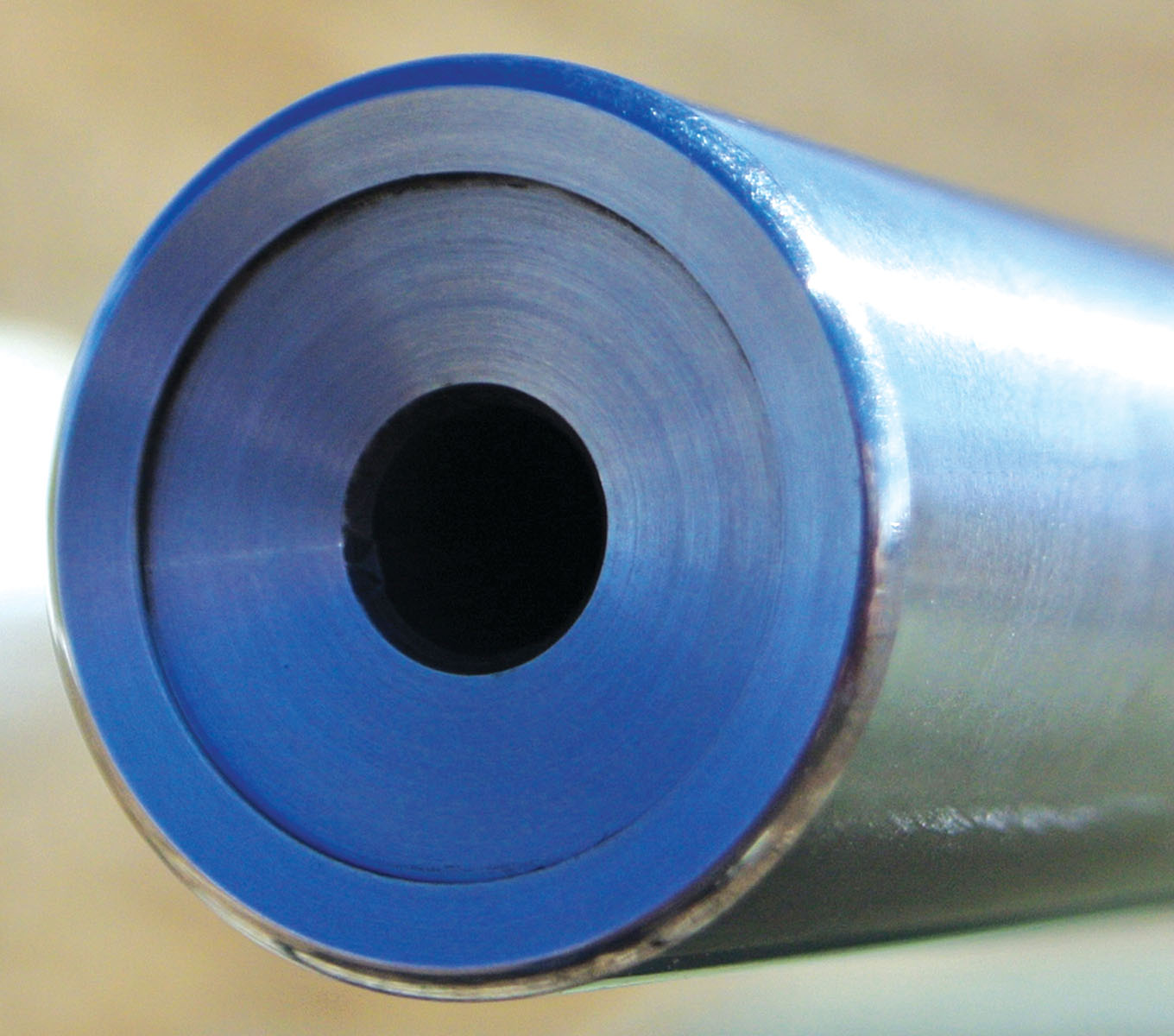
The barrel that Bender mated to my old Winchester’s action is made from 416R stainless without the carbon fiber. The steel was triple stress-relieved before the first cut was made and uses four-groove traditional rifling with a 1:8 twist. “I think we do 6mm and 6.5mm barrels especially well,” Bender told me over the phone. “I think that thing is going to be a hammer.”
Now I had the hammer, but it needed a handle. A month or so later, a local gun show dealer offered a solution. He had an old Choate Machine and Tool Ultimate Sniper stock for a Winchester 70 long action. I’d grown up with a Choate folding-stocked Ruger 10/22 and loved it, but I’d never liked the looks of the Major John Plaster designed Ultimate Sniper stock. They had always struck me as ugly.
Now that I’m older and have learned the limitations of beauty, the stock’s positive features called to me like a chubby siren. Choate built these stocks to be tough, although at 4 pounds, weight was obviously not a primary concern. A full length aluminum bedding system mated to a heavy polymer body makes them one of the most durable stocks on the market. The inletting would allow a barrel contour of 1.250 inches without extensive fitting. Rounding out this stock’s list of attractive qualities was the dealer’s firm asking price of $50. Sold.
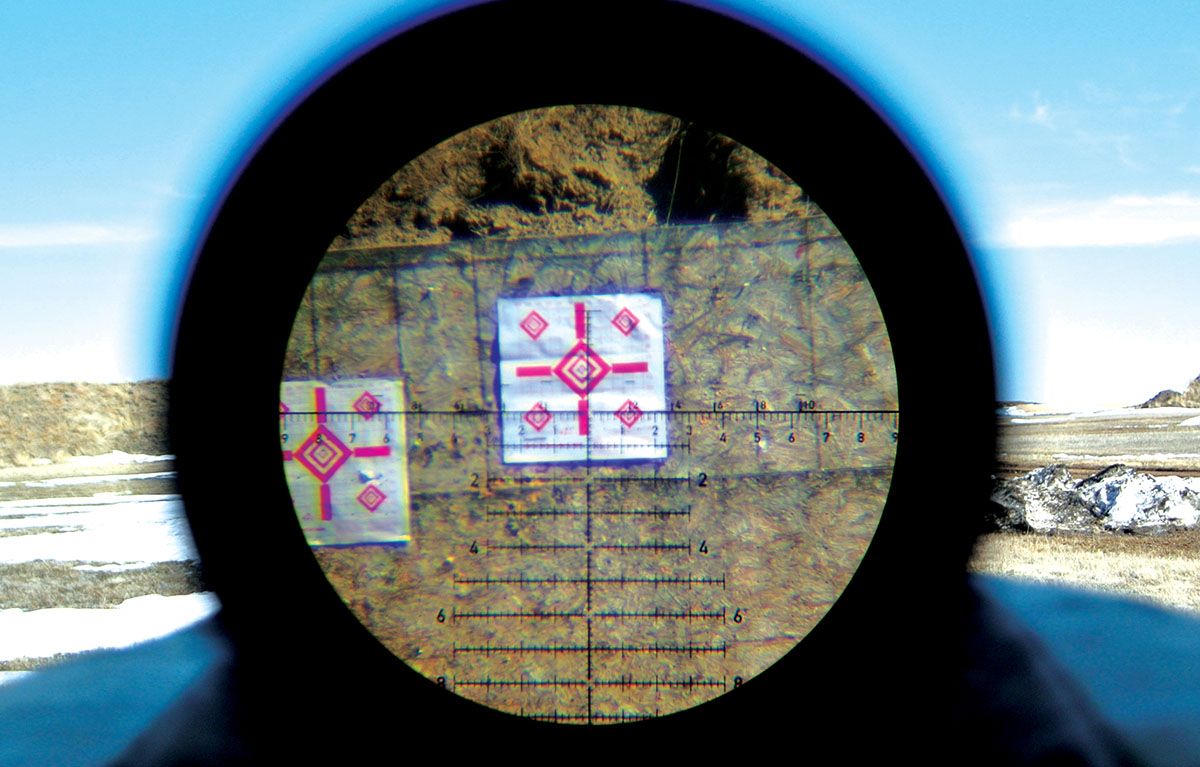
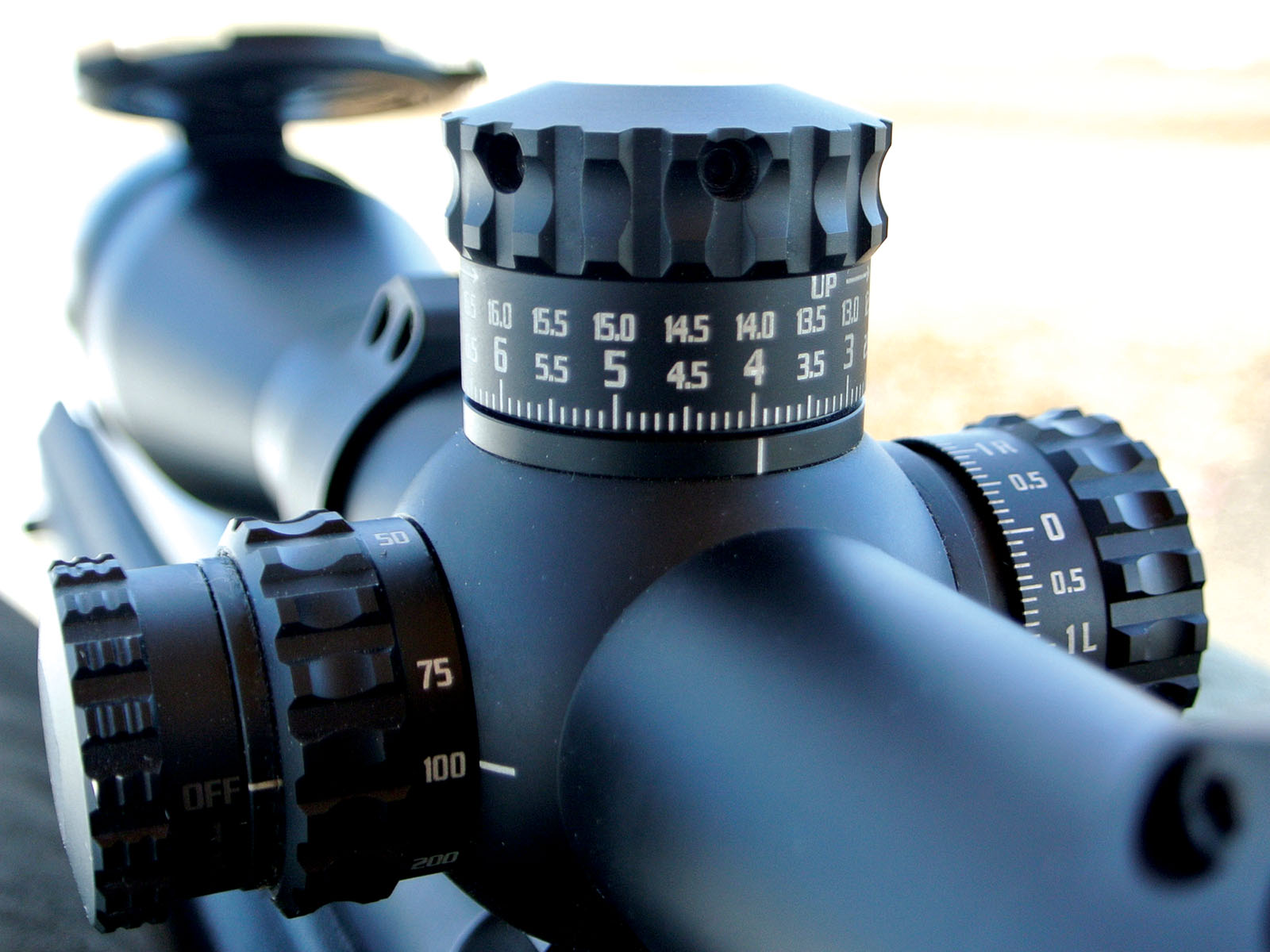
After some consideration, the heavy barrel 243 Winchester in the back of the safe seemed an obvious landing spot for my new scope. With the Burris in place, the already heavy rifle tipped the scales at 16.2 pounds. The Choate stock had go. It was supposed to be a long-range varminter, but there are limits. It was just more than I cared to pack around.
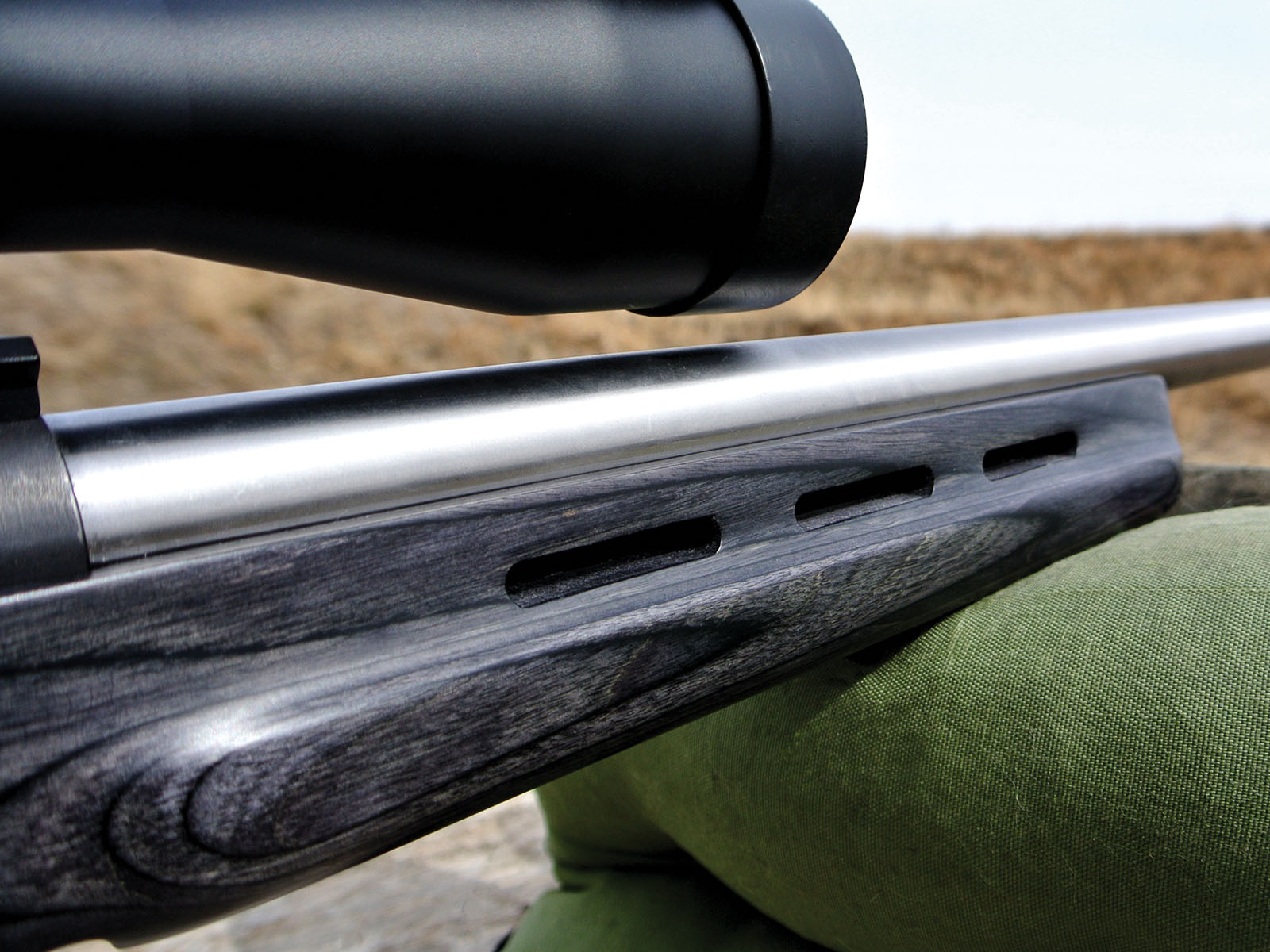
Trading the Choate for a Stocky’s thumbhole varminter changed the rifle’s aesthetics dramatically. It also lopped 2 pounds off the rifle’s carry weight. Inletting proved to be an easy job and the bedding went smoothly. After waiting out a vicious winter, my heavy varminter “Version 2.0” was ready to go back to the range.
Now to come clean about this rifle. I had pitched it to my wife as an inexpensive way to make a varmint rifle using an action I already owned. The result of this project ended up riding a fuzzy grey line between an F-Class competition rifle and a varminter on steroids. One thing I am sure about is that my wife has no idea what this inexpensive varmint rifle truly cost. Luckily she doesn’t read my articles.
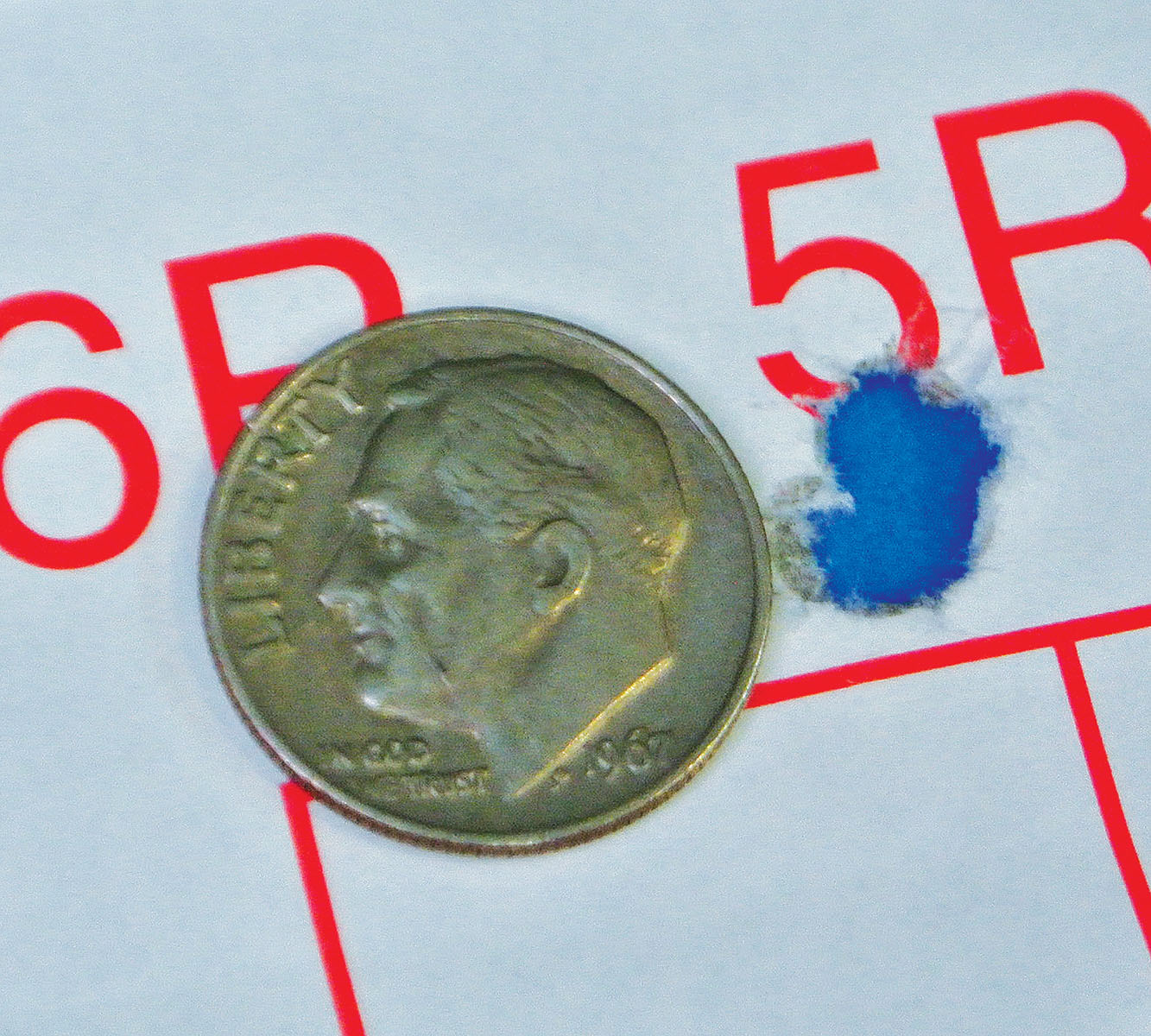
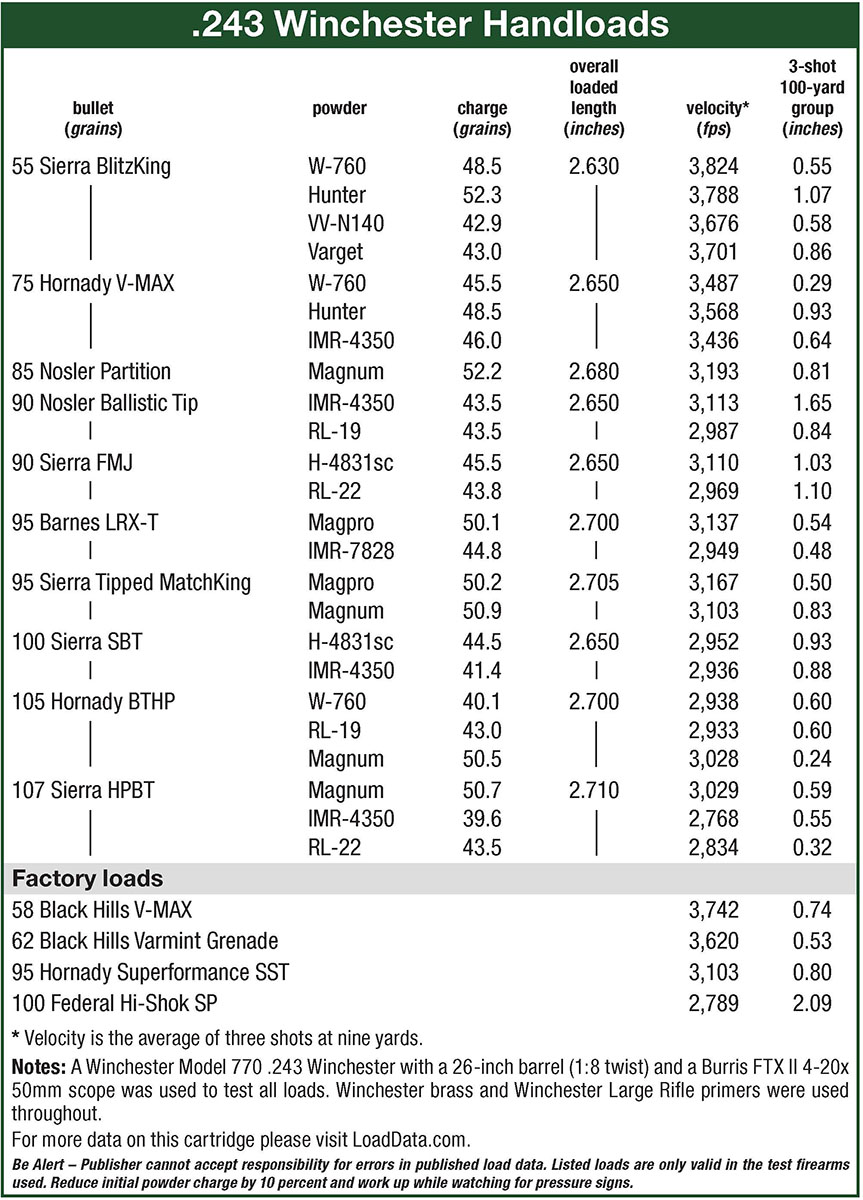
I had seen the Sierra 55-grain BlitzKing in action from a couple 6mm rifles and came away impressed with their performance on prairie dogs. There were doubts that the long jump into the rifling combined with the 1:8 twist would produce good accuracy. As it was, I was more than pleasantly surprised.
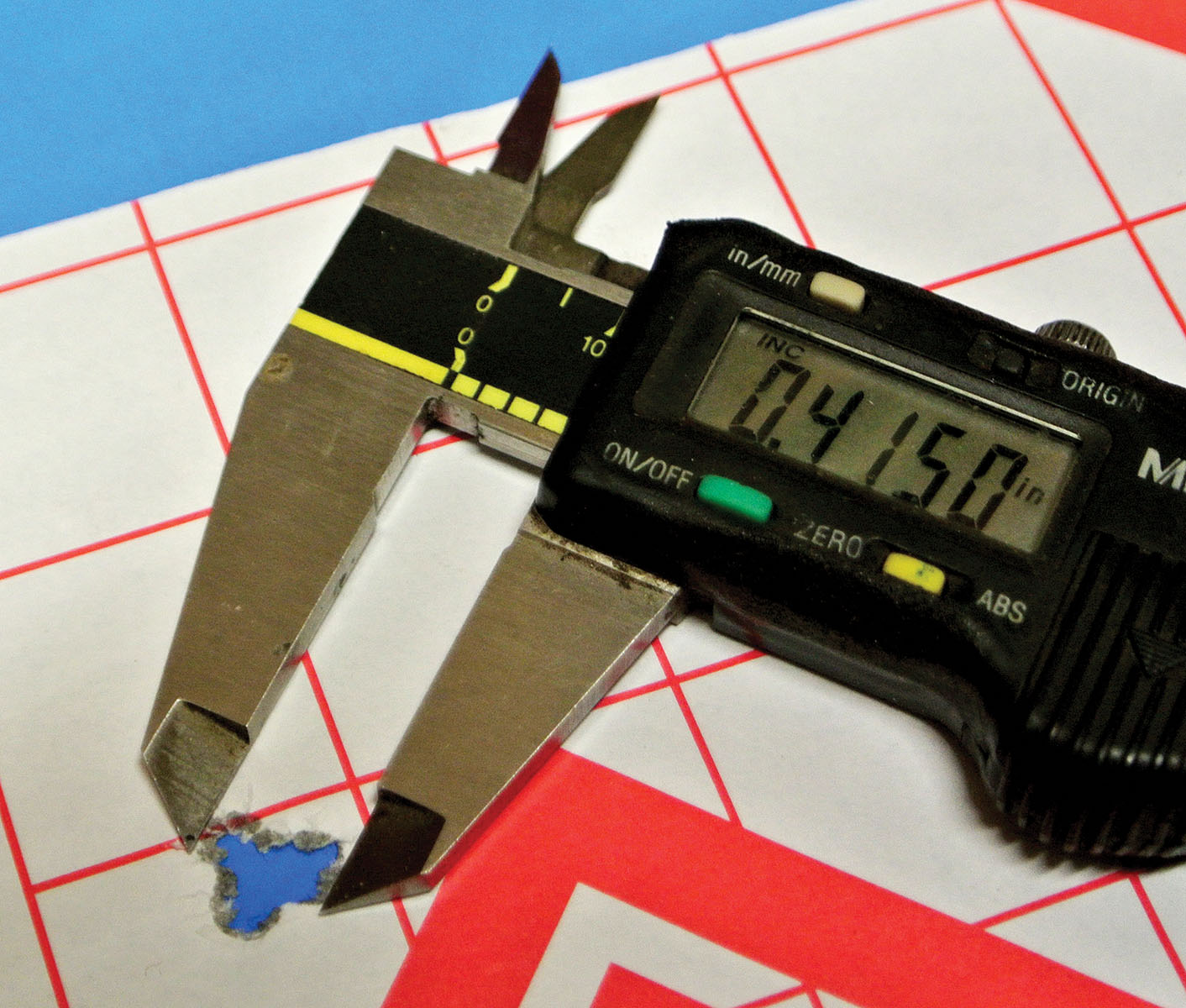
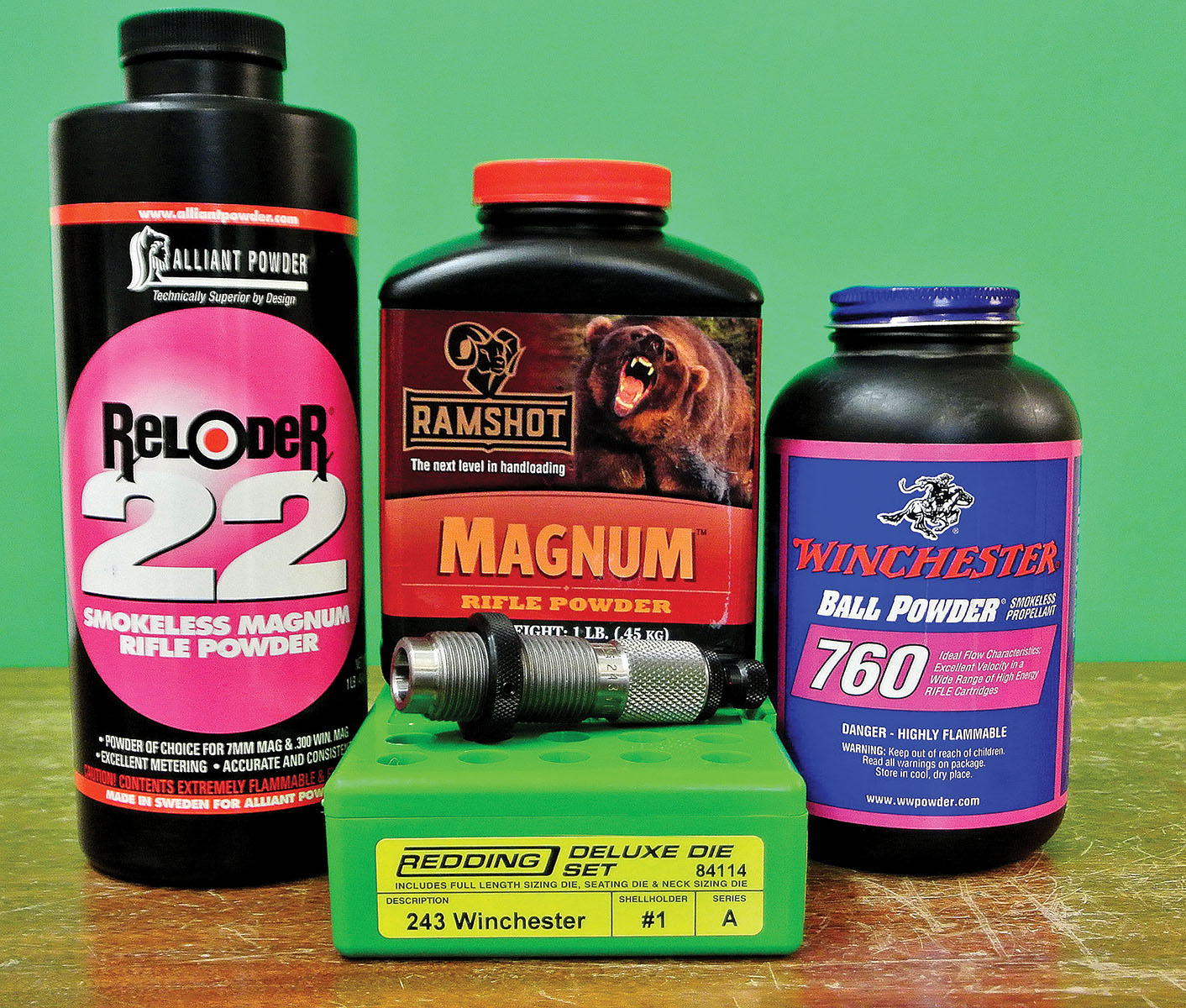
Varmint bullet testing was done on the last day of shooting for this article. The first two days had produced very nice shooting conditions, but this final day suffered from variable winds blowing from right to left. Despite the breeze, the 55-grain Blitzkings were able to average .550-inch using 48.5 grains of Winchester 760 while posting an average velocity of 3,824 fps. This was excellent performance given the wind conditions. Vihtavuori N-140 provide .580-inch groups on average but gave up almost 150 fps in velocity to W-760.
For the sake of comparison, I tested two boxes of varmint loads from Black Hills Ammunition. Its 58-grain V-MAX load produced an average group of .741 inch at a velocity of 3,742 fps with an extreme spread of only 42 fps over 15 shots. The 62-grain Varmint Grenade load produced an average group of .532 inch at 3,620 fps. This type of performance can be disheartening for handloaders, but it’s great news if you accidently leave your ammunition at home and need to replace it during a prairie dog hunting trip. Yes, I did that.
The first rounds put through this rifle once it was broken in and zeroed included some older Federal 100-grain Hi-Shok factory loads. The first group measured 2.158 inches. That settled down to an average of 2.093 inches, so it did get better. That set the tone for my hunting bullet testing, although I am glad to report that only one other combination came anywhere close to beating the Hi-Shok for worst combination.
I’d had very good luck with the Sierra 90-grain FMJ in a 6x45mm AR-15 last year and hoped it would be a useful bullet for coyotes in this heavy-barreled 243. Neither Hodgdon 4831sc nor Reloder 22 managed to produce average groups that broke an inch. Later testing found the Sierra 100-grain SBT also struggling to stay under an inch.
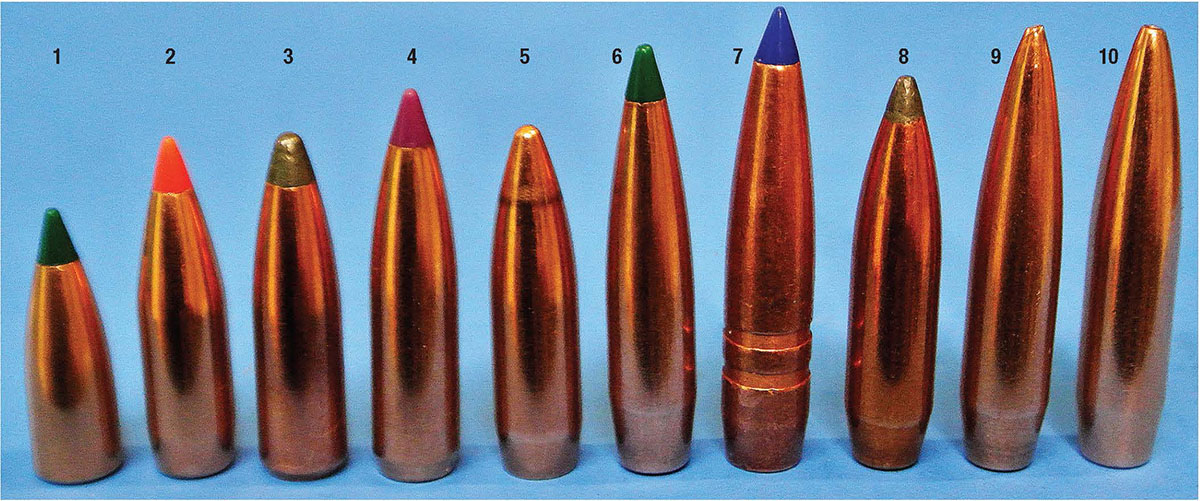
Of the four target bullets tested, all performed reasonably well considering the lack of load development. There were two standout combinations that seem to offer the best promise of extreme accuracy at longer ranges. While the Barnes LRX-T and the Sierra Tipped MatchKing both performed well, the higher ballistic coefficient Sierra 107-grain BTHP and the Hornady 105-grain BTHP turned in tighter and more consistent groups. These two bullets will both receive much more load development before this rifle fires its first 1,000 yard shot.
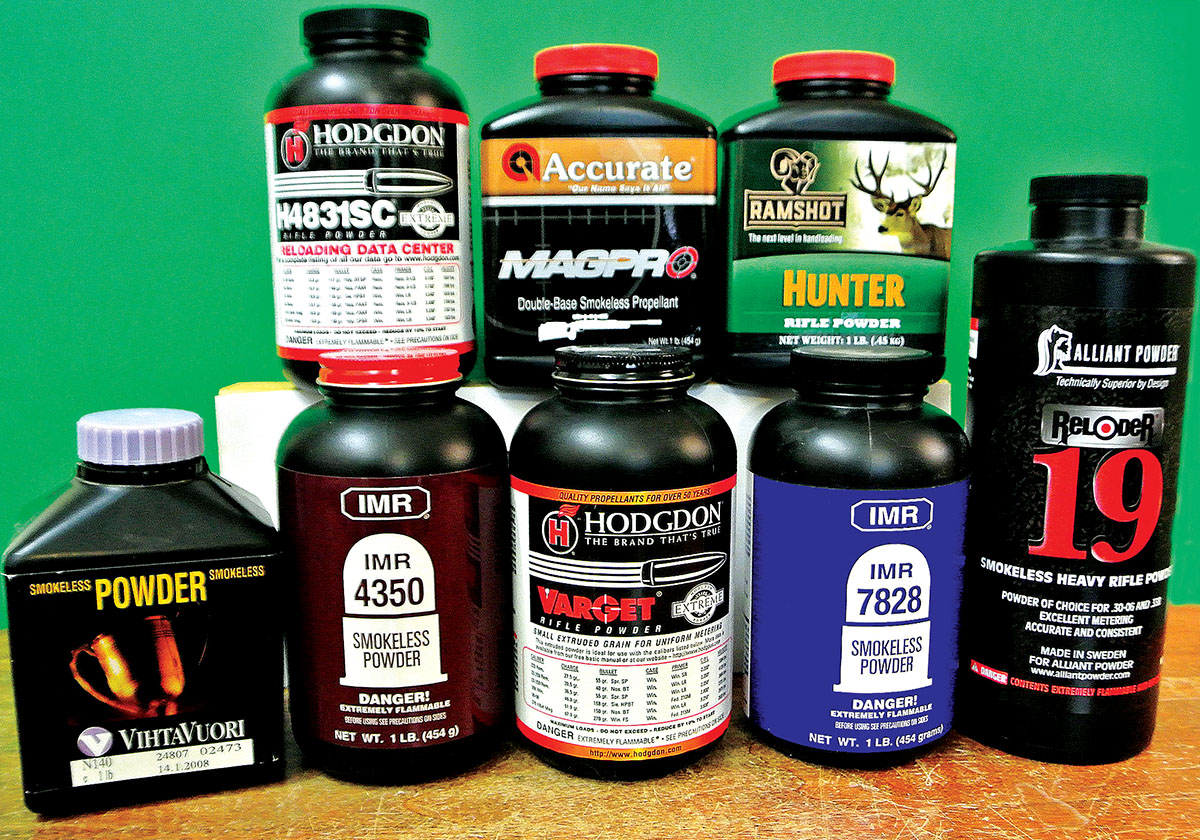
The Hornady 105-grain HPBT produced two sets of very consistent groups using both Winchester 760 (apparently no longer my rifle’s darling propellant when it comes to heavier bullets) and Reloder 19. The consistency is interesting. The average velocity using Winchester 760 was 2,938 fps with an average group measuring .605 inch. With Reloader 19 it was 2,933 fps and .603 inch. Switching to 50.5 grains of Ramshot Magnum produced 3,028 fps and an average group of .246 inch. This combination of accuracy and velocity bodes well for long range performance.
The Sierra 107-grain HPBT also produced good groups. Ramshot Magnum at 3,029 fps produced an average group of .599 inch. IMR-4350 beat that group by .040 inch but gave up more than 200 fps in the process. It was Reloder 22 that took top honors with this bullet, producing a very respectable .323-inch average group at 2,834 fps.
As this is written, it’s a little late for the coyote season but prairie dogs will be up in the next couple of weeks. Depending on my mood, there are going to be a lot of BlitzKings or V-MAXs going down range very soon. Later this summer when it is too hot and dry to feel good about hunting on the prairie, I’ll develop some loads with heavier bullets and try the rifle at 1,000 yards. The antelope thing may not happen this fall, but I wouldn’t sleep to well if I was a winter coyote. I don’t honestly know what this rifle is for, but all of a sudden I sure do have a lot of hopes and plans for it.