Barnes Varmint Grenades
Testing Bullets in Several Calibers
feature By: John Haviland | October, 19
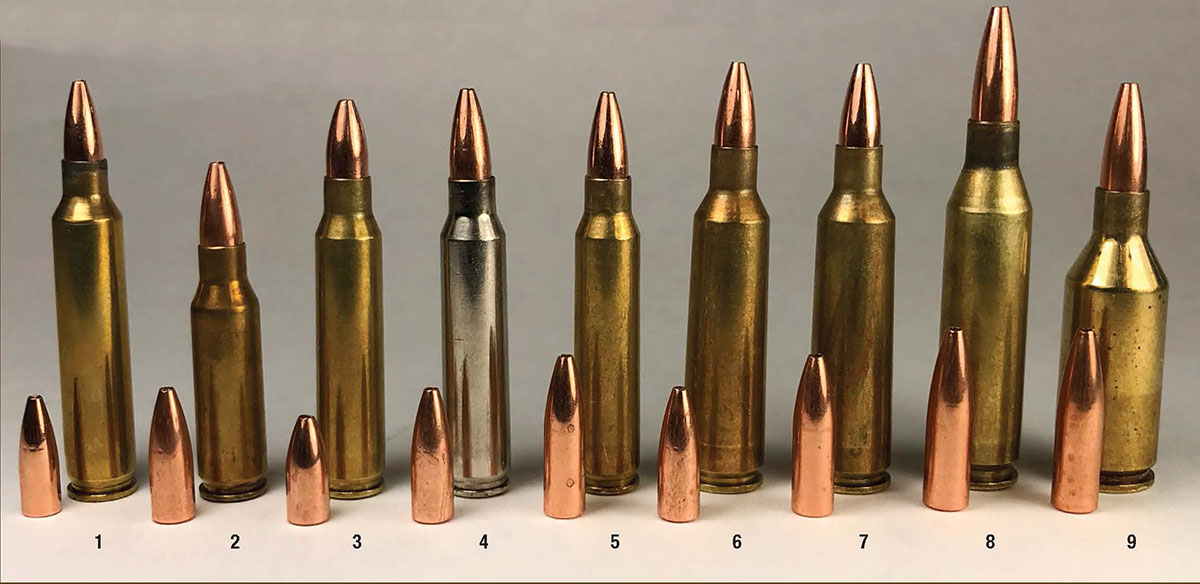
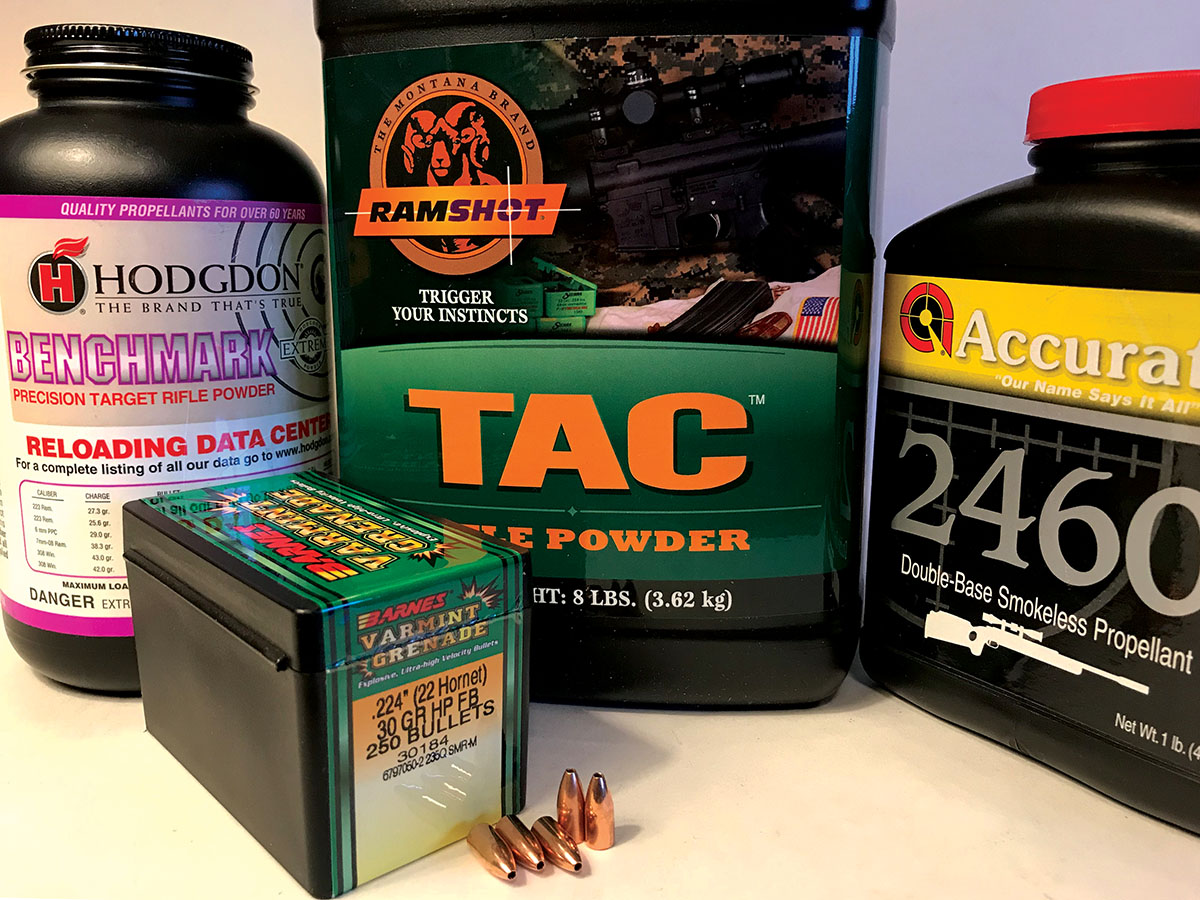
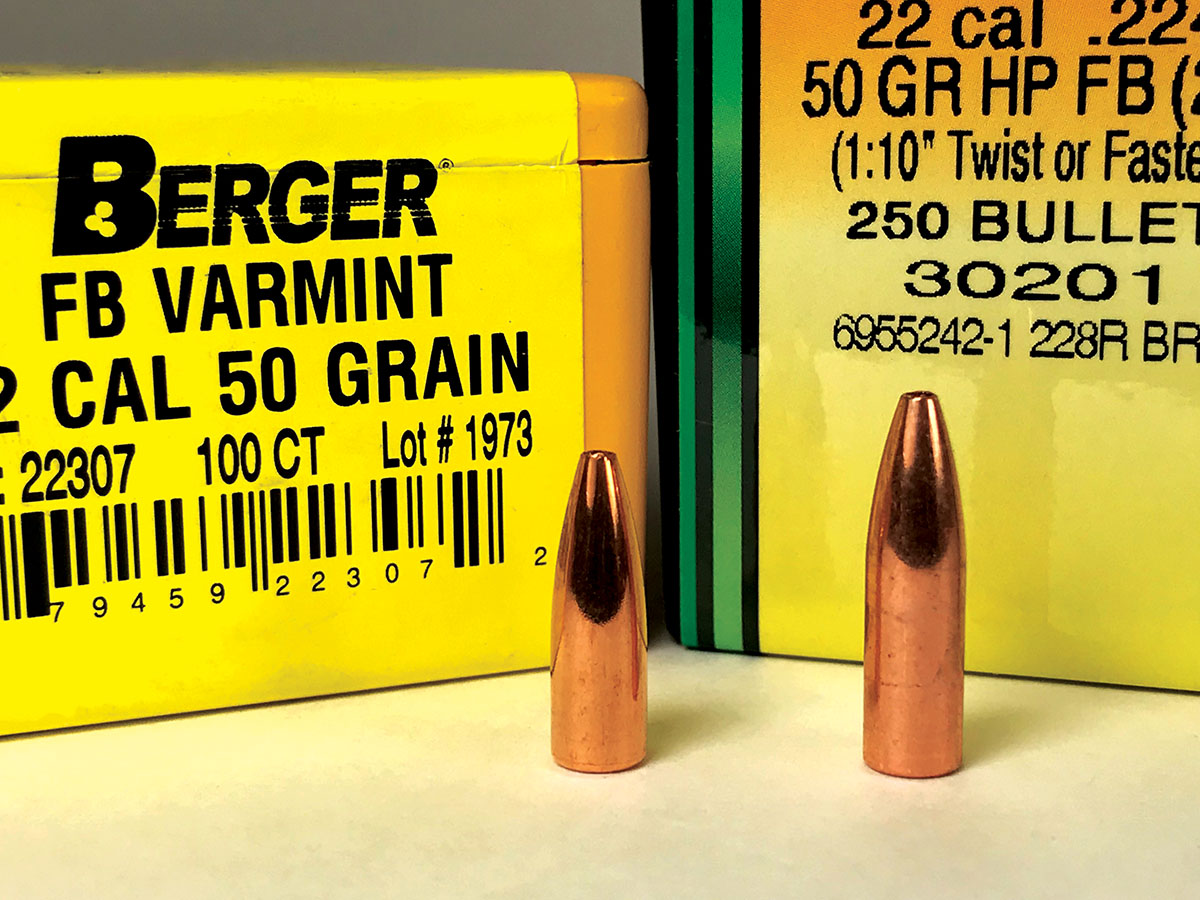
VGs are traditionally shaped with a flat base and hollow tip. The bullets are made in .20, .22 and .24 caliber. Even with their flat base, the bullets are relatively long for their weight because of their copper/tin core. The length of the .20-caliber, 26-grain VG measures, .636 inch. In contrast, Berger .20-caliber, 30-grain Flat Base bullets measure .539 inch in length and 35-grain FB Varmint bullets are .606 inch. VG 36-grain, .22-caliber bullets measure .697 inch in length. In comparison, Nosler 40-grain HP FB Varmageddon bullets are similar in shape and measure .560 inch in length. All VGs except the 50-grain, .22-caliber version stabilize in standard rifling twists.
The ballistic coefficient (BC) of VG bullets is comparable to lead-core bullets of similar weight and shape. The .22-caliber, 36-grain bullet has a .149 BC. In comparison, Nosler Varmageddon 40-grain flatbase hollowpoint bullets have a .158 BC. The .24-caliber, 62-grain VG has a .199 BC while Sierra 60-grain flatbase hollowpoint bullets have a BC of .182.
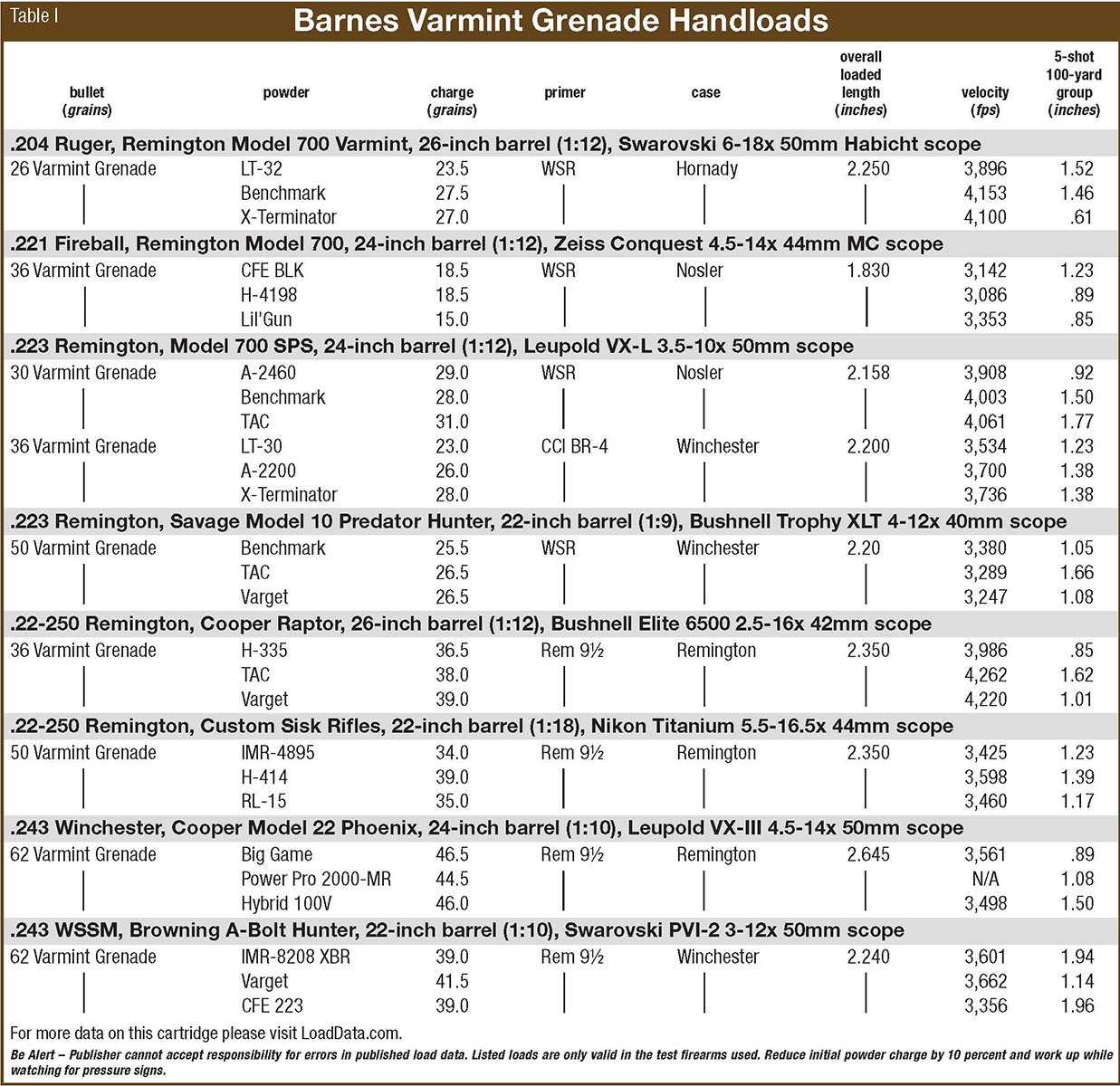
Lots of handloading data for VG bullets is available from several sources. The Barnes Reloading Manual Number 4 lists some handloading data for VG bullets. The barnesbullets.com website contains handloading data for the 204 Ruger, most commercial .22-caliber cartridges from the 22 Hornet to the 223 Winchester Super Short Magnum and .24-caliber cartridges including the 243 Winchester, 6mm Remington, 243 WSSM and 240 Weatherby Magnum. The Hodgdon 2019 Annual Manual and hodgdonreloading.com include VG loading data for most of those cartridges and the 218 Bee, 22 Nosler and 6mm BR. I relied on all that data to load bullets in the 204 Ruger, 221 Fireball, 223 Remington, 22-250 Remington and 243 Winchester.
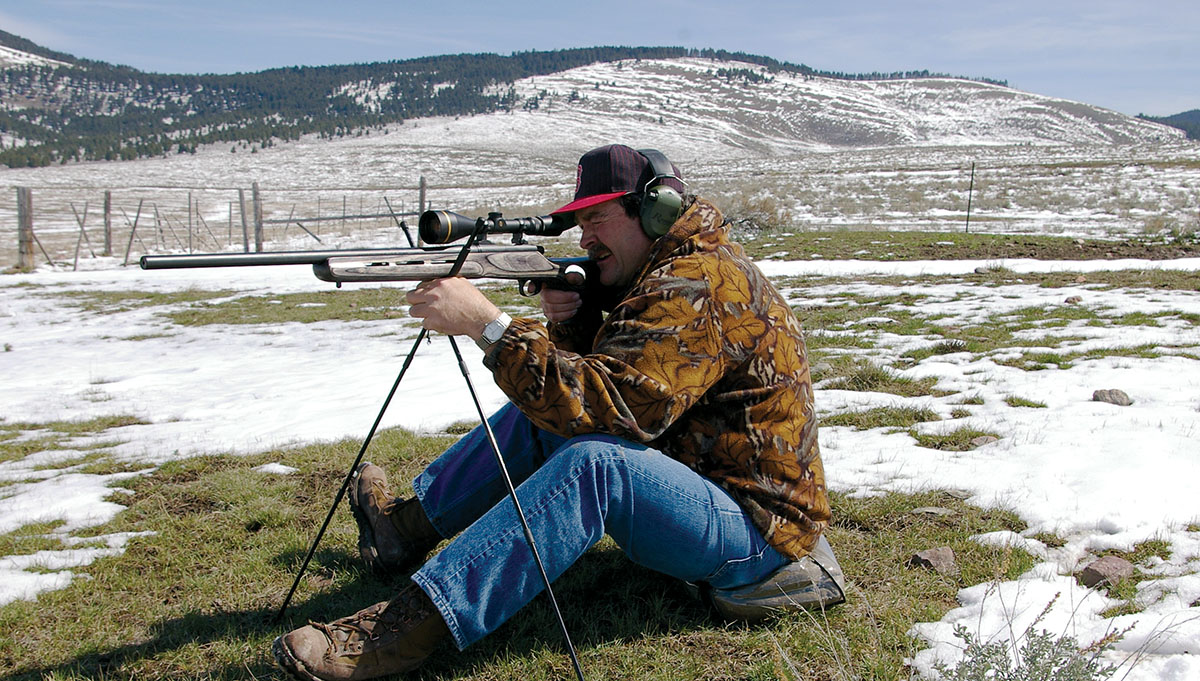
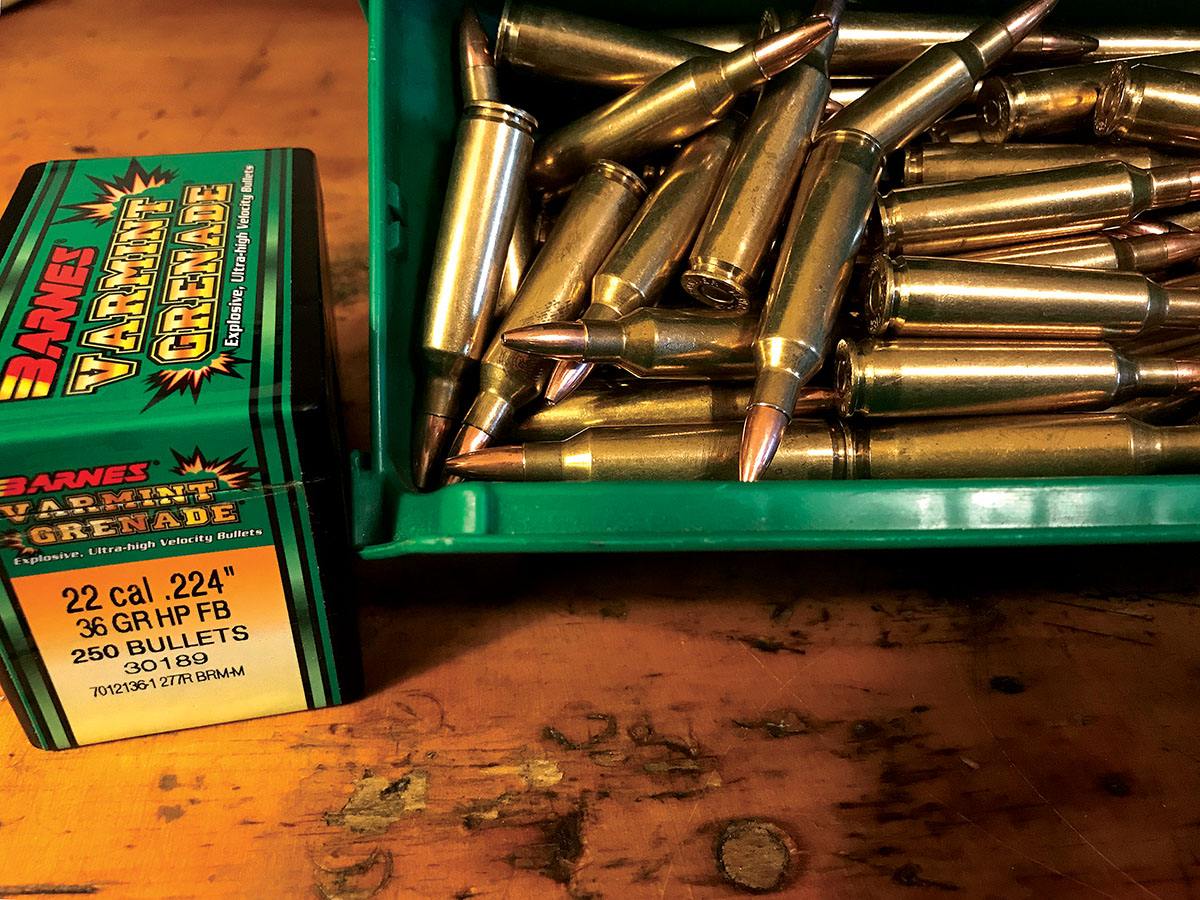
The 204 develops a rather flat trajectory shooting 26-grain VGs at 4,100 fps. With the bullets hitting an inch above aim at 100 yards, they are right on the money at 200 yards and 6.6 inches below aim at 300 yards. Past that they start a sharp decline, with 23 inches of drop at 400 yards and 58 inches at 500 yards. That longest distance is really out of the 204’s reach, as bullet energy out there is about equal to a 40-grain bullet fired at the muzzle of a 22 Winchester Magnum Rimfire.
The 221 Remington Fireball has also withered away in recent years. For quite a few years the Fireball was chambered in rifles like the Remington short-action Model 700 and micro-Mauser CZ 527. Those rifles were built on the same size receiver that also fits the 223 Remington, and most shooters eventually figured they would rather shoot a 223 for its higher velocities.
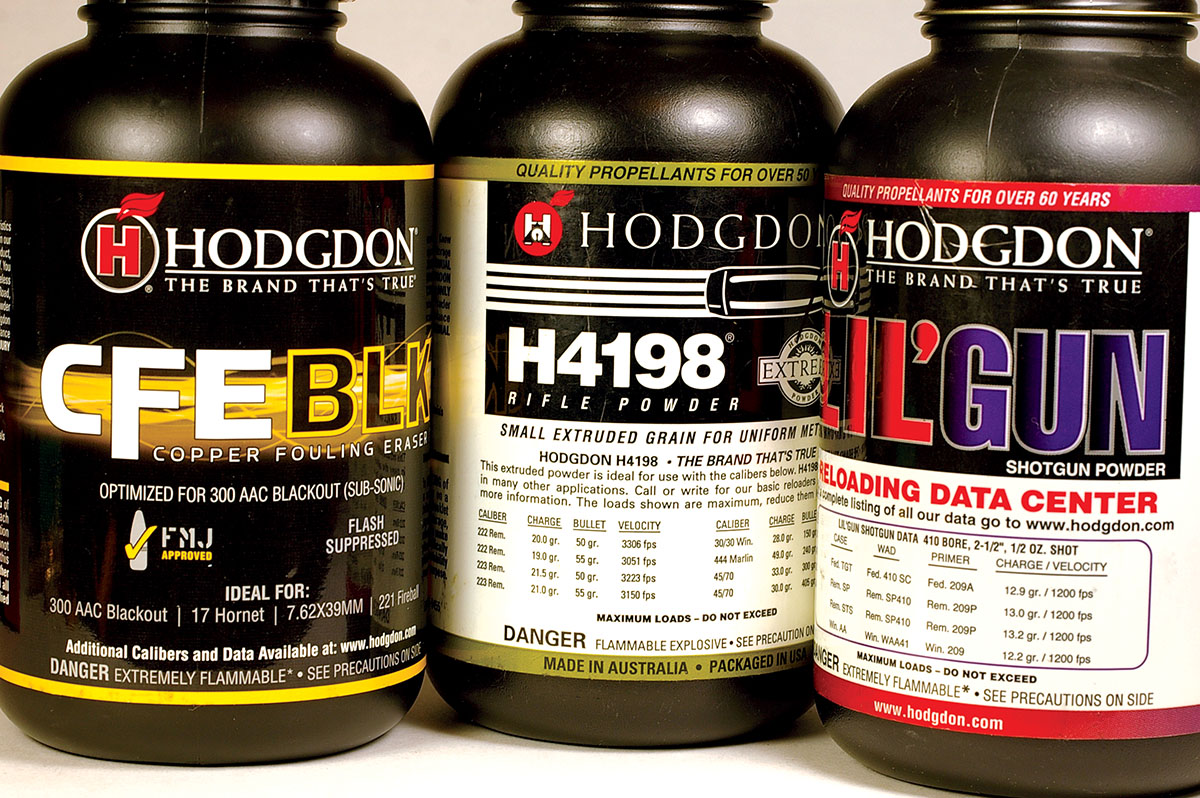
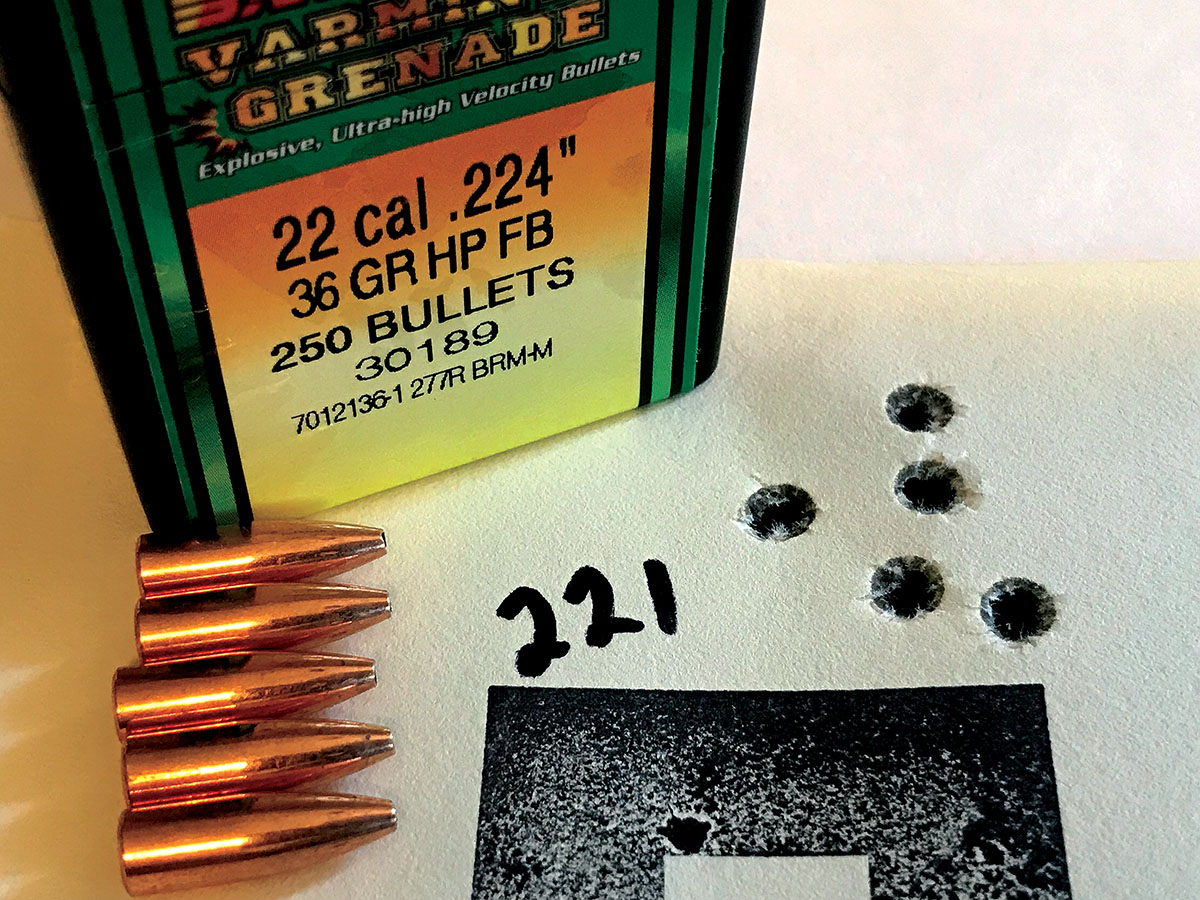
The 221 Fireball operates on a whole other concept than the 223. Fireball cases have 65 to 70 percent of the capacity of 223 cases. Much faster burning propellants than the 223 normally burns are loaded in the 221’s smaller case. The result is these faster-burning propellants, like Lil’Gun and CFE BLK, in the 221 produce nearly 90 percent of the 223’s velocity shooting 36-grain VG bullets.
Some math shows the 221’s efficiency. Each grain of 15 grains of Lil’Gun burned in the Fireball imparted 223 fps of velocity to 36-grain VG bullets. In contrast, each grain of 28 grains of X-Terminator burned in the 223 transferred 133 fps of velocity to 36-grain VG bullets. The 221 and 223 rifles had 24-inch barrels.
The Remington Model 700 221 Fireball is mostly used to shoot Richardson’s ground squirrels infesting farm fields. These little rodents are about the size of a pop can and their gray color blends into the ground. About 275 yards is as far as they can be clearly seen with the rifle’s Zeiss Conquest 4.5-14x 44mm scope turned up to 14x. That works out because 36-grain VG bullets starting out at 3,350 fps drop about 8 inches at 275 yards with the bullets hitting an inch above aim at 100 yards. Aiming a sliver over a standing squirrel results in a hit if I do my part. Recoil barely bumps the crosshairs and it’s easy to see dirt kicked up by a missed bullet. There is no mistaking a hit with VGs.
The 223 Remington has largely eliminated all but one other .22-caliber centerfire cartridges, for many good reasons, too. Factory-loaded cartridges are as cheap as a penny or two less than 20 cents per shot. Every possible bullet is loaded in 223 factory cartridges for practice to varmint and big-game hunting. Black Hills loads the 223 with 36-grain VG bullets at a muzzle velocity of 3,750 fps. Fiocchi offers 50-grain VGs at a muzzle velocity of 3,300 fps.
Handloaded 30-grain VGs with 31.0 grains of TAC reached 4,061 fps from the 24-inch barrel of a Remington Model 700 SPS 223. The BC of that bullet is .101, which is slightly lower than the BC of a 36-grain hollowpoint lead bullet loaded in 22 Long Rifle shells. The high speed at which the 223 shot the lightweight bullets, though, made up for some their blunt shape. With the bullets hitting 1.5 inches above aim at 100 yards they are dead-on at 200 yards and drop 10 inches below aim at 300 yards. They are an absolute bomb on anything they hit.
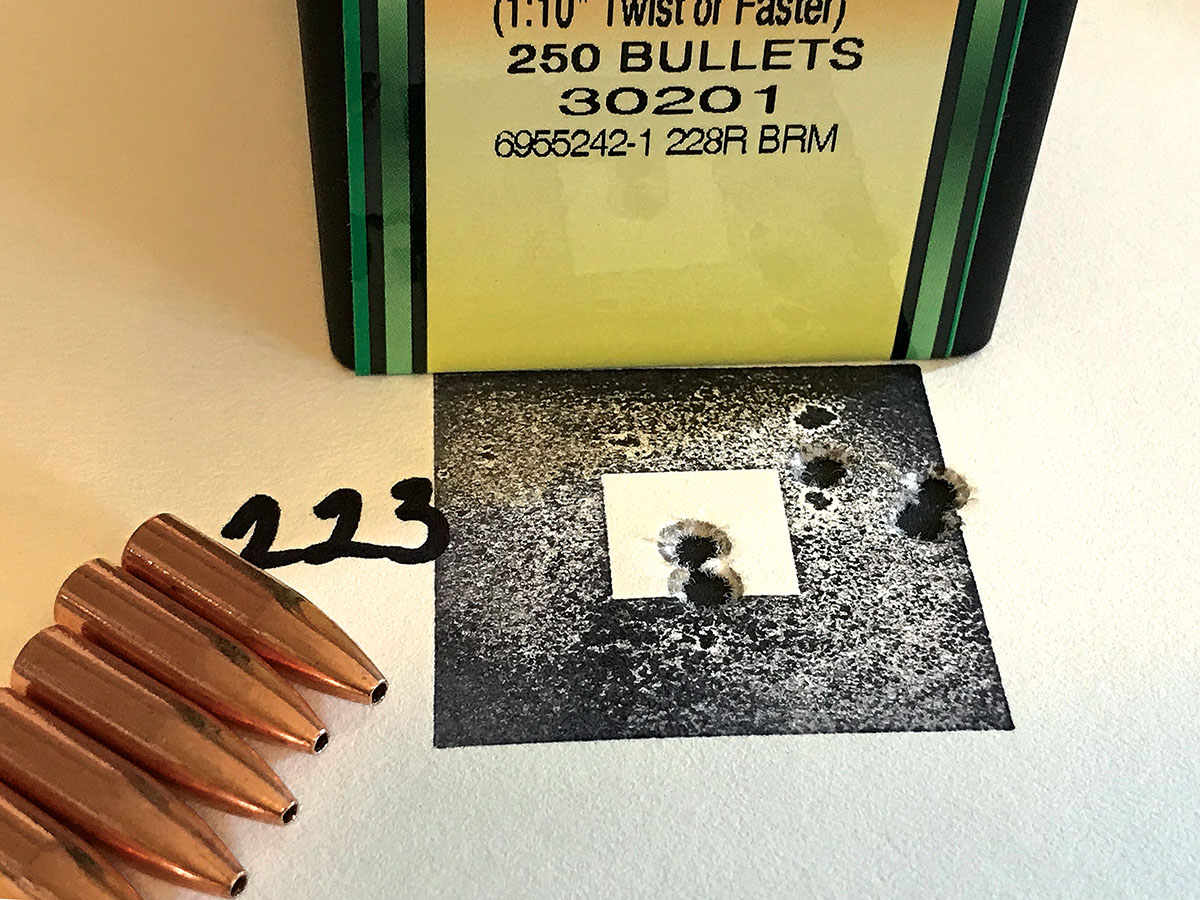
The 36-grain VG is a better choice in the 223. They shoot about 4 inches flatter than the 30-grain VG at 300 yards. The 223’s standard 1:12 rifling twist is too slow to stabilize 50-grain VGs. On the box of 50-grain VGs is printed “(1-10” Twist or Faster).” My Savage Predator Hunter’s barrel has a 1:9 twist and for years it has accurately shot 50-grain VGs. I have usually shot these bullets loaded over TAC, Varget and X-Terminator. I tried Benchmark for this article, and it delivered good accuracy and a rather high velocity of 3,380 fps.
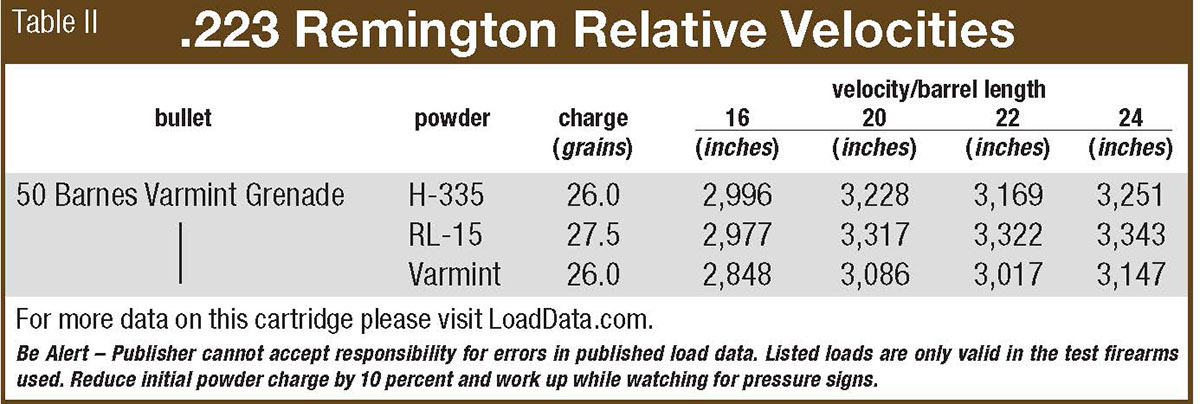
Velocities differed enormously between the 16-inch barrel and the longer barrels but shrank to nearly negligible between 20-, 22- and 24-inch barrels. The 24-inch barrel’s 8 inches of additional length added up to 366 fps over the 16-inch barrel. Even the added 4 inches of a 20-inch barrel supplied up to 340 fps more velocity over the 16-inch barrel. Comparing overall velocities of the 20-inch barrel with the 22- and 24-inch barrels showed gains as little as 5 fps for the longer barrels. In fact, the 20-inch barrel shot 50-grain VG bullets faster than the 22-inch barrel with H-335 and Varmint propellants.
The 22-250 Remington is the only .22-caliber centerfire to survive the 223’s onslaught because it provides a noticeable step up in performance. The 10 grains more propellant it burns over the 223 Remington provides an additional 450 to nearly 600 fps of velocity.
The 22-250 efficiently uses that additional propellant, too. For example, each grain of 38.0 grains of Varget burned in the 22-250 transferred 112 fps of velocity to 36-grain VG bullets. In comparison, each grain of 28.0 grains of X-Terminator burned in the 223 conveys 133 fps of velocity to the same bullets.
Ground squirrels and marmots have been shot with 36-grain VGs fired full-throttle through my Cooper Model 22 22-250. Only sparingly, however, because burning upward of 40 grains of propellant per trigger pull quickly adds up to torched rifling.
The only problem with the 22-250 is its standard rifling twist of 1:12 or even slower 1:14. Those twists are fine if you want to only shoot lead-core bullets that weight up to about 63 grains with a rather blunt tip. Barnes 50-grain VGs require at least a 1:10 twist to stabilize.
The rifle shoots 35- to 80-grain bullets accurately. The fast spin from the rifling does tear apart thin-jacketed bullets – like the Sierra 50-grain Blitz Varminter – a few feet in front of the muzzle. The easy solution for that is to shoot bullets with a thicker jacket. The 50-grain VGs have a thick enough jacket to withstand the 1:8’s fast spin, and five of the bullets with three different propellants grouped slightly over an inch at 100 yards.
The 243 Winchester and 243 Winchester Super Short Magnum are two peas in a pod. Different powders in both provide some variety. Pretty much, though, the same amount of the same propellant in each case delivers similar velocity.
I’ve shot ground squirrels and marmots with 62-grain VGs fired from my Cooper Firearms Model 22 243 Winchester. However, even more so than the 22-250, burning 45 grains of propellant with each pull of the trigger is hard on rifling, so I take it easy. Results are spectacular on marmots.
I’ve been shooting the entire series of Varmint Grenades ever since Barnes introduced them. Hits with the bullets are unmistakable.