22 Hornet Improved
A Highly Rare Krag Conversion
feature By: Layne Simpson | October, 19
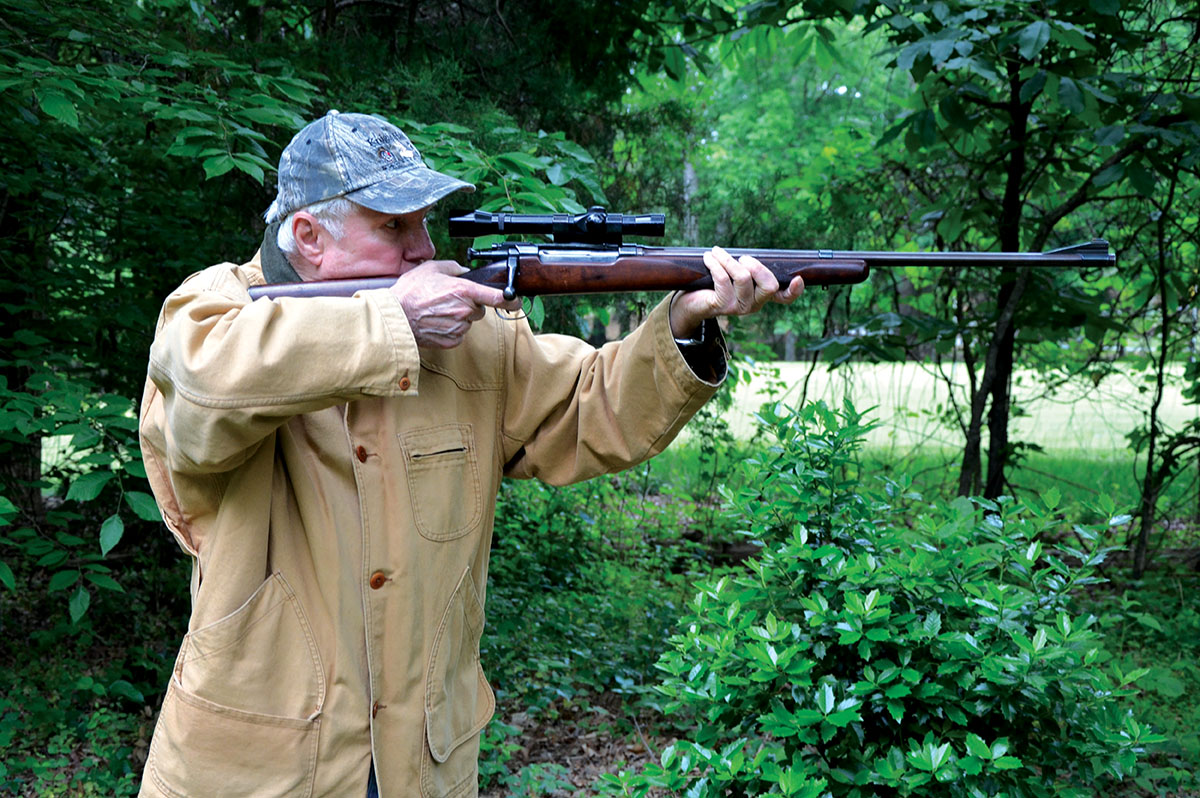
Long before those became available, varmint rifles were commonly built on single-shot actions, with the Winchester Model 1885 High Wall one of the more popular due to its low price and availability. Then came the Krag-Jorgensen. Soon after the 1903 Springfield was adopted as America’s primary battle rifle, Krags became available on the military-surplus market at very affordable prices. Rifles in the original 30-40 chambering became quite popular among American hunters, and it was not unusual to spot a few in elk, moose and deer camps as late as the 1960s. An original Model 1898 carbine with a 22-inch barrel was a favorite of one of my father’s hunting pals who was a Baptist preacher. How I lusted for that fine little deer-slayer!
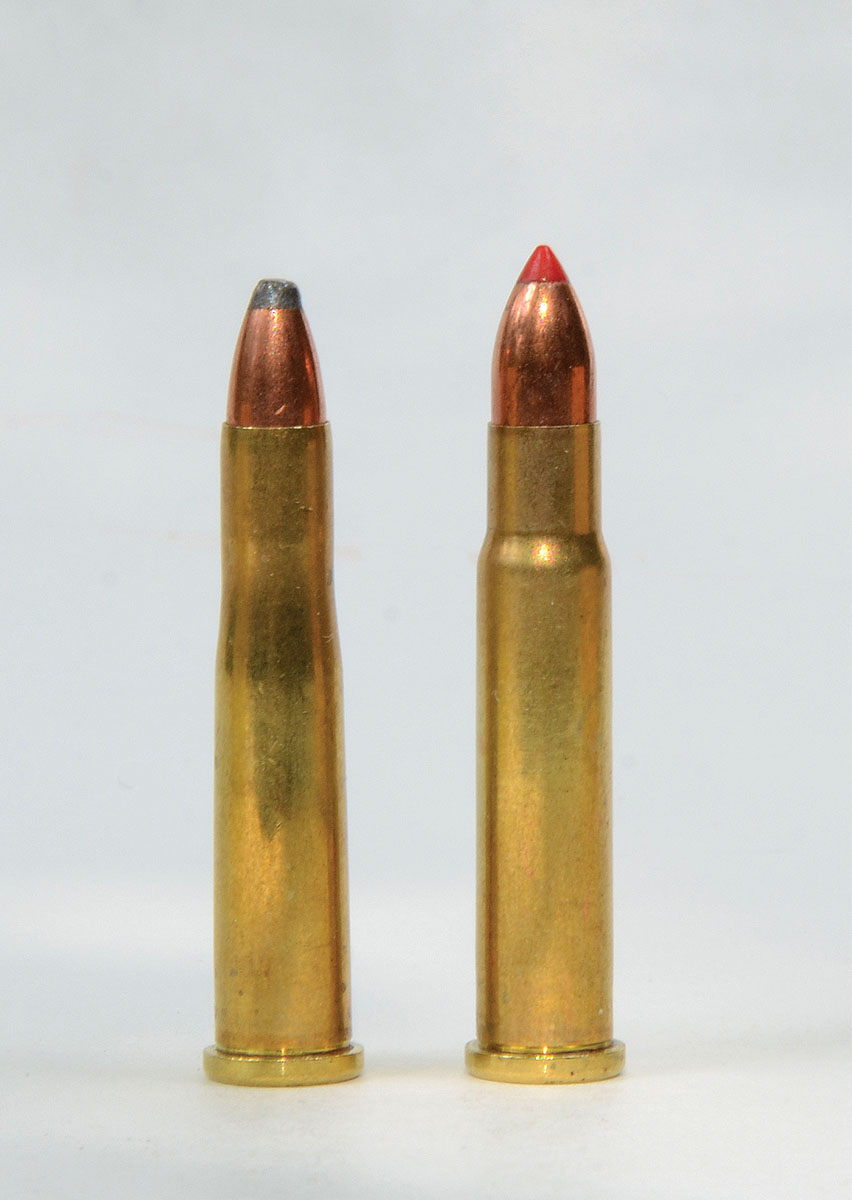
Some Krags underwent amateur modifications while others were transformed into fine custom rifles by knowledgeable gunsmiths. Some were rebarreled to various wildcats on the 30-40 case, with the Niedner 25 Krag being one of the more popular among western hunters. Some Krag actions were converted to single shot for cartridges the magazine could not handle. Among them were varmint cartridges such as the 219 Zipper in factory and Improved form, the 22 Hornet, the 22 Hornet Improved, the 22 Niedner on the 32-20 Winchester case, the 22-3000 R2 Lovell on the 25-20 Single Shot case and the 22 Niedner Magnum on the 25 Remington case.
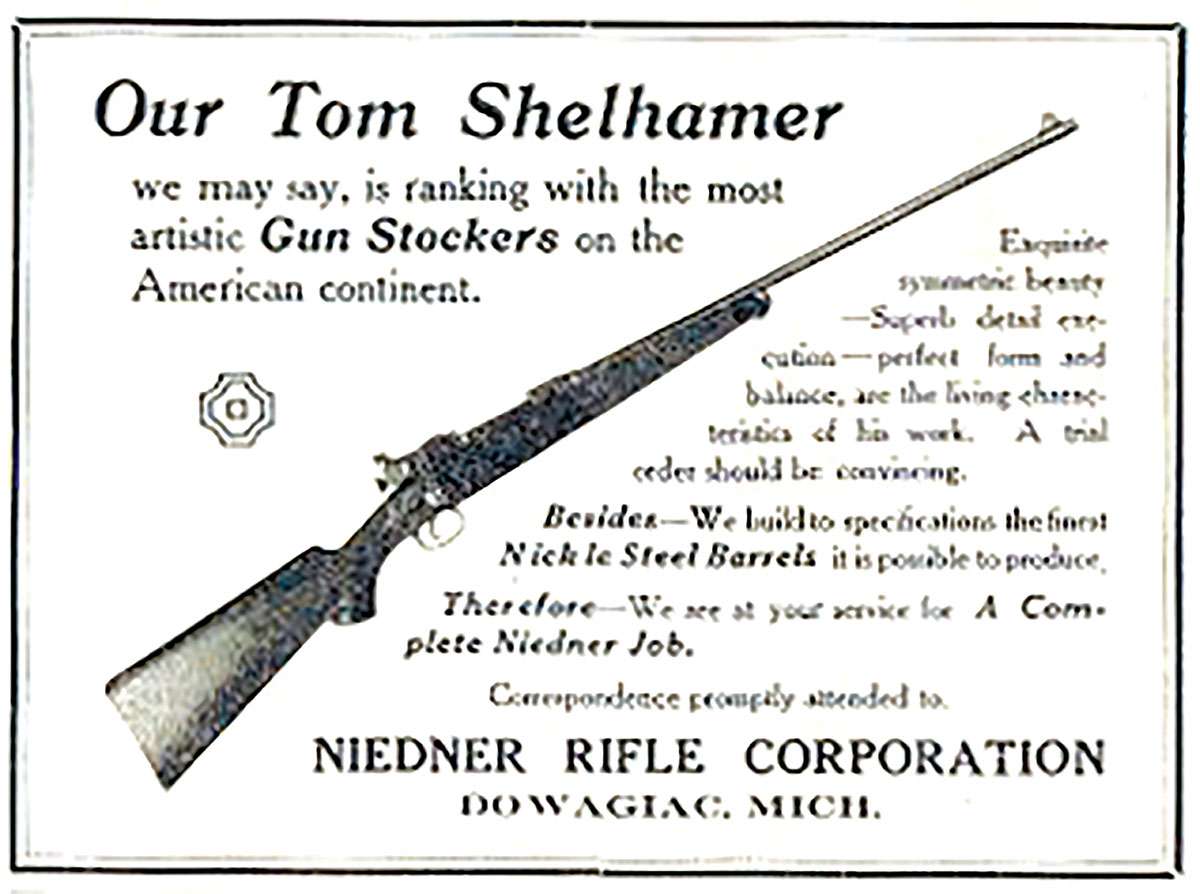
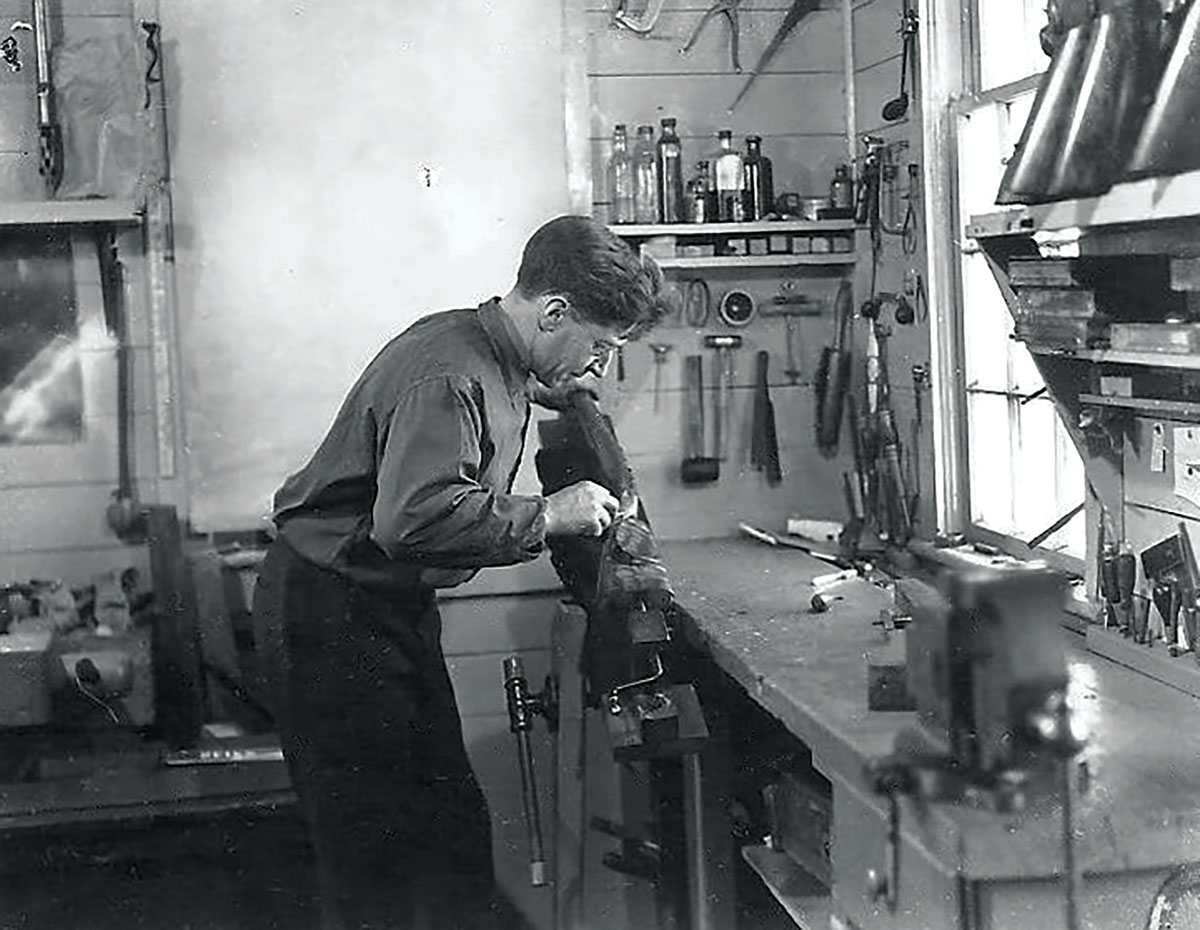
Niedner became a champion rifle and pistol shooter for the army and eventually accumulated close to 200 marksmanship medals at many matches, with one of the earliest held at the Centennial Exposition of 1876 in Philadelphia. He remained active in competitive shooting games into the 1930s with a win at 500 yards being one of his last. Niedner and William Stolley founded the Niedner Rifle Corporation in 1920. I am unsure of the location of that first shop, but the one in Dowagiac, Michigan, was quite active for several decades.
Why there is no caliber marking on the barrel of my rifle remains a mystery. The previous owner believed it was built during the 1920s when various gunsmiths were chambering rifles for the 22-13-45 Winchester (22 WCF) case loaded with smokeless powder and jacketed bullets. Niedner formed 40-grain bullets from spent 22 Long Rifle cases while others loaded 45-grain bullets made by Remington for the 5.5mm Velo Dog handgun cartridge.
Among those gunsmiths was Captain Grosvenor Wotkyns of Springfield Armory who installed a 22 Long Rifle barrel from a 1922 Springfield rifle on a Martini action and rechambered the barrel to 22 WCF. Basically, the same cartridge was introduced by Winchester in 1930 as the 22 Hornet. There were also several improved versions of the 22 WCF. Their velocity potential was close to the same and they mostly differed in shoulder angle. Niedner went with 25 degrees, Risley and Lovell preferred a 30-degree shoulder and Pfeifer settled on 35 degrees.
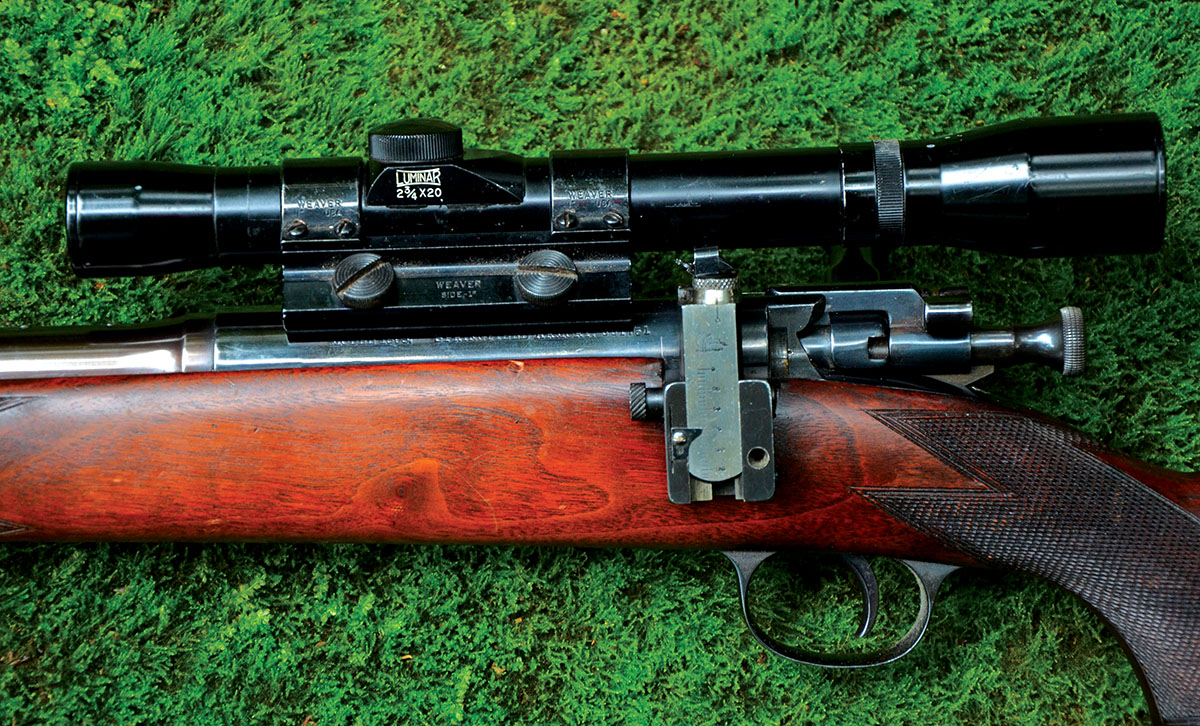
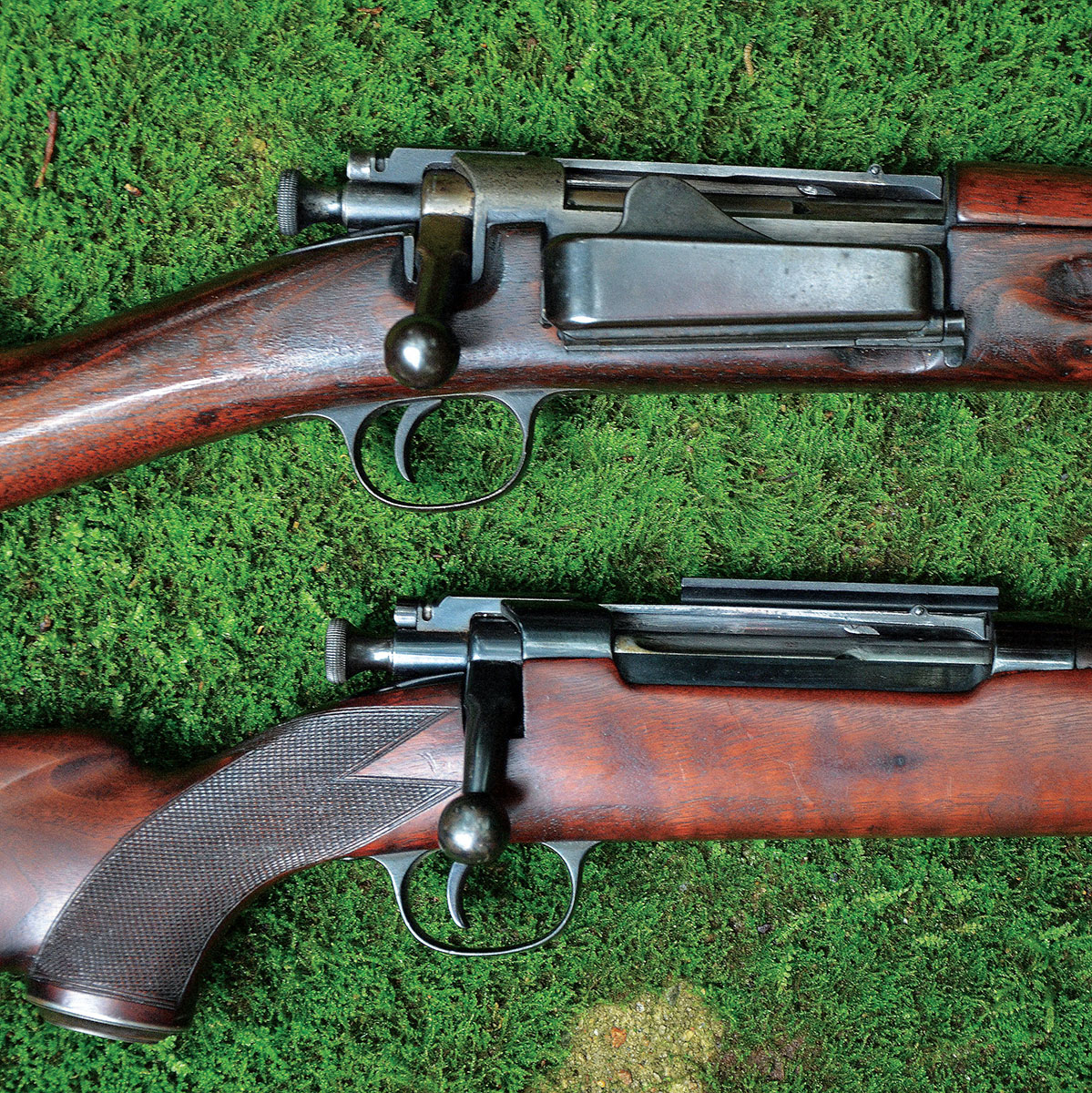
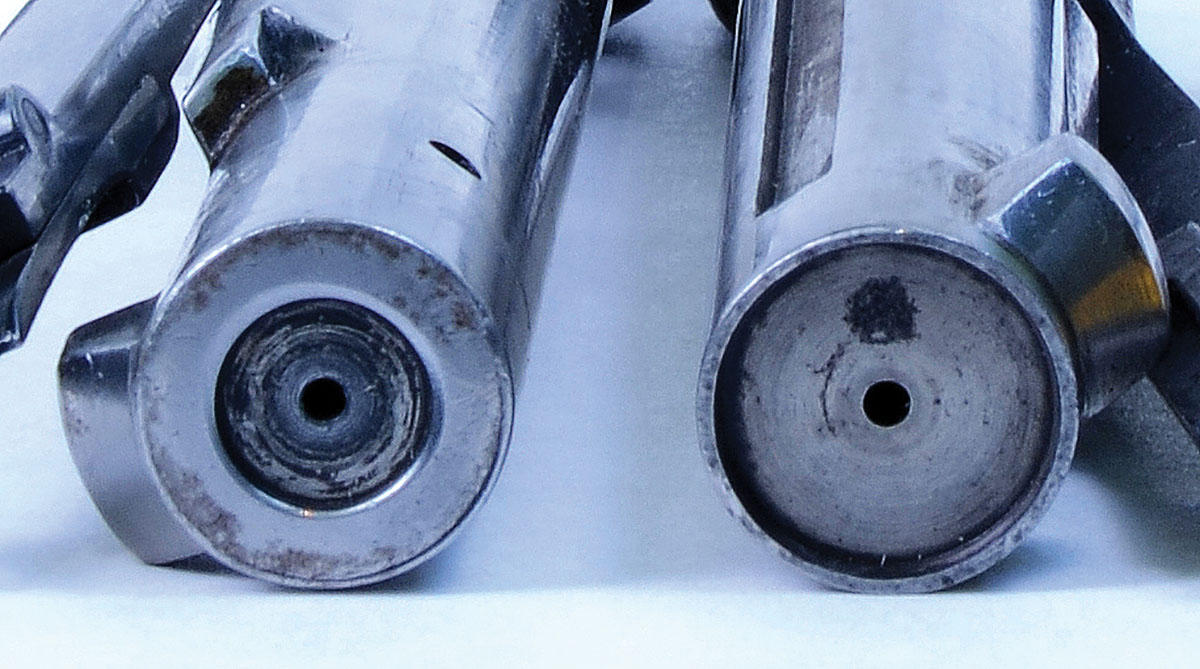
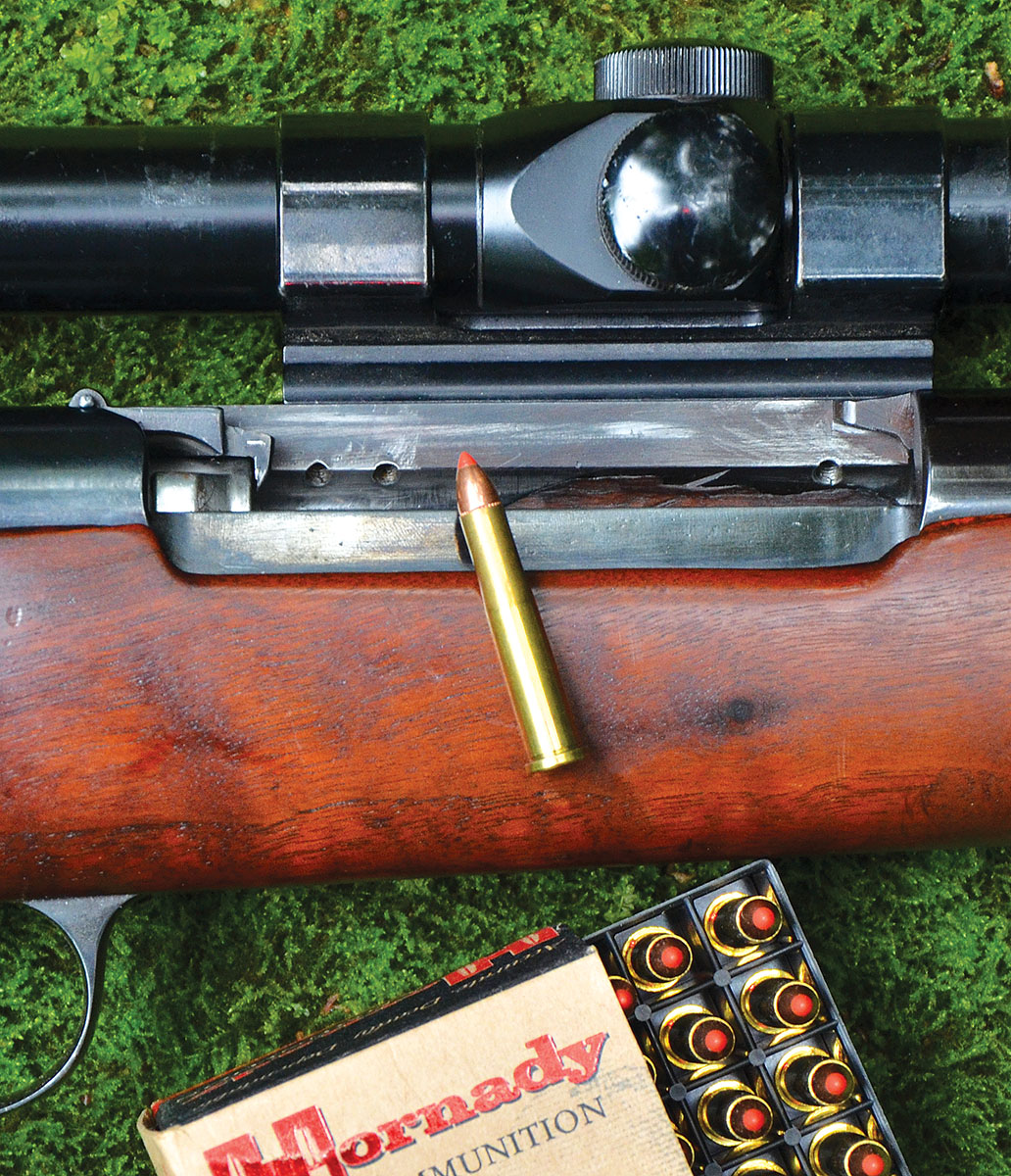
When cartridges much smaller than the magazine of the Krag rifle was designed to handle were used, the action was converted to single shot. That made the job easier, but even then it was no simple task. During manufacture of the Krag action at Springfield Armory, part of the left-side receiver wall and floor was machined away. The opening in the side of the receiver was closed off by a steel plate attached with a screw. To load the magazine, a gate on the right side of the action is swung open and 30-40 cartridges are placed loosely into the magazine. Closing the gate activates a follower that rotates each cartridge for feeding as the bolt is closed. When converting the rifle to single shot the entire magazine assembly and the receiver plate were removed. The opening in the left side of the receiver was filled by close fitting of the stock. The ejection port proved to be roomy enough to allow a cartridge to be manually loaded into the chamber.
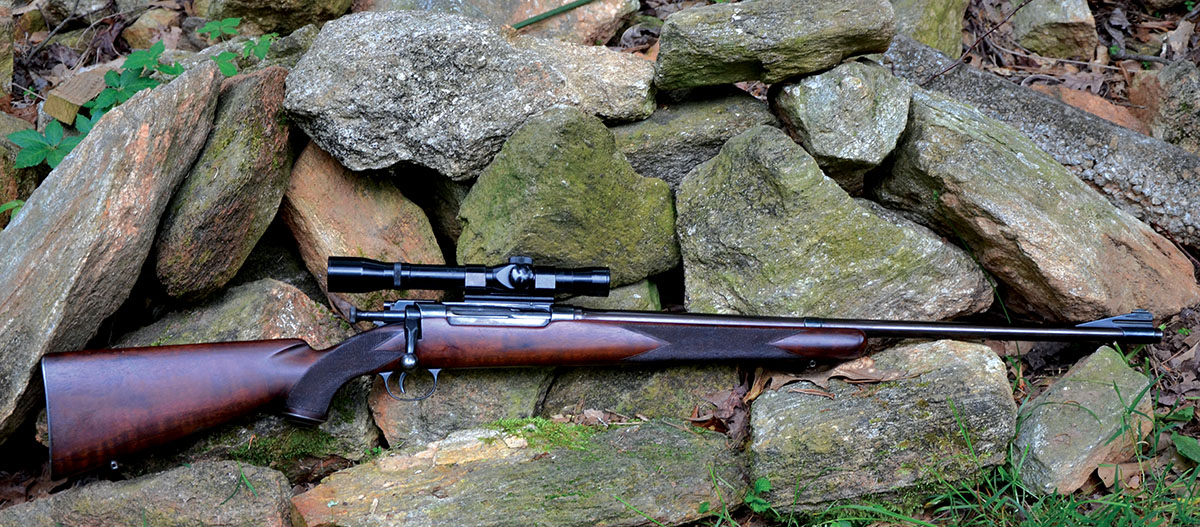
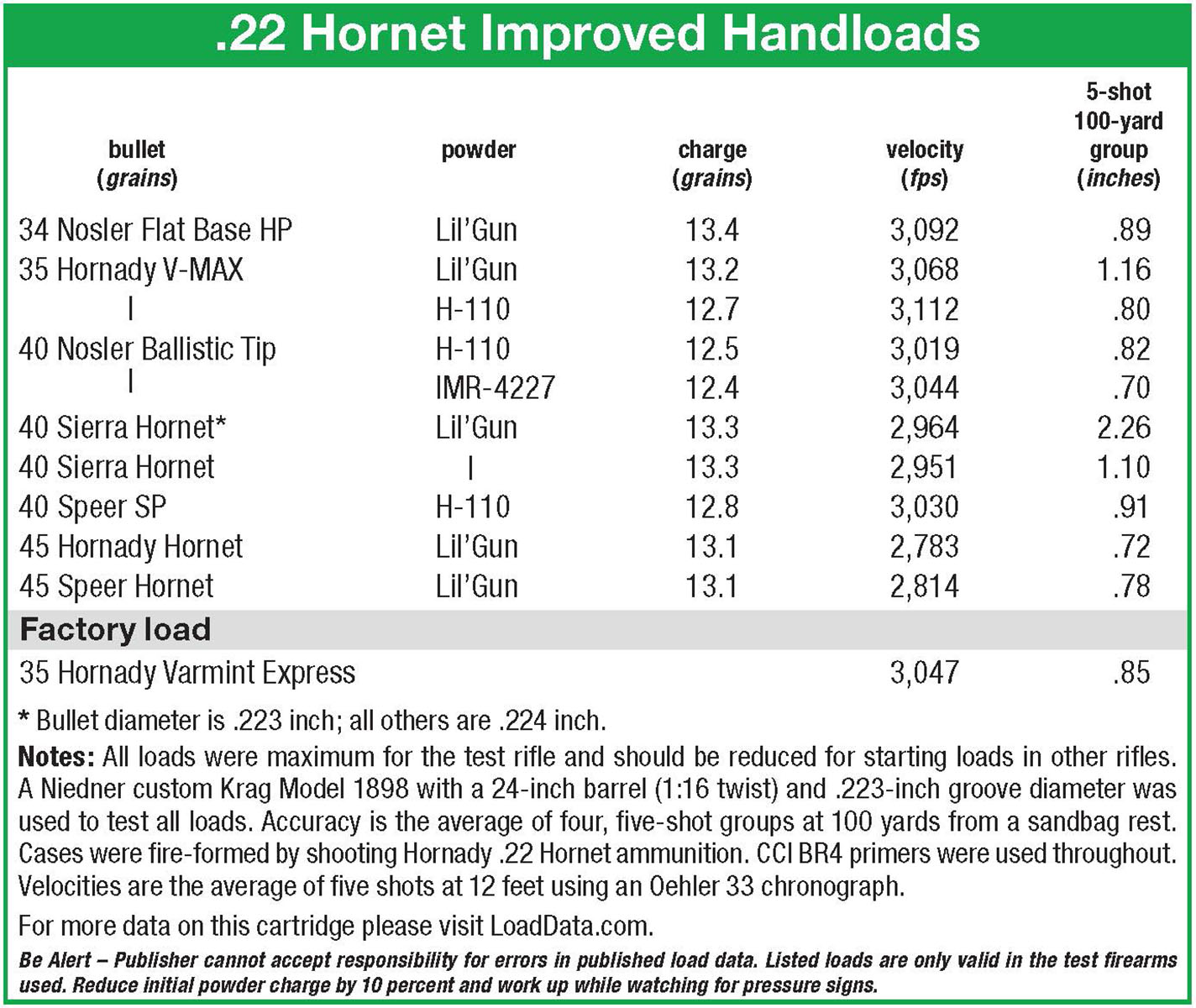
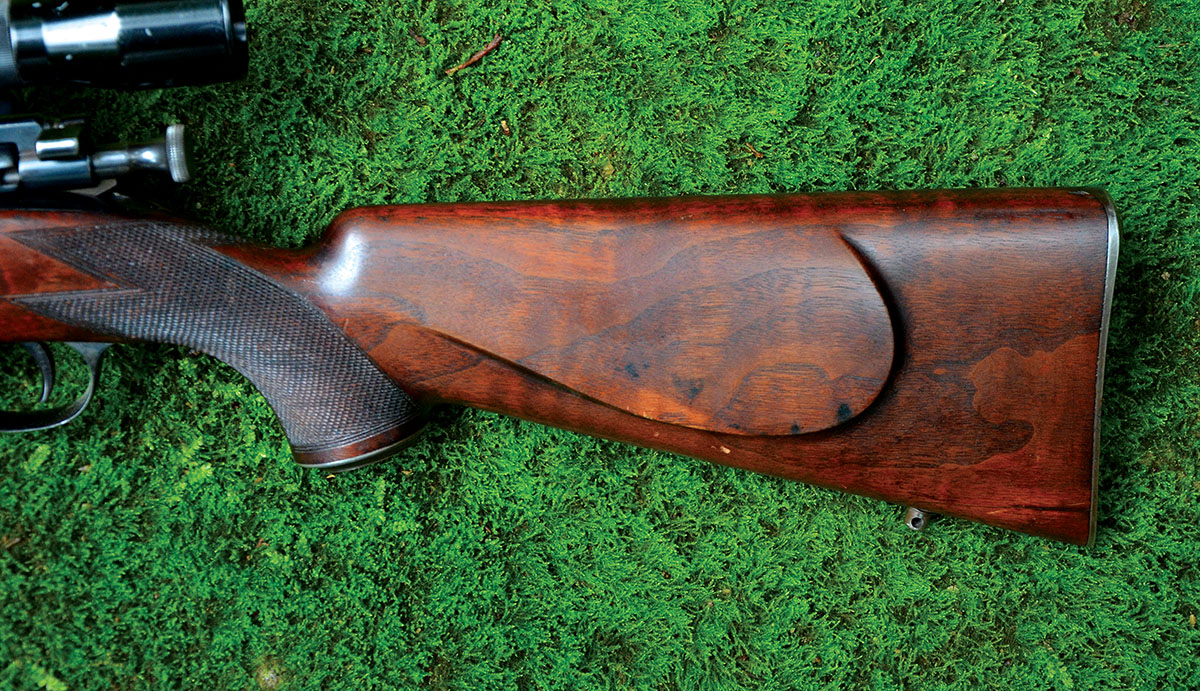
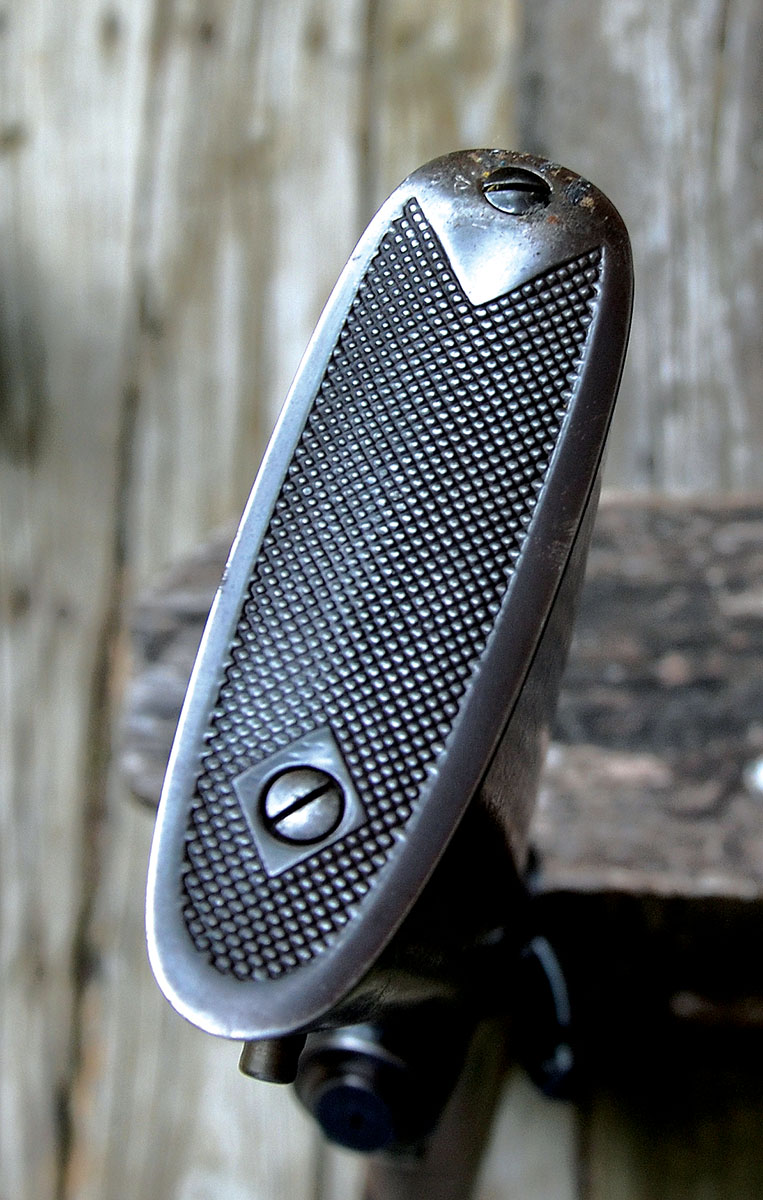
Niedner made his own nickel-steel barrels and the one on my rifle is 24 inches long. It has a 1:16 twist, and while groove diameter is .223 inch, it shoots .224-inch bullets much more accurately than those measuring .223 inch. The barrel is roll-marked “Niedner Rifle Corp. Dowagiac, Mich.”. The rifle was stocked in the old American classical style by Tom Shelhamer who joined Niedner in 1923. Shelhamer eventually opened his own shop, and while a few of his rifles went to Townsend Whelen, Paul Curtis and other writers, far more were purchased by farmers, factory workers and others who scrimped and saved for their one and only custom rifle. He also did stock work for Griffin & Howe. My stock has good 24-per-inch line checkering coverage with a wrap-around pattern at the wrist.
My Krag was built prior to the common use of telescopic sights, and like many custom rifles built in those days, it departed Niedner’s shop with a Lyman 48 aperture sight attached to the left side of its receiver. The blade of the banded front sight has a brass insert and appears to be the Sheard model made by the old Marble’s Gun Sight Company. Sometime later, probably the 1930s, the barrel was drilled and tapped for what a previous owner identified as a 12x scope made by J.W. Fecker of Pittsburg, Pennsylvania. I started hunting turkey gobblers during the late 1950s when centerfire rifles could be legally used on the big birds in my home state. Most of the hunting was in thickly-wooded country and the birds were usually called inside 50 yards when shot. The fellow I bought the rifle from was an avid turkey hunter so he sold the Fecker scope, had the left side of the receiver drilled and tapped for a Weaver detachable mount and attached a 2.75x scope. Using the scope requires removing the Lyman 48 sight and, fortunately, it was still with the rifle when I became its owner.
Niedner made reloading dies for his wildcat cartridges and according to the varmint shooter from whom I bought the Krag, they were shipped with the rifle to the first owner who misplaced them. Soon after he bought the rifle in 1948, he fired several 22 Hornet cases in the rifle and sent them to Fred Huntington at RCBS who made the die set that was included with the rifle when I purchased it during the early 1970s.