22 PPC USA
Shooting Modern Bullets from a Timeless Cartridge
feature By: Layne Simpson | April, 16
Benchrest rifles of conventional design were divided into three classifications. Rifles approved for Light Varmint and Heavy Varmint classes had to be .224 caliber or larger and differed only in maximum weight: 10.5 pounds for the former and 13.5 pounds for the latter. A Sporter class rifle was the same as a Light Varmint rifle with one exception; it had to be 243 caliber or larger. It was also approved for use in all three classes of competition.
Most Light Varmint and Heavy Varmint rifles were 222 Remingtons, while the majority of rifles used in Sporter class were chambered for the 6x47mm, which is formed by necking up the 222 Remington Magnum case for .243-inch (6mm) bullets. Everybody loved the 222 Remington, and while the 6x47mm was capable of exceptional accuracy, some competitors considered it a bit finicky and used it only because they had to.
Then, during the mid-1970s, a couple of wildcat cartridges called the 22 PPC and 6mm PPC showed up, developed by Dr. Louis Palmisano (a vascular surgeon from New Jersey) and rifle-builder/machinist Ferris Pindell. The two PPC cartridges were “offspring” of the 220 Russian; itself is a descendent of the 7.62x39mm Russian. Prior to their introduction, the PPC cartridges were subjected to extensive testing by Dan Pawlak, inventor of Pyrodex black-powder substitute.
Among a number of favorable characteristics uncovered by Pawlak, the PPC case was capable of handling extremely high chamber pressures. Shot-to-shot variation in chamber pressure was quite low, and with some powders muzzle pressure as the bullet exited the barrel was both low and uniform. Pawlak became further convinced that the shape of the combustion chamber, combined with a primer flash hole considerably smaller than the industry standard, along with cases of excellent weight uniformity, added up to what he described as “one of the more revolutionary concepts in internal ballistics.”
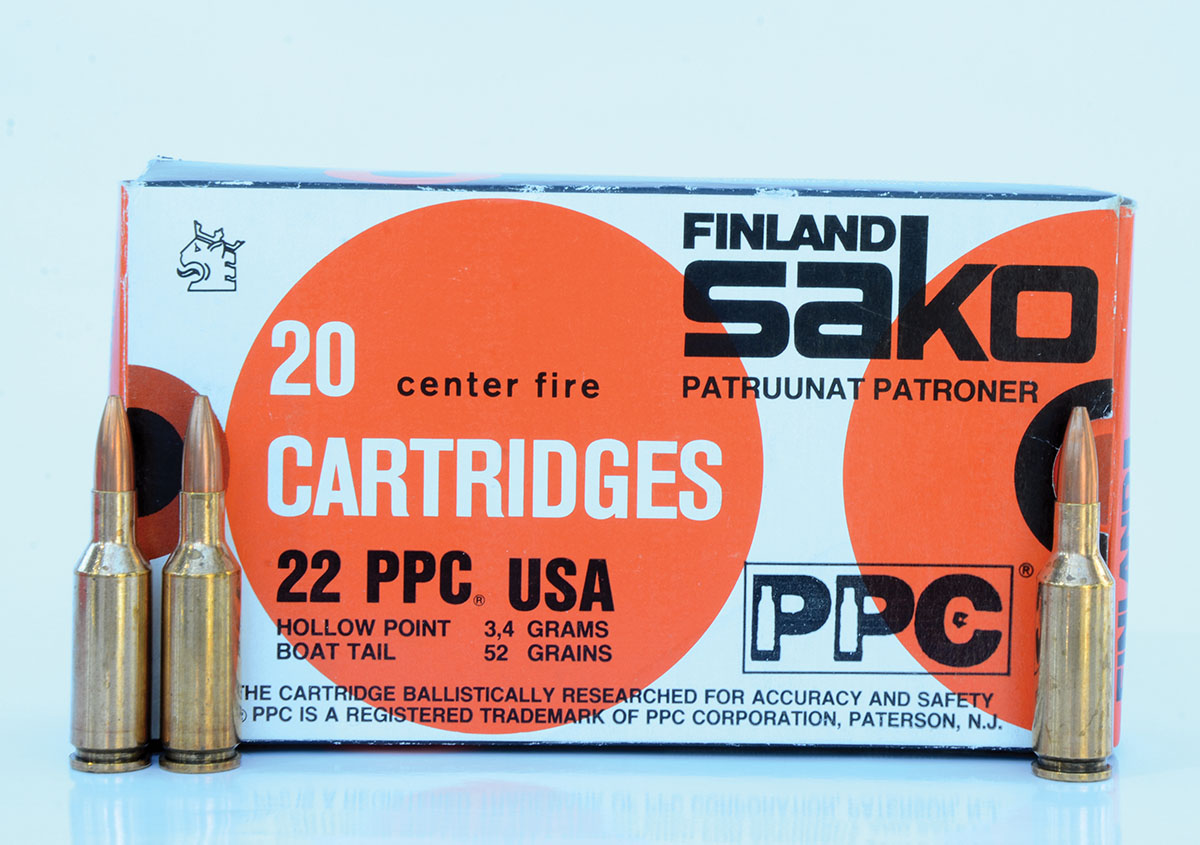
Whereas the maximum SAAMI chamber neck diameter for the 222 Remington and 223 Remington is 0.256 inch, 22 PPC benchrest rifles usually have tight-dimensioned chambers measuring considerably smaller. A rifle built by a reputable gunsmith will usually have the neck diameter of its chamber stamped on the barrel. Shilen, as an example, offers options of 0.243, 0.248 and 0.252 inch, but rifles are out there with chamber neck diameters differing from those. Custom rifles built for varmint shooting can have tight neck chambers, or they can be closer to the 0.256-inch standard for the 222 and 223 Remingtons.
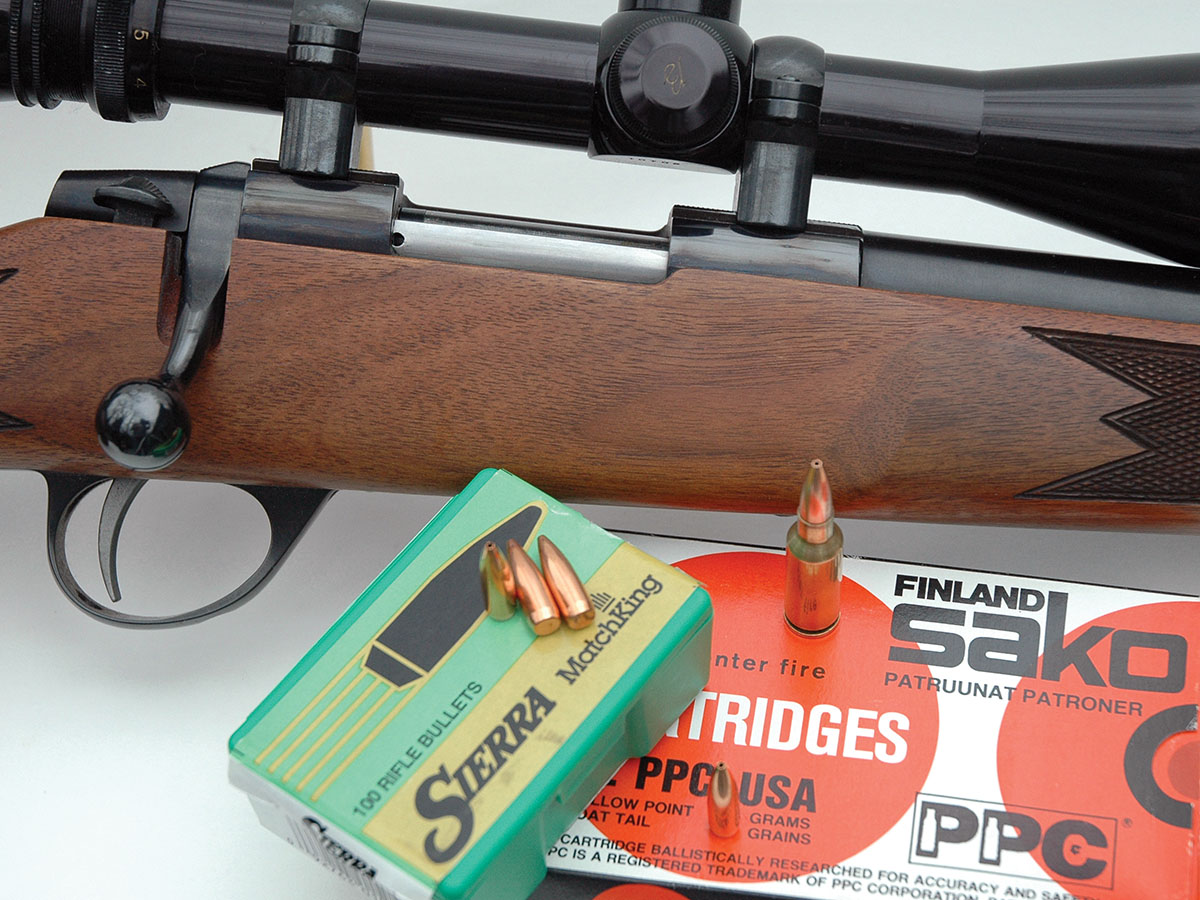
Sako built the first batch of 22 PPC rifles in 1987, and since they were intended for varmint shooting rather than benchrest competition, chamber neck diameter was reamed closer to the standard for the 222 Remington and 223 Remington. The two I worked with measured 0.252 inch.
The first batch of Sako 22 PPC ammunition came along during the same year with maximum cartridge neck diameter specified as 0.250 inch. To differentiate it from the version used by benchrest shooters, the name was changed to 22 PPC USA. The name change may have been a warning that firing one of those cartridges in the tight-necked chamber of a benchrest rifle could be disastrous. Why the warning was not printed on boxes of ammunition remains a mystery. Neck diameter of the first batch of Sako ammunition I received measured 0.2495 inch.
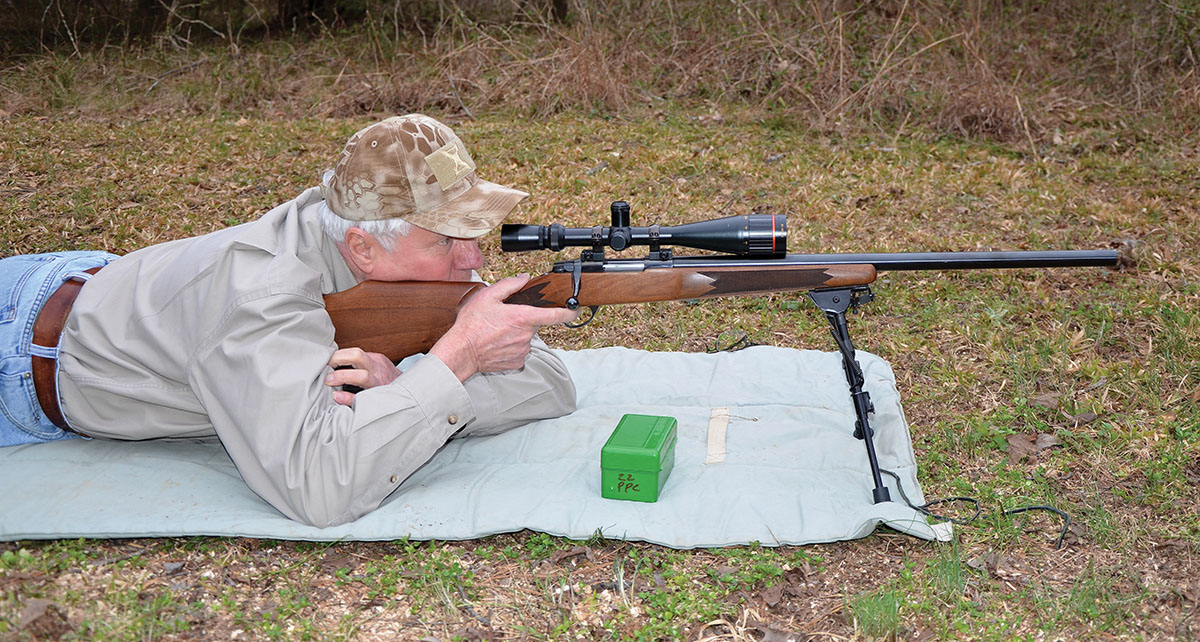
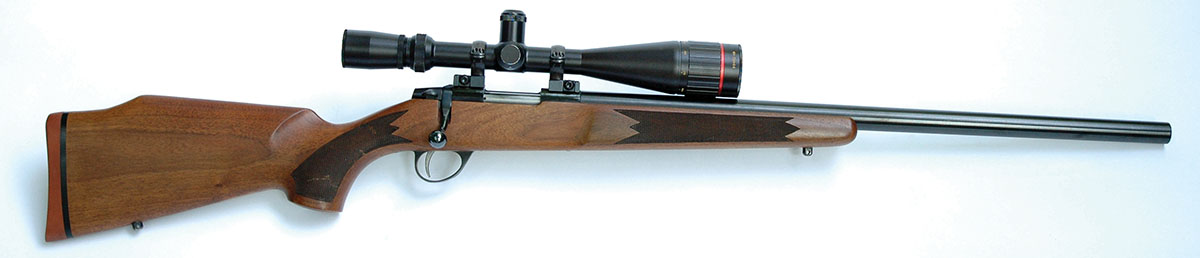
Those early Sako rifles I shot were on a single-shot version of the A1 action. The absence of a magazine cutout in the receiver made it more rigid than the repeating version of that action. The rifles had a very nice walnut stock with semibeavertail forearm and a heavy barrel measuring 24 inches long and .865 inch at the muzzle. Rifling twist rate was one turn in 14 inches.
That first small batch of rifles, hand-built at the Sako factory, went to Lou Palmisano, who sent two to me. With Sako ammunition, both shot inside half-minute of angle with the occasional group measuring less than .25 inch. As I recall, Ed Shilen shipped barrels to Finland for those rifles. At the time Sako rifles were being imported by Stoeger, and as I understood, production 22 PPC rifles eventually sold through that company had barrels made by Sako.
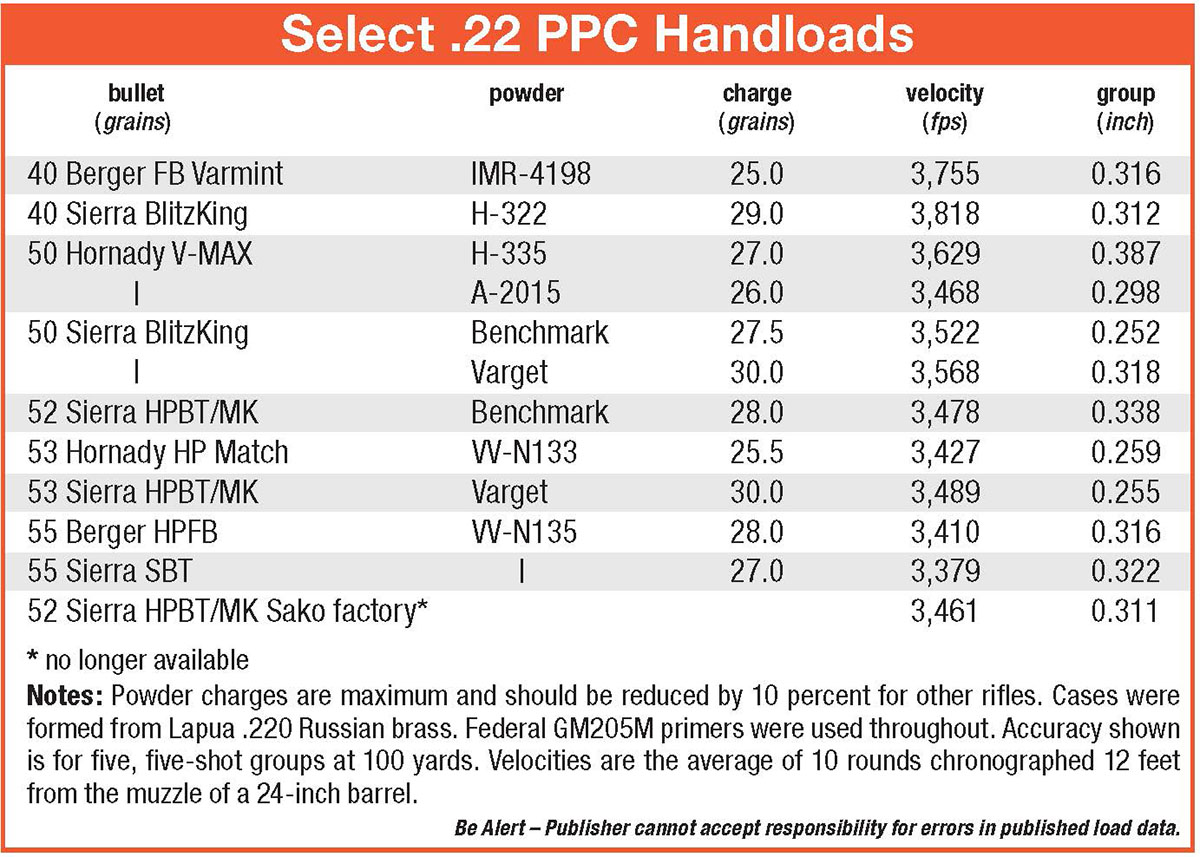
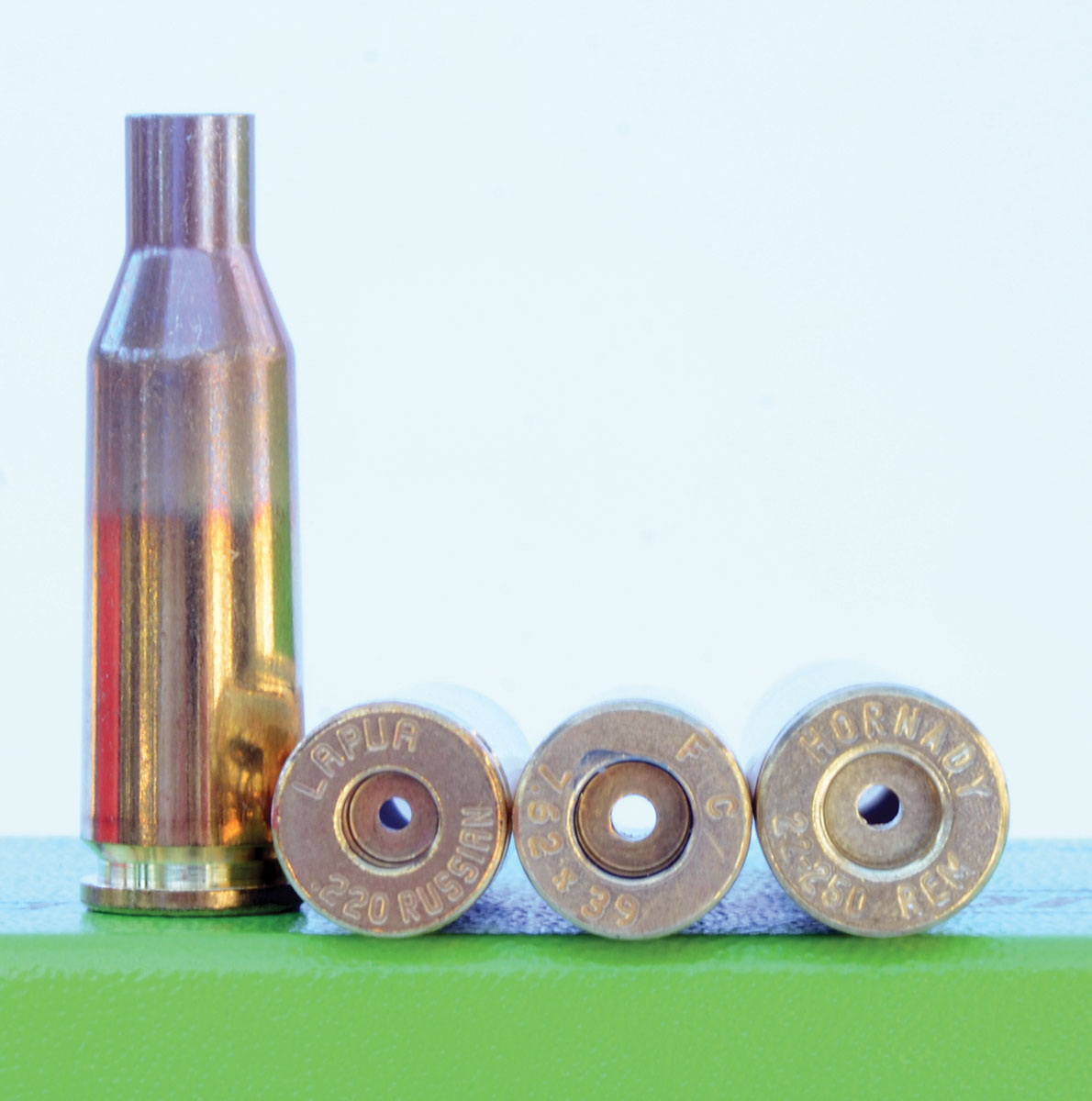
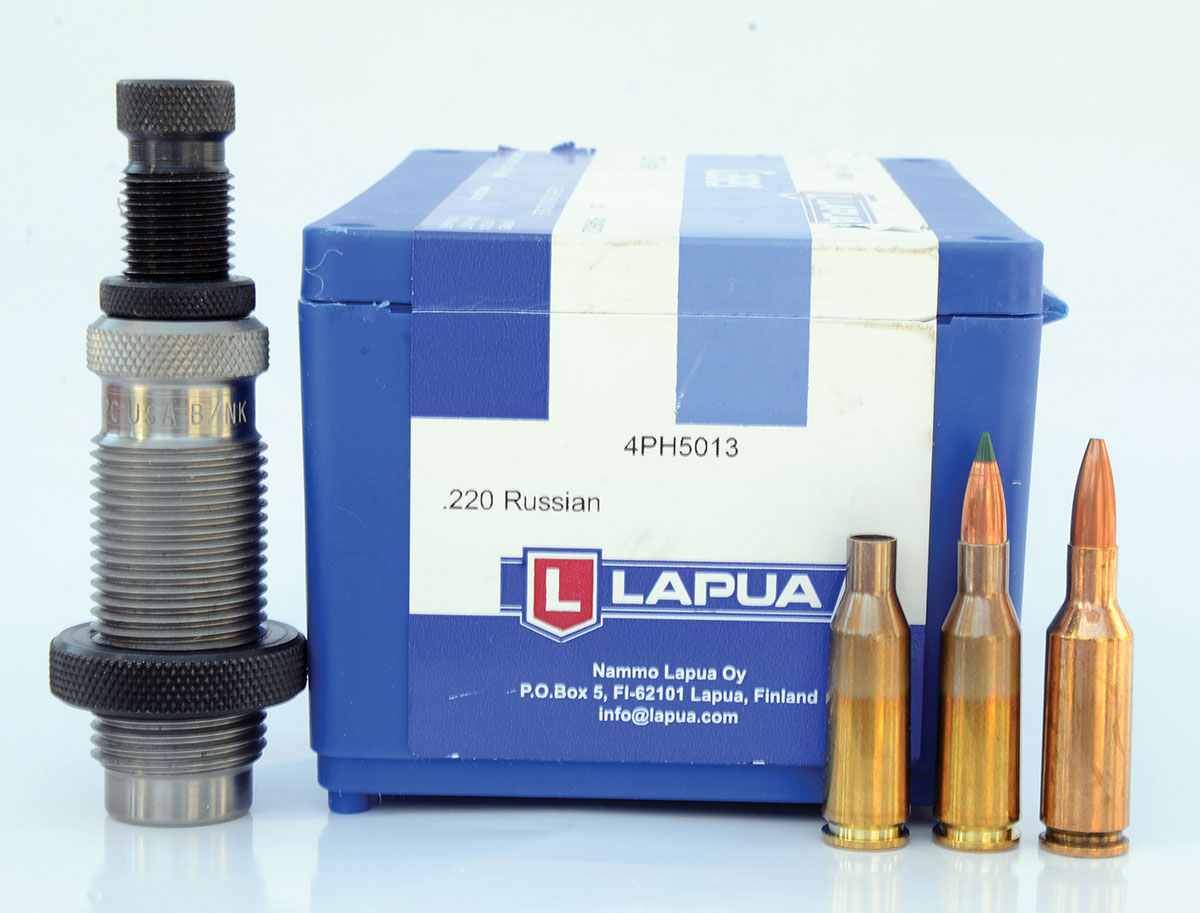
Sako no longer offers 22 PPC rifles or ammunition, but unprimed 6mm PPC cases made by Norma are easily necked down. Benchrest shooters commonly re-form Lapua 220 Russian brass, because it is believed to give longer service life than Norma brass. I also find Lapua cases to be superior in both concentricity and weight uniformity. Case forming is quite easy. After running a Lapua 220 Russian case through a 22 PPC full-length resizing die to bump its shoulder back slightly, it is trimmed to a length of 1.510 inches; maximum is 1.515 inches. Neck diameter with a 0.224-inch bullet seated is 0.254 inch, so it is outside-turned for a diameter of 0.250 inch for my rifle. If building a varmint rifle in 22 PPC today, I would go with a 0.256-inch chamber and shoot Lapua brass from the box with no neck wall thinning.
When loading cases formed from Lapua brass, I forego any fireforming process and simply reduce the powder charge 10 percent below what will be used in a formed case and head for the field. My rifle shoots fireforming and full-power loads at close to the same level of accuracy, and varmints don’t seem to know the difference.
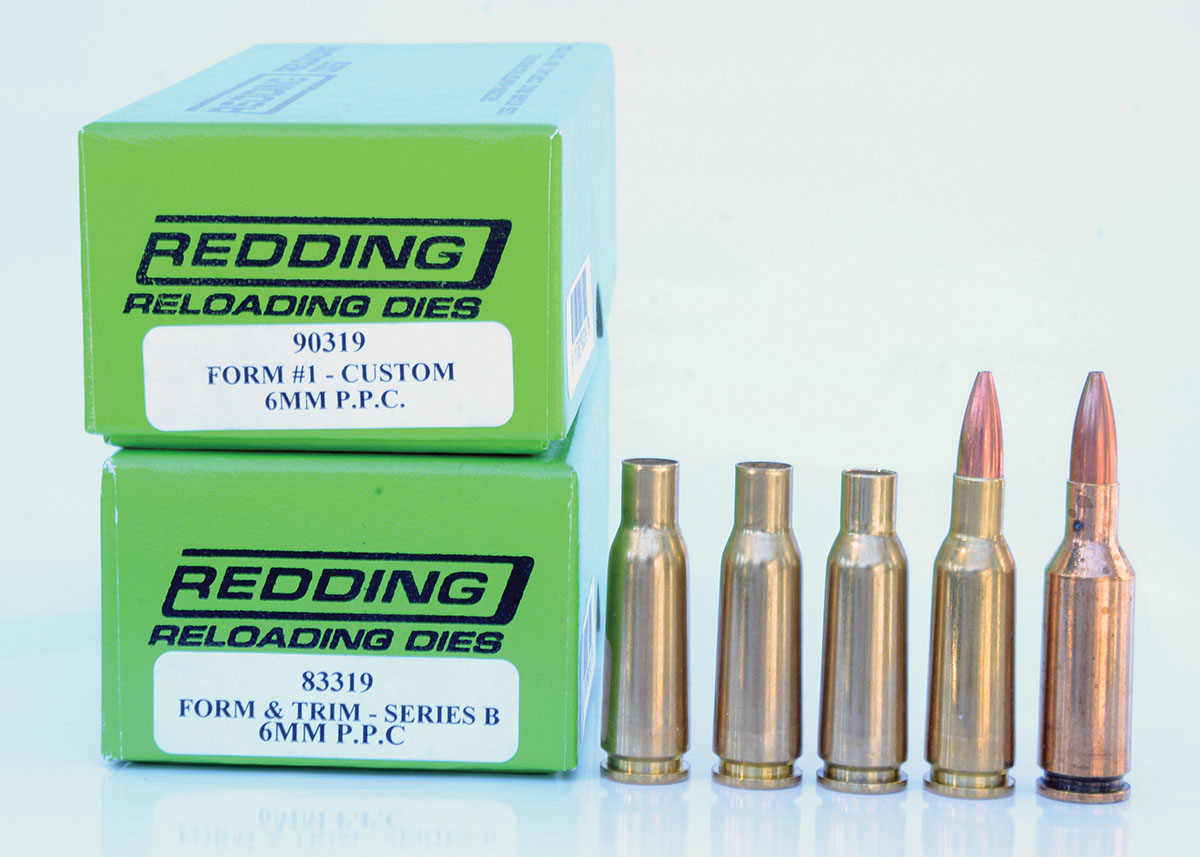
Another option is to use form die sets available from Redding and RCBS to form cases from less-expensive 7.62x39mm Russian brass.
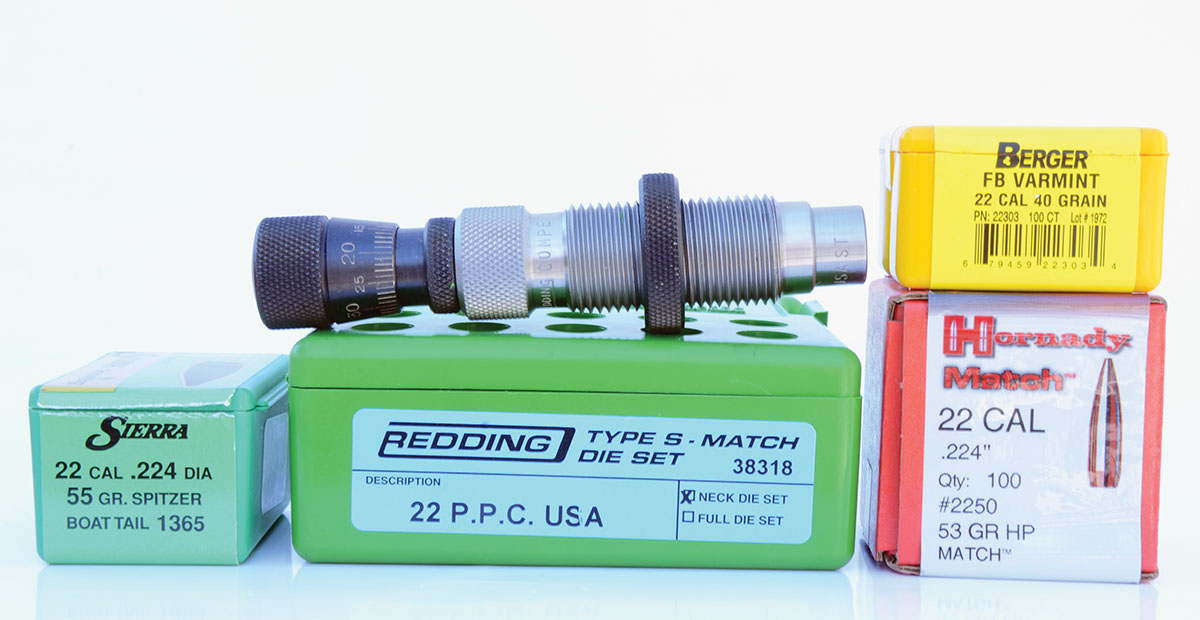
Lubing a case and running it through the form die pushes its shoulder back a bit and necks it down to about 7mm. The neck is then shortened in a file-trim die, which also reduces neck diameter to a tight 6mm. A full-length 22 PPC resizing die completes the process unless the neck wall requires thinning. A small batch of cases recently formed from Hornady 7.62x39mm brass measured 0.2505 inch with a 0.224-inch bullet seated, which is an acceptable fit for the 0.252-inch chamber of my rifle.
The case is then fireformed with a reduced powder charge. It is important to remember that the gross capacity of cases formed from 7.62x39mm can be as much as 10 percent less than those formed from Lapua 220 Russian brass. For this reason, powder charges proven to be maximum but safe in the former can produce excessive pressures in the latter. Some 7.62x39mm cases have small rifle primer pockets while others require a large rifle primer. All I have examined have large flash holes. Whether that along with switching to a large rifle primer, as opposed to the small rifle primer and smaller flash hole of the 22 PPC case, will affect accuracy depends on a number of factors, but in my rifle it amounts to about a 15 percent increase in group size.
Regardless of what cases are used, the use of a resizing die with interchangeable neck-sizing bushings is highly recommended. As mentioned, the chamber neck diameter of my rifle is 0.252 inch and when forming cases from Lapua 220 Russian brass, necks are turned to a diameter of 0.250 inch with a 0.224-inch bullet seated. After cases are fired, they are neck-sized with a 0.248-inch bushing in a Redding die. When cases become difficult to chamber from repeated firings, they are run through a Redding full-length resizing die with a bushing of the same size installed.
Diameter of the flash hole of the 22 PPC case is 0.066 inch compared to the more standard 0.080 inch of other cases. Decapping pins in reloading dies made for other cartridges usually measure around 0.0615 inch, but for the PPC it should be 0.0575 inch or so.
With a rim diameter slightly smaller than the 308 Winchester case (.473 inch), the 22 PPC (.441 inch) requires a different shellholder, with Redding identifying it as No. 12. Several custom actions with a PPC-size bolt face are available. Another option, and an easy one for a good gunsmith to come up with, is to modify a Remington Model 700 bolt originally made for the 222 Remington family of cartridges. A friend recently built a very nice 22 PPC varmint rifle using a Remington XP-100 action that was originally made to shoot 223 Remington.
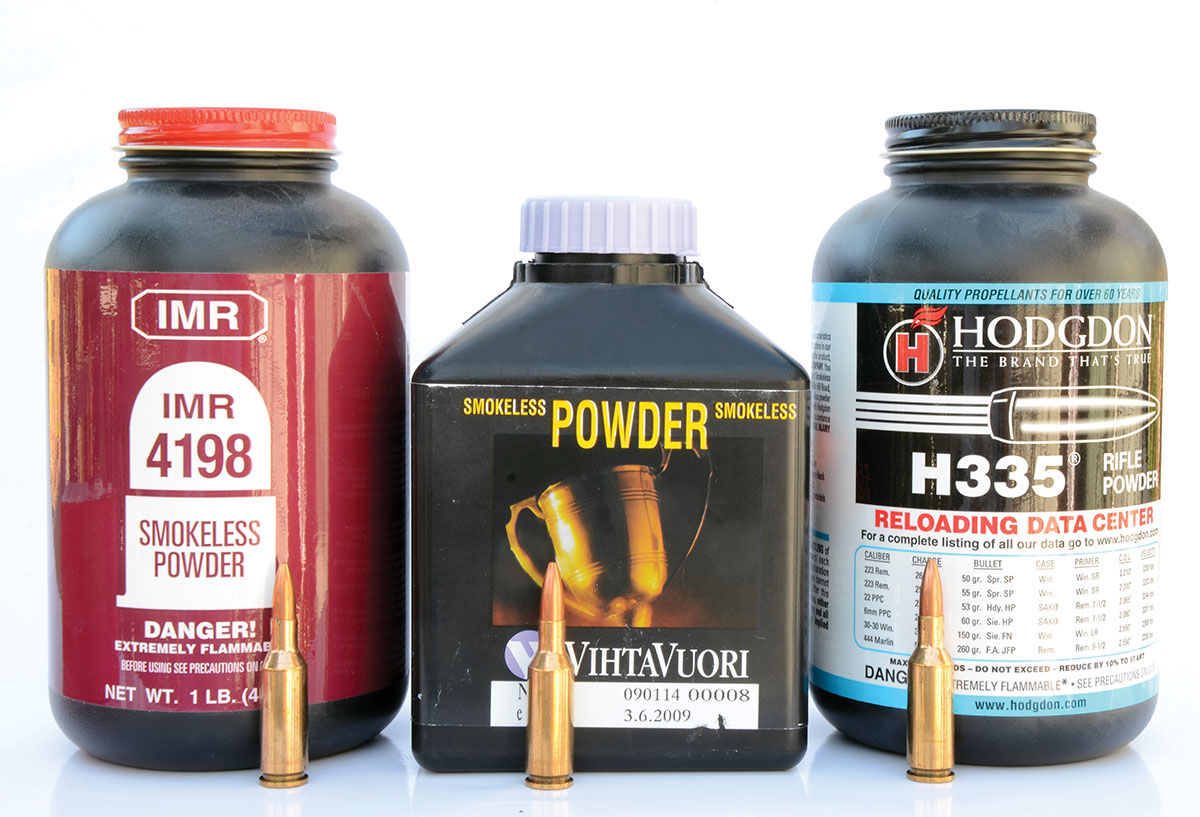
Any primer will work, but I lean toward the CCI BR-4 and the Federal GM205M. The one-in-14-inch rifling twist of my Sako rifle prefers bullets no heavier in weight than 55 grains, and it snuggles most of them inside half-MOA with pleasing regularity. I would like to name a favorite powder, but the rifle shoots all in the appropriate burn rate range quite well. In fact, it may be the least choosy varmint rifle I have ever owned. Other cartridges of its caliber are more popular, but few are as accurate as the 22 PPC.